Blog Archive

Thursday, September 6, 2018

When Time Ran Out (1980) – Review

The 1970s were the golden age of the disaster film, and producer Irwin Allen is the undisputed “Master of Disaster” with The Towering Inferno and The Poseidon Adventure still being the gold standard of the genre. But when the 80s rolled around, the well had just about dried up on the disaster film; thus, when Irwin Allen’s film When Time Ran Out bombed horribly at the box office, it kind of put the genre in a coma, that is, until CGI carnage would resurrect it in the 90s. So what went wrong with When Time Ran Out? Was it a case of a producer being completely bereft of ideas? Or was it the fact that most of the film’s $20 million dollar budget was spent on location shooting, instead of on the much needed special effects?

Irwin Allen’s "When Money Ran Out"

Disaster films often suffer from one key problem, and it's that they're basically soap operas that are simply interrupted by some man-made or natural catastrophe – whether it be an earthquake or a building on fire – and the numerous characters we are introduced to in the moments preceding the disaster events, with all their personal drama and baggage, are somehow supposed to make us care about the survivors. When a small band of people crawled their way up through the bowels of the ship in The Poseidon Adventure, we as an audience were at the edge of or seats, we wanted this plucky group of heroes to make it to safety, but in the case of When Time Ran Out, we have a volcano movie that is so bad that if the Hawaiian island (where this story takes place) was to sink to the bottom of the pacific with all hands, no one would care.
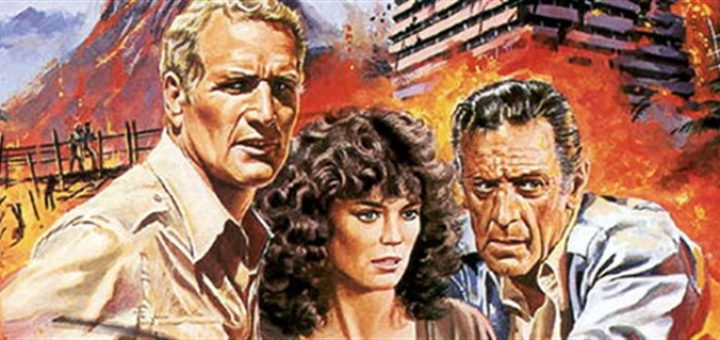
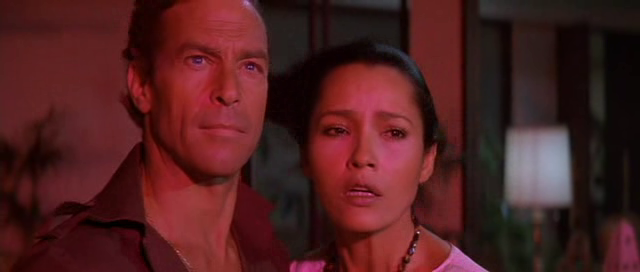
These two will not survive, but then again, who gives a damn?

This film is just overloaded with characters – all in search of a plot – and none of them have more than two dimensions. We first meet hotel magnate Shelby Gilmore (William Holden), who wants to make his secretary Kay Kirby (Jacqueline Bisset) his seventh wife, but she is still in love with Hank Anderson (Paul Newman), an oil rigger who she apparently broke up with years ago to work with Shelby. Then we have Shelby's partner, Bob Spangler (James Franciscus), who is cheating on his wife Nikki (Veronica Hamel) with his hotel manager, Iolani (Barbara Carrera), and she's been dodging her own boyfriend's proposals. The island guests include retired circus high wire stars Rene Valdez (Burgess Meredith) and his wife Valentina Cortese, who suffers from a heart condition, and then there is Francis Fendly (Red Buttons), a bonds smuggler who is being tailed by New York cop Tom Conti (Ernest Borgnine). Is that enough victims?  You say you want more?  Well how about we spend some time with one of Hank's oil-rig workers named Tiny Baker (Alex Karras), who has a wager going with cockfighting rival Sam (Pat Morita), and Sam’s wife Mona (Sheila Allen) who owns a local bar. After meeting all these people we are just begging for the island to explode.
Question: Is this not the dumbest place to put a volcano monitoring complex?
It’s clear early on that Irwin Allen and company are not out to do anything new or interesting with the genre, and the biggest tip off to this fact is in the casting of James Franciscus as the asshole hotel owner. He doesn’t want to evacuate the island simply because he his is an idiot and an asshole, and this is basically the same character he played in The Towering Inferno — only in that film he was simply the idiot who would be responsible for the death of hundreds, while in this movie, he is also a cheating bastard and all around douche-bag. The film even lifts the scene of a mob of people charging a helicopter, only in The Towering Inferno it was a panicky mob trying to be rescued, while in When Time Ran Out, this group tries to steal Paul Newman’s helicopter, and they overload it and crash. It’s like Irwin Allen and screenwriter Stirling Silliphant wanted to make the same movie, but dumber and with less likable characters.
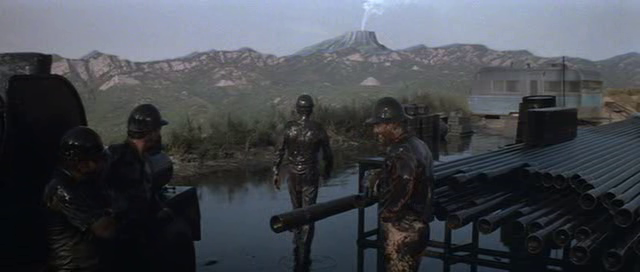
Science Note: Paul Newman’s character operates an oil rig near an active volcano. Not only is this stupid on the basis of safety, but with an active volcano there is not enough time between eruptions for any petroleum products to be deposited or to form.

The script is simply chock full of some of the stupidest ideas imaginable, like having a scientific research/monitoring facility on the lip of a volcano's crater, or having said facility outfitted with a “bathysphere” for some moronic up close inspections of the magma.
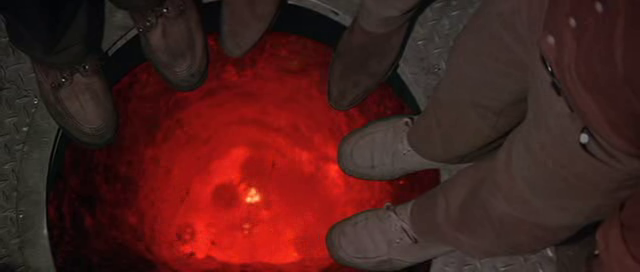
 

The thing even has a fucking glass bottom!

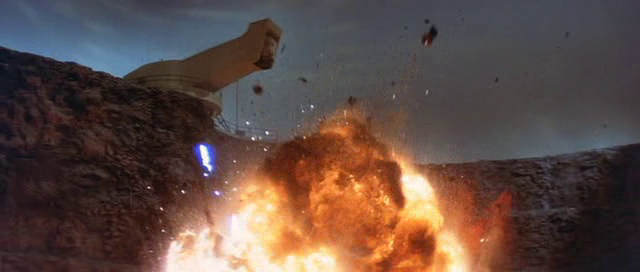
Overwrought drama and bad science will not necessarily kill your disaster movie – The Rock’s San Andreas is proof of that – but you have to deliver on the goods when it comes to the actual disaster, and this film fails utterly on that expectation. In the roughly two hour running time we barely getting any real volcanic carnage – the monitoring station falls into the volcano, the airport runway buckles, and a tidal wave wipes out the nearby town – but that’s about it, and the volcano itself looks about as convincing as an eighth grade science project.
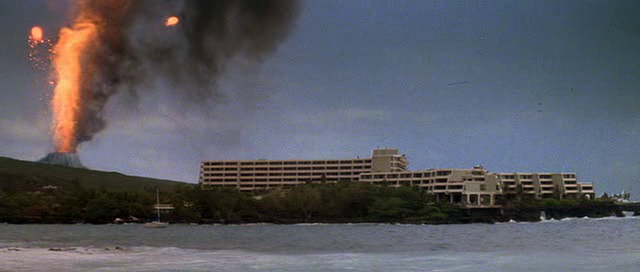

Science Note: At one point, lava bombs hit near Spangler’s hotel — exploding in a fiery conflagration — and Irwin Allen took the name “lava bomb” a little too literally, for in reality they are just blobs of melted rock and not something that explode as if made of nitroglycerin, as they do in this film.

I’m not sure why Irwin Allen went to all the expense of shooting on location in Hawaii, because aside from some boring moments of Paul Newman picnicking on the beach with Jacqueline Bisset, or the caravan of courage consisting of a bunch of cars fleeing the lava (minus shots of actual lava) through the Hawaiian countryside, we don’t see much of Hawaii — most of the film takes place on obvious sets and in sound-stages.

This film certainly wasn’t going to boost Hawaiian tourism.

When Time Ran Out is the worst example of the disaster genre, as not only is it full of the most boring cliché characters imaginable, but it didn’t spend the money where it was needed. If they had dropped half the cast, maybe they could have afforded actual shots of lava, and instead of Paul Newman sleepwalking through his part – dreaming of his salad dressing empire – we could have had an actual hero to root for. We also got your standard “Boo-hiss” villain, who in this film makes even less sense than his cheap building code-cutting doppelganger from The Towering Inferno, because seriously, who argues against an evacuation when lava bombs are landing outside? There isn’t a credible minute in this film's entire runtime.
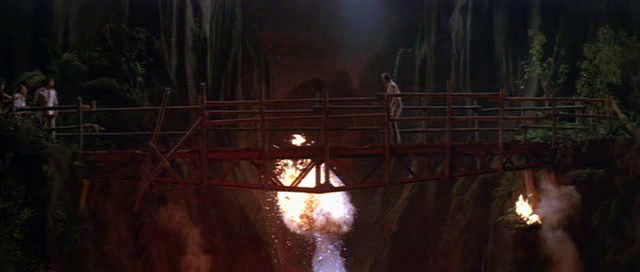
Does this look convincing to anyone?

This was Irwin Allen’s follow up feature to two box office bombs, The Swarm and Beyond the Poseidon Adventure – basically closing the book on the disaster genre for years to come – and after When Time Ran Out died at the box office, Allen never made a theatrical film again, but he did go on to make some great classic television shows like Lost in Space. So that’s nice.
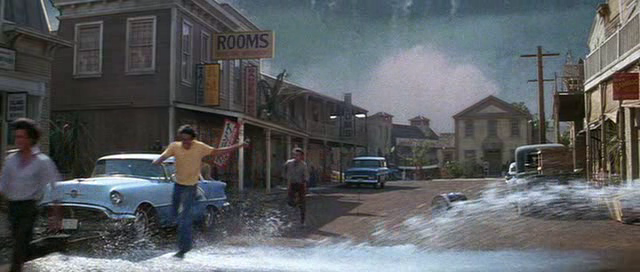
Note: When Time Ran Out is easily one of the worst disaster films out there – mainly for the crime of being monumentally boring – but it certainly had a heavy disaster pedigree with its cast.
• Paul Newman, James Franciscus and William Holden all starred in The Towering Inferno.
• Both Red Buttons and Ernest Borgnine starred in The Poseidon Adventure.
• Burgess Meredith starred in The Hindenburg.
• Jacqueline Bisset was in Airport.
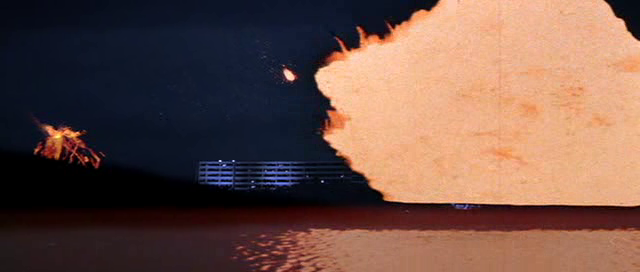
 

Seriously, did they spend any money on the effects?

Sunday, September 2, 2018

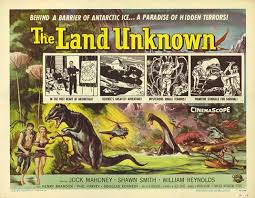
The Land Unknown (1957) – Review

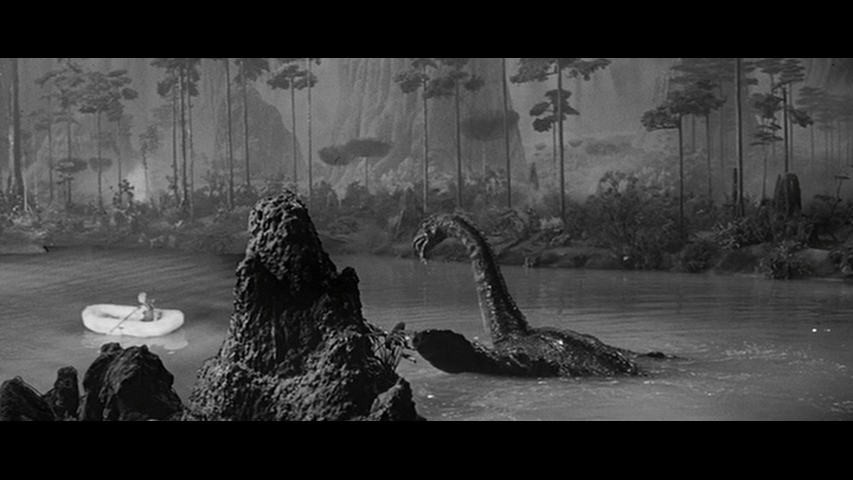
Ever since Sir Arthur Conan Doyle wrote of a mysterious plateau – where dinosaurs miraculously still exist – in his 1912 book The Lost World, Hollywood has been more than eager to bring man and prehistoric beast together. Adapting Doyle’s book to the big screen in 1925 was certainly a no brainer, and basing a story on the premise of modern man meeting living dinosaurs was certainly better than the typical way of showing cavemen and dinosaurs living together. Now, with today’s advances in special effects, bringing dinosaurs to life is almost child’s play – with Steven Spielberg’s Jurassic Park still being the benchmark – but back in the 50s, you had two choices when it came to realizing dinosaurs: you either went with the costly and time-consuming stop-motion method – pioneered by the likes of Willis O’Brien and Ray Harryhausen – or you went with a guy in a dinosaur suit, as full scale animatronic monstrosities and CGI dinosaurs had not even been dreamt of back then. In 1957, Universal Pictures’ The Land Unknown went the dinosaur suit route – with the occasional use of monitor lizards shot out of scale – in what has become one of the more laughable entries in the genre.


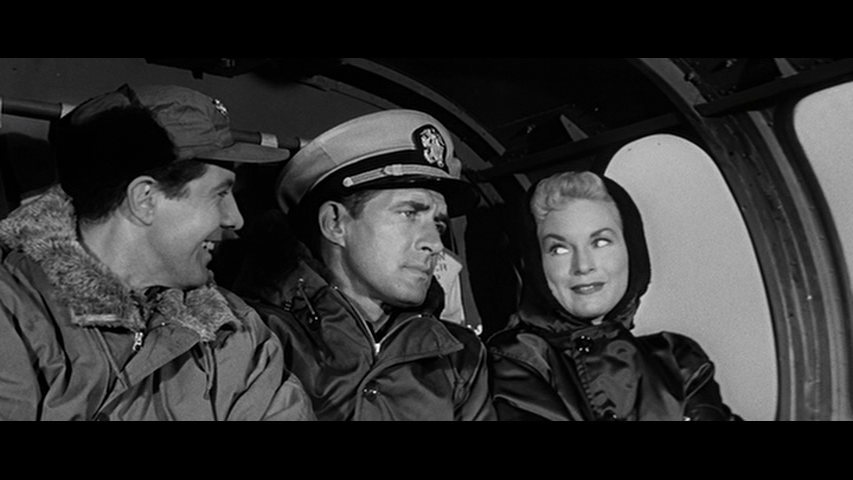
Having decided to continue Admiral Bird’s exploration of Antarctica – especially after discovering areas of strangely warm water had been made – the Navy sends a small crew consisting of Commander Harold Roberts (Jock Mahoney), Lt. Jack Carmen (William Reynolds), and Machinist's Mate Steve Miller (Phil Harvey), to explore the region via helicopter, but to make things interesting, they also sent along female reporter Margaret Hathaway (Shirley Patterson), because you simply can’t have a proper monster movie if you don’t throw a damsel in distress into the mix.


“If any of you guys spot a giant ape, you’ll let me know, right?”

When their helicopter encounters an unexpected storm – having been warned by their base ship to turn back – they try to outrun it, but they end up crash-landing in a massive volcanic valley – after having collided with a passing pterosaur – where our four heroes find themselves trapped in a prehistoric world. When Miller discovers that the rotor assembly has been damaged, and they have no replacement parts, it looks like they could be stuck in this “land before time” for good, as the fleet must leave in thirty days or risk being trapped by the ice. Their situation is not helped by Miller accidentally leaving the radio on overnight and draining its battery.


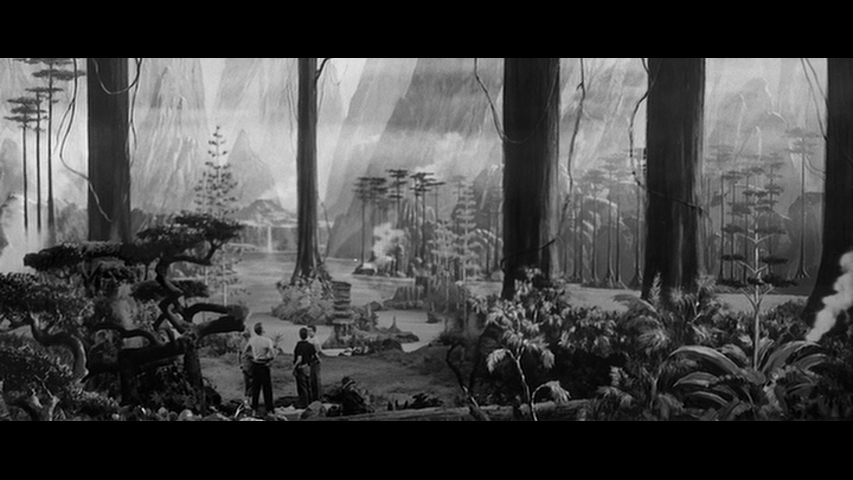
“It’s a lovely matte painting this time of year.”

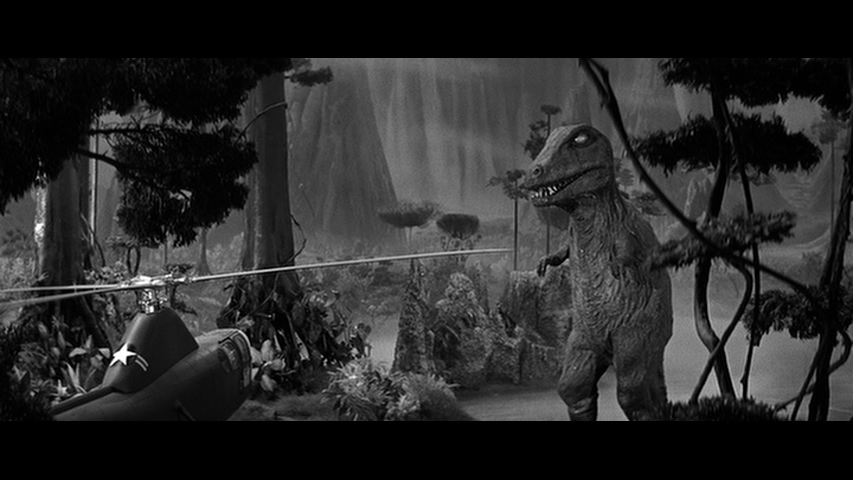
The Land Unknown was originally going to be an expensive science fiction epic – shot in colour and directed by the legendary Jack Arnold – but then Universal suddenly decided to slash the budget and turned what would have been an “A” picture into a “B” budgeted one. Arnold was out and contract director Virgil W. Vogel was in – who had directed the previous year’s Universal monster movie The Mole People – but the biggest victim of the budget cut would be the effects, and boy does this show. Like many low-budget movies starring dinosaurs – such as in Tarzan’s Desert Mystery – monitor lizards were used in place of expensive stop-motion dinosaurs, but The Land Unknown is not primarily “known” for the unfortunate use of footage of monitor lizards fighting – though the brutal footage they do use is disturbing – it is actually known for the ridiculous dinosaur suit that some poor sap was forced to wear.

Psychics Note: Our heroes use the helicopter’s blades to fend off the monster, but in reality any such contact with a beast that size would have torn those blades apart.
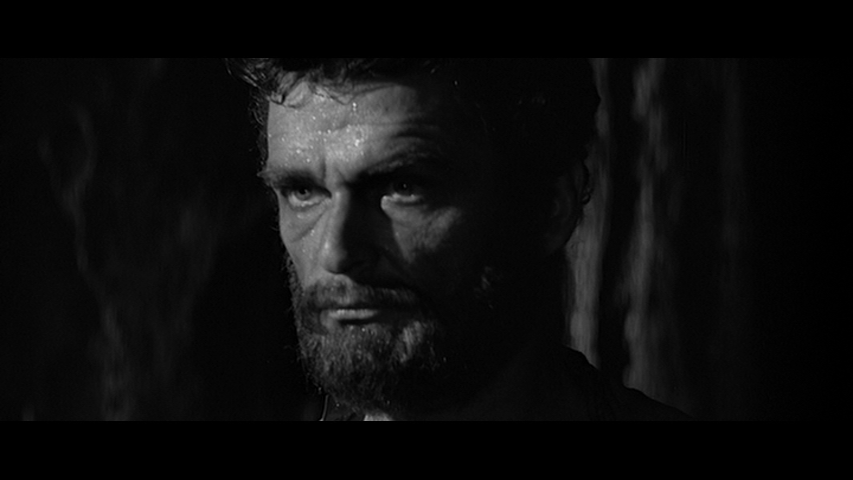
Aside from the goofy-ass dinosaur costume – a creature that looks constantly in danger of tipping over – the most memorable part of The Land Unknown is the real threat to our heroes, which isn't dinosaurs, but instead the threat of man. While exploring their jungle surroundings, Maggie is abducted by Dr. Carl Hunter (Henry Brandon), the lone survivor of a plane crash from the 1947 expedition. Apparently, ten years of living alone in a prehistoric hellscape has not been conducive to good mental health – though he is smart enough to develop a method to combat his dinosaur neighbours – but just how crazy is Hunter? Well, it turns out that the remains of the plane crash, the one that stranded him all those many years ago, most likely has parts that could be used to repair our heroes’ helicopter, and Hunter will only reveal the location of the wreck if the crew agree to leave Maggie behind with him. What is truly weird here is that the idea of Hunter leaving with them is never even broached – he just wants Maggie – and of course, stoic Commander Roberts will have none of that. Henry Brandon’s portrayal of this marooned madman is quite chilling, and his eerie rant to Maggie, when she confronts him about his stealing of their food, is even more so, “It’s mine,” he tells her. “The whole valley is mine. Everything in it belongs to me, including you.”
 

Man truly is the most dangerous game.

The film’s undertone of rape and sexual slavery is downright creepy – not something you expect to find in a dinosaur adventure film – but aside from Hunter’s compelling and dark character, the movie is just rife with the usual clichés of the genre; Roberts is the stoic square-jawed hero, Jack is the able-bodied sidekick, Miller is the resident coward – more than willing to offer up Maggie if it means going home –  and then there is Maggie herself, who faints at each and every threat that comes her way.  No clearer collection of stock characters could be sited than this group, and thus, it makes it look like Hunter had wandered in from a different film – most likely a better one – as his character is so beautifully twisted and dark, yet still with a spark of humanity, and every moment with him on screen is truly compelling.

Maggie: “How long have you been in this valley?”
Hunter: “Ten years. A hundred years. Time has no meaning when you have nothing to wait for.”
Maggie: “How have you managed to stay alive?”
Hunter: “Not on charity or pity or the nobleness of the soul. I survived because I’m the fittest to survive! Because I’ve learned to kill efficiently!”


He certainly has better survival instincts than anyone else in this picture.

There are quite a few fun moments in the film – Maggie being harassed by a killer plant being a particularly hilarious one – and the jungle set is quite impressive, but the bargain basement dinosaurs undercut any dramatic tension the director tries to build. It doesn’t matter how Oscar worthy Brandon’s performance is when these moments are counterpointed with him waving a torch at a giant paper mâché dinosaur head, but at least one of the actors was trying. The Land Unknown may not be the best example of the genre, not even holding a candle to films like King Kong, which came out twenty-four years earlier, but there is enough good stuff on display for me to recommend it.


This film’s T-Rex is truly unforgettable.

Wednesday, August 29, 2018

Zombeavers (2014) – Review

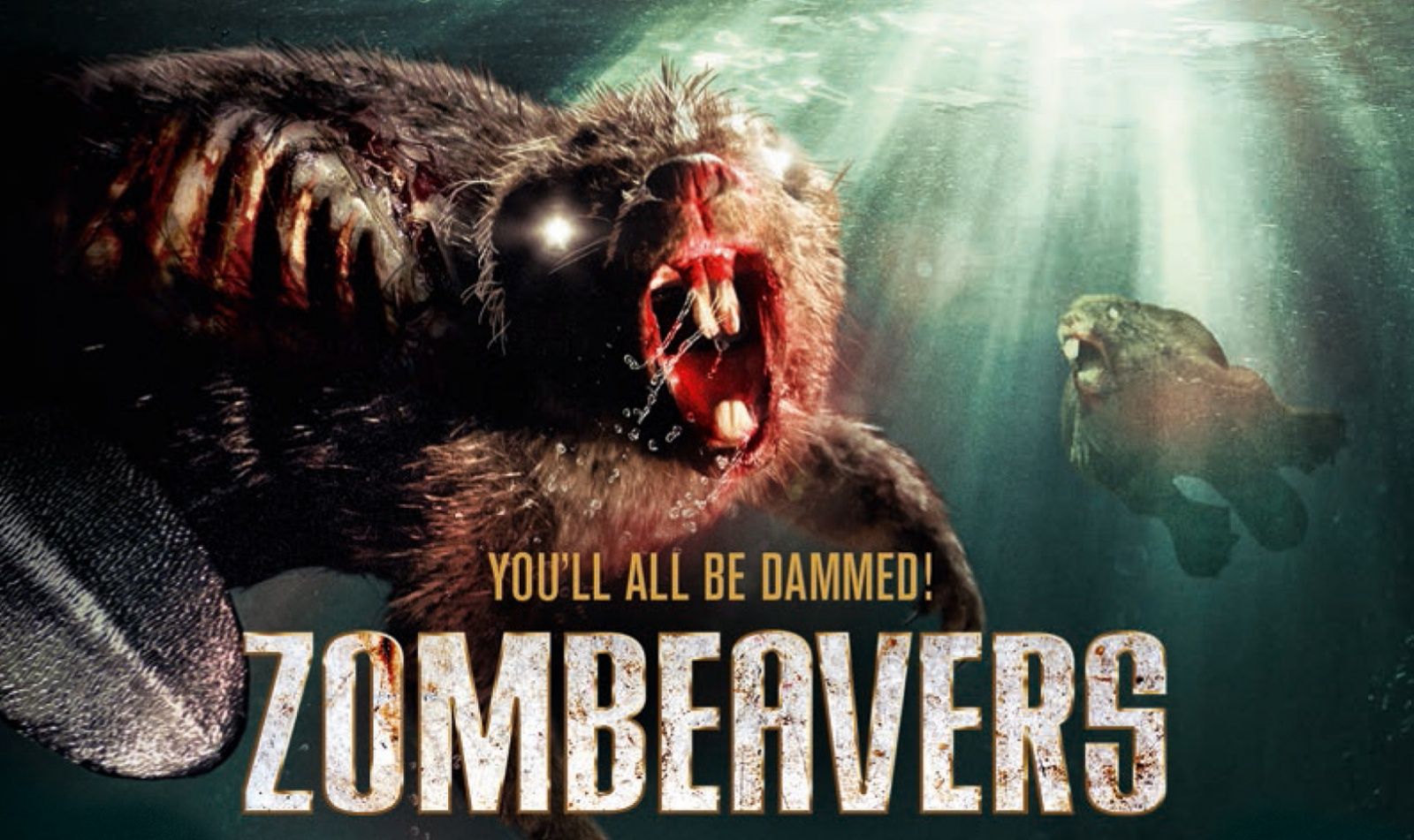
The horror/comedy subgenre is easily one of the hardest to pull off, as what a person finds funny and what scares them are two very subjective categories, but when it works, it can be a real treat for the viewer; just look at such films as Evil Dead 2 and Shaun of the Dead for some perfect examples of this genre. The key to a successful horror/comedy is in understanding the tropes which make the horror film such a popular genre in the first place; for example the movie The Final Girls took the tropes found in the “Kids at Camp” slasher genre and then twisted it with the addition of elements from Groundhog Day and Pleasantville — this made that film fresh and original — but in the case of writer/director Jordan Rubin’s Zombeavers, the “Cabin in the Woods” trope was blended with the “When Animals Attack” films, and though neither of these genres are comedies, the mash-up of the two brings the level of weird and craziness that's needed to create the comedy element.


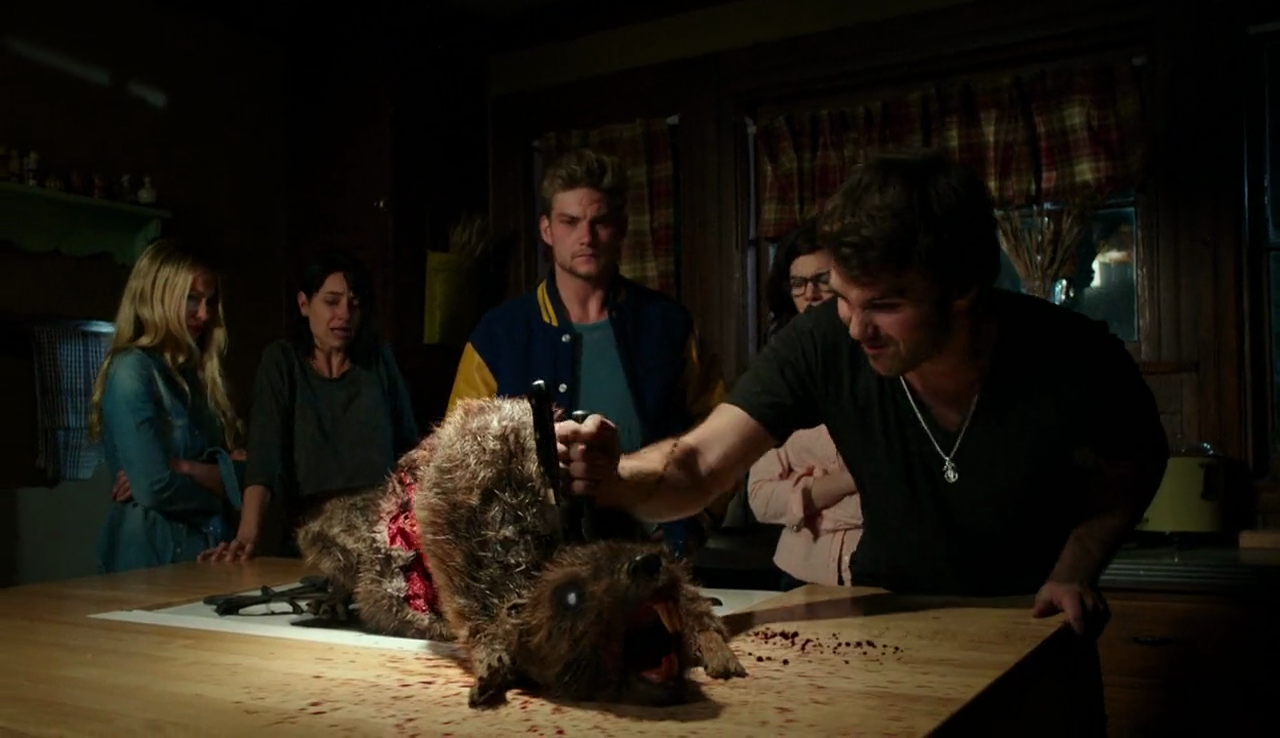
The movie opens with two idiots transporting a load of toxic chemicals who let distracted driving cause them to hit a deer, which in turn knocks loose one of the barrels of chemicals, and it's here we get our first homage rip-off to another horror/comedy, that being of The Return of the Living Dead. In that film, two idiots accidentally open a barrel that spews a toxic chemical into the air that turns the surrounding dead into zombies, and in Return of the Living Dead II, the barrels just sort of fall off the back of a military truck — so here we get a blend of the two. But in this film, the barrel drifts down a river to where it eventually jettisons its contents over a beaver colony. As the title suggests, this turns the local critters into murderous zombies, and the idea of something once cute and cuddly turning evil is basically the crux of this movie.


The goofy-ass beaver puppets used here work to add to the comic element.

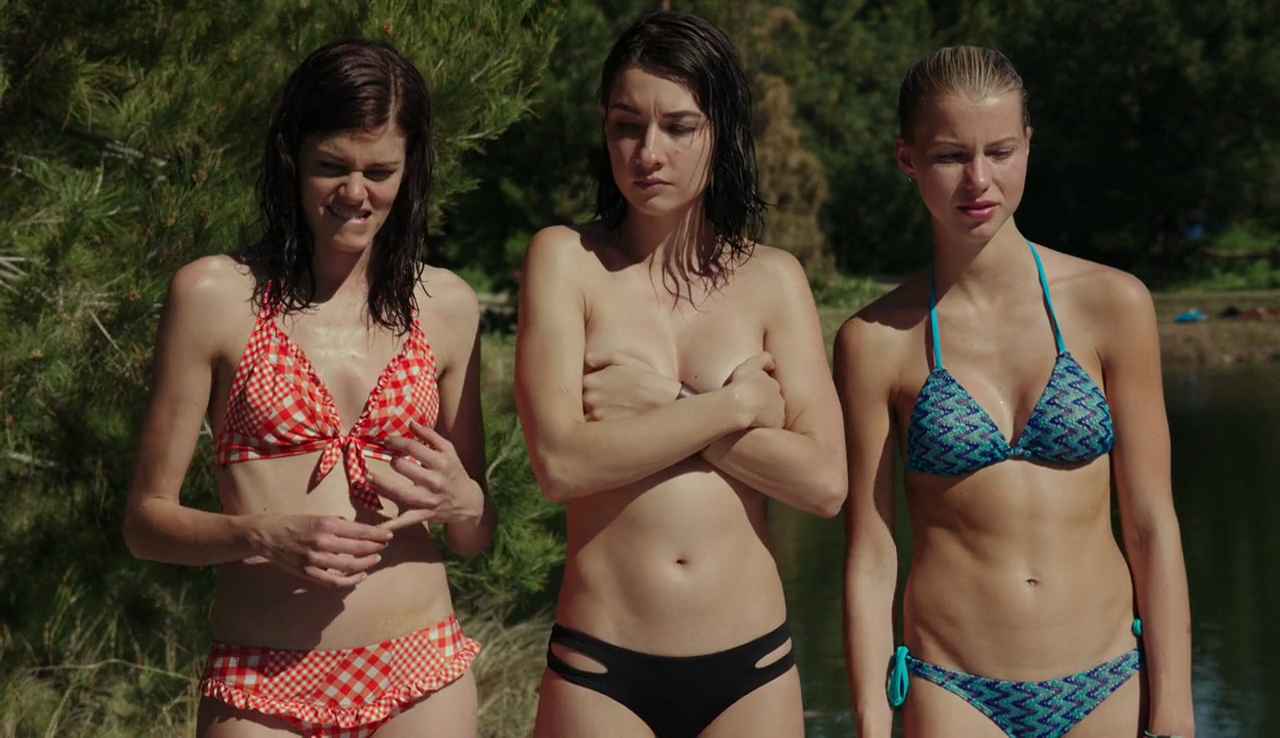
Of course, you can’t have this type of horror film without the perquisite victims and Jordin Rubin, with co-writers Al and Jon Kaplan, trot out that standard collection of horror movie stereotypes to get knocked off one by one; we have Mary (Rachel Melvin), who wears glasses and looks to be auditioning for the role of “Final Girl;” and then there is Zoe (Courtney Palm), the "looser" woman in the group, who is also here to provide the film’s required gratuitous nudity; and finally we have Jenn (Lexi Atkins), whose boyfriend is cheating on her, and this is the reason the three girls headed up to the cabin in the first place, to forget about men. Now a film of this type almost requires this kind of shorthand for its characters — especially when you are dealing with a relatively short running time — but Rubin and the Kaplans do manage to tweak the stereotypes a tad to make things a bit fresher, and they even reference Night of the Living Dead to catch us off guard.


Who will be the Final Girl?

As we all know, you can’t have your Cabin in the Woods film without horny boys, so after a day of lazing about in the sun their “Girls Weekend” is crashed by their boyfriends; Tommy (Jake Weary), the blonde lunkhead belonging to Mary, Buck (Peter Gilroy) as the comic relief/sex fiend who is dating Zoe, and then there is Sam (Hutch Dano), who cheated on Jenn and now wants to make amends…or does he? The film manages to provide us with just enough information so that we at least care about some of them when the shit hits the fan and the titular creatures attack. The film also provides us with a creepy hunter (Rex Lyn), and two nice neighbours Myrne (Phyllis Katz) and Winston Gregorson (Brent Briscoe), who are mostly there to add to the film’s body count. The first thing that tips our group off that things may not be quite so peaceful up at this lake, is when Jenn is attacked in the bathroom by what they at first believe to be a rabid beaver, but when the group is attacked the next day — when they are out cavorting on the lake — they soon realize they may be in deeper trouble than they thought.


Animal Control will be no help here.

Up until this point, the film could be considered just your run of the mill campy little horror flick — where a group of disposable teenagers are brutally killed one by one — but then we get the “infected” angle, which is a standard element of the zombie film, and that’s when things get a little Looney Tunes as the movie stops being a simple parody of the genre, and becomes its own insane thing. The film at no point took itself seriously — with a title like Zombeavers that’s kind of a given — but even with the gore, and with our heroes playing Wack-A-Mole with the attacking Zombeavers, it was mostly predictable. But when an infected Jenn crawls into Mary’s bed, and tries to eat her — and not in the fun way — things get really bizarre.


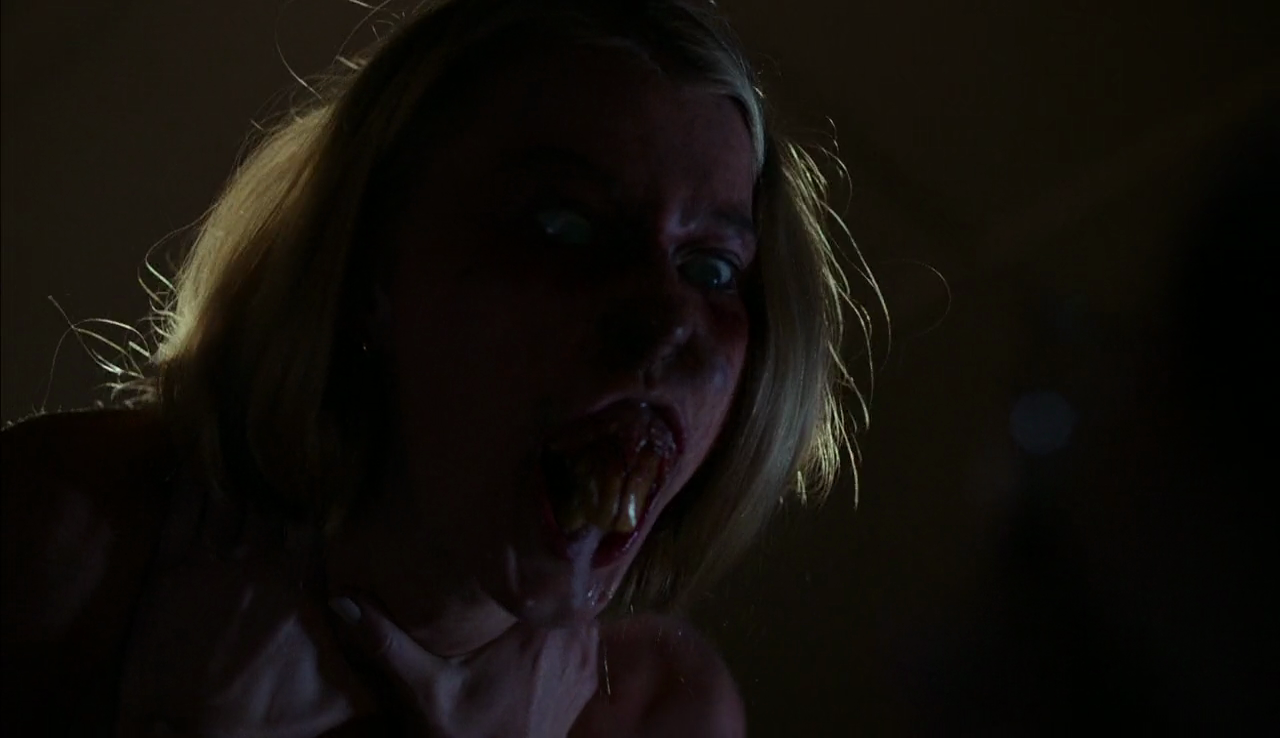
“Jenn, what big teeth you have.”

Turns out that being bitten doesn’t just turn you into a zombie, but it in facr turns you into a zombie beaver, with big beaver teeth, and even a giant beaver tail, and it was at this moment that the film won me over completely. Zombeavers could easily have been one of those one-joke premise titles — like Sharktopus or Ghost Shark — but instead, it managed to exceed my expectations as a horror/comedy, especially helped by knowing enough about the genre to not wear out its welcome. At a mere seventy-seven minutes, director Jordan Rubin clearly knew how far he could go with his ridiculous premise, and he leaves the viewer wanting more, something a certain Sharknado series should take note of. Zombeavers is an outrageously goofy horror movie that is more entertaining than it has any right to be.

1 Check out the spoilerific Zombeavers theme song.

Monday, August 27, 2018

Wait Till Helen Comes (2016) – Review

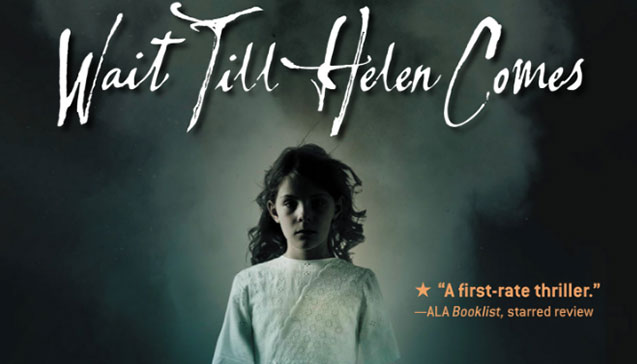
Horror Advice: If you notice that a younger sibling has an imaginary friend — one they talk to incessantly — there is a good chance that this supposedly imaginary friend is actually a vengeful spirit out to destroy your family, and you should be calling the local priest. Adapted from the book by Mary Downing Hahn, "Wait Till Helen Comes" tells the story of two separate families – both reeling from each of their own personal tragedies – who come together as they adjust to life in an old converted church. Oh, and there is the ghost of a little girl who lures other young girls to their deaths, so as not to be alone. This is a pretty standard horror movie fare – ghostly messages appearing on bathroom mirrors and strange whisperings in the dark are just two of the many horror clichés that pop up in this movie – but director Dominic James manages to inject enough atmospheric mood and mystery to make it a serviceable entry into the horror genre, especially for younger audiences.


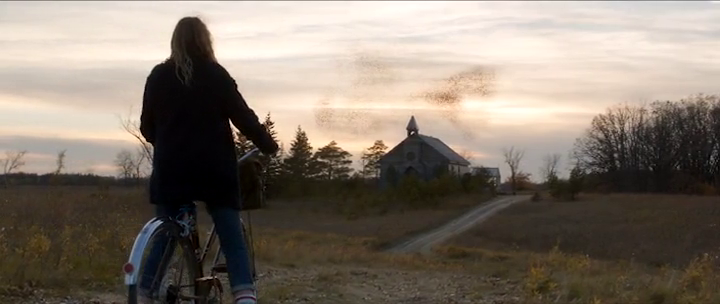
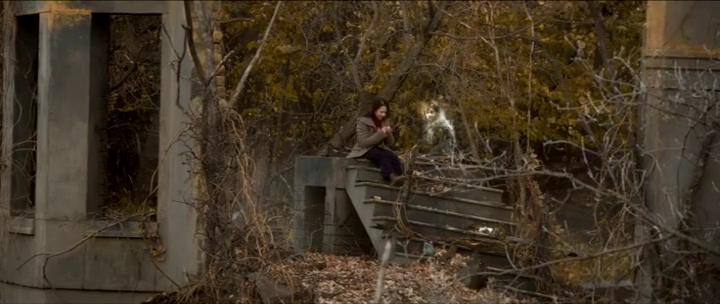
The film’s protagonist – and erstwhile narrator – is a teenage girl named Molly (Sophie Nélisse), who, along with her younger brother Michael (William Dickinson) and mother Jean (Maria Bello), has moved into a converted church with her new stepfather (Callum Keith Rennie) and his little girl Heather (Isabelle Nélisse). Molly isn’t keen on suddenly being the big sister to this weird little girl – whose mother tragically died in a fire – as she herself is still getting over the death of her own father, who committed suicide. Stepfather Dave is a struggling writer – horror trope #106 – so he has no time to look after kids, and even Molly’s own mother doesn’t seem to have much time for them, other than to give late night consoling talks, that are about as helpful as a hankie in a hurricane. This leaves it up to Molly alone to deal with Heather’s mysterious ghostly friend – who hangs out in the woods by the burnt out husk of an old home – as even Molly’s nerdy brother doesn’t believe her at first.


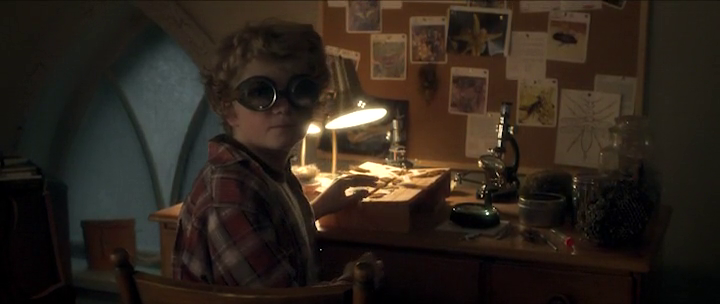
Which is odd as he looks like a burgeoning Ghostbuster.

There certainly isn’t anything earth-shatteringly original to be found in Wait Till Helen Comes – televisions will turn on by themselves and furniture will move around on their own, as expected – but cinematographer Rene Ohashi perfectly utilizes the cold and bleak Winnipeg locations to build a feeling of inescapable dread. The cast all give credible performances – especially real-life siblings Sophie and Isabelle Nélisse, who are quite good as two loggerheads over a ghost – and Maria Bello does the best she can with the thankless role of the beleaguered mother. The ghostly mystery itself reminded me a little of the Disney film Child of Glass, only here things get a bit darker as suicide and mental illness become key elements.


Poor Molly knows going home is not always the safest course.

The one element that really fell short was the ghost itself; when we first see the apparition of Helen (Abigail Pniowsky), it is as a translucent optical effect that is never quite convincing as a ghost. The film would have been better off keeping the appearances of Helen to a minimum, but that aside, the supernatural elements hold up rather well – cool dream sequences and creepy flocks of birds make up some nice moments – and overall, Wait Till Helen Comes could work as a nice introduction for young viewers to the horror genre. There is no gore, and even with the darker elements – which got the book banned in schools back in the day – there is nothing to traumatize any but the most sensitive of kids.

Wait Till Helen Comes may not bring anything new to the genre – being based on a young readers book from the 80s that is to be expected – but there is still enough good stuff on display for me to recommend it, especially if you have kids who want a little scare ... just not too scary.

More Horror Advice:

• Do not move into a converted church. Just don’t.
• A graveyard on your property is not a selling point.
• If the locals talk about girls routinely going missing do not be surprised if yours goes missing as well.
• Neighbouring ruins with a backstory of death and tragedy is going to be lousy with ghosts.


These people were just asking for trouble.

Thursday, August 23, 2018

Clue (1985) – Review

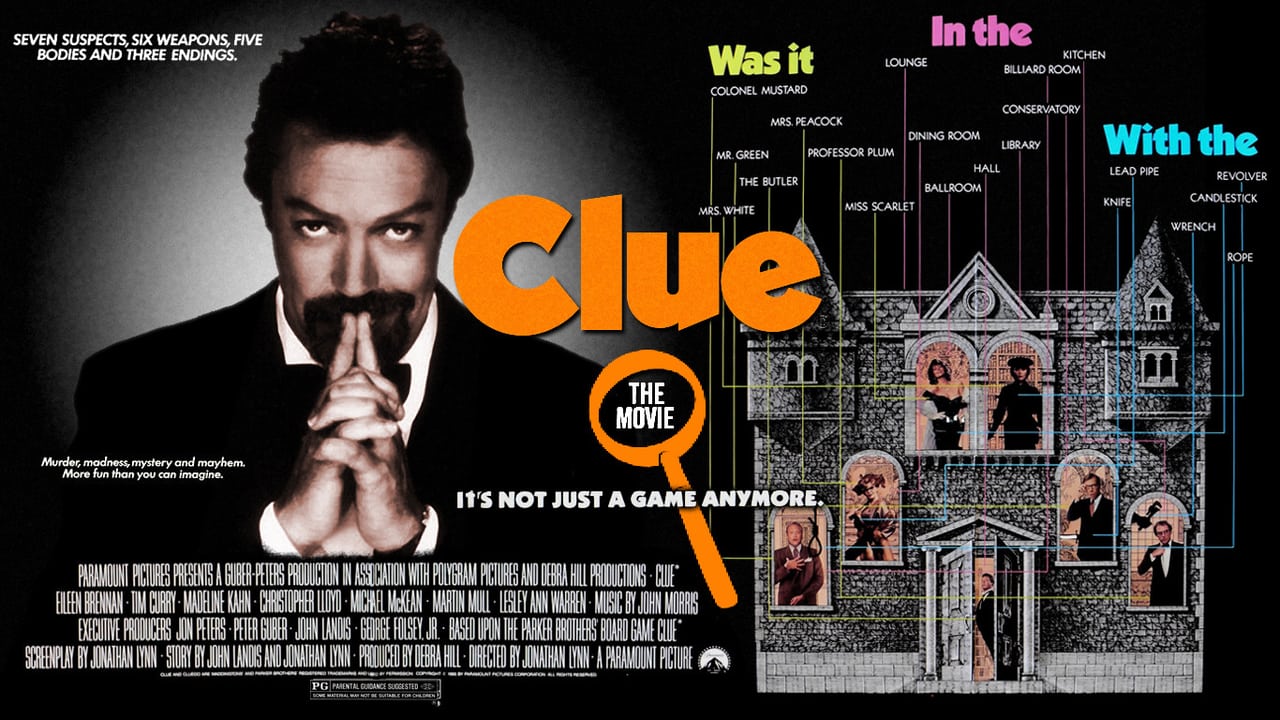
People today take the idea of a movie being based on a video game as something almost common place – even goofy-ass games like Rampage get adaptations – but back in the mid-80s, producers John Landis and Debra Hill wanted to make a movie based on a board game – a game that didn’t even have the rudiments of a plot or story. A completely unheard of idea, full of all the perils and pitfalls such a production was bound to have, and thus the world was given the motion picture Clue, a brilliant farce with a cast of comedy greats.


It would have been easy to make an Agatha Christie “And Then There Were None” type murder mystery, and then slap the board game title onto it, but writer/director Jonathan Lynn – after battling for months to come up with a "mystery" his producers would greenlight – made the brilliant decision to have his mystery be two parts French farce, three parts American screwball comedy, and a five parts of slapstick. The only real direction Lynn got from the studio was that the movie had to include all the characters, weapons, and rooms that appear in the game, but other than that, he had free reign. All Jonathan Lynn had to do was assemble his cast – get them approved by the studio – and somehow make a cohesive mystery, one with three bloody endings. Having multiple endings was certainly in the spirit of the game, but to come up with a plot that would support three different conclusions is next to impossible, and when looked at honestly, one must admit some of the elements do not hold water – certain characters logistically being unable to perform the murder they are accused of – yet the script moves along at such breakneck speeds that such trivialities are hardly noticeable.


“I can bend time and space to commit murder.”

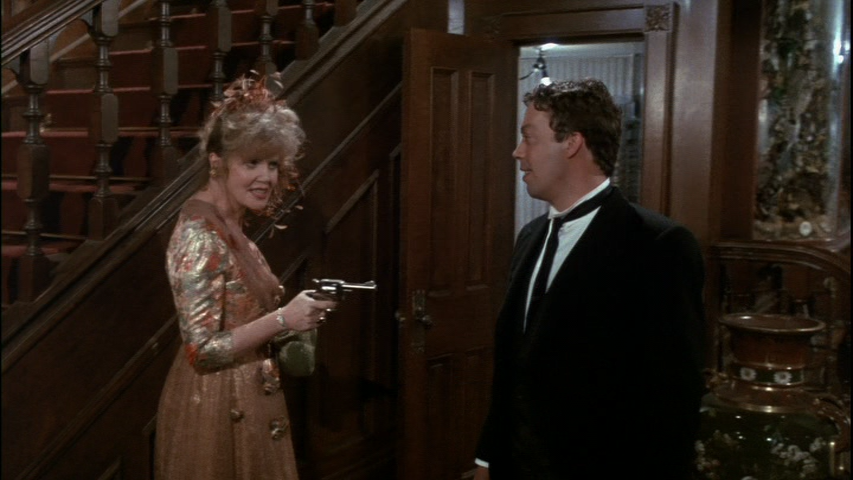
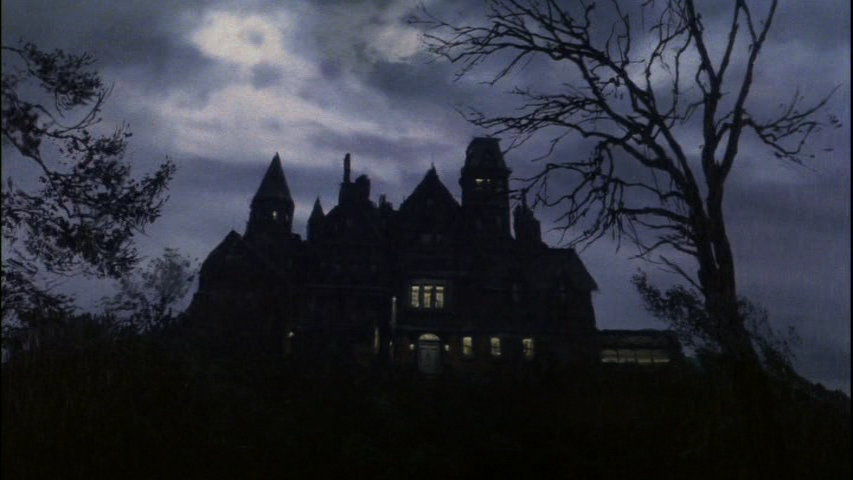
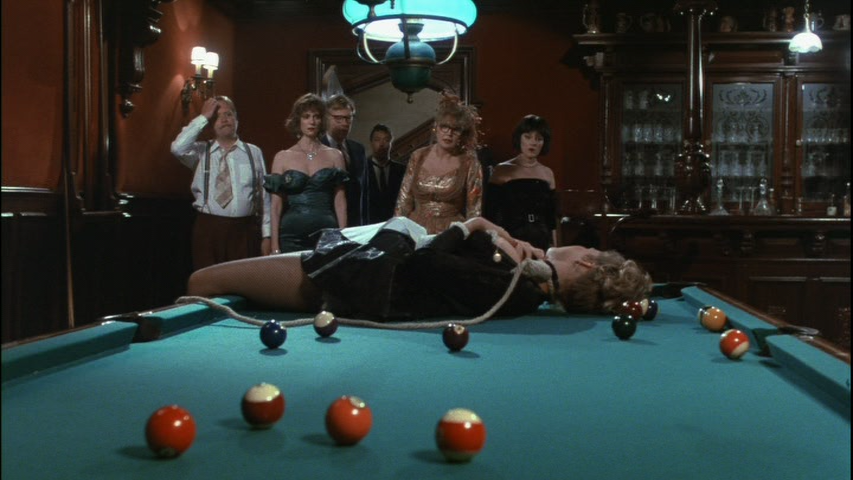
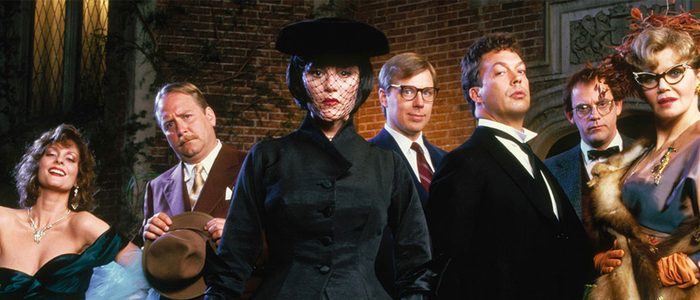
The basic plot that Lynn came up with dealt with six strangers being invited to the classic “Old Dark House” and each of the guests having been given a pseudonym - Colonel Mustard (Martin Mull), Mrs. White (Madeline Kahn), Mrs. Peacock (Eileen Brennan), Mr. Green (Michael McKean), Professor Plum (Christopher Lloyd), and Miss Scarlet (Lesley Ann Warren) – whom are all greeted by the butler Wadsworth (Tim Curry), who reveals to all that they have been brought here to help expose the man who is blackmailing each and every one of them. When said blackmailer Mr. Body (Lee Ving) arrives – who seems at first to be as clueless as everybody else – he provides all the guests with a gift box, and in each box there is a weapon; a candlestick, a dagger, a lead pipe, a revolver, a rope, and a wrench. What follows is a madcap series of murders that will leave most viewers' heads spinning.

Trivia Note: The story takes place at a large manor called Hill House, which is most likely a reference to the horror film The Haunting (1963).

As the characters from the game are to be suspects – whose crimes will be revealed at the end – the movie had to introduce more characters to be bumped off – having only one murder would simply not due for this film – and so we have the buxom French maid Yvette (Colleen Camp), the Cook (Kellye Nakahara), a stranded motorist (Jeffrey Kramer), a police officer (Bill Henderson) and a Singing Telegram Girl (Jane Wiedlin), all who help provide for the film’s ample body count. One of the key elements that makes this comedy work so well is how the cast of characters slowly go from being terrified about finding a dead body, to baffled at the next, to almost blasé about finding the third.


I guess if you’ve seen one dead body you’ve seen 'em all.

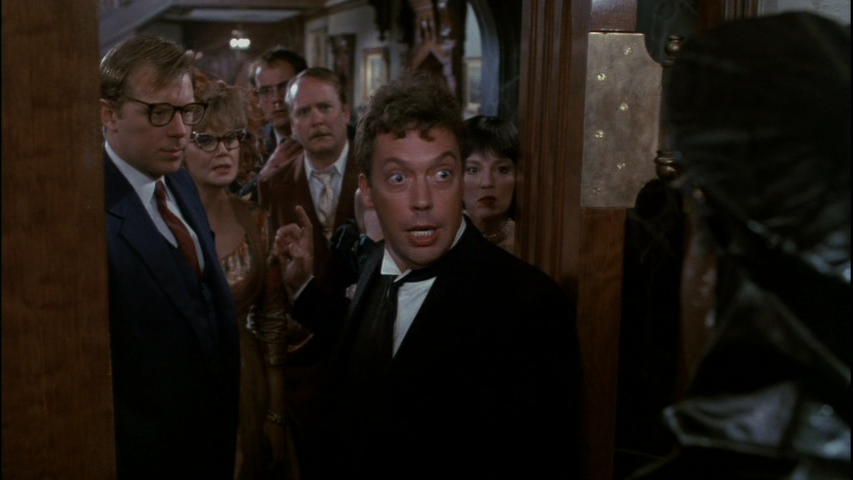
That the film did so poorly at the box office – making about $14.6 million on a budget of $15 million dollars – is just a crime, and that it was also savaged by critics is completely mind-boggling. Did they see the same film I did? When Tim Curry's manic recreation of the events — sprinting from one room to the next, with the six guests trailing after him like frantic puppies — is comic gold, and the sheer brilliance of Curry’s performance, having to rattle ofd reams of exposition, cannot be undersold, and if he was the sole highlight of this film it would still be enough to recommend checking this movie out. He's far from the alone, however; Curry is working alongside some of the best comedians in the business, and they all bring their “A” game.


How Tim Curry did this movie without his heart exploding is the true mystery.

The movie has fantastic production value – the manor house set is simply gorgeous – and the score by John Morris has a perfect Bernard Herman/Hitchcock feel to it. There's also the film’s running time, which is a mere ninety-six minutes, just rocketing along. So with all that going for it – from its madcap script to the great ensemble of comedians – why did it fail? Most point at the film having three endings as the major culprit in the film’s dismal box office (the marketing department seriously dropped the ball there because the film was released with theaters having different endings, and audiences were stuck wondering if they were supposed to go and see all three endings, and if they were to only see one, which was the good one?). The result was that many didn’t bother to go at all.
Clue was pretty much destined to become one of those cult classics, one that would pick up more fans over the years – being that it could air on any network because it had no nudity or foul language didn’t hurt – and thus, this madcap murder mystery will forever be one of my top comedy recommendations. Keep your Assassin’s Creed and Hitman movie adaptations, which were overproduced and painful at times to watch, and instead give me the one that started it all, the murder mystery to end all murder mysteries, Clue.


Clue is a one-of-a-kind movie, populated by one-of-a-kind talents.

Saturday, August 18, 2018

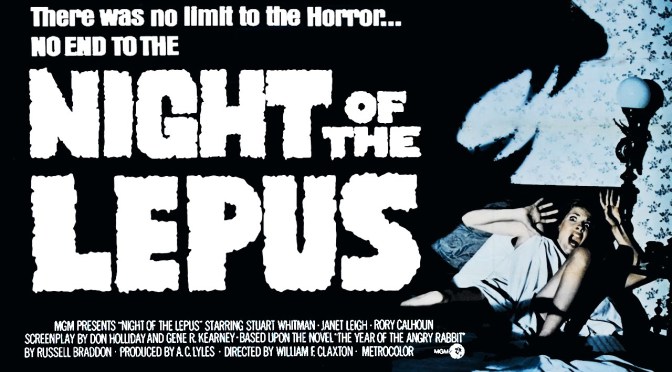
Night of the Lepus (1972) – Review

Rabbits, nature’s most vicious killing machine, furred beasts that mercilessly stalk and devour their prey — or at least that is what MGM Studios wished audiences to believe when they released Night of the Lepus back in 1972. Based on Australian author Russell Braddon’s book The Year of the Angry Rabbit – a political satire that the following film resembles not at all – Night of the Lepus came into being due to the increased popularity of the “When animals attack” genre. Where films like The Willard – an excellent killer rat movie – made a lot of money, the idea of killer rabbits seemed to some studio execs to be less than implausible. Thus, the film’s original title of “Rabbits” was changed to Night of the Lepus, and almost all promotional material were altered to hide the fact that the move was – in fact – about killer bunnies.


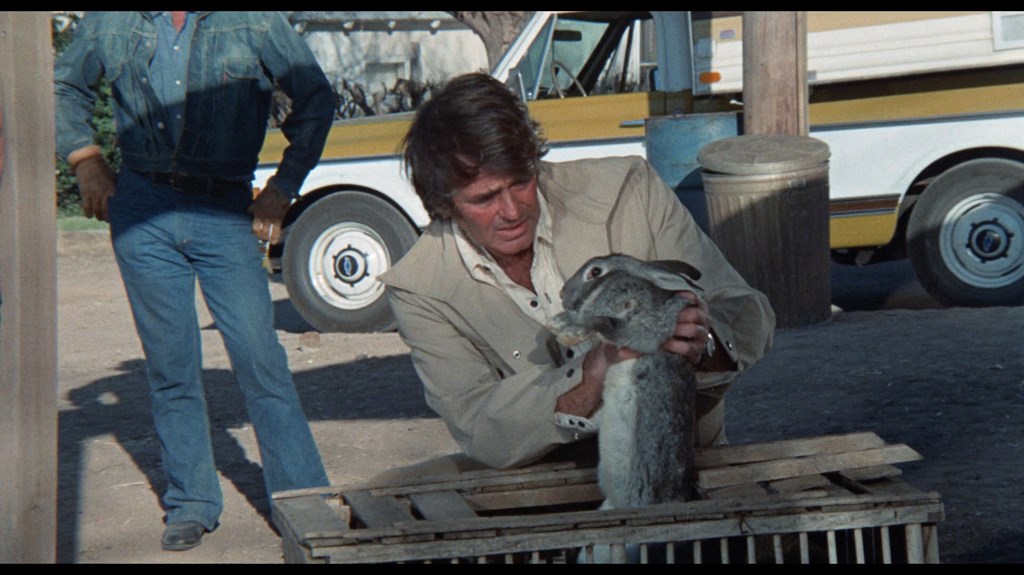
The movie opens with a news anchor informing the viewer of the dangers of rabbits – stock footage of rampant herds of rabbits swarming across Australia used to sell this point – and that even American farms are almost helpless against this furry onslaught. We next meet rancher Cole Hillman (Rory Calhoun), who loses a horse due to stepping in rabbit holes, and so he approaches college president Elgin Clark (DeForest Kelley) for advice on how to rid himself of this pestilence. Elgin suggest they talk with researchers Roy (Stuart Whitman), and Gerry Bennett (Janet Leigh), who are experts at removing pests without damaging the ecosystem. The two scientists sympathize with the rancher’s desire to get rid of the rabbits without resorting to poison – it would end up destroying his land and force him to sell his cattle out of season – and so Roy and Gerry start to work on a method of hormone treatment that would disrupt the rabbits' breeding cycle.


His first idea to get them to wear condoms was a failure.

Unfortunately, time is not on their side, as months of testing with different hormones would not help the current situation, so Gerry uses an untested serum delivered to him by the Public Health Department, remarking to his wife, “I wish I knew what the effects of this serum would be.” This is basically the equivalent of a mad scientist throwing darts at a problem – even Victor Frankenstein had a stricter work ethic than this – and when Roy and Gerry’s precocious daughter sneaks one of the “treated” rabbits out of the lab, well, we've got ourselves a monster movie. Soon, giant rabbits are rampaging across the Arizona landscape, killing any and all who cross their path, but wait, aren’t rabbits herbivores?


“This is a case of murder, and someone is responsible.”

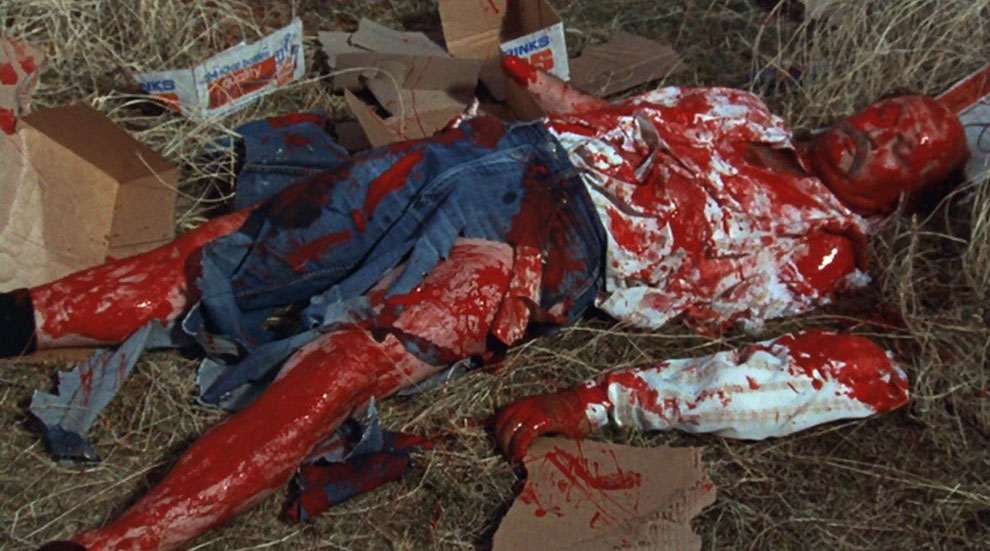
Director William F. Claxton had the unenviable task of making a monster movie about a creature that would only be threatening to you if, by chance, you were dressed as a piece of lettuce. I’m not saying a herd of giant rabbits wouldn’t be an ecological disaster, as well as a threat to the nation’s stockpile of Trix cereal, but unlike rats, sharks or bears, who have terrorized many a cinema goer for years, rabbits are not known for attacking humans. Also they are just too damn cute. You can smear as much ketchup as you want on a rabbit’s face, add all the implausible roars and growls your Foley guy can come up with, but you are still left with a cuddly monster.

Book Note: Russell Braddon’s book The Year of the Angry Rabbit dealt with a virus that allowed Australia to weaponize rabbits, and thus take over the world. Now that's a movie I wish to see.

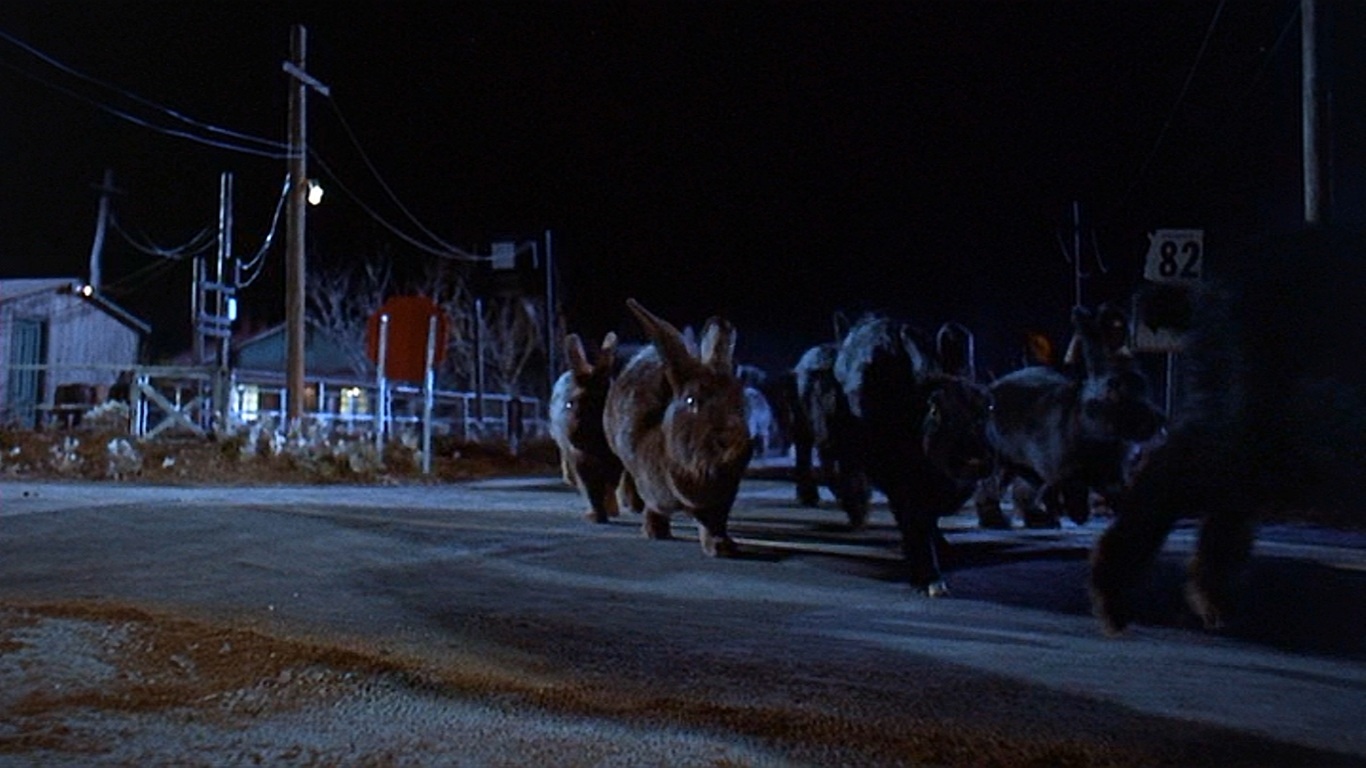
The film was not helped by the movie-of-the-week look that cinematographer Ted Voigtlander brought to the project, it had none of the atmospheric effects one would expect to find in a horror movie, visual or otherwise. The cast was clearly "in the know" as to how ridiculous the movie was shaping up to be – Janet Leigh is on record stating that the film lacked an "ideal director" to bring the script to life – and thus performances ranged from bored to disinterested. So with a ridiculous premise and a cast of mostly Western actors – Janet Leigh agreeing to do the part simply because it was being shot close to home – it was up to the special effects department to save the day. They didn’t. The filmmakers used the standard technique of shooting the rabbits on miniature sets and filming it all in slow motion – with the odd shot of a guy in a rabbit suit to do the actual attacking – and with the added sound effects of a “thumping” giant herd of rabbits. But as much as they tried to sell this giant menace, the resulting effect was laughable to say the least. Now to be fair, making the Easter Bunny into a credible threat wasn’t easy – overcoming a rabbit’s innate cuteness does seem insurmountable – but we do know it is possible.


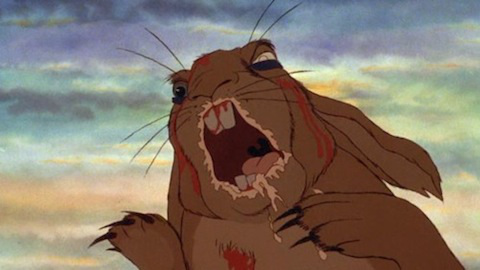
To this day Watership Down is still traumatizing kids.

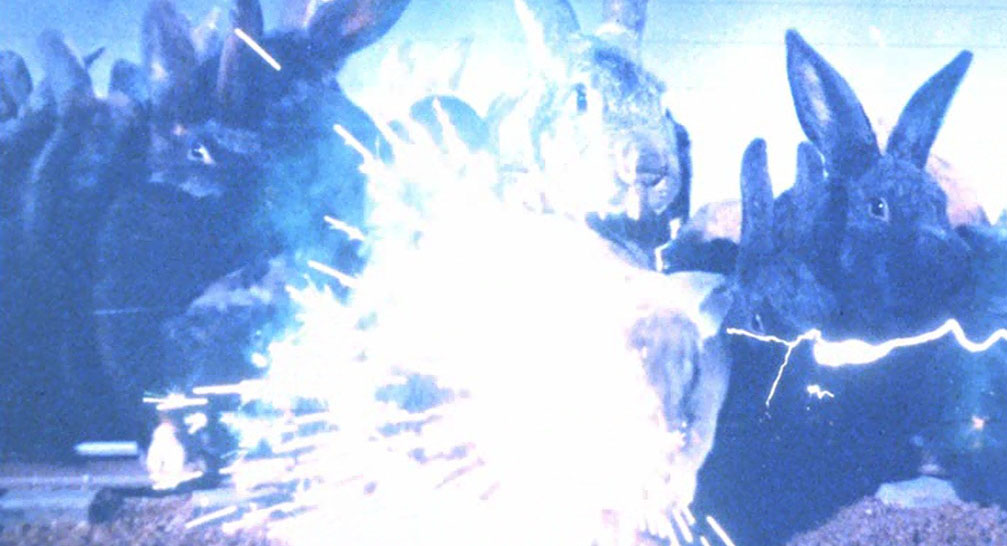
Night of the Lepus would have been better off if it hadn’t taken itself so seriously – that they thought a giant killer rabbit film could be played straight is just baffling – and trying to do so is probably the film’s biggest misstep; if they had played it a little more self-aware, we could have ended up with a pretty fun film. At one point in the film, our heroes need to herd the giant rabbits towards an electrified section of railway tracks – to then fry the poor buggers while the National Guard pumps rounds of ammunition into them – and to herd rabbits, a police officer is sent to a local drive-in to recruit civilians to aid in this plan. It's at this point that we are treated to the one single moment of joy this film has to offer, and that comes when the police officer yells at the drive-in patrons, “Attention! Attention! Ladies and gentlemen, attention! There is a herd of killer rabbits headed this way and we desperately need your help!” With more of this kind of dialogue, and a cast willing to place tongue firmly in cheek, we could have had a comedy classic on our hands. Instead, the filmmakers played their hand straight down the line, ending with a bunny massacre that was pretty unpleasant to watch, and subsequently giving us a rather dour and lifeless monster movie.

Note: The plan to use an electrified section of a railway line as a barrier to stop the giant rabbits somehow misses the fact that rabbits can jump. Are we supposed to believe a rabbit the size of a car can’t jump four feet?


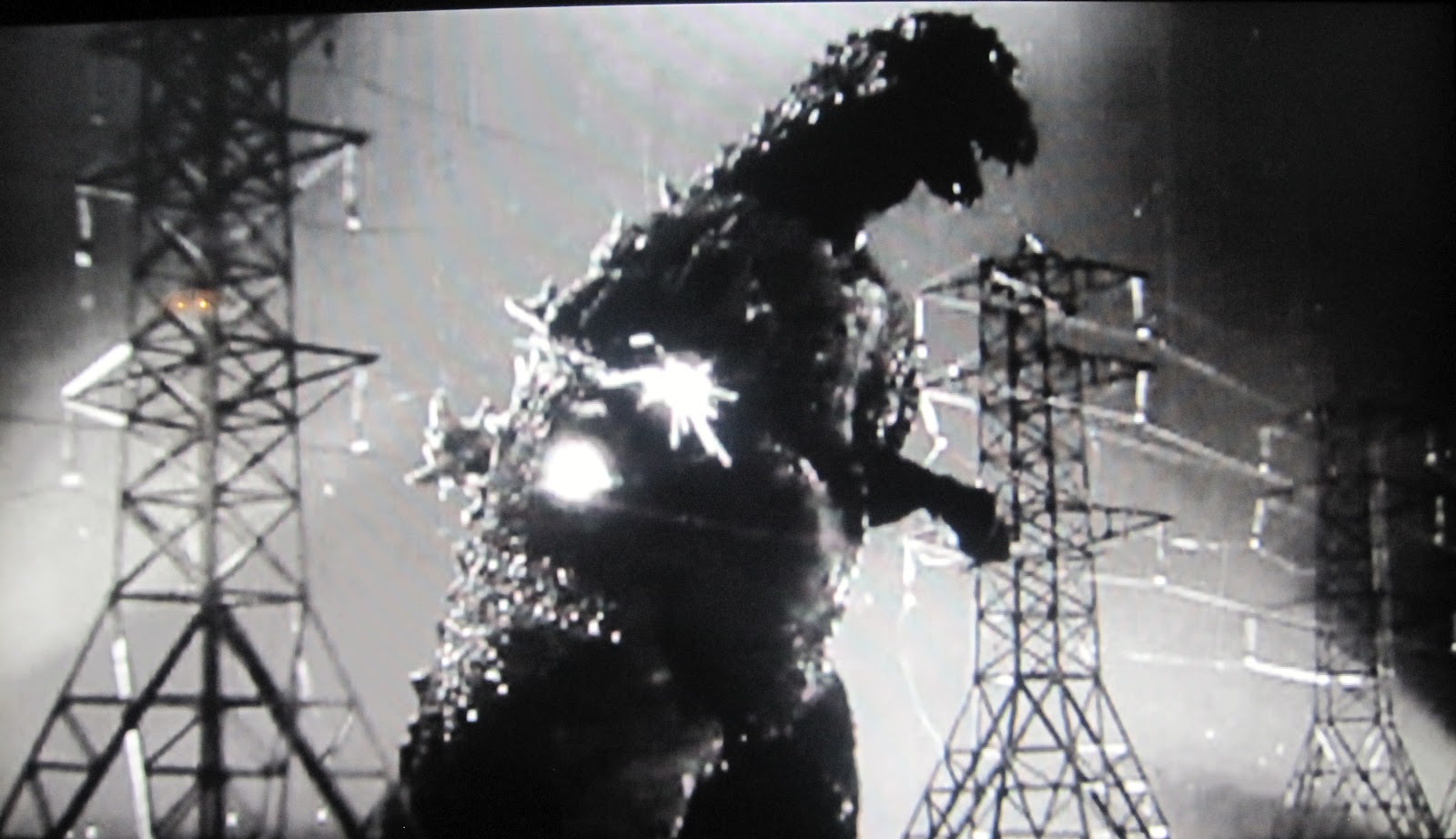
The people of Tokyo know how to properly set up an electrical barrier.

When it comes to the genre of nature fighting back, there are certainly worse entries than Night of the Lepus – the film The Killer Shrews, which used Coon dogs in shrew costumes, being one of the worst – but its attempt and consequent failure to make bunnies scary is indefensible. The film could have tried to focus on man’s meddling with nature – making an environmental message in a horror film is certainly not unheard of – but instead, we got an overly talky monster movie where the talking didn’t actually say anything. Shout Factory has recently released a Blu-ray with a new 2K scan of the movie – it is quite the gorgeous print – with two very informative commentary tracks, but overall this movie on its own is a bit of a slog at times, and thus hard to recommend.

Wednesday, August 15, 2018

Big Game (2014) – Review

Movies that pit a kid, or a group of children, against adults fills a certain wish fulfilment in a particular demographic, because what kid didn’t imagine he was one of the Goonies, hunting pirate treasure while the nasty Fratelli family were hot on their heels? And who didn't want to be Kevin McAllister as he defended his home from the Wet Bandits? However, the trick in making this genre of film is that it not only must appeal to the young, but to the young at heart as well. Today, we will look at director Jalmari Helander’s film Big Game, which has a small boy up against a group of terrorists who are hunting The President of the United States, and we will see if the simple criteria of the genre is met.


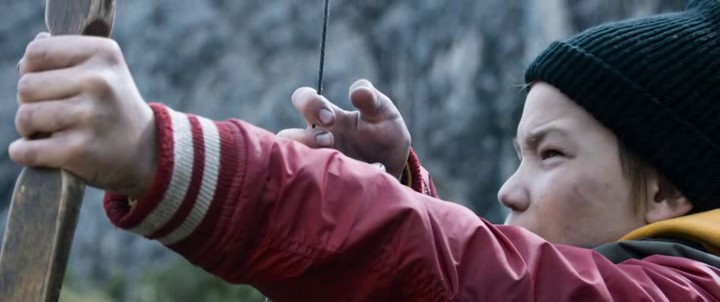
Our little protagonist for the Big Game is thirteen-year-old Oskari (Onni Tommila), who is sent into the wilds of Finland’s forests to bring back a deer to prove his manhood.  Note: I’m not one to criticise another culture’s traditions, but I think sending a kid alone into the vast wilderness, with nothing but an ATV and an old map seems a tad irresponsible. Even Oskari himself is unsure of his ability to pull of his trial of manhood, as he is unable to do the traditional “Pulling of the Bow” in front of his father and friends.
So we are to believe the adults in this movie are totally cool with sending a kid off into the wilderness to kill a deer, when the poor little guy can’t even loose an arrow properly?  They don't even seem to have supplied him with a radio to call for help if he gets hurt or lost. This is some tough parenting.


Our plucky hero.

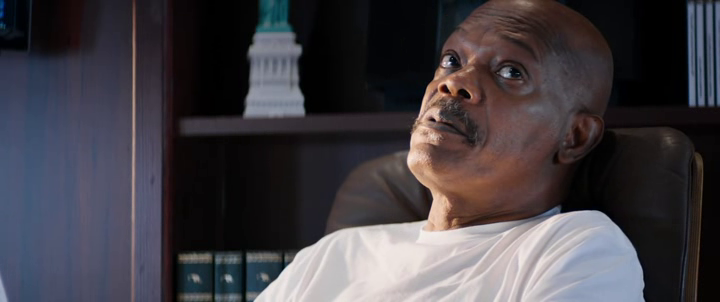
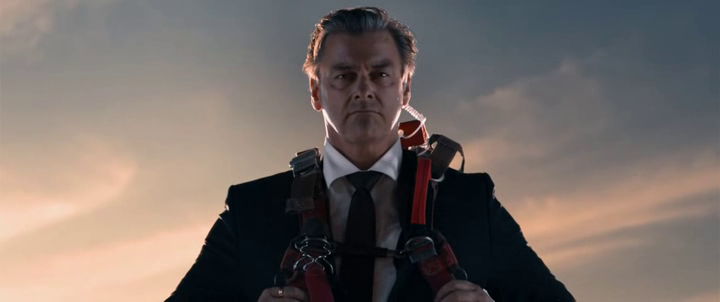
Of course, the “Big Game” that the title of this movie is referring to isn’t any ole deer, for flying across the skies of Finland is Air Force One, where The President of the United States is on route to a conference in Helsinki. US President William Alan Moore (Samuel L. Jackson) is considered by many as a “Lame Duck” president, and the only one who seems to be in his corner is his body-man Morris (Ray Stevenson), a disgruntled Secret Service agent who once took a bullet for Moore. If you have guessed that this trusted agent will betray the President, then you’ve probably seen Air Force One with Harrison Ford, where in that movie it also had the turncoat being the head of the President’s Secret Service detail. So don’t be expecting much originality out of this film.


“Who were you expecting, Morgan Freeman?”

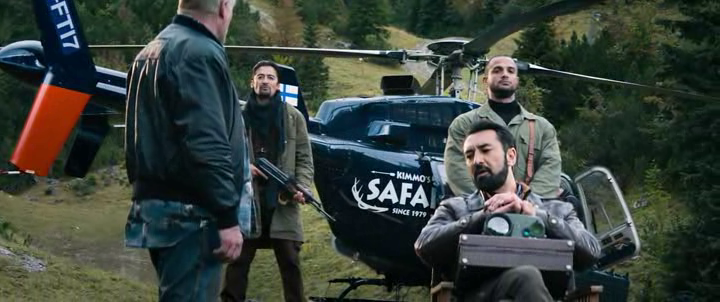
As in Air Force One, the villainous Secret Service agent isn’t working alone: on the ground there is a group of terrorists led by Hazar (Mehmet Kurtulus) — who is trying to be a mix between Alan Rickman’s Hans Gruber from Die Hard and Gary Oldman’s Egor Korshunov from Air Force One — but instead of coming across as even remotely threatening, we are treated to cartoonish levels of evil — they even pull out the old trope of him killing some of his own men, just to show how EVIL he is. This particular trope is one of my most hated, as the remaining henchman must realize their boss is either nuts or an idiot, and neither of those options could lead to a good ending, thus putting a bullet into the back of Hazar’s head, and calling it a day, is what any sane member of that team should do.


You do have to admire a villain who brings his own chair.

The movie finally gets going when Hazar has Air Force One blown out of the sky with a Chinese shoulder-launched missile. And exactly how is the most protected aircraft in the world brought down by this bunch of Middle Eastern yahoos? Well, Morris, our turncoat Secret Service agent, had managed to disable Air Force One’s countermeasures, which allowed this small shoulder-launched missile to get through, but then, we also see the five escort fight jets being blown up, and that makes no fucking sense. For this to have worked, we have to believe that the pilots, upon detecting an incoming missile, panicked and forgot that they were in one of the most maneuverable plane’s in existence, because I don’t buy for a second that a Secret Service agent would have had access to these planes to shut down their countermeasures, not to mention that he’d have to somehow remove their ability to maneuver as well.


Morris, the villain with unseen magical abilities.

Morris hustles The President into Air Force One’s escape pod telling him, “I will find you on the ground,” but once the pod is launched, we discover, not so shockingly, that Morris has betrayed his office, as his fellow Secret Service teammates parachute out after the President’s pod, only to find that none of their chutes open. The last remaining agent notices the chutes have failed before he jumps, and thus Morris is forced to shoot that poor observant dude in the head. It’s at this point that the film derails and becomes simply “A Boy’s Adventure Story,” but without any ounce of reason or logic. It’s when Air Force One crashes, scaring the crap out of poor Oskari, that the movie enters the “What the fuck portion” of our evening.

• The President’s escape pod cannot be opened from inside — a code must be entered on an exterior panel — but this means if the pod landed in water there is a good chance The President would drown. Not a good design in my opinion.
• When Oskari frees President Moore from the pod, the two begin their trek through the Finnish wilderness, but why? The President doesn’t know that the man coming to find the pod has betrayed him, so him leaving that area — the only place his people know where to find him — makes no sense whatsoever.
• Morris confidently walks up to an armed President Moore because he knows the gun's safety is on. Not only is the “Safety on” cliché so overused, but Morris is relying on Moore not finding the safety in the time it takes him to close the distance between them.
• In a moment that challenges the nuclear fridge scene from Indiana Jones and the Kingdom of the Crystal Skull for implausibility, Oskari and Moore survive being bounced down a mountainside while inside a freezer.


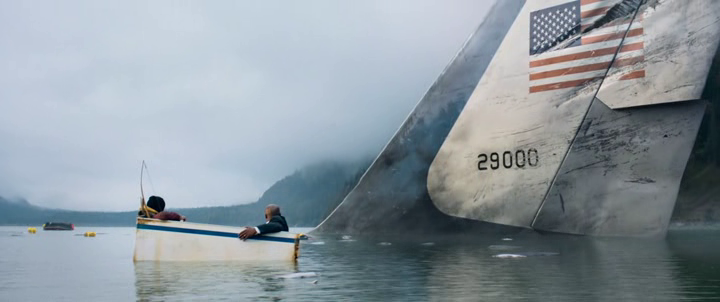
And it lands them right by the remains of Airforce One. *sigh*

The key difference between this film and the aforementioned Goonies and Home Alone is that those movies were family comedies and the villains were goofy hapless morons, but in Big Game, Morris and Hazar are not supposed to be incompetent, yet for some reason, the script keeps insisting that they are. Director Jalmari Helander hasn’t delivered a terrible film with Big Game, just one that is very disappointing, especially considering how good his dark holiday movie Rare Exports: A Christmas Tale was.  That film also starred Onni Tommila as the young boy trying his best to save the day, only in that outing it was done properly. If you are hunting for a good family adventure film, this is one that falls into the “Catch and Release” category, as its nonsensical script and implausible action, completely fails to really engage the viewer.

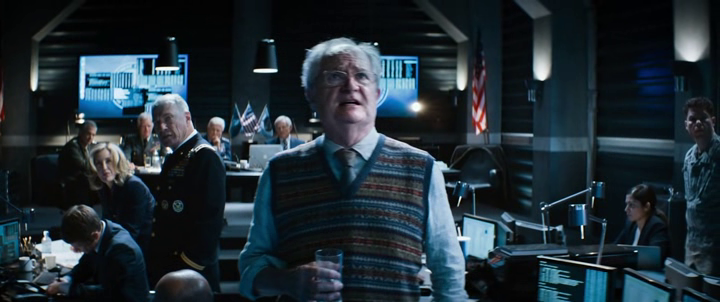
Note: To add insult to injury this film has quite the stellar supporting cast that includes Victor Garber, Felicity Huffman, Ted Levine and Jim Broadbent, and then it sticks them all in a room together to provide useless expository dialogue.