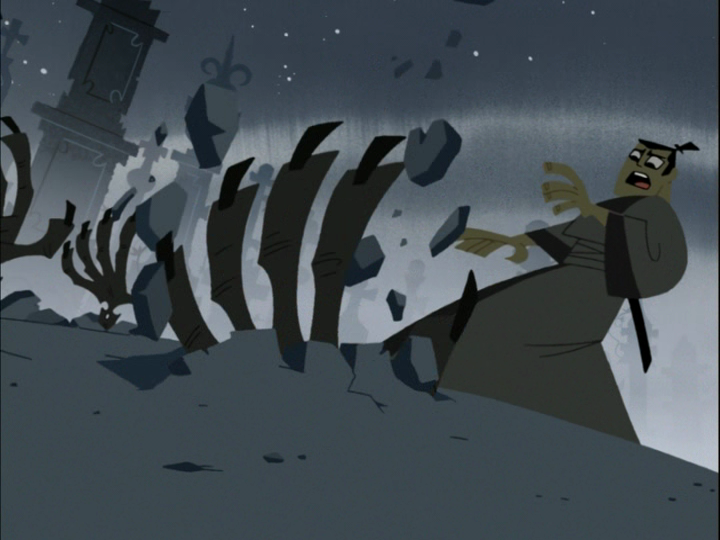
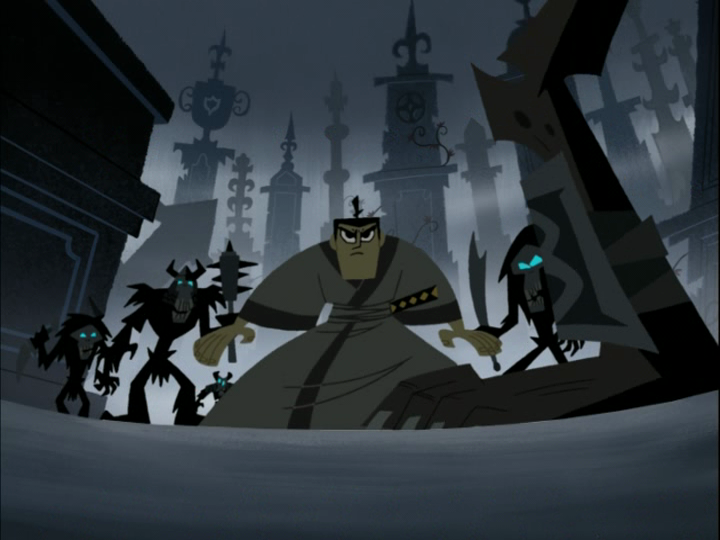
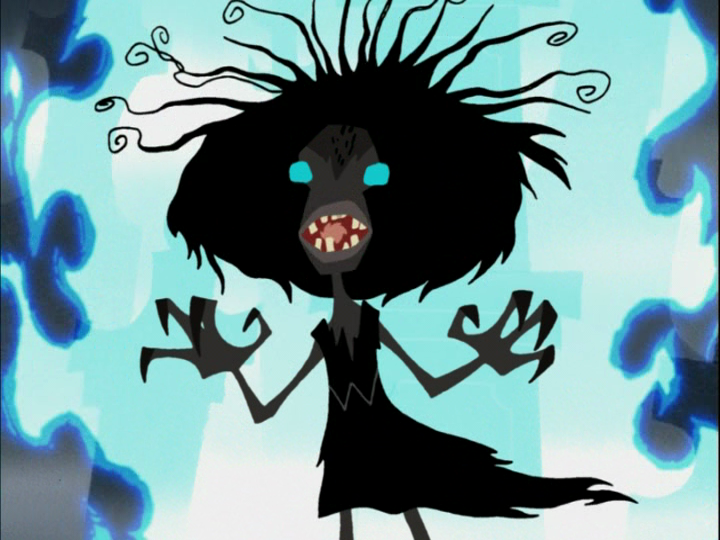
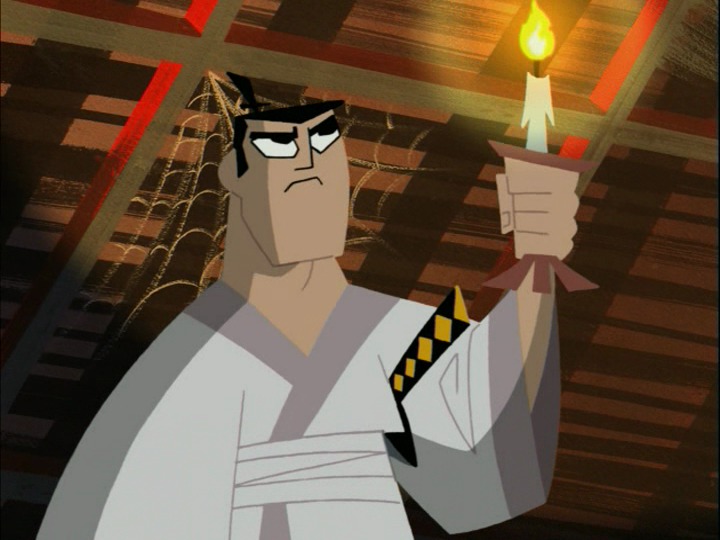
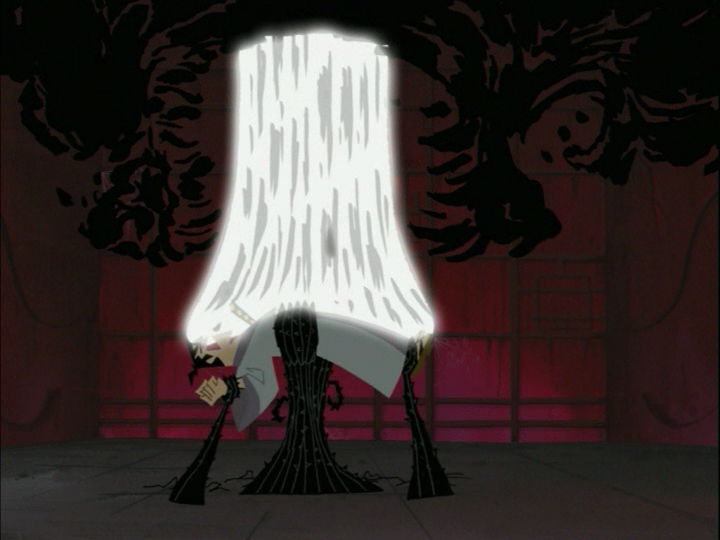
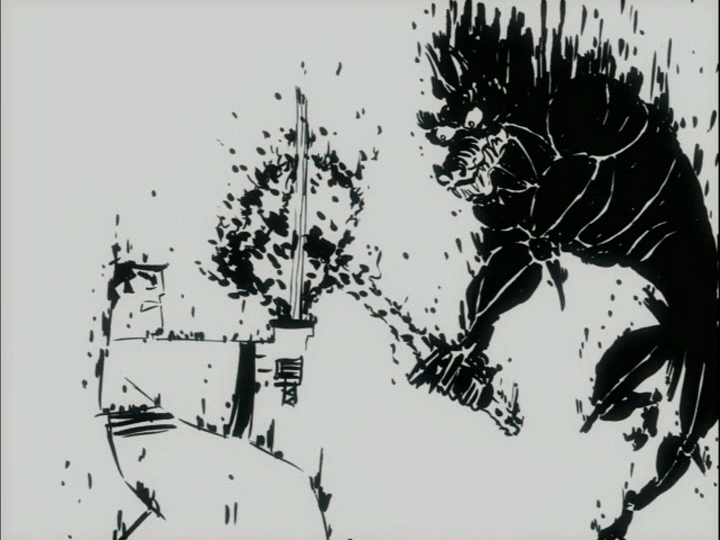
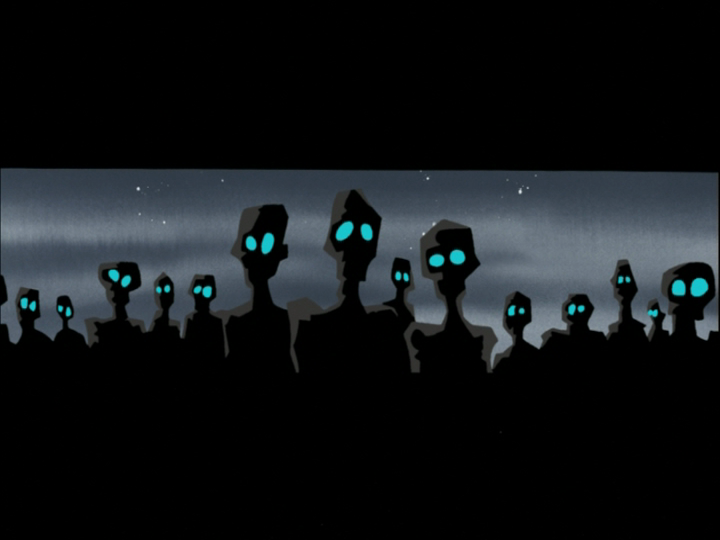
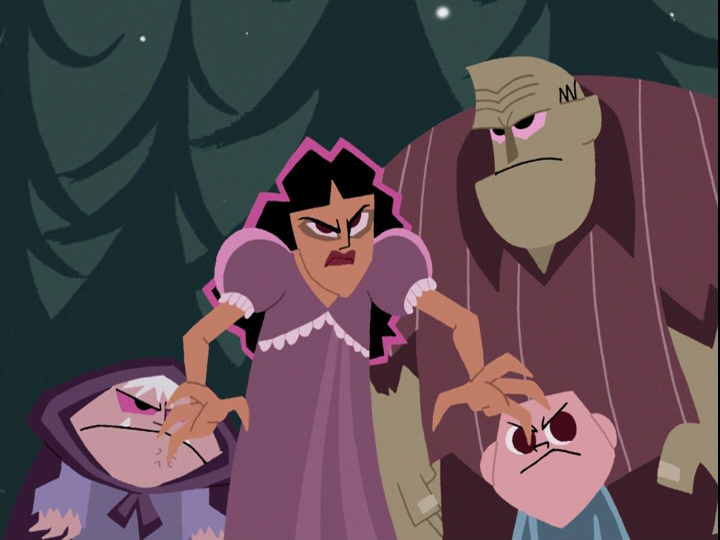
Samurai Jack was inspired by Tartakovsky's enjoyment of the Kung Fu televised drama starring David Carradine — the one Bruce Lee proposed but was then given to a white guy — but this animated series wasn’t at all limited to the martial arts drama as it bounced around genres from steampunk to high fantasy. Today, we will be looking at three particular episodes that dove headfirst into the realm of horror.
Thursday, March 19, 2020
Samurai Jack’s Trilogy of Terror
Back in 2001, the Cartoon Network gave birth to one of the greatest heroes of our time, that of the stoic champion Samurai Jack. Created by Genndy Tartakovsky, this animated series told the adventures of a nameless Samurai warrior who was sent forward in time to a dystopian future, one ruled by the tyrannical shape-shifting demon named Aku.
Monday, March 16, 2020
Haunter (2013) – Review
The best ghost stories have a central mystery at their heart, with the protagonist trying to figure who the ghost is and what it wants, but with 2013’s Haunter director Vincenzo Natali gives us more unique point-of-view as this teenage protagonist believes she is stuck in some kind of a time loop, but something much darker is going on.
Teenage Lisa Johnson (Abigail Breslin ) finds herself perpetually stuck on the eve of her sixteenth birthday, her family completely oblivious to the fact that they are living the same day over and over again. She is awoken each morning with the same broadcast over a walkie-talkie by her little brother Robbie (Peter DaCunha ), who wants her to come join him and his imaginary friend Edgar on their hunt for pirate treasure. Her mother (Michelle Nolden ) will cook the same mac & cheese dinner every day while also constantly wondering why some items are missing from the laundry. Her father (Peter Outerbridge ) spends most of his time in the garage trying to get the car to work so that the family can go out for Lisa’s birthday the following day, but that day never comes. Lisa repeatedly tries to explain to her parents that they’ve been living the same day again and again but this is, of course, chalked up to teen angst and she is ignored, and the situation is made worse by the fact that the family home is shrouded in an unending fog, making the claustrophobia of the situation even more appalling.
• If you are in a horror movie and your child has an invisible friend, GET OUT!
• That the Pale Man turns fathers into murderous assholes is maybe a little too close to the Jack Torrance character in Stephen King’s The Shining.
• Who buys the house of a notorious serial killer? Not only was this the home of a serial killer but the previous tenants all died as well. That does not give one a “Home Sweet Home” impression.
• Once again Ouija boards are notoriously unhelpful
• It’d be interesting to see a version of this movie from Olivia’s perspective.
• I'm not sure how the hidden murder room was never discovered, what with it having a very noticeable red door leading to it. The door couldn’t have been hidden behind a dryer forever. Are we supposed to believe the people who eventually drywalled over it never wondered where it led to?
Teenage Lisa Johnson (Abigail Breslin ) finds herself perpetually stuck on the eve of her sixteenth birthday, her family completely oblivious to the fact that they are living the same day over and over again. She is awoken each morning with the same broadcast over a walkie-talkie by her little brother Robbie (Peter DaCunha ), who wants her to come join him and his imaginary friend Edgar on their hunt for pirate treasure. Her mother (Michelle Nolden ) will cook the same mac & cheese dinner every day while also constantly wondering why some items are missing from the laundry. Her father (Peter Outerbridge ) spends most of his time in the garage trying to get the car to work so that the family can go out for Lisa’s birthday the following day, but that day never comes. Lisa repeatedly tries to explain to her parents that they’ve been living the same day again and again but this is, of course, chalked up to teen angst and she is ignored, and the situation is made worse by the fact that the family home is shrouded in an unending fog, making the claustrophobia of the situation even more appalling.
On the plus side, none of Stephen King’s monsters are lurking in this particular mist.
What at first seems like a typical Groundhog Day type time loop is quickly turned on its head when we get the reveal that Lisa and her family are dead. This is not a spoiler, don't worry on that point, as this revelation comes out pretty early on in the story, writer Brian King isn’t setting up things for a twist ending vis-à-vis The Sixth Sense or The Others as this movie is more about Lisa trying to solve the mystery of their deaths than it is of them being unknowing ghosts. Lisa is plagued by strange voices and is soon led to discover hidden rooms and secret journals that divulge the fact that their home once belonged to a serial killer, one who preyed on teenage girls for decades. Unfortunately, this investigation upsets said serial killer and soon the Pale Man (Stephen McHattie) makes his presence known.The Pale Man Always Rings Twice
This mysterious intruder makes it clear that “Whenever you hear strange noises in this house, or voices calling out to you, ignore them, pretend they don’t exist. If you try to contact the living, or anyone else, you and your family will suffer in ways you cannot fathom.” As Lisa and her family are already dead the idea that he can make things worse for them is rather chilling, and it’s clear that he has great power over the inhabitants of his house, living or dead. Needless to say, frightened or not, Lisa will get the bottom of this mystery and it’s while trying to figure out what’s the Pale Man’s whole deal is she has an encounter with Olivia (Eleanor Zichy) another sixteen-year-old girl and the current “living” resident of the house. While Lisa is trapped in ghostly limbo of 1984 she is somehow able to contact Olivia who lives with her own family in 2013 and its here that Lisa discovers that the Pale Man is still a threat to the living.He also loves mind games at dinner.
Stray Thoughts:• If you are in a horror movie and your child has an invisible friend, GET OUT!
• That the Pale Man turns fathers into murderous assholes is maybe a little too close to the Jack Torrance character in Stephen King’s The Shining.
• Who buys the house of a notorious serial killer? Not only was this the home of a serial killer but the previous tenants all died as well. That does not give one a “Home Sweet Home” impression.
• Once again Ouija boards are notoriously unhelpful
• It’d be interesting to see a version of this movie from Olivia’s perspective.
• I'm not sure how the hidden murder room was never discovered, what with it having a very noticeable red door leading to it. The door couldn’t have been hidden behind a dryer forever. Are we supposed to believe the people who eventually drywalled over it never wondered where it led to?
“This probably leads to another dimension, best to leave it alone.”
The basic premise to Haunter is an intriguing one and does keep the viewing guessing throughout its ninety-minute runtime, but what really makes this film tick is the fantastic cast that Vincenzo Natali managed to assemble here, and none stand out more than the wonderful Abigail Breslin. It’s her terror and tenacity to save her family that keeps one invested in the film, that she and her family can’t simply just “Get Out” adds a nice wrinkle to the horror genre. This isn’t a simple serial-killer murder mystery, with a soul collecting ghost how could it be, but Haunter also works as a nice empowering film for young girls, which is rather nice. If you are tired of ghost stories with relentless jump scares than do yourself a favour and track down this little gem.And don’t forget to bring your flashlight to bed.
Thursday, March 12, 2020
Hercules in the Haunted World (1961) – Review
When it comes to mythological heroes none hold a candle to the great demi-god Heracles, or at least when put in the context of big-screen appearances as he’s appeared in dozens of films ranging from low the budget Italian Sword & Sandal films to the big Hollywood films like Disney’s animated Hercules and the 2014 Hercules starring Duane “The Rock” Johnson. Today we will be looking at an example of the former, and one of my personal favourite adventures featuring this proto-superhero, Mario Bava’s Hercules in the Haunted World.
When it comes to adapting Greek mythology to the big screen filmmakers tend to play fast and loose with the source material but as over the centuries these myths have been told and retold in a variety of ways this is an instance where I can be a little forgiving – though I do still want to see a Heracles movie where he is driven crazy by Hera and murders his family – and in the case of Hercules in the Haunted World or as it’s more properly known "Hercules at the center of the Earth" we have the brilliant Mario Bava at the helm, a man who is a master of painting with light and colour. What is even more impressive, after a viewing of this movie, is that this production mostly shot with the use of just four columns and one wall with a door, everything else was achieved by models, optical effects and forced perspective and all done in-camera. Bava’s skills as a director are more than matched by his brilliance as a cameraman and cinematographer.
Trivia Note: Mister Universe winner Reg Park though 6’ 1” tall still had to stand on a box so that he could properly face off against the 6' 5" Christopher Lee.
Any proper hero has to have a good sidekick and in the case of Hercules in the Haunted World everyone’s favourite demi-god is paired up with Theseus (George Ardisson ), a Greek hero in his own right and mythical founder of Athens, but who in this adventure serves more as Hercules’ horn-dog wingman than he does as a proper adventuring partner. We are first introduced to him as he is making out with the beautiful Jocasta (Ely Drago ), who herself was engaged to marry this film’s comic relief Telemachus (Franco Giacobini ), who doesn’t seem to mind that he is being cuckolded by Theseus, in fact, they become fast friends and he eagerly joins Hercules and Theseus on their adventure into the underworld for virtually no reason.
Mythological Side Note: Telemachus was the son of Odysseus and Penelope, and a central character in Homer's Odyssey, and certainly not the comedic third banana as portrayed in this film.
Lico suggests that Hercules should consult oracle Medea (Gaia Germani) to find a way to free Deianira from this crippling malady and it is from this oracle that Hercules learns that the only way to free his beloved’s mind is with the “Stone of Forgetfulness” which, unfortunately, is located deep within the Underworld, but worse is the fact that to get this information he had to offer up his immortality to Zeus as payment. Sadly, the screenwriters forgot this little exchange for at no point in the film does Hercules’ loss of immortality affect him one iota.
Mythological Side Note: Medea was a key player in the adventures Jason and the Argonauts and is known in most stories as a sorceress, often depicted as a priestess of the goddess Hecate, but there is no mention of her having a sideline as an oracle.
However, to gain access to the underworld he will have to retrieve the mysterious golden apple from the Land of the Hesperides. Thus begins the film’s true adventure as our trio of “heroes” fight a psychotic brute who owns the magical ship they’ll need to reach Hesperides, climb the unclimbable tree to acquire the golden apple, then battle Procrustes, a bloodthirsty stone demon who had enslaved the women of the island on behalf of the god Pluto, cross a massive moat of bubbling lava to retrieve the Stone of Forgetfulness, than sail back through stormy seas – caused by a pissed off Pluto because Theseus had fallen madly in love with Persephone and smuggled her out aboard their boat – and then finally facing off against the now revealed villainy of Lico and his army of the dead.
• Can’t successfully climb the tree to retrieve the golden apple? Just throw a large rock at it instead.
• Need a way into the Underworld? Why not throw a rock monster threw the cavern wall that will then reveal a passageway into Hades itself?
• The island holding the Stone of Forgetfulness is surrounded by a lava field, so why not throw a large rock to carry a cable across?
• The evil Lico is about to drain the blood of your betrothed, why not throw a large rock at him?
• The army of the dead are swarming out of the darkness, why not throw a lot of large rocks at them?
When it comes to adapting Greek mythology to the big screen filmmakers tend to play fast and loose with the source material but as over the centuries these myths have been told and retold in a variety of ways this is an instance where I can be a little forgiving – though I do still want to see a Heracles movie where he is driven crazy by Hera and murders his family – and in the case of Hercules in the Haunted World or as it’s more properly known "Hercules at the center of the Earth" we have the brilliant Mario Bava at the helm, a man who is a master of painting with light and colour. What is even more impressive, after a viewing of this movie, is that this production mostly shot with the use of just four columns and one wall with a door, everything else was achieved by models, optical effects and forced perspective and all done in-camera. Bava’s skills as a director are more than matched by his brilliance as a cameraman and cinematographer.
When you sit down to a Mario Bava film you are in for a visual feast.
This particular adventure finds Hercules (Reg Park) heading home to marry his betrothed, the lovely Princess Deianira (Leonora Ruffo ), who also happens to be heir to the throne, unfortunately, her father has recently died but instead of assuming the mantle of Queen the throne has been usurped by her uncle Lico (Christopher Lee ). Lico sadly informs Hercules that this is due to Deianira having fallen sick, seemingly lost in a mindless haze where she can’t even recognize her beloved Hercules and that he has taken the throne and hidden her illness from the people so as not to cause a panic. Of course, this is complete bullshit, as he has allied himself with the forces of darkness to become an immortal ruler, and because Lico is being played by Christopher Lee this alone should have tipped off Hercules that something shady was going on.Trivia Note: Mister Universe winner Reg Park though 6’ 1” tall still had to stand on a box so that he could properly face off against the 6' 5" Christopher Lee.
Any proper hero has to have a good sidekick and in the case of Hercules in the Haunted World everyone’s favourite demi-god is paired up with Theseus (George Ardisson ), a Greek hero in his own right and mythical founder of Athens, but who in this adventure serves more as Hercules’ horn-dog wingman than he does as a proper adventuring partner. We are first introduced to him as he is making out with the beautiful Jocasta (Ely Drago ), who herself was engaged to marry this film’s comic relief Telemachus (Franco Giacobini ), who doesn’t seem to mind that he is being cuckolded by Theseus, in fact, they become fast friends and he eagerly joins Hercules and Theseus on their adventure into the underworld for virtually no reason.
Mythological Side Note: Telemachus was the son of Odysseus and Penelope, and a central character in Homer's Odyssey, and certainly not the comedic third banana as portrayed in this film.
Lico suggests that Hercules should consult oracle Medea (Gaia Germani) to find a way to free Deianira from this crippling malady and it is from this oracle that Hercules learns that the only way to free his beloved’s mind is with the “Stone of Forgetfulness” which, unfortunately, is located deep within the Underworld, but worse is the fact that to get this information he had to offer up his immortality to Zeus as payment. Sadly, the screenwriters forgot this little exchange for at no point in the film does Hercules’ loss of immortality affect him one iota.
Mythological Side Note: Medea was a key player in the adventures Jason and the Argonauts and is known in most stories as a sorceress, often depicted as a priestess of the goddess Hecate, but there is no mention of her having a sideline as an oracle.
However, to gain access to the underworld he will have to retrieve the mysterious golden apple from the Land of the Hesperides. Thus begins the film’s true adventure as our trio of “heroes” fight a psychotic brute who owns the magical ship they’ll need to reach Hesperides, climb the unclimbable tree to acquire the golden apple, then battle Procrustes, a bloodthirsty stone demon who had enslaved the women of the island on behalf of the god Pluto, cross a massive moat of bubbling lava to retrieve the Stone of Forgetfulness, than sail back through stormy seas – caused by a pissed off Pluto because Theseus had fallen madly in love with Persephone and smuggled her out aboard their boat – and then finally facing off against the now revealed villainy of Lico and his army of the dead.
The creepy risen dead are truly one of the film’s highlights.
As adventure films go Hercules in the Haunted World is a very enjoyable and fun romp, with Reg Park giving us a very affable and charismatic version of the legendary Hercules, and when it comes to onscreen villainy you can’t find a greater example than that of the amazing Christopher Lee, who even when badly dubbed is still terrifying. The plot of the movie itself is the film’s only true failing as it’s clear that Mario Bava and the screenwriters were re-writing drafts while the film was being shot, this most noticeably in such cases as our heroes needing the golden apple to reach the underworld safely but the Land of the Hesperides looked to be very much within the underworld.This certainly looks like the underworld to me.
Theseus and Telemachus wander in and out of scenes as if looking for missing script pages and some of the “Labours of Hercules” depicted her make little to no sense. For example, the Stone of Forgetfulness is located on an island surrounded by molten lava, so Hercules tosses a line from the shore to the island so that he can go hand-over-hand to reach his goal, but when only halfway across he declares this tactic safe and beckons Theseus to join him. What the fuck for? It’s a bloody island so there is no need for Theseus to come along as once Hercules gains the stone he has to return via this selfsame rope bridge, but instead of doing the sensible thing and telling Hercules to “Get fucked” he follows along and ends up falling into the bubbling lava below.“No thanks, Hercules, I'll wait here until you get back.”
This was, of course, just to facilitate Theseus becoming separated from Hercules so that he could meet up with Persephone – who in the Italian version is now the favourite daughter of Pluto and not his wife – and yet this bizarre relationship between Theseus and Persephone also goes literally nowhere and is wrapped up by her making Theseus forget she ever existed. As they fell in love over a period of about thirty seconds maybe that’s not all that bad, but then the movie then has the balls to end with Theseus once again stealing Telemachus’ fiancé. What a complete dick!"Herc, you got yours, where's mine?"
Now, intricate plot structure and scintillating characterizations are not something one should expect from a typical Sword & Sandal flick, what fans want is some cool Herculean action, and in the case of Hercules in the Haunted World, we do get our fair share of that, though it does tend to revolve around Hercules throwing a rock.• Can’t successfully climb the tree to retrieve the golden apple? Just throw a large rock at it instead.
• Need a way into the Underworld? Why not throw a rock monster threw the cavern wall that will then reveal a passageway into Hades itself?
• The island holding the Stone of Forgetfulness is surrounded by a lava field, so why not throw a large rock to carry a cable across?
• The evil Lico is about to drain the blood of your betrothed, why not throw a large rock at him?
• The army of the dead are swarming out of the darkness, why not throw a lot of large rocks at them?
There’s no problem that can’t be solved with a big enough rock.
Of course, the real reason to watch Hercules in the Haunted World is for the gorgeous cinematography provided by Mario Bava and in that case this film does not disappoint, as we are basically assaulted from frame one with most eye-catching visuals, threadbare sets that are made to look amazing, and the stunning use of colour is incomparable by any standard. This may not be a perfect depiction of the legendary hero Hercules – him actually being more likable here than in the Greek myths – but as a beautiful fantasy “epic” you could do a lot worse than Hercules at the center of the Earth.Monday, March 9, 2020
Tentacles (1977) – Review
Steven Spielberg’s summer blockbuster Jaws has spawned so many rip-offs that it has almost become a genre all its own – with Star Wars rip-offs being the only rival in sheer numbers – but today we will look back at one of the early rip-offs by those crazy Italians, a film called Tentacles. With this film, director Ovidio G. Assonitis decided to go with a monster of the sea other than a killer shark and so he chose a giant octopus for his movie’s aquatic antagonist, with eight arms to hold you, sadly we aren’t talking “giant” as in Ray Harryhausen’s classic monster movie It Came from Beneath the Sea but instead we get an octopus slightly bigger than your average skiff.
The plot of Tentacles centers on crusading reporter Ned Turner (John Huston ), who believes that the recent bizarre deaths of a baby and a peg-legged sailor all portends an upcoming catastrophe, and then we have marine biologist Will Gleason (Bo Hopkins ) who is brought in to discover what is ratcheting up the death toll in Solana Beach, California. This film has all the standard tropes of the genre, such as the authorities trying to downplay the deaths so as not to cause a panic – in this instance, it’s Sheriff Robards (Claude Akins ) – and we also have scenes of the medical examiner being unable to explain what could have caused the skeletons to be stripped clean, which is all to set-up the standard hero claim of “This was no boating accident.”
Note: The performance of Bo Hopkins in this film ranges from lethargic to catatonic.
We do get a subplot about the illegal testing of high-pitched frequencies in an underwater tunnel construction project, which is what has pissed off the giant octopus and caused its feeding frenzy, and this leads to scenes with Mr. Whitehead (Henry Fonda ), the president of Trojan Construction - which sadly has nothing to do with the mass production of condoms - who argues with his lackey (Cesare Danova) cutting corners for these tests, yet this development is never actually resolved and seems to exist for sole purpose of padding out the film's runtime and providing a paycheck for another slumming Academy Award-winning actor. Unfortunately, John Huston and Henry Fonda aren’t the only Hollywood legends dragged into the mess, we also have Shelley Winters as Ned Turner’s promiscuous sister, and her contribution to the film is to shuffle around two little boys who want to enter the local junior yacht race.
• Composer Stelvio Cipriani's use of a harpsichord for the creature’s main theme was a rather odd choice and doesn’t quite match up to the theme for Jaws by John Williams.
• John Huston and Shelley Winters both starred together in another Italian classic called The Visitor, and that film made about as much sense as this one but was, at least, a lot more entertaining.
• The film was horribly dubbed but what is even worse is that many of the incidental characters were dubbed by Italian actors with heavy Italian accents. A strange decision considering the film is set in California.
• A flotilla of kids being harassed by an aquatic monster was a key element of Jaws 2.
• The day is saved by the two “Sea World” attractions coming to the rescue, which was later used as a plot element in Jaws 3-D. It’s nice to see American studios ripping off the Italian rip-offs.
• Tentacles does have a much higher body count than Jaws but Ovidio G. Assonitis failed to make us care about any of them.
• The murky underwater photography and lack of good monster shots are the chief failings in this film.
The plot of Tentacles centers on crusading reporter Ned Turner (John Huston ), who believes that the recent bizarre deaths of a baby and a peg-legged sailor all portends an upcoming catastrophe, and then we have marine biologist Will Gleason (Bo Hopkins ) who is brought in to discover what is ratcheting up the death toll in Solana Beach, California. This film has all the standard tropes of the genre, such as the authorities trying to downplay the deaths so as not to cause a panic – in this instance, it’s Sheriff Robards (Claude Akins ) – and we also have scenes of the medical examiner being unable to explain what could have caused the skeletons to be stripped clean, which is all to set-up the standard hero claim of “This was no boating accident.”
Note: The performance of Bo Hopkins in this film ranges from lethargic to catatonic.
We do get a subplot about the illegal testing of high-pitched frequencies in an underwater tunnel construction project, which is what has pissed off the giant octopus and caused its feeding frenzy, and this leads to scenes with Mr. Whitehead (Henry Fonda ), the president of Trojan Construction - which sadly has nothing to do with the mass production of condoms - who argues with his lackey (Cesare Danova) cutting corners for these tests, yet this development is never actually resolved and seems to exist for sole purpose of padding out the film's runtime and providing a paycheck for another slumming Academy Award-winning actor. Unfortunately, John Huston and Henry Fonda aren’t the only Hollywood legends dragged into the mess, we also have Shelley Winters as Ned Turner’s promiscuous sister, and her contribution to the film is to shuffle around two little boys who want to enter the local junior yacht race.
“I’d like to sign my son and his friend up for the Poseidon Adventure package.”
The production of Spielberg’s Jaws was infamous for the problems they had with the robotic shark “The shark is not working, repeat, the shark is not working” and Tentacles was not immune to these types of problems either as their $1 million life-sized replica of a giant octopus promptly sank to the bottom of the sea when they put it in the water. This resulted in the film having very little shots of the octopus attacking people, subjecting audiences to endless POV shots and horribly murky underwater moments with a real octopus. The few times a “puppet” of the giant octopus was used varied between the ridiculous and the outright lame and mostly consisted of the head of the octopus barreling through the water like the conning tower of a submarine.The octopus in Robert Altman’s Popeye was more convincing than this.
At one point in the film, Will Gleason entreats his two killer whales for their help in taking on the giant octopus, “I don't want it this way, but if I release ya and you go away, I want ya to know I'll understand. All right, enough said. I gotta go now. If you feel anything…you talk to me. Make some noises. I know people'll think we're crazy. Maybe we are...maybe we are.” I’m not sure if this particular monologue was intended to be moving, and you can tell Bo Hopkins was giving it the ole college try, but even the likes of Robert Shaw couldn’t have pulled off that ludicrous speech. That the two orcas didn’t tell him to go fuck himself is the only real surprising moment in this film.“Sorry, pal, we are off to free Willy.”
Stray Observations:• Composer Stelvio Cipriani's use of a harpsichord for the creature’s main theme was a rather odd choice and doesn’t quite match up to the theme for Jaws by John Williams.
• John Huston and Shelley Winters both starred together in another Italian classic called The Visitor, and that film made about as much sense as this one but was, at least, a lot more entertaining.
• The film was horribly dubbed but what is even worse is that many of the incidental characters were dubbed by Italian actors with heavy Italian accents. A strange decision considering the film is set in California.
• A flotilla of kids being harassed by an aquatic monster was a key element of Jaws 2.
• The day is saved by the two “Sea World” attractions coming to the rescue, which was later used as a plot element in Jaws 3-D. It’s nice to see American studios ripping off the Italian rip-offs.
• Tentacles does have a much higher body count than Jaws but Ovidio G. Assonitis failed to make us care about any of them.
• The murky underwater photography and lack of good monster shots are the chief failings in this film.
This is not my idea of a giant octopus.
This is what I call a giant octopus.
If Tentacles were to be convicted of anything it shouldn’t be for being a rip-off of Spielberg’s classic but, instead, it should be sentenced to the abyss for being monumentally boring. The Italian film The Last Shark was a much more entertaining Jaws rip-off, with its one goofy-as-hell puppet, while Tentacles is simply a soggy mess that provided mortgage payments for a trio of Hollywood legends. If you want to watch movies about a giant octopus on a rampage avoid this film and track down the superior films like It Came from Beneath the Sea instead.Thursday, March 5, 2020
The Invisible Man (2020) – Review
We must thank our lucky stars that Universal’s attempt at a Dark Universe imploded on impact, with Tom Cruise's The Mummy failing miserably, for without this cinematic misfire we most likely would never have gotten writer/director Leigh Whannell’s wonderful take on the classic H.G. Wells story The Invisible Man.
Other than the “invisible mad scientist” aspect of Leigh Whannell’s The Invisible Man there isn’t all that much to connect it with titular character created by H.G. Wells, there is the aforementioned mad scientist, and he does become invisible, but in this version, the story focuses more on the victim while the invisible man himself is relegated to very little screen time – visible or invisible – as he’s portrayed as more of an unrelenting malevolence rather than your standard movie villain.
We are first introduced to Cecilia Kass (Elisabeth Moss) as she methodically makes her well-planned escape from her fiancé, tech tycoon Adrian Griffin (Oliver Jackson-Cohen), a cruel and controlling bastard whose mental and physical abuse has pushed her to the breaking point. With the help of her sister Alice (Harriet Dyer) and best friend James Lanier (Aldis Hodge) she slowly tries to recover from this abusive relationship, greatly helped by news that Adrian has committed suicide, but this is not going lead to an easy happily-ever-after for poor Cecilia. The movie wastes no time in getting to the invisible shenanigans as absolutely not dead Griffin quickly continues his manipulative torture of Cecilia, only now aided by the fact that he’s invisible. How is this possible, did he drink some diabolical potion? Nope, turns out that Griffin was a leader in optic science and has somehow built a suit made up of hundreds of little cameras that are able to create the perfect camouflage.
Stray Observations:
At a glance, this film looks like a science fiction remake of Sleeping with the Enemy, with Elisabeth Moss stepping into the Julia Roberts role, but Leigh Whannell has the ability to take the basic premise of an abusive relationship and then spin it in several different directions while adding on a few fresh moments of utter terror and paranoia. Now, Whannell was definitely not re-inventing the wheel here, despite the invisibility potion being swapped out for a tech-suit we still get scenes of footsteps being left by invisible feet and rain revealing the villain, but the level of suspense he manages to create is staggering.
Finally, one cannot review this film without mentioning Elisabeth’s Moss outstanding performance as a woman pushed to the edge but who eventually gains the strength to push back. Some may accuse this film as having some sort of feminist agenda – a science fiction Me Too movie as you will – but I simply found it to be an excellent thriller that kept one nailed to your seat for its entire runtime. Political messaging need not apply.
Other than the “invisible mad scientist” aspect of Leigh Whannell’s The Invisible Man there isn’t all that much to connect it with titular character created by H.G. Wells, there is the aforementioned mad scientist, and he does become invisible, but in this version, the story focuses more on the victim while the invisible man himself is relegated to very little screen time – visible or invisible – as he’s portrayed as more of an unrelenting malevolence rather than your standard movie villain.
We are first introduced to Cecilia Kass (Elisabeth Moss) as she methodically makes her well-planned escape from her fiancé, tech tycoon Adrian Griffin (Oliver Jackson-Cohen), a cruel and controlling bastard whose mental and physical abuse has pushed her to the breaking point. With the help of her sister Alice (Harriet Dyer) and best friend James Lanier (Aldis Hodge) she slowly tries to recover from this abusive relationship, greatly helped by news that Adrian has committed suicide, but this is not going lead to an easy happily-ever-after for poor Cecilia. The movie wastes no time in getting to the invisible shenanigans as absolutely not dead Griffin quickly continues his manipulative torture of Cecilia, only now aided by the fact that he’s invisible. How is this possible, did he drink some diabolical potion? Nope, turns out that Griffin was a leader in optic science and has somehow built a suit made up of hundreds of little cameras that are able to create the perfect camouflage.
Perfect unless some throws paint at you.
Cecilia quickly comes to the realization that Griffin may not be as dead as one would hope – we get many scenes of her looking around a room seemingly sure that she is being watched – with the camera brilliantly utilizing negative space to have us guessing if there is someone there or not – unfortunately no one else is buying her “He faked his suicide” theory and that he’s been planning to exact revenge on her ever since. As the film progresses Griffin’s dastardly invisible tricks start to drive those close to Cecilia away, leaving her even more vulnerable to his twisted games, and for the bulk of this film’s two-hour running time we the viewer feel as trapped as Cecilia, with the feeling of dread and suspense becoming an almost a palpable force.Stray Observations:
- Adrian Griffin’s shares the surname of the original Invisible Man by H.G. Well.
- The is suit covered in small camera’s that resemble eyes, which could be a nod to the Greek god Argus who has been described as having multiple, often one hundred, eyes. Which is fitting for a character with a bit of a god complex as Adrian Griffin does.
- The character in the original Wells novel was driven insane by the invisibility formula; in this movie he was pretty much insane from the get-go.
- Adrian was said to be the founder of a company called Cobol, which was also the fictional company that the hero’s wife worked for Whannell’s previous film Upgrade. Shared universe, perhaps?
- The suit must be covered in some amazing Teflon like surface as it sheds paint and blood quickly and easily.
- This film’s budget was probably about the same as Tom Cruise’s dry cleaning budget on The Mummy.
At a glance, this film looks like a science fiction remake of Sleeping with the Enemy, with Elisabeth Moss stepping into the Julia Roberts role, but Leigh Whannell has the ability to take the basic premise of an abusive relationship and then spin it in several different directions while adding on a few fresh moments of utter terror and paranoia. Now, Whannell was definitely not re-inventing the wheel here, despite the invisibility potion being swapped out for a tech-suit we still get scenes of footsteps being left by invisible feet and rain revealing the villain, but the level of suspense he manages to create is staggering.
Finally, one cannot review this film without mentioning Elisabeth’s Moss outstanding performance as a woman pushed to the edge but who eventually gains the strength to push back. Some may accuse this film as having some sort of feminist agenda – a science fiction Me Too movie as you will – but I simply found it to be an excellent thriller that kept one nailed to your seat for its entire runtime. Political messaging need not apply.
Monday, March 2, 2020
It Came from Beneath the Sea (1955) – Review
The threat of nuclear annihilation the Cold War may have been what kept people on edge during the 50s and 60s, with people building fallout shelters in their backyards, but without it we wouldn’t have had so many fun atomic fueled monster movies. One of the earliest examples of this would be the Ray Harryhausen classic The Beast from 20,000 Fathoms, where atomic testing in the Artic frees a prehistoric menace from the ice, but then a mere two years later Harryhausen was at it again with the testing of a hydrogen bomb once again pissing off a giant creature, but where did this creature come from this time, you ask? The answer to that is, It Came from Beneath the Sea.
The movie opens with the testing of a new nuclear-powered submarine which has its maneuvers interrupted by a massive sonar contact, a contact that starts pursuing the sub and it’s up Commander Pete Mathews (Kenneth Tobey ) to save his crew from this mysterious foe. Once the submarine is able to escape the grip of this unknown force, which caused some damage to the sub’s diving planes, they return to Pearl Harbour to discover a surprisingly large chunk tissue jammed into the mechanism. A co-ed team of marine biologists, Professor Lesley Joyce (Faith Domergue ) and John Carter (Donald Curtis ) of Harvard University are called in to identify the tissue, but the United States Navy isn’t all that thrilled that after four weeks of testing their conclusion they come up with is that the tissue is that of a giant octopus.
After their findings are ignored Joyce and Carter were to be released from duty – a duty they were basically conscripted by the Navy to perform – and return to their regular scheduled academic lives, unfortunately, a few more nautical mishaps occur which has the Navy re-thinking that they may have been a trifle too hasty dismissing the findings of the two eggheads.
Budget Note: Ray Harryhausen purchased the model used for the Tramp Steamer that is sunk by the giant octopus from a Five and Dime store.
The very feel of It Came from Beneath the Sea is that of a documentary, with narration and exposition doing its best to make the idea of a giant octopus seeming like a credible threat, but another more insidious threat that rears its ugly head in this film would be the rampant male chauvinism. The character of Commander Pete Mathews is most definitely a product of the times – he wouldn’t survive ten minutes in the "Me Too" movement – but strangely enough, the screenplay has him facing off against a quite modern woman. Professor Lesley Joyce is not your typical damsel in distress as she is a capable and career-driven woman and it’s her work that leads to defeating the monster. She is a woman of science, independent of the men around her, and yet this film has her falling in love with a guy who sees nothing wrong with dragging a woman onto the dance floor and kissing her against her will. Worse is the fact that after two minutes of said dancing and lip mashing he assumes that she is going to cancel her planned scientific excursion to Egypt with Carter so that she can settle down with him and start knitting baby booties. When he is shot down he has the nerve to turn to Carter and offer this wonderful bon mot, “Do you mind if I make a mental comment upon the nature of women?”
Budget Note: Due to budgetary restraints the giant octopus in this film has six arms, not the normal eight. Harryhausen posed the creature so this lack of the right number of arms wasn't apparent.
Of course, it’s this monstrous rampage that audiences have paid their two bits to see and Ray Harryhausen doesn’t disappoint – love triangles and sexism were just there to pad the running time between monster appearances – and when the beast rises out of the depth we get some spectacular examples of Harryhausen’s trademark Dynamation technique. It was a viewing of The Beast from 20,000 Fathoms that inspired producer Charles Schneer to call Ray Harryhausen with the idea of a giant octopus destroying pulling down the Golden Gate Bridge – which started a partnership that lasted twenty-six years – and the film doesn’t stint on that premise, we definitely get to see this massive sea monster wrap its massive arms around this now iconic landmark.
Production Note: City officials refused the production access to the bridge for filming because they feared a movie featuring a giant octopus tearing down the Golden Gate Bridge would cause the public to lose faith in the bridge’s stability. This did not stop Harryhausen and friends as they proceeded to take background plates by shooting out of the back of a bakery truck which they drove back and forth across the bridge.
An obvious stumbling block when dealing with a title creature that resides in the sea is in figuring out its threat level, because though a sea monster is an awesome menace it does cause one to wonder, “How can it be a threat to anything other than people on boats?” It Came from Beneath the Sea tackles this problem by utilizing the beast’s immensely long arms as it reaches out of the sea to snag its prey, whether they be inside a building or fleeing uselessly down a city street. Seeing the giant octopus tear down the Embarcadero and break into the Ferry Building gave viewers some of the best “Monsters Unleashed” moments in cinema history, and it was the proceeding sixty minutes of “Newsreel” type seriousness that really helped sell the ludicrousness of the last act.
The movie opens with the testing of a new nuclear-powered submarine which has its maneuvers interrupted by a massive sonar contact, a contact that starts pursuing the sub and it’s up Commander Pete Mathews (Kenneth Tobey ) to save his crew from this mysterious foe. Once the submarine is able to escape the grip of this unknown force, which caused some damage to the sub’s diving planes, they return to Pearl Harbour to discover a surprisingly large chunk tissue jammed into the mechanism. A co-ed team of marine biologists, Professor Lesley Joyce (Faith Domergue ) and John Carter (Donald Curtis ) of Harvard University are called in to identify the tissue, but the United States Navy isn’t all that thrilled that after four weeks of testing their conclusion they come up with is that the tissue is that of a giant octopus.
“A rampaging dinosaur is one thing but a giant octopus is just silly.”
What is interesting about It Came from Beneath the Sea is that unlike the giant ants in Them the radiation from the atomic testing isn’t directly blamed for the existence of a giant octopus but that of the hydrogen bomb which has made the already giant creature radioactive. This resulted in its natural food supply being driven away, other fish being able to sense the radiation and flee, thus forcing the octopus to leave it’s natural habitat deep within the Philippine Trench to look for a new source of food.After their findings are ignored Joyce and Carter were to be released from duty – a duty they were basically conscripted by the Navy to perform – and return to their regular scheduled academic lives, unfortunately, a few more nautical mishaps occur which has the Navy re-thinking that they may have been a trifle too hasty dismissing the findings of the two eggheads.
Budget Note: Ray Harryhausen purchased the model used for the Tramp Steamer that is sunk by the giant octopus from a Five and Dime store.
The very feel of It Came from Beneath the Sea is that of a documentary, with narration and exposition doing its best to make the idea of a giant octopus seeming like a credible threat, but another more insidious threat that rears its ugly head in this film would be the rampant male chauvinism. The character of Commander Pete Mathews is most definitely a product of the times – he wouldn’t survive ten minutes in the "Me Too" movement – but strangely enough, the screenplay has him facing off against a quite modern woman. Professor Lesley Joyce is not your typical damsel in distress as she is a capable and career-driven woman and it’s her work that leads to defeating the monster. She is a woman of science, independent of the men around her, and yet this film has her falling in love with a guy who sees nothing wrong with dragging a woman onto the dance floor and kissing her against her will. Worse is the fact that after two minutes of said dancing and lip mashing he assumes that she is going to cancel her planned scientific excursion to Egypt with Carter so that she can settle down with him and start knitting baby booties. When he is shot down he has the nerve to turn to Carter and offer this wonderful bon mot, “Do you mind if I make a mental comment upon the nature of women?”
Where’s a giant octopus when you need one?
Luckily for us, this budding romance is put on hold when that tramp steamer is sunk by "our hero" the giant octopus and the trio are then sent to investigate various other possible instances of cephalopod attacks. What follows is your standard B movie monster formula with our leads running about gathering information, newscaster reporting on the ever-increasing threat, and lots of stock footage of the military doing military type stuff, but through all that I’m still left with a big question “Why Commander Pete Mathews is involved at all with any of this?” Sure, he was the first person to encounter the creature but after filing his initial report that should have been the end of it, yet for some reason he’s given the job of babysitting Joyce and Carter while they try and figure out what attacked his sub. This is not the kind of position you’d think a commander of a nuclear submarine would be saddled with. All they needed was some ensign to answer the phone and say “They haven’t it figured out yet” but instead the United States Navy has Commander Pete Mathews sitting on his ass for bloody four weeks, doing nothing except hitting on Joyce. I could see his character being brought in at the end when they needed a submarine to shoot the octopus but his inclusion in the bulk of this film ranges from the awkward to cringe-inducing. Thank god the giant octopus finally goes on a decent rampage and we can forget about good ole Pete for a while.Budget Note: Due to budgetary restraints the giant octopus in this film has six arms, not the normal eight. Harryhausen posed the creature so this lack of the right number of arms wasn't apparent.
Of course, it’s this monstrous rampage that audiences have paid their two bits to see and Ray Harryhausen doesn’t disappoint – love triangles and sexism were just there to pad the running time between monster appearances – and when the beast rises out of the depth we get some spectacular examples of Harryhausen’s trademark Dynamation technique. It was a viewing of The Beast from 20,000 Fathoms that inspired producer Charles Schneer to call Ray Harryhausen with the idea of a giant octopus destroying pulling down the Golden Gate Bridge – which started a partnership that lasted twenty-six years – and the film doesn’t stint on that premise, we definitely get to see this massive sea monster wrap its massive arms around this now iconic landmark.
Production Note: City officials refused the production access to the bridge for filming because they feared a movie featuring a giant octopus tearing down the Golden Gate Bridge would cause the public to lose faith in the bridge’s stability. This did not stop Harryhausen and friends as they proceeded to take background plates by shooting out of the back of a bakery truck which they drove back and forth across the bridge.
An obvious stumbling block when dealing with a title creature that resides in the sea is in figuring out its threat level, because though a sea monster is an awesome menace it does cause one to wonder, “How can it be a threat to anything other than people on boats?” It Came from Beneath the Sea tackles this problem by utilizing the beast’s immensely long arms as it reaches out of the sea to snag its prey, whether they be inside a building or fleeing uselessly down a city street. Seeing the giant octopus tear down the Embarcadero and break into the Ferry Building gave viewers some of the best “Monsters Unleashed” moments in cinema history, and it was the proceeding sixty minutes of “Newsreel” type seriousness that really helped sell the ludicrousness of the last act.
“Come on people, move one block inland and this isn’t even a threat!”
It Came from Beneath the Sea was capably directed by Robert Gordon, a man known mostly for his television work, and he handles the actors well and manages to create the proper amount of tension, but it is the special effects work that labels this a “Ray Harryhausen Film” and as in the case of most of his films the actual directors themselves are mostly forgotten. It Came from Beneath the Sea may not be the best monster movie out there but one must admit that stop-motion animation by Harryhausen makes this a film that fans of the genre must-see.Thursday, February 27, 2020
Voyagers! (1982) – Review
Today if you turn on Netflix or Cable television you’ll most likely come across at least a half-dozen shows involving a variety of heroes travelling through time to fix history, including such shows as Timeless, The Librarians, and the Travelers, yet back in the 80s this was a relatively rare concept for television, other than Doctor Who and his companion's whose adventures weren’t limited to travelling through time as the Tardis took them across the galaxy as well, but there was one other notable pair of time travellers and that would be the characters of Phineas Bogg and Jeffrey Jones on Voyagers!
Airing on NBC during their 1982-1983 season Voyagers! introduced television viewers to the misadventures of time traveller Phineas Bogg (Jon-Erik Hexum), who due to a malfunctioning Omni – which is the small compass-like device that worked as this show’s time travel machine – ends up in the bedroom of a young orphan boy named Jeffrey Jones (Meeno Peluce). During the scuffle with Jeffrey’s dog, which had its teeth buried in Bogg’s Voyager Guidebook, the poor kid is knocked out of the window which forces Bogg to dive after him before Jeffrey becomes street pizza. Bogg activates his Omni before the two make a bad impression on New York City and he and Jeffrey are whisked through time until eventually landing on the banks of the river Nile circa 1450 BC.
Now, as fun and informative as this show was it wasn’t without some glaring flaws – though many of them were due to omissions of information that we may have learned if the show had lasted more than one season – and the biggest flaw would be the show’s lack of continuity. This being a show from the 80s a serialized story arc wasn’t something audience were expecting so these showrunners didn’t bother to give them one, but this resulted in a season that just bounced around – like its time-travelling heroes – without any real stakes. In the pilot episode, Bogg goes from being a bit of a scoundrel to a loving father figure to Jeffrey rather quickly, which luckily works because Jon Erik-Hexum and Meeno Peluce have such a wonderful natural chemistry between them that is truly heartwarming at times, but the events of each following adventure doesn’t seem to have much impact on either of these characters and considering one of them is just a kid you’d think this would be a given.
Stray Observations:
• Phineas and Jeffrey never seem to have any problem acquiring clothing after being dropped by the Omni into a particular time period. Are we to assume Bogg is able to quickly steal the necessary clothing? The two of them don’t seem to travel with money so buying the right attire is out of the question, and in one particular episode they get spare clothes from Billy the Kid, which raises the question, “Why was Billy the Kid carrying around clothes for a young kid like Jeffrey?”
• And where exactly do our two heroes keep their regular clothing? We see them jump back and forth through time wearing various period outfits, from Roman gladiatorial togs to Victorian suits, but by the next episode, we’ll be seeing Phineas Bogg back in his standard swashbuckling attire and Jeffrey in his trademark red and white striped shirt. Are these outfits stored in some kind of dimensional portal? And with all the action and mayhem these two find themselves in it’s hard to believe one pair of pants and shirt would survive for very long, also, who is cleaning and servicing them? Bogg certainly doesn’t seem to be the type to do laundry.
• The Omni only malfunctions when the plot requires it to – going into “automatic mode” and sending them off to some random time – but we do see Phineas and Jeffrey use the device to go to specific times, which leads to a big question, “If they fail on a particular mission why not use the Omni to go back and try again?” Would there be a paradox issue? Could it result in them running into previous versions of themselves? We learn very little about how time travel in this show works, and I doubt the writers gave it much thought either, but such a powerful device opens up a can of worms that this type of show must deal with eventually, lucky for them the show got cancelled before things got too messy.
• In the aforementioned episode "The Trial of Phineas Bogg" we learn that the council can track the Omnis used by each of their Voyagers and that they have been aware of Jeffrey joining up with Bogg, so why in the hell did they wait so long to step in? And though Bogg’s Omni was unable to take Jeffrey back to 1982 what was stopping Bogg from bringing Jeffrey before the council and asking them to take the kid home? Was his Omni unable to return to Voyage headquarters as well?
• In that same episode we meet an evil Voyager named Drake (Stephen Liska), a Voyager prosecutor who wants to see Bogg kicked out, he falsifies evidence to get a conviction, but we never get a handle on what his big plan was. We learn that he’d been getting a variety of other Voyagers “disbarred” as some kind of power play, but to what end? Does he plan on becoming the head honcho of the Voyagers and thus control all time and space? In the episode “Jack’s Back” – which was the last episode to air – we have Drake framing Phineas for the crimes committed by Jack the Ripper, but that was just a bonus as he’d already been 1888 London to screw with the timeline. And I’m left asking, “How does wrecking time advance Drake’s goals at all? Is he screwing things up just out of spite? Has Drake joined an Anti-Voyager organization?”
Voyagers! may not have been the “thinking man’s” science fiction series but no one can say it wasn't a helluva an entertaining ride, and if its short run got just a couple of kids interested history well that’s more than can be said about a lot of the stuff you find on television these days. So if you are looking for an exciting and fun journey through history set your Omni to 1982 and checks out Voyagers! you won’t be disappointed.
“We travel through time to help history along...give it a push where it's needed. When the Omni's red, it means history's wrong. Our job is to get everything back on track. Green light, kid! We did it!”
Airing on NBC during their 1982-1983 season Voyagers! introduced television viewers to the misadventures of time traveller Phineas Bogg (Jon-Erik Hexum), who due to a malfunctioning Omni – which is the small compass-like device that worked as this show’s time travel machine – ends up in the bedroom of a young orphan boy named Jeffrey Jones (Meeno Peluce). During the scuffle with Jeffrey’s dog, which had its teeth buried in Bogg’s Voyager Guidebook, the poor kid is knocked out of the window which forces Bogg to dive after him before Jeffrey becomes street pizza. Bogg activates his Omni before the two make a bad impression on New York City and he and Jeffrey are whisked through time until eventually landing on the banks of the river Nile circa 1450 BC.
“Please, no jokes about being in de-Nile.”
The wrinkle here is that the Omni was not supposed to reach any year later than 1970 but Jeffrey’s room was clearly in the year 1982 and it's because of this that the Omni is unable to return Jeffrey back to his own time. Not only is this bad but it becomes clear that without his Guidebook, which got left behind with Jeffrey’s dog, Bogg will have a hard time completing his missions as a Voyager. And who exactly are Voyagers and what is their mission, you ask? Unfortunately, the show was cancelled before we learned much about this mysterious group of time travellers, other than that a certain number of people have been plucked from various times and places to be brought to a Voyager training facility where they would be schooled on world history – Bogg being more interested in a cute girl in his class rather than learning history with this being the reason he ends up needing the encyclopedic Jeffrey – and then these “Voyagers” would be sent off to keep history on track. Questions like “Who set up this organization?” or “What is causing the deviations in time that need to be fixed?” were never addressed, and the episode "The Trial of Phineas Bogg" is the only real glimpse we get behind the curtain, where we find Bogg on trial for violating the Voyager Code.Are the Voyagers working for God or some other cosmic entity?
Lucky for Bogg Jeffrey’s late father just so happened to have been a history professor and Jeffrey himself is basically a walking talking history book. So with Jeffrey taking the place of the lost Guidebook Bogg is able to continue on with his job of fixing historical events, and this sets up the show’s basic formula. The Omni will literally drop them in on some particular time period – say Paris during the first world war – they learn that the Germans are winning due to their Zeppelin air superiority and Jeffrey would inform Phineas what is wrong with said events, such as the fact that the Germans should not be winning the war, which Jeffrey deduces is because the airplane hadn’t, for some reason, been invented yet. This leads to a second time jump where our heroes travel even further back and time to fix this problem, such as getting the Wright Brothers to stop fighting over a woman and invent the bloody airplane.Can two wrongs make a Wright?
For a show about time travelling adventures Voyagers! really delivers on its premise, as each and every week Phineas and Jeffrey bounce in and out of one crazy adventure after another as they try to push historical events back onto their proper course. They help Spartacus (Dan Pastorini) escape the Roman Coliseum so that he can lead the slave revolt, they prevent Teddy Roosevelt (Gregg Henry) from being killed by Billy the Kid (Frank Koppala), we see them run into the likes of Marco Polo (Paul Regina) and Lawrence Arabia (Judson Scott), and they even aid a fellow Voyager (Suzanne Barnes) in preventing the famous Mona Lisa painting from going down with the Titanic. What this resulted in was a show that wasn’t just a fun adventure series but an informative one, as the writers did their best to treat historical events fairly accurately – some fudging done to make it work for an hour-long episode was to be expected – and each episode would end with Meeno Peluce saying in voice-over, "If you want to learn more about Abe Lincoln or Charles Dickens, take a voyage down to your public library. It's all in books!"Now, as fun and informative as this show was it wasn’t without some glaring flaws – though many of them were due to omissions of information that we may have learned if the show had lasted more than one season – and the biggest flaw would be the show’s lack of continuity. This being a show from the 80s a serialized story arc wasn’t something audience were expecting so these showrunners didn’t bother to give them one, but this resulted in a season that just bounced around – like its time-travelling heroes – without any real stakes. In the pilot episode, Bogg goes from being a bit of a scoundrel to a loving father figure to Jeffrey rather quickly, which luckily works because Jon Erik-Hexum and Meeno Peluce have such a wonderful natural chemistry between them that is truly heartwarming at times, but the events of each following adventure doesn’t seem to have much impact on either of these characters and considering one of them is just a kid you’d think this would be a given.
One will lose track of how many near-death experiences this kid has.
There is no real connective tissue between one episode to the next – we even have Bogg meeting younger versions of historical figures that he’d run across on a previous missions but be completely unaware that they’d ever met before, and being that we have no clue if this job as a Voyager has an endgame it lessens a viewer’s investment. Will history be constantly in need of tune-ups?Stray Observations:
• Phineas and Jeffrey never seem to have any problem acquiring clothing after being dropped by the Omni into a particular time period. Are we to assume Bogg is able to quickly steal the necessary clothing? The two of them don’t seem to travel with money so buying the right attire is out of the question, and in one particular episode they get spare clothes from Billy the Kid, which raises the question, “Why was Billy the Kid carrying around clothes for a young kid like Jeffrey?”
• And where exactly do our two heroes keep their regular clothing? We see them jump back and forth through time wearing various period outfits, from Roman gladiatorial togs to Victorian suits, but by the next episode, we’ll be seeing Phineas Bogg back in his standard swashbuckling attire and Jeffrey in his trademark red and white striped shirt. Are these outfits stored in some kind of dimensional portal? And with all the action and mayhem these two find themselves in it’s hard to believe one pair of pants and shirt would survive for very long, also, who is cleaning and servicing them? Bogg certainly doesn’t seem to be the type to do laundry.
• The Omni only malfunctions when the plot requires it to – going into “automatic mode” and sending them off to some random time – but we do see Phineas and Jeffrey use the device to go to specific times, which leads to a big question, “If they fail on a particular mission why not use the Omni to go back and try again?” Would there be a paradox issue? Could it result in them running into previous versions of themselves? We learn very little about how time travel in this show works, and I doubt the writers gave it much thought either, but such a powerful device opens up a can of worms that this type of show must deal with eventually, lucky for them the show got cancelled before things got too messy.
• In the aforementioned episode "The Trial of Phineas Bogg" we learn that the council can track the Omnis used by each of their Voyagers and that they have been aware of Jeffrey joining up with Bogg, so why in the hell did they wait so long to step in? And though Bogg’s Omni was unable to take Jeffrey back to 1982 what was stopping Bogg from bringing Jeffrey before the council and asking them to take the kid home? Was his Omni unable to return to Voyage headquarters as well?
• In that same episode we meet an evil Voyager named Drake (Stephen Liska), a Voyager prosecutor who wants to see Bogg kicked out, he falsifies evidence to get a conviction, but we never get a handle on what his big plan was. We learn that he’d been getting a variety of other Voyagers “disbarred” as some kind of power play, but to what end? Does he plan on becoming the head honcho of the Voyagers and thus control all time and space? In the episode “Jack’s Back” – which was the last episode to air – we have Drake framing Phineas for the crimes committed by Jack the Ripper, but that was just a bonus as he’d already been 1888 London to screw with the timeline. And I’m left asking, “How does wrecking time advance Drake’s goals at all? Is he screwing things up just out of spite? Has Drake joined an Anti-Voyager organization?”
“It’s all elementary, my dear Jeffrey.”
Sure, some of those criticism could have been resolved if the show had been picked up for a second season, with elements like the organization behind the Voyagers being better explained, but I doubt it, mostly this kind of show was the product of the time and of this particular genre, as writers for a program such as Voyagers! weren’t expected to think “Big Picture” they were just worried about making an hour of fun and lighthearted entertainment. Of course, this sentiment didn't stop them from dabbling in such dramatic aspects of changing history in ways not directed by the Omni, such as Jeffrey wanting to warn people about such events as the attack on Pearl Harbor or the sinking of the Titanic, and then diving into such delightful episodes as "Cleo and the Babe" where Cleopatra (Andrea Marcovicci) is accidentally lost in 1920s New York City, where she then teams up with Lucky Luciano (Michael Gregory) to prevent Babe Ruth (William Lucking) from hitting is home run record."Should we call The Untouchables?"
A few years later legendary television producer Donald P. Bellisario would create a time-travelling gem called Quantum Leap, where physicist Sam Beckett would be sent through time by an unknown entity to correct historical mistakes, but unlike Voyagers! that series tackled events on a much smaller scale and also managed to last five seasons. The sad thing here is that Voyagers! could have lasted five seasons but idiot network execs cancelled the show so they could replace it with a news program to challenge CBS’s 60 Minutes, and they even failed at doing that as well.Voyagers! may not have been the “thinking man’s” science fiction series but no one can say it wasn't a helluva an entertaining ride, and if its short run got just a couple of kids interested history well that’s more than can be said about a lot of the stuff you find on television these days. So if you are looking for an exciting and fun journey through history set your Omni to 1982 and checks out Voyagers! you won’t be disappointed.
“We travel through time to help history along...give it a push where it's needed. When the Omni's red, it means history's wrong. Our job is to get everything back on track. Green light, kid! We did it!”
Subscribe to:
Posts (Atom)