Blog Archive

Tuesday, May 2, 2023

Deep Impact (1998) - Review

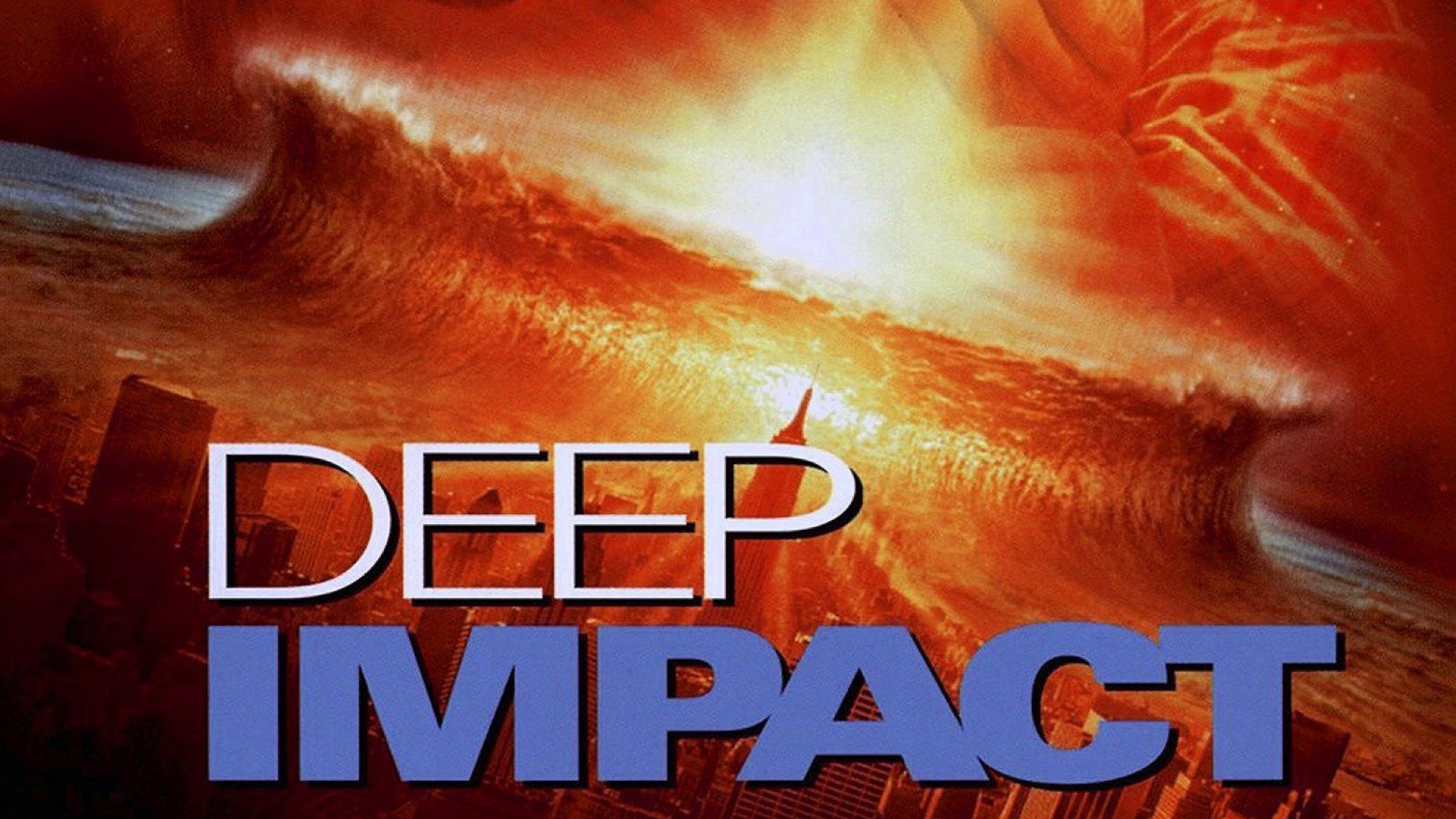
In 1998 we were treated to two big disaster movies, both involving a comet heading for Earth, and while many people took great joy in poking fun at Michael Bay's Armageddon, I'd be the first to agree that it was utterly stupid if fun film, but as dumb as it was it never took itself seriously, while Mimi Leder's Deep Impact tried to pass itself off as a realistic look at the same type of disaster only with a little family drama added to help us swallow all that bad science and obvious plot holes. Well, I’m forced to throw a flag on that play because even though it’s not as preposterously idiotic as Michael Bay’s film that still doesn’t make it a good film, just a better film, and that my friends is faint praise indeed.
The film starts with an amateur astrology group scanning the heavens and it’s while doing this that Leo Beiderman (Elijah Wood) discovers a new comet, which really impresses his girlfriend Sarah Hotchner (Leelee Sobieski). They quickly notify a local professional astronomer Marcus Wolf (Charles Martin Smith), who with just this one spotting can miraculously predict that it’s going to hit the Earth, which is not how celestial tracking works, but let’s move on to one of my favourite bits of plot ineptitude.  Unable to contact any authorities by phone or email Dr. Wolf decides to jump into his jeep and head down the mountain to do it in person, which leads to him being killed by one of the worst telegraphed car crashes in film history.
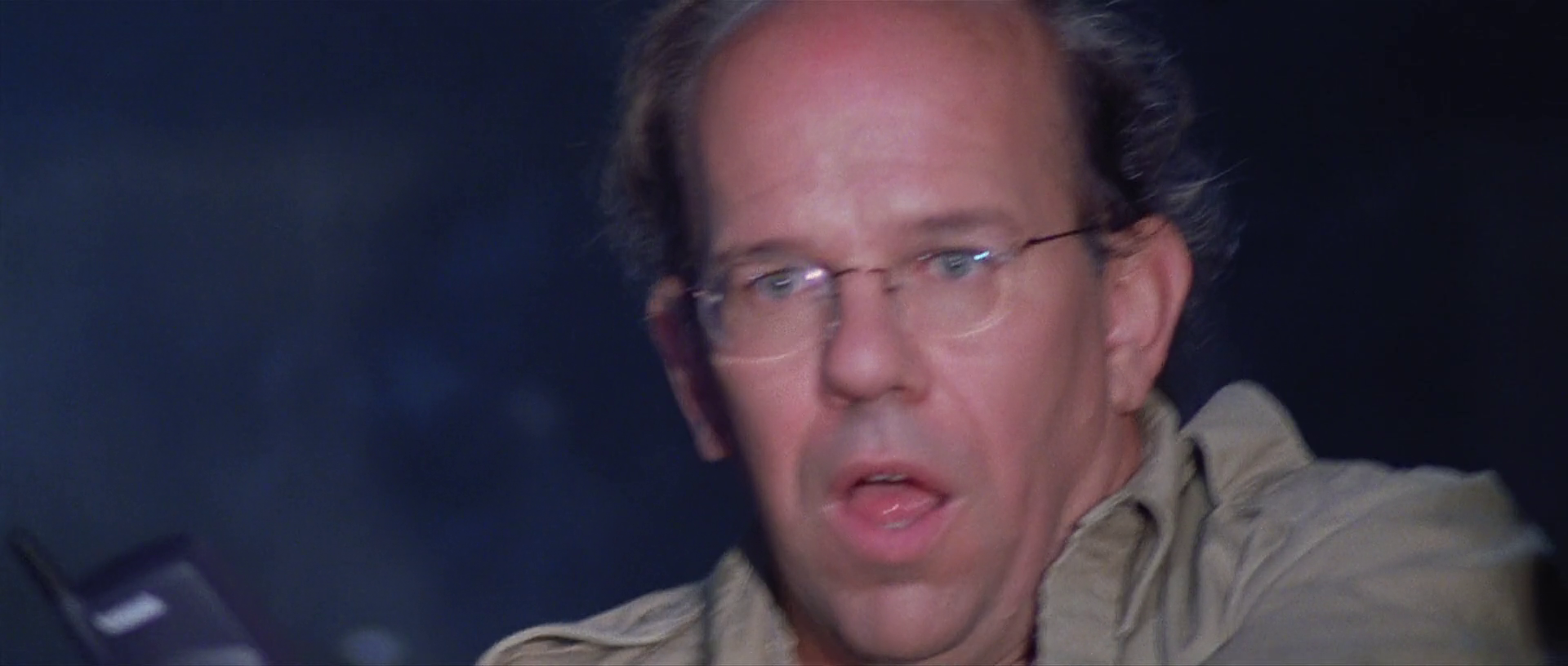
 

Charles Martin Smith, you will be missed.

What is truly annoying here is the fact that his death serves no real purpose to the plot as we jump ahead a year and find that the government has been working all this time on what to do about the approaching catastrophe. Apparently, they found the disk in the wreck and named the comet Wolf-Beiderman, after the two discoverers, which is kind of strange for them to believe Beiderman died in the crash as well, but we are assured that the death of Marcus Wolf didn't delay the government in finding the comet or have any effect whatsoever. So what was the point of all this?  It was just filler and has no bearing on later events and other than to introduce our young protagonists it did nothing to further the story.
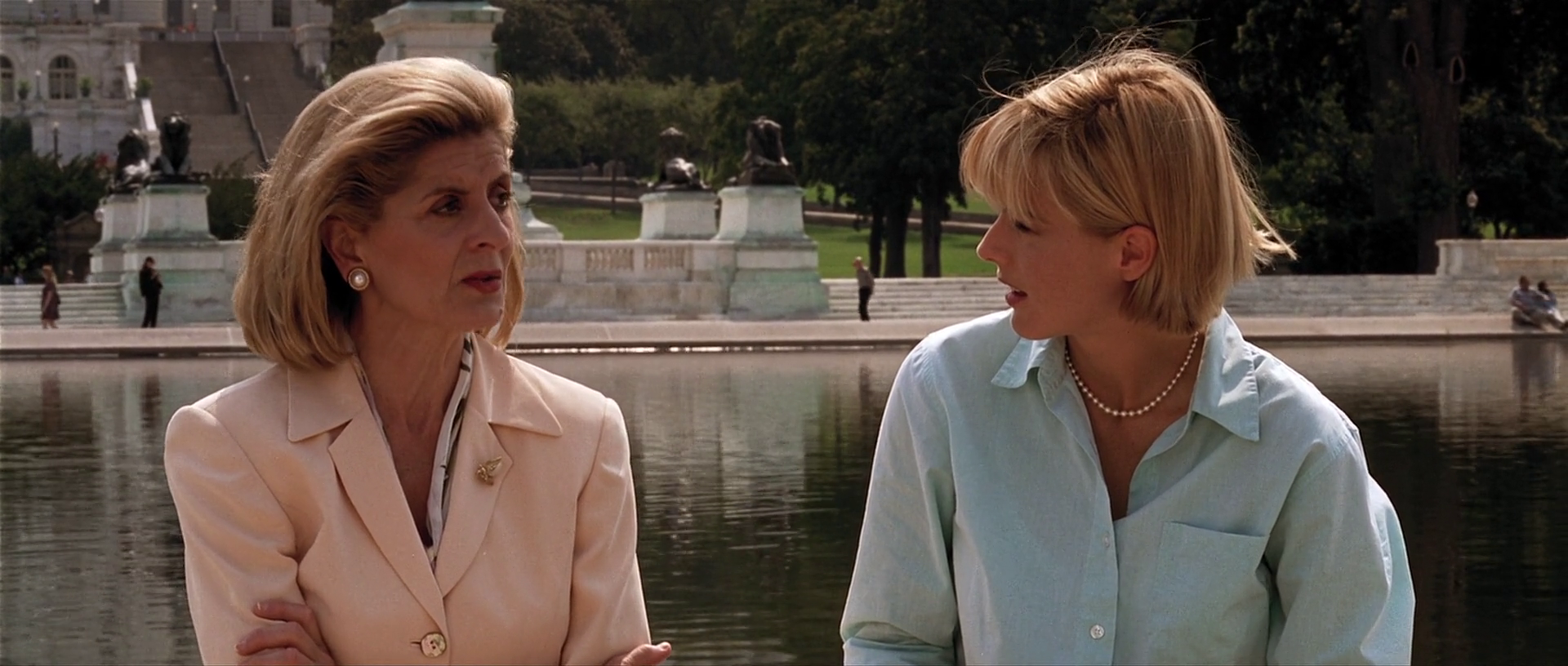
 

"Have you any idea what this movie is about?"

A year later, hungry up-and-coming journalist Jenny Lerner (Tea Leoni) accidentally uncovers the comet story while investigating what she believes to be a political scandal surrounding Secretary of the Treasury Alan Rittenhouse (Jame Cromwell) and who she believes to be a mistress named "Ellie" but it turns out that the "ELE" in question actually stands for "Extinction Level Event" and is a comet that will most likely wipe out all life on Earth.  Like any good journalist, she uses this information to blackmail the President (Morgan Freeman) into getting a better position at the press briefing.  The world may be ending but at least her career is on track. It should be noted that Jenny is one of the film's key protagonists and making her this callous about the situation at hand was not a good idea as it tends to make her character a little unlikable. I'd have been fine if the President had tossed her into a Black Site for safekeeping.

 

"I beat Barack Obama to the White House by over a decade."

Now on to the plan. We learn that the United States and Russia have been constructing the spacecraft called the Messiah in orbit, which will transport a team of heroic astronauts to plant a nuke on the comet and hopefully knock it off course.  The crew of the Messiah consists of Captain Spurgeon "Fish" Tanner (Robert Duvall), Commander Oren Monash (Ron Elder), spacecraft pilot  Andrea "Andy" Baker (Mary McCormack), navigator Mark Simon (Blair Underwood),  medical officer Dr. Gus Partenza (Jon Favreau) and Russian nuclear specialist Colonel Michail Tulchinsky (Aleksandr Baluev). The film depicts the surface of the tail of the comet as this debris-filled hellscape, luckily, Andy has the pilot skills of Han Solo. Now, as far-fetched as this plan was, and it is pretty ludicrous, the one scene that really bothered me was when the young hotshot astronauts give Captain Spurgeon a hard time for being too old and only being on board as a publicity stunt, and I can’t believe for a minute that real astronauts would show this kind of disrespect to somebody who had actually landed on the Moon. Needless to say, things go wrong and the comet is just broken into two pieces with both still heading for Earth.
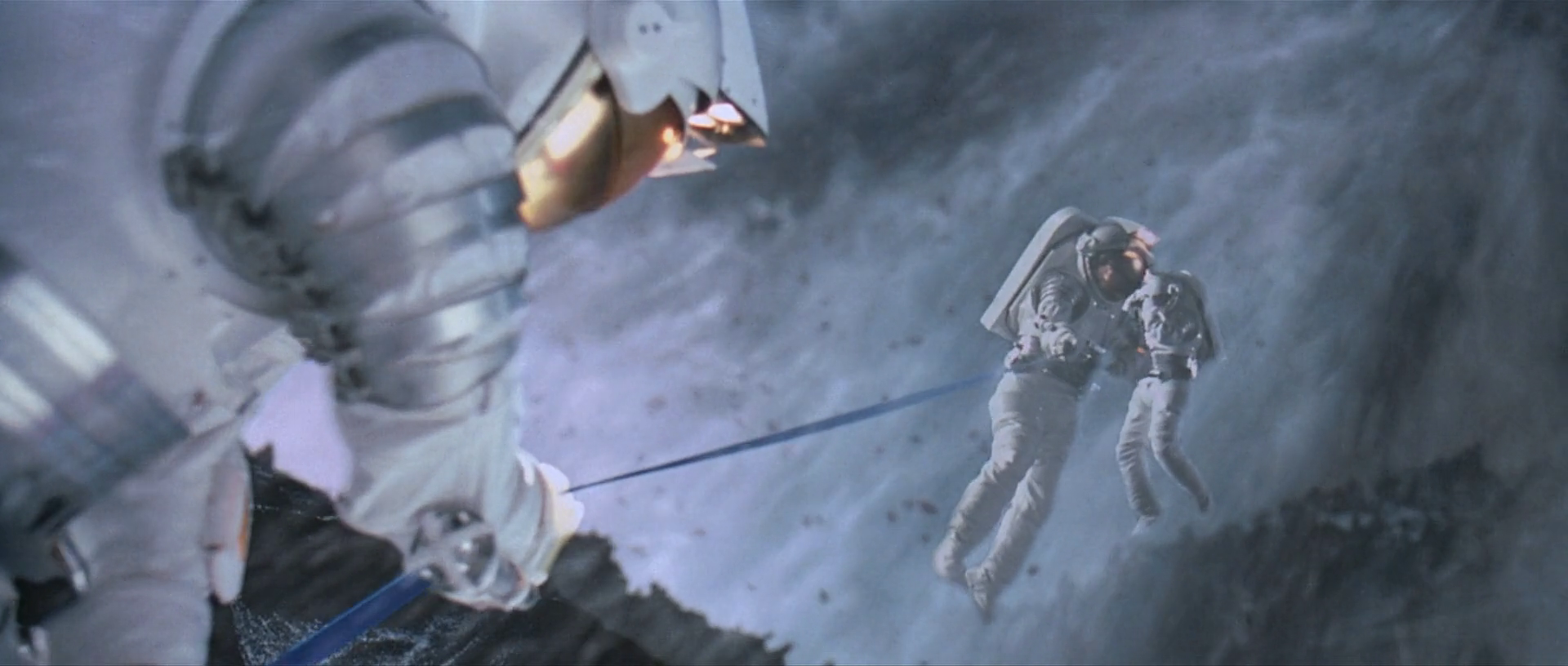
 

I guess they didn't bring the Right Stuff.


Meanwhile, back on Earth, the President moves right onto their backup plan, which involves moving a crapload of people underground to ensure that mankind survives, kind of an underground Noah's Ark, with the selection being handled via a lottery and due to Leo being one of the discoverers of the comet he and his family have been pre-selected for a spot, unfortunately, his girlfriend and her family were not so lucky. So what does our stalwart astronomer do? He marries her so that she and her whole family can come along, but on the fateful day when the army buses come to pick them up Sarah’s name is on the list but not her family's. She refuses to get on the bus, being a noble selfless teen, and watches as her true love rides off into the sunset. This scene is almost more idiotic than the one with the disrespectful astronauts, could you for a minute believe any parent would let their kid stay behind and face sudden death? Later when Elijah Wood returns riding a dirt bike, where he finds Sarah and her family stuck in a traffic jam, she tearfully hops on behind him and leaves her parents in the dust.  What changed, did she somehow grow a brain in the past 24 hours?
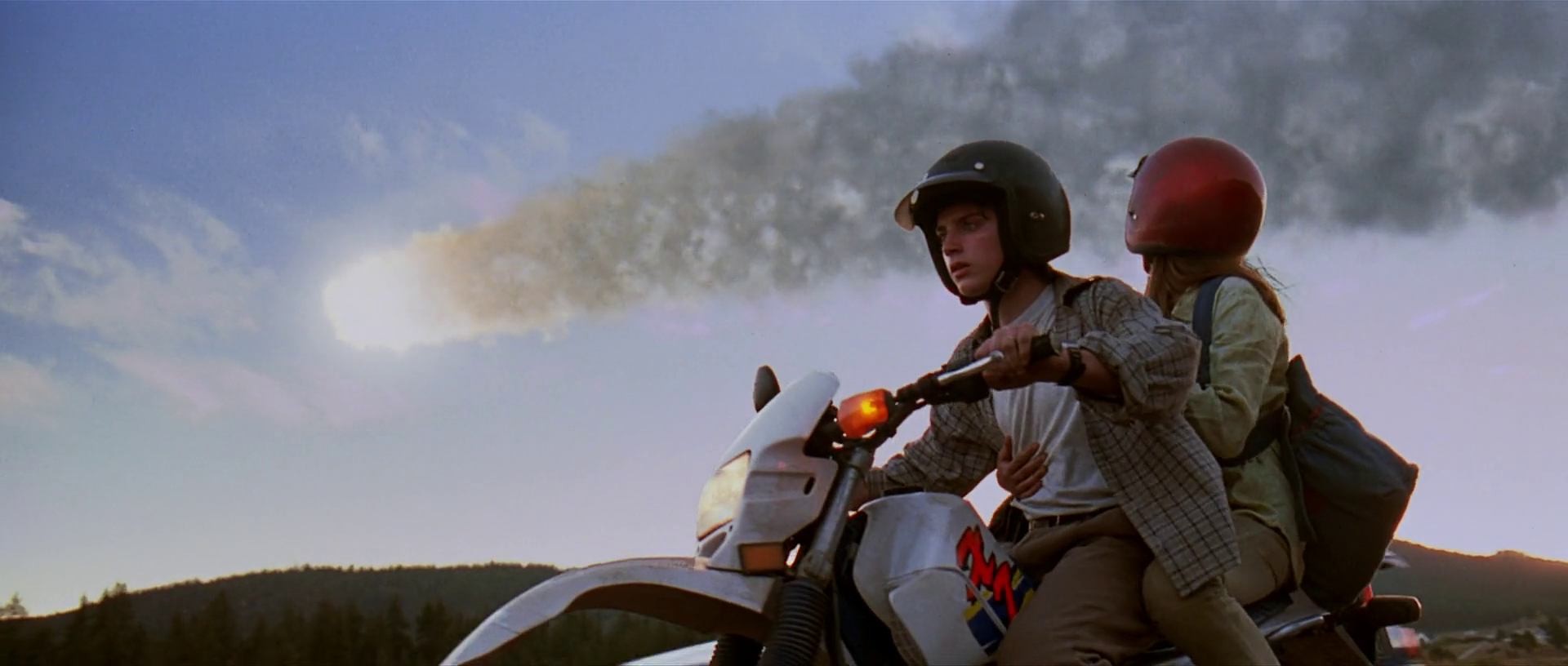
 

I guess noble sacrifices have a shelf-life.

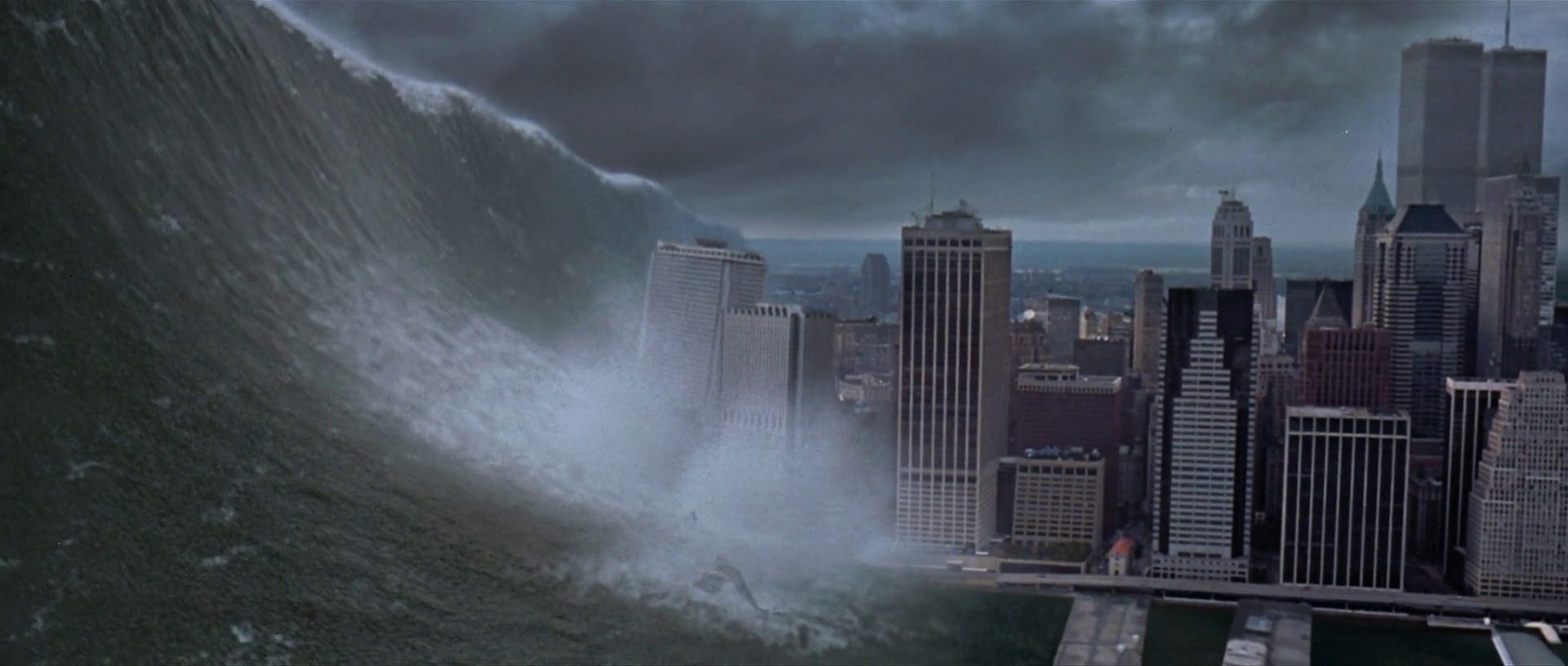
Back in space, our heroic astronauts have come up with a new plan, which is basically their own form of noble sacrifice by flying the ship into the interior of the comet and blowing it up with their remaining nukes. Sadly, this will only take care of the big piece while the little one will continue on its merry way so that it can kill all the stupid humans running around on Earth, which includes Jenny meeting up with her estranged father (Maximilian Schell) so that they can die together in the worst case of Father/Daughter bonding I've ever seen, this occurs when the remaining comet piece splashes down with more kinetic energy than all the world’s nuclear bombs combined and this sends a mile hile waves crashing along the coast and killing millions.
 

"If you can destroy it there, you can destroy it anywhere!"

While Deep Impact was generally well-received and regarded by most as one of the more scientifically accurate disaster movies, there are still some fairly large inaccuracies in the film, so here are a few of them I'd like to point out.

  • Size of the Comet: In the movie, the comet is depicted as being 7 miles (11.2 km) wide. However, most comets that have been observed by astronomers are much smaller, typically measuring only a few miles in diameter. A comet as large as the one depicted in this movie would likely have been detected much earlier and been the subject of intense scientific study making a cover-up impossible.
  • Speed of the Comet: The comet in the movie is depicted as travelling at a speed of 35,000 miles per hour (56,327 km/h). While this is an impressive speed, it is actually slower than the average speed of most comets, which travel at speeds of up to 150,000 miles per hour (241,402 km/h).
  • Time to Impact: The movie suggests that the comet is discovered only a year before it is due to collide with Earth. In reality, astronomers are constantly monitoring the skies for potentially hazardous objects, and a comet of this size and speed would likely have been detected much earlier, giving scientists more time to prepare.
  • Effects of the Impact: The movie shows the impact of the comet causing a massive tidal wave that wipes out much of the East Coast of the United States. While a comet's impact would certainly be devastating, the actual effects would depend on a number of factors, such as the angle of impact, the location of the impact, and the composition of the comet itself.
  • The Solution: In the movie, the astronauts are sent to the comet to try to destroy it with nuclear weapons. While this makes for a dramatic storyline, it is unlikely to be an effective solution. Blowing up a comet could potentially create even more smaller, but still dangerous fragments, and it would be difficult to accurately target the explosion.
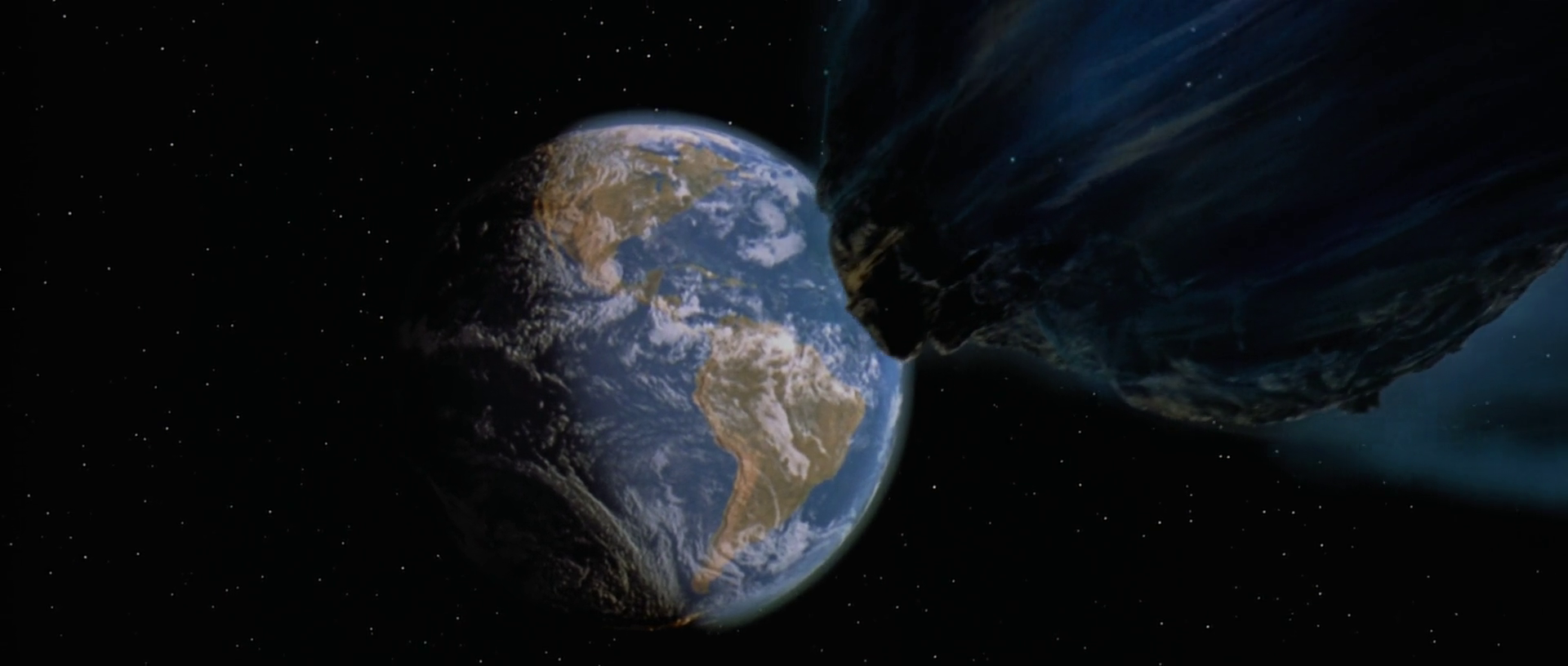
 

"Could someone call Bruce Willis and Ben Affleck?"

It's this smaller piece that prevents us from being completely cheated out of the carnage we paid our ten bucks to see as the impact of this comet, which lands somewhere in the Atlantic, causes a huge wave that heads for the shores of North America and gleefully wipes out countless millions. I won’t belabour the fact that the people in the traffic jam would have been flash-fried as the comet streaked overhead, why start being scientifically accurate now, nor will I state the obvious effects that many tons of water would actually have on the New York skyline, it all looks cool and who am I quibble about the science of things when we've sat through two hours of dramatic drivel for some damn cataclysmic destruction.
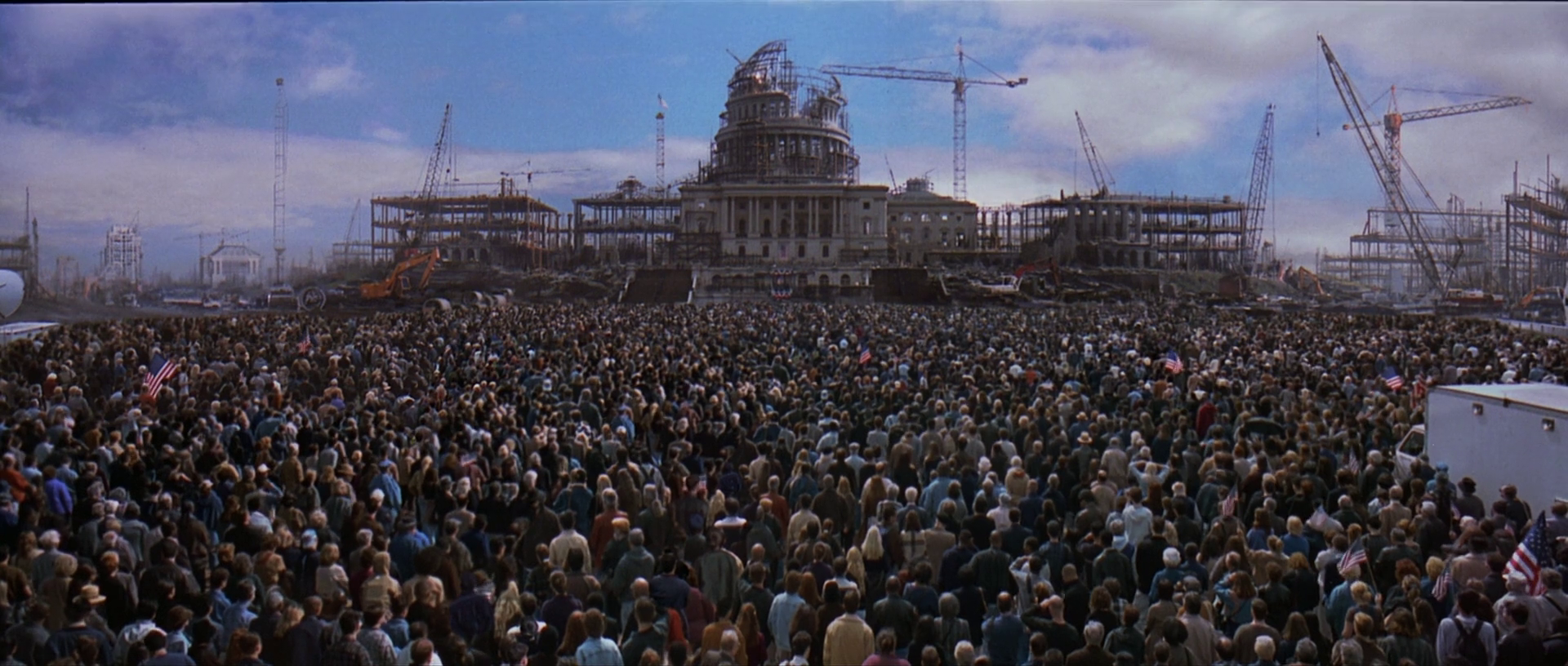
 

Wow, the White House kind of survived this one.

Being a huge fan of disaster films I will admit despite the uneven pacing, with long stretches of exposition that bog down the action, characters though well-acted were not always well-written, and dialogue that was both cliched and contrived in a film that attempted to tackle serious themes can feel heavy-handed at times, but that all said, despite these flaws, both dramatic and scientific, Deep Impact remains a solid disaster movie and is a worthwhile watch for fans of the genre.

Monday, May 1, 2023

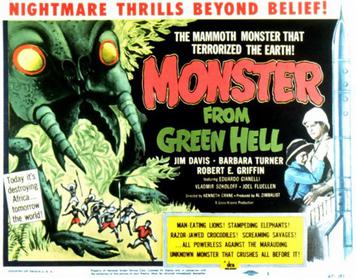
Monster from Green Hell (1957) – Review

When it comes to science fiction there is nothing more dangerous than space exploration, especially in the 1950s, but with the film Monster from Green Hell, we get a different wrinkle, one where the simple “planning” on going into space results in a terrifying encounter with a deadly menace, and this a threat not found in space but created here back on Earth.

Man’s venture into space has always provided great fodder for science fiction stories but while most of these tales take place in deep space and on far-off planets – or the Moon if we’re on a budget – but sometimes man’s exploration of space has had unfortunate repercussions for us here back on Earth, in Ray Harryhausen’s 20 Million Miles to Earth a specimen brought back from the planet Venus grew to an immense size and wreaked havoc at the Roman Coliseum, and that very same year another we get this film with its own large menace only this time it’s caused by a scientific oopsie. The premise of this movie was basically “What if we took the jungle adventure themes of the popular Tarzan movies and then threw in a science fiction monster element to, you know, spice things up?”


“Could we actually get Tarzan on the line?”

While there are some elements of space exploration in Monster from Green Hell it has more in common with its contemporary big bug movies Them! and The Deadly Mantis rather than such offerings as Destination Moon or even It! The Terror from Beyond Space as the main thrust of this science fiction offering is more about traipsing around Africa than it is about piloting rocket ships and exploring strange new worlds. The particular entry begins with the standard ponderous narration often found in the genre, “This is of the rocket, the jet, atomic power. When man prepares to reach for the stars but before he dares launch himself into space, there is one great question to be answered. What happens to live in the airless void above the Earth’s atmosphere?” The people to answer that question would be Quent Brady (Jim Davis) and his pal Dan Morgan (Robert Griffin) who are part of a scientific team that has been sending various creatures into orbit to see how cosmic radiation affects them, and going by the title of this movie we can assume not that well.


It was going to result in either a giant monster or a superhero quartet.

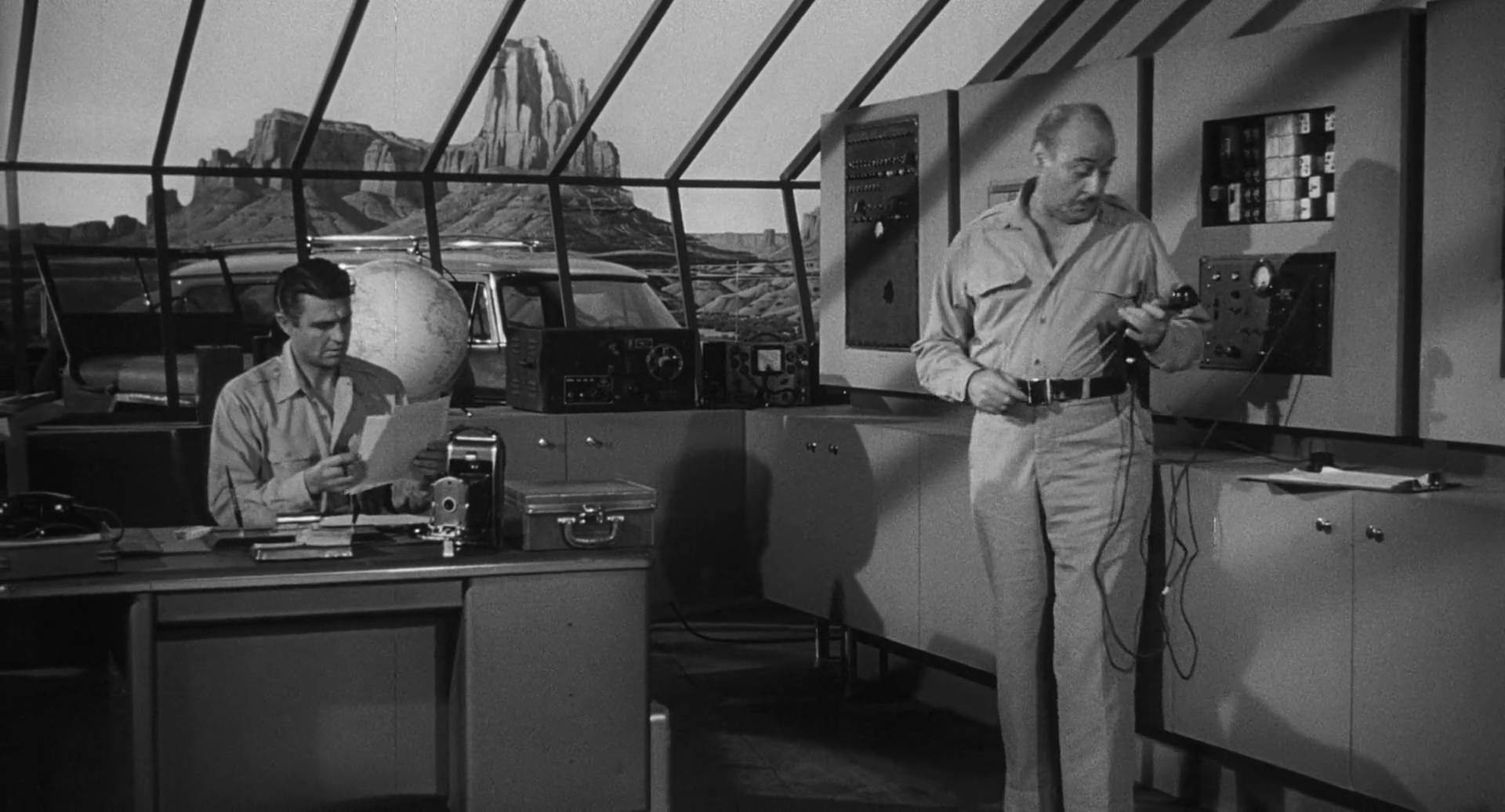
After one of their rockets carrying wasps malfunctions and goes off course, to which a computer then calculates that it will likely land somewhere off the coast of Africa but as nobody important lives in Africa, our heroes don’t seem all that concerned about making sure of this tiny detail. Later, somewhere on the Dark Continent, we find Dr. Lorentz (Vladimir Sokoloff) and his daughter Lorna (Barbara Turner) learning from Lorentz's African assistant Arobi (Joel Fluellen) that something monstrous is terrorizing the populace and local animals in an area known as the Green Hell. Even later, six months to be more accurate, Brady comes across a newspaper account of turmoil in Central Africa caused by gigantic monsters and he surmises that the wasps from their missing rocket were exposed to huge amounts of cosmic radiation and have since mutated to giant size. Before you can say “Doctor Livingston, I presume” Brady and Morgan catch a plane bound for Africa in the hopes of discovering if they are responsible for all this jungle havoc.


“We’re white and privileged, I’m sure we’ll be fine.”

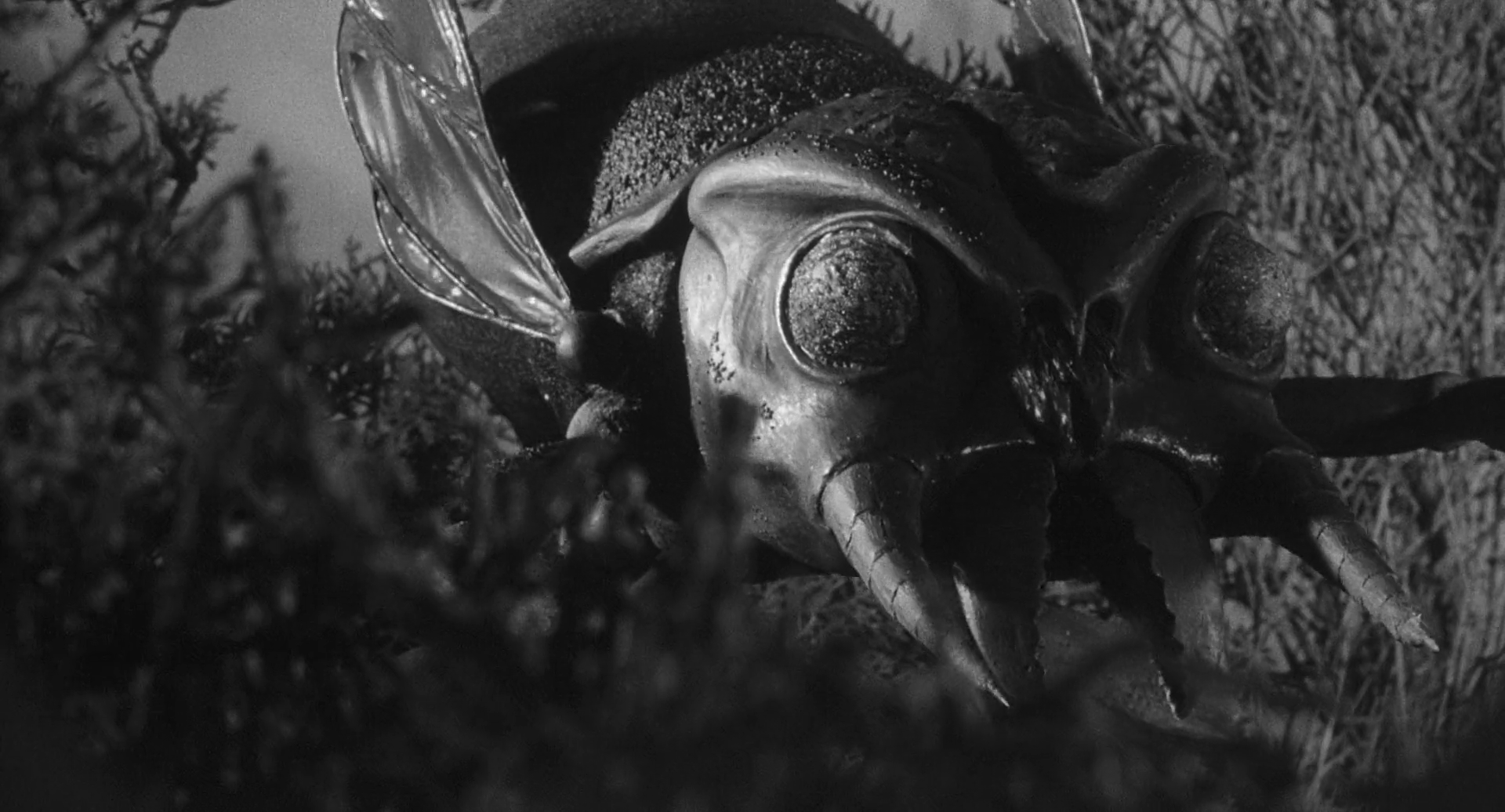
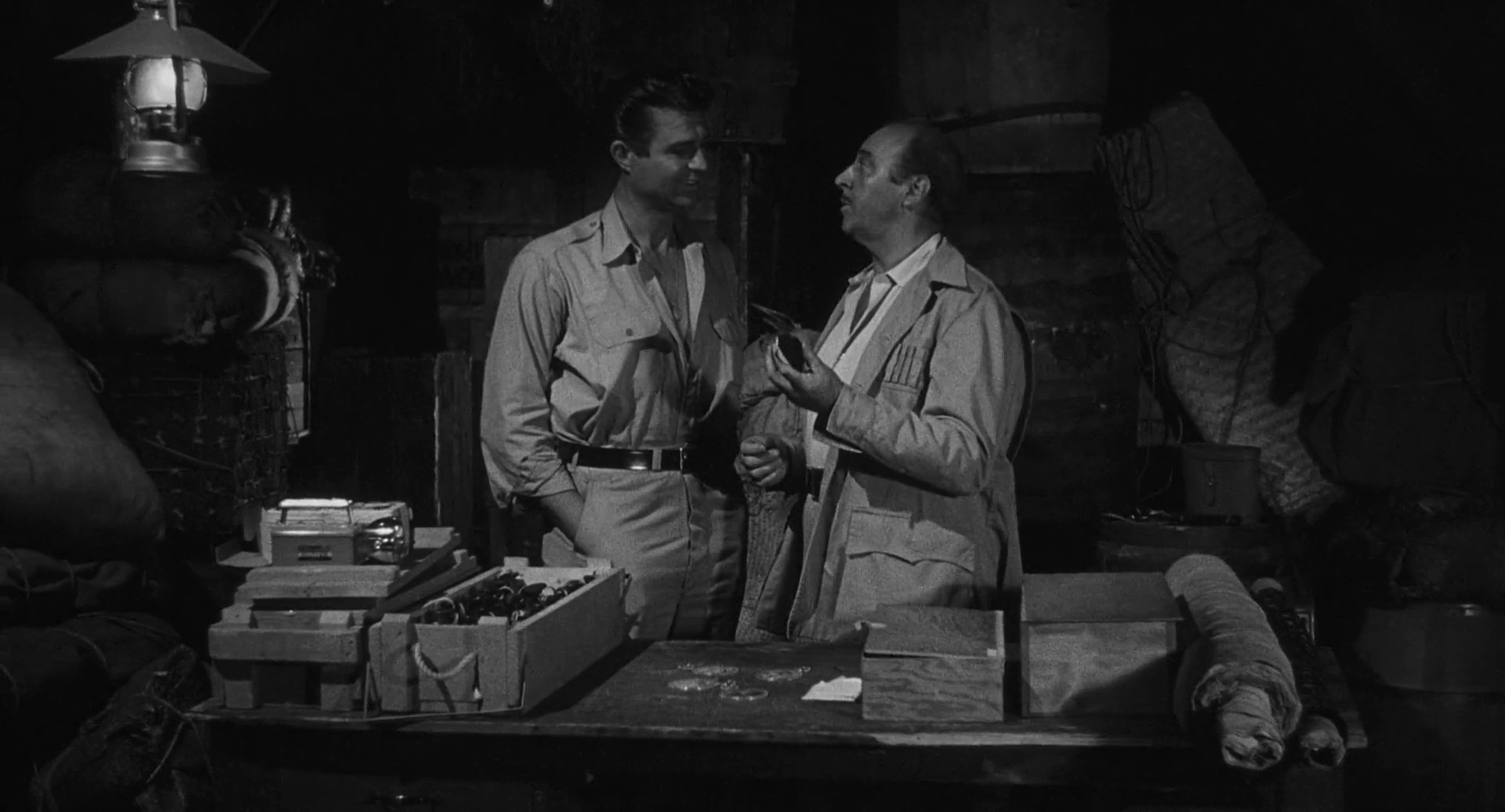
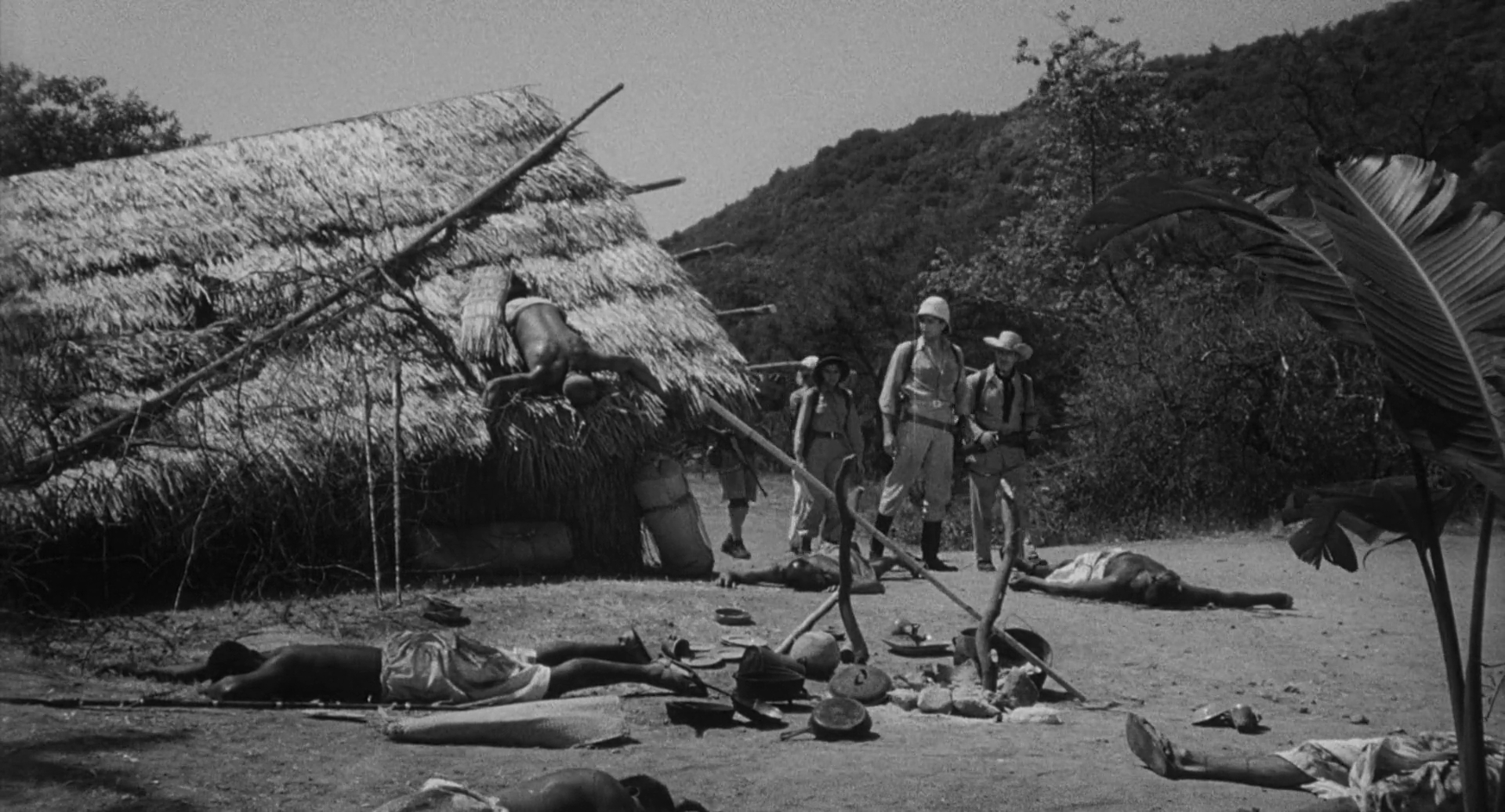
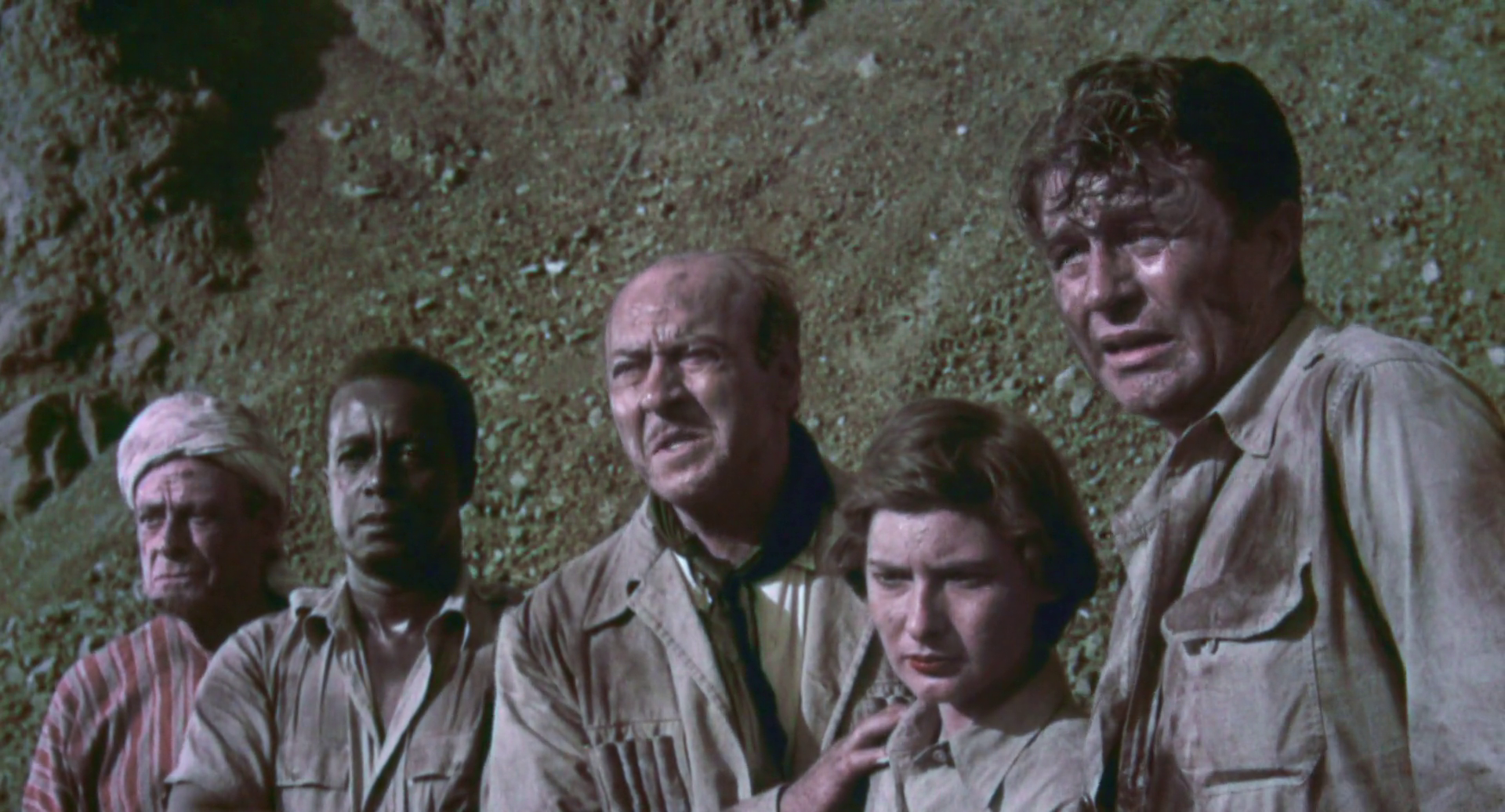
Armed with cases of grenades, Brady and Morgan lead a safari on a four-hundred-mile trek to Lorentz's hospital, stopping briefly to deal with warring native tribes, draught, and monsoons, but when they finally reach their destination they find Dr. Lorentz missing and his daughter very concerned. As to be expected, the good doctor is dead, having wandered alone onto the volcanic slopes located somewhere near the “Green Hell” to meet his doom, but when a large stinger is found embedded in the doctor’s shoulder their fears that a mutated giant wasp is the culprit is confirmed and our heroes decide to press on in the hopes of destroying the wasps before they multiply and take over Africa and then the world. Our little expedition heads to the cauldron of a volcano, which Arobi thinks is the lair of the creatures, but they quickly find out that their grenades are useless against these monsters and spend the rest of the movie wandering around the caves of Bronson Canyon.


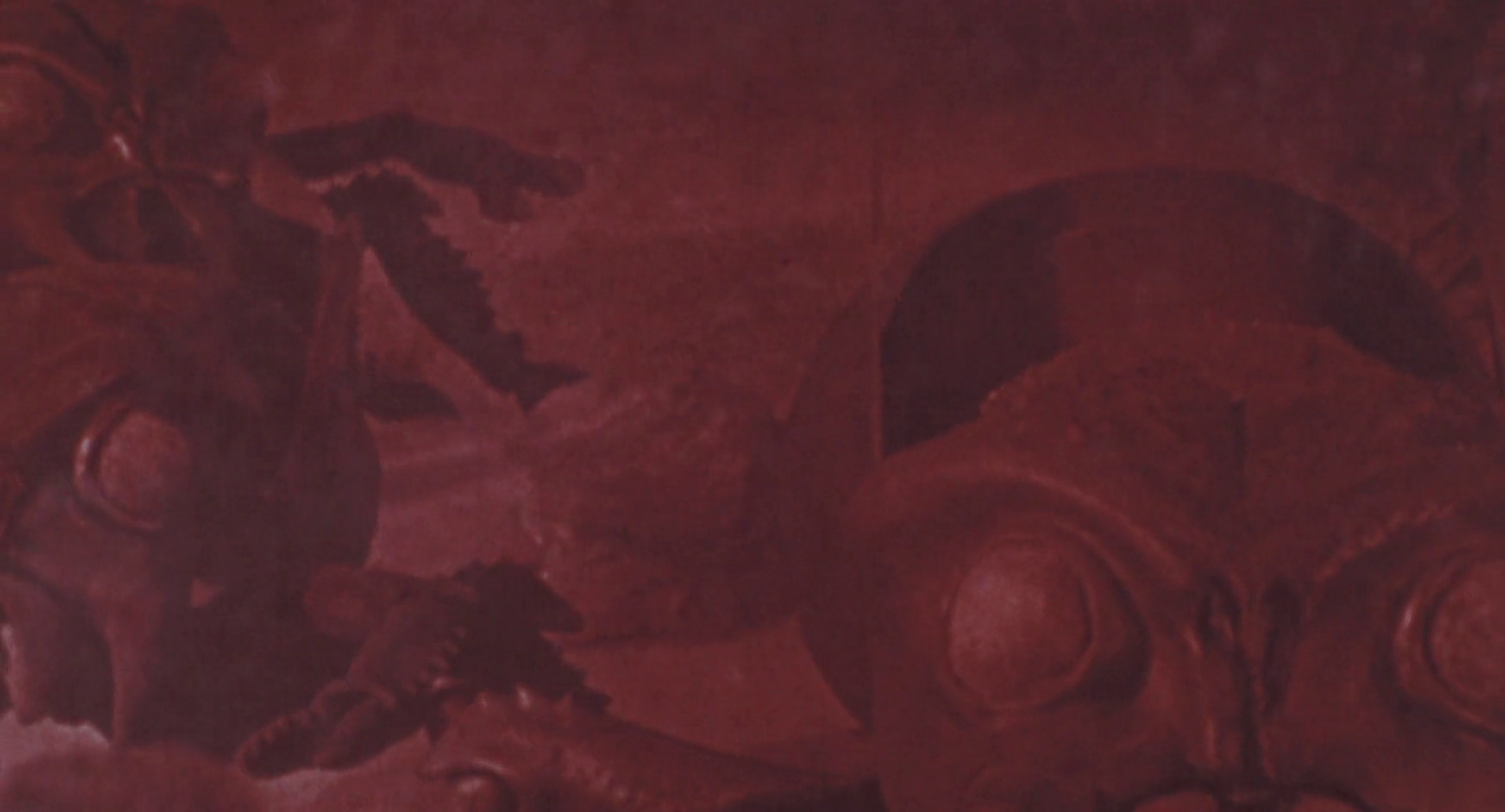
The film then inexplicably turns to colour for the last three minutes.

Stray Observations:

• During the Space Race, Russia and the United States sent dogs and chimps into outer space to see the effects of space travel on living organisms, but in this movie, they practically send a Noah’s Ark worth of creatures.
• A returning test rocket goes off course and crashlands somewhere in Africa, releasing a cargo of monsters, yet six months later the scientists who sent it up haven’t given the missing rocket a second thought. Clearly, our tax dollars at work.
• For giant mutant insects, ones that appear to be elephantine in size or larger, they have surprisingly good stealth attack skills as they can sneak up on the local natives with little to no effort.
• Dr. Quent Brady's comments that “Working over test tubes was not the right way to train for a hike across the plains of Africa” didn’t prepare them for getting attacked by stock footage from the film Stanley and Livingston (1939).
• Our heroes are concerned about the giant wasps multiplying, this being a rational feat as insects reproduce faster than any other creature on Earth, but after six months all we find is three of these giant bastards. Maybe that cosmic radiation impeded their reproductive process.
• Brady explains to Lorna that her father’s death is simply the price to pay for the advancement of science, which is a pretty dick thing to say when it was your experiment that resulted in his death.


“Hey, it looks like the price of science just went up again.”

If you tune in to watch Monster from Green Hell for exciting monster action prepare to be greatly disappointed, while the special effects by Jack Rabin, Louis DeWitt and Irving Block are decent, with stop-motion animation by Gene Warren, but the screen time with these giant wasps barely consists of a couple of minutes screen time in a movie that is only 70-minutes in length. The bulk of the film is simply footage of Brady and Morgan's endless trekking across the length and breadth of Africa, with the aforementioned stock footage popping in occasionally to break up the monotony, and this makes the whole thing endlessly dull and tedious. Worse is the fact that when we do get to our exciting confrontation with the giant beasts our heroes' tactics turn out to be useless and it takes Mother Nature erupting a volcano to save the day, and Morgan has the audacity to say “Nature has a way of correcting its own mistakes” hey, asshole, cosmically mutated wasps were not nature’s mistake, it was yours!


Why couldn’t the volcano have gotten rid of these guys as well?

A few brief moments of these giant insects lumbering around the jungle is not enough to save this picture from being an absolute bore, nor is the bizarre choice of concluding the story in colour give it a satisfying ending, and while the actors all do their best it’s all in support of a plot that is padded beyond belief, and I do appreciate that Lorna was not tossed in as a love interest for Brady and she shows a surprising amount of courage for a female in this genre, but by the end of the film, I was cheering for the giant wasps.

Thursday, April 27, 2023

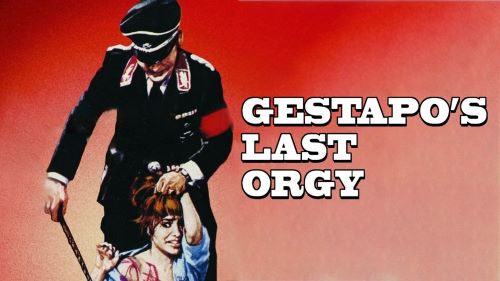
Gestapo’s Last Orgy (1977) – Review

The sexploitation films of the 60s and late 70s were a hallmark of non-explicit sexual situations but contained lots of gratuitous nudity, which kind of set themselves apart from hardcore pornography that would populate adult movie theatres of the 1970s and 1980s, yet there was a subgenre of sexploitation called Nazisploitation, which consisted of films depicting Nazis committing sex crimes and horrific acts during World War II – often following the “Women in Prison” formula – and today we will be looking at an Italian entry in this bizarre subgenre, one known also as The Last Orgy of the Third Reich.

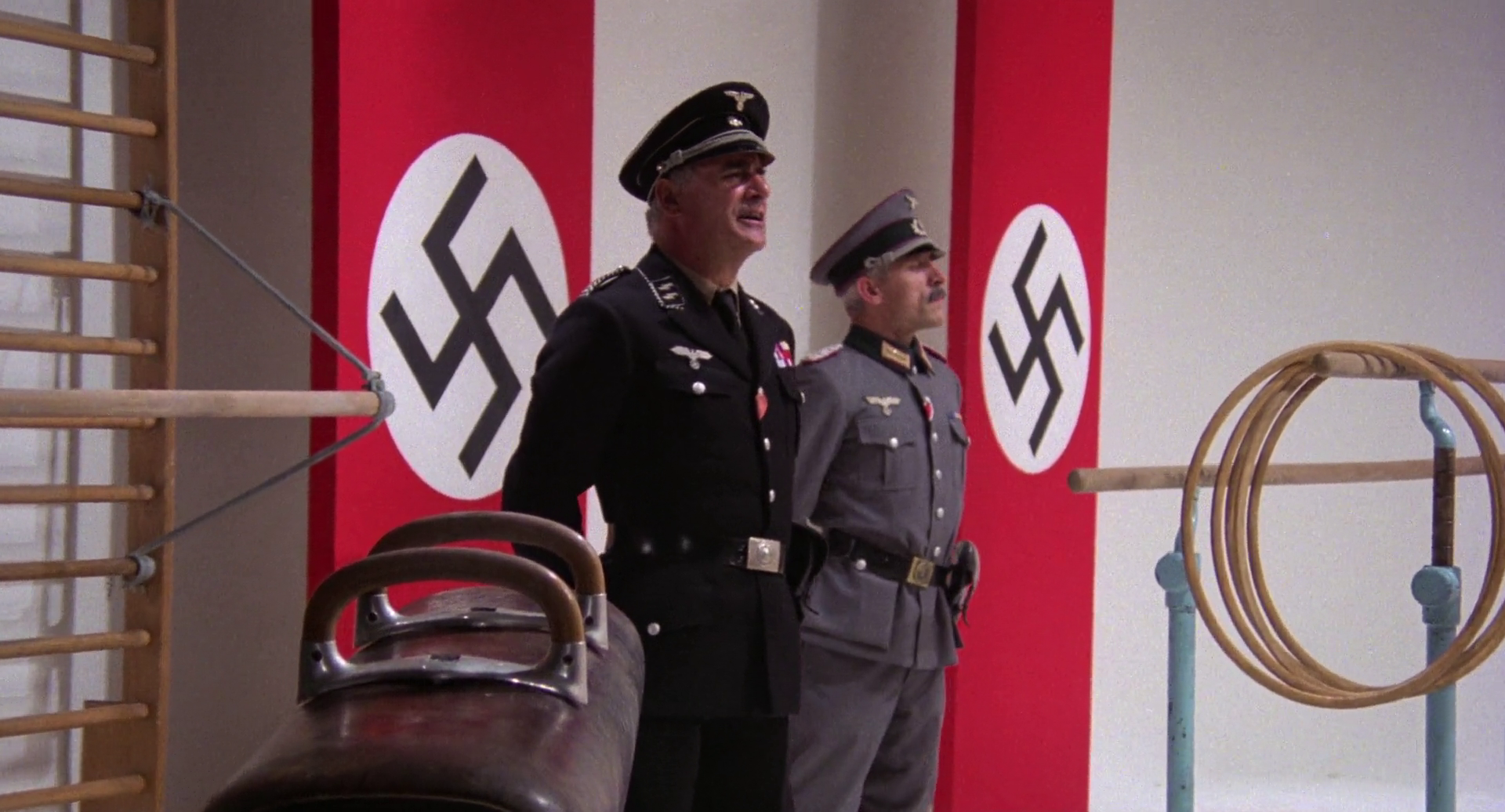
While films like The Stewardesses and SexWorld relied on simulated sex and loads of nudity to draw in moviegoers’ films of the Nazisploitation Subgenre, such as Ilsa, She Wolf of the SS, added sadism, gore and degradation to “spice things up” and Cesare Canevari’s Gestapo’s Last Orgy more than aptly provided such things for its viewers, whether they wanted it or not. The general plot of this entry deals with the German SS officer Conrad von Starke (Adriano Micantoni) who is being forced to run a prison camp that performs double duty as a brothel, to take care of the needs of German soldiers on leave from the fighting, but while Starke insists that he himself would rather be fighting on the front lines his penchant for brutality and sadism clearly makes this the perfect job.


“Well men, it looks like we’ll be having a lot of sex, but first, some callisthenics.”

Things take an interesting turn when Starke becomes fascinated with Lise Cohen (Daniela Poggi), a Jewish prisoner who he becomes obsessed with as her spirit appears to be unbreakable, and he makes it his personal mission to break her body and soul. He tries very hard to bring her to the edge of madness, pushing the spectre of death into her face, but she has her own demons ones that keep such things as death either meaningless or even welcoming. The characters of Starke and Lise are surprisingly complex for this type of film, Lise is tortured with guilt surrounding a dark history while the sadistic Starke has a strangely submissive side, with him being dommed by Alma (Maristella Greco) a female SS guard and even being sodomized with his own whip by her.  While this is unexpected character development, director Cesare Canevari did toss in some strange “love stories” through this film, such as Lise’s best friend falling in love with a guard and Lise herself having an affair with the camp’s doctor. Most of these relationships are less than organic and are merely an excuse to get a sex scene in the offing, but this at least gives us a break from all that weird torture stuff.


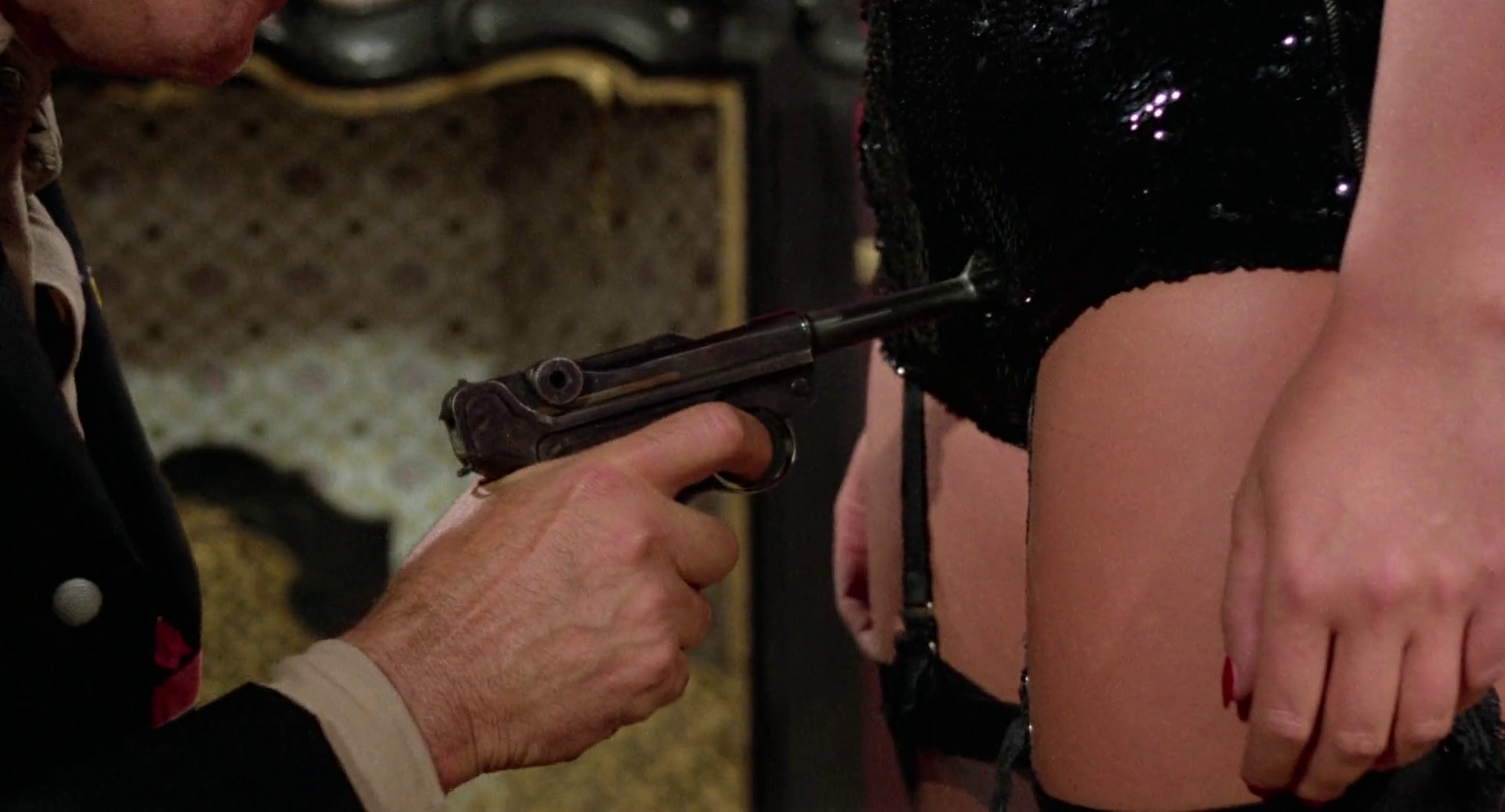
“I guess that was a gun in your pocket.”

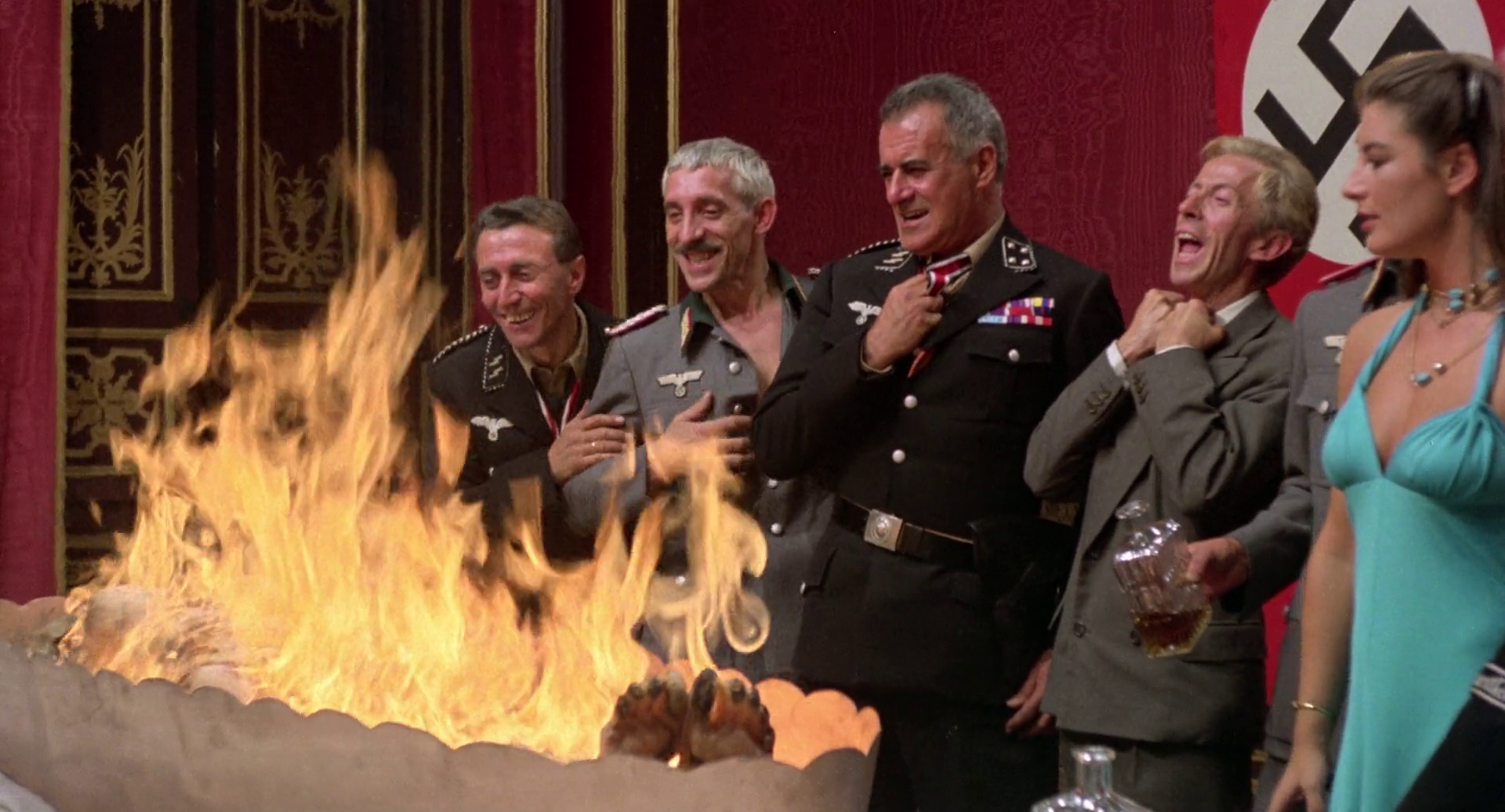
And just how bad do things get during this film's 96-minute running time? Not only do we the expected scenes of naked women being whipped and sexually assaulted but we are also subjected to forced lesbian incest, coprophagia, urination, women being sodomized with bats, dumped in vats of lye and in one particularly horrendous dinner scene where hear from one of the SS staff that he hopes that in the future there can be farms where Jews can one day be a source of food, and that particular moment leads to the revelation that the dinner consists of a stew made of unborn Jewish infants. When one of the female prisoners passes out in shock they douse her body in brandy and set it alight, before eating her corpse in a disgusting orgy of sex and cannibalism. So yeah, this is definitely not a film for the squeamish and it is no surprise that Gestapo’s Last Orgy was banned in many countries and put on the “Video Nasty” list across the board. I’m not sure what the target demographic was for this film but over the years it has developed a bit of a cult following, but whoever would belong to such a "cult following" I'm not sure I want to meet.


I bet their banquets are atrocious.

Stray Observations:

• The women prisoners are forced to march naked around the camp, but to prove they weren’t complete bastards it appears that the Nazis allowed them to wear fuzzy slippers.
• The female prisoners are checked for sexually transmitted diseases yet at one point the doctor comments that a certain woman doesn’t need to be examined because she is a virgin, and I’m unclear as to how he was able to determine this without some kind of examination.
• Despite being starved, tortured and repeatedly raped, Lise manages to keep her make-up picture-perfect and intact while her 70s flyaway hair also remains nicely coifed and manageable at all times.
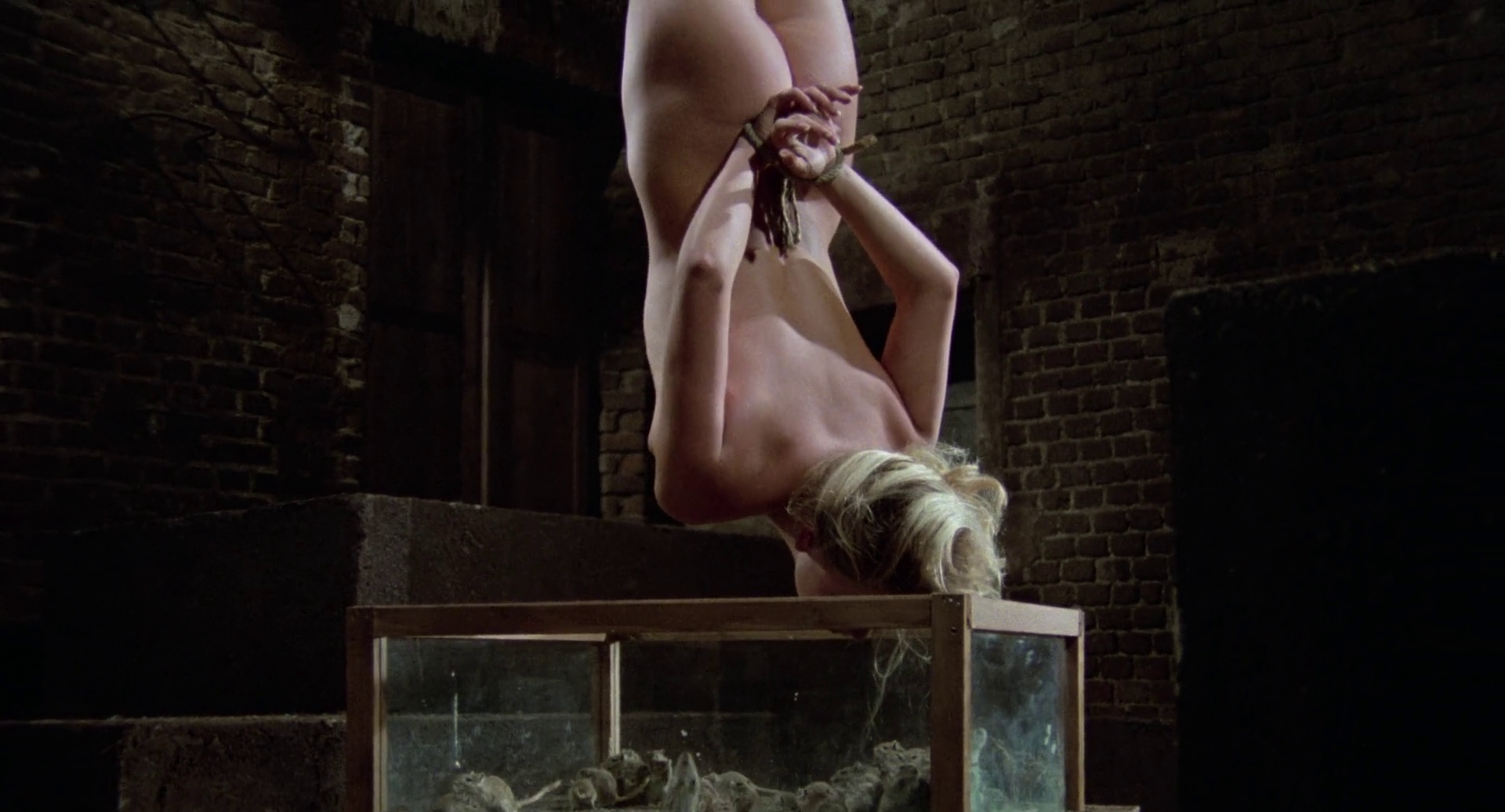
• Lise is suspended upside down over what I’m guessing was supposed to be a cage full of voracious rats but in actuality was a box full of gerbils.


What an adorable way to be tortured.

What can be said about a movie called Gestapo’s Last Orgy, is it a good film, not really, but then again was being good actually the point of this type of sexploitation film? The acting is a little better than what could be found in your average hardcore pornographic film of the time, which is certainly damning with faint praise, and the cinematography by Claudio Catozzo is solid on what I can assume was a fairly low budget and the end product does look fairly well put together, but you first have to be able to handle the questionable content before you can even think to appreciate the craftsmanship and that’s not something easily done if the subject on display is as nasty as this one gets.

Overall, this is not a film I can recommend even to the bizarrely curious as the sadistic torture elements weren’t all that well-executed – I’ve seen better in a Friday the 13th movie – and the sex scenes themselves were rather tepid, which is odd considering it deals with vile Nazis raping beautiful women, so unless you are really dying to see a movie that deals with Nazis, cannibalism and man-eating gerbils I’d say give this one a miss.

Monday, April 24, 2023

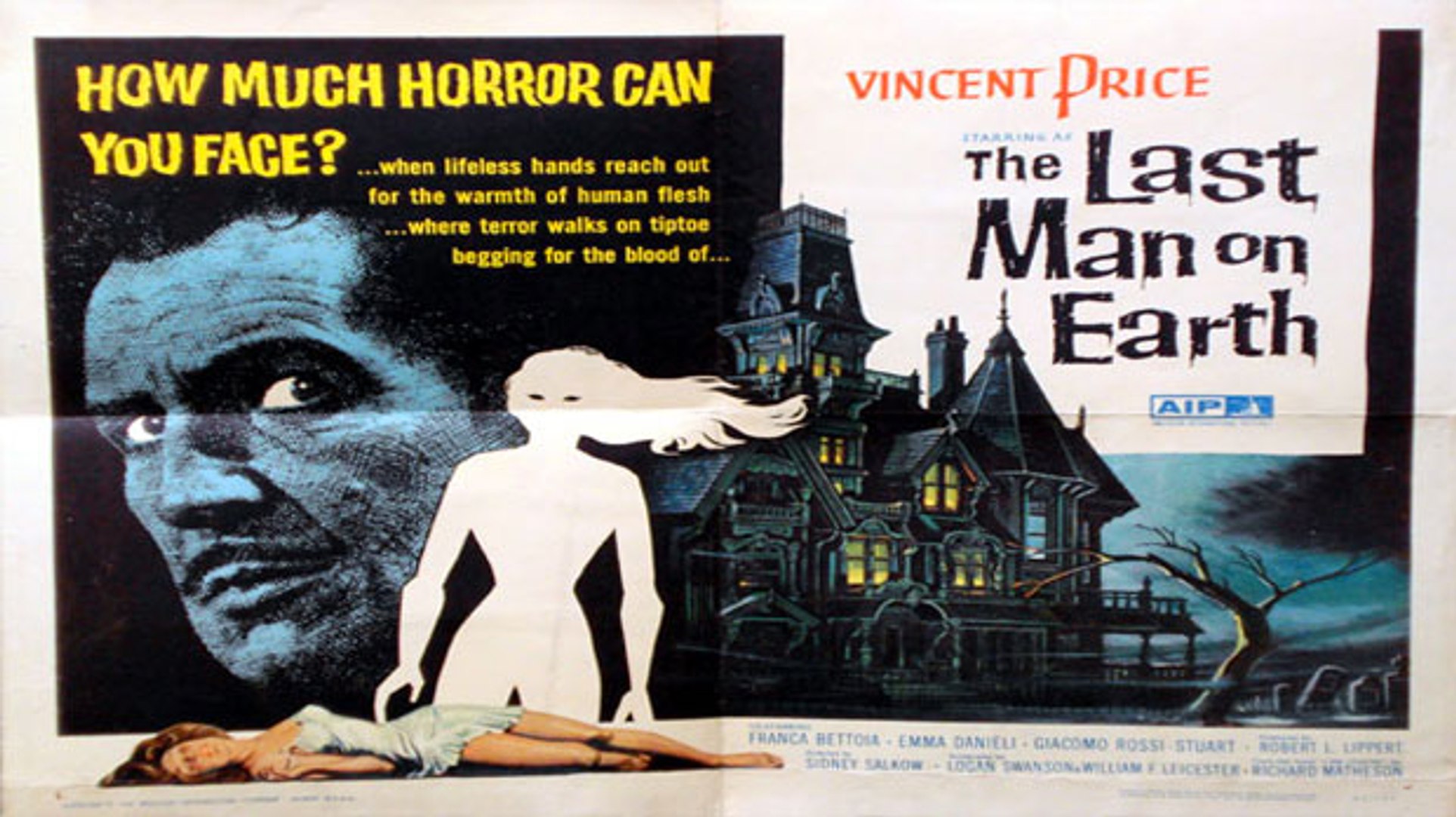
The Last Man on Earth (1964) – Review

One of the most influential post-apocalyptic stories out there is that of Richard Matheson’s I Am Legend, a novel that pitted the last remaining human on Earth against a world populated by vampires, and while many other authors have since tackled similar subject matter it’s Matheson’s iconic story that has stood the test of time, but as for movie adaptations, this one story had a more troubling journey.

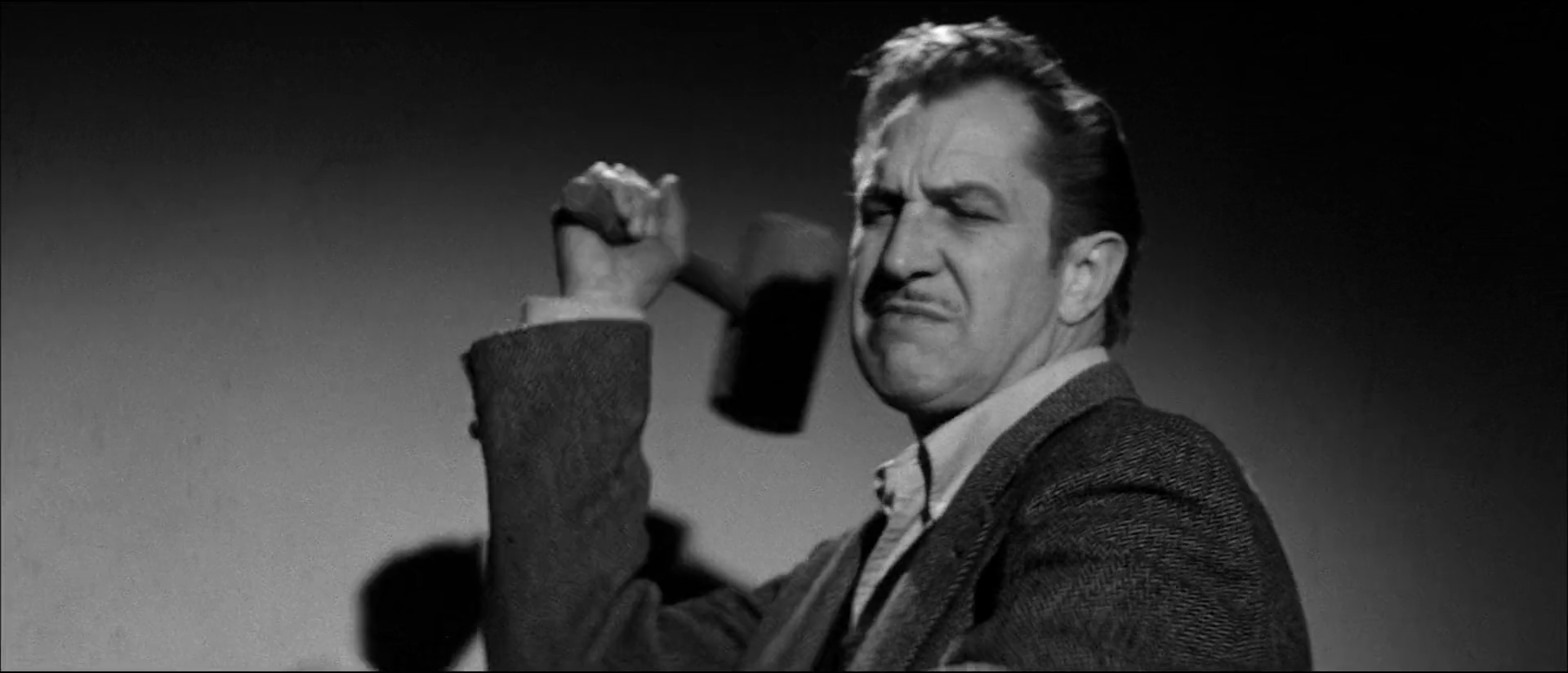
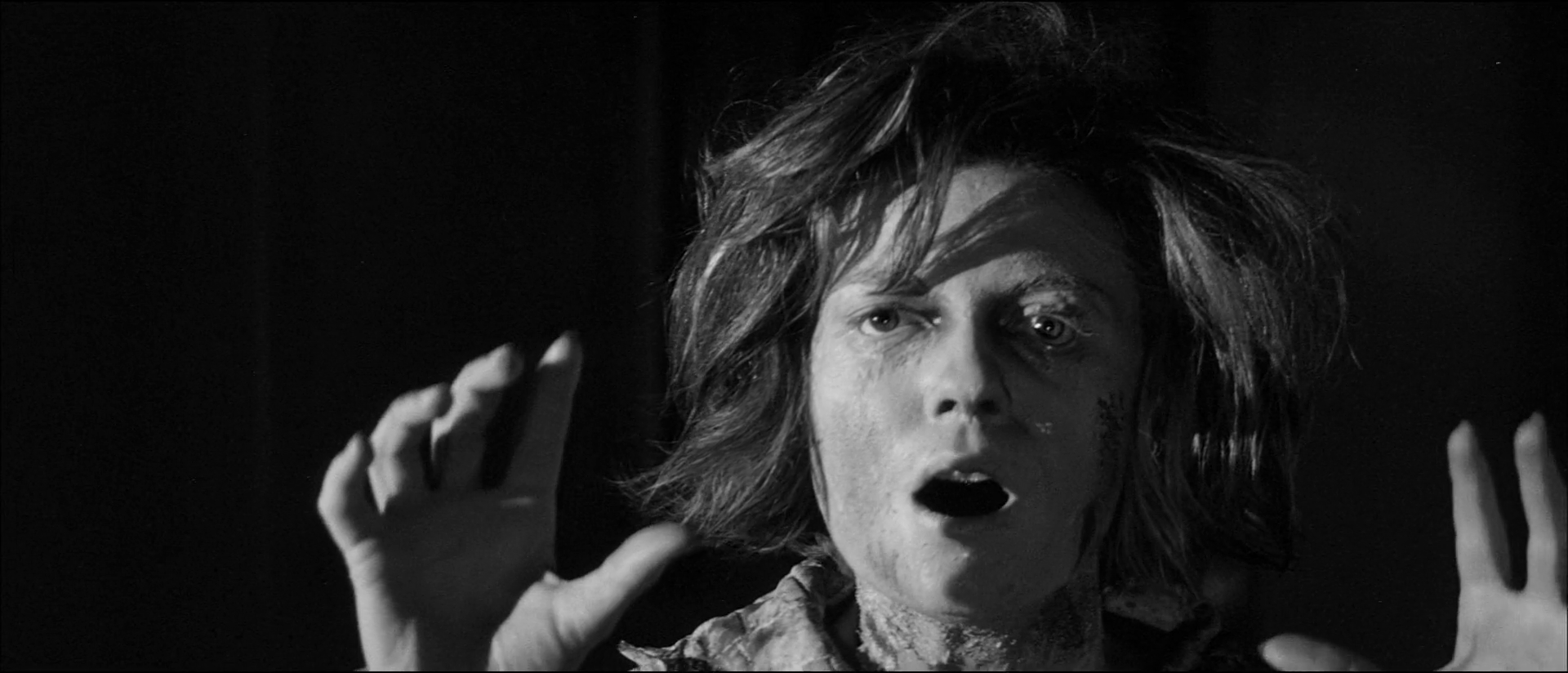
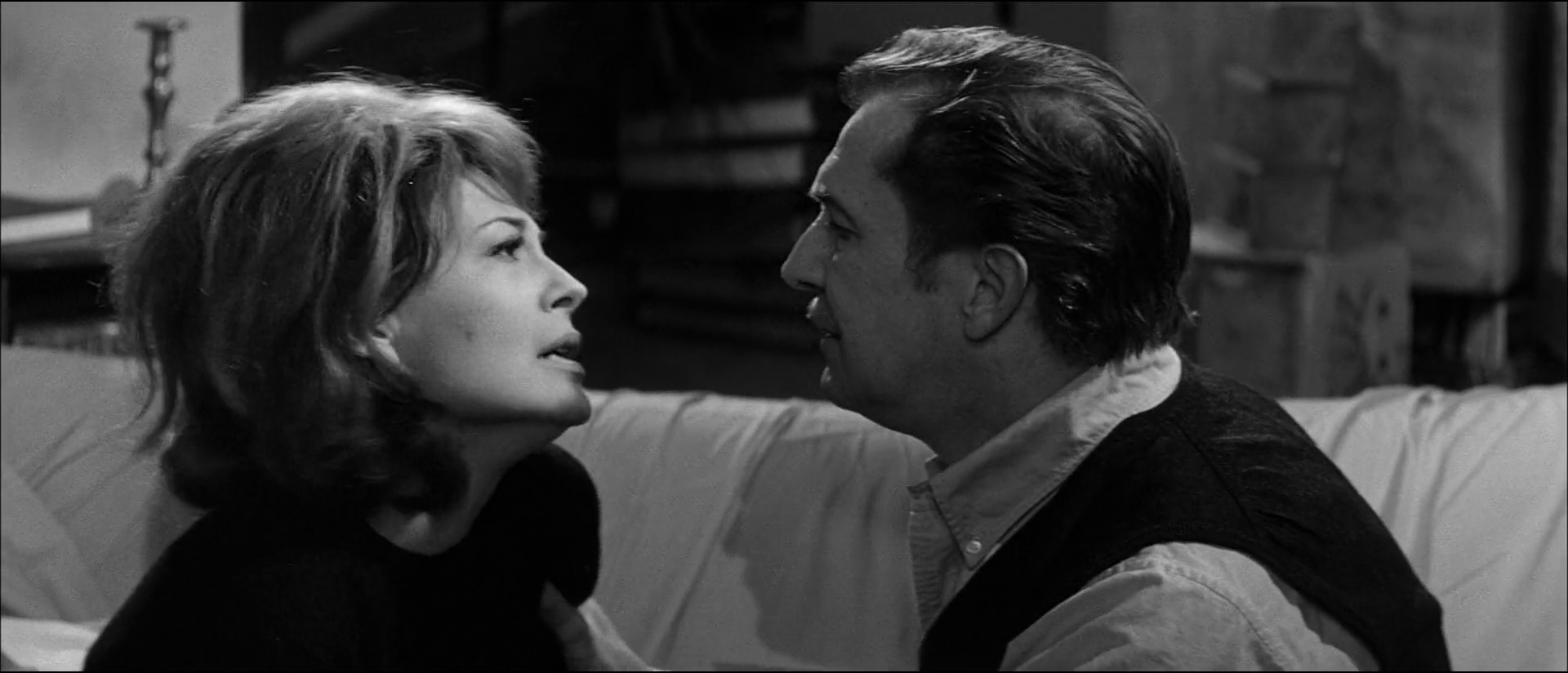
This movie opens with “The Last Man on Earth” Dr. Robert Morgan (Vincent Price) a man living in a world where everyone else has been infected by a plague that has killed the bulk of the world's population or turned them into undead, zombie-like creatures that cannot stand sunlight.  They fear mirrors and are repelled by garlic, which makes them sound like vampires but these weak, unintelligent, and shambling monstrosities that Morgan is able to brush off with ease are a far cry from the traditional vampires we've seen in movies and literature over the years. We are first introduced to Morgan as he goes about his day, making a fresh batch of wooden stakes for his vampire hunting and carting off corpses to a massive burning pit for their disposal, as well as putting up with the nightly moaning of his ex-best friend, now vampire gatecrasher, Ben Cortman (Giacomo Rossi Stuart), whose rantings of "Morgan! We're going to kill you!" would get on anyone's nerves.  It should be noted that Vincent Price doesn’t seem all that dynamic as a vampire killer, he simply wanders into a room to stake whatever hapless vampire he encounters, as if he’s just punching a clock rather than ending a life, and author Richard Matheson always thought someone like Gregory Peck or Rod Taylor would have been more appropriate to portray as a post-apocalyptic hero and as much as I love Vincent Price I tend to agree with him on this point.


“I should have called Peter Cushing for advice.”

Not long after settling us into this bleak and disturbing world, one littered with corpses and empty streets, the film rips us away from that world and into a series of overlong flashback sequence that details the arrival of the “Vampire Plague” and it is here that we see Morgan's happy family life taking a terrible turn when his wife Virginia (Emma Danieli) and daughter Kathy (Christi Courtland) both succumb to the plague, but this is before it was widely known by the public that the dead would return to life so instead of taking his wife to the public burn pit used to dispose of his daughter's corpse, as was required by government edict, he privately buries her, only for her to show up at his door later that night. As mentioned, the vampires in this film have very little in common with most literary or cinematic counterparts, other than those few vampiric weaknesses and their need to be staked.  They don’t even come across as much of a threat and when Morgan’s wife arrives at his door the film jumps back to the present and I’m left to assume that he just asked her to leave.


“Can I interest you in any of our wonderful Amway products?”

With those flashbacks out of the way we get back to our movie “Already in Progress” where Morgan has a brief respite from his post-apocalyptic ennui when a dog appears in the neighbourhood, but this movie has no time for any sort of “Man in His Dog” story as the poor thing is soon revealed to have become infected with the plague and Morgan is forced to bury the creature with a stake through its heart, but things start to look up when, while he’s burying his dog, he spots a woman walking around in the daylight and when he chases after he learns that her name is Ruth Collins (Franca Bettoia) and that for three years she has been living on the run from the vampire hordes. Unfortunately, she fails the garlic test and Morgan is able to confirm that she is infected, yet there is a new wrinkle to her story, apparently, she is part of a new society, one that has developed a vaccine that allows them to function normally with the drug in the bloodstream and she has been sent to spy on Morgan.


This is why reading a dating profile thoroughly is so important.

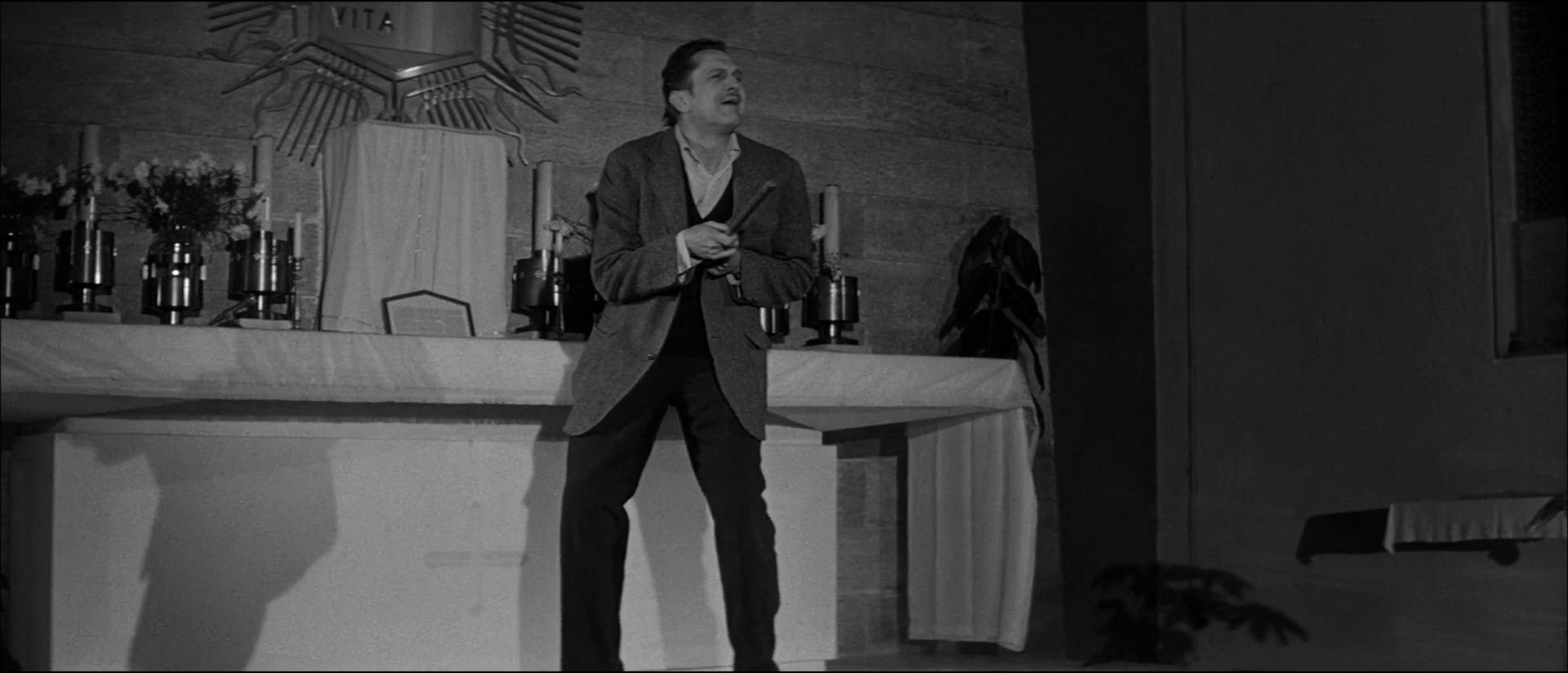
Ruth explains that her people are planning to rebuild society as they destroy the remaining undead humans, she then points out that many of the vampires Morgan killed were still alive, and it’s at this point that Morgan starts to come to grips with the whole “I Am Legend” part of the story as he comes to the realization that he is actually the monster of this story and the only real way out is death. The film ends with a bizarre chase sequence, with a militant group of “good vampires” chasing poor Morgan around the city until eventually cornering him in a church, which allows him to get a nice “spear in the side” moment that isn’t quite as Christ-Like as the one Charlton Heston got in The Omega Man but close enough. Unfortunately, Morgan’s dying rant of “You're freaks! I'm a man! The last man!“ really undercuts his early realization that he was the real monster in this equation.


“Let's make one thing perfectly clear, you guys all suck!”

Stray Observations:

• A common vampiric trait is their inability to cast a reflection in mirrors, yet for some reason in this film, they are repelled by their reflections. In the book, they suffered from something called “Hysterical Blindness” and thus couldn’t see their reflection.
• Morgan keeps his home boarded up, with crosses, garlic, and mirrors at every entrance, but his bedroom window is broken and basically open, which seems like a fatal oversight.
• Even though his door is covered in a variety of “vampire repellants” it doesn’t seem to stop them from gathering around to bang on it with their fists and clubs.
• One thing that always bothers me in post-apocalyptic movies is everyone’s reliance on gasoline, despite the fact that regular gasoline has a shelf life of three to six months, and that’s if properly stored, while in this movie Morgan has been living in a desolate world for three years so the gas for his generator and car would be quite unusable.
• With the whole world to choose from it’s odd that Morgan would pick his suburbanite home as a refuge when so many other places would be easier to defend. One must assume that he stays there to futilely hang onto the one remaining piece of his past.
• Morgan gives Ruth a transfusion and she is instantly cured of her vampirism; this miraculous moment is then immediately forgotten, and I must ask “With her being cured can she stay still with this new vampire society?”
• While fleeing the “good vampires” Morgan breaks into the police armoury and grabs a few gas grenades, leaving behind several automatic weapons that would have been much more useful.
• The vampires in this film are almost zombie-like, whereas, in the novel, they are fast and capable of running and climbing, making this film a precursor to George Romero's Night of the Living Dead, in fact, Romero openly admits to ripping of this movie to make his horror flick.


“They’re coming to get you, Morgan.”

As different as this is from the novel it still remains the most faithful version of Matheson’s story, which isn’t saying much considering The Omega Man and Will Smith’s I Am Legend barely resembled the source material, and even though the author was so dissatisfied with the result that he utilized a pen name instead of his own for screen credit one has to admit that this film at least captured the overall theme of the book, if not the mechanics of the vampire world he had created. Shot on a relatively small budget The Last Man on Earth does look fairly good, cinematographer Franco Delli Colli provided some truly beautiful black and white photography, and Vincent Price gives a solid performance as a man beaten down by the unbearable weight of being trapped in a world of the dead. With a proper script, a decent budget, and better direction this could have been a true classic, instead of being relegated as a lesser Vincent Price vehicle, and who knows, maybe someday we will get a proper adaptation of this classic horror story.

Thursday, April 20, 2023

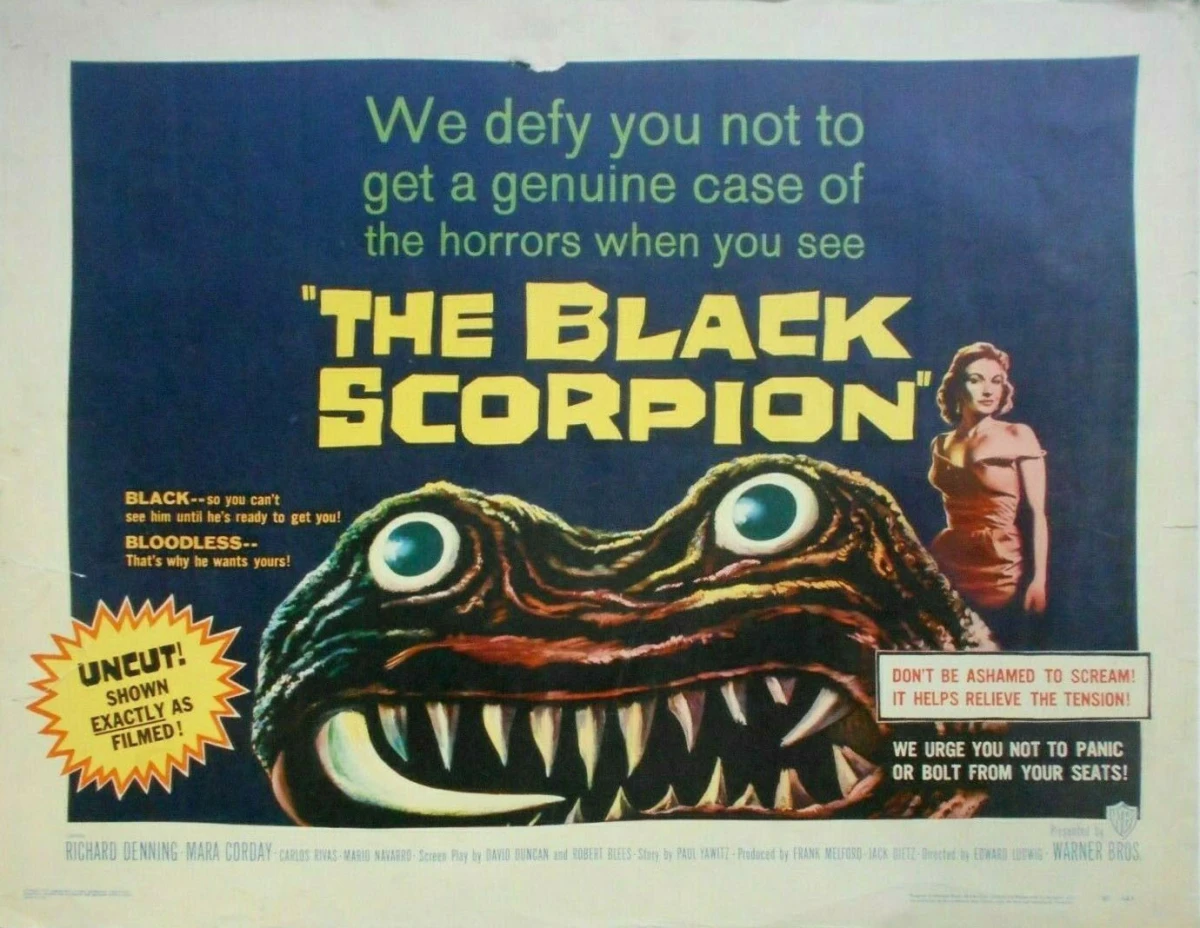
The Black Scorpion (1957) – Review

The 1950s were all about giant monsters raging across the countryside, or at least that’s how I like to think of them, full of radioactive insects and cranky dinosaurs, but in 1957 the father of one of the greatest movie monsters of all time, the father of King Kong, stop-motion legend Willis O’Brien, would take another shot at capturing that love for rampaging furor, which audiences of all ages seemed to have, and that film would The Black Scorpion.

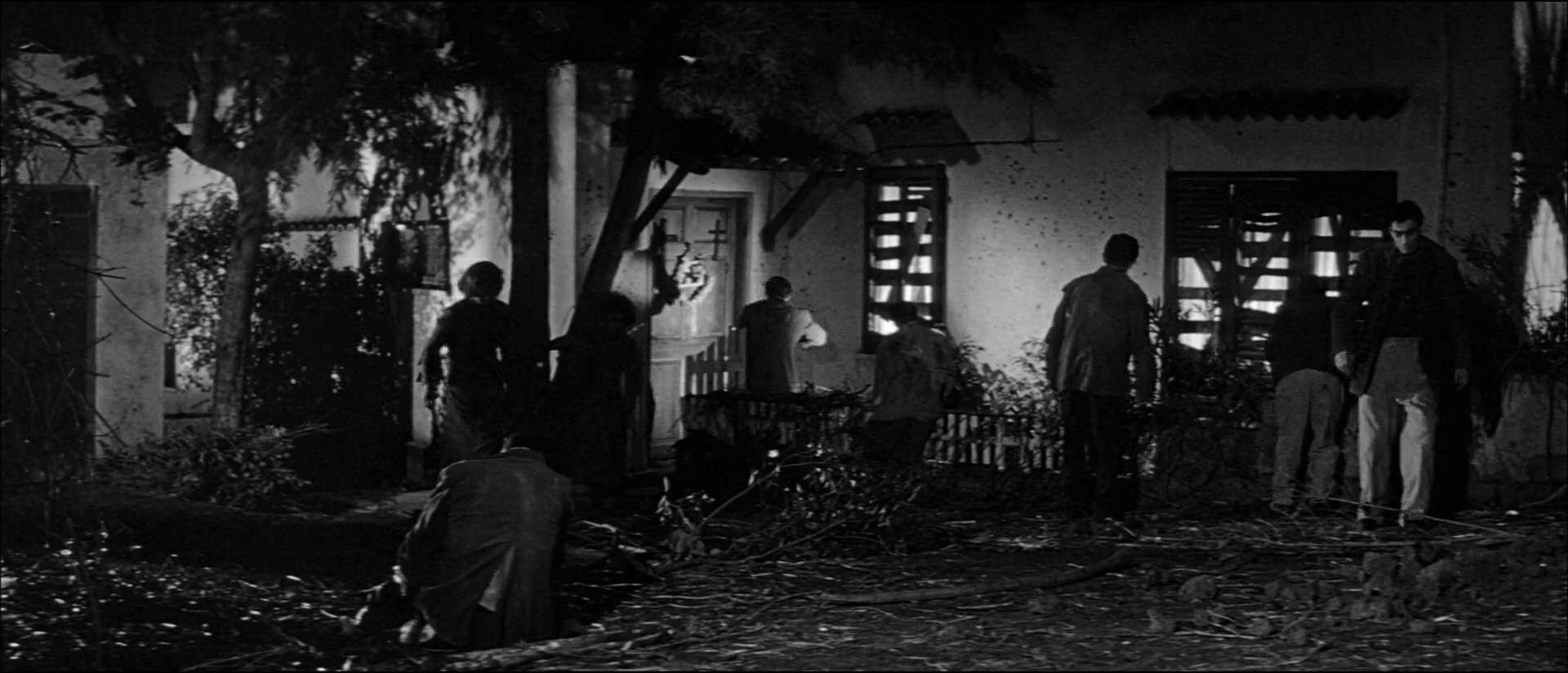
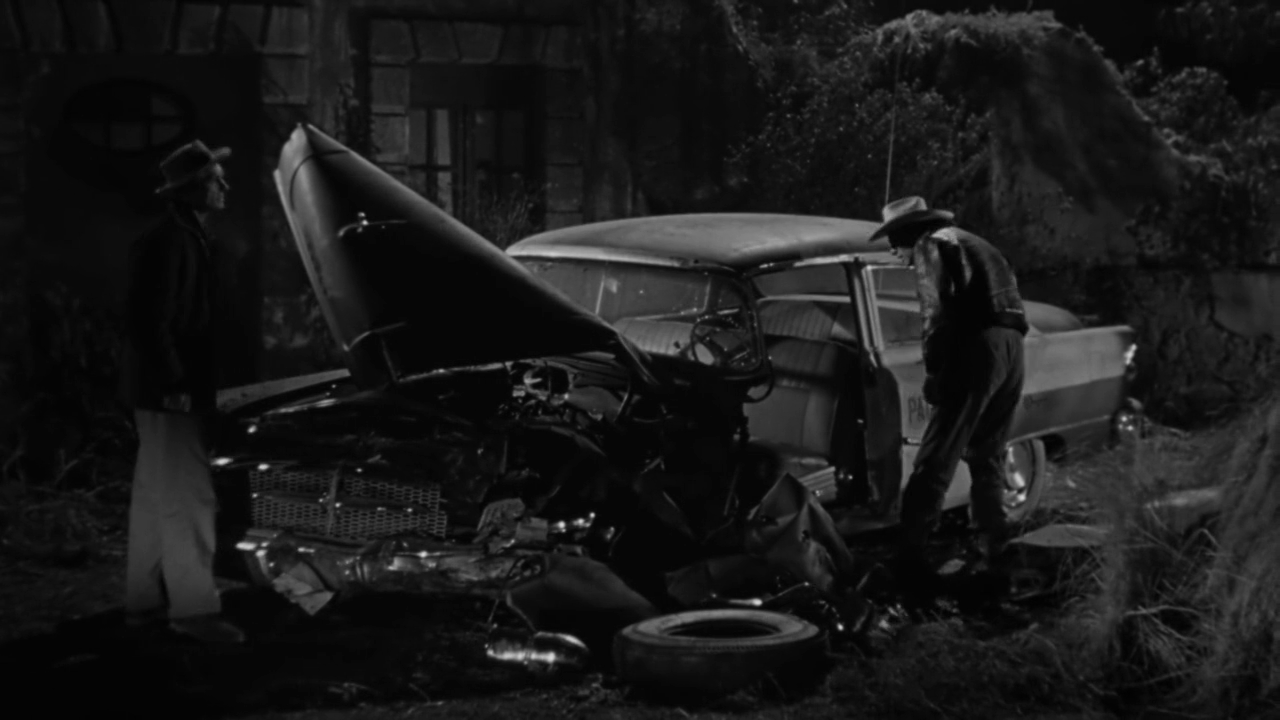
Unlike many of the monster films of this era, the creatures of The Black Scorpion were not created by atom bomb testing or by a mad scientist dabbling in God’s domain, instead, it’s a case of God being his usual playful self and unleashing these monsters just for the fun of it. The movie opens with a narrator telling us that “For centuries, the prayers of Mexico’s peasants have been their only shield against the devasting furies that have wrecked their homes and destroyed their lives. And so again they kneel, terrified and helpless as a new volcano is created by the mysterious and rebellious forces of nature.” Geologists Dr. Hank Scott (Richard Denning) and Dr. Arturo Ramos (Carlos Rivas) are dispatched to study this particular “rebellious force” but while on the route they come across a smashed home, a crying baby and a totalled Mexican police car, as volcanoes are not known for performing hit and run attacks on patrol cars we find Scott and Ramos a little puzzled by all of this.


“This is either the work of a giant arachnid or possibly football rioters.”

When our two heroes arrive at the nearby town of San Lorenzo they are told by Father Delgado (Pedro Galván) that the destruction they have witnessed was caused by something the villagers believe to be a demon bull and not just the result of volcanic activity. Ignoring this inciteful explanation our dynamic dumb-dumbs begin their geological survey while members of the Mexican army, under Major Cosio (Arturo Martínez), arrive in San Lorenzo to begin disaster-relief efforts, they ignore his plea to not wander around the volcano and head off so that the film can have its “meet cute” in the form of local rancher Teresa Alvarez (Mara Corday), who Scott immediately falls in love with.


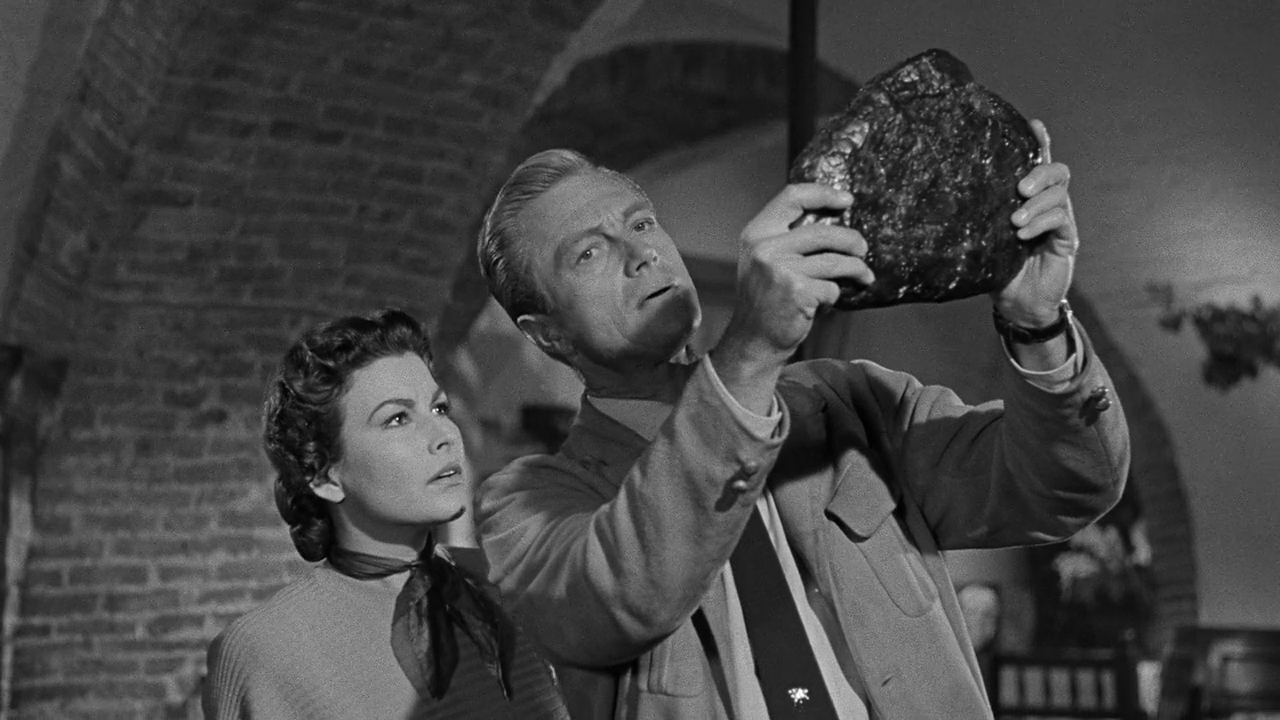
His love of rocks is put to the ultimate test.

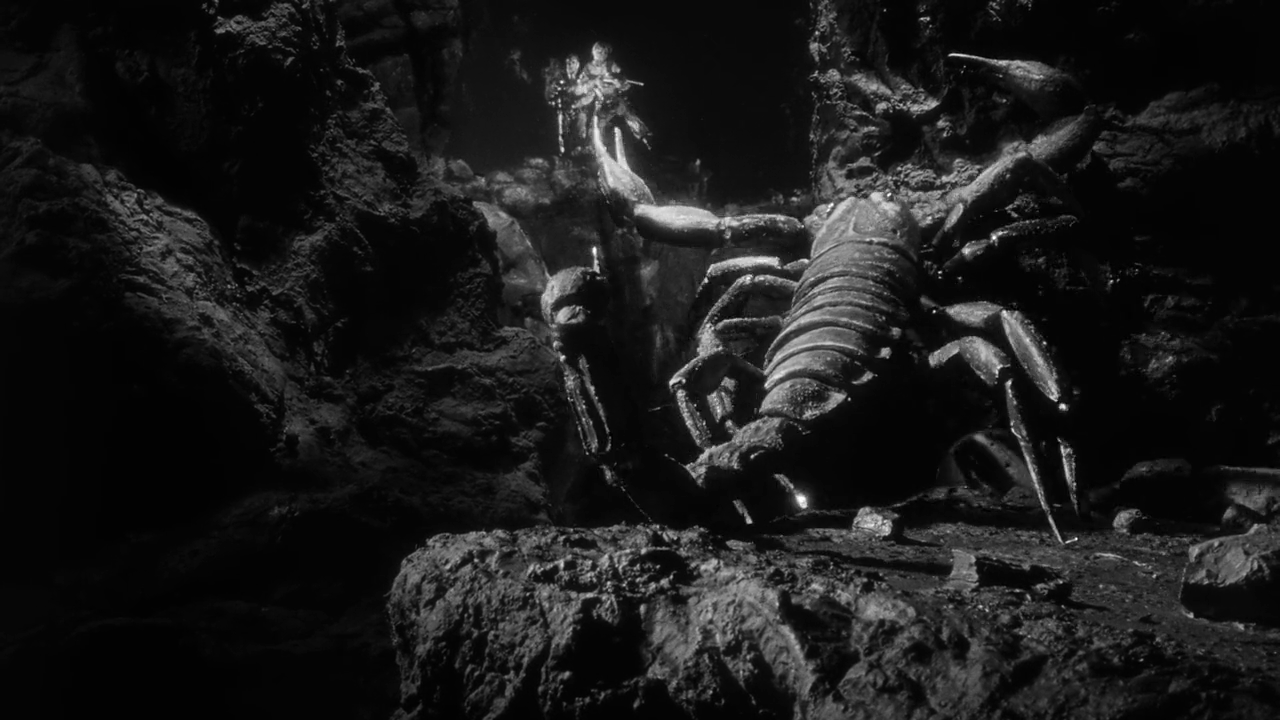
The film starts out as a bit of a mystery, with strange destruction and bodies killed by some weird organic poison, but before they can even get the results of the poison back from entomologist Dr. Velasco (Carlos Múzquiz), giant scorpions attack the ranch and the mystery is solved.  With a young boy named Juanito (Mario Navarro) in toe, because what’s a monster movie without a kid sidekick, Scott and Arturo volunteer to be lowered into a massive pit that is believed to be the nest of these giant prehistoric scorpions. That these two idiots survive wandering a cavern that contains fifty or more of these giant scorpions is probably one of the most egregious uses of plot armour I’ve ever seen, and by this point, the military has already proven that rifles have absolutely no effect on these creatures, and all our heroes thought to bring with them was a rife, a camera and a canister of gas that may or may not be effective.


That they survive this flies in the face of all logic.

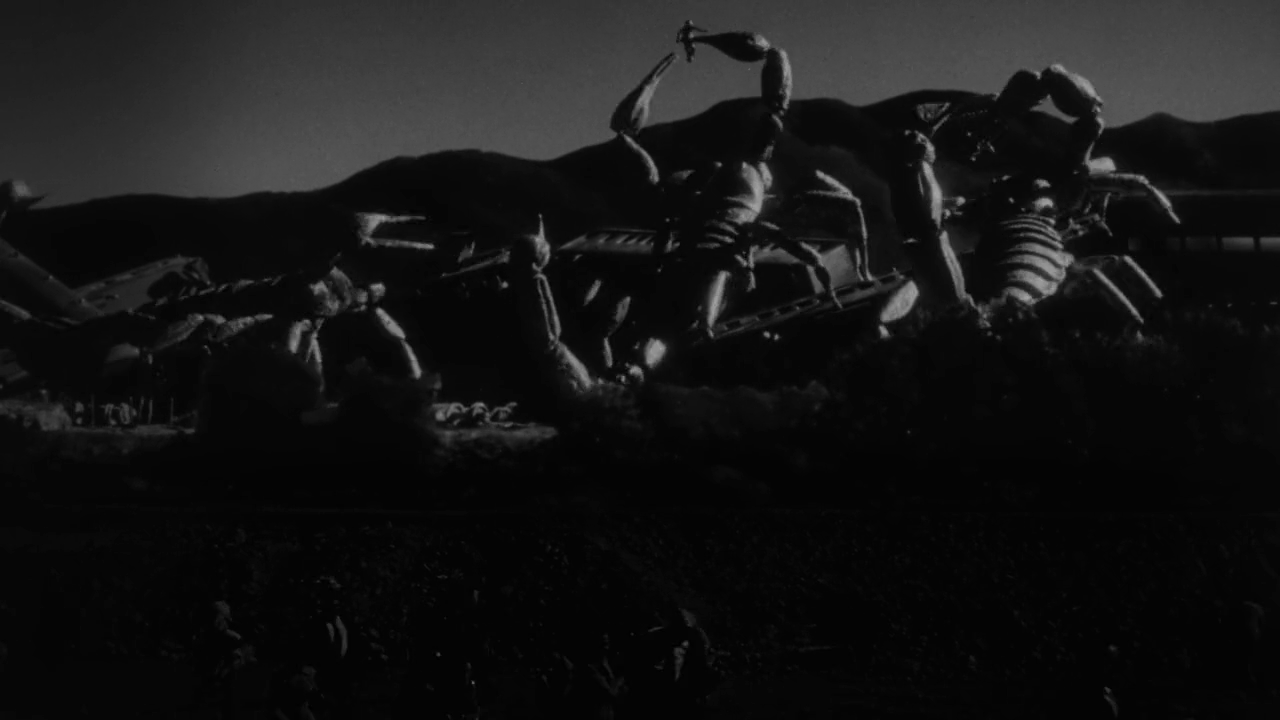
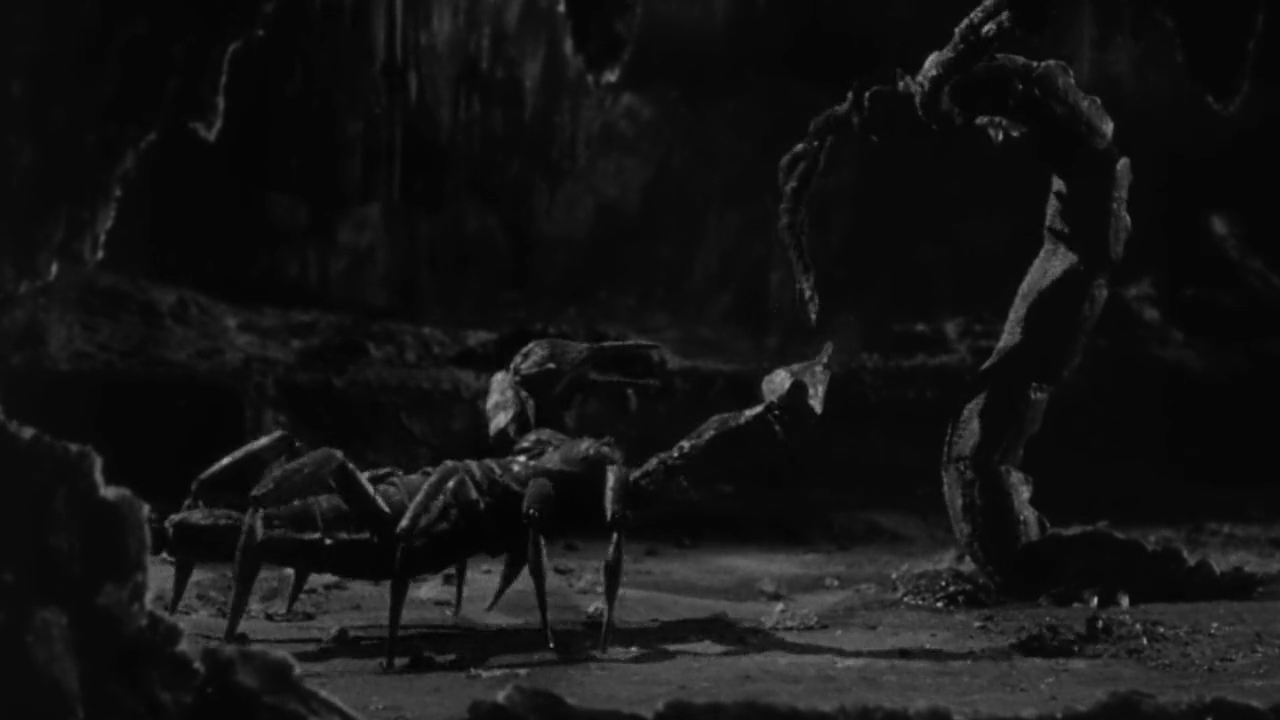
What is effective in this film is the stop-motion animation used to bring the giant scorpions to life, done by stop-motion pioneer Pete Peterson these moments are quite chilling, of course, that is of course when the filmmakers aren’t randomly throwing in these terrible transparent matte shots where the scorpions look like terrible see-through shadow monsters.  There is one particular sequence dealing with the giant scorpions attacking a train that is both brutal and horrifying and is a real showstopper and must have had 1950s audiences at the edge of their seats as the creature pluck up passengers one by one for a little midnight snack.


"Is this the dining car?"

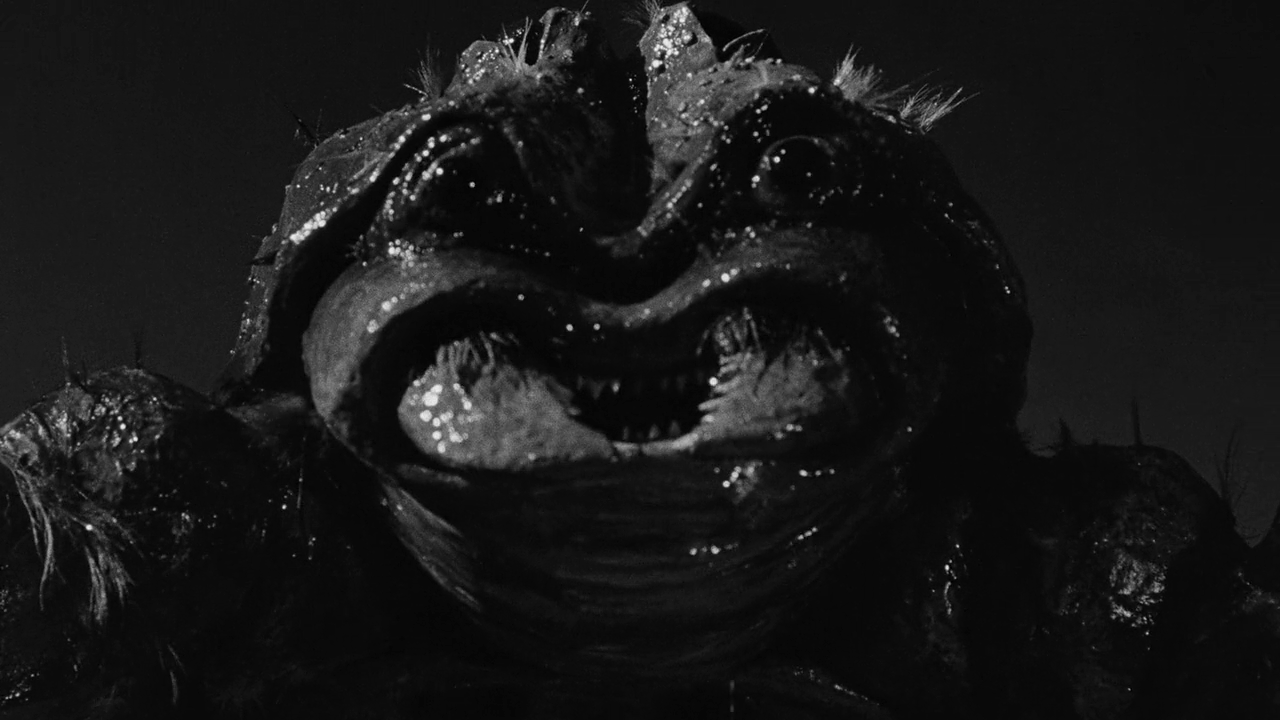
Willis O’Brien was the special-effects supervisor on this picture, with Peterson responsible for most of the hands-on work, but with one of O’Brien’s calibre on deck it is not wrong to expect there to be some decent creature attacks, unfortunately, he was working under a much smaller budget than what he had with King Kong, and this kind of explains some of those dodgy moments of bad opticals, and while we do get some really nice stop-motion scorpion attack sequences we are also subjected to the repeated use of a drooling scorpion puppet for many up close reaction shots that, sadly, never once look all that convincing.


“I’m ready for my close-up, Mister DeMille.”

Stray Observations:

• Richard Denning should avoid travelling south, a few years earlier a trip to South America resulted in an encounter with the Creature from the Black Lagoon.
• Upon finding the smashed police car Hank and Arturo hear the dispatcher on the car’s radio calling for an update, what is odd here is that we're in Mexico and the dispatcher is speaking English and the filmmakers didn’t even bother to give the dispatcher a regional accent.
• The sounds of the scorpions are the same ones used in the classic giant ant film Them! because why bother creating new sounds for your insect/arachnid threat when you have access to a nice audio library?
• Once the threat is revealed to be prehistoric giant scorpions it’s kind of strange that our two geologists would continue to be called upon to deal with this threat. Is monster fighting part of a geologist’s university curriculum?
• The film includes a seven-year-old kid who is incredibly annoying, one who constantly gets into trouble, which is a trope that would become a mainstay of the Godzilla and Gamera movies.
• Our heroes are lowered into a large pit to find the scorpions and encounter a thirty-foot worm and a giant trapdoor spider, which isn’t surprising as Willis O’Brien used leftover creatures from his "Lost Spider Pit Sequence" that was excised from the 1933 King Kong.


“Beat it you stupid worm, this is my movie!”

Directed by Edward Ludwig, The Black Scorpion has some very fine moments, the aforementioned attack on a train by the scorpions being an especially effective sequence, but the film’s three leads are about as exciting as dry toast at a church picnic and any time spent with them makes us long all the more for the film’s title creatures to show up, as they are some of the ugliest, meanest, nastiest creatures ever brought to the big screen. One can’t fault the filmmakers too much for the rather tepid and forgettable romance that has been shoehorned in, as this was pretty much a requirement of the time, and while I have little use for cardboard heroes Richard Denning does at least try to bring a little character to this otherwise dull protagonist. The Black Scorpion may be a paint-by-the-numbers creature feature but when those few excellent monster moments do occur it’s actually worth the wait.

Tuesday, April 18, 2023

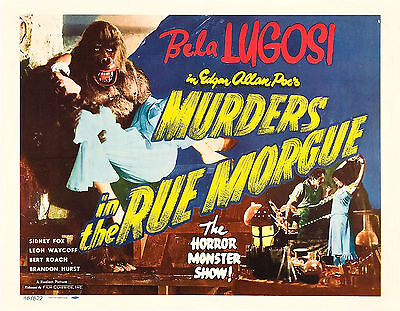
Murders in the Rue Morgue (1932) – Review

Long before Stephen King became the first name in horror that title belonged to author Edgar Allan Poe, who was not only a master of the macabre but also considered to be the inventor of the detective fiction genre, and like King, his stories have found their way onto the silver screen many times over and also like King, these adaptations often strayed far afield of the source material.  Case in point Universal Pictures' 1932 production of Murders in the Rue Morgue, a film that can only be considered an adaptation of Poe’s short story if you were to close one eye and squint really hard.

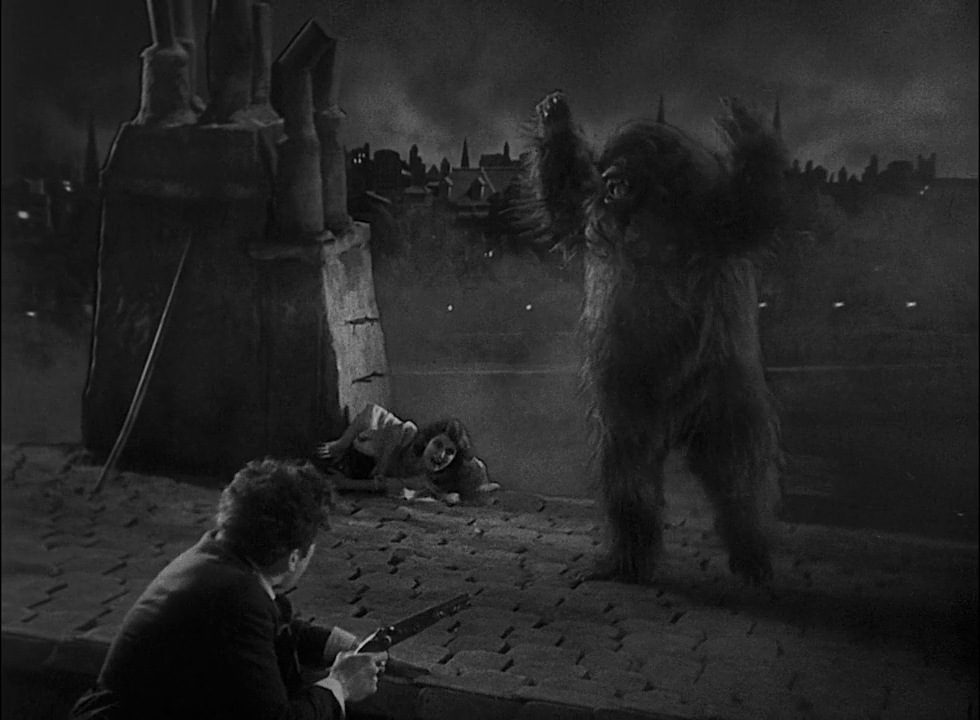
How far would you go to find a mate for your talking ape? That question is the basic premise of Universal’s adaptation of Edgar Allan Poe’s Murders in the Rue Morgue, where a man running a carnival sideshow sends his trained ape out into the streets to abduct young women and then inject them with ape blood to create a mate for Erik, his talking ape. Those familiar with the original Poe short story will be left scratching their heads as none of this remotely happens in the Poe classic, which dealt with a sailor’s escaped orangutan that wandered into a woman’s apartment and when its arrival resulted in screams it panicked and killed the woman and her daughter, so yeah, there is nothing in that story about blood transfusions or talking apes and certainly no rooftop chase concluding with the hero having a showdown with the aforementioned ape.


“It wasn’t beauty that killed the beast, just her well-armed boyfriend?”

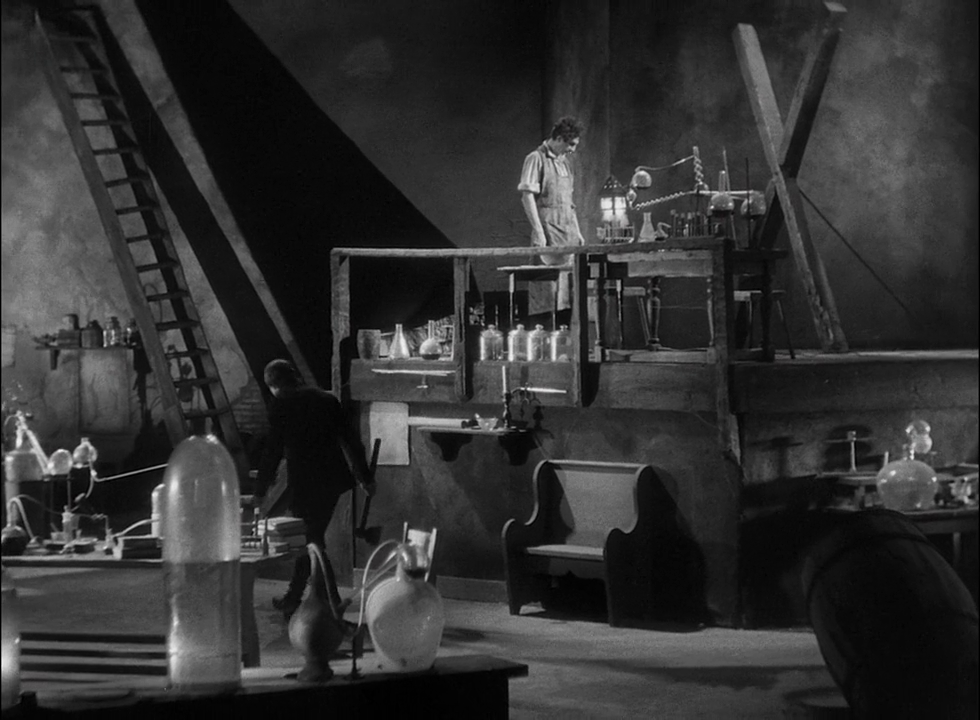
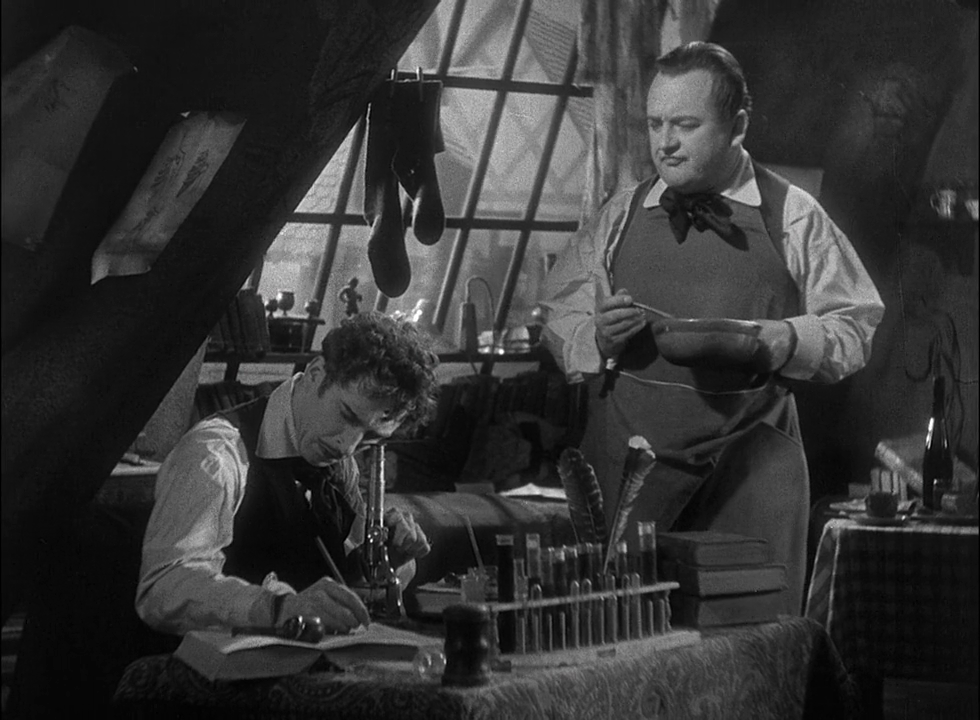
But we are getting ahead of ourselves, the movie opens with medical student Pierre Dupin (Leon Ames) and his beautiful fiancée Camille L'Espanaye (Sidney Fox) visiting a touring carnival, along with Dupin’s roommate Paul (Bert Roach) and his girlfriend, and they decide to take in a sideshow run by Dr. Mirakle (Bela Lugosi), a scientist who expounds on his theory of evolution, that mankind descended from the ape. The general public is not too keen on this bit of heresy but Dr. Mirakle's ape seems very interested in Camille, in fact, both Mirakle and his servant Janos (Noble Johnson) are enchanted by Camille, who Mirakle later plans as a mate for Erik. At an hour in length, Universal’s Murders in the Rue Morgue does run at a rather fast clip, with Mirakle abducting prostitutes and injecting them with Erik’s blood in some bizarre attempt at proving evolution as if he were on a deadline. It’s fair to say that these early depictions of science in the cinema were a bit dodgy, with electricity and the like being able to create wonders, that said, Mirakle’s plan makes little to no sense, "How is injecting an animal’s blood into a human body going to result in anything other than infection and death?"


He doesn’t even have the decency to have his lab located on a Bavarian mountaintop.

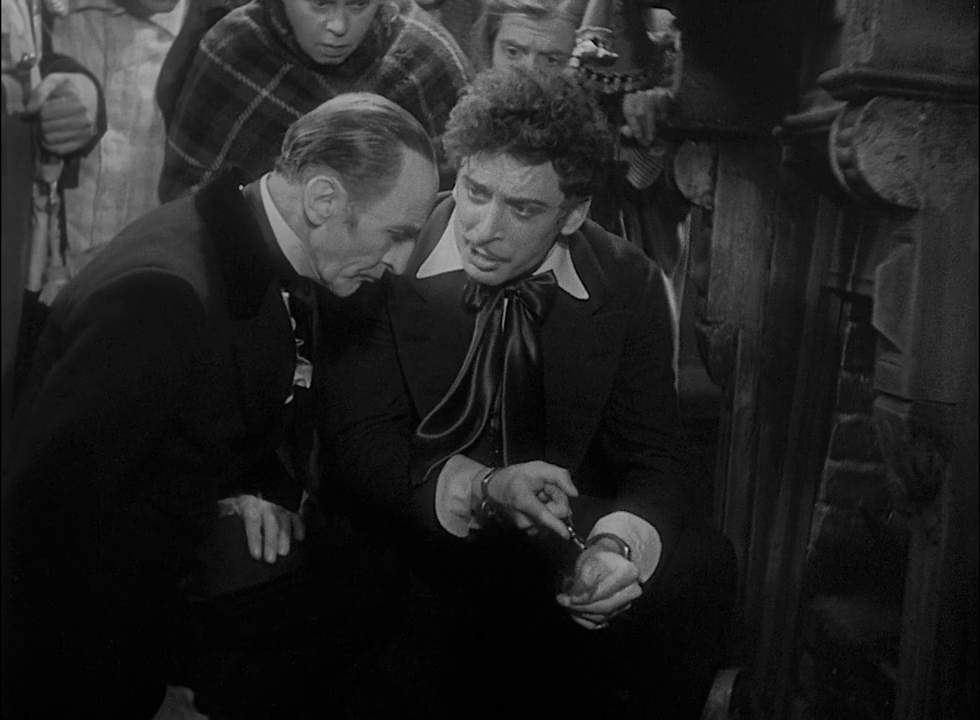
Poe’s short story was also the first example of the “Locked Room Mystery” with amateur detective Dupin deducing from the hair found at the scene that it would take someone, or something, incredibly agile and strong to make the climb and leap to that particular balcony window, but at this point in the movie Dupin already knows that there is an ape involved so there is no actual mystery to be solved and it’s only a matter of convincing the police to rush over to the secret lab of Dr. Mirakle, and this change basically undercuts the very fabric of the original tale. The only part of the mystery retained from Poe’s short story is that several witnesses give conflicting descriptions of what language the assailant was using – in the short story Dupin concludes they were not hearing a human voice at all – but here Dupin already knows who the guilty party is, so we just get him running around pointing out clues to the idiot gendarmes.


“Haven’t any of you read the book, this is ape hair!”

Stray Observations:

• The opening credits to this film state that it is “Based on the immortal classic by Edgar Allan Poe” but it should have said, “Based on the ravings of a writer who had heard of Edgar Allan Poe.”
• The film's opening credits use the same "Swan Lake" overture by Tchaikovsky as did Universal’s adaptation of Dracula, which also starred Bela Lugosi.
• We are told that this story takes place in Paris in 1845 but like most Hollywood productions of the time, not one person will even have so much as a hint of a French accent.
• Erik is supposed to be a gorilla but what we get is the standard "man in an ape suit" bit, and then to make matters worse there is the occasional close-up shot of its face where the filmmakers then used an actual chimpanzee.
• Dr. Mirakle has a disfigured assistant because what self-respecting mad scientist wouldn’t have his own Igor to help with the dirty work?
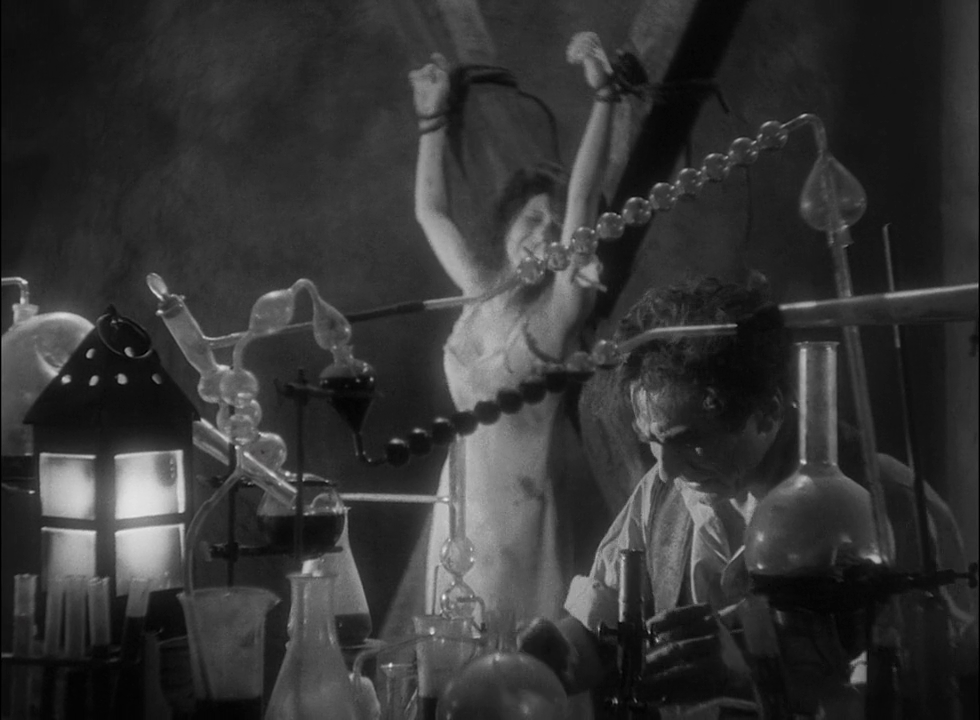
• Our villainous mad scientist binds his victims to a Saint Andrews Cross so that he can safely inject her with ape blood for his experiments, making him a little kinky as well as mad.


He has a nice laboratory/sex dungeon vibe going on here.

Edgar Allan Poe’s Dupin was an amateur detective who used analytical thinking and observation to solve a mystery, which Arthur Conan Doyle and Agatha absolutely “borrowed” when they created Sherlock Holmes and Hercule Poirot respectively, but the Dupin found in this film is far from the brilliant detective found in Poe’s stories as to be almost indistinguishable from the source material, he’s just a medical student who stumbles across the machinations of a mad scientist, no real deductive reasoning required, and while he is a proper 19th-century hero actor Leon Ames isn’t able to imbue the character with any real substance and comes across as rather dull and uninteresting, in fact, his comic relief roommate is the only other character other than Dr. Miracle that raises the script above the standard potboiler of the time.


The original Odd Couple.

Clearly, major changes to the story were added so that it could be a starring vehicle for Bela Lugosi and he does an excellent job as a mad scientist, a role he would return to again in 1934’s The Black Cat, and while only a few elements remain from Edgar Allan Poe’s original short story – an ape, a murder and a man named Dupin figuring out what’s going on being the only survivor elements – we can still appreciate what director Robert Florey was trying to accomplish here, hampered by studio interference and having twenty-minutes of his film cut by the censors which left the film at an almost anemic 60-minutes, which certainly didn't help.  That all said, the Universal backlot never looked better and cinematographer Karl W. Freund created a very atmospheric 19th-century Paris and was able to imbue the proper mood for this type of tale. Overall, Universal’s Murders in the Rue Morgue is an odd little entry that had some solid elements to it, Lugosi clearly had a good time with his role but a goofy script and a truncated story stopped this one from reaching classic status.

Thursday, April 13, 2023

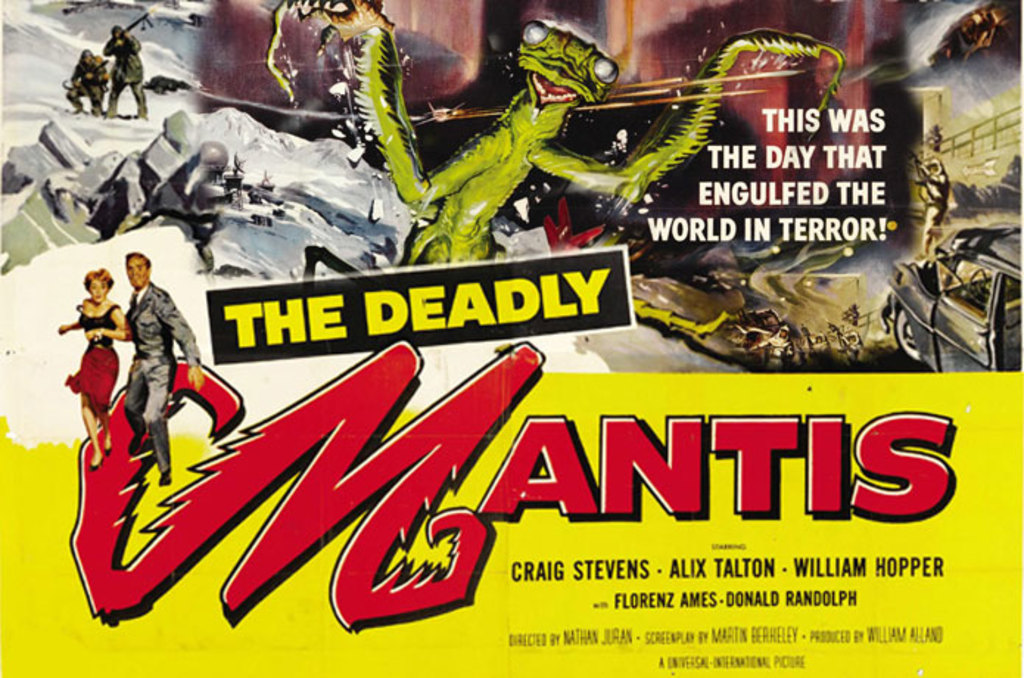
The Deadly Mantis (1957) – Review

While space explorers were tangling with Cat-Women of the Moon and Leslie Nielsen was off seducing Anne Francis on the Forbidden Planet back on good ole planet Earth scientists and their stalwart gal-pals were doing their best to save humanity from giant insects, whether it be a giant Tarantula or the colossal ants from Them! these rather large pests made up a rather good-sized slice of the science fiction pie of the 1950s, and as the decade drew to a close we were treated to another startling insectoid threat in the form of The Deadly Mantis.

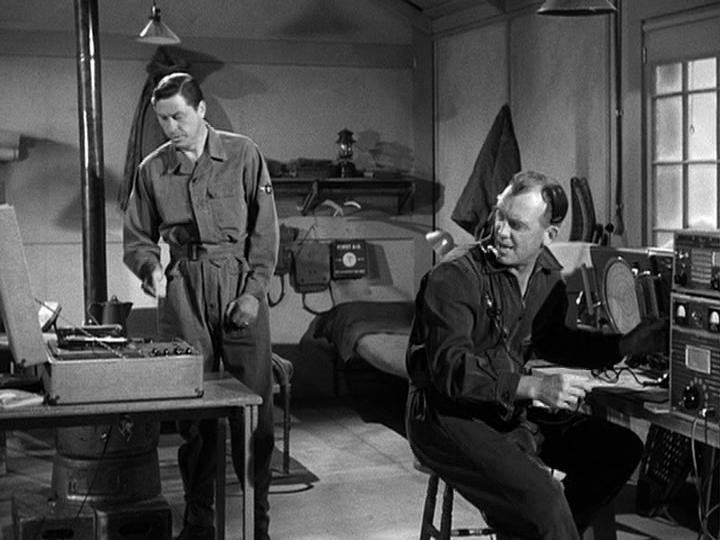
How can you make a science fiction movie on a low budget? The answer to that question is two simple words “stock footage.” All you have to add to this some nice expository narration and you can shave thousands of dollars from your budget, and for The Deadly Mantis Universal Pictures saved plenty of money in their production using these techniques, unfortunately, this sometimes resulted in the use of stock footage that didn’t even match previous shots, but who’s going to notice? This film not only relies on the heavy use of such footage but the audience is hit over the head with it right from the outset as the film opens with a ponderous narrator giving us a lengthy lecture on the importance of radar and the construction of the DEW Line (Distant Early Warning Line) that was put in place to protect all of us from a sneak attack across the North Pole, of course, this film isn’t about those nasty commies over in Russia but of a more dire and terrifying threat, and when one of these outposts goes offline it’s up to our heroes to investigate.


“Hey Mike, either Santa Claus is really early or that’s a giant mantis heading our way.”

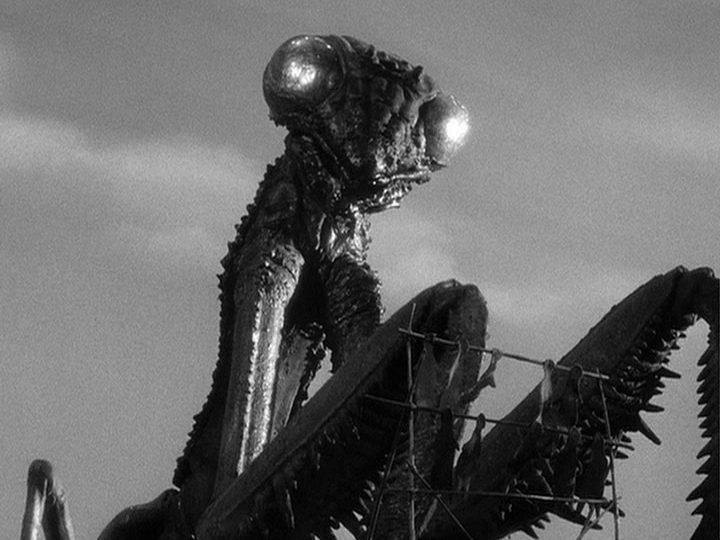
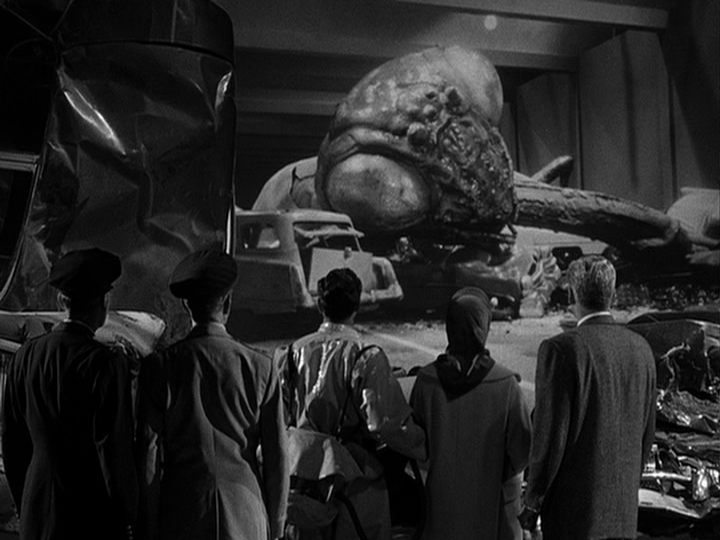
Over at military-base Red Eagle One Commanding Officer Colonel Joe Parkman (Craig Stevens) is sent to investigate this lack of contact and is shocked to find the post destroyed, the men gone, and the giant slashes left in the snow outside are the only clues.  Later on, an Air Force plane is attacked by “something” and Joe is once again tasked to investigate, this time his search of the wreckage turns up what looks to be a giant claw – sadly not from the Sam Katzman film – and when a group of “top men” are unable to identify what creature this appendage belongs to the Pentagon calls upon Dr. Nedrick Jackson (William Hopper), a paleontologist at the Museum of Natural History, and along with the museum’s in-house magazine editor Marge Blaine (Alix Talton), is hired to figure out just what kind of menace they are dealing with. Going by the title of this movie I’m betting it’s a mantis of some kind, sadly, it's halfway through the film’s running time before we actually see the damn title monster.


“If I don’t get home soon my wife is going to bite my head off.”

As is the case with many of the giant monster films of the 50s there isn’t a lot of plot or character development to speak of and The Deadly Mantis is no exception in that area, not only are we subjected to an inordinate amount of stock footage the bulk of the film is mostly people standing around discussing what is or is not going on, that is when they aren't endlessly staring at radar screens, and without much action to keep the audience awake. With maybe the exception of William Hopper, the cast of this film is so wooden that they could have been stored next to the prop of the deadly mantis, and things are definitely not aided by Nathan Juran’s direction which is as dull and listless as possible and is only partially saved by Ellis W. Carter’s nice cinematography.  As for the title creature, the well-designed and operated puppet of the mantis needed to get a better agent as it deserved more than to be in this sad film. The Deadly Mantis has absolutely no forward momentum as each scene seems to drift into the next with no sense of urgency or peril, despite what the film’s tagline implies that the world is “engulfed in terror” This is clearly not the case, and the film comes to its “exciting” conclusion with Col. Parkman flying his plane into the creature – it’s debatable if this was on purpose or another example of his incompetency – and then him marching into the Manhattan Tunnel to toss a bomb into the face of the already mortally wounded creature. Yeah, that was superheroic.


It wasn’t beauty that killed this beast, it was bean counters and studio execs.

Stray Observations:

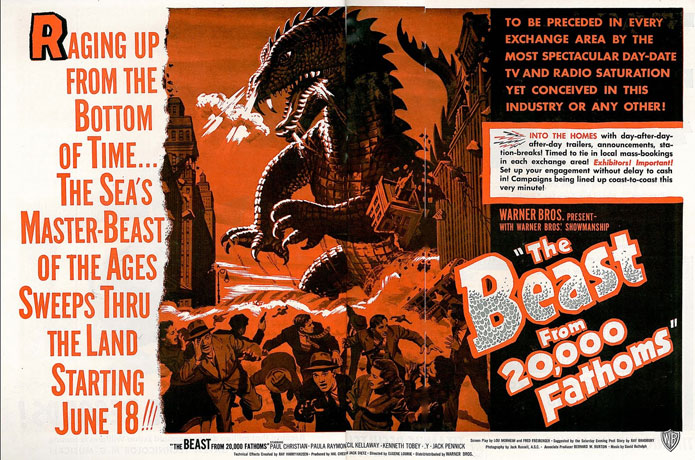
• Unlike the giant ants in Them! the threat here wasn’t created by atomic testing, instead, the creatures are woken from a prehistoric slumber, much like the Rhedosaurus from The Beast from 20,000 Fathoms, but where that monster’s nap was interrupted by atomic testing the “Deadly Mantis” was freed by a volcanic eruption thousands of miles away.
• As is the case with all insects, the Praying Mantis is a cold-blooded creature, so how it was able to walk around let alone fly up in the frigid air of the Arctic is beyond me.
• Dr. Jackson states that “Grasshoppers and crickets aren't flesh eaters like the mantis” which is completely false as they are both just as carnivorous and deadly as the mantis, clearly this film has a very anti-mantis agenda.
• Why exactly is Col. Parkman tasked with hunting down the giant mantis? Is this some kind of military protocol of “I call dibs” because the commander of a radar installation wouldn’t be my top choice for the position of monster hunter.
• Actor William Hopper, who plays Dr. Nedrick Jackson, is no stranger to giant monsters as he fought the Ymir in 20 Million Miles to Earth the same year this film was released.
• I’ll grant that a giant mantis would be a threatening creature, with its giant claws and mandibles, but when it comes to the safety of the film’s heroine I found the wolf-whistling sex-craved soldiers of the DEW Line to be a more clear and present danger to this poor woman's safety.
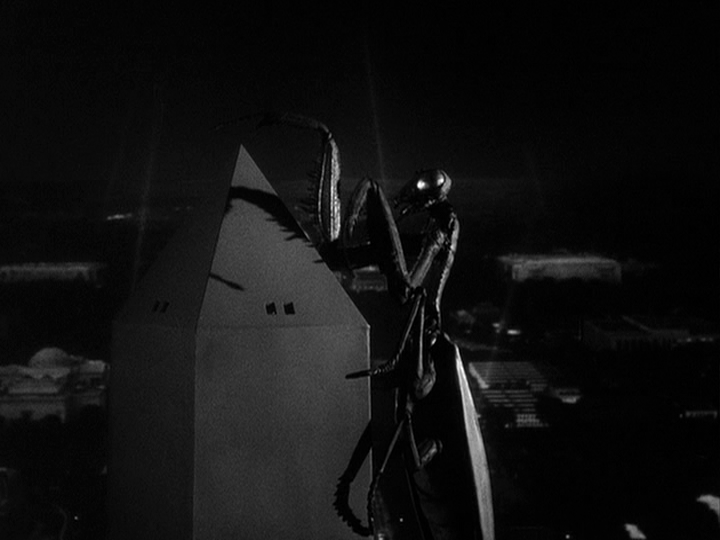
• When the mantis arrives in Washington D.C. its first stop is to visit the Washington Monument because even a giant insect can’t resist a good tourist attraction.


“Quick, someone call in the biplanes, I think it has Fay Wray.”

One of the key problems with The Deadly Mantis is that despite being told about all these attacks and horrifying tales of people being eaten it is only one giant bug, it certainly doesn’t come across as some kind of world-conquering menace, because, unlike the giant ants in Them! this is a singular threat and not a swarm of giant beasties.  And while monsters like Godzilla and Rodan were nigh invulnerable and caused citywide destruction, that is not the case here as the giant mantis is driven off by rifles and flamethrowers and is eventually dispatched after a single unfortunate collision with the hero’s plane. This is not a monster to instill fear into the populace and that is where this film fails big time as we never once feel that our cast of characters is in any real danger, mortal or otherwise, despite Alix Talton’s shrill screams to the contrary, and when the mantis's last pathetic moments unfold we pity both it and ourselves for sitting through this thing.

Note: The plot of this movie is very similar to that of The Beast from 20,000 Fathoms, with a creature waking up from the ice to then cause death and destruction as it marches south, so if you haven’t seen that Ray Harryhausen classic, do yourself a favour and check that one out instead.

Director Nathan Juran would helm the much superior 20 Million Miles to Earth, as well as the amazing fantasy film The 7th Voyage of Sinbad, but the successes of those films I credit to the wonderful stop-motion animation work of Ray Harryhausen and not Juran’s directing skills, a man who would later give us such classics as Attack of the 50 Foot Woman and The Boy Who Cried Werewolf, which goes to show you how important the special effects men are when it comes to this genre. It should also be noted that if one were to remove all of the stock footage from The Deadly Mantis you’d probably only have enough left for a decent episode of The Outer Limits, and what we are stuck with is an incredibly tedious and monotonous film whose only highlights would be those very brief monster attacks, and while the puppet looked great those moments are barely enough to keep even the most avid monster movie fan awake.