With the success of their 1999 animated feature
Tarzan it’s no surprise that the
House of Mouse would bring the Ape Man to television as part of their
Disney's One Saturday Morning lineup, but what was a little surprising is how good it was. Often times
Disney
direct to video sequels were of less than stellar quality but when it
came to their animated televisions series they tended to do a better
job; the 1998
Hercules series ran two seasons and was far more interesting than the
theatrically released movie it was based on. In the case of
The Legend of Tarzan
the writers had two problems; first they couldn’t stray too far from
how the characters were depicted in their hit movie, and secondly none
of the voice actors returned for this small screen venture. The second
point turned out to be no problem at all as they managed to get a roster
of great voice talent to fill out their roster, but in keeping with the
way
Disney depicted these classic characters in their feature film it was less than ideal, that is if one was
trying to faithfully adapt the stories of Tarzan by Edgar Rice Burroughs.
Of course no one should ever expect a
Disney
produced project to stay true to the source material; this is the
studio that made Hercules mortal by inept poisoning instead of it being
because Zeus just couldn’t keep it in his pants, and so a Disney Tarzan
was never going to be the pulp adventure hero that Burroughs penned.
Like the 1999 movie this series will have a Jane Porter (
Olivia d'Abo) who is decidedly British, and a Tarzan (
Michael T. Weiss) who spends much of his time scrambling around on all fours and speaking in somewhat halting English. Like the 1976
Filmation series
Tarzan, Lord of the Jungle
this Ape Man will not be a killer, not even in self-defence, but will
defeat most enemies with the strength of his mighty limbs, but luckily
by the 1990s
Standards and Practices had lessened some of the
restrictions on what violence could be included in a show for kids, and
so Tarzan isn’t forced to spend all his time dodging opponents as he did
in the
Filmation series, he's able to properly fight back.

Though a knife would certainly come in handy here.
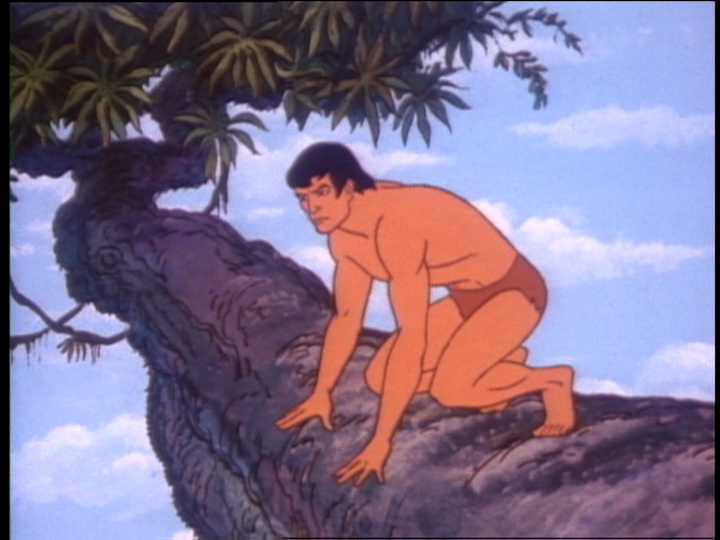
What stands out most when watching
Disney’s The Legend of Tarzan is the quality of the animation, once again we are treated to Tarzan beautifully surfing the jungle like and
Extreme Sports God, and nobody does character designs better than the people at
Disney.
As I mentioned earlier the writers of this show were rather hamstrung
by the feature movie and so we get a slightly less civilized jungle man
than Burroughs depicted in his books; Jane and Tarzan’s relationship in
the first few books was fraught with misunderstandings and abductions,
opposed to the
Disney movie where they just kind of fell in
love and decided to get married. The animated series picks up shortly
after the movie ended with Jane now blissfully married to Tarzan and
living with him in a fabulous treehouse (a treehouse more in keeping
with the
Johnny Weissmuller Tarzan films), and sharing their life in the jungle is Jane’s absent minded father Professor Archimedes Q. Porter (
Jeff Bennett), the cowardly elephant friend Tantor (
Jim Cummings), and Terk (
April Winchell)
Tarzan’s female gorilla pal. For those of you thought that the Rosie
O’Donnell Terk in the movie was annoying it’s increased tenfold for the
show. They have a running gag where Tantor is constantly falling on her,
but instead of it killing her, as it would most living creatures, it
just provides bad comedy.

Tantor and Terk, the Two Stooges.
A Few Words on the Language Barrier:
One element really bothered me while watching this show was the use of
talking animals. Terk, Tantor, and all the gorillas seem to be speaking
colloquial English, but when visitors come to the jungle they ask about
Tarzan’s amazing ability to speak to the animals. We apparently are
supposed to assume that Tarzan taught Jane and her father to speak the
language of the beast, yet at times we see Jane correcting Terk’s
grammar on occasion. So are they speaking English or is Jane even a
grammar Nazi in ape language? Even stranger is that we often see
Tarzan, Jane and even Terk going,
“Ook, ook.” When speaking to
monkeys. There is just no consistency on display here, but then again
I’m probably over thinking what’s basically a show aimed at kids.
In my review of
Filmation’s Tarzan, Lord of the Jungle
I mentioned how impressed I was that they managed to use elements
straight out of the books, not completely faithful but the spirit was
there, and now in the case of Disney’s
The Legend of Tarzan
we see even more characters from the books brought to life, but sadly
most of it seems like simple name dropping, and I doubt the writers of
the show did more than glance at the chapter headings. One classic
Tarzan location that appears in both the
Filmation series and the
Disney one is the lost city of Opar, and strangely enough
both
shows get it completely wrong. In the books Opar was a lost outpost of
Atlantis; populated by beautiful women and hideous ape like men, and
ruling over them was their queen and high priestess La. Any who fell
into her clutches would quickly find themselves sacrificed to the Sun
God; unless of course you were Tarzan because then you’d capture the
heart of La, spurn her advances, and then loot the city’s vaults of the
gold hidden there. In the
Filmation series Opar is seen as an abandoned ruin, no hot tempered priestess to be seen, and certainly no spurning going on, but in the
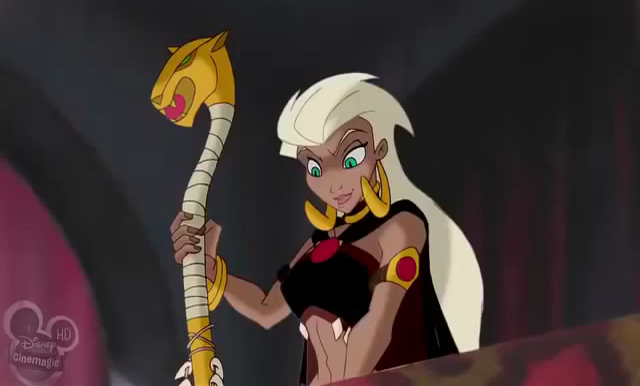
Disney series we do have Queen La (
Diahann Carroll). She’s no Atlantean priestess but a sorceress with an army of leopard men.
Note: Her leopard men are not to be confused with the sadistic cult in the book
Tarzan and the Leopard Men as these aren’t men in costumes but animals transformed by magic into bipedal monstrosities.
Queen
La herself is not a descendant of fabled Atlantis; we learn she was
once a member of the local Waziri tribe who was forced out due to her
evil practitioning of forbidden magic; it’s her magic staff that allows
her to transform animals into humanoids as well as turn humans into
animals, and she can even animate giant stone statues to do her bidding.
Like in the book
The Return of Tarzan La falls in “love” with Tarzan and when he tells the Queen that he loves Jane things get a bit dicey. In the episode
Tarzan and the Leopard Men Rebellion
the titular leopard men kidnap Jane so that she can become their new
queen and free them from being the abominations La had turned them into.
When the magic staff is broken the leopard men revert to being just
plain old leopards, and La herself turns to dust. Of course that isn’t
the end of her evil ways for in the episode
Tarzan and the Return of La
the evil queen’s spirit manages to possess Jane. The book version of La
is vastly more sympathetic, almost a tragic figure whose love for
Tarzan is her only escape from her horrible life, but the
Disney
version of La is equally great in a totally different manner. This is
the one thing Disney changed that I could get completely behind.

Also their version of Queen La is totally hot.
That
she was once a member of the Waziri is a bit strange and unnecessary,
but then again this show’s version of the Waziri is nothing like in the
books. In the books the Waziri tribe are Tarzan’s closest allies and
often provide numerical back-up if Tarzan finds himself against enemies
of superior numbers, but the shows change to making them just a
neighbouring tribe is probable a way to distance themselves from the
racists overtones that Burroughs was sometimes accused of. In the books
Tarzan often referred to the Waziri as “
His children” and one
could certainly take a white father figure commanding a group of blacks
to be if not racist a little patronizing. So that change I will give
Disney a pass on, but what I don’t understand is the name dropping of name Muviro in the episode
Tarzan and the Eagle’s Feather. In this episode Muviro (
Kevin Michael Richardson)
is jealous Waziri warrior who hates Tarzan and tries to steal a woman
betrothed to a fellow tribesman, but in the books Muviro is the leader
of the Waziri and next to Paul D’Arnot is Tarzan’s closest friend. Why
Disney would pick that particular name to make into an enemy for Tarzan
is beyond me, why not just make one up?
This is something they did
in the movie as well where they gave the head villain the name Clayton
when in fact Clayton is actually Tarzan's real name, and it kind of
drives me crazy. Speaking of enemies the show does borrow; one of
Tarzan’s most notorious enemies from the books, the nefarious Nikolas
Rokoff (
Ron Perlman), does make an appearance here.

Nicholas Rokoff and his henchman Alexis Paulvitch.
These two villains first appeared in the book
The Return of Tarzan
and they crossed paths with our hero when he foiled a plot they had to
discredit a Count, and later Tarzan foils their espionage plans when the
try to obtain classified military information. Then in the next book
The Beasts of Tarzan
Nicholas Rokoff kidnaps Tarzan’s wife and child, which puts him right
at the top of any villainy list, but what is Rokoff doing in this
Disney
version? He’s in Africa looking for pirate treasure, and when he learns
that the location of the buried treasure is fraught with danger he
kidnaps Jane to force Tarzan to retrieve the treasure. So this
Disneyfied Rokoff isn’t quite as well rounded and evil as his book
counterpart, he’s more of the Snidely Whiplash School of Villainy type
character.
Queen La and Rokoff are not the only villains to make the transition from the books to the show; we have Tublat (
Keith David)
who was a rival ape to Kerchak’s rule, and One Punch Mulligan, the
World’s Heavyweight Champion, who visits Africa as a publicity stunt.
When Tarzan accidentally knocks him down with “
one punch” the
fighter does everything he can to get a re-match with the Ape Man, but
aside from the character’s name there is much from the book story
collected in the book
Tarzan and the Castaways. In story “
Tarzan and the Champion"
One Punch Mulligan comes to Africa to hunt and bag some trophies, but
after machine gunning down any wildlife within range he finds an angry
Tarzan on his trail. Unlike his animated counterpart the Mulligan in the
book learns the value of all life, including animals, and becomes
Tarzan’s friend. In the episode
One Punch Mulligan he’s just a blowhard that leaves in disgrace after being accidentally punched out by both Tarzan
and Terk.

Note: The reporter is voiced by the great Bruce Campbell.
Another strange change is that of Samuel T. Philander (
Craig Fergusson)
character who in the book was Professor Porters trusted assistant but
in this show he’s his academic rival. Philander is depicted as a lying
cheat whose achievements all stem from stealing the researcher of Jane’s
father, and who has come to Africa in the hopes of discovering what
Professor Porter is working on now and stealing that as well. You
couldn’t get further from his character in the book unless you had him
try and kill Professor Porter, oh wait he does that as well. In the
episode
Tarzan and the Hidden World Professor
Porter convinces Tarzan to lead him to the subterranean world of
Pellucidar and while there Philander tries to trap Porter and friends in
this land of killer dinosaurs while making off with the proof of their
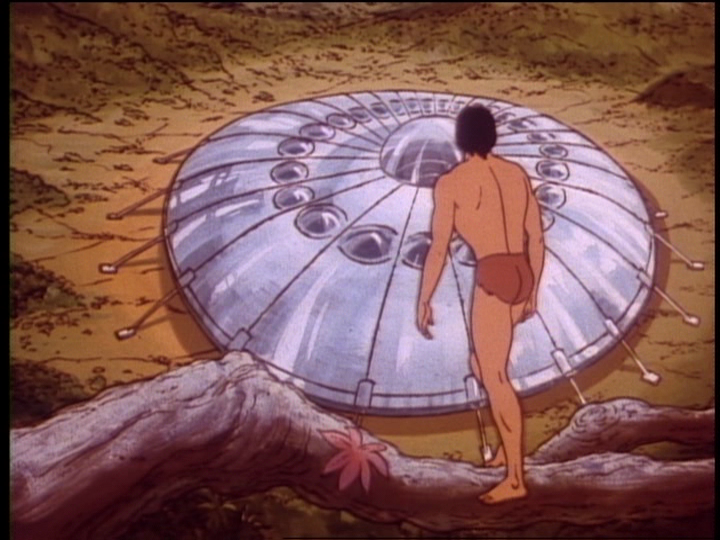
existence. As in the
Filmation series you can access Pellucidar by a crater like hole located near Tarzan’s home, but unlike the
Tarzan at the Earth’s Core, or even the
Filmation version, there are no Mahars or ape-like Sagoths. The
Disney version doesn’t even give us cave men.

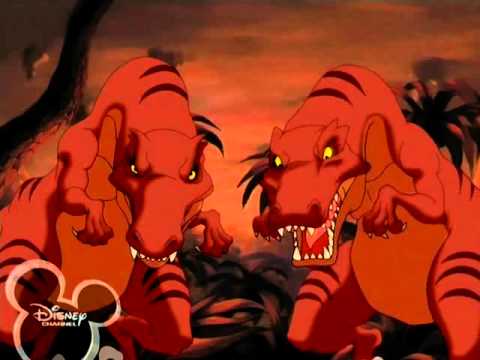
Tarzan does get to fight some dinosaurs though.
The Legend of Tarzan
isn’t just a collection of re-worked characters from the books, there
are quite a slew of original characters populating this series, and most
of them are pretty fun. Renard Dumont (
René Auberjonois)
is introduced as an opportunistic French proprietor who opens up a
trading post near Tarzan and Jane’s home, at first the relationship
between our heroes and Dumont is a bit antagonistic, but later they
become friends and the Frenchmen even helps Tarzan out of a jam or two.
Then there is the villainous Lt. Colonel Staquait (
Jim Cummings)
whose draconian methods put him at odds with Tarzan; he who orders the
burning of a village that contains women and children, and when two of
his soldiers refuse the order, and flee execution, he tracks the pair
into Tarzan’s neighbourhood.

“Sadly my moustache is too pencil thin to twirl.”
The two soldiers he tracks down in the episode
The Fugitives are easily my favorite additions to the Tarzan cast; Hugo and Hooft (
Dave Thomas and
Joe Flaherty) are parodies of Bob Hope and Bing Crosby from the popular
Road to…
movie series. Though the characters don’t quite resemble the legendary
comic duo Thomas and Flaherty do pitch perfect impressions of them. Hugo
and Hooft quickly become regulars on the show and bring some nice comic
moments, opposed to the terrible ones provided by Terk, and their
appearances makes one wonder why we never got a Bob Hope/Bing Crosby
meet Tarzan movie.

Comic Legends meet Jungle God.
One of the major differences from the
Disney cartoon and the books, and certainly from the
Filmation
series where she is completely absent, is the predominate use of Jane
Porter. Aside from using Jane as a damsel in distress Burroughs often
found himself at a loss as to what to do with her, even going so far as
to dabble with the idea of
killing her off, but in Disney’s
The Legend of Tarzan
Jane is front and center with her man through all their adventures. Not
only does Jane appear in every episode she is most often integral to
the story, and even saves the day once and awhile. How well she is
portrayed in this series makes me almost forgive them for making her
British.

Jane looking even hotter while possessed by the spirit of Queen La.
Disney’s
The Legend of Tarzan
is not a faithful representation of the Tarzan stories told by
Burroughs, drop any as many characters from the books as you like and
it’s still not going to be the boisterous pulp adventures from the
original stories, but it's still loads of fun. Sure I wish they would
stop making Tarzan scamper around on his knuckles and let him speak
fluent English, but the stories we do get from this
Disney
series are mostly well written; the action is fun, the villains are
properly villainous, and if seeing this series causes one child to track
down the original stories then this show has more than served its
purpose.
The Legend of Tarzan may be guilty of not being faithful to the source material, but it's also quite entertaining.