Blog Archive

Thursday, June 22, 2023

House of Dracula (1945) – Review

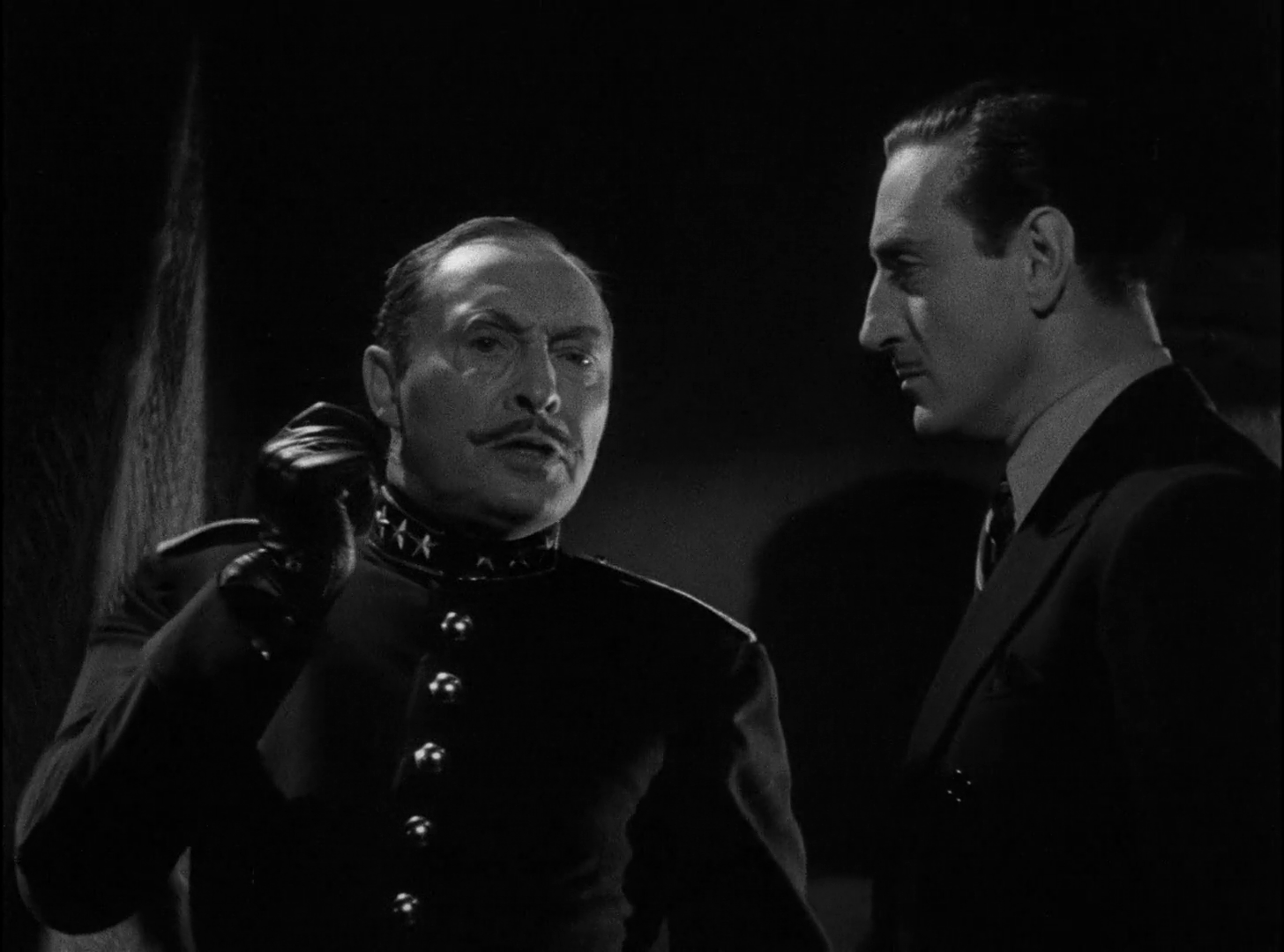
The Monster Rallies of Universal Studios continued on with 1945's House of Dracula, where once again we get Dracula, Frankenstein’s Monster, the Hunchback, the Wolf Man, and the always-required Mad Scientist, but this entry pretty much ignored the events of the previous film while still casting the same actors, welcome to the wonderfully crazy continuity of Universal Monsters.
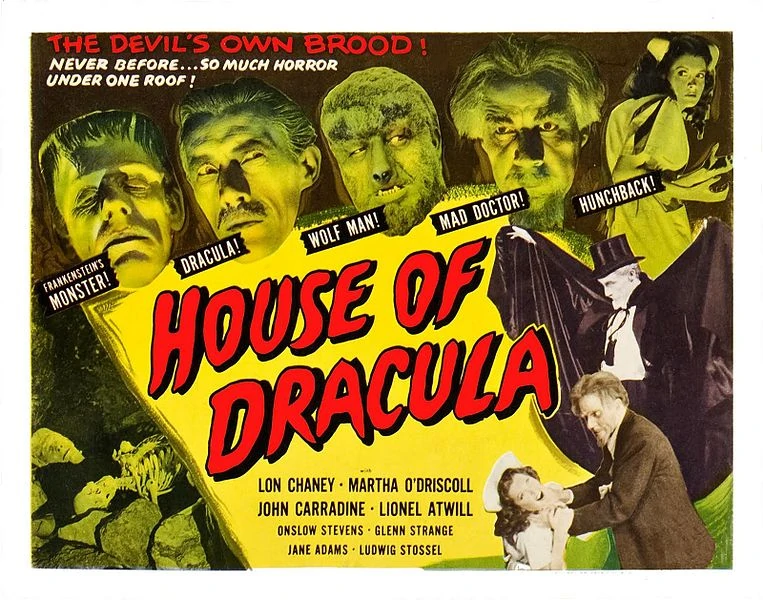
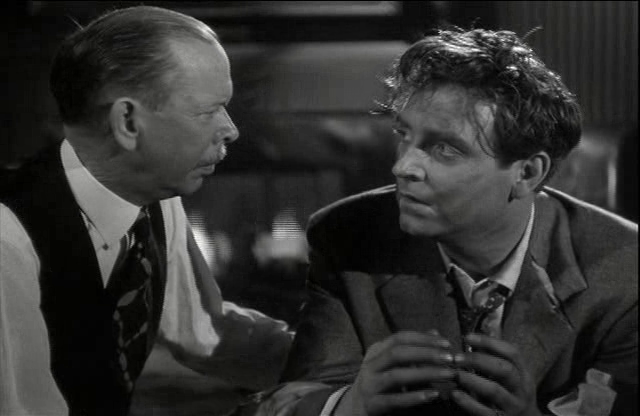
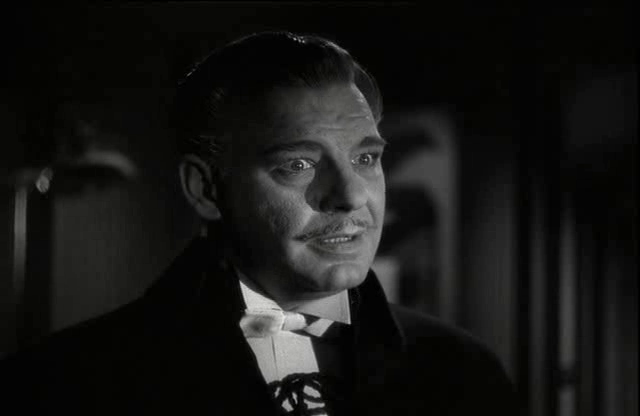
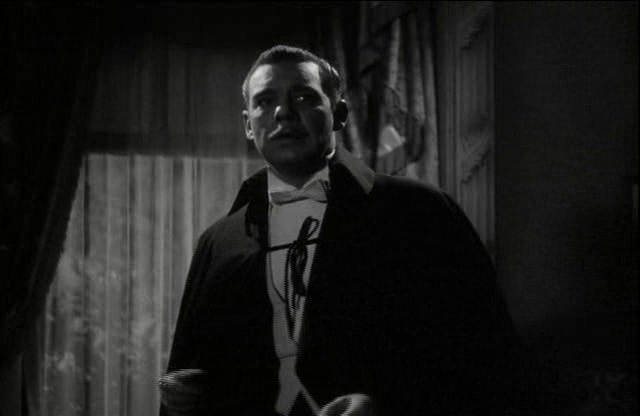
There are a lot of Dracula movies out there and the ones from Universal Studios were my meat and potatoes growing up, I didn't discover Christopher Lee and Hammer Films until much later, but with House of Dracula, we get a rather interesting take on the world’s most famous vampire.  In this film we find him seeking a cure for his vampirism and one must ask the question why?  Have his centuries of murder, mayhem and blood-drinking gotten old? Does having no reflection become too painful? The movie opens with Count Dracula (John Carradine) arriving at the castle home of Dr. Franz Edelmann (Onslow Stevens) to beg the good doctor for his aid in curing him of vampirism, “To seek release from a curse of misery and horror, against at which I am powerless to fight alone” and while Edelmann doesn't believe in the supernatural he strangely agrees to help a man who showed up at his house with a coffin in tow. I’m no scientist but allowing a professed murderer to stay in your home seems like a really bad idea.
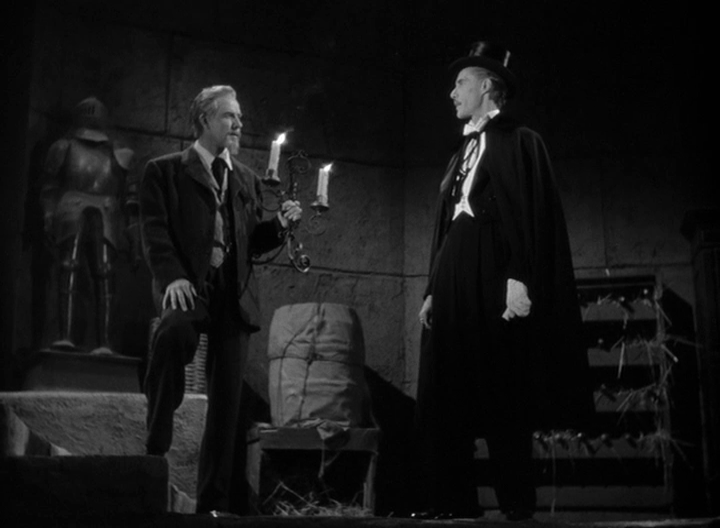
 

“Do you have any servants I could have for breakfast?”

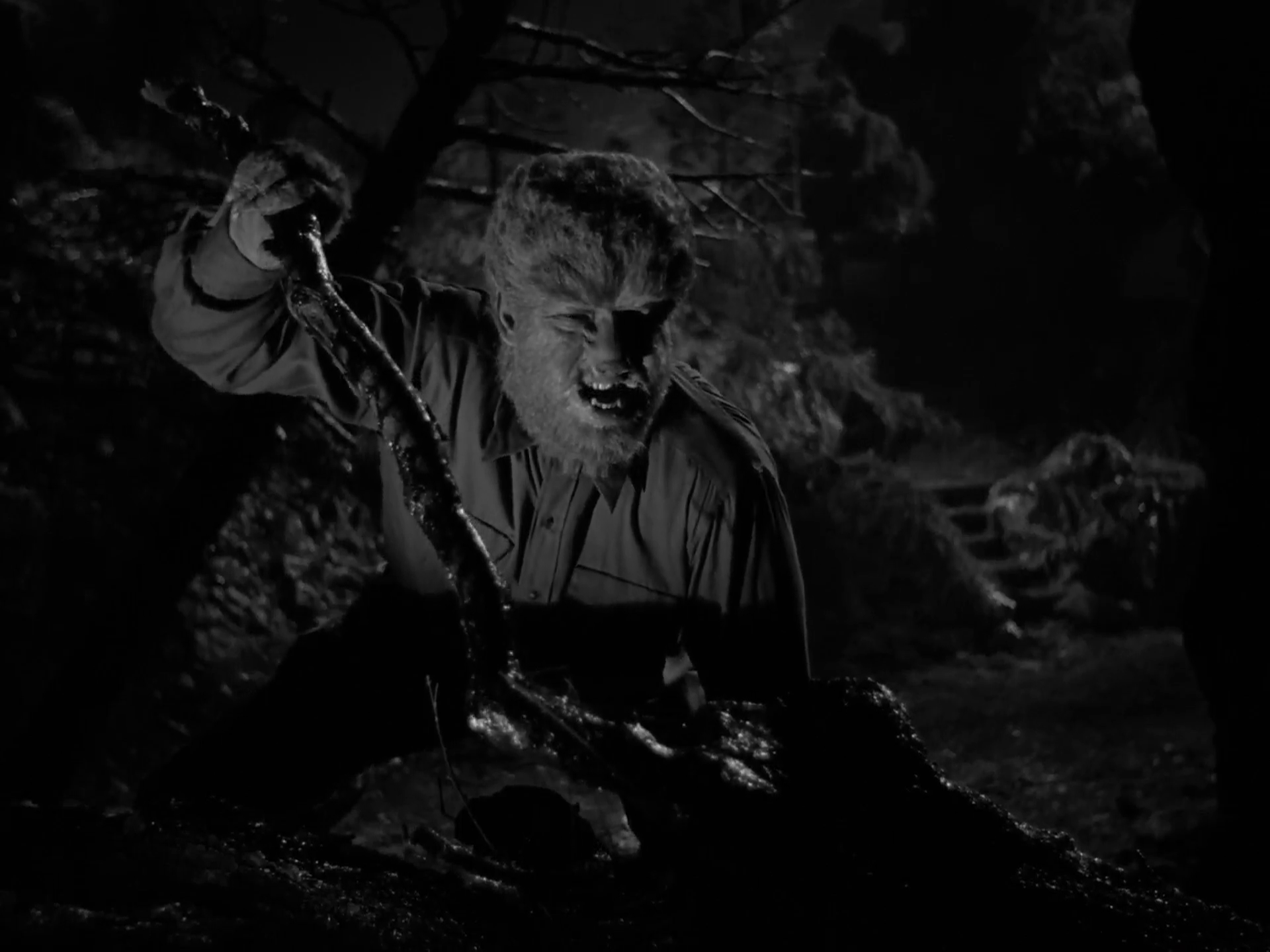
Also seeking a cure from Dr. Edelmann is one Lawrence Talbot (Lon Chaney Jr.), who believes the doctor is his best hope at releasing him from his lycanthropic cures, but after witnessing Talbot’s transformation Edelmann believes that it isn’t the light of the full moon that triggers Talbot's transformations but pressure on the brain, and the good doctor feels that spores from a hybrid plant could cure him. It’s at this point that people who have watched House of Frankenstein may be wondering why Talbot needs a cure when he should be dead, having been shot with a silver bullet fired by "love’s understanding hand" in that film. Then there is the issue of Dracula also meeting his demise in that movie as well, having been caught out in the sun and reduced to ash and bone, but both he and the Wolf Man are back for this outing with no explanation whatsoever. Also returning is the Frankenstein Monster (Glenn Strange) yet for some reason his return the screenwriters felt warranted a proper explanation.
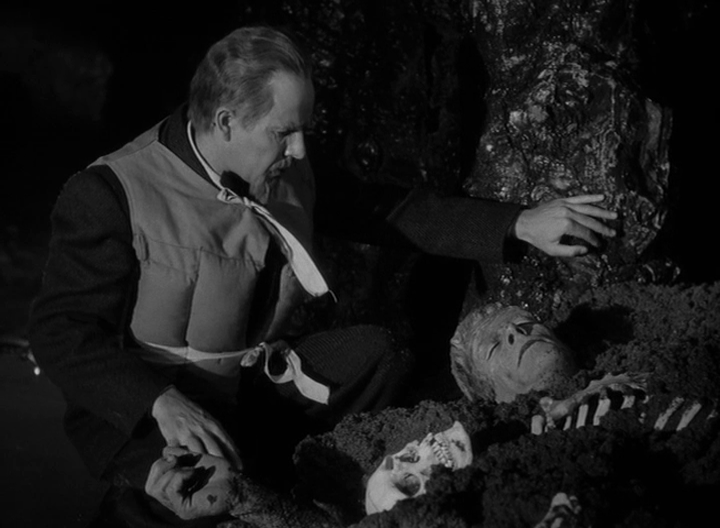
 

“Talbot, look here, an actual plot thread from the previous movie.”

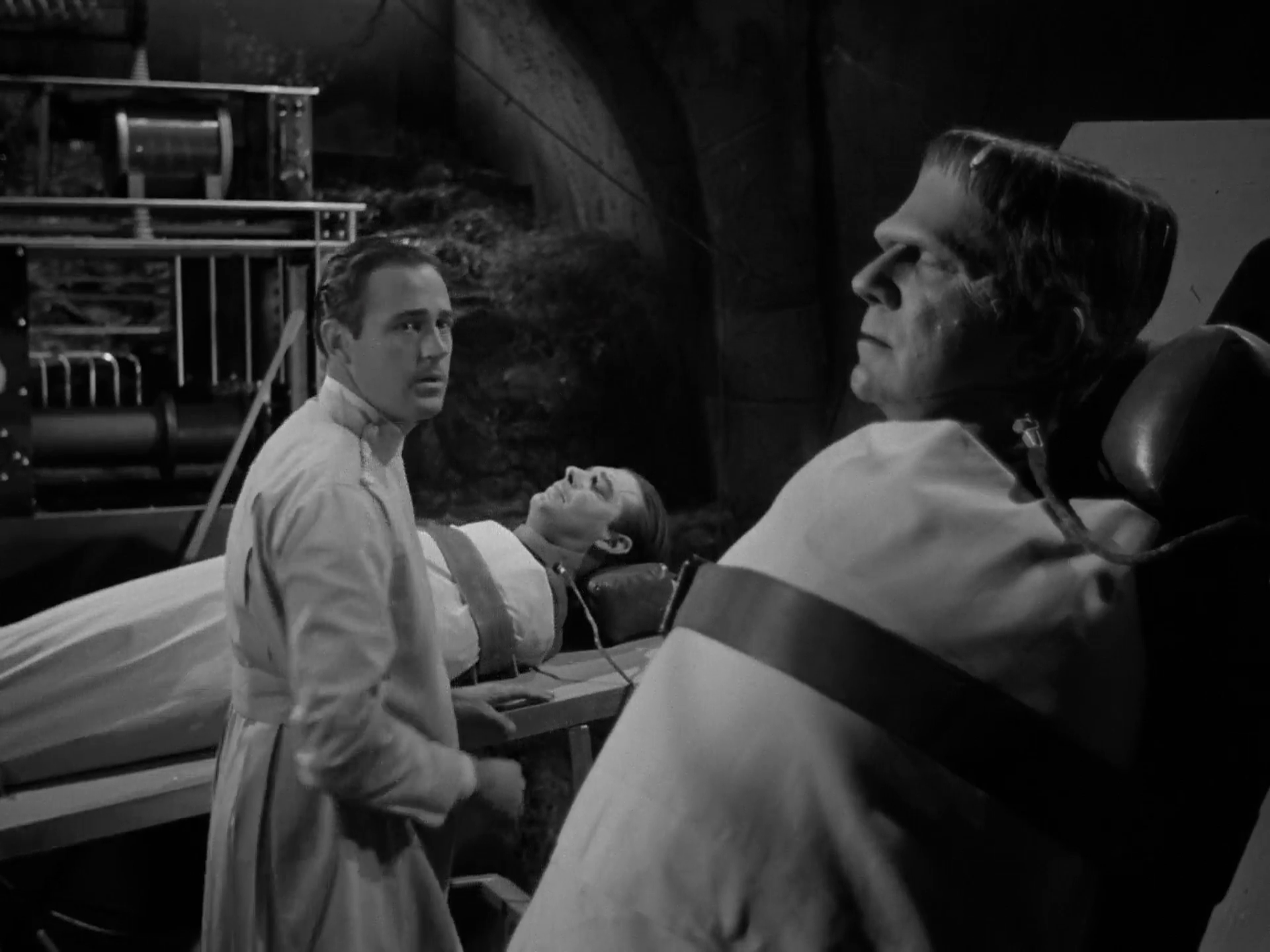
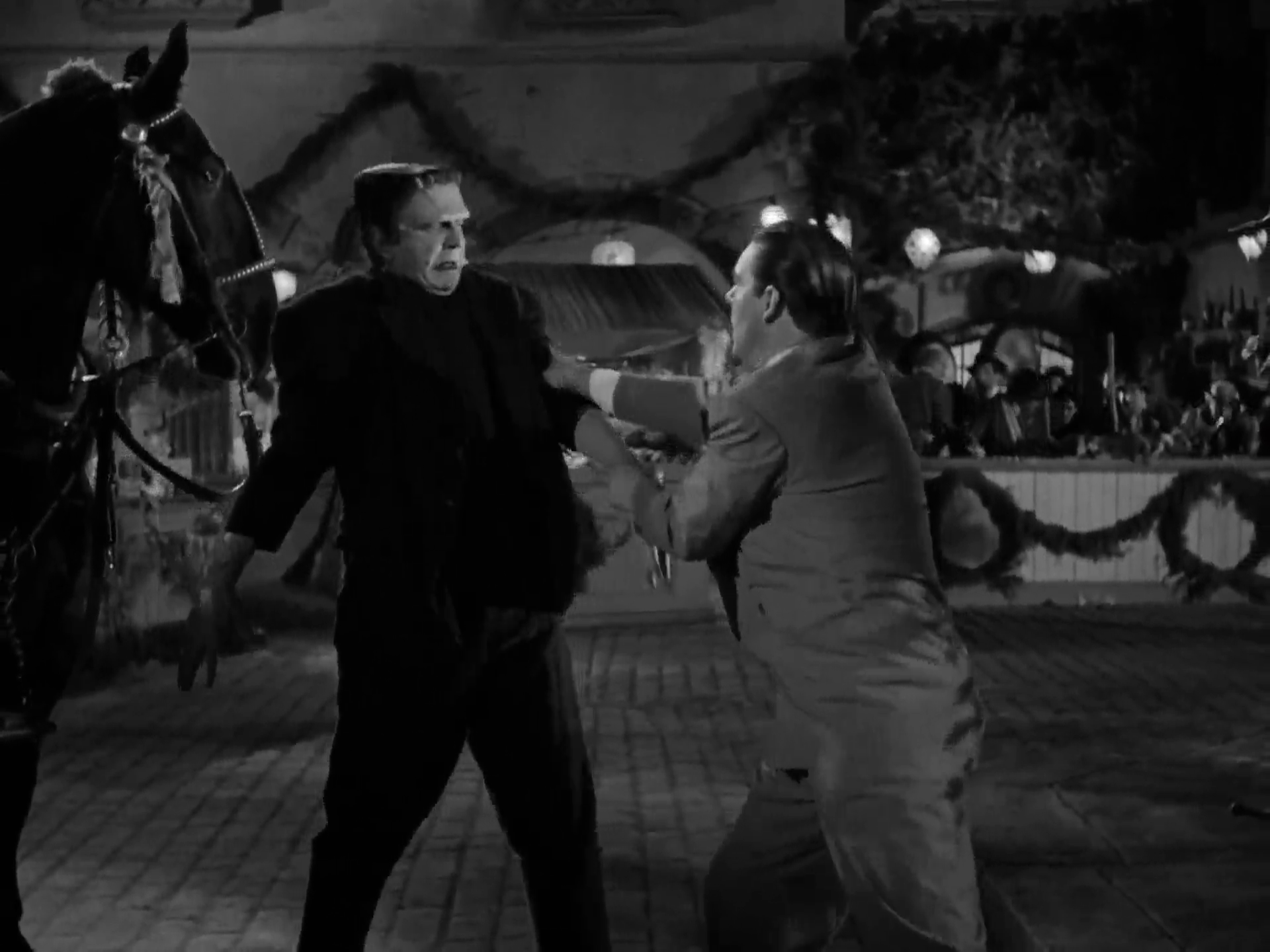
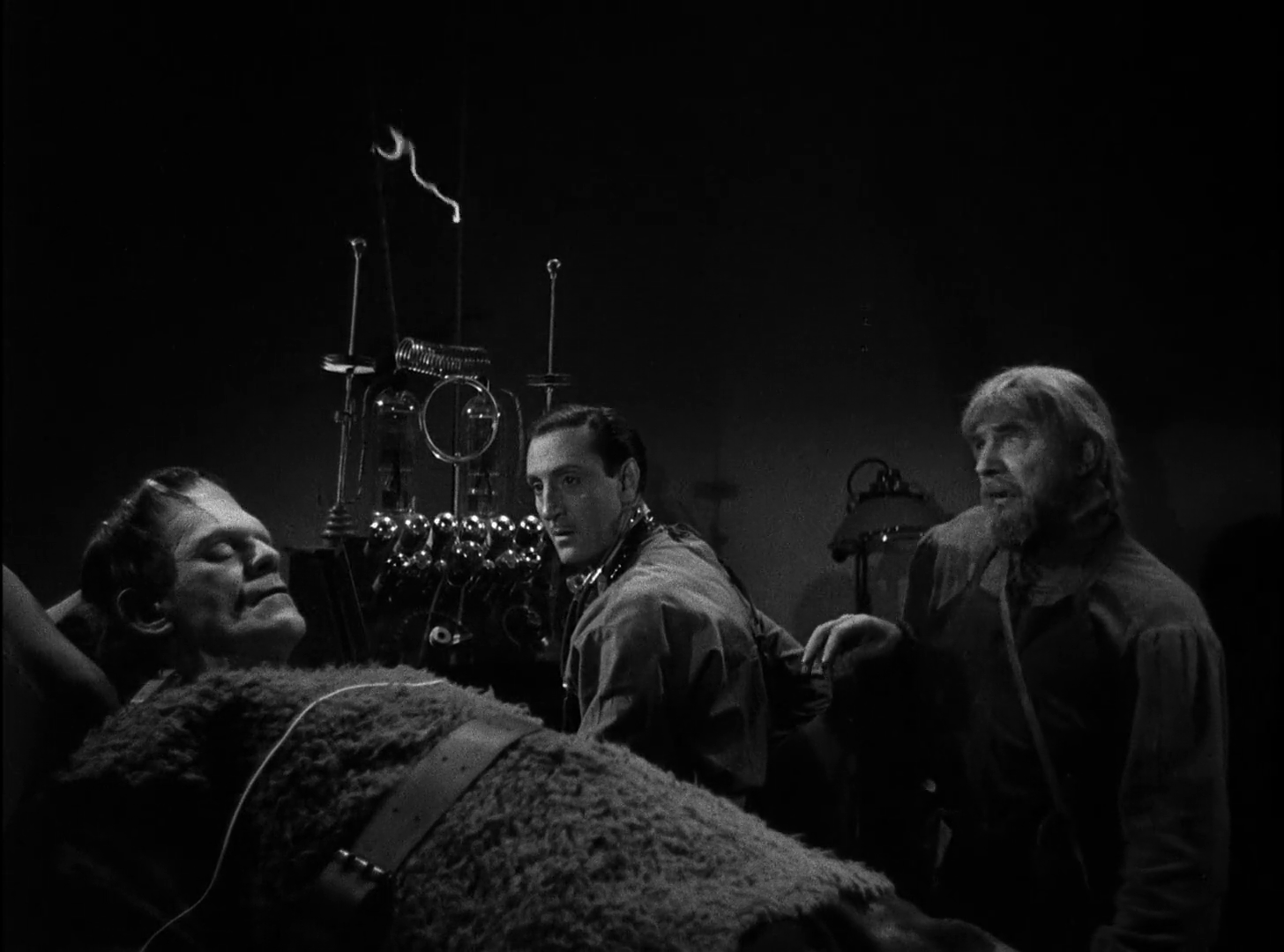
The explanation for Frankenstein’s Monster returning starts with Talbot’s suicidal urges, leading him to jump off a cliff only instead of finding himself in the afterlife he ends up in a cave beneath the castle, this is where he and Edelmann come across the catatonic body of the Monster, still clutching the skeleton of Dr. Niemann.  Apparently, after sinking into the quicksand, at the end of House of Frankenstein, the mud has somehow brought them beneath Edelman's manor house, and because no self-respecting scientist can resist playing with Frankenstein’s Monster, Edelmann takes the Monster back to his lab to tinker with him.  Due to the nervous urgings of his hunchbacked assistant Nina (Jane Adams), as well as Talbot who points out to the good doctor “This thing destroyed Frankenstein. It's brought death to all who have tried to follow in his footsteps” Edelemann finally decides not to revive the Monster, or at least not until we get to the third act.
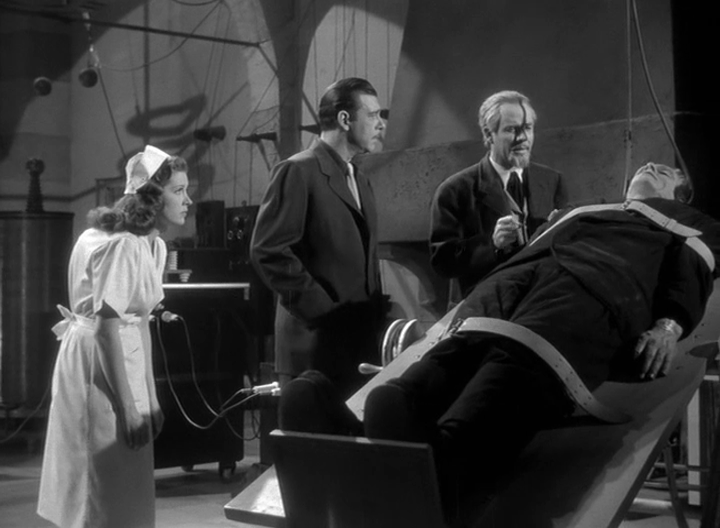
 

I have a hunch that things are going to play out badly for all involved.

Meanwhile, despite his stated goal of wanting to be cured of vampirism, Dracula sets his mesmerizing eyes on Edelmann’s other assistant Milizia Morelle (Martha O’Driscoll) and tries to seduce her into becoming a vampire, telling her “My world is waiting for you, forsake the cross so that you can join me there” but lucky for her, Edelmann arrives in time to interrupt the seduction and we are left confused as Dracula’s true intentions and  left pondering such questions as “If he does really want to become human what would be the point of creating a vampire bride?” and the even bigger question “If he does become mortal wouldn’t all those centuries he’s lived suddenly catch up with him and turn him into a pile of dust?” 
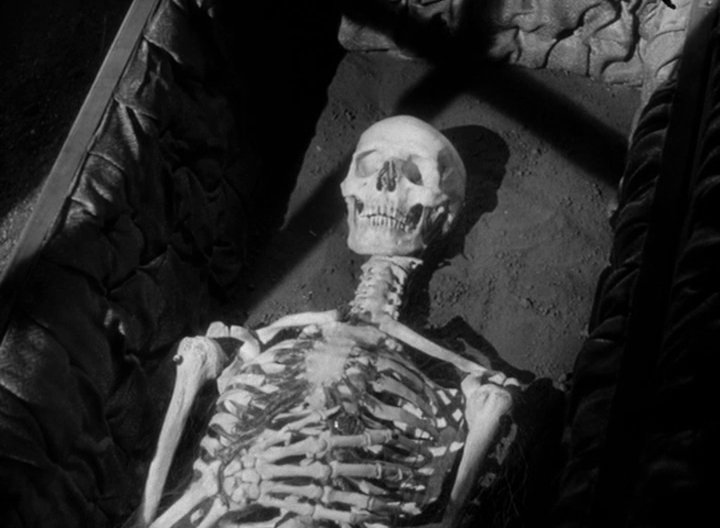
 

Not that turning into a skeleton has ever prevented him from showing up in sequels.

Needless to say, this all seems to be a strange proposition for a creature of the night who has spent a millennium running around committing vile evil acts and the like. What should be noted is that most of the motivations of the Universal Monsters are pretty straightforward, Larry Talbot wants to end his suffering of being a werewolf, Frankenstein’s Monster is mostly a childlike creature lashing out at his tormentors, the Mummy wants to hook up with a reincarnated love and the Creature of the Black Lagoon thinks Julie Adams is hot and that white man should stay the hell out of his lagoon, but in this movie, while Talbot remains true to his goals Dracula’s motivations are all over the place and quite unclear.
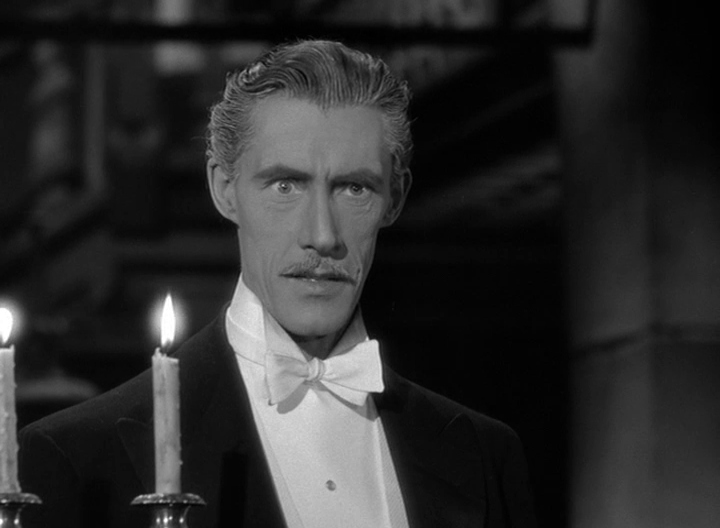
 

“Tomorrow I’ll look into starting up a Bed and Breakfast.”

Stray Observations:

• It’s kind of sad that Glenn Strange, who portrays Frankenstein’s Monster, gets eighth billing in a screen-credited cast list of only nine people.
• Dracula seeking a cure for his vampirism could be considered a nod to the 1936 Universal Monster movie Daughter of Dracula where Countess Marya Zaleska is trying to end the curse of her parentage.
• Dr. Franz Edelmann’s assistant Nina is a hunchback and at this point in the franchise one must start to assume that mad scientists consider this physical feature a requirement for working in a lab.
• Edelmann believes that it’s self-hypnosis causing glands to produce excess hormones that is the reason for Talbot’s transformation into a Wolf Man, which is all kinds of pseudoscientific bullshit.  I’m solidly in the camp that his lycanthropy is supernatural in nature, how else can you explain his surviving death numerous times?
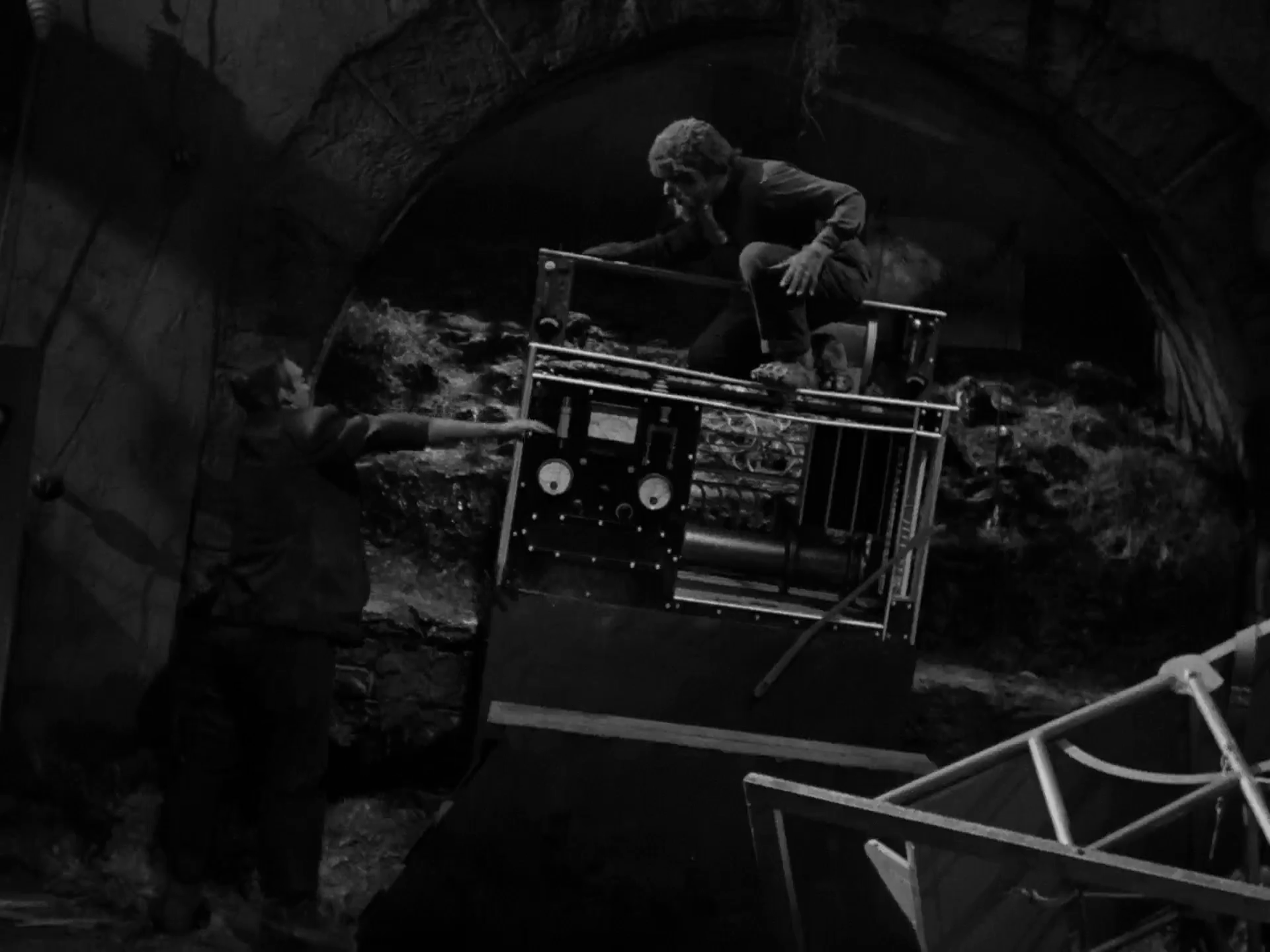
• During a blood transfusion, Dracula reverses the flow of blood and infects Edelmann with his own vampiric blood, turning Edelmann into a weird cross between Jekyll and Mr. Hyde and Dracula.  This causes him to switch between a murderous persona and that of his kindly doctor one, and though he doesn’t cast a reflection he’s no true vampire as he’s killed by nothing more than a few bullets fired by Talbot.
• In this film Larry Talbot is finally freed from the curse of lycanthropy, ending his years of suffering, that is until Universal Studios decided to revive the franchise with a more comedic take on their classic monsters.
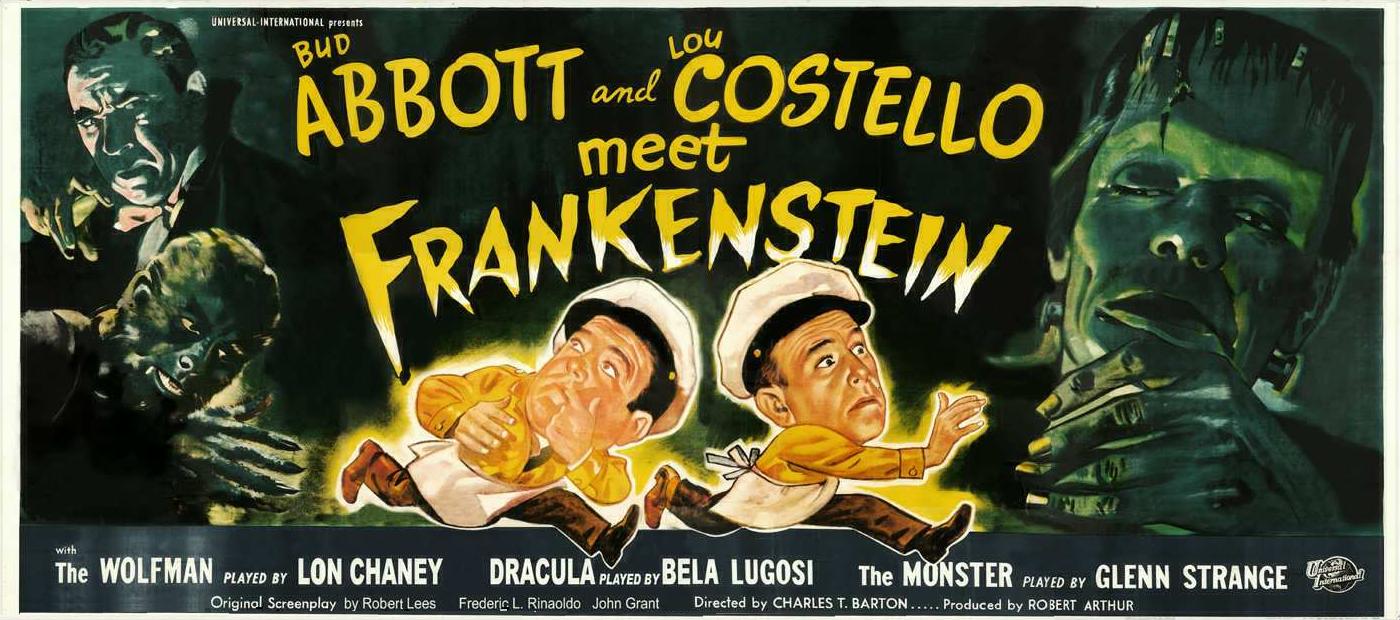
 

The Wolf Man will return in Abbott and Costello Meet Frankenstein.

This sequel suffers from the same messing plotting of House of Frankenstein but is hampered even further by character motivations that make no sense whatsoever – if we are to believe Dracula really wants a cure I still don’t buy any self-respecting doctor would agree to help an admitted murderer, and even if you were to claim it falls under the “In the name of science” defence it’s still very thin – and while Larry Talbot’s motivations remain consistent his tragic wishy-washiness gets a bit tiring by this point as does his lame failed suicide attempt.  Dude, you’ve been killed numerous times and entombed, how do you expect jumping into the ocean will work where being clubbed and shot failed?
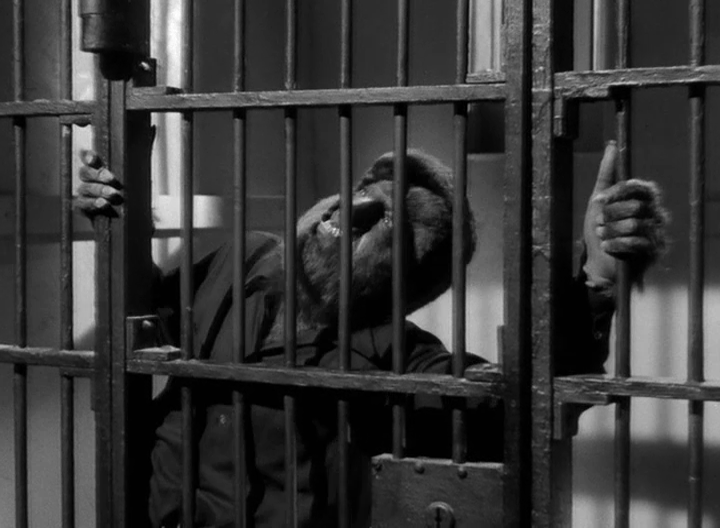
 

Just install a nice cage in your house and call it a day.

This movie was originally to be called Wolf Man vs. Dracula but not only do these two characters never fight in this film they don’t even meet, which is most likely the cause of the title change and gives another strike against the finished product, because if you are going to feature a film with the likes of Dracula, Frankenstein’s Monster and the Wolf Man and fail to have any “Monster on Monster” action you’re going to end up disappointing some fans. It was at this point in time that Universal Studios was leaning more towards making more comedies and musicals and thus not as much money was being spent on producing these later entry Universal Monster movies, and the lack of budget really shows here, especially with the abrupt climax where the Monster is revived only to be killed a few seconds later. I’m sure director Erle C. Kenton and company did their best with what they were given but the end result was an absurd plot that is only watchable due to the cast’s extraordinary efforts. Padded with a lot of footage from earlier films House of Dracula is one that can be watched simply out of curiosity, and as long as your suspension of disbelief is fully engaged.

Monday, June 19, 2023

House of Frankenstein (1944) – Review

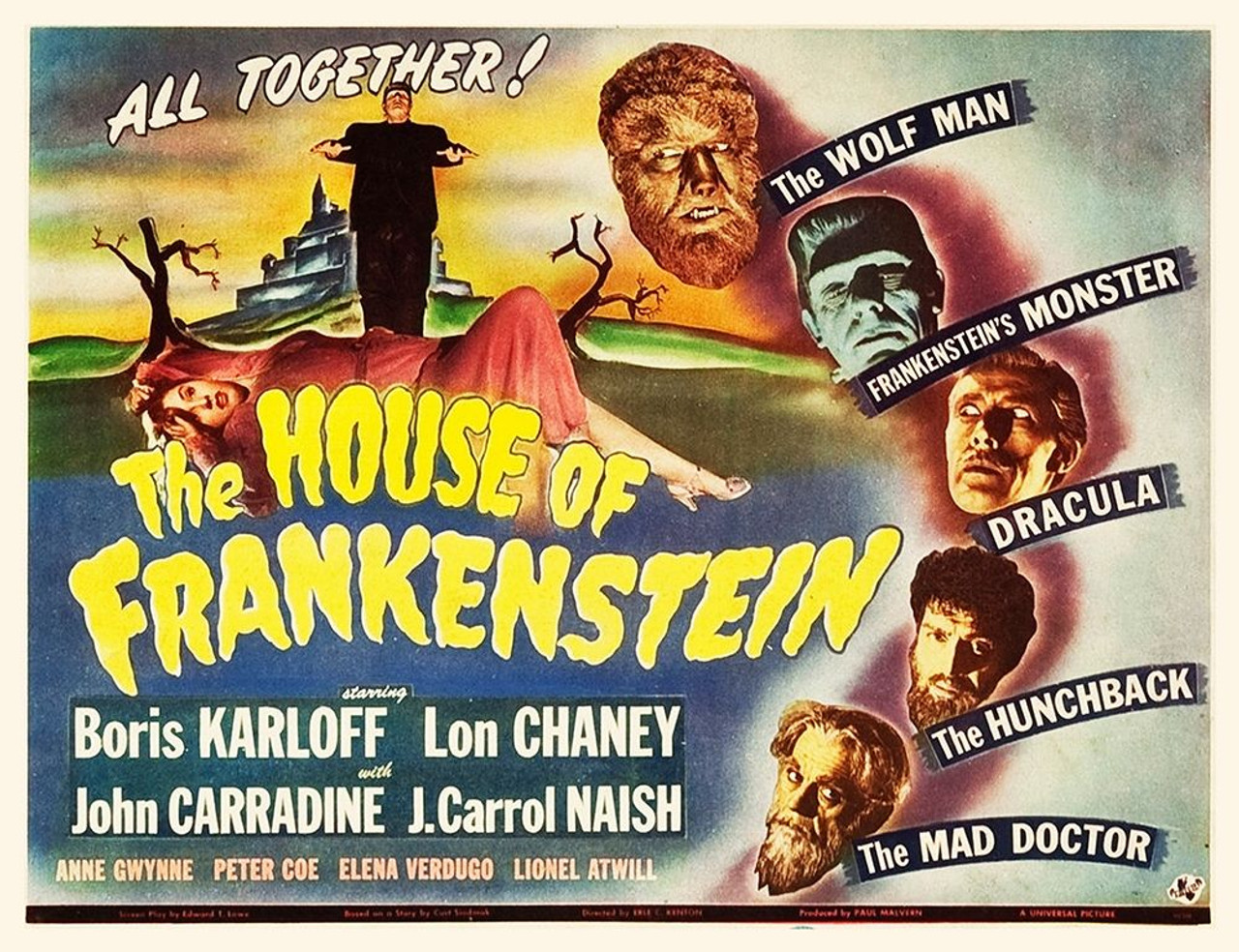
When the idea of pairing various Universal Monsters together proved successful with Frankenstein Meets the Wolf Man the people at Universal Pictures put this formula into high gear and thus the “Monster Rallies” would become both the backbone of the series and also its downfall as the comedy team of Abbott and Costello would eventually drive a stake through the franchise’s heart, but in 1944 things were still looking good so the studio released House of Frankenstein, which paired Dracula, the Wolf Man and Frankenstein’s Monster.

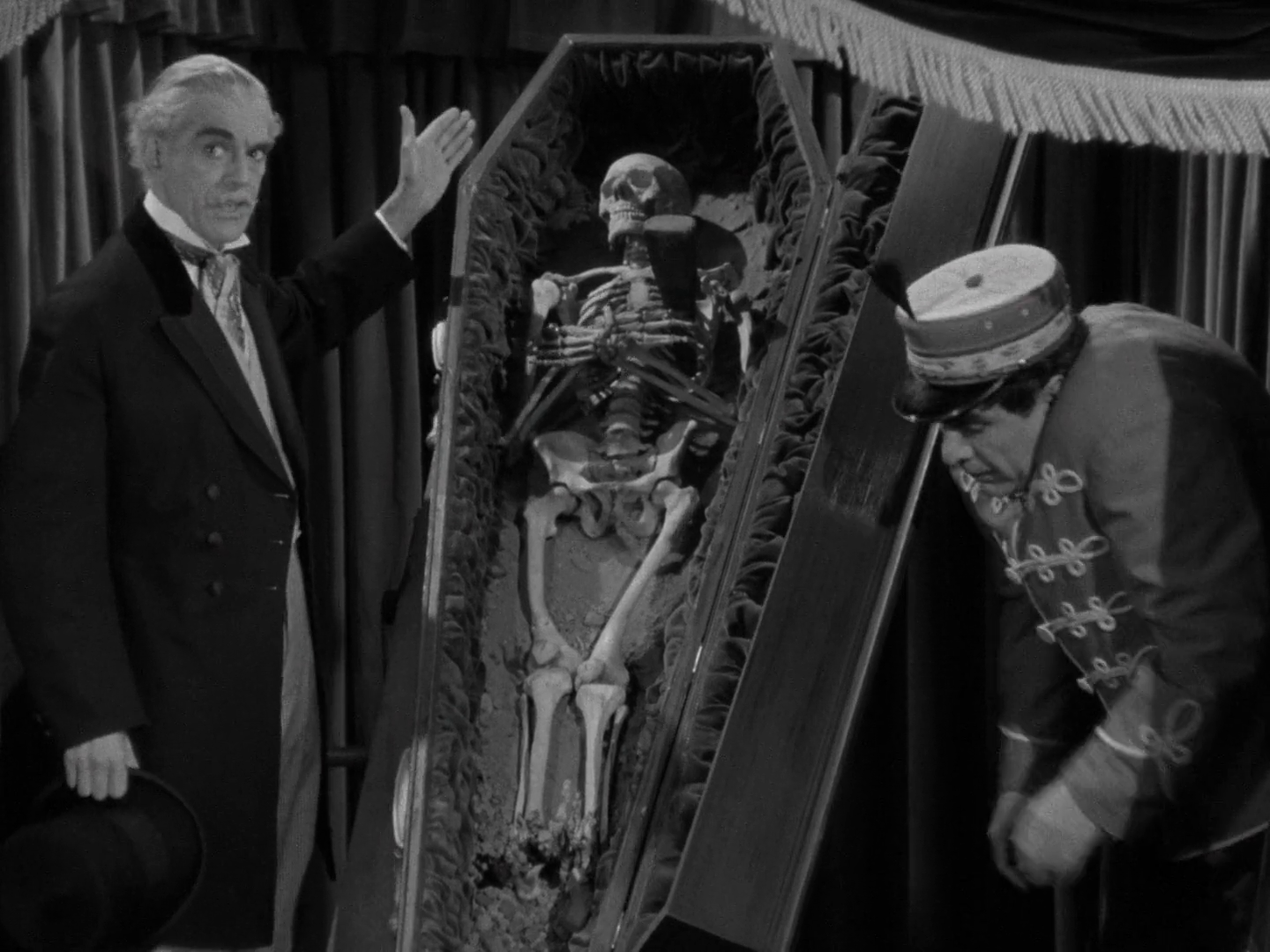
In this sequel, we are introduced to mad scientist Dr. Gustav Niemann (Boris Karloff) who as a self-proclaimed disciple of Dr. Frankenstein found himself sent to prison after being arrested for grave robbery and attempting to continue Frankenstein’s work, which seems pretty typical of scientists in this franchise, but due to a nicely placed bolt of lightning, he escapes along with his hunchbacked assistant Daniel (J. Carroll Naish), for whom he promises to create a new and beautiful body. Soon after escaping, they encounter Professor Lampini (George Zucco) who runs a travelling horror exhibit and has for a key exhibit the skeletal remains of Dracula (John Carradine) they murder the good professor and take over his little carnival of horrors as cover for Niemann's planned murder/revenge plot against those who sent him to prison.


“Folks, what are the odds that this isn't the real Dracula?”

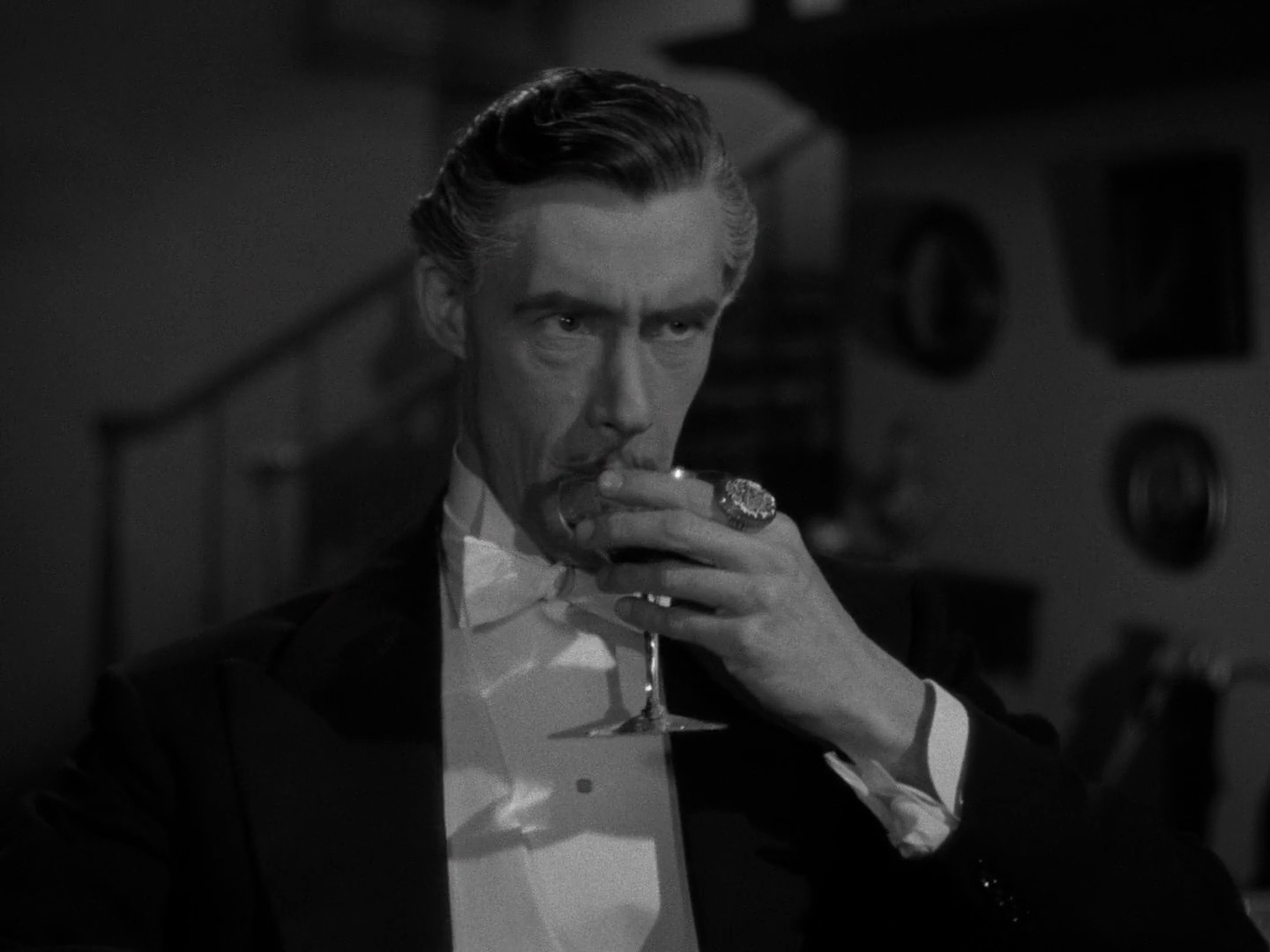
As luck would have it, a casual removal of the stake from the skeleton reveals that this was, in fact, the remains of the actual Dracula and the Count agrees to aid Niemann in his revenge plot as payment for protecting his coffin during the day, but if Dracula knew anything about Boris Karloff he’d have turned into a bat and headed for the hills at the first opportunity. What is a bit odd here is having Dracula being treated as some kind of attack dog, especially when the Wolf Man is going to show up later, and while John Carradine makes for a nice urbane and sophisticated Count Dracula the fact that he doesn’t look or sound at all like Bela Lugosi has me assuming that Professor Lampini hadn’t actually found the bones of the original Dracula but another vampire simply claiming to be the real deal. Case in point, one of the most famous quotes from Dracula is the line “I don’t drink…wine” but this Dracula seems to be quite fine with drinking fruit of the vine.


“I can shill wine better than Orson Welles.”

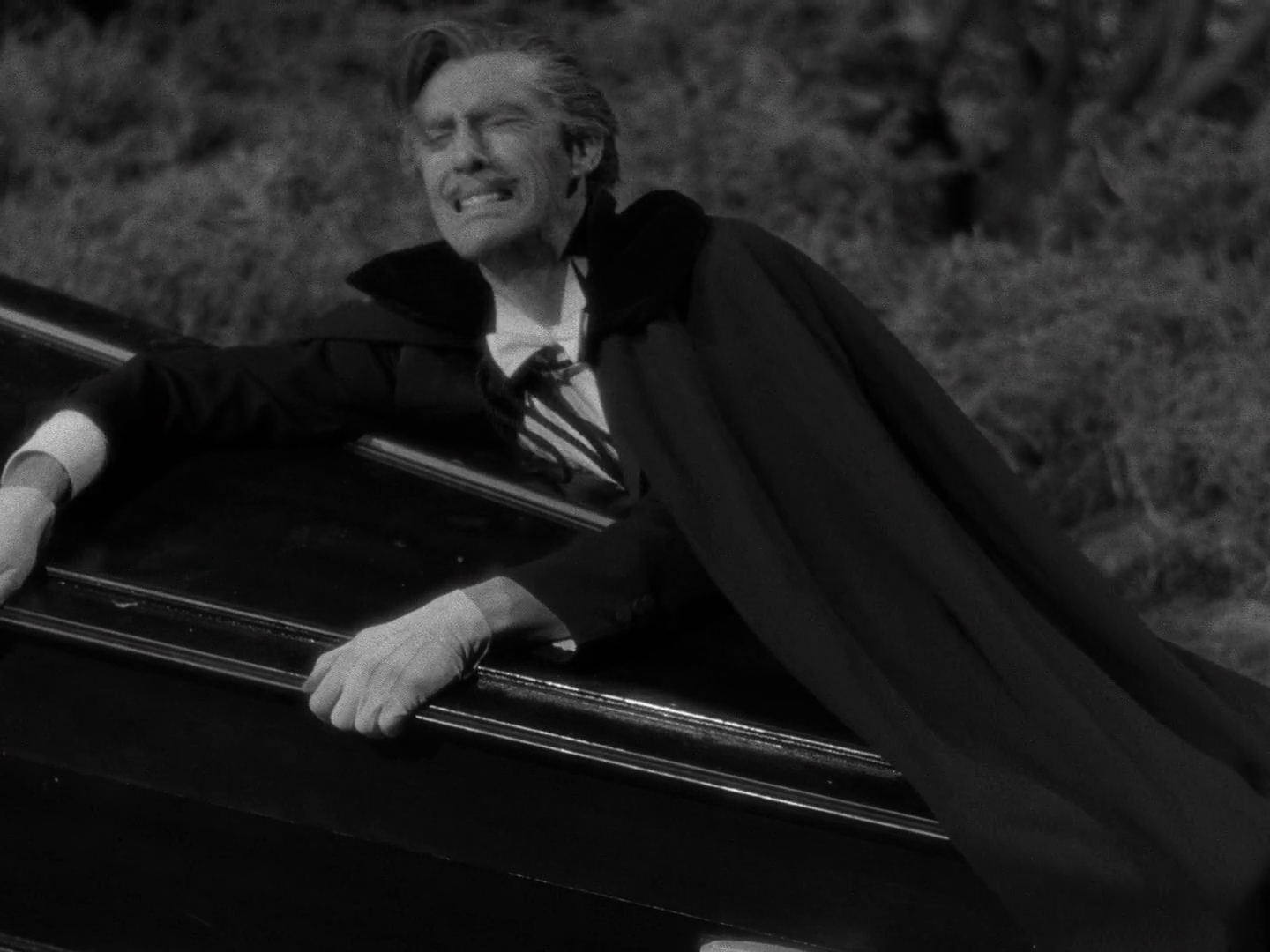
Niemann sends the newly revived Count Dracula after Burgomaster Hussman (Sig Ruman), who had put him in prison, but turning into a bat and draining the Burgomaster dry wasn’t enough for Dracula, who uses a magic ring to mesmerize and seduce the Burgomaster’s granddaughter-in-law Rita (Anne Gwynne), which leads to Rita’s disgruntled husband (Peter Coe) and the local gendarmes chasing him through the woods until Niemann spots an armed and angry mob approaching and disposes of Dracula's coffin out the back of their carnival wagon, leaving the poor vampire to perish in the dawning sunlight. That the world’s most famous vampire is dispatched in such a fashion is a little off-putting, as is the fact that this happens before we’ve even reached the film's thirty-minute mark, worse is when you realize that this means Dracula will not be around to encounter either Frankenstein’s Monster of the Wolf Man, which is kind of the point of these Monster Rallies.


Dracula clearly needs to get a better agent.

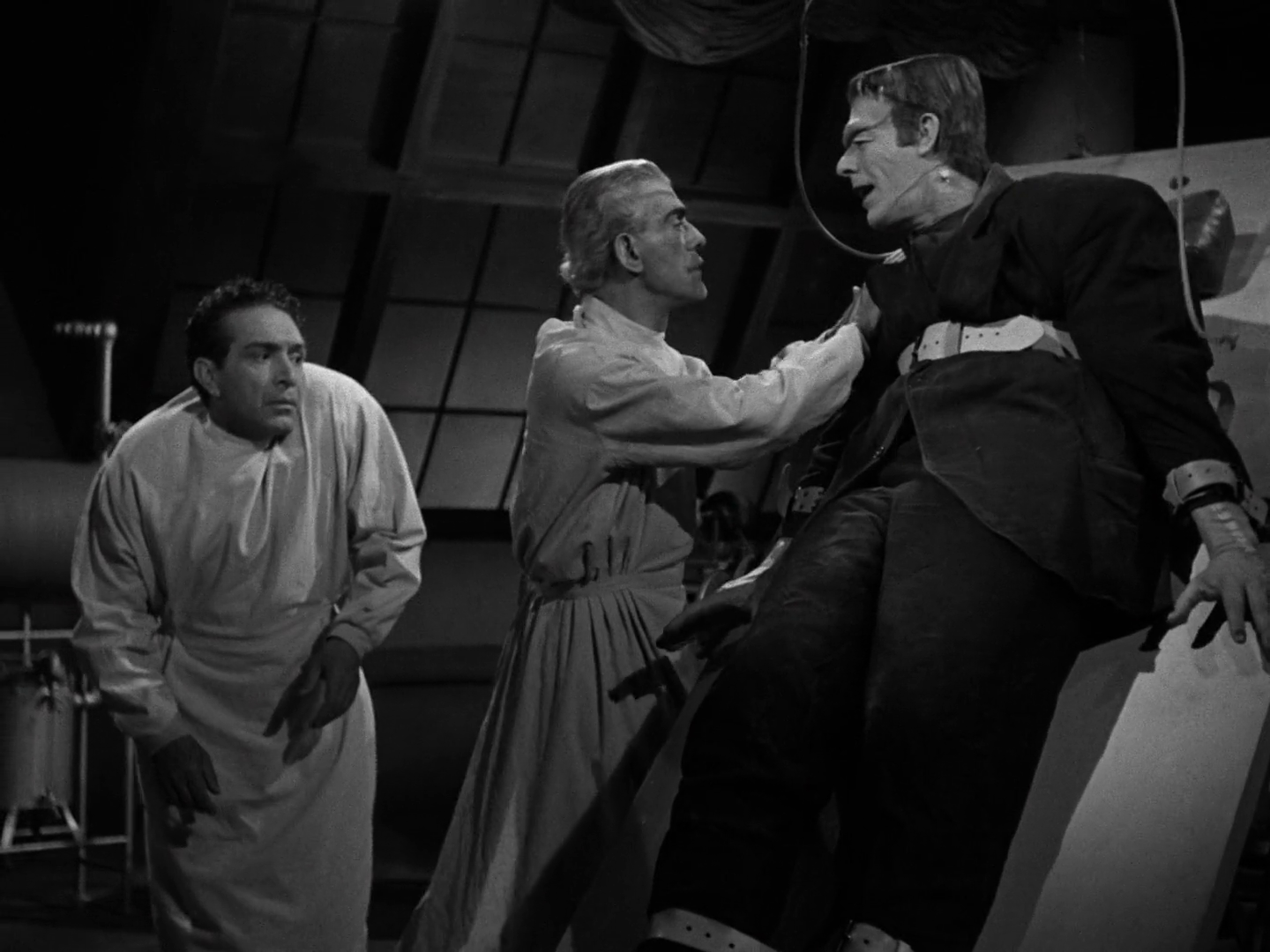
In what can best be described as “House of Frankenstein Part Two” we find that Niemann and Daniel have moved on to the flooded ruins of Castle Frankenstein in Visaria, where they find the bodies of Frankenstein's Monster (Glenn Strange) and Larry "The Wolf Man" Talbot (Lon Chaney Jr.) who had been preserved in the glacier-filled catacombs beneath the castle, and no I don’t know how you can have an ice cavern beneath a European castle, but once thawed we get a Talbot who is so despondent and anxious to be rid of his curse that he foolishly believes that Niemann’s mad science can cure him of his lycanthropy, but only if he helps find Dr. Frankenstein’s journal. We also must contend with Daniel falling in love with Ilonka (Elena Verdugo), a local gypsy woman he hopes will return his love once Niemann has honoured his promise to create for him a new and improved body, one that isn’t so hunchbacked, but Niemann is more interested in reviving the Monster and exacting revenge on two traitorous former associates than he is in keeping promises. Basically, everyone concerned would have been better off going to see The Wizard of Oz instead of waiting around for Niemann, because what follows is a lot of silly brain-swapping and pretty much everyone ends up dead.


“My dear friend, what could possibly go wrong?”

Stray Observations:

• A prison guard insults Dr. Gustav Niemann by calling him a “Would be Frankenstein” which is a little meta as Karloff was made famous for playing Frankenstein’s Monster.
• Lightning was used to bring Frankenstein’s Monster to life in the original film and in this one lightning is responsible for a prison break, the power of God certainly works overtime in these movies.
• Professor Bruno Lampini claims to have acquired the skeleton of Dracula from the cellar of Dracula’s castle in the Carpathian mountains, but as he was staked in the cellar of Carfax Abbey in London one must wonder “How did his skeleton get back home?”
• The idea of Dracula’s remains being used as a sideshow exhibit would later be revisited for Universal’s Abbott and Costello Meet Frankenstein.
• Daniel falling in love with a spirited gypsy girl had me wondering if the film had wandered into “The Hunchback of Notre Dame” territory when I wasn’t looking.
• We get new werewolf lore here, stating that “A werewolf doesn’t just die he must be killed, killed by a silver bullet fired by the hand of one who loves him enough to understand” which are pretty specific requirements and not easily obtained by your average monster hunter.


“So if I don’t love you quite enough you’ll tear my throat out?”

As fun as it is to watch Boris Karloff in the delicious role of a mad scientist hellbent on revenge the plot of House of Frankenstein is a complete mess and the inclusion of Dracula felt forced and out of place like his plotline had wandered in from another movie, and it’s this collection of disparate elements that keeps the film from having something that even resembles a cohesive story, and while Lon Chaney Jr. continues to nail the sad sack portrayal of the cursed Larry Talbot, like Dracula, he feels kind of shoehorned in and adrift, then there is Glenn Strange as The Monster whose lack of screen time is unable to offset his a clumsy and rather unthreatening presence, that he fights neither Dracula nor the Wolf Man is just criminal. To be fair, there wasn’t much of a fight in Frankenstein Meets the Wolf Man but at least there was some kind of conflict and that is sorely missing here.


“I should have stayed home and eaten some Purina Dog Chow.”

From Frankenstein’s Monster shuffling around like a giant sleepwalking toddler to poor Larry Talbot eating a silver bullet for daring to fall in love with a gypsy, there’s not much character development to hold all these story threads together and while the film does feature a nice score and decent cinematography it failed to deliver on its promise of a full-on monster fight, but I guess that would be in keeping with Dr. Gustav Niemann constant lying to everybody in this picture, because why should we be exempt?


Thursday, June 15, 2023

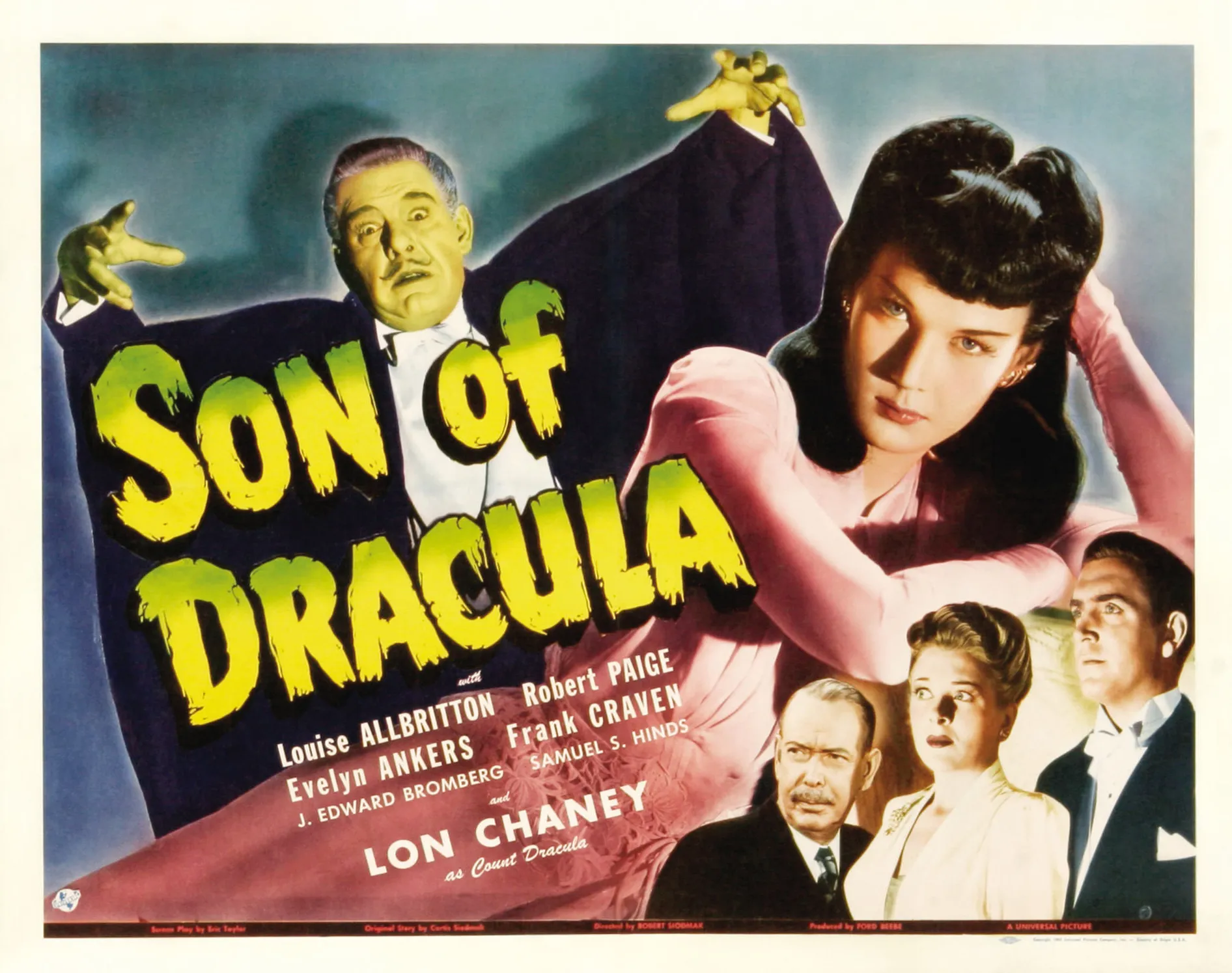
Son of Dracula (1943) – Review

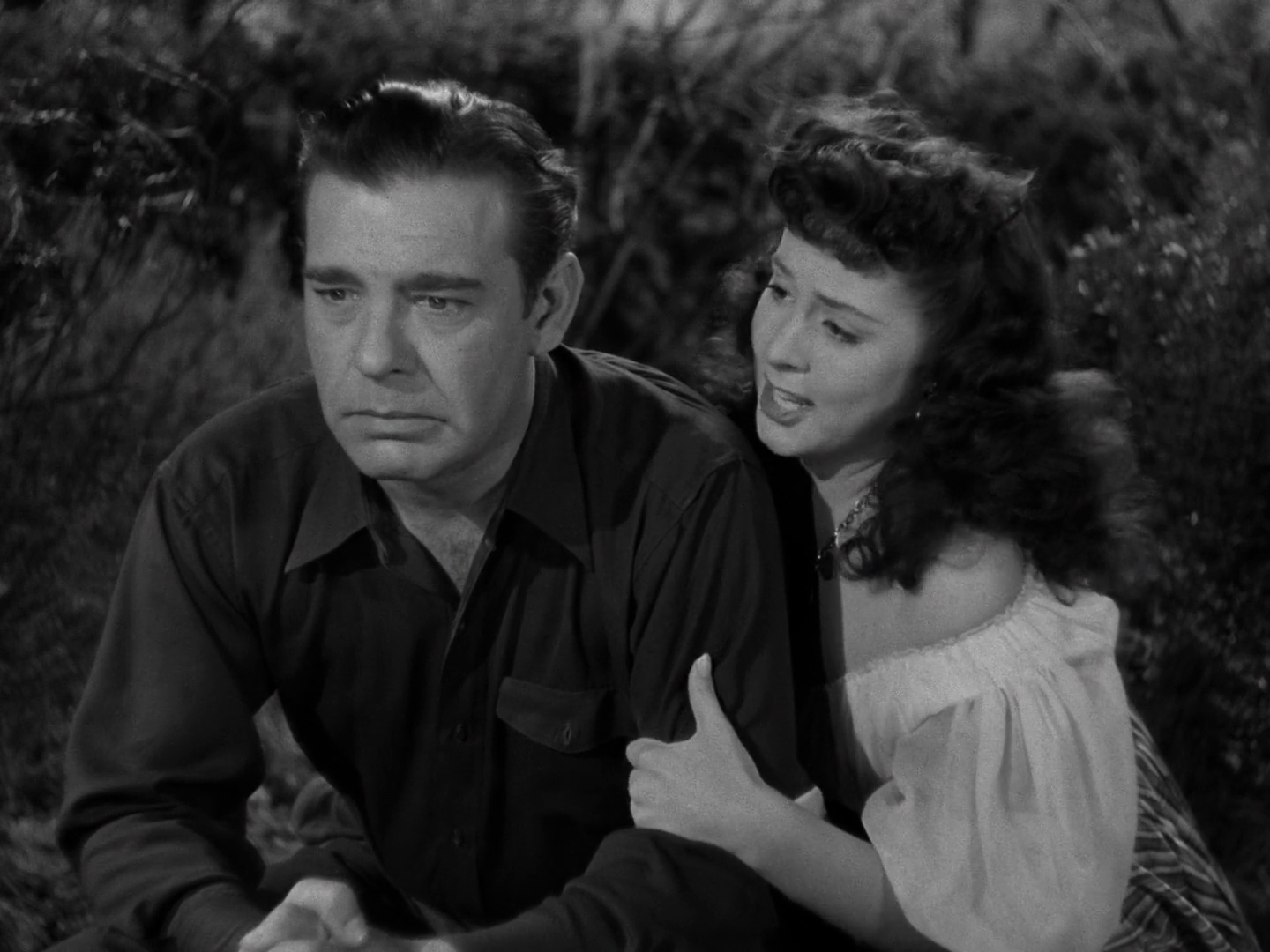
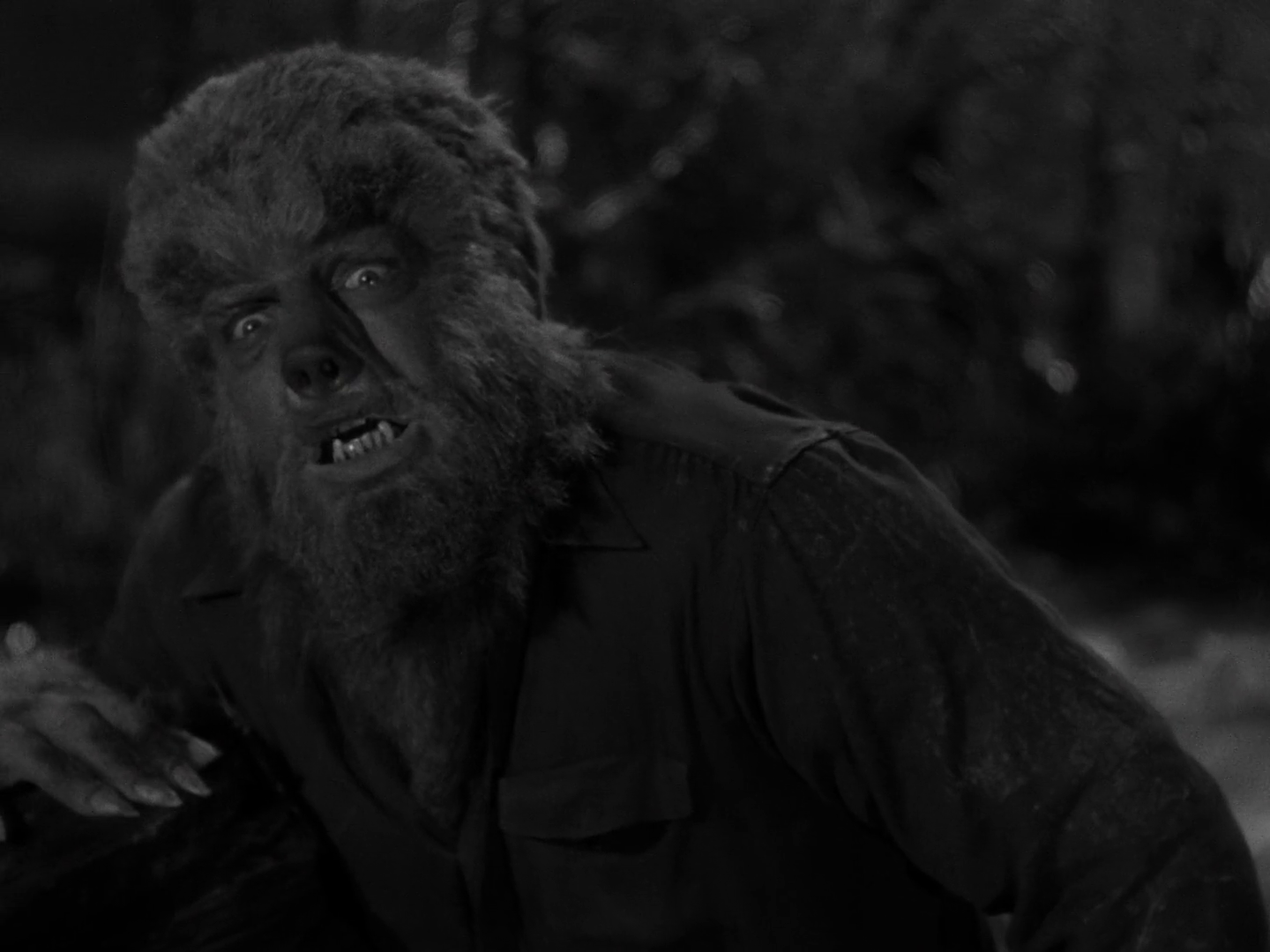
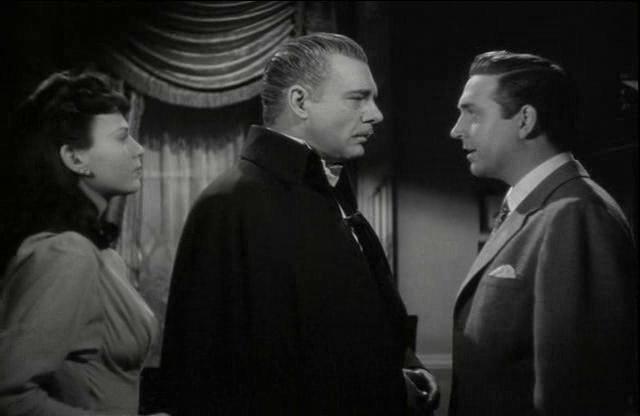
In the long list of Universal Monster movies, there is one odd duck entry in the form of Son of Dracula, a film that does not take place in the same continuity as Dracula and Dracula's Daughter and the events within are never referenced again, weirder still is the casting of Lon Chaney Jr. as the title character when he’s already played the Wolf Man and Frankenstein’s Monster, and while I love Chaney Jr. I have to ask, “Was no one else available?”

While the third of the "Dracula" films produced by Universal may not be in continuity with the other Universal Monster movies it’s still one of the better entries in the Dracula series and much of this comes from the fact that this story is a lot darker and even more tragic than the other films, with a twisted love story at its center that elevates the subject matter. The plot of Son of Dracula deals with Katherine Caldwell (Louise Allbritton), an American woman obsessed with death and immortality, who after a visit to Hungary returns home with a rather diabolical plan which "step one" involves inviting Count Alucard (Lon Chaney Jr.) to her family plantation “Dark Oaks” and the murder of her father Colonel Caldwell (George Irving) so that she can inherit the estate and then marry Alucard. Her sister Claire (Evelyn Ankers), and long-time love interest Frank Stanley (Robert Paige), are both a bit shocked by this turn of events but when family friend Dr. Brewster (Frank Craven) starts to suspect that Count Alucard is none other than the notorious Count Dracula things start to get messy.  Add the fact that a jealous boyfriend is definitely going to complicate things further, even if one of the parties wasn’t an undead monster, and we soon find ourselves in a very dark and weird love triangle.


“Back off blood bag, the lady’s with me.”

Even though Son of Dracula is ostensibly a Dracula film, with this entry including a Van Helsing equivalent in the form of Dracula expert Hungarian Professor Lazlo (J. Edward Bromberg), if we set that all aside the film works better if you just consider it a film noir vampire movie because the central villain isn’t actually Dracula but Katherine, who is truly in love with Frank and is simply catfishing Dracula so that he will make her immortal, and when the time comes she plans to have Frank kill Dracula so that the two of them can live “Happily Ever After” for all eternity. You have to admit that is a petty decent long con and her preying on Dracula’s need for a new hunting ground, with Transylvania becoming a little stale for this notorious centuries-old bloodsucker, and the only thing that stands in the way of this whole plan working out is Frank’s reluctance to embrace the idea of becoming a Creature of the Night. This isn’t the only complication as Frank is arrested for murdering Katherine when having shot at Dracula the bullets passed through him and hit Katherine, and his defence of “I meant to kill her husband” didn’t help much.


“We can either go with an insanity plea or a stupidity plea.”

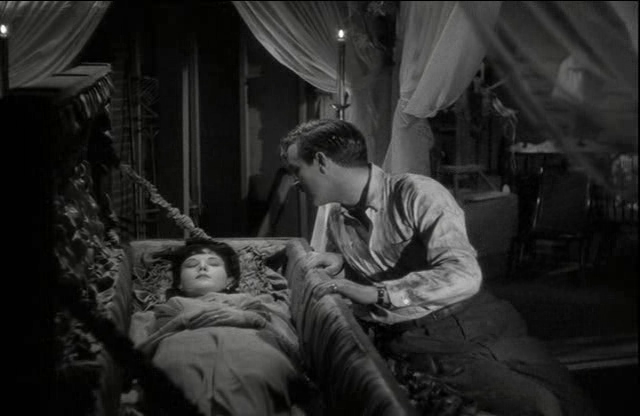
Things get interesting when Dr. Brewster goes to check out Frank’s claim that he killed Katherine and finds her not only very much alive but also seemingly happily married to Count Alucard, though this doesn’t last long because the next day the local Sheriff (Pat Moriarty) goes to check up on this “murder story” himself and finds Katherine very much dead and resting peaceably in a coffin.  Things don’t look good for Frank. The character of Katherine Caldwell is a remarkable figure in the Dracula franchise because she is a strong and forward-thinking femme fatale who plays Dracula for a chump and only fails with goals because she underestimated her true love’s willingness to become a blood-sucking monster, and her positing to him that “Isn't eternity together... better than a few years of ordinary life?” was never going to sway Frank and leads to a bad end for all involved.
 

“Sorry, my dear, matching coffins were never going to work.”

Stray Observations:

• I can just picture Dracula sitting in his castle trying to come up with a pseudonym and then proudly stating “I’ve got it, I’ll spell my name backwards, they’ll never crack that code!”
• As in the case of Dracula’s Daughter we are again left wondering what the actual process is that results in Dracula having kids.
• The supposed expert on Dracula in this film states that “In Transylvania, the name is associated only with evil” but the historical Vlad Dracula is actually considered by many to be a national hero.
• The chicken feathers found in Dracula’s coffin, as well as chickens in cages sitting next to it, had me wondering if he keeps chickens handy for late-night snacking.
• Dracula travelling to America to find a bride was later used for the plot of the George Hamilton comedy Love at First Bite, which is a personal favourite of mine.


Dracula starring in the original Coming to America.

While the performance by Lon Chaney Jr. isn’t as iconic as the one presented by Bela Lugosi back in 1931 but it’s here that we finally get to see a true Dracula-to-Bat transformation and we also have the first time seeing Dracula as a creature of supernatural strength and thus a more physical threat than just hypnotically sexual one, and one can assume that Chaney was a lot happier in this project as he wasn’t saddled with a painful make-up process, and his performance as Count Dracula is outstanding with a take on the character that is both powerful and sinister.  Even if he was duped by a mere mortal and destroyed by a man who was basically driven mad by the events surrounding this messed-up love story, I still have a soft spot for this take on Dracula.

Note: This Dracula movie stars Lon Chaney Jr. but while the vampire in question does turn into a bat and mist he never turns into a wolf, which seems like a missed opportunity for an actor who made his name playing The Wolf Man.

Robert Siodmak's Son of Dracula doesn’t have the gothic atmosphere of the previous entries, being set in modern times does cause it to lose some of that period charm, but the blend of vampires and film noir makes this something quite unique in the genre and even if Chaney’s single performance as Dracula was but a small stamp in the Dracula mythos it still remains a very memorable one and paired with Louise Allbritton’s turn as the devious femme fatale we get a film that is more than worthy successor and is also one of the more fascinating Dracula movies out there.

Monday, June 12, 2023

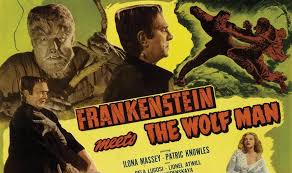
Frankenstein Meets the Wolf Man (1943) – Review

What could be better than a movie featuring Frankenstein or the Wolf Man, well, the obvious answer is a film starring not one but both of these classic Universal Monsters and with Frankenstein Meets the Wolf Man that is exactly what audiences were treated to back in 1942 in what would later be known as the “Monster Rallies” where various Universal Monsters would crossover from their own respective franchises to team up for dynamic action, gothic drama and some truly horrific conflicts.

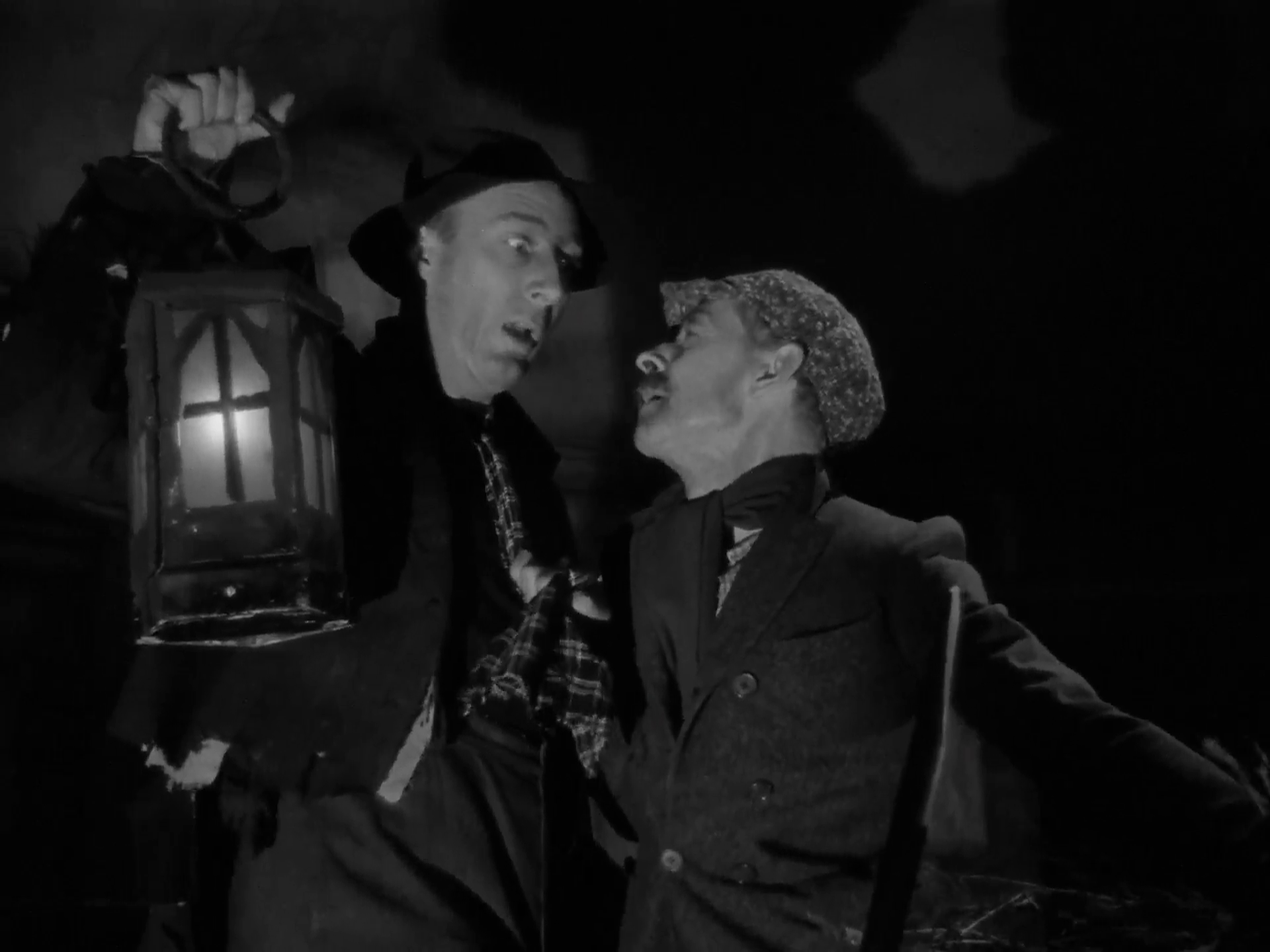
The character of Lawrence Talbot is most noteworthy for being the one truly tragic figure in the Universal Monsters pantheon as not only was he cursed with lycanthropy he also wasn’t allowed to rest in peace, while Frankenstein’s monster started out as a somewhat sympathetic figure as the franchise continued, which included the creature getting a brain transplant from the murderous Igor, the Monster became more a being of revenge than that of pathos and understanding, on the other hand, poor Larry just wanted the sweet embrace of death that always seemed to elude him. Taking place four years after the events of The Wolf Man this entry opens with graverobbers breaking into the Talbot family crypt to steal the money rumoured to have been buried with Lawrence Talbot (Lon Chaney Jr.), unfortunately for them, they chose a night of the full moon for their activities and instead of riches they are met with horror when a furred hand reaches out of the coffin to grasp one of the robbers.


“Harold, we need to rethink our occupation.”

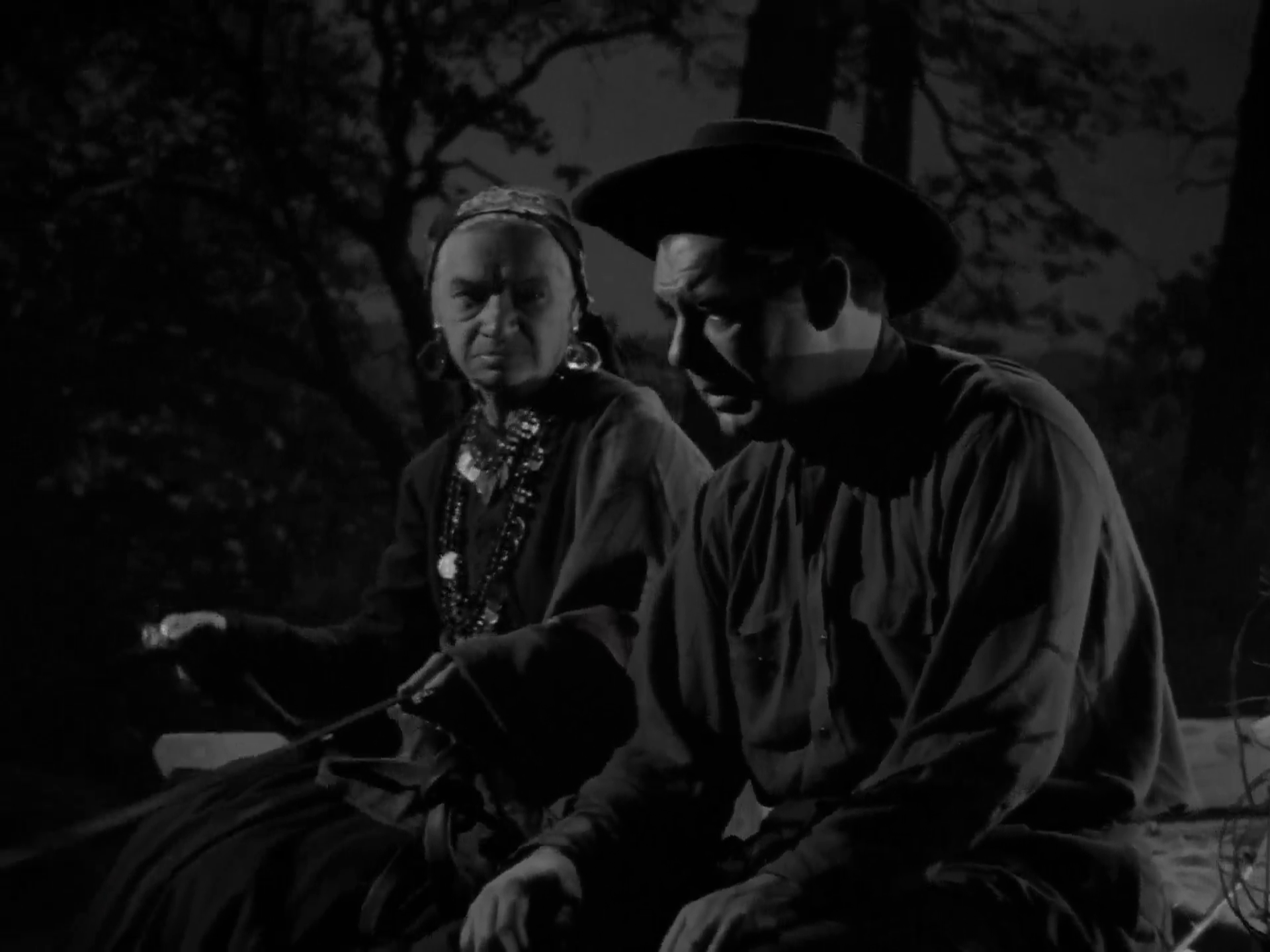
Later that night, an unconscious Larry Talbot is found by the police and is taken to the local hospital in Cardiff where he is treated by Dr. Frank Mannering (Patric Knowles) for the skull fractures he sustained at the hands of his father in the previous movie, needless to say, neither Mannering nor Inspector Owen (Dennis Hoey) believe Talbot’s claims that he is a werewolf, or that he is Lawrence Talbot because a quick phone call to Talbot’s hometown brings them the information that Lawrence Talbot died four years ago. The continued ravings of Talbot, which includes him claiming to have turned into a werewolf and killed a police constable the night before, results in Mannering ordering the poor deluded man to be put in a straitjacket, of course, this isn’t going to slow down our hero and while Mannering and the Inspector travel to the village of Llanwelly to investigate his story Lawrence escapes, having turned into the Wolf Man and chewed through his restraints. Talbot then seeks out the gypsy woman Maleva (Maria Ouspenskaya) who he hopes can relieve him of his curse. What is a little strange here is that Maleva informs him that while she has no way of ending the curse a man named Frankenstein could have the answers he seeks, and I have to ask the question "Does an old gypsy woman advising the scientific method to cure a supernatural curse make sense to anyone else?"


"Don't worry, I have an honorary doctorate from John Hopkins."

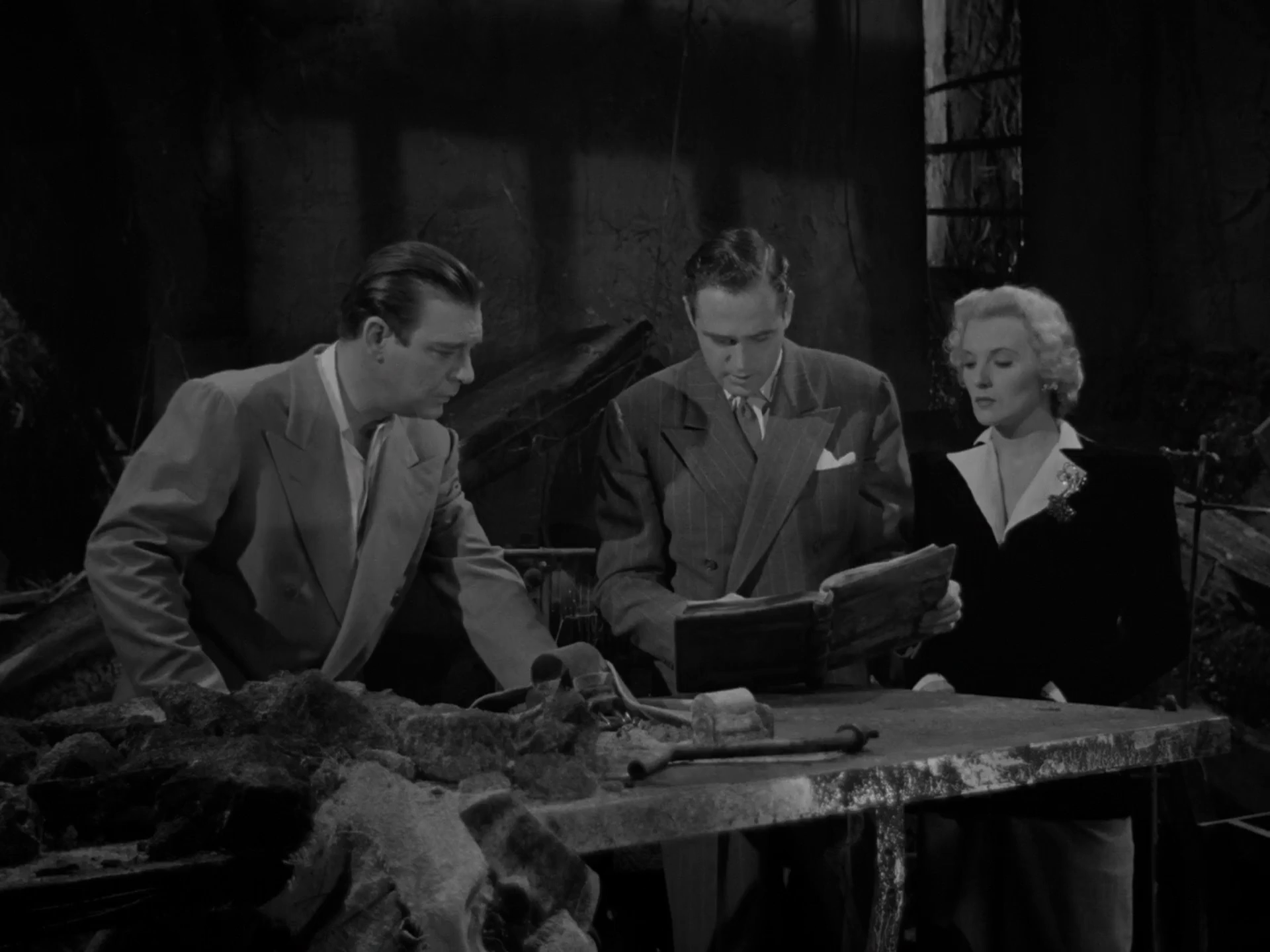
The two travel together to Vasaria, home of the Frankensteins, where Talbot hopes to find Dr. Frankenstein's notes in the remains of his half-destroyed castle, unfortunately, not only does finding the notes turn out to be fruitless effort he must contend with angry villagers who don’t like strangers poking their noses into what they consider a sensitive subject, not to mention the fact that Talbot transforms into the Wolf Man and kills a young woman, which causes a mob of villagers to chase him down and into the ruins of Frankenstein’s castle. In what could be considered a “lucky” turn of events, Talbot discovers Frankenstein's Monster (Bela Lugosi) trapped within an icy chamber beneath the castle and before you can say “He’s Alive!” Talbot breaks the ice and helps pull the now-revived creature free. This may not seem like a bright idea, even if it may lead to the ending of his curse, but logic is not Talbot’s strong suit and when the Monster fails to help find the notes he turns to catfishing Baroness Elsa Frankenstein (Ilona Massey) in the hope that she knows where her father hid his notes. While she at first denies any knowledge of her father’s notes, saying she would have burned them if she could, things take a turn when Dr. Mannering arrives having followed Talbot across Europe, tracking in his wake of victims each full moon, but when the Monster wanders into town Elsa and Mannering agree to help the villagers rid themselves of Frankenstein's curse once and for all.


“I know this is insane, but it’s right here in the script.”

Stray Observations:

• Grave robbing was quite the cottage industry back in the day, whether it be for finding body parts for your latest experiment or supplementing the family income with lifted valuables from a corpse, this was clearly a tried-and-true business model.
• As a werewolf Lawrence Talbot is unable to die, even surviving four years laying in a tomb, but in The Wolf Man he killed the gypsy Bela with his silver-topped cane, yet when Talbot’s father used that very same cane on Talbot this “death” was somehow less permanent.
• There is more supernatural goings-on here than just lycanthropy, Talbot not only transforms into the Wolf Man but his hospital pyjamas somehow turn into his traditional shirt and pants from the previous film, and then back to the pyjamas in the morning.
• In the film The Ghost of Frankenstein Lon Chaney Jr. played the Monster and Bela Lugosi the mad assistant Ygor, who had his brain transplanted into the body of the Monster, now in this film, Lugosi plays the Monster and it's as if a brain transplant would somehow alter the body’s appearance.  I guess I'm not up on my mad science.
• Lawrence Talbot may be a tragic figure but he’s also quite guilty of manslaughter as he takes no precautions when there is a full moon, and sure, while straight jackets can’t hold him but what about chains or a cage?


Note: This is the only Frankenstein movie where the Monster kills no one, it’s all on Talbot.

The character of Dr. Frank Mannering is one of the more interesting elements of this story as he is a man of science who rationally believes that Lawrence Talbot is nothing more than a madman who suffers from delusions stemming from lycanthropy and he leaves his medical practice to track this man all over Europe, without even the help of Scotland Yard, but when he eventually catches up with Talbot he goes from “Talbot, you’re a murderer, you’re insane at times and you know it” to working with him to restore Dr. Frankenstein’s laboratory so that they can drain all life from both Talbot and the Monster, but then his scientific curiosity to see the monster at full strength takes over and instead of draining the Monster of its life he wants to see it at full power.


Mad Science is clearly a very alluring prospect.

Helmed by The Wolf Man director Curt Siodmak, Frankenstein Meets the Wolf Man is another Universal Monster entry that doesn’t worry too much about continuity as events in this film don’t quite line up with that of the previous entries, such as the fact that The Ghost of Frankenstein ended with Ygor getting his brain transplanted into the body of the Monster, who in that film was able to speak and planned to take revenge on the world, but when audiences found the voice of Bela Lugosi coming out of the Monster in this outing to be quite laughable the decision was made to cut all of his dialogue, also missing is the fact that the Monster became blind after the brain transplant and so the creature stumbling around with his arms outstretched in this film is never explained, strangely enough, this became the standard image of the Monster when people try to imitate him.


“Stop, I can double as your seeing-eye dog.”

What may disappoint fans hoping to see a lot of Frankenstein’s Monster action is that creature does not turn up until halfway through the picture and then for only a few minutes of screentime, with most of those actually being a stunt double as sixty-year-old Bela Lugosi was not up to the challenge, worse is the fact that the final confrontation between the Wolf Man and Frankenstein’s Monster is nothing more than a brief tussle that is interrupted by one of the angry villagers blowing the dam located above the castle resulting in both creatures being swept away.


“It's over Monster, I have the high ground.”

When it comes to the “Monster Rallies” Frankenstein Meets the Wolf Man is easily the best of the lot but as further entries slowly developed into the self-parody this aspect would eventually result in Abbot and Costello Meet Frankenstein, which pretty much drove a stake right through the heart of the franchise, but on its own, this is a solid offering and this is mostly due to the effort by Lon Chaney Jr. whose performance here is an anchor in what is otherwise a far-fetched script, even by Universal Monster movie standards.  While Bela Lugosi stumbling around as the Monster comes across as a bit silly there is a lot of fun to be had here which makes this a must-watch for fans of these classic movies if for Lon Chaney Jr.’s performance alone.

Thursday, June 8, 2023

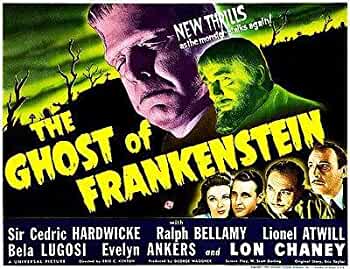
The Ghost of Frankenstein (1942) – Review

If you can’t trust a murderous lab assistant named Igor, who can you trust? While Bela Lugosi returns as the troublesome Igor, The Ghost of Frankenstein marks the first time in the franchise that Boris Karloff would not be playing the monster, with The Wolf Man star Lon Chaney Jr. stepping in to fill those over-sized shoes, and it is at this point that Universal Monsters franchise started to teeter towards self-parody with writers continually painting themselves into and out of corners with each subsequent sequel.

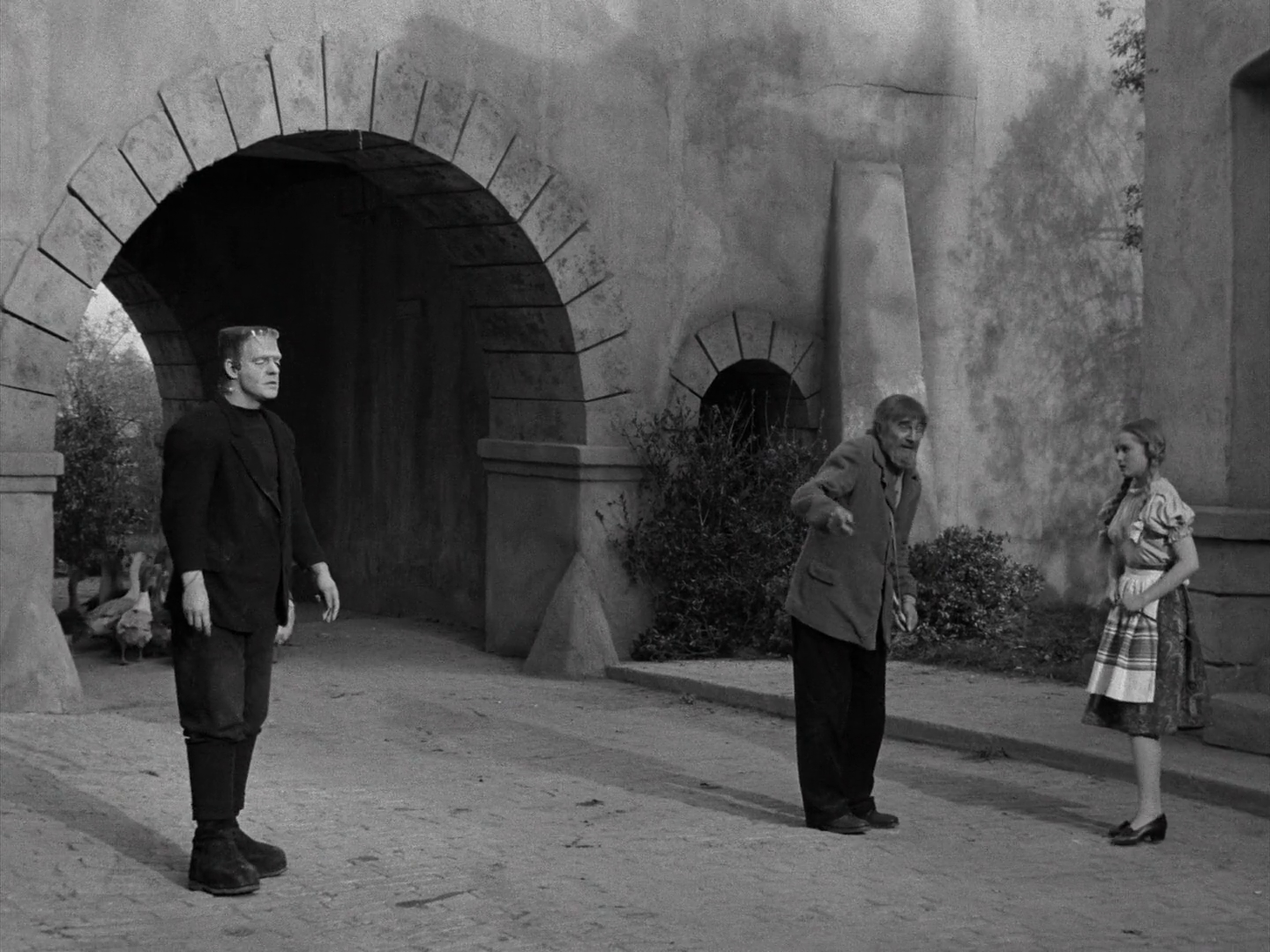
“There's a curse upon this village, the curse of Frankenstein,” and this would be the opening line of 1942’s The Ghost of Frankenstein which one must admit is a fair accusation as these angry villagers have a valid argument, not that their torch-bearing mob tactics are entirely blameless but four films in and you have to start sympathizing with the poor slobs who live in this village. And with everyone decrying such things as “The whole countryside shuns the village. Our fields are barren, the inn is empty” it’s no surprise that the eventual solution is to destroy Frankenstein's castle, but as expected this did not turn out all that well, with the Monster (Lon Chaney Jr.) being released from his sulfuric tomb by the explosions and the surprisingly spry and still alive Ygor (Bela Lugosi) helping the creature flee the ruins to which this dynamic duo then head off to a new village with the hope of revitalizing the Monster’s weakened state.


Maybe waiting for nightfall would have been a better idea.

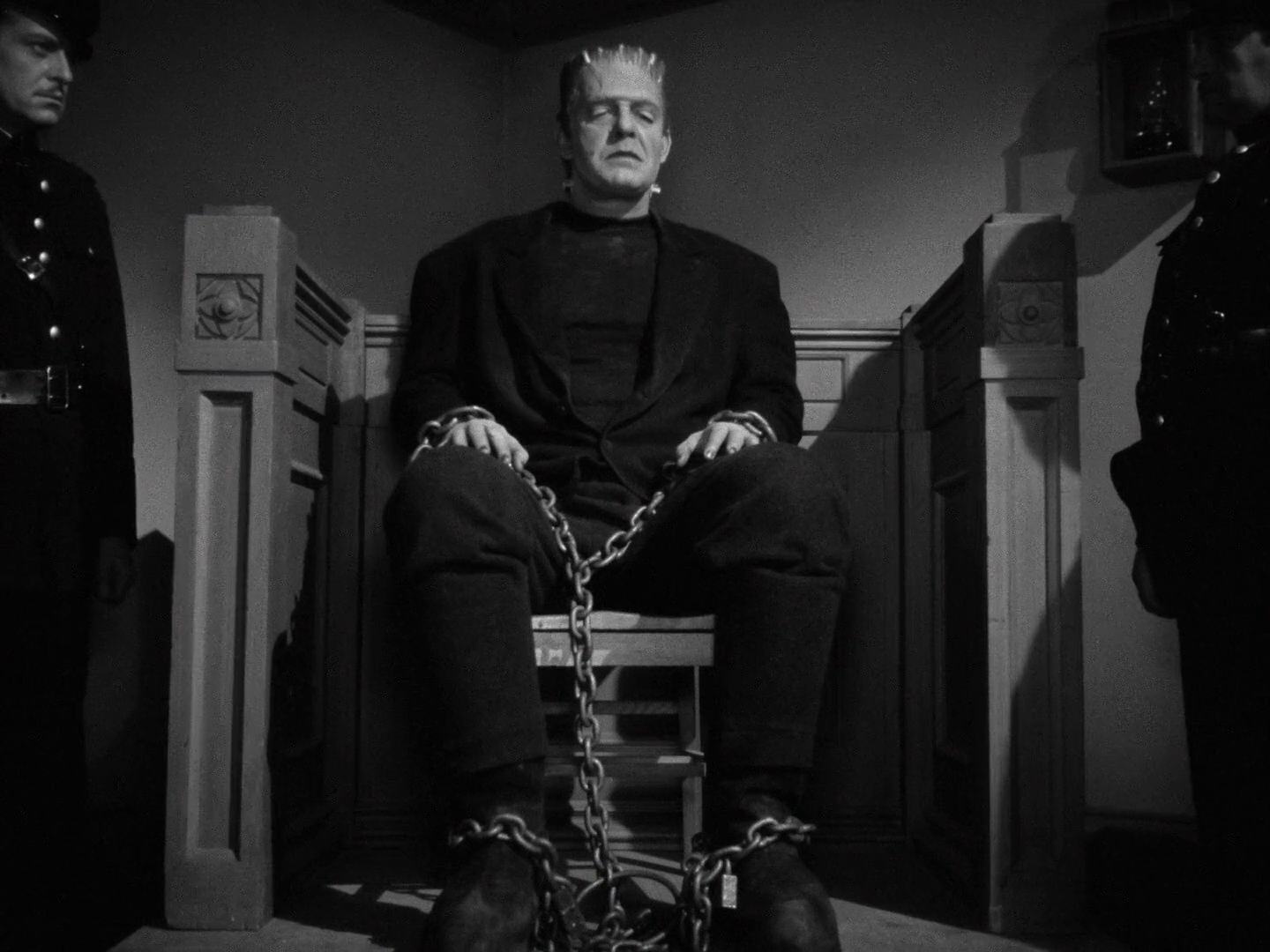
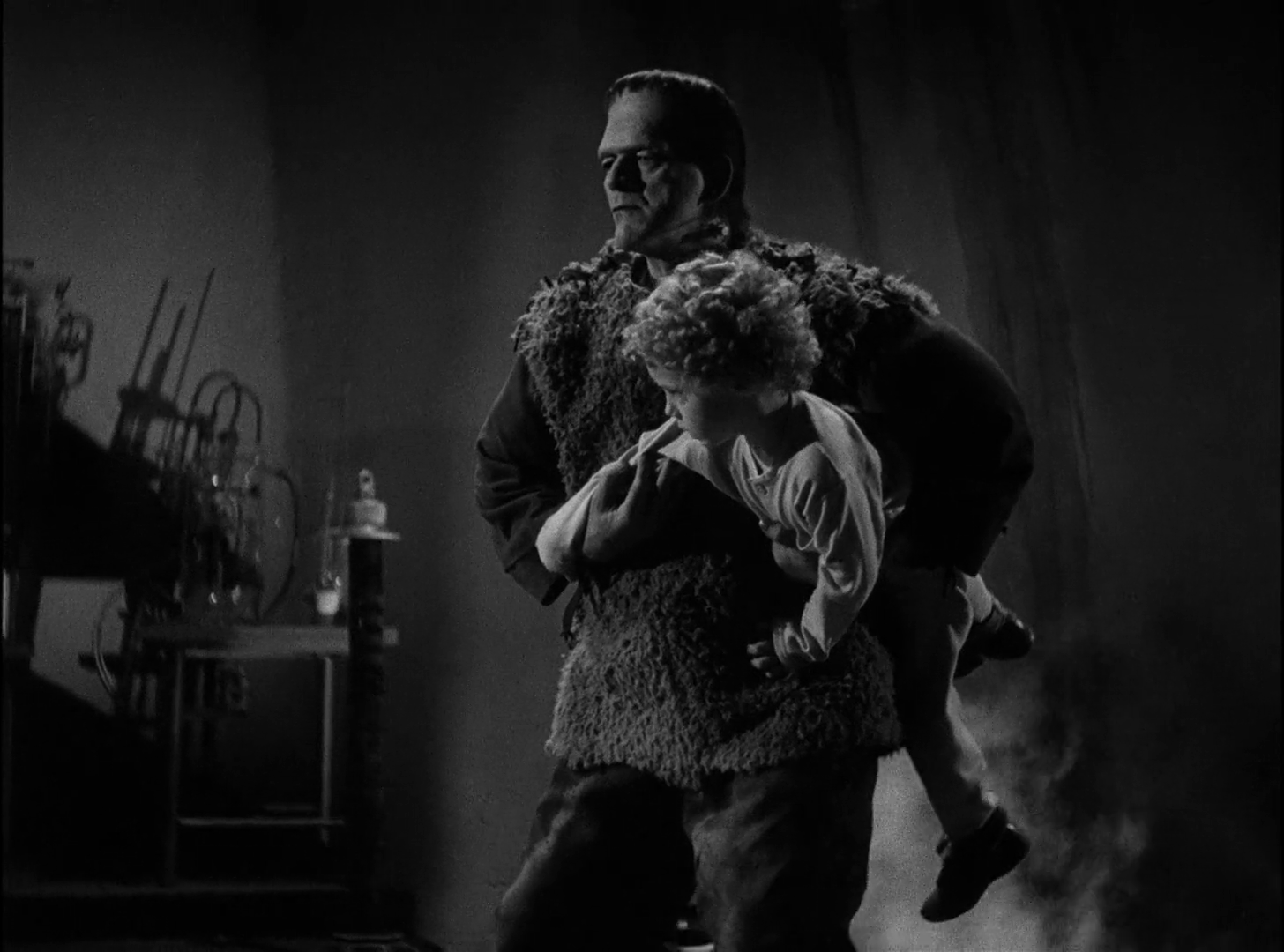
The reason for this sojourn is that Igor believes that the key to helping the Monster regain his strength lies in finding the second son of Henry Frankenstein, Ludwig Frankenstein (Cedric Hardwicke), who is a doctor at a clinic that specializes in diseases of the mind, and along with his assistants Dr. Kettering (Barton Yarborough) and Dr. Theodore Bohmer (Lionel Atwill) they hope to cure mental health through brain surgery – get two lobotomies and the third one is free – but while they are pondering medical breakthroughs, Ygor and the Monster wander into town and immediately get into trouble. It's not like this is something we didn't see coming.  The Monster witnesses a little girl (Janet Ann Gallow) being bullied by the local children, as kids are known to do, but when he picks her up to aid her in the retrieval of a ball the other kids had tossed onto the roof because you know, they're little shits.  Eventually, some villagers show up and immediately assume that the Monster is trying to carry off the poor child, then two dead villagers later and the police finally manage to capture the Monster and the creature is set to stand trial.


Law and Order: Special Monsters Unit.

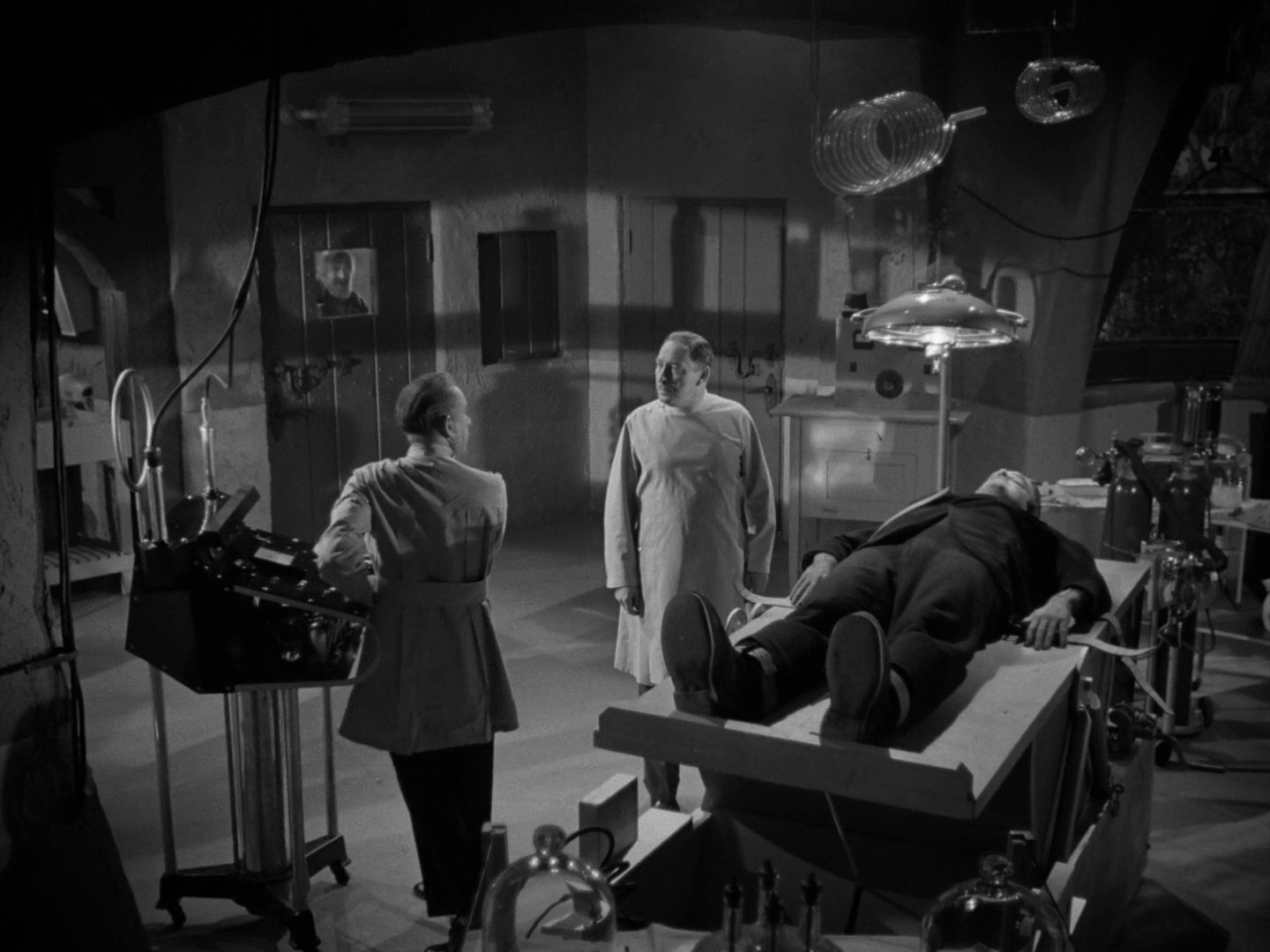
This is where things become a bit silly as we get town prosecutor, Erik Ernst (Ralph Bellamy), going to see Ludwig to ask him if he would examine this giant they have captured, stating that “We have a madman in the jail and I’d like you to come down and examine him” and I’m left wondering how a seven-foot-tall stitched together monster with bolts in his neck can be considered as nothing more than a simple madman. But while the creature is languishing in chains Igor slips over to see Ludwig and demands that he help the Monster regain his strength, and if he refuses, then Ygor would reveal Ludwig's ancestry to the villagers. And this raises the question “Just how far apart are these places that they wouldn’t have heard about Henry Frankenstein and his murderous abomination?” This threat of Ygor’s becomes moot when the Monster escapes and hightails it over to the clinic, with Ygor in tow, and after murdering Dr. Kettering the creature is subdued by knockout gas and Ludwig decides the best course of action is to destroy the Monster once and for all, that is until the ghost of Henry Frankenstein – portrayed by Cedric Hardwicke who looks nothing like actor Colin Clive – appears and points out that if Ludwig simply replaces the malignant brain with a healthy one, they’d save the Frankenstein name.


I see absolutely nothing wrong with this plan.

Unfortunately, there are a couple of wrinkles to this plan, first, there’s the issue of a whole lot of angry villagers tearing up the countryside looking for the escaped creature, made worse when it sneaks back into town and kidnaps the little girl he had befriended earlier, and then there is the fact that not only is Erik the town’s prosecutor but he is also engaged to Ludwig’s daughter, Elsa Frankenstein (Evelyn Ankers), and this relationship causes a bit of a three-way strain, what with the fact that Ludwig is hiding a murderer in his clinic and pretty much everyone knows it. Add to all this we also have the issue of Igor wanting his brain put inside the Monster’s skull, while Ludwig wants to use the noble brain of the recently murdered Kettering.  Ludwig refuses this preposterous suggestion, the idea of Ygor’s sly criminal mind in the body of an immortal superman is pretty high on the list of insane and dumb things to do, unfortunately, Bohmer is more flexible, especially when Igor says he can rule at his side when they take over the country.


Again, I see nothing wrong with this plan.

Stray Observations:

• As Ludwig is Wolf Frankenstein’s brother shouldn’t this film have been called The Other Son of Frankenstein?
• That Igor is a man who survived a hanging, lived after being shot numerous times by Wolf Frankenstein in the previous film and then survived Castle Frankenstein being blown up around him has me questioning if he is some sort of supernatural being.
• When Ygor drags the Monster out of the ruins he states “The sulphur pit was good for you, it preserved you.” So if they really wanted to revitalize the village economy they should turn the ruins into a health spa.
• The Monster seems to recognize Ludwig at first sight, even though the two have never met, this is as if the creature can simply sense the Frankenstein DNA with Ludwig.
• Ludwig believes the only way to destroy the monster is by dissection, deducing that “He was made limb by limb, organ by organ, he must be unmade in the same way” but wouldn’t cremation be just as effective and a lot faster?
• The plot of this film is almost a case of “Musical Brains” with Ludwig wanting to use the brain of the murdered Kettering, Ygor wanting his own diseased mind put inside the Monster, and the creature itself wanting the brain of the little girl he had befriended.
 

Is it wrong to want a movie where the Monster has the brain of a five-year-old girl?

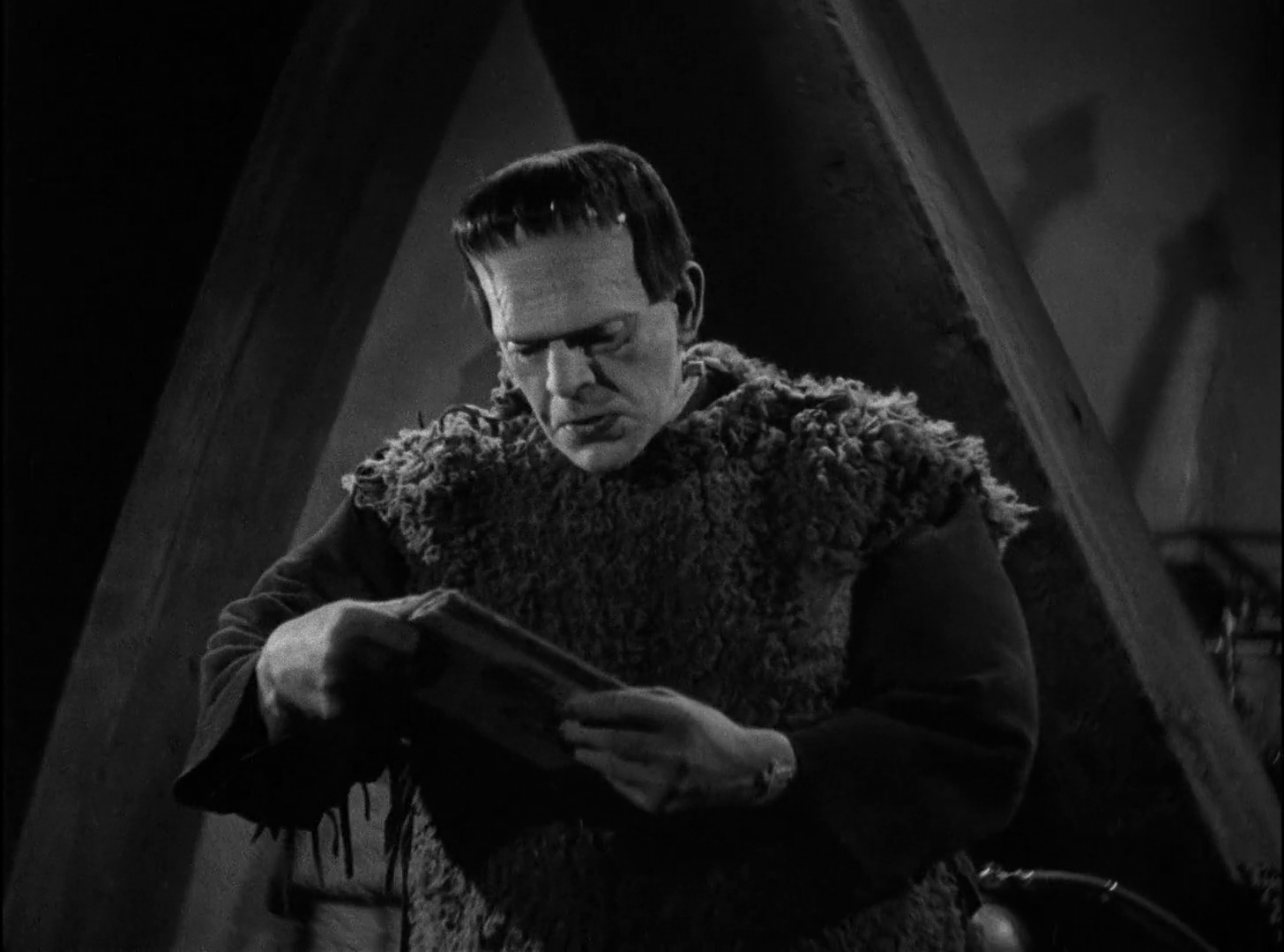
How many times can Frankenstein’s monster die? This question becomes problematic at best when a studio is looking at a money-making franchise, with a lucrative box office having more power than even lightning when it comes to resurrecting the dead, but with Boris Karloff no longer interested in reprising the role it was up to the studio to come up with a suitable replacement and with Lon Chaney Jr. just wrapping up filming The Wolf Man it must have seemed like an easy solution to that casting problem, sadly, while Chaney is a large man he was not able to balance the threatening posture or his incredible pathos that Karloff had created with his Monster and so we are left with a pale imitation, that said, we still have Bela Lugosi doing wonderful things with his part of the conniving Ygor, this results in the Monster pretty much becoming a sidekick to Ygor’s criminal mastermind.
 

The Dynamic Duo of Universal Horror.

The plot of The Ghost of Frankenstein is a bit of a non-sensical mess, with characters' actions and motivations ranging from the absurd to outright ludicrousness, and while Bela Lugosi is a shining light of acting genius in this outing it’s not quite enough to overcome Lon Chaney Jr. stumbling around the set as he’s nothing more than a pale imitation as to what Karloff had created, even Jack Pierce’s make-up isn’t as good all that great this time out. The rest of the cast are all fairly serviceable, with Evelyn Ankers and Ralph Bellamy basically playing similar roles to what they had just done on The Wolf Man, but with the science fiction elements being beyond ridiculous and the horror aspect non-existent this fourth entry in the franchise is at best a “fun watch” and should not be compared to the first three films, overall, The Ghost of Frankenstein is passable entertainment but it is missing some of that magic.

Monday, June 5, 2023

Son of Frankenstein (1939) – Review

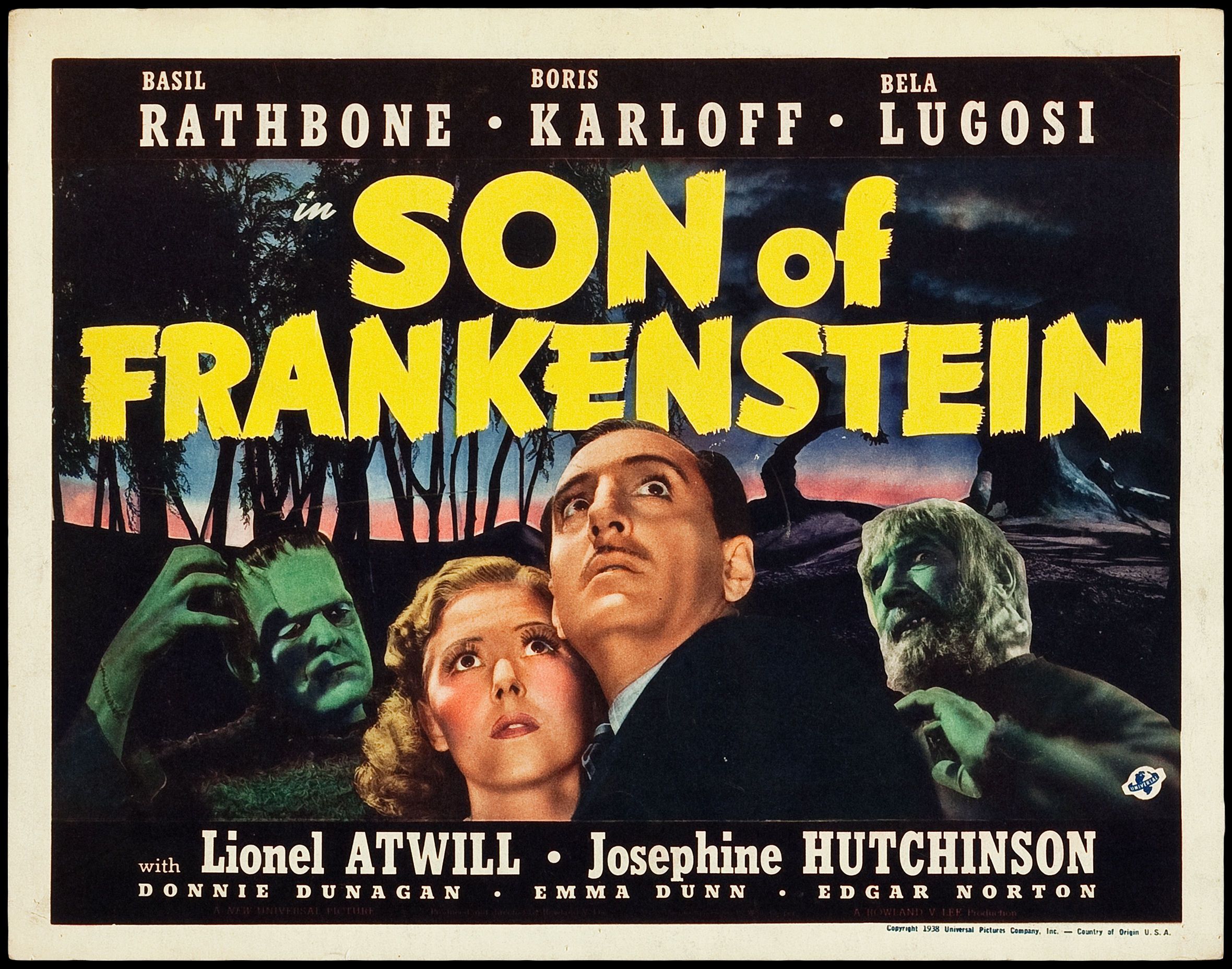
How do you follow up not only one of the greatest sequels of all time but one of the greatest horror movies of all time? This was the problem facing director Rowland V. Lee when he was tasked with helming the sequel to James Whale’s Bride of Frankenstein, made even trickier by the fact that both Doctor Frankenstein and the Monster perished at the end of that film, but Universal Pictures wasn’t about to let something trivial as death to stop them from making more money and thus the world was treated to the Son of Frankenstein.

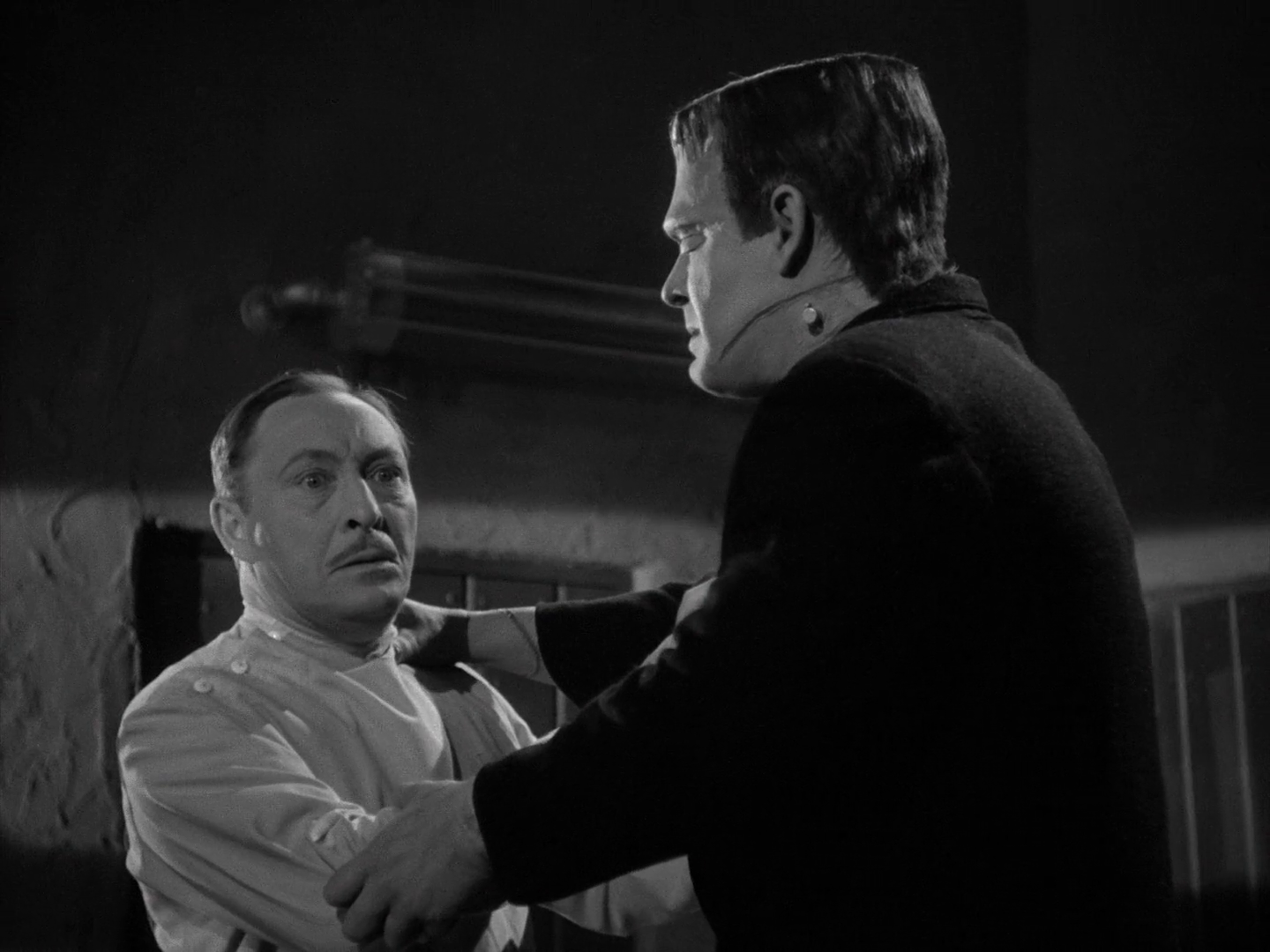
Inheriting a title and a castle estate may seem like a windfall to the average person but then there are things like property taxes to worry about, not to mention the cost of upkeep, and if your ancestor just so happened to have pissed off the locals by creating a rampaging monster that terrorized their village, you may find yourself a little ostracized from your neighbours. It’s this situation that Baron Wolf von Frankenstein (Basil Rathbone) faces in the 1939 classic Son of Frankenstein, with him and his wife Elsa (Josephine Hutchinson) and son Peter (Donnie Dunagan) travelling to his late father’s estate in the Bavarian Alps to claim his inheritance, an inheritance that also includes all the required papers to reproduce his late father’s work concerning the creation of life. The Baron doesn’t even have time to settle in when he is visited by police Inspector Krogh (Lionel Atwill), who has an artificial arm due to Frankenstein's creature having ripped out one of his arms when he was a child, and he informs Wolf that not only are the villagers hostile to his arrival but he also warns him that there have been a series of murders that have taken place prior to his arrival, with the victims being found with their hearts exploded. This is not quite the welcome a person hopes to get when they are setting up at a new abode.


“I was going to bring a fruit basket, but instead, here are some dire warnings.”

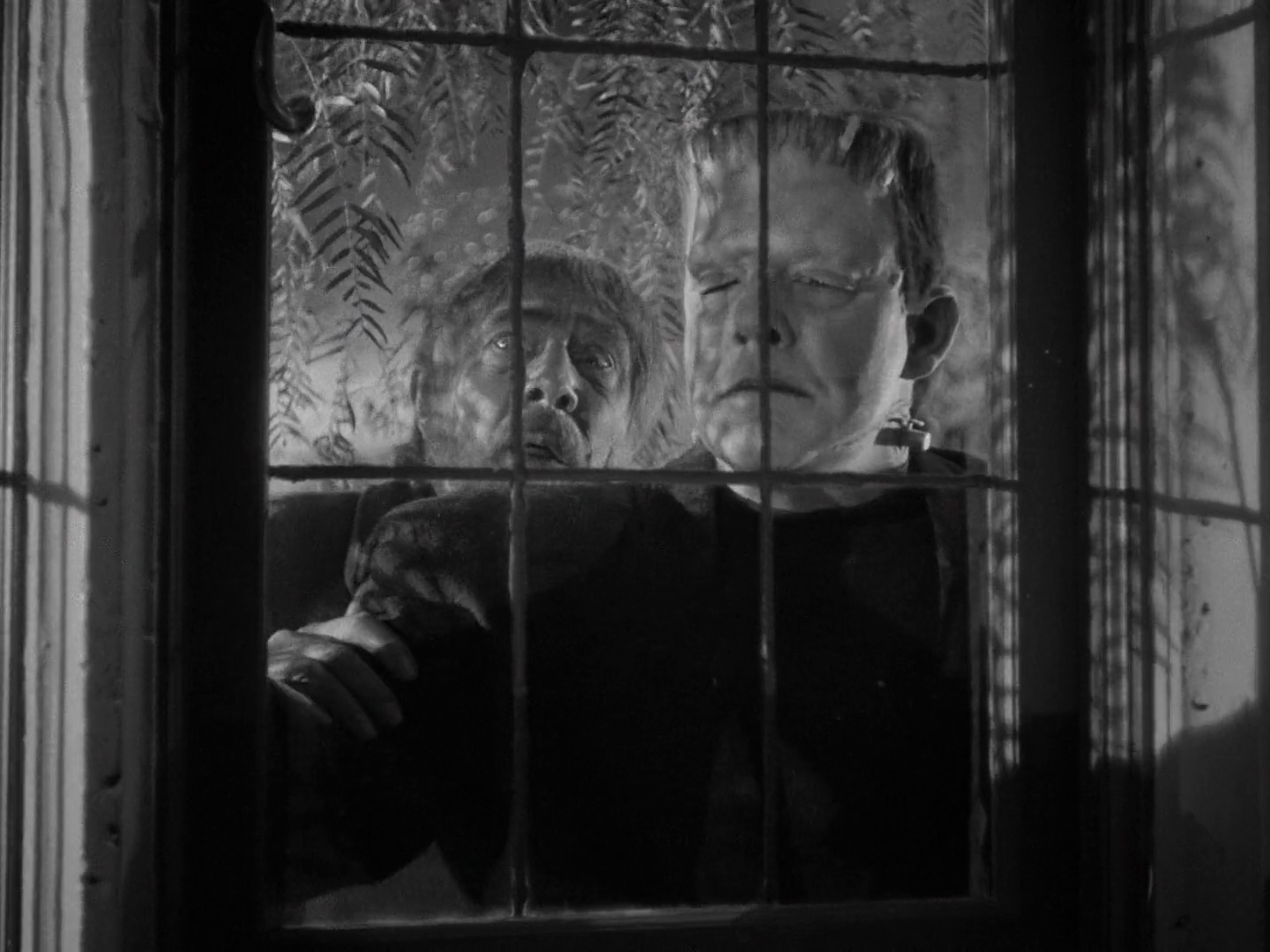
While investigating his father's castle, Wolf meets local grave robber Ygor (Bela Lugosi), a man who survived being hanged and is now quite embittered against the men who sent him to the gallows, but when Ygor shows Wolf the Monster's comatose body, located down in the crypt where his grandfather and father were buried, he comes up with the brilliant idea of reviving the Monster to prove his father was correct and to restore honour to his family. This does not make a lot of sense, earlier in the film Wolf railed on and on about how his father only failed because his idiot assistant grabbed an abnormal brain instead of a healthy one, that hunchbacked Fritz tormented the creature is also probably a factor, so how can reviving that particular creature end in any other way but in more tragedy? At no point does Wolf even suggest replacing the brain with a good one and thus any deaths that follow would clearly be on his head.  That the Monster's only answers to Ygor is probably another Big Red flag that things are not going to go well, but I guess one must not stand in the way of mad science.


“If I don’t revive him, I’ll lose my standing among all the other mad scientists.”

Stray Observations:

• Why do Baron Wolf von Frankenstein and Baroness Elsa von Frankenstein have a child with a deep Memphis-Texas accent?
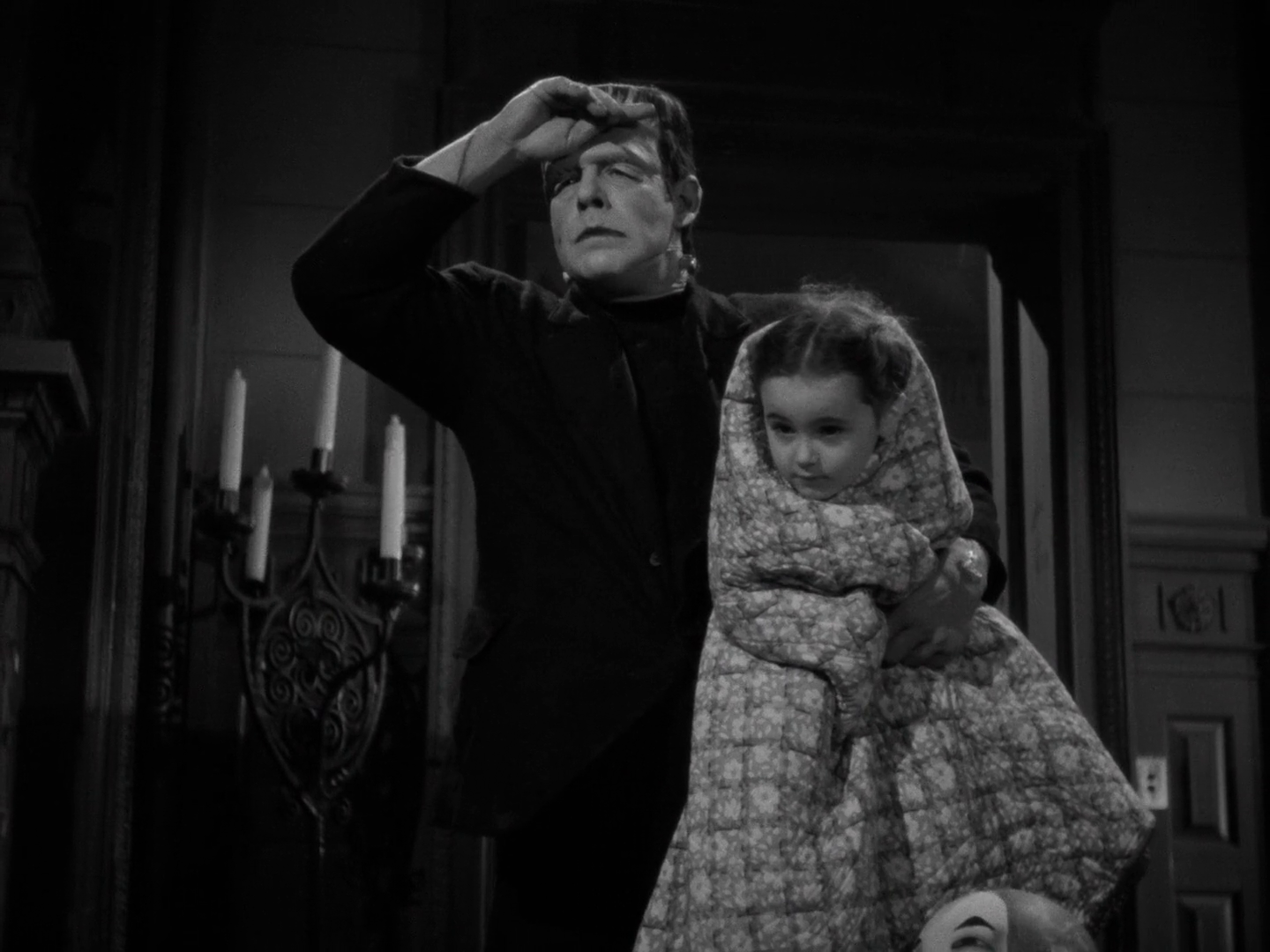
• Inspector Krogh tells the Baron that the monster ravaged the countryside, killing, maiming, terrorizing, and even tearing a child’s arm out by the roots, which seems more in character with the monster from Mary Shelley’s book than that of the one portrayed by Karloff.
• In Bride of Frankenstein, we saw the Monster, his Bride and Dr. Pretorius being blown up when the castle was destroyed, yet Igor somehow found and saved the monster, but there is no mention of the bride’s remains. Are we to assume that Karloff’s monster was more indestructible than Elsa Lanchester’s bride?
• Wolf discovers that it wasn’t the lightning that brought the monster to life but cosmic rays, which he believes are responsible for the creature’s invulnerability and immense strength. This is something Reed Richards of the Fantastic Four would discover years later when he and his friends ventured into space.
• Ygor using the Monster as a tool of murder and mayhem echoes a little of Bela Lugosi's use of a gorilla in Murders in the Rue Morgue for his nefarious schemes.
• The villagers storm the castle due to their belief that Wolf has unleashed the Monster, a crime that he is actually guilty of, but at the end of the film he and his family get a hero's farewell from the people all because he pushed the monster toward his death, and I have to wonder "Are they all that forgiving?" Wolf must have had one helluva lawyer to escape not only the mob but jail time for being an accessory to several murders.


That Elsa doesn’t divorce him for child endangerment is also a bit surprising.

The plot of Son of Frankenstein is a tad contrived, not quite fitting the events as depicted in the previous film, but it more than makes up for that failing by giving us one of Bela Lugosi’s best performances, his portrayal of the revenge-fueled Ygor is the highlight of the picture and raises the bar for all future mad-science assistants to come. We also have some nice fiery face-offs between Basil Rathbone’s mad scientist and Lionel Atwill’s indomitable police inspector to liven things up, sadly, poor Boris Karloff is the one cast member with a rather thankless role as the monster has now been relegated to a mute creature who seems nothing more than an extension of Ygor’s rage. Now, there are a couple of moments dealing with the Monster and his somewhat odd relationship with young Peter but the film doesn’t seem to have time to explore his softer side.


“Who tore out all of my lines from this script?”

Director Rowland V. Lee handled the grim mood of this piece quite well, while also providing some decent moments of dark humour that helped some of the story’s more nonsensical elements go down a little easier, and cinematographer George Robinson did his best to give the film a nice dark expressionist feel and his gothic lighting is spectacular, much like the horror entries by Fritz Lang and F. W. Murnau, and while this film pales in comparison to what James Whale provided viewers in this two entries, this is still a decent Universal Monster Movie and is rightfully considered by many to be the "The last of the great Frankenstein films" before the genre descended into self-parody.


Thursday, June 1, 2023

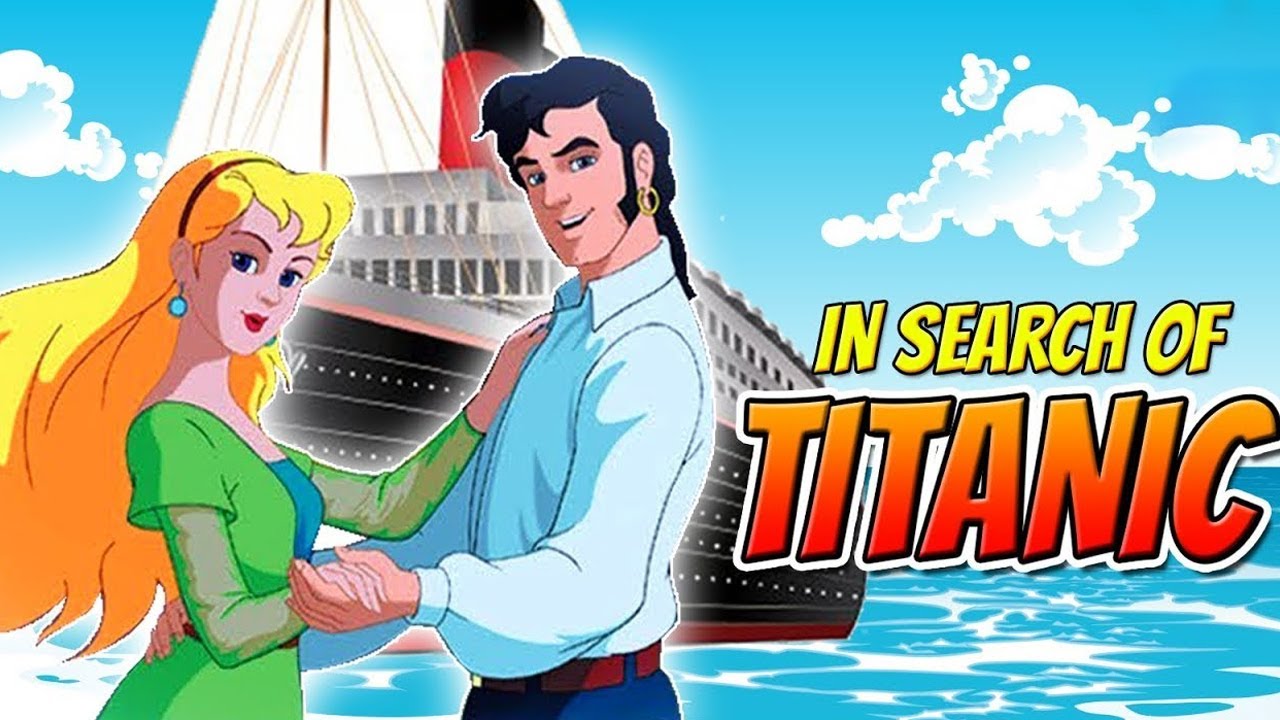
In Search of Titanic (2004) – Review

In 1999 an Italian animation company released one of the most bizarre attempts at cashing in on the success of James Cameron’s Titanic with a bizarre retelling of the classic tale only with a giant octopus and no tragedy whatsoever, five years later and these filmmakers were at it again with a whole new and bizarre adventure, but you must ask yourself are brave enough to go “Back to the Titanic!”

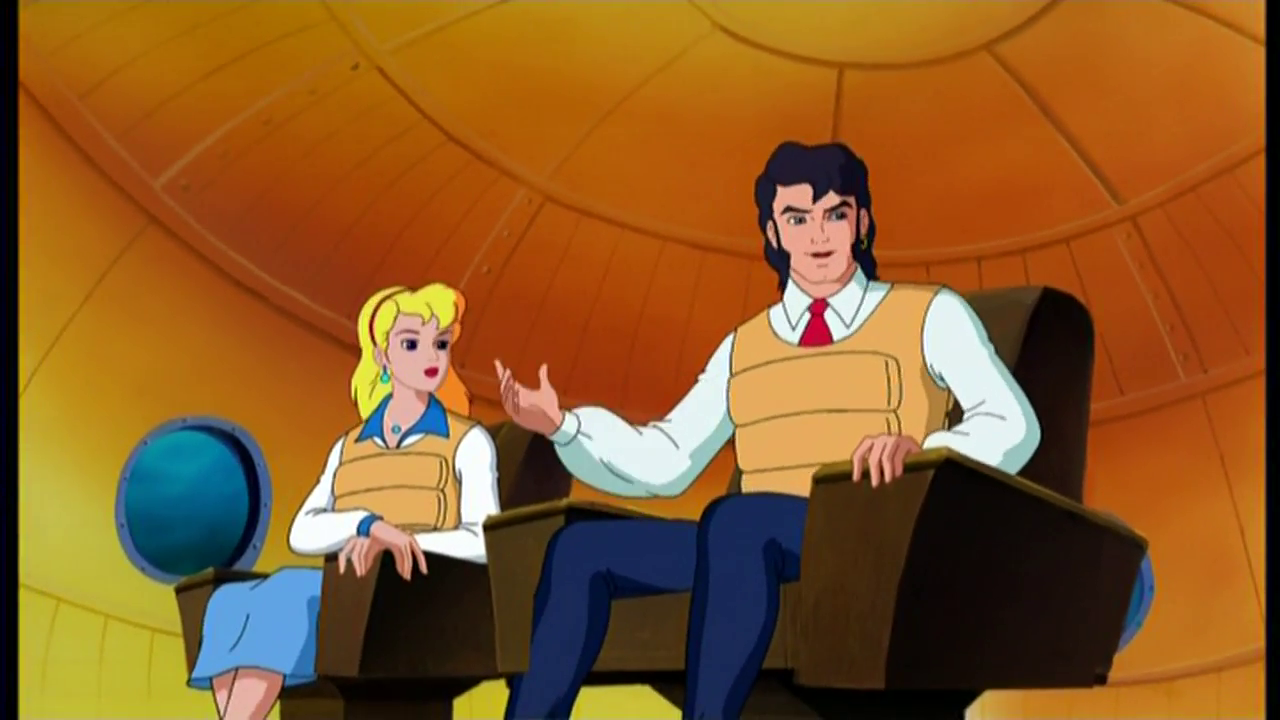
Also known as Tentacolino, this sequel to The Legend of the Titanic has a plot that may seem a little confusing to anyone even remotely sane, and if you’d manage to survive watching the first film that’s saying something. I get the basic premise, a bunch of rodents want to find the Titanic, but why, what's the end goal here? And why is there a villainous cat who wants to stop them? It's all a bit muddled. The story takes place three years after the events of the original film where we find Don Juan (Fabio Bacconera) and Elizabeth (Jane Alexander), along with their dog Smile (Stefano Mondini) and their pet mice Top Connors (Stefano Crescentini) and Ronnie (Sergio Luzi), who have been tasked by the U.S. Navy to explore the ocean depths in search for the wreck of the Titanic. And why is the government searching for a sunken luxury liner? Are they looking for an extremely rare mineral like the one Dirk Pitt was searching for in Raise the Titanic?


“Darling, I’m sure there is a very good reason for us doing this?”

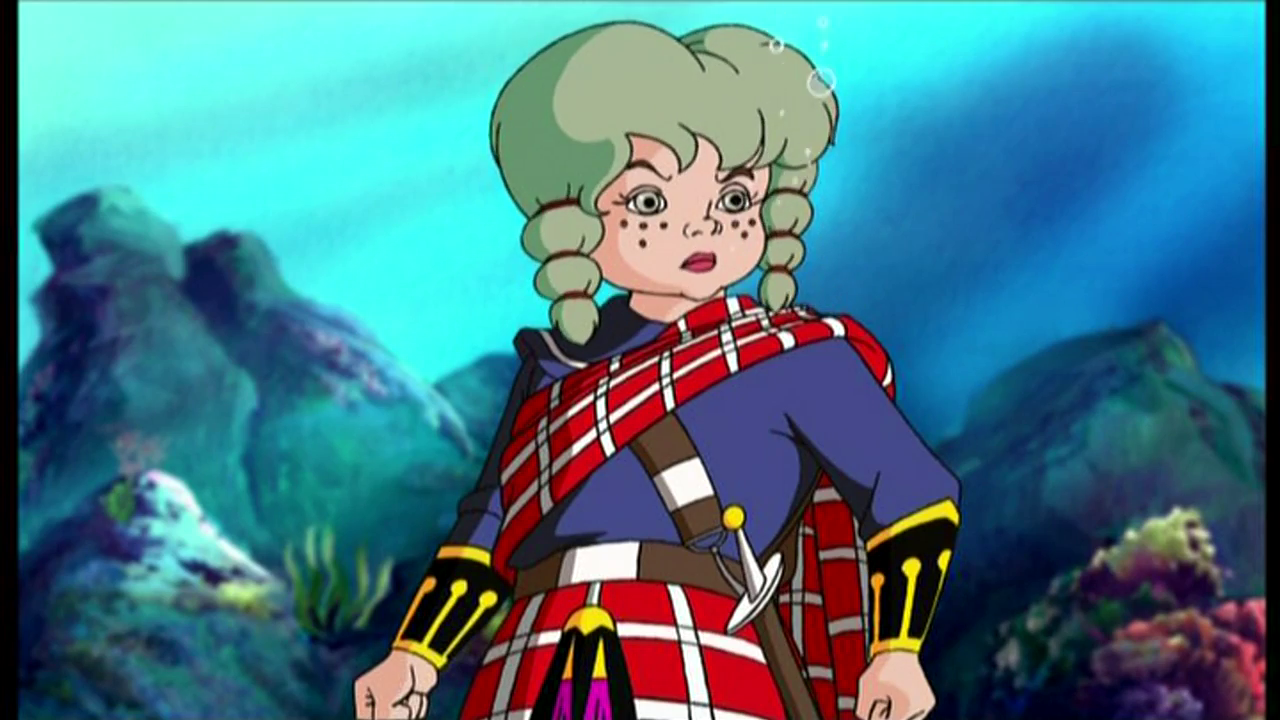
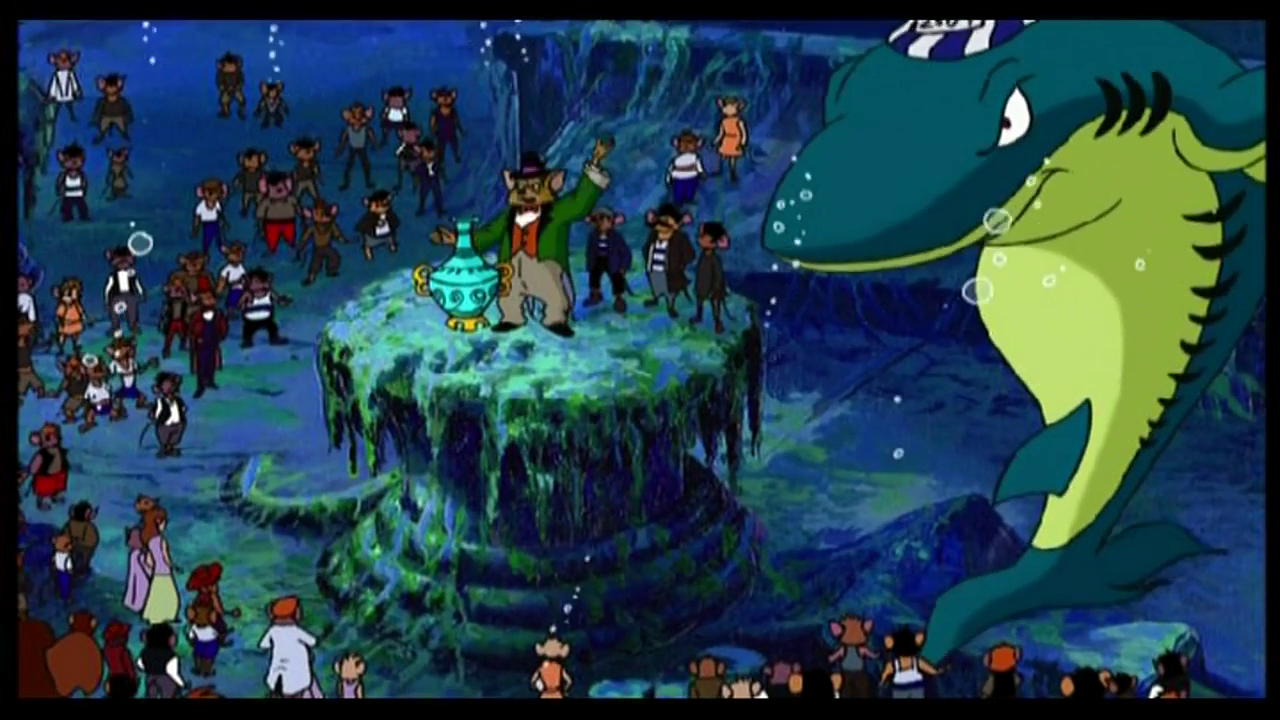
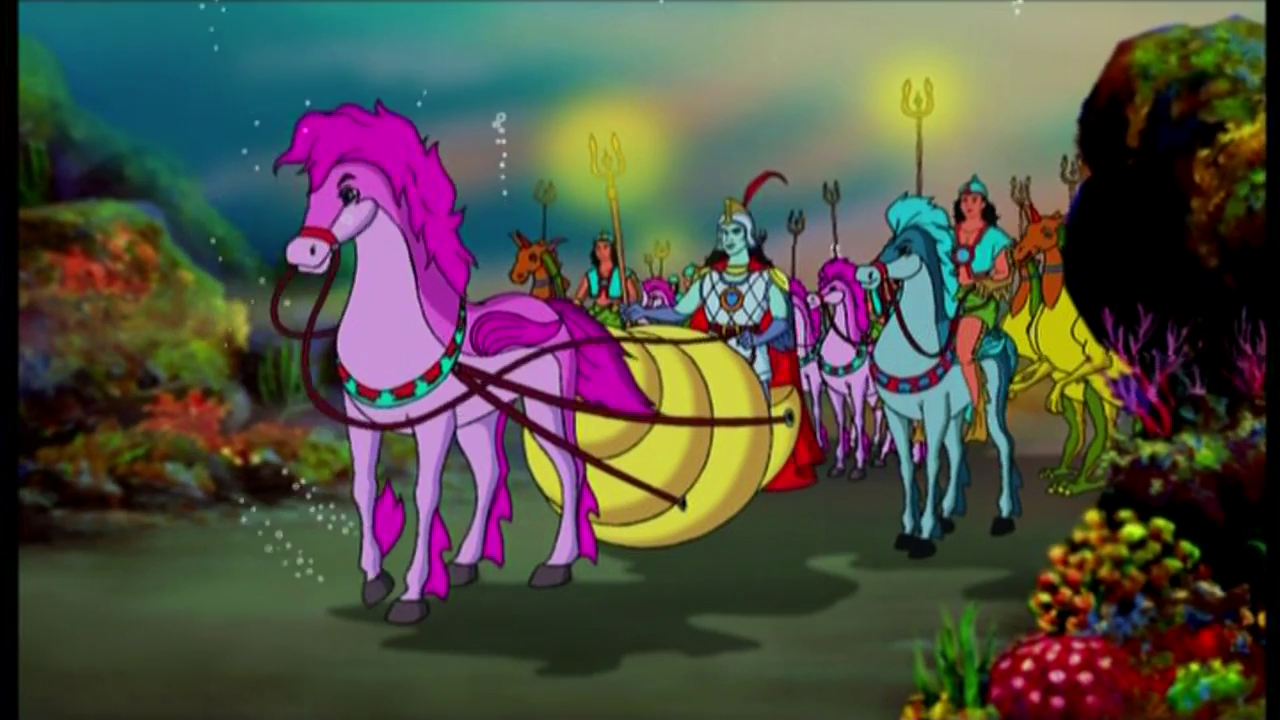
Actually, there’s no reason, in fact, the Titanic has little to no bearing on the plot of this movie as it’s more about our heroes encountering undersea civilization and helping to thwart a rebellion, basically, there’s not a lot of searching for sunken ships in this movie just a lot more bizarre shenanigans. On the journey down to the wreck of the ship a gang of sharks in prison garb find Don Juan and Elizabeth descending via a bathysphere and the shark leader named Iceteeth (Paolo Buglioni) orders his minions to cut the cable and send our pair to a watery grave at the bottom of the sea. The giant octopus (Oliviero Dinelli), the friendly but gullible idiot from the previous film, tries to bring the bathysphere to the surface but is unable to tear it free from the ocean floor, enter the merpeople, who are in time to save the occupants and bring them to the mythical undersea kingdom of Atlantis.


Wait a minute, what kind of seahorses have legs?

Don Juan and company undergo a “treatment” which enables them to breathe underwater, as well as given an elixir to drink that will grant them immortality, and then they are given the startling news that they will never be allowed to return to the surface world. Now, in a normal story, this is what would provide some good conflict, with some members demanding to return home while others would be happy with immortality, but not in this movie, turns out everyone is just hunky-dory with the idea of never seeing their friends and family again. This is not to say there isn’t some conflict in this so-called sequel, we do get Top Connors and Ronnie being approached by a couple of rats and they end up attending a secret meeting where they learn about a conspiracy to steal the Atlantean elixir of life so they can all gain immortality and strive for world domination – don’t wait around for any sort of explanation as to how being immortal will allow rats to conquer the world – and the rats are in league with sharks who are also in touch with couple men that are on their own expedition to find a perceived treasure in the Titanic.

Note: These two may look exactly like the villains from the previous film but going by the English dubbed version they aren’t, which is for the best as they pretty much have no bearing on the plot of this sequel whatsoever.

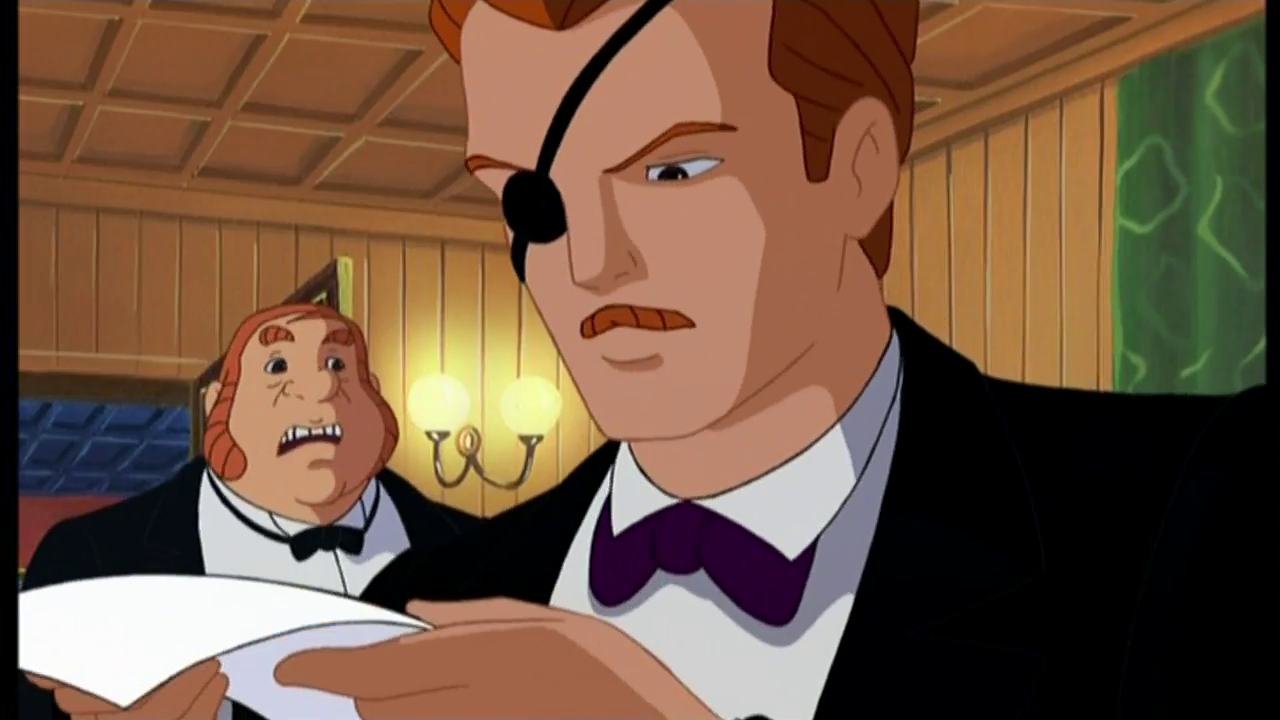
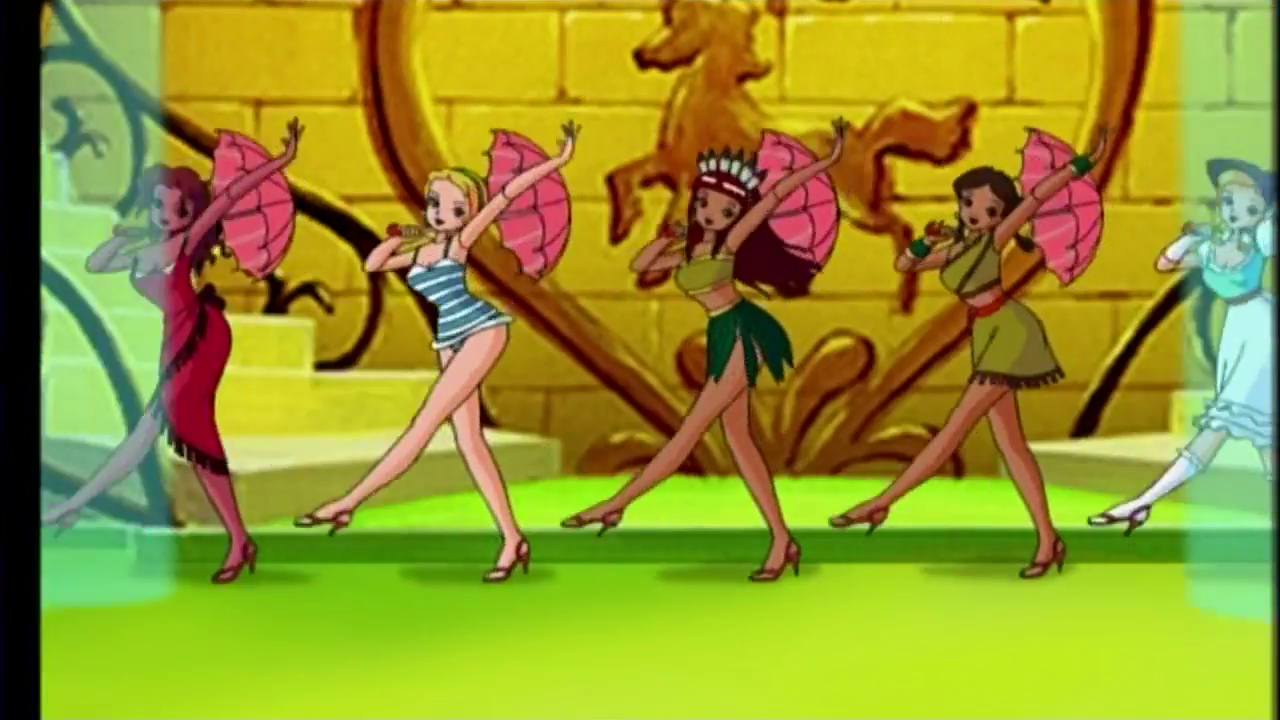
Not only do we get rebellious Atlantean rats to stir the blood we also have the dog Smile falling in love with a cute Atlantean Cocker Spaniel, because why not throw a little Lady and the Tramp into this completely bonkers of a movie? We also have an Atlantean King whose face is concealed by a hooded robe yet there is no big reveal as to why he has to hide his face – maybe a director’s cut reveals that he's actually Robinson Crusoe or Long John Silver – and if things weren’t strange enough we learn that a large portion of the Atlantean population consists of living toys, with the King’s ambassador being a toy silver-fish who hops around on some sort of Jack-in-the-Box spring.  It’s through a Ziegfeld follies-style number that the toys perform where our heroes learn of their status as permanent residents of Atlantis.


I hope you like musical numbers, cause we get three, and they are terrible.

Stray Observations:

• Or heroes use a Bathysphere to find the wreck of the Titanic, despite the fact that such a device was not used until the 1930s and this story is supposedly taking place in 1915.
• The pressure at the depth where the Titanic rests is so great that the minute the Atlanteans opened the Bathysphere’s hatch our heroes would have been crushed instantly.
• Topside, we get a news radio report of Don Juan and Elizabeth's disappearance, stating that “In all probability, they have ended up at bottom of the ocean along with mythical Titanic, which they were searching for so zealously” but when did the Titanic become something mythical?
• Inhabitants of Atlantis include a large group of living toys, ones that have fallen overboard and sunk to the bottom of the ocean and have somehow become sentient, basically, it’s kind of like the Misfit Toys from Rudolph the Red-Nosed Reindeer only damper.


I’m pretty sure the writers of this thing dropped a lot of acid.

What I'm saying is that this wasn’t much of a sequel, instead, we are treated to a bizarre mix of musical numbers, talking sea creatures and that goofy-ass giant octopus who never stops looking creepy. Of course, the real star of this film is the voice acting and by that I mean it appears as if the actors were phoning it in from a cruise ship cabaret with accents that are all over the place and with some line deliveries that were so wooden they could have floated to the surface. Now let's talk about the film's animation. It's... not great, in fact, it's so bad that it's almost endearing. The characters move in a jerky, unnatural way and their facial expressions look like they were drawn by a particularly unskilled toddler. Truly, the animation in the previous film was bad but what we get here is a whole new level of terrible.


"Life under the sea is better than anything they got up there!"

But hey, at least the characters were memorable, right? I mean, who could forget the brave young hero, Tentacles McBulbhead, or the plucky heroine, Eliza "Generic Love Interest" McWaif? And don't even get me started on the villain, Captain Mustache, who spends his two minutes of screentime twirling his facial hair and cackling like a discount Snidely Whiplash. I should mention that our heroes do, in fact, find the Titanic, or should I say the Atlanteans reward our heroes by repairing the ship and transporting them and the ship to a secret island where they will live out their immortal days. Wait a minute, are we sure this is a reward and not some sort of prison island scenario? Even the crew of the S.S. Minow had a larger gene pool to work with than what we have here.  I’m not sure what Don Juan and Elizabeth are going to do when she starts popping out kids.


Maybe Captain Nemo will stop by for a visit every now and then.

All in all, In Search of Titanic is a masterpiece of incompetence in storytelling and unintentional hilarity in every aspect and I highly recommend it if you're in the mood for some terrible animation, questionable voice acting and a plot that makes about as much sense as a kangaroo wearing a top hat. Just don't go in expecting a serious historical drama when you sit down to watch this thing, or a good movie for that matter.