Blog Archive

Thursday, October 21, 2021

Forbidden Planet (1956) – Review

When it comes to adaptations of a body of work William Shakespeare is easily one of the most adapted authors in history, from Laurence Olivier to Kenneth Branagh his plays has been handled by some of the great, but my personal favourite interpretations of his work would be that of MGM's science fiction classic Forbidden Planet, which bears more than a fair resemblance to his play The Tempest. What is important to note is that where previous science fiction adventures pitted weary space travels against random meteor storms, and the occasional Martian problem, the plot of Forbidden Planet not only took into account the physical dangers of space exploration but the possible existential threats as well.
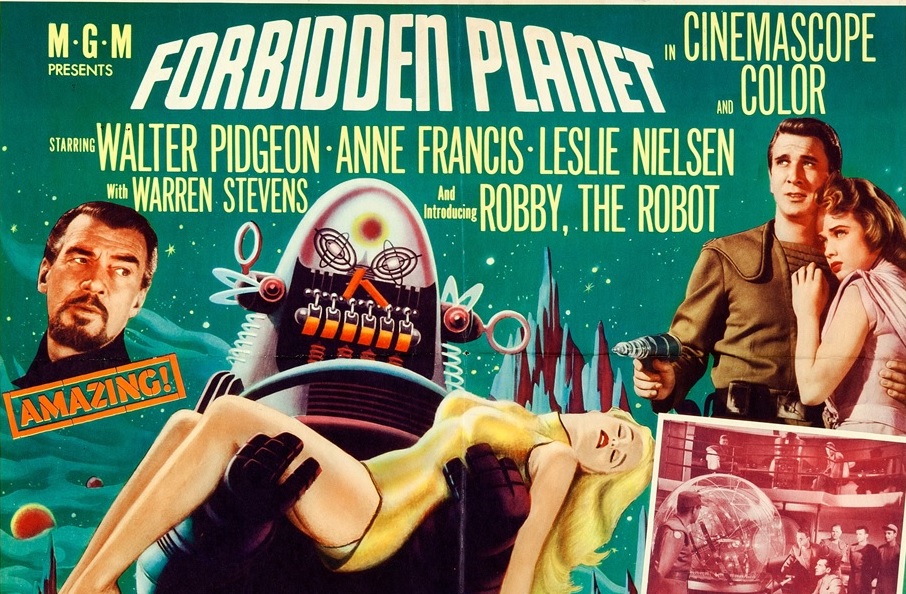
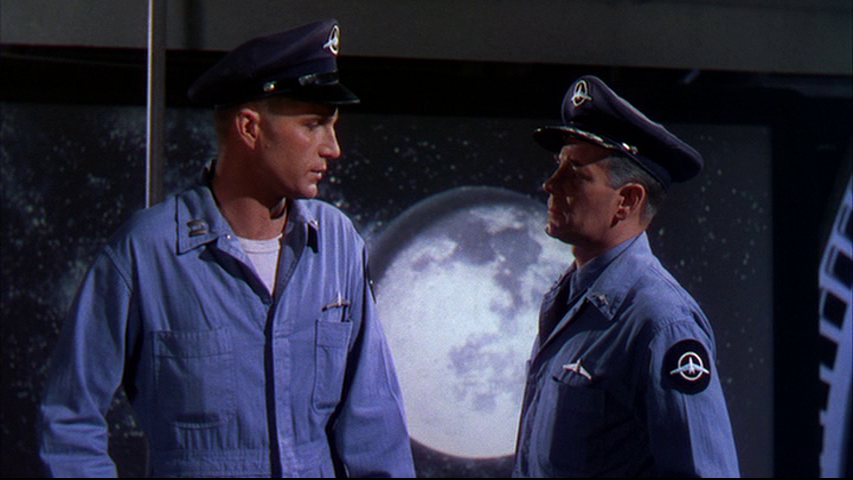
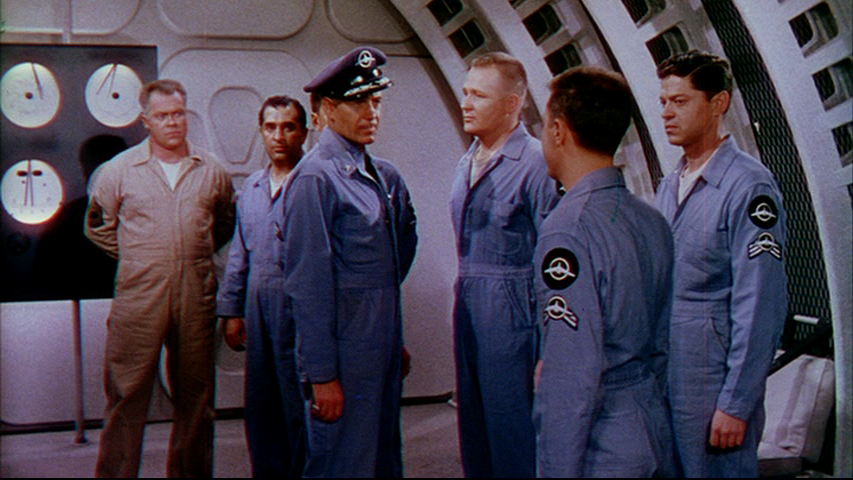
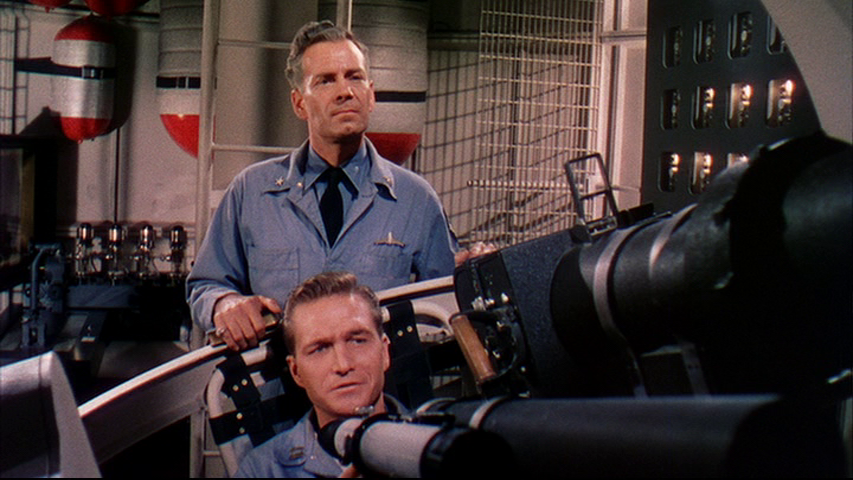
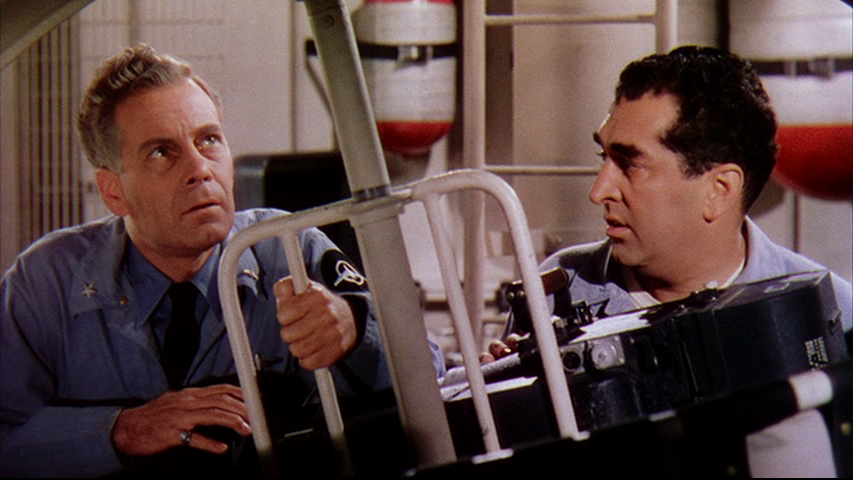
One key element that sets Forbidden Planet apart from its predecessors is where films like Destination Moon were what would be considered “speculative fiction” taking place only a few decades into the future while Forbidden Planet is set during the 23rd century and making it closer to the likes of the classic Star Trek series, which was over a decade away, in fact, while watching Forbidden Planet you can clearly identify elements that Gene Rodenberry borrowed for his sci-fi show. The movie opens with the United Planets starship C-57D arriving at the distant planet Altair IV with its mission to determine the fate of an Earth expedition that was sent there 20 years earlier, which is a mission one could easily expect Captain Kirks and the crew USS Enterprise to be engaged on, but where Kirk’s ship had a “saucer section” the spaceship in Forbidden Planet was an honest to goodness flying saucer.
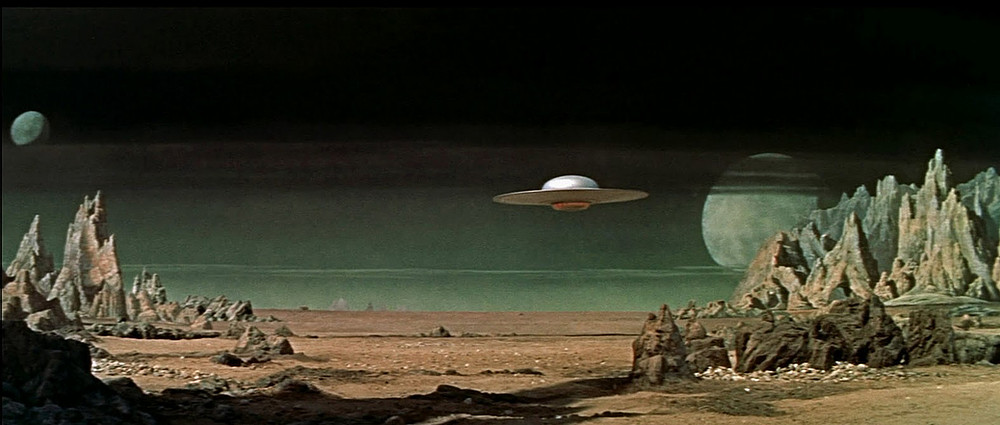
 

Clearly, this was the coolest way to travel between planets.

The plot of Shakespeare’s The Tempest dealt with a powerful sorcerer who lived on a secluded island with his daughter and whose power and ego get the better of him, enter MGM studios and Forbidden Planet where we have the powerful scientist Dr. Edward Morbius (Walter Pidgeon) living with his daughter Altaira (Anne Francis) and whose power and ego get the better of him and he ends up unleashing forces that he refuses to comprehend, so with the works of William Shakespeare as a jumping-off point all the story really needed was some science fiction elements and a few stalwart heroes to spice things up. Morbius’ supposed paradise is invaded by the crew of the starship C-57D led by Commander John J. Adams (Leslie Nielsen) who ignores Morbius’ warnings to stay away because what kind of a stalwart hero would turn back his back on a mission just because some grump planet side said the place was dangerous.
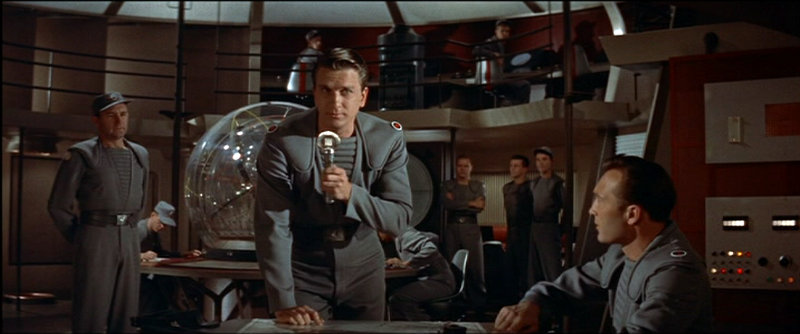
 

“Yes I’m going to land, and don’t call me Shirley.”

When the crew do land on Altair IV their first encounter is with one of the most iconic robots in cinema history, and that would be Robby, the Robot who did his best to steal the movie away from Leslie Nielsen. This heroic robot was initially developed by production designer Arnold "Buddy" Gillespie and art director Arthur Lonergan and its ground-breaking design not only made him a star of Forbidden Planet but he is, to date, the only fictional character that became an actor in his own right, appearing in such television shows like The Twilight Zone, The Thin Man, Columbo, The Addams Family, and Lost in Space. And not only was Robby a landmark in science fiction cinema but he was also the first robot to perfectly depict Isaac Asimov's "Three Laws of Robotics" which was wonderfully demonstrated when Morbius asked him to shoot Commander Adams with his own blaster.
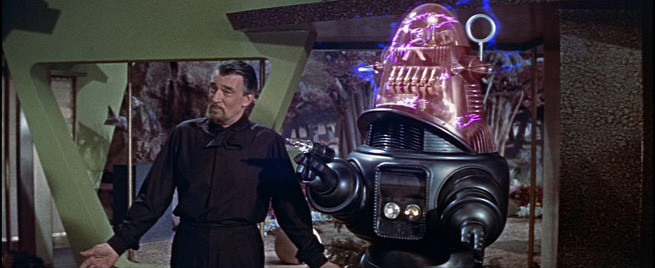
 

C-3P0 and R2-D2 never had to deal with this.

The plot of Forbidden Planet may owe a lot to Shakespeare’s The Tempest but it also includes themes found within the etching by the Spanish painter and printmaker Francisco Goya called “The Sleep of Reason Produces Monsters” as it depicted the artist himself asleep amidst his drawing tools, his reason dulled by sleep, while tormented creatures that prowled in the dark, which pretty much exactly what happens to Dr. Morbius when he has his mental abilities enhanced by Krell science. The best works of science fiction don’t simply deal with mankind’s technological advancement but in the exploration of the great mysteries, the things humanity struggles to understand. We come across great questions like “What is our place in the universe?" and "Are the threats out there in space or are they deep within ourselves?” and it's when science fiction films delve into such areas that the result is something special and in this instance a film like the Forbidden Planet. In the case of this film, it comes in the form of a terrifying “monster of the id” which Morbius’ subconscious mind unleashes on anything he feels to be a threat to his “perfect” world
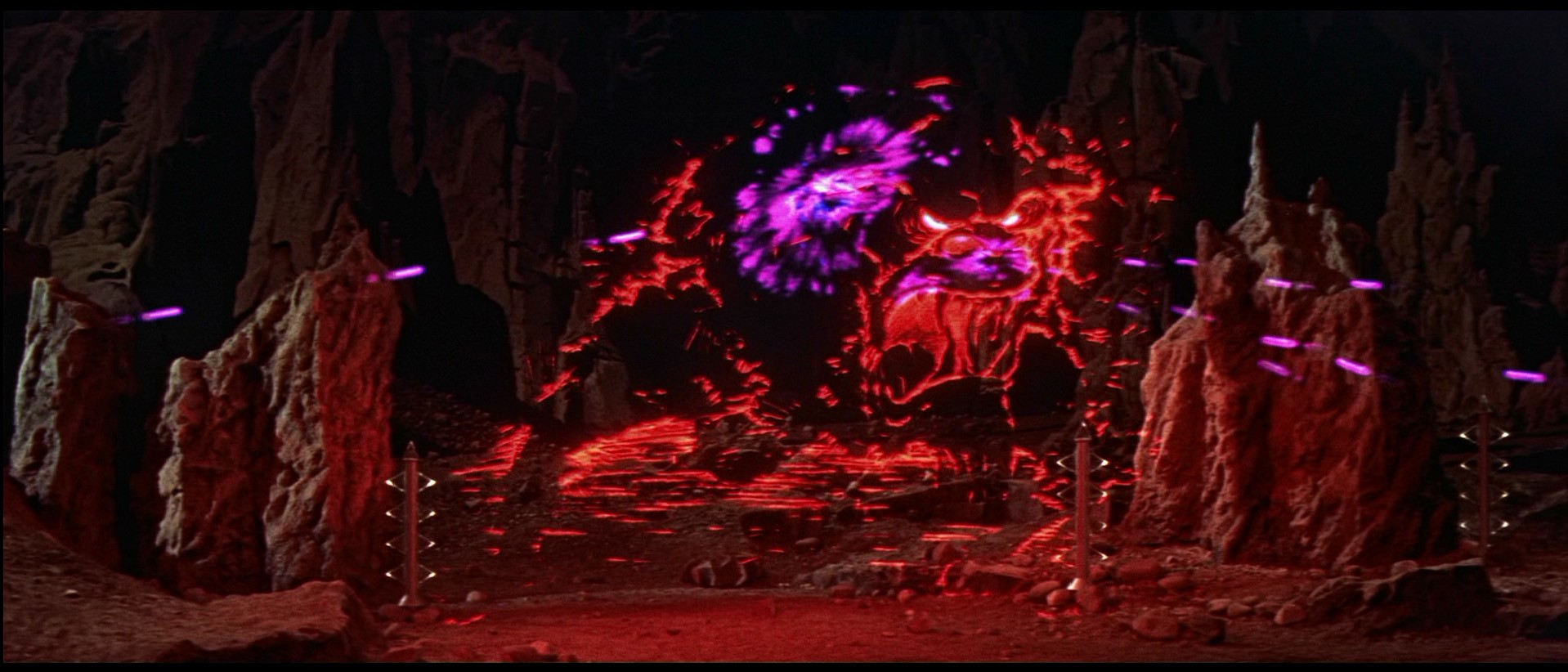
 Production Note: At the time MGM Studios didn’t have an effects animation division so veteran animator Joshua Meador was loaned to them by Walt Disney Productions, a rare moment in-studio bipartisanship,

All the philosophical ramblings in the world wouldn’t have made the Forbidden Planet such a classic if not supported by some of the best visuals the artists that MGM had to offer. When Morbius gives a tour of the massive underground facilities, that belong to the long-extinct Krell species, we the viewer are treated to moments in science fiction cinema that would not be surpassed until Kubrick released his film 2001: A Space Odyssey. The sets designed by Cedric Gibbons and Arthur Lonergan were truly spectacular and wonderfully enhanced by some truly impressive visual effects and matte paintings and the impact on the genre these designs and visuals left should not be understated as anyone who has seen a Duck Dodgers cartoon or watched an episode of The Time Tunnel knows that the influence of this film spread far and wide.
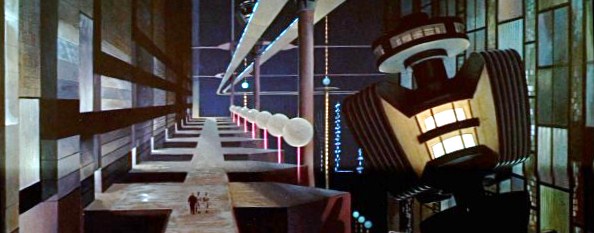
 

Leslie Nielsen in the 24th and a half Century!

Stray Observations:

• This film is both optimistic and pessimistic when it comes to space travel, we see that mankind has faster-than-light starships, but in the opening narration, it also states that mankind didn’t reach the Moon until the final decade of the 21st Century. Talk about missing that mark by about a century.
• The ship that settled Altair IV was named the Bellerophon who in Greek mythology was one of the greatest heroes and slayers of monsters, which one must admit is a rather aggressive name for an exploratory ship.
• The name Morbius could be a take on the name Morpheus who in Greek mythology was the god of sleep and dreams, which makes sense considering the id monster is manifested mostly when Morbius is asleep.
• Robby the Robot’s ability to create food by simply re-arranging molecules could be considered the precursor to the food replicators on Star Trek.
• The crew of Starship C-57D consists of some pretty nasty wolfhounds who upon seeing the gorgeous Altaira immediately begin making moves on her, which kind of makes Morbius subconsciously sending the id monster to kill them all a little more understandable.
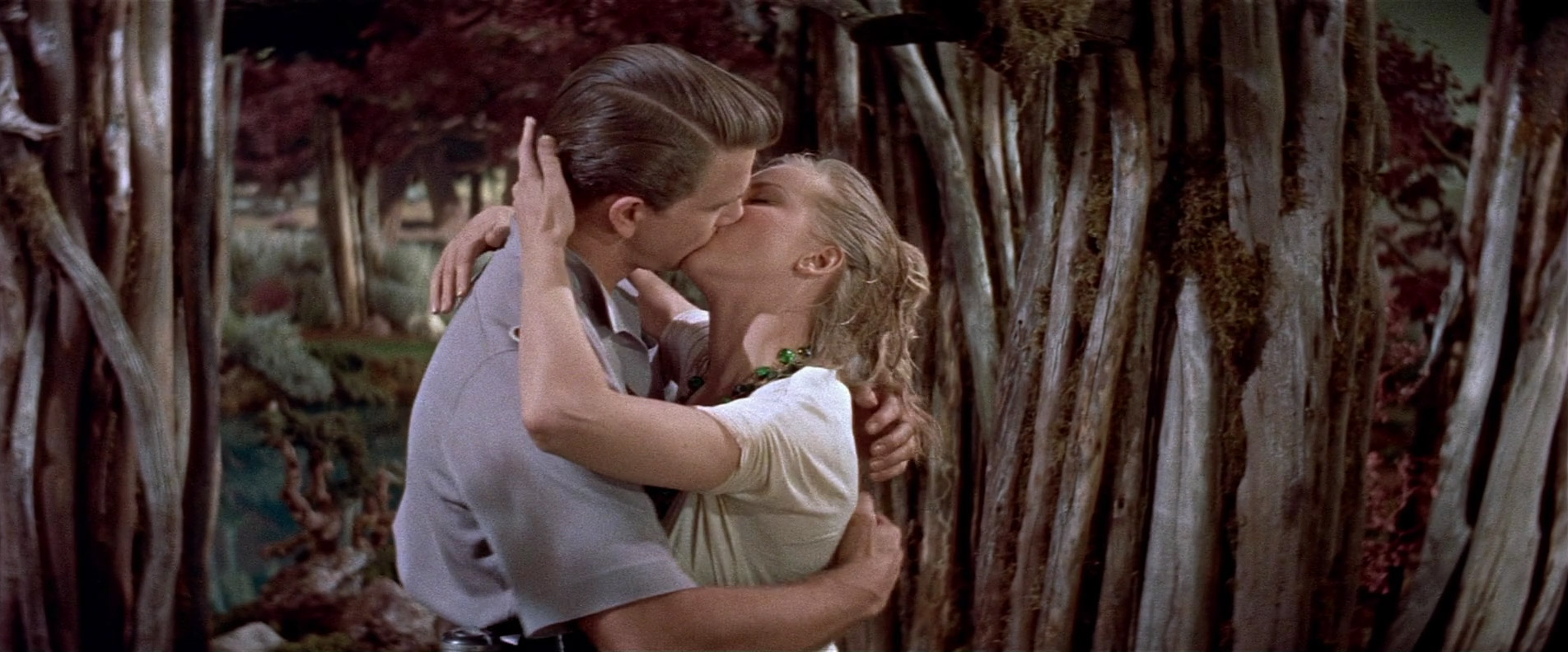
 

So, this is what is considered space exploration?

Another major component that made Forbidden Planet such a landmark moment in cinema history was the inclusion of an innovative electronic music score by composers by Bebe and Louis Barron as their work here gave the film a very “out of this world” feel and really kept the audience a little off-center and was just as important as the visuals in creating a truly alien world and the underground Krell facility wouldn’t be half as impressive without that haunting score. Sadly, Bebe and Louis not being members of a film industry music guild resulted in the score being credited as "electronic tonalities" which negated their ability to be nominated for an Academy Award. I hope that someday the Academy will get off their collective asses and give this pair at least some sort of “Life Time Achievement Award” to signify to all the importance of their efforts in cinema.

What is quite impressive is that back in 1956 that MGM would even have the idea to sink so much money in a genre that they had no previous experience with, the fantasy elements of The Wizard of Oz are a far cry from those of Forbidden Planet, but where other studios were launching men into space on a shoestring budget MGM moved the genre out of the “B Movie” stage and into bold CinemaScope glory. Without such a daring move we may never have seen the likes of Kubrick’s 2001: A Space Odyssey and Gene Roddenberry may never have been inspired to create Star Trek, so to say we owe a lot to Forbidden Planet would be as massive of an understatement.

Monday, October 18, 2021

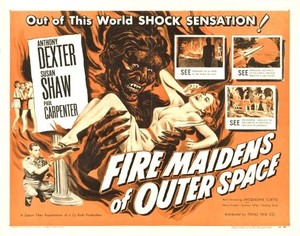
Fire Maidens of Outer Space (1956) – Review

Ed Wood’s Plan 9 from Outer Space has been often labelled “The Worst Movie Ever Made” but that wasn’t until after it had wrestled that title away from 1956’s Fire Maidens of Outer Space a British entry into the realm of science fiction cinema that consisted mostly of scantily clad women, cardboard sets and an entire cast with a complete lack of acting talent.

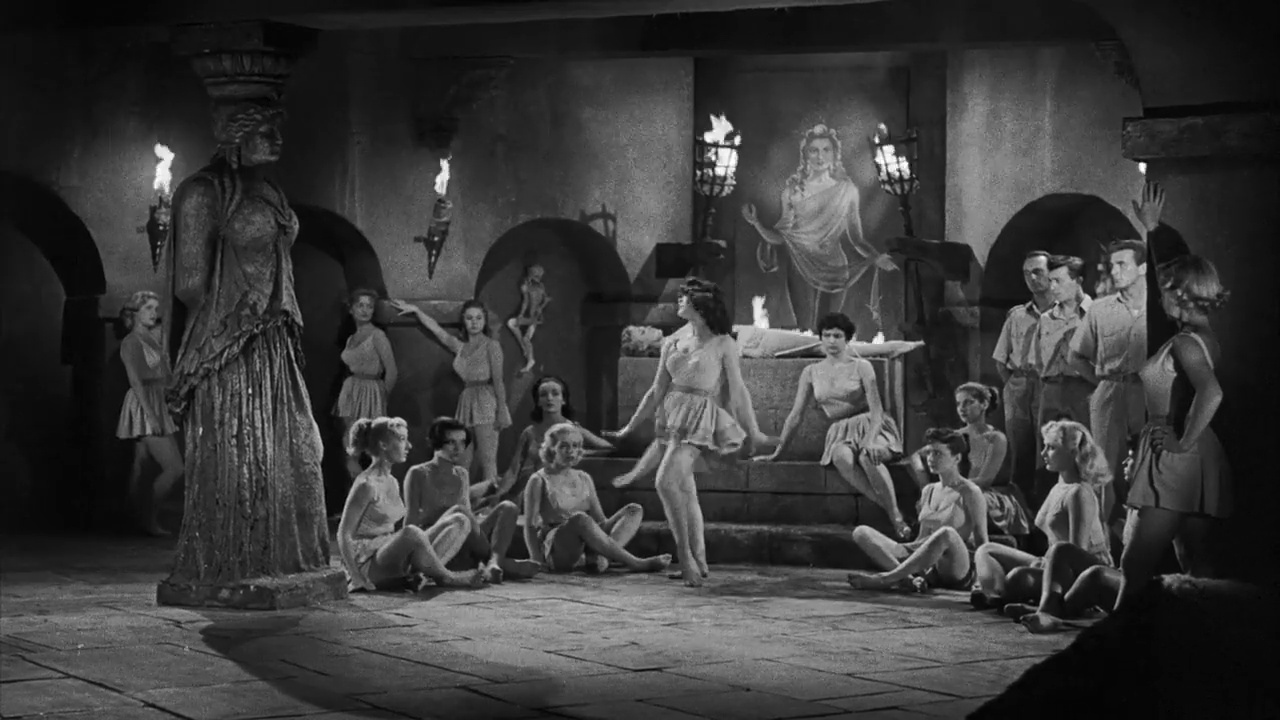
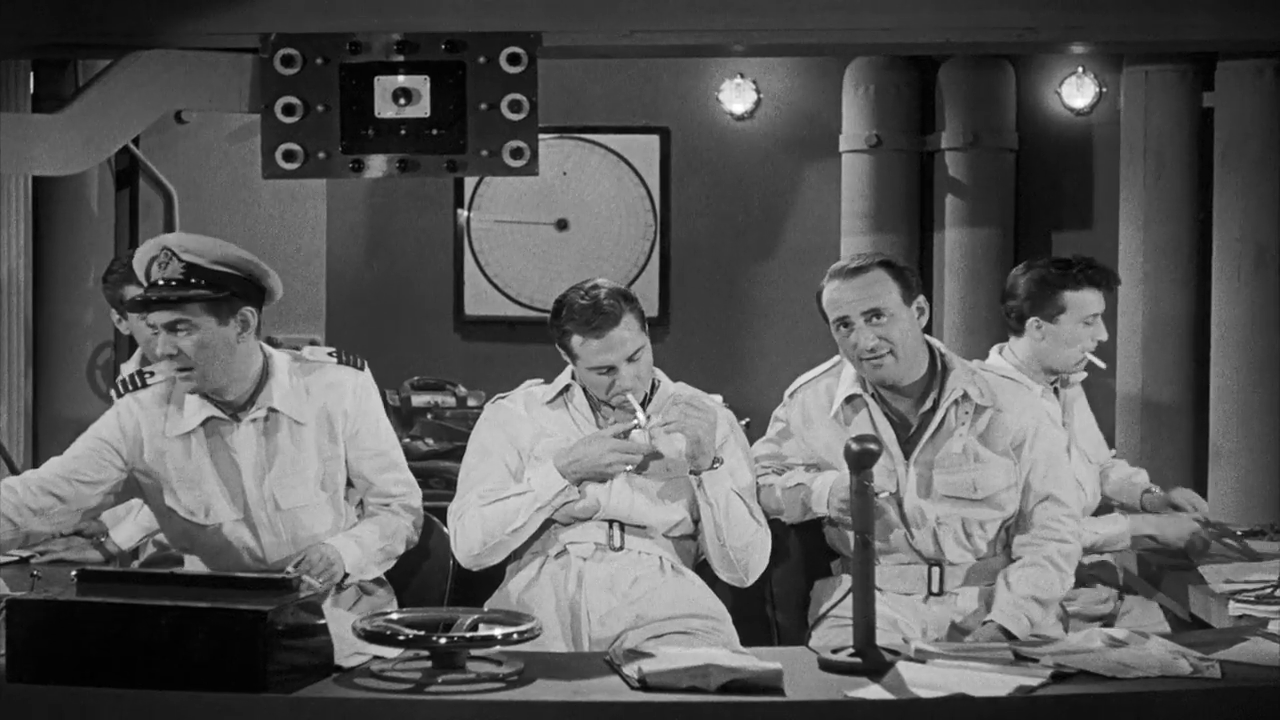
When a film is produced, directed and written by just one man you either get a great film of singular vision or in the case of Fire Maidens of Outer Space a film that fails on just about every level, which just about sums up what producer/director/screenwriter Cy Roth achieved with this particular entry in the genre of space adventure. The film’s plot, if what enfolds can be considered to be a plot, deals with astronomer Dr. Higgins (Sydney Tafler) discovering that there is a thirteenth moon orbiting the planet Jupiter and though it is has remained hidden behind a shroud of fog he’s sure it has an Earth-like atmosphere. Who needs science when you have a gut feeling?  This leads to the obligatory space mission consisting of a bunch of male asshats who between chain-smoking cigarettes and backslapping each other they will fill much of the film's tedious screen time with sexist remarks, which is something they get ample opportunity to do when they discover that the planet is populated mostly by half-clad beautiful women. Unfortunately, there is danger afoot and I don’t just mean the threat of interpretive dance.

Question: What is it with filmmakers and their subjecting of viewers to interminable bizarre scenes of women performing interpretive dance? We get the same thing in Cat-Women of the Moon and aside from giving viewers scantily clad women awkwardly cavorting to music I don’t see much point in it but I guess the scantily clad women part this kind of answers that question, so never mind.

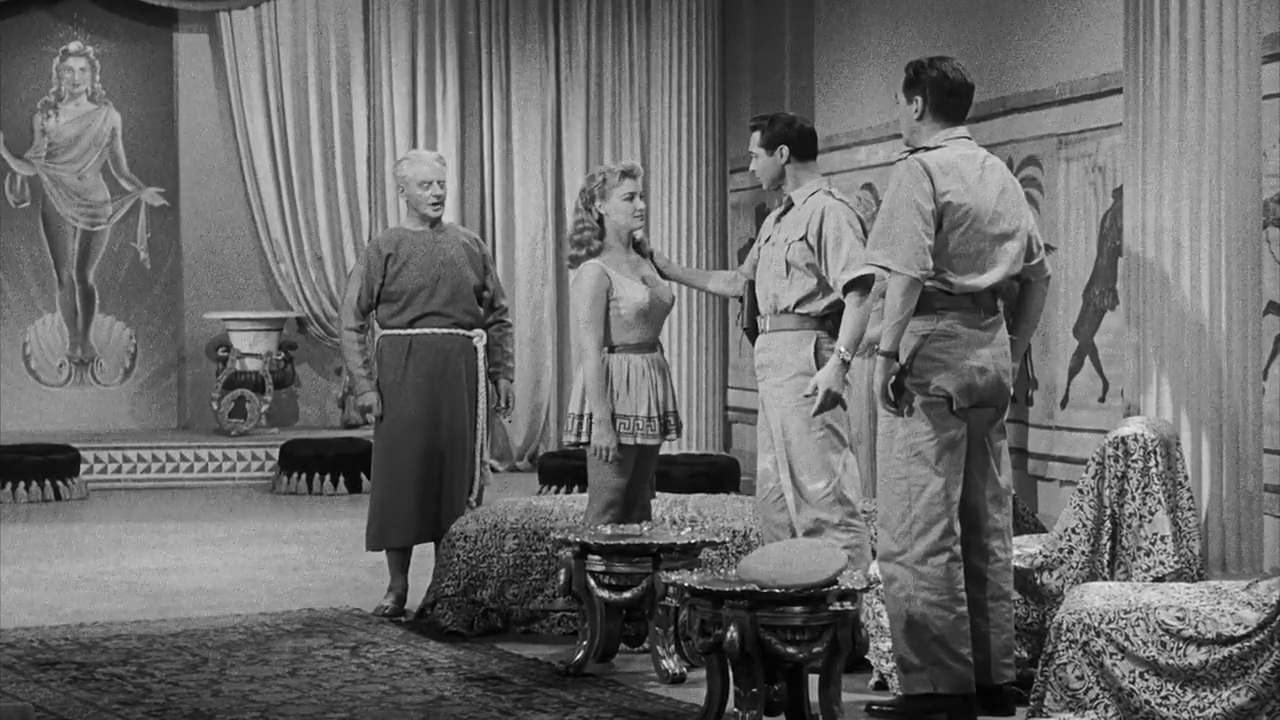
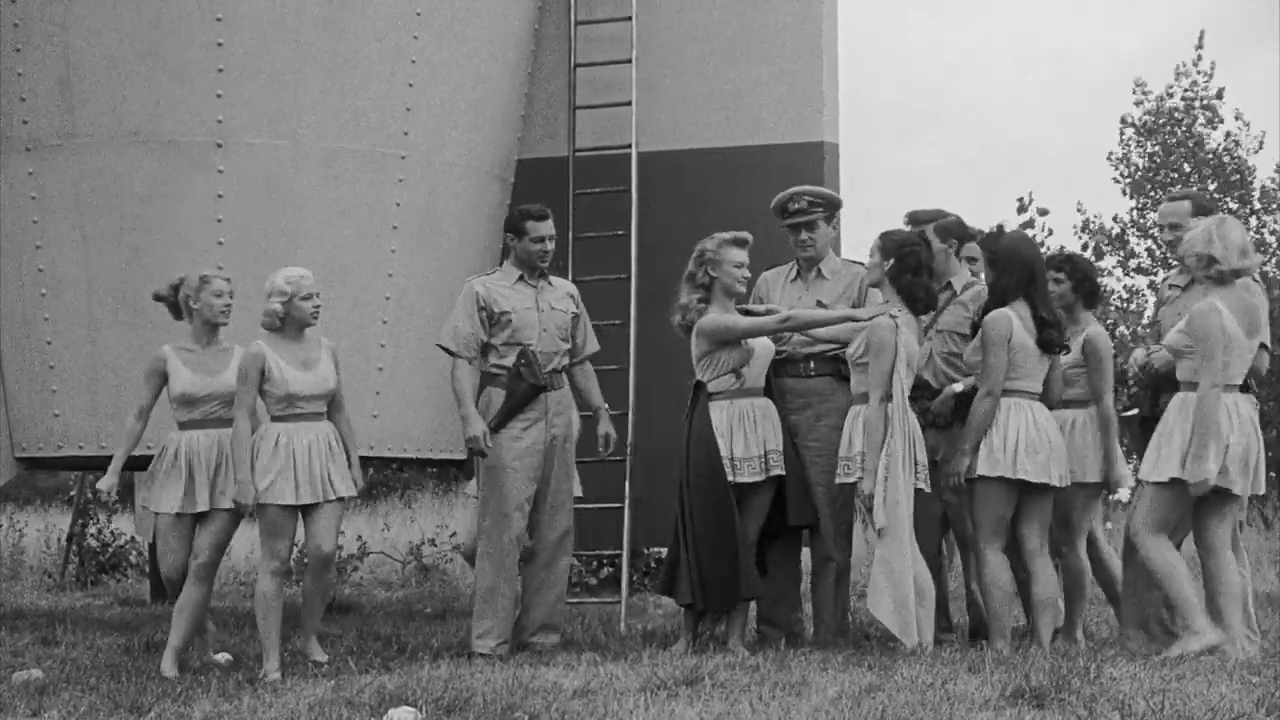
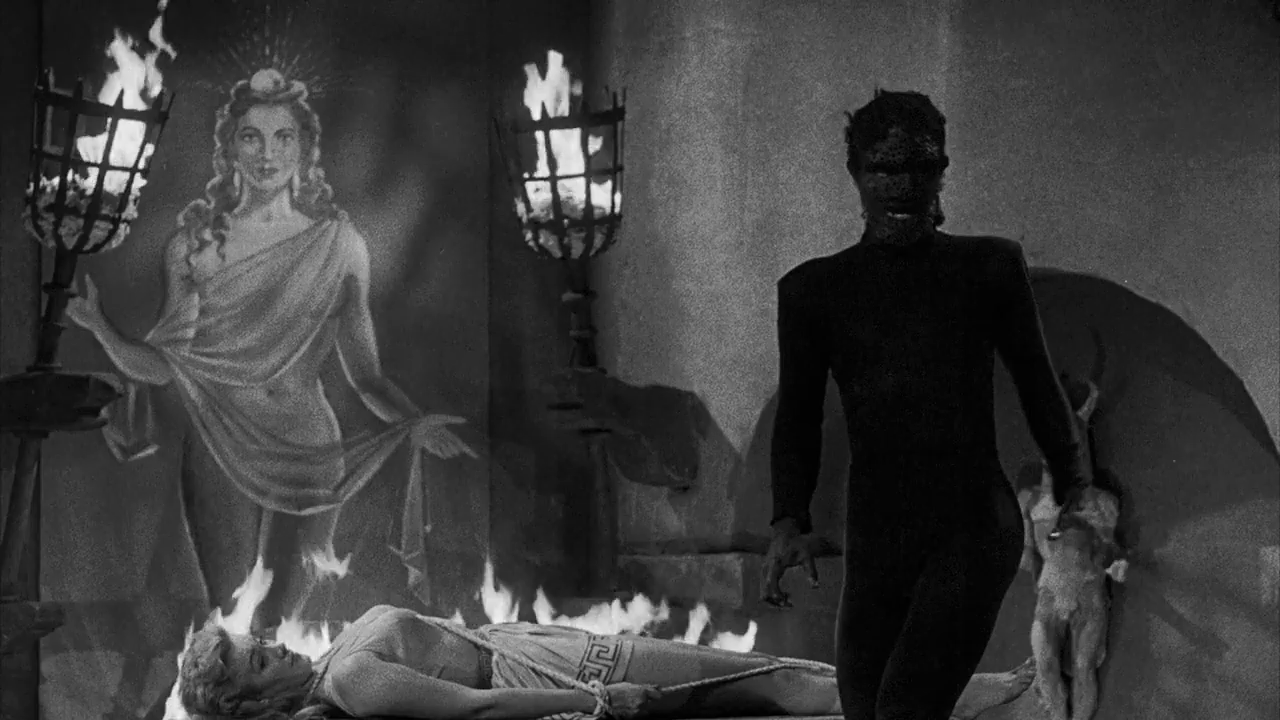
Upon landing on the thirteenth moon the crew quickly begins to explore their surroundings, which looks a lot like your average English countryside, but soon a terrifying scream echoes through the air and our stalwart heroes race to investigate. They find a beautiful girl being threatened by some kind of monster, which one of the crew will compare to a caveman though it looks nothing like one but more as if someone in a black unitard was wearing an Easter Island statue as a mask. They chase off the creature and then Captain Larson (Paul Carpenter) and scientist Luther Blair (Anthony Dexter) are escorted through a secret passage by the woman they rescued, who we later learn is Princess Hestia (Susan Shaw) of New Atlantis, where inside this walled castle Larson and Blair are introduced to a feeble old man named Prasus (Owen Berry) who explains to them that he and his daughters, a large collection of beautiful women in Grecian mini-skirts, are all that is left of the lost continent of Atlantis. Prasus informs them that they must remain until the creature that they encountered, which according to him is indestructible, is destroyed but on the plus side because Luthor saved Hestia her life now belongs to him “It is the law of Atlantis.”


I wonder if it's for stuff like this that men joined the space program.

What follows is one of the most tedious space adventure films I’ve ever come across as not only is the acting quite terrible, with actors giving line ridings as if they’d been handed the script mere seconds before the director called “Action” but practically every scene is horribly paced and drawn out for the simple reason of reaching its theatrical running time of 80-minutes. Making things worse is that the fact that there isn’t a likable character in the bunch, the men are all two-dimensional jerks and the women are nothing but a collection of shapely legs garbed in Atlantean baby-doll nighties, and what passes for dialogue wouldn’t pass muster at a grade school production A Diary of a Wimpy Kid. Other than learning that Prasus and company fled the Earth when Atlantis began to sink – for some reason they must have assumed the whole world was going to sink along with it – we don’t find out much about this society; we never find out what’s the deal with that creature, which Prasus so wants to be destroyed, or why Hestia’s sisters inexplicably decide she must be sacrificed to the Sun God, and then we have Prasus repeatedly trying to drug Luther and Larson which left me wondering "How exactly is them being unconscious make them better vanquishers of the creature?"


This kind of thing would never happen to Captain Kirk.

Stray Observations:

• Doctor Higgins states “We’ve known all along that Jupiter has twelve moons” but with his new telescope he has discovered a thirteenth moon, which is weird considering Jupiter actually has fifty-three moons. Did Higgins get his doctorate off the back of a cereal box?
• This mysterious “thirteenth moon” is hidden behind a fog bank as if it were Skull Island from King Kong, unfortunately, there are no dinosaurs or giant apes in this movie.
• The crew has to avoid a meteor shower which at this point in cinema has clearly become a required scene in space travel movies.
• One of the other rare “special effects” moments in this movie is just stock footage of a V-2 missile super-imposed over a starfield and to say it is less than convincing would be a criminal understatement.
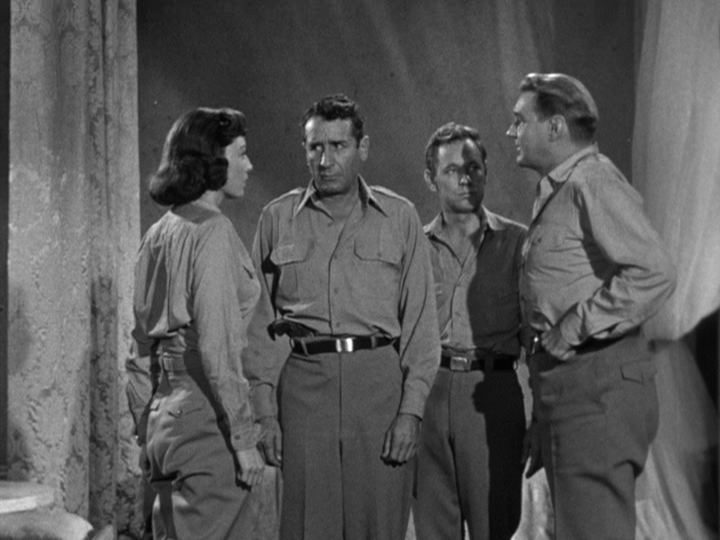
• I’d like to believe that Stanley Kubrick ripped off this film’s extensive use of classical music when he made his space film 2001: A Space Odyssey.
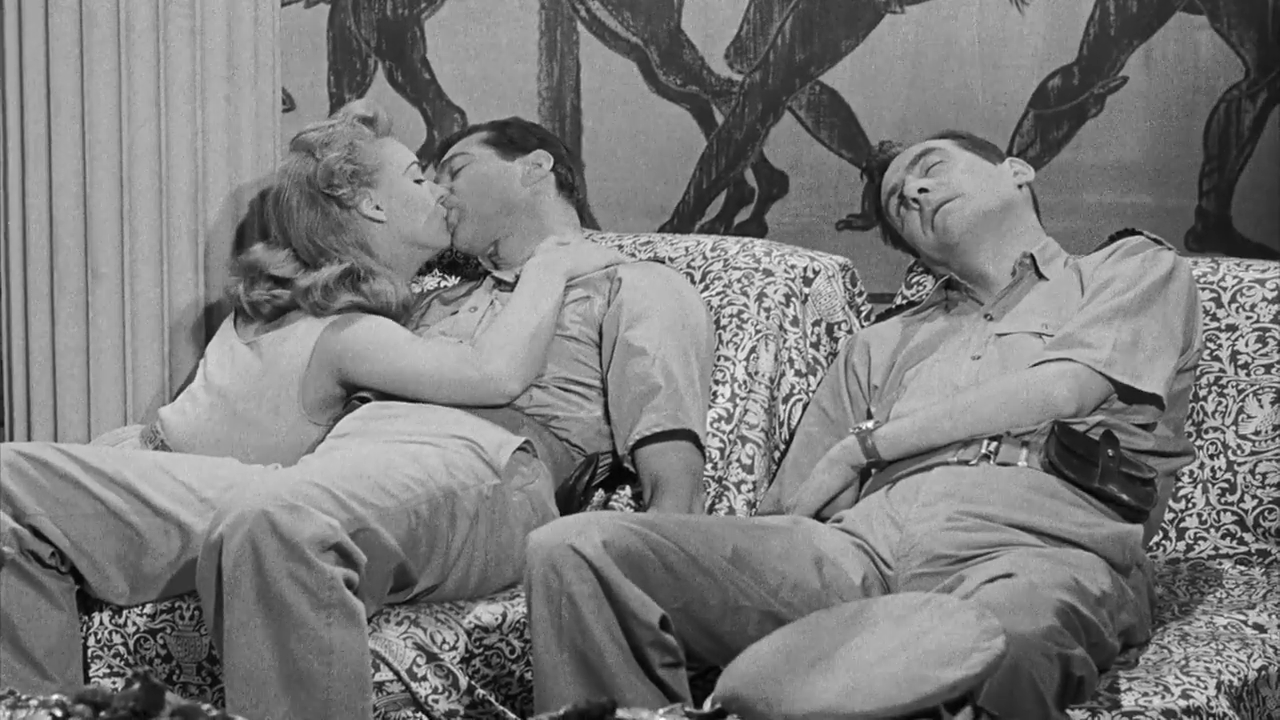
• Once the ship safely lands on the moon the crewmembers all immediately light up cigarettes as if they’d just had sex.


“Was it as good for you as it was for me?”

As ridiculous and moronic as the plot of Fire Maidens of Outer Space was it’s not hard to imagine an episode of the classic Star Trek dealing with the same subject matter, with Captain Kirk and an away team beaming down to a planet full of beautiful women who they learn are descendants of Atlantis, in fact, I’m actually quite shocked Gene Rodenberry never gave us a Space Atlanteans. The terrible acting on display here prevents any semblance of screen chemistry between the romantic leads and when Hestia becomes Queen of Atlantis, after the creature wanders in and kills Prasus, we don’t really care when she states to her sisters that “I'll go with my beloved to earth but I shall return!” all I can say is I hadn’t heard anything so inspiring since General MacArthur vowed the same.


“And don’t hold any pillow fights until I return.”

Many people consider Ed Wood’s Plan 9 from Outer Space to be one of the “worst movies ever made” but I bet you dollars for donuts it had a fraction of the budget this piece of crap had and you can accuse Ed Wood’s film of many things but being boring isn’t one of them while Cy Roth’s Fire Maidens of Outer Space is a meandering monotonous mess that provides only a few unintentional laughs. I have a soft spot for the goofy and often sexist charms of the 50s space adventure films but this particular outing is devoid of any such offerings.


Give me Vampira or Tor Johnson over something like this any day.

Thursday, October 14, 2021

Conquest of Space (1955) – Review

With the success of Destination Moon producer George Pal decided to take that same “realistic” approached they used for their trip to the Moon for this depiction of the first voyage to Mars. Based on the popular non-fiction book Conquest of Space by author Will Ley, which was illustrated by Chesley Bonestell the man who was the technical advisor on Destination Moon, and the with production designs being closely modelled on the technical concepts by aerospace engineer Wernher von Braun and Bonestell's space paintings, what could possibly go wrong?

With such on-set pedigree as Wernher von Braun and Chesley Bonestell that Conquest of Space would turn out to be another great cinematic entry in science fiction must have seemed like a foregone conclusion, unfortunately, for this outing George Pal took all that dry speculative futuristic information from his advisors but then focused on the completely fictional malady of “Space Madness” for the film’s main plot and madness is what we got. The movie opens with one of those self-important narrators informing us that “This is a story of tomorrow, or the day after tomorrow” and how this will be “The last and greatest adventure of mankind, the plunge toward the...conquest of space.”


Cue explosive fanfare and a complete lack of scientific authenticity.

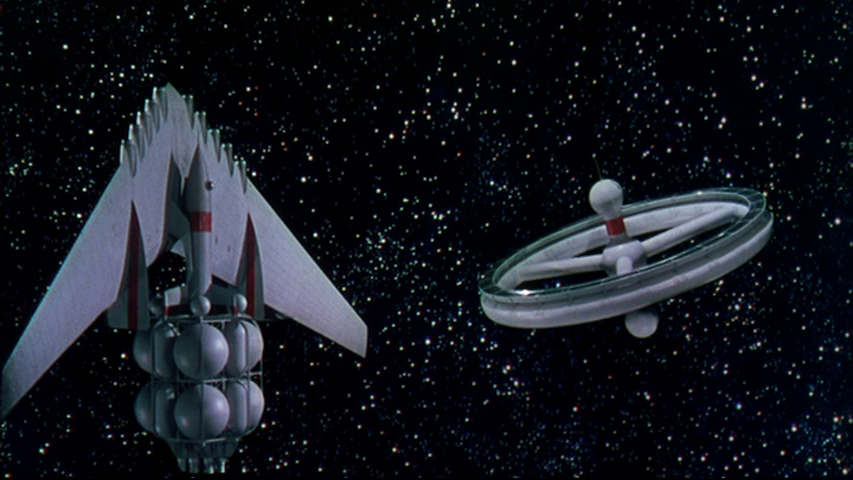
The filmmakers may have stated that they’d incorporated concepts from von Braun's 1952 book The Mars Project but upon watching this film I’m not sure the writers made it past the table of contents, I'd go so far as to say that production designers may have glanced at the book's illustrations and the space station does look cool, but from what unfolds over the films 80-minutes bears very little resemblance to science and has a whole lot more to do with what the film calls “space fatigue” and whether or not man should tread the stars. The basic plot of Conquest of Space deals with Colonel Samuel T. Merritt. (Walter Brooke) who is the commander of orbiting space station known as “The Wheel” and he’s your typical no-nonsense by the book commander who will be a dick to everyone including his own son, Captain Barney Merritt (Eric Fleming), who really has no interest in the space program and was basically shanghaied by his dad for this mission.


“Dad, you won’t go nuts and try and kill us all, will you?”

Barney’s been married only three months and would rather raise a family than explore outer space but his dad denies the request for a transfer to Earthside because not only is he a controlling asshole he’s also a terrible father. But the soap opera family drama of Conquest of Space is the least of this film’s problems as the basic plot doesn’t make a lick of sense, we are told that a group of men have volunteered for a mission to the Moon but when Dr. George Fenton (William Hopper) arrives he states the mission has been changed and that Mars is the new goal. This surprising change in destination rightfully upsets Merritt and Fenton tries to placate him by saying “We only reached the decision yesterday” which is all kinds of bullshit as the ship was specially designed for landing on Mars, and then minutes later he points out that this was always the plan and that the Moon was just a jumping-off point which they are now going to skip. Sure, that’s how space exploration works. We get some bullshit about the need for this “rush to Mars” because mankind’s future depends on finding new resources – which means this film beat Christopher Nolan’s Interstellar by almost sixty years – and then the astronauts who were training to go to the Moon are then asked to volunteer for a perilous journey to Mars.


“I can’t promise that you won’t be eaten by giant space spiders, but are you with me?”

It’s from this point on the film diverges from being a journey to Mars to a journey into madness. Early in the film one of the space cadets suffers from what the doctor calls “Space Fatigue” and he is scrubbed from the mission and this moment was all to set up for Colonel Merritt’s eventual descent into his own madness. The first inkling of this comes from a conversation between the Colonel and his son where he points out that nowhere in the Bible is there mention of space travel and he wonders “What are we -- explorers or invaders?” and when Barney questions “Invaders? Of what, sir?” the response he gets is rather chilling. “The sacred domain of God. His heavens. To Man, God gave the Earth, nothing else. This taking of... of other planets...it's almost like an act of blasphemy.” That Barney doesn’t immediately report this interaction to the station’s doctor places the blame on him for everything that happens henceforth, then again, this shouldn’t be too surprising as that discussion also ended with Barney stating “The universe was put here for Man to conquer.”


Question: Are we supposed to like anyone in this movie?

To be fair, there are some likable characters populating the screenplay, they're just not amongst our leads, rounding out the cast we have Sgt. Jackie Seigel (Phil Foster) as this film’s resident comic relief character, Sgt. Imoto (Benson Fong) who truly believes this mission is required for mankind’s survival, and then there is Sgt. Andre Fodor (Ross Martin) who dies early to illustrate the dangers of space travel, and though he doesn't have a lot of screen time he is still a lot more likable than our two leads. But as if father and son asshats were not enough we also get Sgt. Mahoney (Mickey Shaughnessy) as the dickhead caricature of all drill sergeants and who becomes a stowaway aboard the ship when he is told he can’t go, which is totally a mature and sensible response.  I'm surprised he didn't threaten to hold his breath until he was allowed to come along. While on route to Mars Seigel is subjected to more religious ramblings from the Colonel when looking out the porthole at the approaching Red Planet Seigel comments “Getting bigger all the time, isn’t sir?” to which the Colonel responds “Yes Sergeant, the planet and the blasphemy.”


“Is it too late for me to take a different flight?”

Things really come to a head when during a routine radio check-in with people back at The Wheel the Colonel goes completely off the rails and states “This voyage is a cursed abomination! If it were possible I'd come back now, return the ship to Earth and blow it up, together with all plans in existence for building another! We're committing Man's greatest sacrilege, and we can't stop.” Yet despite this lunatic rant, the crew seems okay with letting the Colonel attempt to land the ship which, unsurprisingly, leads to the Colonel purposefully trying to crash the ship and kill them all. Now, do our intrepid space heroes immediately secure this obviously unbalanced man so that he can no longer endanger himself or others? Certainly not, they actually leave him alone in the ship so that he can attempt further sabotage. It’s at times like this that I have to question "Should be allowed to venture into space?" Barney and his dad get into a brief struggle over a .45 automatic – guns in space exploration are strangely always a thing in these movies – and the Colonel is killed when the gun goes off.


“He died as he lived, a complete asshat.”

Stray Observations:

• Like many space adventure films this one includes the perquisite comic relief Brooklyn guy, in fact, in this film he’s even mockingly called Sergeant Brooklyn. Talk about fully embracing a trope.
• The men training for the mission to the Moon are on a diet of pills yet share the same dining hall with crewmembers who are eating roast turkey and steak which seems like a good way to kill morale.
• People are transferred from supply rockets to the Wheel by simply pushing them out of the hatch so that they simply float towards the station but without any means of self-propulsion, which is a good way to find yourself floating endlessly through space if you miss the station.
• The Colonel questions Fenton as to why the ship has wings when the Moon has no atmosphere, which is something you’d think he would have been brought up before building the thing.
“We will have no unnecessary floating aboard this ship” is possibly one of the greatest lines in science fiction.
• Sgt. Mahoney stows away aboard the flight to Mars with apparently no consideration that there will not be enough supplies for an extra crew member. I guess he’s lucky that Sgt. Andre Fodor gets killed early on by those micro-meteors.
• The jettisoned booster tanks burn up upon entry into the Mar atmosphere but the Martian atmosphere is so thin that there is very little friction to destroy an object falling through it. Now, this being 1950’s science fiction I guess we can let that one slide.


That we get a “White Christmas” on Mars is a little harder to swallow.

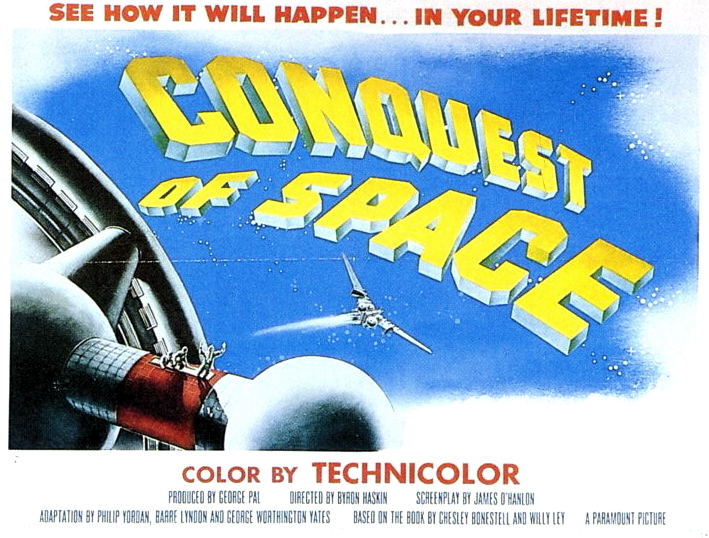
The film’s marketing tagline was "See how it will happen ... in your lifetime!" and after watching this movie I certainly hope this isn’t how a trip to Mars goes down. The film is full of silly unscientific moments, like having people using their bare hands to dig into the soil of Mars which I can sort of forgive, as a product of the time, but it’s the horrible character interactions that are beyond the pale stupid and hard for me to deal with. If the film had dealt with the mental fatigue of a long space voyage that would have been one thing but Conquest of Space has people going space happy left right and center from almost the very first scene. We even get Sgt. Mahoney wanting Barney court-martialed and executed for killing the Colonel, despite this clearly being a case of self-defence.

Note: Chesley Bonestell’s matte paintings are great but not enough to offset the rest of this film’s lunacy, that we barely spend twenty minutes on Mars is also rather disappointing.

That the film deals with something called International Space Authority, with crewmembers from various countries, is actually quite impressive and as this is forty years before the launch of the International Space station that makes this the only speculative piece of science fiction this film gets right. George Pal’s Conquest of Space falls short of what he achieved with Destination Moon and his decision to focus on religious mania is rather odd, but could a story about religion versus science work? Absolutely, but the filmmakers here had neither the skills nor deft handling to pull off such a complicated subject matter and thus we were left with a muddled mess.

Monday, October 11, 2021

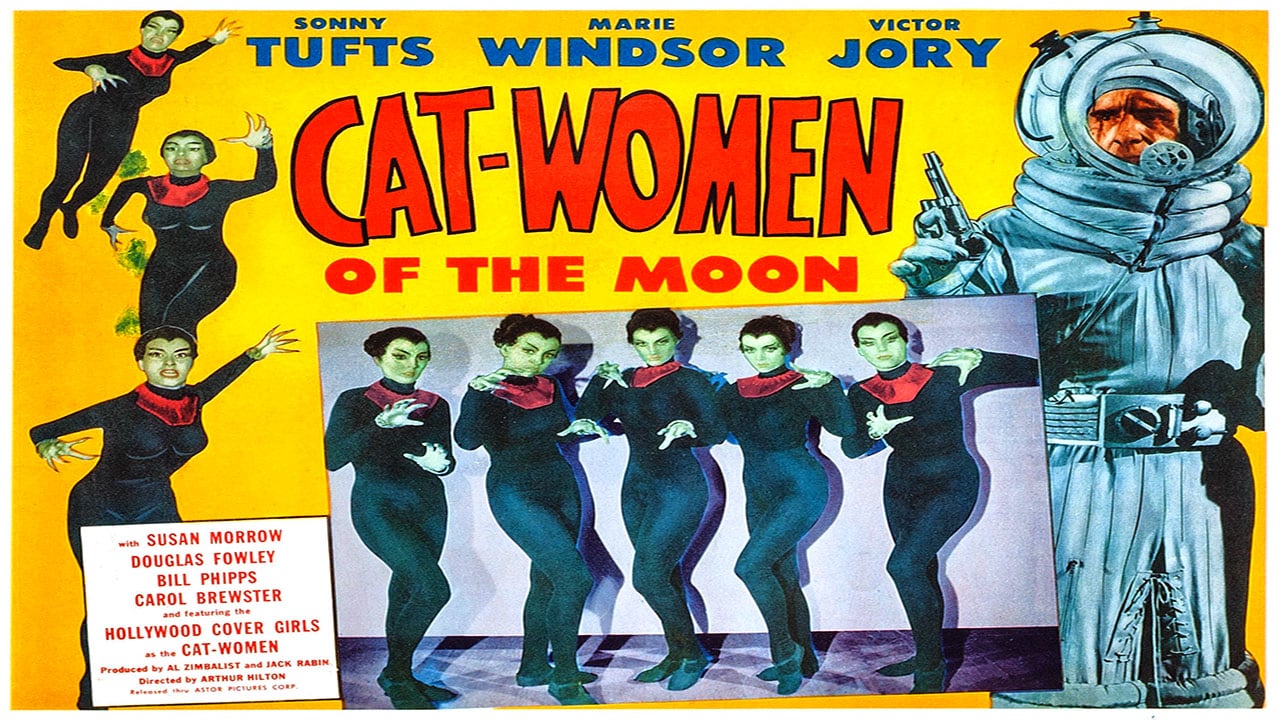
Cat-Women of the Moon (1953) – Review

How disappointed do you think Neil Armstrong and Buzz Aldrin were to find the Moon completely devoid of sexy Moon babes? I’m betting the lack of women is the reason their time on the Moon barely lasted a day, but what would be the cause of such a disappointment? The fact that even the Ancient Greeks thought the Moon was a lifeless rock makes it rather surprising how often Hollywood has depicted it as being inhabited by a variety of alien races yet it was with producer Jack Rabin’s Cat-Women of the Moon that the idea of an all-female race living on a celestial body was first introduced.

The exciting space adventure known as Cat-Women of the Moon was one of those quickie productions that raced to the theatre to cash in on the publics' sudden love for the genre while using sets and costumes from the film Project Moonbase to shave a couple of extra bucks off their budget. What is weird is that these two films were released within one day of each other, but from different distributors, which leaves one wondering about what kind of gentlemen's agreement these filmmakers had between production companies at least as for as it came to borrowing props and the like. Was there some kind of “Good ole boys” network among the independents that allowed for such cooperation? That all said, the sets and costumes all looked incredibly cheap and laughably silly which did add a certain charm to these films.


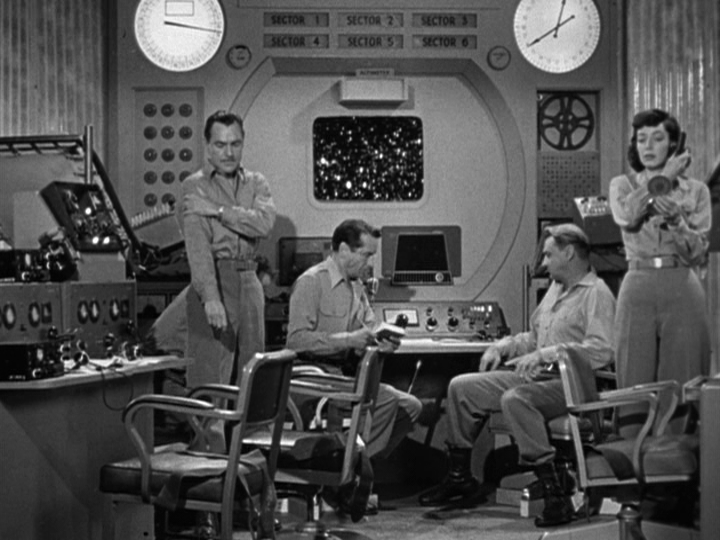
Space furnishings provided by Office Depot.

At just over an hour in length Cat-Women of the Moon doesn’t waste any time in getting to the action as the film starts with our “heroes” already on route to the Moon, with the required shots of the crew struggling through the G-Forces of launch, and we are quickly introduced to the crew of this mission to the Moon. First, we have Commander Laird Grainger (Sonny Tuft) the no-nonsense leader of the mission who insists everything be done “By the book” of course that book goes out the window if there happen to be cat-women on the Moon who have plans to take over the Earth, in that case, he’ll probably let a few things slide. Unfortunately for him, that is exactly what is going on as a race of women living on the moon have just such a plan, worst of all is that this plan involves his girlfriend Helen Salinger (Marie Windsor), who also happens to be the ship’s navigator, and she is being manipulated by a domineering cat-woman called Alpha (Carol Brewster) who has used her telepathic powers to control Helen from afar.

Note: We won’t be getting even implied lesbianism in this all-female society, which is something even current Hollywood films like Wonder Woman seem to have a problem addressing.

What’s interesting about the character of Helen is that aside from being a mind-controlled puppet of the cat-women, who we later learn were also responsible for her becoming a space navigator in this first place as the cat-women realized they’d never be able to get an Earth to the Moon mission that comprised solely of women so they just focused their mind powers on making Helen the best navigator possible, and yet aside from making Helen a pawn of the villains unlike many other films of the time her character is not treated condescendingly or in any way patronized by her fellow astronauts but is accepted as a competent member of the crew. This is a far cry from what we see in films like Rocketship X-M and Project Moonbase where women were clearly depicted as the weaker sex, full of all those pesky emotions that men find so annoying, but even though the character of Helen wasn’t a victim of this sort of blatant sexism in this particular outing we are still dealing with a movie about man-hating women.


“Captain, did Space Command mention the possibility of Amazons on the Moon?”

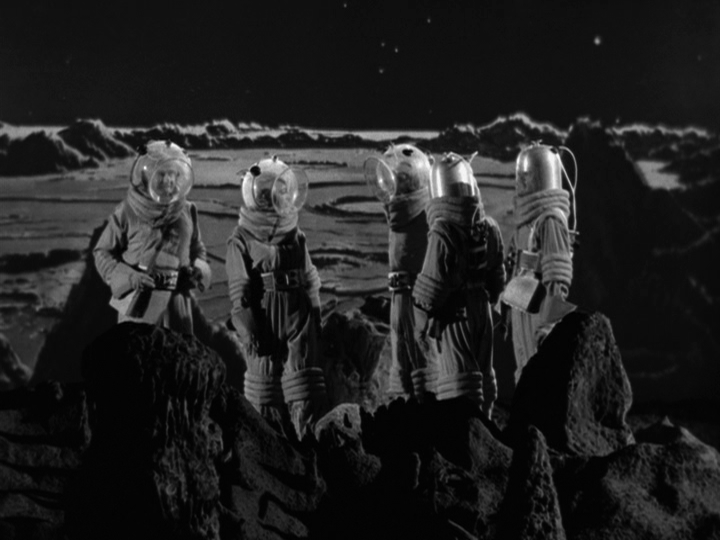
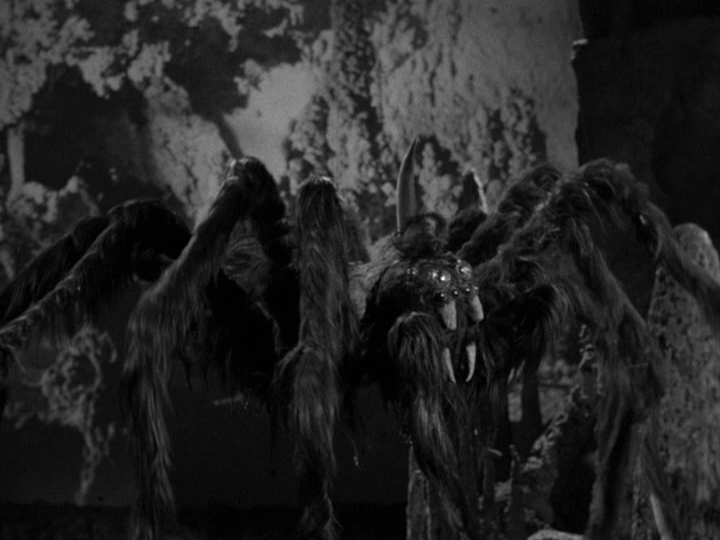
Upon arriving on the Moon the crew quickly disembark to do some exploring and it is Helen who suggests that they should check out a cave she saw while they were landing. Second-in-command Kip Reissner (Victor Jory) tries to point out to his commander that not only is it curious that Helen somehow knew about this great landing spot on the dark side of the Moon but due to the angle of their descent she wouldn’t have been able to spot this mysterious cave entrance at all, pointing out sarcastically “If she can guess the landing spot on the dark side of the Moon I suppose she can guess a cave.” Despite this being a rather relevant observation Laird “pooh-poohs” such reasonable concerns and the crew march blissfully march off into danger, which pretty sums up the rest of this film with Kip decrying to the Heavens that they are in mortal danger at every turn and then such concerns being laughed off as if he were some paranoid nut job. Even the fact of him bringing a gun causes Helen to remark “Why does the unknown always frighten people, why can’t we expect love and friendship instead of death?” yet minutes later a giant spider kind of proves his point.


When space puppets attack!

The two other members of the crew consist of Doug Smith (William Phipps) the radio operator and man voted most likely to fall in love with a cat-woman, and Walt Wallace (Douglas Fowley) the ship’s engineer and man voted most likely to be stabbed in the back while being a greedy idiot, and with his mighty assemblage of space travellers as an example of the best that Earth has to offer it kind of makes sense that the cat-women would think Earth was plum for the picking. But why are the cat-women so set on taking over the Earth? Well, it turns out that centuries ago the Moon began to lose its atmosphere and cat-women's ancestors decided on a policy of Maximum Energy Reduction and by that they mean “planned genocide” but unlike Marvel’s Thanos they didn’t randomly cut the civilization in half they, instead, had the males of the species selectively targeted thus leaving the Moon solely populated by women.


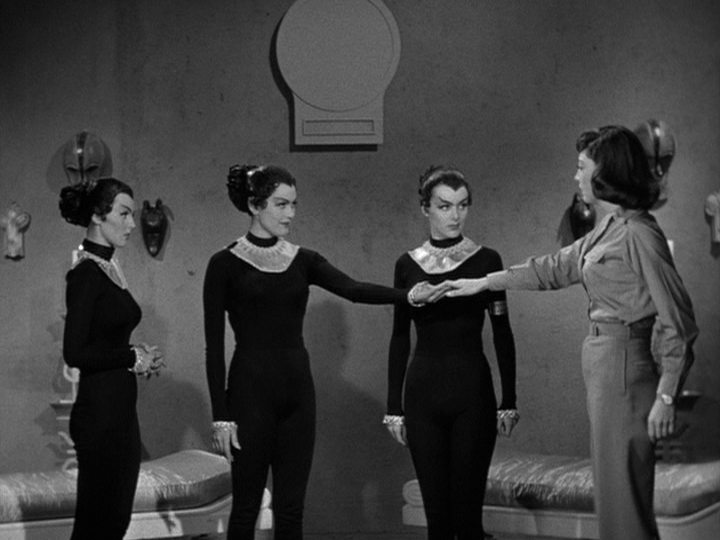
What we have here is a lunar version of the YWCA.

As the years went by it became clear that they had only postponed the inevitable so the Cat-Women telepathed Helen to come to the Moon so that she could take three of them back to Earth where they would use their telepathic powers to take over all of the Earth's women. The only wrinkle in the plan is that Helen is actually in love with Kip, her relationship with Laird having been telepathically manufactured by the cat-women to help her get assigned to this mission, and whenever she is embraced by Kip they lose their mental hold over her. Who says true love doesn’t conqueror all? What follows is a bunch of hijinks surrounding stolen spacesuits, Walt being lured to his death over promised gold, Doug falling in love with a cat-woman and Laird getting really pissy when he learns that Helen prefers Kip over him.


“Sure, the fate of mankind is at stake but that’s my girl!”

Stray Observations:

• The first thing Helen does after their successful launch from Earth is to check her hair and make-up, this is important as you never know who you’re going to run into while in outer space.
• When Helen inexplicably says “Hello Alpha, we’re on the way” when giving her radio broadcast the Commander chalks it up to “Space Madness” which is actually a Hollywood malady and not something ever experienced by an actual astronaut.
• Commander Laid is surprised when Helen tells him the landing site she chose is on the Dark Side of the Moon, but wouldn’t a landing site be something decided upon well before they even launched?
• Liard uses a cigarette to illustrate what would happen to anyone or anything that ventured onto the bright side of the Moon, and we see the cigarette burst into flames, but not only is the idea of people or things burning up from exposure to sunlight on the moon completely wrong how exactly can anything burn when there is no bloody atmosphere?
• Minutes later, in the cave Helen discovered, they deduce it has breathable air by lighting a match, which they see burst into flames, but going by that previous scene things burning on the Moon does not require atmosphere. It’s one thing to be scientifically inaccurate but they could at least be consistent about it.
• When Kip learns from Helen that cat-women plan to murder the men he tells the Commander “We don’t need to stand watch after all” which doesn’t seem to make much sense but I guess being murdered in your sleep would lull the cat-women into a false sense of security.


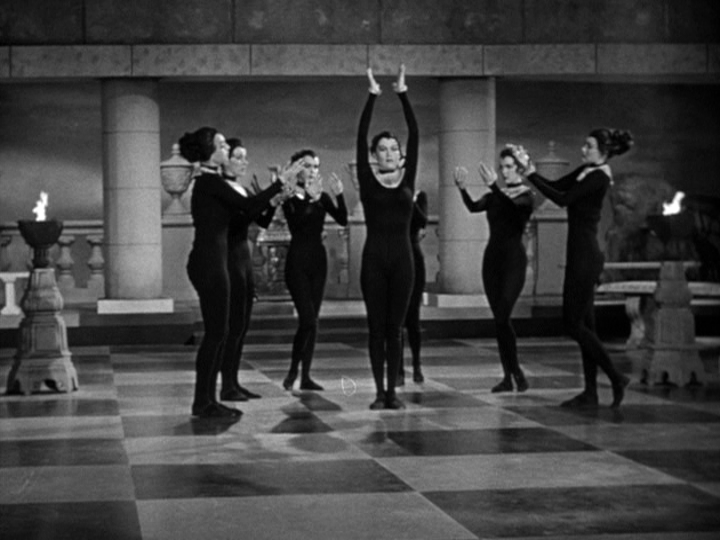
Face the dangers of Interpretive Dance!

Overall, Cat-Women of the Moon is an incredibly goofy little movie that if a little thin on the plot side of things should at least be credited as the birthplace of the all-female civilizations on other planets that continue in films over the years. Sure, we never find out how centuries-old, seemingly immortal race of women, who have master telepathy and teleportation, hadn't yet gotten around to figuring out space travel, but that kind of thing was almost expected in this genre and certainly doesn’t lessen the entertainment value and in my case actually increases it a little. So if giant spider puppets and women in matching leotards are your bag then check out Cat-Women of the Moon as it’s a whole lot of fun.

Thursday, October 7, 2021

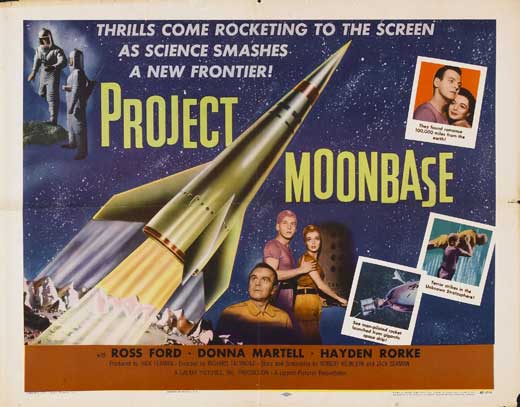
Project Moonbase (1953) – Review

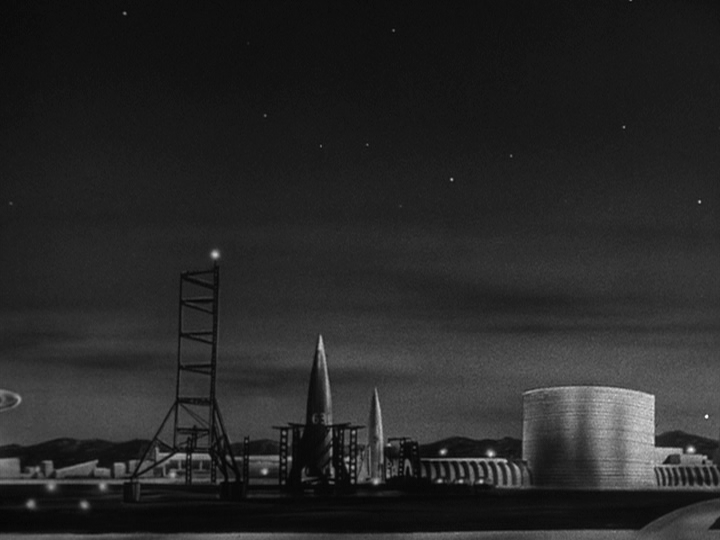
Back in 2019 when then President Trump signed a $738 billion defence spending bill he officially created what is now known as the Space Force, making it the sixth branch of the U.S. Armed Services – one assumes he didn’t know that the Air Force has had a military space program since 1945 – but Trump was not the first to label such agency “Space Force” because back in 1953 science fiction legend Robert Heinlein co-wrote with produce Jack Seaman a film called Project Moonbase in which members of the “Space Force” dealt with not only the dangers of space but that of communism as well.

Set in the distant year of 1970 Project Moonbase tells the story of man’s first attempted orbit of the moon and in this speculative piece of science fiction Robert Heinlein gives us a rather 50s view of the future, a time when men were men and women got the coffee. The opening crawl explains to us that in 1954 due to the prevalence of atom bombs and inter-continental rockets it had become necessary for the United States to establish a Space Station that would act like a “Military guardian of the sky” and we learn that in 1966 the first orbital flight was performed by Colonel Briteis (Donna Martell) and then by 1970 the Space Station had been built and soon “Free men were reaching for the Moon to consolidate the safety of the Free World.”

Historical Note: The first orbital flight was in 1961 by Russian astronaut Yuri Gargin but in 1966 the Americans were the first to orbit the Moon, so I'll give the film credit for being somewhat close on that predicted timeline.

As a film Project Moonbase wasn’t simply a science fiction story that explored man’s desire to venture into space but also a pointed warning about the “Red Menace” though not about aliens from the red planet Mars but of communists and their plot to stop America’s colonization of the Moon and their further domination of space. A group of Russian fifth columnists are tasked with coming up with a plan to destroy the American Space Station within the next two months, a plan that involves finding a person that is being sent to the Space Station who they can replace before launch with one of their own, lucky for them it turns out that Doctor Wernher (Larry Johns) is being sent to orbit the Moon to survey landing sites for future lunar missions and they just so happen to have an agent who is a perfect double.


“Quick, get me the Bureau of Plot Convenience.”

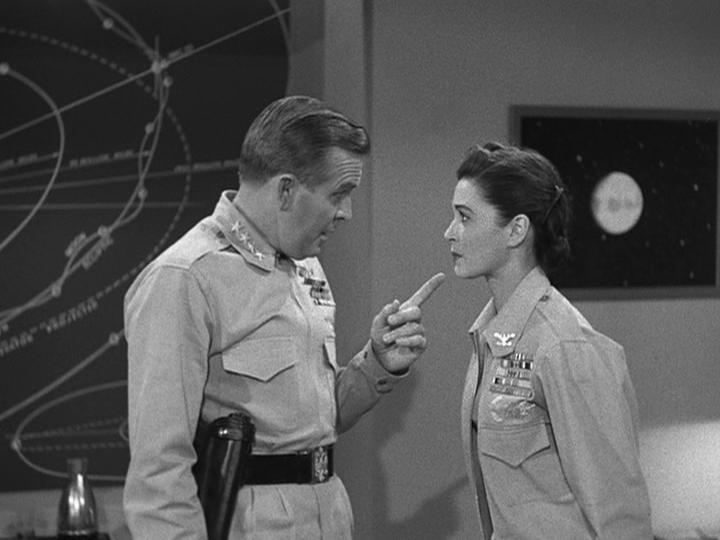
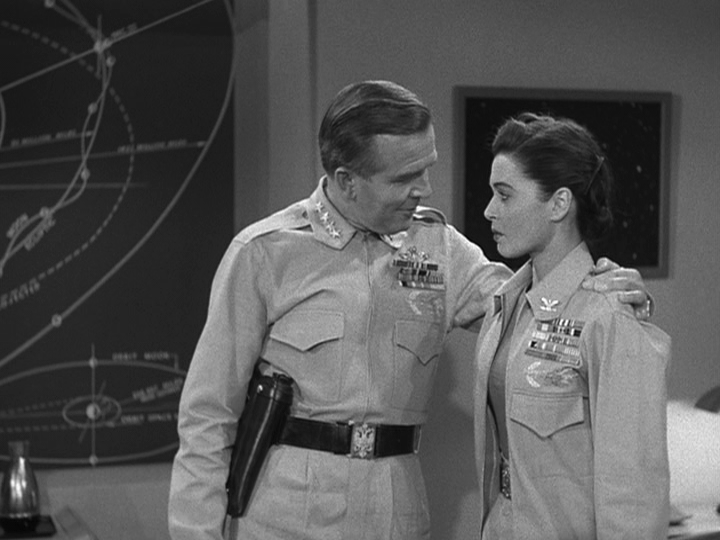
Meanwhile, over at USAF SPACOM, we learn from General Greene (Hayden Rorke) that Space Force is planning a one-shot loop-around the Moon to take photos of the dark side and be a proof-of-concept that it can be done in the future with bigger and fuller rockets, the commander of this mission was to be Major Bill Moore (Ross Ford) but at the last minute word from Washington bumps him to co-pilot in favour of Colonel Briteis. Needless to say, this doesn’t sit well with Moore because not only is Briteis a woman but she’s already bumped him once before back in ’66 with first Earth orbit, apparently, her being 90 lbs vs Moore’s 180 was the deciding factor, and even Greene isn’t all that thrilled and both these jagoffs continue to denigrate Briteis, such as repeatedly calling her “Bright Eyes” against her wishes and stating that her promotion in rank was more political rather than earned. Things get even tenser when Colonel Briteis arrives and is just as upset to learn that Moore is to be her co-pilot “The big lug hates me, he's jealous of me” to which Greene responds “Shut up BrightEYES, and listen to me! Major Moore is the best pilot we've got, better than you are!” and then he threatens to spank her.


This movie’s about space exploration, right?

Women have had a rather sordid history when it comes to science fiction as they were either getting coffee for the men or screaming in terror from whatever bug-eyed alien that was the menace of the day, but with Project Moonbase, we not only have a woman in command but later we learn that the President of the United States is a woman (Ernestine Barrier), something America is still waiting to happen, sadly, that is as progressive as this movie gets as Donna Martell portrays her character like a 15-year old girl and not a seasoned officer in the military, a performance that goes from acting pissy to mooning over the man in the course of the movie's short run-time. But as terrible as Martell’s character is in this movie the men on display are far worse and the sexism is cranked up to eleven with the aforementioned spanking threat being beyond absurd, and when Greene goes off on Briteis it becomes cringe-inducing, especially when he points out that Moore deserves the job more than she does which leads to this glorious rant.

“If he weighed 90 pounds instead of 180, he'd be a Colonel and a public hero and you'd still be a Captain, but you got the orbiting flight, you got the ticker-tape parade and all the rest. Ever since then you've been too big for your britches. Get me?” he then proceeds to tell her “You're not a superwoman, you're a spoiled brat! Anymore guff out of you and I'll turn you over my knee and spank you.”


“Now, how about you make me some cookies?”

I would have love to hear what women of the 50s thought of such callous depictions of the fairer sex, looking back at it now it’s hard to believe that this was even remotely acceptable, yet somehow this attitude not only existed but remained prevalent in science fiction movies for years to come. Now, it should also be noted that this was initially intended as a pilot film for a TV series to be called "Ring Around the Moon" but due to the sudden popularity of science-fiction movies producer Jack Seaman opted to turn this thing into a feature film, adding just enough footage to qualify it as one, but this was done without the knowledge of writer Robert A. Heinlein and he disowned the end result. But why would Heinlein care about this, could it be that he’d hope a long-running series would be a better vehicle to propagate his rampant sexism? Heinlein was the sort of man who would praise the superiority of women while inadvertently revealing that deep down he thought they were clearly inferior to men and needed to be controlled.


“My Futuroscope tells me I have a long wait for equality and respect.”

At just barely an hour with that all-encompassing sexist banter filling up the script there isn’t a lot of time for that whole Russia saboteur plot line – he’s easily exposed by Moore for being an imposter despite Briteis claiming Bill has gone “Space Happy” with his suspicions – and after a brief fight, the fake Wernher is apprehended but not before Briteis accidentally hits the boosters, which saves their lives, but leaves the ship critically low on fuel. Briteis freaks out a bit here, stating “Bill, I muffed it!” despite her actions saving them all, and when she gets upset she apologizes “Sorry for going female on you, Major” and with that thousands of women throw their remotes at the television set.


“I may have saved the day but I still feel like a traitor to my sex.”

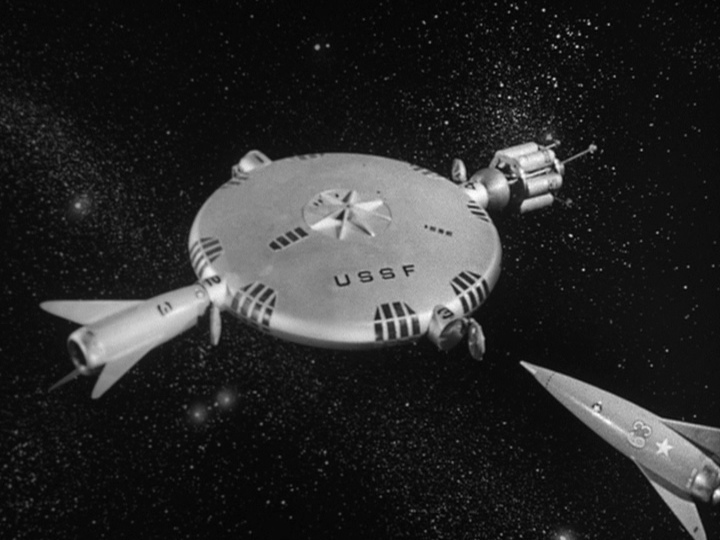
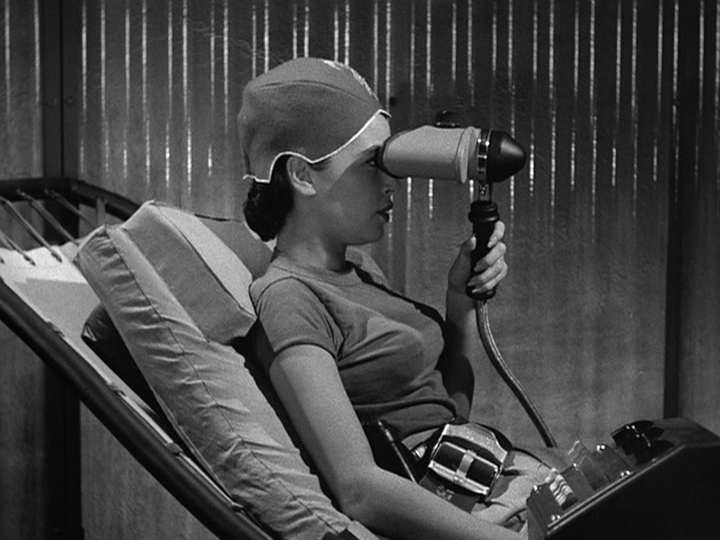
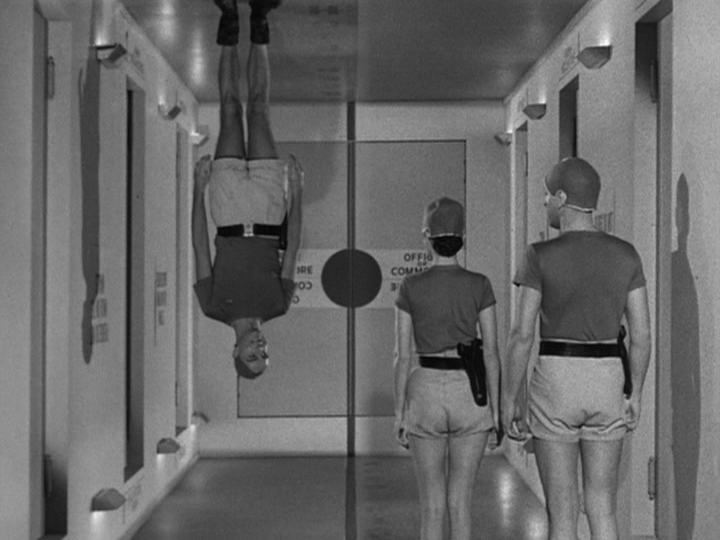
This movie was intended to portray space travel in a "realistic" manner and where our society could be going in the future but as the bulk of the film’s running time deals with the Red Scare and overt sexism there really wasn’t much room for actual science and what we do get is often just as silly and wrongheaded as other contemporary science fictions films that were full of giant space spiders and alien invasions. Explanations of gravity and warp speed litter the script but the depictions of such things were not only hampered by the budget but the writer’s lack of basic understandings of science. For example, aboard the Space Station, the crew must wear magnetic boots to walk around due to the lack of gravity, clearly, the idea of a spinning space station hadn’t happened yet, and we get such fun signs posted stating “Don’t walk on the walls” yet walking on the ceiling was clearly allowed.


The Topsy-Turvy world of Project Moonbase.

Stray Observations:

• General Greene states that the space station’s hull is made of titanium but that would make the use of magnetic shoes needed to walk around in no gravity useless due to the low ferrous quality of Titanium.
• The G forces of the rocket launch causes the male crew members to scream and sweat profusely while Colonel Briteis illustrates that women simply do not perspire at all.
• The Russian imposter is replacing a photographer born in Brooklyn but they didn’t bother to teach him anything about photography or Brooklyn and thus he’s exposed by not knowing who the Dodgers were, which makes him a pretty poor imposter.
• The film ends with our two "heroes" getting married but one must assume that Bill gets promoted to Brigadier General because a wife certainly couldn’t outrank her husband.


“I now pronounce you Space Husband and Space Bride.”

The truly sad thing is that the blatant misogyny found in Project Moonbase wasn't at all that rare and though this is one of the worst examples its themes run rampant across the genre, and I would say that this public attitude most likely have had a rather negative effect on women when it came to joining the military or agencies like NASA, how could a young girl dream of going into space with this kind of thing as an example? Robert Heinlein was the worst kind of liberal as his views on the equality of the sexes was couched in some of the worst pieces of sexism brought to book or screen, sure, Heinlein is responsible for some great works of science fiction and such viewpoints could be said were simply “A product of the time” but this sort of ideology remained in his writings clear into the 80s so that doesn't wash. If taken as a goofy science fiction film from the 50s Project Moonbase does have some charm but as a glimpse into the future, it’s a bloody nightmare.


Where is Duck Dodgers and his Eager Young Space Cadet?

Monday, October 4, 2021

Flight to Mars (1951) – Review

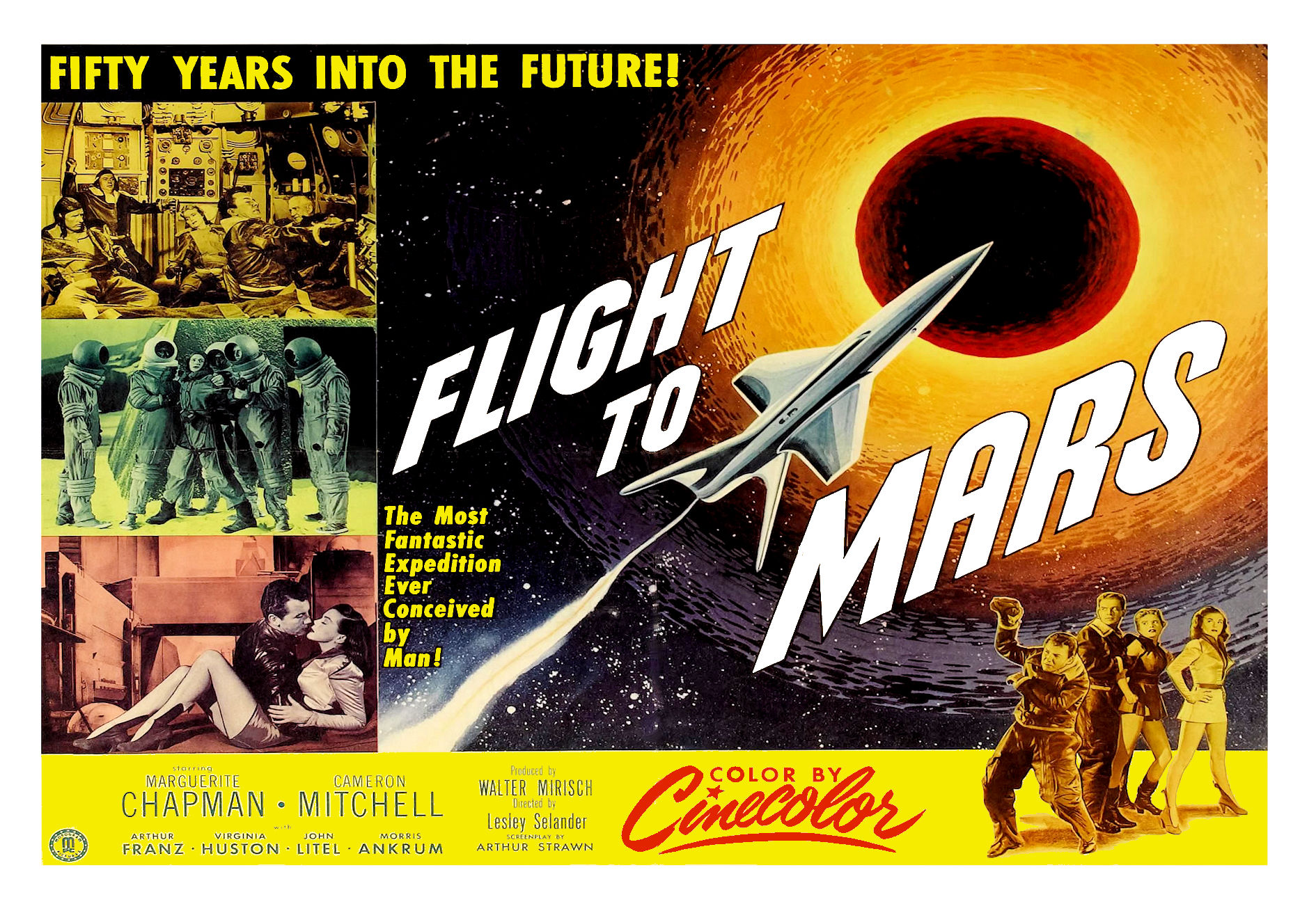
After Rocketship X-M’s accidental and eventually doomed trip to the Red Planet it was up to producer Walter Mirisch over at Monogram Productions to give the public a true “Martian Experience” and with his film Flight to Mars that is just what the public got, right? Well, not quite, what the public actually received was a film that was the end result of a film being shot on an extremely low budget on a mere five-day schedule and with what could best be described as a “borrowed feature" as not only did they lift story elements from previous space films but also their props and sets as well.

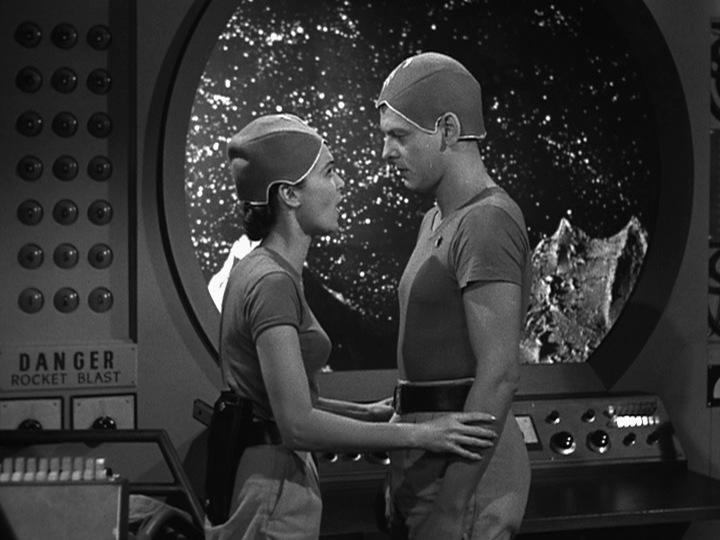
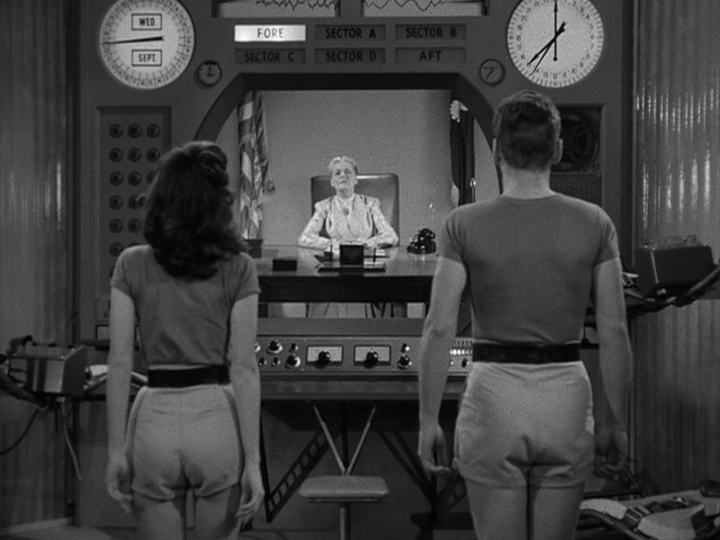
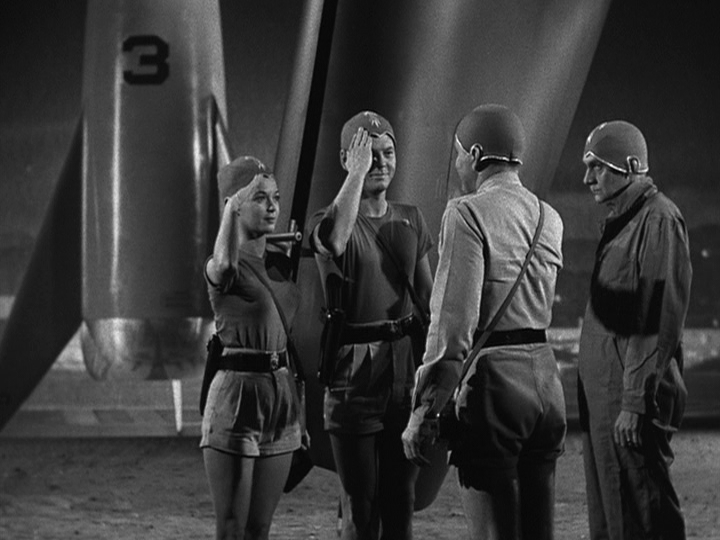
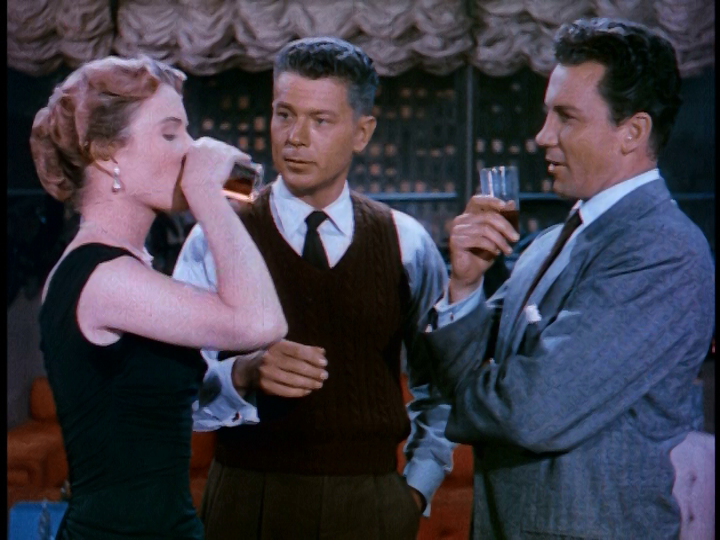
Much of the plot of Flight to Mars was borrowed from the Russian silent film Aelita but where that film had remarkable sets and fantastic costume designs Flight to Mars relied on props from previous space adventure films and a couple of passable matte paintings, and by that I mean they didn't completely suck. This particular version not only pits Earth men against those pesky Martians but Hollywood’s ever flagrant sexism as well, and while the plot dealing with an American scientific expedition to the Red Planet may be the central core of the film one can't help but admit that the “women be crazy” theme is an even stronger element. The basic story surrounds Earth’s first expedition to Mars which is led by physicist Dr. Lane (John Litel) and includes Professor Jackson (Richard Gaines), engineer Dr. Jim Barker (Arthur Franz ) and his assistant Carol Stadwick (Virginia Huston), but what is a little surprising is the inclusion of journalist Steve Abbott (Cameron Mitchell) an ex-war correspondent who is to cover this historic mission. I’m assuming this character was added to crew mostly to be the audience identification figure, someone who things could be explained to, but mostly he’s an Alpha Male asshat who should have been pushed out a portal at the first opportunity.
 

He basically drives women to drink.

What is even odder than stuffing a civilian aboard such a mission is the fact that half of the crew seem rather fatalistic about the outcome, that getting back alive is secondary to actually getting there, which is not a healthy attitude for any mission. When a meteor storm disables their landing gear they have two options, return to Earth and hope for a safe crash landing or continue on to Mars and crash land there, but the fact that they even have this debate at all is patently ridiculous. They have no reason to believe that Mars is livable so they’d basically be dooming themselves to a horrible death due to lack of air and supplies even if they somehow survived the crash landing, but this intrepid crew does decide to continue on to Mars for, you know, science. So they proceed onto Mars knowing that they can never return and I must ask "Does that make sense to anyone?" If the script needed them stuck on Mars with a damaged ship there are certainly better ways to do it than what we got here, just have some crisis that causes them to crash and go from there. Lucky for them it turns out that Mars has a civilization, one that lives in a vast underground city, which is being sustained by life-support systems fuelled by an amazing mineral called Corium.

Production Note: This film reuses the interior flight deck sets from Rocketship X-M and the Martians are wearing leftover spacesuits from Destination Moon.

Like most science fiction films of the time, women and their roles in space exploration were problematic at best and their poor treatment in the genre is certainly handled no better in this outing. We are told that Carol is indispensable to the mission, she's not there just to pour coffee and scream at aliens, but the first thing she asks her Martian hosts upon entering their quarters in this incredible underground city is “Where is the kitchen?” and when she is told that you simply order your food and it is delivered ready to be served she replies “This is a woman's paradise.” Not only is this scene completely sexist and sad but her entire story arc is all about her mooning over Barker like some lovesick puppy dog while he, in turn, completely ignores her and falls in love with the Martian girl Alita (Marguerite Chapman) who is just as smart and as beautiful as Carol is. And if that’s not bad enough, we also have to put up with Steve Abbott constantly hitting on her, calling her a “Prize package” and “Very feminine” which is apparently an effort to make Barker jealous, which leads to Abbott even forcibly kissing Carol at one point, and I'm left wondering "Are we supposed to consider Abbott a good guy at this point?"


Clearly, workplace harassment seminars weren’t part of their space training.

Steve Abbott’s seduction of Carol, in the guise of him helping her win Barker's love, is put on hold when they learn that the kindly Martians have only offered to help repair their ship as part of a their plan to take over the Earth. It seems that the life-giving mineral Corium is almost depleted and that Mars will be a dead planet in about ten years, so the Martian leader Ikron (Morris Ankrum) recommended to the council that once the Earth men's spaceship is fixed they should then immediately imprison them, after that they would use the fixed ship as a template for a fleet of ships that could then evacuate the Martians to Earth and their planned conquest. The problem with this is that we never quite get a handle on the Martian's scientific advancements; we see they have automated meals and flying cars but somehow the secret of interplanetary travel eludes them, seriously? We also don’t see much in the way of advanced weaponry so I’m not exactly sure how they planned on conquering the Earth. Were they hoping to rely on harsh language?
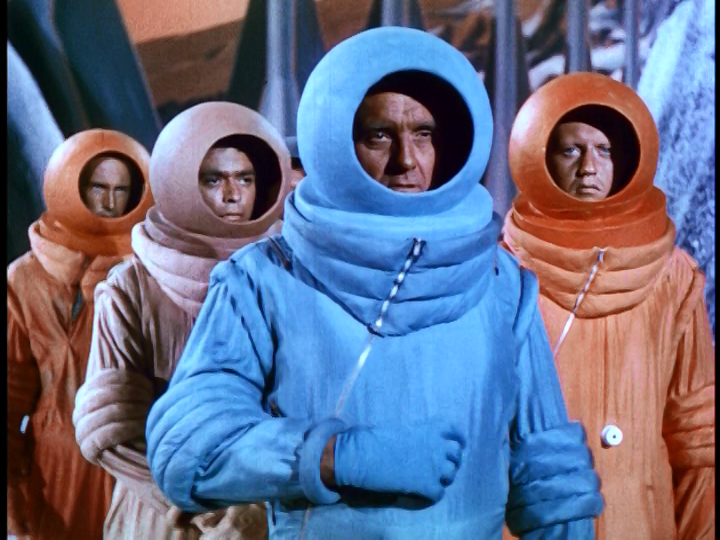
 

Flying cars are cool but how would they do up against American fighter jets?

Stray Observations:

• It’s kind of surprising that so many early space adventure films would throw in crew members with grey hair, in this film we get a 59-year-old scientist who I doubt would have even survived the stress lift-off.
• They board the Rocketship as casually as if boarding a flight to New York City, up a set of steps while dressed in street clothes, I was surprised that no one checked their boarding passes.
• Due to the expense of faking the lack of gravity while in outer space the filmmakers had Cameron Mitchell’s character spit out some nonsense techno-babble about “Getting the magnetic fields stabilizer to equalize the gravitational pull” all to eliminate the need to put people on wires.
• They lose radio contact with Earth about two days into their trip yet radio waves extend without limit in space. Did the screenwriters even crack open a book before writing this thing?
• The ship arrives on Mars after a nine-day trip which is a bit off considering our closest orbit to the Red Planet puts the journey at around six to seven months.
• They “safely” crash land on Mars by going nose first into a mountain, and I can’t stress how dead they would be after that impact.


The Martians would have to rebuild both the ship and the crew.

The only real interesting element in Flight to Mars is the rather unexplored dynamic of the Martian society, with one faction wanting to set up peaceful negotiations with Earth while the majority of the council were all for conquest, but instead of focusing on that, we have Carol crying over the fact that Barker is falling in love with a Martian girl. I’m not against love story elements in my space adventure films but the one on display here is pretty pathetic, when Carol realizes she has lost Barker she runs to her room for a good cry, and is followed by the ever callous Abbot, and the opportunistic jerk he asks her “How many years you've been in love with him?” when she sobbingly tells him “Three years” he responds with this doozy of a question “How many tears do you think it'll take to wash out three years?”


"Maybe I should check out those Martian hotties myself."

Yeah, as a journalist he’s a regular Dear Abby, and the fact that the film ends with them becoming a couple is just sad, not to mention the fact that the credits roll before we even get our "heroes" back to Earth, so we never find out if our planet and Mars were able to come to some agreement or if the Red Planet is actually doomed. Flight to Mars may have been hampered by a low budget but that doesn’t excuse lazy writing and poor characters, and though there are certainly worse examples of the genre Cameron Mitchell’s smug journalist took a lot of the fun out of what could have otherwise been an interesting space adventure.