Blog Archive

Monday, May 24, 2021

Gamera: The Shōwa Period (1965–1980)

With the popularity of Toho's Godzilla film series sweeping the country the people over at rival Daiei Films decided they could use some of that kaiju money for themselves and thus Gamera, the giant fire-eating turtle, was born.  Though many have described the Gamera films as simply rip-offs of the Godzilla franchise that is not really the case, frequent series director Noriaki Yuasa, who helmed all but one of the Shōwa entries, had in mind something more lighthearted and whimsical with its target audience being that of children. 

The first Gamera movie can be easily compared to 1954s Gojira as it was also shot in black & white and featured a rampaging monster, the only real difference is that this one briefly shows that he is a "Friend to all children” and with that, the series quickly embraced a more fantasy element that centred much of the action around a young protagonist and when American International Television made a distribution deal with Daiei Films one of those protagonists would usually be Caucasian, because heaven forbid North American kids not having a white kid to cheer for, and as the series went on it got weirder as themes drifted almost into the realm of faerie tales rather than that of science fiction.
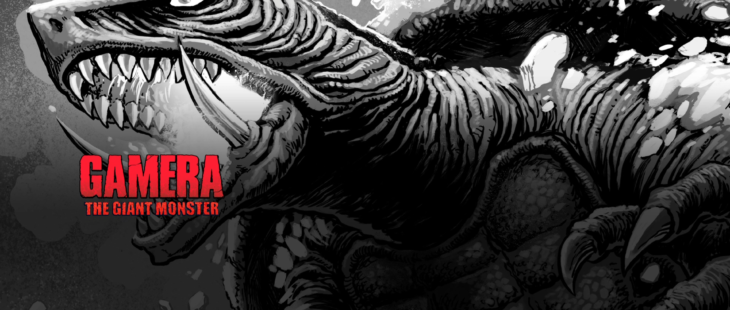
 

Gamera, the Giant Monster (1965)

What happens when an ancient Atlantean giant fire-eating turtle is awoken from its frozen slumber by a nuclear detonation? The obvious answer is Gamera, the Giant Monster, which was Daiei Films' answer to Toho's Godzilla and its bid to cash in on the monster mania sweeping across Japan. Filmed in black and white the first Gamera movie is a rather dark and atmospheric piece that mirrors much of the look that you will find in 1954's Gojira but while both monster movies stemmed from the threat of nuclear bombs this Gamera film wasn't trying for any kind of analogy between its story and that of the bombings of Hiroshima and Nagasaki. The movie does have elements of the Cold War but the overall message of Gamera, the Giant Monster is that differences in ideologies can be set aside for the common good.
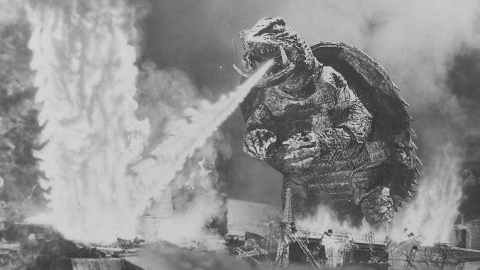
 

This is the common good.

In this first entry in the Gamera's Shōwa period, the big turtle was treated more like a rampaging menace than he was a "Friend to all children," which would be the focus of his character in the later films, in Gamera, the Giant Monster he is simply a creature seeking nourishment while destroying anything that stands in his way. It's not his fault that enflamed cities are the ultimate snack food for him. Gamera is not an evil monster but simply an animal that is "out of time" and looking for a home in a strange new world.

Now, there was a subplot dealing with a turtle-obsessed eleven-year-old boy who latched onto Gamera with a passion bordering on true psychosis and the problem here is that there was pretty much nothing likable about young Toshio as he's basically a tiny sociopath with the delusion that his little pet turtle has somehow turned into a giant fire-breathing monster, and he will risk his life and all of those around him to be reunited with his pal. Throughout the film, Toshio acts like a candidate for the Darwin Awards and your enjoyment of Gamera, the Giant Monster will hinge greatly on how much of this little shit you can stand.
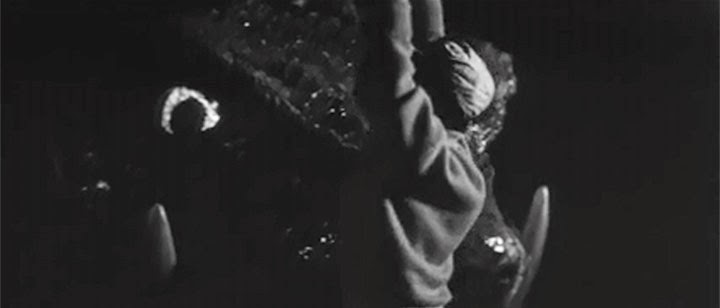
 

"Gamera, please let him drop."

It should be noted that there is a scene in the film where Gamera saves Toshio from falling to his death, from a lighthouse that Gamera himself was in the process of destroying, and somehow this inexplicable act exploded in the collective consciousness of Japanese children and thus the franchise would wholeheartedly embrace the idea that Gamera was a "Friend to all children" whether it be warranted or not.  Overall, Gamera, the Giant Monster is a solid entry in the Kaiju genre and is a worthy contemporary of Godzilla, and though he may not have spawned an equal number of films this first chapter provided viewers with some truly nice visuals, great miniature city destruction and a turtle that rocketed across the sky, so what's not to love?
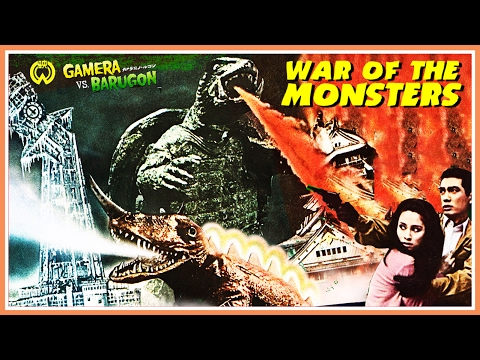
 

Gamera vs. Barugon (1966)

Watching this entry in the Gamera series and one thing is abundantly clear, and it's the fact that Japan just can't catch a break. At the end of Gamera, the Giant Monster everyone's favourite fire-eating turtle had been trapped inside a rocket ship and was blasted into space - cue MST3K theme song - but Gamera wasn't going to spend his life on the desolate landscape of Mars because, lucky for him, an ill-timed passing meteorite collides with the ship allowing Gamera to return to Earth.
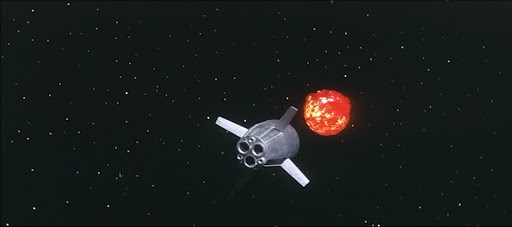
 

Seriously, what are the odds?

Released a mere five months after the first film Gamera vs. Barugon was given the "A" picture treatment due to the success of Gamera, the Giant Monster - strangely, the director of that film was demoted to effects director for this outing - and we'd also have "Gamera, now in colour!" but where the first film consisted mostly of Gamera rampaging across Japan the sequel would launch the "Versus" motif to which each proceeding film would feature a new antagonist for Gamera to fight. For this first sequel, Daiei Films would pit Gamera against Barugon, a gigantic quadrupedal reptile with a long whip-like tongue that could emit a freezing mist to encase his foes in an icy death, but one power wasn't enough for this creature so Barugon also has the ability to use the spikes on his back to project a super-heated rainbow off of his back that could disintegrate missiles and tanks. One has to admit that's a strange power combo but as the Gamera series progressed, things would only get weirder from here.
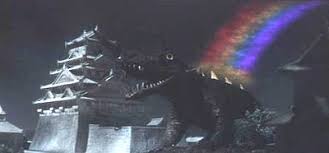
 

Barugon could get a side job as a mascot for a Gay Pride parade.

Where citywide destruction was the main theme of Gamera, the Giant Monster in this film we veer into the domain of Allan Quatermain as we take a trip into the dangerous jungles of New Guinea with a trio of treasure hunters who are looking for a giant opal. This rather odd divergence into the jungle adventure genre, rife with quicksand and deadly scorpions, takes up a great deal of screen time and as fun as it is to shift into The Treasure of Siera Madre territory, is, as greed amongst the hunters leads to death, one can't help but ask the question "Aren't we supposed to be watching a giant monster movie?" Gamera, the Giant Monster is twenty minutes longer than its predecessor but we find Gamera missing for the bulk of the film - though to be fair, the destruction Gamera wreaks on the Kurobe Dam is spectacular - and our terrible terrapin is treated more like a deus ex machina rather than the star of the movie.

Now, in Gamera, the Giant Monster we had an eleven-year-old sociopath with a turtle fixation to contend with but in this entry, we do not yet embrace Gamrea as "Friend to all children" so instead, we have to put up with one of the world's greediest and dumbest villains in cinema history. In the case of this movie, we are saddled with a man who would try and steal a diamond while its' being used for monster bait. There's dumb and then there is suicidally stupid.
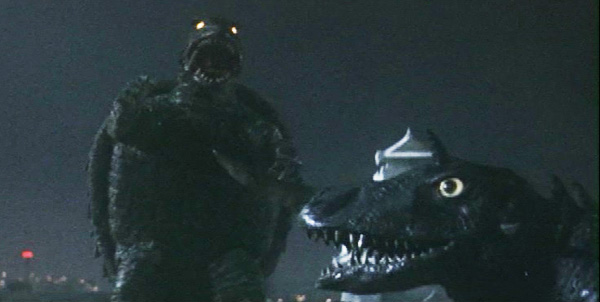
 

"We could fight, or maybe eat some stupid humans."

The focus on the human subplots may put younger viewers off - I actually found some of that jungle adventure stuff to be quite amusing - and the lack of Gamera action is a definite negative, but when we do get our monster smackdown it is pretty damn impressive. Gamera vs. Barugon definitely has a more serious tone than later entries, with its major destruction and a high death toll being rather impressive, but even with its greater budget it was hampered by some serious pacing issues. I still love the hell out of this movie, the lack of a "Kenny" a definite plus, but it falls a little short of being a truly great kaiju entry.


Gamera vs. Gyaos (1967)

With Gamera vs. Barugon receiving less than then stellar ticket sales it was decided that for this third outing pleasing the younger fans was to be the main focus - no longer making kids wait for the big monster fights was an integral part of this decision - and thus from here on out Gamera would most definitely be the "Friend to all children" but this didn't stop returning director Noriaki Yuasa from doubling down on the monster carnage, with Gamera vs. Gyaos not only do we get to see stunning moments of citywide destruction but when the two titular monsters clash purple and green blood will gush forth like water from a bursting damn. Oh, and did I mention that Gyoas is basically a giant bloodsucking vampire bat?
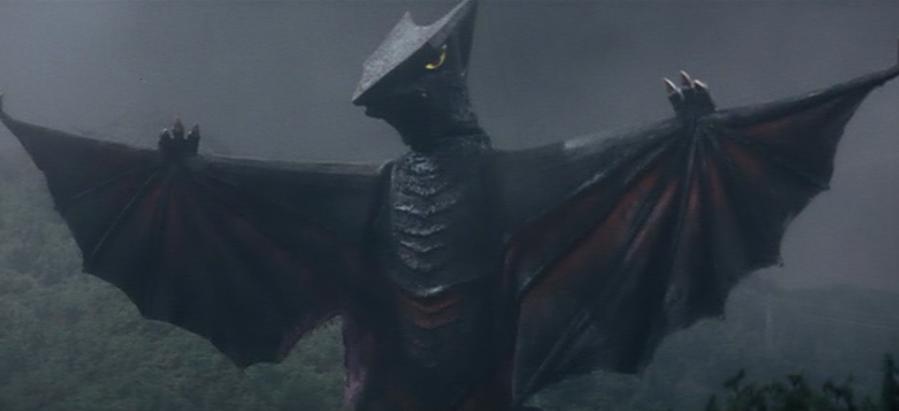
 

"I beat out Christopher Lee for this part."

Gyaos is easily one of Gamera's best opponents and when the two titans clash it truly is a sight to behold and as was the case with most of the monsters in the Gamera series Gyaos has multiple abilities, not only does this flying menace have the destructed wing power of Toho's Rodan but he can also emit a powerful ultrasonic beam than can cut through anything, especially aircraft, like a hot knife through butter. But that's not all, being that fire is something Gyaos fears he can also spray a fog-like gas, from his nipples no less, which works as a flame retardant. It should be noted that making biological sense has never been a factor in kaiju films but the people at Daiei Films seem to go the extra mile in creating fun and ridiculous monster powers.


"Did you hit me with a frickin laser beam?"

Of course, it wouldn't be a proper kaiju film without it having a healthy dose of human drama and for Gamera vs. Gyaos that drama comes in the form of an expressway corporation that runs into problems with the local villagers who are protesting and sabotaging their efforts to build a new expressway. As human greed is a common element in these films the villagers aren't protesting out of some ecological worry, instead, it all stems from their hopes of extorting more money from this big corporation. Is the arrival of Gyaos some kind of Biblical retribution for mankind's folly? And if so, what does this make Gamera?
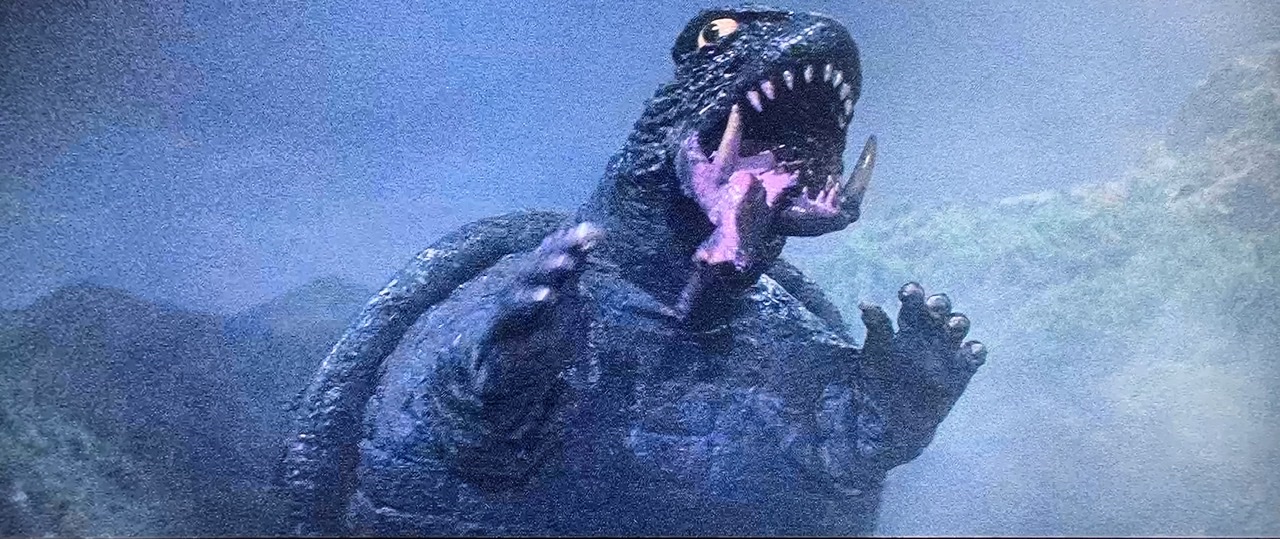
 

"Just call me, Mister Tibbs."

As mentioned, this is the entry that solidified Gamera's "Friend to all children" ethos and in this outing, a young boy named Eiichi is saved from the brutal clutches of Gyaos by the giant turtle, but what is more interesting here is that the filmmakers decided to create a bond between boy and beast and its actually Eichi who comes up with the plan to save the day and not the useless adults.
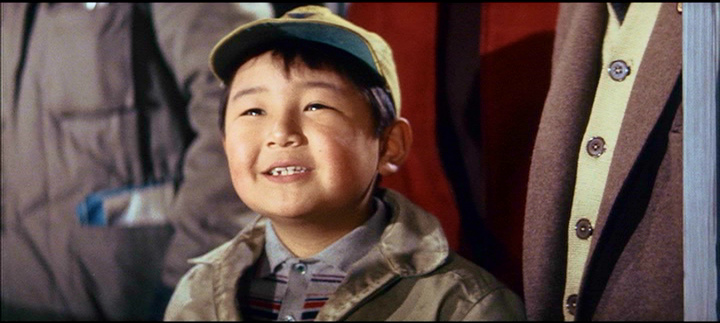
 

True hero or annoying kid, you decide.

Note: The military's plan to defeat Gyaos is goofy as hell, their idea was to immobilize the monster by making him dizzy using the rotating platform on top of a nearby hotel, then lure the creature there via a fountain of artificial blood and while trapped by the centrifugal force the sun's ultraviolet rays would "shrink" Gyaos to death. Yep, that's a goddamn brilliant plan. No wonder they eventually have to turn to a ten-year-old boy to save their bacon.
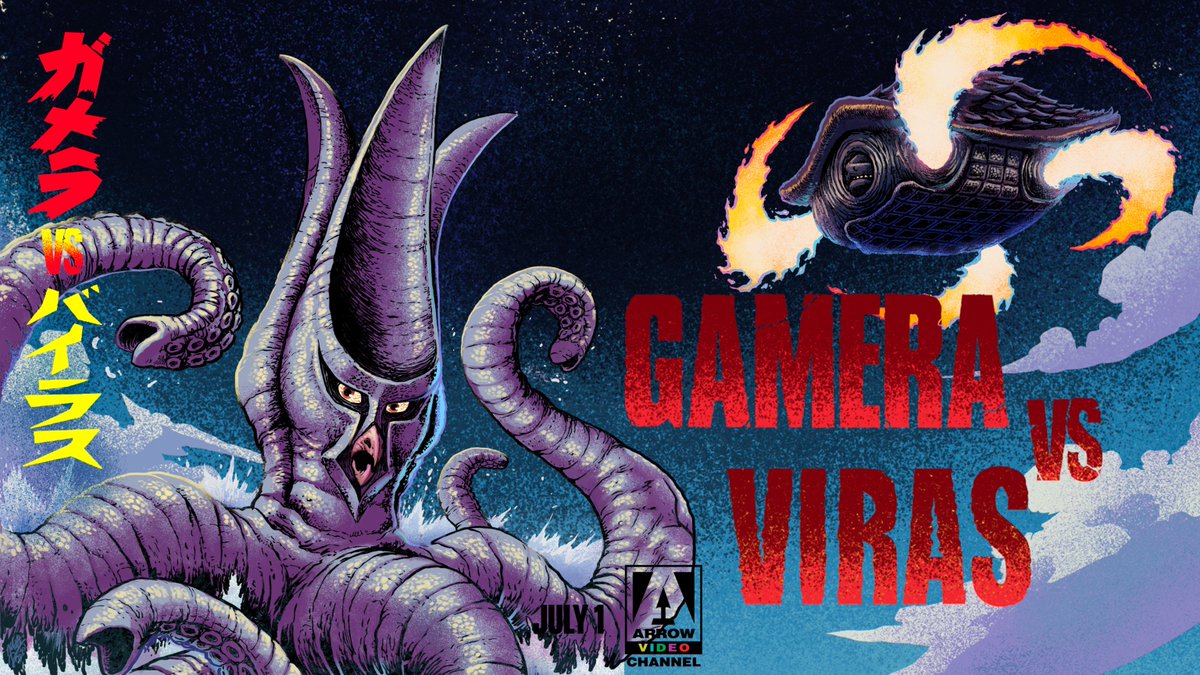
 

Gamera vs. Viras (1968)

It only took four films in the Gamera series for invaders from space to make an appearance, unfortunately, they weren't the true threat to our wonderful giant turtle. The men in charge of Daiei Films were sure that the kaiju boom was about to bust and thus Gamera vs. Viras was given a third of the budget to what had been provided for the previous film, needless to say, this resulted in a Gamera entry of decidedly less than stellar attributes. Basically, to say this film used a lot of stock footage would be a gross understatement.
 

"Get me my agent on the phone."

To be fair, Gamera vs. Viras does have a bang-up beginning, with an alien spacecraft proclaiming their dominance over Earth mere seconds before Gamera arrives and totally wrecks their shit., which results in the aliens initiating plan "B" as in "Kill Gamera, then take over the Earth." As promising as that sounds the movie quickly devolves into a kid-friendly adventure film - a direction the series was always heading towards - with two mischievous Boy Scouts being kidnapped by the aliens as hostages against Gamera compliance, it's up to these two annoying kids to save the day.
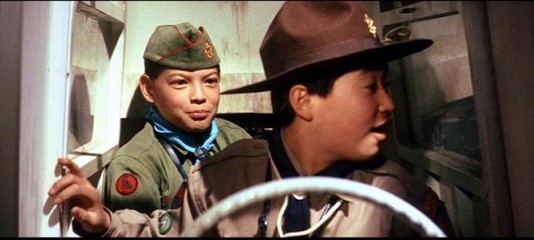
 

I hope you like kid shenanigans cause you're going to get a lot of it.

Here's where things really go wrong. After kidnapping the two kids the alien invaders manage to mind control Gamera, ordering him to destroy a damn and rampage through Tokyo, they then deliver the ultimatum "Surrender the Earth or the two boys die." Strangely enough, the United Nations immediately capitulates - what is the life of millions when compared to a couple of idiot kids - and if not for the actions of these "heroic" Boy Scouts mankind would have been doomed. What's even weirder is after mankind surrenders these invading bastards go ahead and order Gamera to smash more shit.
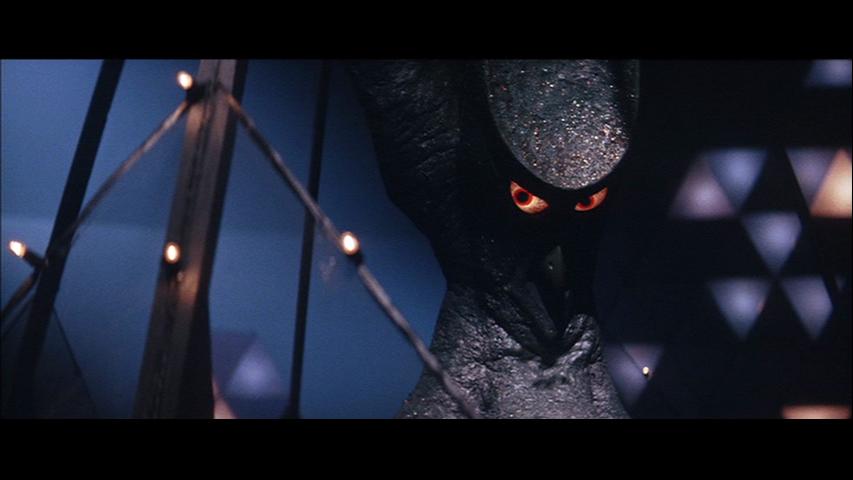
 

Seriously, if you can't trust invading alien cuttlefish who can you trust?

Aside from the annoying kid factor what really hurts Gamera vs. Viras is that about 80% of the destruction we see Gamera unleash is nothing but old footage from previous entries - talk about being cheap- and even the final battle between Gamera and the giant version of Viras was a tad disappointing as the alien monster was clearly out of his league and didn't stand a chance, and how does our big turtle hero win?  Gamera accidentally lands on his back after using Viras as a jet-ski which resulted in him crashing into the beach, landing on his back and allowing the giant squid-like monster to impale his vulnerable belly.
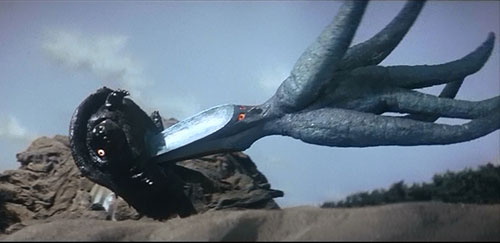
 

It would have been a terrifying moment if it hadn't also been so completely silly.

I will admit that the alien menace in Gamera vs. Viras had a decidedly menacing look to him, those creepy glowing eyes were a nice touch, but when you end up being defeated by a couple of annoying Boy Scouts it's hard to take you seriously. Strangely enough, this was intended to be the last of the Gamera films but the kids simply loved this outing and the film became a huge hit. Clearly, the filmmakers behind Gamera vs. Viras knew their target audience and hit a bullseye with this kid-centric formula, as to how much enjoyment the average viewer will get out of this film, well, that will depend on how much you can stomach a couple of little boys repeatedly screaming, "Gamera, Gamera, Gamera, Gamera!" like the two worst cheerleaders in the universe.
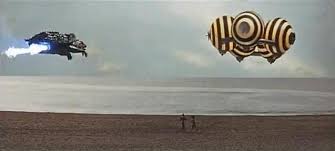
Note: This film is also known as Destroy All Planets but after seeing the film one must admit that particular title comes across as a bit laughable as these aliens couldn't even stop two eleven-year-old boys let alone destroy an entire planet.
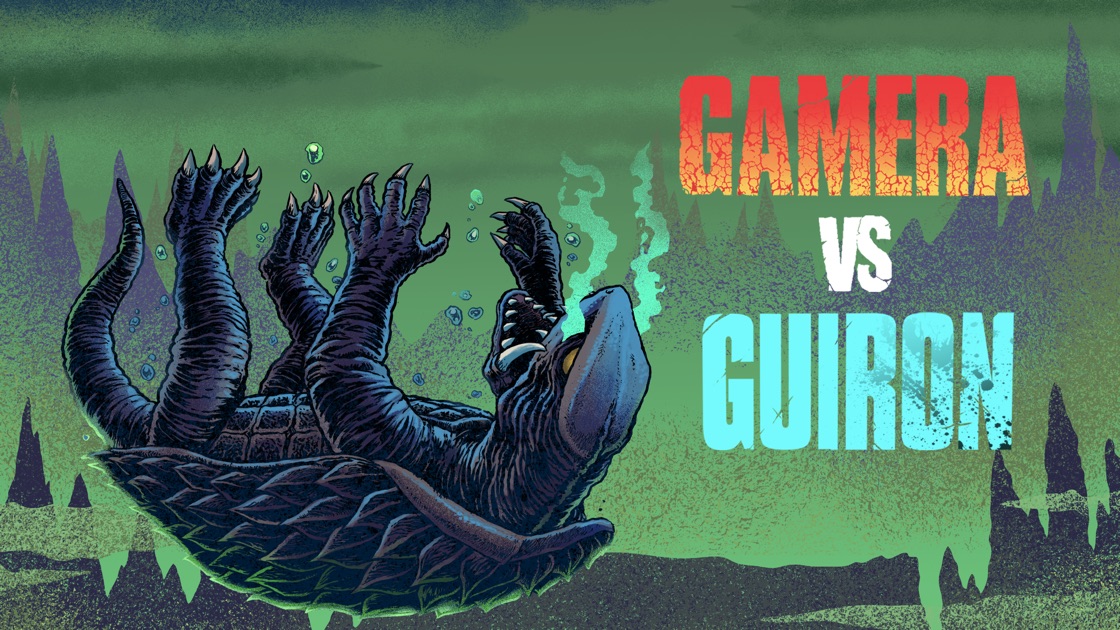
 

Gamera vs. Guiron (1969)

With the surprise success of Gamera vs. Viras, the Gamera franchise was taken off life-support as the heads of Daiei Films quickly ordered another movie starring everyone's favourite fire-eating turtle and as was the case with the previous entry Gamera vs. Guiron would be a kid-centric adventure with a young Japanese boy teamed up with a Caucasian counterpart who would work together to defeat the current threat - in this case, a pair of space women with nefarious plans - of course, the boys would also be helped by Gamera, "Friend to all children."
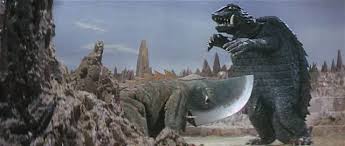
 

But who will help Gamera?

What makes Gamera vs. Guiron a standout entry in the series is in both the grave nature of the threat and the massive on-screen violence, with the whole production having the feel of a Grimm's fairy tale with two young children being lured away to be eaten - this time not by a witch in a cottage made of candy but a spaceship remotely operated by aliens - and it's on a distant alien world that they would have had their little skulls cut open by a bone saw and their brains eaten by the aforementioned space women, "While they're sleeping we'll eat their brains raw."
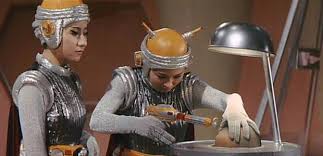
 

If that's not nightmare fuel I don't know what is.

Now, due to the box office success of the previous film Gamera vs. Guiron was also given a slightly bigger budget - though this wouldn't stop the studio from using footage from earlier Gamera films to save a buck - and the production designs of the planet Tera, this unknown tenth planet in our solar system due to its location on the opposite side of the sun, are simply marvellous and gives one the idea of what a science fiction film would look like if made by Dr. Seuss.


“I do not like boy's brains and ham. I do not like them, Sam-I-Am.”

The plot has that dreamlike quality one would expect in a fairy tale but it also has elements from the classic science fiction film Forbidden Planet as we learn that the alien race who, like the Krell, were basically destroyed by their own advanced in technology and overall hubris - somehow creating Space Gyaos which led to their doom - but what is not dreamlike about this film is the more nightmare-like quality in the film's scope of violence. The monster Guiron sports a massive axe-like blade on its head that it uses to brutally sever the limbs of its opponents - it makes quick work of Gyaos, cutting off his head and chopping its body up like a plate of sushi, and as if that deadly blade wasn't enough Guiron also has a pair of four shurikens stored in two circular indents in the blade that it can launch via telepathic waves.
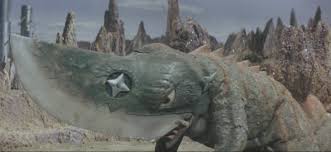
 

A monster with Ninja throwing stars in its head, sure, why not?

The adults in Gamera vs. Guiron are treated as either disbelieving parents or inept comic relief - if not both - and this is because it is the children who are the heroes of this series, they are the friends of Gamera after all, and so any involvement of parents or authorities is downplayed and we spend the bulk of the film with the two boys trying to outwit their alien captors. Overall, this is a very fun entry with the monster fights being as brutal as they are entertaining and the two child actors actually manage to remain engaging rather than annoying.
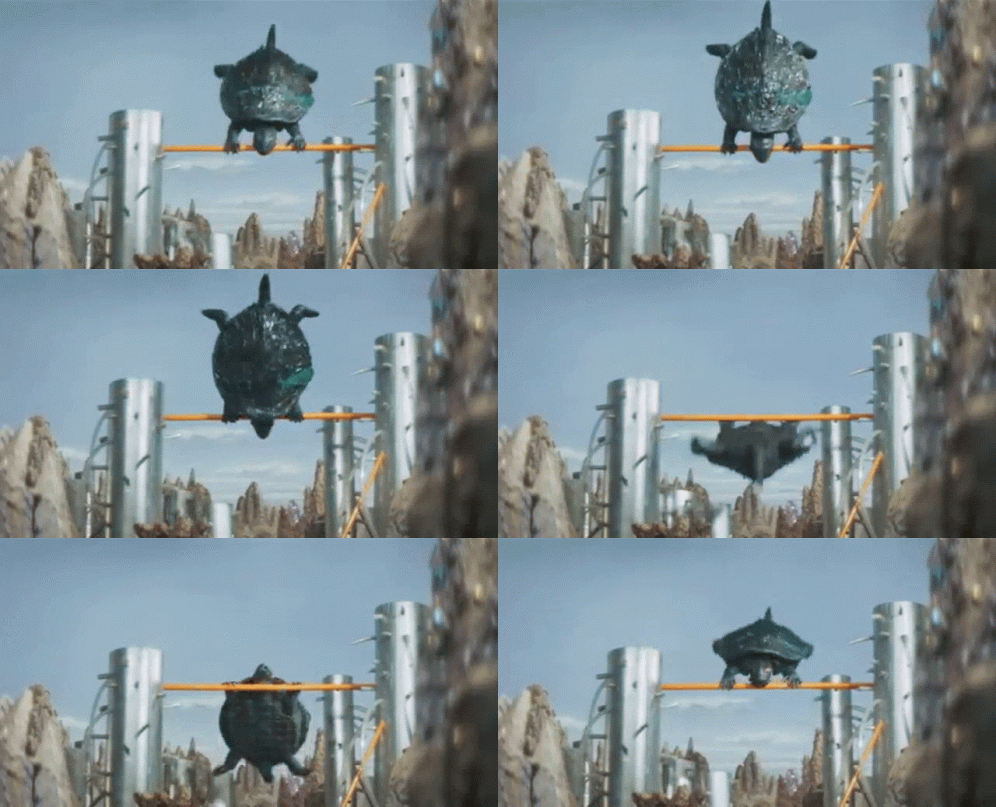
Note: At one point in the film Gamera uses "parallel bars" to launch an attack on Gurion, and it made me wonder, could that moment have inspired such films as Gymkata and Jurassic Park: Lost World?


Gamera vs. Jiger (1970)

You can learn many life lessons watching a Gamer a film such as "*If a giant fire-breathing turtle doesn't want you to remove a supposedly cursed statue maybe you should listen." In Gamera vs. Jiger once again idiot adults ignore the advice of children, who are always right in these movies, and because of this they inadvertently release a terrifying monster onto the world. This sixth entry in the Gamera film series also seems to be a promotion for Expo '70 which was the first World's Fair to be held in Japan and much of the film's action surrounds the various pavilions that are in danger of being smashed during this particular kaiju smackdown - though the fair's representatives insisted that no pavilions be destroyed during the conflict, so the fights all kind of happen next door to the Expo - but what really makes this particular entry standout is Gamera's opponent, a triceratops-like beast that as a virtual arsenal of powers to attack with.
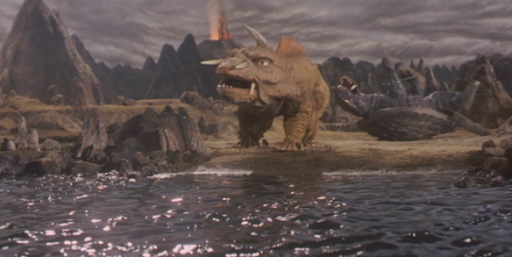
 

Jiger kicks ass and takes names.

As the Gamera series progressed the filmmakers continued to ramp up the powers and abilities of Gamera's opponents, Guiron in the previous film had psychokinesis, which allowed him to launch shuriken at Gamera, but not only does Jiger have the telekinetic - or possibly magnetic - abilities to launch rocks at our heroic turtle it can shoot deadly saliva-compacted quills, which like the shuriken can hamper Gamera's ability to retract his legs and go into rocket mode. Jiger can also fly via jet propulsion - which puts her movements on par with that of rocket-powered Gamera - but its most feared weapon is her "Magnetium Beam" an Ultrahigh frequency ray that is capable of dissolving buildings and ships and even people, reducing them to skeletons. Now, one would think that's a pretty badass threat but the people at Daiei Films weren't about to stop there.
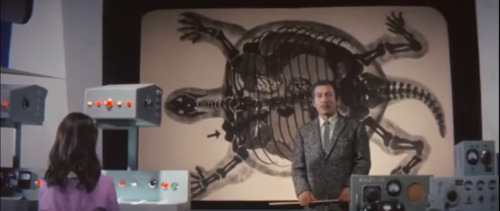
 

Let us take a closer look at Gamera.

As the series progressed the family-friendly nature increased exponentially - despite the amount of violence and gore provided by the monster fights - and in this particular outing our pair of child heroes are even more key to saving the day than in previous films. In something that is right out of Richard Fleischer's Fantastic Voyage, a young Japanese boy and his Caucasian pal must pilot a min-sub into Gamera's body to save him from Jiger's most despicable attack. But what could be worse than an ultrasonic beam that dissolves everything in its path? Well, it turns out that Jiger has a stinger-like ovipositor which it uses to implant its young inside the giant turtle. Yikes, that's horrifying! This embryo will then parasitically live off the host up until it hatches, turning Gamera into a lifeless husk in the process, and it's up to the kids to pilot their little sub down Gamera's throat to do battle with Jiger's progeny. If that is not one of the craziest things to ever be proffered forth in a Kaiju movie I'll eat my hat.
 

Gamera vs. Zigra (1971)

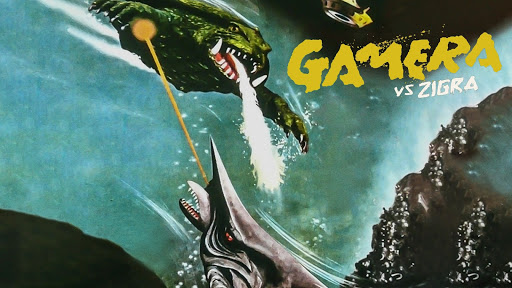
It's kind of sad that an alien race can travel hundreds of light-years, easily wiped out a moon base, then instigate earthquakes of immense magnitude that devastate the planet but can then be easily defeated by a couple of preschoolers. Director Noriaki Yuasa's desire to make the Gamera series into a collection of childlike fantasies is fully realized in Gamera vs. Zigra as not only do the kids in this movie save the day, with the help of Gamera of course, but the adults are even more moronic than in previous entries.
 

"Tom, I hope we don't get alien probed again."

Much of the film's running time is spent on an "alien" spacewoman trying to kill the two children because "They know too much" but aside from knowing that the Zigrans are incredibly lame I'm not quite sure what the kids know that is such a threat to the invaders. I was okay with adults being portrayed as narrow-minded idiots in these films, so that the kids could be the ones to save the day, but when your villain can be thwarted by a five-year-old throwing a stuffed toy, well that's not just sad that's downright embarrassing.


"If they find out items made of plush are my only weakness, I'm doomed.

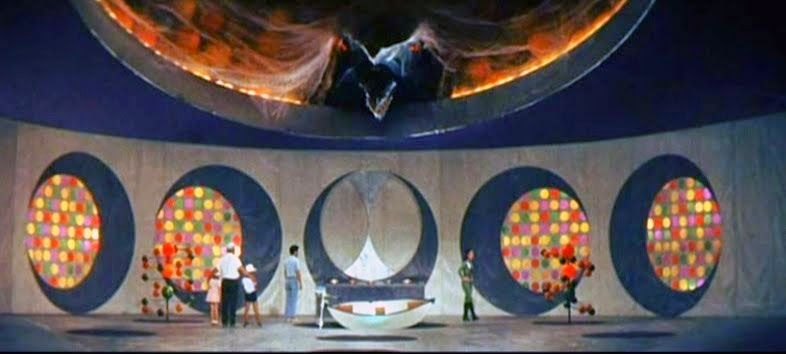
Also, that the Zigran spaceship looks like something Willy Wonka would have designed does not help to create a menacing threat, with its glowing gumball aesthetic it's just too goofy looking to be taken seriously, and when we finally get to the kaiju fight between Gamera and the alien monster Zigra it's just as disappointing.

Now, the idea of an aquatic alien race fleeing their polluted ocean world so they could then take over Earth's oceans and have us land-dwellers as a primary food source is not a bad plot - it gives the film a nice ecological bent to it - but the ineptness of the invasion cannot be overstated and the alien threat is undercut at every turn. I'll grant that when Gamera destroys the Zigran spaceship and a giant space shark pops forth that was pretty cool but Zigra just didn't have the cachet of the previous monsters.
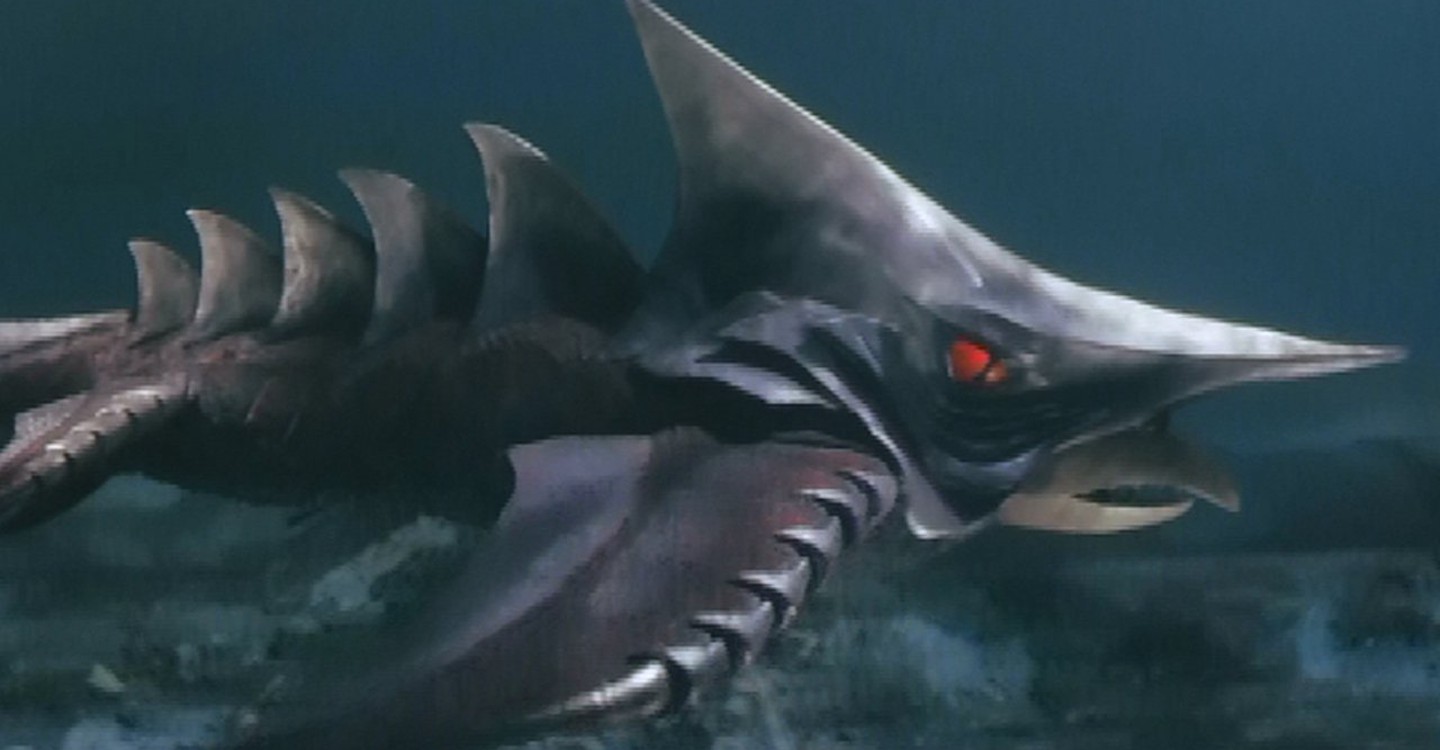
 

"He's got lifeless eyes, black eyes, like a doll's eyes."

It's clear that at this point Daiei Films was running out of money - in fact, they were about to declare bankruptcy - and thus we don't get a lot of kaiju action in this movie and all that earthquake destruction the Zigrans apparently unleashed on the world will have to happen off-screen. Then to add insult to injury we get the standard armchair quarterbacking from the two kids - as they scream out fighting advice during the climactic battle - and this is where we see that, apparently, Gamera needs to be told to use his fire-breath against an aquatic monster. "Sigh"

In this penultimate entry in the Showa Era poor Gamera literally jumps the shark as he tries to save both Sea World and Daiei Films, sadly, he was only able to do one of those things, basically, Gamera vs. Zigra works better as a commercial for Kamogawa Sea World than it does as a kaiju film.


Gamera: Super Monster (1980)

This would be the final entry in the Shōwa Gamera series, what with the studio going bankrupt after the release of Gamera vs. Zigra back in 1971, but with Gamera: Super Monster they had every intention of pulling their struggling production company out of debt, unfortunately, this was not to be the case as the film failed drastically at the box office and Daiei Films filed for bankruptcy about six months later and we Gamera fans were left with nothing more than "Clip Show" rather than a true Gamera feature film.
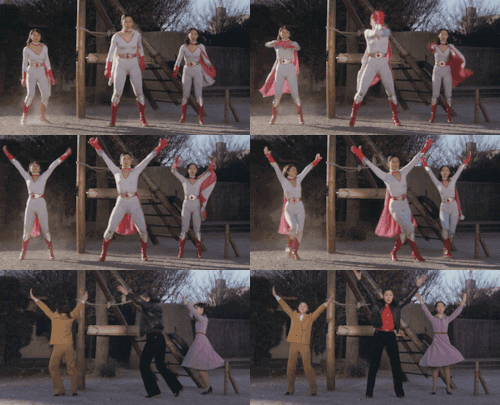
 

It does have synchronized superheroes, so that something, right?

The movie opens over some nice space paintings - why spend money on visual effects when van art can be just as effective - where we are then treated to a "Star Destroyer" suddenly lumbering across the screen, and it's here where one would love to point out to the filmmakers that "If you have almost no money in your budget maybe don't try and rip-off Star Wars in your lame attempt at reviving your franchise."
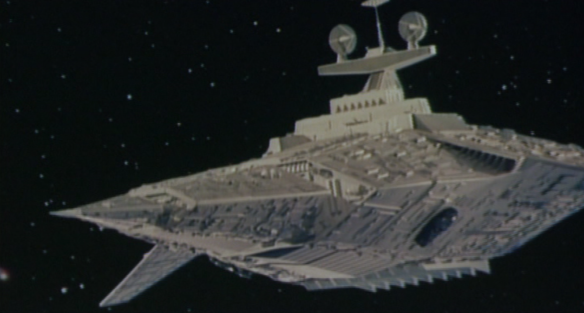
 

"A long time ago in a broke movie studio far far away."

The framing device that makes up this film collects all the library footage of Gamera's previous battles together as part of a plan by an evil alien named Zanon, who has come to enslave the Earth only to find his diabolical plans thwarted by a young boy who has a special connection with Gamera. There is also a trio of resident superheroes - Spacewomen in spandex and capes hiding out on Earth - but they are pretty much useless as their principles do not allow them to have weapons or harm any living thing.  Just what one hopes to find in a giant monster movie, pacifist superheroes.

What is even weirder is that not only does this film incorporate every big monster fight from Gamera's history - this movie featured only about two minutes of new Gamera footage - but we also get this kid's bizarre ass dreams where we see Gamera flying alongside the Space Battleship Yamato and the Galaxy Express 999 and are given no explanation for any of this.
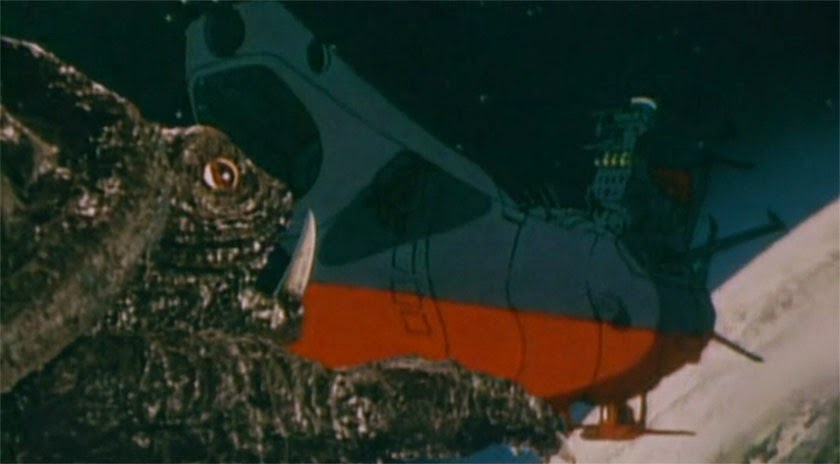
 

In a crossover that nobody asked for.

Aside from harvesting every second of stock footage Gamera: Super Monster provides us with some of the worst video effects brought to screen, stuff that wouldn't pass muster on an episode of H.R. Pufnstuf or The Bugaloos, and when we aren't being subjected to such lame visual assaults we have this stupid little kid banging away on a Casio keyboard with his version of the Gamera March.
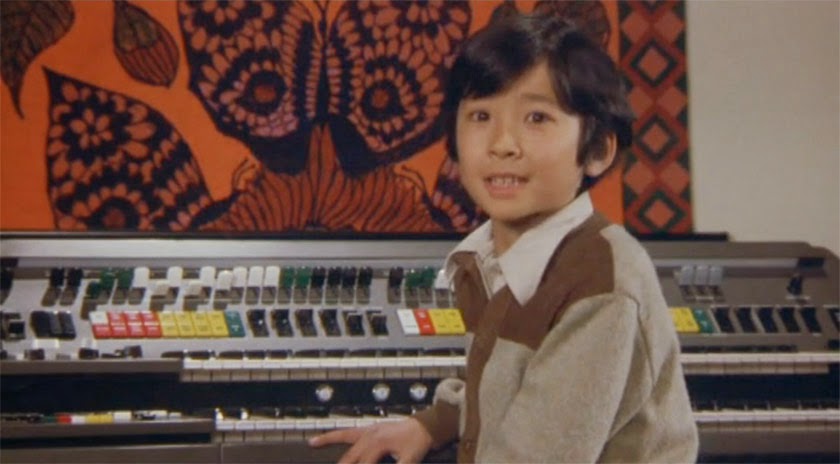
 

Could this kid be the one behind the lyrics to the Gamera March?

I'm not saying Gamera: Super Monster is simply a worthless cash grab but what I want to make clear is that this was an incredibly painfully cobbled-together travesty that fails at humour, drama and action - setting aside the excellent stock-footage sequences that make up the bulk of the film - while consistently providing some of the worst acting ever witnessed in the history of cinema, all to bolster up a plot that barely exists. We can only thank the gods that in fifteen years the Gamera Heisei period would be born and with Gamera: Guardian of the Universe everyone's favourite giant turtle would get the respect he deserves.

Thursday, May 20, 2021

Extreme Prejudice (1987) – Review

Movies centering around a lone man standing up against insurmountable odds is about as old as cinema itself, from Westerns to cop dramas the stoic hero has been a staple of the film industry, but then in the 80s that simple concept met the action genre and that combo exploded onto the scene with the likes of Cobra, Predator, Escape from New York and The Road Warrior but one gem of that genre, which has often been overlooked, is Walter Hill's action flick Extreme Prejudice, a film that was basically a salute to Sam Peckinpah and included a cast of some of the best badass actors in Hollywood.

What makes Walter Hill’s Extreme Prejudice unique in this often tread category is that we find ourselves in a story that is somewhat beyond your simple Gary Cooper type dynamic, with the hero standing up to face alone the arriving villains, because in this film we have more a less a triangle of antagonists. On the one side you have Major Paul Hackett (Michael Ironside) who leads a clandestine black ops group of presumed dead soldiers called a Zombie Unit, consisting of Hackett and five U.S. Army sergeants; Master Sergeant Larry McRose (Clancy Brown), Sergeant 1st Class Buckman Atwater (William Forsythe), Staff Sergeant Declan Patrick Coker (Matt Mulhern), Sergeant 1st Class Charles Biddle (Larry B. Scott) and Sergeant 1st Class Luther Fry (Dan Tullis Jr.) – you must admit that was one killer of a team – and then we have the white-suited drug kingpin Cash Bailey (Powers Boothe), who had moved to Mexico to work as a police informer but decided that being a drug baron, with his own personal army, was a better fit for his life goals, and finally, we have Texas Ranger Jack Benteen (Nick Nolte) who pretty much embodies the stoic taciturn lawman.


“I don't give up my gun without somebody gettin' hurt.

This cast of characters, all heading for a dynamite collision with each other, would be enough for most films but Extreme Prejudice isn’t just your standard action film as it also throws in the added wrinkle that Jack Benteen and Cash Bailey were once childhood best friends, who simply took different career paths – think The Third Man only with a lot more testosterone – but to complicate things, even more, is the fact that Jack’s current love interest, Sarita Cisneros (Maria Conchita Alonso ), was once Bailey's woman which is an element that will, of course, make for an intense final showdown. It should also be noted that this was a good action year of María Conchita Alonso as she also starred in the Arnie action epic The Running Man, unfortunately, in this outing she briefly appears to be a strong woman, calling Benteen on his “I don’t want to talk” macho bullshit, but then when she hops across the border with Bailey and we are left wondering “Were those her only options, an emotionally distant Texas Ranger or a drug kingpin?”


“Can someone tell me, is online dating a thing yet?”

When watching a Walter Hill film and expecting to find well-rounded female characters is like hoping to find a Dairy Queen in the middle of the Sahara Desert, it’s just not going to happen as with most of his films they are about macho swagger dickheads and women are either trophies or damsels in distress, or in this case, both. To be fair, this movie isn’t really about the love triangle between Jack, Cash and Sarita so we can’t get too angry with Hill’s thin depiction of the film’s sole female character, and sure, it would have been nice if the script gave us some reason for her decision to give up her life in the States to become a drug lord’s girlfriend, but Extreme Prejudice is all about tough men with big guns and even bigger attitudes. Walter Hill is also not one to leave out one of the best action hero clichés and thus Jack has a mentor/father figure in the form of Sheriff Hank Pearson (Rip Torn), who is brutally killed in an ambush set-up by Cash.


Sometimes having the villain steal your girl just isn’t enough motivation.

Much of the plot of Extreme Prejudice has to do with Michael Ironside’s character supposedly needing important documents located in a Texas bank which leads to him and his team staging a daylight bank robbery to retrieve them, which, in turn, leads to many “A-Team” moments as each member of the Zombie Unit performs various tasks to pull off their precision plan, of course, things go wrong and Nick Nolte stumbles onto the group and discovers that according to official files these guys are all “dead” American soldiers, but when he learns that they also want Cash Bailey dead he’s able to set aside the fact that bank robbing is still a crime, even if it was government-sanctioned, which in this case it wasn't because, to a surprise to no one, Michael Ironside is a rogue agent with his own agenda.  Who can blame Nolte for not passing up on the chance of crossing the border with a group of badass gunmen who can help him get his woman back and take Powers Boothe down?


“Did I mention I tied your girlfriend to some railway tracks?”

It should be noted that the film was originally 45 minutes longer, with a large part of it dealing Michael Ironside working alongside CIA agent played by Andrew Robinson, as they set-up this big covert op, but after the first screening Hill realized his film was a bit lopsided, commenting "It looks like it's starring Michael Ironside, with Nick Nolte, Powers Boothe, and Rip Torn supporting him, so we're gonna cut the whole Andy Robinson side of the film out." Much of the missing 45 minutes would most likely have made Ironside’s betrayal of his team a little less out of leftfield, then again, when you cast someone like Michael Ironside you don’t need a lot of backstories, basically, he was your go-to character actor when you needed a clear cut villain, and I’m sure Nick Nolte was happier with the end result.


“No way am I letting you steal my movie, pardoner.”

Of course, this wonderful macho nonsense was all orchestrated simply to lead our cast of characters across the border to have a remake of that infamous final gun battle in Sam Peckinpah’s The Wild Bunch, and I must admit Walter Hill does not disappoint in that area and the shootout in Cash’s Mexican fortress is all that action fans could ask for and more, all in shot in gloriously blood-soaked slow-motion, but what makes this film stand out from many of its contemporaries is Hill’s exuberant directing style and a cast of really great actors. Extreme Prejudice may have been poured out of the same mould as the classic Western but Walter Hill infused the genre with some high octane car chases, explosions and shootouts that will keep viewers at the edge of their seats and then bring it all back to basics with a high noon face-off between the hero and the villain.


“Do you think I have all day to fuck around? It’s after four.”

Michael Ironside brings the perfect amount of mystery and menace to his role as a crooked CIA operative but it's Powers Boothe who truly steals the show as the evil yet wonderfully charismatic drug lord, and you can truly buy that he and Nolte were once best friends, which makes the ending if not tragic at least a little sad.  Cash was a pretty despicable human being and deserved to get filled with lead but his ultimate fate still left you a little off-center and much of that comes from how fun it was to watch Boothe in the part. Extreme Prejudice may have come from the same mould that brought us the like of The Dirty Dozen and The Wild Bunch but at its heart, it’s basically Gary Cooper from High Noon up against Harry Lime from The Third Man and somehow that mix works perfectly here. If you haven’t seen this Walter Hill classic do yourself a favour and track it down, you won’t regret it.

Monday, May 17, 2021

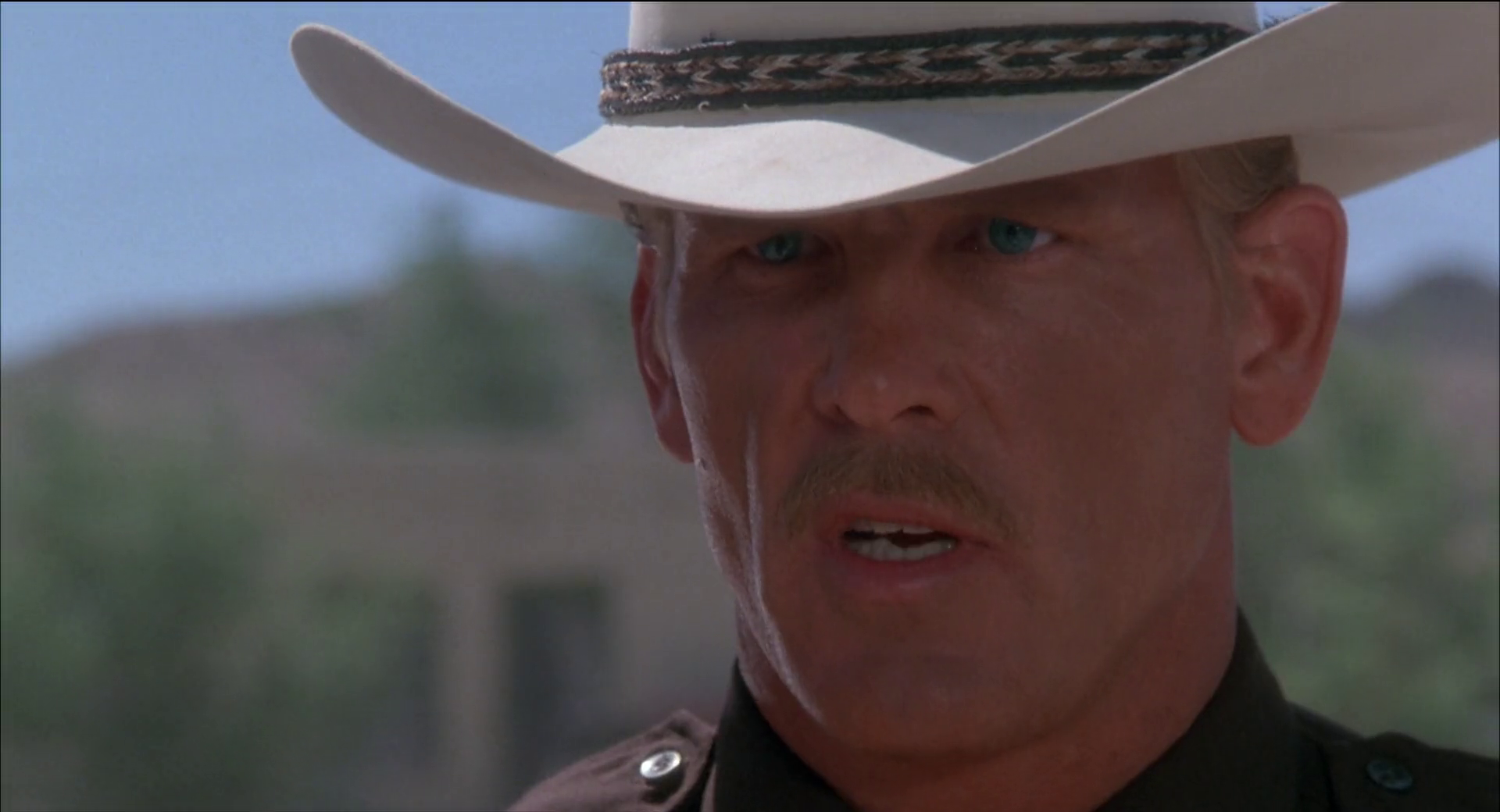
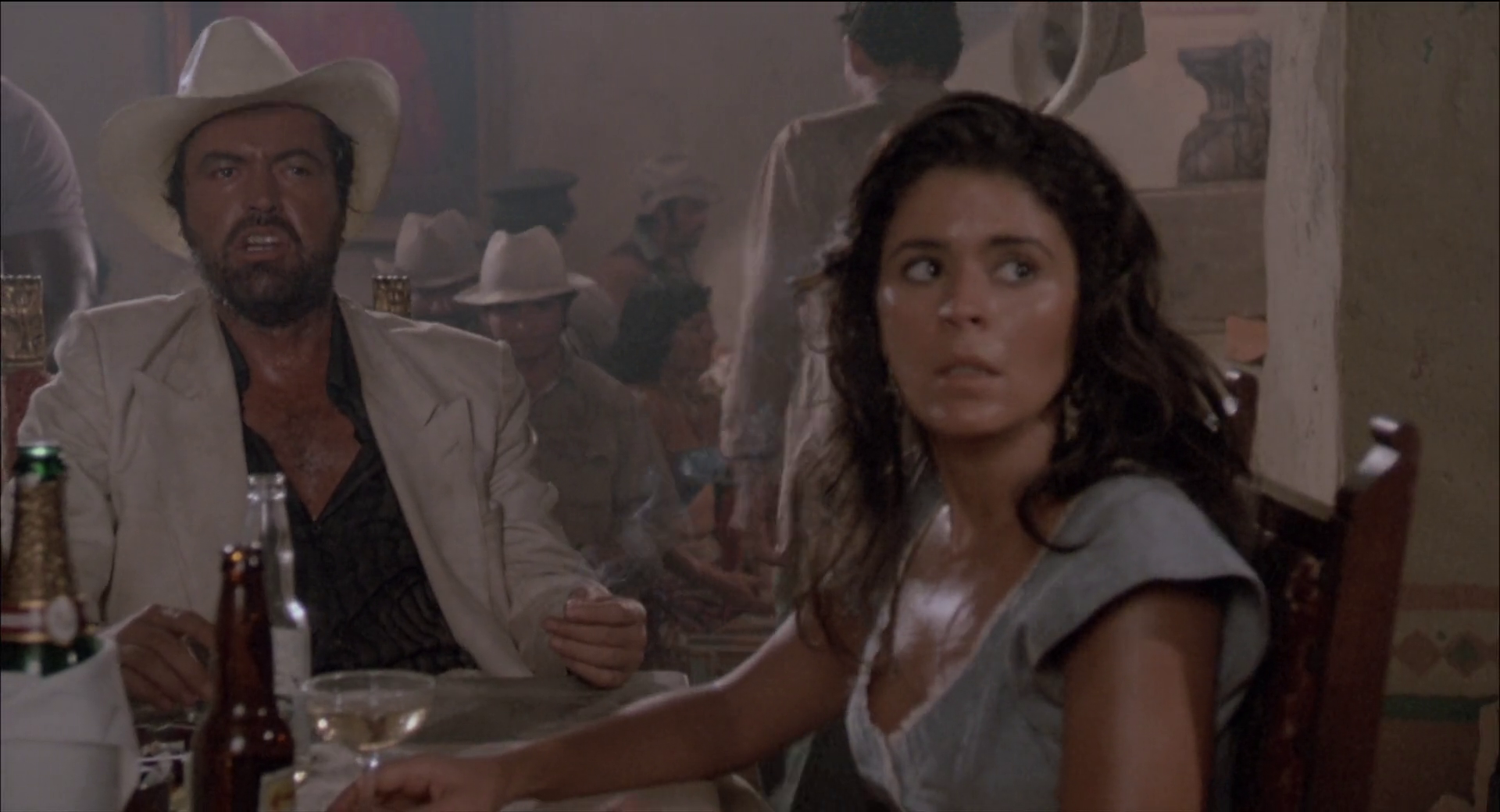
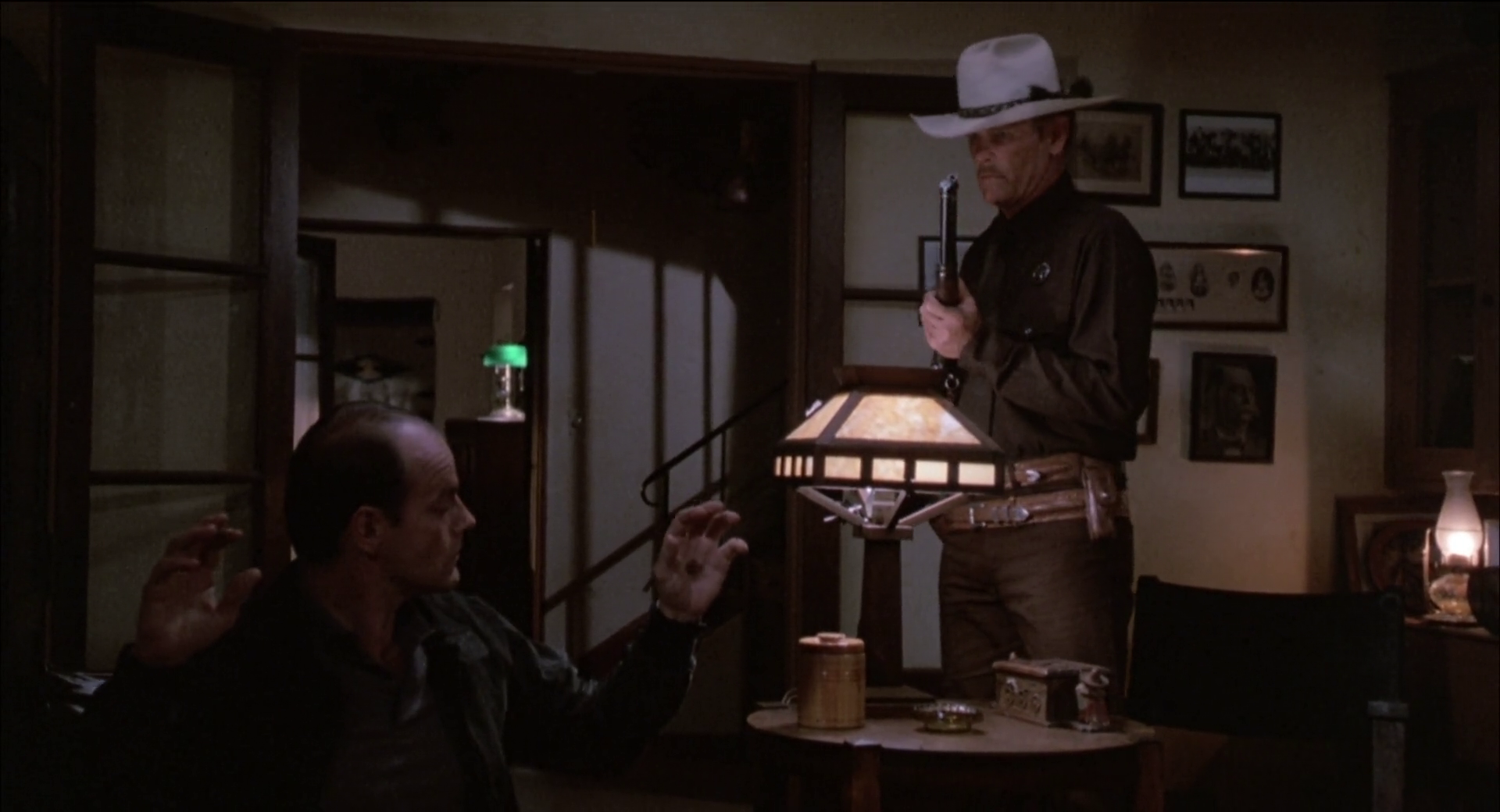
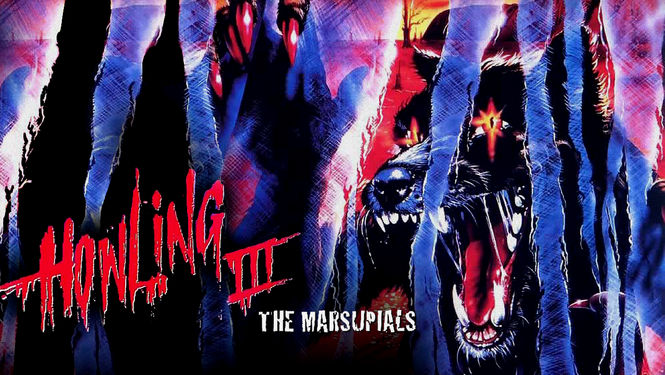
Howling III: The Marsupials (1987) – Review

I’ve seen horror franchises go off the rails before but never so quickly and so spectacularly as The Howling movies, the series began with Joe Dante’s original in 1981 where a news reporter found herself trapped in a colony of werewolves but as strange as that sounds the sequel, Howling II: Your Sister is a Werewolf, was even weirder as it gave us Christopher Lee and an ancient Transylvanian werewolf sex cult – which is awesome in its own messed up way – but with Howling III: The Marsupials the weirdness was turned up to eleven.

As in the case with such franchises as The Amityville Horror, the installments that make up The Howling movie series have very little to do with each other – the first sequel was the only one with a direct connection to the original but even that film abandoned its tangential element rather quickly – and so with the next installment, the producers simply used The Howling name for brand recognition only. Howling III is once again directed by Philippe Mora, who gave us Howling II: Your Sister is a Werewolf, and with this outing, the guide rails were completely off and it was on a fast track to looneyville where we find out that werewolves are roaming both Siberia and the Australian Outback.


This isn’t something you’re going to see on National Geographic.

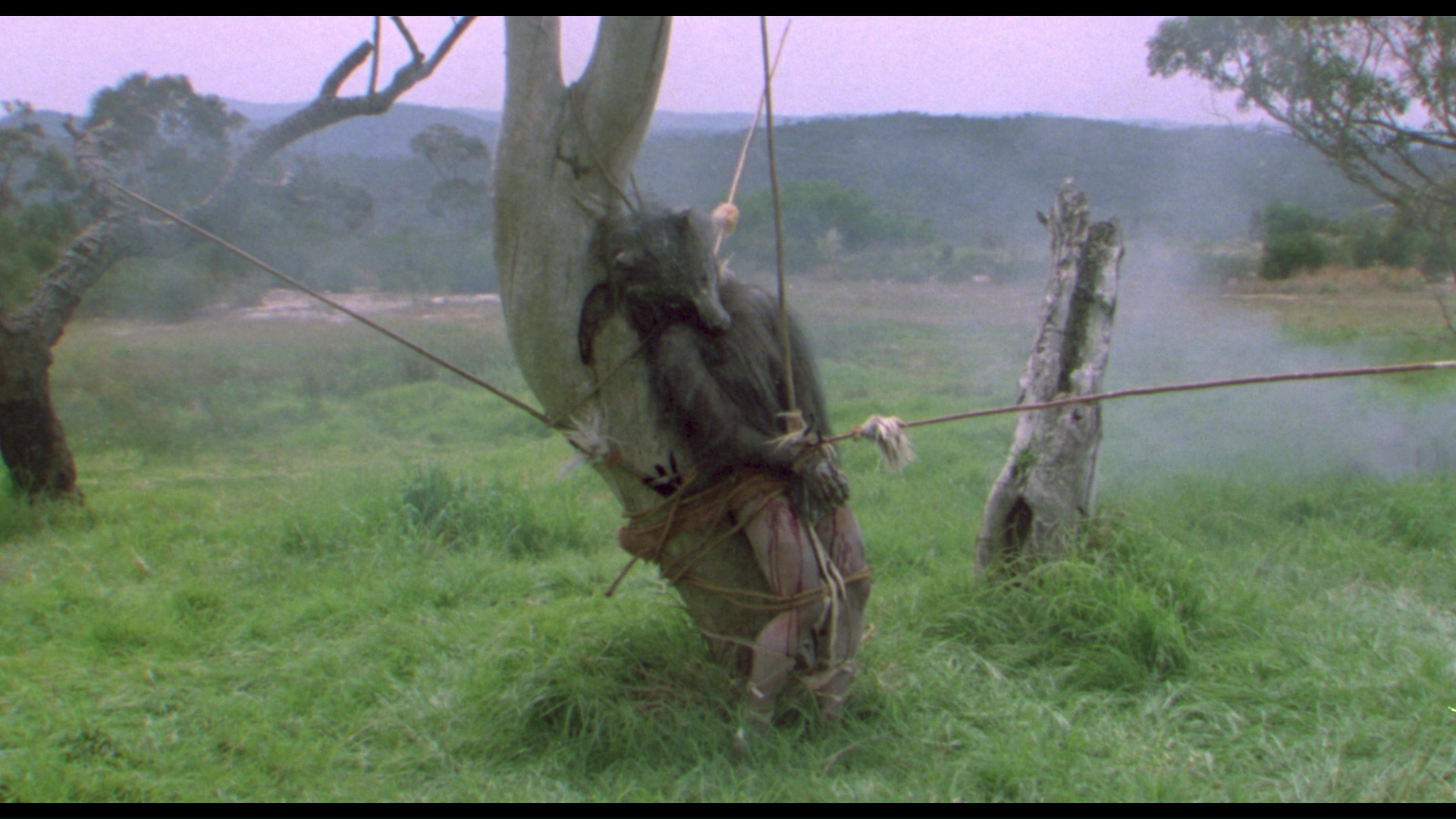
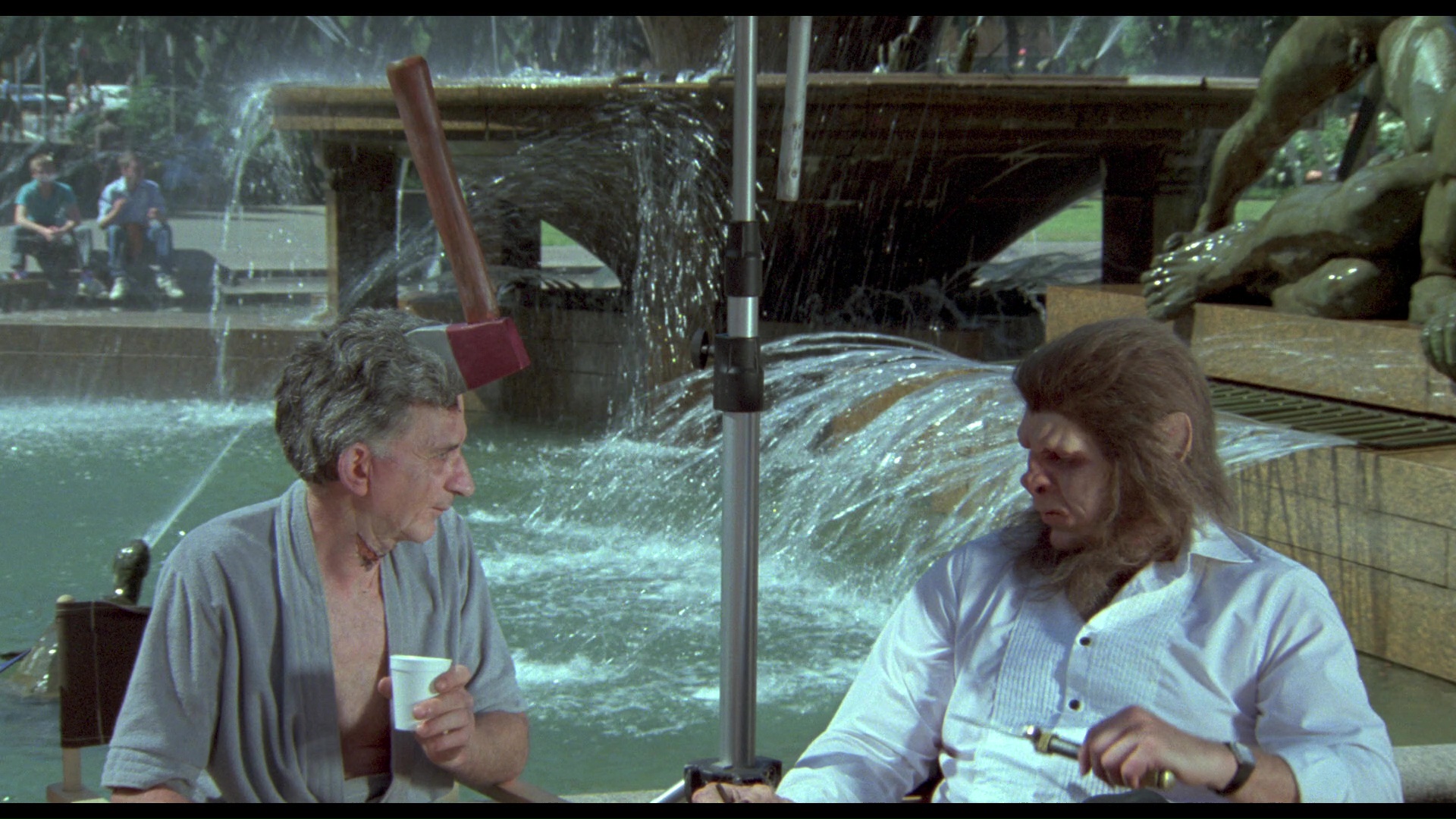
Actors Reb Brown or Christopher Lee will not be making an appearance in Howling III: The Marsupials because, as mentioned, this film has nothing to do with the previous two installments as it completely makes up its own werewolf lore – we still have werewolves that can change at will but it no longer takes silver bullets to kill them – and this film follows the adventures of Jerboa (Imogen Annesley), a young Australian werewolf who are introduced to while she flees her sexually abusive stepfather, a Road Warrior wannabe named Thylo (Max Fairchild), and she hopes for a life outside of her tribe, which kind of looks like a cross between Branch Davidians and the cast of Survivors. While on a bus to a new life a priest asks her why she is running away and she responds "Because my stepfather tried to rape me, and he's a werewolf" which kind of sets the tone of the movie.  Later, while sleeping on a park bench, Jerboa encounters budding filmmaker Donny Martin (Lee Biolos), who's working on a low-budget horror picture in town, and he offers her a part in a film called Shape Shifters.


“Have you seen the new girl? What a dog.”

What’s a shame here is that the film never goes anywhere with the novel idea of accidentally casting an actual lycanthrope in a movie about werewolves, talk about missed opportunities. This meeting does result in her getting pregnant by Donny – safe sex is something nobody thinks about in these kinds of movies – but before they can move forward with any type of relationship her lycanthropy is triggered by strobe lights and she soon finds herself in a hospital being studied by scientists, only to be “rescued” by a trio of werewolves from her tribe, who had been tracking her since she escaped, so that she could be brought back home.  This lethal trio massacres at least a dozen people during this rescue but what is odd here is that this event is never really addressed by the film's supposed heroin, which is a prime example of elements being introduced and then forgotten.


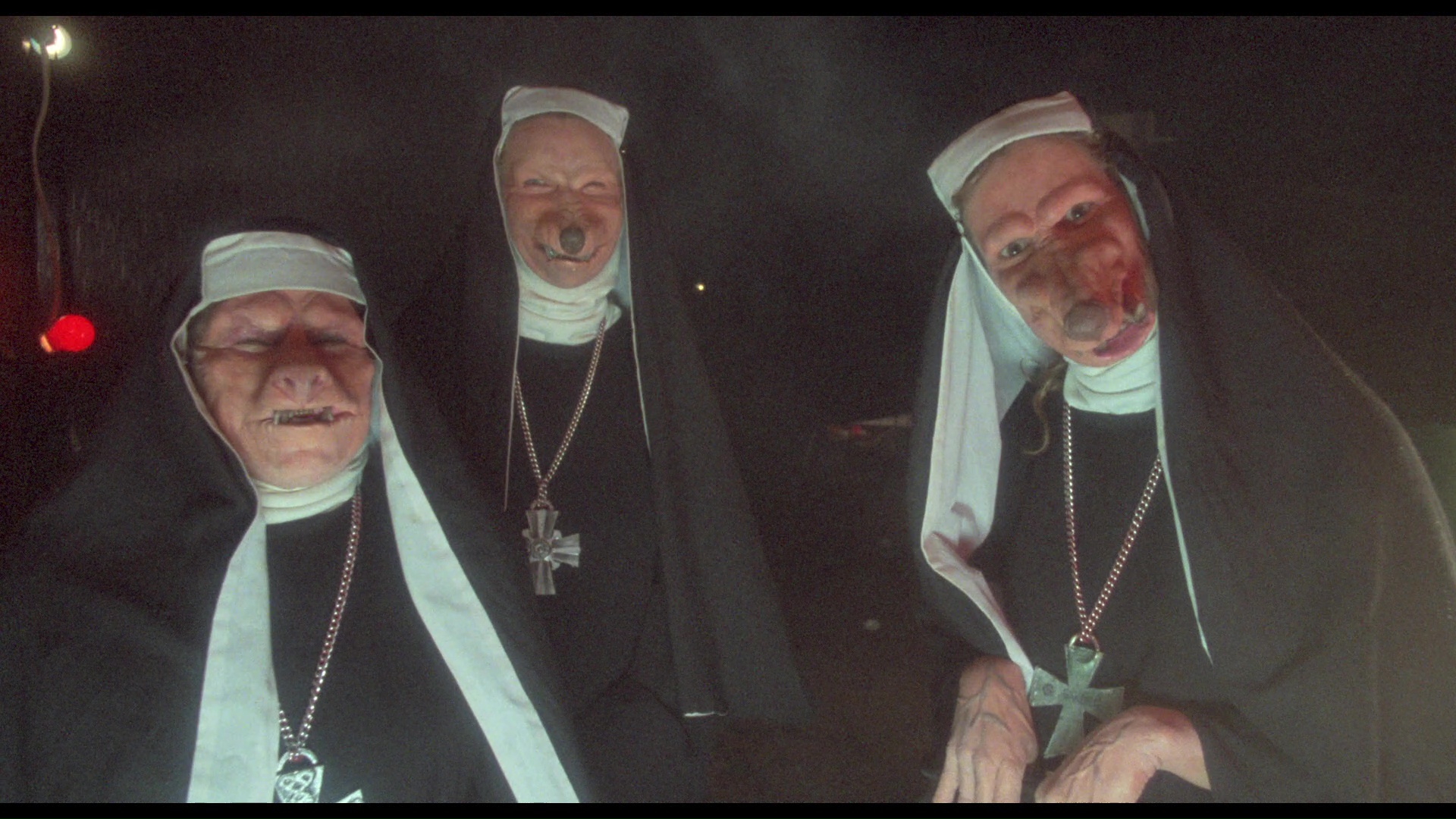
No one expects the Werewolf Inquisition!

This brings us to the men chasing the werewolves. First, we have Professor Harry Beckmeyer (Barry Otto) whose discovery of old werewolf footage depicting the creatures roaming the Australian Outback spurs and reported attacks in Siberia he tries to warn the U.S. president (Michael Pate) about the widespread global threat of werewolves.  Then we also have Beckmeyer’s colleague Professor Sharp (Ralph Cotterill) who helps him track down a Russian ballerina who has recently defected to Australia but why they think prima ballerina Olga Gorki (Dagmar Bláhová) could help them with the werewolf attacks in Siberia is never explained. And you have to wonder, “They do know Russia is rather big, right?” Lucky for them it turns out she’s actually a werewolf herself, and flashing lights during a rehearsal trigger her transformation.
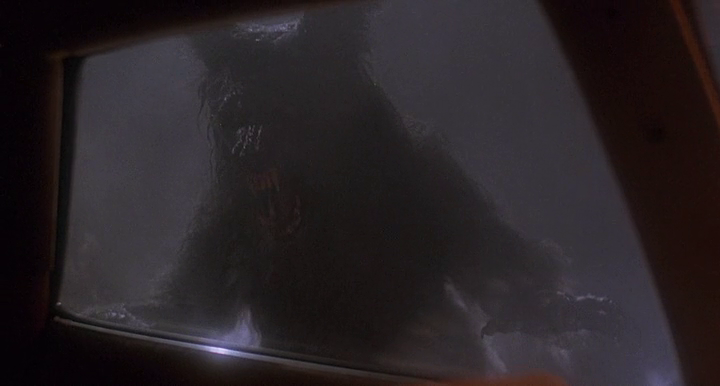
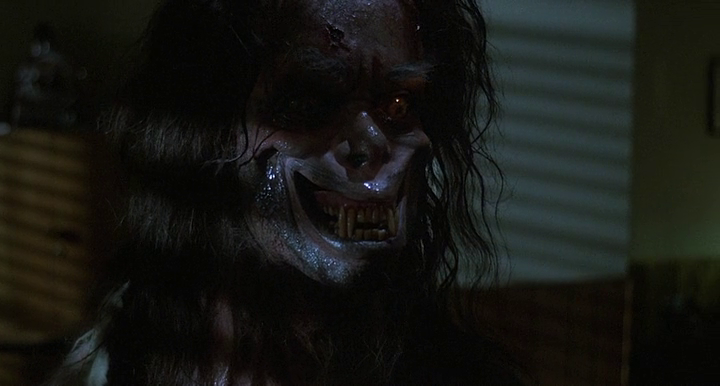
 

Were they putting on a performance of Peter and the Wolf?

To say the lore in this movie makes little to no sense would be giving this film too much credit and never answers such questions as "How could an entire subspecies of humans exist in secrecy if all it took to expose them was a little flash photography?" We also get this bullshit history lesson about the “Tasmanian wolf” – or thylacines as they scientifically known as – which were carnivorous marsupials that had been hunted to extinction but just before being wiped out the “spirit” of the Tasmanian Wolf managed to transfer itself to a group of humans thus creating this new hybrid of marsupial humans. How this explains lycanthropes located around the world or why Olga Gorki was drawn to Australia so that she could mate with Thylo is something the film has neither the time nor inclination to explain. We do get evil government bureaucrats putting together a task force to wipe them out, something Queen Victoria and the Vatican had attempted to do a century ago, and so our scrappy band of misfits are soon on the run through the Australian Outback, but not before the obligatory scenes of scientists experimenting on the poor lycanthropes.
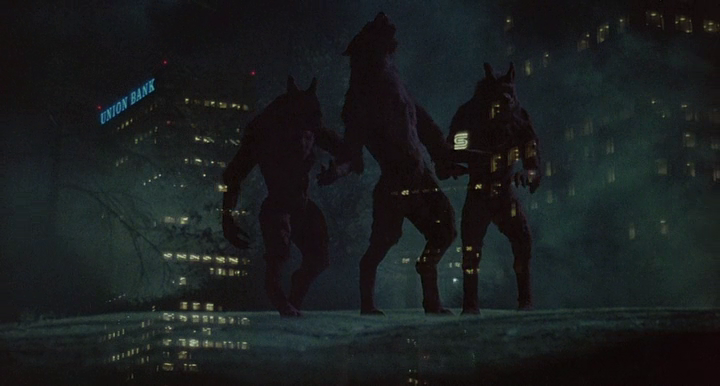
 

How else can we sympathize with rampaging monsters that eat humans?

Basically, Howling III: The Marsupials is a bloody mess, worse is the fact that it’s also not all that bloody which doesn't help sell your horror movie. I’m not sure if they were shooting for a PG rating because even though there is not a drop of blood shown during any of the werewolf attacks, which is as impressive as it is odd, but the film also has a fair bit of nudity so I’m not sure what kind of rating they were hoping to get. Another key problem is that the film doesn’t end so much as it just winds down to a slow stop with nothing much happening in the last twenty minutes, just a meandering series of boring events – Beckmeyer falls in love with Olga and has a little werewolf kid of their own and Donny and Jerboa move to California to start a new life under assumed names – and when the end credits roll, after Jerboa is exposed as a werewolf during an award show, we are left wondering “What was the fucking point of it all?”


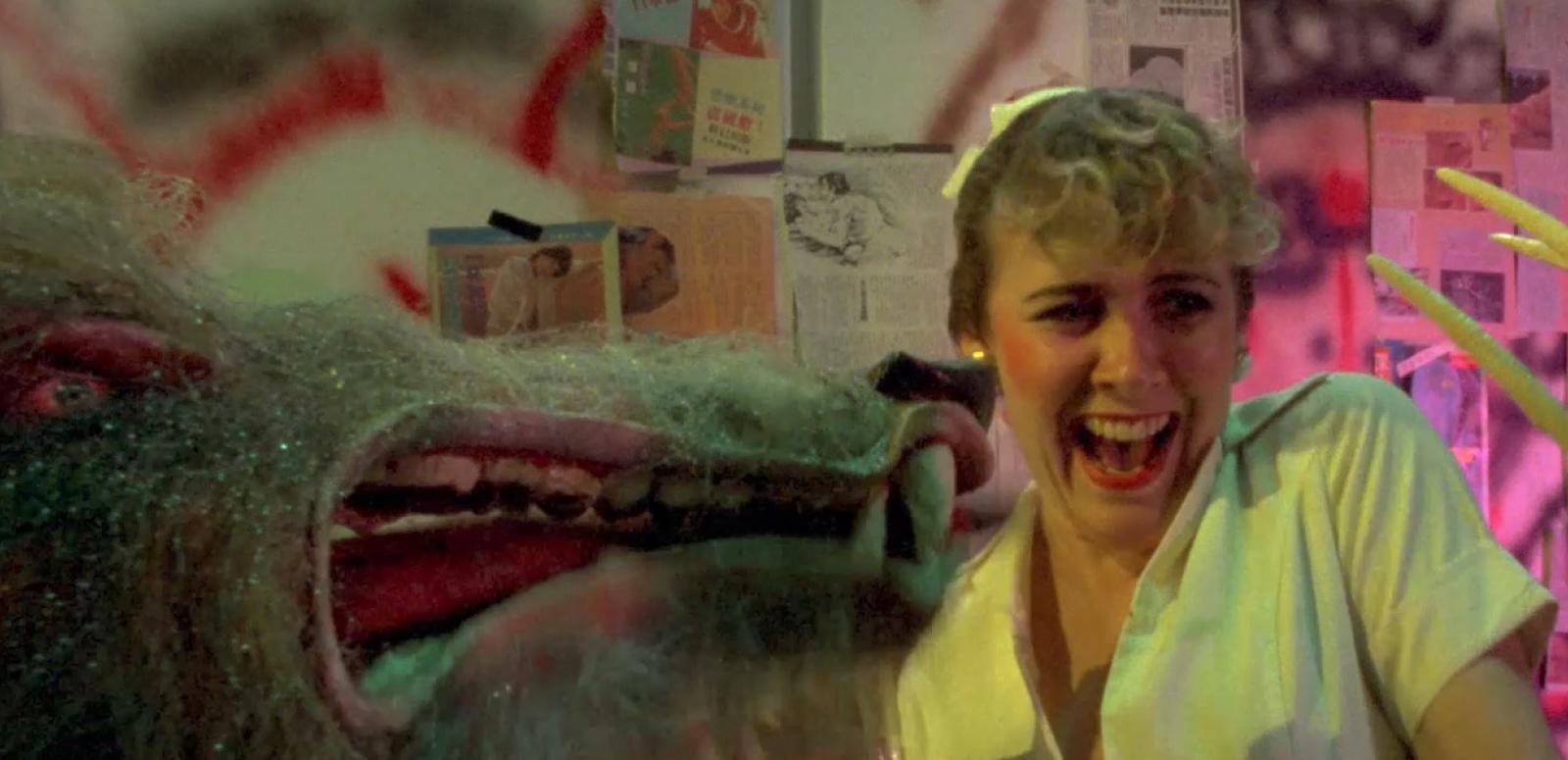
Also, there is really very little werewolf action in this film, and what we do get is pretty lame.

I can appreciate writer/director Philippe Mora trying to do something new, and making a film about marsupial werewolves is about as new as one could get, but you also have to tell a cohesive story, one that follows a narrative to a satisfying conclusion – I’m all for stinger endings but this one was more “So what” rather than “What the fuck?” – and it wasn’t helped by most of the actors being really bad at their jobs and the transformation effects, which is easily one of the most important elements of a werewolf film, being equally as bad to the point of being both unconvincing and uninteresting. If Howling III: The Marsupials isn’t the worst werewolf film ever made it at least has to be in the top five.

Thursday, May 13, 2021

Zombie (1979) – Review

If you have ever wondered what an encounter between a shark and zombie would entail then look no further than Lucio Fulci’s Zombie, a film that not only gives us some of the most bizarre undead attacks to date it is also an entry in the zombie genre that will have even the most avid horror fan viewing these atrocities through squinted eyes.

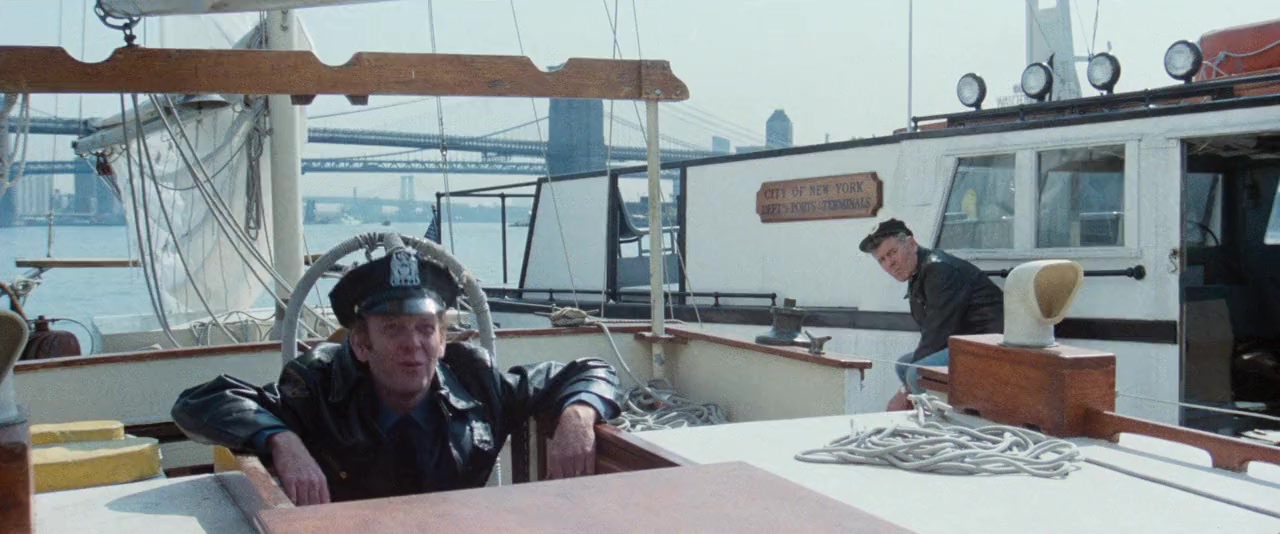
“The boat can leave now, tell the crew,” and with that enigmatic line director Lucio Fulci launched one of the most disturbing and iconic horror films of the zombie genre. Fulci’s Zombie has a certain mystery quality to it that you tend to not find in your average zombie movie for as the story unfolds we are brought along not quite knowing what to expect, well, other than zombies of course. After that inexplicable opening of a shadowy man informing someone that the boat can leave the movie jumps to New York City harbour where a ghostly yacht approaches Manhattan Island and much as the Demeter brought Dracula to the shores of England this seemingly abandoned ship would bring a horror of a very different kind.


“Hey Phil, by any chance was the captain of this ship lashed to the wheel?”

When a rather rotund zombie proceeds to eat one of the harbour patrol's officers we the viewer may think we are ready for the terror that will unfold, gore and worm riddled corpses at every turn, but nothing can really prepare one for Lucio Fulci’s Zombie because the minute you settle in for the expected undead shenanigans to occur something more bizarre, horrific or completely inexplicable will happen. To help us along the movie gives us a couple of audience analogs that will aid us on our voyage, in the form of newspaper reporter Peter West (Ian McCulloch) and Anne Bowles (Tisa Farrow) the daughter of the owner of the mysteriously abandoned yacht, and we will journey with them down to the remote island of Matool in the hopes of finding out what happened to Anne’s father. This isn't as easy as it looks and it requires them to hire a boat which then leads to the addition of two people more for the film’s body count, a vacationing couple consisting of a stalwart gent named Brian Hull (Al Cliver) and his very attractive paramour Susan Barrett (Auretta Gay), who don’t mind putting their plans on hold to help.


This also allows the film to provide us with some gratuitous nudity.

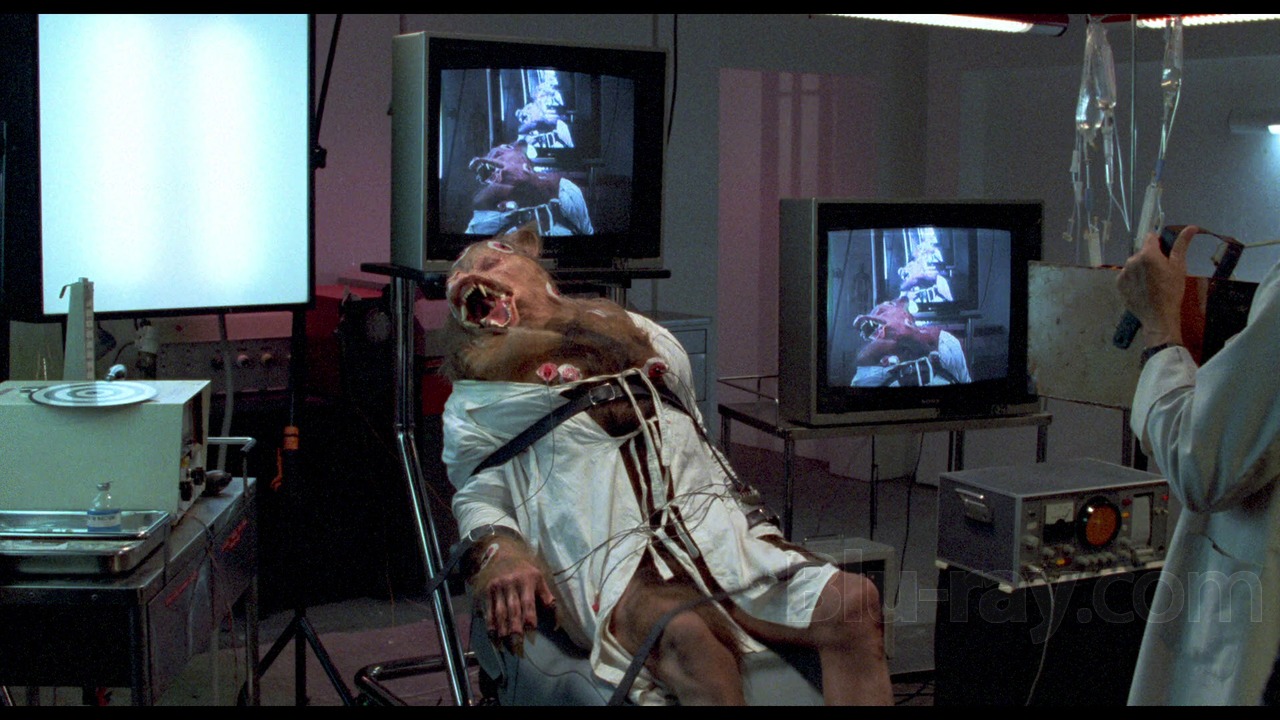
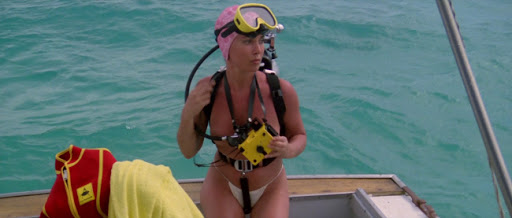
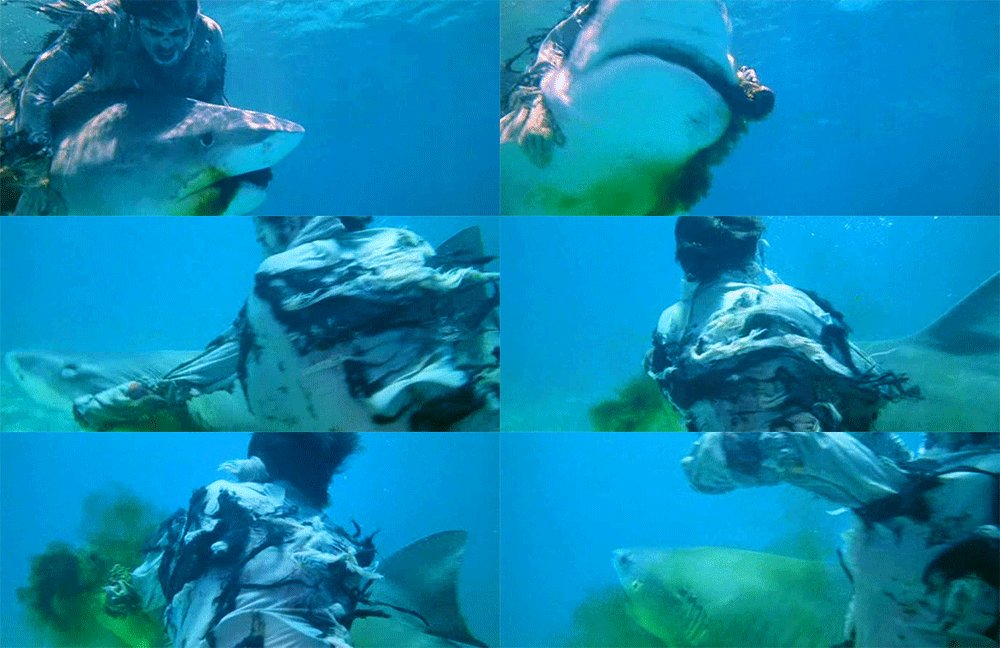
It’s at this point in the movie that I’d have said Fulci was trying to catch the audience off guard but after a little research, I learned that Susan going scuba diving topless was something the director was completely against, and not just because he hated the actress – who couldn’t swim or act – but because the script had her encounter not only a killer shark but a zombie as well. Fulci thought this moment was utterly ridiculous and thus it was shot by a second unit, but whether you agree with Fulci or not, one cannot deny the fact that it did provide the film with one of its more signature moments.


Not since giant gorilla vs shark in A*P*E* has the screen produced such horror.

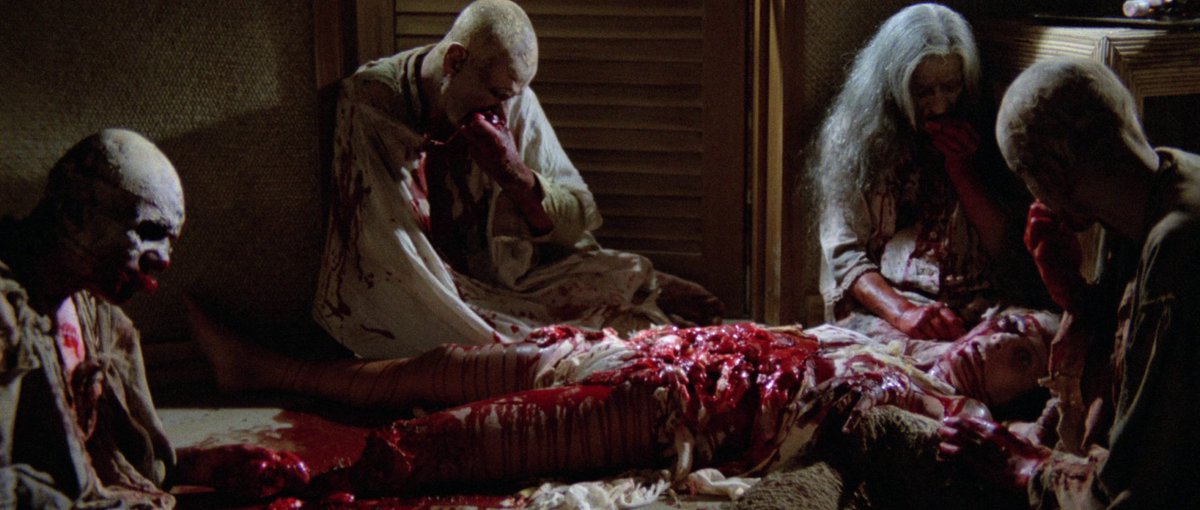
After surviving this aquatic horror our intrepid quartet finally reaches the mysterious island and it’s there they encounter the enigmatic Dr. David Menard (Richard Johnson), who has the bedside manner of Josef Mengele and a doctorate we must assume he earned while temping on The Island of Doctor Moreau. He warns our group to stay away from the nearby village because a strange disease has started bringing the dead back from the grave and up amongst the living. Rather nonplussed by that piece of information our heroes head across the island to check in on Menard’s wife (Olga Karlatos), unfortunately, they find her hosting a different kind of dinner party.


They just stopped by for a bite.

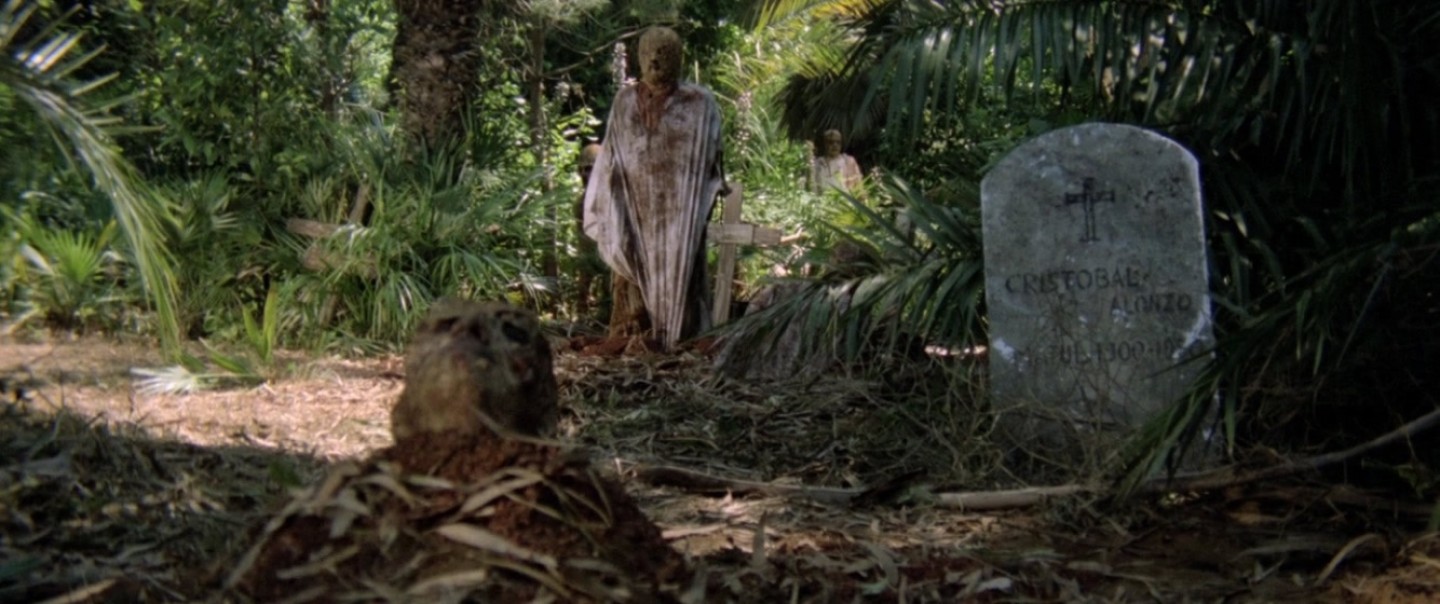
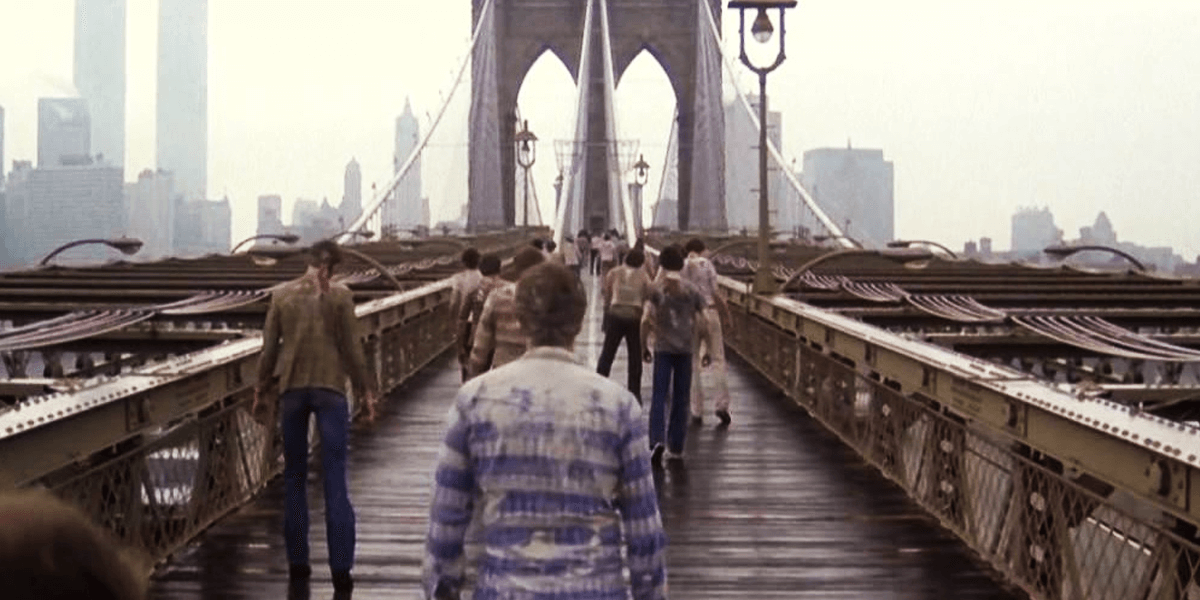
Lucio Fulci’s Zombie is a film that is all about repulsion and abject terror, with images that are right out of E.C. Comics Tales from the Crypt and is a masterpiece of mood and atmosphere, one that should never be called a rip-off of Romero’s zombie flicks. Was Zombie cashing in on the popularity that Dawn of the Dead brought to the genre, absolutely, but Fulci’s film is a far cry from being a simply copycat of Romero’s entry as it wasn’t trying to be any kind of social allegory of man’s position in the world, Zombie is a straight-up balls-to-the-wall horror film that wears the trappings of the genre right on its sleeve. The zombies in Dawn of the Dead were these blue-skinned shambling undead, artfully made up by the great make-up effects man Tom Savini, and were clearly freshly risen corpses, while the zombies of Fulci’s film range from the newly risen to ones with greater degrees of decomposition, though it should be noted that the undead Spanish conquistadors have a surprising amount of flesh for being buried centuries ago, and when one sits down to watch a Fulci horror film it is absolute horror you will get.


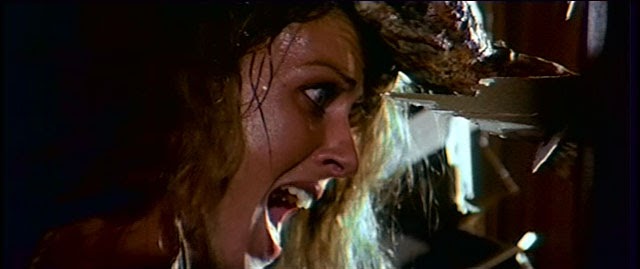
Olga Karlatos getting her eye splintered will test even the hardiest of gore fans.

As much as I love the Romero zombie films I have to hand it to Lucio Fulci and his team of artists, consisting of special make-up effects artists Gianetto de Rossi & Maurizio Trani and Artist Gino de Rossi, for creating some of the most memorable zombies ever brought to screen, and I particularly appreciated that we never get a true answer as to why the dead are rising. Romero also dances around the cause of his zombie apocalypse – was it from a crashed satellite, who knows – but Fulci’s film keeps us wondering if the cause is due to some mad science Menard is practicing or possibly because of voodoo practitioners on the island.  We do hear chanting and voodoo drums in the background but what is the actual answer for this particular zombie apocalypse will forever remain a mystery.


Note: Apparently in the Caribbean people are buried only six inches deep.

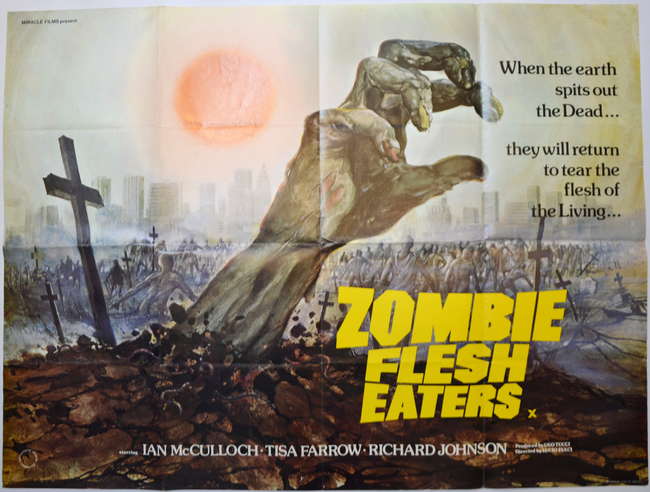
How much enjoyment you will get out of Lucio Fulci’s Zombie will depend on how much you can handle extreme gore as well as some dodgy acting - Richard Johnson is the only cast member who even seems to be trying to sell a performance and he is truly magnificent and charismatic as the possible mad scientist – and though the film was marketed as a sequel to Romero’s Dawn of the Dead, much to the chagrin of both Romero and Fulci, this entry truly stands on its own two feet, and not just as a great example of the zombie genre but also as one of the better horror films out there, period, and is certainly one of the best examples of Italian horror as a whole. So, whether you're experiencing this film as Zombie 2 or Zombie Flesh Eaters the end result is still an entry that will most likely shake you to your very core.


If only the following sequels had lived up to that promise.

Monday, May 10, 2021

From Russia with Love (1963) – Review

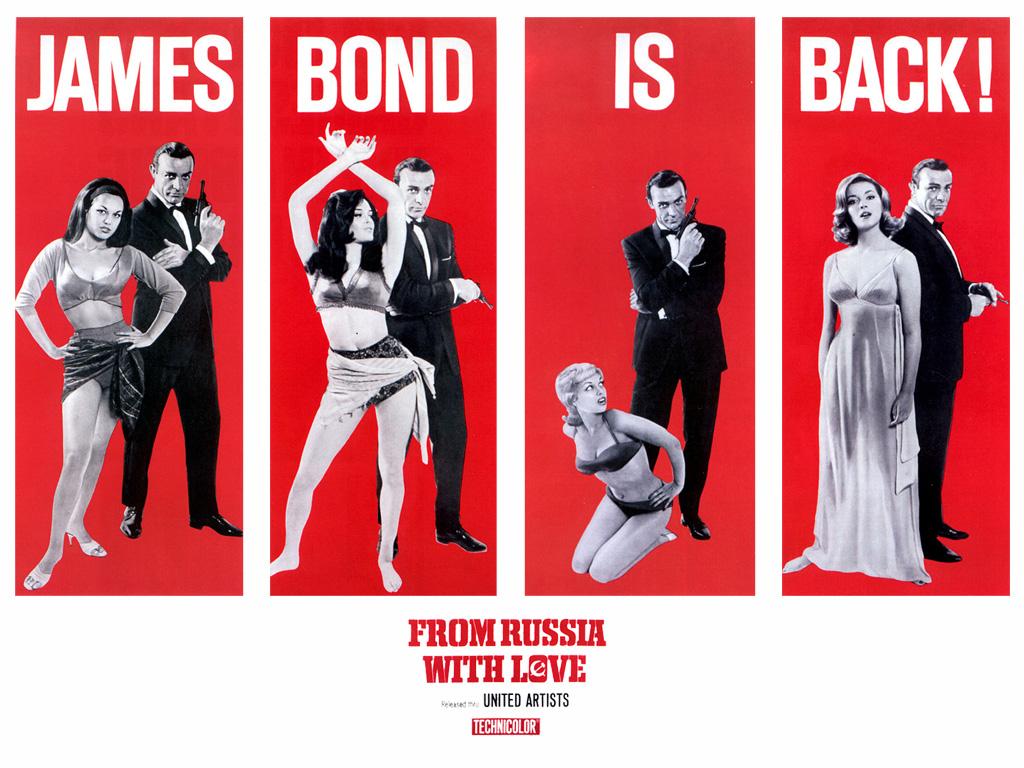
After the success of Dr. No Eon Productions quickly greenlit a second outing with Sean Connery returning as James Bond, secret agent 007, but not only was this film speedily put into production but the budget was doubled which would allow for Bond to do a bit more globetrotting this time out.

As Bond film adaptations go From Russia with Love is an entry that does check off many of the plot elements of Ian Fleming’s 1956 novel of the same name, something that many of the following movies can barely claim. The book deals with SMERSH, a Soviet military counterintelligence organization and their desire to cripple the British secret service, and James Bond in particular, what with him being responsible for the defeat of SMERSH agents Le Chiffre, Mr. Big and Hugo Drax, and thus they issue a “Death Warrant” against Bond, but they also plan for his death to precipitate a major sex scandal that would leave service's reputations in tatters.


I find it hard to believe a sex scandal involving Bond would even raise an eyebrow.

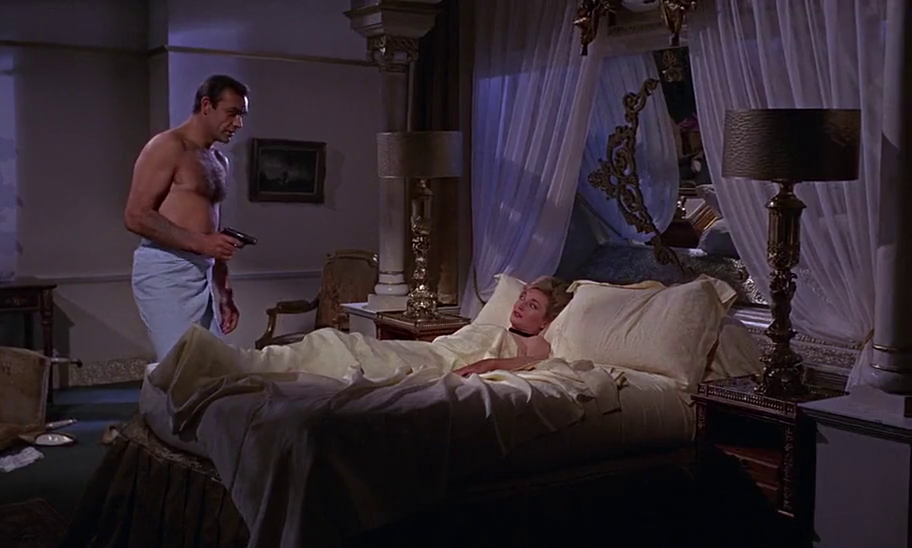
The Russian’s plan revolves around using the false defection of an attractive young cipher clerk as well as the chance for the British to get their hands on a Russian decoding device that is much coveted by MI6. While the movie takes much of that as the basis for the plot the screenwriters tossed in an added wrinkle with it being the international criminal organization SPECTRE behind it all and that they intended to play the Russians and British intelligence agencies against each other while making off with the decoding device for themselves, which they would later sell back to the Russians for a nice profit. In the book, the primary goal of SMERSH was the death and disgrace of James Bond while in the movie getting rid of Bond, who had thwarted SPECTRE agent Dr. No in the last movie, was more of a bonus than anything else. In both the book and the movie we get James Bond (Sean Connery) seducing the beautiful Russian agent Tatiana Romanova (Daniela Bianchi) but what makes her role unique is that she is tasked to seduce Bond.


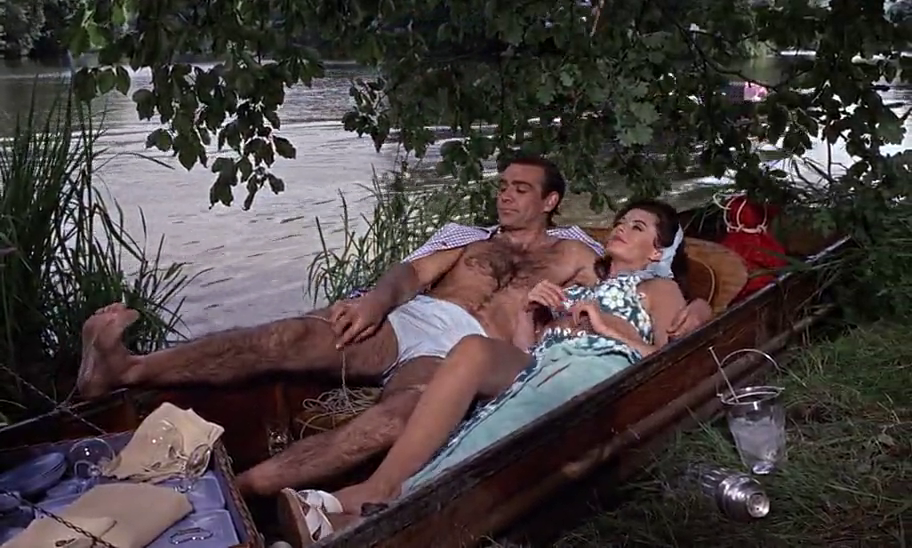
Just how often does Bond find a beautiful woman in his bed?

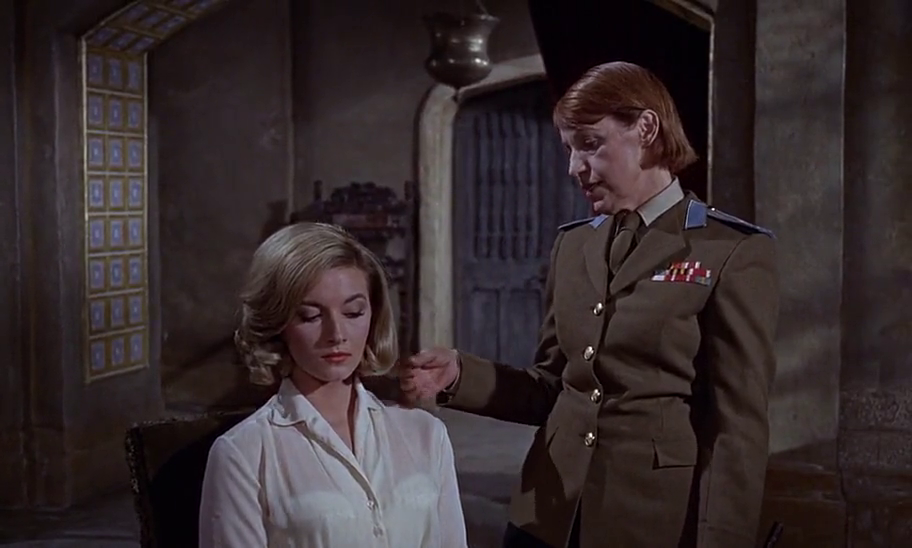
In the book, Bond’s chief antagonist is a British Army deserter and resident psychopath named Donovan "Red" Grant who now works for SMERSH but in the movie Grant (Robert Shaw) is an Irish assassin working for SPECTRE under the command of Rosa Klebb (Lotte Lenya), a top SPECTRE assassin, and chess grandmaster Kronsteen (Vladek Sheybal) who had devised the whole plan to begin with. It should be noted that in the novel it was strongly implied that Rosa Klebb was a lesbian while the film barely hints at this aspect of her character, but the more interesting difference between the book and the movie is that in the book she was successful in stabbing Bond with a venom-laced blade hidden in her shoe and the story ended with Bond fighting for breath and falling to the floor, presumably to die.  Now, that may sound strange but From Russia with Love was intended to be the last Bond book but Fleming resurrected him in Dr. No with an explanation that René Mathis had arrived in time to revive Bond.


Bond being killed by a lesbian does seem rather fitting.

Stray Observations:

• At the SPECTRE training camp Red Grant kills a man disguised as James Bond during an exhibition to show off his prowess camp, but this has me wondering "How do they find “volunteers” for this kind of thing."
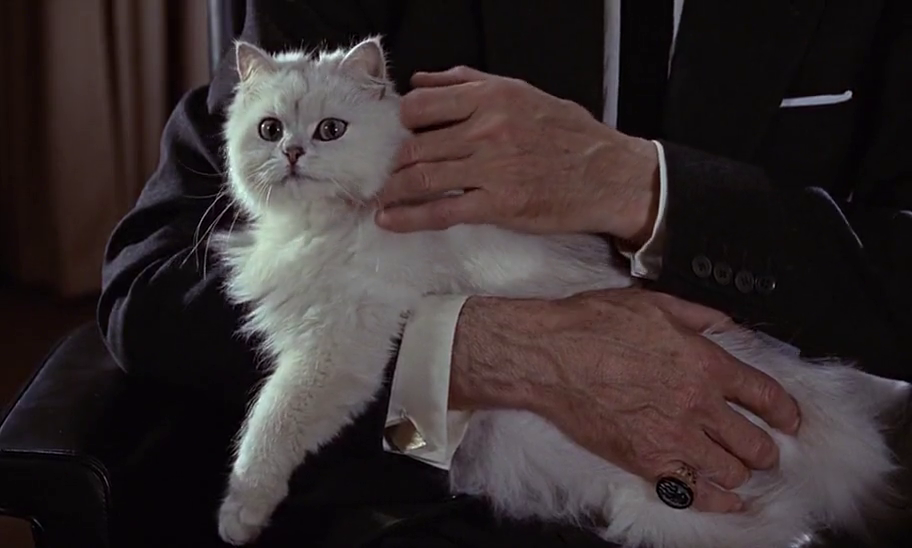
• Though not named we get a first partial glimpse of Blofeld and his white Persian cat.
• It’s in this film where we get the debut of Desmond Llewelyn as Q and we are also treated to the first Bond gadget scene with 007 being issued a tricked-out briefcase.
• The plot takes a break so we can witness two gypsies have a catfight over a man they both love but it is somehow resolved by Bond sleeping with both women, because why not?
• In this entry we do get a more brutal Bond who will not hesitate to slap a woman around to get information, an element that would be ditched during the Roger Moore era.
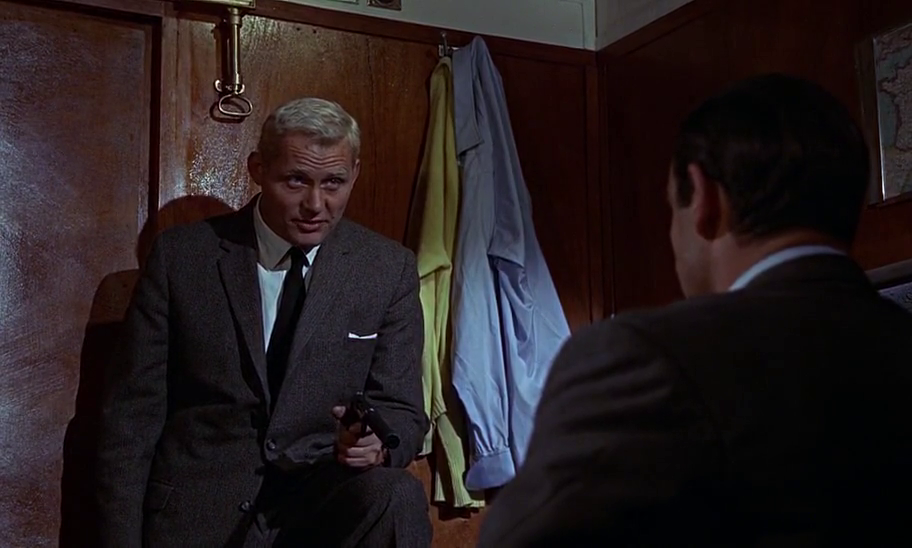
• Grant explains the plan is to make Tania’s and Bond’s deaths appear to be a murder/suicide but then Grant proceeds to tell Bond how he intends to torture him to death and shoot him in the knees. Call me crazy but that would tend to make the whole murder/suicide plot less believable if Bond’s body is found full of multiple bullet holes.


Murder on the Orient Express

For me, this is one of the top Bond films as it really captures the crucial aspects of what makes for a great spy thriller, though I will admit I’m not one to put my nose up at a good volcano lair, and it is From Russia With Love that really set the tone for many of the Bond films to come – especially the Daniel Craig films – and though this entry can be considered a little lite on action by some viewers, with the only real set pieces being the raid on the Gypsy camp, a brief helicopter attack and the following boat chase it still manages to thrill and entertain. But then we also have that brilliant fight between Sean Connery and Robert Shaw aboard the Orient Express which set the standard for such encounters as its close-quarter brutality is one of the best moments in the entire franchise and the character of Red Grant is easily one of Bond’s best nemesis as he was basically a shadowy reflection of Bond himself.


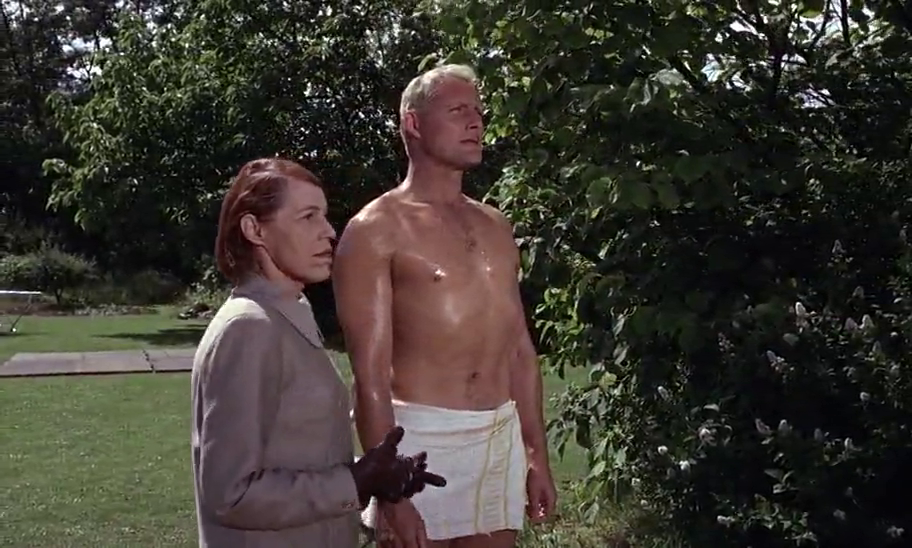
Shaw was also in pretty damn good shape back in the day.

The score was provided by legendary Bond composer John Barry and as good as his music for these films were at this point in time he hadn’t quite nailed the placing of the Bond theme as we often get those big power chords of that classic theme during such mundane moments as 007 checking into a hotel and searching listening devices, but that is a minor nitpick in what is otherwise a pretty perfect Bond film. I should also point out that even though we get the cliché of the female enemy agent falling in love with Bond, and I mean Romanova not Klebb, as it is Tatiana who saves Bond from Klebb’s poisoned knife shoe by shooting her former handler. Overall, From Russia with Love is one of the best examples of the Bond formula and with its collection of great villains, beautiful women and wonderful locals it’s hard not to put this one near the top of the list.


Trivia Note: Blofeld was portrayed by actor Anthony Dawson who played Professor Dent in Dr. No.

Monday, May 3, 2021

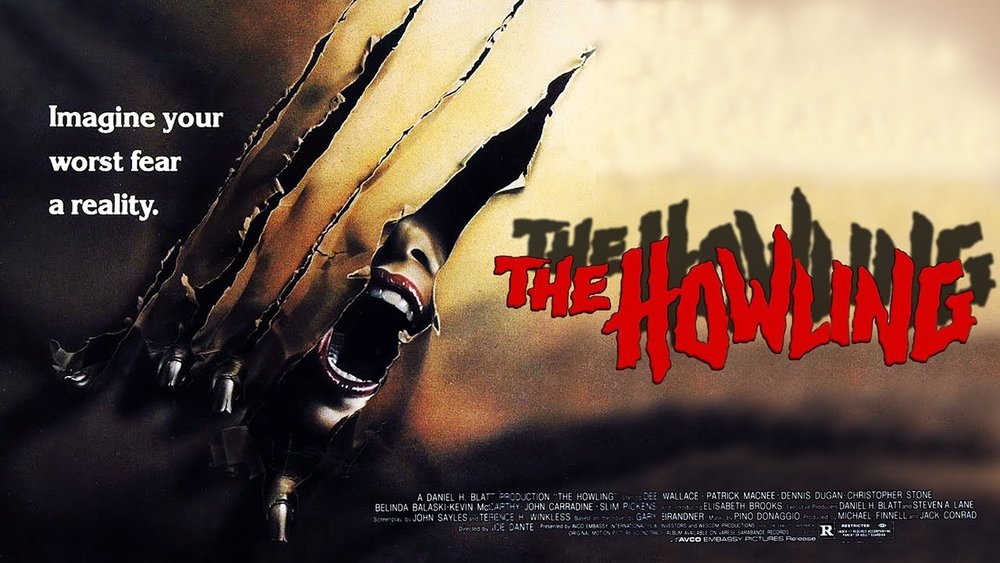
The Howling (1981) – Review

There aren’t a lot of great werewolf movie out there, in fact, when compared to vampire movies there aren’t all that many werewolf films period, but in 1981 we were treated to two competing werewolf films that have become the benchmark for the genre, first, there was the John Landis dark comedy An American Werewolf in London and then up against it was Joe Dante’s The Howling, a darker and rather untraditional take on the subject matter.

Based on the novel by Gary Brandner and rather loosely adapted by screenwriters John Sayles, we have a plot that starts out in a vein of horror that is quite a bit apart from what one would expect in a werewolf movie as we are first introduced to Karen White (Dee Wallace) a Los Angeles television news anchor who is working with the police with a plan to catch a serial murderer by the name of Eddie Quist (Robert Picardo), but when the scheme leads her to a video booth in a sleazy porn theatre she gets more than she bargained with and what she sees shakes her to the very core of her being. Crazed serial killers are part and parcel of the horror genre but in Joe Dante’s The Howling a traumatized Karen White soon discovers there is much more lurking beneath the surface, where a knife-wielding maniac would be the least of her worries.


“Would you like to see my idea for a sequel?”

Karen’s close encounter with a serial killer ends in a hail of police gunfire but whatever happened between her and Eddie Quist was so horrifying that she blocked it out, suffering from post-traumatic stress-induced amnesia, and her therapist, Dr. George Waggner (Patrick Macnee) recommends that she and her husband, Bill Neill (Christopher Stone) visit his secluded countryside resort called The Colony. Needless to say, The Colony isn’t quite what it seems to be, as one would expect in a horror film, and turns out to house a secretive pack of werewolves that Waggner has been trying to help adjust to the modern world, teaching them to co-exist with humans instead of treating them as prey.


Could be worse, they could have been Scientologists.

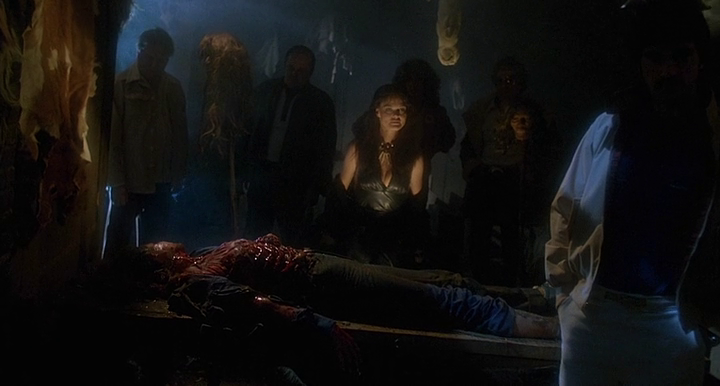
Joe Dante’s The Howling is a slow burn of a werewolf movie as the monsters themselves take their sweet time arriving on camera, but even though budgetary considerations may have been a factor in this it actually works in the films favour, the leisurely pace in which the story unfolds adds to the suspense and tension that drags poor Karen into a world with shades of Invasion of the Body Snatchers, wherein that film the idyllic town of Santa Mira was host to body-snatching aliens while The Colony is home to a pack of werewolves. As in Jack Finney’s science fiction classic, the residents of The Colony look normal on the outside but underneath that blase exterior is dark and malevolent secret life. Much of the first half of The Howling deals with the mounting dread our protagonist feels, recurring nightmares of her confrontation with Eddie Quist is exacerbated by the strange howls she hears in the woods, and when her husband seems to have succumbed to the “natives” she is left with no one to turn to for help.


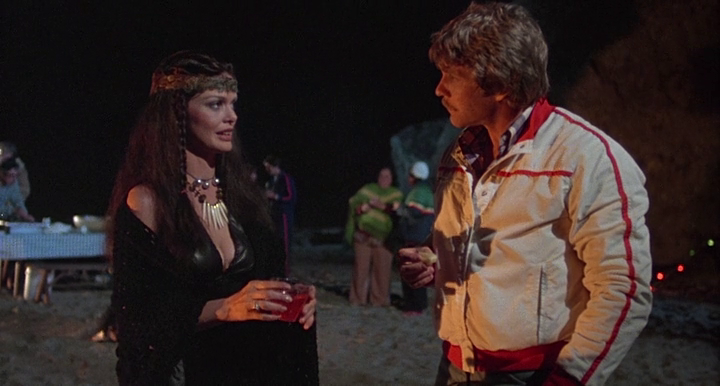
To be fair, who could resist the charms of Elisabeth Brooks?

Running parallel to Karen’s misadventures at The Colony is the investigation being run by Karen’s friend and reporter Terry (Belinda Balaski) and her boyfriend Chris (Dennis Dugan), who upon discovering that the body of Eddie Quist has mysteriously vanished from the morgue – the morgue drawer door being severely damaged from the inside – the two seriously start contemplating if the crazed serial may actually be a werewolf. Now, this may seem like a rather large leap in logic but information garnered from a quick trip to a local occult shop run by Walter Paisley (Dick Miller) starts to make the impossible seem more than plausible. It also leads to Chris purchasing silver bullets which results in one of the funniest scenes in the movie, where the seemingly unstoppable werewolves didn’t count on people having watched Lon Chaney’s The Wolf Man and are quite shocked by the outcome. Their reaction is priceless.


“Silver bullets my ass, you say.”

What I find most interesting about The Howling is what we don’t learn, we never find out how Dr. George Waggner managed to convince his fellow werewolves that The Colony was a good idea, many of the members clearly think of humans more as prey than friends, and creepy old Erle Kenton (John Carradine) statement that “You can’t tame what was meant to be wild, it ain’t natural” gives us a glimpse into the fracturing of The Colony’s dynamic. Thus when the film ends we are left with more questions than answers.  Did this group come over from Europe? How long have they been here? Does their ability to regenerate from any damage make them immortal? How do they choose who to give “The Gift” to? Now, some of the sequels do touch on the “history” of the werewolves but the fact that Joe Dante felt no need to peel back that particular mystery works in this film’s favour as spelling everything out would remove the Grimm’s faerie tale aspect of The Howling.


“Oh Granny, what big teeth you have.”

It’s clear that Joe Dante prefers a little fantasy in his horror and thus logic is not always something easily applied to his films – the rules pertaining to Gremlins being a prime example – but as The Howling works on a sort of dream logic, or nightmare logic if you will, then any such explanation of werewolves and their habits is completely unnecessary, but what is necessary is bringing the snarling ravenous creatures to cinematic life in all their furry fury and for this film that job was given to the very capable make-up effects artist Rob Bottin – hired after Rick Baker had to bow out to work on An American Werewolf in London for Landis – and there is no denying that the transformation of Eddie Quist in this film was truly horrifying, involving air bladders under latex facial applications to pull off the illusion, and though the debate rages on as to which werewolf transformation is the best I do prefer the bipedal nature of the werewolves in this film, opposed to the bearlike creature in An American Werewolf in London, and the smaller budget clearly hampered Bottin in creating the steps needed between transformations elements.


Something about this make-up just makes me smile.

Joe Dante’s The Howling and John Landis’s An American Werewolf in London are two of the best werewolf movie to date yet they were not alone for long as the 80s practically burst at the seams with cinematic lycanthropes, with such entries as Full Moon High, Teen Wolf, The Company of Wolves, Wolfen and Silver Bullet. What caused this particular horror boom? It had been twenty years between the release of The Howling and the previous werewolf movie so what caused this renewed interest? Could it have been a backlash to all the silly New Age pomposity that grew out of the 70s or was this just another cycle of the werewolf that the public was unknowingly waiting for? Regardless of the reason both Joe Dante and John Landis proved that this genre could be taken seriously, The Howling in particular, and though Dante’s film spawned some rather dubious sequels the original will forever remain a classic.


Note: Stop-motion animation puppetry was intended to give the werewolves an even more non-human look but they failed to match their live-action counterparts and thus they only appear in one scene transition.


Thursday, April 29, 2021

Godzilla (1998) – Review

When it comes to Japanese exports there is no greater example than Godzilla and with over thirty Godzilla films and counting it’s a hard point to argue, but when it comes to Americanizing this iconic monster things haven’t gone all that well. Lately, we’ve been treated to Godzilla in the new Monsterverse that at least tried to capture the spirit of the Japanese creation, with varying degrees of success, but back in 1998 Roland Emmerich and Dean Devlin, the two men behind the disaster epic Independence Day, were given the opportunity to make the first American Godzilla film – not counting Japanese versions that simply had Raymond Burr unceremoniously stuffed in – and to say they completely failed to stick the landing would be the understatement of the century.

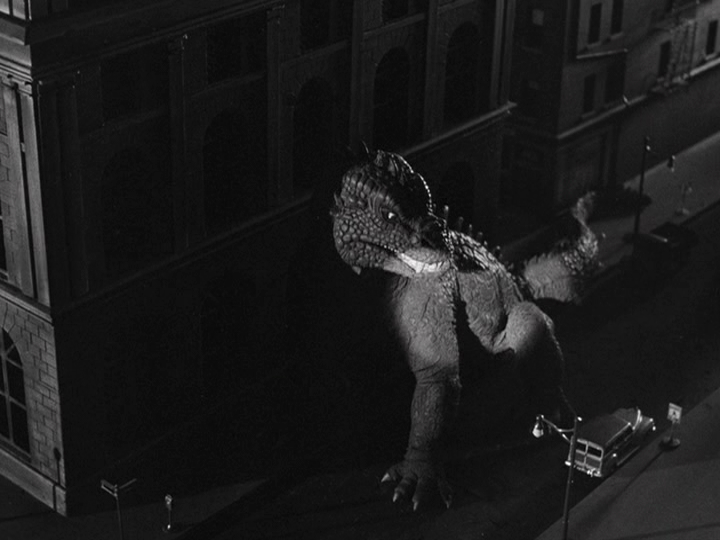
When a Japanese fishing vessel is attacked by some enormous creature the United States Government calls in Dr. Niko "Nick" Tatopoulos (Matthew Broderick ), an expert in the effects of radiation on biological matter, to investigate and before you can say “Kaiju!” a monstrous lizard is rampaging across the island of Manhattan and it’s up to Nick and friends to not only figure out how to stop Godzilla but also to discover his reason for visiting the Big Apple. Now, that all seems well in good but what follows isn’t really much of a Godzilla movie, sure, there’s a giant city-destroying monster that stems from the testing of atomic bombs yet the creature bears very little resemblance to the Godzilla most of us grew up watching. In fact, the plot of this movie has more in common with the Ray Harryhausen classic The Beast from 20,000 Fathoms which had atomic testing wake up a dinosaur, that then proceeded to Manhattan Island for some late-night dining. It should also be noted that it was Ray Harryhausen’s dinosaur classic that inspired the original Gojira.

Note: The Rhedosaurus in that film was radioactive and was somehow able to wander around New York City without being spotted, which is something the makers of this film clearly took to heart.

But the 1998 Godzilla film wasn’t just a monster movie as it's also had romantic-comedy elements stuff inside it; while hunting for the creature Nick runs into his old college girlfriend Audrey Timmonds (Maria Pitillo), who we learn had a four-year relationship with Nick and then ran off without even a phone call or Dear John letter.  Now, eight years later she uses their past connection to steal classified information from Nick, so as to help her land a job as a reporter, which results in him getting fired, and she’s supposed to be our hero’s romantic love interest for this film, seriously? Practically every moment spent with the Audrey character is both painful and unnecessary and I’m left wondering why couldn’t Nick’s paleontologist boss (Vicki Lewis) have been this film’s love interest?


Scientists hooking up while hunting a monster is practically a staple of the genre.

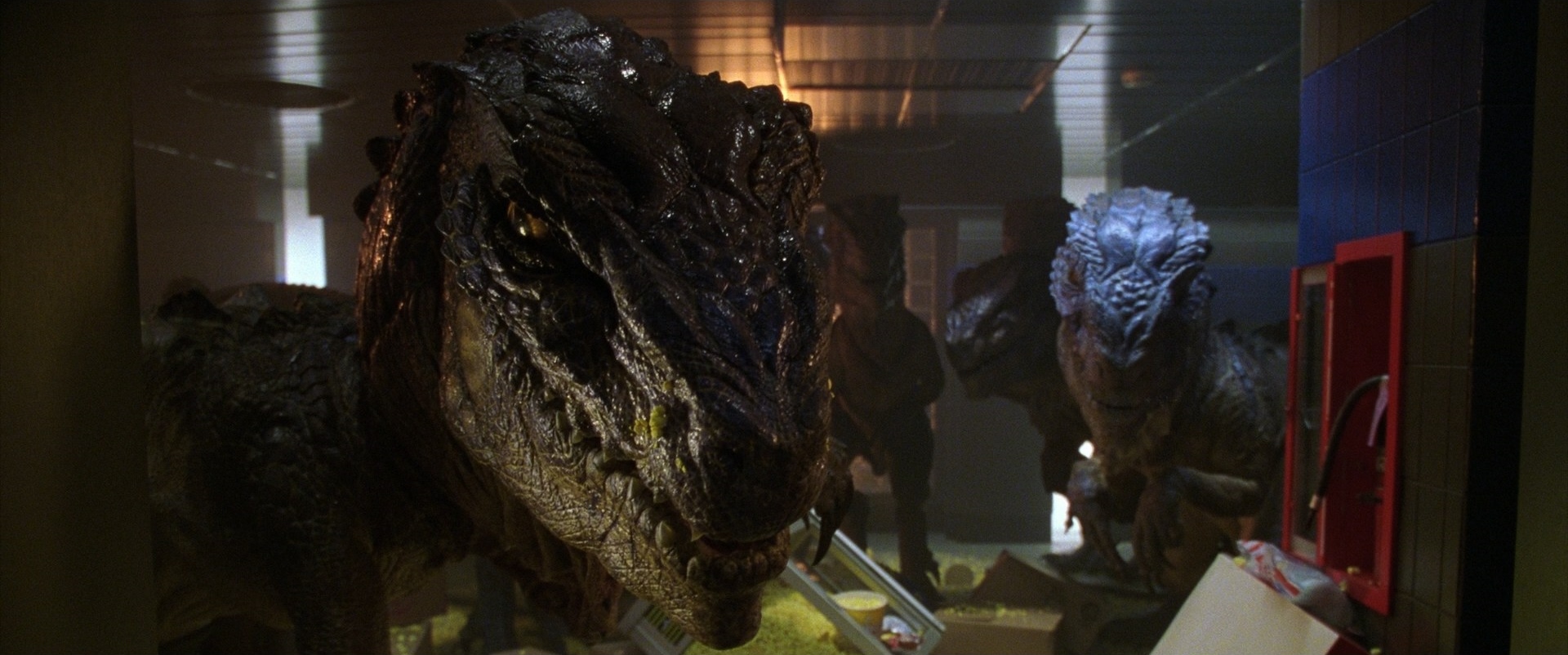
We also get a subplot with a French secret service agent (Jean Reno) who is leading a team that intends to cover up their country's role in the nuclear testing that created Godzilla – if all else fails blame the French – but that element of bizarreness is overshadowed by the film’s third act when our heroes all converge on Madison Square Garden to discover a nest with over 200 eggs. It’s at this point that the film stops being a Godzilla movie and takes a sharp left turn into Jurassic Park territory with everyone running away from baby Godzillas that were blatant raptor analogs.


“Welcome, to Jurassic Dreck.”

Stray Observations:

• The filmmakers take the brave stance of blaming France’s atomic testing for the creation of Godzilla because we wouldn’t want to give America a black eye, which makes the use of stock footage of American nuclear testing a rather odd choice here.
• The old Chinese survivor reacts to Jean Reno’s lighter by uttering the word “Gojira” which implies that the flame reminded him of the attack, which of course makes no sense as this version of Godzilla doesn’t breathe fire.
• Audrey’s boss holds the promise of promotion via sexual quid pro quo, while Nick’s boss on the Godzilla hunt is your basic “Man Hungry Woman” who constantly flirts with him. Is this a Godzilla movie or study on workplace sexual harassment?
• Nick is mocked for his theory that the creature has been mutated by radiation, but if the task force didn’t already believe this to be the case why did they bring him along in the first place?
• If this was a proper monster movie a character betraying the hero for personal gain would have resulted in some kind of ironic comeuppance, which means this film needed a scene of Audrey being eaten while trying to get footage of Godzilla.
• An Apache helicopter pilot states “He’s right on my tail sir, I don’t think I can shake him” because he, apparently, forgot that helicopters can go up.
• Going by the sheer amount of eggs they find at Madison Square Garden Godzilla’s womb must be part Tardis.
• That Godzilla is eventually killed by the military leaves me wondering if the filmmakers had even seen a Godzilla movie before.


This is not how you treat the King of the Monsters.

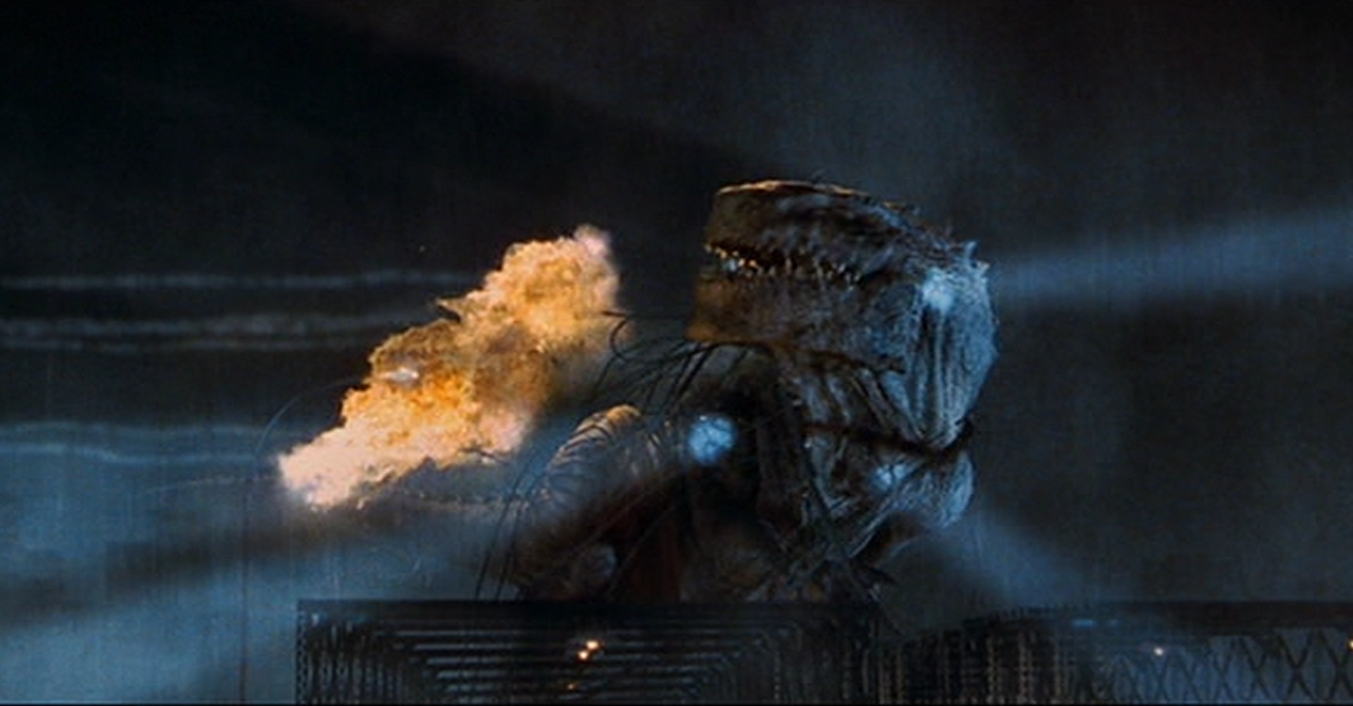
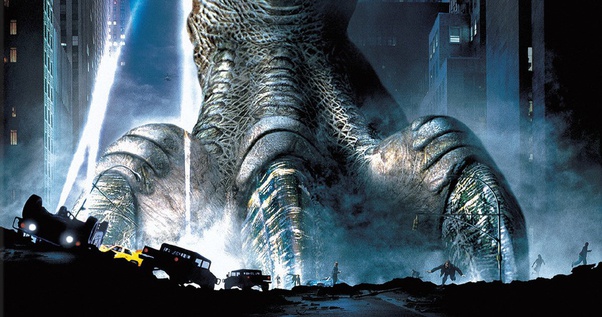
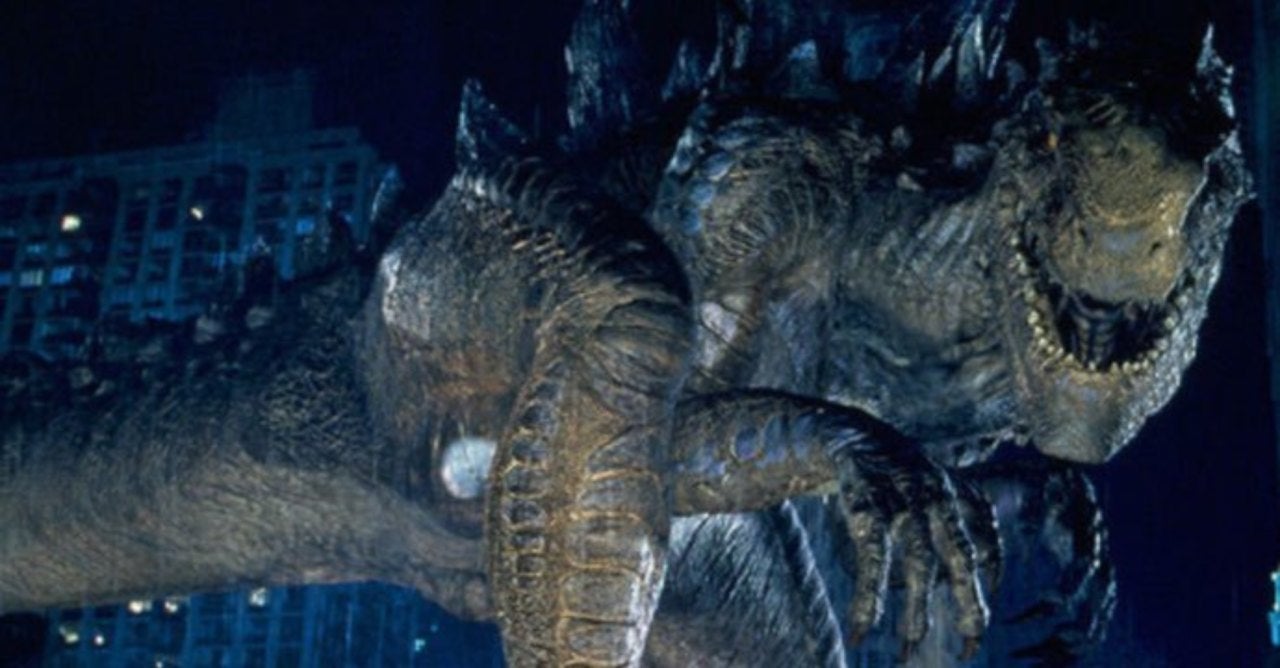
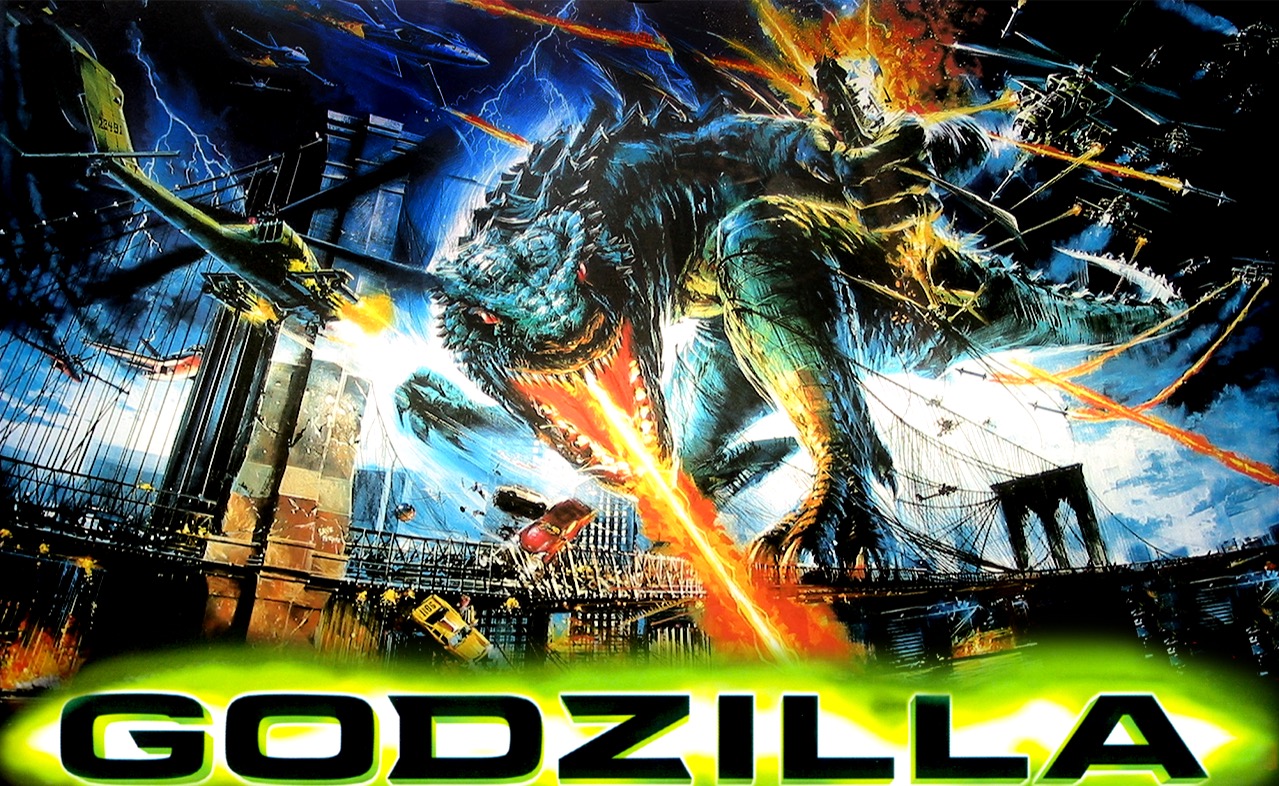
When the film went into pre-production Toho Studios gave the American creators a 75-page dossier of what they could and could not do with Godzilla's character, which consisted of a few simple rules; Godzilla cannot eat people, only fish, he has to have three rows of dorsal plates and no more or less than three toes on his feet and four fingers on his hands, he cannot be made to look silly and he absolutely cannot die in the movie. Needless to say, none of this was taken to heart by the studio and was blissfully ignored. What we got was a fast-moving iguana that though large was nowhere near the size of the Godzilla we saw in the Toho films, who could be seen towering over skyscrapers in those movies. Worse is that they also removed his ability to breathe atomic fire, instead, his breath simply fans the flames of an existing fire because that makes sense. This begs the question, “If you are going to make so many drastic changes to the character of Godzilla why bother calling the film Godzilla at all?”


Oh, right, brand recognition.

On the visual effects side of things you’d expect the guys behind Independence Day would knock that aspect out of the park, and as for the citywide destruction that’s exactly what they do, but when it comes to Godzilla himself things are a little dodgier. As far as late 1990s computer-generated monsters go this one isn’t too bad but as most of the scenes took place at night, and in the rain, you really can't say just how good the monster looks. Overall, as a Godzilla film this entry is a complete failure but if you considered it a remake of The Beast from 20,000 Fathoms then it’s a little more passable, but only a little.


"You talkin' to me? Well, I'm the only one here. Who the fuck do you think you’re talking to?"

That this film was going to piss off Godzilla fans was a no brainer, and I’m not sure what the studio was even thinking when they went for that particular design, but even if this film had included the true King of the Monsters it still would have had that horrible love story to curdle your soul. This is one Godzilla film that will never be considered canon and is best forgotten by all parties concerned.