Blog Archive

Thursday, July 9, 2020

Quest for Camelot (1998) – Review

Based on the fantasy novel The King's Damosel by Vera Chapman, Quest for Camelot was Warner Brothers' attempt at moving in on Disney’s long-held territory of animated fantasy films, unfortunately, they had very little chance of doing this with films like The Little Mermaid and Beauty and the Beast kicking off the Disney Renaissance period and it certainly would have taken something better than a film based on a little-known novel to knock Disney off that pedestal. That the studio made so many changes from the source material, making it barely recognizable to anyone who'd read the book, certainly didn't help matters much, that all said "How does it stand up on its own as an Arthurian fantasy film?"  Let's take a look.


The protagonist of Quest for Camelot is a young girl named Kayley (Jessalyn Gilsig), who dreams of one day becoming a Knight of Round Table like her father (Gabriel Byrne), but when said father is killed by a vile knight named Ruber (Gary Oldman) during an attempt to overthrow King Arthur (Pierce Brosnan), her dreams are put on hold - it should be noted that killing off a parent is a very Disney tactic so we can't fault Warner Brothers here - yet ten years later we still find Kayley dreaming of becoming a knight, despite her mother's (Jane Seymour) insistence that the Knights of the Round Table don’t need her help.  Way to support your daughter's dream, mom.  It's when the villainous Ruber returns to Camelot and steals the fabled sword Excalibur that our story finally kicks into gear as it’s up to Kayley to venture forth and save the kingdom.
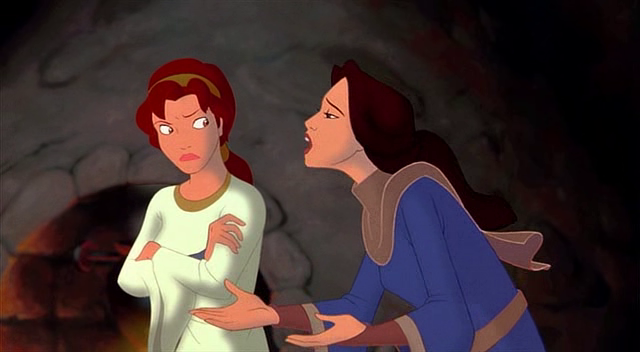
 

“Your job is to marry a prince, not save the day.”

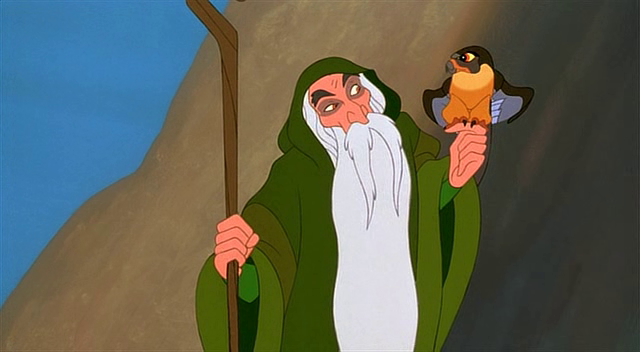
And what exactly does Kayley need to save Camelot from? Well, it turns out that Ruber has somehow come into possession of a magical elixir that will allow him to transform his soldiers into horrific mechanical monstrosities by melding them into whatever inanimate weapon they were holding. Ruber captures Kayley’s mother because he needs her to gain access to Camelot – an army of monsters apparently not enough of an advantage – and with Excalibur in his hands, nothing can stop him...well, except for one tiny wrinkle. Ruber had sent his winged griffin to steal Excalibur but when it is attacked by Merlin’s (John Gielgud) falcon it dropped the fabled sword into the Forbidden Forest and now it is a race between Ruber and Kaylee as to who will find the sword first.
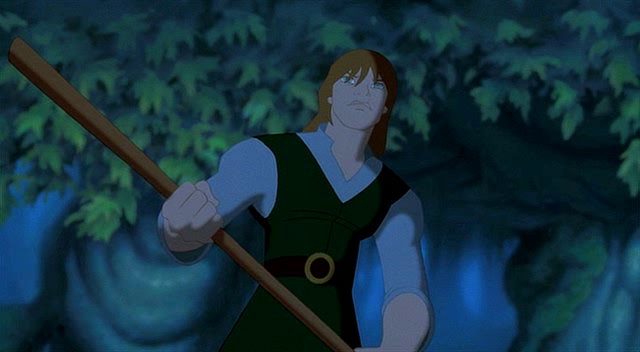
 

Luckily she finds a man to help her.

Quest for Camelot is a perfect example of how not to tell a fantasy adventure story as it fails to give us any characters to root for. Kayley is a rather obnoxious heroine and the plot continually undercuts any "girl power" theme, and that she is teamed up with the rather boorish blind hermit Garrett (Cary Elwes) doesn’t help matters any as their travails through the Forbidden Forest vary from the pedantically lame to the outright insulting.  The story is hurt further any time we cut back to Ruber and his incompetent minions as we are then constantly reminded how lame a threat our villains truly are. Then if things weren’t bad enough the movie saddles us with some terrible comic relief, and I’m not even referring to the half-axe half-chicken voiced by Urkle, which is bad enough, but that of a two-headed dragon named Devon (Eric Idle) and Cornwall (Don Rickles) who dislike each other and cannot breathe fire or fly.  To call anything "comedic" concerning this pair would be an insult to comedy.
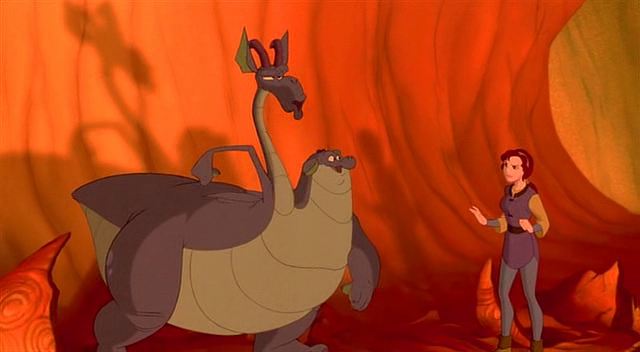
 

“We are the reasons cousins shouldn’t marry.”

The poor excuse for comedy presented here isn’t even the film’s worse failing because the plot itself is beyond the pale moronic. Ruber’s plan makes little to no sense, as is the inclusion of Kayley’s mother as a hostage as it is completely unnecessary, and when our heroes eventually find Excalibur and escape the Forbidden Forest we get blind asshat Garret telling Kaylee he won't be continuing on to Camelot with her, giving her some bullshit excuse about “There’s no place for me in Camelot” and sending her on her way alone.  Who needs a badass blind-fighter when the fate of the kingdom is on the line?  Thus he abandons her so that she can then be quickly captured by Ruber a few minutes later. Are we truly supposed to sympathize with anyone in this film?
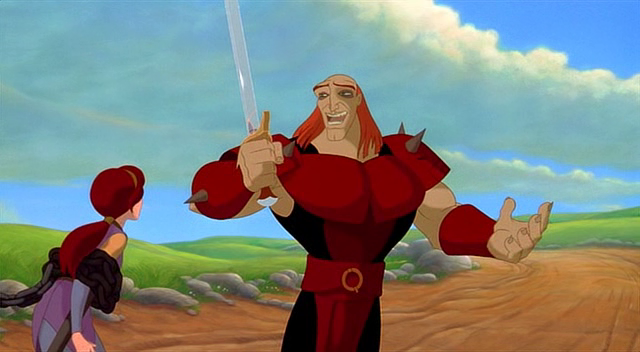
 

Did we really need Kayley to become a damsel in distress?

Garrett will, of course, come to the rescue, along with Devon and Cornwall who can now breathe fire and fly, and they will save Kayley from Ruber’s minions.  It should be noted that the only interesting thing Kayley does in is this entire movie is tricking Ruber into sticking Excalibur back into the Stone, yet the film then backtracks this female empowering moment by having her and Garrett ride off into the sunset together like any other clichéd fantasy. Don’t screenwriters understand things like character arcs? Earlier in the film Kayley wasn’t interested in getting a new dress, she wanted to be a Knight of the Round Table, yet when the film ends she gets a seat at the table but still ends up with a new dress.
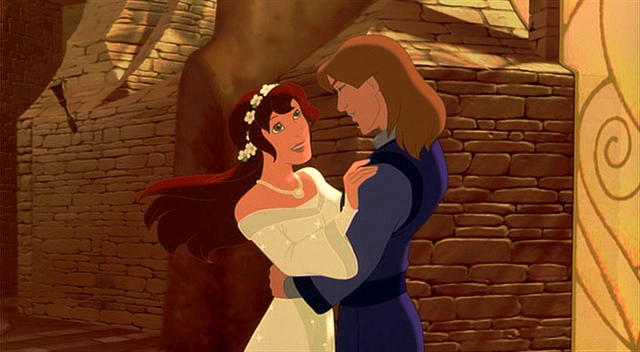
 

Way to undercut your “Girl Power” message, guys.

Stray Thoughts:

• When Excalibur is stolen Arthur orders horns to be blown to alert the populace of the theft. Question: Is Excalibur stolen so often that there is a recognizable horn signal for when this occurs?
• Kayley's father is voiced by Gabriel Byrne who played Uther Pendragon in John Boorman’s Excalibur.
• Though she’s not a Disney Princess Kayley is still your stereotypical female protagonist who dreams of something more than this provincial life.
• The two-headed dragon Devon and Cornwall tell Kayley and Garrett that they can’t go back to the Dragon Country because if they do they will be “Banished and exiled for helping humans.” How is not going back any differently than being exiled?
• Don Rickles and Eric Idle’s constant slew of anachronistic jokes was clearly an attempt to copy Robin William’s performance as the Genie from Disney’s Aladdin. They failed.
• The movie is 99% traditional animation but then they throw in a CGI ogre that would barely pass muster on an episode of the animated series Reboot.
• When Excalibur is returned to the Stone everyone is suddenly healed and all the men who were turned into monstrous half-men half-weapons revert back to normal but for some reason, Garret remains blind. As magic items go Excalibur is a total dick.
• The big question is, of course, how did a knight like Sir Uber even earn a seat at the Round Table in the first place?
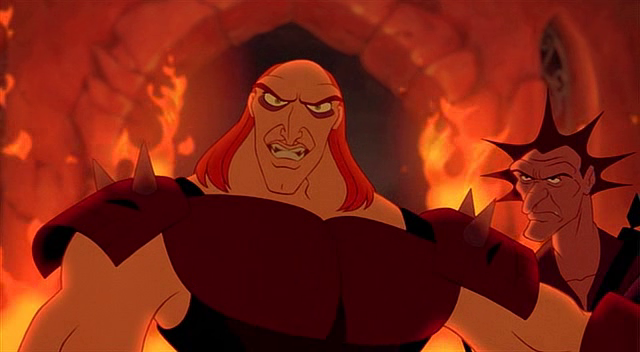
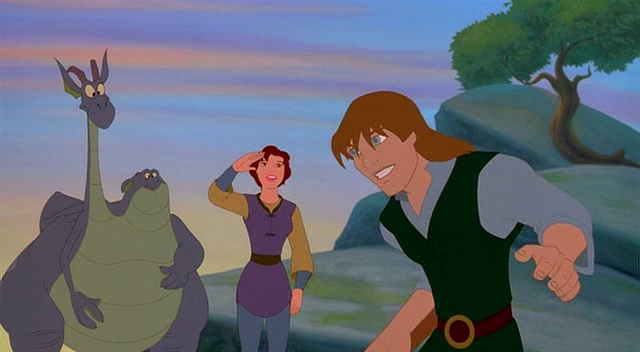
 

This guy reeks of evil from his every pore.

As mentioned this film was based on the fantasy novel The King's Damosel by Vera Chapman but Quest for Camelot bears very little resemblance to the book. The novel consisted of two sisters, an arranged marriage, the rape of one of the sisters by a mentor figure, a Red Knight who attacks their home and demands the eldest daughter marry him, and the younger sister escaping to Camelot to plead to King Arthur for help in rescuing her sister. Now, there is a blind dude who eventually shows up in the story, and he does provide a love interest for the heroine, but he also ends up dying in her arms.  This leaves one wondering, "Did the filmmakers even read the bloody book?"


I don't expect rape in my cartoons but was this the best alternative?

If we set aside the movie’s complete bastardization of the source material, and to be fair Disney is often guilty of the exact same thing, but at least the folks at Disney have the ability to tell a cohesive story which they then populate with amazing songs, but that is not the case here. This film has about a dozen songs throughout its 86 minute running time and most have nothing to do with the plot or character development, they are an assembled collection of inane drivel that will have you reaching for the fast-forward button. There is one good song in this film titled “The Prayer,” which was wonderfully performed by Celine Dion, but it was dropped into the film with absolutely no thought to context. The music arranger for this film should have been drawn and quartered or at least sealed away in a Crystal Cave.


"Could anyone see if Morgan le Fay is available?"

Quest for Camelot rightly bombed at the box office with its lazy animation, poor storytelling and forgettable songs ensuring that this film would not make the list of childhood classics.

Monday, July 6, 2020

The Scooby-Doo/Dynomutt Hour (1976-1978) – Review

Following the cancellation of The New Scooby-Doo Movies and the reruns of Scooby-Doo, Where are You!, our cowardly canine and his friends found themselves moving from CBS to ABC where the hour-long format used for the New Scooby-Doo Movies would continue in the form of The Scooby-Doo/Dynomutt Hour. This series would sandwich together an episode of The Scooby-Doo Show with an episode of Dynomutt, Dog Wonder and though the two shows mostly worked independently, we did get the occasional crossover.


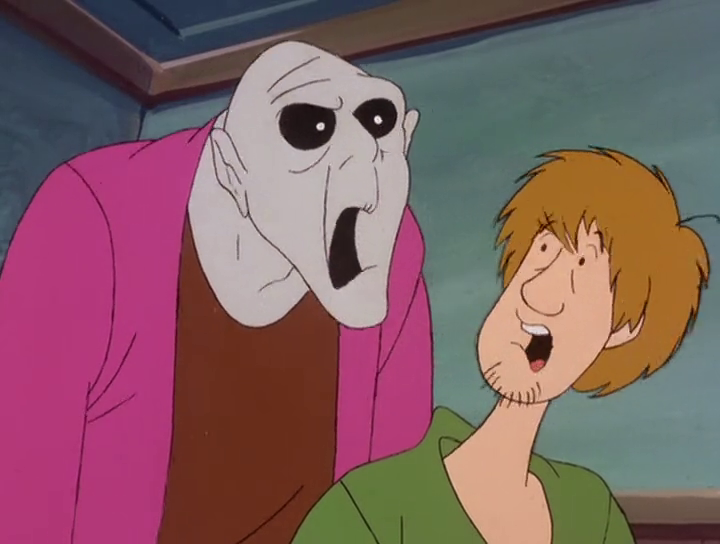
Sixteen episodes of The Scooby-Doo Show were produced as part of The Scooby-Doo/Dynomutt Hour in 1976 — though eight more segments would be produced for Scooby’s All-Star Laff-A-Lympics — and this incarnation would retain the format of the original Scooby-Doo, Where Are You! where the Scooby gang would entangle themselves with some nefarious spook or monster that would inevitably turn out to be just some dude in a mask. This run of The Scooby-Doo Show also brought us some of the classic Scooby-Doo ghosts and monsters such as the 10,000-Volt Ghost from “What a Shocking Ghost,” and in the following episode, “The Headless Horseman of Halloween,” the gang encountered one of literature’s most famous spectres. This series also included the return of the zombie from “Which Witch Is Which,” and to date is still one of the creepier monsters in the Scooby-Doo canon.


In retrospect, pink is a decidedly non-scary colour for a zombie to wear.

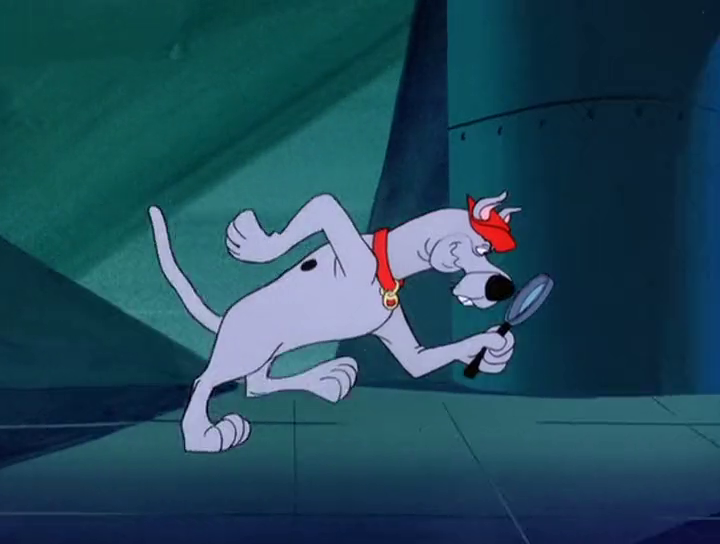
Not only did this run of Scooby-Doo cartoons team up the Scooby gang with a pair of “superheroes” it also introduced the world to Scooby-Doo’s cousin Scooby-Dum (Don Messick) in the episode “The Gruesome Game of the Gator Ghoul.” Though he’s basically a Mortimer Snerd version of Scooby-Doo, his stupidity results in him being both extremely brave and extremely cowardly, depending on whether or not he’s actually noticed the danger he’s facing. The character of Scooby-Dum has the desire to be a police dog despite his uselessness when it comes to solving a mystery — though his ignorance of the laws of physics has led to him helping his friends out of a jam — and when anyone mentions the word “Clue,” he’d leap into action with his trademark catchphrase, "Clue? Dum, dum, dum, dum," to the strains of Beethoven’s Symphony No. 5.


Scooby-Dum — a pure example of Southern Fried Stupidity.

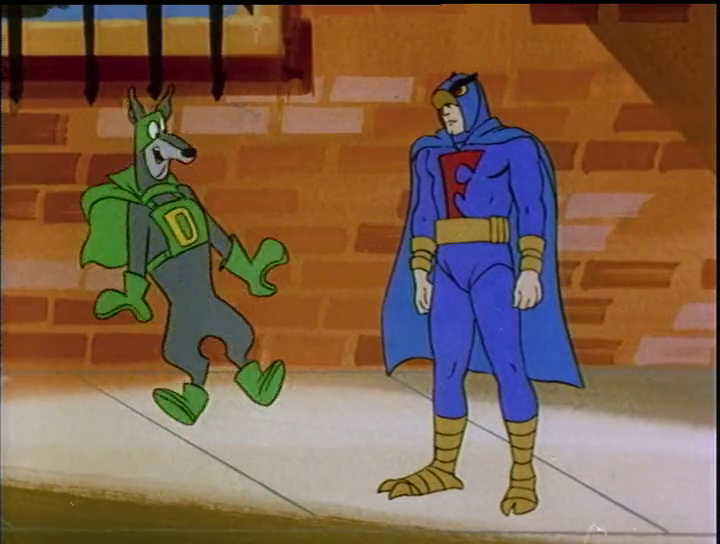
The other half of this hour-long show was, of course, Dynomutt, the Dog Wonder, a show that answered the question, “What if Batman teamed-up with a robot version of Scooby-Dum?” The basic premise of this show was that millionaire socialite art dealer Radley Crown (Gary Owens) and his mechanical dog Dynomutt (Frank Welker) hang out in the lap of luxury until they are alerted by the Falcon Flash. They then rush off to the Falcon’s Lair to switch to their secret identities: the Blue Falcon and Dog Wonder.


Our dynamic duo?

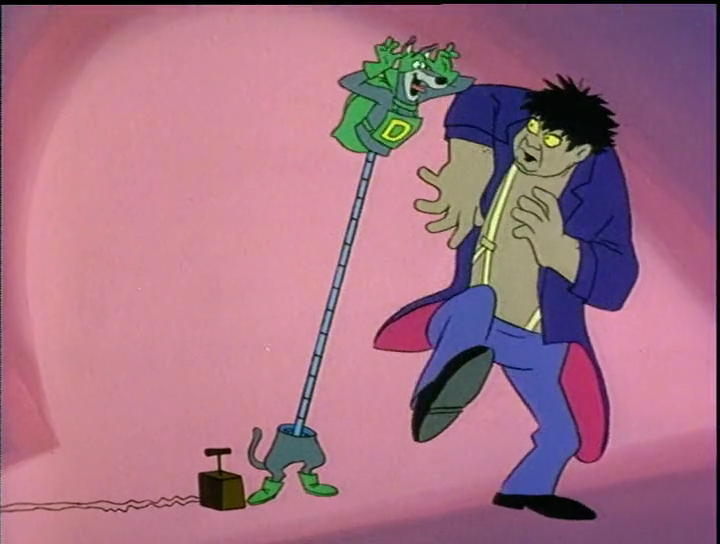
In each episode, they would tackle various bizarre criminals that look more like rejects from Batman’s Rogues Gallery than credible threats to Big City. With the likes of the caveman Lowbrow and a talking worm that even Captain Marvel wouldn’t give the time of day, there wasn’t much here to offer fans of superhero adventure.


This is their idea of a spoof of the superhero genre?

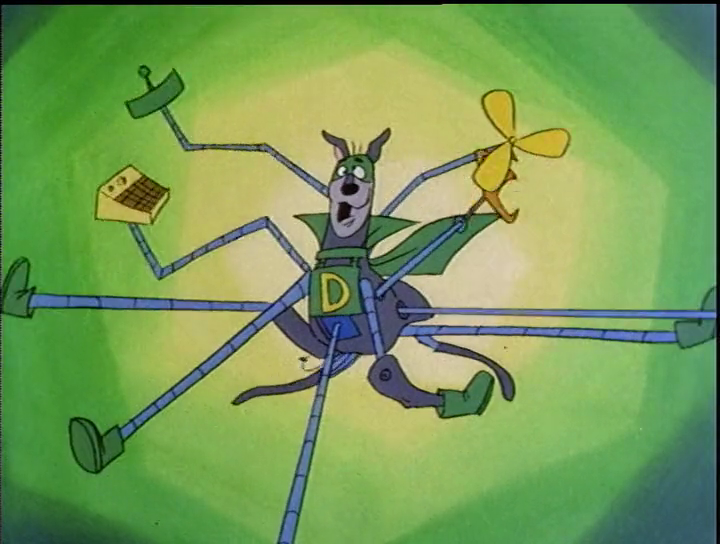
When watching Dynomutt, the Dog Wonder, a person will get a distinct Inspector Gadget vibe, as Dynomutt employs a system of miniaturized transistors that allows him to extend his limbs or neck and use them to perform extraordinary feats as well as launch various self-serving gadgets. Unfortunately, like the aforementioned Inspector Gadget, his innate clumsiness results in numerous mechanical mishaps that often result in the Blue Falcon calling Dynomutt “Dog Blunder.” It’s important to note that this show came out seven years before Inspector Gadget, and so one can rightfully assume that the creators of that show heavily ripped off the concept from Dynomutt. As a sidekick, Dynomutt is presented as a loveable goofball, but how much of his supergadgetry and silly antics you can stand will be a litmus test to how well you liked this show.


“Stronger than a train with a so-so brain!”

Stray Observations:

• In the episode “High Rise Hair Raiser,” we find the Scooby Gang hanging out at the malt shop bemoaning their lack of funds, with Shaggy scanning the want ads and Daphne commenting, “Good idea Shaggy, we’re running out of money.” This is one of those rare times when our heroes seem to be concerned about money.
• The 10,000 Volt Ghost seemed to be borrowing his origin story from the Spider-Man villain Electro.
• The Headless Horseman is one of the few recurring phantoms to plague the Scooby gang. First in this series then later in Scooby-Doo Meet the Boo Brothers, next in Lego form in Lego Scooby-Doo! Haunted Hollywood, and finally in Scooby-Doo! and the Goblin King.
• In the episode “Scared a Lot in Camelot,” we meet Shaggy’s rich uncle, Shagworthy, a zillionaire who had King Arthur’s castle transported stone by stone to America. Which begs the question: just how rich is Shaggy’s family? He has an incredible Uncle Nathaniel we meet in “The Loch Ness Mess” and in one of the early Scooby-Doo movies, Scooby-Doo Meet the Boo Brothers, Shaggy inherits a Southern plantation. Even Shaggy’s parents are rich, as we see them living in a large estate during their retirement in the episode “Wedding Bell Blues.” In the series Shaggy & Scooby-Doo Get a Clue!, Shaggy himself is the inheritor of billions of dollars. So, how can the Scooby gang ever run into money troubles?
• The cheesy narration in Dynomutt, Dog Wonder is an obvious steal from William Dozier’s narration in the Adam West Batman television show.
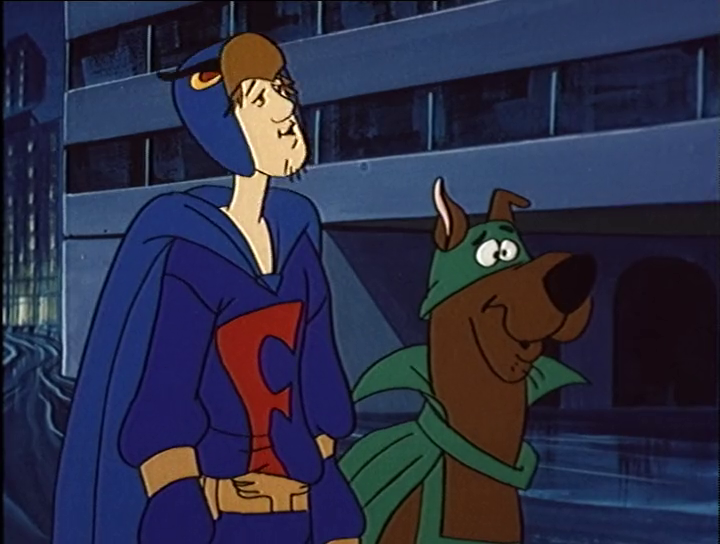
• In the final team-up between Mystery Inc. and the Blue Falcon and Dynomutt, we get Scooby and Shaggy impersonating the dynamic duo and they make a far more believable crime-fighting team.


The Blue Beatnik and Scoob-Wonder.

The cartoons that make up The Scooby-Doo Show feel like a solid continuation from the original Scooby-Doo, Where Are You, with their delightfully goofy mysteries and those meddling kids and their dumb dog, while the Dynomutt, the Dog Wonder comes across more as a dull Batman knock-off, with villains who seem ridiculous even by Scooby-Doo standards. The animation is also substandard when compared to what we find in the Scooby-Doo half of the show. Fans of Scooby-Doo will get a lot of enjoyment out of the mysteries found in this incarnation, but these selfsame fans may want to skip the Dynomutt portion as they have decidedly less entertainment value other than a nostalgic appeal.


Note: In the 2010-2013 run of Scooby-Doo! Mystery Incorporated, there is an episode called “Heart of Evil” where we are given an origin story for a very cool and updated version of The Blue Falcon and Dynomut

Thursday, July 2, 2020

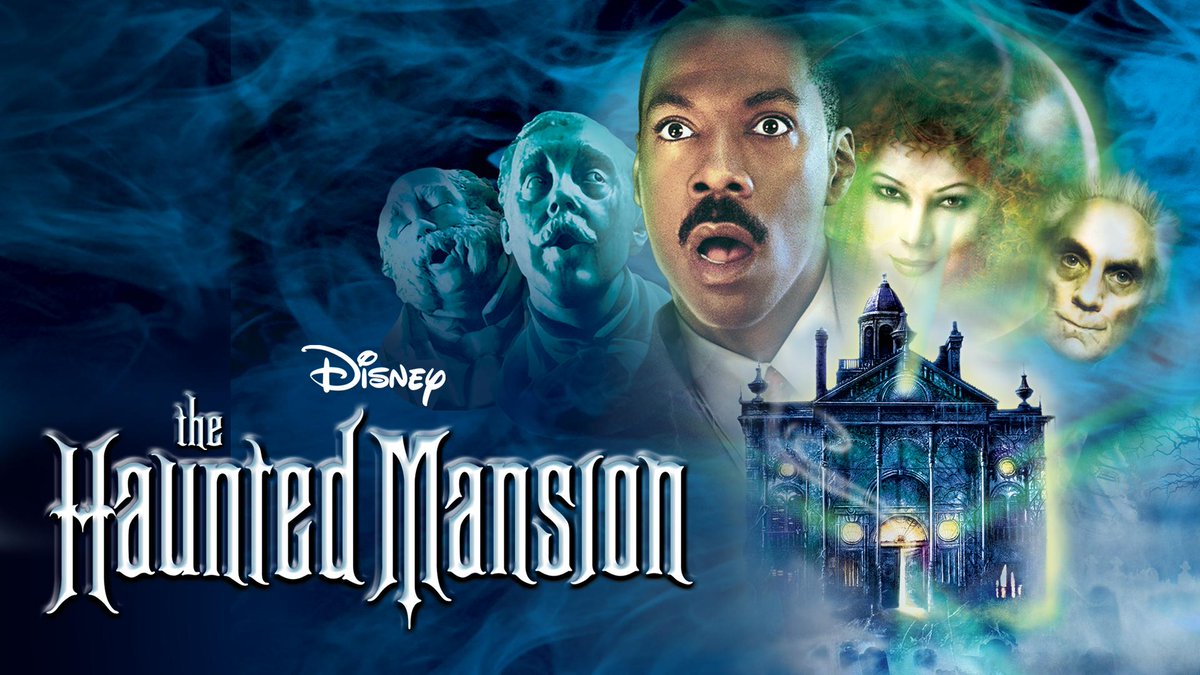
The Haunted Mansion (2003) – Review

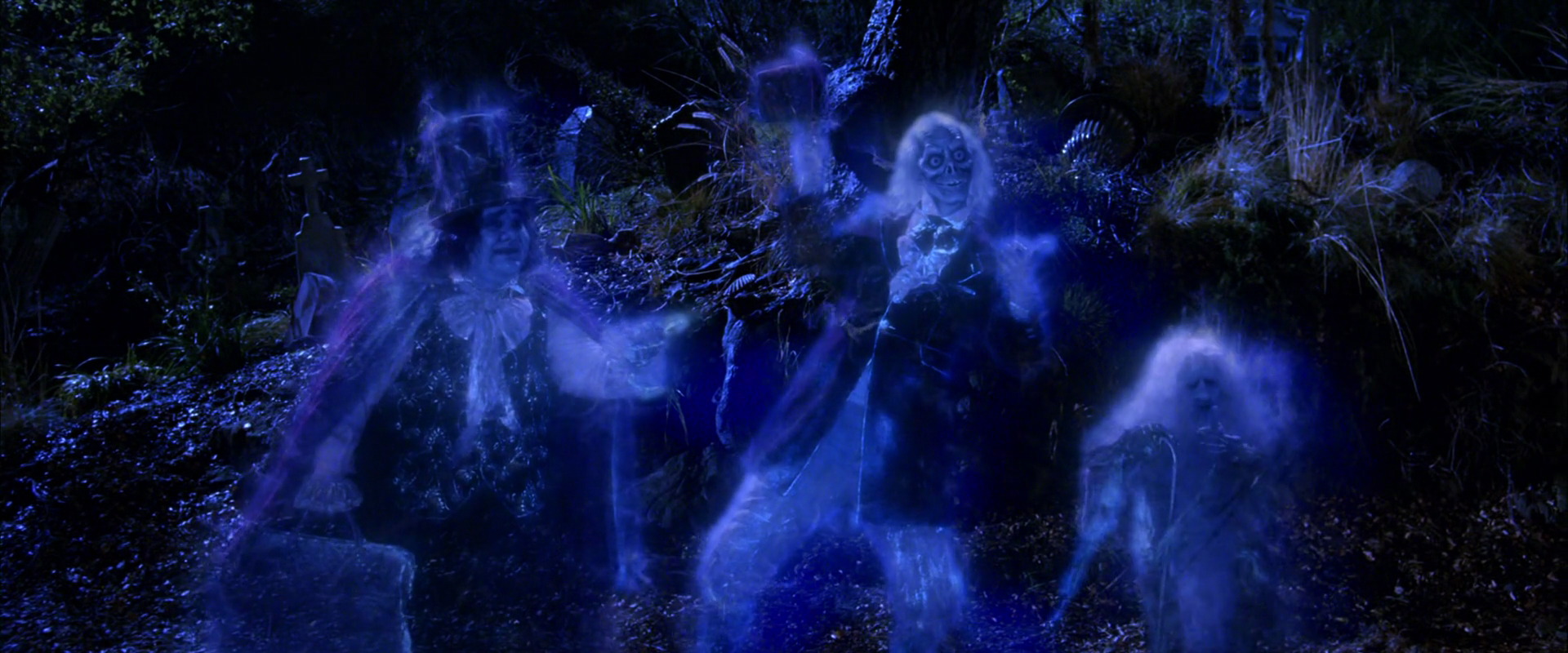
Basing a movie on a novel or stage play would be considered to be a rather common origin for many productions while basing a movie on a theme park ride was anything but normal, enter Disney Studios who just so happened to own the most famous theme parks in the world.  With corporate synergy being a practice this company was far from a novice at it’s no surprise they’d try and capitalize on some of the favourite park attractions by basing a movie on one of their more popular attractions. Disney's The Haunted Mansion was not the first such movie, with a made-for-television movie based on The Twilight Zone: Tower of Terror and the abysmal Country Bear Jamboree preceding it by a few years, but at least The Haunted Mansion tried to create a functional plot with characters that weren’t furred nightmare fuel. Granted, some of Eddie Murphy’s comedy in this film is nightmarish in its own way.


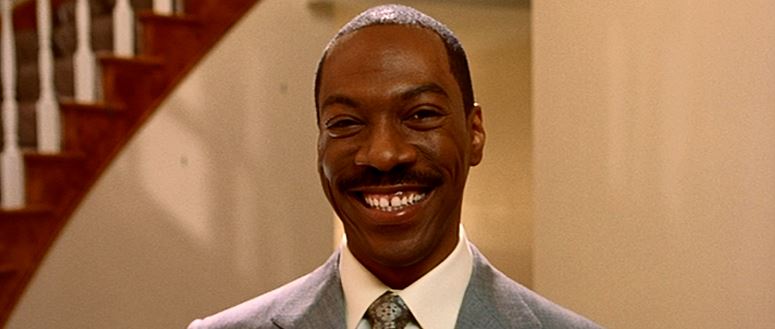
Right off the bat Disney’s The Haunted Mansion saddles us with one of the worst clichés to ever plague a Hollywood script, the workaholic dad who puts his career ahead of his family, and in this case, it’s Jim Evers (Eddie Murphy ) a successful realtor who will blow off his own wedding anniversary dinner on the off chance of landing a new client. His wife Sara (Marsha Thomason), who is the other half of Evers and Evers Realty, is understandably upset with her work-obsessed husband, as are his two children thirteen-year-old Megan (Aree Davis) and ten-year-old Michael (Marc John Jefferies), who see less and less of their father but considering the fact that their father is a grinning dickhead I would consider them both to be rather lucky on this count.


They should be happy he’s not taking them to Daddy Day Camp.

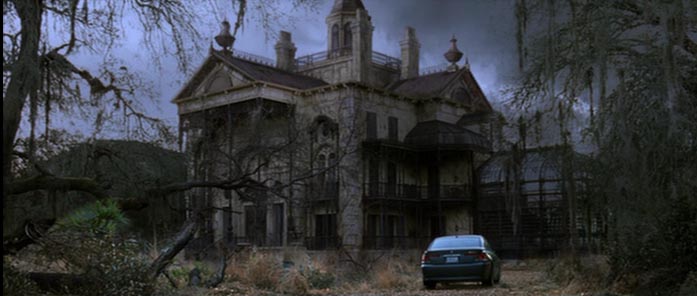
In an attempt to make amends for missing his anniversary he suggests taking the whole family on a vacation to a nearby lake, that is until a conveniently timed phone call informs him that the owner of Gracey Manor, a prestigious mansion in the Louisiana Bayou district, wishes to sell and wants to meet with his wife. Sara is told that she is the only one the owner desires to speak with but “Dad of the Year” decides to take the whole family along and make this “An adventure” one that will take “Twenty minutes, tops.” Needless to say, things do not go as planned and before you can say “The road is washed out” the Evers family are trapped in what is soon revealed to be a decidedly haunted house.


Who would have guessed this place was haunted?

The key problem I had with this movie is that it would have worked so much better as a straight-up scary movie for younger audiences, you don't need Eddie Murphy mugging at the camera when you have amazing production designs by John Myhre, who gives us a gorgeously spooky mansion to wander through, as well as some brilliant nods to the Disney attraction and some delightfully frightful ghosts. Having Murphy bumbling around such sinister surroundings is akin to casting Abbott and Costello to star in Kubrick’s The Shining. I’m not saying you couldn’t make a decent comedy out of The Haunted Mansion I’m just not sure there was a good reason to try. Now, if one were hell-bent on going in that direction a better blend of dark comedy would have been needed for it to work, instead, we get a goofy-ass mystery that makes little to no sense.


“Keep looking, the plot has to be here somewhere.”

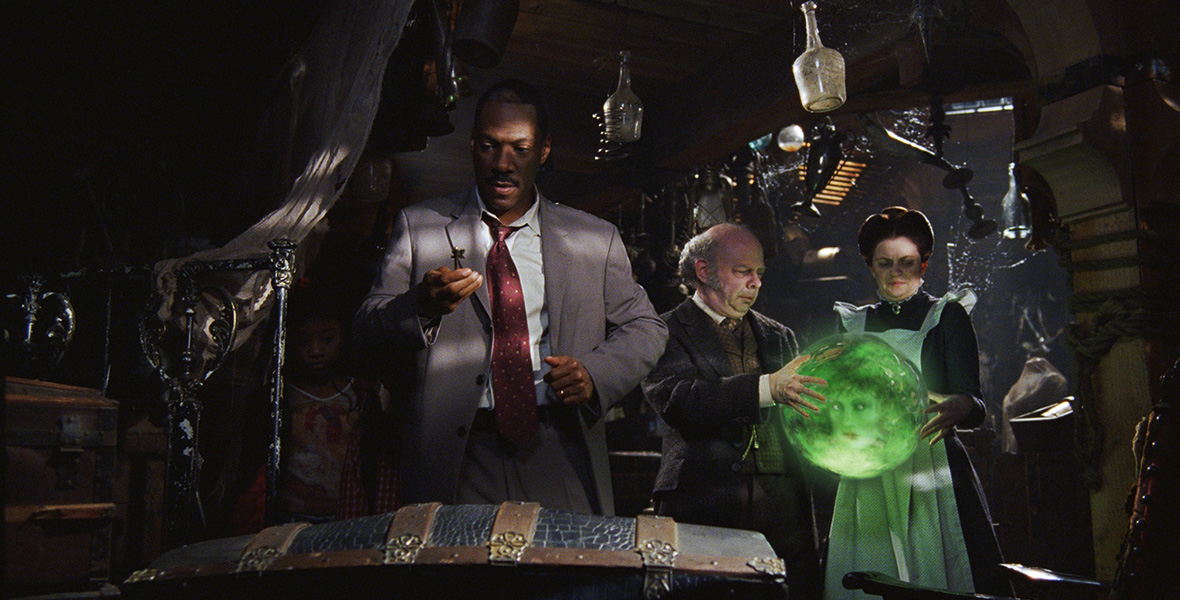
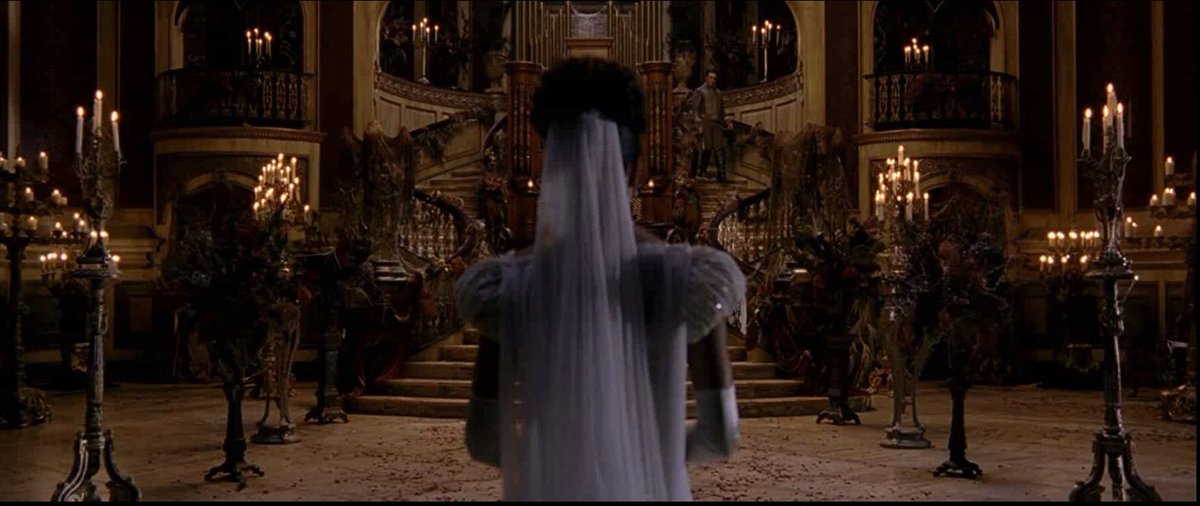
And what mystery must our intrepid band of mortals uncover? The plot of this particular Haunted Mansion borrowed a few elements from the Paris version of the ride, which was about a doomed bride and groom, but they also threw in a ridiculous curse that makes the one from Beauty and the Beast seem reasonable by comparison.  Turns out that back in the late 1800s a wealthy Louisiana landowner named Edward Gracey (Nathaniel Parker) had fallen in love with Elizabeth Henshaw (Marsha Thomason), a multiracial servant in his grand manor house. However, when he receives a “Dear John” letter – which for some strange reason she followed up with suicide via poisoning – he hangs himself in despair. Now, according to a prophecy, given by the floating head of Madame Leota (Jennifer Tilly), only the reuniting of Gracey and Elizabeth can lift the curse. The question is "What bloody curse is everyone talking about?" Correct me if I’m wrong but doesn’t a curse have to be laid by somebody? If so who in the hell cursed Gracey Manor? Was there a deleted scene revealing that after the “double suicide” Madame Leota cast the curse? We later learn that Elizabeth didn’t actually commit suicide but was murdered by the family butler Ramsley (Terence Stamp), who killed her to prevent Gracey from abandoning his heritage, so did he cast the curse?


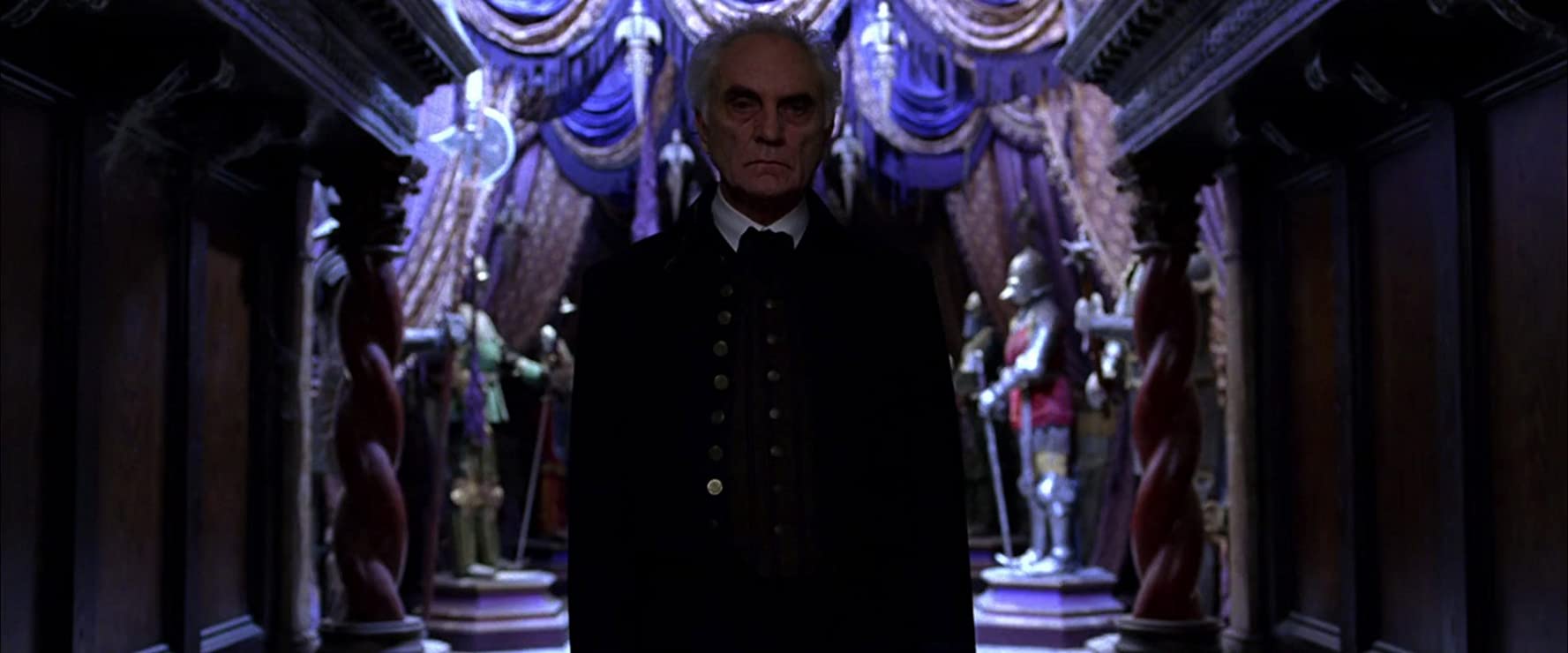
That’s right, the butler did it. So old a cliché that even the film mocks it.

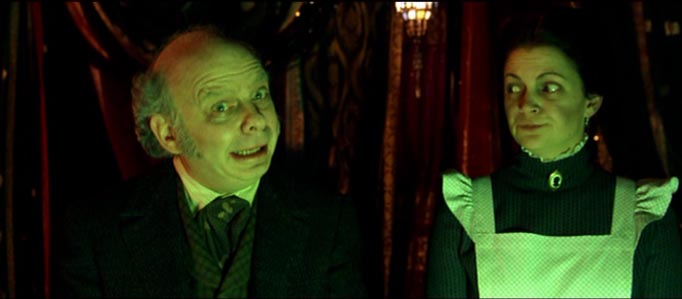
Or was the curse cast by the vengeful spirit of Elizabeth Henshaw? Though that seems rather out of character as she didn’t come across as the evil vengeful type, then again death can leave one a little bitter. And good ole Ramsley seemed very motivated in getting the curse lifted, tricking and blackmailing Sara into marrying Gracey, so his being behind the curse doesn’t make a whole lot of sense. So that just leaves Madame Leota and the servants (Wallace Shawn and Dina Spybey-Waters ) as curse laying suspects, yet they had even less of a reason to curse the household than that asshat Ramsley had.


“That’s inconceivable!”

Did I mention that “everyone” believed Sara to be Gracey's reincarnated lost love? Yep, they bring out that old chestnut, but even though she is the spitting image of the dearly departed Elizabeth she isn't actually the reincarnated spirit of anybody – the spirit of Elizabeth was actually floating around the mansion as a glowing orb for some reason – so her resembling Elizabeth was just a case of Ramsley noticing the likeness from one of the “Evers and Evers” real estate flyers and then luring her down to the manor for a visit. Whether or not Ramsley believed her to be the reincarnated Elizabeth is never made clear but if he knew Sara was simply a look-a-like was he hoping that a dead-ringer would fool the curse?


Maybe it was one of those non-specific curses?

Stray Observation:

• If the ghosts in this mansion were so volatile as to even attack random kids trying to deliver flyers to this place it would have attracted a lot more attention from paranormal investigators.
• Sara is rather blasé over the mansion’s clearly padlocked gate suddenly opening under its own volition. This is the point I’d be turning the car around and heading home.
• In the 1983 stand-up comedy special Eddie Murphy: Delirious Murphy stated that black people wouldn’t be dumb enough to hang around a haunted house. Thus the 1980s Eddie Murphy would never have set foot in The Haunted Mansion.
• We see several medieval figures including an armoured knight within the mansion’s cemetery, but why would such individuals be buried in a private family cemetery in 1880s Louisiana? The premise of The Haunted Mansion ride was that Walt Disney collected ghosts from all over the world but that is not the premise behind this movie.
• The film dances lightly around the reason Ramsley was against the marriage and her being black is never stated outright as the cause.  I guess you can't have overt racism in a Disney film.
• Jim Evers is able to acrobatically fight his way through a hallway of animated suits of armour. Was there a deleted scene revealing he was retired ninja?
• The film’s opening prologue looks more akin to the masquerade from The Phantom of the Opera than it does a Haunted Mansion movie.


“Please ensure that Box Five is set aside for Eddie Murphy.”

The original theme park attraction basically had two key parents in its creation, two Disney Imagineers who had very differing opinions on what such a haunted house should entail. First, there was Disney background artist Claude Coates, who envisioned a scary adventure with moody surroundings like endless hallways, corridors of doors and numerous characterless environments, and on the other side of the family, there was Marc Davis, one of Disney’s premier animators and one of the revered Nine Old Men, who thought the ride should be silly and full of gags and goofy characters. In the end, both artists got their ways as animator and top Imaginer Francis Xavier Atencio combined both their approaches and ideas, creating a transition from dark foreboding to "spirited" entertainment. Sadly, the movie failed at creating any semblance of such a blend of horror and comedy as it’s mostly a comedy with just the random element of horror popping up, and I do mean horrifying elements.


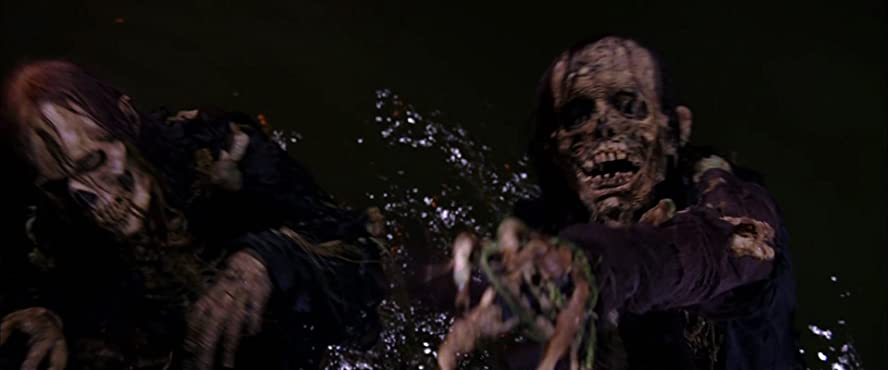
When effects artist Rick Baker’s zombies show up most kiddies will shit their drawers.

Disney’s The Haunted Mansion is not the worst ride based movie out there, hell it’s not even the worst haunted house movie, but the comedy on hand mostly falls flat and the story itself makes little to no sense. It's possible that this film could work as an introduction to the horror film genre for younger viewers – though that zombie sequence could cause some nightmares – and even adults can get some enjoyment by picking out all the nods to the park attraction it was based on and join those grim grinning ghosts who come out to socialize, but overall it's a largely disappointing ordeal.

Note: With Disney currently in full-on remake mode they should take a look at giving this ride another shot at a film adaptation.

Monday, June 29, 2020

Daphne & Velma (2018) – Review

In the fifth installment of the Scooby-Doo live-action film series, we get another “reboot” with a different take on how the Scooby gang first met, or to be more accurate, how two of the Scooby gang first met because you won’t find Fred, Shaggy over even Scooby-Doo in this particular mystery. The big question here is, “Can you have a proper Scooby gang mystery with only 40% of the gang?”


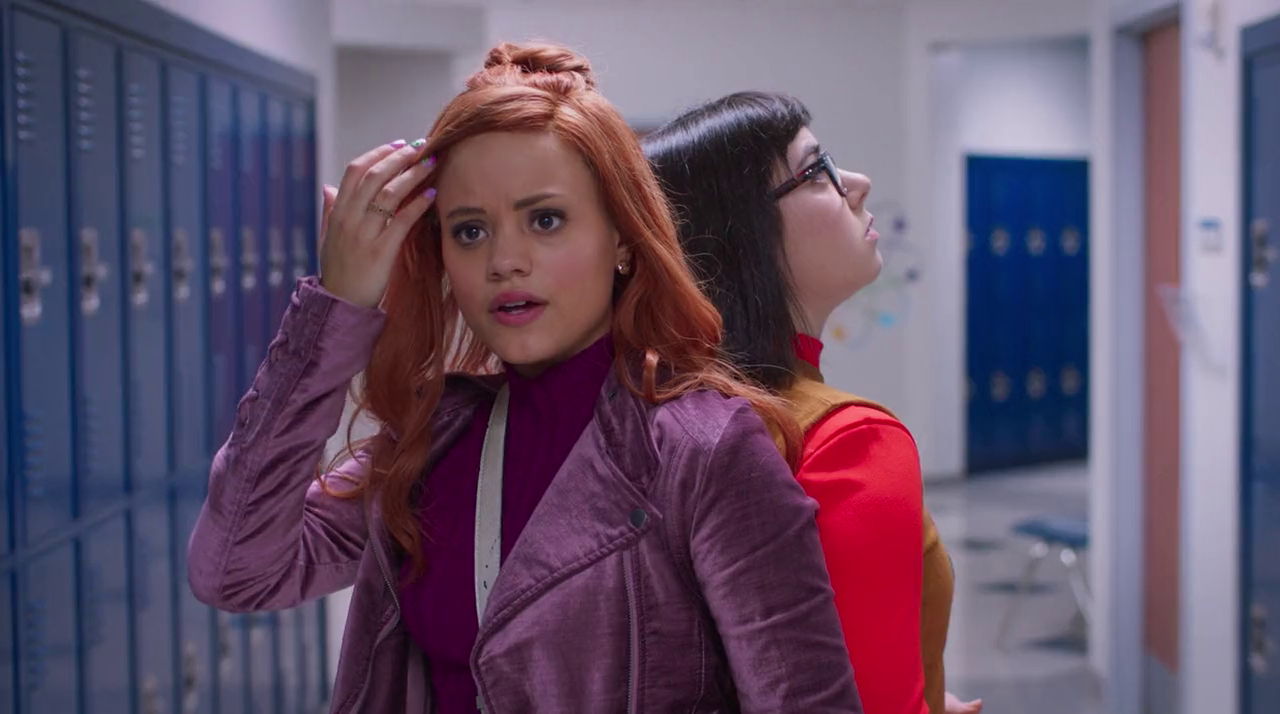
This movie posits the idea that Daphne (Sarah Jeffery ) and Velma (Sarah Gilman) had become best friends via online social media, with Daphne’s parents being globetrotting tech purveyors preventing her from making any real-life friends, but when Daphne’s parents move to Velma’s hometown of Ridge Valley our lovely redhead thinks it will be great to be meet Velma in person, but how wrong she is. Turns out Velma is a social pariah at Ridge Valley and she immediately shuns Daphne as if the poor girl had the plague.


And just why would her online BFF give Daphne the cold shoulder?

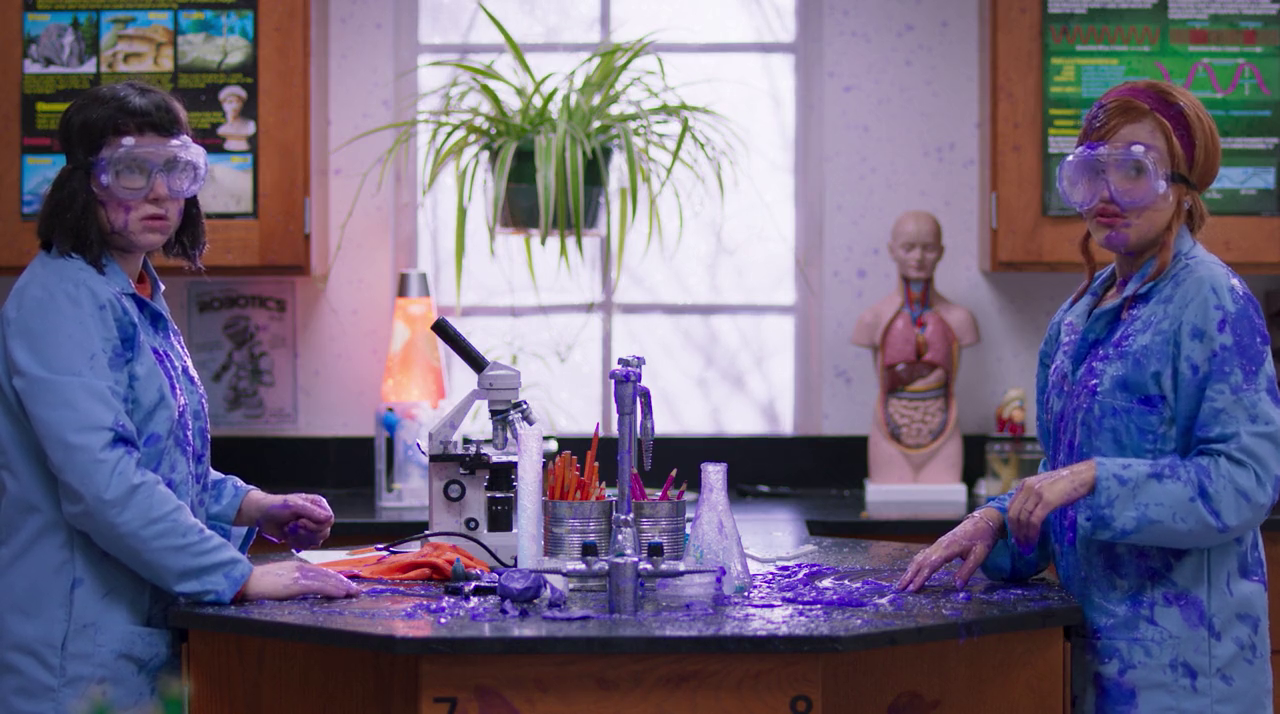
In the previous live-action Scooby-Doo movies there was always a supernatural element of some sort but with Daphne & Velma we return to the “It’s just some dude in a mask” format of the original cartoon, unfortunately, the mystery we are saddled with is all kinds of moronic. The plot of this movie centers around the strange goings-on at Ridge Valley High where brightest and most popular kids are being turned into mindless zombies – sadly, not the flesh-eating kind but more the paste-eating kind – and to prevent being a target Velma has worked hard to keep her school scores really low. Does Velma warn Daphne of this issue, so that she can take proper precautions? Nope, she just acts like a complete jerk for no logical reason and leaves her friend to flounder in ignorance. As an actress, I think Sarah Gilman was a decent choice for the part of Velma but the film spent way so much time making her unlikeable that at a running time of a mere 75-minutes we don’t have enough time to get to know the real Velma. The script sets up Velma as this abject coward who only thinks of her own safety, and that is not the Velma I know.  I always thought Shaggy and Scooby supposed to be the cowardly ones.


Velma, the cowardly blogger.

As for the mystery itself, well, there isn’t much going on here either. We learn that Ridge Valley High is sponsored by a tech billionaire named Tobias Bloom (Brooks Forester), who is using the school to beta test his latest inventions, and when the ideas belonging to the brilliant students who get "mind-wiped" are announced as the “latest” Bloom innovations, the very next day, it doesn’t take a Sherlock Holmesian intellect to figure out who is behind it all.   This puts Daphne and Velma in a very bad light as it makes them look like total idiots. Sure, this is their first mystery together, and one can’t expect them to be in the groove yet, but their bungling around as they futilely try and solve this case just points out how much we miss Shaggy and Scooby-Doo. It was those two who brought that kind of comic relief to the Scooby-Doo mysteries and saddling this aspect onto Daphne and Velma just doesn’t work.


Slapstick comedy, anyone?

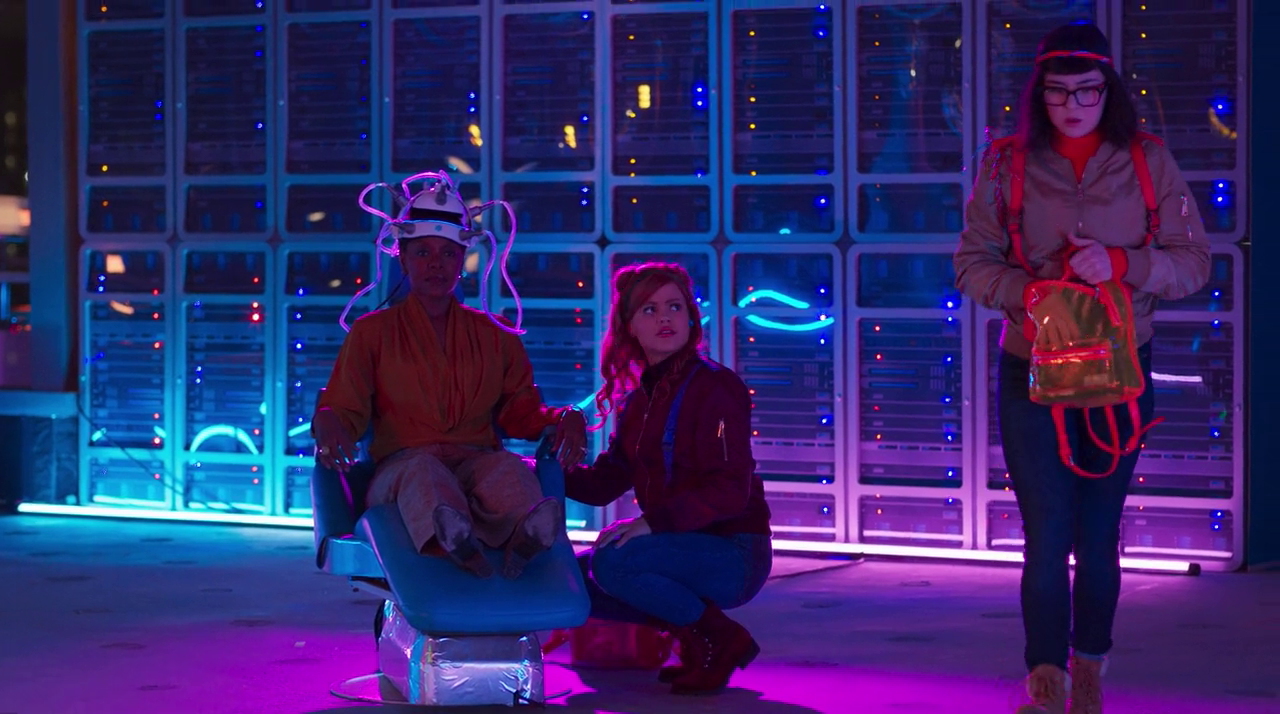
So, with the guilty party obviously being Bloom we aren’t left with much of an actual mystery to solve, the film does try and throw in some random suspects but none of them are even briefly credible. We have Two-Mop-Maggie (Mickie Pollock) the gruff janitor with a surly attitude, and then we have Griffin Griffiths (Evan Castelloe), who could be taking out the competition so that he can uphold the family legacy of being top dog at Ridgely High, next we have Daphne’s dad (Brian Stepanek) who is revealed to be a stalker of his own child – under the pretense of keeping her safe – and he even goes to the point of floating around the school dressed as the Grim Reaper, making him not so much a suspect as an utter moron and a terrible parent. Now, the movie does try and throw a twist at the end with the big surprise reveal that tech billionaire Tobias Bloom doesn’t actually exist, that he was a hologram created by fellow Ridge Valley High student Carol (Vanessa Marano), who is actually a twenty-six years old woman who disguised herself as a senior student/advisor to better monitor the pupils for their ideas because she had become creatively bankrupt.


The plot is a little more Bond villain than I’d expected.

Stray Observations:

• Velma has always been depicted as the brainy one of the group but her becoming the clichéd nerd outcast in high school was not a needed backstory element.
• In this movie internet shaming becomes part of a school curriculum. Is this idea ridiculous or a portent of things to come?
• One of the students has the idea of a phone making food and this somehow translates into Bloom coming up with a 3D printer that can replicate food. Do the writers not understand that coming up with an idea is not the same as realizing the final product. Many people have thought about teleportation and yet we still don’t have “Beam me up, Scotty.”
• Daphne’s father isn’t just an extreme helicopter parent he must also be a precog to be able to help her avoid random accidents that threaten his daughter's safety.
• I give the film credit for having two female leads solving the mystery without men giving them a helping hand – Daphne’s idiot dad notwithstanding – but why did the villain also have to be a woman?


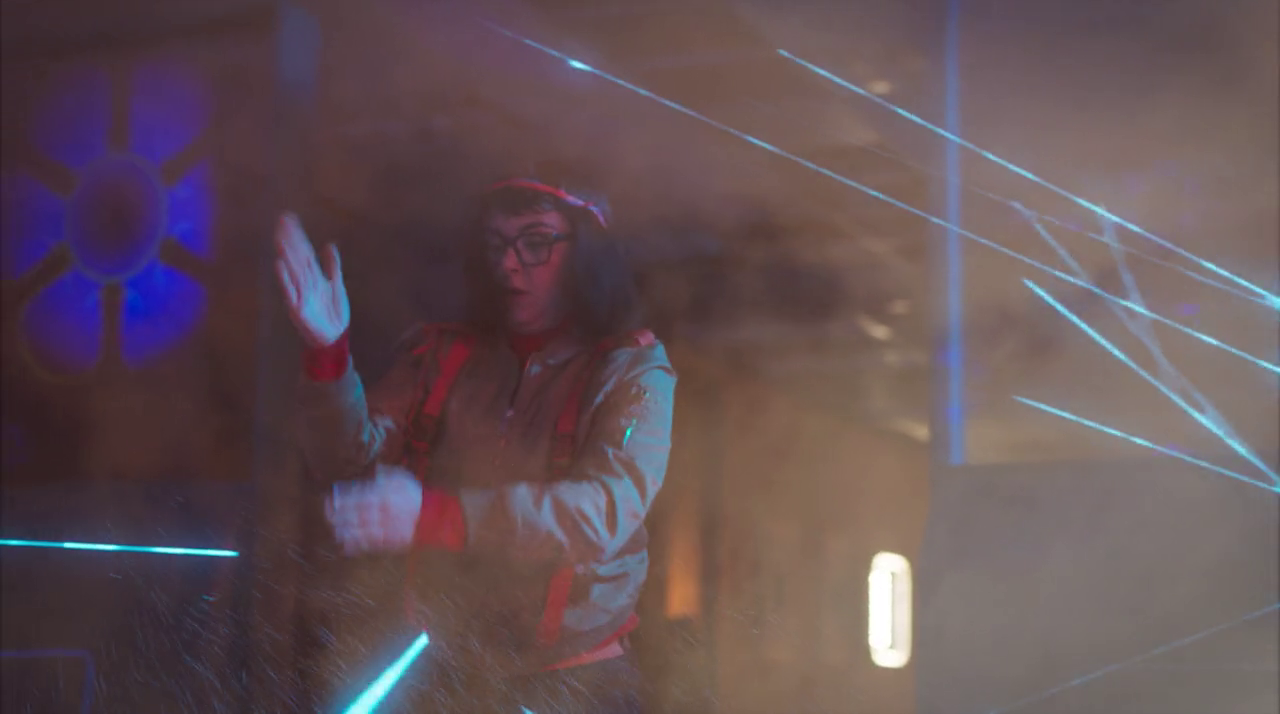
And Velma can karate chop lasers?

I liked the dynamic of Daphne being a Fox Mulder type “The Truth is Out There” character while Velma was her more supportive but skeptical friend, if not downright cynical at times, but the film’s forced conflict between them was so contrived as to be pretty much unbelievable. We never get a plausible reason for why Velma would shun Daphne at school because the idea of “I did it to protect you” just doesn’t wash. Knowledge is power and leaving your friend in the dark is more likely to put her in danger than to protect her. Daphne & Velma has been trumpeted as a “Girl Power” movie but the script does them no favours and though I have no problem with the idea of a Scooby-Doo movie without Scooby-Doo this was certainly not the way to go about it.


This could have easily been any one of a dozen Disney Channel Originals without it being forced into the mould of a Scooby-Doo spin-off, it could have been an extended episode of K.C. Undercover with Zendaya without much script tweaking needed, and the end result is a movie that is more disappointing than just outright bad and one that I can’t recommend to fans of Scooby-Doo.

Thursday, June 25, 2020

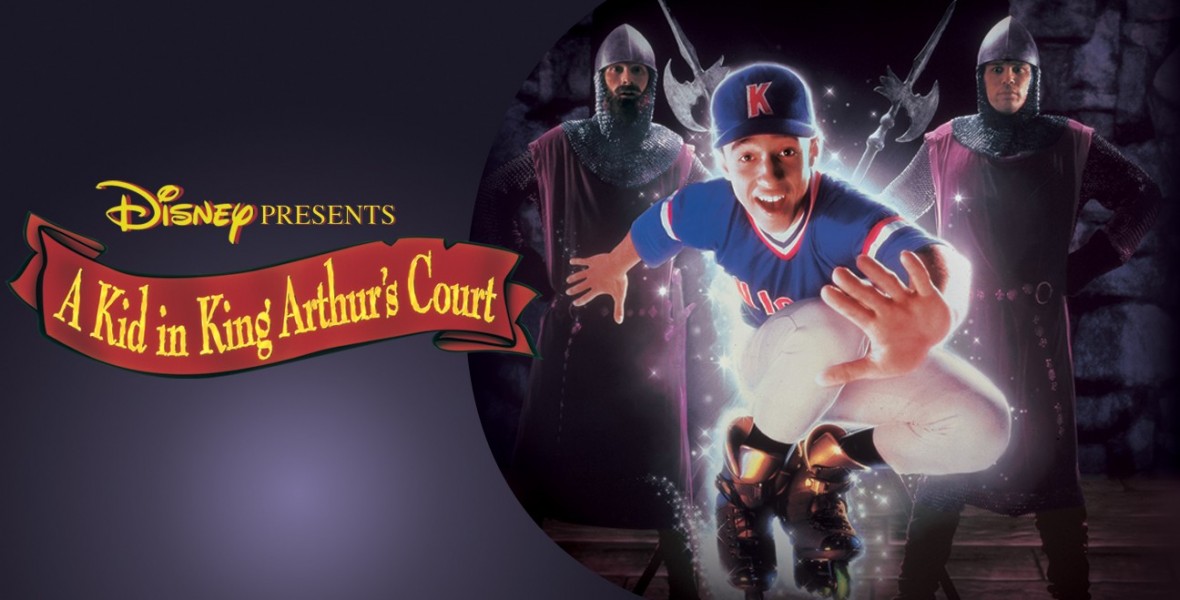
A Kid in King Arthur’s Court (1995) – Review

Adapting the stories of King Arthur and his Knights of the Round Table is nothing new to the people at Disney having already given us the animated classic The Sword and the Stone, yet with A Kid in King Arthur’s Court we not only get another King Arthur movie from Disney but also their second adaptation of Mark Twain's novel A Connecticut Yankee in King Arthur's Court - the previous incarnation being the goofy sci-fi fantasy movie Unidentified Flying Oddball back in 1978 - unfortunately, this swing at the bat is a clear miss.


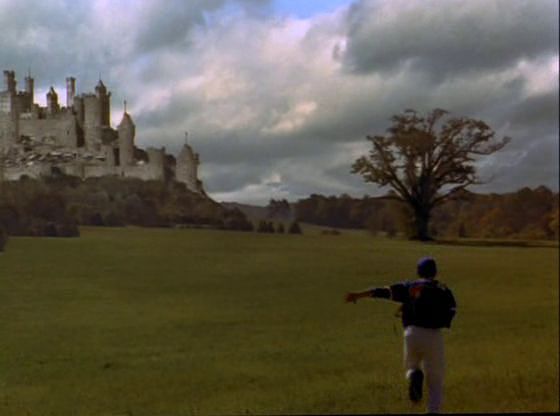
If possible A Kid in King Arthur’s Court is an even looser adaptation of Mark Twain’s novel than the Unidentified Flying Oddball was and being that film involved a space shuttle and robots that is saying something, but this 90s take on the story is more a case of "Rookie of the Year meets Medieval Times." The protagonist of this story is one Calvin Fuller (Thomas Ian Nicholas), a Little League baseball player so bad at the game that he’s too terrified to even swing at the ball. After another pathetic strike-out at-bat Calvin finds himself thrown back in time, due to an earthquake opening a rift that plunges him back into the Dark Ages, where his impromptu arrival lands him on the head of the Black Knight and saving the Crown Jewels of Camelot in the process.


“It’s only a model.”

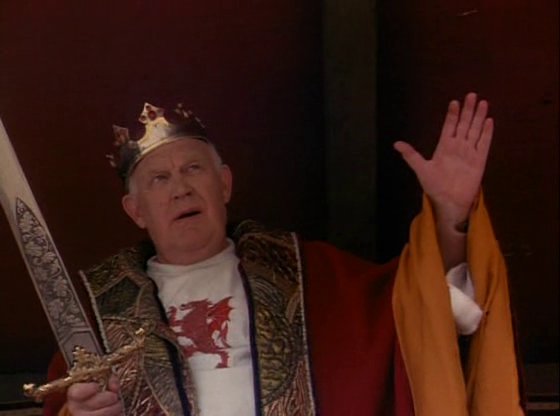
Calvin quickly finds himself mixed up in court intrigue as this particular King Arthur (Joss Ackland) is a doddering ruler and Guinevere is long dead as is the wizard, Merlin, while the evil Lord Belasco (Art Malik) has been robbing the citizens’ blind in the name of the king. For some reason Belasco considers Calvin a threat accuses him of being a spy and challenges him to Trial by Combat, but as Calvin is the one being challenged he has the choice of weapons and so he chooses “Combat Rock” and proceeds to attach his Sony Discman to a couple of drinking horns. The Rock and Roll cacophony that follows shocks the court and drives Belasco from the room, it’s this scene that pretty much sets the tone for the rest of the film. Throughout the movie Calvin will use various modern objects, whether found in his knapsack or redesigned by the local blacksmith, to thwart the evil machinations of Lord Belasco.


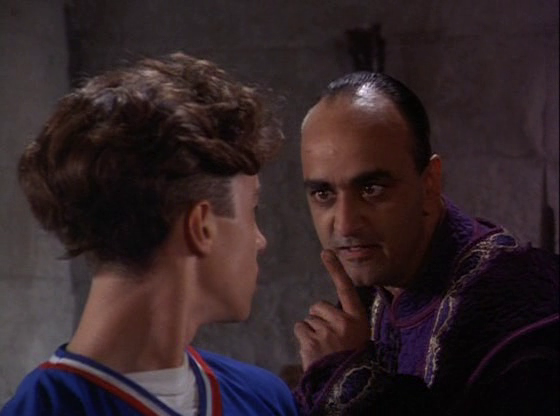
You know your film is in trouble if this is your chief villain.

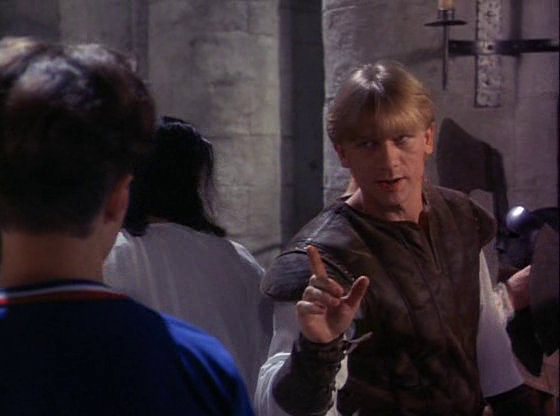
As the goal with most Arthurian villains, Belasco wants the throne for himself, but as the King’s eldest daughter Princess Sarah (Kate Winslet) has refused to marry any of her suitors – she’s hung up, on the whole, marry for love thing – and thus who she marries will now be settled at the upcoming tournament, something Belasco would rather avoid. Meanwhile, Calvin starts to fall in love with the King’s youngest daughter, Princess Katey (Paloma Baeza), and much of the film’s running time is spent with him teaching her about rollerblading, bicycling and eating Big Macs. The fish out of water element of this story is quite downplayed and instead focuses more on Calvin developing a backbone and learning to fight. He is introduced to the castle’s swordmaster Kane (Daniel Craig), who tries to teach him swordplay and jousting, but Kane’s real purpose to the plot of this movie is that he is the secret lover of Princess Sarah.


“I like my plots shaken not stirred.”

Now, to call what follows a “plot” is using the term rather loosely as A Kid in King Arthur’s Court isn’t all that concerned with story structure or even making a lick of sense. We get Calvin communicating with the spirit of Merlin (Ron Moody) through a magic well – Merlin’s terrible spellcasting from beyond the grave being responsible for Calvin’s arrival in Camelot – and Lord Belasco’s moronic plot to seize the throne, a plot that involves kidnapping Princess Kate so as to force Princess Sarah to marry him, “If you do not consent then Princess Katherine will die.” That he then accuses Calvin of murdering Princess Kate and orders him arrested is not only moronic but makes no sense because there is nobody to prove a murder took place and if Katey were actually dead he’d lose his hold on Princess Sarah. The problem here is that Belasco’s power behind the throne is never quite made clear. Is King Arthur simply a puppet and that all the knights and nobles secretly support Lord Belasco? If so why not simply seize the throne? If Belasco doesn’t have military support needed to overthrow Arthur once his plot is exposed, which is exactly what would happen once Sarah was either returned or confirmed as being murdered, nothing would stop either Sarah or the King from ordering his execution. This entire film hinges on the audience not giving anything we hear or see a second's thought.


“Arthur, the Once and Future Doddering Old King!”

Stray Thoughts:

• Ron Moody seems to be reprising his role as Merlin from Unidentified Flying Oddball.
• I’m not sure “Combat Rock” could be considered a form of weaponry. I was kind of hoping he’d challenge Belasco to a Battle of the Bands.
• No matter how talented a 6th-century blacksmith was he would not be able to build functional rollerblades with the tools and materials of the time.
• Calvin uses Krazy Glue to stick his hands to the lance as well as his butt to the saddle, but when he is unhorsed, saddle and all, his hands and butt are miraculously freed.
• Belasco’s plans at first seem to be derived from him not wanting to participate in the tournament, him being a weaselly court flunky this would be understandable, but then he turns out to be very good at jousting and he takes out several knights.  So what's his deal?
• King Arthur announces that all freedmen can enter the tournament, which would allow Master Kay to compete and win the hand of Princess Sarah, but why couldn’t he simply grant knighthood to Kay in the first place?
 

And what about the mysterious Black Knight?
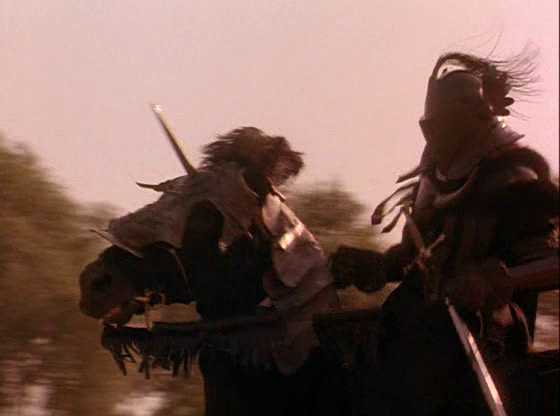
The only interesting element of A Kid in King Arthur’s Court is the reveal that the shadowy Black Knight was not actually a villain at all - he’s seen by Calvin and Katey giving food to the starving populace of Camelot and even gives aid to Calvin and Arthur - but the even bigger reveal is that the Black Knight is none other than Princess Sarah herself, who wins the tournament and her right to choose her own husband. If this film had ditched the whole Connecticut Yankee in King Arthur's Court aspect and just made a movie about Kate Winslet the badass princess, with Daniel Craig as her love interest, we’d have had a much better movie, instead, what we are left with is lame comedy and plot that couldn’t withstand the scrutiny of a ten-year-old. A Kid in King Arthur’s Court is a film to be avoided but if you’d like to watch a fun Disney take on the Mark Twain story then do check out 1978’s Unidentified Flying Oddball, it’s a lot more fun.

Monday, June 22, 2020

Scooby-Doo! Curse of the Lake Monster (2010) – Review

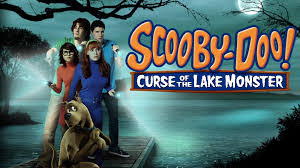
With Scooby-Doo! Curse of the Lake Monster we get Cartoon Network’s sequel to the 2009 prequel Scooby-Doo! The Mystery Begins making this the fourth installment in the live-action Scooby-Doo series but it’s also another made-for-television production.


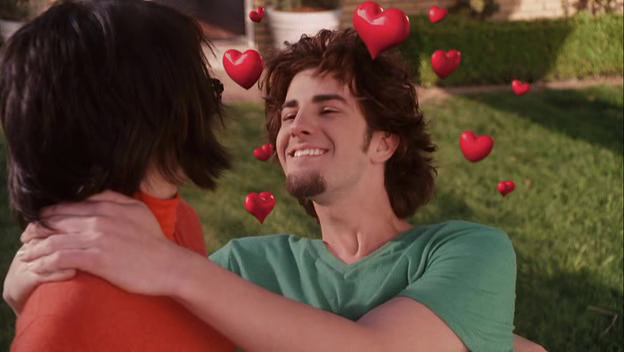
Due to an accidental barn burning during a battle with the “Vengeful Scarecrow” at Old Man Frickert's farm the Scooby gang need summer jobs to pay for the damages, lucky for our heroes Daphne’s uncle Thornton "Thorny" Blake the 5th (Ted McGinley) has opened a new country club and offered them all positions there. The group’s dynamic takes a rather romantic shift in this adventure with Daphne (Kate Melton) and Fred (Robbie Amell) having becoming involved after their fracas with the Vengeful Scarecrow, which landed Daphne in Fred’s arms, and when finally arriving at the country club Shaggy (Nick Palatas) literally falls into the arms of Velma (Hayley Kiyoko), and though she remains rather blind to his infatuation he's madly in love with her.


“Summer loving had me a blast. Summer loving happened so fast!”

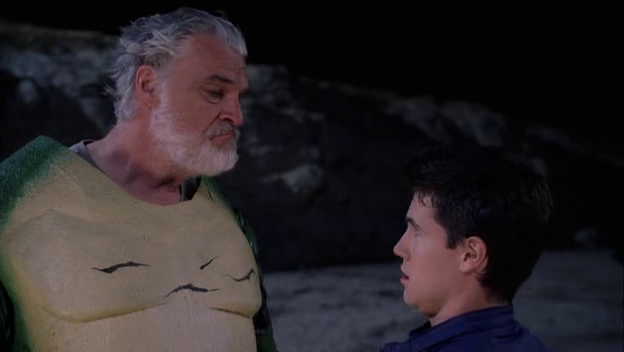
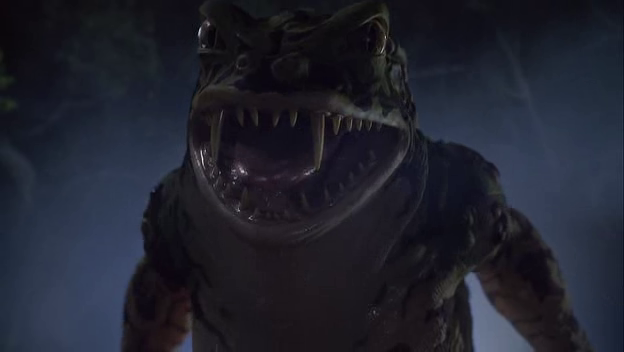
No sooner does the gang settle into their new jobs then the country club’s opening night party is crashed by a huge frog-like monster, a beast the gang had been warned about by the seemingly crazy woman (Marion Ross) at the local gas station. Apparently, she had told everyone that the country club should never have been built there as it would cause the “Lake Monster” to return. The gang quickly decides to talk to Mr. Uggins (Richard Moll) the operator of a creepy lighthouse, and the only person known to have ever taken a picture of the lake monster, which leads to an attack by said lake monster only for it be unmasked as Mr. Uggins himself. Turns out there isn’t a lot of money in lighthouse keeping and this was his best way of making a quick buck.


He should go back to being a bailiff at Night Court.

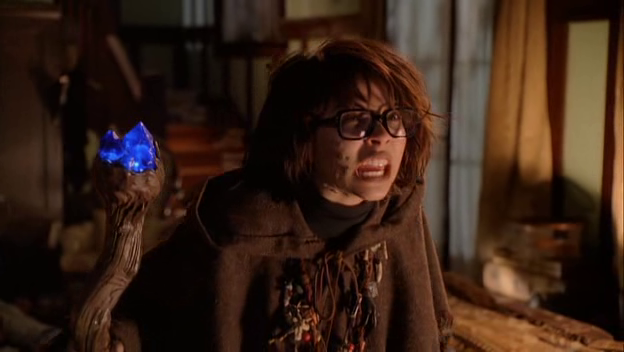
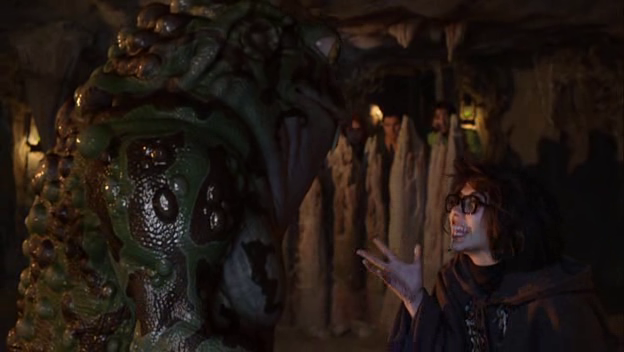
Though this particular lake monster turned out to be a fraud he wasn’t behind the attack at the country club and it is from Mr. Uggins that the gang learns the history and curse of the lake monster. It seems that when people first settled in Erie Point an old woman named Wanda Grubwort (Beverly Sanders) warned them not to come onto her land but they paid no attention to her and so she used her magic staff - which used blue moonstones as the source of her power - to turn a frog into a horrible monster that then attacked the villagers. This didn’t go over well with the settlers so Wanda was tried for witchcraft and burnt at the stake. Now, the witch has somehow returned to rebuild her magic staff and is using the lake monster to find the moonstones that powered it.


Who is actually behind the lake monster?

There really isn’t much of a mystery behind Scooby-Doo! Curse of the Lake Monster and though the gang do run around looking for clues, with Daphne surprisingly being the best at this aspect of the mystery-solving, but much of the film’s runtime is spent on the romantic entanglements amongst the Scooby gang. We have Fred’s belief that he and Daphne are just having some “Summer Fun” while she is under the impression they are in a serious relationship, and then we have Scooby (Frank Welker) becoming jealous of Shaggy’s crush on Velma. There is, of course, nothing intrinsically wrong with this kind of teen romance showing up in a Scooby-Doo adventure but the way it’s handled is about as clichéd as one can get, which makes one wish you were watching Caddyshack instead. Things only get interesting again when the gang figures out that the crazy gas station owner is a descendant of the witch and head to her house for the big confrontation, only for the big “unmasking” to reveal that Velma had been the witch all along.


“Holy twist endings, Batman!”

Turns out that a blue gemstone Velma picked up while beachcombing was one of the lost moonstones belonging to Wanda Grubwort, this allowed the witch to possess poor Velma resulting in such weird behaviour as her destroying clues, being afraid of fire and suddenly sporting warts. Basically, Scooby-Doo! Curse of the Lake Monster isn't so much a Scooby-Doo mystery as it was a straight-up horror movie - well, a horror-comedy movie - but there's no big reveal that someone was behind the witch’s monstrous shenanigans other than the actual witch.


There was a curse. There was a real witch. The monsters were real.

Stray Observations:

• This movie is a rarity in the Scooby-Doo lexicon where we see the Scooby gang having jobs and making actual money.
• When the Lake Monster attacks jeopardizes the country club Daphne exclaims, “We can’t afford to lose these jobs?” Was there a deleted scene where Daphne’s rich family disinherited her? I can understand her family wanting her to develop a good work ethic but losing a summer job would certainly not have the same impact on her that it would on the rest of the gang.
• Shaggy and Velma having a relationship also occurred in the animated series Scooby-Doo! Mystery Incorporated.
• Velma being unmasked as the “villain” had already been done in the animated movie Scooby-Doo in Where’s My Mummy?
• It should be noted that Curse of the Lake Monster has a couple of actual decent musical numbers.


“I can be scary now the night has come.”

Scooby-Doo! Curse of the Lake Monster continued the theme of actual supernatural events being the primary element of the live-action Scooby-Doo movies but without there also being a “Dude in a Mask” reveal at the end as well. The teen-romance-comedy aspect of the film seemed a little forced at times though we do get the occasional moment of actual comedy, something the previous live-action movies failed to provide.  We still have the problem of a terrible CGI Scooby who the filmmakers drastically reduced in screen time to help their already shrunken budget. Overall, Scooby-Doo! Curse of the Lake Monster is probably one of the more enjoyable entries of the live-action attempts and is only hampered by the lack of an actual mystery.

Thursday, June 18, 2020

Assimilate (2019) – Review

There have been many adaptations of Jack Finney’s classic science fiction tale The Body Snatchers, where alien organisms arrive on Earth and quickly proceed to duplicate the inhabitants, but as this has now become almost a subgenre I see no problem with anyone taking another swing at the bat. Right off the top, I’ll state that this movie will not be replacing either the 1956 version with Kevin McCarthy nor the 1978 Invasion of the Body Snatchers with Donald Sutherland, as the best take on “alien body snatching” movies – those two pretty much have a lock on the subgenre – but with 2019’s Assimilate writer/director John Murlowski still manages to add a few nice twists of his own to make his version worth a look.


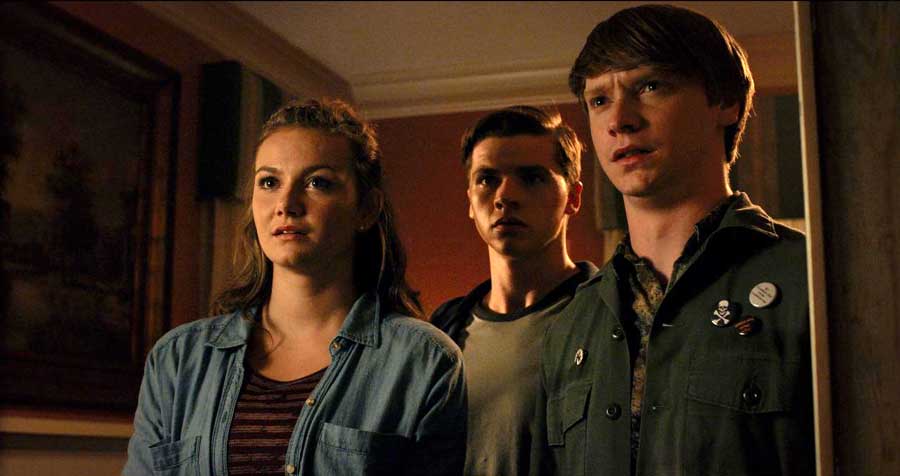
This film follows the exploits of three teens as they try and survive an insidious alien invasion – though which one of them won’t survive is quite apparent from the get-go – this trio consists of Zack Henderson (Joel Courtney) and his best friend Randy Foster (Calum Worthy) who spend much of their time in their small town of Oblivion making a web series that is to show the world the “Reality” of their home town. Why they think anyone outside of this town would give a shit is beyond me but as the internet is full of these kinds of idiots so I can’t really argue with the screenplay on that point. Rounding out the trio is Kayla Shepard (Andi Matichak) who is Zack’s high school crush and this film almost kind of love interest. That even one of these three makes it to the end of this film illustrate either how bad these aliens are at their job, as they escape the clutches of the aliens so often you could make it a drinking game, or more likely they don’t consider these idiots as a serious threat.


Nancy Drew and the Hardy Boys these three are not.

If you’ve seen any version of the alien body snatcher genre you’ll notice that director Murlowski follows the formula rather closely; the alien threat arrives, we get people claiming that loved ones are not who they say they are “That’s not my mommy!” and more and more residents will start acting like emotionless automatons as if they’ve been overdosing on Xanax. Our heroes will then scramble around town trying to prove that something sinister is happening but will either not be believed or will be futilely talking to someone who has already been swapped out and then there will be, of course, a scene where heroes have to feign emotionless so as to blend in the alien body snatchers. Pretty standard stuff and as a whole the young cast pull it off quite well – aside from the hero death exemption card that is repeatedly played throughout the film’s runtime – but where this film differs mostly from its brethren is the mechanics of the body-snatching as this time out we get a different sort of alien cloning.


“Just relax dear, you’ll just feel a bit of a pinch.”

Like its forefathers this film does have alien duplicates gestating in pods – you’re not a prober body-snatching film without pods – but the process Murlowski came up with for his take on the genre is rather clever. Little bacterial like spores float down to Earth where they could then group together, like some kind of alien nanotech, and form a creepy spider creature that would find a target, bite them and thus harvest their DNA. Then your traditional alien body snatching bod would grow a clone of said victim, but here is the interesting twist, the clone is a mindless creature that then instinctively hunts down the original so as to absorb their memories. Think of it as an illegal downloading process. This is certainly not as effective as just waiting for your victims to fall sleep as this often results in naked clones running around like enraged zombies.


“Here’s Johnny!”

Stray Observations:

• We get an opening shot of a leaf that is very reminiscent of the opening of the 1978 version of Invasion of the Body Snatchers where the alien spores affixed themselves to the neighbouring plant life.
• The aliens are really slow at taking out the town’s authority figures. They immediately take out the Sheriff but then fail to turn the Deputy in an as timely fashion for some reason.
• Zack and Kayla strangely believe they can rescue her little brother from assimilation even though he’s been left in the custody of the aliens for an entire day. Even stranger is the fact that they are able to save him. A clear case of “It’s in the script” survival.
• You’d think an alien invasion force would have some kind of code identifier so that normal humans couldn’t just walk around pretending to be aliens.
• The aliens are given the same alien warning call that Donald Sutherland screeched at the end of the 1978 version.


For some reason, they went with CGI elongated mouths for this effect.

Overall, Assimilate is a fine teen version of Invasion of the Body Snatchers with its young cast doing admirable work here, but the film’s low budget does tend to work against the film in some key sequences and thus it often comes across like a low rent version of The Faculty. I have to admire John Murlowski for trying something new with such well-tread ground, and some fans of the genre may find it a little too old hat for their tastes, but say it's well worth checking out.