Blog Archive

Monday, February 18, 2019

Winchester (2018) – Review

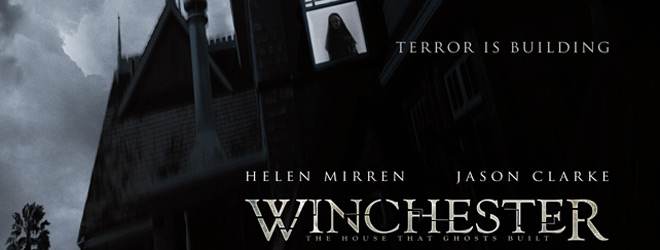
The 2018 horror film Winchester, written and directed by the Spierig Brothers, was not about the Supernatural adventures of Sam and Dean Winchester — much as we wish it was — but was in fact based on the history of the Winchester mansion, also known as The Mystery House or The House That Ghosts Built, a place that is said to be one of the most haunted houses in America. Sounds like a perfect location for a horror movie, doesn’t it? Unfortunately, the filmmakers managed to drop the ball in every way shape and form, and we are stuck with a film that should have been called Jump Scare: The Movie.


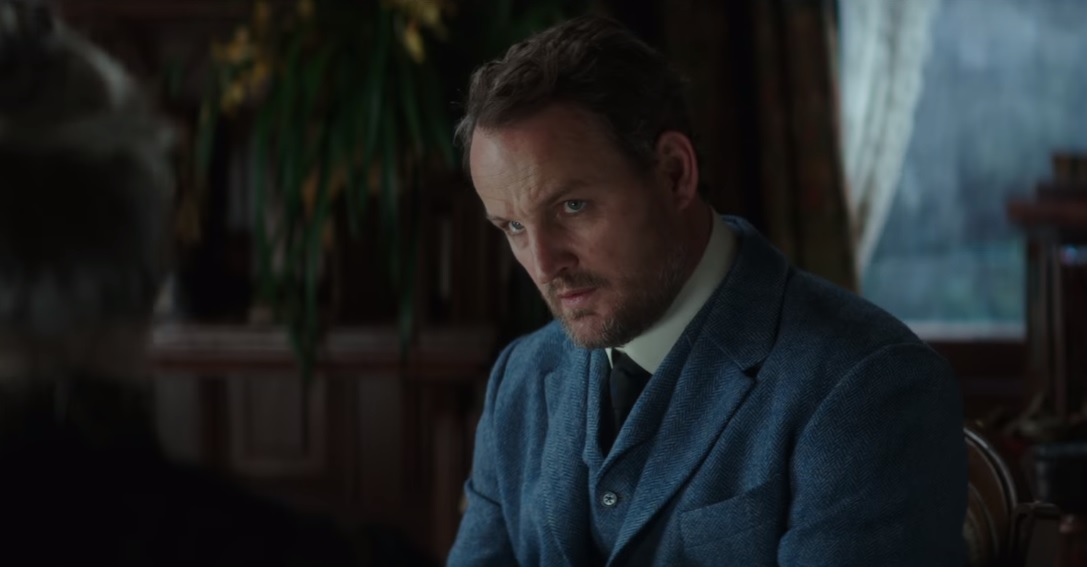
The movie follows Doctor Eric Price (Jason Clarke), a womanizing drug addict with a tragic past, as he is hired by the Board of Directors for Winchester Repeating Rifle Company to assess the mental facilities of Sarah Winchester (Helen Mirren). Sarah Winchester owns 50% of the company’s stocks, so Price is to determine if she is fit enough to remain in control of the family business. It’s clear that the Board would really like it if Price would find Mrs. Winchester unfit, as they blatantly offer him more money if they get that desired result, and so Doctor Price enters this job on very dubious footing, but I guess when you are a laudanum addict you take whatever jobs come your way.


“I may be in an unethical situation, but I’m also a bit of a jerk.”

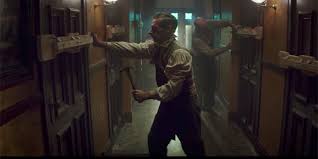
Sarah Winchester is the widow of famed gun manufacturer William Wirt Winchester, and heir to the vast fortune the sales of these weapons of death have accrued over the years. Because of this, Sarah is under the belief that she must continually add rooms to this sprawling mansion, with construction running day and night, so that it can house all the spectral victims of the Winchester Rifle. She tells Price that this helps spirits find peace — why being stuck in a small room in a weird mansion would bring peace to a ghost is never fully explained — but for those spirits too angry to move to the other side, well she locks them in their rooms, using a board and “thirteen nails” to keep them caged.


If only the Ghostbusters new it was this easy.

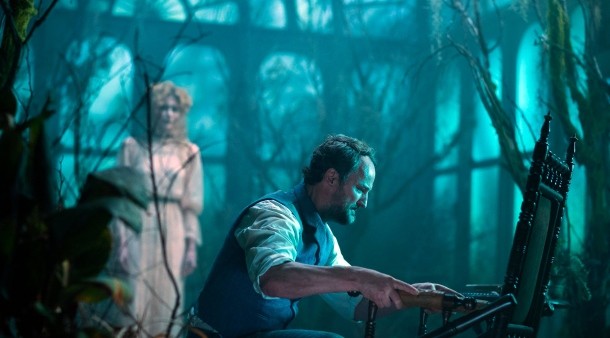
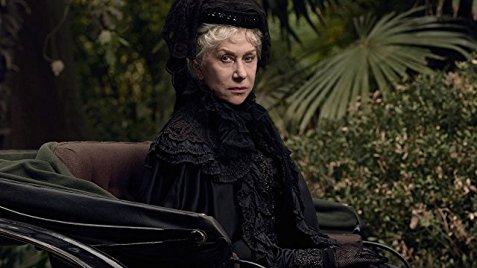
Clearly Sarah Winchester is nuts, or at least certifiably eccentric, so giving the Board of Directors their desired result should be no problem, but then Price himself starts seeing ghosts. At first, he takes the fleeting images of creepy apparitions to be hallucinations brought on by his drug use, but then later, when his laudanum is confiscated, he  chalks them up as symptoms of withdrawal. What follows is series of scenes where Price stumbles down dark hallways — ones often inhabited by Helen Mirren doing her "Woman in Black" impressions — with the occasionally ghostie arriving to pop out and say BOO! At no point in the film’s 90 plus minute run-time does anything even remotely scary occur (I do not count cheap jump scares as true scares), and as this movie is set in one of the creepiest houses in the world, that’s a considerable achievement.


How can you fail to make this place scary?

The film is not helped by legendary actress Helen Mirren, as the infamous Sarah Winchester, who is clearly in Boat Payment Theater Mode, and I’m assuming Jason Clarke did this film just to have a worse entry on his IMDB page than Terminator Genisys, but the fault really must be laid at the feet of Michael Spierig and Peter Spierig, who both wrote and directed this thing. Making a horror movie about “The House That Ghosts Built” should have been a cakewalk, but somehow they failed, and making it a historical period piece may have been the key problem, as they veer wildly from historical fact to their own nonsensical backstory.

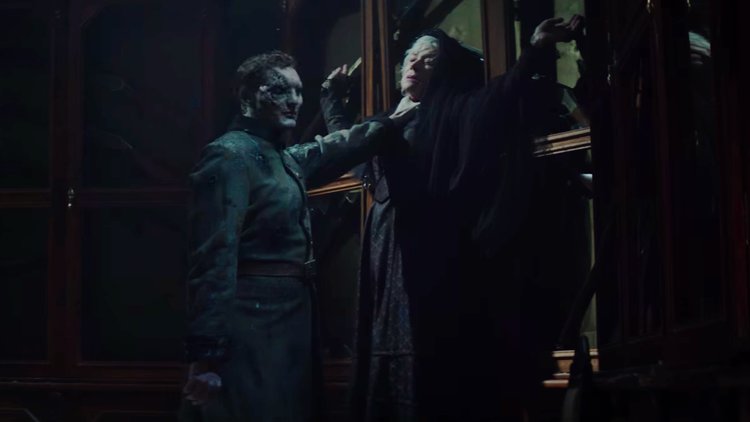
Now, I’m not one who demands that historical films stay completely true to the actual events they depict, and certainly not when said film is a horror picture, but major plot points the Spierig Brothers come up with fly right in the face of facts. A key example of this comes in the form of the “angry spirit” harassing Sarah and her family. He is a Civil War soldier, whose brothers were killed in the war by a Remington rifle, even though the first Winchester lever-action model did not appear until after the war. We then learn that the surviving brother later walked into the Winchester Showroom and massacred dozens of people, which is another completely fabricated event — and all of this I could have forgiven if at any point something even vaguely scary would have happened.


  "Hello, I'm today's stock vengeful spirit."

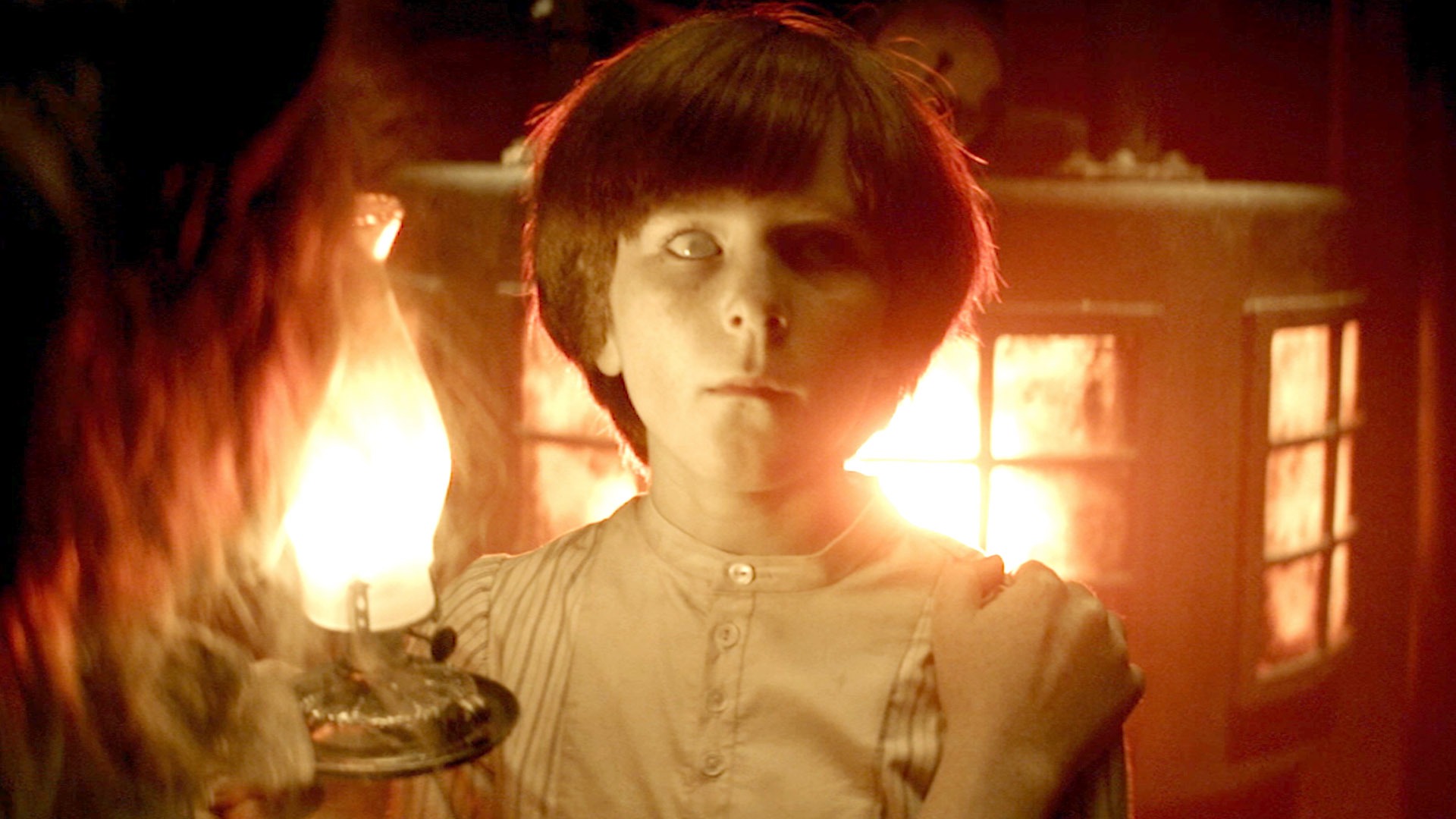
Sarah and Doctor Price are not alone in this big spooky house, the place is constantly being labored on by construction workers, and though this mansion must also have a staff consisting of dozens of maids and butlers, none of them ever see anything, and their very existence removes the solitary nature of terror that a haunted house movie needs to build proper suspense. Also in the house is Sarah’s niece Marion Marriott (Sarah Snook), who has brought her boy Henry (Finn Scicluna-O'Prey) along to stay at her aunt’s spooky-ass mansion, after her own family tragedy. We are subjected to repeated scenes of young Henry being possessed by an angry spirit, and the only thing I can say about these moments is that somebody should have told the Spierig Brothers that putting a canvas mailbag over a kid's head isn’t creepy, it’s actually kind of goofy. And the film constantly forgets these two “guests” are in the house, but as they are both quite forgettable, and unnecessary, this is not surprising.


“I see cliché people.”

Winchester fails at almost every aspect of the horror movie genre. We have no compelling protagonists, the mystery behind the ghost is contrived and lame, the film relies almost solely on jump scares, and worst of all, it doesn’t even follow its own rules. We were told that ghosts are trapped in rooms by the placing of a board — nailed 13 times — across it, but during the big ghostly showdown, we see the nails seemingly coming out of the doors on their own. Were Sarah’s theories of spiritual confinement wrong? Was the angry Civil War ghost the one freeing his spectral buddies? If the last one is the case, that is one dumb ghost, as the ones it freed end up helping Price defeat the angry ghost, and if you’ve guessed that Price’s own tragic past will come back to “haunt” him, well give yourself a cookie.


“Damn it, I’m being haunted by a contrived backstory.”

If the Spierig Brothers wanted to make a horror set in the Winchester mansion, they’d have probably been better off setting it in modern times — maybe go with a documentary crew staying the night — and then they could have gone all balls-to-the-walls with the frights, but the film we ended up with seemed both constrained by the historical setting as well as showing a good deal of contempt for it.  I’m not saying you can’t make a good horror movie set in the 1860s — the history of the place is just rife with possibilities — but the decision made by the filmmakers here fails to not only scare the viewer, which once again is an achievement in this setting, but they annoy them instead. Winchester is guilty of the greatest crime that can be leveled at a horror movie, that of being annoying and boring. Give this movie a pass and watch Sam and Dean Winchester fight ghosts and monsters instead.


“Has my cheque cleared yet?”

Saturday, February 16, 2019

Robin Hood (2018) – Review

There have been countless adaptations of the stories surrounding the legendary Robin Hood, from the silent era with Douglas Fairbanks to the technicolor world of Errol Flynn’s The Adventures of Robin; Even Disney did both live-action and animated versions of this classic tale. Then we have the more modern retellings with Kevin Costner’s Robin Hood: Prince of Thieves and Russell Crow’s 2010 Robin Hood epic, which focused a little more on the Crusades than its predecessors, but now we have an action adventure Robin Hood for the millennials. Gee, just what we’ve been waiting for.


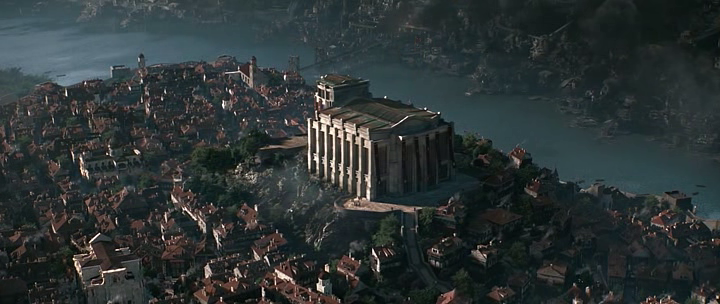
The movie opens with a narrator explaining to us that he won’t bother us with details, such as when this story takes place or the history surrounding it, “Because it would bore you and you wouldn’t listen,” and this is all to let the viewer know that, "You aren’t watching your dad’s Robin Hood." Of course, the real reason behind such an opening is to give the filmmakers the go-ahead to make up any ludicrous version of Robin Hood that they’d care to explore, which is fair enough, but then the film quickly informs us that the setting of this movie is during the Third Crusade, which took place between 1189 and 1192, so we now have a historical timeline and thus, this opens them up to being lambasted for historical inaccuracies. If you wanted to make a steampunk Elseworlds version of Robin Hood, go right ahead — but then you would have to create your own world, something director Otto Bathurst and company were clearly too lazy to do.


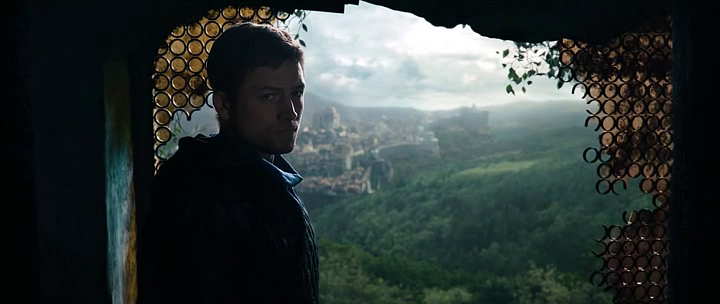
This looks more like Rome than Nottingham City.

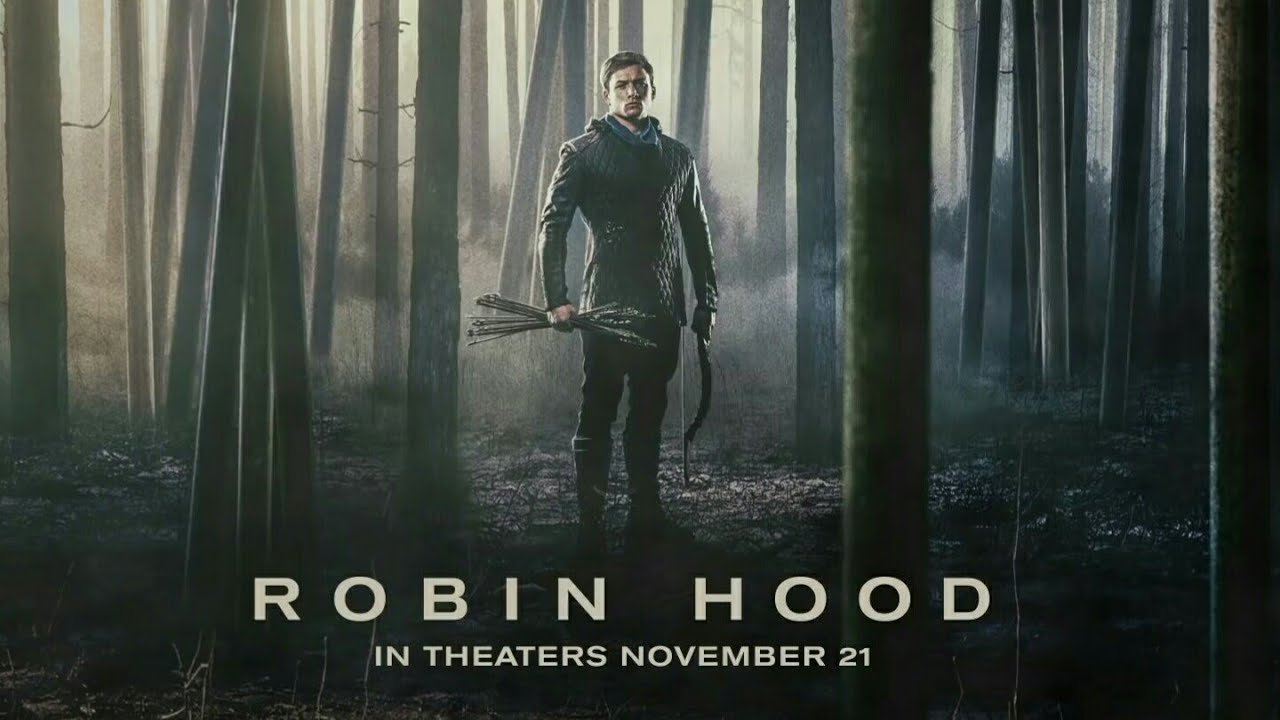
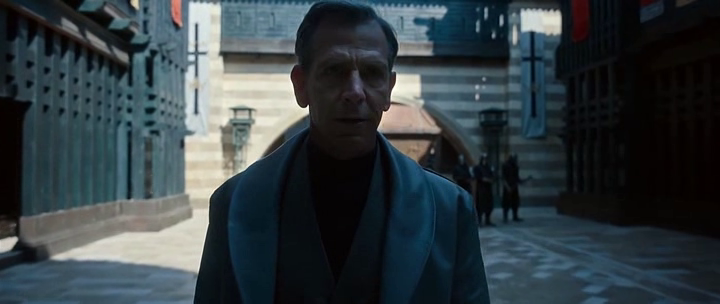
What we get from Otto Bathurst is a Robin Hood movie that simply name-checks various characters from the legend, has it take place in a kind of medieval setting — though with “Occupy Wall Street” and “One Percenter” themes mashed in wherever possible — and runs off with its own “Rob from the rich and give to the poor” story, while abandoning everything else familiar to the Robin Hood legend. This is not an intrinsically bad idea (if the filmmakers had put any effort at all into the proceedings), but sadly the end product here is a mishmash of themes and genres, with no cohesive thread to pull it together. We are introduced to Lord Robin of Loxley (Taron Egerton), who is madly in love with a feisty thief named Marian (Eve Hewson), but he is drafted into the Crusades by the evil Sheriff of Nottingham (Ben Mendelsohn), who soon has Robin declared dead so that his lands can be seized to help pay for the war effort.

Historical Note: Soldiers were not “drafted” into the Crusades, killing heathens that occupied the Holy Land was a religious duty that got you a free pass into Heaven — not to mention a lot of loot — and a city sheriff would certainly have no power to draft or seize the lands of a noble, even if he wanted to.

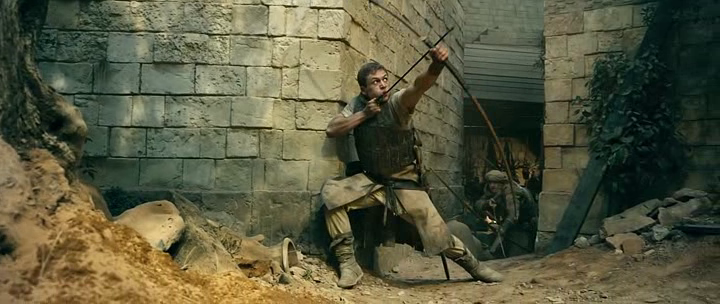
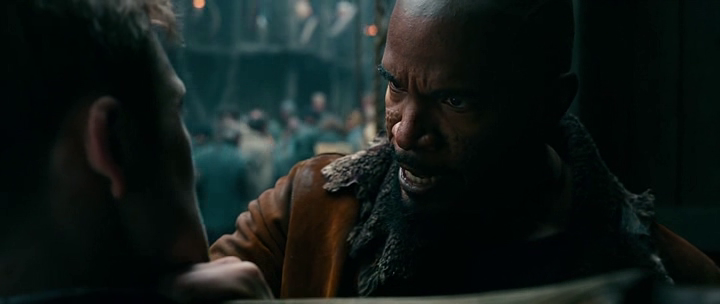
Off in the Holy Lands, we find Robin becoming quickly disillusioned with being a Crusader — dodging anachronistic rapid fire crossbows really ruining his day — and when his nasty commander, Sir Guy of Gisbourne (Paul Anderson), starts executing prisoners, Robin steps in and tries to save a young Moor from getting his head lopped off. Unfortunately, he fails and is sent home for being a git. Now it just so happens that this dead boy’s father is an Islamic warrior named Yahya (Jamie Foxx) — basically this movie’s Legolas — and he is so impressed with Robin for “trying” to save his son, that he follows him all the way back to England. He vows to train Robin to be a badass fighter — turning him into Legolas 2.0 — and the two of them decide to end the war by cutting off the money supply. To say this pair is about the dumbest idealistic heroes in history of movies would be a vast understatement.


"Hello, I will be this film's Morgan Freeman."

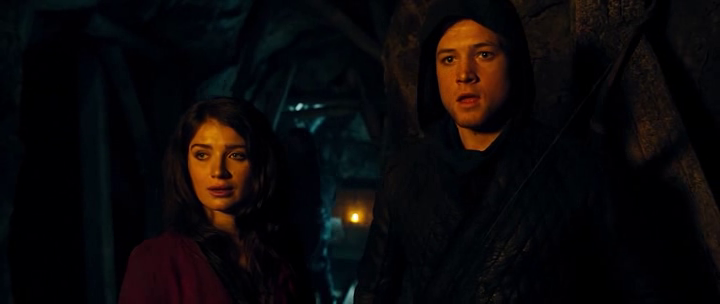
Sadly, on the romance side of things, the homefront has gotten a little complicated, Robin having been declared dead has resulted in Marian "moving on" and is now dating Will “Scarlet” Tillman Jamie Dornan), who is an aspiring politician that wants to use the people’s unrest to further his career. Yahya, now called John because Robin can’t pronounce his real name, urges his young charge to keep Marian out of their business, under the auspices of keeping her safe. He then comes up with a plan that will have Robin masquerading as a frivolous playboy to win the Sheriff’s confidence, while at night he would be running around in a hood, robbing the from the rich and giving to the poor.


So he’s not so much Robin Hood as he is a Zorro knock-off.

Somewhere in this film’s two hour run-time there is a good movie to be had. There are a few action sequences that are generally fun, and Jamie Fox and Taron Egerton have genuinely good chemistry together, certainly more than what we get between Egerton and Eve Hewson’s vapid Maid Marian (whose sole purpose in this movie seems to be providing heaving cleavage and being rescued), but director Otto Bathurst keeps getting in his own way. He's constantly throwing in modern themes that in no way fit in with the story he is trying to tell, creatinf one of the most ridiculous plots ever put to film.

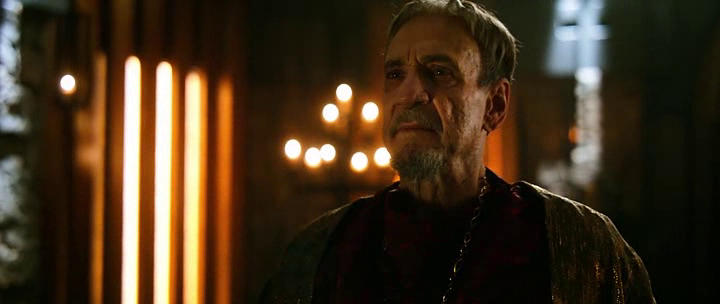
Turns out the Sheriff is in league with an evil Cardinal (F. Murray Abraham), and the two of them are using the war tax to fund the Saracen army in the hopes that this will somehow destabilize England, and thus give them ultimate power. Hold it a minute guys, how exactly is that supposed to work?

The Plan:

• Declare war and start a third Crusade.
• Somehow draft a bunch of nobles to go and fight it.
• Tax the poor to fund the Saracen war effort.
• England loses the Crusades and the Sheriff and Cardinal become rulers.
• Profit.

“In this country, you gotta make the money first. Then when you get the money, you get the power. Then when you get the power, then you get the women.

I’m not sure what King Richard was supposed to be doing during all these evil machinations — in fact the film doesn’t mention him or Prince John at all —and how some local sheriff has achieved this level of power over the local nobility is never explained, (for even with the support of the church such an appointed position as sheriff would have very limited power). We get some idiotic monologue from the Sheriff explaining how as an orphan boy he was beaten by the nobles, and though this explains his hatred for the nobility, it in no way clarifies how this led to him being able to order nobles to be executed. That someone hadn’t stepped in and murdered the Sheriff is the true mystery here, and while all this is going on, Robin Hood is running around being an action hero, which is about as helpful as pissing into the wind.

Stray Observations:

• Crusaders can apparently call in air strikes.
• Nottingham looks like a Middle Ages version of the Mega-Cities from Judge Dredd.
• Robin of Loxley is wanted for “The Youth Vote.” Was that a thing in the 16th Century?
• The mines of Nottingham — which in reality it never had — rival the Mines of Moria.
• We see a party of Medieval One Percenters, one that consists of scantily clad women in high heels gambling at roulette wheels. It was at this point my anachronistic meter broke.
• While in disguise, Robin is called “The Hood,” which just reminded me how dumb it was when Oliver Queen was called "The Hood" on the television show Arrow.
• People nail hoods to the walls as some kind of symbol of solidarity.

The plot and structure of this particular Robin Hood never works, as the writers clearly forgot that their setting is during a time of monarchy rather than a fascist republic, thus rendering all the scenes of the Sheriff giving speeches to people about how they all must support the war effort, completely ridiculous. Why would the Sheriff need the support of the poor to pass a tax bill? It’s not like the poor are allowed to vote on such things, not to mention the bigger question as to why a sheriff is in the position to create legislation in the first place.


"I'm the evil sheriff who clearly failed his civics class."

Otto Bathurst’s Robin Hood is not only an anachronistic mess — which I could forgive if the end result made for a compelling story — but with elements borrowed from political ideologies veering from Victor Hugo’s Les Miserable to the current political climate under President Trump, it ends up not saying much of anything at all. I can forgive a movie that gives us Gatling-gun style crossbows, but not when it also tries to be a self-important message picture, one that didn't actually bother to come up with an actual message other than, “Greed and corruption is bad, and war is unpleasant.” That's sure taking a hard stand there, Otto. This is a Robin Hood film that failed under the weight of its pretensions and the nonsensical nature of its supposed plot.

Note: By the time the film ends, it’s clear that they were hoping to get a sequel out of this thing, but as in the case of Guy Ritchie’s disaterous King Arthur: Legend of the Sword, there is no chance of that happening.

Friday, February 15, 2019

Scooby-Doo and the Curse of the 13th Ghost (2019) – Review

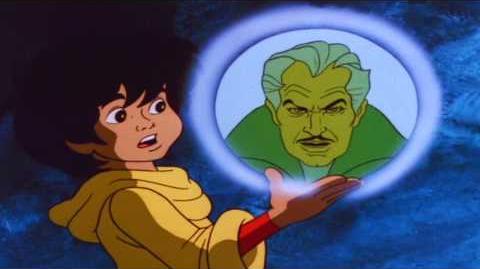
In 1985, Hanna-Barbera aired their seventh incarnation of the Scooby-Doo show, where Scooby-Doo, Shaggy, Scrappy-Doo and a young con-artist named Flim Flam teamed up with renowned magician and warlock Vincent Van Ghoul, to tackle real ghosts and Ghoulies, in a short-lived series called The 13 Ghosts of Scooby-Doo, but that show was cancelled after a mere 13 episodes, with the 13th ghost never being captured.  Now, after a three decade wait, Warner Bros. Home Entertainment finally brings us the conclusion to that story, with Scooby-Doo and the Curse of the 13th Ghost.


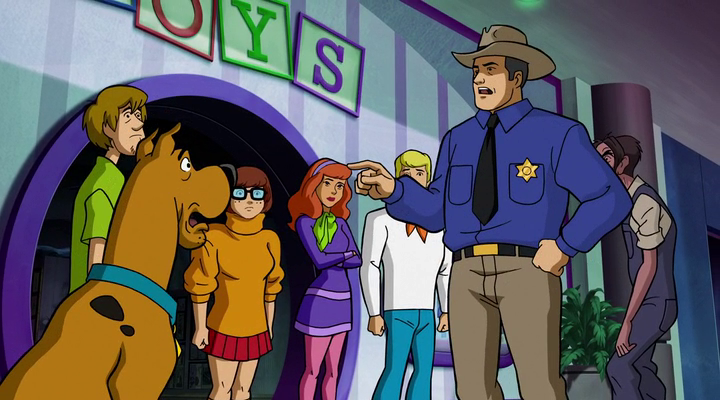
Being a teenage mystery-solving team can’t be easy — we still don’t know how this group even pays for gas for The Mystery Machine let alone Scooby and Shaggy’s food bill — but in this direct-to-video outing, we find the gang in particularly nasty pickle when the “ghost” they nab turns out to be innocent, and the local Sheriff accuses them of being criminally negligent: “You're almost eighteen, after this, if someone presses harassment charges, you can be looking at prison time, so if I see you driving that Mystery Machine one more mile, I’m putting you away.”


Could this be the end of Mystery Incorporated?

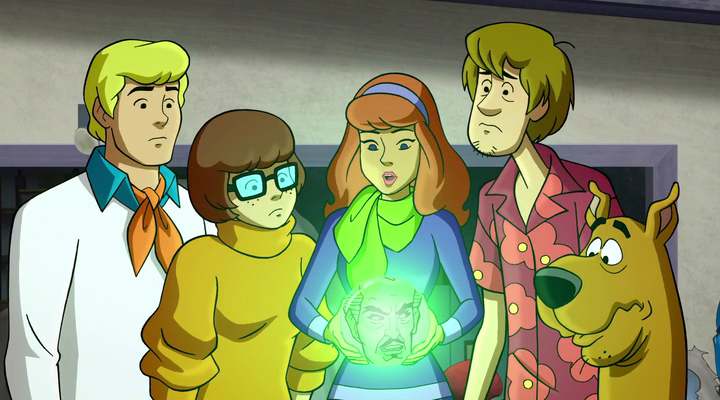
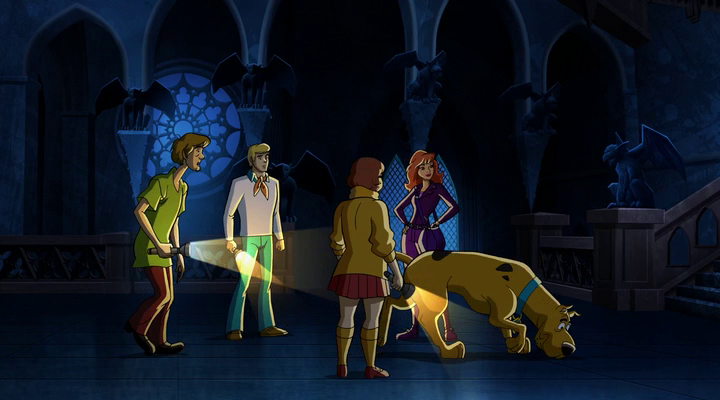
For some reason this forced retirement results in Fred (Frank Welker) selling The Mystery Machine — I guess he couldn’t just repaint the thing — and the rest of the gang holding a garage sale to get rid of all their mystery collectibles, but when they come across an old crystal ball, from the days when Daphne, Shaggy and Scooby worked for Vincent Van Ghoul (now being voiced by Maurice LaMarche as opposed to Vincent Price in the original), the gang find themselves pressed back into the ghost-busting business when Vincent informs them that he’s found the thirteenth and final ghost.


I wonder what kind of minute plan you get on a crystal ball.

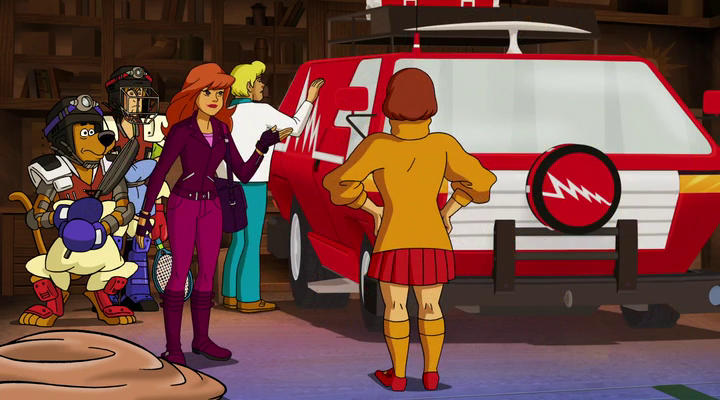
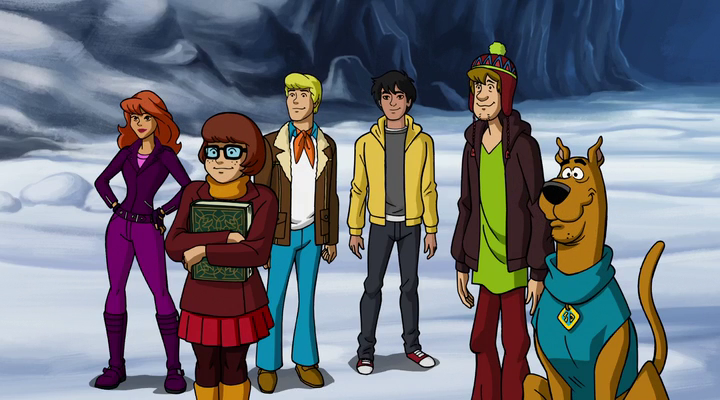
Fred and Velma (Kate Micucci) are a bit surprised to learn that their friends have had secret adventures without them, but Daphne (Grey Griffin) explains this all happened when Fred and Velma were at camp, and that the whole experience traumatized Scooby-Doo so much, that her and Shaggy (Matthew Lillard) decided to never bring it up again. Well, you certainly can't argue with that logic. Fred points out that, “We’d love to help you Daph, but I just sold The Mystery Machine,” but Daphne has things covered, as she unveils her Strategic All-Terrain Mobile Command Unit.

Trivia Note: The red van was the vehicle used by our heroes in the original 13 Ghosts of Scooby Doo, and Daphne ditches her trademark purple dress for an outfit more in keeping with her costume from that show as well.

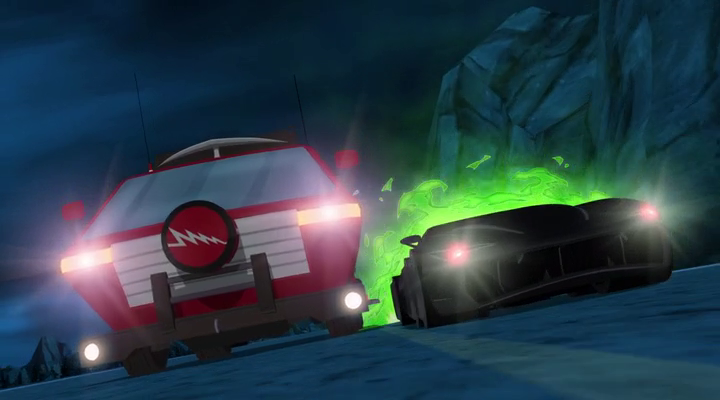
This begins Fred’s shift from team leader to second banana, he can’t drive a stick shift so Daphne gets behind the wheel — being it’s her vehicle, why that was even in question is a bit bizarre — but once on the road, while dodging a malevolent driverless car, Fred becomes overwhelmed by the fact that not only is Daphne a very capable driver of stunt driving awesomeness, her van also has a computer center and is equipped with combat counter measures to help shake off their evil pursuer, and it's great to see Fred completely losing it, yelling, “This thing has a smoke screen ... this thing has a smoke screen?” and thus begins this movie’s loving emasculation of Fred Jones.


Mystery Incorporated versus The Car.

With a dozen different incarnations of the Scooby-Doo show, and even more direct-to-video movies, continuity isn’t going to be something the writers are going to worry about, which you can’t fault them for when you consider the fact that they are working with a cast of characters that are stuck in their late teens but have been around since the late sixties. This has resulted in prequels, sequels and reboots of varying degrees of success.

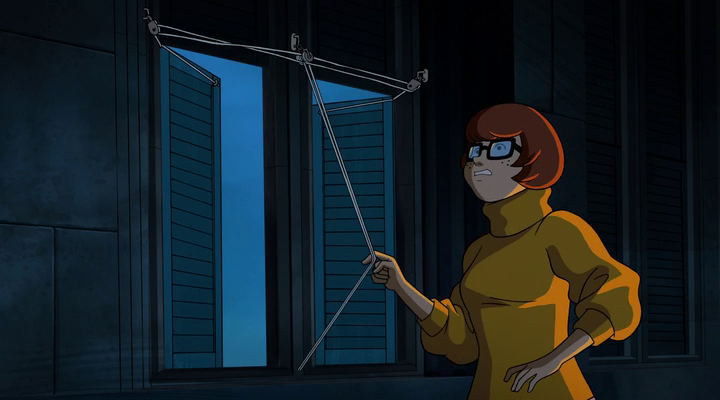
In 2010, Warner Bros Animation teamed up with the Cartoon Network to bring us a prequel to the original series called Scooby-Doo! Mystery Incorporated, taking place during the time period when our teen-age sleuths are still in high school, before taking The Mystery Machine on the road. Then in 2015, Cartoon Network released Be Cool, Scooby-Doo! which could be considered a reboot of the original Scooby-Doo Where Are You? as it also featured the gang solving mysteries right after their senior year of high school. Both of those shows did their best to downplay, or completely forget, the horribleness of the 1980s that was Scrappy-Doo, and being Scrappy-Doo was a major player in 1985’s The 13 Ghosts of Scooby-Doo (and due to years of backlash against Scrappy), it's no wonder that the creators of this movie decided to ditch the pint-sized pup. Being he was an essential character in the original, where does Scooby-Doo and the Curse of the 13th Ghost fit into all that? Well, it turns out that the only reference to Scrappy in this movie is when the character of Flim Flam comments, "The gang's all here... except for Scrappy," and Velma responds, "What's a Scrappy?"   


“No sign of Scrappy-Doo so far, excellent!”

With the direct-to-video release of Scooby-Doo on Zombie Island in 1998, where it was promoted with the startling tagline, “This time, the monsters are real!" we got to see Scooby and the gang tackle villains that weren’t just dudes in a mask, and it was treated as something new and startling, which it would be for Fred and Velma, but Scooby, Shaggy and Daphne had already tackled real ghosts and demons thirteen years ago in The 13 Ghosts of Scooby-Doo, so this should have been no big revelation to them. Yet in this 2019 sequel to that series, we get Daphne having to explain to Fred and Velma that ghosts and demons do actually exist, which means this movie must take place before the events of such films as Scooby-Doo on Zombie Island and Scooby-Doo and the Witch’s Ghost, and will result in Velma spending the bulk of this movie trying to debunk any supernatural shenanigans.


I wish Velma had been tasked to debunk the Amityville Horror instead.

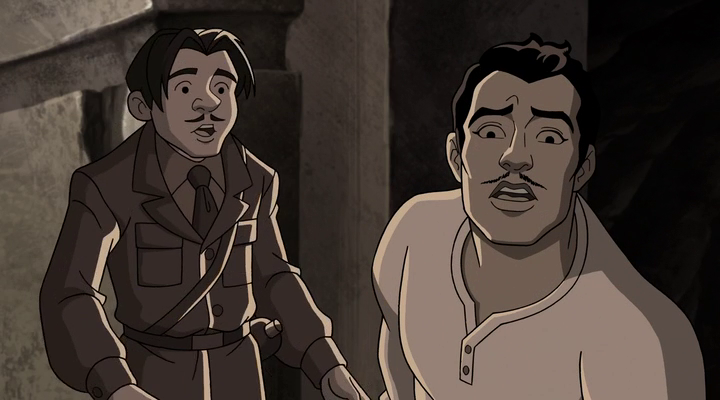
The writers of Scooby-Doo and the Curse of the 13th Ghost throw in a bunch of references that only viewers of that thirty-four year old show would remember, such as the aforementioned red van — which has a rubber ducky inflatable raft mode — then there is Daphne’s more mod wardrobe, and the bizarre fact that apparently they own a plane and both Shaggy and Scooby can fly it. But then they completely change the actual origins of the Chest of Demons — the ancient trunk that kept the demons trapped all these years — by giving us a new backstory about Vincent Van Ghoul and his partner Mortifer (Nolan North) being some kind of archeologists, ones who accidentally opened the chest while exploring an old temple, and that years later, after capturing all the ghosts and placing them back in the chest, it was then re-opened by a couple of idiots named Scooby and Shaggy. Now, in the original series, Vincent Van Ghoul was just a magician working at a nearby Himalayan nightclub, and was brought into the fight by street urchin/con-artist Flim Flam to help Daphne, Scooby and Shaggy recapture the ghosts.


Note: The character Mortifer didn’t exist back in the 80s show.

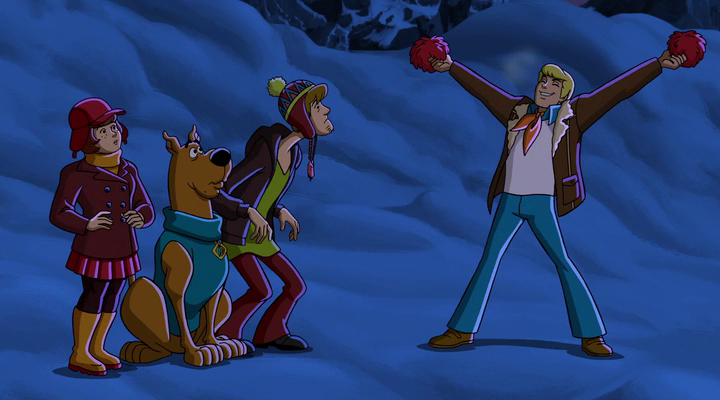
So this movie throws some nods to the original, but then basically rewrites the history of the Chest of Demons and the thirteen ghosts, which I guess isn’t a bad thing, and I seriously doubt even fans of the original would be too put off by these changes, but it does leave the story a little unclear, as if we are working from two different recipes. What makes Scooby-Doo and the Curse of the 13th Ghost stand out from its predecessors (and makes us forgive some of the plot problems), is the change of leadership from Fred to Daphne. Not only is Daphne shown to be a badass combat driver, able to out-maneuver a demon car, she thinks fast on her feet, can find secret passages and uncover clues like nobody's business, and by doing this she quickly asserts herself as the leader on this particular mystery — being she is the one familiar with the history, this makes sense — but what’s really cool is that Fred comes to the conclusion that it would be best for the team if Daphne became the permanent leader of Mystery Incorporated, and that he’s more suited to the role of team cheerleader.


This sure smells like teen spirit.

There is a lot to like about Scooby-Doo and the Curse of the 13th Ghost, with the voice cast all doing great work — though Maurice LaMarche as Vincent Van Ghoul does kind of drift between sounding like Vincent Price and his other cartoon counterpart Brain, from Pinky and the Brain — and the animation is simply gorgeous, highlighting some excellent action sequences, but if I were to voice one complaint it would be in having Velma’s skepticism never quite being resolved, “Was the thirteenth ghost just a dude in a mask or could something actually supernatural have occurred?” In the original series, it was made abundantly clear that our heroes where tackling honest to goodness ghosts — or demon ghosts to be more accurate — and so having this movie waffle on the one yard line seems rather disingenuous. There are certainly a lot worse things you can do in your movie than have the ghosts turn out to be real, and as I’ve pointed out earlier, the show’s continuity is so over the map, with out of whack time-lines, so having a clear statement of "Ghosts are real" wouldn’t have hurt anything, and it’s not like the writers can’t just change their minds on what is real and what is fake in the next Scooby-Doo incarnation.

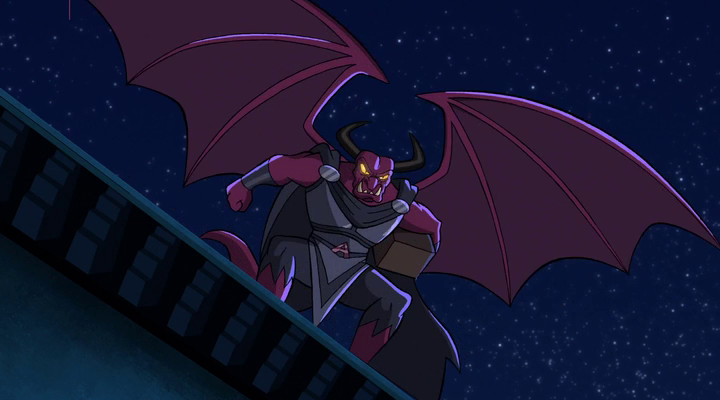
Note: The “13th Ghost” reminded me a lot of Goliath from the animated series Gargoyles, and is also another case of “How exactly does some dude make a flying, flame breathing demon ghost costume?”

I will end this review with one more bizarre continuity issue, one that makes the fifty-year run of Scooby-Doo really stand out, because in the original 13 Ghosts of Scooby-Doo the character of Flim Flam was about nine or ten years old, yet when Fred and Velma bump into him, while searching for the Chest of Demons in this movie, he is now clearly the same age as the rest of the gang.


Flim Flam in The 13 Ghosts of Scooby-Doo


Flim Flam in Scooby-Doo and the Curse of the 13th Ghost

We are used to comic book and cartoon characters not aging — Archie and Jughead can remain eternally young in the pages of their comics — but somehow the character of Flim Flam (Noshir Dalal) has aged a decade while the Scooby Gang haven’t seem to have aged a day, so even if it turns out that the Chest of Demons was just something to bring in tourists, or that the thirteenth ghost was just a dude in a mask, there is still something seriously supernatural going on with these apparently immortal kids.


The cast of Dorian Grey.

Scooby-Doo and the Curse of the 13th Ghost wraps up a thirty-four year-old unresolved mystery, with the Scooby Gang having to re-adjust some of their preconceived notions on their roles in the group, and while the writers kind of waffle at the end on whether there was a real ghost or not — which is kind of stupid considering this is a sequel to a series where the ghosts were bloody real — the end result is still a fun and exciting Scooby-Doo adventure, one that will enchant the young ones and even give older fans a chuckle or two. So check this one out, it’s a "scary" good time.

Tuesday, February 12, 2019

Kin (2018) – Review

 I’m all for genre mashups — horror comedies or sci-fi mysteries can be a lot of fun — but if you start chucking more and more genres into your blender, the danger that the end product could end up becoming a tasteless soup increases exponentially. With writers/directors Jonathan and Josh Baker's Kin, we get a film that has elements of family drama, crime drama, a thriller mystery aspect, some science fiction, all wrapped up in a road picture. There is no saying such an assembly of components couldn’t work, it would just take some deft writing and sharp directing. Sadly, the Bakers overreached a little for their directorial debut, and thus Kin is more a mess than a mashup.


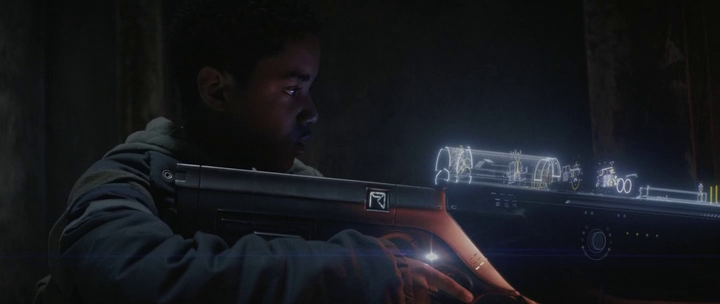
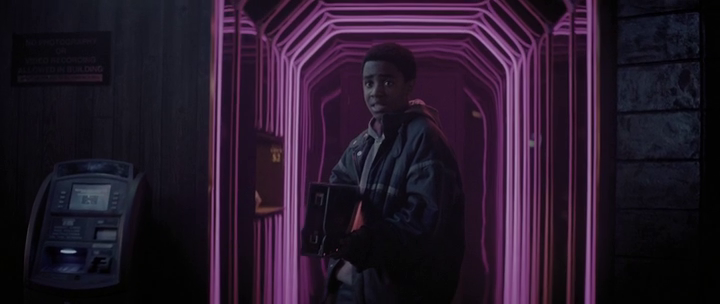
Kin is based on the short film “Bag Man” where a young African American boy comes into possession of a very high-tech gun — we have no idea where the gun came from or how the kid came to have it — and while out one day for some target practice, he runs into some thugs who are about to execute some hapless dude, so the boy uses the gun to basically vaporize the bad guys, the end. The short is about fifteen minutes in length, and is a slow lyrical little mood piece with some cool visual effects. Unfortunately, the Bakers forgot that if you are going to expand a short film to feature length, you kind of have to put more thought into it, and thus we have the key problem with their feature film version, a lot more happens, but none of it means much.

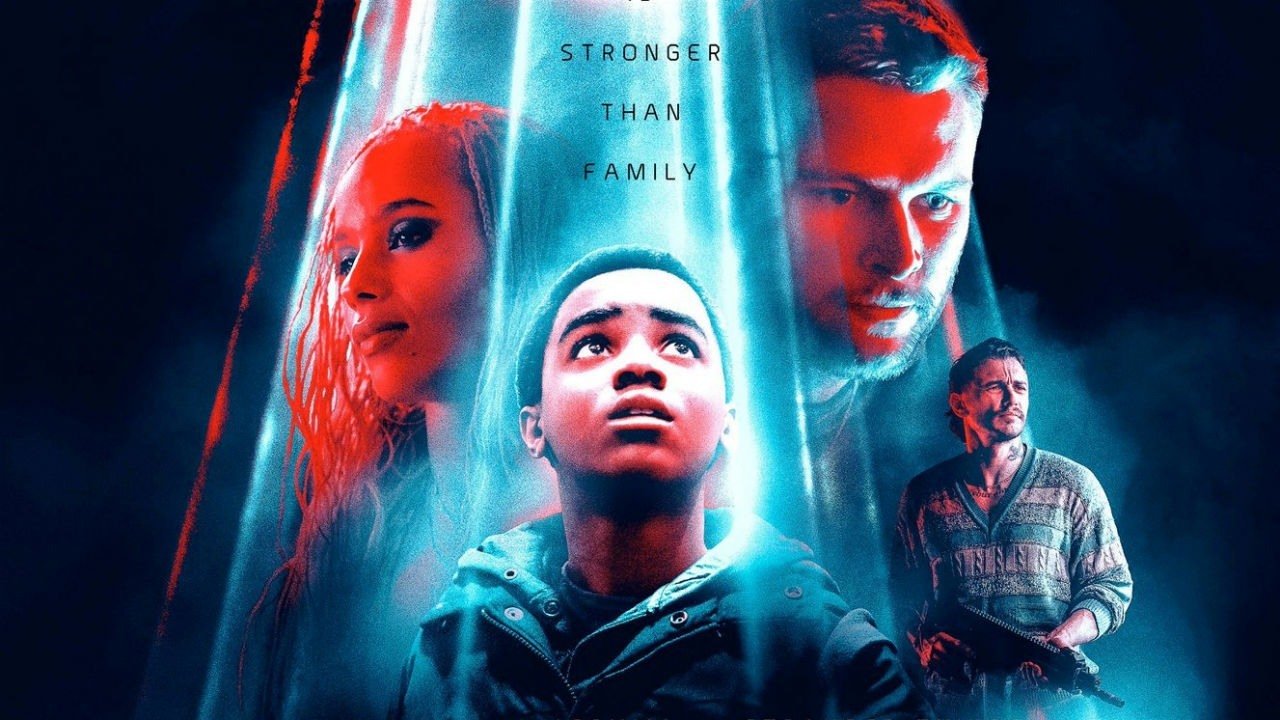
This film centers on fourteen year-old Elijah "Eli" Solinski (Myles Truitt), who lives in Detroit with his stern adoptive father Hal (Dennis Quaid), and though he gets suspended from school for fighting, he is not a bad kid. Eli spends his spare time scavenging copper wiring from abandoned buildings, his dad being a little too frugal with allowance, and during one particular hunt he comes across what looks to be the aftermath of a nasty firefight, with armored corpses and high-tech weaponry strewn all about, and when he later returns to the site — having initially run off scared — he is surprised to find almost all evidence of the battle gone, but he does discover a strange futuristic weapon that had been left behind.


Finders keepers losers weepers is a tried and true motto.

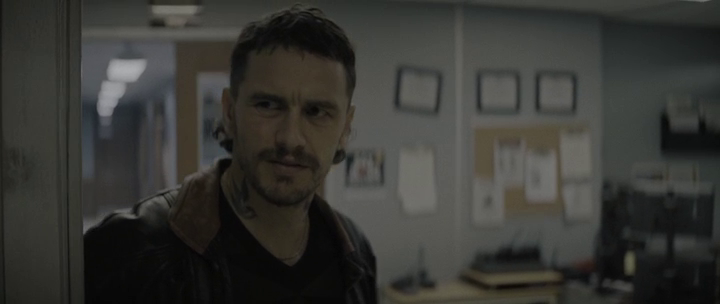
Life gets a little more complicated when Eli's newly paroled older brother Jimmy (Jack Reynor), Hal's biological son, returns home from prison with a $60,000 debt — the cost of protection during his years behind bars — that local crime lord Taylor Balik (James Franco) wants to be paid back immediately, or else bad things will happen to not only Jimmy but Eli and Hal as well. Things go from bad to worse when Jimmy and Balik’s gang break into the safe at Hal’s job site only to be interrupted by Hal himself, with the resulting confrontation leading to the death of Hal and Taylor’s brother. Needless to say, Taylor doesn’t take this well and vows vengeance.


Could this be a dark sequel to Pineapple Express?

It’s at this point that Kin becomes a “road movie” with Jimmy lying to Eli, hiding the fact that their dad has been murdered and the killers are after them, and the two of them head across country with sixty thousand dollars of stolen loot. Of course, the threat of a crazed Detroit crime lord isn’t the only thing hanging over the heads of our two protagonists, there are also a pair of futuristic soldiers that seem very interested in tracking down Eli and the missing gun. Will the revenge-fueled Taylor find them first? Who exactly are these strange soldiers, and what is their agenda? Can Eli ever forgive his brother for getting their father killed? All these questions and more are kind of answered, but don’t expect to finish your viewing of Kin feeling too satisfied, as the Bakers clearly were planning a sequel — with the last act throwing in a pretty obvious twist — and being the film bombed theatrically, there is little to no chance of us ever getting a proper resolution.

Stray Observations:

• Eli is never given any real motivation for taking this piece of clearly advanced weaponry home and hiding it under his bed. Lucky for us the screenwriters thought to send killers after him so that having the gun works out.
• Eli is a little too gullible when his brother tells him that their dad wants the two of them to go off on a road trip together, especially when Eli had heard his dad kick Jimmy out of the house the night before.
• The high-tech gun only functions when Eli is using it, could that be a clue?
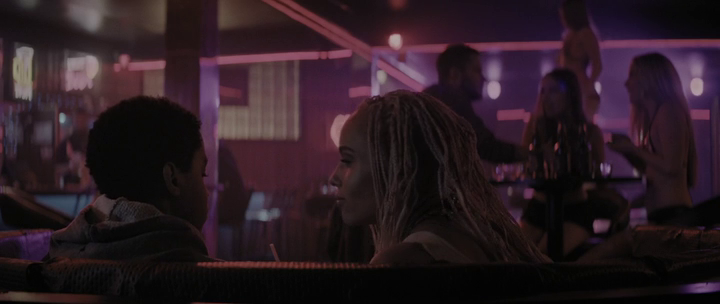
• Eli and Jimmy make a pit stop at one of those PG 13 strip clubs that only exists in these types of movies, where strippers don’t actually get naked.
• You can apparently blow the crap out of a strip club, with your high-tech space gun, yet not have to worry about the owner calling the cops, because of course he’s crooked too.
• Our pair befriend a stripper by the name of Milly (Zoë Kravitz), who falls into the Hollywood movie category of “Hooker with a Heart of Gold.”


“Hey kid, how about some Risky Business?”

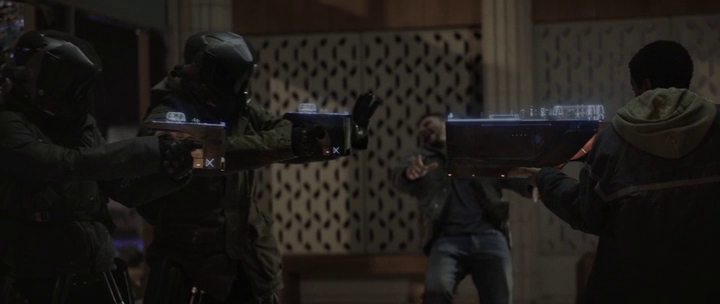
Best and Worst Scene in the Movie: The final act deals with Franco’s character learning that Jimmy and Eli have been picked up by the cops, and are being held at the county police station, and what does this vengeance-driven crime lord decide to do? Does he call it a day and head home? Does he wait until they are being transferred to the county jail and attack the vehicle they are in? No, because any of those would make sense. Instead, he has his gang attack the fucking police station, as if they were remaking Assault on Precinct 13. This makes the idea of super guns that can flip over a car, and explode people like a popped zit, seem downright plausible by comparison, and that not one member of Taylor’s gang said “Fuck this for a bag chips” and takes off, makes it all even more unbelievable. Thank God those two future dudes eventually show up to try and make sense of things.


Side Note: They don’t end up making much sense of anything.

You’d think a road movie about a kid with a high-tech gun, one who is on the run from various villains, would be pretty exciting, but somehow the filmmakers fail to create any sense of tension. The nature of those futuristic soldiers is not revealed until the end, so their “threat level” is never made clear, and the gang led by James Franco’s crime lord character, though murderous and evil, are just so poorly conceived that they become walking-exploding punchlines and nothing more. Scenes just drift along lackadaisically from one into another, with no real sense of urgency or danger, and this lethargic pacing is only relieved when we get to one of those brief action moments, which they themselves are less than perfectly thought out, that all culminates in a non-ending. This movie would have worked fairly well if it had been the first episode of a Netflix series, but as a standalone movie — 'cause we ain’t getting a sequel — it isn’t something I can readily recommend.


Someone notify this film’s next of kin.

Thursday, February 7, 2019

Slender Man (2018) – Review

Have you ever stood in front of your bathroom mirror and repeated the name “Bloody Mary” five times, so as to invoke the dark spirit? Yeah, me neither, but it’s this kind of irrational fear that has served as groundwork for many horror films – most notable examples being 1992’s Candyman and Gore Verbinski’s The Ring – and now with Sylvain White’s Slender Man we get an example of what the bottom of the barrel of horror looks like, as this film is nothing more than a collection of horror clichés based on an internet meme, resulting in a film that makes the recent Bye Bye Man look like a cinematic masterpiece.  Worst is the fact that Sony Pictures released Slender Man years after it had been a pop culture phenomena – I guess a decade late is better than nothing – and it makes me wonder how some studio execs got their jobs, maybe they repeated "Bloody Mary" four times too many into a bathroom mirror?


One night four High School best friends; Wren (Joey King), Hallie (Julia Goldani Telles), Chloe (Jaz Sinclair), and Katie (Annalise Basso) decide to summon the legendary "Slender Man" at a sleepover – they’d learned a group of boys were planning the same thing that night so obviously they had to try it out – and thus this quartet of teenage idiots click on a video link that will apparently call forth this supernatural being, a creature that will either haunt you, drive you insane, or simply take you – not my idea of a fun evening but then again I'm not a teenage girl – and sure enough a week later the four girls are being plagued by nightmares, freaky hallucinations, and nausea.

Now in the hands of a talented filmmaker we’d be invested in the survival of these poor girls, but director Sylvain White and screenwriter David Birke are not such filmmakers, as they fail to create characters that anyone could give a damn about (Note: This failure is solely due to these two and not the four young and talented actresses) so that when the first girl goes missing, after a school field trip to a local cemetery – cause that’s a thing I guess – we immediately start checking our watches to see how long we have before the end credits roll.


Will they survive the Slender Man, or more importantly does anyone care?

After their friend Katie goes missing – we later learn she dabbled in the occult but this has little baring on the plot – the three surviving friends decide to go all “Nancy Drew” with their efforts to find out what happened to her, and this involves discovering a hidden laptop that shows them that the “Slender Man” has being snatching children for quite some time, but this laptop also brings then into contact with a girl on a Slender Man message board, and she informs them on how to get Katie back. How are they to accomplish such a task? Well apparently they are told to find something important to them, then head into the woods in the middle of the night, blindfold themselves, and wait for the Slender Man to arrive. The true surprise here is that these girls didn’t end up in a cargo container bound for the Middle East.


You know you’re in bad film when meeting a supernatural creature is the better outcome.

If the intent of this film was to be some kind of warning parable about the dangers of predators on the internet, it fails miserably, as even the dumbest person on the planet wouldn’t do what these girls do, and if it was to provide chills and scares, for us the viewer, it failed at that even harder. Worst of all is that the film hasn’t one ounce of originality to be found in its 93 minute running time; we have the prerequisite jump scares, accompanied by your standard loud musical stings, there are so many “dream within a dream” moments that it eventually undercuts any element of suspense, and finally we have the “scary imagery” that the girls are exposed to, and it all looks like cuts scenes from The Ring.


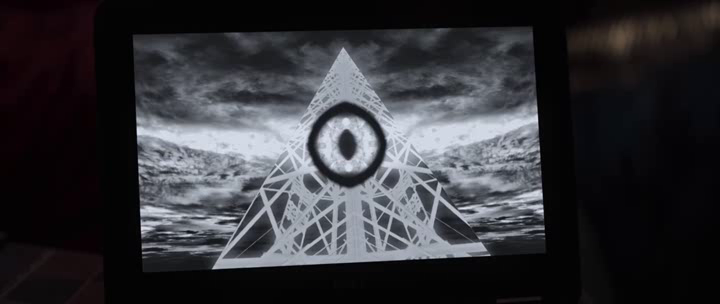
Could the Illuminate be behind it all?

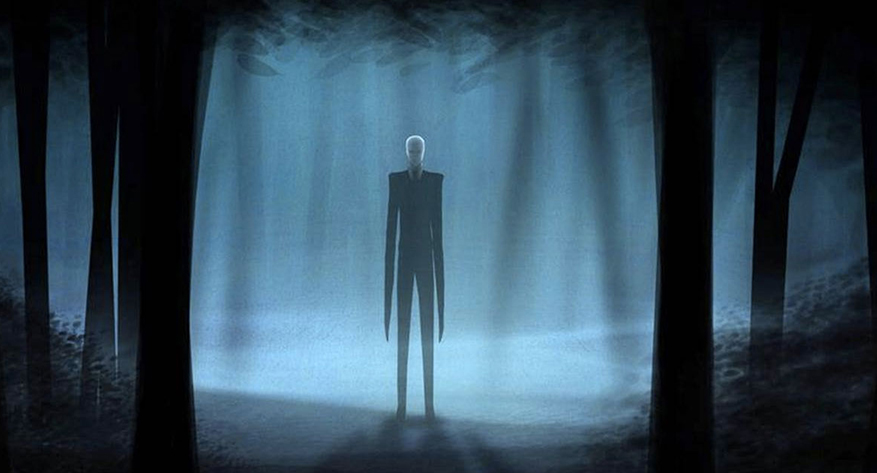
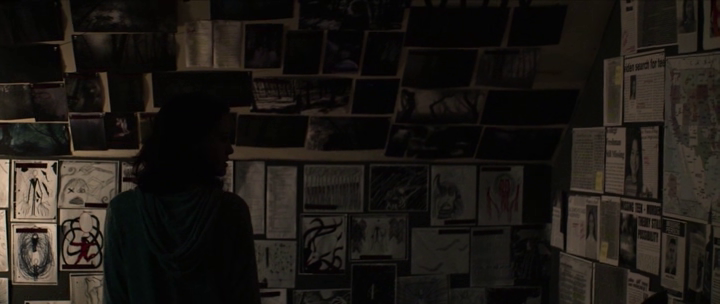
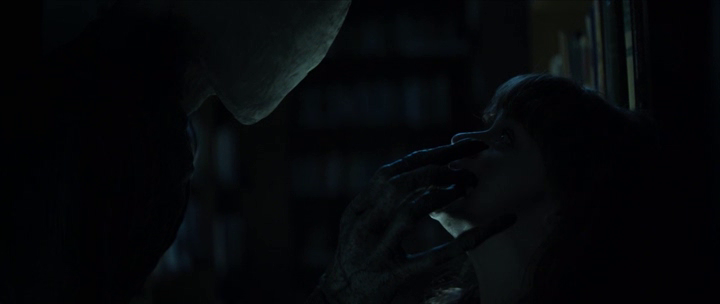
The design of the Slender Man itself isn’t that bad - Eric Knudsen's internet meme depicted a thin, unnaturally tall humanoid with a featureless head and face and wearing a black suit, with Cthulhu like tentacles sprouting from his back, and it is pretty disturbing – and the moments of him creeping into view could have been unsettling in the hands of a better director, but all Sylvain White manages to do is remind us of better horror films – one character is grabbed by vines and tree branches in a complete lift from Sam Raimi’s Evil Dead films – and when Slender Man finally reaches its “startling conclusion” we are beyond carrying about any of it. With this film we are subjected to tired and generic tropes, cheap scares, and a plot that is thinner than the monsters itself, so do not waste your time with this predictable and boring attempt at a motion picture, instead check out the countless web movies about the Slender Man, or better yet just re-watch The Ring, all would be a better use of your time.


How this film got made is the true mystery here.

Sunday, February 3, 2019

The Swarm (1978) – Review

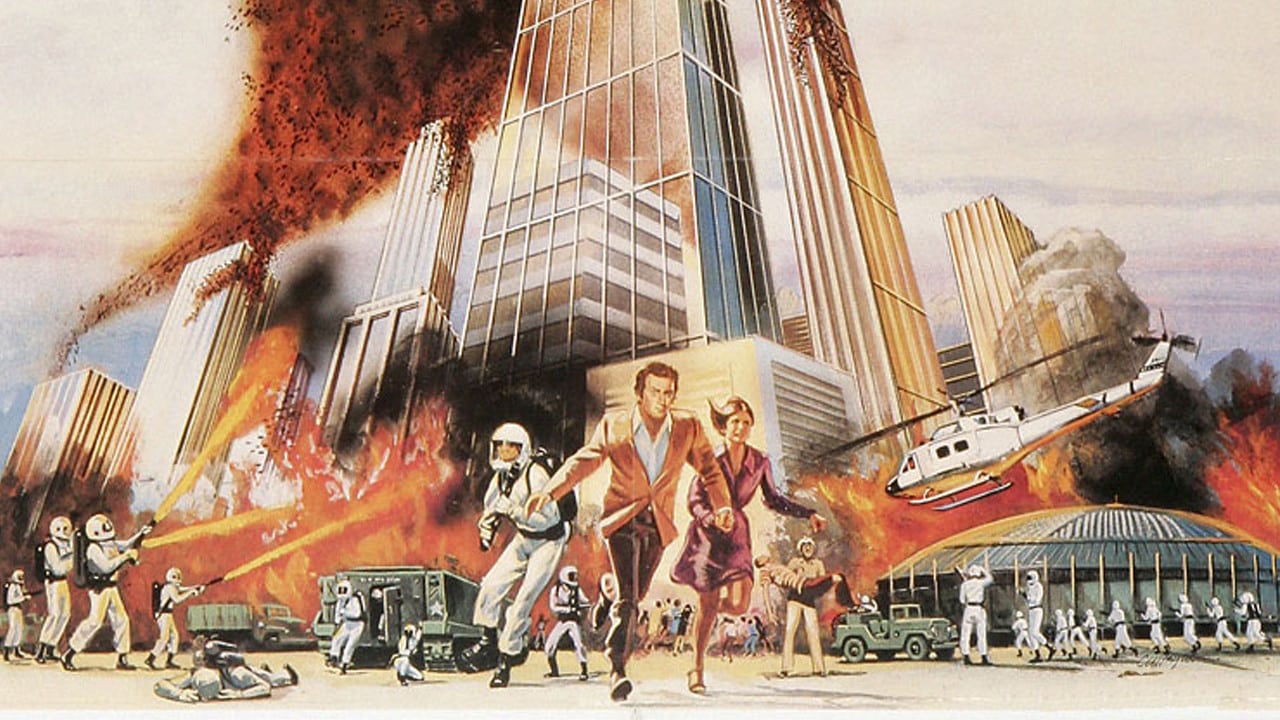
Producer Irwin Allen made a name for himself in television with such classics as Lost in Space, Time Tunnel, and The Voyage to the Bottom of the Sea, and in the 70s he earned the nickname “Master of Disaster” by bringing to the big screen such epic disasters as The Poseidon Adventure and The Towering Inferno. Then along came 1978’s The Swarm, a film that Irwin Allen not only produced but also directed — a movie so colossally bad that it hearkened the beginning of the end for the 70s disaster boom.


“It is more than speculation ... it is a prediction!” This boastful tagline was typical of the larger-than-life producer Irwin Allen, taking the supposed threat of African killer bee and making a movie that is “not science fiction but science fact” while of course getting absolutely nothing correct when it comes to the actual Africanized bee. The film has to throw in lines like, “mutant strain” to cover up the fact that the sting of the Africanized bee is no more potent than any other variety of honey bee, they are just a more aggressive species. The real threat to life and limb in this movie is the idiot humans, as their moronic actions result in jacking up the death toll beyond what even a swarm of killer bees could accomplish.


I swear more people die onscreen due to self-immolation than bee attacks.

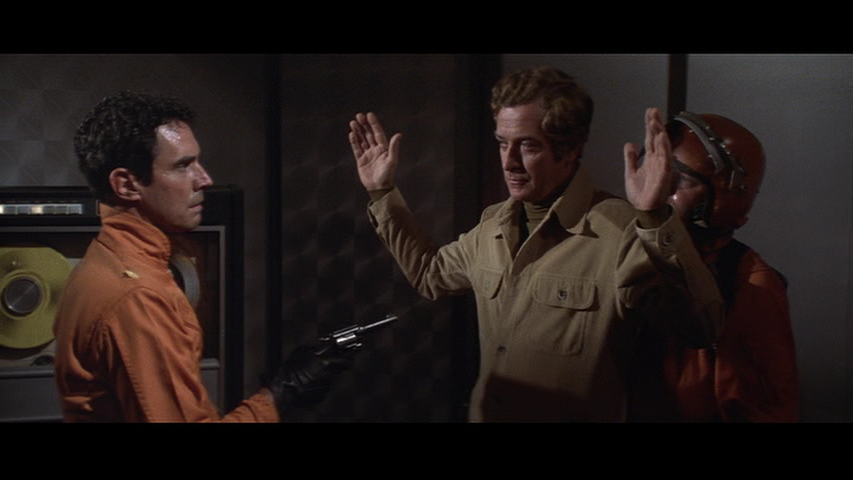
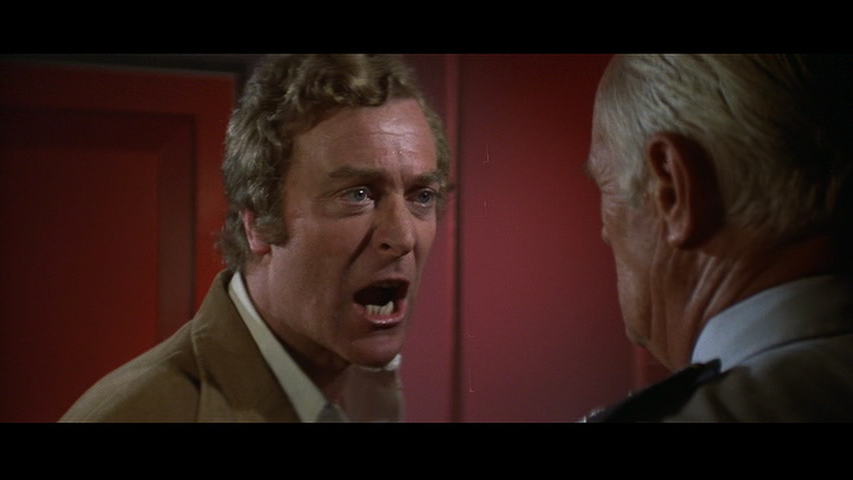
The movie opens with a bit of dramatic mystery: we see a soldiers storm a missile base only to discover that all of the occupants have been killed, and we immediately wonder what kind of force could so easily take out a military installation, but as we are watching a film called The Swarm, we are pretty sure it has something to do with bees. Unfortunately, General Slater (Richard Widmark) and Major Baker (Bradford Dillman), the two idiots commanding these soldiers, who — having not read the script — spend a lot of time trying to figure out what happened, even when explicitly told by etymologist Dr. Bradford Crane (Michael Caine) (who they discovered wandering around the base), that he’d followed a swarm of bees to this location. The General even fosters suspicions that Crane could somehow be responsible, as if he sent the bees to attack the missile base. Now this idea is clearly insane, but a movie where Michael Caine plays a mad scientist, one who controls killer bees, well that’s a movie I want to see.


“Damnit Caine, where are your bee commandos hiding?”

Sadly, that is not the kind of film we are in store for. From the opening moments of The Swarm, we are quickly introduced to what kind of movie we are watching, with characters shouting inanities at each other until the film gets around to having another bee attack sequence, and because this is a 70s disaster film, it is just jam-packed with big name stars, who not only suffer these bee attacks, but also career lows by appearing in this monstrous epic. The film was released into theaters as a 116 minute cut, but has since been extended to 156 minutes for its video release, and this padding expands on already needless subplots.


Unnecessary Subplot Alert!

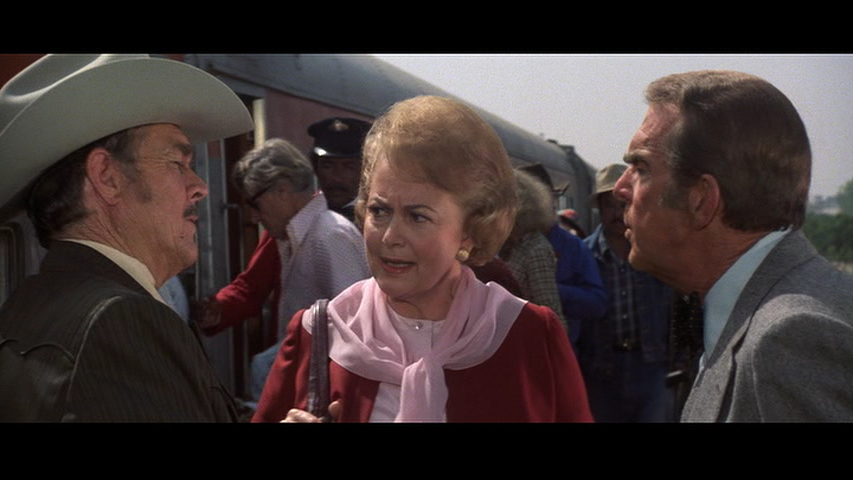
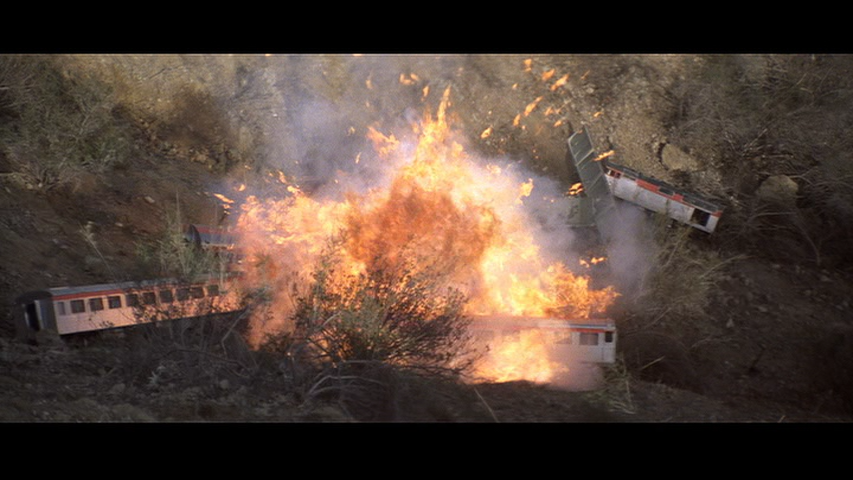
In the nearby town of Maryville, which of course is having its annual flower festival, we are introduced to the town’s mayor Clarence Tuttle (Fred MacMurray), who is in love with the school principle Maureen Schuester (Olivia de Havilland), and retiree Felix Austin (Ben Johnson), who has also proclaimed his love for Maureen. This trio seems to have wandered off the set of Follow Me Boys, as this romantic subplot of Maureen unable to decide which of these men she should marry is not only completely pointless, it’s not even bloody well resolved. She promises to make a decision by the end of the school year, but during the evacuation of the town, the killer bees attack the train that our love-tangled trio are on — do not ask me why the bees are attacking trains, I haven’t a fucking clue — and all three of them are killed when the attack causes the train to derail, tumble down a mountainside, and explode.


I’m also not sure why passenger cars explode as if carrying hydrogen gas.

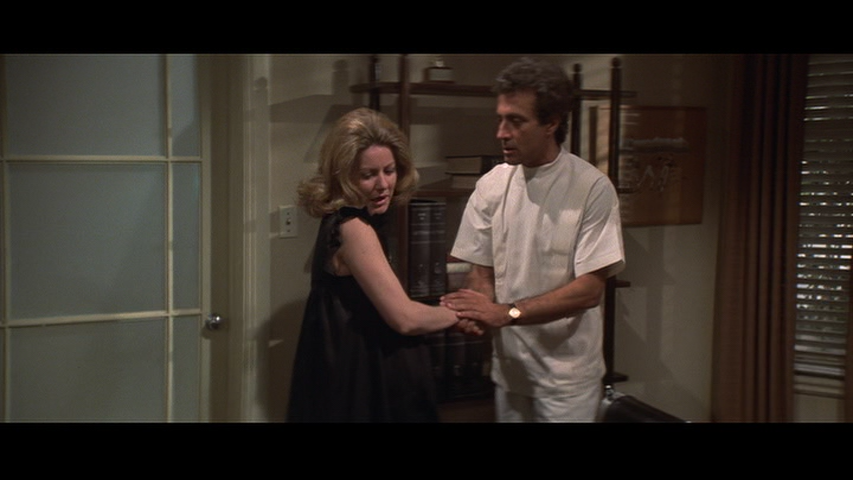
A love triangle between septuagenarians was not enough for Irwin Allen, because we also have to spend time with a very pregnant waitress (Patty Duke), whose husband died during the initial bee attack at the missile base, and she goes into labor before boarding the doomed train — lucky for her, not so lucky for us — for right after giving birth, she says to her doctor (Alejandro Rey), “I guess it’s true what they say, that a woman sort of falls in love with her doctor at this time.” And who exactly is the “they” she is referring to, because I had no idea it was common for a woman to fall in love with her obstetrician, especially in this case where she’s been a widow for about four days, and this is all made worse because of the fact that earlier in the film he was totally hitting on her.


Who can resist a woman in black maternity wear?

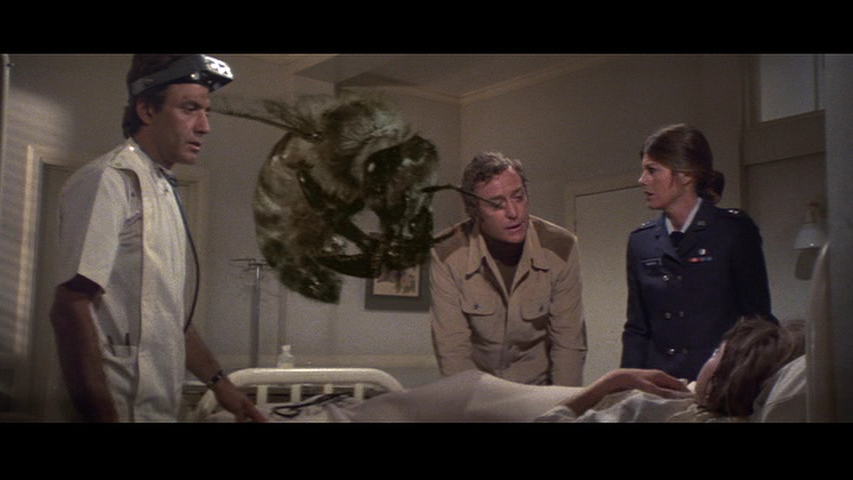
Now, those were the two extraneous love stories that we are subjected to during this film’s bloated run-time, but we also have to endure the developing relationship between Dr. Crane and the military base’s doctor Helena Anderson (Katharine Ross), who promptly abandons her patients — the six soldiers who managed to survive the bee attack but were stung several times, and when they eventually die she is completely unaware of the occurrence — all so that she can tool around in Crane’s van. In fact, both her and Crane show complete disregard for their respective jobs in favor of driving in and around Marysville, for even after Crane repeatedly states that “Time is of the essence,” he and Helena spend almost all their time visiting young Paul Durant (Christian Juttner), whose parents were killed during a picnic bee attack, instead of working on solving the whole “Bees are going to conquer the world” problem. Now, this does lead to one of the film’s most iconic moments, where Crane and Helena visit Paul in the hospital — having been stung during the picnic, he managed to drive the family car into town before passing out — who is now suffering from hallucinations of a giant bee attacking him. Crane calmly informs the boy that “There's no bee here. I promise you, there's no bee here.”


I’m no expert on bee toxins, but is this actually a thing?

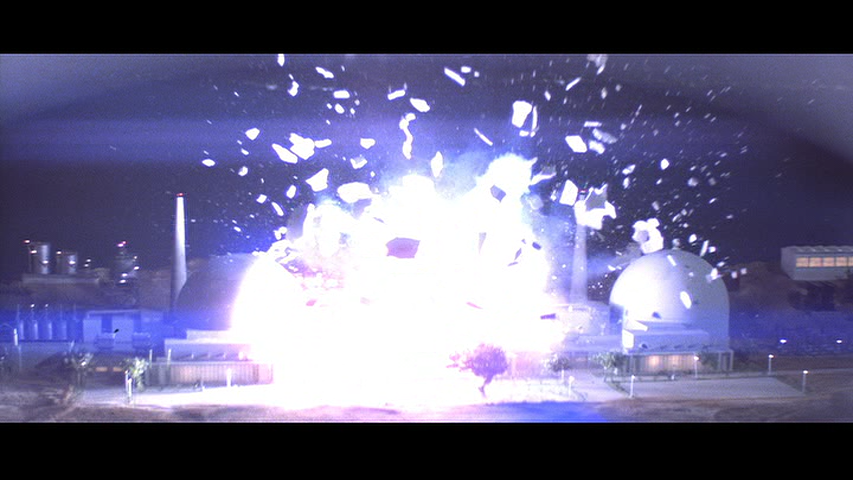
The Swarm is simply loaded with these kinds of bizarre moments, such as Slim Pickens playing a grieving father who shows up at the missile base demanding to see his dead son, or world-renowned immunologist Dr. Walter Krim (Henry Fonda) testing his cure for the African bee venom on himself, for some bizarre reason. And then we get a scene of Dr. Hubbard (Richard Chamberlain) warning the nuclear power plant manager Dr. Andrews (José Ferrer) of the dangers of the approaching killer bees, only to be told, “Billions of dollars have been spent to make these nuclear plants fail-safe! The odds of anything going wrong are astronomical.”


Never tell me the odds.

What is truly odd here, is that though Bradford Crane is the film’s apparent hero, and he does eventually save the day, for almost the entire film's run-time, he is completely ineffectual. He and General Slater are constantly butting heads, and with the death toll mounting and Crane refusing to allow attacks on the swarm, you kind of side with the General at times. But when Crane isn’t failing, he’s in a constant state of inaction. We can laugh at Slater for suggesting, after Dr. Walter Krim has collected thousands of African Bees for study, that “When that swarm finds that their friends have been taken captive they might come back to Marysville.”  Now, this is patently ludicrous, and Crane even mocks him for suggesting such a thing, “Are you endowing these bees with human motives? Like saving their fellow bees from captivity, or seeking revenge on Mankind?” yet we don’t get anything helpful out of Crane but pompous proselytizing about how “The bees have always been our friends,” and any suggested action by Slater is shouted down.

“No! No, general! There will be no air drop, until we know exactly, what we are dropping, and where, and how! Excuse me!”

Michael Caine is one of my all-time favorite actors, but The Swarm was clearly one of his paycheck movies, and his performance veers from painful to laughable; however, the script was certainly doing him no favours, having him spout off some of the most ludicrous lines of dialogue ever put on film. This is also why The Swarm falls into the category of “so bad it’s good,” but at two and a half hours, your ability to laugh at the ridiculous plot and hammy acting will be sorely tested.

Stray Observations:

• Upon arriving at the missile base, Major Baker informs the General that all the personnel are dead, but later Helena shows up stating she saved six servicemen. What kind of search did his men perform?
• Helena states that during the bee attack she saw servicemen above ground lying dead, but when Baker arrived, there were no dead bodies to be seen until they reached the communications room. Did the bees somehow hide the dead soldiers?
• The President puts Crane in direct command of all operations relating to this emergency, which is what allows Crane to boss General Slater around for the bulk of the movie, but there is no instance in which a civilian would be given complete control of military. Crane would at most be allowed to hang around and advise.
• When a bee stings a person, it actually rips out its stinger and part of its abdomen, and thus it dies, but not one dead bee is found at the site of any of the bee attacks. In fact, we never so much as see a bee sting.
• Slim Pickens threatens to cut off the base's supply of water unless he is allowed to see his son, and not only would this result in his immediate arrest, treason being an obvious charge, but an ICBM base would not be relying on the local water supply.
• Paul and a couple of friends return to the site of the picnic massacre so that they can toss Molotov cocktails at the swarm, but earlier we saw Slater, Crane and the military pouring over the picnic site, so how did they miss the swarm if it was still hanging around?
• The General repeatedly drops the words “Killer Bee” when referring to the African killer bees, so we get uncomfortable moments of him informing Crane that Dr. Krim has been “Rounding up Africans“ or stating that, “By tomorrow there will be no more Africans ... at least not in the Houston sector.”
• Crane requests the audio tapes of the attack on the ICBM base, but it takes him weeks to figure out that it was the sound of the sonic alarm test that drew the swarm to the base.
• With Crane’s repeated failures, Slater is finally allowed to spray pesticide all over the Southwest. This of course fails. as the bees have developed a resistance to pesticides, so he then resorts to plan “B” which is apparently torching Houston, Texas.


“Houston on fire. Will history blame me, or the bees?”

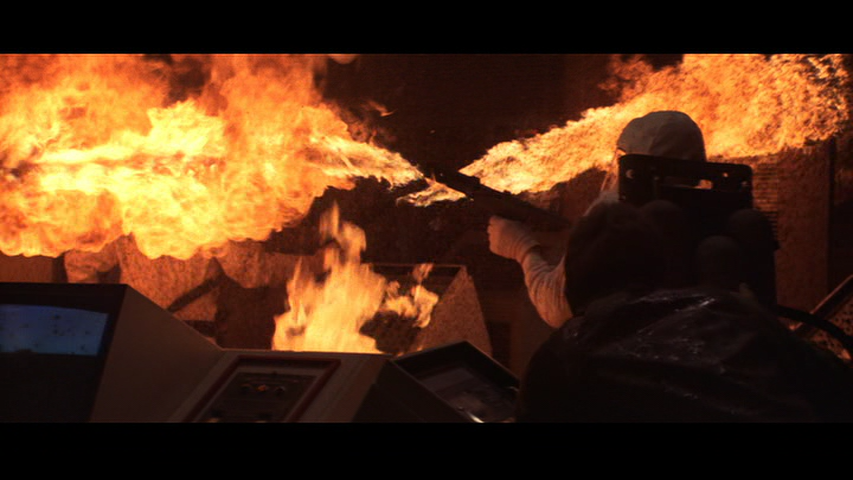
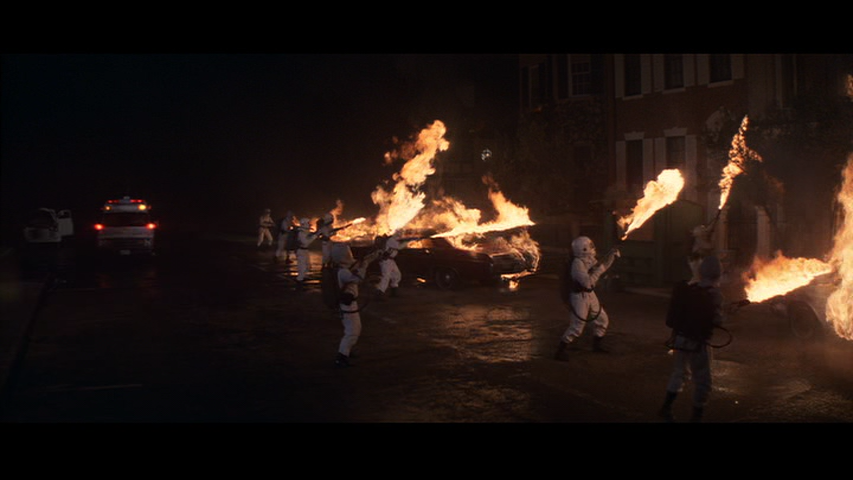
I'm pretty sure history is going to blame Slater, but who am I to judge. However, this final act, with the city of Houston in flames, must have been Irwin Allen trying to recapture the glory that was The Towering Inferno, and the execution of this sequence is so laughably bad that it’s hard to believe that not one person would have pointed out to Allen just how stupid it was. Exactly how stupid you ask? Well, when the pesticides fail to kill the swarm, Washington decides to go with “Man-made burnings,” and you’d think this would involve jets dropping napalm, or maybe the use of a fuel-air-bomb, but for some reason they decide to go the route of men with flamethrowers walking up and down the street torching everything around them. Do they not realize that the bees can just fly away?


And does this seem even remotely safe for those poor soldiers?

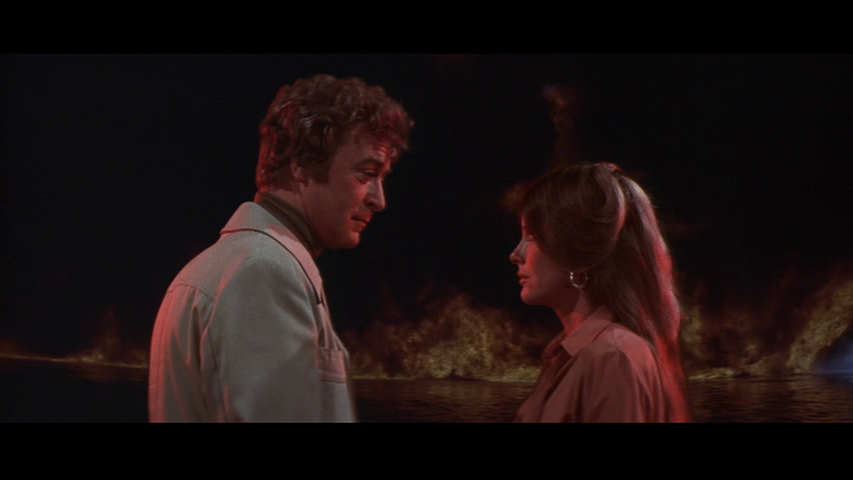
Eventually, Crane is able to pull his head out of his ass long enough to finally deduce that it was the sonic alarm that drew in the bees, and that this sound can be used to lure them out into the Gulf of Mexico, into an area doused with oil, so that when the swarm arrives they set the oil ablaze, destroying all of the bees once and for all — or do they? Because this is a disaster film that also falls into the category of “Nature attacks,” it thus has one of those open-ended codas, with Helena asking Crane, “Did we finally beat them? Or is this just a temporary victory?”


“I hope not, I have to fly to Bermuda and fight a giant shark.”
The Swarm – Disaster Pedigree:
  • Michael Caine was in Beyond the Poseidon Adventure.
  • Henry Fonda was in City on Fire.
  • Richard Chamberlain was in The Towering Inferno.
  • Olivia de Havilland and Lee Grant were in Airport '77.
This is one of those films that was an embarrassment to all involved, and we're talking a cast that includes six Academy Award winners. But as bad as The Swarm is, it will always hold a special place in my heart, simply for the sheer audacity of it all, and of course for Michael Caine’s eternally entertaining utterance of “There is no bee.”