Blog Archive

Saturday, August 18, 2018

Night of the Lepus (1972) – Review

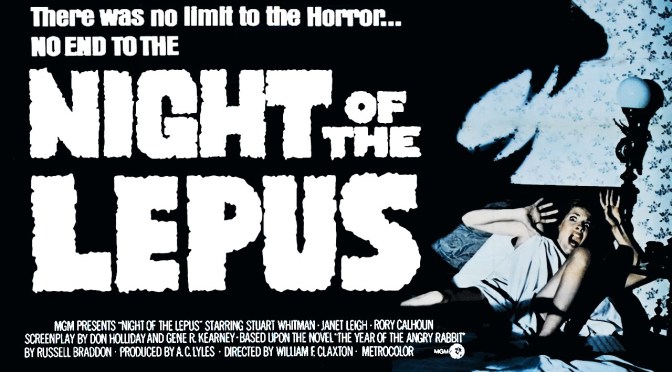
Rabbits, nature’s most vicious killing machine, furred beasts that mercilessly stalk and devour their prey — or at least that is what MGM Studios wished audiences to believe when they released Night of the Lepus back in 1972. Based on Australian author Russell Braddon’s book The Year of the Angry Rabbit – a political satire that the following film resembles not at all – Night of the Lepus came into being due to the increased popularity of the “When animals attack” genre. Where films like The Willard – an excellent killer rat movie – made a lot of money, the idea of killer rabbits seemed to some studio execs to be less than implausible. Thus, the film’s original title of “Rabbits” was changed to Night of the Lepus, and almost all promotional material were altered to hide the fact that the move was – in fact – about killer bunnies.


The movie opens with a news anchor informing the viewer of the dangers of rabbits – stock footage of rampant herds of rabbits swarming across Australia used to sell this point – and that even American farms are almost helpless against this furry onslaught. We next meet rancher Cole Hillman (Rory Calhoun), who loses a horse due to stepping in rabbit holes, and so he approaches college president Elgin Clark (DeForest Kelley) for advice on how to rid himself of this pestilence. Elgin suggest they talk with researchers Roy (Stuart Whitman), and Gerry Bennett (Janet Leigh), who are experts at removing pests without damaging the ecosystem. The two scientists sympathize with the rancher’s desire to get rid of the rabbits without resorting to poison – it would end up destroying his land and force him to sell his cattle out of season – and so Roy and Gerry start to work on a method of hormone treatment that would disrupt the rabbits' breeding cycle.
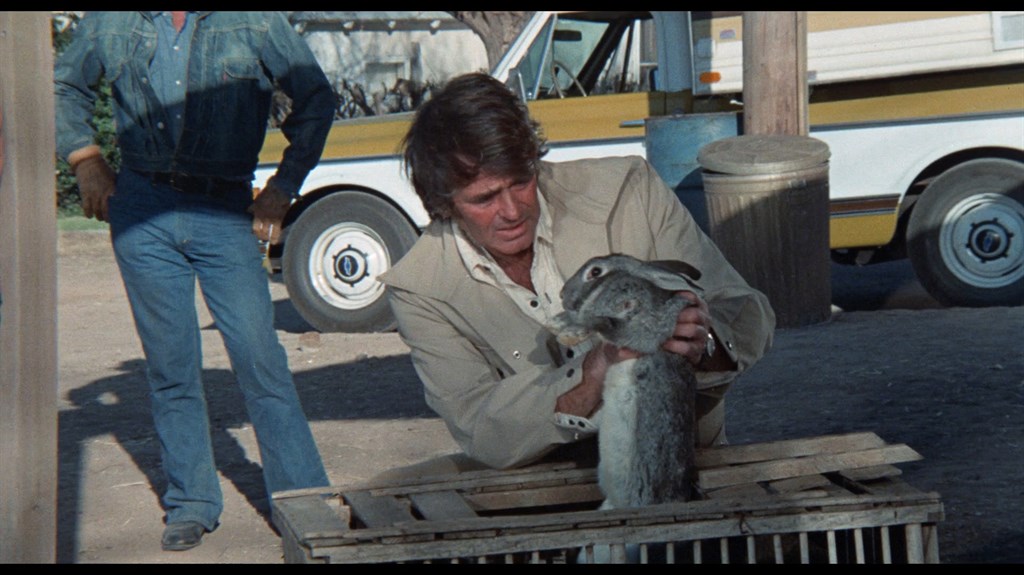
 

His first idea to get them to wear condoms was a failure.

Unfortunately, time is not on their side, as months of testing with different hormones would not help the current situation, so Gerry uses an untested serum delivered to him by the Public Health Department, remarking to his wife, “I wish I knew what the effects of this serum would be.” This is basically the equivalent of a mad scientist throwing darts at a problem – even Victor Frankenstein had a stricter work ethic than this – and when Roy and Gerry’s precocious daughter sneaks one of the “treated” rabbits out of the lab, well, we've got ourselves a monster movie. Soon, giant rabbits are rampaging across the Arizona landscape, killing any and all who cross their path, but wait, aren’t rabbits herbivores?
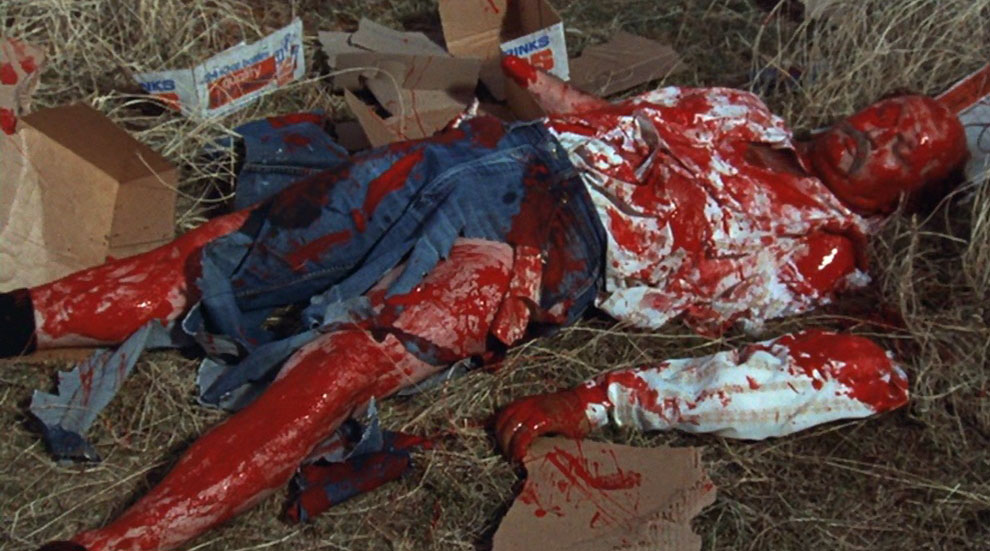
 

“This is a case of murder, and someone is responsible.”

Director William F. Claxton had the unenviable task of making a monster movie about a creature that would only be threatening to you if, by chance, you were dressed as a piece of lettuce. I’m not saying a herd of giant rabbits wouldn’t be an ecological disaster, as well as a threat to the nation’s stockpile of Trix cereal, but unlike rats, sharks or bears, who have terrorized many a cinema goer for years, rabbits are not known for attacking humans. Also they are just too damn cute. You can smear as much ketchup as you want on a rabbit’s face, add all the implausible roars and growls your Foley guy can come up with, but you are still left with a cuddly monster.
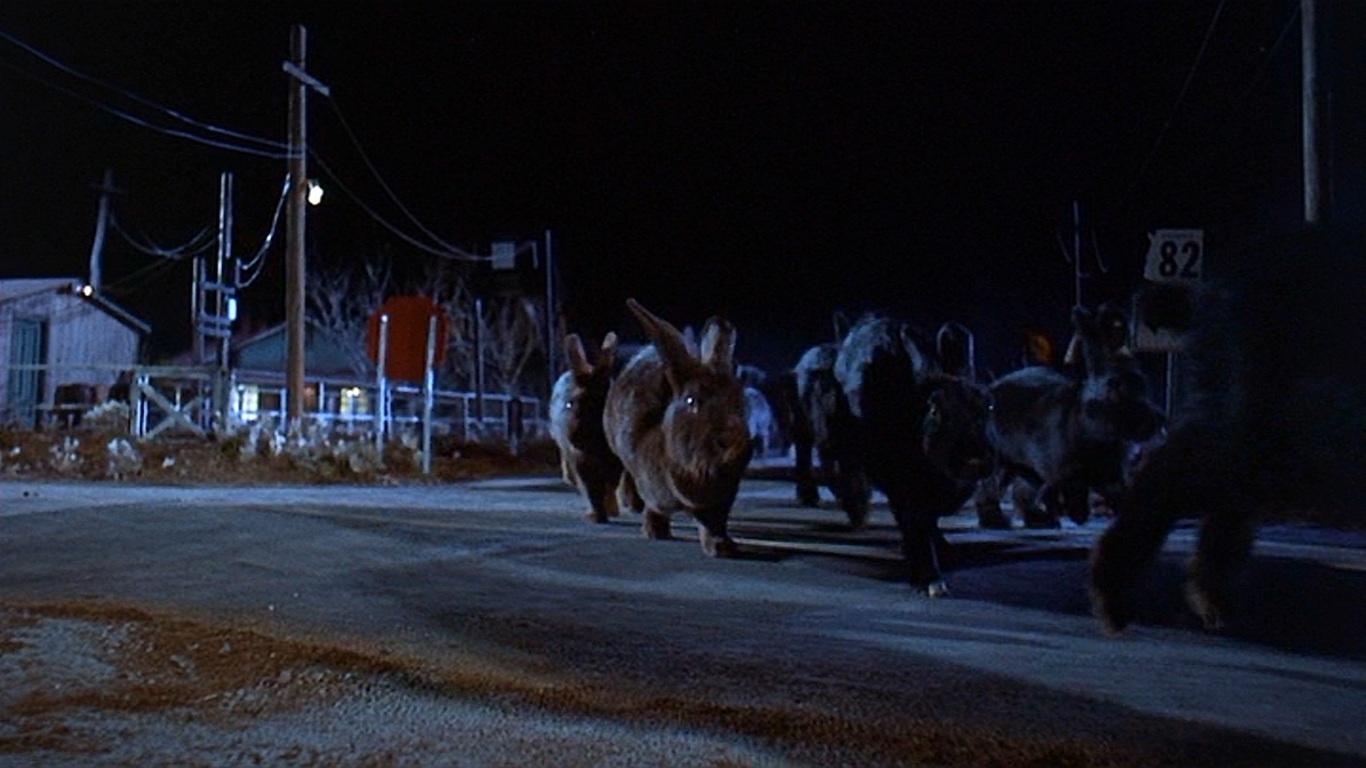
Book Note: Russell Braddon’s book The Year of the Angry Rabbit dealt with a virus that allowed Australia to weaponize rabbits, and thus take over the world. Now that's a movie I wish to see.

The film was not helped by the movie-of-the-week look that cinematographer Ted Voigtlander brought to the project, it had none of the atmospheric effects one would expect to find in a horror movie, visual or otherwise. The cast was clearly "in the know" as to how ridiculous the movie was shaping up to be – Janet Leigh is on record stating that the film lacked an "ideal director" to bring the script to life – and thus performances ranged from bored to disinterested. So with a ridiculous premise and a cast of mostly Western actors – Janet Leigh agreeing to do the part simply because it was being shot close to home – it was up to the special effects department to save the day. They didn’t. The filmmakers used the standard technique of shooting the rabbits on miniature sets and filming it all in slow motion – with the odd shot of a guy in a rabbit suit to do the actual attacking – and with the added sound effects of a “thumping” giant herd of rabbits. But as much as they tried to sell this giant menace, the resulting effect was laughable to say the least. Now to be fair, making the Easter Bunny into a credible threat wasn’t easy – overcoming a rabbit’s innate cuteness does seem insurmountable – but we do know it is possible.
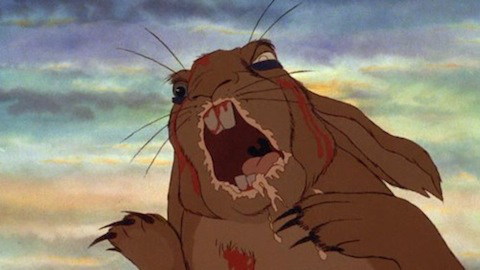
 

To this day Watership Down is still traumatizing kids.

Night of the Lepus would have been better off if it hadn’t taken itself so seriously – that they thought a giant killer rabbit film could be played straight is just baffling – and trying to do so is probably the film’s biggest misstep; if they had played it a little more self-aware, we could have ended up with a pretty fun film. At one point in the film, our heroes need to herd the giant rabbits towards an electrified section of railway tracks – to then fry the poor buggers while the National Guard pumps rounds of ammunition into them – and to herd rabbits, a police officer is sent to a local drive-in to recruit civilians to aid in this plan. It's at this point that we are treated to the one single moment of joy this film has to offer, and that comes when the police officer yells at the drive-in patrons, “Attention! Attention! Ladies and gentlemen, attention! There is a herd of killer rabbits headed this way and we desperately need your help!” With more of this kind of dialogue, and a cast willing to place tongue firmly in cheek, we could have had a comedy classic on our hands. Instead, the filmmakers played their hand straight down the line, ending with a bunny massacre that was pretty unpleasant to watch, and subsequently giving us a rather dour and lifeless monster movie.
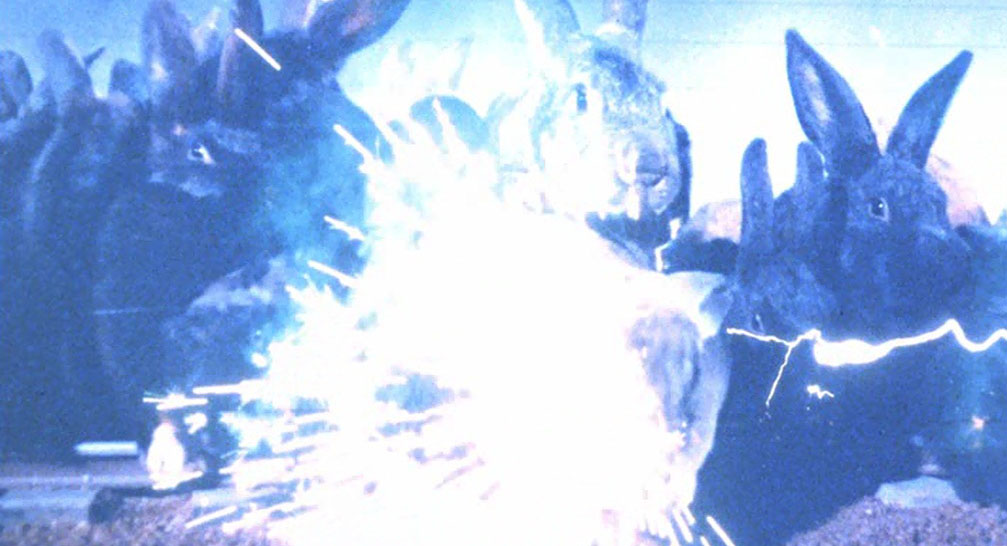
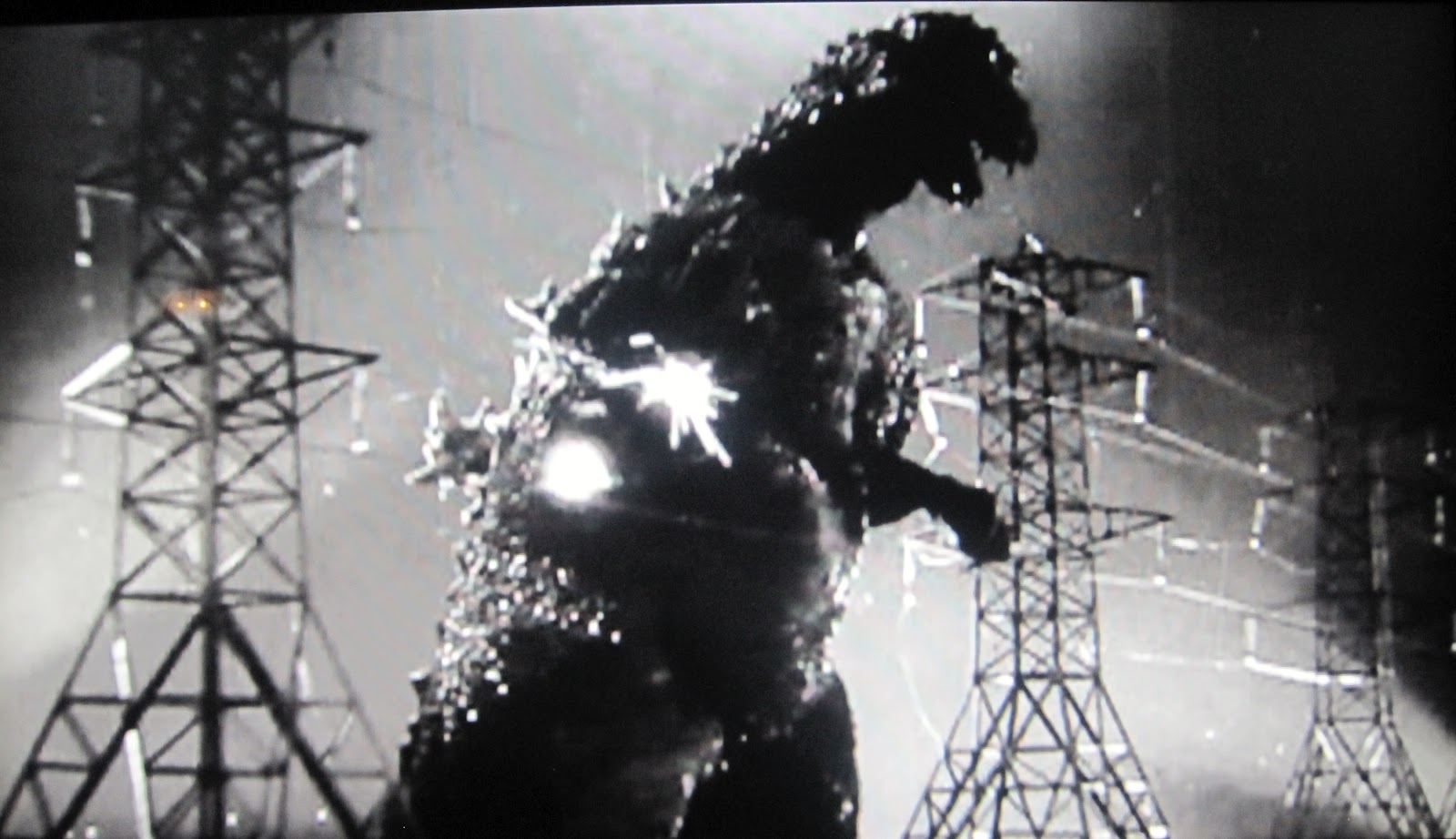
Note: The plan to use an electrified section of a railway line as a barrier to stop the giant rabbits somehow misses the fact that rabbits can jump. Are we supposed to believe a rabbit the size of a car can’t jump four feet?


The people of Tokyo know how to properly set up an electrical barrier.

When it comes to the genre of nature fighting back, there are certainly worse entries than Night of the Lepus – the film The Killer Shrews, which used Coon dogs in shrew costumes, being one of the worst – but its attempt and consequent failure to make bunnies scary is indefensible. The film could have tried to focus on man’s meddling with nature – making an environmental message in a horror film is certainly not unheard of – but instead, we got an overly talky monster movie where the talking didn’t actually say anything. Shout Factory has recently released a Blu-ray with a new 2K scan of the movie – it is quite the gorgeous print – with two very informative commentary tracks, but overall this movie on its own is a bit of a slog at times, and thus hard to recommend.

Wednesday, August 15, 2018

Big Game (2014) – Review

Movies that pit a kid, or a group of children, against adults fills a certain wish fulfilment in a particular demographic, because what kid didn’t imagine he was one of the Goonies, hunting pirate treasure while the nasty Fratelli family were hot on their heels? And who didn't want to be Kevin McAllister as he defended his home from the Wet Bandits? However, the trick in making this genre of film is that it not only must appeal to the young, but to the young at heart as well. Today, we will look at director Jalmari Helander’s film Big Game, which has a small boy up against a group of terrorists who are hunting The President of the United States, and we will see if the simple criteria of the genre is met.


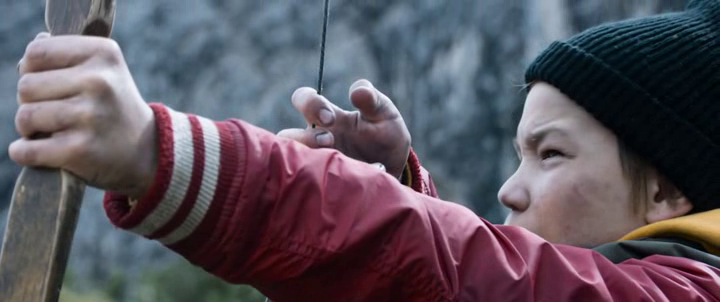
Our little protagonist for the Big Game is thirteen-year-old Oskari (Onni Tommila), who is sent into the wilds of Finland’s forests to bring back a deer to prove his manhood.  Note: I’m not one to criticise another culture’s traditions, but I think sending a kid alone into the vast wilderness, with nothing but an ATV and an old map seems a tad irresponsible. Even Oskari himself is unsure of his ability to pull of his trial of manhood, as he is unable to do the traditional “Pulling of the Bow” in front of his father and friends.
So we are to believe the adults in this movie are totally cool with sending a kid off into the wilderness to kill a deer, when the poor little guy can’t even loose an arrow properly?  They don't even seem to have supplied him with a radio to call for help if he gets hurt or lost. This is some tough parenting.


Our plucky hero.

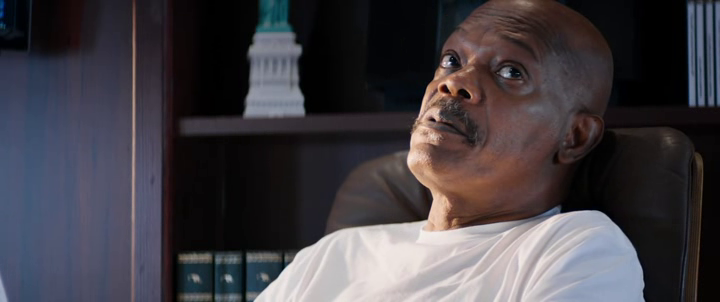
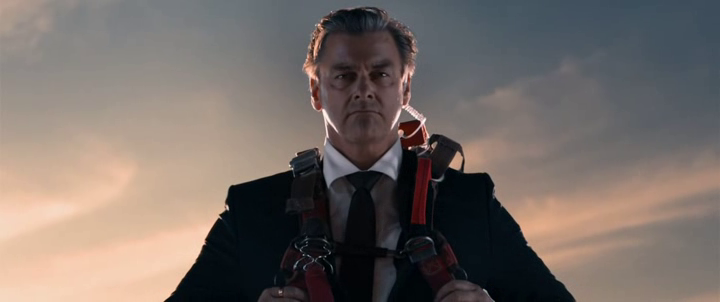
Of course, the “Big Game” that the title of this movie is referring to isn’t any ole deer, for flying across the skies of Finland is Air Force One, where The President of the United States is on route to a conference in Helsinki. US President William Alan Moore (Samuel L. Jackson) is considered by many as a “Lame Duck” president, and the only one who seems to be in his corner is his body-man Morris (Ray Stevenson), a disgruntled Secret Service agent who once took a bullet for Moore. If you have guessed that this trusted agent will betray the President, then you’ve probably seen Air Force One with Harrison Ford, where in that movie it also had the turncoat being the head of the President’s Secret Service detail. So don’t be expecting much originality out of this film.


“Who were you expecting, Morgan Freeman?”

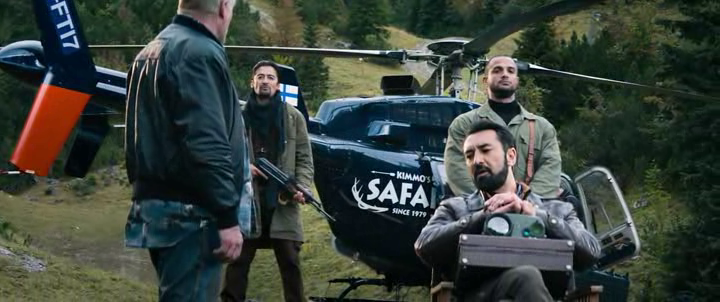
As in Air Force One, the villainous Secret Service agent isn’t working alone: on the ground there is a group of terrorists led by Hazar (Mehmet Kurtulus) — who is trying to be a mix between Alan Rickman’s Hans Gruber from Die Hard and Gary Oldman’s Egor Korshunov from Air Force One — but instead of coming across as even remotely threatening, we are treated to cartoonish levels of evil — they even pull out the old trope of him killing some of his own men, just to show how EVIL he is. This particular trope is one of my most hated, as the remaining henchman must realize their boss is either nuts or an idiot, and neither of those options could lead to a good ending, thus putting a bullet into the back of Hazar’s head, and calling it a day, is what any sane member of that team should do.


You do have to admire a villain who brings his own chair.

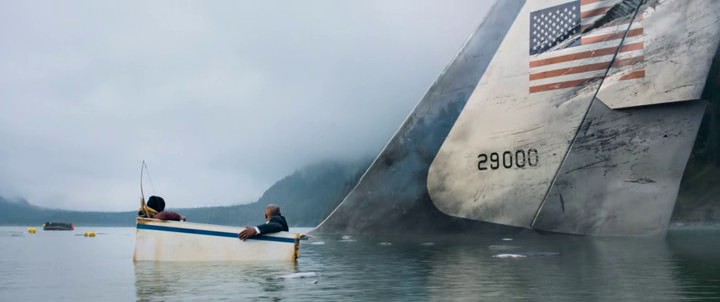
The movie finally gets going when Hazar has Air Force One blown out of the sky with a Chinese shoulder-launched missile. And exactly how is the most protected aircraft in the world brought down by this bunch of Middle Eastern yahoos? Well, Morris, our turncoat Secret Service agent, had managed to disable Air Force One’s countermeasures, which allowed this small shoulder-launched missile to get through, but then, we also see the five escort fight jets being blown up, and that makes no fucking sense. For this to have worked, we have to believe that the pilots, upon detecting an incoming missile, panicked and forgot that they were in one of the most maneuverable plane’s in existence, because I don’t buy for a second that a Secret Service agent would have had access to these planes to shut down their countermeasures, not to mention that he’d have to somehow remove their ability to maneuver as well.


Morris, the villain with unseen magical abilities.

Morris hustles The President into Air Force One’s escape pod telling him, “I will find you on the ground,” but once the pod is launched, we discover, not so shockingly, that Morris has betrayed his office, as his fellow Secret Service teammates parachute out after the President’s pod, only to find that none of their chutes open. The last remaining agent notices the chutes have failed before he jumps, and thus Morris is forced to shoot that poor observant dude in the head. It’s at this point that the film derails and becomes simply “A Boy’s Adventure Story,” but without any ounce of reason or logic. It’s when Air Force One crashes, scaring the crap out of poor Oskari, that the movie enters the “What the fuck portion” of our evening.

• The President’s escape pod cannot be opened from inside — a code must be entered on an exterior panel — but this means if the pod landed in water there is a good chance The President would drown. Not a good design in my opinion.
• When Oskari frees President Moore from the pod, the two begin their trek through the Finnish wilderness, but why? The President doesn’t know that the man coming to find the pod has betrayed him, so him leaving that area — the only place his people know where to find him — makes no sense whatsoever.
• Morris confidently walks up to an armed President Moore because he knows the gun's safety is on. Not only is the “Safety on” cliché so overused, but Morris is relying on Moore not finding the safety in the time it takes him to close the distance between them.
• In a moment that challenges the nuclear fridge scene from Indiana Jones and the Kingdom of the Crystal Skull for implausibility, Oskari and Moore survive being bounced down a mountainside while inside a freezer.


And it lands them right by the remains of Airforce One. *sigh*

The key difference between this film and the aforementioned Goonies and Home Alone is that those movies were family comedies and the villains were goofy hapless morons, but in Big Game, Morris and Hazar are not supposed to be incompetent, yet for some reason, the script keeps insisting that they are. Director Jalmari Helander hasn’t delivered a terrible film with Big Game, just one that is very disappointing, especially considering how good his dark holiday movie Rare Exports: A Christmas Tale was.  That film also starred Onni Tommila as the young boy trying his best to save the day, only in that outing it was done properly. If you are hunting for a good family adventure film, this is one that falls into the “Catch and Release” category, as its nonsensical script and implausible action, completely fails to really engage the viewer.

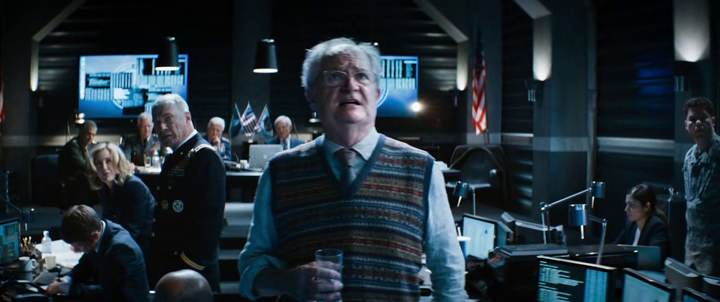
Note: To add insult to injury this film has quite the stellar supporting cast that includes Victor Garber, Felicity Huffman, Ted Levine and Jim Broadbent, and then it sticks them all in a room together to provide useless expository dialogue.

Sunday, August 12, 2018

Blue Thunder (1983) – Review

With the year of George Orwell’s 1984 looming on the near horizon, it was not at all surprising that Hollywood would make a film where corrupt American government officials were seen developing a system that could not only wage war on the American populace, but spy on them as well. Thus, in 1983, Columbia Pictures and director John Badham gave us the technological thriller Blue Thunder – a Big Brother movie with a super helicopter. But looking back across the 35 years since its release, the film is almost quaint by today's standards. With the events of 9/11 bringing forth the Patriot Act – allowing the government to eavesdrop on whoever they like – and modern military drone technology being a lot scarier than any helicopter could be — no matter how suped up its armaments are — it is difficult to think that Badham’s Blue Thunder could hold up.


The film posits that the government could use a military-style combat aircraft for police surveillance over American soil – despite numerous laws strictly forbidding this – in the event of a large-scale civic disobedience, during the upcoming 1984 Olympics. The movie’s hero is Officer Frank Murphy (Roy Scheider), a maverick LAPD helicopter pilot and Vietnam War veteran who butts heads with his crusty, yet lovable, boss Captain Jack Braddock (Warren Oates), while also fending off the evil machinations of his old war buddy Colonel F.E. Cochrane (Malcolm McDowell). It is the villainous Cochrane who will eventually end the film with a brilliant aerial dogfight with Frank – blowing up a good portion of Los Angeles in the process – but is Cochrane this film’s sole villain?


Malcolm McDowell is casting shorthand for evil.

The basic plot of Blue Thunder is that of a shadowy group of government men who want armed helicopters patrolling the skies over America – keeping the Blacks and Hispanics under a watchful electronic eye – and to get certain pesky laws changed so that this can happen they have people stirring up trouble in some of the poorer neighbourhoods of Los Angeles. When a city councilwoman uncovers this plot – a program called Project THOR, which is to use helicopters in a military role to quell civilian disorder – she is killed, and it is her death that has good ole Frank Murphy thinking something fishy is going on. With the aid of rookie helicopter observer Richard Lymangood (Daniel Stern), and Frank’s spunky girlfriend Kate (Candy Clark), they will expose the villains and save the day.


Beware all innocent cops who stand in their way.

Directed by John Badham, and written by Dan O'Bannon and Don Jakoby,  this film is an overly fun techno-thriller populated with the standard Watergate type government villains and the stereotypical maverick hero, but in the case of Blue Thunder the villains are even dumber than Nixon’s bumbling robbers, and the hero isn’t all that heroic.

Let's take a look at the villains; we first meet government agents Icelan (Paul Roebling) and Fletcher (David Sheiner), who seem to be running the Blue Thunder program, as they give the rundown on their proposed program to Murphy and his boss Braddock, but the big question here is why is Murphy involved at all? Right out of the gate we learn that Murphy is a mental powder keg – he tends to have Nam flashbacks at very inopportune times – and has been ordered by the LAPD Review Board to undergo psychological re-evaluation, yet somehow this still puts his name at the top of the list of pilots to test one of the most advanced military helicopters in the world. How does that even make a lick of sense?  Frank is even on suspension – for Peeping Tom activity while at work – when he gets called in to attend a sunrise demonstration of the Blue Thunder originally called "The Special," and he even has dark history with Cochrane – the government’s official Blue Thunder pilot who Frank witnessed throwing a Viet Cong prisoner out of a helicopter – but strangely enough, none of this seems to disqualify Frank.


"I'm actually much better at blowing up sharks."

Frank’s appointment as test pilot for the Blue Thunder – which he gets to operate without even one supervised flight – is beyond ludicrous, the villains could have simply demanded a replacement, which certainly no one could rightfully oppose, but Cochrane waves away such notions, claiming he can handle it. I know villains in these types of movies tend to underestimate the hero, but in this case they veer wildly into the criminally negligent category, and when Frank and Lymangood overhear the entire conspiracy – aboard the Blue Thunder while in “whisper mode” as they hang outside the Federal Building – the bad guys should just arrest each other for gross incompetence. So not only are the villains a bunch of murderous conspirators, they are also a bunch of bloody morons, who have only themselves to blame for their failures. Frank Murphy would have not been a problem if they had simply – and rightfully – stated that he was grossly unqualified for the project.


Also there would have been a lot less dead innocent civilians.

Frank Murphy is depicted as the Don Quixote type hero – pushing against bureaucratic windmills – but if you actually look at what good ole Frank does in this movie, you will have to admit that he’s really not all that heroic, sure he stands up against “The Man,” but at what cost? After his partner is killed, Frank steals the Blue Thunder – needing to use it to ensure the incriminating evidence of the government conspiracy makes it "safely" into the hands of the local news – the resulting battle between Frank, the police and military, leads to immense damages to the city, and most assuredly a high body count. The film tries to dance around the death and destruction the hero causes – we don’t actually see any bodies – but any half-awake viewer must realize that people are dying during Frank’s crusade. And the worst thing about it all, is that he intentionally puts innocent lives in harm’s way.  He even opens fire on Cochrane's helicopter — while his targeting system is malfunctioning — without seeming to care where all his bullets are flying.


I'm sure no one in this apartment building was at home during Frank's "Spray and Pray."

Further Examples of Frank Being a Dick:

• Frank destroys two LAPD helicopters – shooting one out of the sky and causing the other to crash – without seeming to have any concern for the lives of his fellow police officers on board, people who are not part of the conspiracy but who believe Frank has gone nuts. And can you blame them? He is known for “wigging out” and now he just stole a $5 million dollar weapon of war.
• When a police car pulls over his girlfriend – who is trying to bring the incriminating tape to the press – Frank uses his helicopter’s M61 Vulcan 20mm Cannon to saw the police car in half. This is a six barrelled rotary gun – firing no less than 6,000 rounds per minute – and not some precision weapon. Thus, the two police officers, if by some miracle were not hit by one of those bullets, would most likely have been killed or at least seriously injured by all that flying shrapnel.
• When the military send a pair of F-16s to “surgically” take Frank out – using heat seeking missiles – our hero uses the heat of a barbeque stand in Little Tokyo to divert the missile. We see staff members of this BBQ Chicken Shack fleeing the building before the explosion, but there is no way Frank could be assured everyone got out before the missile hit.
• Frank avoids the next “heat seeker” by hovering near a glass and steel skyscraper, so that the missile would lock onto the buildings windows – which had been heated up by the sun – and several floors of the building are completely destroyed in the following explosion. Are we again expected to believe everyone evacuated in time?
• Next our “hero” shoots the wing off of one of the F-16s – which at the speeds these planes travel, would have been next to impossible for Frank – but we do see the pilot safely eject. So score one for Frank, but wait, what about that now unmanned plane? This is downtown Los Angeles – the building he hit being one of the Arco Towers — this plane isn’t going to harmlessly plummet into the Pacific, it’s going to land smack dab in the middle of the Financial District.


Frank Murphy: Hero or Terrorist?

What is interesting to note is that the original script by Dan O'Bannon and Don Jakoby dealt with crazed helicopter pilot Frank Murphy going on a rampage across Los Angeles, before being heroically shot down by an F-16, but the studio were not too keen on having such an unsympathetic main character – apparently none of them saw Taxi Driver – and so Frank’s psychological issues were toned down and a true villain was added in the form of Cochrane. These changes may have made the film more palatable for audiences – and Malcom McDowell does make for a great villain — but the studio’s need to also keep all those awesome action set-pieces made the film a tad bipolar. The result was a movie that, though incredibly fun, is a bit of a mess if looked at too closely.

Note: Frank destroys the 5 million dollar prototype by landing it in front of an oncoming freight train. I sure hope this didn’t kill the engineer or derail the train. Frank, you complete dick.

Blue Thunder is a decent action/thriller with a fantastic cast – this was Warren Oates last role and he steals whatever scene he is in – and the Blue Thunder itself is one of the best cinematic monsters brought to screen. The plot may not hold much water, and it has several goofy moments – I particularly laughed at the fact that neither Frank nor his buddy new what THOR meant – but the action is fun and the actual conspiracy underlining the movie’s plot does hold up rather well, a little too well going by today’s current events.


Note: Blue Thunder did eventually fly to the small screen.

Friday, August 10, 2018

The Meg (2018) - Review

When making a killer shark movie there is one thing a filmmaker must first come to grips with — that you will not be making a film better than Spielberg’s Jaws; it’s just not going to happen, and with the release of Warner Brothers summer flick The Meg, it’s clear that director Jon Turteltaub understands this completely. The key decision-making process here basically comes down to, “If you can’t make a shark movie better than Jaws, how about a bigger one?”


Jonas Taylor (Jason Statham) is the classic hero with a dark past – a deep-sea rescue went badly resulting in the death of two of his colleagues – and with a new threat on the horizon, he is forced out of his self-imposed retirement to save the day. This time, it has to do with an emergency aboard an undersea research laboratory – a place where they plan to discover a hidden sea below the Marianas Trench – and it’s Jonas’s ex-wife Lori (Jessica McNamee) being trapped inside a damaged sub, that brings him running. To say that The Meg lacks plot or character development would be unfair – it does lack both of these elements, but one really doesn’t expect to find any in this type of movie – and what the film lacks in these areas, it makes up for in having tons of cliché action sequences and stereotyped characters.


“Hey, my character has depth, I end up six miles deep underwater.”

The Meg is an adaptation of Steve Alten’s book Meg: A Novel of Deep Terror – though loosely based as it is, it kind of grabs moments and characters from the book’s many sequels – and unlike the book, it never takes itself too seriously. In the book, Jonas is a man tortured by his personal demons – having lost two crewmembers on a past dive – but with Statham, you know you’re not just going to get the standard square jawed and stoic hero, he’s going to nod and wink at the camera any chance he can get.

Jonas is pulled from his drunken hang-out – somewhere in Thailand - to rescue his ex-wife and her crewmates, and he is teamed up with Dr. Zhang (Winston Chao), head of the research facility, and his gorgeous daughter Suyin (Bingbing Li), who could offer some possible romantic entanglements. Then there is Jaxx (Ruby Rose), the young genius that designed the facility – though this attribute is never really utilized, she’s just another person who gets to fall in the water – and to bring an added wrinkle to the proceedings, it turns out that the ships doctor (Robert Taylor) is the man who accused Jonas of being a coward – and delusional after claiming to see a Megalodon – following the tragic rescue mission, the one that drove him into drunken retirement.


“Why so serious?”

For added comedy relief – which you almost don’t need with the increasingly funny Statham on board – there is DJ (Page Kennedy), who is here to provide the proper amount of ethnic humor, and billionaire Jack Morris (Rainn Wilson), the money man behind the facility, who dances back and forth between comic relief and film’s villain, because a movie about a giant prehistoric shark needs a human villain, right? As mentioned before, there really isn’t much of a plot to be found here – just your standard man against nature story – as Jonas soon finds himself facing his old adversary, the Meg. What the film does bring to the table is a sense of carefree exorbitance that carries through the film’s 113 minute running time — and it really does fly by — but sadly, there isn’t much gore for a shark film, much to the distress of both Statham and the director who both wanted a Rated “R” movie. If the film is guilty of anything, it’s in not going far enough with the pure silliness of it all.


And it does get rather silly at times.

When the massive Megalodon follows our heroes to the surface, the movie switches fully into the “Everyone is a moron” mode. They all agree they need to kill this prehistoric monster... well there is a moment of “We should capture it alive because it is a previously believed extinct species,” but that idea is quickly shot down. Yet their first plan is for Jonas to jump off the boat, swim over to the behemoth, and stick it with a tracking device. Does anyone else think this is the dumbest plan in the history of dumb plans? Suyin explains that he is too small for the Meg to consider him a threat – though him being considered the right size to be a snack is never addressed – and so we get one of the craziest scenes in the movie, with Statham being dragged behind a boat, while a giant shark tries to eat him. The rest of the movie is pretty much like this – with so many people falling into the water, to be threatened by the Meg, that the movie should have been titled The Meg: People Falling Out of Boats – and when we finally get to promised carnage, with the Meg reaching an overpopulated beach, the film strangely reigns itself in.


This should have resulted in a blood fueled smorgasbord.

As PG13 summer films go, there are a lot worse ways to spend your time — and the theaters are air conditioned — but there was certainly a loss of potential here, and that saddens me, as the marketing team certainly sold us the idea that this was an over-the-top fun shark movie, with ads that made the film look like a cross between Deep Blue Sea and Sharknado, but I guess that movie was lost somewhere in the editing room. That all said, I’ll admit to being entertained – though if you put a shark in your movie I’m already halfway yours – and Statham and company all seem to be enjoying themselves, and that really helps sell the film. Do I wish it could have been a bit sillier, say in the vein of Shark Attack 3: Megalodon, sure, who wouldn’t? But the film still had me laughing enough, and the shark certainly looked damn cool, thus it will find its way onto my Blu-ray shelf the minute it’s available on video.

Final Thoughts:

• The “Estranged couple get back together during adversity” trope is not used here, which is nice.
• Our heroes continue to chase after a giant fucking shark, in what looks to be a glorified yacht, even after finding the wreckage of a fishing boat.
• The film has one of the best “Hero takes off his shirt” scenes ever.
• Hats off to the writer who came up with the nice Finding Nemo moment.
• There is a cute dog named after the poor dog eaten by Spielberg’s shark.
• Suyin has an adorable little girl, who they strangely don’t have immediately evacuated when they learn about the prehistoric shark.


It will make for a great “How I spent my summer vacation" essay.

Saturday, August 4, 2018

Doctor Detroit (1983) – Review

Remember the 80s, when prostitution consisted of wacky hijinks and hookers with a heart of gold, and not underage girls, abused and strung out on various drugs? Hollywood has had a long history with the “oldest profession,” and in a variety of depictions, such as the decidedly sanitized versions seen in Billy Wilder’s Irma la Douce, to the bleaker look of 12 year-old Jodi Foster playing a child prostitute in Martin Scorsese’s Taxi Driver. But in the 80s, “sex comedies” were all the rage, and we were treated to such films as Night Shift, Risky Business and The Best Little Whorehouse in Texas, all which portrayed the sex worker industry in a less than realistic light. One film that falls into this particular category bombed at the box office back in the late 80s — now mostly forgotten — and that film would be Doctor Detroit, starring one of Saturday Night Lives funniest alumni, Dan Aykroyd.


Smooth Walker (Howard Hesseman) is a pimp, but he's more interested in nice shoes and his tacky penthouse apartment than the business of running his girls, and this leads to him owing local mob boss “Mom” (Kate Murtagh) $80,000, that he apparently blew on clothes and furnishings. Mom demands that he hand over whatever money he has, as well as the girls in his stable, and in return she won’t have him killed, but fast-thinking Smoothy concocts a fictitious mobster partner as a reason for not being able to hand his business over to Mom. He pulls the name “Doctor Detroit” out of his ass, and then he has to scramble to find some chump to fill that role while he skips town. Enter Clifford Skridlow (Dan Aykroyd), an introverted geek who teaches Comparative Literature at a local college. Clifford is all about chivalry and honor, so he seems to be the perfect dupe.


College professors are notoriously susceptible to hookers.

Smooth Walker seduces Clifford into becoming his partner in the “entertainment” business by taking him clubbing, where he and the girls — Monica (Donna Dixon), Jasmine (Lydia Lei), Thelma (Lynn Whitfield), and Karen (Fran Drescher) — ply him with drugs and alcohol. The next day, Walker fakes a beating — that passes off as having gotten from Doctor Detroit — and tells Mom that he is getting out of town, and that she can deal with the Doctor herself: “Keep me out of it!” Good ole Smoothy then purchases plane tickets to the Samoan islands, and skips town.

Wait a minute... what was the point of creating Doctor Detroit if he was just going to flee the country? Mom just wanted his stable of girls, so if Walker had just said “Sure, they’re all yours," and left the country, everybody, with the exception of the girls, would have been happy. The creation of some mysterious badass crime boss from Detroit was completely unnecessary, and what's worse, the script never gives us valid reasons for Clifford going along with this plan and adopting the Doctor Detroit persona.


“I may just be a simple country lawyer, but this plot makes no fucking sense.”

To test Doctor Detroit’s ability to take care of his girls, Mom has Thelma busted, and this results in a quite unfunny scene of the girls calling up Clifford for help, while he is in the middle of a faculty meeting at his college. Clifford agrees to help out _ I'm guessing his reasons are more out of embarrassment than anything remotely pertaining to logic — and all the viewer gets out of this is an even more embarrassingly unfunny scene of him dressed up as a “Southern Gentleman” who manages to browbeat a cracker judge into letting Thelma go, and dropping the charges. This entire movie seems like it was designed around a couple of sketch moments — the type you'd see on Saturday Night Live — but without any kind of story structure to hold the whole thing together. That the character of Mom would somehow be a worse pimp than that of idiot Smooth Walker is never really addressed, so Clifford’s chivalric meddling doesn’t hold water. Also, the fact that Mom doesn’t seem capable of taking out a college professor — whose skill set includes rock climbing, power walking and Indian cuisine — makes her an even less credible threat.


If you lose your criminal empire to this guy, you deserve to have it taken away.

I’m just as susceptible to a pretty face as the next guy, but at no point does this movie come up with a credible reason for why an introverted college professor would dress up like a lunatic, and then meet armed gangsters in a junkyard in the middle of the night. I don’t care how hot those four women are, they are not worth getting filled full of lead and dumped into the East River. Clifford surviving an encounter with a half dozen armed goons — somehow coming out on top — is patently ridiculous, but not in a funny way. It doesn't work on any comedic level at all. But this film isn’t relying solely on the "Mom vs Doctor Detroit" plot dynamic to carry all the comedy, as we also get the standard balancing act of Clifford trying to handle his duel identity as Doctor Detroit, while also organizing an alumni dinner — the school expects a donation which will save the college from going bankrupt — and what could be better than that old cliché “School needs money” subplot to keep the comedy rolling? It should go without saying that the college fundraising party is taking place on the same night as the “Players Ball” — that's the pimp community’s lavish crowning party, which according to this film is a thing — and of course, it’s also being held down the hall from all those stuck up white folks.


I wish my guidance counselor had informed me of how fun it is to be a pimp.

The comedic element of a mild mannered protagonist being forced out of his shell has provided comedy gold in countless screwball comedies over the years, from Cary Grant in Bringing Up Baby to Jerry Lewis in The Nutty Professor, but in Doctor Detroit, the filmmakers spend no time building believable characters, ones for which we would want to see a change in their circumstances, but instead, they depend on Dan Aykroyd making funny voices in random scenes to carry the picture. Sadly, it does not. One could let slide the fact that the movie's plot does not make one lick of sense, if it was funny, but Doctor Detroit contains nothing but a string of bad comedy sketches trying to pass themselves off as a movie. I can’t recommend this thing to even the mildly curious — or even fans of Dan Aykroyd — as it’s not only painfully unfunny, but also quite boring. The doctor is in, and the patient is dead.


Thank God it bombed, and thus we were spared the threatened sequel.

Wednesday, August 1, 2018

Mission: Impossible – Fallout (2018) – Review

There is a point in Mission: Impossible – Fallout where a character brings up a question that audience members have been asking themselves for over two decades, “How many times has Hunt's government betrayed him, disavowed him, cast him aside? How long before a man like that has had enough?” Clearly, if it took this long for that question to be asked, Ethan Hunt has a high tolerance for betrayal.


Director Christopher McQuarrie returns for this sixth installment in the franchise – a film that is a direct sequel to his last entry Mission: Impossible - Rogue Nation – where we now find the Impossible Mission Force trying to recover some black market plutonium before the villains get a hold of it, and the world is thrown into chaos. Unfortunately, this mission goes badly – forced to choose between saving teammate Luther Stickell (Ving Rhames) or recovering three plutonium orbs, Ethan Hunt (Tom Cruise) chooses his friend – and so the IMF team is then tasked by Director Alan Hunley (Alec Baldwin) to recover the orbs before they fall into the hands of The Apostles – a rogue group of mercenaries who worked for the villainous Solomon Lane (Sean Harris), before he was captured by Ethan Hunt in the previous film.  To recover the orbs, Ethan must meet up with a femme fatale known as the White Widow (Vanessa Kirby), who is an arms dealer acting as a broker for this dangerous plutonium deal.

There are tons of characters and plot points in Mission: Impossible – Fallout that the filmmakers kind of hope you remember from the previous entries (Who out there even remembers that Ethan Hunt was briefly married?), but as this film is all about how many stunt spectaculars you can cram into a two and a half hour running time, it really doesn’t matter how good your recall is.


“I’m pretty sure I was in the last movie, just let me go and check.”

Of course, fighting off hordes of evil mercenaries is not enough of a challenge for our Ethan Hunt – that kind of stuff he can take care of between cleaning the gutters and his bowling night – so to throw a wrench into the works, CIA Director Erica Sloane (Angela Bassett) forces one of her agents, August Walker (Henry Cavill), to accompany him to France, and shadow him during the meeting with the White Widow. And why exactly does she want Walker on this mission? Well, she explains to Hunley that, “This is the CIA's mission. You use a scalpel, I prefer a hammer.” Is she implying that Ethan Hunt is a scalpel, because that is rather laughable. Does she know how many buildings have exploded shortly after being visited by Hunt?


This is an example of Ethan Hunt in stealth mode.

The key to the Mission: Impossible franchise is to keep things racing along, throwing as many action scenes at us as possible, so that we don’t have time to ponder the ridiculousness of it all. How can one expect a person to question the feasibility of a plot when Ethan is in a helicopter duel, when he doesn’t even know how to fly a helicopter, over the mountains of Kashmir? Audiences have paid their ten dollars to watch Tom Cruise race his motorcycle through the streets of Paris, to sprint like a madman across the rooftops of London, and to get into brutal knock-down, drag-out fights with various villains and their henchmen. Mission: Impossible – Fallout provides all that and more.

Now it's not all racing and fisticuffs — the audience has to have some time to catch their breath — and so we get to have fun moments with fellow teammate Benji Dunn (Simon Pegg) – which allows for a nice bit with the whole IMF mask insanity, a thing that has basically become a running joke at this point – and we also get some great tension with Ilsa Faust (Rebecca Ferguson), who is back working with MI6, and their agenda clashes with that of Hunt’s. This movie is filled with oodles of twists and turns, double reversals, and with so many betrayals you almost need a score card to keep track of who is actually working for whom.


Mission: Impossible – Fallout is an incredibly fun film that never takes itself too seriously – not to say there aren’t some nice bits of drama, because there are actually a couple very sweet moments – but the one big take away from watching this sixth entry is, “Holy shit, Tom Cruise is fifty-six years old!” I’m fifty-two and I get winded running for the bus. The Mission: Impossible movies are perfect entries in the genre of big popcorn summer blockbusters – and Tom Cruise practically kills himself to bring these movies to life – so if you can’t have fun watching these films, you should probably see a doctor. I don’t know how many more films this series can churn out, but if they keep up this level of quality, I’ll be showing up for as long as they can.


“We’re all getting too old for this shit.”

Sunday, July 29, 2018

Jack the Giant Killer (1962) – Review

If imitation is the highest form of flattery, then special effects master Ray Harryhausen should have felt very flattered when producer Edward Small released his fantasy film Jack the Giant Killer back in 1962 – a film that not only borrowed elements from Harryhausen’s 1958 film The 7th Voyage of Sinbad, but also its director and two of its primary cast members – and what makes the whole thing even funnier, is that Harryhausen had approached Small back in 1957 to help produce The 7th Voyage of Sinbad, but Harryhausen couldn’t even get past Small’s secretary. It was the success of Harryhausen’s Sinbad film that spurred Edward Small to make his own fantasy adventure tale – using the same stop-motion techniques found in Harryhausen’s film – and that it had a less than successful impact on the box office should be a surprise to no one.


Though it did have a pretty great poster.

The movie begins with an opening that should be familiar to Disney fans – a big bejeweled storybook setting up the tale we are about to experience – from which we learn of an evil sorcerer named Pendragon, who rules over an army of giants, witches and hobgoblins, and whose reign of terror was stopped by the great wizard Herla. The Black Prince (Pendragon’s nom de plume) and his minions were then exiled to a land beyond the known world — I'm guessing Ireland — a place where Pendragon could scheme and wait for his eventual return to power in Cornwall.


“Once upon a time there was a well-dressed sorcerer.”

Myth Note: The Cornish folklore of “Jack the Giant Killer” regales us with tales of a young farmer named Jack whose exploits under the rule of King Arthur pitted him against a variety of giants, and after killing many of them – to the point that the species must have been on the brink of extinction – Jack was given a seat at the famous Round Table.

Now in the case of Edward Small’s Jack the Giant Killer, we are introduced to Jack as he kills a giant – saving a lovely princess in the process – but that is the only giant he kills in the film’s 94 minute running time; we do get a second giant, but it's killed by a sea monster and not Jack.  Even though this makes the film's title technically accurate – as he does kill a giant – it’s a little bit of a letdown in that area, nonetheless. Another strange choice was in giving the villain the name Pendragon, as that name is most commonly associated with King Arthur’s lineage, but as Pendragon is a title given to an ancient British or Welsh prince — one holding or claiming supreme power — we can understand our “Black Prince” taking that name.


The Black Prince seen here kicking it back in his crib.

The movie of Jack the Giant Killer – directed by Nathan Juran, who also directed The 7th Voyage of Sinbad – follows the adventures of a dashing farmer named Jack (Kerwin Mathews), who upon saving the lovely Princess Elaine (Judi Meredith), promptly falls in love with her. He soon finds himself battling the many minions of Pendragon (Torin Thatcher) for the fair lady's hand. The Black Prince's plan is to rule Cornwall with the Princess as his puppet — forcing her father to abdicate to ensure her safety — and this makes Pendragon a perfect example of the type of villain who tends to make overly elaborate plans, ones that seem doomed from the outset. His first attempt at a hostile takeover involved posing as a visiting prince at Princess Elaine’s birthday — where he gifts her with a magical music box — and said music box happens to contain a small anthropomorphic jester that would, later that night, release its contents and transform into a giant that would then make off with the Princess.


Ingenious plan, but it relies on a woman letting that thing in her bedroom.

This is when the film really starts to dip into the familiar waters of The 7th Voyage of Sinbad, as not only is Jack being played by the same actor who played Sinbad, and the wizard Pendragon is being played by the actor who played the magician Sokurah in that film, but the first giant we encounter is a blatant rip-off of the cyclops from Ray Harryhausen’s film.


The giant from Jack the Giant Slayer.


The giant cyclops from The 7th Voyage of Sinbad.

What is worse is that not only was it a pale imitation of the creature Harryhausen created for his film, but it also had none of the personality you'd get from one of Ray's creations. The models in this film — sculpted by effects man Wah Chang  — using cannibalized armatures designed by the great Marcel Delgado, are rubberl-ike and goofy looking, and they never come close to looking like anything other than what they are, table top toys. Stop-motion animators Tom Holland and Jim Danforth did their best with what the sculpts would allow — which wasn’t much — but it’s clear that the producers were looking for more kid-friendly monsters, ones that wouldn't freak out the younger audience members. However, on the complete flip side of this, we meet several frightening ghosts, hobgoblins and witches that appear throughout the film that are batshit crazy, and I’m talking truly horrifying creatures. None of them even remotely family friendly.


Pure nightmare fuel.

When Elaine is kidnapped a second time – by glowing spectral ghosts that look borrowed from Disney’s Darby O’Gill and the Little People – our hero Jack teams up with a young cabin boy (Roger Mobley) and a Viking named Sigurd (Barry Kelley), who just so happens to have an Imp (Don Beddoe) in a bottle — a leprechaun with three remaining magic coins that can grant wishes — and with their aid, Jack storms Pendragon’s island fortress to save his princess. Once again, fans of The 7th Voyage of Sinbad will recognize this wish-giving imp as a blatant lift of the genie who aided Sinbad in his fight against the magic of the evil Sokurah. The outright theft on display here is staggering – that Harryhausen and Sinbad producer Charles Schneer didn’t sue this production was a testament to their confidence in the superiority of their own film – yet the list of stolen moments don’t end there. The big action packed finale in Jack the Giant Killer pits one of Pendragon’s giants against a sea monster, conjured up by the Imp — though calling either of these creatures a monster is being overly kind — but the similarities to the final fight in The 7th Voyage of Sinbad is undeniable.


Monster fight in Jack the Giant Killer.


Monster fight in The 7th Voyage of Sinbad.

Though the monster fights in this movie were less than thrilling — and could fairly be called The Battle of the Adorables — there is one stand-out element in Jack the Giant Killer that makes the film quite memorable, and that would be when Pendragon transforms Princess Elaine into “Evil Elaine” – a kind of "witch possession" thing that is never fully explained – but the result was that we the audience were treated to what I call “Hot Evil,” and actress Judi Meredith really rocked the hell out of her witch make-up and serpent contact lenses that they gave her. This scene left me wondering if Ridley Scott was influenced by it when he made his fantasy film Legend, as there is a moment in that film where Darkness (Tim Curry) transforms Princess Lili (Mia Sara) into an evil version of herself. Fun monster moments aside it was these scenes with the treacherous Evil Elaine that stuck with me as a kid.


The beauty of evil.

Though this movie is very derivative – even at one point lifting the disembodied torch-carrying arms from Cocteau's La Belle et La Bête – it is still quite an entertaining film, especially if you haven’t seen all the original source material that producer Edward Small stole from. It has a dashing hero, a beautiful princess, colourful monsters and a truly villainous sorcerer, all adding up to a fun fantasy adventure film. If you first saw this movie as a child, sitting in a crowded kiddie matinee on a hot Saturday afternoon, then there will always be a soft spot for Jack the Giant Killer.


All hail, Jack the Giant killer, and whatever the hell that thing was.