Blog Archive

Thursday, November 9, 2017

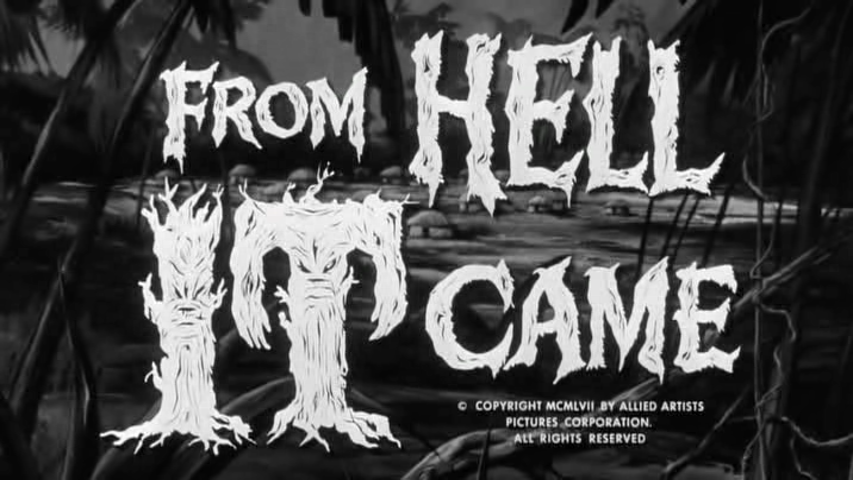
From Hell It Came (1957) - Review

Do you remember when the tree grabbed that kid out of his bedroom in Poltergeist? Or how about the poor girl getting raped by the forest in Sam Raimi’s Evil Dead? As genres go “The Killer Plant Movie” is a rather small subset of horror films with a few notable films like Little Shop of Horror and Day of the Triffids being any good while the rest can easily be forgotten. Does anybody even remember the 2008 film The Ruins? Well today we are taking the Wayback Machine to the year 1957 where director Dan Milner and his producer brother Jack who brought the world the jungle thriller called From Hell It Came.


This movie was the kind of creature feature that would have populated the local Drive-Ins in the 50s, where teenagers could neck in the backseat while gleefully ignoring the action on screen, but even by low budget monster movie standards From Hell It Came was bargain basement bad. In a film that looks like it was shot at either a local park or someone’s backyard the production value is almost non-existent, and the film’s only stand-out feature is the monster itself because it is so hilariously goofy that you almost have to admire it.
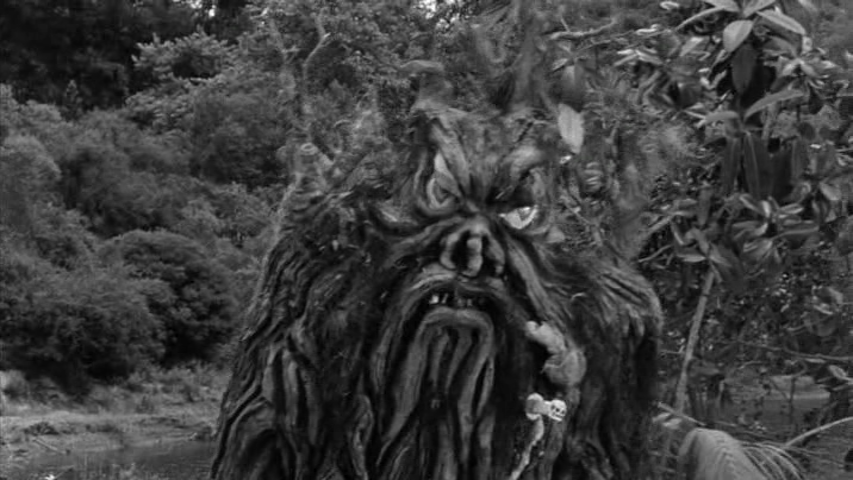

"Tabanga just pawn in game of life."

The movie opens with a group of South Sea island natives killing the former Chief's son, Kimo (Gregg Palmer), by virtue of staking him to the ground and then driving a ceremonial knife through his heart.  The reason for this killing is that the tribe’s witch doctor, Tano (Robert Swan), has accused Kimo of being responsible for the Chief’s death by allowing Western medicine to be used on Kimo’s ailing father. Conspiring with Tano is new Chief Maranka (Baynes Barron), who informs his people of Kimo’s crimes of working with those evil Americans, and Kimo's wife Korey (Suzanne Ridgeway) backs him up by informing the tribe that it was Kimo who had allowed the American’s to poison their chief and not Tano as Kimo claimed. Its Korey’s damning testimony that seals the deal and Kimo’s heart is pierced and his body placed in a wooden upright coffin that is then buried in their sacred burial grounds.

Question: Why bury the supposed killer of your beloved chief in the sacred burial grounds? You would think the body of such a betrayer wouldn’t get such nice treatment and instead would be tossed into the local quicksand patch like so much garbage.

Of course before Kimo died he was able to proclaim his plans for revenge from beyond the grave, “I promise you all, I shall come back from Hell and make you pay for your crimes.” So with our supernatural revenge plot properly set up the film jumps over to those sneaky Americans Maranka was complaining about; we have Dr. William Arnold (Tod Andrews) and Professor Clark (John McNamara) who are scientists hired by the American government to study fallout from a nearby nuclear bomb test, apparently an unexpected typhoon blew the fallout towards this poor island and these two manly men spend most of the time bitching about being there and dealing with the superstitious locals. We learn quickly that Arnold would rather be back stateside but the woman he wants to settle down with is Dr. Terry Mason (Tina Carver) who has no interest in leaving her work to pump out babies. Arnold laments, “Why did I have to fall in love with a dedicated female scientist? She considers marriage some kind of prison, and sometimes I could kick her beautiful teeth in. Here I offer her the Earth, the Moon, the stars...” with Clark cutting in “And she prefers test tubes on a tiny Pacific atoll.”
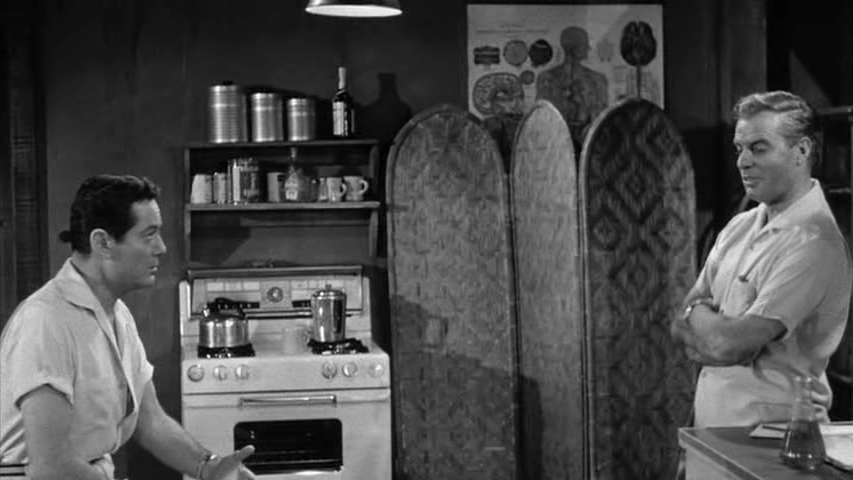
 

Who wouldn’t prefer test tubes over these jackasses?

Their commiserating over the failure of the modern woman is interrupted by a scream and the two rush outside to find British expatriate Mrs. Mae Kilgore (Linda Watkins), who had witnessed the execution of Kimo and fled for her life, struggling with one of the natives. The villain is chased off and we are introduced to the film odious comic relief. If you are familiar with the works of character actress Una O'Connor in such films as Bride of Frankenstein and The Invisible Man you will recognize that actress Linda Watkins is from the same school of over-the-top Cockney comic relief. Her characters incessant babbling has one praying for the title monster to shamble on screen and end our suffering, but sadly she survives and our sanity does not.

Now it turns out that nuclear fallout isn’t the real problem causing illness among the locals it's the plague and witch doctor Tano has forbidden his people to seek medical help from the Americans.  This brings us to the arrival of another doctor who has shown up after Clark reported their problems to Washington. No surprise that said doctor turns out to be the aforementioned Terry Mason, and before you can say "Sexual harassment" Bill is trying to force his tongue down her throat.


Is this movie about a tree monster or a sexual predator?

Terry tries to explain things to the idiot, “Bill dear, I’m not the girl you want, or anybody’s girl.” Explaining further that she has no interest in living the “normal life” that Bill wants for her as her idea of normal is certainly not being cooped up in a stuffy apartment getting her ears blasted with Rock and Roll music. His rebuttal is, “Do you want to go through life alone? Don’t you want a husband, children, like other women?” He then kisses her hard and passionately and then asks, “You do love me, don’t you? Admit it.” She shakes her head, “I don’t love you,” and his rebuttal to that is, “Then why did you kiss me back?” This guy is one class act but she does beautifully shut him down by answering, “I don’t know…my metabolism? It was unconscious, involuntary.” Then he lands the Sexist Pig of the Year award for uttering the following line, “Terry, will you stop being a doctor first and a woman second? Let your emotions rule you, not your intellect.” Instead of a well-deserved punch to the throat, as he so richly deserves, Terry calmly informs the asshat that, “I live by my intellect and reason; if I let my emotions run away I wouldn’t be any good in my work.”  Dr. Terry Mason is a career woman fighting for the right to live her life on her own terms, who can guess how this will eventually end?
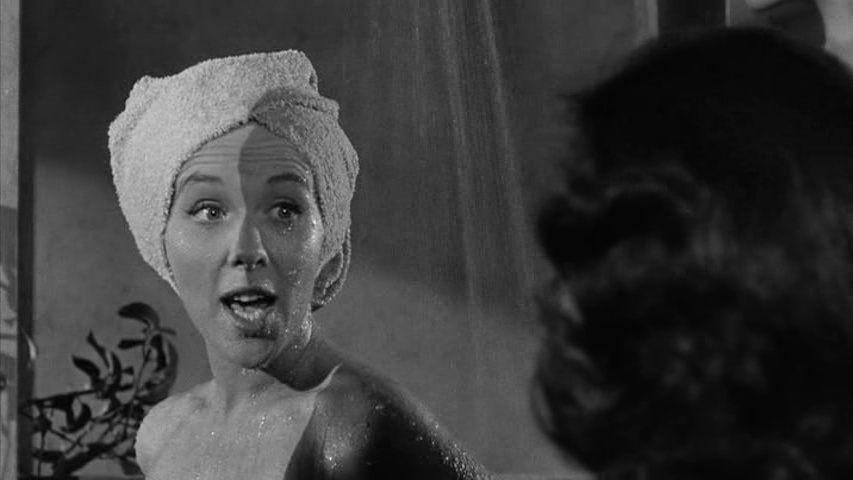
 

"Don't start the Sexual Revolution without me."

It’s at this point that the film remembers it's supposed to be a monster movie and so Terry spots a weird tree growing out of sacred burial site. This rare plant discovery warrants immediate research, sorry plague ridden villagers you’ll have to wait your turn this looks more urgent, and word from Washington is for our “heroes” to dig up the plant and study it. Norgu (Lee Rhodes), one of the more friendly natives, identifies the wooden growth as the Tabanga, a creature of vengeance animated by Kimo's angry spirit, and like a previous vengeful dead chieftain who came back as a tree monster it to will wreak unspeakable death and destruction. Professor Clark “Pooh-poohs” such superstitious nonsense, even after the weird wooden stump with a face turns out to be radioactive and has a ceremonial blade sticking out of it. When he discovers that it also has a human heartbeat he still manages to state, “Norgu, what you fear is scientifically impossible.”


I’m no scientist but I’m sure radioactive tree stumps with human heartbeats are also impossible.

In record time the tree stump grows to man size and our trio of scientific morons dig it up and cart it back to their lab, but what is startling here is that Bill is all for chucking the thing in the nearest quicksand patch they can find. Up to this point Bill has been a complete jerk yet all of a sudden he is the voice of reason, “If moving that monster violates another tribal law, we'll be in for it. You know we're greatly outnumbered here. They could easily overpower us. And don't forget what Norgu said about it being taboo for strangers to go near the... Tabanga.” Sadly he is outvoted, one man cannot stand in the way of science, and Terry even uses an experimentally formula she had developed to save the creature when they realize its heart rate is decreasing. This of course results in the creature reviving and going on a revenge fueled rampage of death and destruction…well more of a revenge fueled shuffle if one is to be accurate.
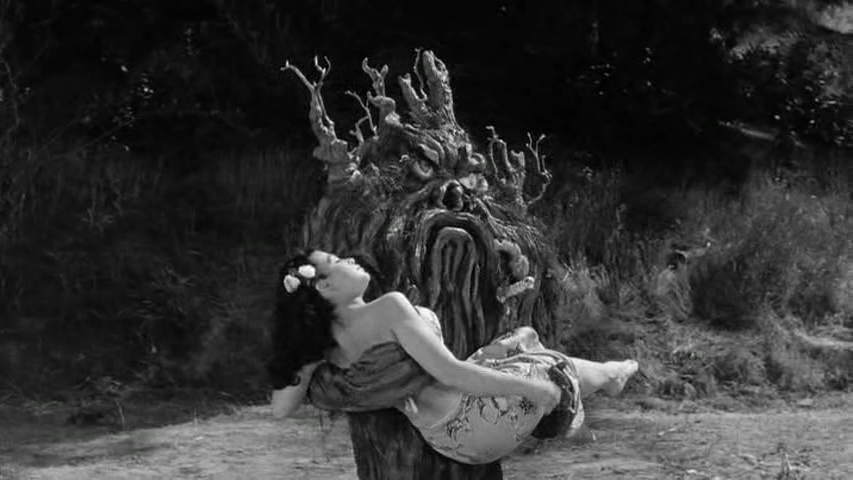
 

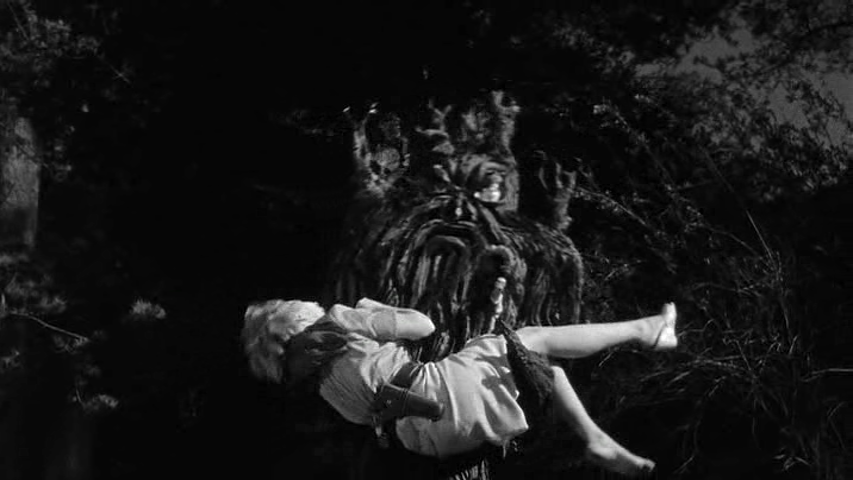
Beware the horror that is Tabanga.

Which brings us to the key problem with this particular monster, not only is he an incredibly silly looking creature but he moves at a speed that makes The Mummy look like an Olympic sprinter. The only way you are endanger from Tabanga is if you accidentally back into him or by some happenstance are knocked unconscious or dazed when he is nearby thus allowing him time enough to get close.

The first person to fall victim to the evil that is Tabanga is Korey who gets dazed after a hit to the head while fighting her rival Naomi (Tani Marsh), the native girl who took her spot as Maranka’s main squeeze when he didn’t feel comfortable marrying someone who betrayed her last husband, and Tabanga grabs hold of her and ever so slowly he carries over to some quicksand and tosses her in. Next on the revenge list is Maranka himself who manages to get killed because he has no peripheral vision or apparently the ability to hear a tree monster slowly lumbering up behind him. Maranka even manages to miss Tabanga with a thrown spear when the creature was barely a spear length away.
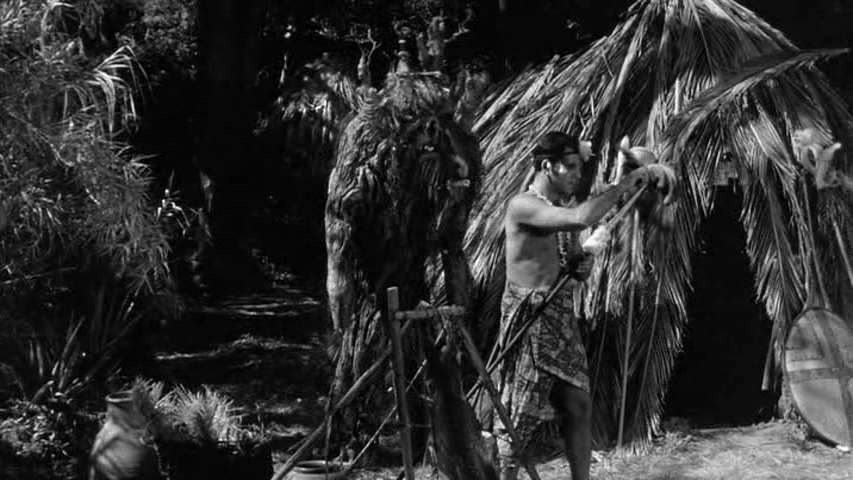
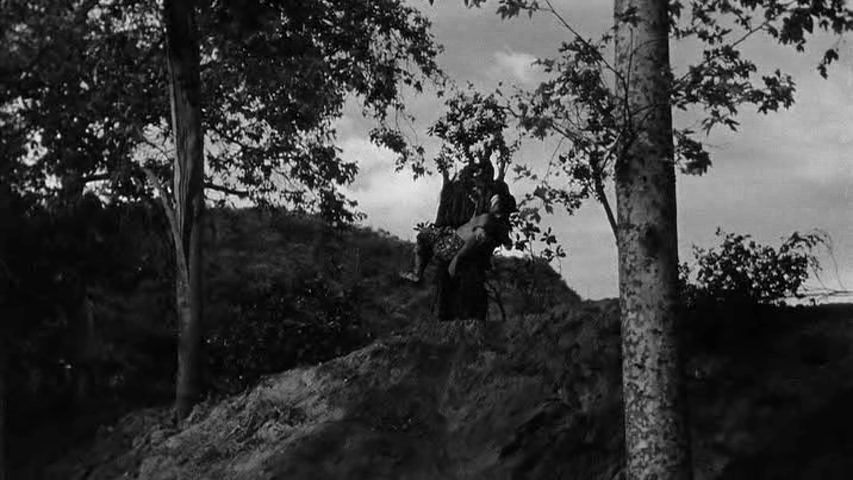
 

“Pssst, he’s right behind you.”

Then in a surprising display of courage Tano, realizing that the creature is hunting those Kimo swore to kill, he offers to use himself as bait to destroy the creature, and the plan works…briefly. Tano is able to lure the monster into a disguised pit trap and then the remaining villagers toss flaming brands to turn the pit into a fiery hell. As plans go that is a pretty good one but unfortunately this particular tree monster is of the non-flammable kind and so Tabanga just climbs out of the pit, hunts down Tano, and then kills him by rolling him down a hill.


I think he probably died of shame for being caught in the first place.

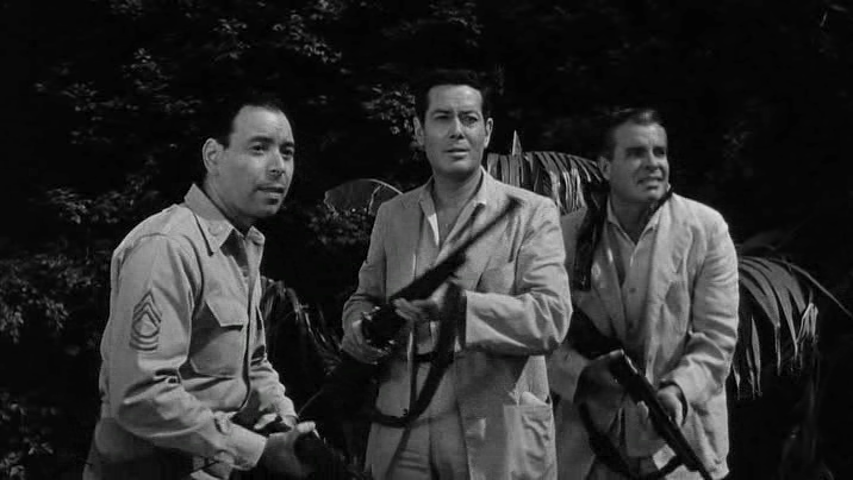
With the three villains that Kimo vowed to get revenge on dead you’d think the monster would peaceably wander into that ever present quicksand patch for some nice sweet oblivion, but sadly we still have our “Great White Heroes” to contend with and so Dr. Clark, Bill, Terry, and even the annoying comic relief Mae, along with Eddie (Mark Sheeler), the camps security specialist and man voted most likely to be fired for being bad at his job, load up with guns and venture into the jungle to hunt down the creature. It should surprise no one that Terry is grabbed by the monster, but that she is nabbed because she leans against the thing while adjusting her shoes (we won’t get into questioning why she was wearing heels for a trek through the jungle) is truly sad, and so our heroes have to chase after the monster before it can toss her into the quicksand.


At least Tabanga didn’t tell her to quit her job and pop out babies.

The group unload a barrage of bullets at the monster but the bark of Tabanga seems indestructible, “Doc I’ve never seen anything like. The bullets bounce off it like bee-bee shot on a stone wall,”  The group then somehow come to the conclusion that if they can shoot the ceremonial knife that is sticking out of the creature they could drive it deeper into the monster’s heart and end its reign of terror. The small end of a knife’s hilt is certainly no easy target, not helped by the creature refusing to turn around and face it’s attackers, but eventually a volley of bullets annoys it enough that it drops Terry, turns around to face our heroes, and Bill is able to land one round on the knife's hilt. The monster staggers back, falls into the quicksand and disappears below its murky surface. The day is saved and Norgu runs up to Dr. Clark and exclaims, “We now know American magic is better.”


“Better health through bullets” is the new AMA slogan.

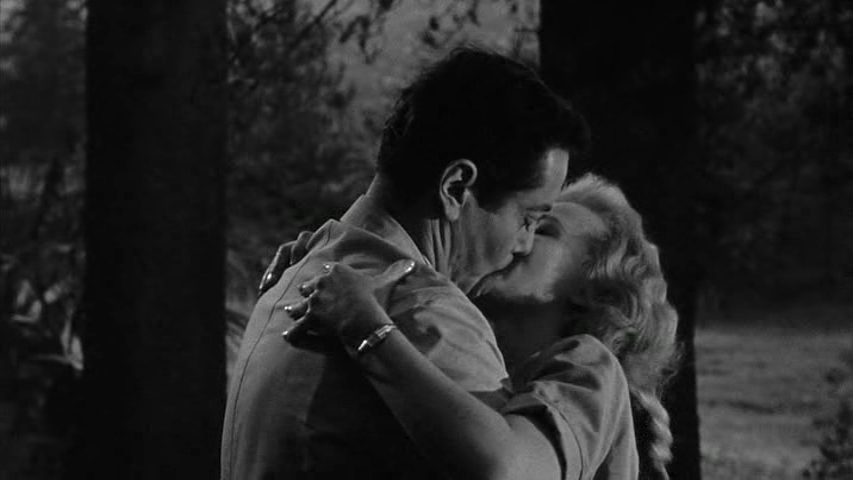
Do remember that debate earlier in the film where we heard Terry claim she didn't want to give up her intellect for a career in baby making? Well after being saved from the clutches of Tabanga the once spirited Terry runs to her rescuer, gives him a deep kiss and a passionate embrace, and upon seeing this Clark comments to Mae, “Looks like a honeymoon and back to the States for them.” So according to the Milner Brothers all it takes is a life or death situation to show a woman that her place is in the kitchen.


“The Sexual Revolution has been postponed, please stand-by for a word from our sponsors…Men.”

The monster Tabanga will always have a place in horror movie history as one of the dumbest looking creatures to ever grace the silver screen, but From Hell It Came also briefly gave us a female scientist who seemed more interested in her career than in men, and though she kind of recanted that belief at the nine yard line it is still something that a film of this nature even brought up the subject matter in the first place. At seventy minutes in length the film isn’t long enough for the lack of monster action to be too detrimental but the annoying Cockney comic relief does make things a trifle painful at times.  On the other hand that most of the natives are played by Caucasians is certainly typical of time and their stilted acting as primitive natives is simply quite awful. From Hell It Came is good as a curiosity but not one I can honestly recommend seeking out.

Monday, November 6, 2017

Thor: Ragnarok (2017) - Review

What if Thor and Hulk were roommates? That is just one of many interesting ideas that director Taika Waititi tackles in this latest chapter of the Marvel Cinematic Universe and boy does he have fun exploring them, but of course the biggest question answered is what exactly were Thor and Hulk doing when everyone else was fighting it up in Captain America: Civil War?


Thor: Ragnarok begins with a cold open where we find Thor (Chris Hemsworth) locked in a cage and at the supposed mercy of the fire demon Surtur who plans to see the Asgardian realm destroyed in the prophesied Ragnarök. Needless to say Thor is able to kick his and his entire army of minion’s butts, and then everyone's favorite god of thunder returns to Asgard to confront his brother Loki (Tom Hiddleston) who has been impersonating Odin since the end of Thor: Dark World. Unfortunately the mischievous Loki is the least of Thor’s problems as the two brothers learn that Odin had kept from them the knowledge that they had an older sister Hela (Cate Blanchett), the Goddess of Death, who Odin (Anthony Hopkins) had imprisoned after her ambitions got out of control.


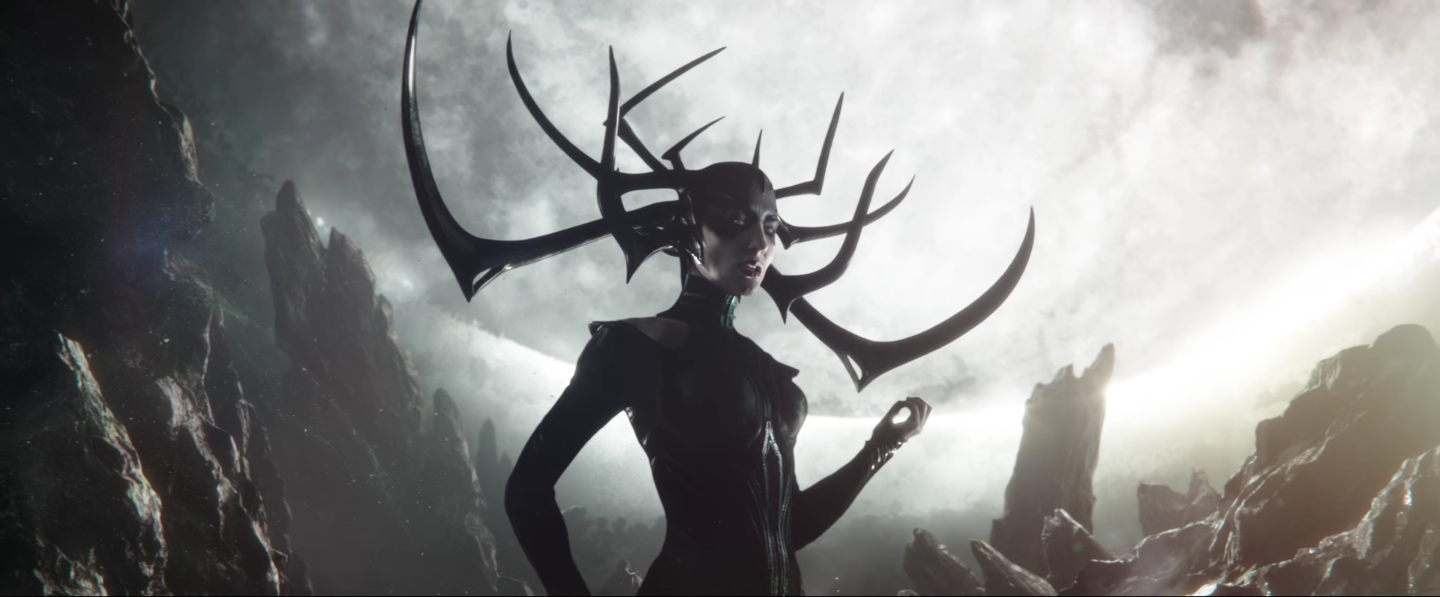
I'd say her hat choices got even farther out of hand.

Hela easily destroys Mjolnir and then in a battle across the Bifröst Bridge both Thor and Loki are torn loose and sent tumbling through space where they soon find themselves on Sakaar, a junk planet run by the Grandmaster (Jeff Goldblum), who quickly puts Thor to work in a gladiatorial arena. Comic book readers will of course recognize elements of this from the “Planet Hulk” story but due to Universal still owning the rights for standalone Hulk movies this is the best we are going to get, and though this is only a taste of that epic tale it still manages to capture some of the grandeur found in the book and even though it is now more Thor-Centric story we do finally get to see a more intelligent Hulk. These two heroes work beautifully together in what could best be described as a buddy comedy fantasy adventure tale that will keep you in stitches.

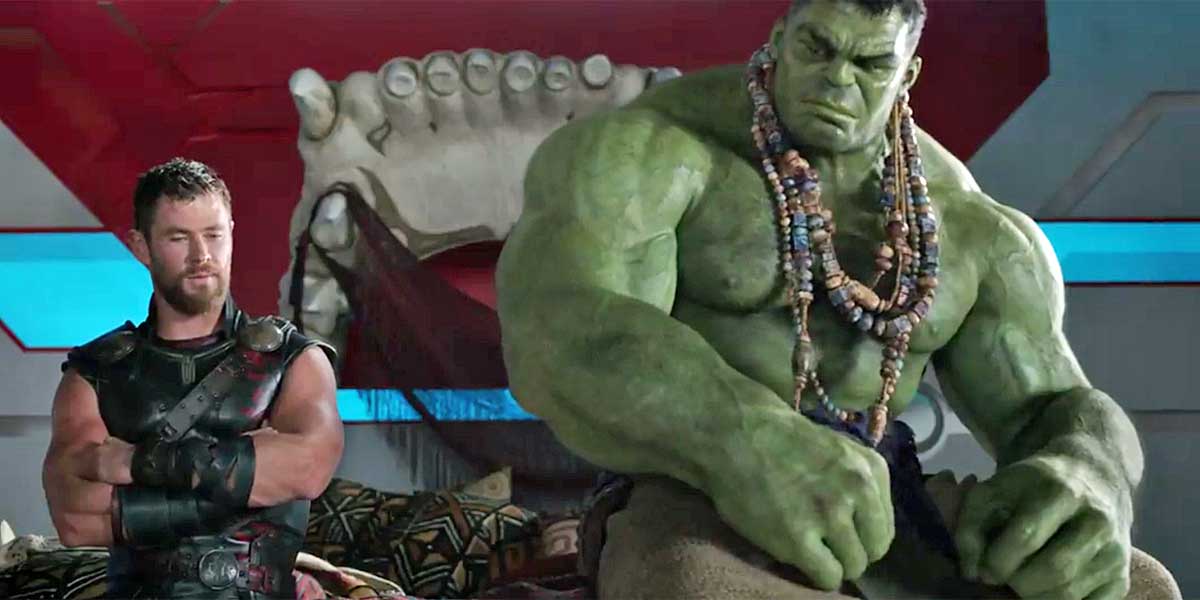
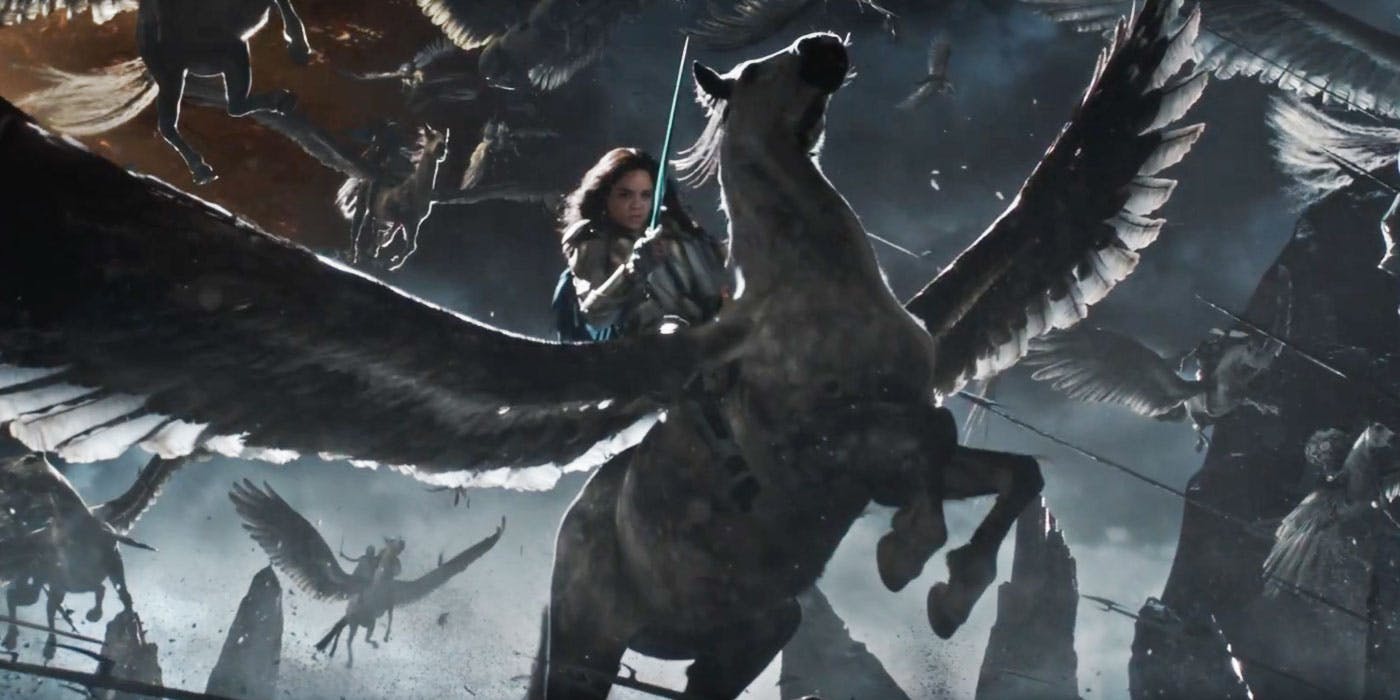
Hated on Earth the Hulk (Mark Ruffalo) has now found a place where his monstrous power has earned him adulation and respect and has even gained a friend in the form of the beautiful Valkyrie (Tessa Thompson) who is living on Sakaar as a somewhat drunken obtainer of fighters for the Grandmaster, but then his old Avenger pal shows up to rain on his parade. When Thor wants the Hulk's help in escaping Sakaar and to join him on his mission to defeat Hela the big green giant is less than enthusiastic, in fact he’s acts very much like a petulant child who doesn’t want to go to school.


"Hulk just pawn in game of life."

It’s the dynamic between Thor and Hulk, and then later Thor and Banner, which is at the center of much of the film’s comedy making this the funniest entry in the Marvel Cinematic Universe. But the film is much more than a laugh fest as we also get a somewhat resolved Thor/Loki conflict as we get hints as to what these once inseparable brothers were like growing up and whether a person’s nature can change to find redemption. The chemistry between Hemsworth and Hiddleston is pitch perfect and is a nice counterpoint to the relationship between Hulk and Thor where in the Loki/Thor relationship Loki would be the brains to Thor’s brawn but then nicely reversed when Thor finds himself needing the incredible Hulk who is no long limited to “Hulk Smash!” comments as his vocabulary is expanded to a degree closer to what we got in the Peter David run of the comics.

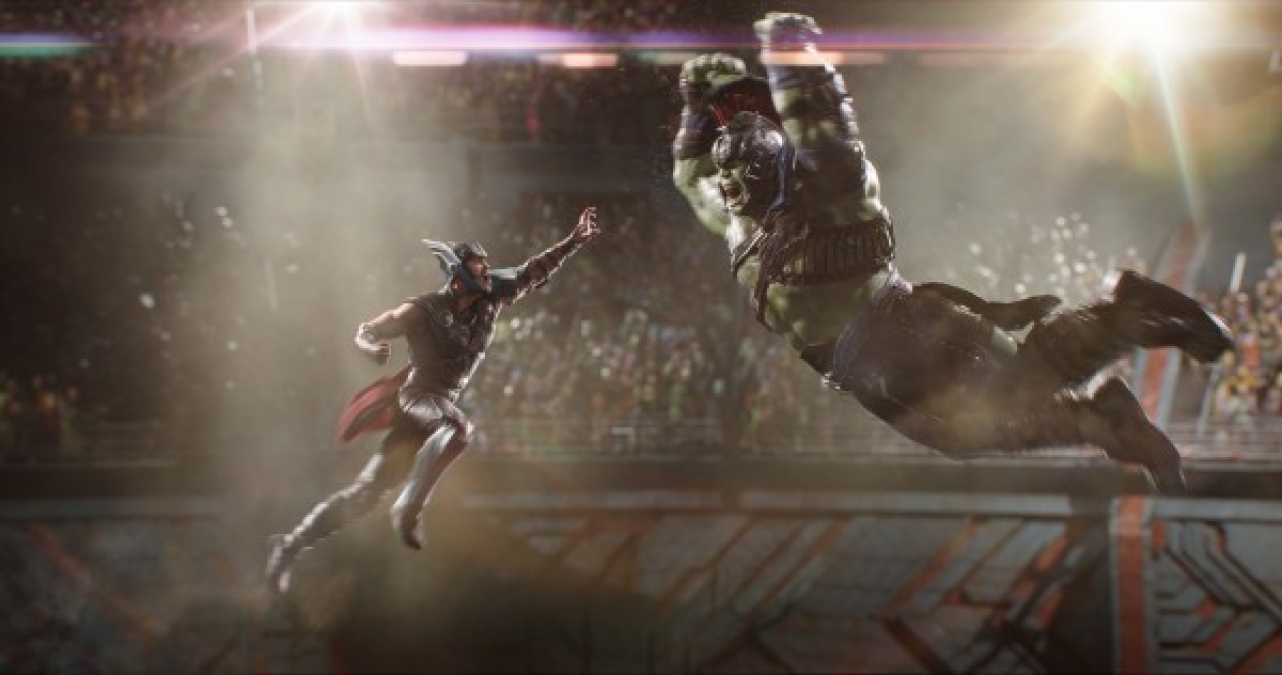
This is not to say there isn’t a helluva lot of Hulk smashing going on in Thor: Ragnarok because when fists go flying they really go flying and the arena fight between Thor and the Hulk is as spectacular as one could hope to imagine when seeing a contest between an all-powerful monster and a warrior god. These two have always been the heavy hitters among the Avengers but have mostly been relegated to second banana status but here the two are allowed to shine in both action and in comedy.


"Tonight's Contest of Champions!"

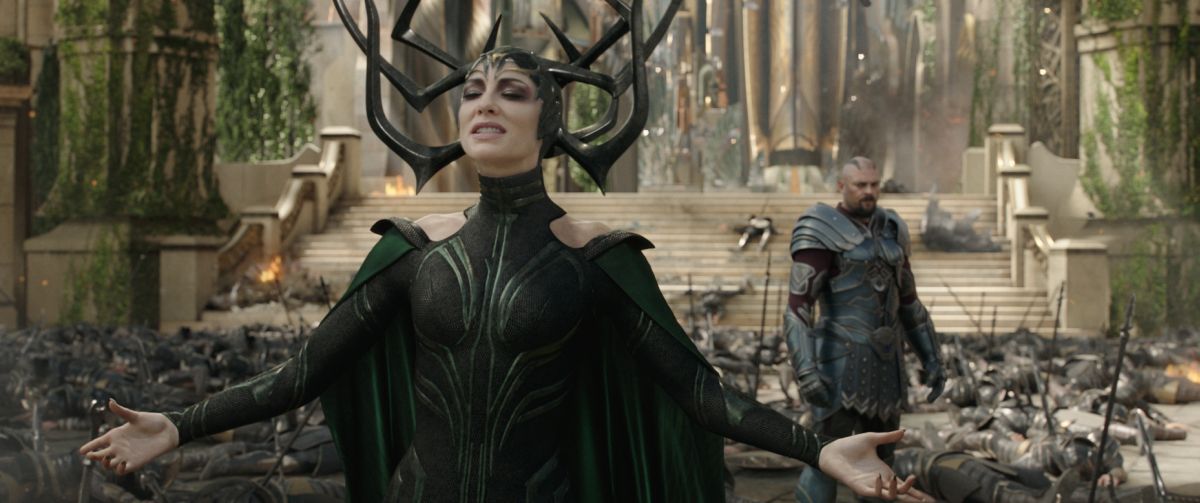
The cast across the board all bring their best to the project with Cate Blanchet relishing every moment of screen time as the first female villain in the franchise (Scarlett Witch not withstanding) who completely dominates her scenes with Hemsworth and Hiddleston and is clearly having a blast with the role of “Goddess of Death” not to mention easily winning the best dressed villain award hands down. Then there is Karl Urban as Skurge the reluctant executioner who sides with Hela because he’s not all that keen on being brutally murdered and works mostly as a comic relief expository device.  We get another unforgettable performance by Jeff Goldblum, who is at his Goldblumiest to date, as this crazed despotic ruler who steals every scene he’s in, and Tessa Thompson’s Valkyrie manages to pull off being funny as a drunken broken Asgardian but also as a credible threat to the villainous Hela.


"It's not easy being this evil."

If anything negative can be said about this film is that there is almost too much going on for one movie as you could have easily filled a two hour plus movie on the “Planet Hulk” storyline alone yet director Taika Waititi not only has to create and show us a whole new world and society but he has to cut away from it from time to time to show us how Hela and her overthrowing of Asgard is doing, not to mention more screen time with her hunting down Heimdall (Idris Elba) and the sword that activates the Bifröst Bridge which would open all the realms to her goal of conquest. It just goes to show you how engaging and fun Cate Blanchett is in this role that whenever the film cuts away from the cool stuff with Thor, Hulk and Valkyrie we aren’t immediately annoyed, but damn does she deserves her own movie.


Even the badass Valkyrie could star in her own movie.

Thor: Ragnarok may be the 17th installment in the Marvel Cinematic Universe but I’d honestly say this one feels most like a comic book brought to life than any of the previous ones; the action is larger than life, the fantasy elements are everything you could expect and more, and then you get random characters from other comic books making appearances as they would in any crossover, what more could a Marvel fanboy want?

Of course what makes this film open to more than comic book nerds is that the humor is not forced or cheesy but organic comes out of the situation, and this was all brought about by Taika Waititi allowing about 80% of the dialog to be improvised which shows his faith in his actors and the characters they helped create over the span this franchise, it also shows Marvel Entertainment's faith in the directors they choose and in letting them fulfill their vision and not become a cookie cutter hired gun. In conclusion if you are in the mood for comic book mayhem and laugh out loud antics this is the film for you as it is an hilarious madcap adventure film that will entertain the whole family.

Final Thoughts:

• Doctor Strange is not someone you'd like be on the bad side of.
• We get to experience just what an evil Galadriel would be like.
• Now that we’ve seen how well an evil female villain can be handled how about we get The Enchantress next?
• The Hulk may be physically stronger than Thor but the thunder god is easily the better fighter.
• Director Taika Waititi also plays a rocklike gladiator and has some of the best lines in the movie.
• Naked Hulk…yikes!
• We get a throwaway line about how once Loki turned Thor into a frog, a nice reference to the Walter Simonson story where the god of thunder was trapped in the body of a frog.


I’d pay to see this movie.

Thursday, November 2, 2017

Death Note: Anime vs. Netflix

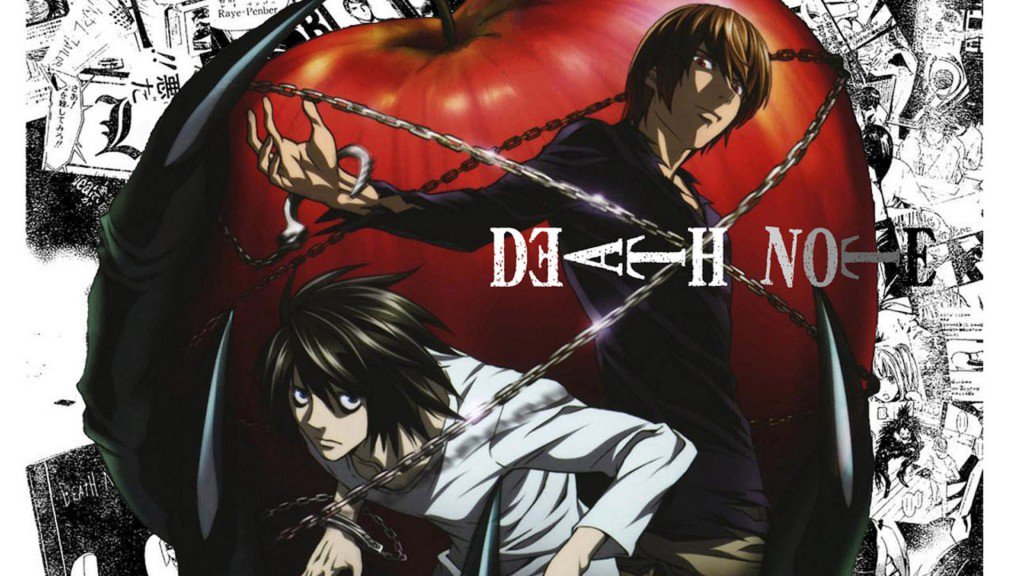
For those not in the know Death Note started out as a Japanese manga series written by Tsugumi Ohba and illustrated by Takeshi Obata that was then adapted into an anime television series that aired between 2006 and 2007 which also led to Japanese live action movies, video games and even a musical. Needless to say Death Note was very popular in certain circles and once those circles got big enough for North American movie executives to take notice a western version of the story was all but inevitable. That the nationality, races and locations of the American adaptation got a healthy white-washing is no surprise, and if that had been all director Adam Wingard and the producers changed I could have let that slide as I understand the economics behind it even if I don’t necessarily agree with it (Hollywood is all about making money and if filling a movie with American teens will put a few more butts in the seats that’s just going to happen), but the this Netflix movie almost completely abandoned everything that made the original manga and anime interesting.


Now a truly faithful adaptation of the manga or anime was never going to happen, the anime itself ran 37 episodes and is roughly 12 hours long, but the key to making an adaption work is in the capturing of the themes, characters and tone of the original and that is really where Netflix’s attempt fails. First off I will state that this movie is nowhere the train wreck that other North American adaptations of Japanese works have been; James Wong’s Dragonball: Evolution (2009) and M. Night Shyamalan The Last Airbender (2010) being prime examples of how far you can fuck something up, but Netflix’s Death Note still suffers from the same compression problems as characters are short shifted and entire plot lines are abandoned.


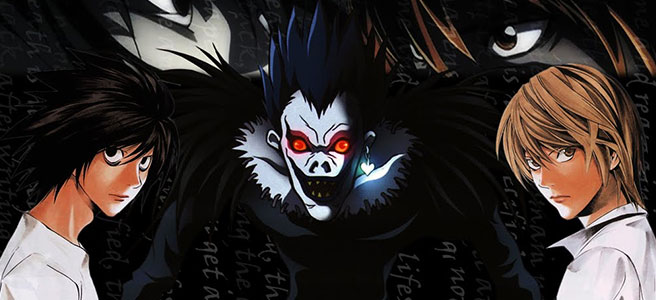
Let’s first look at the similarities; the basic concept and story of Death Note deals with a teen-age boy coming into possession of a notebook that he discovers allows him to kill anyone whose name is written within its pages and he soon launches a secret crusade to rid the world of criminals. The book was dropped into our world by death god Ryuk, and this mysterious being follows the actions of the teen with interest. Once the killings begin in earnest a task force is set-up to catch whoever is responsible and soon the teen himself is being hunted by the world’s greatest detective. And no I don’t mean Batman. And that’s about all the manga/anime have in common with the Netflix version, but just how far off base does the American version go? Let us first compare and contrast the key characters that make up Death Note.


Light Yagami

Light Yagami is a brilliant high school student who upon finding the Death Note begins to experiment with it until he comes to the conclusion that he can make the world a better place by ridding it of criminals and people he deems morally fit to live remain, and he would become the god of this new world. Light is a textbook sociopath with a heavy degree of narcissism, he manipulates and controls all those around him to serve his sole agenda. He takes on the persona of Kira (a name given to him by his followers) and ruthlessly kills thousands of criminals by giving them heat attacks, the default death the note book chooses if not otherwise specified, and then he would use “accidental deaths” to take out people that are a danger to him and his secret.  He would kill them in this fashion so it would not tip off the authorities that Kira was responsible as the police and the populace only think Kira kills via heart attacks. Light is a genius level tactician, and one can almost admire him at times, but the series doesn’t once let us forget that he is evil and not some superhero that nobly wants to make a better world. “The ends justify the means” would basically sum up Light’s credo and he will kill anyone who stands in the way of his goal, whether they are on the side of the law or not.


Light Turner

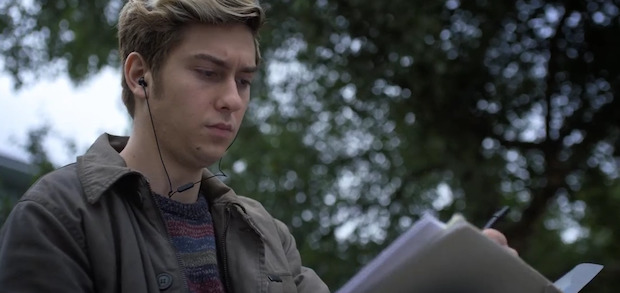
Light Turner (Nat Wolff) is an idiot, it's as simple as that, intellectually there is no comparison between the Light from the anime and the one found in the Netflix movie.  Aside from a brief moment where we learn Light does other people’s homework for money we get no indication that he is of above average intelligence, and unlike the Light in the anime he himself seems very easily manipulated. It takes Ryuk taunting and pushing him to try the Death Note out which makes his decision to suddenly become a mass murdering serial killer harder to believe. The film adds a bit of backstory where his mom was killed by a mobster who got off scot-free (anime Light has living mother, father, and sister) but by the time we learn this he’s already killed a school bully and a hostage taker so all this does is muddy his motives. Easily the dumbest thing we see him do is reveal the notebook and its properties to a girl at school who he has a crush on. Light knows almost nothing about her when he reveals that he’s got a supernatural book that he has been using to murder people with and lucky for him she is totally into it, but I’m assuming most sane teenage girls would have screamed and called for the police. We also get this idiotic moment where he chooses the name Kira because it means light in Russian (this is not actually the case so the film’s writers join in on the stupidity here) and because it sounds like the Japanese word for killer the authorities will think Kira is Japanese. This level of stupidity on display here is staggering, and this makes his face-off against the world’s greatest detective completely unbelievable. Kind of like if Bullwinkle went up against Sherlock Holmes.


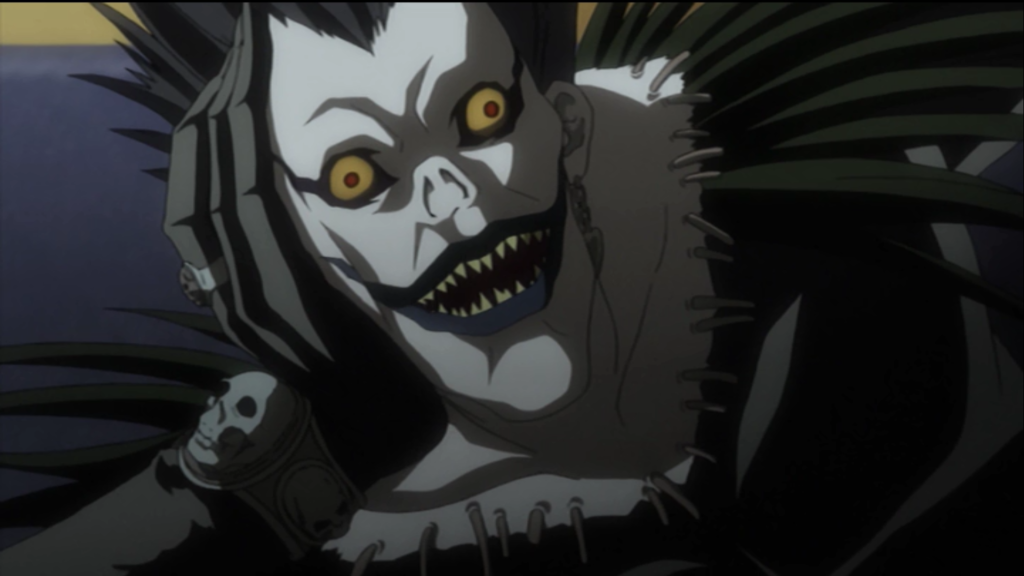
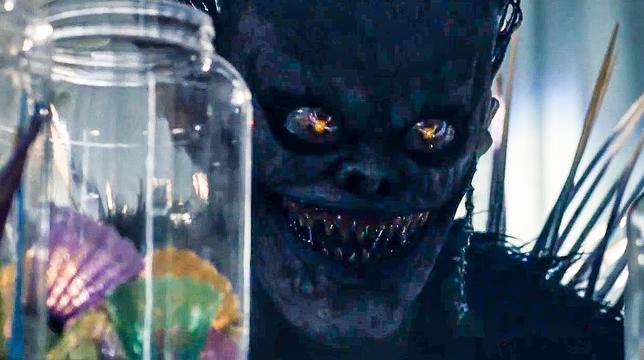
Ryuk, the death god.

Ryuk is a bored Shinigami (death god) who lives in another realm and alleviates his boredom by dropping a “Death Note” into the human world to stir things up. Like the other Shinigami he is rather monstrous looking creature but one could not classify him as evil but more as an agent of chaos. He doesn’t so much as encourage the use of the notebook as he does just sit back and enjoy what wacky troubles humans will get into by its use. Ryuk follows the holder of the Death Note around much in the manner of a twisted invisible friend; he is neither for nor against the actions of the human. Ryuk could almost be classified as chaotic-neutral.


Ryuk, the Netflix version.

Ryuk (Willem Dafoe) is a death god in the same vein that Freddy Krueger from A Nightmare on Elm Street is a god of nightmares, he immediately convinces Light to try it out the note book by having a school bully brutally decapitated.

Note: The deaths in this film are very much in keeping with the Rube Goldberg type deaths found in the Final Destination series, with the same level of gore.

Unlike in the anime this version of Ryuk remains in the shadows and his appearances on screen are quite limited, only popping into a scene be snarky or manipulative for whatever the moment requires, and though Willem Dafoe is easily the best casting choice for this role the writers clearly wanted to make an iconic movie monster in the vein of Freddy or Pinhead from the Hellraiser films and that's not what this kind of story calls for. Sadly the result is that even though we get a cool looking and well acted villain it’s all surface and we get no motivations or backstory for him. In the anime we get to see how he interacts with his fellow Shinigami in his own realm, and how he dropped the book out of sheer boredom, while the Netflix version he remains a two dimensional monster and all the less interesting for it.


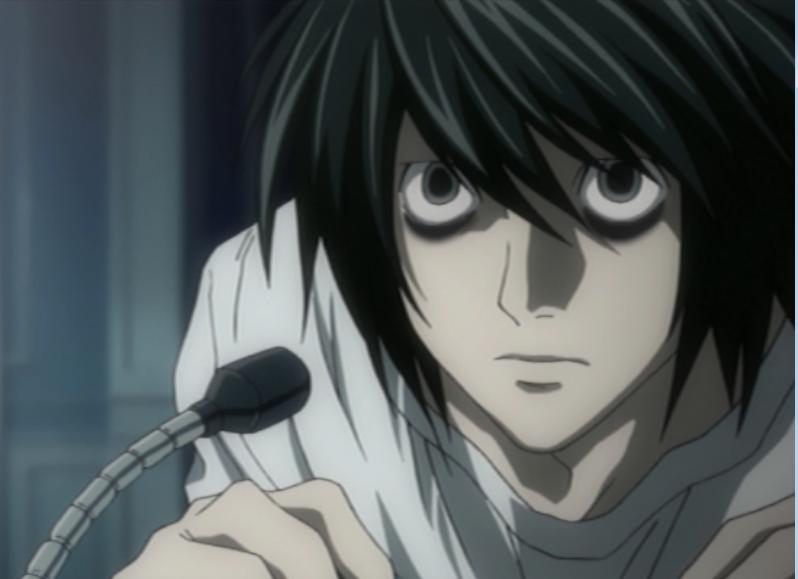
“L” aka Hideki Ryuga

When Interpol begins to focus on the killings attributed to the mysterious Kira they bring in “L” a world-famous detective who has never failed on a case, he is an introverted, eccentric and is basically the yin to Light’s yang, but visually one would almost expect the opposite; where Light is this tall golden boy, as one would expect a hero to be, “L” on the other hand is this crouched pale character that looks like he escaped from an of issue of Neil Gaiman’s Sandman. “L” is a genius and he is quickly able to deduce that Light Yagami is the notorious Kira, but only with a 5% certainty, and thus begins the cat and mouse game between these two that makes the anime so damn good. Both “L” and Light are so well written that you will find yourself rooting for both of them at times, Light is clearly evil and must be stopped but as a viewer you can’t help but admire how good he is at what he does, and the quirky and dizzying intellect of “L” is equally fun to behold.


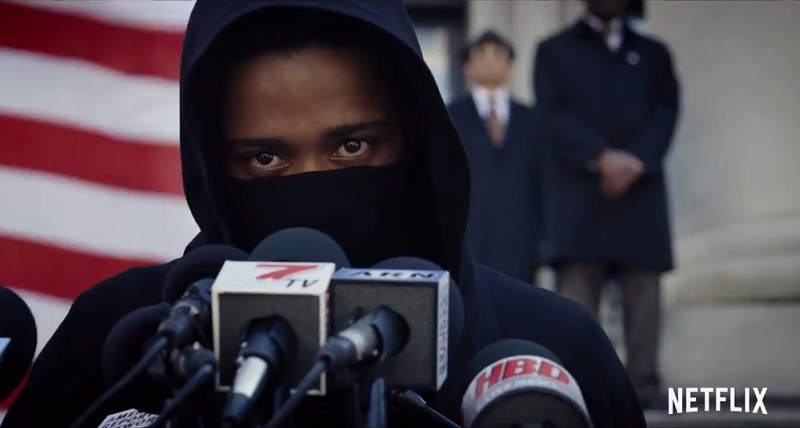
"L" Netflix Version

For the Netflix version “L” (Lakeith Stanfield) is played slightly older than Light and though they toss in a couple of personal quirks from the anime version, like his crouched sitting posture and love of candy, the two versions are not very much alike.  While the anime version of “L” is the flipside of Light’s genius the Netflix version has the problem of Light Turner being a grade level moron, so he's not exactly Professor Moriarty to L’s Sherlock Holmes.  There is no cat and mouse game between these two as “L” practically just shows up in Seattle announcing he knows who Kira is.  The movie barely gives time to really establish how he deduced this but like everything else it just rushes blindly on hoping the viewer won’t notice.  The movie even insults us further by trying to justify L’s love of candy by having his mentor mention it increases his ability to think and work longer.  Sorry, but that is not how sugar works.  In the anime he liked candy simply because he liked candy, a part of his peculiar childlike persona.  Netflix does not give us the battle of intellectual titans that we got in the anime but instead we are saddled with two tepid characters that are only a couple steps away from “We must get Moose and Squirrel.”


Misa Amane

Misa Amane is a bubbly and energetic model/actress whose parent’s murderer was killed by Kira and so she had become a devout supporter of his cause, the added wrinkle here is that she is in possession of a second Death Note and along with the help her own Shinigami she is able to track down Kira and discover his true identity. She falls in love with Light on first sight but the relationship that develops between the two is clearly one sided, Light manipulates and uses Misa to further his own ends and to help outsmart those people hunting him. The closest analogous relationship here would be to that of The Joker and Harley Quinn, it is a dark and abusive with Light showing no empathy towards the girl who has devoted her life to him.  She’s kind of like a cute puppy doing all it can to please its master only in this case this involves multiple murders. It’s no surprise that the character of Misa became one of the most popular among fans of the anime as she is just so damn fun to watch, she certainly isn’t the brightest crayon in the box but her motivations and heart remain true. Betrayal is not in her nature, which of course only adds to the tragedy of her character.


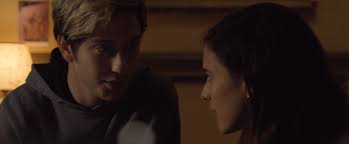
Mia Sutton

Mia Sutton (Margaret Qualley) sadly doesn’t have much of character at all; she is a cross between Bella Swan from Twilight and Mallory Knox from Natural Born Killers and we never once get a peek into motivations or desires. Upon learning of the Death Note her reaction is basically “Cool, let’s go a murdering!” with no justification other than being an “angsty teen” and her supposed love for Light flips flops between actual heartfelt love to dark manipulated love that is more in keeping with the relationship in the amine between Light Yagami and Misa Amane only with the flipside here being it’s the girl manipulating the guy. This change could have worked, and would have been a nice twist to give fans of the anime, but sadly her character never remains consistent and so instead of being this dark mastermind she comes across as lame and uninteresting. You certainly won’t see anybody cosplaying Mia Sutton at any Comic Expos.


Clearly doing a standalone movie was not going to easily compare to an anime series that ran 37 chapters but it’s the lack of believable characters and understanding of the source material that is the true stumbling block for the Netflix version. The premise of a teenager with supernatural killer notebook could easily fit into a half hour movie but for that to work motivations and behaviors have to make sense; at one point in the Netflix movie Mia Sutton is suggesting to Light that they murder his dad (who is part of the task force hunting Kira) right out of the blue as of this makes logical sense and would be something Light could agree on. Is she fucking insane? As far as she knows Light has a loving relationship with his father so murdering him would be a most definite no go, so why even bring it up? By this time she’d already secretly killed off the FBI agents brought into track down Kira (in the anime it is Light who orchestrates their deaths) so why not have Light’s father meet with an “accident” and thus keep her relationship with Light on an even keel? The movie is full of these nonsensical moments that are not helped by the filmmakers trying to keep Light sympathetic when he is clearly some kind of murdering vigilante whose only true motivation seems in getting laid by a cheerleader.


“I was bitten by a radioactive notebook.”

The film works so hard at keeping us on his side when what he is doing is clearly abhorrent, sure we can understand his desire to make the world a better place but then again that’s what Hitler thought he was doing. The writers shifting the killing of the FBI agents to Mia is a clear attempt to keep Light morally excused from his crimes. Yet he seems to have no problem in deciding to kill “L” so his code of “Killing only bad people” is apparently not so much a rule as it is a soft guideline. This makes Light a wishy-washy putz and thus fairly unlikable, and then we also have his face-off with “L” where he pretty much blubberingly confesses to being Kira after about ten seconds of questioning.


“I also killed JFK and orchestrated the 9/11 attacks.”

The Netflix version of “L” isn’t much better with him failing to display any real detective skills and when his mentor/friend goes missing he completely flips out showing him to be emotionally out of control unlike his anime counterpart.  It's the death of the mentor that also leads the film into it's generic action/chase sequence that has no real business being in this movie, its inclusion is very much a product of the cookie-cutter mentality of many American movies, worse for the fact that this version of Death Note isn’t even sure what kind of movie it’s trying to be. Is this a Young/Adult dark comedy in the vein of Heathers or is it a mystery thriller in the mode of David Fincher’s Se7en? That the movie had three screenwriter is not surprising, one of them have written the dreadful Fant4stic should have been a good enough warning, but director Adam Wingard has given us such excellent films as You’re Next and The Guest so I went in expecting more.

I should state that I watched the Netflix movie before checking out the anime series and even without the comparison I found the movie to be a muddled mess that seemed to be rushing the “plot” forward at a fever pace while sacrificing character development along the way. Being this was made for Netflix I don’t understand why they didn’t just make it into an eight episode mini-series as that would have at least solved many of the movie's problems.
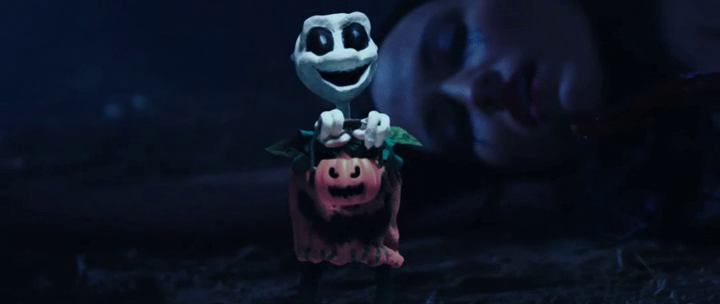
 

The original anime is also available on Netflix so I highly recommend you check it out.

Monday, October 30, 2017

Tales of Halloween (2015) – Review


Horror anthologies can be tricky things to pull off as each story has a relatively short allotted time to provide the set-up, the scares and the punchline.  George Romero’s original Creepshow way back in 1982 is probably the most notable example of how to do this right but we’ve seen some more recent attempts such as 2007’s Trick 'r Treat, which also did a wonderful job of balancing the episodes and connecting it all together. Now in both those cases a single director helmed all the segments, which makes it easier for a coherent structure and theme to be maintained, but with Tales of Halloween there’s not only a different director for each segment but there are ten stories in the anthologies limited 97 minute running time and that's a lot.  So let's take a quick look at each of the segments that makes up Tales of Halloween to see if they were able to pull it off.


"Sweet Tooth"

In this first segment, directed by Dave Parker, we get a babysitter and her boyfriend telling her young charge about the legend of “Sweet Tooth” who apparently was a young boy whose parents let him trick or treat but then didn’t allow him to eat the candy, which one must admit is kind of dickish, then one fateful Halloween the kid snuck down to find his parents eating all the candy and so he brutally murdered them.  He ate all the candy even the stuff that was already in their bellies. The legend states that if you don’t leave some candy for Sweet Tooth his evil spirit will come and take it…all of it. These two teenage jerks of course told him this story so that they’d be able to pig out on his candy while the poor kid cowered in his bed, and needless to say Sweet Tooth does show up and the two teens pay the ultimate price. This segment has some solid gore and the “Urban Legend” is something one could believe would be told around campfires and on Halloween night.


"The Night Billy Raised Hell"

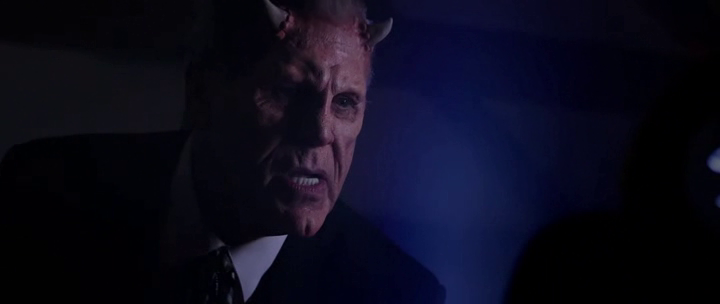
The second segment is by director Darren Lynn Bousman, who is mostly known for directing a couple of the Saw movies and it deals with a hapless kid who is bullied into egging the house of a Halloween curmudgeon. Turns out the neighbour is the Devil himself (Barry Bostwick) and this version of the Devil is not one to spare the rod to spoil the child and his lesson to this kid results in a night of Trick ‘r Treating carnage. Bostwick is clearly having fun with this role, and the episodes twist ending is pretty good, but I’d say the title over sold how much Hell was actually raised.


“Trick”

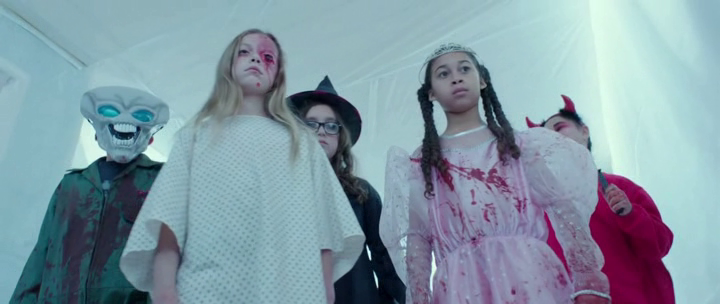
Director Adam Gierasch brings a dark tale of revenge as a pair of couples whose plans to spend their Halloween night getting drunk or stoned ends badly. Their fun time is interrupted when a little girl dressed as witch practically disembowels one of them. This segment had a cool “Children of the Corn” vibe to it but when the motivation behind the killings is revealed things we realize things are even darker than we’d first suspected. The premise and twist to this segment is quite good but it probably would have worked even better if given a full length feature length and not crammed into a ten minute spot.


"The Weak and the Wicked"

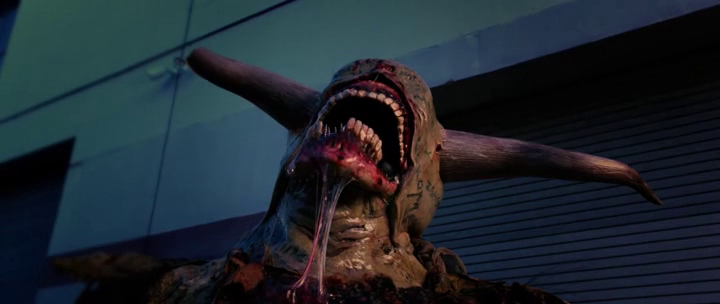
In this segment we have three teen-age sociopaths harassing trick or treaters until they come across a teen whose parents they’d murdered years ago when they themselves were children. The kid runs from the trio of killers but surprise surprise the bullies soon find themselves on the receiving end of a supernatural ass kicking and blood does fly. Of the ten stories that make up this anthology director Paul Solet’s entry is easily the weakest and as its following another revenge it comes across even lamer, as does the rubber mask of the monster. At least it was one of the shortest episodes.


"Grim Grinning Ghost"

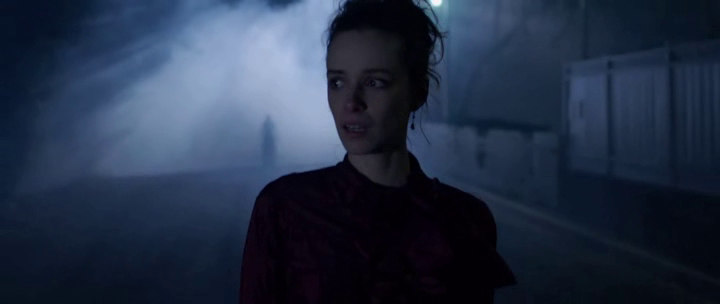
Anthology creator Axelle Carolyn helms this segment and it is one of the more moody and atmospheric entries as it follows a poor woman who after leaving a Halloween party finds herself being stalked by a malevolent spirit. The tension and suspense is palpable as the she tries to make it home, not helped by her car breaking down of course, and the use of light and shadows is fantastic and spooky as hell. Sadly it all adds up to just a “gotcha” ending that really undercut all of that the director had managed to achieve up to that point. The result is thirteen minutes of terror that only builds to a weak pay off.


“Ding Dong”

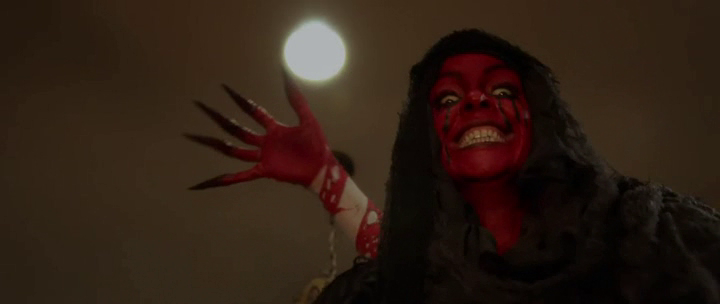
This segment is just too fucking bizarre. Director Lucky McKee helms this weird short about a woman so upset at not being able to have children that she becomes some sort of witch/demon who abuses her husband and puts on a creepy act for Trick or Treaters. This segment even starts off with an unnecessary prologue that not only doesn’t reveal anything useful but doesn’t even set-up where the story is going, which sadly is nowhere. This piece should have been jettisoned to allow some of the better ones more breathing room.


“This Means War”

Written and directed by Andrew Kasch and John Skipp this segment is the Halloween version of all the Christmas decoration wars we’ve seen in other movies.  In this instance we have a guy with the traditional “Spooky Haunted House” theme going, one he’s been displaying every Halloween for twenty years, but now he must deal with the new neighbours who’s decoration lean more to the Rob Zombie meets Saw kind of thing. Sadly all this leads to is the Halloween rivals fighting each other while the neighbouring residents cheer them on. Another possibly cool premise that went nowhere.


"Friday the 31st"

Director Mike Mendez gives us easily the best entry in the anthology with his segment that drops us right in the middle of classic horror movie scene where a Jason Voorhees type killer is stalking what one would normally assume to be the film’s final girl, but then she is brutally killed and aliens show up. Did not see that coming.  A tiny little alien is beamed down from a spaceship and asks the Jason Clone “Trick or Treat?” What follows is very much in the Sam Raimi vein where gore and humor run hand in hand.


"The Ransom of Rusty Rex"

Two idiots decide kidnapping is a safer bet than bank robbing in this entry by director Ryan Schifrin and it’s the segment that really has the fun vibe of those old Tales From the Crypt television shows. When these two knuckleheads kidnap the son of a local millionaire they get the shock of their lives when their abductees “father” refuses to pay the ransom. Turns out millionaire Jebediah Rex (John Landis) is more than happy at this turn of events because Rusty isn’t actually his son but a demon that has been harassing him for years. This is a one joke premise that may have gone on a bit longer than it needed to but the laughs are good and it had the perfect E.C. comic ending.


"Bad Seed"

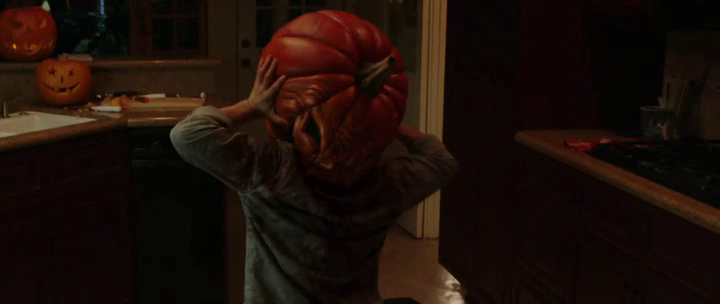
What’s a Halloween anthology without a killer pumpkin? Well in this last installment, directed by the great Neil Marshall, that is exactly what we get as we follow a police detective as she tries to track down a murderer who is clearly not your garden variety killer. Pun intended.  This is a fun segment but is also another one that would have worked so much better as feature length movie; Kristin Klebe as Detective McNally is given no real character to work with as she runs from crime scene to crime scene and even Joe Dante’s cameo as a scientist can't save this good premise from being criminally wasted. The segment ends with a silly cliffhanger that is a clear nod to Raiders of the Lost Ark but only makes you wish you were watching that film instead. If given a movie of its own Bad Seed could have been the new Jack Frost but as is stands it’s kind of a flat ending to what is a rather so-so anthology.


Stuffing ten horror stories into a 97 minute movie was a bit of a gamble and sadly it didn’t pay off, the few segments that work almost do it in spite of how they were crammed into the anthologies framework, which is kind of held together by the voice of radio DJ that is provided by Adrienne Barbeau in what I’m assuming is a nod to her character in John Carpenter’s The Fog. All ten stories take place in this one town, with some characters popping in and out of each other’s segments, but in the final shakedown what we are left with are a bunch of promising ideas cut short and some that should have been cut completely.  This isn’t a terrible horror anthology but with the amount of talent on hand I was hoping for better.

Thursday, October 26, 2017

Geostorm (2017) – Review

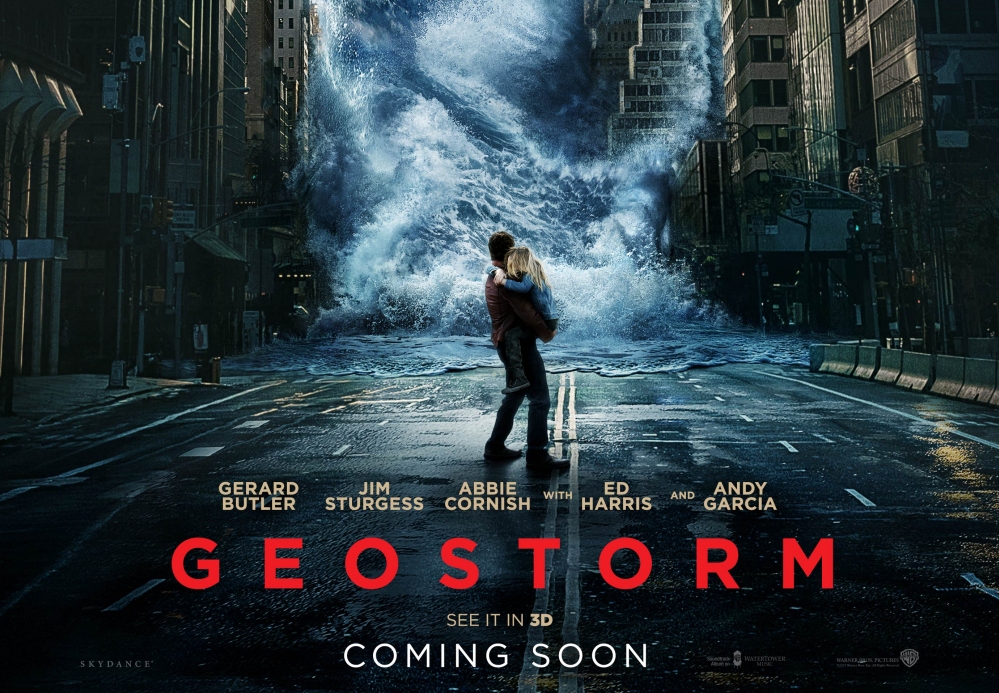
Geostorm is a political/thriller/science fiction action film disguised as a disaster movie; the marketing of this film is clearly hoping to get fans of such films as The Day After Tomorrow and San Andreas, but even though this film does contain moments of massive destruction as nature runs amok this movie is more about Gerard "Action Star" Butler running around a space station while his idiot friends scramble from location to location in an attempt to uncover a major conspiracy that could end the world as we know it. If that premise seems at odds with what the trailer showed you welcome to the world of “Bait and Switch” as Geostorm has more in common with the James Bond film Moonraker than it does with any disaster film.


Note: This moment from the poster doesn’t even remotely happen.

The film begins with narration explaining how the world was reaching the end of days due to global warming and extreme weather until brilliant scientists Jake Lawson (Gerard Butler) developed a weather satellite system called “Dutch Boy” that could control climate on a global scale, but unfortunately bureaucratic assholes like Senator Cross (Richard Schiff) don’t like Jake’s straight shooting attitude and he is fired by his younger brother Max Lawson (Jim Sturgess) who works under Secretary of State Leonard Dekkom (Ed Harris), a character who practically screams “I’m the real villain” the moment he appears on screen. Three years later we find Jake living in a trailer near Cape Canaveral with his precocious little girl Hannah (Talitha Eliana Bateman), the cute and smart daughter/son are almost a requirement in these type of films, and they are visited by Max who informs Jake that something has gone terribly wrong with Dutch Boy.


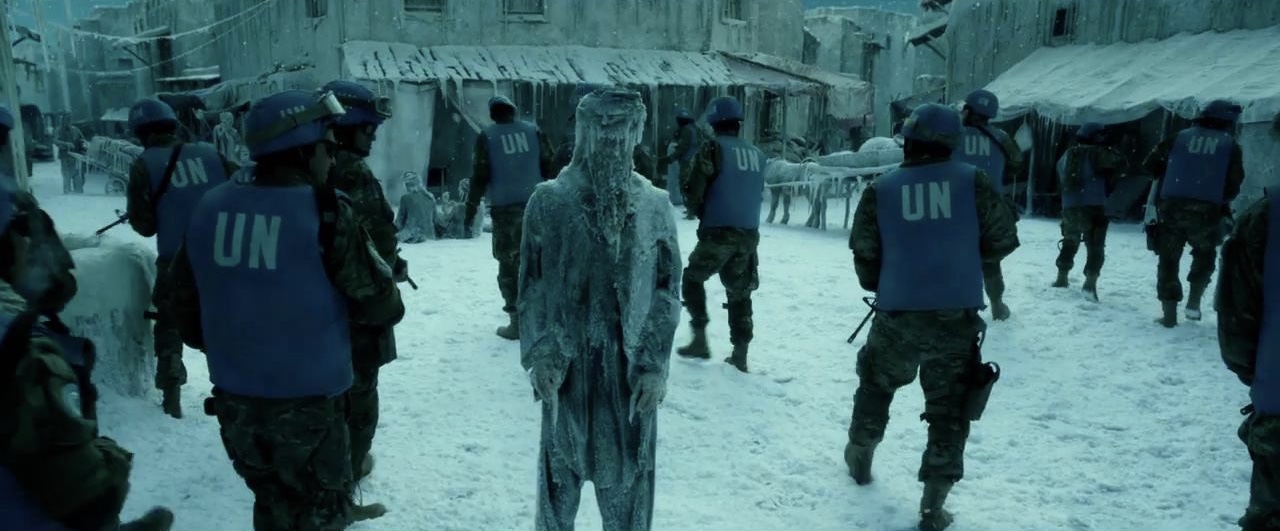
These people from a village in Afghanistan would have to agree.

President Andrew Palma (Andy Garcia) wants Dutch Boy fixed before its official handover to the international community, which is to take place in a few months, and thus Jake is pulled out of retirement, launched into space, and thrown into an investigation that quickly starts to look more like sabotage than it does a mechanical malfunction. Meanwhile on the ground Max gets help from his friend Dana (Zazie Beetz), a Department of Defense hacker and not the love interest, and the two of them uncover a mysterious plan called “Project Zeus” which is a program meant for simulating extreme weather patterns in an effort to create something called a Geostorm.


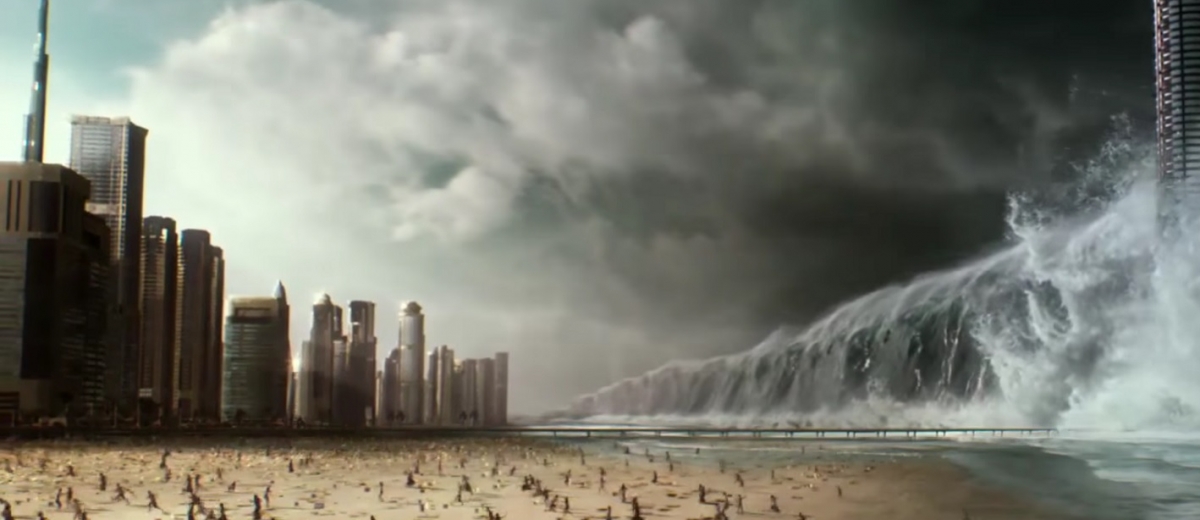
Owning beachfront property is never a good thing in these movies.

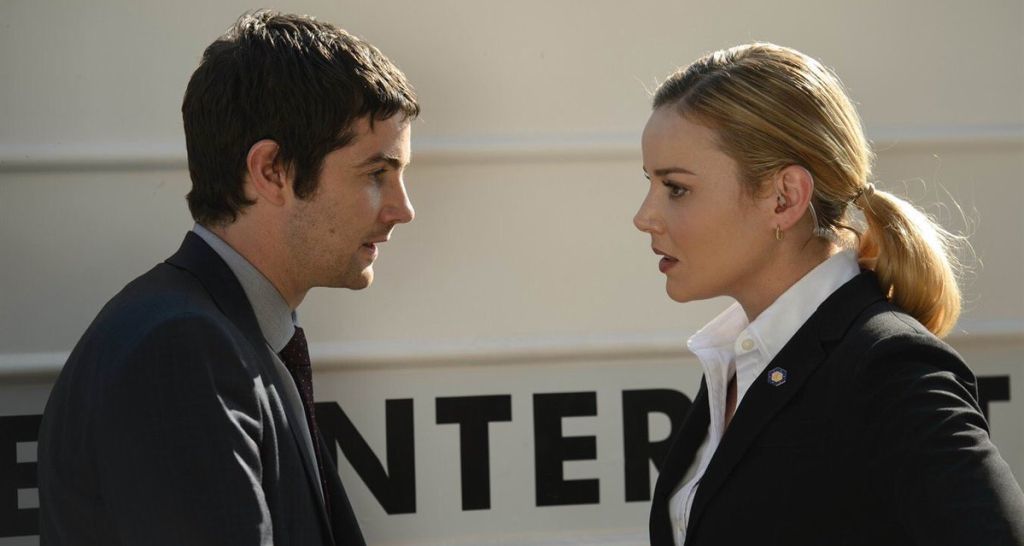
Could there be nefarious parties secretly working to turn Dutch Boy into some kind of super weapon? Of course there are, and this leads to sinister agents eliminating any one who could be a threat to Project Zeus, and by this I mean over-elaborate murders and insanely silly car chases fill up way too much of this film's screen time. Lucky for us Max is secretly dating a Secret Service agent Sarah Wilson (Abbie Cornish) who is on the President’s personal detail and she is able to grant the White House access, and sadly she is this movie's love interest and it is terribly lame. Seriously, this film spends an inordinate amount of screen time on a stupid subplot about their "illicit relationship" that literally has nothing to do with anything.


You will be begging for these two to make the Romeo & Juliet suicide pact.

When we are not dealing with unfunny rom-com moments earthside, with the two blandest people on the planet, the movie will subject us to Gerard Butler running around a space station as he tries to uncover the saboteur and remove the virus that has turned his baby into the Death Star. He is teamed up with Ute Fassbinder (Alexandra Maria Lara), the International Space Station's current commander, and we can only thank our lucky stars the film doesn’t have enough time to turn this dynamic into another painful love subplot. In the short time spent on the space station we come to the conclusion that Jake Lawson is a cross between James Bond and The Terminator as he survives several attempts on his life that would have killed any normal man. So while Jake is fighting for his life Dutch Boy is targeting cities across the globe as it works its way up to the “Geostorm” event, and the clock is ticking, and I mean literally as the movie ends with Jake racing a countdown to the end of the world.


And wasn't kidding about that Death Star comment.

Now earlier Max’s friend and whistle blower Cheng Long (Daniel Wu) informed him that if these “malfunctions” continue the world will suffer from "Geostorm" an unstoppable chain reaction of extreme weather patterns globally and simultaneously, yet when Jake *spoiler warning* is able to take Dutch Boy offline, with mere seconds to spare, the disastrous weather events stop almost instantly. THAT IS NOT HOW WEATHER WORKS! Now one doesn’t expect to see accurate science in movies of this nature but there is a fine line between the ridiculous science of something like The Day After Tomorrow and the insulting nonsense we are subjected to in Geostorm.


At times one wonders if we'd stumbled into one of those other disaster films.

This is Dean Devlin’s first time in the director’s chair, having produced such successful films as Stargate and Independence Day, and it’s clear he doesn’t know what he’s doing in this position. He’s even credited as one of the writers so he can’t even hide behind its failure because of bad source material. The plot of Geostorm is ludicrous, the characters barely qualify as two dimensional stock types, and the disaster stuff that everyone had paid to see isn’t all that jaw dropping. I’m not saying the CGI wasn’t top notch it’s just that none of it pacts any emotional weight, there is no sense of awe or gravitas when these occasional moments (and I do mean occasional as they only really pop in just to keep the audience from falling asleep) do show up its all sound and fury signifying nothing. Save your money and watch a Sharknado movie on Netflix at least there you expect to get cartoon characters and cheesy dialog.

Final Thoughts:

• The man who invented the satellite system that saved the world is reduced to living in a trailer? You’d think he’d be able to afford at least a little cabin new Cape Canaveral.
• When Jake arrives at the International Space Station none of the department heads recognize him. Didn’t he save the fucking world three years ago, wouldn’t his face been on Time Magazine at least once or twice? And aren’t those idiots working inside a facility he designed and helped build?
• Once again we are treated to people trying to out run the cold. It was dumb in The Day After Tomorrow and even dumber here.
• And exactly why must Sarah keep her relationship with Max a secret? Is there some law that states Secret Service agents can’t date?
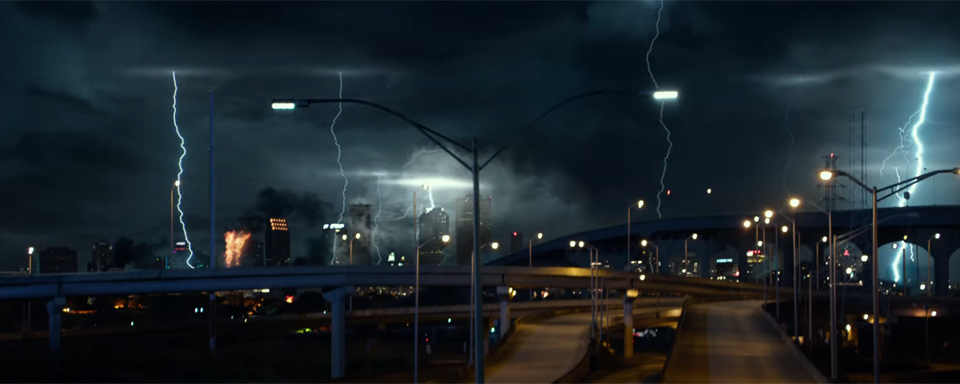
• The villain targets the city he is currently visiting, barely making it out before lightning blows up the building he just exited, is that not really bad planning?


Couldn’t he call in sick that day?

Monday, October 23, 2017

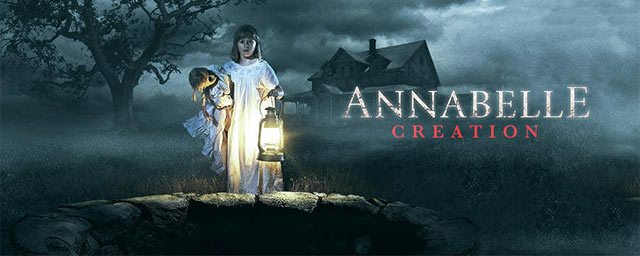
Annabelle: Creation (2017) – Review

Universal may have hit a stumbling block with The Mummy, in what they had hoped would be the first chapter in a shared horror universe, but that is certainly not the case over at New Line Cinema where they have released four successful horror movies in The Conjuring/Annabelle series. Even the critically panned Annabelle made over $250 million dollars worldwide, which is pretty good when you consider its budget was just over $6 million, and with each film linking and teasing further installments it’s almost become a license to print money.  So today let us take a hard but fair look at the fourth installment.


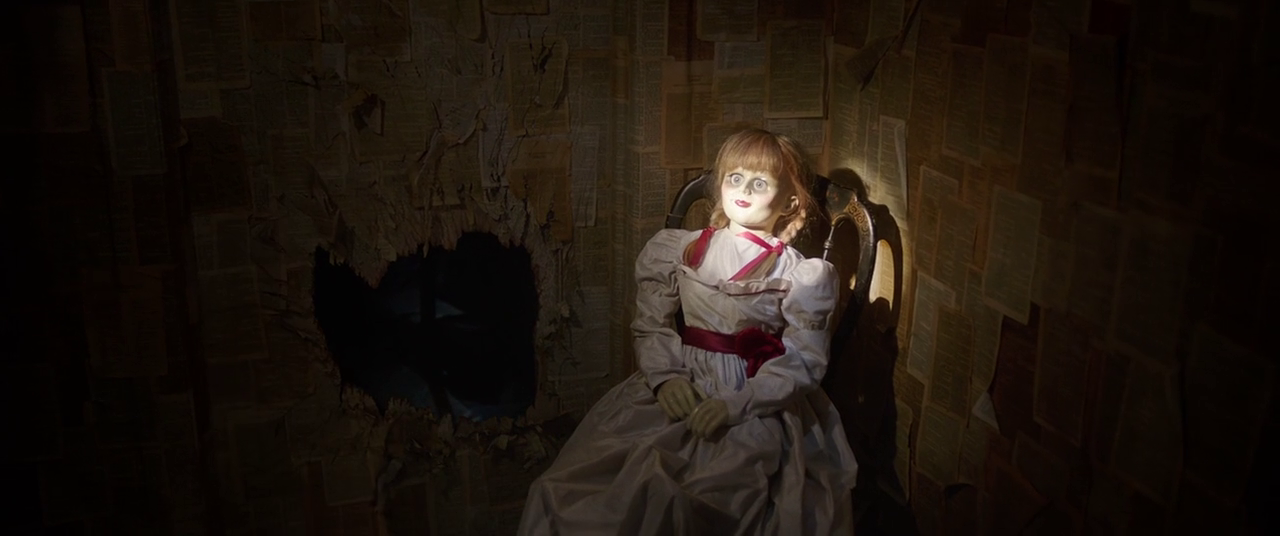
Rarely do prequels perform well in comparison to the original but for some reason that isn’t the case with this new crop of horror films; the 2014 horror dud Ouija was followed up by the excellent Ouija: Origin of Evil and now we have Annabelle: Creation that is a prequel and superior follow-up to the 2014 Conjuring spin-off Annabelle. It's like we are living in some kind of Topsy-turvy world.  This prequel jumps back to 1943 where we meet dollmaker Samuel Mullins (Anthony LaPaglia), his loving wife Esther (Miranda Otto) and their adorable daughter Bee (Samara Lee); they were a happy family with Samuel being a good father and devoted husband, as well as being an admired toymaker, but because this is a horror move we know that can't last for long and before you can say "Speed Bump" little Bee is killed in a tragic automobile accident. The movie then jumps a head twelve years as we are introduced to Sister Charlotte (Stephanie Sigman) and a group of orphan girls bussing in to stay at the Mullins’ house because their orphanage was closed. The reasoning behind the Mullins' kind offer is tad on the moronic side but as it's a bit of a spoiler I won't get into that here.  It’s not too long before one of the girls is finding a locked room suddenly open, a hidden key in a dollhouse that reveals a secret closet, and a creepy-ass doll sitting inside.

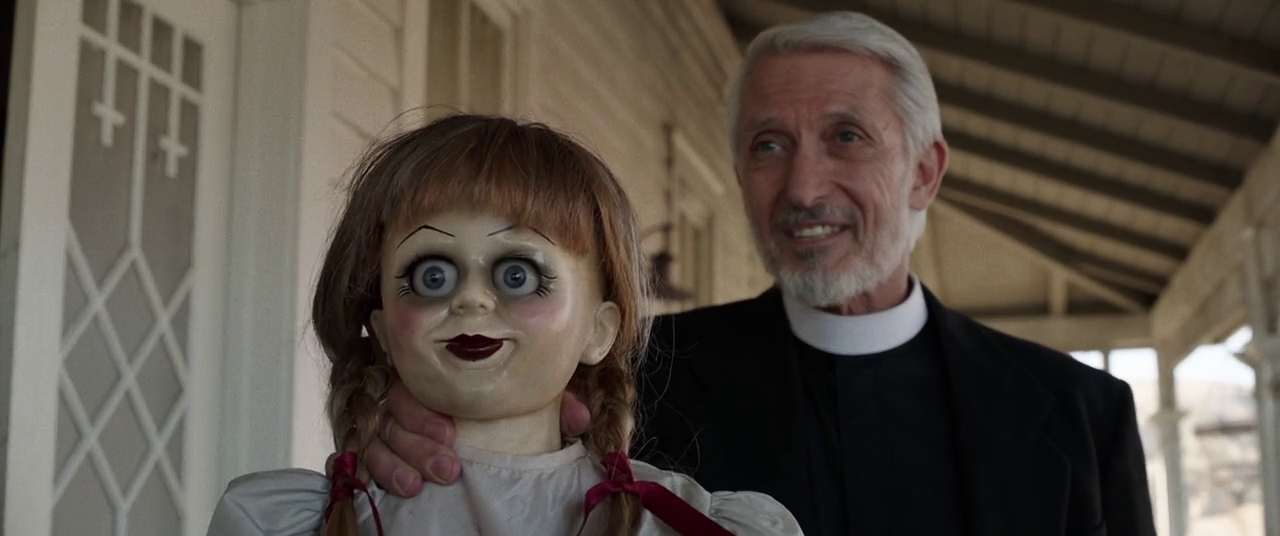
Note: Director David F. Sandberg softened the doll’s features to make it more believable as a child’s toy, but he clearly failed as it still looks creepy as hell.

Annabelle: Creation does provide excellent spooky atmosphere and the prerequisite number of jump scares; the house is sprawling and full of shadows, there is a dumbwaiter for our heroes to hide in, a masked woman that possibly haunts the halls, we even have creepy music being played on a child’s record player to provide the proper amount of goosebumps, and we also get the ever popular eerie figure seen standing in the background or caught as a fleeting glimpse. Everything an audience could want from a scary movie and more.  In fact the modern horror formula solidified by Jams Wan, that he kickstarted back in 2010 with his film Insidious, is now being used by a variety of directors to lesser degrees of success, and with Annabelle: Creation you can almost predict the jump scares and spooky moments with a stopwatch.

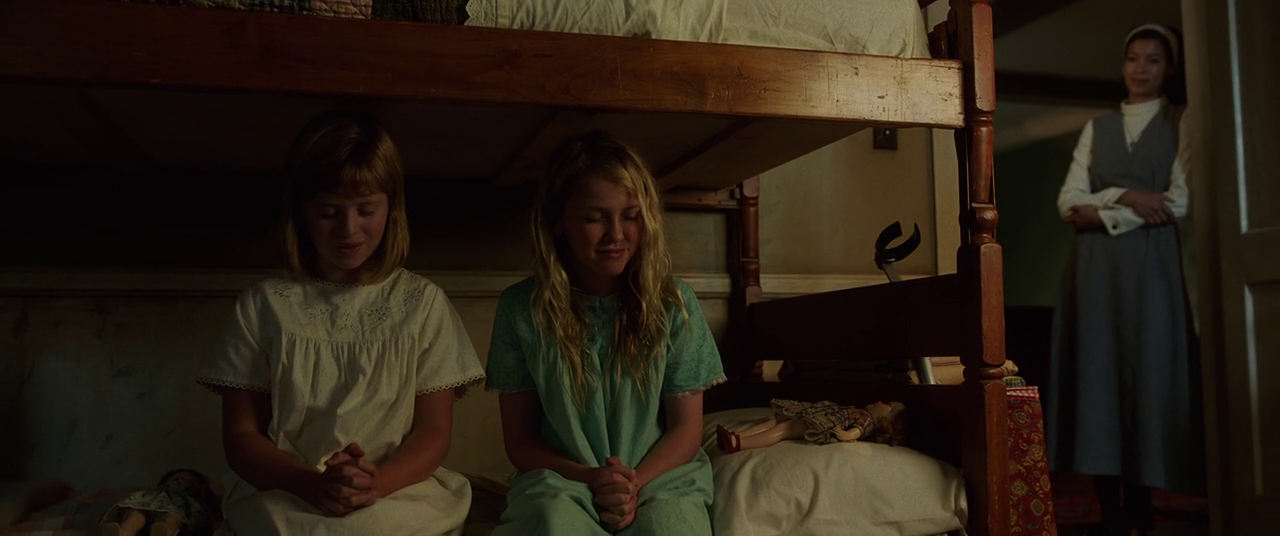
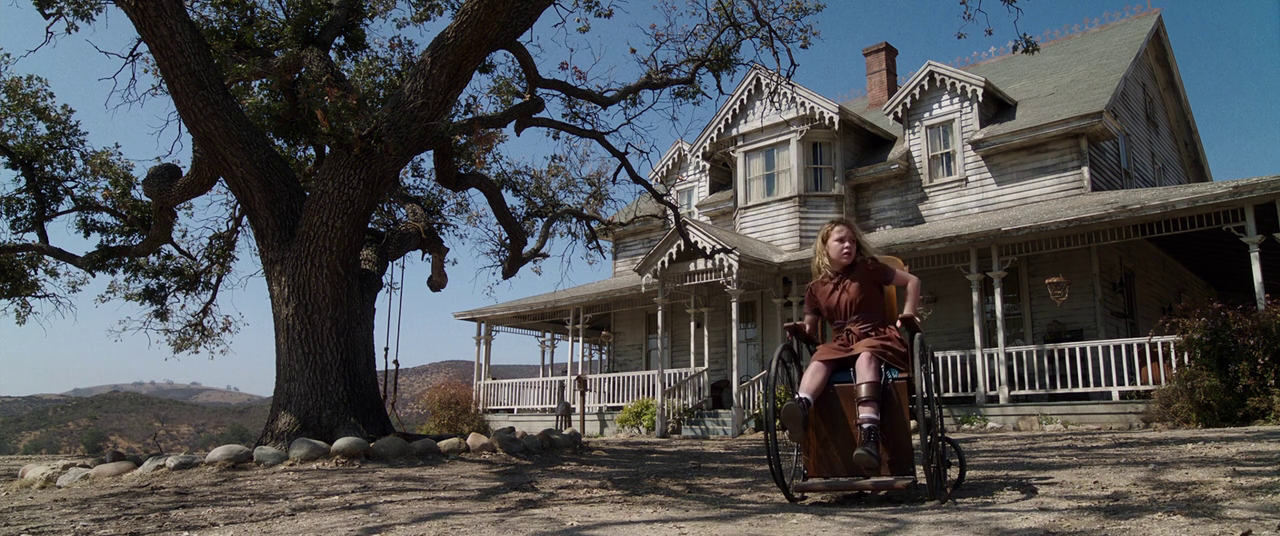
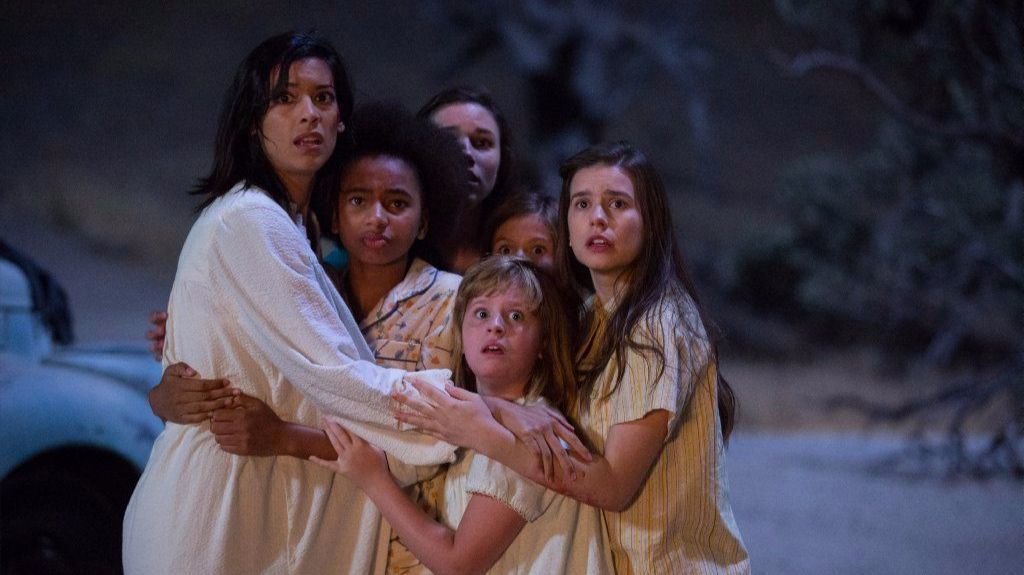
Now this is not to say that Annabelle: Creation is a bad movie, quite the contrary as all those techniques are effective regardless of how many times they’ve been used before, but don’t go into this movie expecting to see anything revolutionary. What does make this movie stand out is the performances by the young actresses who play two of orphan girls; Janice (Talitha Eliana Bateman) crippled by polio and forced to use a crutch and a leg brace, and her best friend Linda (Lulu Wilson) who is more sensible when encountering creepy dolls in the dark. These two actresses steal the movie away from all the ghosts and goblins.


Their prayers may not be answered here but I bet their agents are getting a few calls now.

One of my pet peeves with horror movies is that when rules are established they are often broken just because the plot requires it, but in the case of The Conjuring and Annabelle movies the filmmakers do their best to not give much in the way of rules so as avoid this problem. Unfortunately this can cause even more problems as it leaves the audience unclear as to what the evil forces can and cannot do. In these movies demonic forces try and possess our characters in a variety of ways but just what steps the demons must follow is never made clear, nor is what powers the demons have in the mortal world.  This causes problems when it comes to discerning what kind of threat the demons provide and how our protagonist can stop them. If a demon can jump a small child and instantly possess her or if it can rip an adult into two gory halves without much effort just how are we to believe anyone stands a chance?


Do powerful demons have to resort to picking on little girls in wheelchairs?

In this movie girls will scream but for some reason no one in the house can hear them, that is until at other times when a scream is heard and people come rushing to see what's going on, and it’s this kind of inconsistency that makes for a troubling story. Do the demons have power to localize audio or are we to believe the other residents in the home very heavy sleepers? An even worse example of this type of inconsistency is the ability for the demonic force to open doors and dumbwaiters at will but then for some reason when a major character slams and locks a door the demon is left outside banging futilely. Is the demon actually thwarted by the locked door or is it just fucking around with them so that it can jump out at them later? The doll can clearly teleport at well so why can’t the demon?  It's these kind of questions that the filmmakers hope you are too engrossed in the terror of the situation to notice, and to be fair most of the time they're probably right. Annabelle: Creation is full of people running up and down corridors with things chasing them, or crawling and hiding when possible, and I’d have been just a little happier if I knew they had a chance.


Who do you think will survive?

If the evil in your movie can kill at will one has a hard time believing a plucky little girl could stand a chance but that is what is expected of us when viewing Annabelle: Creation, and during the film’s final act our suspension of disbelief is stretched well past the breaking point as the scenery practically explodes around our heroes. That all said the film does succeed at being scary, which is really the film’s sole job and by this criteria it clearly succeeded, but I wish they’d played a littler fairer with the “rules” and maybe spent less time establishing further chapters and gave us more backstory on the evil forces that are put in play.


And can someone please mail that thing to the Vatican?