Blog Archive

Monday, April 17, 2017

Mothra (1961) – Review

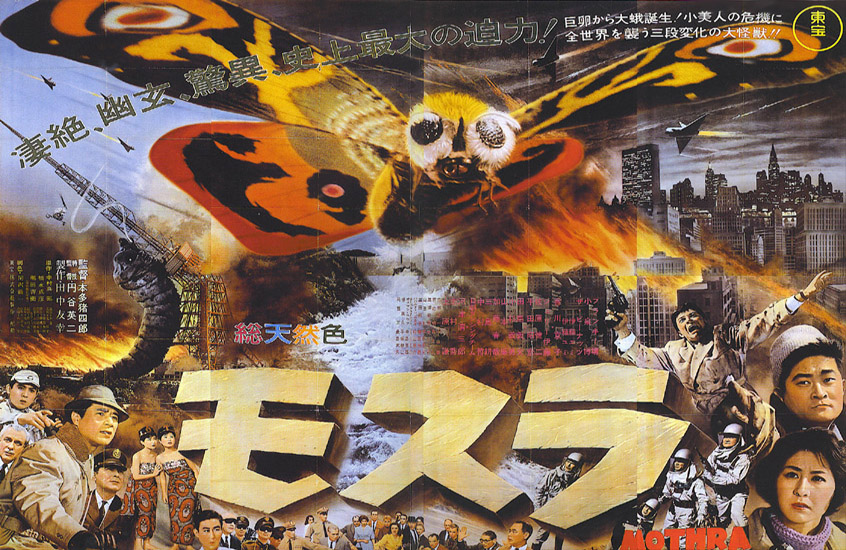
If Godzilla is “The King of Monsters” than Mothra is clearly the queen, with the increasing popularity of kaiju like Godzilla and Rodan it’s fascinating that the next biggest star to Godzilla would be a creature that didn’t rampage out of malice like its peers but instead was on a rescue mission, albeit a rather destructive rescue mission. Mothra’s heroic nature was so well received that one could readily assume she was most responsible for Godzilla becoming a bit of an anti-hero during the latter half of the Shōwa period, and of course one of the most notable factors in Mothra’s popularity is the very fact that she is female, which is rather rare among the kaiju.


The dangers of nuclear weapons continues to pop up in the Toho monster movies but in 1961’s Mothra it’s not nuclear testing that creates or even wakes up the titular monster, instead this time out nuclear fallout is just an element that appears at the beginning of the film and is quickly forgotten. The movie opens with a typhoon sinking a ship off the shores of Infant Island, an area that greatly concerns the captain as it’s where many atomic bombs have been test detonated, but when four survivors are found alive and well on Infant Island with no ill effects from radiation poisoning, questions of how this is possible arise. The survivors reveal that their lack of radiation sickness must be due to the red juice that the local natives gave them to drink, and this of course raises even more questions as apparently no one knew that there were inhabitants on the island. I guess military surveying before detonating an atomic bomb was rather lax back in the day.
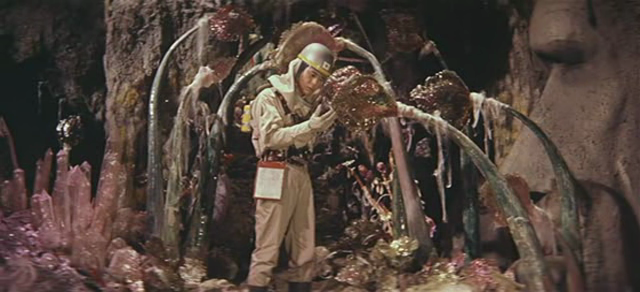
 

“Yeah, this island is looks perfect for some nuclear testing.”

The Japanese government unable or unwilling to fund a scientific expedition to Infant Island end up co-sponsoring a joint venture with the Rolisican Embassy (Note: Rolisica is widely interpreted as a stand-in for both the United States and the Soviet Union with the New Kirk City looking very American while the military uniforms look closer to those worn by the Russians.) With the Rolisican Embassy providing the cash this allows them to put entrepreneur and evil capitalist Clark Nelson (Jerry Itô) in charge, much to the dismay of Japanese linguist/anthropologist professor Shin'ichi Chūjō (Hiroshi Koizumi) who is infuriated when he learns that all his research is to be first passed through Nelson.
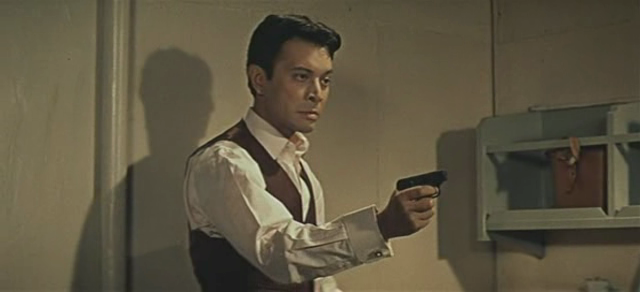
 

I don’t think Clark Nelson is a man of science.

Professor Chūjō isn’t alone in his disdain for Nelson and he is helped along by tenacious reported Zenichiro Fukuda (Furanki Sakai) and his faithful and beautiful photographer Michi Hanamura (KyokoKagawa) who do their best to thwart Nelson’s evil machinations (Note: The formula of this heroic trio is almost exactly duplicated later in Mothra vs. Godzilla), and Fukuda is even able to stowaway aboard the expedition's ship to further get in Nelson’s way. It’s when Chūjō is almost eaten by a vampire plant, while exploring Infant Island off on his own, that things start taking a bizarre turn as he is saved by two young women only twelve inches tall (Emi and Yumi Itō). These are the "Shobijin" (small beauties) who are basically the priestesses of Infant Island and the summoners of Mothra. The actresses playing the fairies are real life twins who were a very popular music act called The Peanuts, and for non-professional actors these two are pretty amazing.
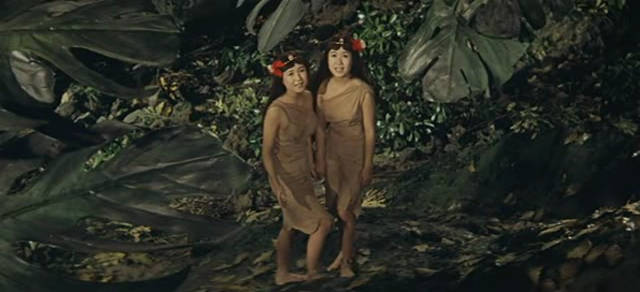
 

The twin fairies of Infant Island.

Chūjō’s claims of being saved by tiny women are at first chocked up to shock but when the scientist eventually see the fairies for themselves they are all awestruck, unfortunately this is when Nelson reveals his true reason for being on the island, which is to get an attraction for one of his theatrical shows, and he tries to snatch the fairies.  Not so fast evil dude, just before he can make off with the fairies the local natives finally make an appearance and put a kibosh on the kidnapping. This of course doesn’t stop Nelson from returning to the island with a group of henchmen, gunning down several of the locals that get in the way, abducting the fairies and bringing them to Tokyo. If a showman travelling to a mysterious South Pacific island to bring back an attraction, one that will lead to city wide destruction, seems a tad familiar that’s because this was basically a Japanese version of King Kong, only this time out director Ishirô Honda was shooting for a less tragic tale. In all the previous kaiju films from Toho they each ended with the monsters being destroyed but in this film as Mothra is not technically the villain of the piece she is allowed to live. The theme of greed and exploitation is not subtle here but this actually ads to the fun as Fukuda, Michi and Professor Chūjō try and rescue the twin fairies, being hampered by the political influence that Rolisica has with the Japanese government, and the final revelation that fairies may look helpless but they have a very big guardian.


And she’s heading straight for Tokyo.

My favorite element of this movies is the attitude of the captured fairies, they are saddened at being locked in a gilded cage but you quickly get the idea that they are actually not so much concerned with their own fate but that of the people of Japan, for they know what untold damage will be caused when Mothra arrives. They are quite confident they will be rescued so their desire to be freed quickly is only to minimize the destruction when Mothra reaches shore and not for their own personal safety or comfort. That Carson is forcing the fairies to sing, not realizing that the song they are performing is a call for Mothra, is particularly brilliant. My one question is “How do audiences members enjoy the act when the performers are only a few inches high?” Sure the singing is amazing but Nelson doesn’t even provide big screens for those not in the first row.
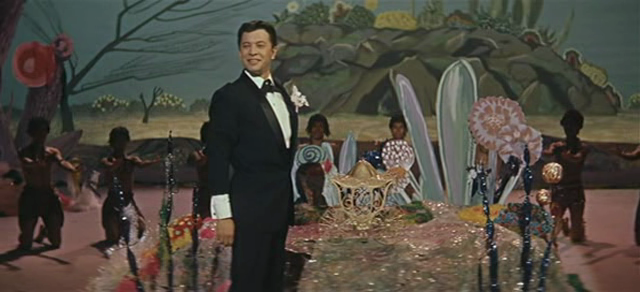
 

"Ladies and gentlemen I bring you the 9th Wonder of the World!"

That the Japanese authorities turn a blind eye to what is basically forced imprisonment and slavery is really odd and a complete indictment of political corruption, and for some reason Nelson allows our heroes an unsupervised visit with the fairies who are then told by the twins about Mothra, “She will come to rescue us, regardless of what happens to your country, and that fills us with great sadness.” Yet this threat isn’t enough to get the government to grow a spine and stand up to the Rolisica Embassy, even after Mothra in larva form destroys an ocean liner while on route to Japan. In an interesting twist our heroes provide Nelson with a box that can block the fairies telepathic call to Mothra, being more concerned with the potential loss of life if Mothra is led straight into the heart of Tokyo than the freedom of the fairies. You really don’t expect these kinds of moral dilemmas in a giant monster movie. Of course this plan proves less than effective and it’s only after a failed attempt at bombing Mothra at sea, and she comes ashore and destroys a damn, do the authorities race to free the fairies. Unfortunately it’s too little too late as Nelson, worried about losing his cash cow, flees back to his Rolisica with the fairies.
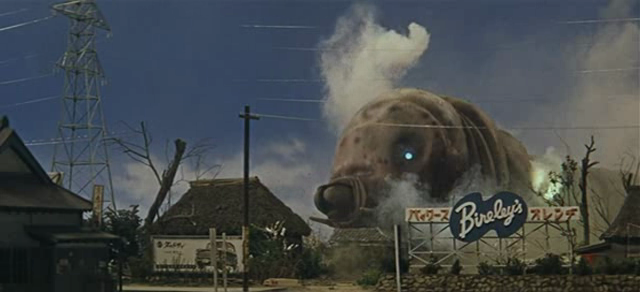
 

Mothra doesn’t even stop to ask for directions.

The destruction as Mothra tears across Japan is wonderfully executed, once again the miniature cityscapes are great and the design of Mothra is as unique as it is spectacular, who would have even thought to make a monster movie based on a giant larva that charges across the South Pacific to save twin fairies? The one thing that could have used some work was the stand ins for people as though the miniature buildings and tanks all looked quite good some shots dwelled too long on the toy people in them, those static little figures really kill the illusion. On the plus side this movie introduces the “Atomic Heat Cannons” that were the precursors to the “Maser Cannon” that would become a staple in the battles between kaiju and the military for years to come.
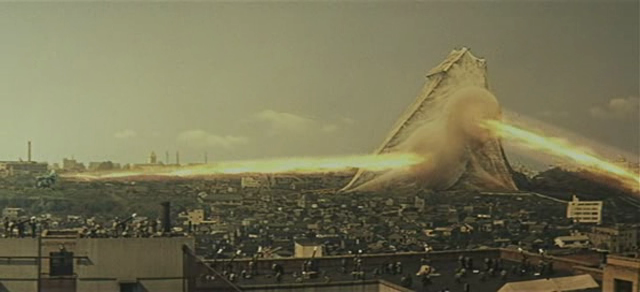
 

Atomic Heat Cannons seen here attacking Mothra’s cocoon.

Of course the real devastation doesn’t happen until Mothra emerges from her cocoon and her mighty wings unfurl to unleash death and destruction in an unparalleled display of force as vehicles and even building are sent flying. Where before in larva form Mothra seemed indestructible to the weapons of man here in her final moth/butterfly form the military are barely able to function. This spurs the populace into action in the hunting down of Nelson and the returning of the twin fairies.


Mothra in all her glory.

As mentioned earlier this is the first of the Toho films that doesn’t end with the creature's destruction instead Chūjō spots a church cross backlit by the sun, which is a key hieroglyph he recognizes from the Infant Island native's written language, and that with the radiant cross-shaped star it translates as Mothra. Our heroes spur the authorities of New Kirk City to paint the symbol on the runway of the local airport, while also having all the local churches ring out their steeple bells at 3:00 o’clock as the sound of them may mimic the song the twins sing. This works and Mothra arrives at the airport to pick up the fairies who bid “Sayonara” as they fly back to Infant Island. So in this movie the “monster” is neither killed in a fight with another monster nor is it defeated by the military, instead our lead characters figure out a way to end the dispute peacefully.

Note: Also an interesting change is that Nelson is killed by police, while trying to flee the mob who want the fairies returned so their city will be spared, where as in the original draft it was Mothra who killed him.

Mothra is a fascinating entry into the franchise as not only does the titular creature cause quite a lot of damage with the death toll of innocent victims being pretty damn high, yet this never once stops her from being a sympathetic character, much as the original King Kong was. Mothra will continue to be a guardian of Infant Island as the series progresses but her role of protector will often times expand to save the world from many other monstrous threats which cements her as one of the few truly heroic kaiju despite the amount of human deaths that can be laid at her wings.
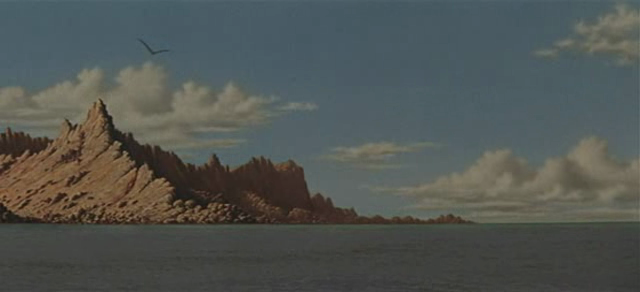
 

The return to Infant Island.

Ishirô Honda’s Mothra is one of my personal favorites the title character isn’t just a rampaging monster but more of an avenging god, and the human characters aren’t just passive viewers of the destruction but are actually able to impact the proceedings and help resolve the situation without killing the kaiju.

Thursday, April 13, 2017

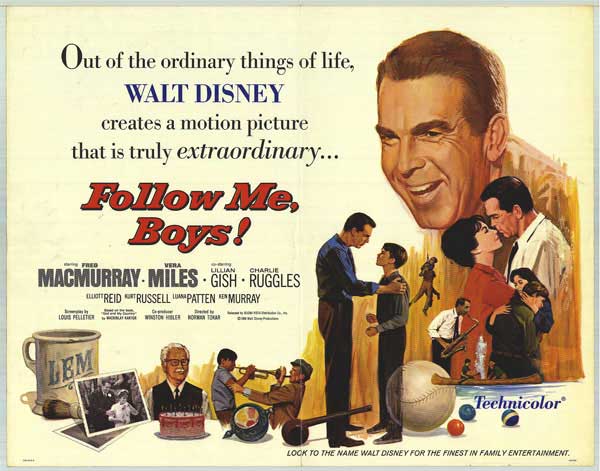
Follow Me, Boys! (1966) – Review

When discussing actor Fred MacMurray film buffs will cite such classics as Double Indemnity and The Apartment but even if those clearly show the power and range of this actor’s talent, and no one can deny how good he was in those films, those titles are not what he was most known for. If one were to look up the word “affable” in the dictionary and found a picture of Fred MacMurray you’d not be surprised, and this is why he's most known for playing such sweet and caring characters and why he became a staple at Disney Studios. He’s played so many “nice guys” that he almost makes Jimmy Stewart look like a monster in comparison. Follow, Me Boys! is based on the book God and My Country by MacKinlay Kantor and is a Norman Rockwellesque look at the Boy Scouts of America with Fred MacMurray playing the scout master who would help shape the lives of many boys over the years.


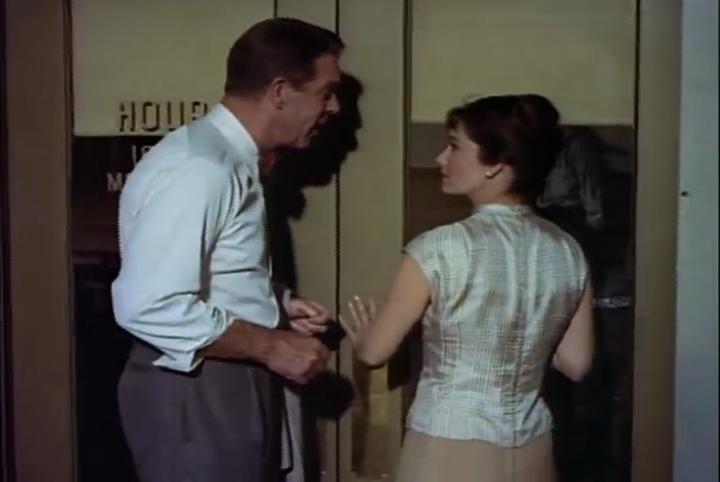
Starting in the 1930s the movie opens with Lemuel "Lem" Siddons (Fred MacMurray), a saxophonist in a traveling band with dreams of being a lawyer and growing roots somewhere, who he finally gets that chance when the band’s bus stops in the quaint town of Hickory and he decides to give up the road for good. The sweet idyllic nature of this town may have been a key factor in this decision but the primary one would be him bumping into the beautiful Vida Downey (Vera Miles), a bank teller who is currently dating the town’s bank manager Ralph Hastings (Elliott Reid). Lem steps on Vida’s feet while backing up to catch a pop fly ball from a group of boys playing in the street, and that accidental assault is all it takes to get romance a blooming.


A 1960s movie "meet cute."

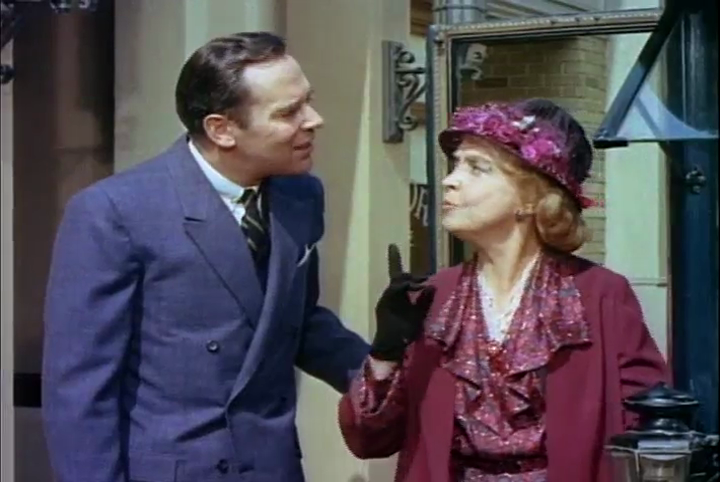
This is the second time we’ve seen Fred MacMurray facing off against actor Elliot Reed, in 1961’s The Absent Minded Professor Reid tried to steel Nancy Olson away from MacMurray with about the same amount of luck this time out. The character of Ralph Hastings is your typical “strawman” rival that pops up in many films of this genre, he doesn’t stand a chance against the hero and he’s almost always depicted as a pompous ass, and though this movie doesn’t veer to far from this clichéd character Reid is one of those actors that can really own this part and he blends inept villainy with a nice bit of comic aplomb. And just how villainous is Ralph Hastings? Well he almost runs down the Boy Scout troop as he blows by them in his car, leaving them in a cloud of dust, and he tries to have his elderly and forgetful aunt (Lillian Gish) declared incompetent so that he can get control of her real estate holdings. We can assume the scene where he kicked puppies was left on the cutting room floor.
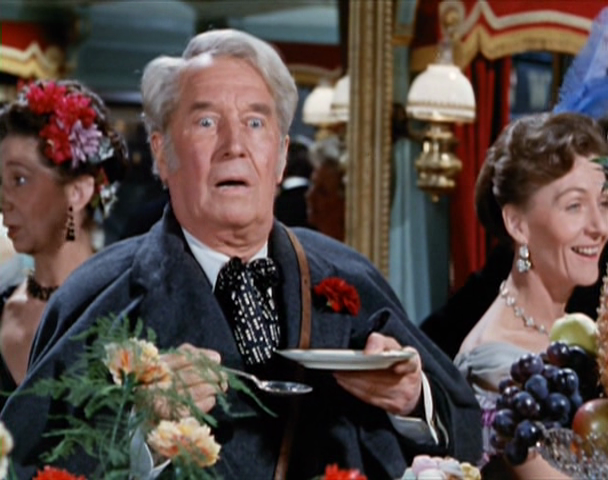
 

If cast in the 80s this character would have been played by William Atherton.

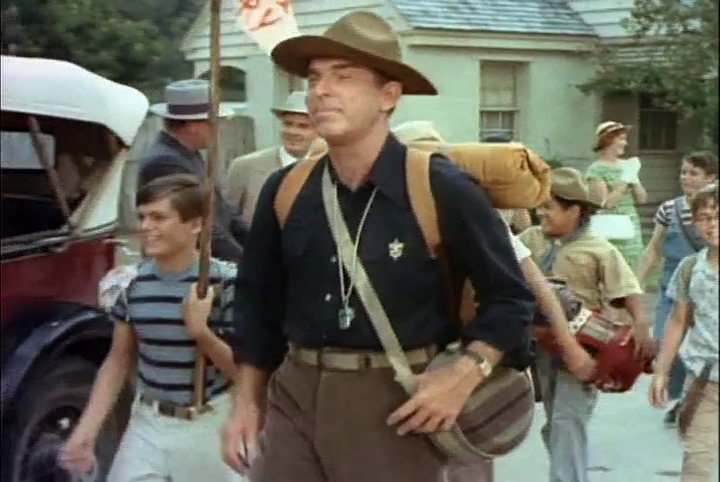
Lem takes a job as a clerk at the general store owned by John Everett Hughes (Charlie Ruggles) and while there he plots his tactics for winning the heart of Vida. His first opportunity comes when he is invited to a town meeting and the problem of “What to do with all these boys running loose in the streets” is addressed, he spots Vida sitting next to Hastings and sees that she has written down “Boy Scouts” as a solution to this problem, so when the mayor asks for ideas Lem suggests the Boy Scouts, much to Vida’s delight, and when he is told the only reason the town has never implanted such a plan in the past is that no one will volunteer to be Scout Master. Of course Hasting vehemently refused when Vida suggested he volunteer for the position which gives Lem the perfect opening to declare he would be willing take on the job. I’m not sure how this would play out in real life as I doubt small townsfolk would be all that keen for a newcomer, one who previously played saxophone in a traveling band, to be put in charge of their children.


This is where the Fred MacMurray likability factor works to the film’s benefit.

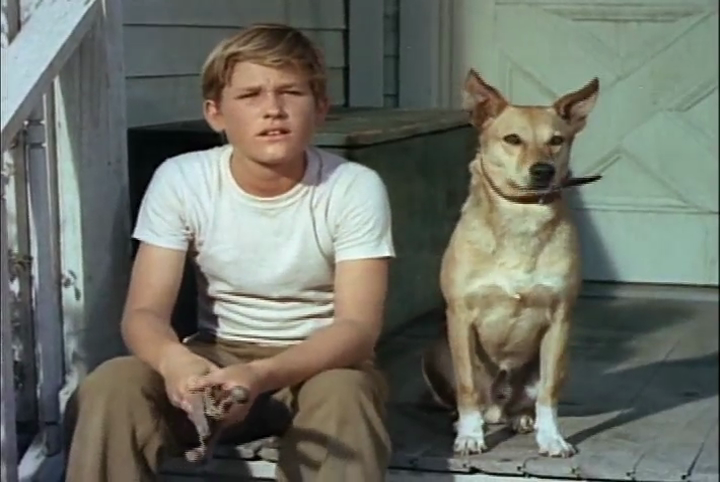
Follow Me, Boys! is a slice of Americana told in a way only Disney can pull off, the movies running time is over two hours long yet at no point does the film seem to drag as its cast of characters are constantly fun and engaging. The story takes place over a twenty year time period with Lem helping generations of young boys make the journey to manhood, and though it mostly a comic movie it does have some pretty dramatic moments that can easily bring a tear to one’s eye, such as Lem and Vida not being able to have children of their own, but the key one being local tough kid Whitey (Kurt Russell) who is angry at the world because he is both ashamed of his drunk father but also deeply caring for the man. The scenes between Fred MacMurray, Vera Miles and young Kurt Russell are the heart of the movie and the slow winning over of this troubled kid can resonate with modern audiences just as it did with those that saw it during its original run. This was the first of ten pictures at Disney Studios for Kurt Russell, even at the tender ages you can see he was loaded with talent, and later during his teen years he’d star in the Dexter Riley movies starting with The Computer Wore Tennis Shoes.


Someday this kid will grow up to be Snake Plisken.

Dramatic moments aside this is mostly a family comedy with MacMurray having to deal with problems of teaching scouting while knowing nothing about it himself, all while trying to win the hand of Vera Miles, there is a particularly brilliant moment when Lem is captured by the United States Military during war games, believing his scout paraphernalia to be spy equipment, and is freed after his kids accidentally capture a tank. Disney has never been accused of being overly realistic and these moments of high comedy balance out the films more tear inducing moments.  This may be a sugar coated look at the time period, the horrors of World War II being a backdrop deftly avoided, but overall it is a delightful movie with a fantastic cast and one I can easily recommend.


“Tanks for the memories.”

Monday, April 10, 2017

Rodan (1956) – Review

Catastrophic monster fights now in colour! Toho’s 1956 film Rodan was the first of their kaiju (giant monster) films to be shot in colour and it deals with the first appearance of one of Godzilla’s primary foes. Long before Marvel Studios and their “Cinematic Universe” existed Japan was developing a shared universe of their own that would rival the one Universal had created with Frankenstein, Dracula and the Wolf Man, but instead of creatures duking out in some European castle the monsters of Toho Studios would have their creations battle across cities and countrysides, causing untold amounts of death and destruction.


Rodan was the first of the stand-alone monster movies following Godzilla Raids Again, the next one being Mothra in 1961, and though this prehistoric flying menace wouldn’t cause as much onscreen damage as seen in 1954s Gojira the threat from a creature that could travel at supersonic speeds, striking Japan one moment and then Manila or the Philippines moments later, made Rodan a menace to be reckoned with.


That is if his wires don’t get fouled up.

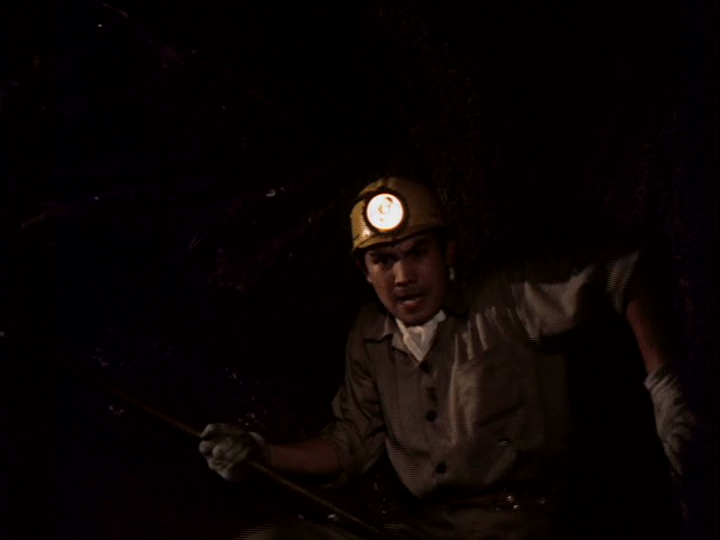
The fascinating thing about 1956’s Rodan is that it starts out almost as a murder mystery; after the mysterious flooding in a mine outside the village of Kitamatsu resulted in the disappearance of two miners Shigeru Kawamura (Kenji Sahara), a tunneling and safety engineer, is sent into investigate. What is discovered is the floating corpse of one of the missing miners, sporting wounds made by something incredibly sharp, and as the other miner is still missing foul play is suspected. Kawamura tries to comfort his fiancée Kiyo (Yumi Shirakawa), who is also the sister of the missing miner, stating he doesn’t believe her brother could have committed murder, but when two more local miners and a policeman are found dead, and also horribly lacerated, the popular opinion becomes that the missing miner is some kind of psychopath. But before the mob can get their pitchforks and torches ready Shigeru and Kiyo are interrupted in her home by large insect like creature.


“Could I trouble you for a cup of sugar?”

The young lovers flee this terrible apparition but Shigeru quickly returns with some villagers and the local police to confront the monstrous intruder. They chase the creature, which is about the size of a small car, up a nearby hillside until eventually it gets annoyed by their small arms fire and snaps up two policemen in its deadly pincers, killing them instantly. The wounds on the dead police match the same lacerations of those killed in the mine so Kiyo’s brother is in the clear, unfortunately his body is later found dead in the mine so Kiyo isn’t really able to celebrate this revelation for long. The pistols of the local constabulary are useless against the creature so the military are called in but their machine guns seem about as useless as the handguns of the police so Shigeru improvises an excellent attack by releasing a train of mine cars loaded with coal down at the monster which crushes the creature.  But before they have a chance to pop champagne bottles it’s revealed that there are several more of the beasties to contend with and soon Shigeru finds himself cut off from his compatriots when the mine begins to cave-in.


“Get me the hell out of here!”

Poor Shigeru is assumed to be either crushed by the cave-in or been made into lunch by the creatures, but science must march on and we are then introduced to Professor Kyuichiro Kashiwagi (Akihiko Hirata) who identifies the giant insect as a Meganulon, an ancient species of dragonfly larvae that had lived on the Earth millions of years earlier. But just when you think things can’t any worse an earthquake strikes the area around Mount Atso, which greatly worries the locals as these quakes could trigger a volcanic eruption. Things may look bad for the people of Kitamatsu but Kiyo gets some good news when Shigeru is soon discovered wandering aimlessly across the crater floor by Mount Atso. Unfortunately Shigeru is pretty much catatonic, suffering from amnesia due to either a blow to the head during the cave-in or from witnessing something truly horrific, you can guess which one, but regardless of the reasons for his memory loss he is unable to help the scientific community with any added details of the threat.


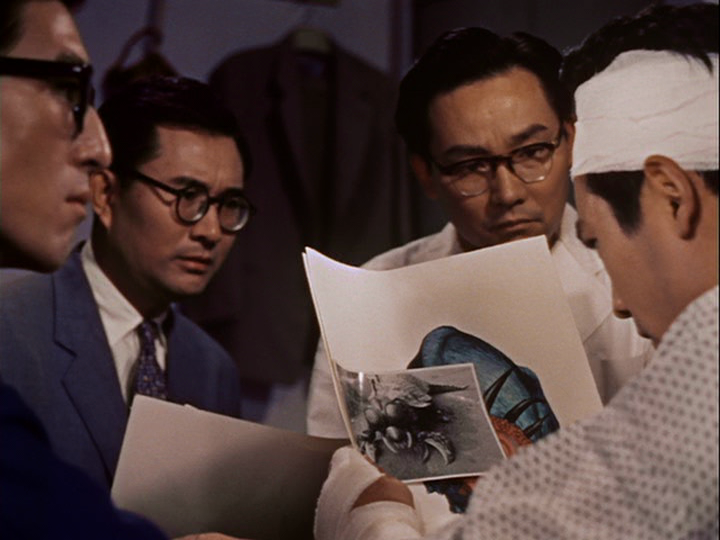
“Is this the kaiju who attacked you?”

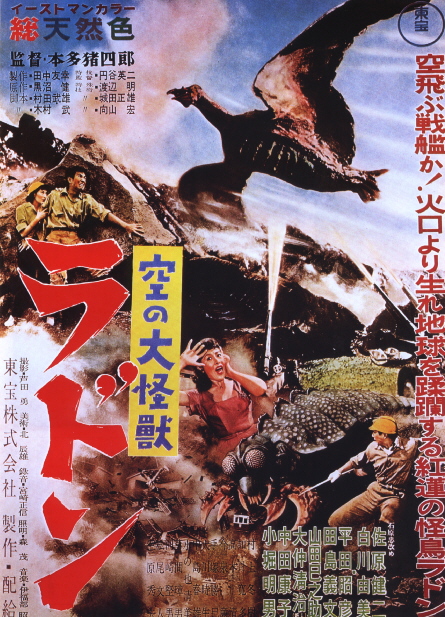
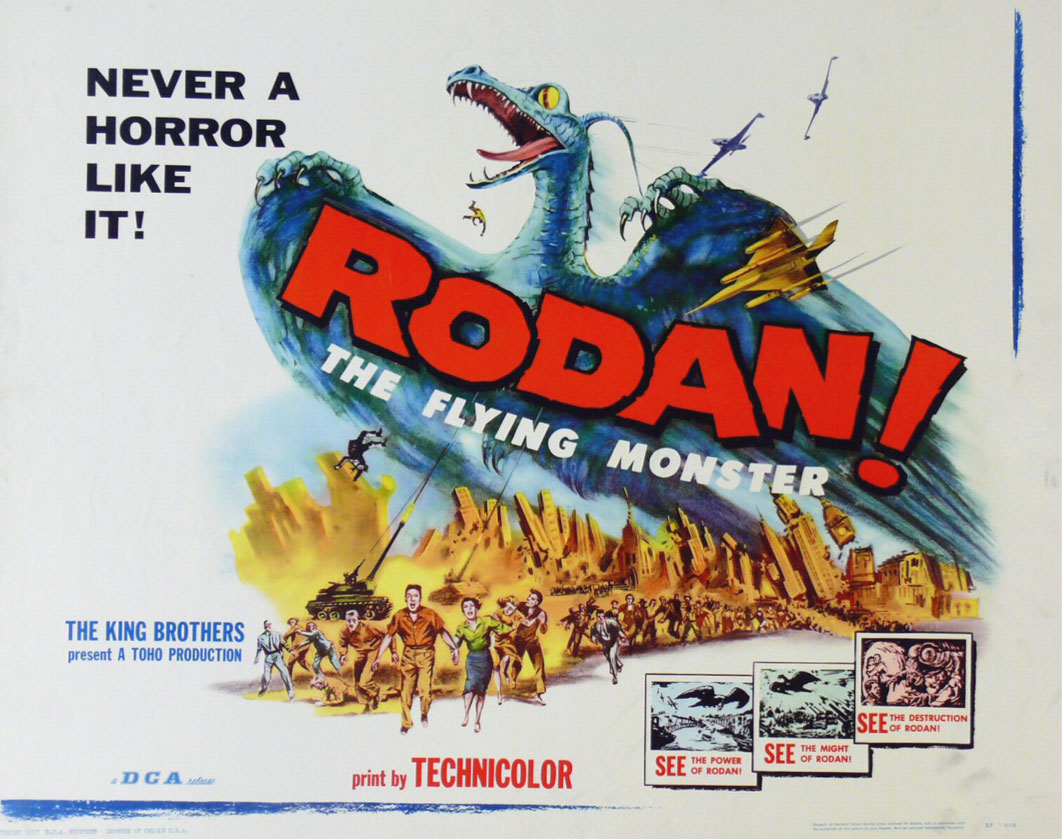
By now you are probably wondering, “Where the hell is Rodan?” Those murderous larvae and their pincers of death are pretty cool but they certainly don’t resemble the winged monster on the poster, but it’s not until almost halfway through the movie that the titular monster makes an appearance, and when he does it is also is drawn out as a bit of a mystery first. I can’t stress enough how well executed Takeshi Kimura’s screenplay is; first we have a murder mystery, then that quickly turns into a hunt for underground dwelling creatures that seem to like to slice up humans, but then in the second act a new threat is revealed when something travelling at great speed has invaded Japan’s airspace.


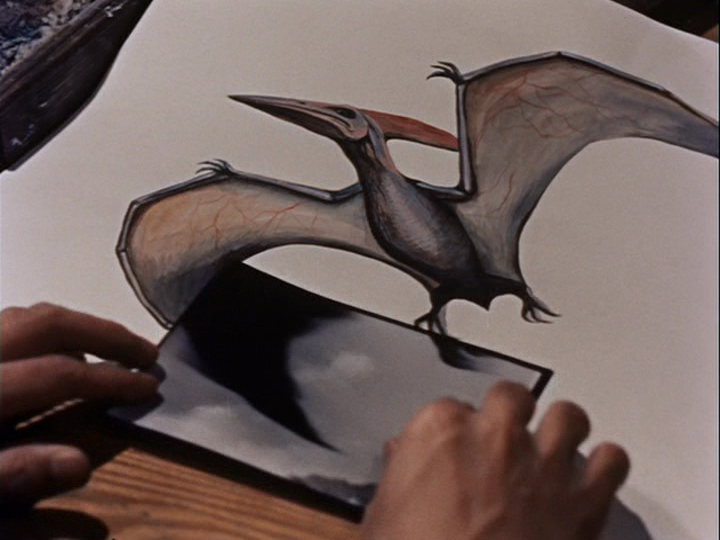
Could this be our culprit?

A fighter jet is sent up to intercept this intruder and he reports back that he is seeing an unidentified object, one of incredible size, performing impossible maneuvers and at supersonic speeds. He is ordered to pursue but when the UFO makes an impossible turn, heading directly at the poor pilot at high speed, his aircraft is hit and destroyed. This is another great example of the tension being ratcheted up slowly as each horrific element of this prehistoric puzzle enfolds

Note: Ken Kuronuma, who wrote the original story for this film, was inspired by an incident in Kentucky in 1948, when Captain Thomas F. Mantell, a pilot for the Kentucky Air National Guard, died in a crash while allegedly pursuing a UFO.

Reports from all over the world begin to come in about the UFO, and rumors of a secret military weapon test begin to circulate, but more concerning is the news that cattle and people are disappearing as if just plucked off the face of the Earth. A break in the case happens when Kiyo shows her still catatonic fiancé a bird’s nest with an egg inside, this spurs his memories of being trapped inside the mine where he witnessed the hatching of a huge egg, and with the his help they recover a piece of the egg’s shell and Professor Kashiwagi is able to determine that this new threat is 200 million year dinosaur from the Pteranodon family.


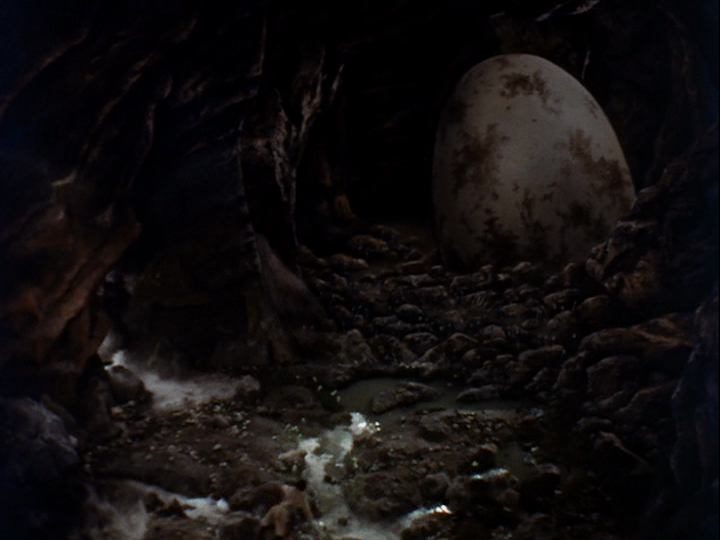
That is one big egg.

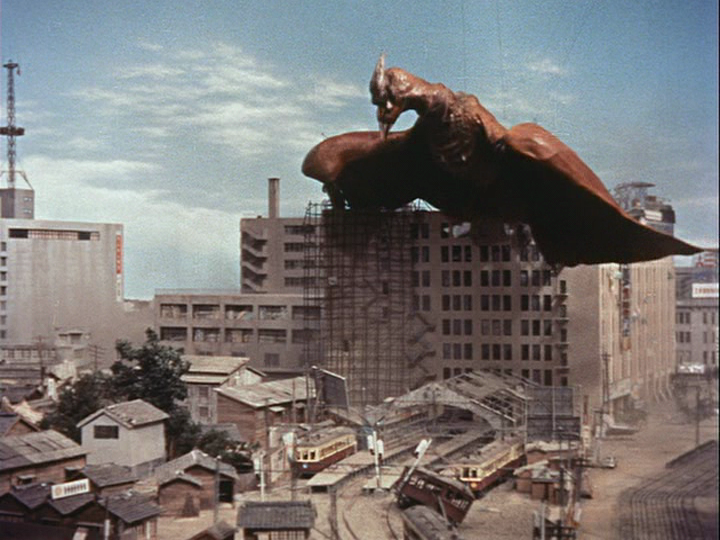
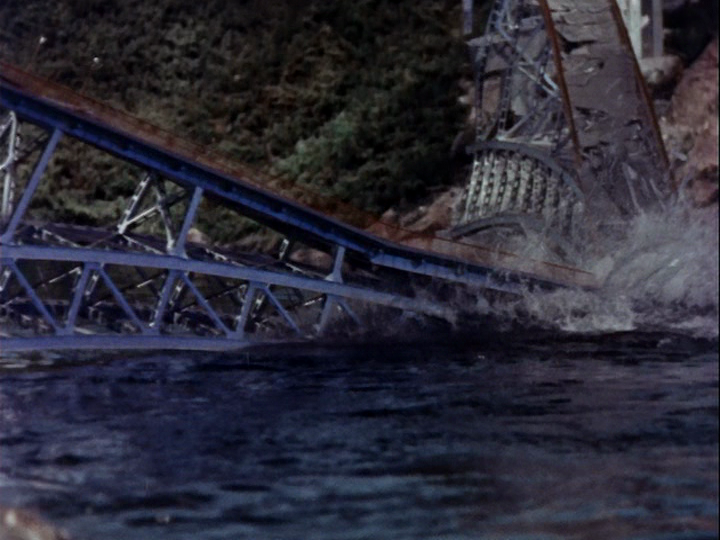
During Shigeru’s flashback the script brilliantly demonstrates how this new threat is of greater concern than that of the insect like Meganulon by showing the newly hatched Rodan eat them as if they were tiny grubs. Monsters that were previously terrifying are now shown to be nothing more than food for this new monstrous menace. Now Professor Kashiwagi does try and theorize that both the Meganulon and Rodan may have been awoken from their million year slumber by nuclear bomb testing but nothing is given to explain their size. Rodan isn’t just a large Pteranodon he is a fucking colossally massive Pteranodon, one that dwarfs buildings and whose very passing causes vehicles to be tossed around like tinker toys, roofs are ripped loose and sent flying, and bridges are torn from their moorings.
 

Rodan is a dick to municipal travel.

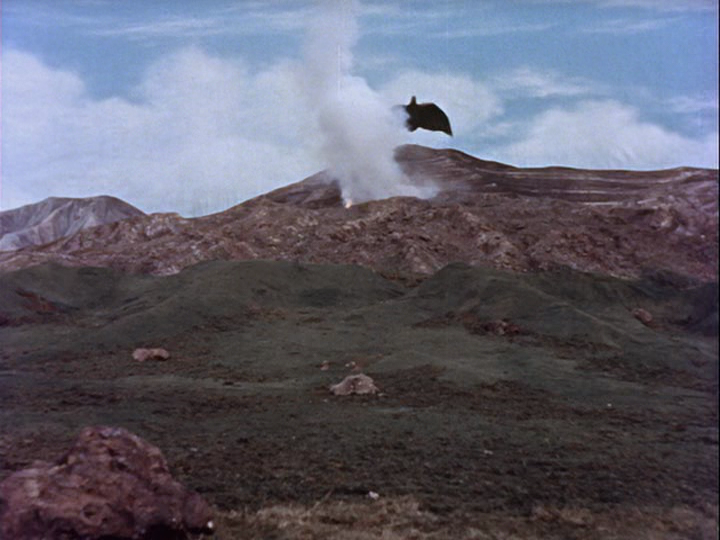
After the standard scenes of the military being useless, a theme rarely abandoned and found throughout the franchise, we find out there are two Rodans. Things look really bad for mankind but then our heroes deduce that the Rodans can be found at their old nest inside Mount Aso and then the Japanese Self-Defense Forces come up with a plan to bombard the cave with missile and tank fire. The locals are worried this could cause a volcanic eruption, destroying their lovely village in the process, but as two Rodans wreaking havoc across the globe is a tad worse than one tiny village being destroyed, so the military evacuate the civilians and attack the monstrous pair. Shockingly this plan works, but the real mystery here is, “Just how does this plan work when both creatures could easily fly away once the bombardment starts?”


“See you later, assholes!”

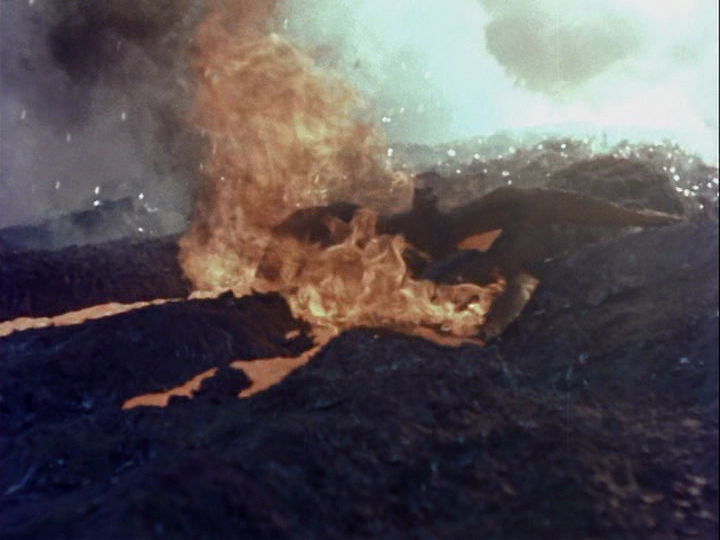
It’s theorized that the first Rodan succumbed to fumes pouring out of the active volcano, falling back down to its death, which certainly makes the creatures a lot less formidably than we’d been led to believe, and then the second Rodan shows up and dives into the lava to die with its mate. That all seems rather poignant except for the fact that we have no idea where that second Rodan came from if not from the same nest the original one hatched out of, and if so than is it not the creatures mate but a rather a sibling? Why wouldn’t it seek revenge on those currently blowing the crap out of it's nest and the murderering of one of it's family? I know we shouldn’t place human emotions on animals but I doubt a mother bear, if its family was threatened, would go the suicide route to solve the problem.


“It is a far, far better thing that I do.”

The movie ends with the cast looking on, all sadden by the tragic deaths of the Rodans, and sure seeing magnificent creatures that should be extinct dying in flames is pretty tragic but these people lost homes and loved ones to those things. I’m betting a little more sighs of relief would be happening and a few less tears. Aside from this implausibly sappy ending Rodan is a fantastic entry in Toho’s Shōwa period, the creature designs are excellent and the miniature work during the city destruction scenes are fantastic.
Now at the head of this review I compared Toho’s films to the Marvel Cinematic Universe but that really is an unfair comparison as Toho tended to kill off their monsters at the end of their early films and so it’s clear that any kind of shared universe was never intended.  With the same actors popping in and out of the series playing different roles, major tonal shifts between movies, and the series itself being rebooted numerous times prevents the idea of any sort of planned shared universe. Of course now Hollywood is doing just that with their versions of Toho’s legendary monsters with 2014’s Godzilla and 2017’s Kong: Skull Island forming the beginning of their MonsterVerse.

Note: This film was released in the United States under the title Rodan! The Flying Serpent as in Japan the monster was called Radon, the name was anagrammed into "Rodan" for the English audience, so as not to confuse the fictitious monster with the actual atomic element radon.

Thursday, April 6, 2017

In Search of the Castaways (1962) – Review

With the success of Walt Disney’s adaptation of the Jules Verne classic 20,000 Leagues Under the Sea it’s no surprise that Disney would try and adapt more works by the world renowned author, and so almost ten years since James Mason and Kirk Douglas wrestled with a giant squid aboard the Nautilus we got Haley Mills and Maurice Chevalier traipsing across the glove in Disney’s adaption of the Jules Verne book Captain Grant’s Children. This was not one of the better known works of Verne thus Walt had no compunction about changing the title into something a little more catching.


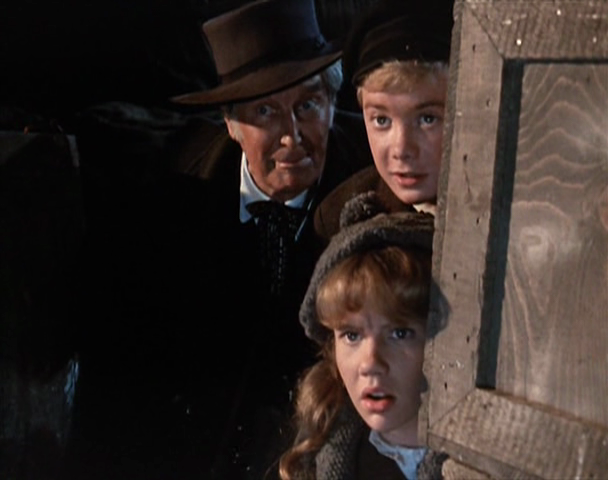
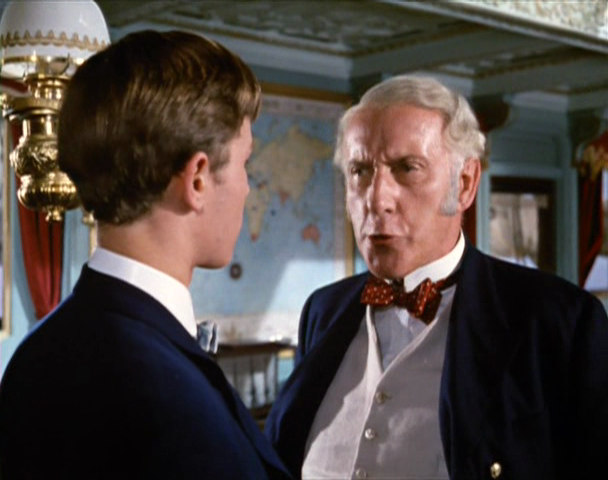
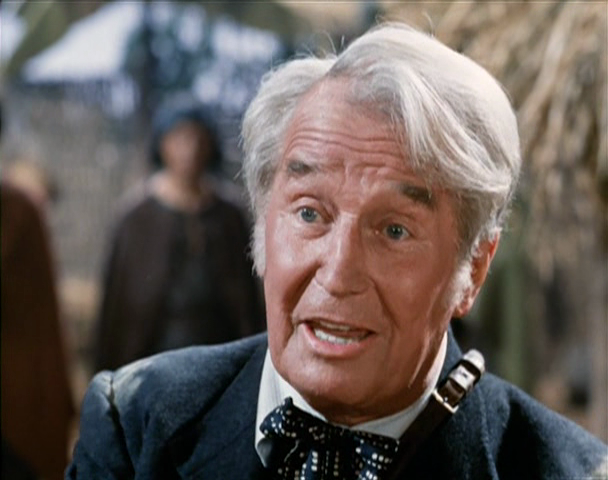
The basic premise of both the book and the movie is that the children of missing Captain Grant (Jack Gwillim) had received a bottle with a note from their father, who was presumed lost at sea many years ago when his ship the Britannia went down. In the book after the bottle containing the note was discovered in the belly of a shark Lord and Lady Glenarvan of Scotland contacted the grant children to let them know that their father may still be alive, but when the government refused to launch an expedition to find Captain Grant the Glenarvans decide to do it themselves. Disney had this opening condensed a bit and has the movie open with teenage Mary Grant (Hayley Mills), accompanied by her younger brother Robert (Keith Hamshere) and professor of geology Jacques Paganel (Maurice Chevalier), who in the movie is the man who found the bottle in the shark, sneaking aboard the Duncan, a steam powered yacht owned by Lord Glenarvan (Wilfrid Hyde-White), who was the owner of the Britannia and Captain Grant’s employer.


The adorable stowaways.

Lord Glenarvan thinks the story of the bottle and the shark to be complete poppycock and that Professor Paganel is a fraud, believing that the man is just using the children’s plight to scam some of the reward money which Glenarvan had put up for information pertaining to the lost ship and her crew. Lucky for our young heroes Glenarvan’s teenage son John (Michael Anderson Jr.) becomes immediately infatuated with young Mary and he is able to convince his father that they can’t risk the chance that the note is genuine and so they must help in the search for Captain Grant. Most of this is played for laughs with Wilfrid Hyde-White playing the slightly buffoonish lord who can be swayed by a little flattery, along with some antics of Maurice Chevalier trying to steal food and wine, and Haley Mills and her budding love with the young lordling.


“I am the very model of a modern major general.”

The first problem to arise is that the note is in bad shape and thus for a location they only know the latitude (37 degrees) but as the note mentioned being captured by Indians Professor Paganel states that the only place where there could be Indians on the 37th Latitude is South America. This is but the first time Paganel will state something to be certain only to shortly be proven completely wrong a short time later. These wrong assertions do lead to some fun adventures though; on their trip through South America they will be menaced by threats of varying natures.


A calamitous earthquake.


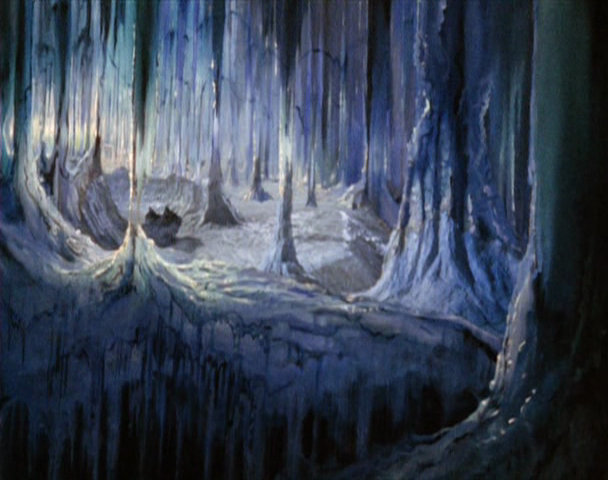
A wild ride through icy caverns.


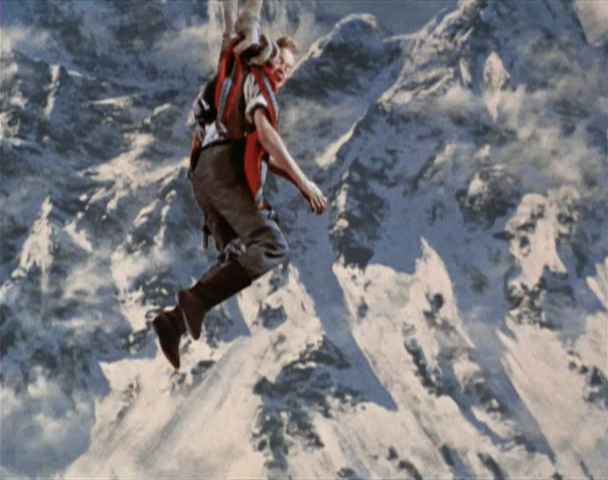
Robert is carried off by a Giant Condor.


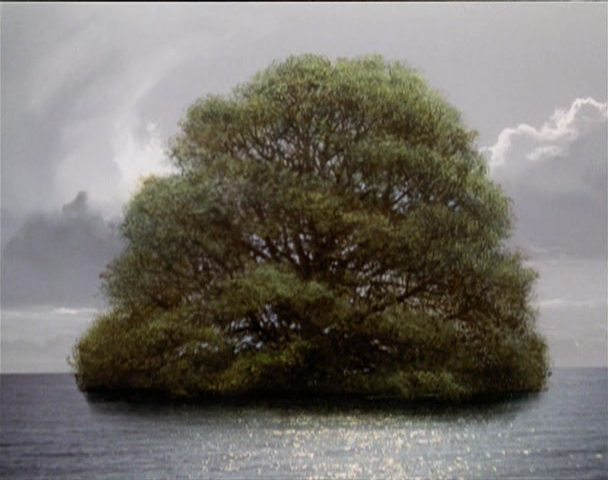
A flash flood maroons them in a massive Ombu tree.


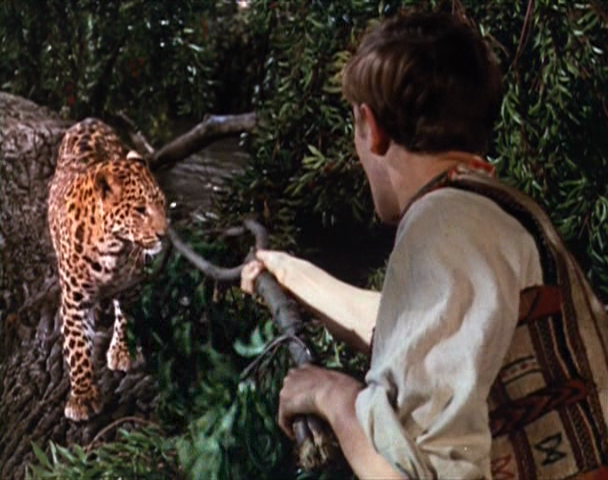
A jaguar invades their new home.


Lightning sets the tree on fire.


Then a waterspout puts the fire out and rips the tree loose sending them adrift.

As this is light family fare none of the dangers comes across as all that life threatening, even while being carried away by the Giant Condor young Robert never loses his smile, and when our group finally reach their destination, only to find out that the three white men they'd heard were being held by the natives were not from the Britannia, you can almost hear the “Waa-waaaaah” on the soundtrack. It’s by this time that Paganel realizes that the shark that he pulled the bottle from was a mako shark and as they are not to be found in the waters around South America the Indians in the note must have referred to the aborigines of Australia, which funny enough was where Lord Glenarvan originally wanted to start the search.


At what point would one just toss Paganel to the sharks?

When they eventually reach Australia they encounter a smooth talking Englishman by the name of Thomas Ayerton (George Sanders) who claims to have been mate aboard the Britannia, stating he was the sole survivor. He also informs them that the ship sank off New Zealand and if Grant is alive that is where he would be. Paganel insists that it would be impossible for the bottle to have originated from those waters but because he has been such a colossal idiot for most the movie Lord Glenarvan ignores him and of course this is the one time he turns out to be right. Seems Ayerton was member of Grant’s crew but he is a traitorous bastard and a gunrunner to boot. He plans to maroon our heroes on the same shores he marooned their father, where they could quickly find themselves on a Maori menu.


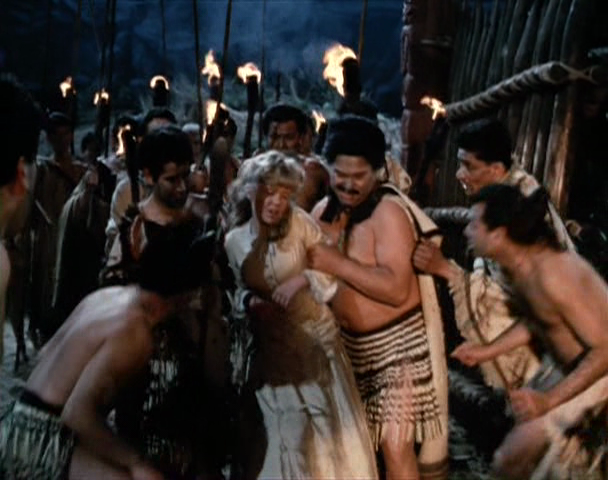
Out of the fire and into the stew pot.

Lucky for our intrepid group they are first locked in a room with Bill Gaye (Wilfrid Brambell), one of Grant’s surviving mates, and who has kind of gone full on Ben Gunn from Treasure Island with his eccentric madness. Though a bit crazy he’s also quite crafty and over the years had fashioned a long rope to aid in their escape, and his plan only needs someone of Robert’s diminutive size to fit through a tiny back window. With the angry Maori hot on their heels they escape across taboo territory under the raging fires of a volcano that geologist Paganel is able to set off.


Out of the stew pot and back in the fire.

After escaping the Maori they are able to sneak aboard Glenarvan's yacht, free the crew locked below, and capture Ayerton and his confederates. They also find Captain Grant as he was helping to broker a gun deal between Ayerton and Maoris. The ending of this movie is a mess, how Grant escaped and ended up being a go-between with Ayerton and the locals doesn’t make much sense but the movie wraps up so damn fast one isn’t give much time to question it. The movie then ends with the reunited family heading back to Scotland with young love in full bloom.

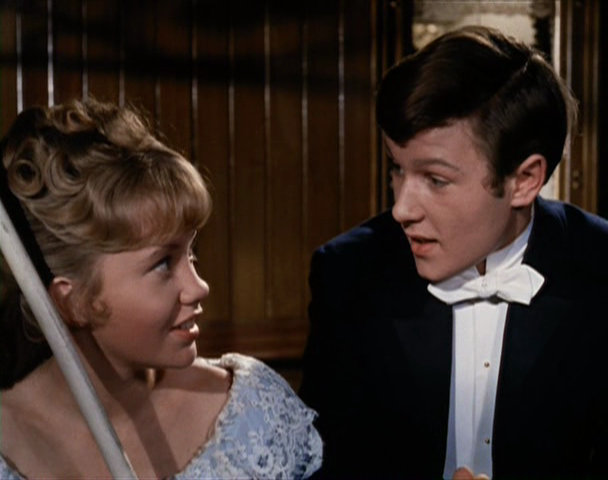
I give it a week.

Director Robert Stevenson took the gruff thrilling adventures of the Jules Verne novel and then replaced them with wacky capers and songs by the Sherman Brothers, it’s not a bad movie, and it did quite well at the box office during its original release, but it’s not one of the Disney films that stood the test of time such as their adaptations of 20,000 Leagues Under the Sea, Treasure Island, or Swiss Family Robinson. Haley Mills is of course quite delightful as the brave Mary Grant but I’d sooner be eaten by a shark then spend any length of time with the rest of this cast of characters,which is why In Search of the Castaways isn’t a film many people bother to search for.

Note:  The character of Professor Jacques Paganel in the book was an unexpected passenger aboard Lord Glenarvan's yacht, he'd missed his steamer to India by accidentally boarding on the Duncan, his purpose was to provide color commentary on the flora, fauna, and geography of numerous places the adventures visit, an element typical of a Verne story.

Monday, April 3, 2017

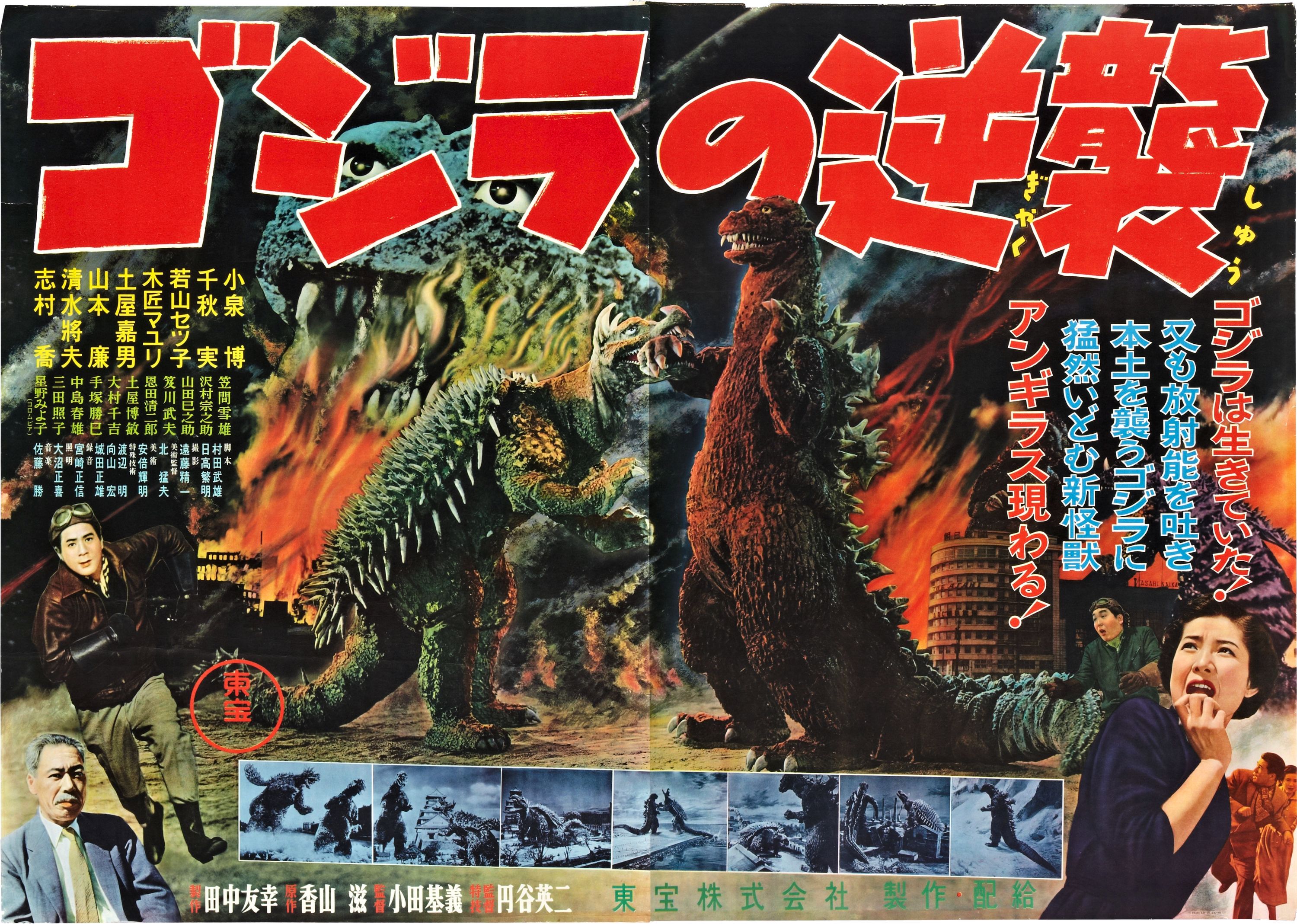
Godzilla Raids Again (1955) – Review

What do you do when you’ve made an extremely successful movie but killed off the title character? This was the problem facing producer Tomoyuki Tanaka and director Motoyoshi Oda when they were tasked with making the follow up to the 1955 monster hit Gojira. This was certainly not the first time filmmakers had run into this particular dilemma, 1933’s King Kong concluded with giant ape dead at the end of that picture but that didn’t stop the studio from releasing Son of Kong that very same year. Yet in the case of Godzilla Raids Again instead of going with Son of Godzilla, though that title would later pop up in 1967, they would just have another Godzilla show up, and because that might not have been enough for fans they threw in a second giant monster as a sort of bonus.


In classic quickie sequel fashion Godzilla Raids Again was rushed into production mere months after Gojira was released into theatres, and with a considerably lesser budget. This would of course result in there being less location filming, less monster destruction and lesser emotional impact than the original film offered.  This probably explains why they thought if they tossed in a secondary monster people may not have noticed that they were being a bit cheated, and instead of the dramatic love triangle that made up one of the key elements of Gojira this sequel would have a "friend triangle" that consisted of a couple in love and their comic relief sidekick friend. Godzilla Raids Again even tried to give this third member of the triangle a tragic death as if the noble self-sacrifice of Professor Serizawa in Gojira could somehow be equated to a second banana getting killed by Godzilla this time out.


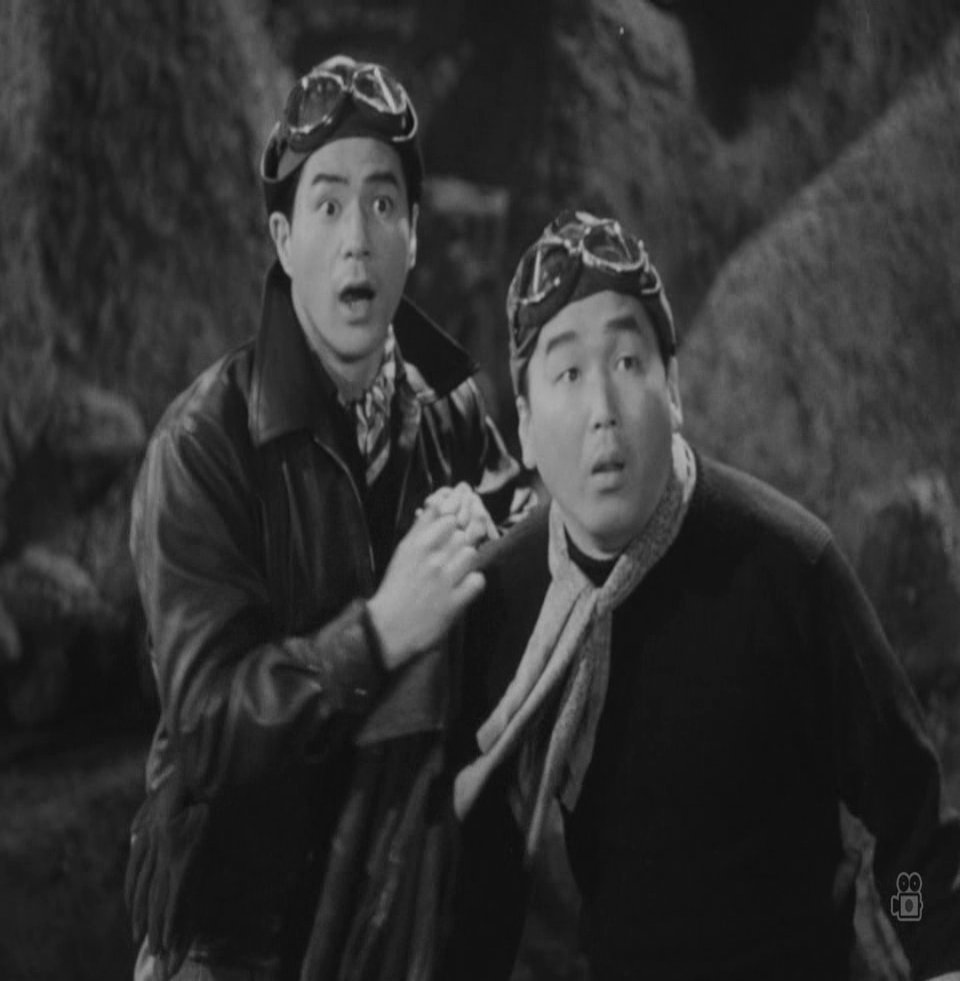
These are our heroes?

The movie opens with two pilots named Shoichi Tsukioka (Hiroshi Koizumi) and Kôji Kobayashi (Minoru Chiaki), who work for a tuna cannery company in Osaka as spotters for the fishing fleet, and when Kobayashi’s plane develops engine trouble he is forced to land near Iwato Island, an uninhabited strip of rocks formed by volcanic eruptions. When Tsukioka learns of his partner and friend’s situation he immediately races towards Iwato Island.  Now he’d learned of his friend’s trouble from the company’s radio operator who also happens to be his love interest Hidemi Yamaji (Setsuko Wakayama) who is also the daughter the fishing company’s owner, and she's the third component of this film "Friend Triangle." The time spent with the soap opera issues of the burgeoning love affair between Shoichi and Hidemi, and what the damage done by Godzilla would do to the cannery business, is the film’s weakest element. We just don’t care.


We want monster fights!

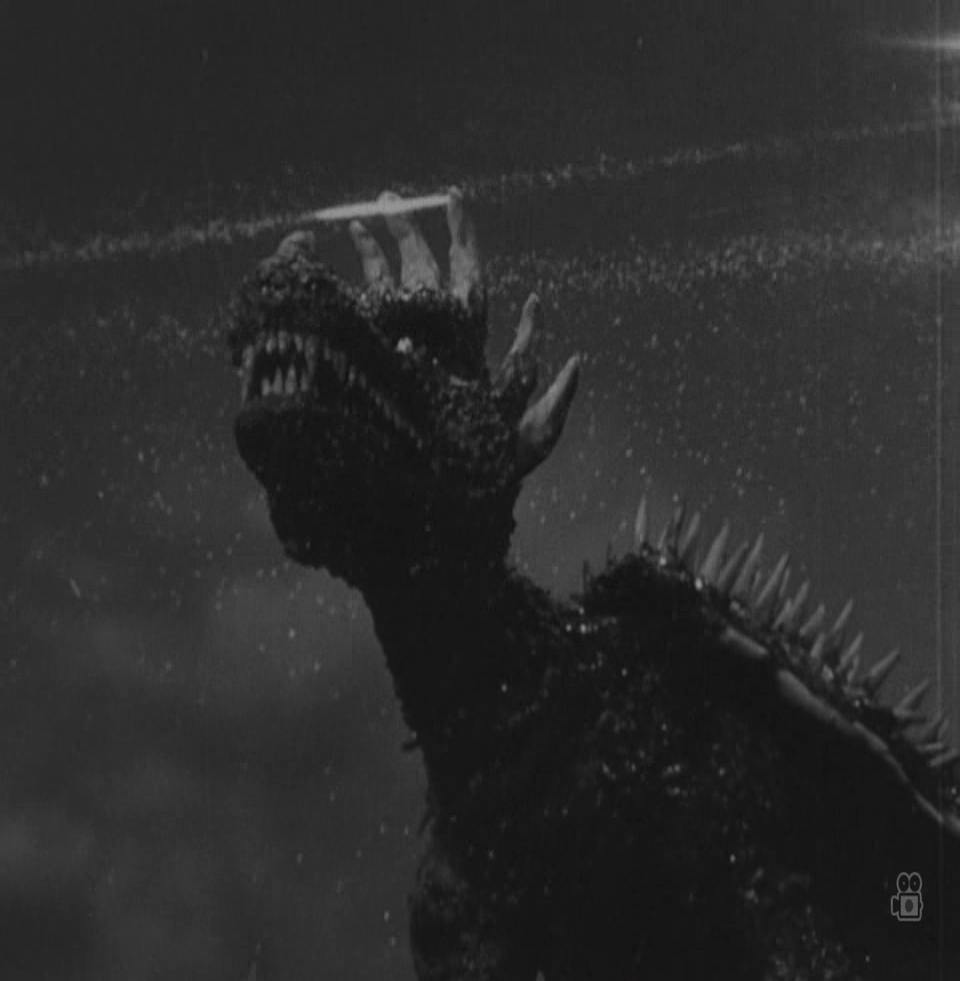
Godzilla Raids Again is not only the first sequel in the Godzilla franchise but it's also the film that introduced kaiju (giant monster) fights. When Tsukioka lands his seaplane to assist Kobayashi the two men are shocked to find that they currently share this desolate piece of rock with two prehistoric behemoths that seem hell-bent on destroying each other. Our courageous duo madly scramble to evade the rocks knocked loose during this titanic battle and are only spared when the two beasts plunge off the side of the island and into the ocean. Tsukioka recognizes one of the monsters as Godzilla and once back on the mainland he and Kobayashi report their discovery to the authorities. A group of scientist are able to confirm that the second monster is Anguirus (or Angilas as its spelled in the film) an angilosaurus that is described in a provided dinosaur text book to be "one of the few creatures that had a thorough hatred for war-like predators" which seems like a strange character trait for animal but at least it explains why he wants to fight Godzilla.


The mighty Anguirus.

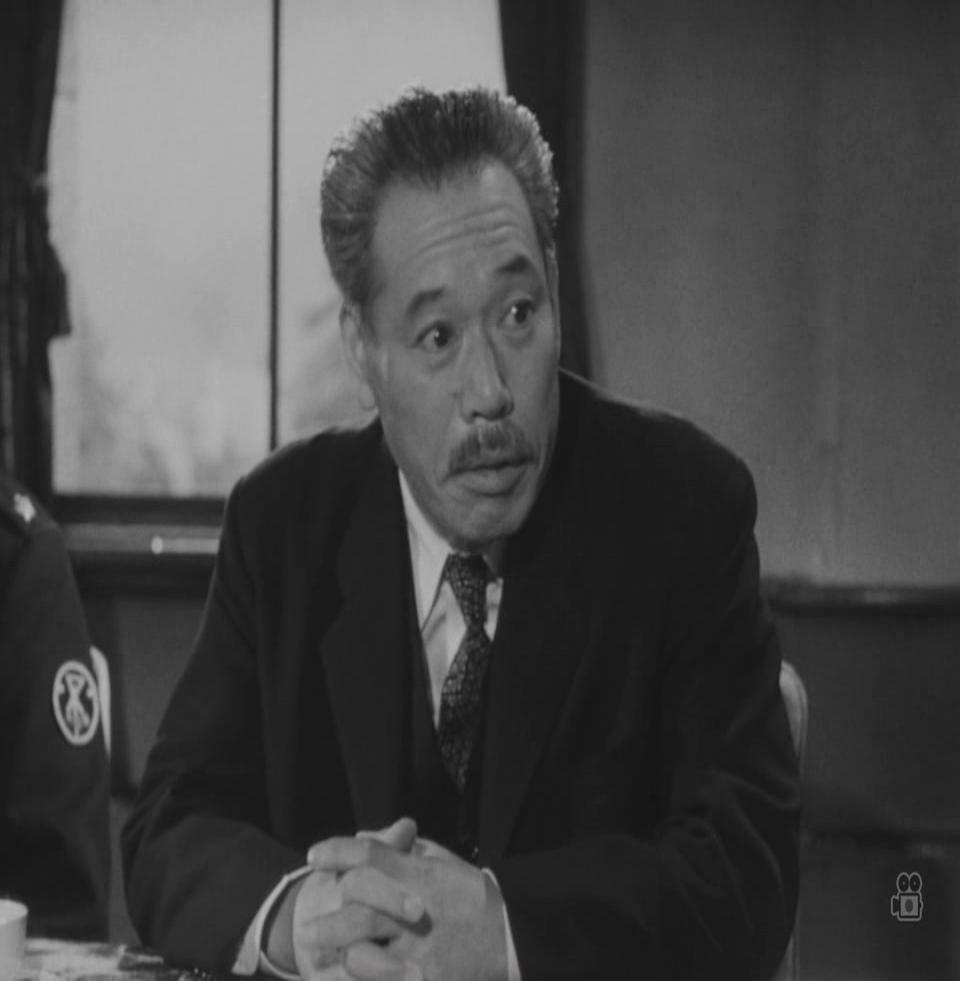
There is only other returning character from the original film, aside from Godzilla that is, and that would be Proffesor Yamane (Takashi Shimura) who experienced Godzilla's attack the previous year and he confirms that this Godzilla is a second member of the same species, and that it and Anguirus were probably brought back to life by the same hydrogen bomb tests that awoke the original Godzilla. Yamane is then asked to outline any Godzilla countermeasures that he may have come up with but instead he responds, “Well, I would tell you about Godzilla countermeasures, but I regret we have no effective strategy for it. There are no policies that will stop Godzilla. I have no methods to tell you at this time.” Well thanks for coming out Professor, you’ve been a big help. He then shows them footage of the original Godzilla attacks in the hopes that viewing this would somehow help them come up with a viable plan. This is of course absurd as watching Godzilla set fire to Tokyo is certainly not going to cause some epiphany to the people in this room, all who had probably witnessed the destruction themselves as it was only just last year that it happened. After this little "Show & Tell" Yamane brings up what would happen if Godzilla were to come ashore again.


To paraphrase Yamane, “We’re fucked.”

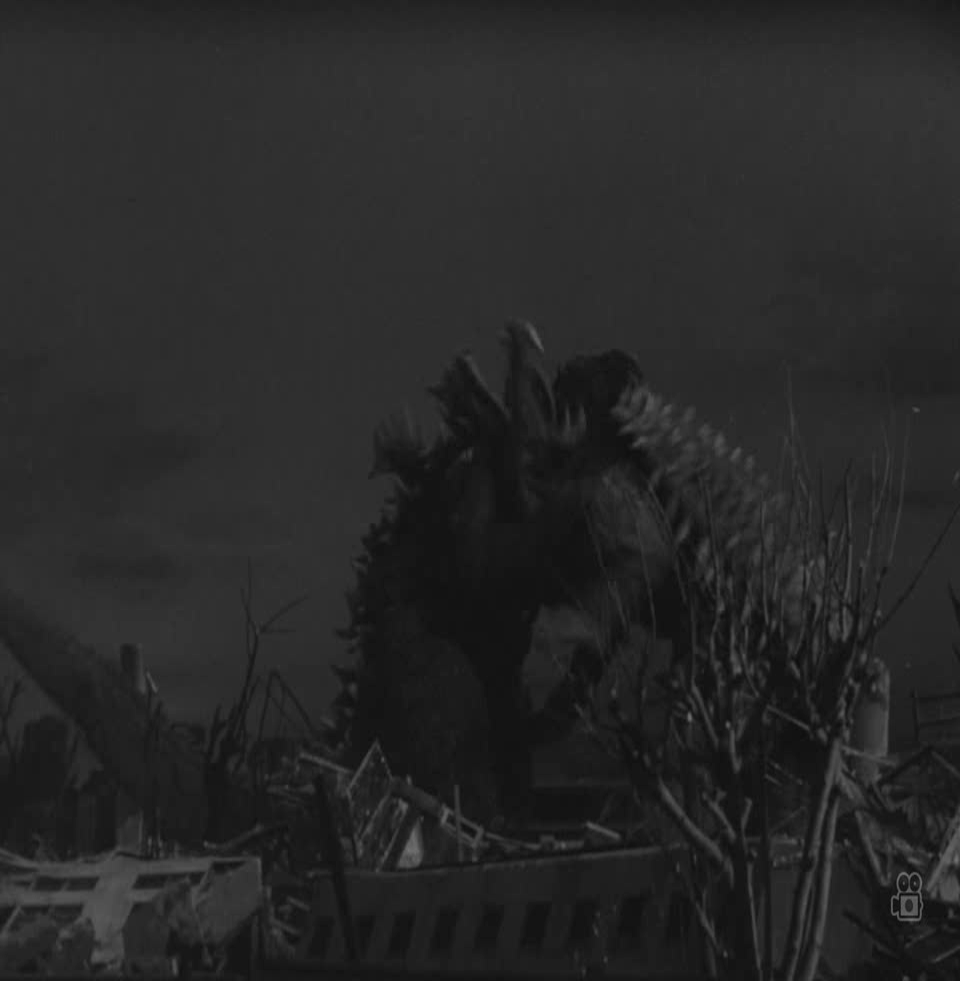
As Oxygen Destroyer, the weapon designed by Professor Serizawa that basically dissolved Godzilla in the first movie, was a one of kind device and the secrets of its making died with the inventor, so things do look bad, but the group actually come up with a decent plan, not one to kill Godzilla but to at least save their cities. Yamane comes up with the rather clever idea of having the populace institute a blackout when Godzilla appears and then the Airforce would launch bright flares to attract Godzilla back out to sea and away from the shore. It was a great plan and almost worked, the flares did distract Godzilla and they did lure him back out to sea but then a case of “Oh what the fuck?” a group of convicts just so happen to escape a prison transfer, steal an oil truck, and during the police chase they drive the truck into an oil refinery which of course explodes. Seeing this massive conflagration Godzilla ignores the middling flares and makes his way back to shore. And if that’s not bad enough Anguirus shows up as well and the two get in a knock down drag out fight that levels much of the city, including the tuna cannery our "heroes" work for.


Giant monsters can be so inconsiderate.

Note: To make men in monster suits look as if they are massive creatures these scenes are filmed in slow motion, but a camera technician accidentally undercranked the camera instead of overcranking it, resulting in the action appearing faster than reality. Effects director Tsuburaya liked the herky-jerky effect and left it in.

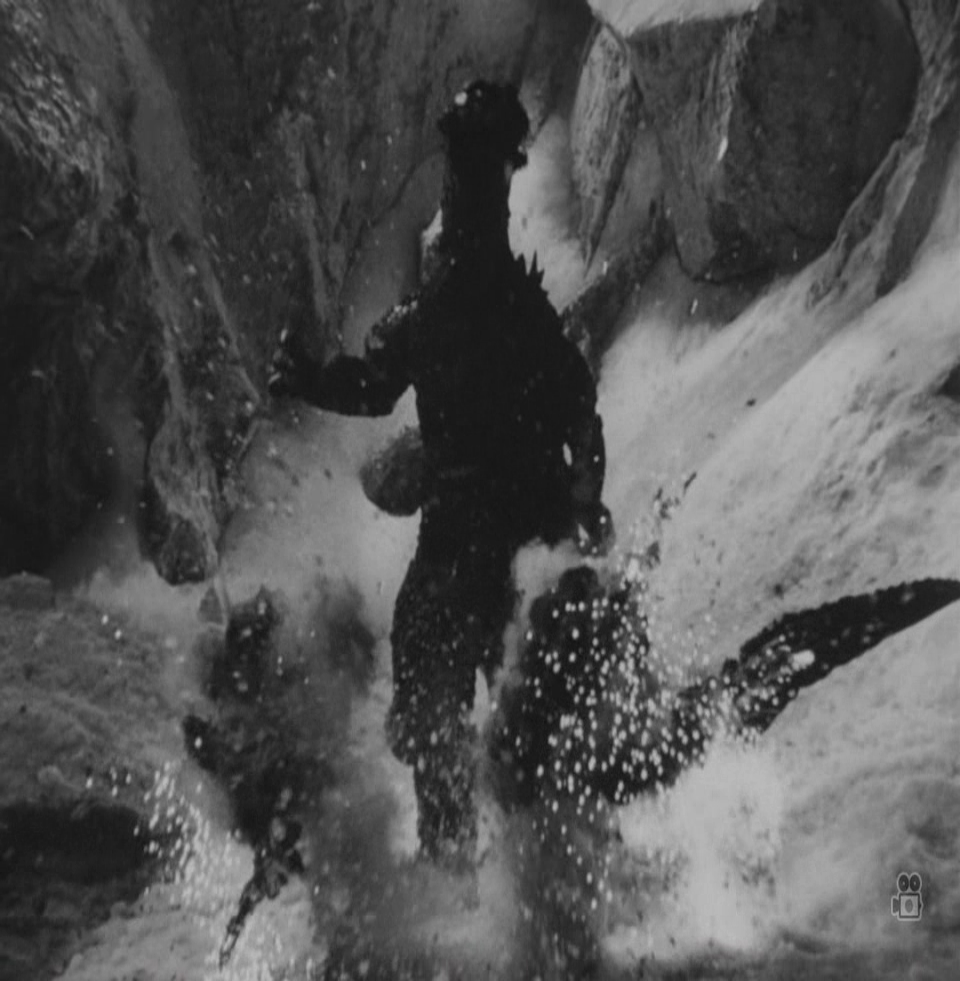
What is really strange is that at the 45 minute mark Godzilla sinks his teeth in Anguirus’s throat and rips it out, blood gushes from the wound as Godzilla rolls the dying monster over the edge of a retaining wall, and then Godzilla uses his atomic breath to incinerate Anguirus. How his atomic fire achieved this is a bit of a mystery as earlier it seemed to have no effect on the angilosaurus. Maybe being dead weakens your defenses. Regardless of the inconsistency of monster attacks the movie is just barely half over and Godzilla’s primary antagonist is dead. Who is going to stop Godzilla now? Sadly it’s left to our rather bland heroes who manage to track Godzilla to an isolated snow packed island, don’t ask me why an atomic fueled dinosaur decided to seek out arctic climes to hang out at, and they call in the Japanese Defense Force to engage the monster.


And all it does is piss off Godzilla.

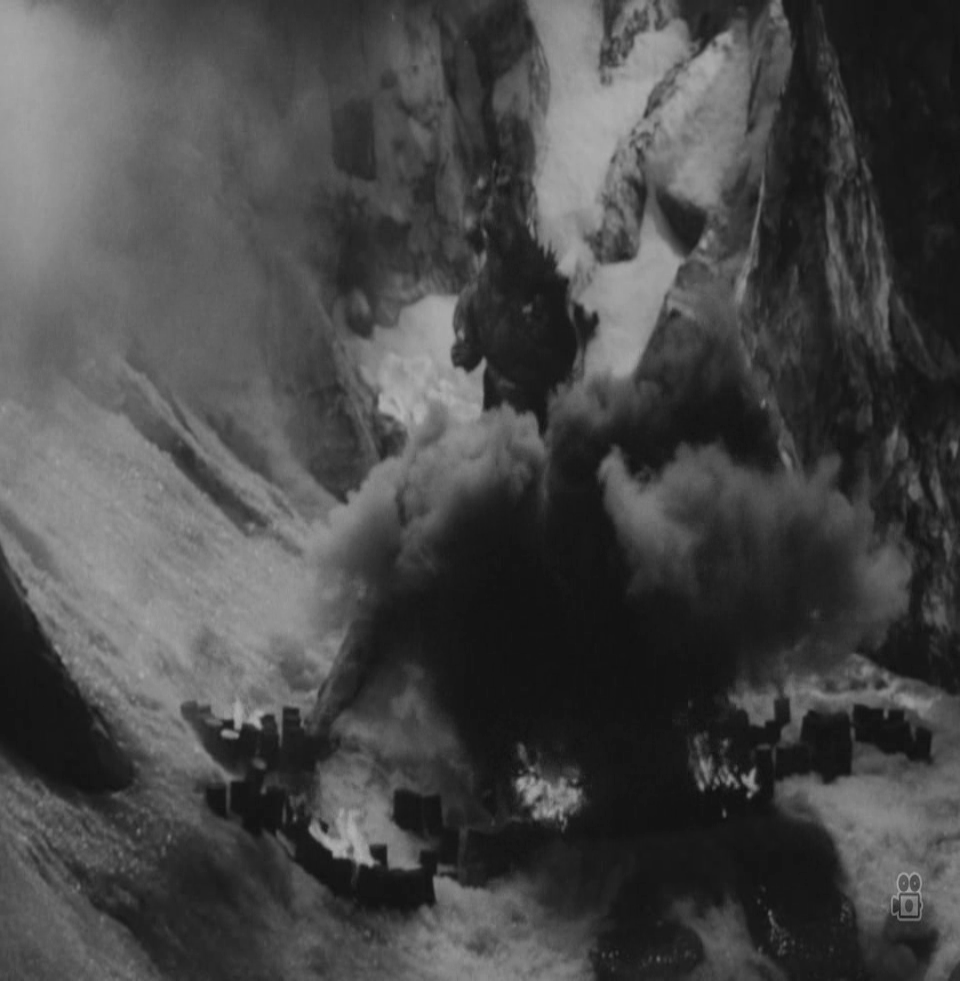
It’s when Kobayashi makes another pass at Godzilla, in his totally unarmed seaplane, and is blasted out of the sky by the monster (he apparently didn’t get the memo on the whole atomic breath thing), but it is this brave if rather stupid act that is the clue to how Godzilla could be defeated, for when Kobayashi’s plane crashed it sent an avalanche of snow and ice down upon monster. This gives Tsukioka the idea of having the Defense Force planes retreat and rearm with rockets and then return to bury Godzilla in an icy tomb. It’s a good plan, and it does work, but the breaking up of the attack, the going back to get the rockets and the time spent working out the new plan completely destroys the pacing of what should have been a rocking finale.

Note: There is an especially strange tactic where the Defense Force sends in ships to place barrels of oil to great a flame barrier to prevent Godzilla from escaping back into the sea. How burning oil is to deter a creature that was awoken by an H-Bomb, seems immune to all manner of artillery fire and wades through cities he himself sets aflame, is simply beyond me.

Regardless of the plausibility of a creature that can breathe atomic fire being buried and trapped in snow and ice that is exactly what happens, and the day is saved. Godzilla Raids Again isn’t a bad movie it’s just quite tonally different from the original, no allegory for nuclear holocaust here just your run of the mill monster fight, the love story doesn’t have that tragic element found in Gojira and the cast is overall bland and rather uninteresting. It did introduce to the franchise the idea of Godzilla encountering and fighting other giant monsters but in this outing it really didn’t add much to the proceedings. It’s not a bad movie but it’s not a very good sequel.
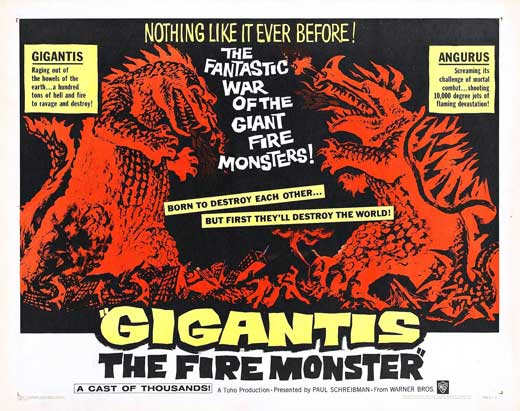
Note: Like the original Gojira this film was adapted for American audiences but for some stranger reason producers Paul Schreibman and Edmund Goldman decided to hide the fact that this was a Godzilla sequel and called the film Gigantis the Fire Monster. There reasoning was they didn’t want to confuse American audiences but who of course were very confused when characters in the movie kept calling Godzilla by the stupid name Gigantis.