Blog Archive

Monday, September 5, 2022

The Punisher (1989) – Review

Don Pendleton's pulp action book series “The Executioner,” told the story of a Vietnam veteran and his wars against organized crime after his family was killed by the Mafia, sound familiar? Yeah, it was that book series that Marvel comic book writer Gerry Conway took for inspiration in the creation of one of the most popular anti-heroes in fiction, one that should easily translate to the big screen as action revenge pictures had been a Hollywood staple for years, so this live-action adaption was bound to be a sure-fire hit, right?
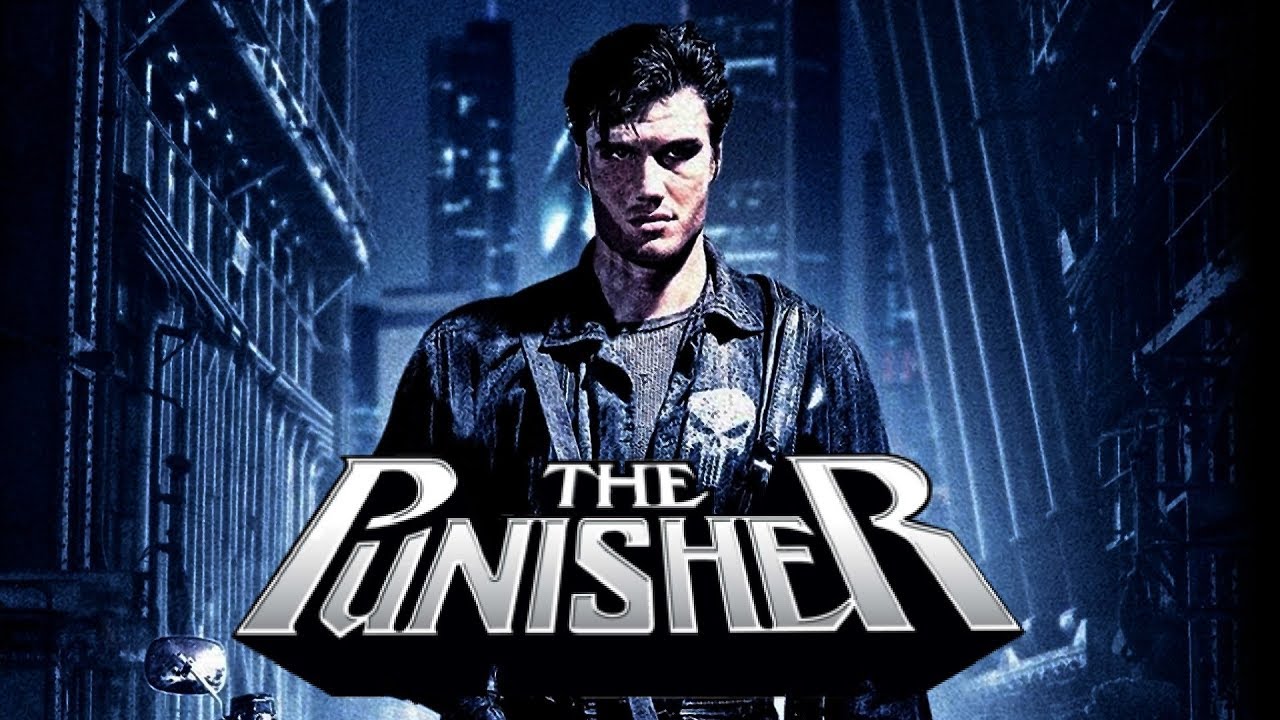
As was the case with Don Pendleton’s “The Executioner” the character of Frank Castle was a U.S. Marine who after seeing his wife and children gunned down, after accidentally witnessing a Mafia hit, became the vigilante known as “The Punisher” and with his signature Death’s Head Skull adorning his chest he began his one-man war against organized crime. That is the origin of the Punisher as found in Marvel Comics, which bears very little resemblance to the character found in this New World Pictures movie of the same name, not only is his origin story changed but for some bizarre reason director Mark Goldblatt decided to forgo Frank Castle’s distinctive costume, seriously, what was he thinking? This version of the Punisher has no giant skull emblazoned on his chest, instead, he uses a knife with a little skull at the end of the hilt, and while I can understand an action director from the 90s not wanting his hero dressed in spandex but by removing that trademark emblem he’s simply not the Punisher anymore.
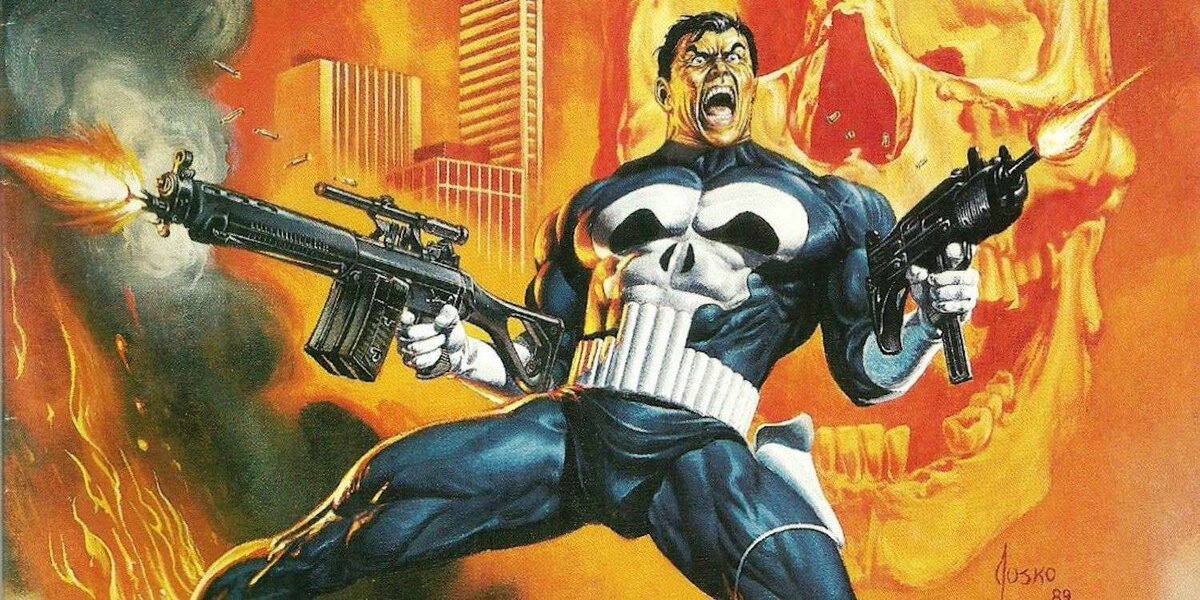
 

Yeah, who would want to see this in a movie?

In this film, there is no tragic mishap that finds a family wiped out by the Mafia, here we have Frank Castle (Dolph Lundgren) as an undercover police detective who loses his wife and kids when a car bomb meant for him takes them out instead, and sure, this does result in Castle becoming a vigilante and waging a secret war against organized crime but his character is so off model you have to close one eye and squint to even start to compare the two, and I’m not even talking about his lack of costume because even if he was sporting the iconic Punisher skull and ammo belt he’d still be a far cry from the relentless killer from the pages of Marvel Comics. That’s not to say this Frank Castle doesn’t provide a fairly good body count, we are told that he’s killed one hundred twenty-five people as The Punisher, and during the film’s running time he kills sixty more and that’s not including those who die en masse in explosions, but he also has a softer side.
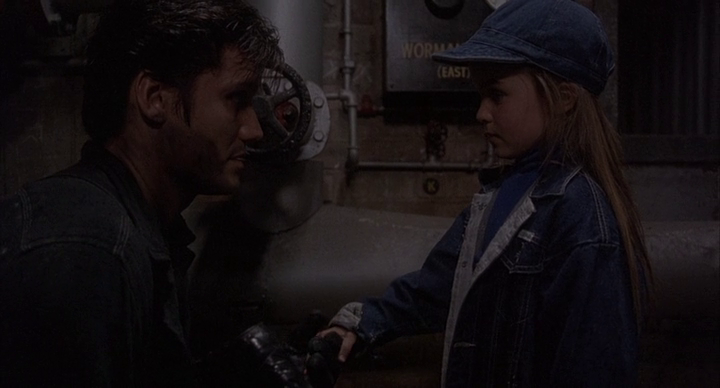
 

The Punisher is a friend to all children.

The movie does get off to a nice start with mob boss Dino Moretti (Bryan Marshall) being acquitted for the crime of murdering Frank Castle’s family only to return home to find The Punisher waiting for him and his crew, where he quickly takes out all the goons one by one until finally planting his trademark knife in Moretti’s back and then blowing up the mansion, yet for some strange reason, this is followed by a strange tour of the sewers where we hear the voice of Castle questioning the All-Mighty, “Come on God, answer me. For years I'm asking why. Why are the innocent dead and the guilty alive? Where is justice? Where is punishment? Or have you already answered, have you already said to the world here is justice, here is punishment, here, in me?” Is it just me or does that sound more like the ravings of the serial killer Son of Sam than it does a comic book vigilante? And one further question, “Why is he hanging around naked in the sewers?”
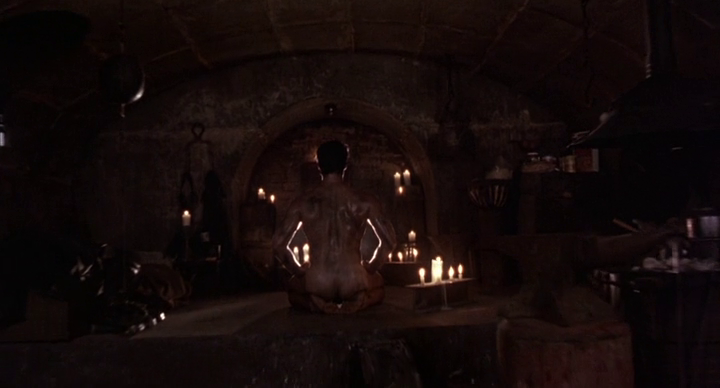
 

Even the Teenage Mutant Ninja Turtles had the decency to wear shells.

The death of Dino Moretti forces former kingpin Gianni Franco (Jeroen Krabbé) out of retirement but his attempt at marshalling the remaining underworld families into one strong unified force comes to the attention of Lady Tanaka (Kim Miyori), the current leader of the Yakuza, and she decides to take over the weakened Mafia families and all of their interests. After crashing a boardroom meeting she is quick to point out to the Mafia dons that “We are Yakuza. When your ancestors were shepherds still screwing sheep on the Mediterranean coast, ours were the crime lords of Asia” but how does she hope to achieve this without causing a major crime war? It’s simple really, she kidnaps their children and holds them for ransom. One must admit that for an action film the premise of the Punisher caught in a war between the Mafia and the Yakuza is pretty solid, unfortunately, what we get isn’t really the Punisher and the action is of the low-rent variety found in many cheap action films of the 80s with the hero standing in the open, firing away at his enemies, while all the bad guys can’t hit the broadside of a Dolph Lundgren.  Then there is the subplot concerning Castle’s old partner Detective Jake Berkowitz (Louis Gossett Jr.) and his new partner Detective Samantha "Sam" Leary (Nancy Everhard), who is trying to prove to the world that Frank Castle is still alive.  Which really shouldn't be too hard as he doesn't exactly keep a low profile.
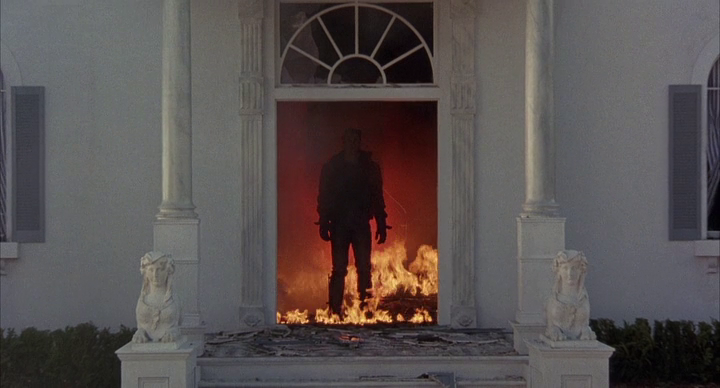
Question: How can the police keep pushing the story that Frank Castle is dead when he practically poses for the Press after a kill?

Stray Observations:

  • Castle is assumed to have died in the car bomb that killed his wife and two daughters but wouldn’t the lack of his burnt remains at the scene of the crime cast doubt on that assumption? Does forensics not exist in this world?
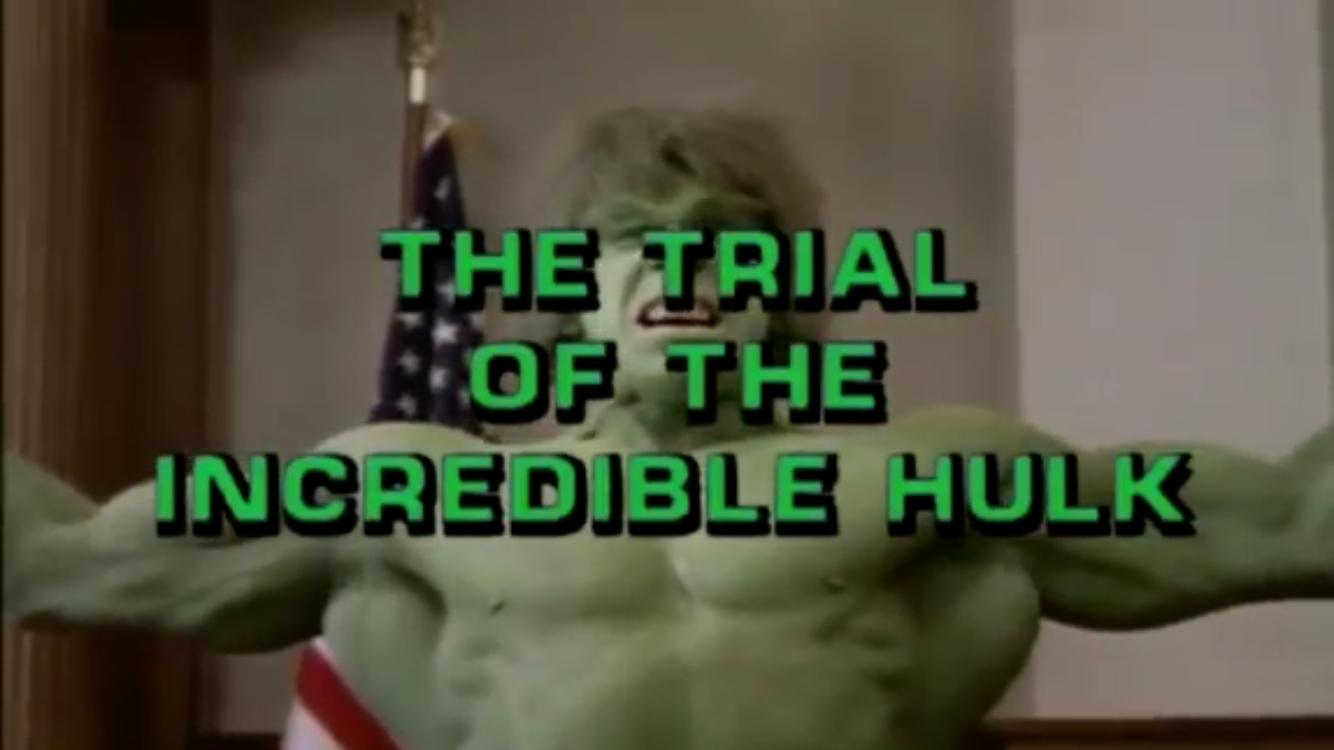
  • Nancy Everhard, who plays Detective Samantha Leary, also starred in The Trial of the Incredible Hulk which came out the very same year as this film.
  • Frank Castle uses a bottle of whiskey on a remote-controlled toy truck to lure his snitch into a meeting, clearly, the Punisher is a dick to alcoholics.
  • Lady Tanaka lures Frank Castle into an ambush at an old and abandoned funhouse, but why that location? Is she the leader of the Yakuza or working for the Joker?
  • Frank Castle disables the elevators in the Yakuza high rise, forcing Berkowitz and the SWAT team to wait until they are fixed, and I must ask “Does this building not have stairs or do the police in this town just have terrible cardio?”
  • When Leary brings Berkowitz over to her computer, he asks her “What you think you're gonna do with that? Play Ms. Pac-Man or something?” as if computers weren’t a tool the police have been using for decades, this does not instill faith in our hero cop.
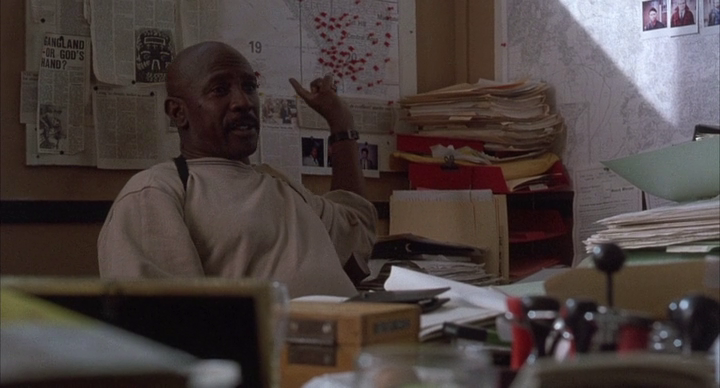
 

“I don’t need a computer, I have a map and push pins.”

A movie pitting the Punisher against ninjas should have resulted in a very entertaining flick but New World Pictures didn’t quite have a handle on the action genre at this time, they should have taken a page out of Cannon Films whose Chuck Norris' Missing in Action films as they made a killing with those, and it’s not because those films were especially good they were just a lot of fun, and speaking of fun when it comes to ninjas you don’t get much better than Cannon’s Ninja III: The Domination and that’s where The Punisher really fails, it’s simply not all that enjoyable. Dolph Lundgren’s brooding Frank Castle is not all that interesting, the action sequences were rather poorly choreographed and even something like him machine gun-wielding ninjas on funhouse slides was orchestrated without any sense of fun or energy. How do you mess up something like that?
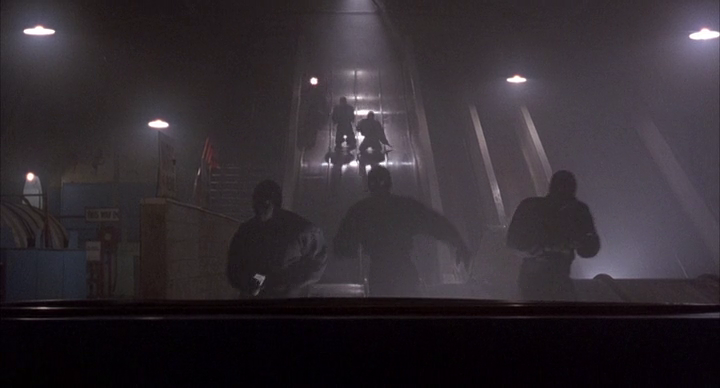
Answer: Shoot everything dark and blurry so we can’t tell what’s going on.

With tired and often silly action sequences filling up much of the screen time it’s up to the script to hold the film together but as the writer of this film never met an action cliché he didn’t like what we are left with is a collection completely unnecessary characters and a plot that constantly contradicts itself, for example, Castle is broken out of police custody by Gianni Franco so that he can be sent off to save Franco’s son Tommy (Brian Rooney), who the Yakuza had also grabbed, but when Castle refuses to help Franco threatens to kill his old partner Berkowitz, but why is that threat necessary? Earlier in the film Castle had promised Tommy he’d come back and save him, after rescuing all the other children from the Yakuza, so Castle telling Franco he won’t help is pointless and stupid. Then after another endless and ridiculous shootout, where we learn you shouldn’t bring a katana to a gunfight, the film concludes with Castle killing Tommy’s father right in front of him, to which he then tells the kid “You're a good boy. Grow up to become a good man, because if not, I'll be waiting.” It’s nice to see a movie that can be so inspirational.
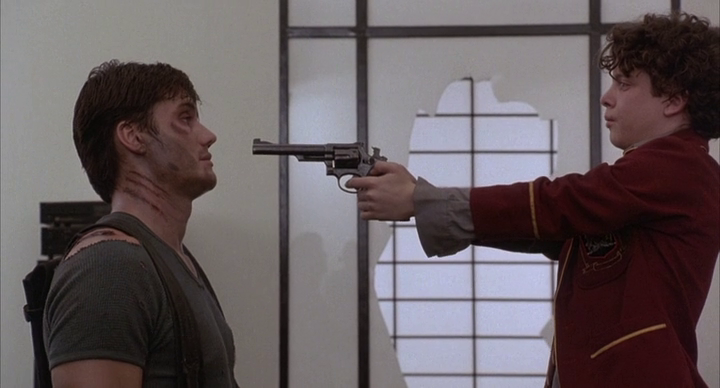
 

The Punisher is a friend to all children.

At the time of this movie's release the current owners of New World Pictures weren't interested in theatrical films so The Punisher never saw a North American release, it did premiere in Germany and France but it was banned in Sweden and South Africa, and with limited box office receipts and poor reviews any thought of a sequel was quickly abandoned, so in conclusion, if watching Dolph Lundgren tool around the sewers on a motorbike, in between his naked monologuing, sounds appealing then this could be the film for you but it’s certainly not a film that most fans of the comic book could ever embrace.

Wednesday, August 31, 2022

The Trial of the Incredible Hulk (1989) – Review

With the ratings success of The Incredible Hulk Returns it was a no-brainer that NBC would want another Marvel Team-up, despite the fact that the previous film failed at its primary mission which was to serve as a backdoor pilot for a Thor series, but if at first you don’t succeed try, try again. This motto would lead the network's attempt to use the Hulk television property to spin off everyone’s favourite blind superhero into his own series, but could this work where their Thor attempt failed?


Following the events of The Incredible Hulk Returns, we find a despondent David Banner (Bill Bixby) quitting his most recent crappy menial labour job, due to some inexplicably bullying, and moving to the “big city” but this will not be New York City, which is where one would expect to encounter Daredevil and the Kingpin – not that this show ever calls him by his comic book nom-de-plume – as this movie was shot on location in Vancouver, British Columbia, Canada, which has a rather distinct look and hard to disguise, and we even get a character in this movie mentioning that he liked to look out at the mountain view, so I’ll give the filmmakers credit for at least not trying to sell this as New York, but that one little change from the source material does cascade throughout this production, making it not only a poor adaptation of the comic book but also giving it an overall “for the cheap” feel to the proceedings.


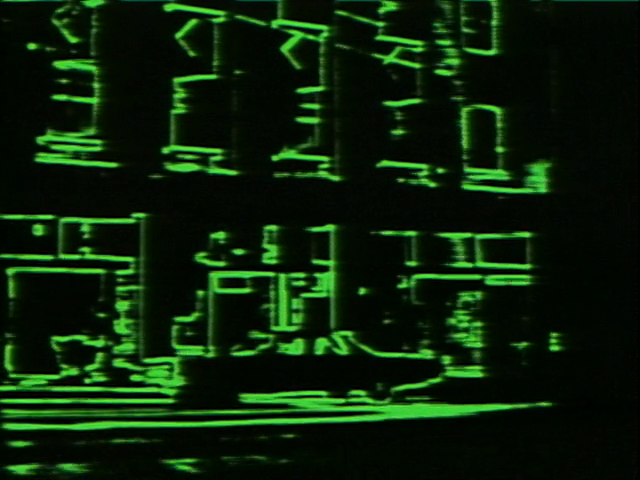
Clearly, tens of dollars were spent on Daredevil’s Radar-Sense.

The plot gets going when two crooks working for crime boss Wilson Fisk (John Rhys-Davies) make their getaway after a jewelry store robbery, via the subway because that seems sane, they then decide that this would be an opportune time to commit a little sexual assault. As luck would have it, Banner happens to be aboard that particular subway car and when he tries to intervene this expectedly results in a transformation into The Hulk (Lou Ferrigno), but when the cops later find a half-naked Banner in the subway tunnel he is arrested and hauled off to jail. Things get worse when the woman, Ellie Mendez (Marta DuBois), the one who had been assaulted, later fingers Banner as her attacker and even claims that the other two men were trying to help her.  Now it is up to blind attorney Matt Murdock (Rex Smith) to uncover the truth, and he does have one advantage in that area, him being Daredevil and all he has the ability to detect lies simply by listening to a person’s heartbeat and it’s quite clear to him that Ellie's testimony is being coerced by the minions of the Kingpin, thus Matt Murdock must don his costume and take the fight to the top of Fisk Tower.

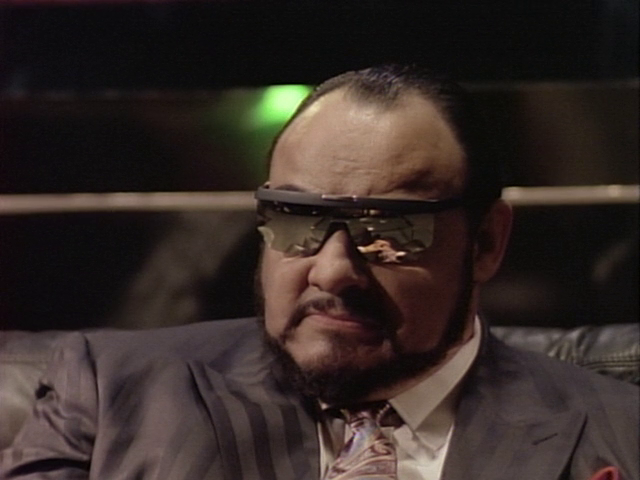
Note: Due to an upcoming role John Rhys-Davies was unable to shave his head but he was more than willing to wear a bald cap, unfortunately, the studio didn’t care enough so we got a Kingpin with hair and questionable taste in eyewear.

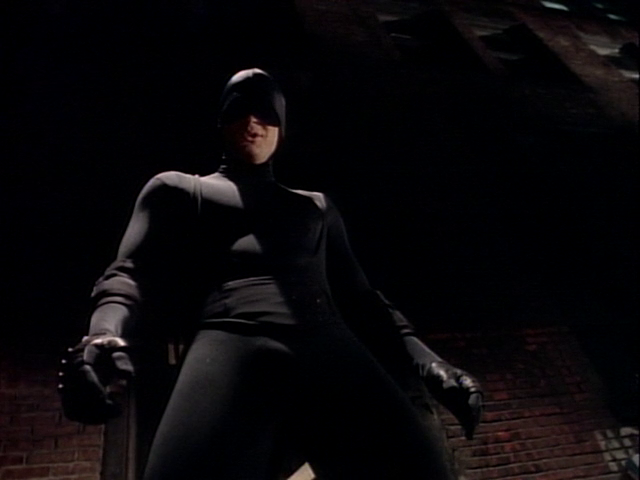
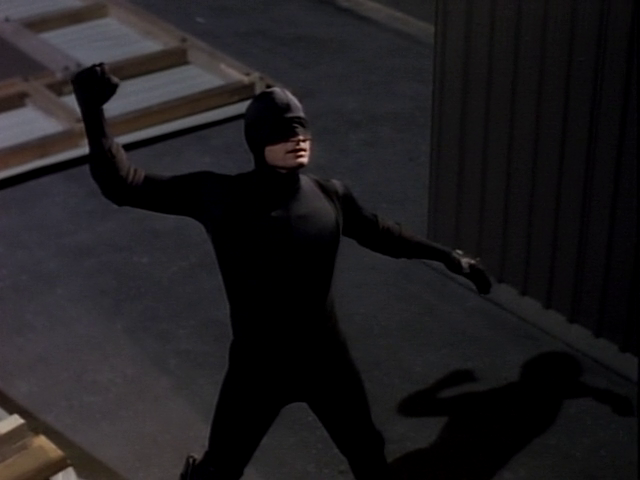
One aspect of this film that should be mentioned is that at no point does the Incredible Hulk stand trial and, in fact, the idea of the Hulk actually going on trial was never even discussed by the filmmakers, it was simply a very catchy title and as it did star Marvel Comics’ supreme trial lawyer Matt Murdock why not go for a nice dramatic title, even if we the viewers are left disappointed, and boy will comic book fans be disappointed. It is very little in this movie that even remotely resembles the characters from the Daredevil comics, with his classic red costume being swapped out for a black ninja get-up being only one of many notable changes. In the pages of the comic Matt is aided in his law firm by Foggy Nelson and Karen Page while in this movie his associates are Al Pettiman (Richard Cummings Jr.) and Christa Klein (Nancy Everhard) which is, once again, probably an example of the bizarre world of rights issues where a studio has the rights to some characters from the books but not others. This movie also decided to have Daredevil wearing his black costume and the stated reason for this was that the producers believed that an all-red suit would not translate well on screen and that a black suit would look better for television, clearly, they were wrong.  That this colour of costume has now been made retroactively canon does not change how bad it looks here.


He looks more like he’s trying out for American Ninja III than he is playing Daredevil.

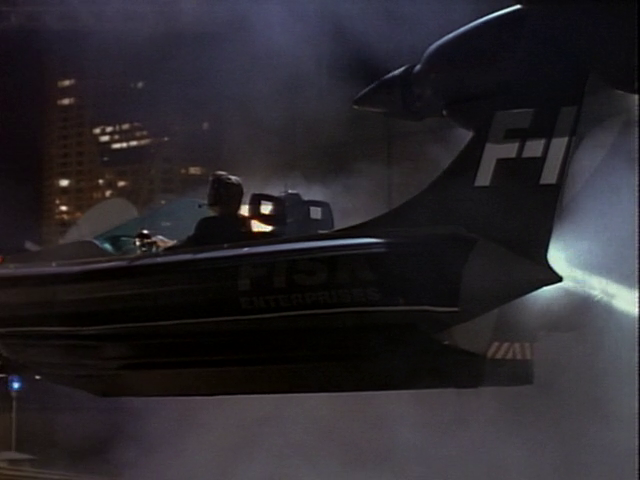
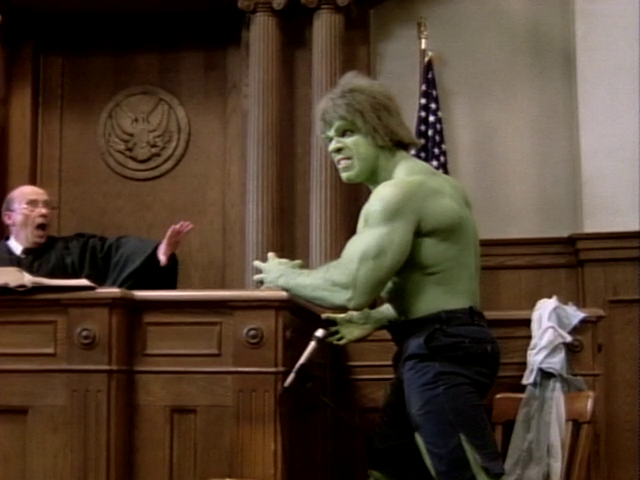
We also don’t get the promised “Trial of the Incredible Hulk” because Banner refuses to testify in court due to his fears that the stress of prosecution could cause him to “Hulk Out” but we do get to see what this would look like in a dream sequence, sadly, seeing the Hulk tear apart a courtroom and choke out the prosecuting attorney was the highlight of this film but being it doesn’t actually happen the film loses whatever points it may have gained from such an awesome spectacle. The rest of the movie deals with Wilson Fisk trying to consolidate the various criminal syndicates under his stalwart leadership, which he thinks can be accomplished simply by killing Daredevil and he even calls his videotape of the event “his resume” but I can’t see any criminal organization handing over control of their enterprises to man simply for beating up a guy in black pyjamas. Things get even more depressing when Daredevil shows up alive, having been rescued by the Hulk, to crash Fisk’s pitch meeting but then lets Fish getaway on the slowest moving escape craft in the history of cinema. Daredevil literally waves his fists in frustration as Fisk’s heli-scooter glides past him at whopping two miles an hour.


This is what happens when you shop at ACME’s bargain-basement warehouse.

Stray Observation:

• What kind of idiot would commit a jewelry heist and while escaping stop to assault a woman on a subway train? Then again, this heist had the crooks don their masks after entering the jewelry store, making the mask rather pointless as the security cameras would have already captured their faces. Clearly, neither the Kingpin nor his minions are all that bright.
• Nancy Everhard would star in another Marvel movie this very same year, co-starring with Dolph Lundgren in The Punisher.
• After an attempt on her life, Ellie Mendez is moved to a secure wing of the hospital, but it’s a ground-floor room with a sliding patio door, do they not know what the word “secure” means?
• If Daredevil wanted to keep the fact that he’s blind maybe he shouldn’t have included a blindfold as part of his costume.
• Daredevil unmasks himself to Banner, but Banner doesn’t reveal the fact that he’s the Hulk, which makes Banner a bit of a dick.
• There is a surprisingly high kill count for our heroes in this film, Daredevil electrocutes a fake nurse and Hulk electrocutes two thugs.
• In a dream sequence Stan Lee makes an appearance as a jury foreman, making this his first ever cameo in a Marvel Comics adaptation, but far from his last.
• That sequence is also the only time in the history of "The Incredible Hulk" live-action television series that we see the Hulk in his trademark purple pants.


“You're out of order! The whole trial is out of order! Hulk Smash!”

There are a few decent moments to be found within The Trial of the Incredible Hulk's short running time, with the scenes of Banner and Matt Murdock bonding over their similar backstories are particularly nice, but the action on display is poorly executed and neither Rex Smith nor his stuntman had the ability to depict the awesome fighting style of Daredevil that one would have hoped to see and I could point out a dozen other Cannon films that managed to pull off much better martial arts sequences on a similar budget than this thing. What’s even stranger is the film’s final act doesn’t even include the Hulk, we get Banner ushering Ellie Mendez out of Fisk Tower and there is no Hulking out, instead, we get Rex Smith punching a few henchmen before he watches Fisk escape.


“I’ll get you next time, Gadget!”

As in the case of The Incredible Hulk Returns, this movie was a ratings success for the Network but like that film, it also failed at its primary job of being a backdoor television pilot for a spinoff series, which is something we can all be grateful for because seeing Rex “Street Hawk” Smith as Daredevil on a weekly basis may have resulted in human sacrifice, dogs and cats living together and mass hysteria. Good or bad it is fun to look back at some of these Marvel projects and if anything positive can be said about the Marvel entry it's that John Rhys-Davies looked to be having a helluva good time and that's something we can all appreciate and enjoy.

Monday, August 29, 2022

The Incredible Hulk Returns (1988) – Review

Superheroes crossing over into each other’s comics is certainly nothing new, the comic book Marvel Team-Ups was founded on that very premise, but when it came to live-action versions of these four-colour heroes that simply wasn’t the case, that is until the New World Television produced this made-for-television movie that brought the Asgardian hero Thor to the small screen, in what they had hoped would lead to a series of his own.

The original CBS series The Incredible Hulk had a successful five-year run but the show never got what one would call a series finale, the last episode simply ending with David Banner walking away as sad piano music played in the background and thus he remained a “fugitive” in search of a cure for his gamma-irradiated condition. Enter New World Television a studio founded by legendary B-movie producer Roger Corman and who had recently acquired the Marvel Entertainment Group which led to them taking over the Hulk television franchise from former broadcaster CBS with a series of made-for-television movies. Now, a person may think that a studio partnered with Marvel Comics would be the ideal caretakers for The Incredible Hulk but that person wouldn’t be taking into account the fact that New World Pictures was mostly known for making exploitation films like Student Nurses and Caged Heat, and thus making a film about a giant emerald monster and an Asgardian god was a little out of their wheelhouse.


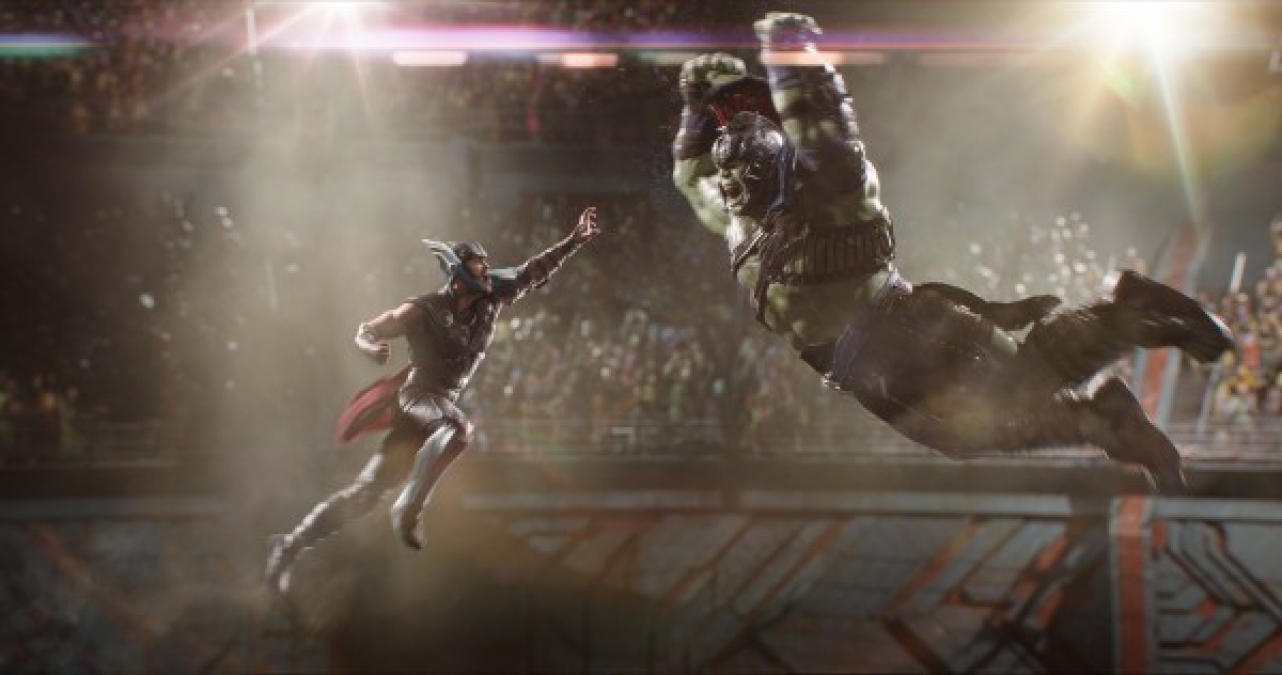
“Tonight, on Big Brother, the Hulk and Thor have it out.”

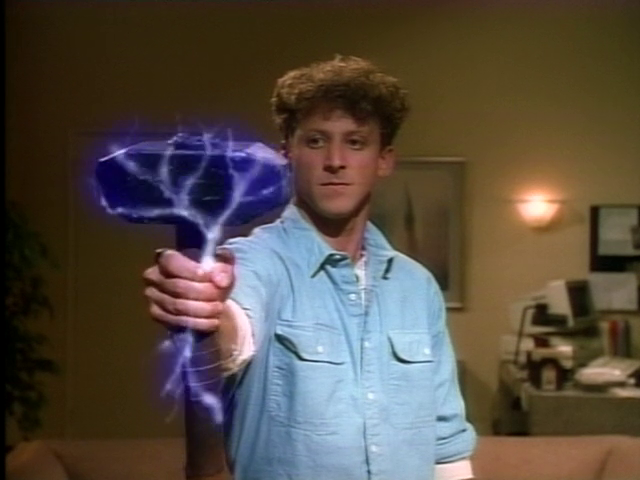
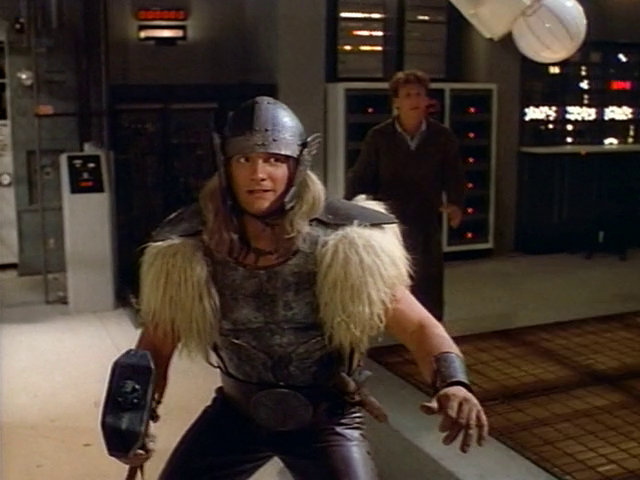
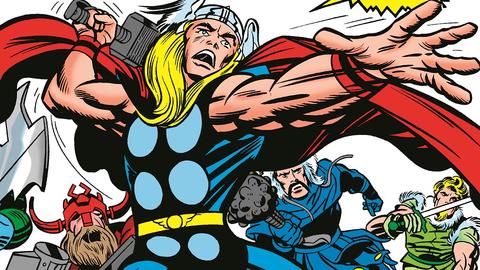
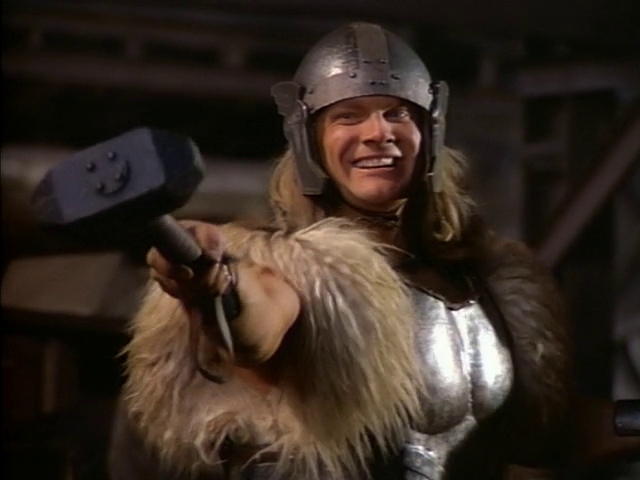
Certainly, the idea of pitting the Incredible Hulk against the Thor, the Norse God of Thunder seems like an ideal project, something that had occurred in the pages of Marvel Comics time and time again, but for this movie comic book fans wouldn’t be seeing the Thor they were familiar with, instead, they were treated to a disgraced Viking king, who Odin had condemned to never enter Valhalla until he’d perform a heroic enough deed to make up for being a bit of an arrogant dick, and so we aren’t dealing with the Son of Odin but just some random Viking dude who pissed off the All-Father. In this version, we have Doctor Donald Blake (Steve Levitt), a doctor for a Norwegian expedition, who stumbles across a cave containing the skeletal remains of a Viking king and a Viking war hammer. Sadly, the hammer had no inscription stating, "Whosoever holds this hammer, if he be worthy, shall possess the power of Thor" to which Blake would then raise the hammer and it would revive the Viking King. Thor is basically enslaved to Blake, stuck in some kind of limbo until he is called forth by Blake, and I must say that the idea of Thor being a lapdog to someone as lame as Donald Blake is a tad disappointing.


“By the power of Grayskull!”

Comic Note: In the original “Journey into Mystery” Donald Blake was simply a construct created by Odin to teach his son humility and when Blake found the hammer Mjölnir he was transformed back into the God of Thunder and reclaimed his memories pertaining to being the son of Odin. In this film, they are two completely different people, one being a mopey idiot and the other a brutish jerk.

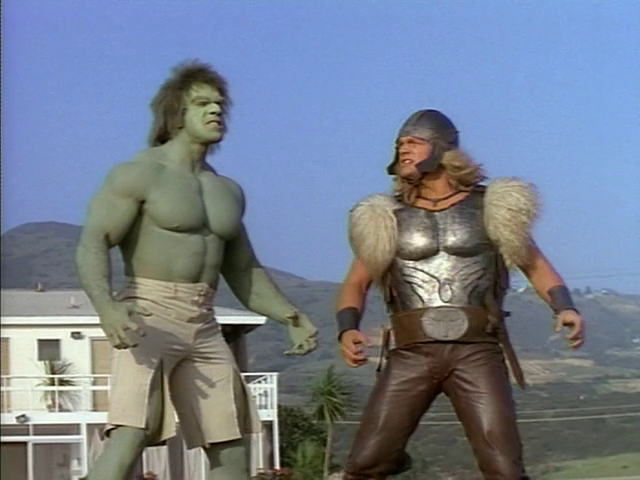
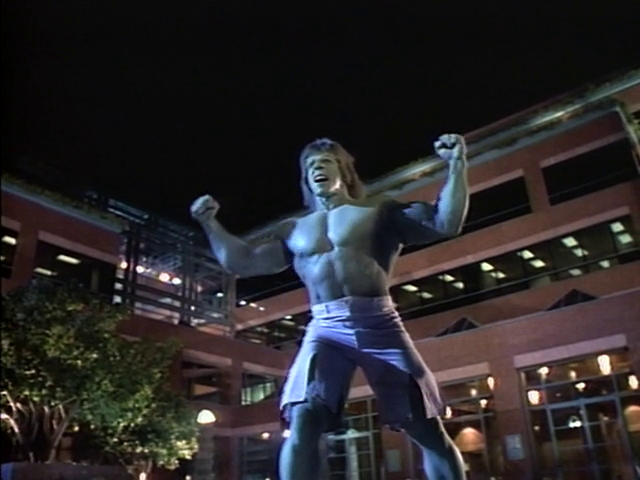
But what has any of this got to do with the Incredible Hulk? Well, as the movie opens, we find David Banner (Bill Bixby) working for the Joshua-Lambert Research Institute on something called a Gamma Transponder, which is supposed to be the next best thing to nuclear energy, but it's a device that Banner has secretly outfitted with the secondary purpose of curing him of his tortured existence of being the rampaging Hulk. Now, it’s been two years since his last “Hulk Out” and he’s fallen in love with Dr. Margaret Shaw (Lee Purcell), a beautiful geneticist working at the same institute, yet he is willing to risk this cure killing him if there is a slight chance that he could lead a happy Hulk-free life with Shaw. Unfortunately, a late-night visit to the Gamma Transponder is interrupted by Donald Blake, who has tracked down Banner in the hopes that he could help him with his Viking problem, but when he calls forth Thor (Erik Kramer), to prove to Banner that he’s not crazy, the Viking acts like a complete dick and this results in Banner transforming into the Hulk (Lou Ferrigno) and the fight between them trashes part of the lab.


The Mighty Thor and Norse Asshat.

The actual plot of this movie finally gets going when a criminal organization within the Joshua-Lambert Institute seeks to kidnap Banner and the Transponder, they want to turn the Transponder into a weapon because of course they do, only to have the Hulk easily thwart such an attempt, but when the syndicate leader Jack LeBeau (Tim Thomerson) targets Dr. Shaw instead of Banner it’s up to our two heroes to put their differences aside and rescue the fair damsel, thwart the villainous plot and save the day. Overall, this is a fun enough adventure story but we still get an embarrassingly downgraded Hulk, he’s briefly brought low by a tranquillizer dart which wouldn’t even have pierced the skin of his comic book counterpart, and the random collection of thugs here are as generic and as lame as all the mobsters and such that he was forced to fight back in the original series, but his teaming up with Thor does freshen things up a bit, even if this isn’t the Thor we know from the pages of Marvel Comics.

We also get the return of reporter Jack McGee (Jack Colvin) but his snooping around for evidence of the Hulk’s involvement comes across more as filler than anything pertinent to the plot as he’s more a holdover from the series than anything organic to the story they were trying to tell here. The final fight is also on par with what was seen in the five seasons of the original show, made more embarrassing by the villains having automatic weapons yet they can’t seem to hit the Hulk at point-blank range, and as one of the henchmen was played by the always entertaining Charles Napier I give the film an extra bonus point or two, but the end result is still a film that wears its television budget on its sleeve and remains a the less than stellar adaptation of the comic book.


“Pray thee come and see me in my own series!”

Stray Observations:

• We find David Banner gainfully employed at a high-tech research facility, which is not first as this kind of thing happened a lot in the series, but wouldn’t this kind of company do a thorough background check for any prospective employee?
• Why would Donald Blake seek out a believed dead expert in gamma radiation to help him with his mystical problem surrounding a cursed Viking? There doesn’t seem like much of a crossover in those two fields.
• In this film Thor’s hammer is not the mighty weapon Mjölnir, which could only be picked up by someone worthy, it’s just the trigger that wakes up this cursed Viking.
• Donald Blake helps fix the damage that Thor and the Hulk caused in the lab but Blake's last job was field medic for an archaeological expedition, did he have a side hustle as a computer repairman that we were not made aware of?
• Blake takes Thor to a biker bar so he can partake in food, drink, and women but after a night of partying they leave together sans women, you’d think a Viking who has been in forced abstinence for centuries would have left with at least one biker chick.
• Banner is relieved that Hulk and Thor’s fight was considered a publicity stunt by the institute, with Blake pointing out that it only made page two in the paper, but what kind of publicity stunt would two giants fighting in a lab be? How would it be marketed?


“We will put an emerald giant in your tank!”

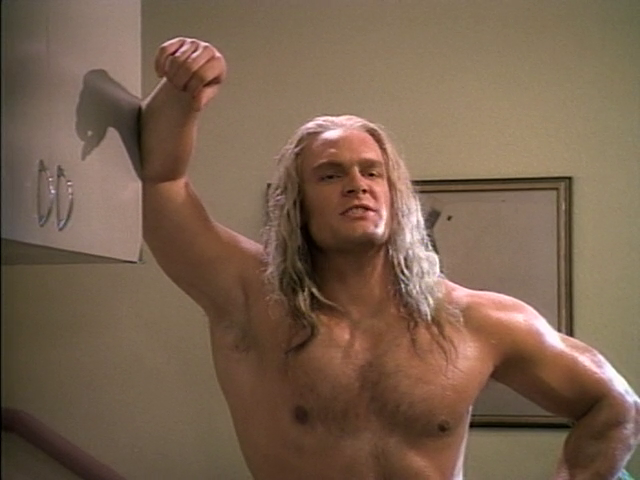
Erik Kramer provided a solid performance as Thor, his pain and sadness over being trapped by Odin on this “task” has a surprising amount of depth to it, unfortunately, he was saddled by Steve Levitt’s obnoxiously annoying Donald Blake and I just can’t see how this dynamic would have worked as a television series, lucky for us we never had to find out. It should also be noted that The Incredible Hulk Returns also suffered from that “reset factor” as the movie ends just like any of the many episodes of the series with things returning to the status quo, Banner leaving behind the woman he loves so that he can continue his search for the cure, which makes this seem more like an extra-long episode than it does a stand-alone movie. To be fair, there are some fun moments to be had, such as Thor trying to figure out how a fridge works and marvelling over modern conveniences like hot and cold running water, and Erik Kramer definitely had the physique for the part, but it was not enough to make the whole project work.


Something for the ladies.

NBC was certainly happy enough with the fact that The Incredible Hulk Returns was a major ratings success for them but somehow that did not translate into Thor getting a series of his own,  thus this made-for-television movie joined the list of several Marvel backdoor pilots that failed to provide the needed "kick" to launch a new show. Could it be that audiences didn’t like the idea of Thor being depicted as being a servant of Blake or that they were two separate entities, possibly, but more likely than not, it was the network who failed to see the "comedic" pairing of Erik Kramer and Steve Levitt leading to a successful series, and on that, I couldn’t agree more.

Note: It would take over two decades before we’d see another live-action version of Thor and his eventual ultimate team-up with the Hulk.

Thursday, August 25, 2022

Japanese Spider-Man (1978-1979) – Review

In the early days of adapting comic books into live-action television shows or feature films things like “character accuracy” were rarely a concern to the producers of such enterprises but in the late 70s Marvel made a licensing deal with the Toei Company that would take that concept to the next level and the result would be one of the most bizarre yet amazing adaptations to date.

The man behind this wonderfully bizarre creation is producer Gene Pelc, who while visiting Japan was surprised that a culture so fond of comic books (Manga) had no apparent interest in American comic books, so he approached Stan Lee with the idea of expanding Marvel into this untapped market share. This was not, of course, about publishing Marvel Comics in Japan, instead, it was to form an alliance with Toei Company, a production company that was known for such great action shows like Kamen Rider, with the simple stipulation that “This show can never be seen outside of Japan” and with that settled the series was soon off and running, but in a fashion that would be rather unfamiliar to Spidey fans back in America. In this series, there would be no Green Goblin or Doctor Octopus to menace our hero, instead, Spider-Man would be fighting alien invaders called The Iron Cross Army, whose minions were biological weapons known as Machine Bem, creatures who could change their size and form to better threaten Spider-Man and his Amazing Friends.


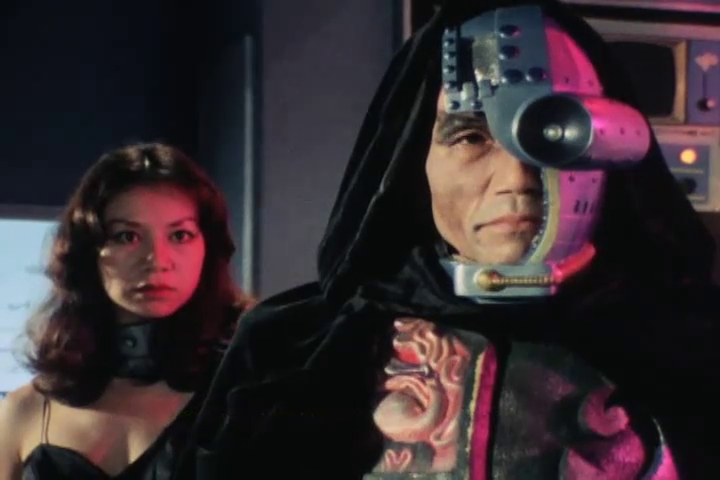
Professor Monster and Amazoness.

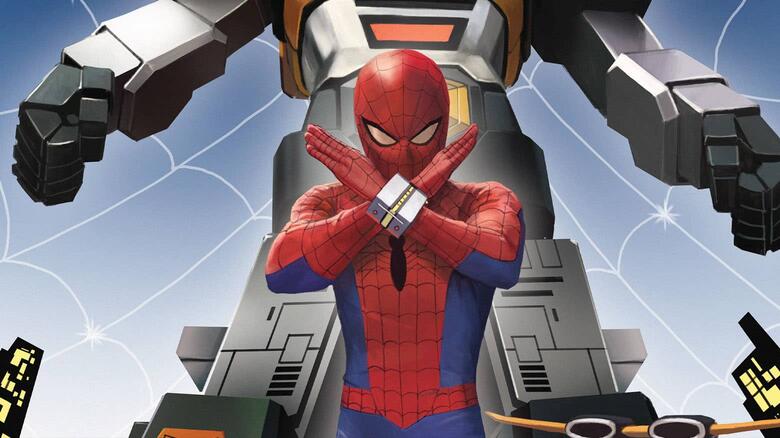
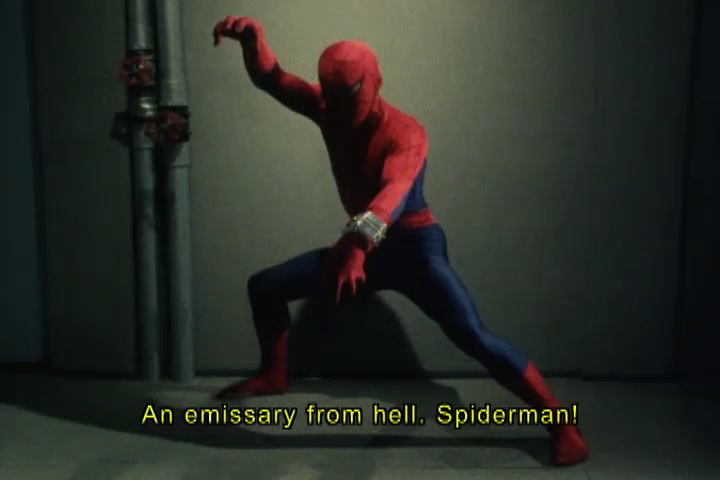
The premise of the Japanese Spider-Man aka Supaidāman deals with the adventures of Takuya Yamashiro (Shinji Todō), a young and brash motorcycle racer who has a close encounter with an alien visitor named Garia (Toshiaki Nishizawa), the last surviving warrior of Planet Spider, and from this ancient alien, he learns that a villain known as Professor Monster (Mitsuo Andô) has arrived on Earth and plans to conqueror or destroy our world just as he did Planet Spider. Now, that sounds on par with about fifty percent of the science fiction movies and television shows of the time but where things get interesting here is that Garia injects him with some of his own blood, which gives Takuya spider-like powers, and he also gifts our young hero with a bracelet that can activate his spider costume, that not only allows him to shoot web-lines but also works as a protective suit. What's even more amazing is that it can also summon his cool spacecraft, The Marveller, a ship that can transform into a giant robot called Leopardon. One must admit that this does come in handy when the various monsters he encounters go full-on kaiju when they meet, but it doesn't have a very “Spider-Man” feel to it. What you may find interesting, is that when Professor Monster’s second in command demands to know the identity of our hero, Takuya responds, “An emissary from Hell. Spider-Man!” which is not the typical introduction most heroes would make and this leaves us wondering if Spider-Man got his powers from the Devil.


Maybe, in Japanese mythology, Hell is a nice place.
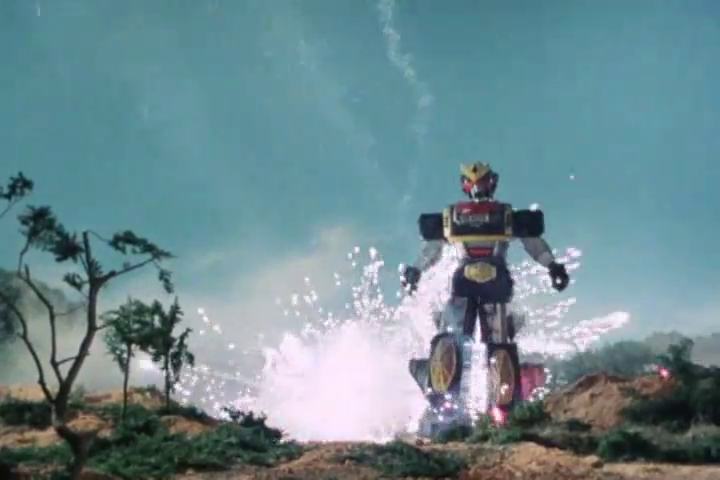
If this seems widely off the mark when it comes to the origin story of the Spider-Man, at least the one most of us know and love, it should be noted that producers Tôru Hirayama and Susumu Yoshikawa originally wanted to make the series more faithful to the famous web-slinger's origins, but Bandai, one of the sponsors, told the studio to add a giant robot, what with them being all the rage at the time, and thus each episode would start off with Spider-Man doing cool acrobatic Spidey stuff, like climbing walls and swinging from a web, but the big climax would inevitable lead to him calling The Marveller and the resulting big smackdown between his 200 foot tall and 25,000-ton robot and whatever “Monster of the Week” he had to defeat.


It's a shame we never got Spider-Man versus Godzilla.

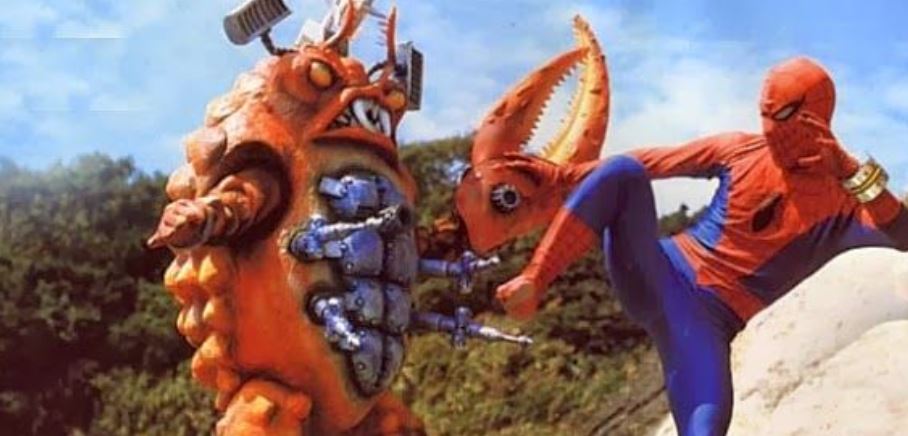
Now, I’ll admit giant robot/monster fights can be really cool, as a huge fan of both the Godzilla and Gamera franchises that would be hard to argue, but I found the stuff with Spider-Man tackling the minions of Professor Monster to be a lot more interesting than any of the kaiju fights, this is mostly because stuntman Hirofumi Koga, who donned the Spidey costume for this series and did all the stunt work, was able to infuse his martial arts acrobatics skills to the character in a way that was not seen in the American television series – there was no chance that the Nicholas Hammond Spider-Man was going to do a backflip while kicking evil minions, or face off against a variety of crazy monsters – and it was this action element that really brought the character to life.


“My Spider Senses are tingling with anticipation!”

If the likes of Professor Monster, the leader of the Iron Cross Army, looked like a poor man’s version of Doctor Doom his aforementioned second in command, the dynamic Amazoness (Yukie Kagawa), really brightened things up and also added a bit of dark sex appeal to the series. She was the one in charge of espionage and planning their various attacks but she also had a secret identity of her own as the editor of the newspaper Weekly Woman, and through this job, she did her best to uncover Spider-Man's true identity. Of course, the true co-stars of this show were the various kaiju that the Machine Bem would transform into and the resulting glorious “action-packed” conflict between them and Leopardon. This is not to say that this show was all monster action and alien espionage because like any good Spider-Man story the hero needs a good support team, and for this show that came in the form of Shinko Yamashiro (Izumi Oyama) Takuya's 18-year-old younger sister, his little brother Takuji (Yoshiharu Yabuki), but most importantly, Takuya’s girlfriend Hitomi Sakuma (Rika Miura) a 20-year-old freelance photographer and the only other person allowed to ride the Spider Machine GP-7.

Note: Apparently, a spaceship that turns into a giant robot wasn’t enough, Spider-Man also needed a cool car to impress the chicks.

Stray Observations:

• Unlike in the Marvel Comic, this Spider-Man also inherited some of the same weaknesses of actual spiders, such as a strong sensitivity toward cold. This certainly would have made it awkward for our Spider-Man when hanging with his pal Iceman.
• We do get a kind of “Uncle Ben” element in this show, with Takuya deciding to fight the Iron Cross Army in order to avenge his father's death, but there is no equivalent moment of “With great comes great responsibility” from the comics in this series.
• Spider-Man’s costume is stored in his bracelet, much like The Flash’s costume was stored in his ring, and I’d love to get a hold of whatever wrinkle-free material they used.
• This incarnation of Spider-Man does have a “Spider-Sense” but it’s not so much to warn him of incoming dangers but to help him locate the Machine Bem so that he can go and kick their collective asses.
• To keep the show’s running time in check the robot Leopardon would often throw his sword immediately after transforming from Marveller, finishing off his opponent in a single blow. This works for me because I always wondered why the likes of Ultraman would fight for ten to fifteen minutes before whipping out an insta-kill weapon that would immediately decapitate or explode his enemy.
• The large Leopardon model often dwarfed the stuntmen in the Machine BEM suits and thus they rarely appeared together in the same shots, often just hurling projectiles at each other, unfortunately, this led to the fights becoming rather static and uninteresting at times.  This also allowed them to use the same footage over and over and over again.
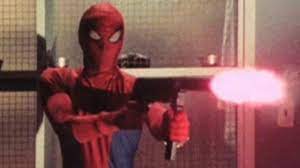
• Spider-Man may have incredible superpowers, from wallcrawling to web-spinning, but that didn’t stop him from picking up a gun and blasting away at his enemies.


“Take that, you filthy animals!”

Western audiences may find the Japanese Spider-Man to be a little on the campy side, with the acting on display being fairly over-the-top and very arch, but as this show was ostensibly for kids this kind of thing was expected by Japanese viewers at the time, and though the shoestring budget for this series resulted in some really goofy monsters and weird looking robots that just adds to the show’s charm, and they do win major points simply in the area of creativity. And as mentioned earlier, one element that cannot be denied is how impressive the stunt work for this show really was – that it didn’t end up killing or at least maiming stuntman Hirofumi Koga still amazes me – and though many other live-action Spider-Man have come and gone over the years the Japanese Spider-Man will always hold a special place in my heart.

Monday, August 22, 2022

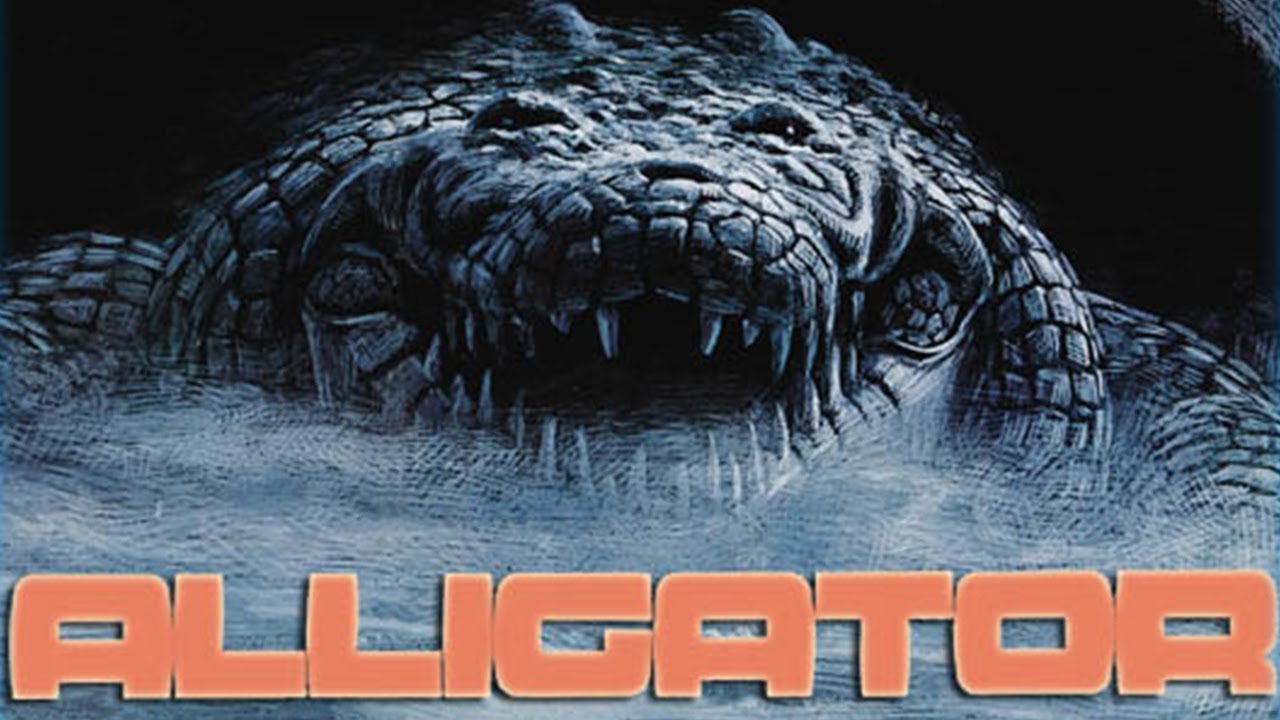
Alligator (1980) – Review

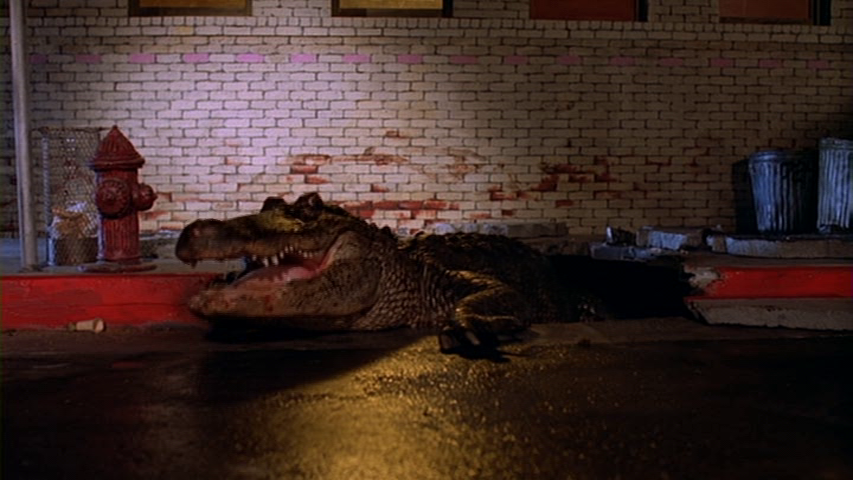
The urban legends surrounding the idea of alligators living in the sewer date back to the late 1920s and early 1930s, which makes it rather surprising that it took until 1980 for such an ideal subject matter to make its way into a horror movie. We got giant ants in the sewers back in 1954 for Christ’s sake why not alligators? It took screenwriter John Sayles to finally pen such an urban epic, but his gator wouldn’t simply be large it would be super-sized!

After the success of Jaws, the rip-offs of Spielberg's summer blockbuster almost become a genre unto themselves, sadly, most of them were terrible and without any artistic merit but with Lewis Teague’s Alligator we got a truly excellent “man against nature” monster movie, one that turned out better than it had any right to be. While there are plot and character elements similar to what appears in the Spielberg shark film, with the main protagonist being a police officer who is helped by an animal expert, and there is a professional hunter who dies similar to that of Quint in Jaws, but he’s more villainous antagonist rather than part of the camaraderie trio in that film, but what John Sayles brought to the story was an environmental slant with the creatures immense size being due to the dumping of the bodies of dead animals that had been subjected to an experimental growth formula and then being eaten by the sewer-dwelling alligator, thus the cause of its increased size.


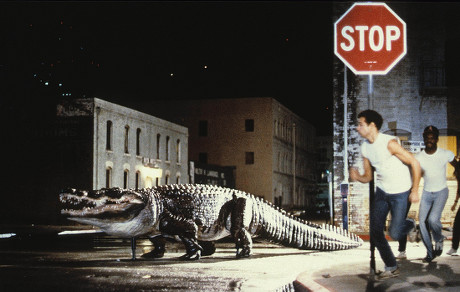
He's not quite Godzilla but he is the result of man’s disregard for the natural world.

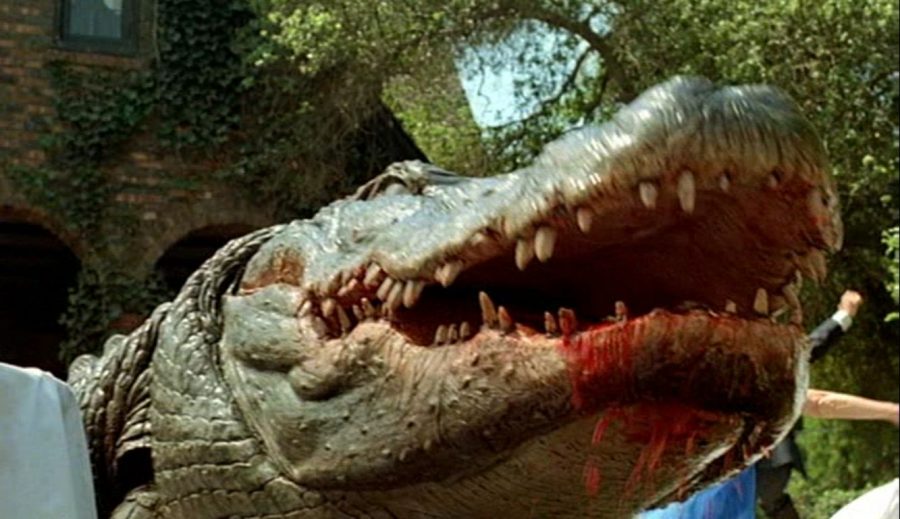
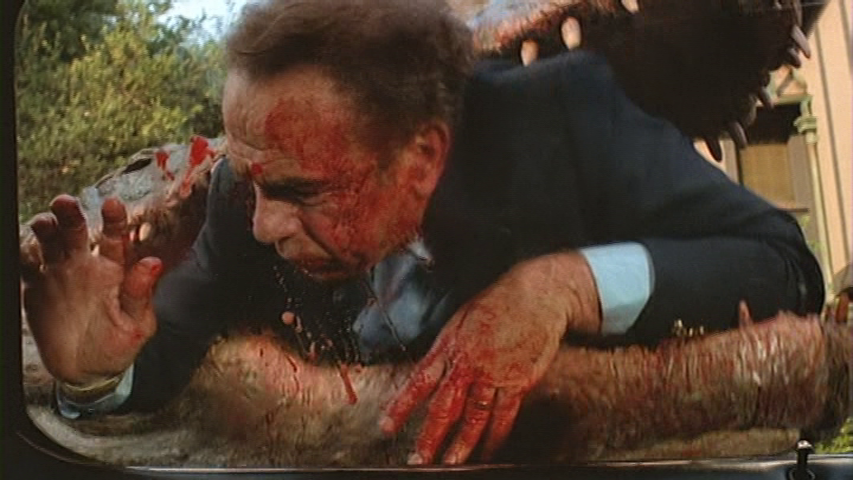
The basic plot of Alligator follows the actions of a PTSD-suffering homicide detective named David Madison (Robert Forster), who lost his previous partner under less-than-ideal circumstances, and it’s his investigations of body parts showing up in the local sewer that brings him into contact with a pet shop owner (Sidney Lassick) who has been stealing dogs and selling them to a Slade Pharmaceuticals for growth experiments. And just how evil is this company? Well, not only does scientist Arthur Helms (James Ingersol) cut the larynxes of his subjects to keep them quiet he demands that the pet shop owner only bring him puppies. It’s safe to say this guy will not be around when the end credits roll, in fact, the film’s big smorgasbord of action takes place at Arthur’s wedding, where he is to be married to his boss’s daughter.  It is at the wedding where he and his boss (Dean Jagger), as well as the crooked Mayor (Jack Carter), all meet their untimely ends, which begs the question “Did the alligator get a copy of the script, so it knew where the villains were and who it had to eat?”


The ultimate wedding crasher.

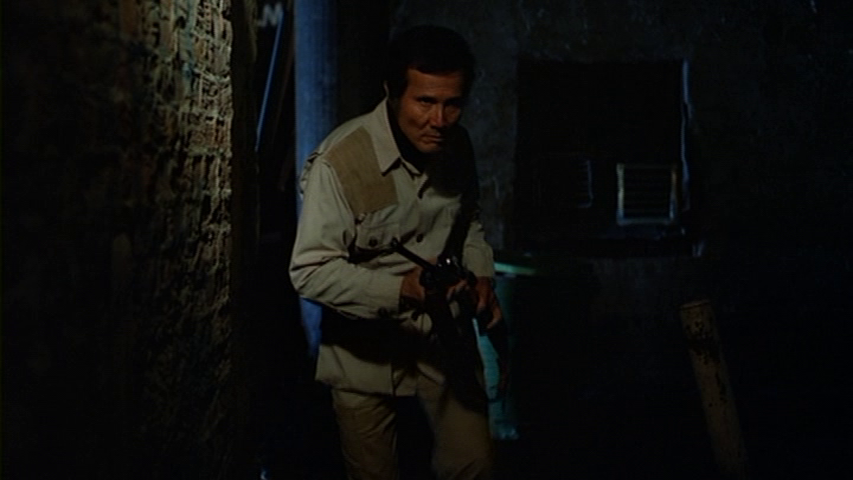
Filling in the role of consulting oceanographer Matt Hooper from Jaws we have herpetologist Marisa Kendall (Robin Riker), who doesn’t believe that Madison’s latest deceased partner (Perry Lang) could have been eaten by a sewer-dwelling alligator, stating that a creature that size would have starved in a week and that the toxic gasses found in a sewer are not conducive to a healthy life. Even his boss Chief Clark (Michael Gazzo) doesn’t believe him and wants David to take a much-needed vacation, but lucky for Madison, a yellow journalist (Bart Braverman), who is one of the reporters that have suggested that Madison may have been responsible for the death of his first partner, is killed by the alligator and was kind enough to leave photographic evidence of the creature’s existence. This results in a failed sewer dragnet that causes the Mayor to sideline Madison and bring in big game hunter, Colonel Brock (Henry Silva), to track and kill the beast, this would be the film’s Quint analog, unfortunately, Henry Silva is never given a cool monologue about being aboard the U.S.S. Indianapolis and is just eaten in a dark alleyway.
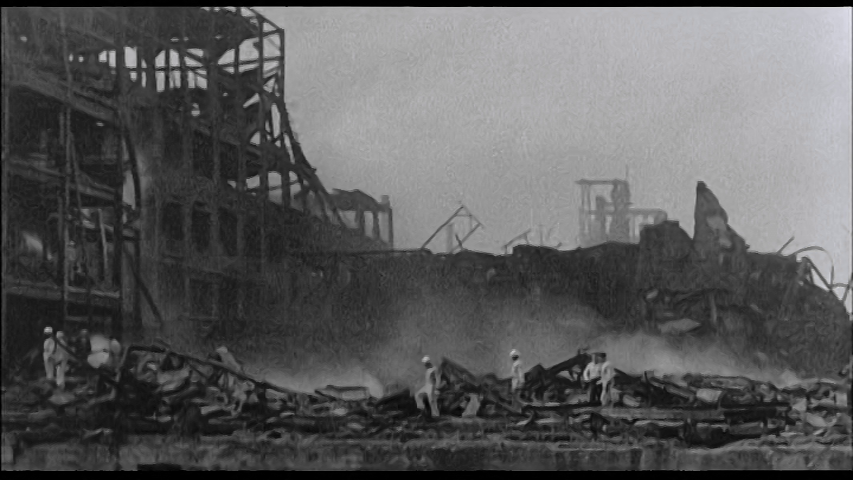
 

"Farewell and adieu to you fair Spanish ladies."

Stray Observations:

• The alligator's first victim is a sewer worker named Edward Norton which is an obvious nod to the character played by Art Carney on The Honeymooners.
• That the alligator in question was flushed into the sewers by Marisa’s father, twelve years ago when she was a child and I’m surprised that her dad didn’t get an ironic death in this film.
• The idea of a victim’s camera taking snapshots of the monster during the attack was also used in Jaws 2 (1978).
• Madison gets fired because of his investigation of Slade Pharmaceuticals, whose owner is friends with the mayor, but no actual grounds are given for his dismissal and any Policeman’s Union would be down on this situation like a ton of bricks.
• Henry Silva’s big game hunter hiring three black youths to be his “native bearers” is as brilliant as it is racist and makes his death even more appealing.
• The two men working the gate at the wedding don’t seem to notice that people are being eaten by a giant alligator a few feet away, then again, this is Chicago so maybe that's normal.


“They send one of yours to the hospital you send one to be alligator food, that’s the Chicago way.”

This may have started off as a simple Jaws rip-off but with Lewis Teague’s deft hand at the helm, and the wonderfully tongue-in-cheek script by John Sayles, they were able to produce a film of admirable quality and a lot of this has to do with such a great cast of character actors, a group that is more than aptly lead by the great Robert Forster, who really nails the whole world-weary cop who is “Too old for this shit” to perfection. It should also be noted that Teague did run into the same problem that Spielberg had concerning his mechanical shark, as the mechanical Alligator did not function all that well or often, but the use of a baby alligator on a miniature set worked surprisingly well.


Certainly, better than the countless dinosaur films that tried the same thing.

Lewis Teague’s Alligator is easily one of the better examples of the genre, one that has brought the world such "classics" as Grizzly and Orca, but John Sayles elevated things by weaving in some nice social commentary – the creature did seem to eat its way up the social-economic food chain – and the movie even had the balls to have the alligator brutally eat a small child. If this “Man against Nature” film has somehow escaped your notice do yourself a favour and track this one down, you won’t be disappointed.

Wednesday, August 17, 2022

White Zombie (1932) – Review

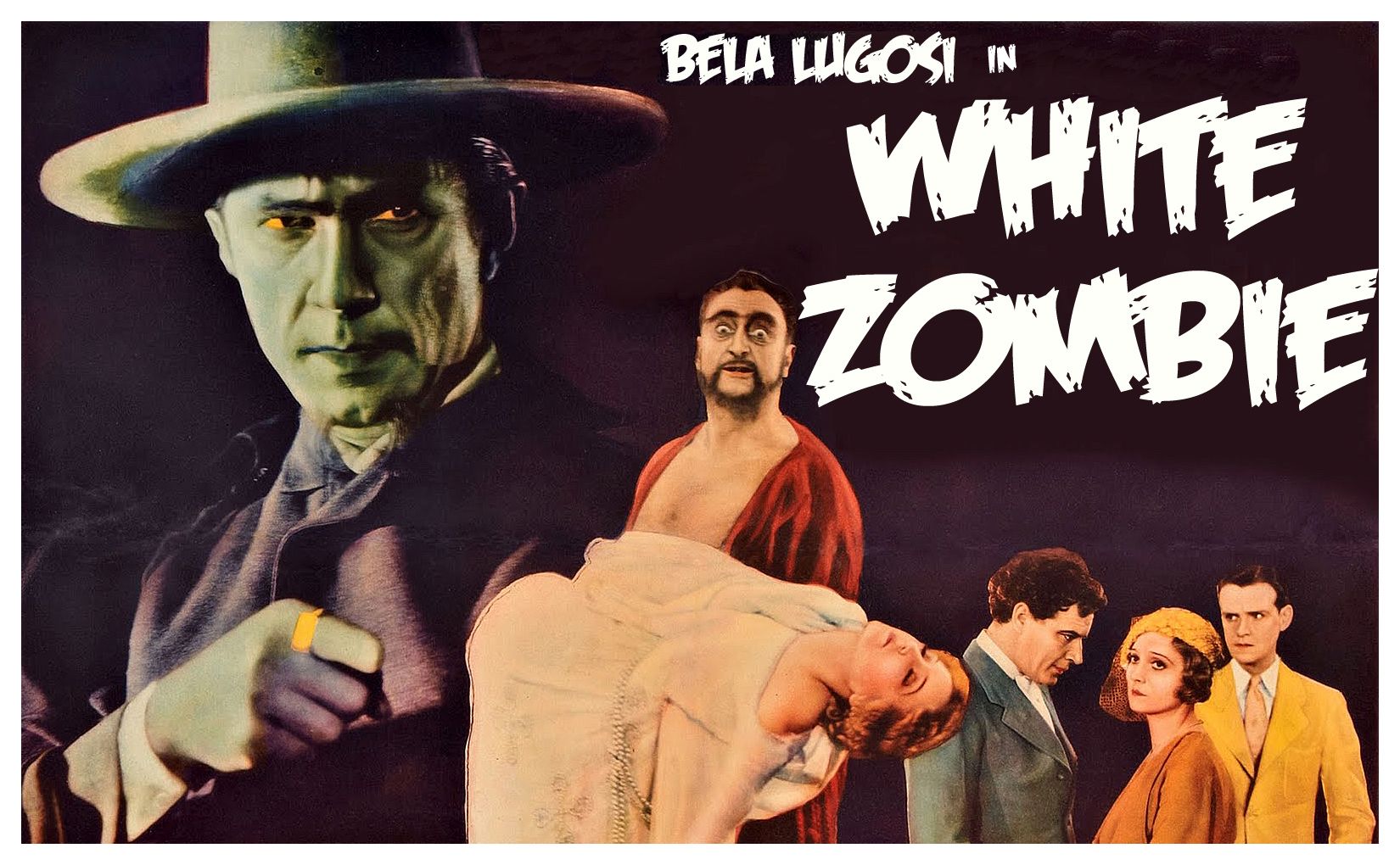
The idea of a zombie apocalypse, with hordes of the undead roaming the Earth, is something the world owes to George Romero because his Night of the Living Dead took the basic idea of the zombie and left behind all of the mystical aspects of the zombie mythos, ditching the creature’s Haitian roots and their place in local folklore, where those hapless supernatural beings were raised to work as slaves to a witch doctor, which brings us to Victor and Edward Halperin’s classic White Zombie, a film that pits a noble hero against an evil voodoo master.

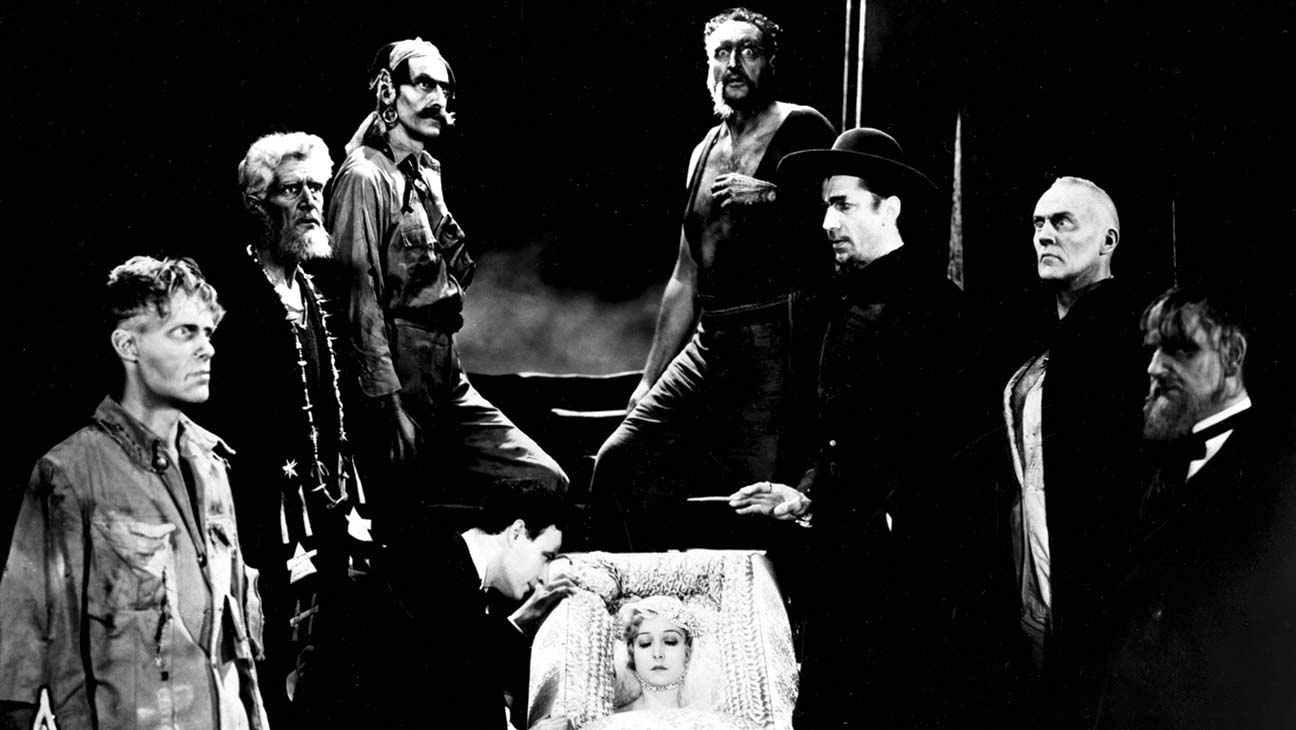
The protagonists of Halperin’s White Zombie are Neil Parker (John Harron) and his fiancée, Madeleine Short (Madge Bellamy), who we meet as they travel through rural Haiti via carriage to the home of Charles Beaumont (Robert Frazer), a plantation owner they met on their ship from New York and who has so generously offered his home as a place to hold the wedding ceremony. This loving couple is so naïve and dim that they never even remotely suspect that Beaumont has an ulterior motive, that he himself is madly in love with Madeleine, and when the bride rebuffs his advances Beaumont turns to a man named Murder Legendre (Bela Lugosi) for help, a local practitioner of the voodoo and whose employees at his sugar cane factory are rumoured to be the walking dead. Legendre informs Beaumont that the only way to steal Madeleine away from her true love is by turning her into a zombie – I certainly see no other option – and so the love-obsessed Beaumont eventually agrees to the plan and the poor girl is drugged and “murdered” via a voodoo doll. Needless to say, things aren’t all rainbows and puppy dogs after Madeleine’s resurrection reveals her to be just another soulless creature under Legendre’s control.


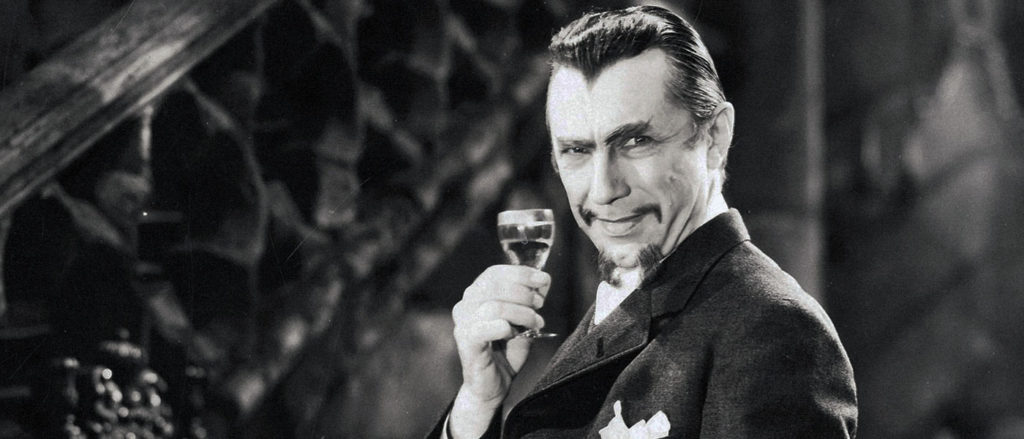
Who would have guessed this man was untrustworthy?

Not happy with his “corpse bride” Beaumont pleads for the effects to be reversed, “You must put the life back into her eyes and bring laughter to her lips. She must be gay and happy again” but Legendre has his own ill motives at hand, which includes adding Beaumont to his stable of zombie slaves, and he has also taken a fancy to the beautiful girl, so before you can say “walking dead” Legendre has slipped his special drug into Beaumont’s drink during a toast. Meanwhile, a distraught Neil has been staggering around town until eventually stumbling into Madeleine’s crypt to find her body missing to which he then seeks out the aid of local missionary Dr. Bruner (Joseph Cawthorn), who also officiated at their wedding ceremony, and the two of them plan to rescue Madeleine from the clutches of Legendre, if that is at all possible, what with her being dead and all.


“Honey, there has to be a better way out of marriage than faking your death.”

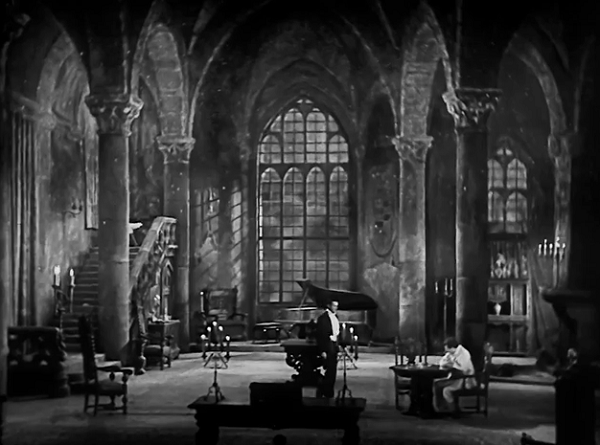
The interesting thing about White Zombie is that it tries its best to straddle the supernatural with the rational, as we get Doctor Bruner trying to explain away zombies as being simple victims of Legendre’s pharmaceutical manipulations, putting people into comas so deep that the average person would assume they were dead and then “resurrecting” them as mesmerized slaves, but during the film’s climax Neil unloads his gun at point-blank range into the approaching zombies and they don’t even blink, so, unless we are to believe hypnosis can make you ignore a bullet in the heart, I call bullshit on Bruner’s theory. That aside, the film has some great stuff and despite the silent era-style acting – the stilted dialogue can be considered charming and it somewhat enhances the film's surreal mood – but what really helps to sell what is a fairly ridiculous story is the productions use of decaying sets borrowed from other films shot on the Universal Studios lot, an addition to the film that wonderfully accents Arthur Martinelli's eerie black and white cinematography.


I wonder if Dracula rented his place out for this flick.

Stray Observations:

• The locals bury their dead in the middle of the road to prevent body snatchers from making off with their dearly beloved but wouldn’t cremation be a far better deterrent?
• Raising the dead to work as cheap labour is something I could see becoming big in America, though we’d have to suffer more of that “They took our jobs” rhetoric, so I’m not sure if it would be worth it in the long run.
• Beaumont tries to convince Madeleine to marry him instead of Neil while he’s bloody well walking her down the aisle. You’ve got to give him credit for balls if not brains.
• When Beaumont asks Legendre what would happen if his zombie slaves ever regained their souls, he is told “They would tear me apart” which means he needs a better HR department.
• Even zombified Madeleine remains a fairly good pianist, which makes the undead in this film rather remarkable. Maybe someday we’ll get a movie about a zombie K-Pop group.
• Though soulless Madeleine and Neil’s love is strong enough to keep them connected and when she looked out over the balcony I kept waiting for her to sing “Somewhere out there, beneath the pale moonlight.”
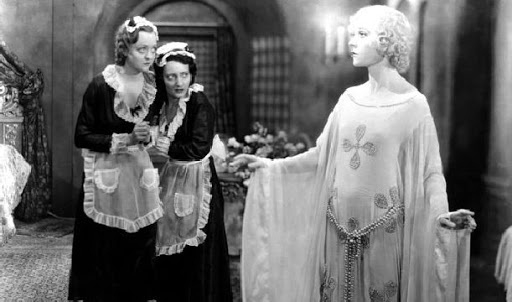
• We see Legendre’s maids arguing over whose turn it is to brush the hair of zombie Madeleine, which begs the question “Why doesn’t Legendre have zombie slave maids?”


Was the Haitian maid’s union something even Legendre was afraid of?

It's safe to say that fans of modern zombie films will most likely get a kick out of cinema’s first attempt at bringing the shuffling dead to life, just don’t expect Romero’s flesh-eating ghouls as the walking dead in this film are a rather more sedate bunch, but the film’s pre-code sexual undertones and the plot being a fairly obvious allegory of class exploitation under capitalism and colonialism, all went towards making this a rather interesting chapter in the genre and though you may laugh at White Zombie’s somewhat odd happily ever after ending as a horror film it still offers some truly chilling moments, not to mention you also get the legendary Bela Lugosi in one of his best roles.

Monday, August 15, 2022

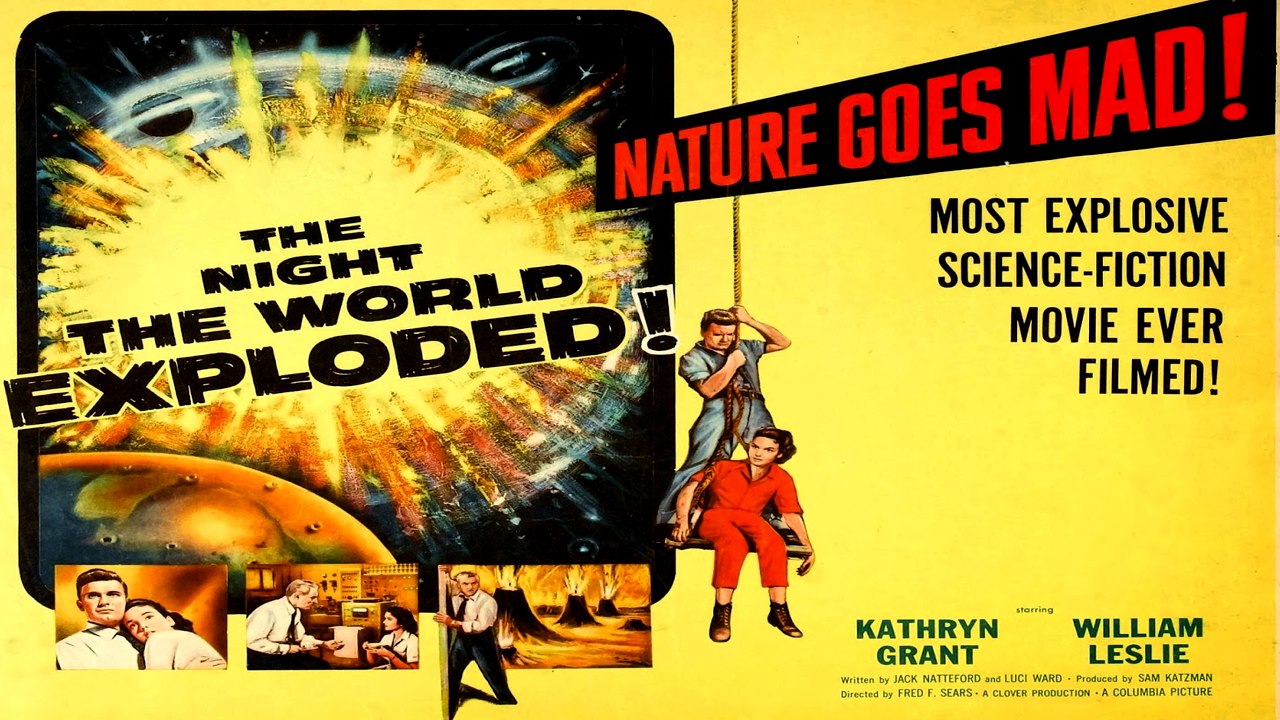
The Night the World Exploded (1957) – Review

Disaster films and science fiction are two genres that go well together, like ham and eggs one with a little more destruction, and this is because if a particular disaster isn’t something as simple as a towering building on fire or a rogue wave swamping an ocean liner, then it would be up to scientists to figure out how to put a stop to it, but one important ingredient to pull off such a genre mash-up is in having a decent budget and that is something producer Sam Katzman rarely ever had when putting his productions together, and The Night the World Exploded was no exception.

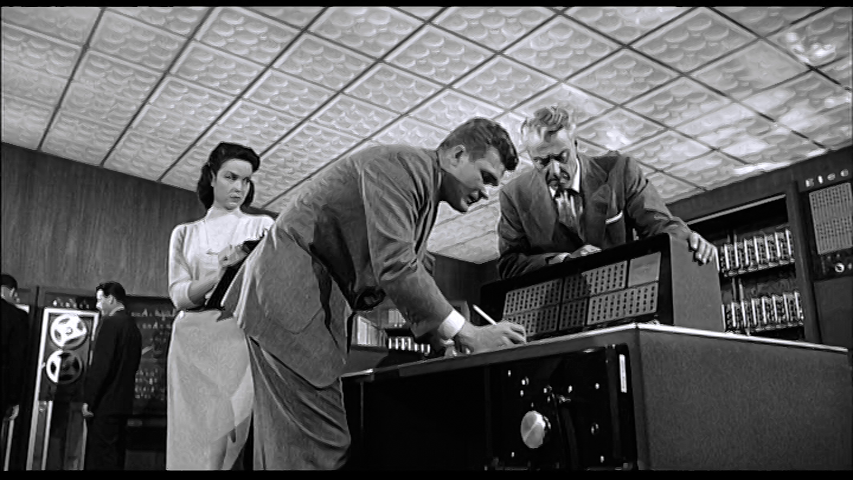
For decades science has been trying to predict natural disasters, whether it be through sensors placed to monitor seismic activity or satellites tracking weather patterns, science marches on to protect us oblivious citizens and in The Night the World Exploded we are introduced to Dr. David Conway (William Leslie) who has built a machine that can, apparently, predict earthquakes and he and his team, consisting of Dr. Ellis Morton (Tristram Coffin) and the lovely Laura Hutchinson (Kathryn Grant), have discovered that a serious quake is going to hit California. Needless to say, the Governor refuses to order an evacuation based on information provided by an untested device, which the film surprisingly treats as a realistic reaction, but when the earthquake hits, as predicted, Conway and his friends are thrust into a race against time as he believes that in a matter of days the world could explode.


I was able to predict they would only be able to afford stock footage of an earthquake.

The plot of The Night the World Exploded depends heavily on the viewer having little to no understanding of geology, or science in general, as we watch Dr. Conway and friends run around in a futile attempt to save the world from a mysterious new mineral he calls Element 112 which is, apparently, the cause of the earthquake and if left unchecked will trigger more and more quakes until eventually, the world explodes. Turns out that mankind’s pillaging of natural resources has left this new element exposed to the air and when left to dry it expands, heats up and then explodes with a titanic force. To say that all the scientific doublespeak in the world wasn’t going to sell this premise is a fair statement, the script and visuals on display certainly have a hard time selling that premise, but even worse is the fact that if what Conway says was true there would be no way for mankind to actually reverse the process in a matter of days – their plan involves every country in the world flooding areas where the element is being exposed by seeding clouds and blowing up dams – and I don’t care what their magical “Datatron” computer says, the human race is doomed.

“I know I've made some very poor decisions recently, but I can give you my complete assurance that my work will be back to normal. I've still got the greatest enthusiasm and confidence in the mission.”

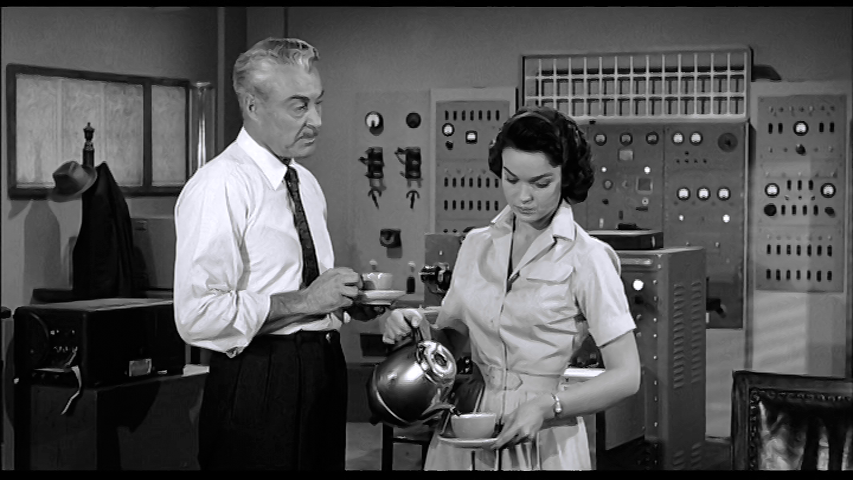
One standout element in the film, that isn’t a volatile geological threat, is that of the character Laura Hutchinson, known to her friends as Hutch, as she is depicted as a smart and capable woman who the team actually depends on, sadly this is undercut by her wanting to quit her job to marry some dude named Brad because Conway is too hung up on science to see that she is in love with him, and not this Brad person. Hutch is willing to race into danger along with the men, like a true hero, and actress Kathryn Grant gives the character more of a backbone than what you’d find in most female characters found in this genre at the time, sure, she will still have to be rescued at one point by the men but she is never relegated to being just a background character, one whose primary job is to make the coffee.


Well, she does make the coffee but it’s not her primary job.

Stray Observations:

• This film could be considered the reverse of The Monolith Monsters as the rocks in that film expanded when wet while the minerals in this movie grow and heat up when left out to dry.
• Hutchinson freezes up while climbing down the rope ladder into the cavern pit, because, you know, she’s a girl.
• The Assistant Secretary of Defense points out the logistical problems of gathering all the world’s top scientists together, such as getting them all passports, as if something that trivial would even be an issue when the world is about to explode.
• We keep hearing about Hutch’s boyfriend Brad but we never see him, I’m guessing he’s the male equivalent of having a girlfriend in Canada.
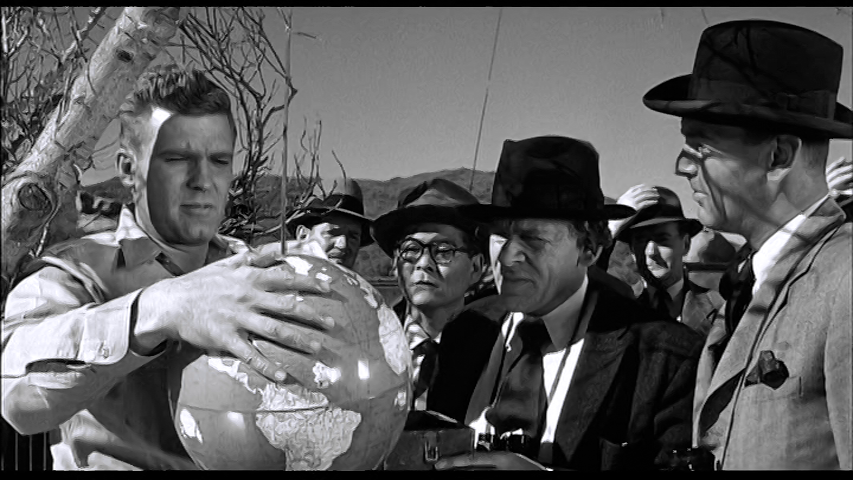
• Conway places a sample of the explosive mineral inside a globe of the Earth, to demonstrate to his fellow scientists its destructive nature, but I’m not sure a department store globe is a proper analog to the actual Earth.


Are we sure Conway isn’t just a sixth-grade science teacher?

The key to one's enjoyment of The Night the World Exploded will depend greatly on how much pseudo-scientific babble you can take as that is pretty much all this film has to offer, mostly due to the fact that the filmmakers had no budget to provide anything else, and even the film’s title is a big lie as not only does the world not explode but none of the events even take place at night. What does work for the film is that all that scientific mumbo-jumbo is delivered by a more than capable cast of talented actors, ones who manage to remain earnest and sincere while providing a surprising amount of gravitas in what is clearly a cheapie B-picture. The Night the World Exploded may not contain much in the way of spectacle, and will likely disappoint most fans of disaster movies, but with the confident direction of Fred F. Sears as well as Benjamin Kline’s great cinematography, the end result was a film that turned out better than it had any right to be.