Blog Archive

Monday, January 3, 2022

The Herculoids (1967-1969) – Review

In the late 1960s, Saturday morning cartoons were populated by flashy superheroes or teen sleuths, not to mention whatever animal sidekick they had on hand, but in 1967 there was one particular show created by legendary American artist Alex Toth which stood apart from the rest. For those not in the know, Alex Toth worked in and out of both comic books and cartoons to create not only amazing and original worlds but to also populate them with some of the most outlandish creations imaginable.  Today we will look at one of the best examples of his work in the form of The Herculoids, a show that broke new barriers when it came to weird and wonderful heroes.
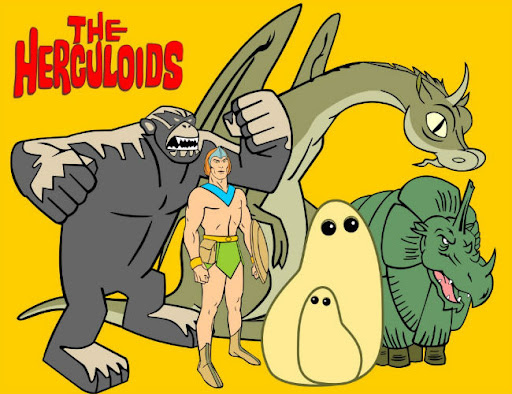
“Somewhere out in space live The Herculoids” and with that scintillating line of dialogue that opens each episode we learn about as much as we ever will about the setting for this particular cartoon which is set in a sci-fi pulp fiction world much akin to what would be found within the pages of the works of Edgar Rice Burroughs as they were both full of heroes and monsters. The main protagonist for The Herculoids is Zandor (Mike Road) a space barbarian who fights alongside his wife Tara (Virginia Gregg) and their son Dorno (Ted Eccles) who is “Robin the Boy Hostage” for this show, and it is this family's duty to protect the planet Quasar from invading robots, mad scientists and various mutants that happen along. Now, if this seems like a pretty big job for such a small family worry not for they are ably aided by a rather diverse team of amazing creatures.
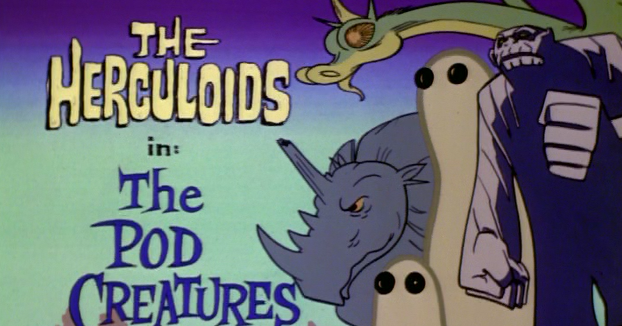
 

Basically, if you are a Pod Creature be afraid, be very afraid.

The five creature characters that make up The Herculoids were not only amazing but they were downright scary as well, first, we have Zok (Mike Road) a winged dragon that can emit laser beams from both his eyes and tail as well as having the capability of interstellar travel, next we have Igoo (Mike Road) a large and powerful simian with extremely dense rocklike skin that makes him nearly invulnerable to all harm, then we have Tundro (Mike Road) a ten-legged, four-horned rhinoceros/triceratops hybrid that can shoot explosive energy rocks from his horn like a canon and he can also charge through most obstacles like an out of control tank, finally, there is Gloop and Gleep (Don Messick) two protoplasmic creatures whose incredible abilities put the rest of the Herculoids to shame. Where Igoo is “nigh-invulnerable” these two are completely indestructible as they can absorb and deflect all energy blasts with ease, as well as your more standard physical attacks, and they often use this ability to shield their friends from all sorts of harm. But that’s not all, they can also transform themselves into cushions, trampolines or parachutes so that they can save their friends from potentially fatal drops, and they can stretch themselves between tree limbs or rocks to act as slingshots or to encircle an attacker's limbs to restrain them or even squeeze them enough to render them unconscious. Is that not terrifying enough? Well, there’s more, they also have the ability to momentarily divide their body mass into separate portions, which can then be independently controlled, and with this amazing talent, they can perform attacks on multiple targets or form a shield wall.
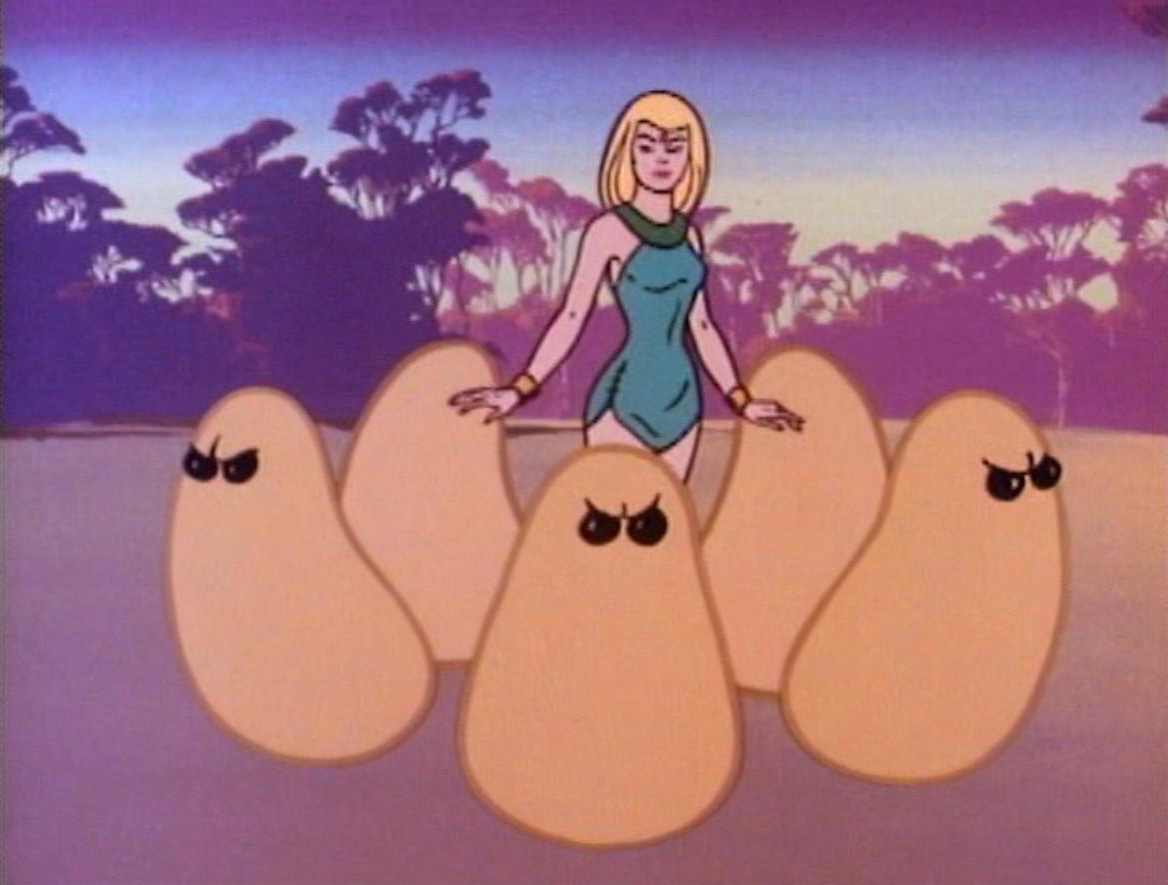
 

Thank god this oozing nightmare-fueled terror is on our side.

Despite television’s Standards and Practices doing their best to prevent excessive violence on Saturday morning cartoons, The Herculoids was a pretty damn violent cartoon because even though the violence was bloodless we still got, for example, Zandor and his gang of misfits blithely murdering a group of space pirates who had the nerve to take Dorno hostage in the very first episode, and sure, we don’t see any lifeless corpses lying around but we also don’t see people stumbling from the wreckage of their exploded or smashed vehicles, which leaves no doubt in my mind that those pirates were very much dead. A question that all this wanton violence raises is “Why is Quasar so important to all of these various alien invaders?”  And with Zandor the protector of this world, a planet that doesn’t seem all that rife with resources, you’d think most villains would steer clear of this particular planet and maybe try a less challenging target like say, the planet Mongo.
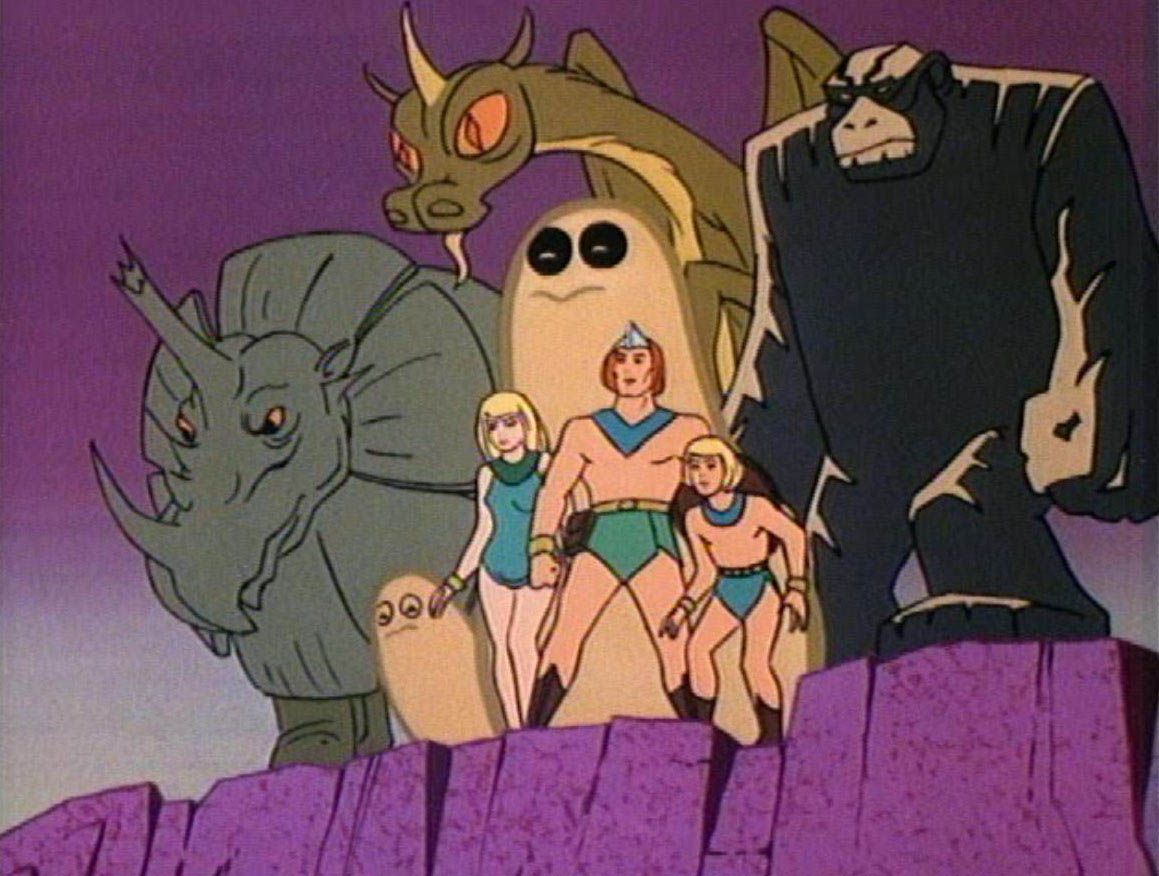
 

Facing Ming the Merciless would be a cakewalk compared to these guys.

Stray Observations:

• Even futuristic space pirates have the same penchant for burying their treasure in a hole in the ground, which seems very low-tech, don’t they have Cayman Island-type banking planets in this galaxy?
• In "Sarko the Arkman" an alien captures Igoo and Tundro for some unknown “evil purposes” but as in the case of the space pirates the only purpose I could see for this would be as in an easy way to commit suicide.
• Quasar is populated by flying monkeys which has me wondering if this is where the Wicked Witch of the West got her winged armada from.
• In the episode "The Gladiators of Kyanite" Tundro is captured and taken to a gladiator world and when Zandor finds out he says, “Dorno, I’ll go ahead on Zok, you follow later with the rest of the Herculoids” but how will they follow? Zok is an intergalactic flying dragon but as far as I can tell Zandor and the rest of his family don’t have a spaceship or anything else to allow space travel. Also, how exactly does Zandor survive the vacuum of space while riding on the back of Zok?
• This is a rare cartoon to feature a superhero that uses a slingshot as his primary weapon, one that fires explosive energy rocks, so take that, Dennis the Menace.
• Zandor also has an indestructible shield that he can throw and ricochet around like Captain America.
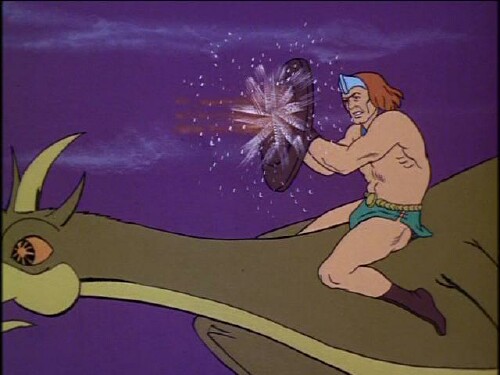
 

As if riding a laser-shooting dragon wasn’t enough of an advantage.

There is not what one would call “heavy plotting” in The Herculoids as each short segment dealt mostly with random alien invaders arriving on Quasar, mostly for inexplicably stupid reasons, who then find themselves being soundly trounced by Zandor and company. One of the bigger stumbling blocks the show’s writer had to overcome was trying to make each encounter seem like a challenge because the sheer strength and literal firepower of our heroes were pretty much insurmountable, adding to that, the fact that there was almost no real character depth or even a satisfying background given for Zandor and his family, other than the fact that they live "Somewhere out in space," and we must again ask the question "What exactly is so important about protecting the planet Quasar?" I will point out that we do get a villain cackling about “The riches of Quasar will be mine” but from what I can tell this place isn’t some bountiful paradise full of jewels and precious minerals, quite the opposite, in fact.
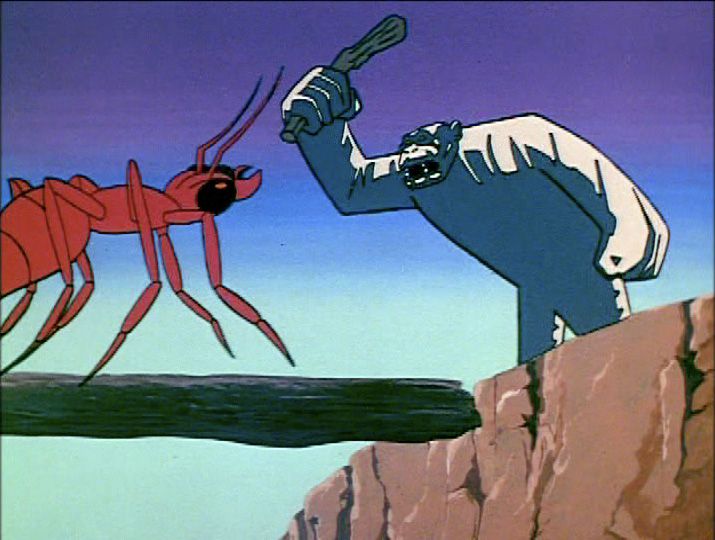
 

Come for the desert landscape, stay for the Giant Ant attacks.

The writers were hampered even further by each half-hour show being divided into two separate stories and with this truncated format there was simply no way to introduce the villain of the week, establish the threat and then provide any kind of reasonable plot for our heroes in the time provided, thus the show tended toward being rather simplistic and repetitive in nature with Zandor and his fellow Herculoids encountering random invaders, thrashing them rather soundly, wash, rinse and repeat. That all said, what we did end up with was a show that had some truly fun action sequences and a hero who really knew how to take out the trash.
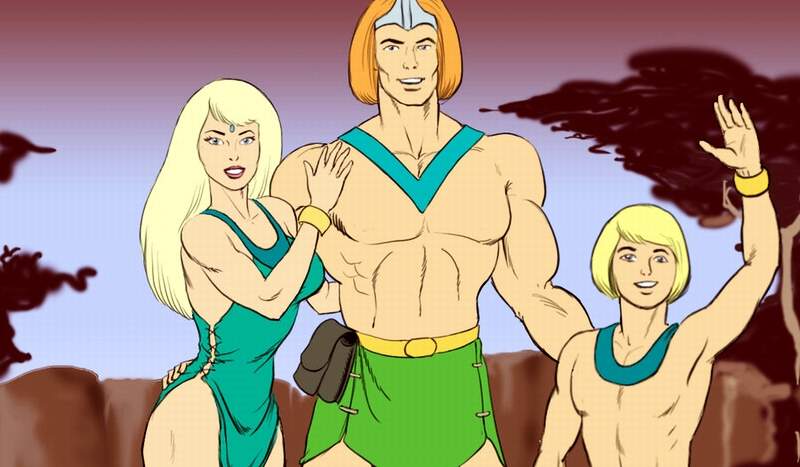
 

“I don’t need the power of Grayskull to kick ass.”

I was a kid when this series came out and watching it now I was shocked at exactly how violent The Herculoids was and to put it in perspective if one were to watch an episode of the Superfriends you'd find that Standards and Practices of the time wouldn’t allow Batman to even punch anyone, while in The Herculoids about 80% the villains who that take up arms against our heroes do not survive the encounter, in fact, we actually see Zandor and the Herculoids hunt down and dispatch a fleeing foe, which was not something you’d normally find in an animated show that was made for children. So even if the scripting for this show was a little on the thin side it more than made up for it with badass action and some of the greatest designed monsters and aliens ever to grace a television show. Overall, if you haven’t seen this show I highly recommend you track it down as the creations of Alex Toth are a wonderful tribute to the likes of Tarzan, Flash Gordon and Conan the Barbarian.

Thursday, December 30, 2021

Dreamscape (1984) – Review

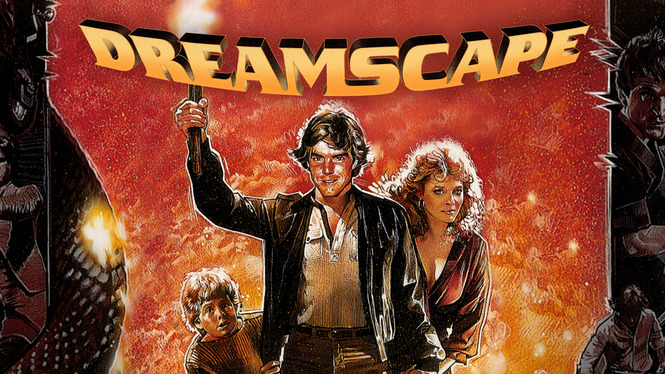
Long before Christopher Nolan was incepting Leonardo DiCaprio into people’s dreams a little film by Joseph Ruben called Dreamscape had pretty much done that very same thing, mind you, with an incredibly lower budget and a lot less metaphysical mumbo jumbo to confound the viewer, nonetheless, it turned out to be an interesting if problematic little gem that has developed quite the cult following over the years.

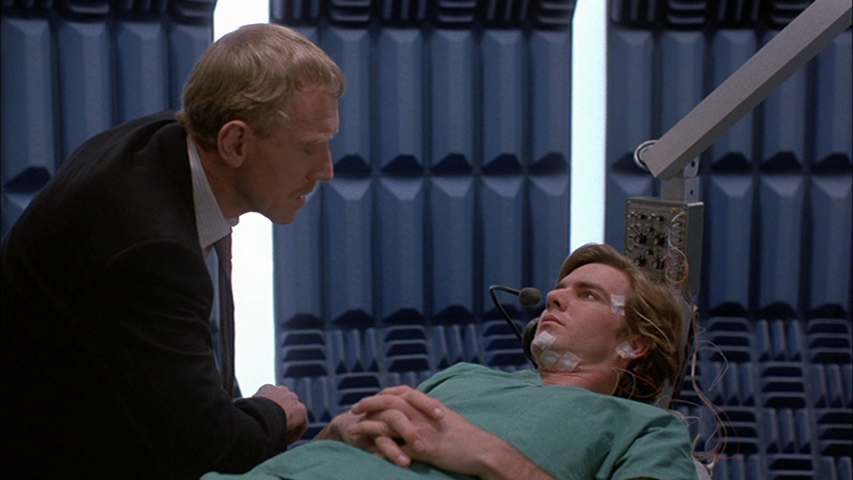
The basic premise of Dreamscape is what really sells the movie “If you could enter someone’s dreams what effect would this have on the dreamer?” The hero of the movie is a young psychic named Alex Gardner (Dennis Quaid) who after turning his back on scientific research when in his late teens he has since been using his unique talents to make money from gambling and womanizing, as many of us would given the chance, but now his old mentor Dr. Paul Novotny (Max von Sydow) has a new project that he is sure Alex would be perfect for. With angry bookies on his heels and an IRS audit threatening his five years' worth of gambling winnings, Alex agrees to join this government-funded psychic dream research program, and that one of the lead scientists is the beautiful Dr. Jane DeVries (Kate Capshaw) certainly was a bonus.  But what exactly is the purpose of this research?  Novotny explains that they hope to unlock the mysteries of the mind and help people suffering from debilitating nightmares.


“This is not a Cronenberg film, so the odds of your head exploding are actually quite small.”

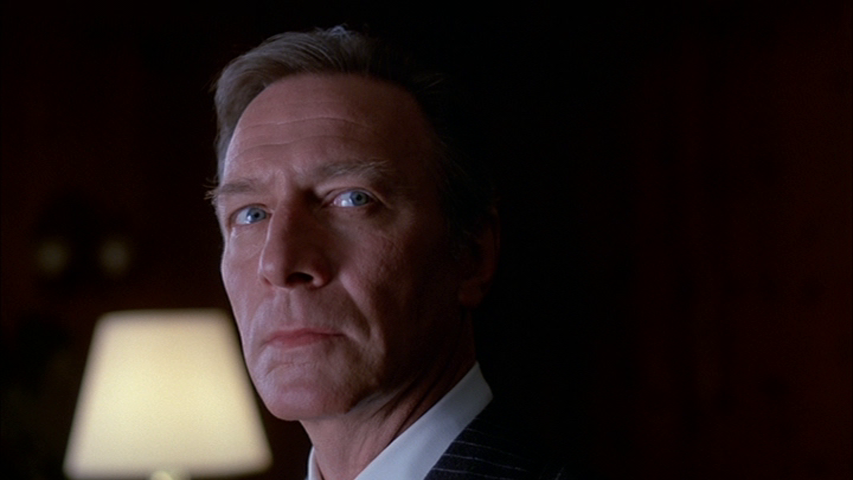
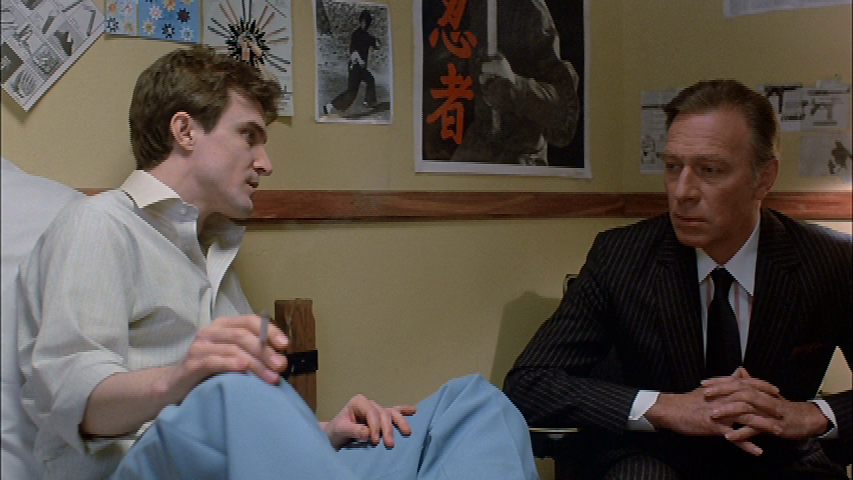
As this is a science fiction/thriller there are obviously going to be elements of conspiracy and murder to spice things up, which in the case of Dreamscape is provided by the character of Bob Blair (Christopher Plummer), who is a powerful government player with plans to use the research to create psychic assassins that can kill their targets within their own dreams thus leaving no evidence of murder behind, and to aid him in this task is Tommy Ray Glatman (David Patrick Kelly), one of Novotny’s top “dream projectors” but who is also clearly a deranged psychopath. These two characters bring up a big question and an even bigger problem with the script “Why would the benevolent Dr. Paul Novotny become involved with these people?” Sure, Blair is needed so as to provide the funds for the research, and we even learn that Blair and Novotny are friends of a sort, but if they are so close how does Novotny not know that even among the government agencies Blair is considered a scary guy? Things begin to get interesting when Alex runs into horror author Charlie Prince (George Wendt) who warns him of just how bad a dude this Blair guy is, and if this random Stephen King knock-off knows Blair is bad news you’d think Novotny would at least have a clue.


Every single shot of Bob Blair in this film screams “He’s Evil!”

But hey, if you need funding maybe you may have to overlook where the money is coming from but why for the love of God would you let someone like Tommy Ray Glatman anywhere near this project, sure, people with the required psychic abilities must be rare but Glatman was once committed to Bellevue Hospital for murdering his father and had been diagnosed as being a sociopathic murder. I don’t care how small the pool of qualified psychics is would you really want a crazed killer wandering through the brains of your test subjects? And it’s not as if Novotny was kept in the dark about Glatman’s past because Alex finds detailed files on the little psycho right in Novotny’s office.  So we must ask the question "Is Novotny simply careless, desperate, criminally negligent or all three?" The only reason his character is even remotely likable is that he’s being played by the great Max von Sydow and he provides the necessary gravitas and intelligence to sell such a role, of course, the shadowy government plot about psychic assassins is simply the framework for the cool concept of people entering someone’s dreams and in that area Dreamscape really delivers.


Nightmares and Dreamscapes.

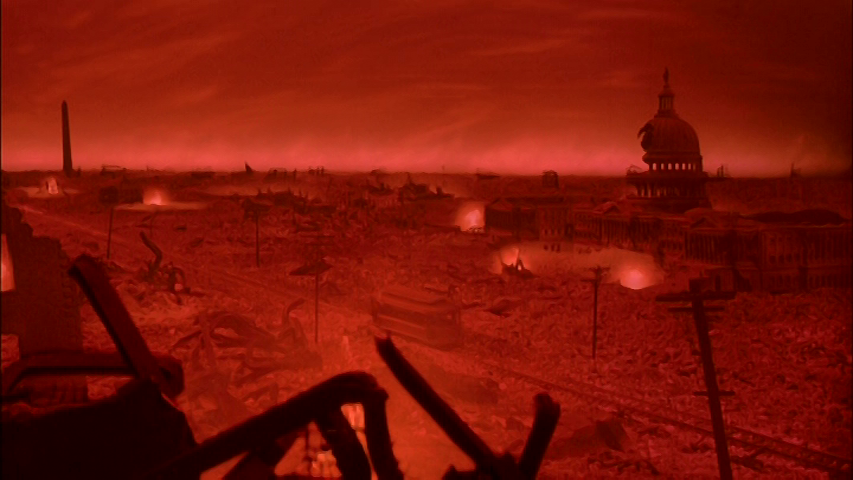
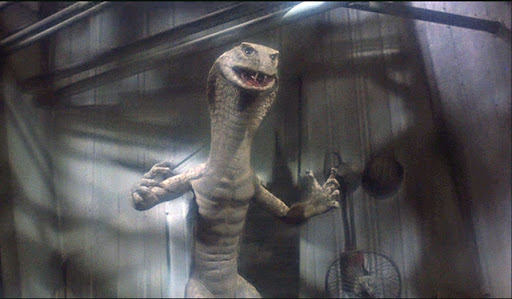
Alex is able to use his dream projecting ability to help several test subjects; including a construction worker afraid of falling, a neurotic husband who thinks his attractive wife is cheating on him and a little boy who is plagued by a horrible "snake-man” but the key nightmares in this film belong to the President of the United States (Eddie Albert) who has been plagued by reoccurring nightmares of a post-nuclear war wasteland and seeing his late wife being consumed by an atomic firestorm, but what really bothers Blair most is that his old friend The President is being crippled by these nightmarish images and what is alarming to him is that they are also causing him to think about weakening America’s nuclear deterrent at the upcoming negotiations for nuclear disarmament, thus he enlists Glatman to murder the President during one of these nightmares.


“I’m going to be the Lee Harvey Oswald of dreams.”

There is a lot to enjoy in Dreamscape, from the German expressionist dream sequences to the cool stop-motion animated snake-man, there are some truly great visuals on display here, especially considering its surprisingly small budget, unfortunately, the film’s lead protagonists don’t hold up their end all that well and they greatly weaken the story. We have the aforementioned Dr. Novotny’s terrible hiring practices but we also have the normally lovable Dennis Quaid as a sax-playing womanizer who at one point in the film enters the dream of Dr. Jane DeVries so that he can have sex with her and by anyone’s book that’s tantamount to rape, I don’t care that she gets over it and that they eventually live happily ever after it’s still very very wrong.  Then we have the fact that after saving the President from Glatman’s dream attack Alex later enters Blair’s dream and kills him, and sure, Blair was an evil bastard and one who is apparently somehow so untouchable that even an attempt on the President’s life gets him a free pass, but to cold-bloodedly kill him in a dream puts Alex in the same league as Blair and Glatman. That the character is being played by Dennis Quaid does help mitigate some of this a bit but it still makes him a less than a stellar hero, of course, when one watches Dreamscape the questionable morality of the protagonist isn’t what you remember, you remember the snake-guy.


“Dream Warriors, come out and play-eh!”

Overall, Dreamscape was a nice little flick from the 80s that at least tried to be a bit different and a little outside the box, balancing conspiracy elements ala Brian De Palma’s Blow Out with a dash of science fiction ideas similar to Douglas Trumbull’s Brainstorm, all culminating in a nice cinematic gem from an era known for being a bit crazy when it came to genre outings.

Monday, December 27, 2021

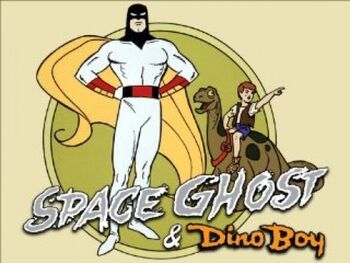
Space Ghost & Dino Boy (1966-1968) – Review

After the well-received but limited runs of the Hanna-Barbera animated shows The Jetsons and Jonny Quest, the studio decided to take a rather different approach when it came to creating a new science fiction/adventure show, in this case, it would be a double-combo that would have two completely unrelated titles married together.  Leading things off would be Space Ghost, a space travelling superhero, followed by Dino Boy a show dealing with a young boy who is lost in a prehistoric world.  The thought process behind this must have been that if one of those segments didn’t capture the imagination of your typical Saturday morning cartoon viewer hopefully the other would, and one must admit, that isn’t too bad of a business model.

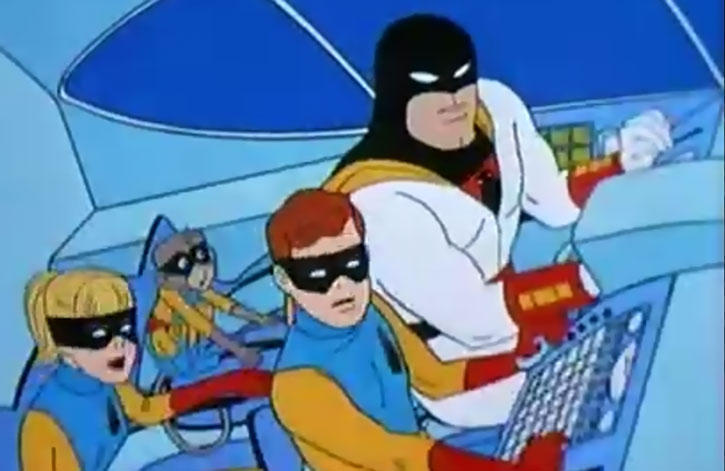
Each episode of Hanna-Barbera’s Space Ghost & Dino Boy consisted of three segments, two of which were adventures starring Space Ghost (Gary Owens) the intergalactic crime-fighter, who along with his teen sidekicks Jan (Ginny Tyler) and Jace (Tim Matheson) and their pet monkey Blip (Don Messick) would take on a variety of space-related villains, while the middle segment of the show was Dino Boy in the Lost Valley, which dealt with a young boy named Todd (John David Carson) who had been forced to parachute from a crashing plane and landing him in a mysterious valley where he was befriended by a caveman named Ugh (Mike Road), and with the help of a pet baby Brontosaurus named they called Bronty (Don Messick), this trio would do their best to survive in a lost world that was populated with a variety prehistoric life as well as strange creatures and various tribes that all seem hellbent on killing poor Todd.


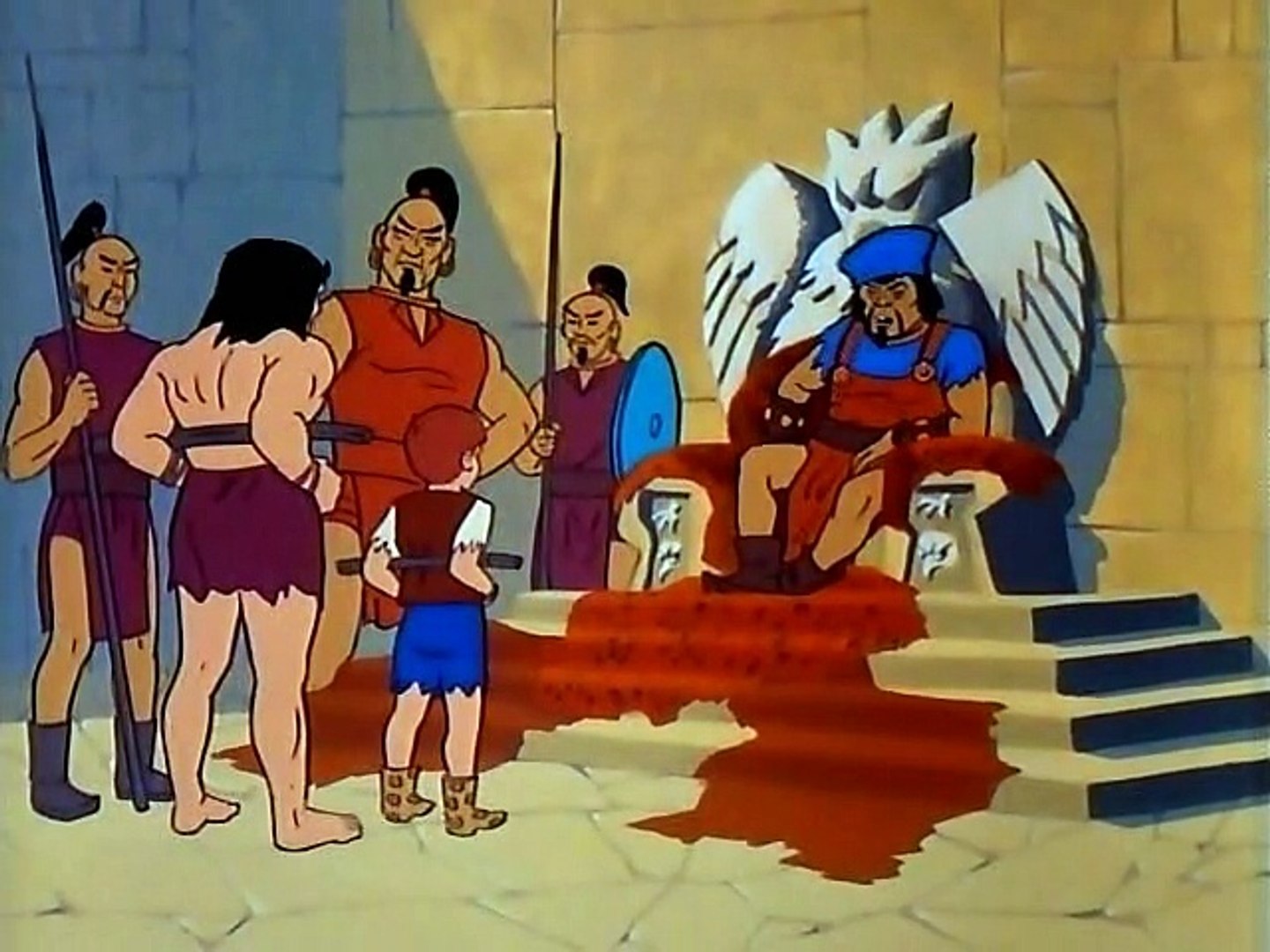
"I know you're only ten years old but we have to sacrifice someone today."

What separates this series from many of its peers was that at the helm was show creator Alex Toth, a legend among comic book artists and it was his work at Hanna-Barbera that really changed what type of shows could be produced for a Saturday morning kids cartoon.  His brilliant character designs remain as some of the best examples of science fiction and superhero genre to date and is the sole reason that shows like Space Ghost & Dino Boy are so well remembered.  Now, as with many of the Hanna-Barbera cartoons they didn't bother with a “pilot episode” thus not much was given here in the way of backstory concerning either Space Ghost or Dino Boy, in fact, in the eighteen segments produced we never learn anything of Dino Boy's parents nor do we find out who exactly Space Ghost and company were supposedly working for.  We do hear of an organization called the Galactic Patrol but what affiliation they have with Space Ghost is unclear and as he lives on “Ghost Planet” with Jan and Jace he doesn’t seem to be too worried about any authority other than his own, and it’s also important to note that they all wear masks despite not seeming to have secret identities to hide, which begs the question “Are these guys space vigilantes?”


“Everyone act cool, it’s the cops!”

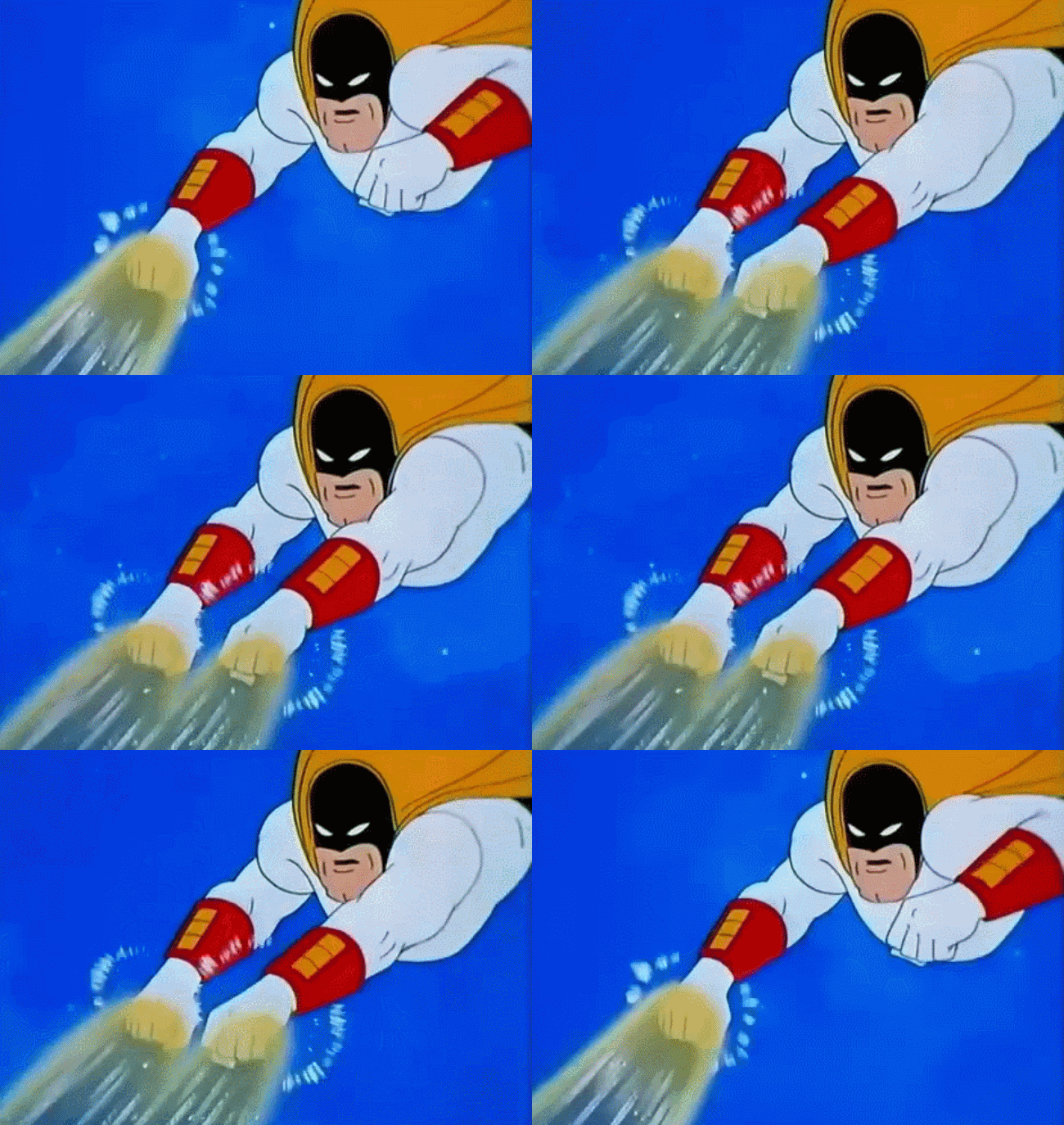
Unlike many superheroes of the time Space Ghost’s powers were technologically based and not inherent in him, making him more a Tony Stark type hero than a Superman as his abilities stemmed from his power bands that displayed multiple purpose beam-based attacks including heat, cold, magnetism, energy and force among others, basically, anything the plot required at any given time.  When watching this cartoon a common phrase to hear from Space Ghost was “I can’t free my arms to reach my energy bands” and this was pretty much the only way that the villains on this show could pose any sort of threat to our hero, either his bands would get stolen or he would be bound securely enough so that he couldn't reach a button on his gauntlet,  and this would often result in Blip sneaking in and pushing a button on one of the bands to free Space Ghost, a chimp deus ex machine if you will.  Of course, what made this show truly special was voice actor Gary Owens as only he could deliver lines like “Sandman, still on your brain control bit, eh?” with such coolness and aplomb and it was his work here that elevated Space Ghost above many other heroes as his deadpan and droll delivery was easily one of the more entertaining aspects of the show.


Though his energy beams did do much of the talking for him.

Stray Observations:

  • Space Ghost and his sidekicks have something called “Inviso Power” which allows them to become invisible as well as their spacecraft, and this prevents the silliness we often get in Wonder Woman shows where her plane becomes invisible but she doesn’t.
  • The idea of teen sidekicks and a space monkey would later be re-visited in the 1977 rendition of the Super Friends, only in that show, the teens were given a greater ability than simply turning invisible.
  • Ugh may look like your stereotypical Neanderthal, and talk with a standard caveman monosyllabic speech pattern, but he was portrayed as being quite intelligent and not only was he a great father figure to Todd he was often the one to devise clever ways in which get him and the boy out of some tough spots.
  • In one episode the villainous Zorak places Jan and Jace into a “time bomb” spaceship but it’s a ship that also comes with escape jet packs, which calls into question his ability to properly orchestrate a death trap.
  • In both Space Ghost and Dino Boy in the Lost Valley, many of the villains were insectoid in nature because beating up or killing insects was probably considered more acceptable at the time than harming regular human villains.
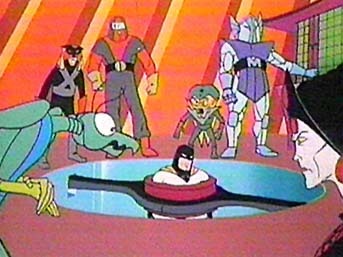
  • In the final two episodes, we got a six-part serial arc which was fairly unusual at the time, up to this point each segment was a stand-alone story but starting with “The Meeting” we were introduced to the Council of Doom a group that consisted of all the top foes of Space Ghost who band together to bring down our hero.


“We were going to call ourselves the Legion of Doom but Lex Luthor is very litigious.”

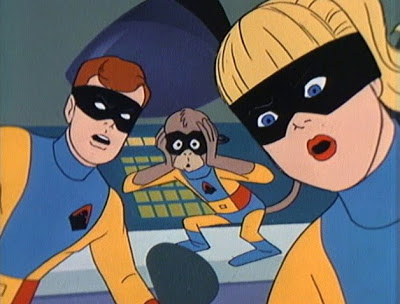
 The one truly laughable aspect of the Space Ghost segments is that of teen sidekicks Jan and Jace who are even more inferior to the likes of Marvin and Wendy from 1973’s Super Friends as their sole job in this show was, apparently, to get captured so that Space Ghost could later rescue them, in fact, even their monkey Blip was a more of an effective crime fighter as he’s seen thwarting several villains throughout the run of the show while Jan and Jace simply sat on their collective asses waiting to be rescued.  What’s more embarrassing is that when you compare Jan and Jace’s general incompetence to that of Dino Boy, who was just a young boy and not a teen crime-fighter, he’s often shown as the one coming up with clever ideas to solve a particular problem and he even saves Ugh’s life from time to time.  The same can not be said of Space Ghost's sidekicks.


These guys make the Wonder Twins look competent.

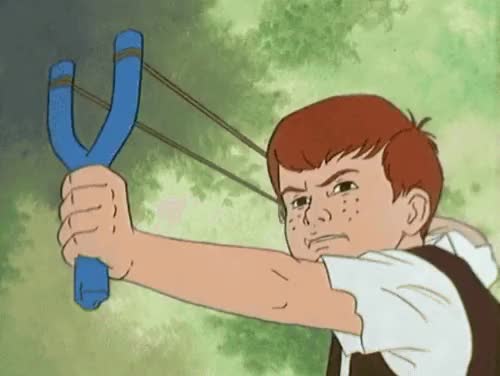
As was the case of Jonny Quest, the adventures of Space Ghost and Dino Boy were quite violent when compared to their contemporaries as each segment pitted our heroes against a variety of nefarious villains who wanted nothing more than to see our heroes dead, but what’s even more impressive here is the fact that in Dino Boy in the Lost Valley it’s a young boy in the crosshairs and seeing a kid tied to a sacrificial altar, while some Aztec looking asshat readies to carve out his heart, this wasn’t something you were used to seeing during a Saturday morning cartoon line-up, not to mention getting cool scenes like people jousting while riding atop a Triceratops, and unlike later Hanna-Barbera superhero shows neither Space Ghost nor Ugh seemed all that concerned about arresting the villains and thus the death toll on display here was surprisingly high for a cartoon.


In this show, Dino Boy’s slingshot was more effective than a Batarang.

In the 80s Space Ghost would return in another Hanna-Barbera cartoon called Space Stars, which would include segments featuring Space Ghost, The Herculoids as well as Astro and the Space Mutts and Teen Force, but it was in the 90s with Adult Swim that Space Ghost got his real comeback on the show Space Ghost Coast to Coast, which spoofed late-night talk shows, and it featured former villains Zorak and Moltar now serving as Space Ghost's sidekicks, sadly, Dino Boy received no such revival and has since been relegated to the forgotten mists of time.  Overall, Space Ghost & Dino Boy was an incredibly fun and dynamic animated series and even with its three-segment format limiting any depth in the plot the stories were still quite fun and entertaining, and much of this was due to the creative designs by the brilliant Alex Toth.

Thursday, December 23, 2021

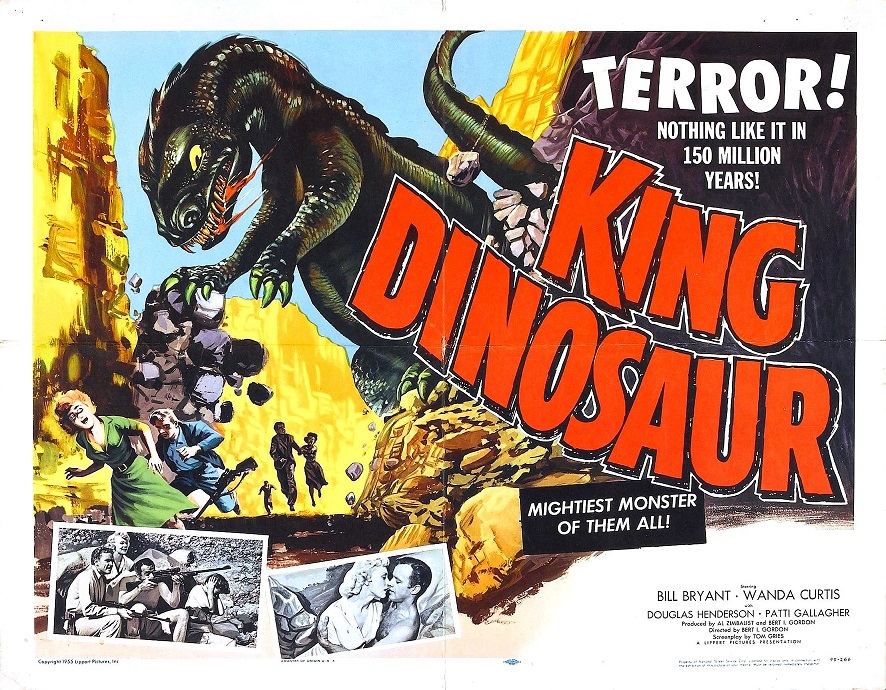
King Dinosaur (1955) – Review

How do you make a dinosaur movie in only seven days and with an almost non-existent budget? Well, the obvious answer is “Rush out and hire Bert I. Gordon to write, produce and direct the film” and don’t bother with such follow-up questions as “Will it be good or even make a dime?” because those kinds of queries are inconsequential when it comes to the man the myth the legend that is Bert I. Gordon.

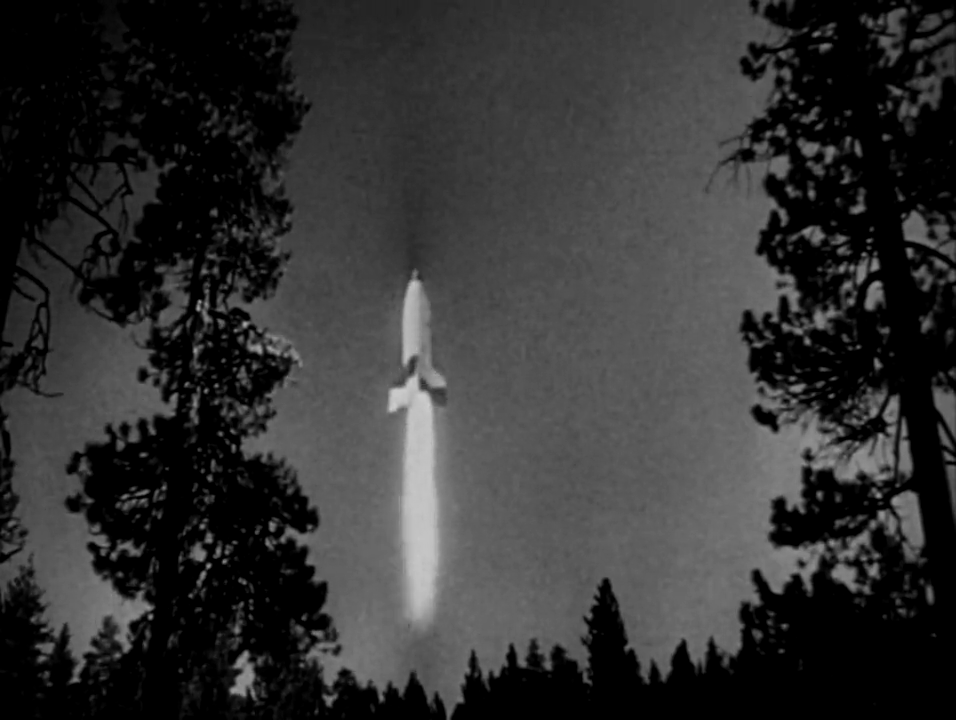
 Taking place in the far-flung future of the year 1960 the scientific community is thrown into turmoil when a new planet suddenly enters Earth’s Solar System and the world's industries are rushed into full gear to get a space program going when the idea that this planet, which is named Nova, could possibly support life. Four scientists are selected to become astronauts for this perilous mission this planet; the crew consists of Dr. Richard Gordon (Douglas Henderson) a zoologist, Dr. Nora Pierce (Patti Gallagher) a geologist, chemist Dr. Patricia Bennett (Wanda Curtis) and Dr. Ralph Martin (William Bryant) their medical specialists, and to say these would be the last people I’d send on a mission like this would be the understatement of the century as they prove themselves to be incompetent in almost any field, though to be fair, the very premise of the movie is fairly incompetent.

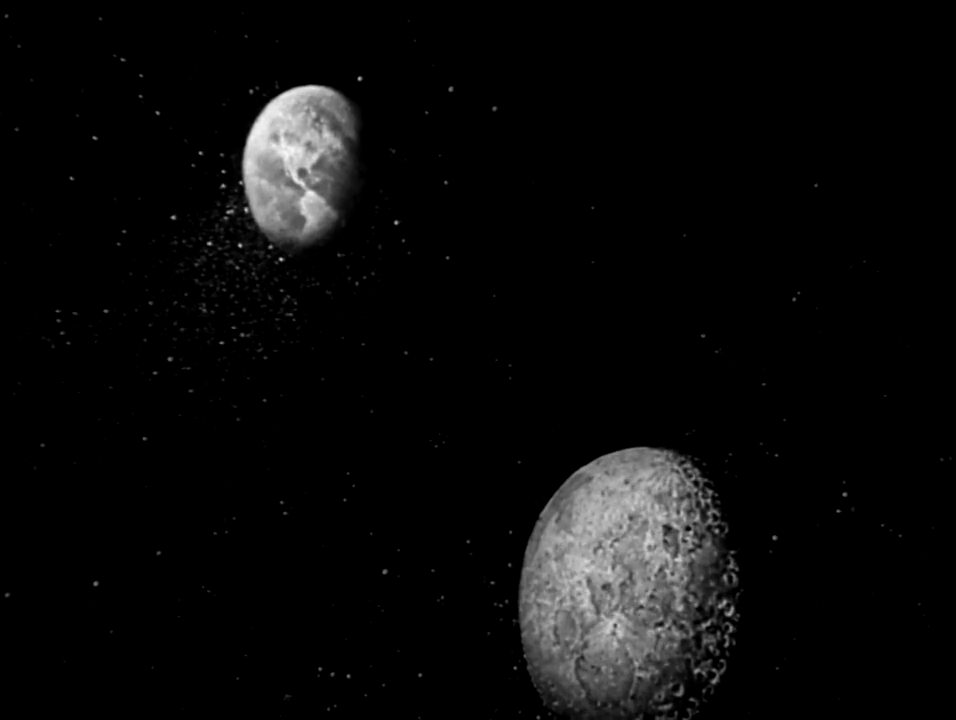
Science Note: If a planet roughly the same size as our own suddenly showed up in an orbit near us we’d be torn apart by the cataclysmic new gravitational forces that it would create.

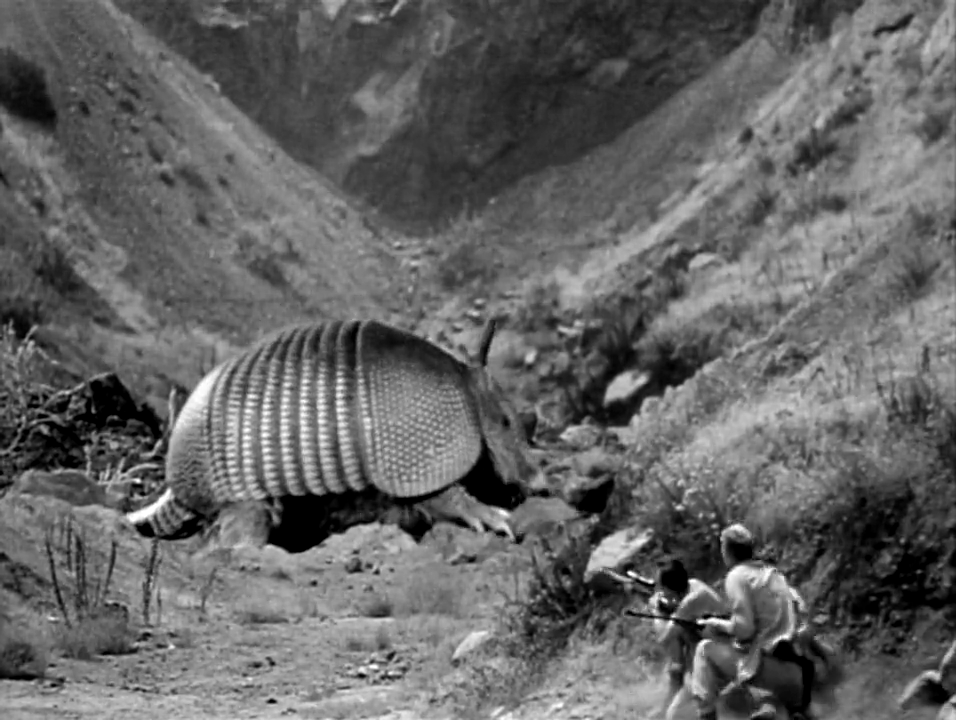
Upon landing on Nova the crew perform a few preliminary tests that determine that due to all the Earth-like animals wandering around that this planet could be very suitable for an Earth colony and as the place is simply abundant with such animal life as deer, bears and giant armadillos they immediately decide to explore. Things get off to a rocky start when during their first night on Nova we get Martin and Pat stupidly wandering off for a romantic interlude which results in him being attacked by a crocodile, which had me wondering if they’d stumbled into a Tarzan movie. With Dr. Martin laid up due to injuries sustained while rolling around with the croc it’s up to Gordon and Nora to take a raft and explore a nearby island that, for some reason, really fascinates Nora, and this is before the appearance of a giant armadillo.


And yes, this scene is as dumb as it looks.

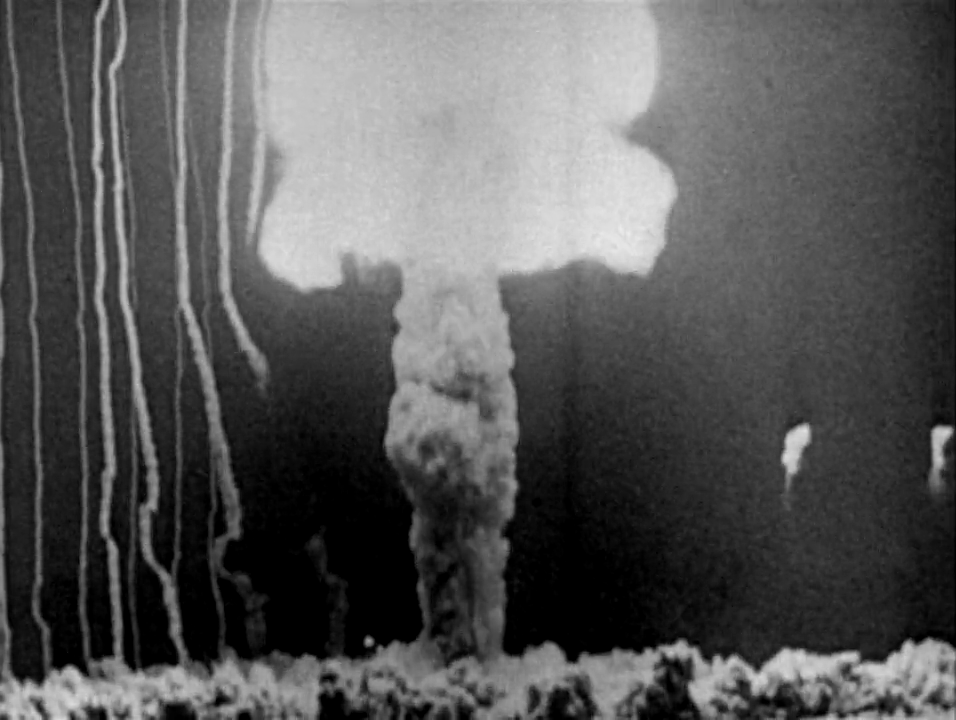
When a rumble that Gordon assures Nora is “Just thunder” turns out to be, in fact, the roaring of titanic lizards - it should be noted that I'm using the word "titanic" in the broadest sense of the word - and soon our plucky astronauts find themselves hiding in a cave while one particular persistent dinosaur tries to eat them, though occasionally taking a break from trying to get at our "heroes" to fend off several other aggressive dinosaurs. When things seem dire Gordon fires a flare to alert Martin and Pat that they are in trouble but what he expected these two chuckleheads to do in this situation is beyond me, and when they do arrive "nothing" is exactly what they do…well, not exactly nothing, good ole Dr. Martin encourages them to run before setting the timer on an atomic bomb he brought with him. I must say this is the only film I’ve come across where the solution to troublesome dinosaurs is a nuclear detonation.  That the dinosaurs were located on an island, and this collection of idiots fled via rubber rafts across the lake, makes the killing of the dinosaurs completely unnecessary and would more than likely have resulted in killing themselves in the blast, not mention the fact that they'd now have irradiated a large portion of the planet they were hoping to colonize. Well done, you colossal asshats.


“We’ll meet again, don’t where don’t know when.”

Stray Observations:

• The narrator tells us it takes the rocket months to reach the new planet but when we first see Nova it's almost as close as our Moon and thus should take hours not months to reach it.
• Upon landing on Nova Gordon spots an active volcano and explains to Nora that this means the planet is quite young, and I’m left wondering “Is this guy really a scientist or does him being a zoologist mean he simply doesn’t understand geology at all?”
• Pat’s instrument readings indicate that the air on Nova consists of 40% unknown bacteria and then she has them all immediately take off their spacesuits, declaring that the air is safe to breathe, clearly Pat is not familiar with how unfamiliar bacteria wreaked havoc with the Native Americans when the white man first visited. These people must have studied science at the same school as the people in Ridley Scott’s Alien: Covenant.
• Martin and Gordon refuse to let Nora and Pat take a watch during their first night on Nova because you can’t have a proper 50s space travel movie without sexism.
• Nora is really hung up on visiting the island that they see in the middle of a large nearby lake, describing it as “primeval looking” but at a distance, it looks just like the rest of the forest around them, yet later when they land on its shore she remarks “What a desolate, forsaken place” and she’s right, it’s all barren rocks and mountains, so what the fuck happened to that primeval forest she was talking about earlier?
• While trapped in the cave by one of the “dinosaurs” Gordon states that "It resembles a Tyrannosaurs Rex” but it looks nothing like a T-Rex and we once again must question his standing as an expert zoologist.

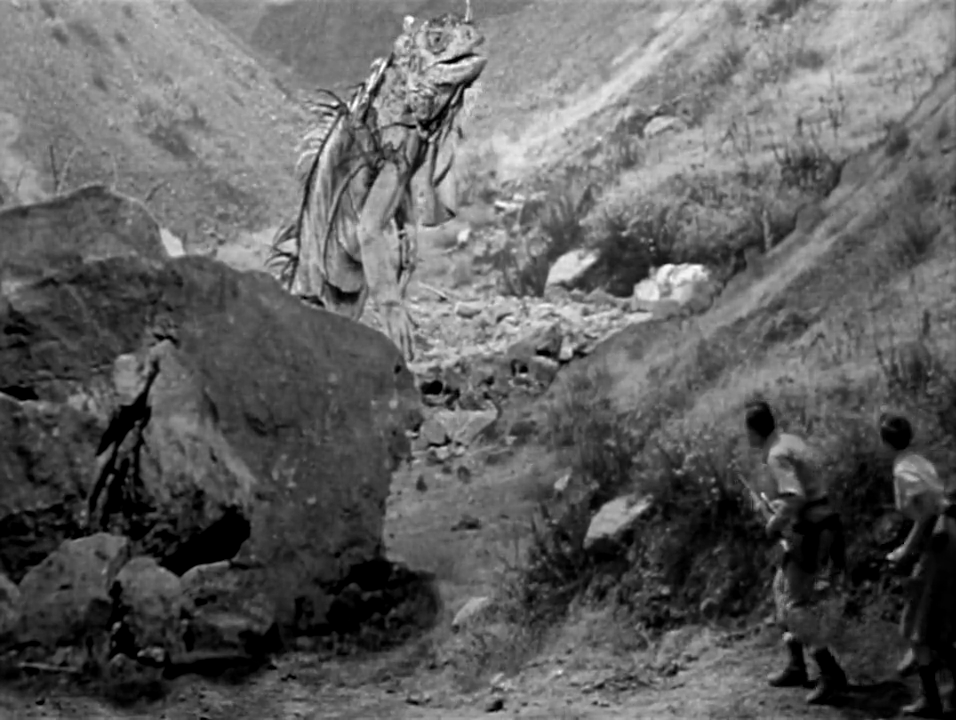
Note to Filmmakers: It’s one thing to substitute iguanas for dinosaurs in your low-budget movie but don’t name-check what dinosaurs they’re supposed to be when they’re clearly not, it’s embarrassing.

The use of iguanas and monitor lizards in place of dinosaurs is nothing new but when they are forced to fight each other for the sake of an "exciting film moment" that is something I will always find appalling and that Bert I. Gordon snubbed the idea of using dinosaur footage that Ray Harryhausen brought in to show him makes it even worse, and even if you could overlook that troubling element of the movie you're still stuck with a film that is 40% stock footage and narration with the remainder consisting of a small group of morons hiking through the woods and pointing out flora and fauna. I went into this film thinking "Space ships and dinosaurs, that sounds cool to me" alas what we got was lame dinosaurs and a weird romance between two of the shipmates.


Tonight on the Space Channel  "E.T. The Extra-Marital"

In conclusion, the premise of King Dinosaur is pretty far-fetched but I can let stuff like suddenly appearing planets slide if the following story and characters are engaging, that was not the case here and the end product was as big of a bomb as the one these idiots detonated at the end of the movie.

Monday, December 20, 2021

The Jetsons (1962-1963) – Review

With the popularity of the prime time animated series The Flintstones garnering both praise and a great amount of revenue for Hanna-Barbera Productions that they would try and capture lightning in a bottle a second time should be a surprise to no one, but where The Flintstones lived in a fanciful version of the stone age, where men and dinosaurs co-existed, The Jetsons would take place in the far of future of 2062.

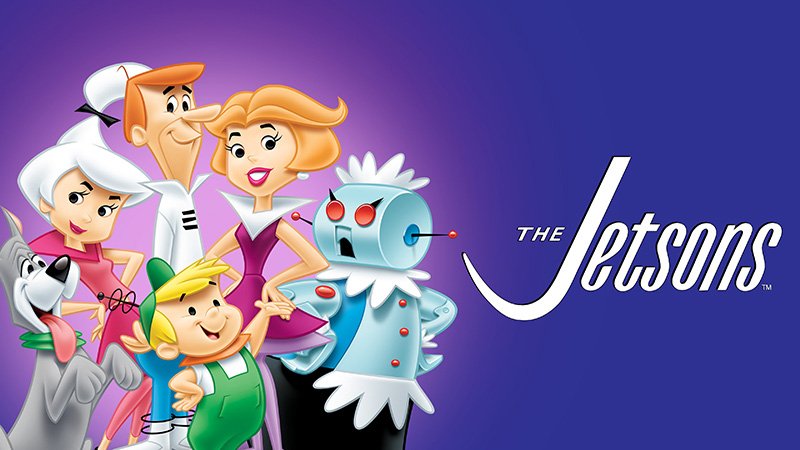
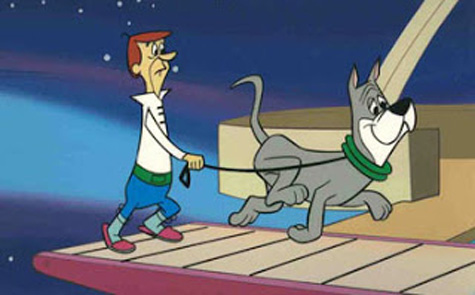
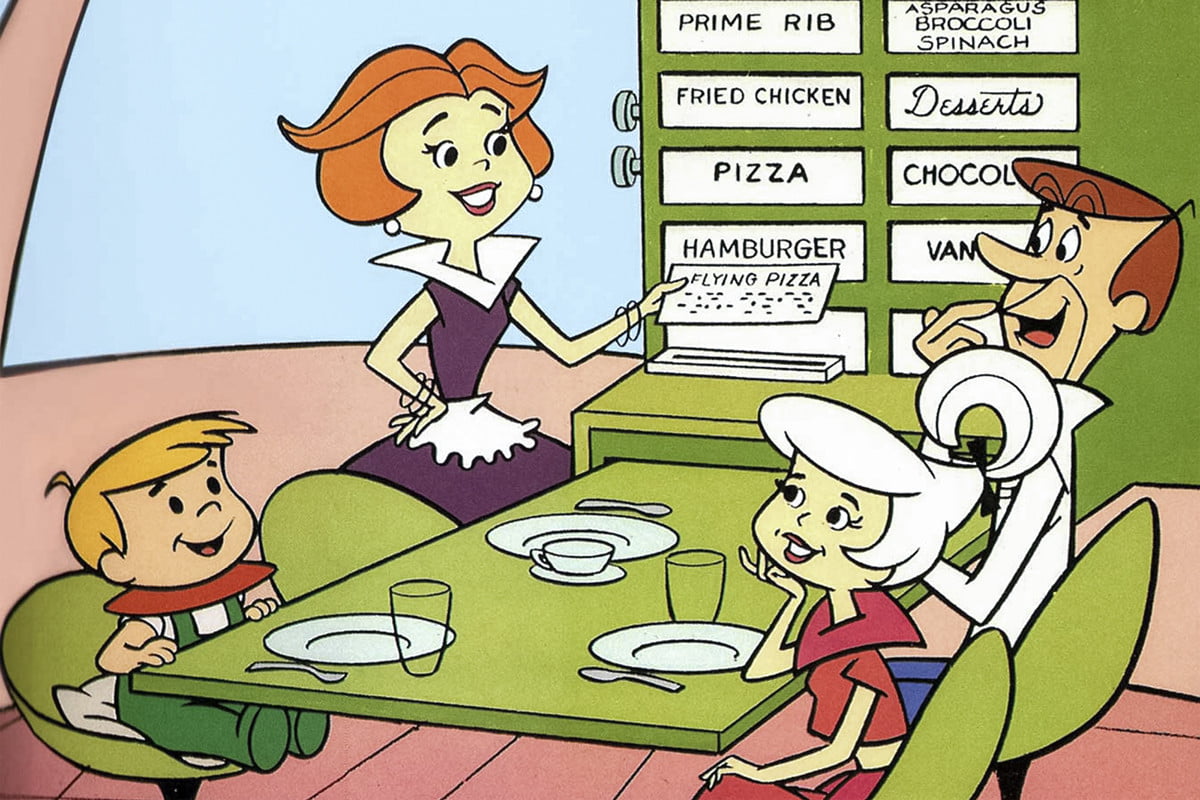
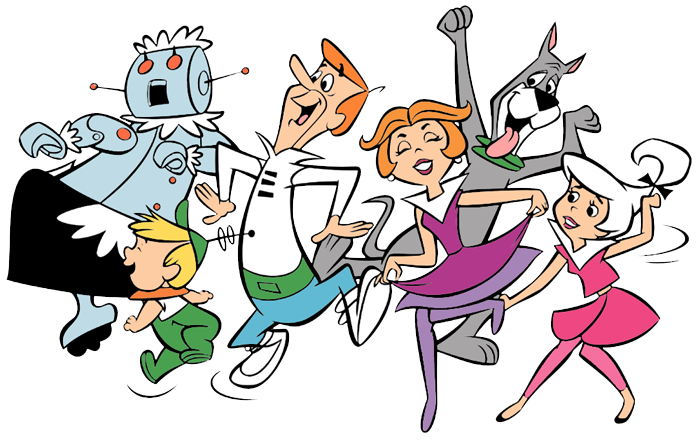
Speculative science fiction is about as old as the genre itself, with such epic films as H.G. Wells’ Things to Come giving the world a glimpse at a possible future, but one of the most popular of these was the Hanna-Barbera cartoon The Jetsons, which could best be described as Father Knows Best in Space, and followed the wacky adventures of George Jetson (George O'Hanlon) his wife Jane (Penny Singleton), daughter Judy (Janet Waldo) and his boy Elroy (Daws Butler) and how this family dealt with the everyday problems of living in the 21st century. Of course, to make things a little more interesting the family has a robot maid named Rosie (Jean Vander Pyl), who handles chores not otherwise managed by the press of a button on one of their numerous automated devices, and Astro (Don Messick) the family dog.

Note: Astro talks with an initial consonant mutation in which every word begins with an "R" an attribute that would later be used for Scooby-Doo.

The basic premise of the show was that no matter how far society advances humanity will always have something to complain about, case in point George Jetson, who complains about his three day work week and how having to push four buttons during his three-hour shift makes him consider his boss Cosmo S. Spacely (Mel Blanc ) to be a slave driver, meanwhile at home, his wife Jane seemed to be put out by doing such chores as laundry and washing the dishes despite this requiring nothing more than the pushing of a single button. In fact, in the very first scene of the very first episode we find Jane watching an exercise program where the only thing she has to exercise is her finger because, apparently, in a push-button society that’s the only body part that needs to be strong and in shape. Now, as this show was made in the early 60s don’t look for much in the way of progressive humour because aside from the many “My job sucks” jokes from George Jetson we also get a lot of stuff making fun of women driver jokes, their penchant for spending too much time and money shopping, basically, the female gender stereotype stuff you found in most of the shows of the time.


In this world, it’s a woman’s job to press the dinner button.

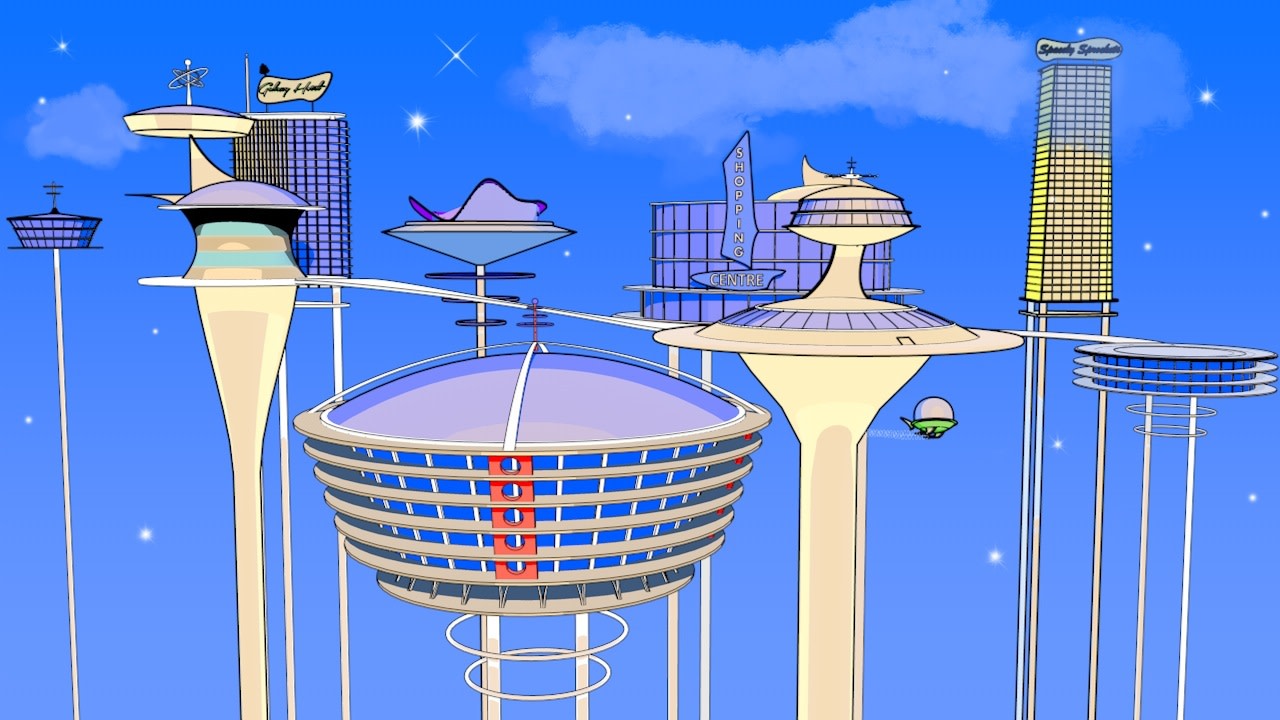
It should be noted that The Jetsons was one of the last shows to portray a future that was funny, optimistic, and progressive because once 1973's oil crisis hit and the subsequent fight for the environment that followed, depictions of the future became much more dystopian and nihilistic. What this show didn’t quite explain was why people were living miles and miles above the Earth’s surface and though the idea of space colonization is established we don’t see more than a few billboards in space and the occasional Space Cub Troop field trip to the Moon. The city’s themselves were rendered in the Googie style – a type of futurist architecture influenced by car culture – and designed by the great Iwao Takamoto who was also the production designer on Scooby-Doo, Where Are You? and his brilliant work here should not be underestimated.


This is my kind of future, no need for cyberpunk cities for me.

Stray Observations:

• Aside from Mr. Spacely’s secretary it looks like George is the only employee of Spacely Space Sprockets, so I’d say the reason he keeps George around is simply so he has someone he can yell “You’re fired!” at.
• Spacely Space Sprockets has a steno-pool of “female” robots who are allowed coffee breaks but why would robots need breaks or coffee at all? I guess if you refused them breaks you could end up with a robot uprising.
• With all the people-moving slideways and automated everything one must assume technology somehow found an answer to the obesity problem.
• The problem with concussions in football has been solved; the teams now consist of remote-controlled robots.
• In the episode “The Flying Suit” the ability for a person to fly around without a spacecraft is considered revolutionary but in the very next episode “Rosey’s Boyfriend” we see Judy flying around with what appears to be a standard-issue anti-gravity belt.
• If there is one negative thing to be said about Hanna-Barbera’s vision of the future it’s that the society as presented does look a little too Caucasian, in fact, we wouldn’t get a person of colour into outer space until 1972 with the series Josie and the Pussycats in Outer Space.


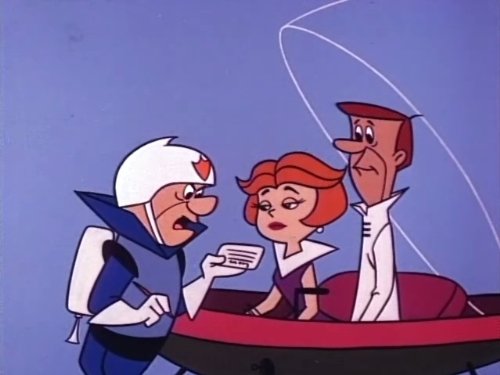
George was ever pulled over for flying while black.

The stories that make up the twenty-four episodes of The Jetsons consisted mostly of 1950s sitcom plots only in a futuristic setting and were more adult-oriented than what would be found in the later 1980s Saturday morning cartoon version of the show, unfortunately, even though this series was the first program broadcast in colour on ABC at the time only a handful of the network’s stations were capable of broadcasting in colour and thus most people only saw this show in black and white, a definite setback considering how the colourful futuristic world of The Jetsons was a key selling point, and then to add insult to injury it was aired opposite Walt Disney's Wonderful World of Color and Dennis the Menace and thus the ratings suffered for it and resulted in its cancellation after just one season.  Not that this stopped the show from becoming one of the more beloved cartoons and finding many more fans throughout the following generations.

Overall, with this series, Hanna-Barbera delivered an animated prime time show that had wit and charm enough for audiences of all ages, and say what you will about the zany goofiness of The Jetsons but one cannot deny that the series predicted several devices that would eventually come to pass, such as a flat-screen television, newspaper on a computer-like screen, a computer virus, video chat, a tanning bed and a home treadmill, all of which are now common in the world we live in now, but this all leaves me with one final question “Where’s my flying car?”

Saturday, December 18, 2021

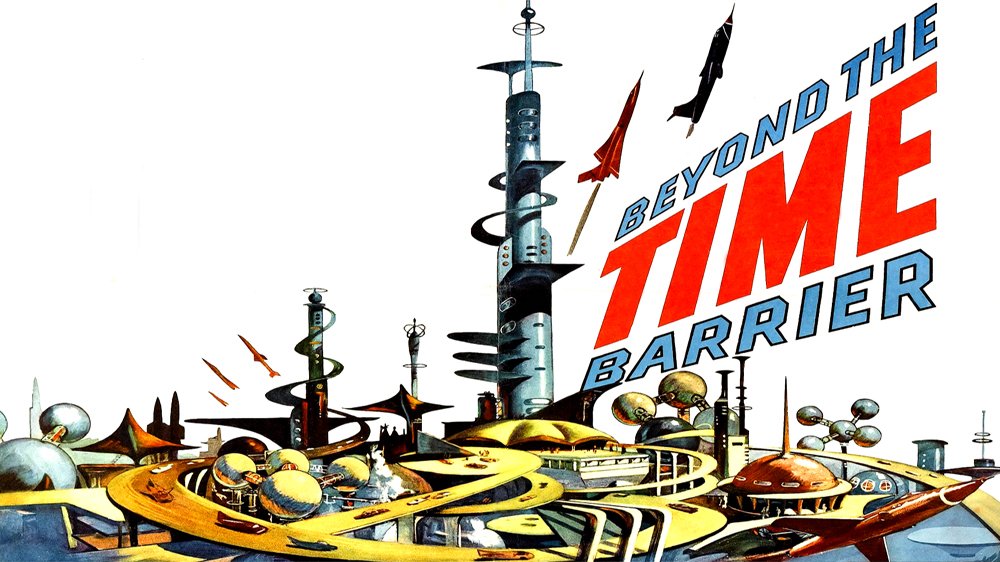
Beyond the Time Barrier (1960) – Review

A good way to bring in audiences for your low budget film is to time its release with that of a prestige film with a similar theme, this was the case with Edgar G. Ulmer Beyond the Time Barrier, a film that was quickly made and rushed into theatres to exploit the success of George Pal’s much more lavish The Time Machine. Obviously, one of those films has remained a classic of the genre while the other has been pretty much lost in time, but that is not to say that Ulmer’s film was without merit.

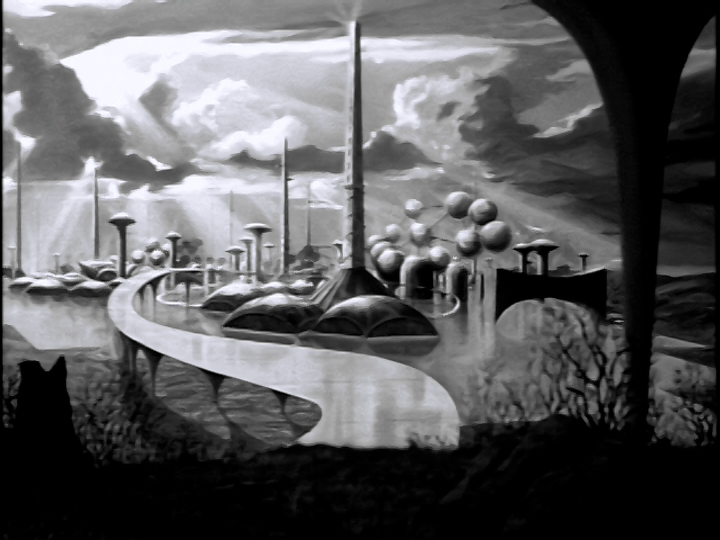
In 1947 when Chuck Yeager broke the sound barrier no one was completely 100% sure as to what would happen to the man or the craft, lucky for history all we got was a sonic boom and a new speed record, but what if you travelled at great speeds outside of the Earth’s atmosphere, would the lack of resistance increase one’s speed beyond the quantifiable? This was the basic premise to Edgar G. Ulmer’s film Beyond the Time Barrier where U.S. Air Force test pilot Major Bill Allison (Robert Clarke) successfully flies his X-80 experimental aircraft into a sub-orbital spaceflight but when he returns to the airbase it appears abandoned, old and deserted and he soon learns that he is now stuck in the far-flung future of 2024. Like the time traveller in the H.G. Wells classic The Time Machine the hero finds himself in a world where all traces of civilization are in ruins but instead of childlike Eloi and the cannibalistic Morlocks, he finds an underground dystopian city known as the Citadel inhabited by deaf and mute citizens who are on the brink of extinction due to widespread sterility.


This is not the Citadel of Rock and Roll.

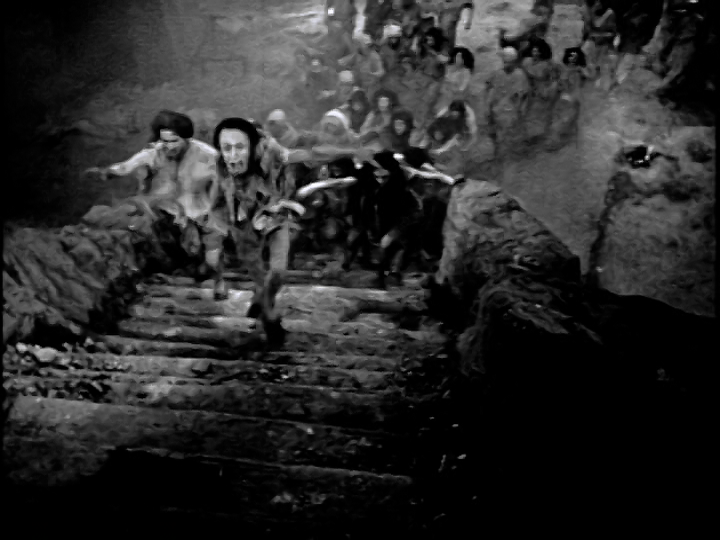
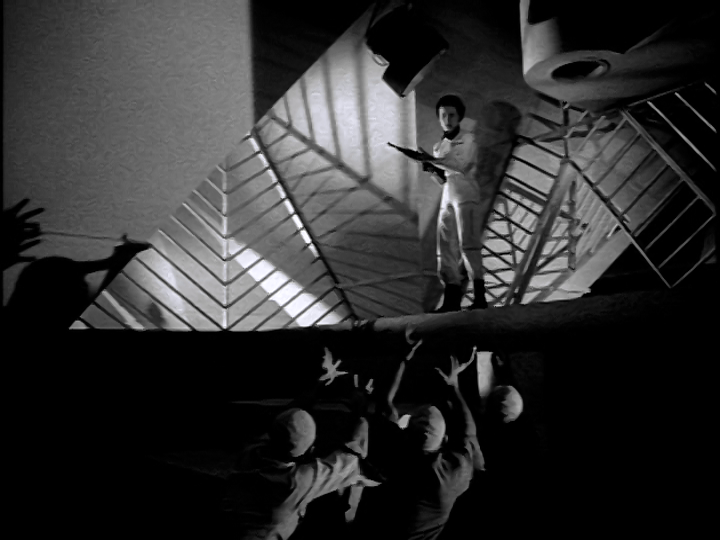
Allison is captured and taken into the Citadel and is accused of being a spy by a man simply known as The Captain (Boyd 'Red' Morgan), but he is saved from brutal interrogations by the beautiful deaf-mute and telepathic Princess Trirene (Darlene Tompkins) who desires him as her mate. She is able to convince her father (Vladimir Sokoloff ), The Supreme leader of this so-called civilization, that Allison should have a free run of the Citadel, which leads to him encountering three other residents who, like him, had arrived here via time travel accidents due to misadventures with light-speed travel. He meets up with Russian Captain Markova (Arianne Ulmer) who comes from 1973 and General Kruse (Stephen Bekassy) and Professor Bourman (John Van Dreelen) who arrived from colonies on other planets in 1994, and they explain to him the current state of the world is due to radiation from atomic bomb tests that had stripped away Earth’s natural shielding from the atmosphere, exposing the planet to cosmic radiation resulting in a devastating plague that wiped out most of humanity. The survivors became mute and sterile creatures – though for some unknown reason the Captain and the Supreme are neither deaf nor mute – and those who were not able to take shelter underground became bald and violent mutants who wander the wastelands.


So, were talking Republicans then?

In 1960 the idea of genetically pure humans up against hordes of mutants amid the ruins of civilization was certainly nothing new to the genre but with Beyond the Time Barrier producer Robert Clarke and director Edgar G. Ulmer were able to cobble together a fairly solid B-movie with a surprising amount of interesting characters. Sure, the villainous Captain is about as two-dimensional as they come and even with her ESP abilities Trirene has as much depth as a puddle in the Sahara Desert, but the three other “time displaced” residents of the Citadel really help sell this dystopian world and though their techno-babble about light speed and time travel makes little to no sense they do their best to make it convincing and their plan to send Allison back to his own time, so he can prevent the cosmic plague from ever happening, is solid sci-fi adventure material.  That two of this particular trio have their own designs on Allison’s aircraft is probably the most plausible element of this story.

Note: This movie’s MVP is the character of Markova, who releases the mutant prisoners to cover their escape and basically causes the Citadel to fall, that she has her own duplicitous agenda is simply gravy to this film’s fun climax.

Stray Observations:

• The runway Allison lands on is in surprisingly good condition considering it had been out of commission for over a decade since the plague hit in 1971.
• Tossing a man into a cell full of murderous mutant prisoners seems like a rather questionable interrogation technique.
• Allison is told that once mankind reached the Moon the world’s countries put aside their differences and worked together to explore outer space, this is easily the least believable part of the movie.
• Bourman states that "Time is unaffected by the laws of gravity” which isn’t true as Einstein's theory of relativity has proved that the higher the gravity the slower time passes, so anything Kruse says further should be taken with a grain of salt.
• Because Princess Trirene is the only inhabitant of this underground city who isn’t sterile she is considered “Their last hope” but even if she and Allison pumped out as many babies as possible that is one very shallow gene pool.


“Let’s get busy Princess, it's baby-making time.”

At 75-minutes in length Beyond the Time Barrier has a very Outer Limits or Twilight Zone feel to it, especially with the twist ending reveal that once returned to his own time Allison has aged drastically, but what makes this film work so well is that despite the limitations of the budget and short running time the story was able to stand above such the low budget issues, such as mutants who were basically people in pyjamas wearing ill-fitting bald caps, and they were really able to sell this take on a futuristic dystopian society in a clever and concise manner. This film may not compare favourably to George Pal’s release of The Time Machine but it has more under the hood than what you’d expect from a B-Movie quickie.

Monday, December 13, 2021

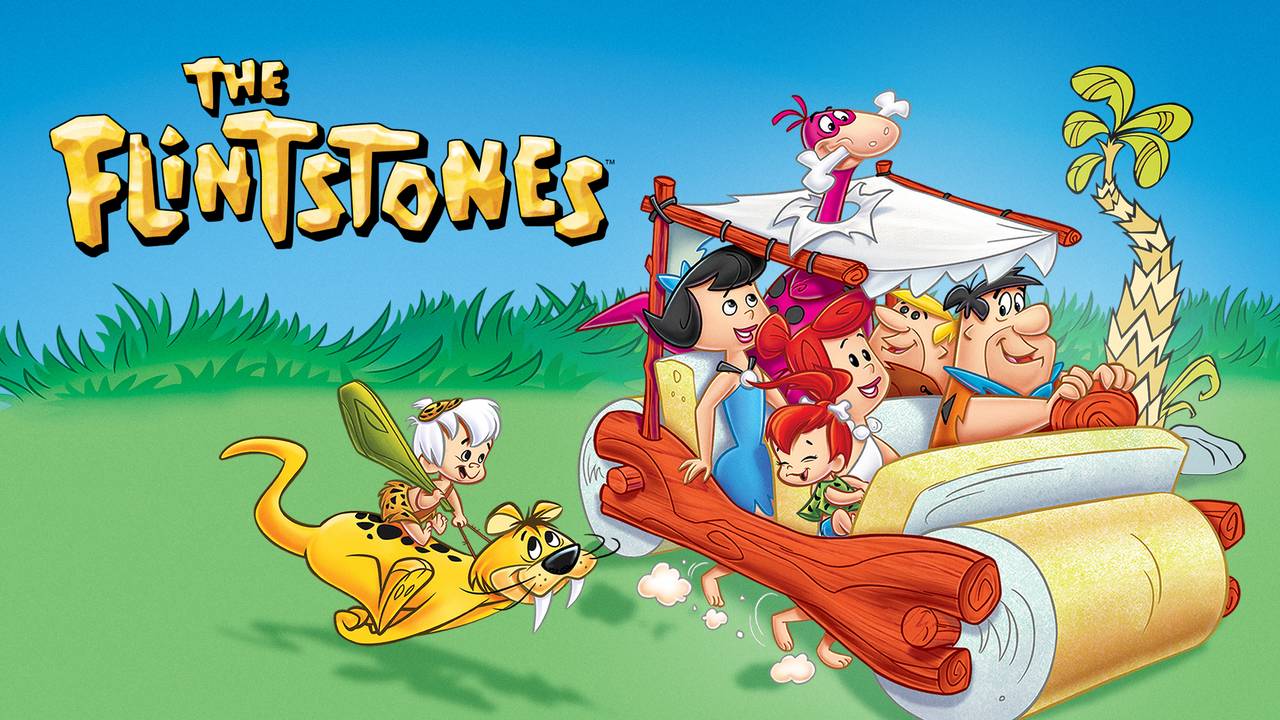
The Flintstones (1960-1966) – Review

In the history of sitcoms, Hanna-Barbera’s The Flintstones stands as not only a landmark in the medium, what with it being the first prime-time animated program and all, but it was also the most financially successful and longest-running network animated television series for three decades, that is until The Simpson came along and took that title, and it was more proof that cartoons weren’t just for kids.

Prior to The Flintstones William Hanna and Joseph Barbera had mostly been known for their Tom & Jerry Academy Award-winning theatrical shorts but their early morning kids programming, which starred the likes of Huckleberry Hound and Quick Draw McGraw, had resulted in the studio quickly being labelled as “kids only” and to fight this stigma these two animation legends decided to create a series that would depict a "modern stone-age family" in the hopes of recapturing the adult audience. Now, for those too young to remember but at this point in time one of the most popular television programs on television The Honeymooners with Jackie Gleason and Art Carney and the comedic dynamic of that show was clearly the bedrock of The Flintstones, and though Joseph Barbera claims that this comparison was never a part of the pitch in selling this show, any fan familiar with both of these shows cannot deny the blatant similarities.

Note: Jackie Gleason, the creator of The Honeymooners, considered suing Hanna-Barbera Productions but decided that he did not want to be known as "The guy who yanked Fred Flintstone off the air.”

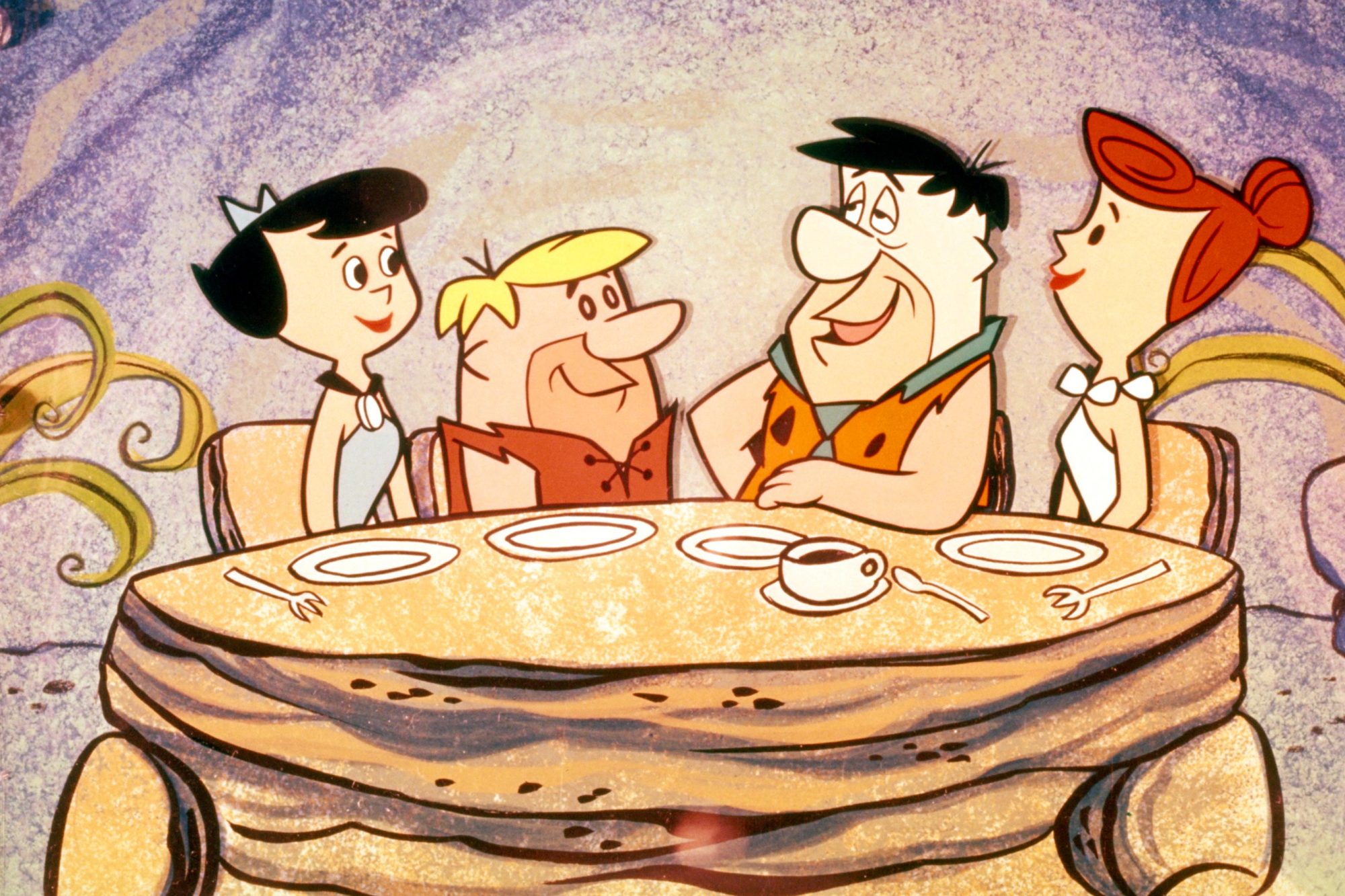
The genius of The Flintstones is in the very juxtaposition of its premise as the idea of "modern stone-age family" is a clever oxymoron as the show depicts a stone-age society but with the technology of mid-20th-century suburban America only with a stone-age twist that gives the show much of its humour while also providing a fresh take on many of tropes found in 1950s sitcoms. With each episode, we would get a plot that would closely resemble those seen in a typical episode of The Honeymooners or I Love Lucy, often with Fred Flintstone (Alan Reed) and Barney Rubble (Mel Blanc) getting into some form of mischief while trying to keep their actions secret from the wives Wilma (Jean Vander Pyl) and Betty (Bea Benaderet) and usually failing miserably.

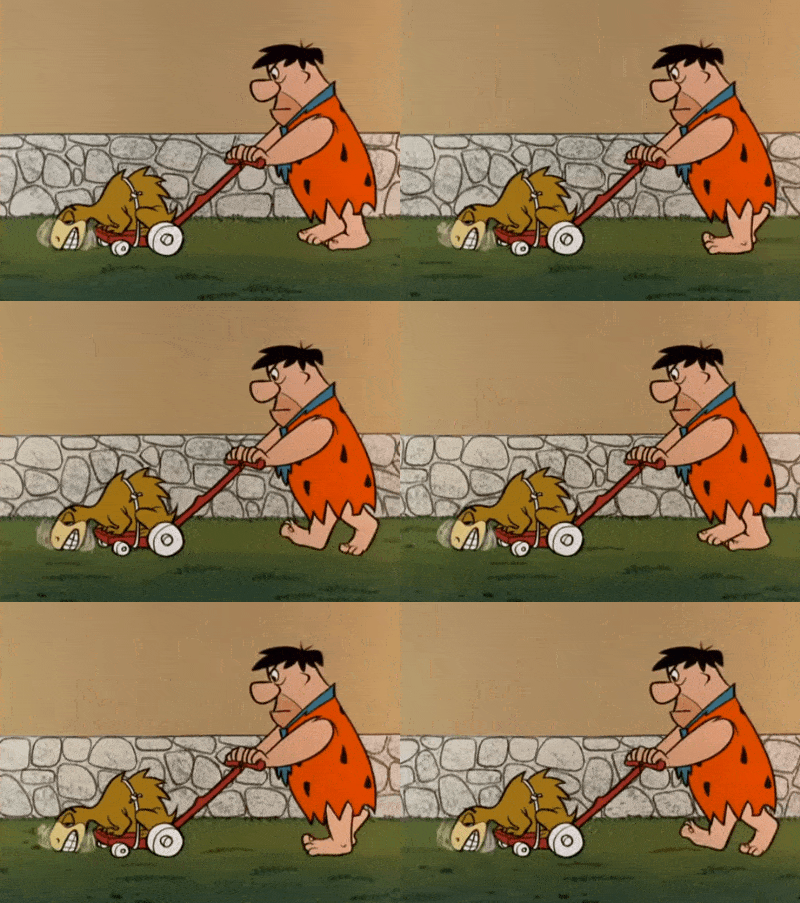
This show could be considered to take place in an "alternate world" as it has very little to do with actual pre-history as not only do we see cavemen with modern appliances – even though some appliances are in the form of animals filling if for things like lawnmowers and dishwashers but we also see television sets and phones that are not depicted through animal substitution – but we also find that here a world where cavemen live side-by-side with dinosaurs even though at least 65 million years separated man from the dinosaur.

Note: These animal appliances often punctuated the gag by breaking the fourth wall and stating “It’s a living” which implies that cavemen have enslaved intelligent and sentient life to work as can openers and the like.

Stray Observations:

• It is never explained why Fred, Betty, Pebbles, Bam Bam and others have eyes with whites and irises while Barney's eyes are circular and Wilma's and others are just black dots. Could this be a case of Neanderthal genes versus Cro-Magnon genes?
• During the opening and closing credits we see that the family has a sabre-tooth tiger pet but he was hardly ever shown in any of the episodes, which begs the question “Were William Hanna and Joe Barbera cat haters?”
• In “The Snorkasaurus Hunter” we get an origin story for the Flintstones’ pet Dino, but in this episode, Dino is portrayed as an eloquent talker, sounding a lot like Phil Silvers, but for the rest of the series he only "barked" and never spoke again. Did he suffer some kind of brain injury once he took up living in the Flintstone?
• The season five episode “Christmas Flintstone” is weirdly anachronistic, even for this show, as the time period of the show pre-dates Christ by at least a few centuries.
• We get some pretty dark jokes like Fred suggesting to the paperboy that he play Russian roulette after beating Fred at Scrabble, which is not something you'd expect to see in any other sitcom at the time.
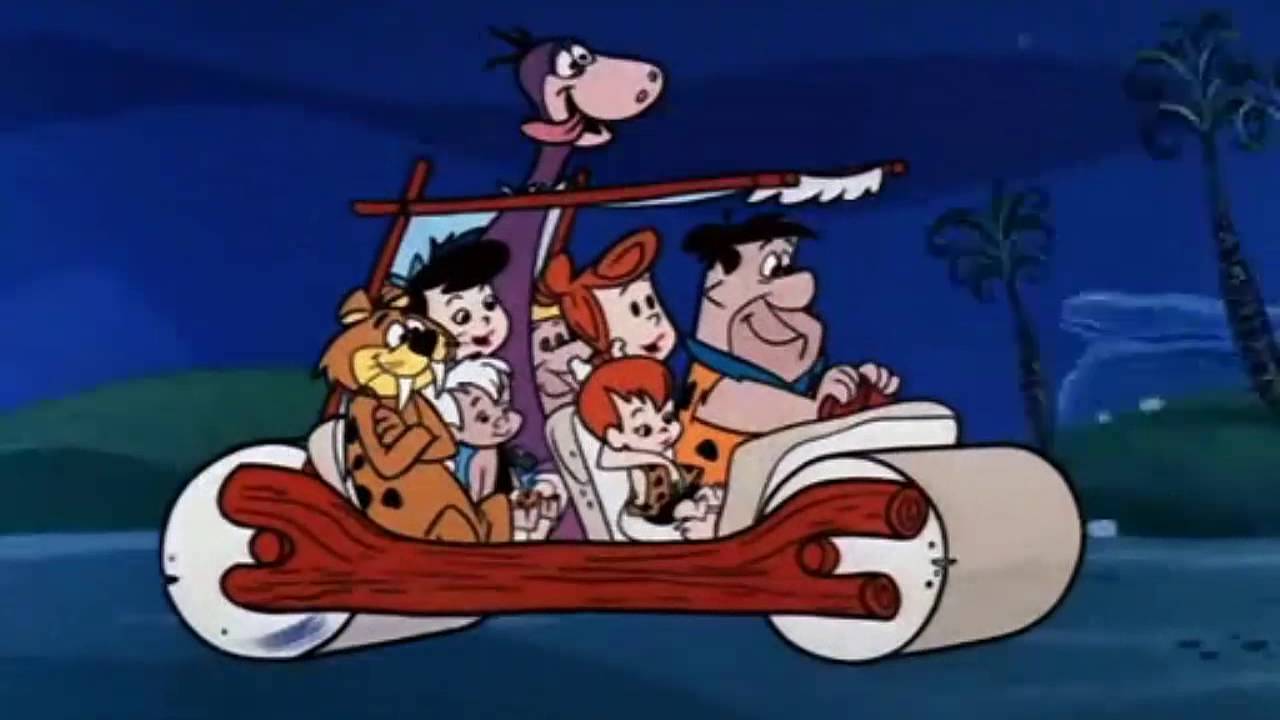
• Fred’s car is quite the magical vehicle as it’s apparently foot-powered but then they often stop for gas, which is strange considering there is no engine, and periodically we see it with a back seat so it can sit the who family when normally it's a two-seat coup.


James Bond never had a car so wonderful.

When looking back at The Flintstones some of the societal viewers will now seem rather problematic as the male and female dynamic was clearly a snapshot of how such relationships were viewed at the time, with Fred being the breadwinner while Wilma was a housewife with a shopping addiction, but what makes even these cliched elements palatable was the love between these two characters which raises this series above any of the other Hanna-Barbera shows that had come before and since, and sure, this series also depicted harmful racial and ethnic stereotypes that "were wrong then and are wrong now" but the minuses are definitely outweighed by the plusses as not only did this show have some truly great comedic moments, in a rather ingenious setting, but is also often quite sweet and heartwarming. The Flintstones was an animated series that ran for years with its success spinning off shows, direct-to-video movies and even a pair of live-action versions – the less said about those the better – and it will forever hold a top spot in the history of the sitcom, animated or otherwise.