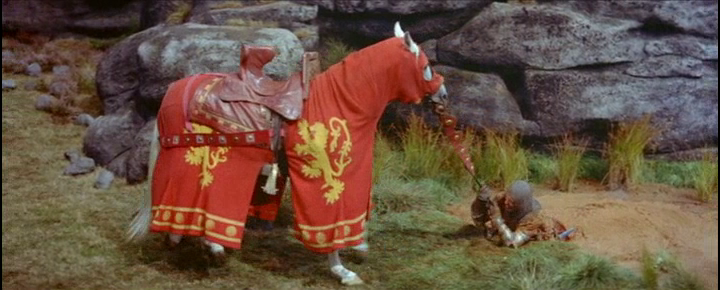
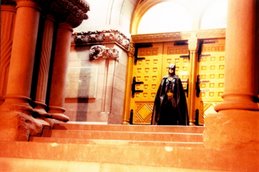
Blog Archive

Thursday, May 7, 2020

Sword of Lancelot (1963) – Review

A central story element of many King Arthur movies would be the tragic love triangle between Arthur, his wife Guinevere and his noble champion Lancelot but in this 1963 British production, this doomed love story is the bulk of the film’s narrative. Mostly based on French chivalric romances, with some borrowing from Le Morte d'Arthur by Thomas Malory, the movie Sword of Lancelot – known as Lancelot and Guinevere in Britain – gives us an in-depth look at the infidelity and betrayal that brought down a kingdom. Love may conqueror all but it also destroys.


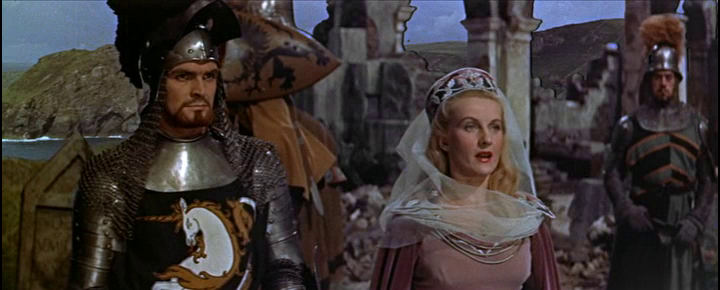
In this version of the Arthurian tale we find an older King Arthur (Brian Aherne) trying to unite Britain with an arranged marriage to Guinevere, King Leodogran's daughter, unfortunately, Leodogran also lays claim to Arthur’s throne and will only bend the knee if his champion is defeated in single combat. Sir Lancelot (Cornel Wilde), being Arthur’s greatest knight, volunteers his services and rides off to do battle, and not only does he win the combat – against a cheating knight – but he also wins the heart of the fair Guinevere (Jean Wallace) and thus the love story begins as does the downfall of Camelot.

Note: Jean Wallace was Cornel Wilde’s real-life wife at the time and their chemistry together literally burns up the screen.

With this particular Arthur and Guinevere we’re talking a serious May-December romance as the actors sported a twenty-year age difference but this worked well for telling of the tragic love triangle as the Guinevere in this movie has only eyes for Lancelot and only marries Arthur out of a sense of duty.

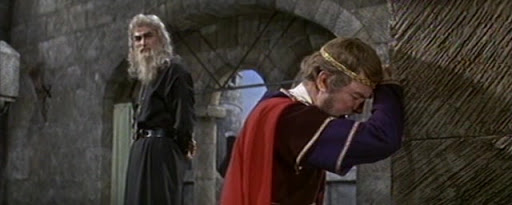
Arthur himself is portrayed as a smitten schoolboy who doesn’t realize that when his much younger wife says “I love you” she actually means “I’d love to ride your best friend up and down the castle halls.” Actor Brian Aherne does an excellent job taking his version of Arthur from naïve bridegroom to saddened cuckold without losing our sympathies, well, when he orders Guinevere burned at the stake “For the sake of the kingdom” our sympathy does get a bit shaky.


He does feel really bad about it though.

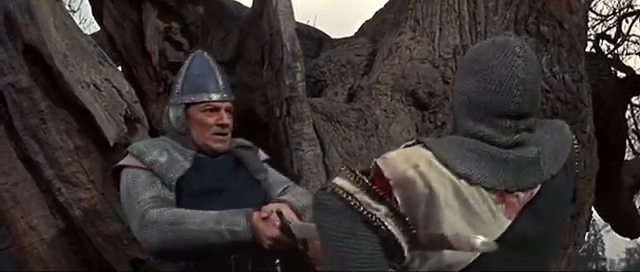
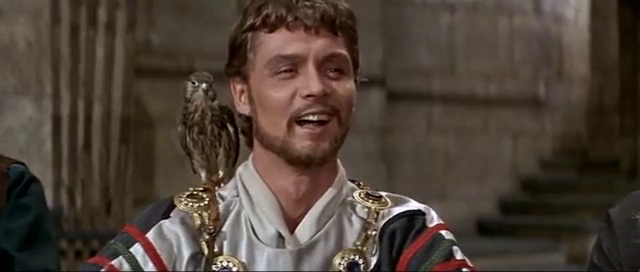
The standout in this film is, of course, Cornel Wilde as Lancelot; his tortured knight goes from loyal friend to killing his fellow Knights of the Roundtable as he escapes Camelot when his affair is uncovered – a side of Lancelot I hadn’t seen depicted before – but as in the case of Arthur his actions are understandable even though the motivations are a little suspect. Watching this film Wilde’s passion for the project is clear throughout every element of production – helped by the fact that not only does he star as Lancelot but he also wrote, produced and directed the film. In this film you will see stuff not found in its Hollywood contemporaries; the love scenes are steamier, the violence is more graphic and the battle scenes actually take into account medieval tactics and formations. There is not of that flourishing swordplay found in films like The Adventures of Robin Hood because as cool as that stuff is too watch it just wasn’t done at the time, and certainly not possible with something as heavy as a broadsword. In the Sword of Lancelot we get men brutally hacking at each other with the finesse of a local butcher.


“Tis but a scratch.”

The film doesn’t solely rely on the conflict between our three lovers as we also have Sir Mordred (Michael Meacham), Arthur's illegitimate son, plotting the death of Guinevere as any child of hers would be heir to the throne and supplant whatever claim he has. His skullduggery revolves around hiring a band of mercenaries to ambush Lancelot and Guinevere while they travel to Camelot, or having his main squeeze Lady Vivian (Adrienne Corri) spy on the young lovers so as to expose their betrayal to the King. But as this film is more about Lancelot and Guinevere, and not the usurper of Arthur’s throne, this is given very little screen time – the murder of Arthur even happens off-screen – but Meacham is one of those actors that can do a lot with a little and his Mordred is more than suitable villain for this story and he certainly seemed to be having fun with the part.

“I would tie Guinevere to the railway tracks but sadly trains haven’t been invented yet.”

Stray Observations:

• This is a rare version of Lancelot where he is correctly portrayed as being from France, his full name being Lancelot du Lac, meaning Lancelot of the Lake.
• Hungarian actor Cornel Wilde does his best with a French accent. Points for trying.
• While en route to Camelot Lancelot bathes in a small pond with Guinevere. Not the brightest thing to do with your King’s betrothed.
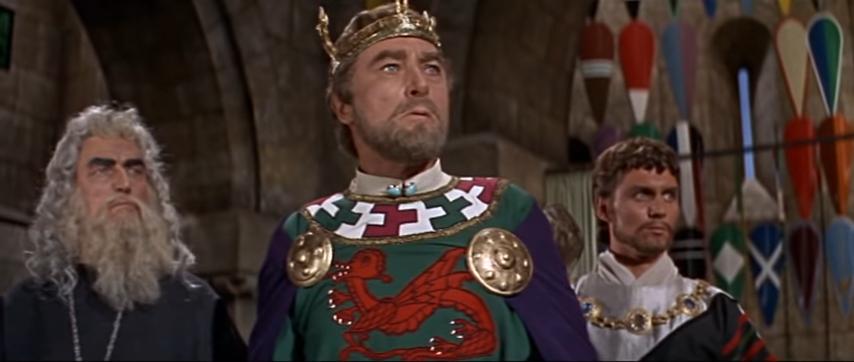
• Merlin is a key advisor to the King but no actual magic is on display here.
• Considering the film’s age the battle scenes on display here are on par with anything seen in films like Braveheart or Gladiator.
• We get the villainous Mordred but no sign of the enchantress Morgan le Fay.


Note: Actor Brian Aherne also played King Arthur in the 1954 movie Prince Valiant.

As Arthurian films go Cornel Wilde’s Sword of Lancelot is easily one of the best depictions of this tragic love story, one that brought down the fabled Camelot, and though the likes of Morgan le Fay, Excalibur and the Holy Grail are missing this is still one of the best adaptations of Arthurian myth. If you are a fan of the genre and enjoy a good love story, portrayed by two fantastic actors, then the Sword of Lancelot is a must-see.


“I should have known better than to trust a Frenchman!”

Monday, May 4, 2020

My Covid-19 Disney Channel Movie Marathon

When you’re stuck at home for a long period of time you may find yourself watching stuff you may not normally have bothered checking out and being a huge lover of all things Disney I thought to myself, "What better time to catch up on some fun Disney Channel Originals than during a worldwide pandemic?"

Note: When it comes to these films there is a good chance the school is heading to the state finals, a geek or nerd will hook up with the hot popular girl and that one or more parents are not among the living, which was almost a prerequisite for a Disney film.


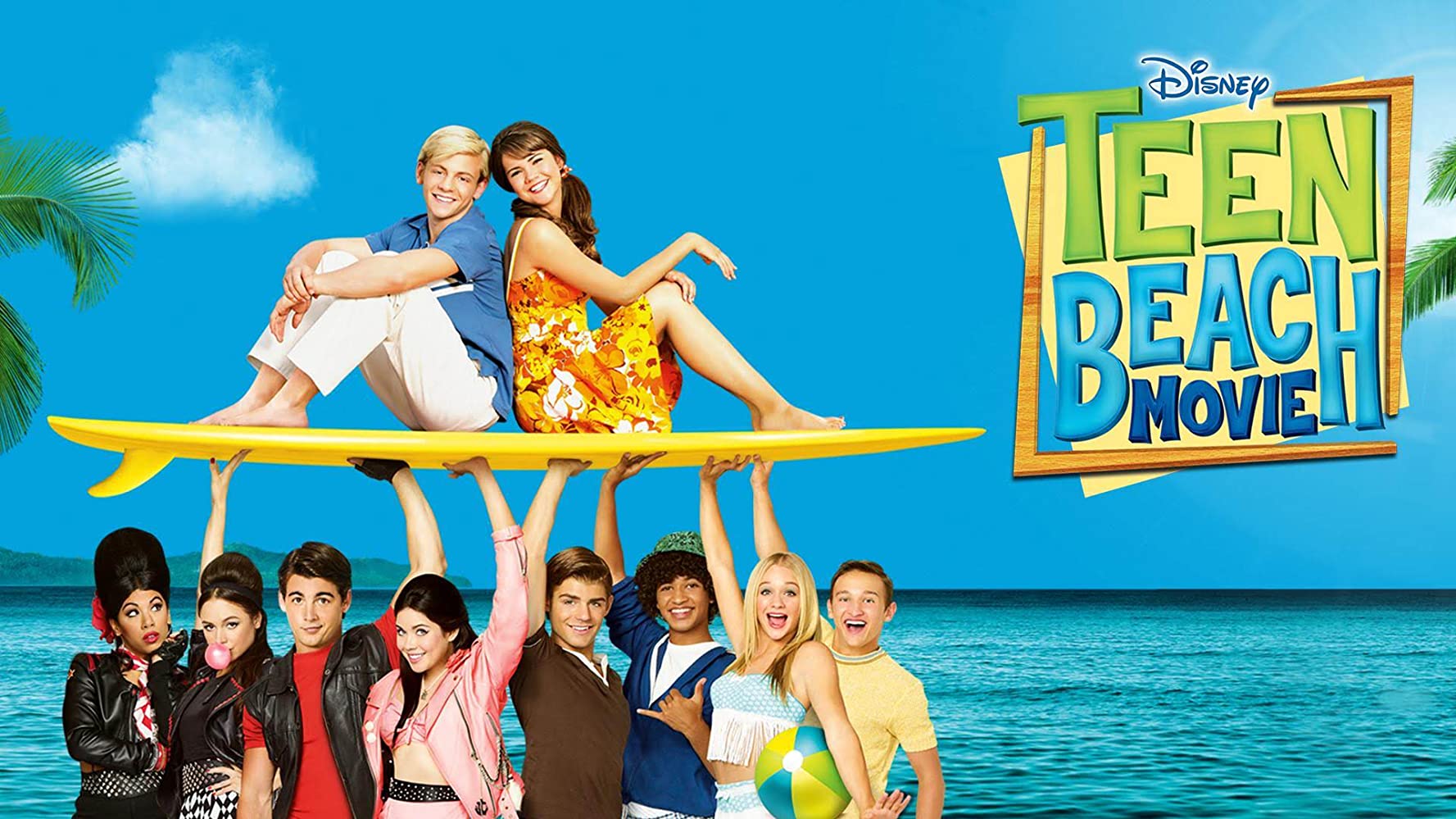
Teen Beach Movie (2013) This film is a loving tribute to the Beach Blanket Bingo movies starring Annette Funicello and Frankie Avalon of the 60s only with the delightful added wrinkle of our two protagonists from the "Real World" being trapped inside a cheesy beach musical called Wet Side Story.

As a concept, it's certainly not all that original but I truly think this film pulled it off better than what Arnie and company did with their film the Last Action Hero, and I dare anyone not to get a big grin on their faces when the two leads involuntarily burst into song. This is a completely fun and engaging movie that offers the simple life lesson of "Follow your heart." This is the kind of movie I can't help but love.


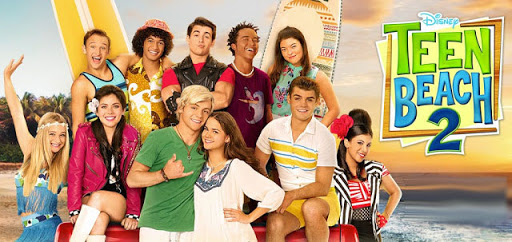
Teen Beach 2 (2015) As a sequel to Teen Beach Movie this one has a bit of a rough start, what with the Mack and Brady morphing into rip-off versions of the leads from High School Musical and the obligatory forced conflicts due to their different likes and interests - why Brady would hide his love of designing surfboards makes no sense whatsoever - but the movie pulls itself out of its nose dive when Lela and Tanner, who were the leads from the 60s musical Wet Side Story, leave their movie and escape into the real world. There is a lot of fun "Fish out of Water" comedy with Lela and Tanner dealing with the 21st-century technology but we also get a nice twist where they have an effect on the real world as well, such as causing the school cafeteria to break out into a musical number and any modern piece of clothing Lela puts on morphs into a 60s version of it. Another interesting wrinkle is that back in Wet Side Story the cast of remaining characters find themselves in a movie that is suddenly stationary, with its two leads missing the story can't progress, which is very much like Woody Allen's Purple Rose of Cairo and it leads to some really funny bits.

Note: The filmmakers clearly didn't put a lot of work into the paradoxical structure of this movie - if you think too long about the premise the whole thing falls apart - but the song numbers are great and though it's not quite as good as the first movie the end result is still a rather enjoyable romp.


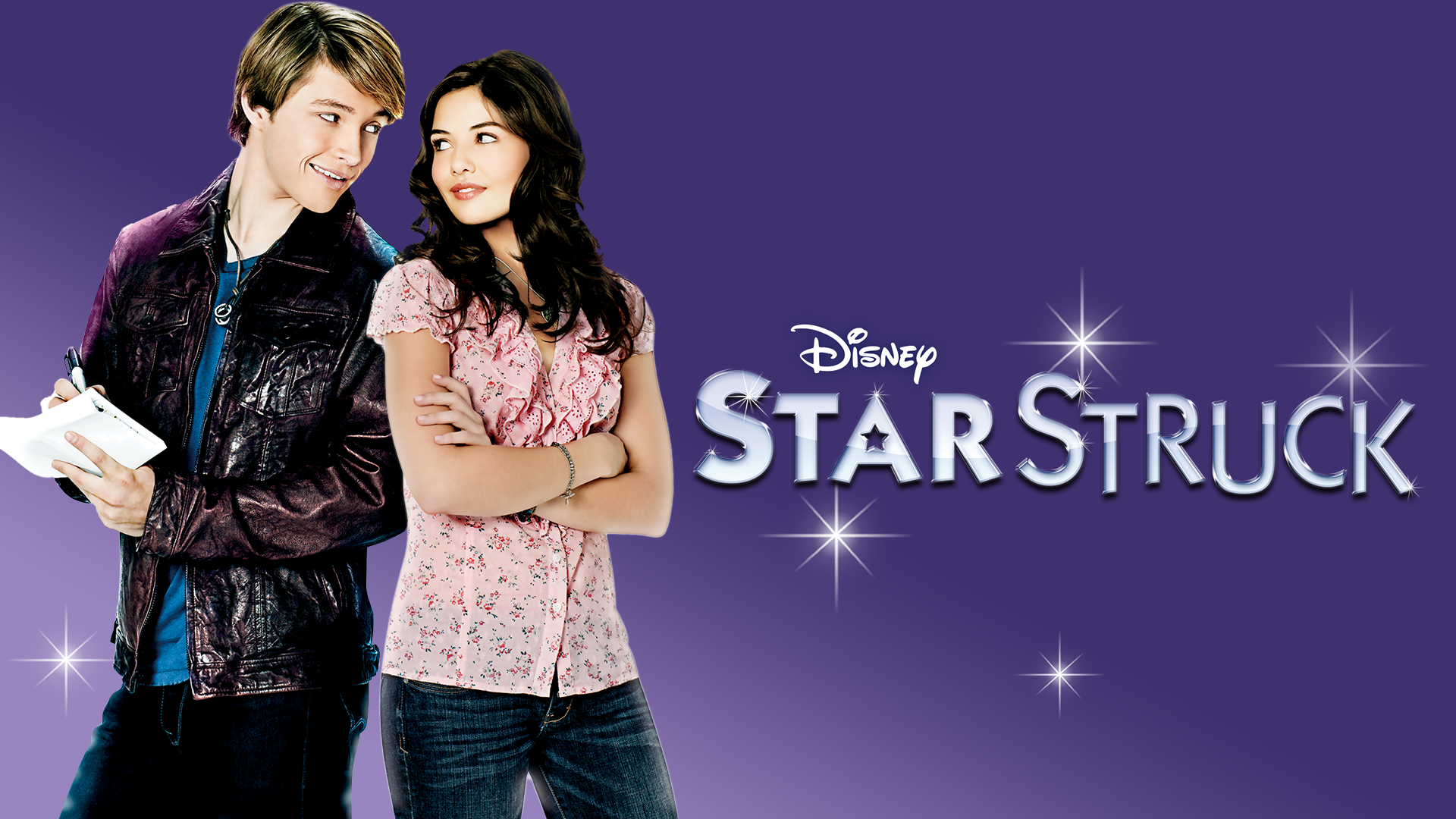
StarStruck (2010) This Disney Channel Original is a cute romantic comedy where a girl bumps into an incredibly famous popstar and between the two of them they are able to discover that appearances can be deceiving. So, basically, nothing ground-breaking happening there as the plot is fairly predictable but the chemistry between the two leads is undeniably genuine. Sterling Knight is fine as the auto-tuned Justin Bieber but Danielle Campbell is great as the jaded girl-next-door.


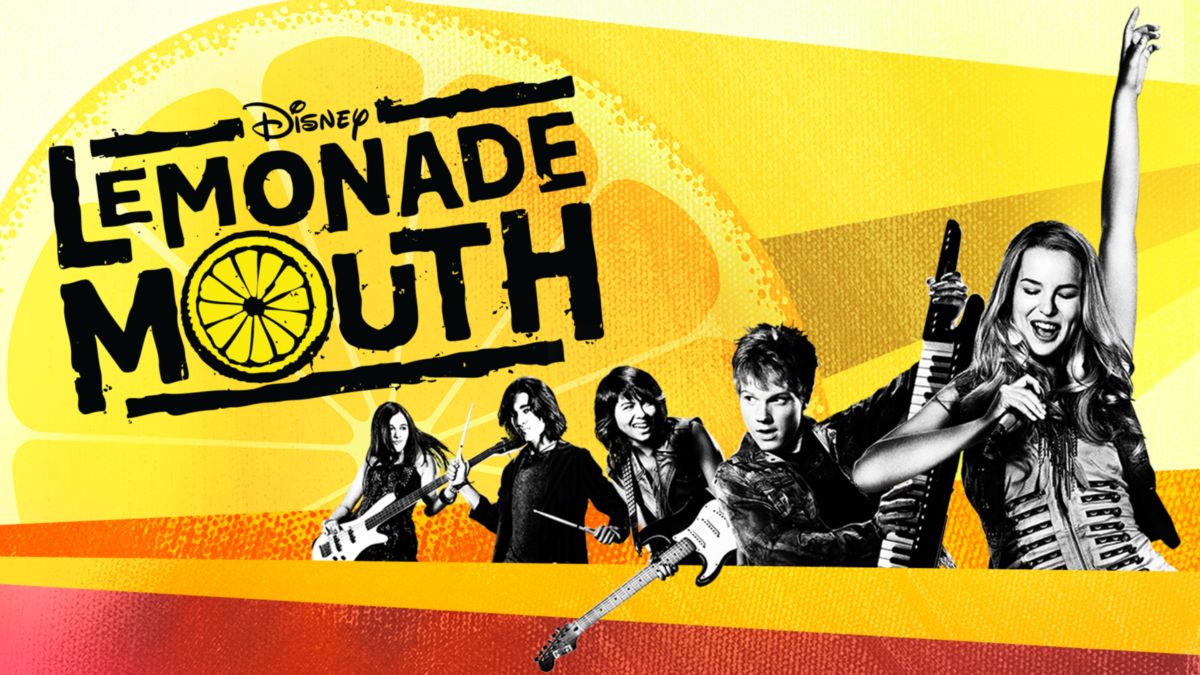
Lemonade Mouth (2011) In what could best be described as Breakfast Club: The Musical this Disney Channel Original assembles an excellent cast of young actors who bring us an energetic and inspiring story of a band of outcasts teaming up to "fight the system." Special shout out to Hayley Kiyoko as the rebellious Stella who many will know as Velma from Scooby-Doo! The Mystery Begins and in this movie she is really allowed to shine.


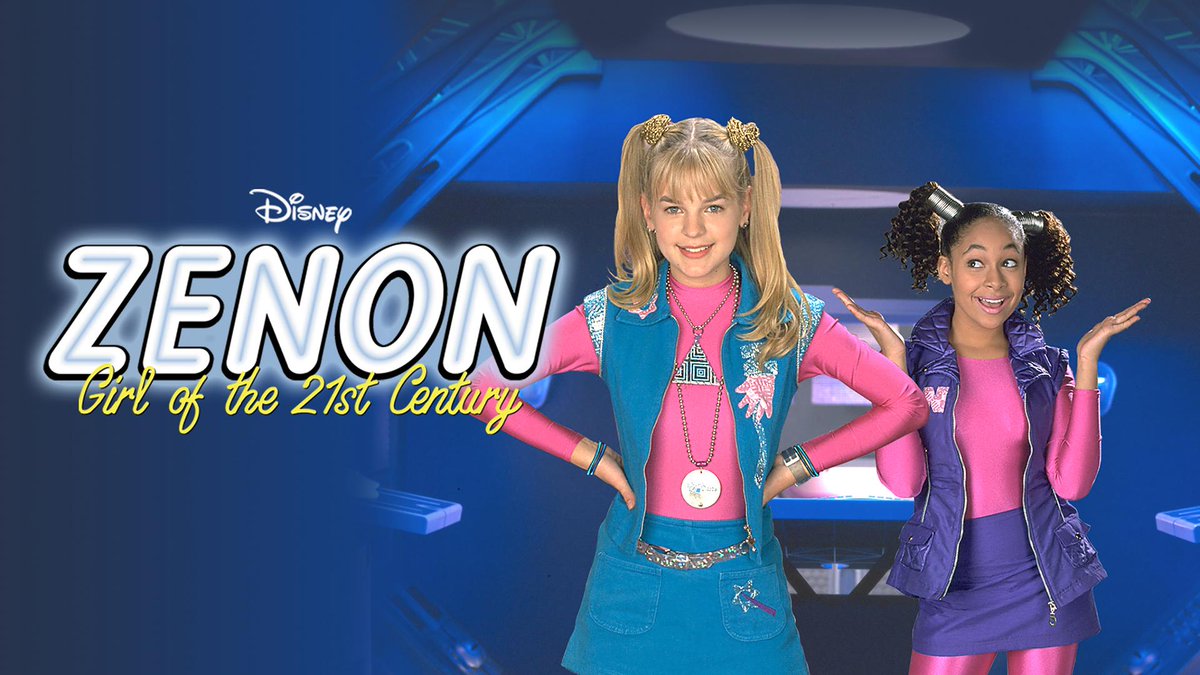
Zenon: Girl of the 21st Century (1999) "I refuse to engage in a name-calling contest with a teenager" and with that startling statement we have the crux of this Disney Channel Original, where a spunky 13-year old girl will match wits with corporate villains who threaten the lives of all aboard the space station she lives on. This is your typical tween-comedy where kids somehow manage to outsmart adults, mainly because all the adults depicted are complete morons, but the result is still a rather fun adventure story that most kids I'm sure would get a kick out of.


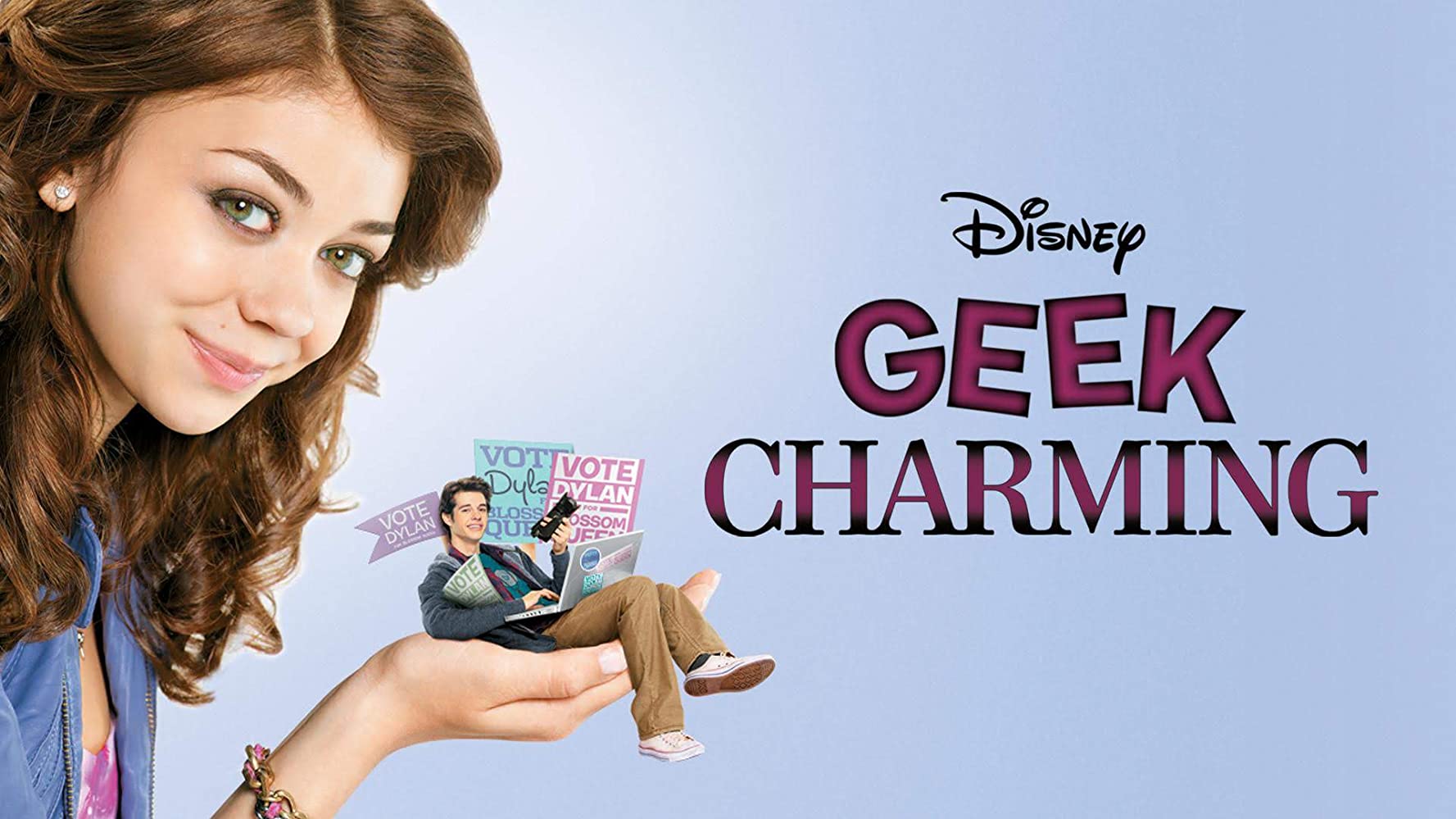
Geek Charming (2011) In what starts out as your basic "Mean Girls" type rom-com Disney’s Geek Charming goes on to prove that it has a little more substance than one would assume at a glance. The very talented Sarah Hyland pays Dylan Schoenfieldl, she's the head of her clique of girlfriends,  is dating the head jock and just happens to be one of the most popular kids in her school, but when film-geek Josh Rosen decides to make a film about her run for the "Blossom Queen" things get complicated. She thinks the film will cinch her win but Josh has his eyes set on making a hard-hitting expose on how high school popularity works. Thus we have the basis of our film's conflict, as one would expect in this type of rom-com, but then as things progress we learn more about our leads and what lies beneath.

Disney Channel's Geek Charming is a film full of heart and Sarah Hyland completely nails a role that could easily have been two-dimensional, and then the film has the added bonus of giving us Sasha Pieterse as a friend who Dylan abandoned in sixth grade so as to achieve popularity, and with such little screen time Sasha Pieterse gives the film some wonderfully grounded moments. Will this film change your life? Of course not, but it certainly one of those movies that is greater than the sum of its parts.


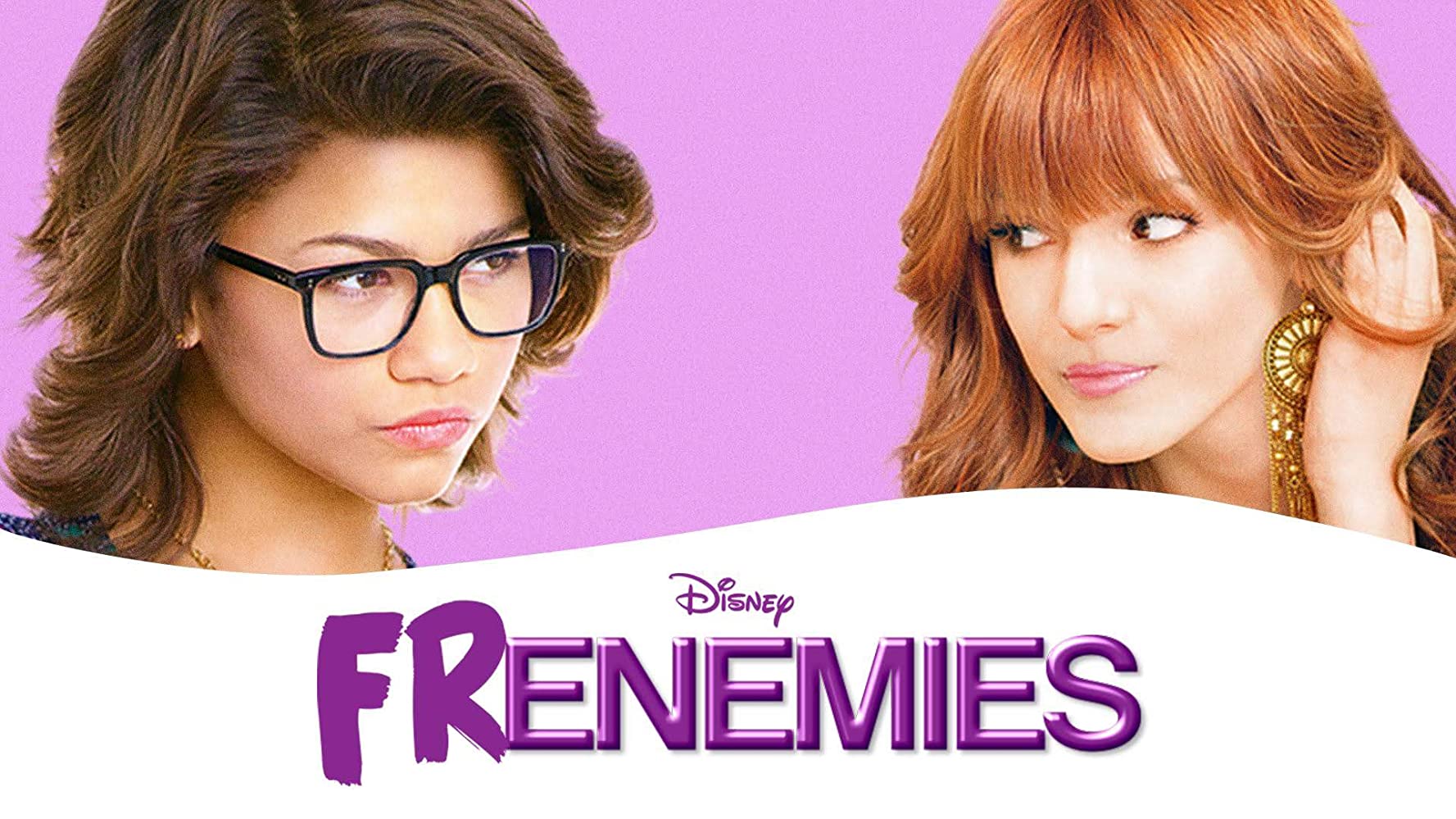
Frenemies (2012) This Disney Channel Original tells three loosely connected stories that deal with the conflict between friends, whether that be between two girls, a boy and a girl or a boy and man's best friend each have their own trials and tribulations, with varying degrees of comedic success. This is a light and goofy comedy and as each segment is relatively short they don't hang around long enough to wear out their welcome, and of the three the take on “The Prince and the Pauper” was probably the best but certainly not the most original - though none of the stories bring much new to the genre. Frenemies is passably entertaining but not worth going out of your way to watch.


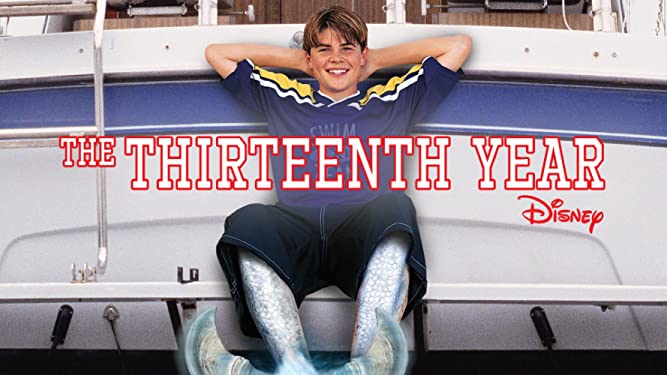
The Thirteenth Year (1999) In this movie a mermaid misplaces her baby while fleeing a fishing boat and thus the baby is raised by a couple of humans and then thirteen years later that child is suddenly growing scales and fins. That's a pretty cool premise and funnily enough with only a 5 million dollar budget, it was still more entertaining than DC's big-budgeted Aquaman. The young here cast all put in decent performances and the merman effects were pretty well executed. My only complaint is the mermaid obsessed fisherman was a poor man's excuse for Eugene Levy from Splash.


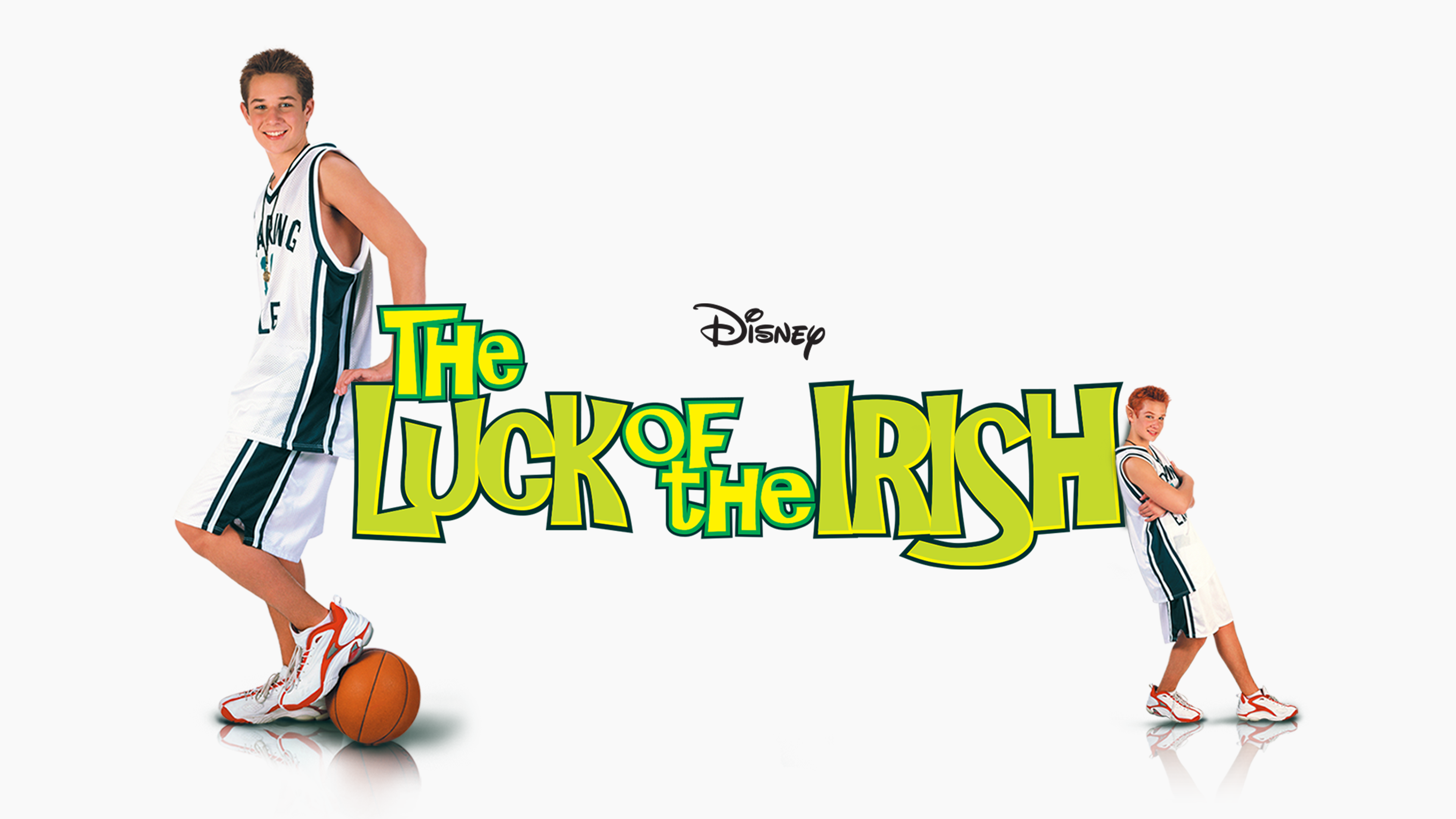
Luck of the Irish (2001) A high school basketball star soon finds out that his luck on the court may not be what it seems when his lucky coin is stolen, and before you can say "Top of the morning to ya" he's getting shorter, growing pointed ears and his mom is talking like she's auditioning for Finian's Rainbow. Disney Channel's The Luck of the Irish would make a good double bill with their mermaid movie The Thirteenth Year as this one has a kid turning into a leprechaun just before his team heads into the state finals. Henry Gibson is great as the kid's Irish grandfather and if anything else this film reminds us that Irish step dancing was once a big thing over here. Whatever did happen to the Lord of the Dance?


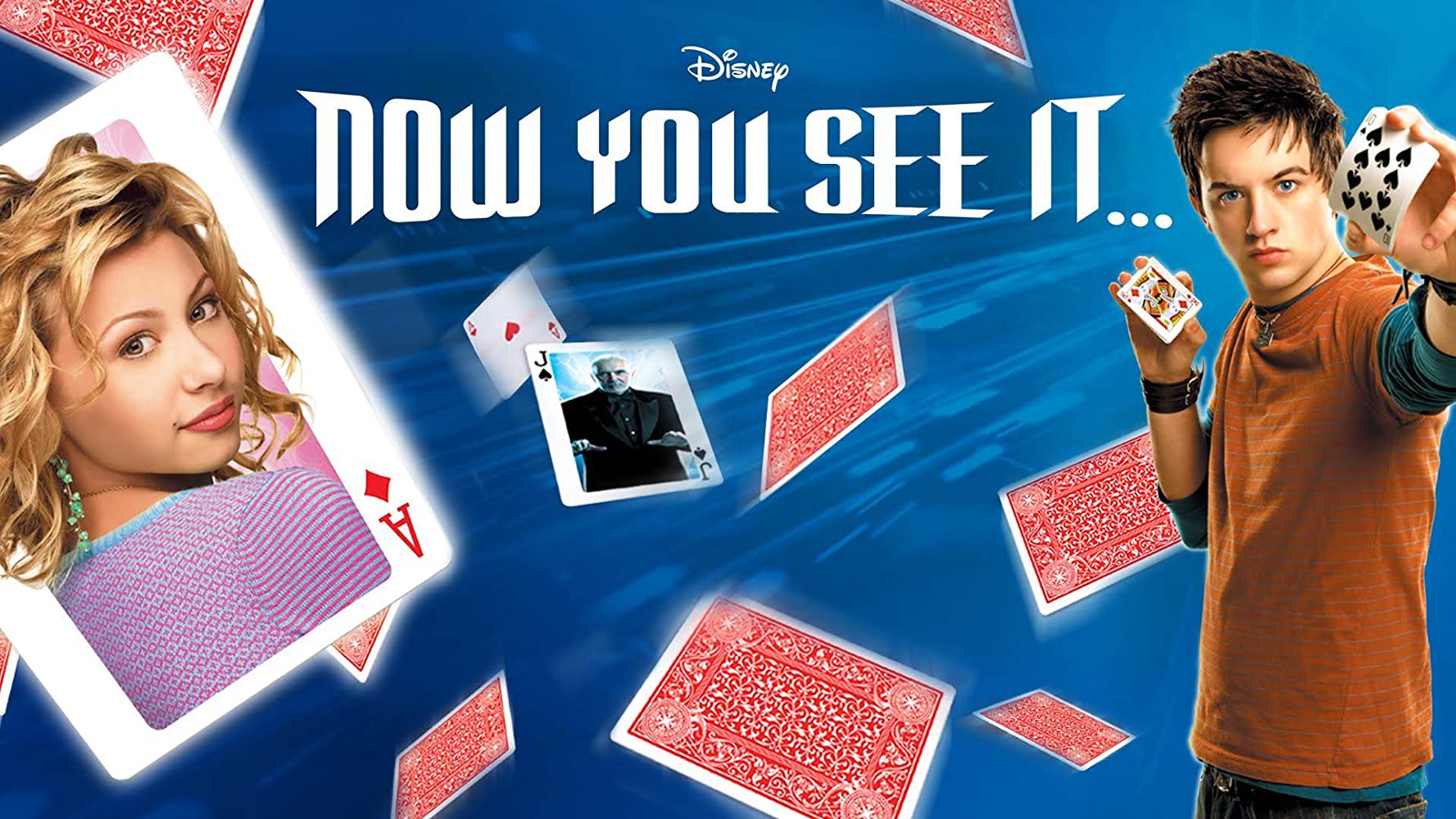
Now You See It… (2005) From Houdini to Penn & Teller stage magicians have been wowing audiences for generations and with Now You See It... the Disney Channel Original brings their own brand of magic to the proceedings. Unfortunately, there isn't much magic to be found in this 90-minute mess as the script, the acting and even the special effects are all pretty bad. The "plot" deals with an overachieving aspiring teen producer who needs to find the "World's Greatest Kid Magician" for a reality show, a job she desperately hopes to land, but the boy she finds turns out to have actual magic and an evil magician has nefarious plans of his own regarding this kid's power.

This could have been an interesting movie but both lead characters are so completely annoying that I barely restrained myself from turning this thing off - Frank Langella being the film's only saving grace and is what kept me tuned in - but worse is the fact that the people at Disney didn't even bother to use real stage magic. Obviously, for the "real magic" our hero uses the film would require special effects to pull it off but they also use cheap camera effects and bad opticals for the stage magic that the other non-magical competitors used. Couldn't they afford to hire a magic consultant for this thing? Overall, an interesting premise that was ruined by unlikeable characters and a lack of faith in their own stagecraft.


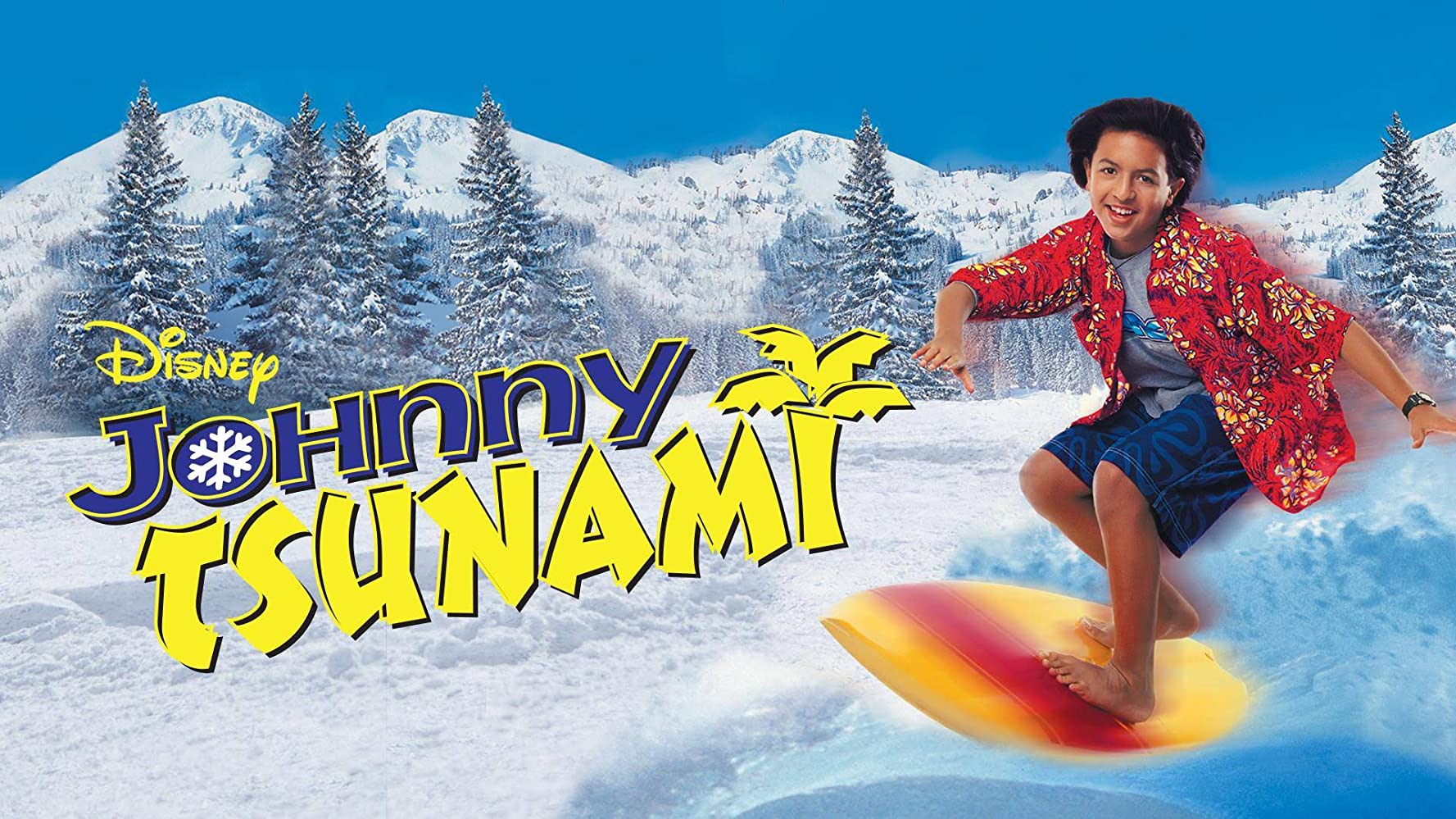
Johnny Tsunami (1999) In this movie we've got rich private school kids warring with the townie public school kids over who has the right to ski or snowboard on their mountain, so we're not talking major creativity in this Disney Channel outing, on the plus side, Brandon Baker is quite charming and engaging as the film's teen lead and any film that includes the great Cary-Hiroyuki Tagawa can't be all that bad.

Now, a story where a surfer gets transplanted to Vermont is fairly clever but the stuff with the insanely dickish dad pushed things over the line and caused me to groan more than a few times. Also, the stunt skiers and surfers they used to double for the film's 13-year-old leads were so obvious it's almost comical, they were almost twice the size of the kids they’re supposed to be doubling for. Still, not a bad film and the message it tries to get across is decent they just needed a few more passes on the script.


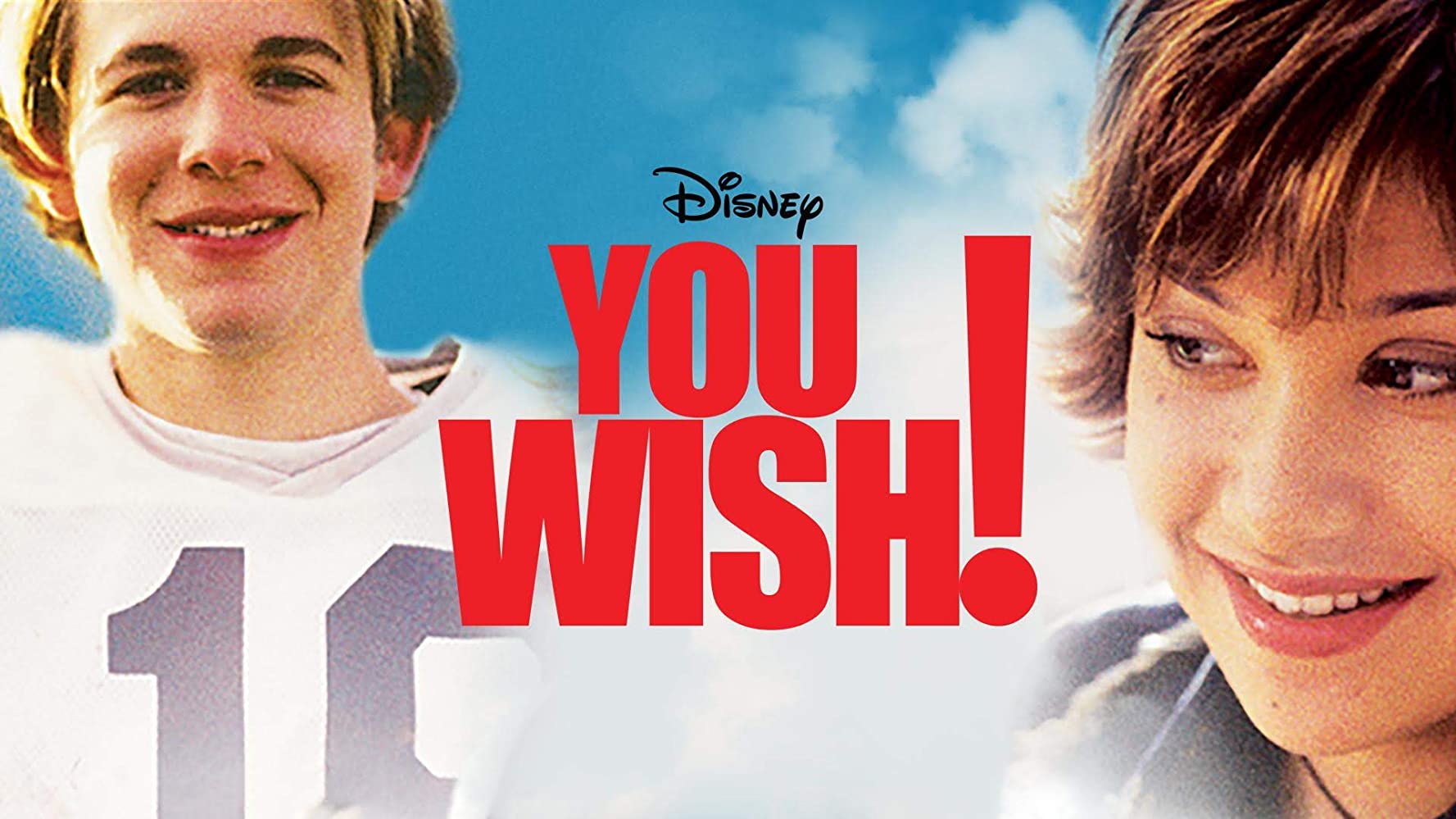
 You Wish! (2003) This isn't the first movie to borrow from Frank Capra's It's a Wonderful Life and probably not the last but you'd hope that something called a "Disney Channel Original" would have done something more original with the premise. Not only is the script cliché ladened - with bullying jocks and mean girls aplenty - but it's also completely full unbelievable moments and idiotic characters. We have parents that overlook their older son to the point of neglect and who let their youngest choose a turkey over a dog as the family pet. There is comedy and there is this mess. For comedy to work there has to be some basis in reality and this one never passes the smell test.

Worse is that when overshadowed Alex Lansing wishes for his annoying younger brother to cease to exist the film doesn't even have the balls to wipe him from existence, instead, it gives the kid an alternate persona as a spoiled television star. The only moment in this film that I was able to derive any pleasure from was a "Who’s on First" bit where Alex tries to explain to his parent the television star is his brother, "Where's Stevie?" This is a tired little movie that doesn't quite earn its sappy ending.


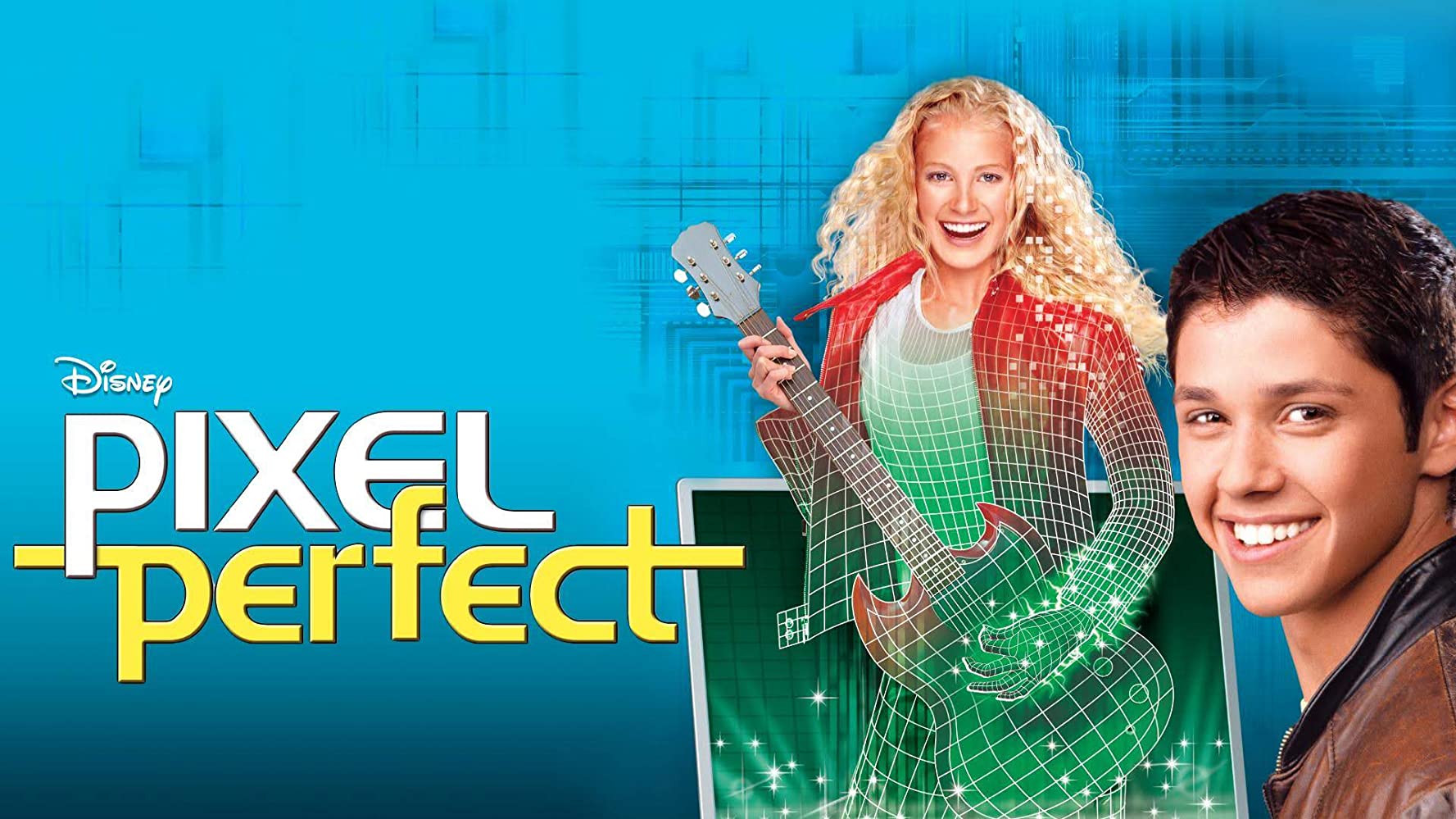
 Pixel Perfect (2004) What happens when you try to bottle perfection? This is the basic premise of Disney Channel's Pixel Perfect where a teenage boy creates a holographic rock star to help his friend's all-girl band. Being a Disney Channel Original one shouldn't go into a viewing of this movie for any hard science - the script's ideas on how holograms and programs work ranges from silly to the outright ridiculous - but where the film works best is the conflict between the whiz-kid science nerd and the girl he should be dating and not his pixel-perfect creation, "Admit it, you're in love with her. Why wouldn't you be? You created her. She's perfect. There's only one problem... SHE'S NOT REAL!"

Leah Pipes is simply fantastic as Samantha, the writer and lead singer of her band, but things get rocky when a talent scout tells her that "It's not about sound it's about image" and that if she can't dance like Britney Spears her band will go nowhere. This is what leads to her friend Roscoe using his Dad's computer and holographic software to create the perfect lead singer. This film may be a sci-fi comedy but it also strives to explore areas of teen relationships that are not often seen in your typical made-for-television movie and does a fair job with it.

Now, I must point out that the dancing of this holographic singer is a little overly-energetic and could be best be compared as a mime having an epileptic seizure and is nothing like any live-pop star performance I've ever seen, but actress Spenser Redford as an A.I wanting to live beyond the limitations of her programming is able to give her character life and does a remarkable job here.
Pixel Perfect is certainly no Weird Science but it does h certainly no Weird Science but it does have a lot of charm, the song are rather catchy and at its core is a solid message that many kids should be able to relate to, that looking for perfection is a futile endeavour and a good way to end up alone.

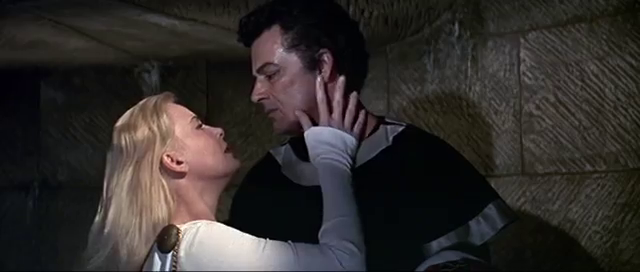
Thursday, April 30, 2020

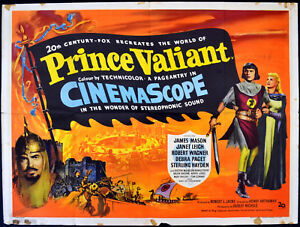
Prince Valiant (1954) – Review

Hollywood loves a good swashbuckler and if it’s not Errol Flynn as Captain Blood duelling a nefarious Basil Rathbone then it’s Errol Flynn as Robin Hood duelling a nefarious Basil Rathbone – Hollywood is fond of sticking with what works – but no greater font of swordplay and action can be found than within the stories of King Arthur and the Knights of the Round Table. Most movies based on the exploits of King Arthur and company derived their source material from the tales that Sir Thomas Mallory had collected for his book Le Morte d'Arthur but today we will be looking at a film that didn’t derive its subject matter from some dusty old tome but instead from a syndicated newspaper comic strip called Prince Valiant.


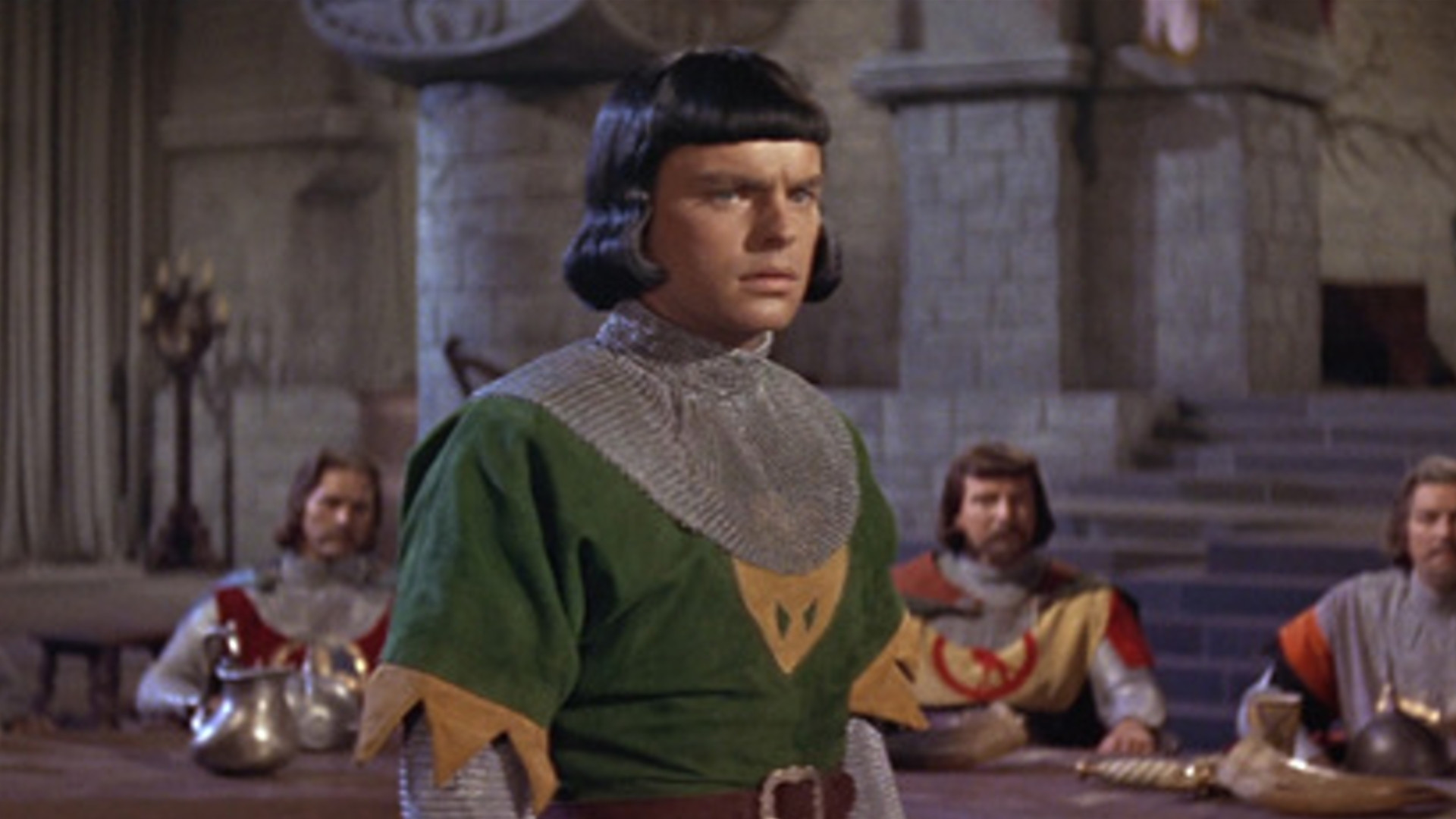
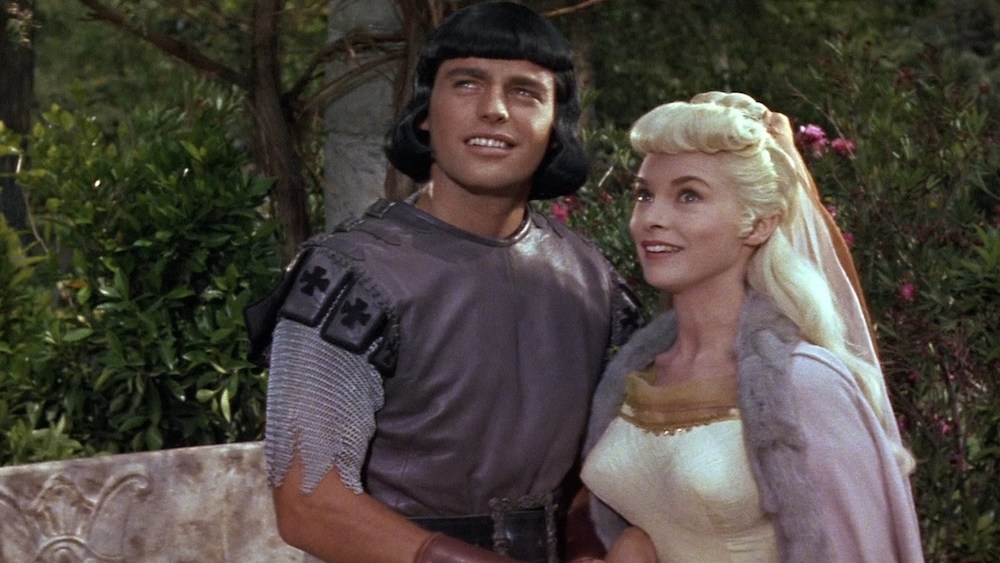
 Sadly, Errol Flynn will not be found swashing or buckling anything in this 20th Century Fox’s epic adventure film, in this instance we will have actor Robert Wagner donning a ridiculous Dutch bob haircut to face off against the nefarious James Mason. To say this was a bit of one-sided contest is a vast understatement with a horribly miscast Robert Wagner as Prince Valiant didn't stand a chance against the likes of James Mason. With an almost three million dollar budget the studio provided lavished sets, rousing action sequences and excellent location work in England but none of that could surmount the complete lack of charisma of the film's lead, even teaming him up with the amazing Sterling Hayden or the wonderful Janet Leigh couldn’t save this picture from being a bit of a cinematic dud.


“I would like to have a word with my agent.”

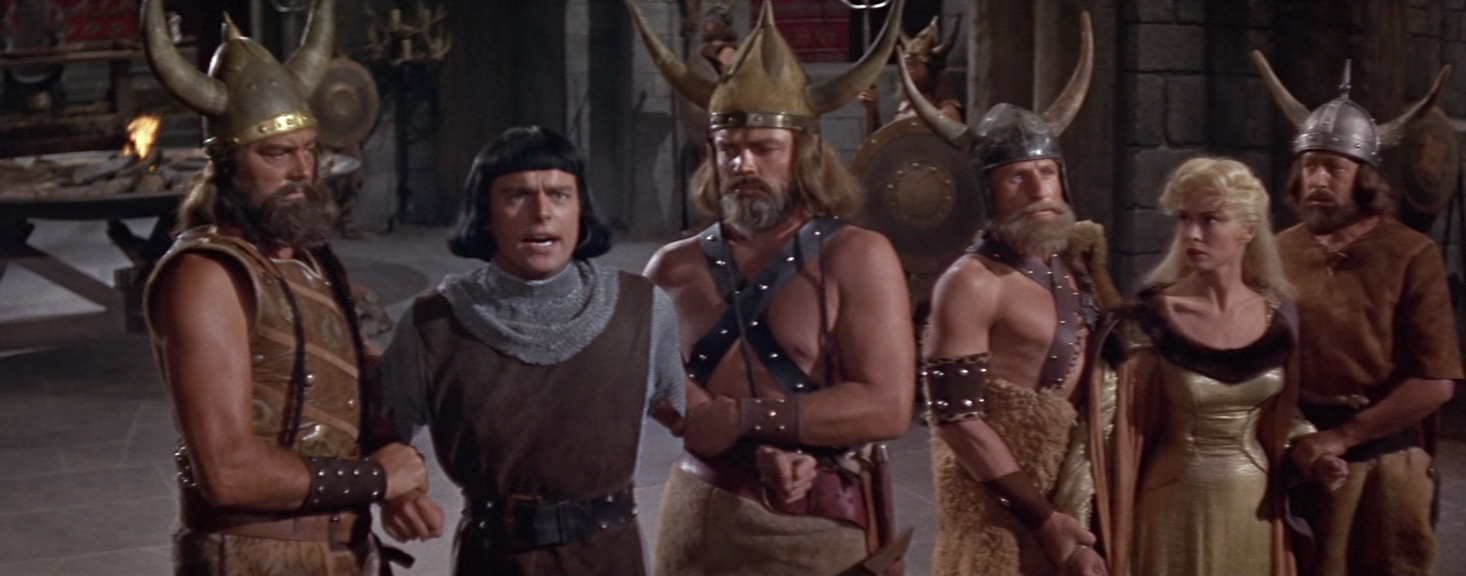
The Prince Valiant comic strip spanned over 4,000 Sunday strips so cutting that down into a movie under two hours was no easy matter – MGM had the property for years and failed to make this work – but in the mid-fifties, 20th Century Fox bought the rights to eight years of these published comic strip stories, but then only adapted a 1937 storyline. The basic plot of Prince Valiant deals with a Viking usurper called Usurper Sligon (Primo Carnera) forcing Prince Valiant (Robert Wagner) and his family to flee their kingdom of Scandia and seek refuge in Britain under the protection of King Arthur (Brian Aherne). While exiled Valiant is sent to Camelot to become a knight only to quickly find out that you actually have to earn a place at the Round Table, you can’t just ask for it because you’re a prince or something.


“Are you good with a lance?”

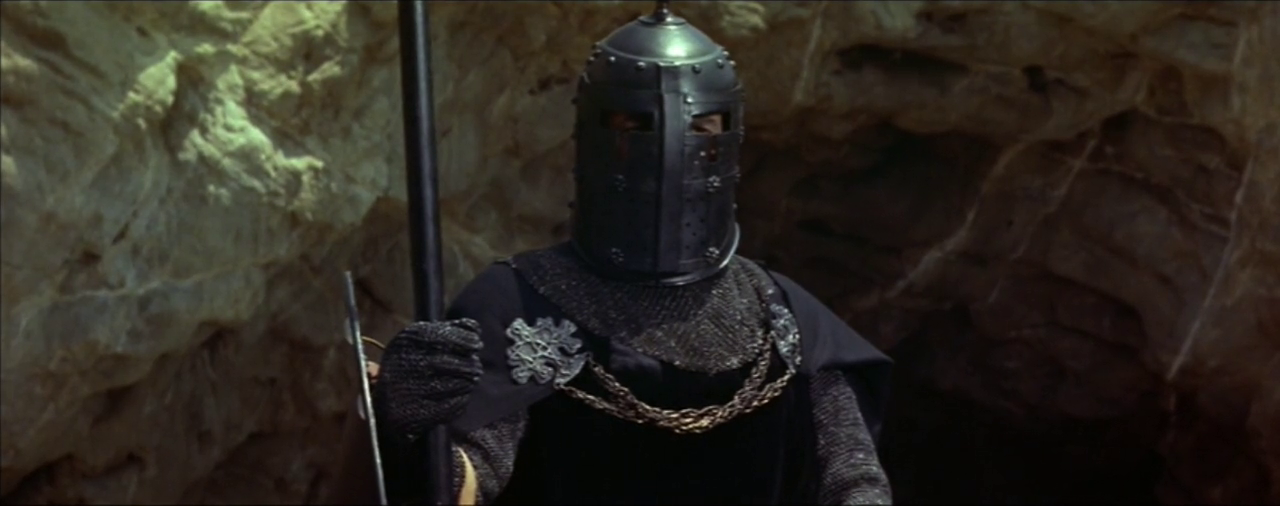
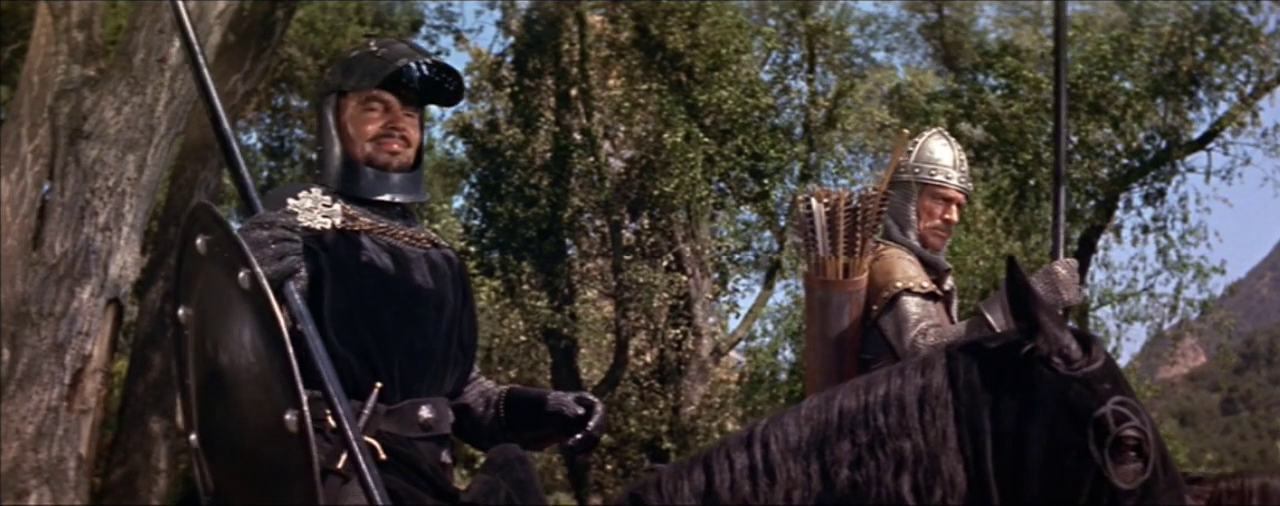
Valiant becomes squire to Sir Gawain (Sterling Hayden) and we spend a little time with him learning to wield a wooden sword and fall off his horse, yet Valiant has also caught the eye of Sir Brack (James Mason) who says he wants to help Valiant become a knight, but as he’s being played by James Mason we know he must of nefarious motives for doing so. Turns out there is this mysterious Black Knight riding around Britain stirring up trouble, Valiant even spots the Black Knight parlaying with Vikings belonging to the usurper Sligon, and when Sir Brack takes our young hero to “find” this Black Knight poor Valiant gets an arrow in his back for his troubles and is eventually captured by the Vikings.


Who could this black armoured nightmare be?

This film isn’t all horseplay and knightly shenanigans as it’s not a proper medieval adventure tale without a love interest and in the case of Prince Valiant we have the lovely Lady Aleta (Janet Leigh) who tends to our hero after getting that pesky arrow in his back.  She quickly falls in love with him – apparently, the Florence Nightingale Effect was alive and well in the Dark Ages – but we also have her younger sister Ilene (Debra Paget ), who is secretly in love with Sir Gawain, to complicate things. This all leads to some lame Three’s Company level of misunderstandings with Gawain believing that Aleta is in love with him while her sister is in love with Valiant, and being a complete and utter twit Valiant goes along with this misunderstanding because he doesn’t want to hurt his master’s feelings. It’s at this point we are praying for the Black Knight and his Viking compatriots to ride in and burn the place to the ground if only to ease our pain.

Fun Fact: Did you know that the Torpedo Bra was invented in 6th Century Britain?

Stray Observations:

• The wizard Merlin makes no appearance in this movie even though he was a regular character in the comic strip.
• Prince Valiant’s family sword is The Singing Sword, sadly it doesn’t do any singing at all.
• The swords used by Prince Valiant and Sir Brack looked so clunky and cheap looking I wouldn’t be surprised if it had been purchased from the local dollar store.
• This film upholds the Hollywood tradition of depicting Vikings with big dumb horned helmets.


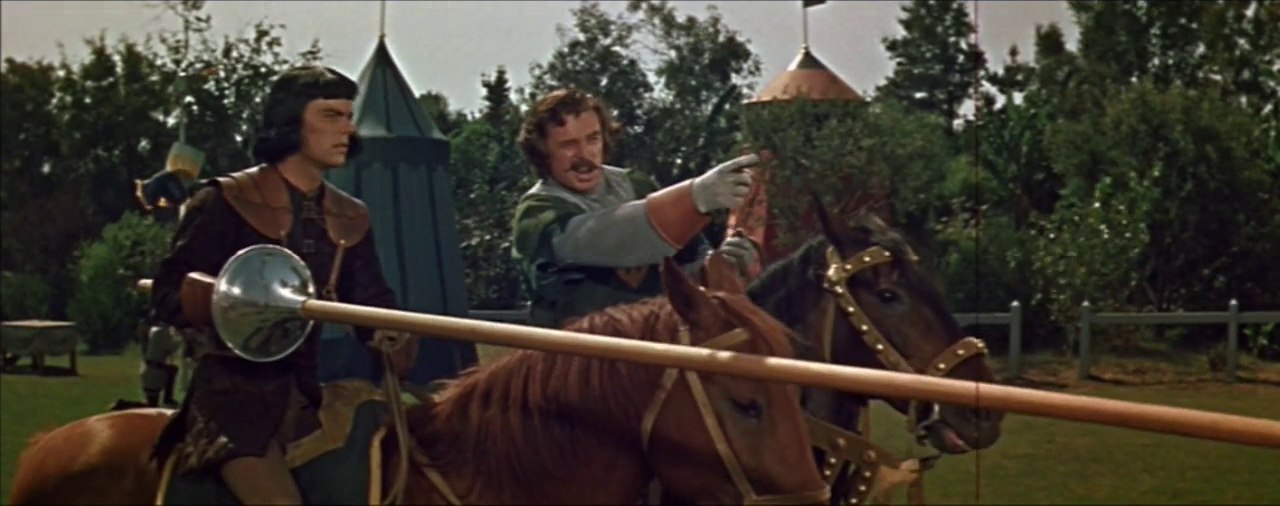
Hagar the Horrible and friends.

There is some fun to be had in a viewing of 20th Century Fox’s Prince Valiant as the action sequences are fairly well handled – Prince Valiant pretty much burns down his family castle to defeat the usurping Vikings – and the pomp and pageantry of medieval fiction is all wonderfully constructed by the Fox studio artisans, and as much as a dud Robert Wagner was as Prince Valiant it’s a pure delight to watch James Mason poor on the scintillating charm with a dash of malevolence as Sir Brack.  This all goes towards making Prince Valiant an entertainingly fun ride, to say the least. This film may not be one of the better Arthurian based movies but the supporting cast has me give this one a passing recommendation.


P.S. Turns out that Sir Brack was the Black Knight all along. "Gasp!"

Monday, April 27, 2020

Scooby-Doo Meets the Boo Brothers (1987) – Review

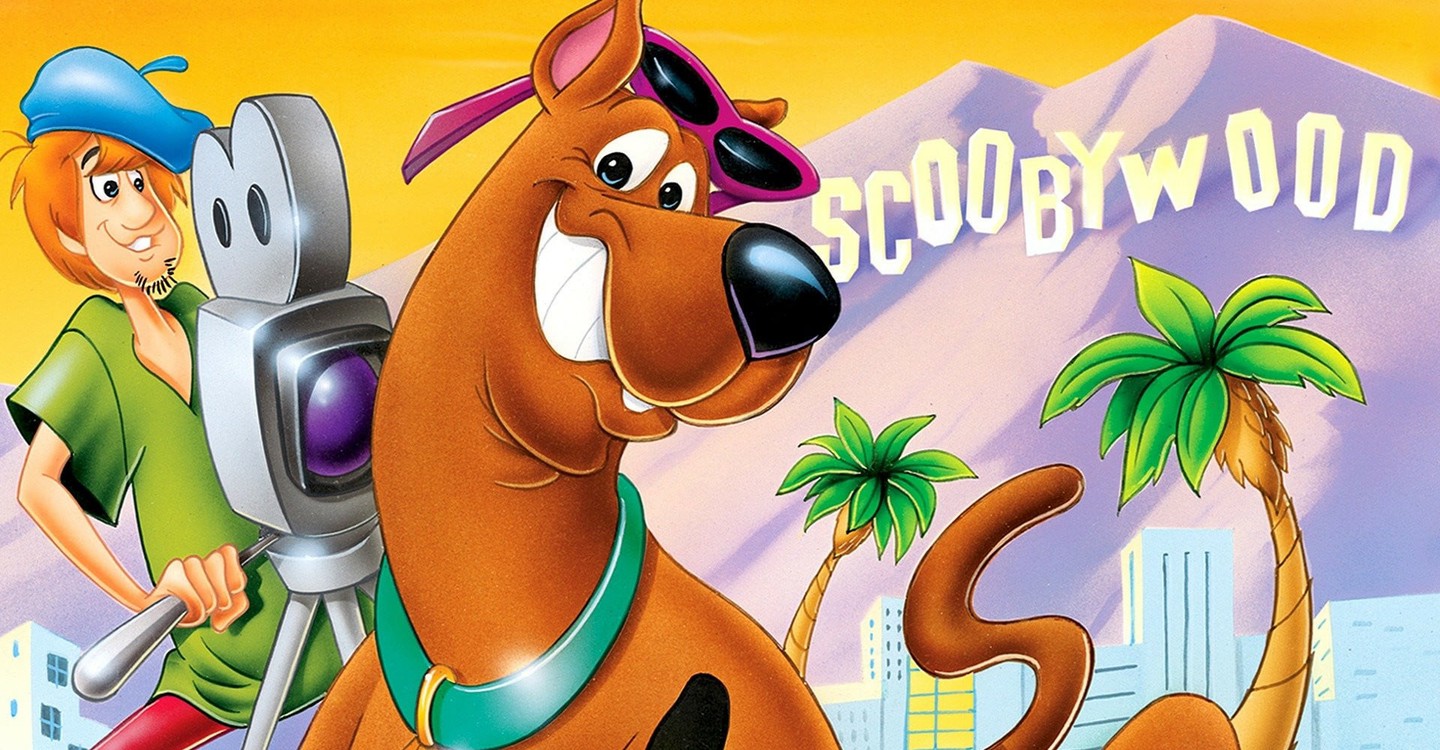
With Scooby-Do Meets the Boo Brothers we get our first full-length Scooby-Doo movie, if we discount Scooby-Doo Goes Hollywood as it was barely 49 minutes in length, but not only was this their first "real" movie it continued with the inclusion of real ghosts as part of the mystery, which we’d seen in the 1980s version of Scooby-Doo and Scrappy-Doo. Sadly, once again Fred, Velma and Daphne are missing and the movie is poorer for it,  love him or hate him Scrappy-Doo cannot properly replace the original members of Mystery Incorporated.

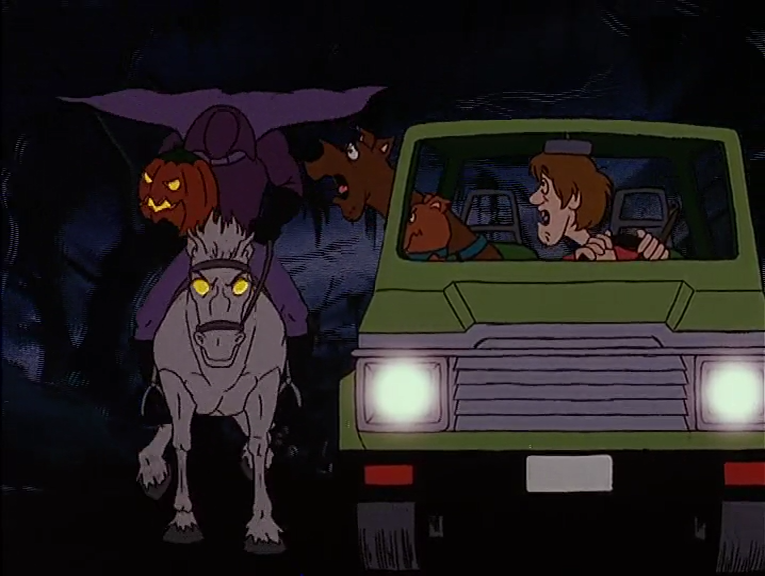
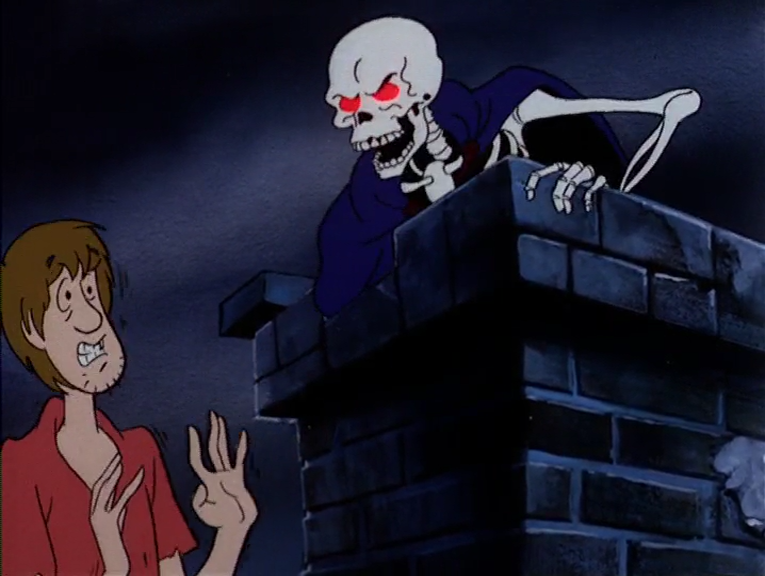
 This particular mystery starts out like many a Scooby-Doo adventure with one of the gang learning that they’ve inherited an estate – the gang has a lot of dying relatives – and in this case, it’s Shaggy’s Uncle Colonel Beauregard who has not only left him his whole estate but a hidden treasure of family jewels as well. This sends Scooby-Doo, Scrappy (Don Messick) and Shaggy (Casey Kasem) on a fright-filled adventure down south, where they will encounter an escaped circus ape, a variety of threats such as a big and nasty wolf, the ghost of Shaggy’s uncle, a floating skeleton and even a headless horseman.


Maybe he wants to see their driver’s permit?

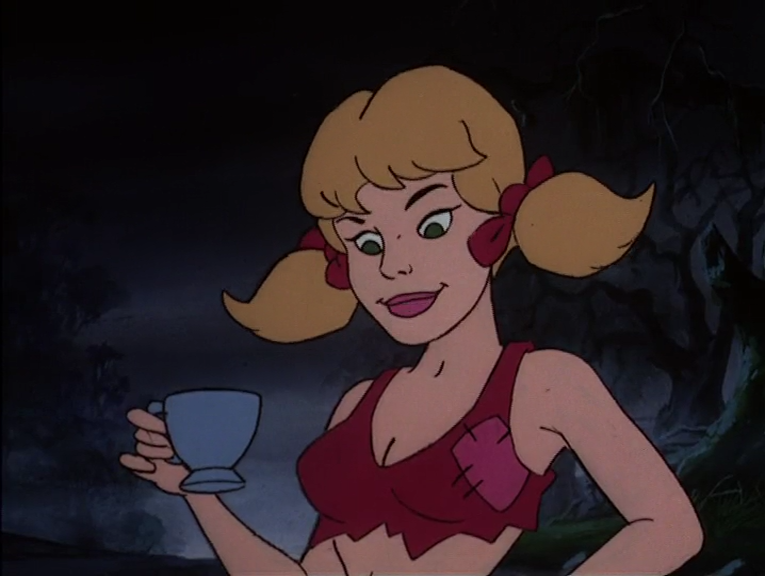
As mysteries go the one that makes up Scooby-Doo Meets the Boo Brothers is of the lesser variety with it being more a scavenger hunt than an actual mystery.  At best we are trying to figure out who is behind the passel of ghosts chasing our heroes around. We do have a few suspects but the obvious one is that of the hunchbacked manservant Farquard (Arte Johnson), who makes no bones about him believing the family jewels belong to him, works as both a red herring as well as a secondary villain – he does take some of the jewels during the scavenger hunt – but we are also not given much in the way of other suspects to look at. We have Sheriff Rufus Buzby (Sorrell Booke) as the clichéd southern lawman, then there is Billy Bob Scroggins (William Callaway) who has a hillbilly hard-on for the Beauregard family, and finally, we have Sadie Mae Scroggins (Victoria Carroll ) who looks like an escapee from Li'l Abner and for some unfathomable reason has the hots for Shaggy. Now, aside from Farquad none of these individuals are given credible reasons for pretending to be ghosts and the final reveal is kind of a cheat.


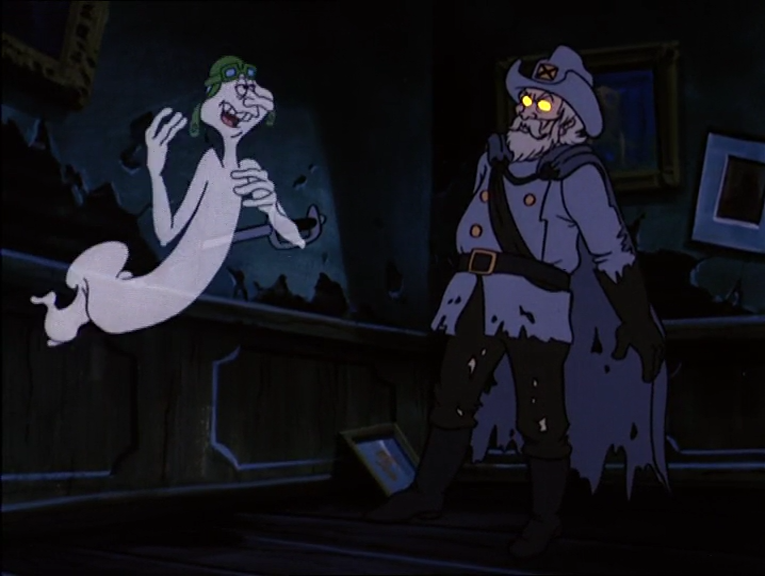
Who could this nasty looking skeleton be?

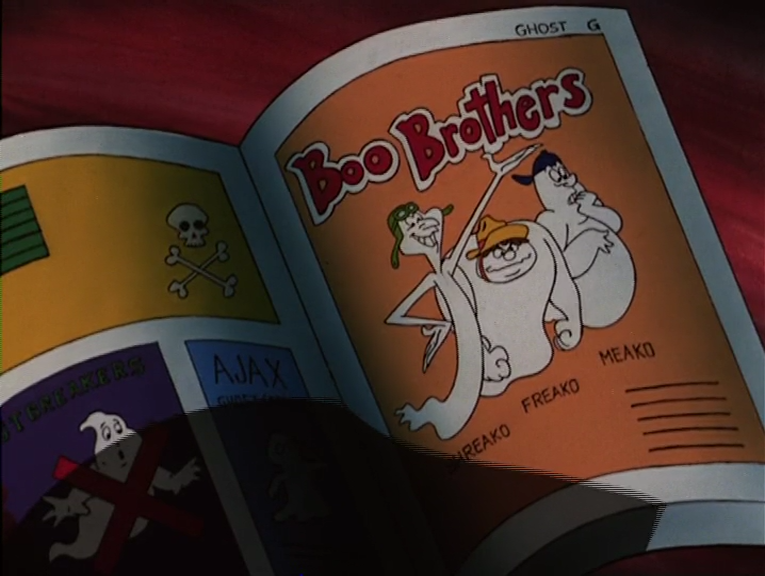
Shaggy, Scooby and Scrappy are somewhat aided in their endeavours by a trio of ghosts known as the Boo Brothers; Meako (Jerry Houser), Freako (Ronnie Schell) and Shreako (Rob Paulsen), who are brought into the fray when Scrappy gets the brilliant idea to call for ghost exterminators to aid them in their battle against this spectral army.  That they aren't fazed by fact that these “Ghost Busters” are ghosts themselves is a little odd. Sadly, this trio of ghostly numbskulls spend more time going "Nyuk, nyuk, nyuk" and bashing each other around the plantation then they do tackling the threat of the day. The Boo Brothers may share the title of this movie but they’re simply comic relief – we are using the word “comic” in the broadest sense of the word – and they add nothing to the story at hand. If these guys were to be some answer to the Ghostbusters I really wish Scrappy had just hung up the phone.
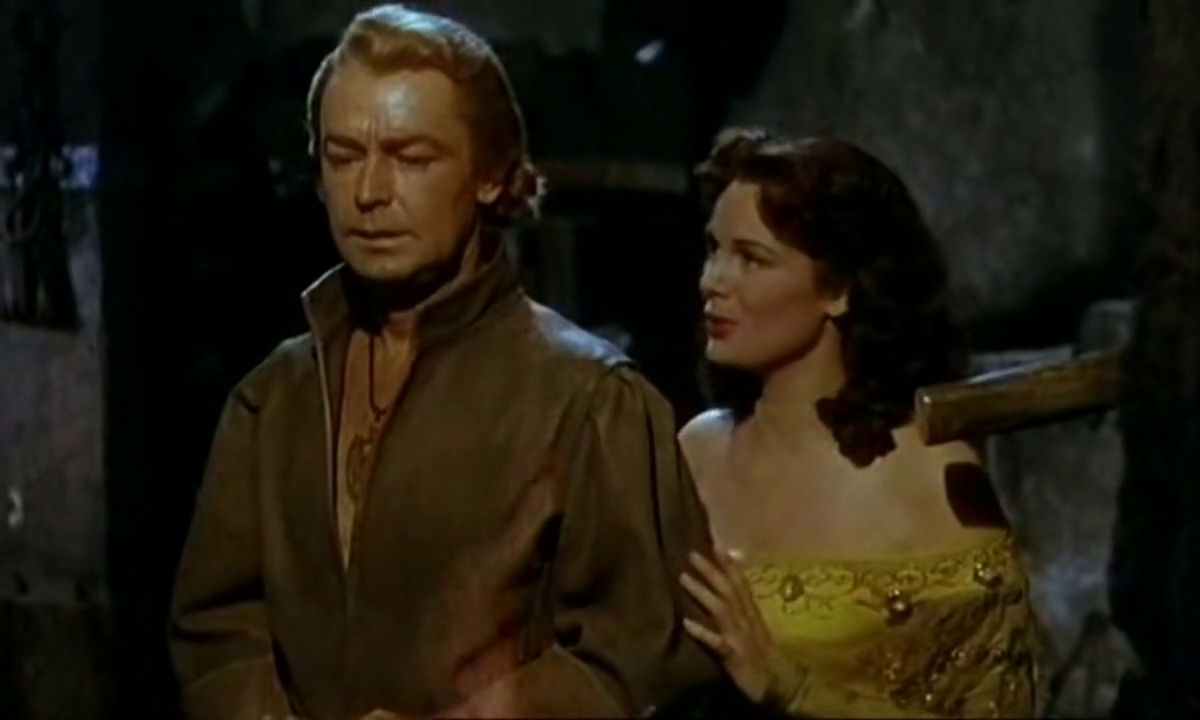
 

Dan Aykroyd’s lawyers will be in touch.

Stray Observations:

• Shaggy is wearing the red shirt he was last seen wearing in The 13 Ghosts of Scooby-Doo.
• The Headless Horsemen is very on model with the one that appeared in Disney’s Adventures of Ichabod and Mr. Toad.
• The Boo Brothers seem to be a hybrid of The Three Stooges and the Ghostly Trio from Casper the Friendly Ghost.
• Shaggy never questions why the ghost of his uncle would be trying to steal the jewels when his will clearly stated that he left them for him. Once dead did he think his uncle changed his mind?
• The witch is voiced by June Foray who is most notable for voicing Witch Hazel in Looney Tunes.
• The Confederate ghost chases our heroes around while riding a penny-farthing bicycle, which has to be the least threatening mode of transportation known to man.
• The character of Sadie-Mae Scroggins looks like she would be more at home in a Ralph Bakshi cartoon.


“Coffee, Tea or Me?”

Much of the humour to be found in Scooby-Doo Meets the Boo Brothers was certainly targeted at younger viewers – as this was a Saturday morning cartoon this is not surprising – but I was still impressed with not only the character designs of the ghost and beasties but of the riddles that our heroes had to solve to locate the hidden jewels, as these were puzzles that audiences of all ages could have fun trying to figure out, at least before the obnoxious Scrappy-Doo blurts out the answers. Overall, if you can get passed the annoying humour of both Scrappy and the Boo Brothers there is a lot of enjoyment to be had in this animated film.


Note: It’s sad when the fake ghosts are scarier than the real ones.

Thursday, April 23, 2020

The Black Knight (1954) – Review

“There comes a time in every man’s life when he must fight for what he wants most,” and with those stirring words the adventures of The Black Knight begins, a film that wonderfully illustrates the dream of Camelot and the heroic ideal, unfortunately, aside from namechecking the likes of King Arthur and Guinevere there isn’t much on display here to mark this as an Arthurian movie and could have easily taken place at any point during the middle ages. That said let us slip back to the time of swords and gallantry when maidens were all beautiful, villains all nefarious and heroes always with the win at the end.


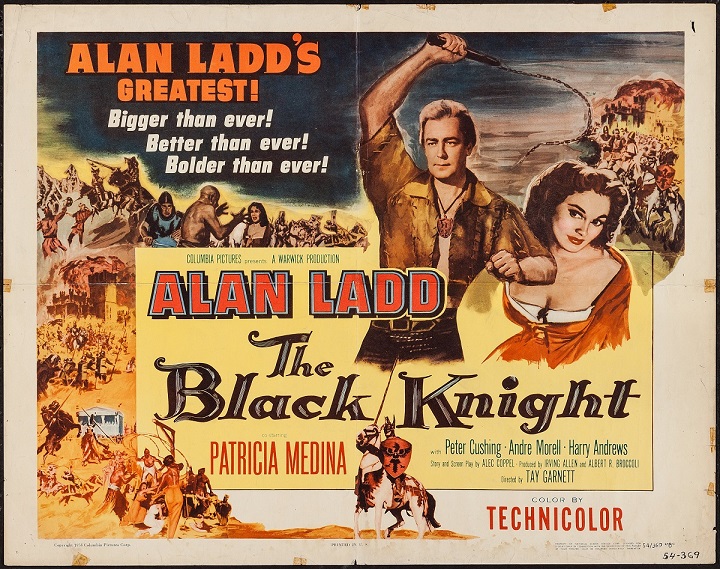
 The film’s protagonist is a renowned blacksmith and swordsmith by the name of John (Alan Ladd) who works for the Earl of Yeonil (Harry Andrews) but who is also secretly in love with his daughter the Lady Linet (Patricia Medina), and this is, of course, a forbidden love what with her being of noble birth while John of simple peasant stock, but like any star-crossed romance these two are doomed to be together and we the audience will just have to put up with eighty-minutes of obstacles being thrown in their way. The chief obstacle being the Earl of Yeonil himself, who walks in on the two lovers while they are passionately embraced, which results in John being sent away at the most inopportune time.


Not seen here is the apple box Alan Ladd is standing on.

Hollywood Trivia: Actress Patricia Medina was 5' 7½" while Alan Ladd was only 5' 6¼" so to create a heroic stature the camera could never show Ladd’s feet. If he was stationary he was usually standing on a box or if the scene required walking the other actors were in specially dug troughs or ditches. For everything else, the other actors were required to stand with their legs apart and their knees bent.

The main villain of this piece is the Saracen Sir Palamides (Peter Cushing) a Knight of the Round Table who is secretly in league with the pagan Cornish King Mark (Patrick Troughton) who desires Arthur’s throne as well as the extinction of Christianity. To aid in this endeavour Sir Palamides leads an attack of Cornish soldiers, disguised as Vikings, against the castle of Earl of Yeonil, killing all within except the Earl and his daughter Linet. The Earl is driven mad with grief and thus is unable to tell Linet that he had sent John away before the attack happened, this causes Linet to think her lover is nothing but a coward for running away. In fact, John returned in time to see Bernard (Bill Brandon), the brutish Saracen servant of Palamides, murder Linet’s mother. This leads to John accusing Palamides' servant of the murder in front of King Arthur (Anthony Bushell), which doesn’t go over all that well what with him being a commoner and all, but Arthur grants John three months' grace to prove the accusation or face execution himself.


Who wouldn’t trust Peter Cushing?

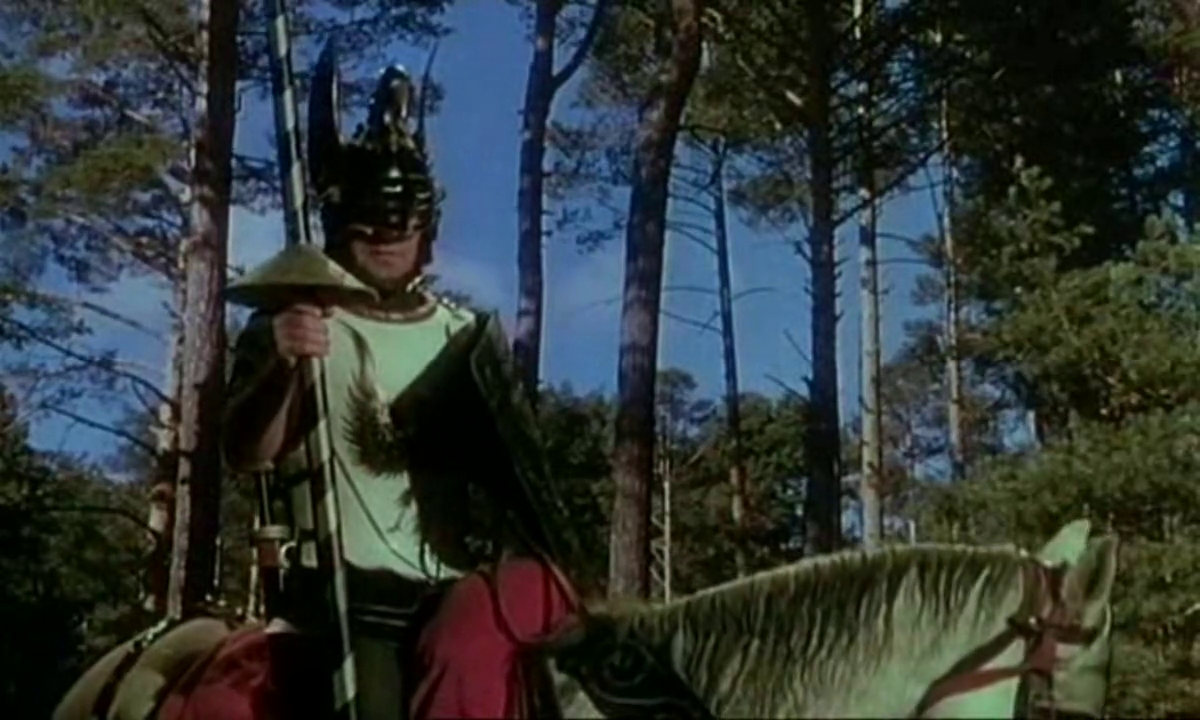
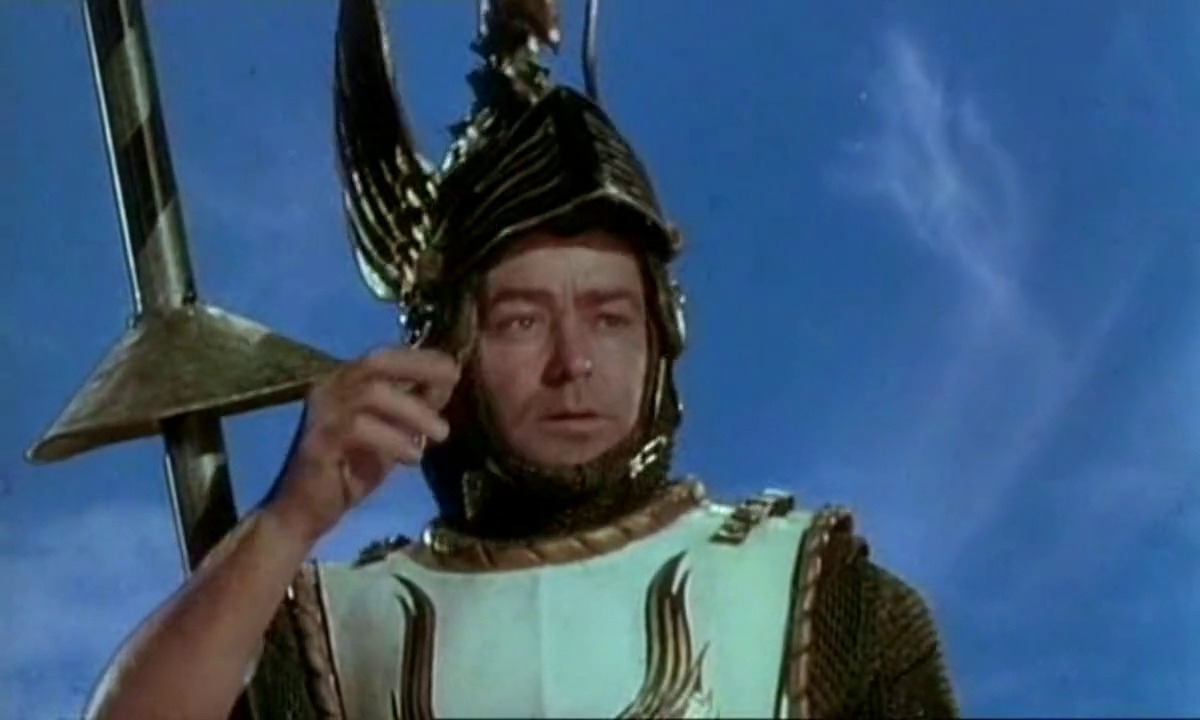
The noble Sir Ontzlake (André Morell) takes pity on John and trains him in swordplay so that he can take on the alternative secret identity of the wandering Black Knight, which they hope to use in uncovering the plot against King Arthur. Unfortunately, this spy work prevents John from immediately using his newfound sword skills against Palamides and thus his refusal to fight the evil bastard in a duel adds more evidence of his cowardice in both the eyes of Linet and that of the court, but as the heroic Black Knight he is able to rescue the lovely Linet from being sacrificed at Stonehenge.

Note: I’ll buy her not recognizing her old lover while wearing his helmet but when he speaks he does nothing to disguise his voice, so I call bullshit there.  Also, what's with the short sleeves with his armour?

What follows is your standard medieval adventure with the hero riding all over Christendom to thwart the villains and win the hand of the fair maiden. In the case of The Black Knight, we have a cast of veteran English actors who are more than up to the task inhabiting this bygone era but then we also have the very American Alan Ladd as the hero and this miscasting almost sinks the picture as he is never once believable as a knight of old.  Luckily the rest of the cast do their best to make up for this lacking – Peter Cushing especially fun as the cunning Saracen – and the exciting action sequences and medieval pageantry all go towards making this a rather fun adventure film.


As fun as a night out at Medieval Times.

Stray Thoughts:

• I haven’t seen an actor more out of place in a period film since I last watched Richard Gere in First Knight. Alan Ladd doesn’t even attempt to match the speech of his fellow castmates, who all give resonant Shakespearean deliveries and flourishes
• A blacksmith turned sword-wielding hero would rear its head once again in Disney’s Pirates of the Caribbean: The Curse of the Black Pearl.
• The villains disguise themselves as Vikings by wearing the stereotypical horned helmet, something actual Vikings never wore.
• There actually was a Saracen knight of the Round Table named Palamedes but he was no villain as depicted here, in fact, he converted to Christianity and was actually the one to slay King Mark.
• Peter Cushing’s deaf and dumb henchman Bernard seems rather lifted from Zorro’s sidekick Bernardo, who played at being deaf so as to spy for his master.
• In literature, black knights were usually portrayed as villainous figures while this film turns that idea on its head.


Note: For someone called The Black Knight his outfit isn’t all that black.

As an Arthurian adventure tale The Black Knight barely checks off the boxes for it to be included in that category, aside from King Arthur, Guinevere and a barely mentioned Lancelot there isn’t much to tie this movie to the stories of Arthur and his Knights of the Round Table, and they even took the noble Saracen Palamedes and turned him into a villain. Now, this kind of re-writing of history, fiction or not, was certainly nothing new to Hollywood but I’d hate to think Palamedes having brown skin had anything to do with the decision in making him the villain, but being this film was made in the 50s I wouldn’t be at all surprised if that were the case.

Overall, The Black Knight is a passable medieval adventure movie, one that fans of the genre will most likely enjoy, sadly is the fact that it will be more remembered for the strange casting choice of Alan Ladd rather than for its action and pageantry.


Alan Ladd in “This Sword for Hire.”

Monday, April 20, 2020

Scooby-Doo Goes Hollywood (1979) – Review

What exactly are the key ingredients for a good Scooby-Doo mystery? There should be a spooky locale for the gang to visit, some sort of ghost or monster and the requited comic shenanigans for our cowardly canine and friends to be caught up in, but most importantly, there should be a goddam mystery. Unfortunately, in Scooby-Doo Goes Hollywood we have none of those things – there are comic shenanigans there just not all that funny – instead, we have a strangely meta-narrative that makes little to no sense.

 Scooby-Doo Goes Hollywood

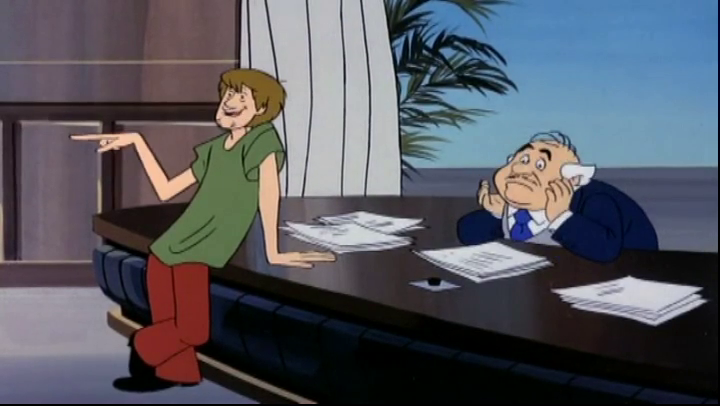
The first thing to realize while watching Scooby-Doo Goes Hollywood is that for some strange reason this “movie” goes out of its way to point out that the Scooby-Doo Saturday morning cartoon was just a show and that the Scooby gang were all just actors. Were kids of the day clamouring for this kind of self-referential meta-humour? The basic premise of Scooby-Doo Goes Hollywood is that Shaggy (Casey Kasem) and Scooby (Don Messick) have become dissatisfied with their roles as comedy players, with Scooby being typecast as a “Funny, cowardly, clumsy dog” stating to the head of the network (Rip Taylor) that they deserve better than being stars in what Shaggy considers a low-class Saturday morning show.


“First step, fire that idiot who came up with Scrappy-Doo.”

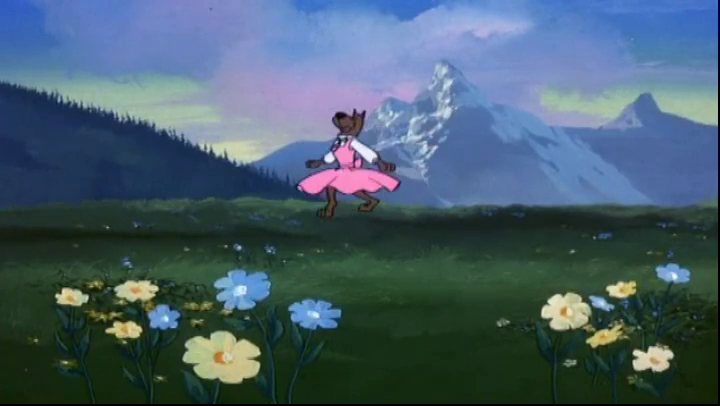
The structure of Scooby-Doo Goes Hollywood follows a very repetitive theme with Shaggy and Scooby walking into the head of the studio’s office and showing him a pitch reel of one of their ideas to make Scooby a big star. This mostly consisted of brief Saturday Night Live type parody sketches of various shows like Laverne and Shirley, Happy Days, Superman, The Sound of Music, Donny & Marie, The Love Boat and Charlie's Angels but the most these hack writers could come up with was just changing the names to stuff like "Scooby Days" and "The Sound of Scooby" as if that’s all you need to consider yourself a parody.


It takes more than this to qualify as a parody.

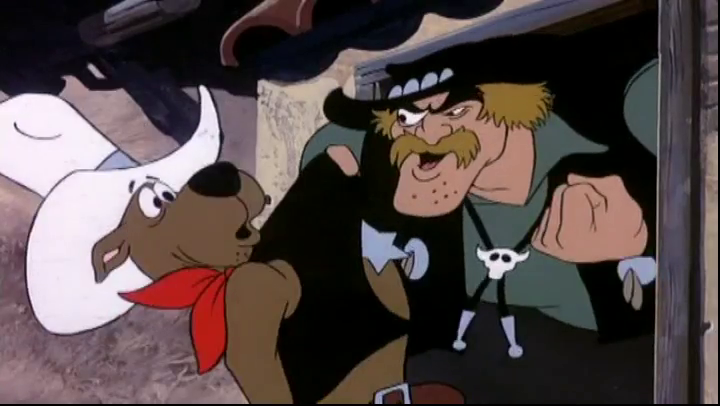
But lame jokes are far from the main problem here as this movie also fails to even understand its own premise. If Scooby-Doo was apparently tired of playing the “Funny, cowardly, clumsy dog” why do all these various pitches that depicted him as such? In the very first pitch we get “How Scooby Won West” a western that was apparently written, directed and stars Scooby-Doo but it then proceeded to show Scooby clumsily falling over things and running in terror from the villainous Jesse Rotten. Did Scooby not understand that the Jesse Rotten was only an actor playing a part and not actually a bad guy? Was his falling over everything in sight from the script or could they not afford retakes?


Blazing Saddles this is not

Throughout this entire movie, we are bombarded with Scooby-Doo’s standard comic antics that make no sense in the context of the story they are trying to tell. Sure, you still need these pitches to be funny but the jokes shouldn’t rely on those old Scooby tropes, something new and clever should have been tried.

Stray Observations:

• This is the first Scooby-Doo movie but at a mere 49 minutes in length, it can barely be called such.
• Fred, Daphne and Velma don’t seem all that concerned that Scooby quitting means they are all out of work. Velma is all about, “We have to get him back, for his own good.” That’s a lot of concern for someone who left you all in the lurch.
• In a flashback we learn that is was Velma who picked Scooby-Doo from the pet store. Wasn’t Scooby always Shaggy’s sort of pet?
• The clips used from episodes of Scooby-Doo, Where Are You! only makes us wish we were watching that show instead of this thing.
• Even in fantasy dream sequences, Scooby-Doo is a klutz, which means he must have some really deep-seated inferiority complex issues.
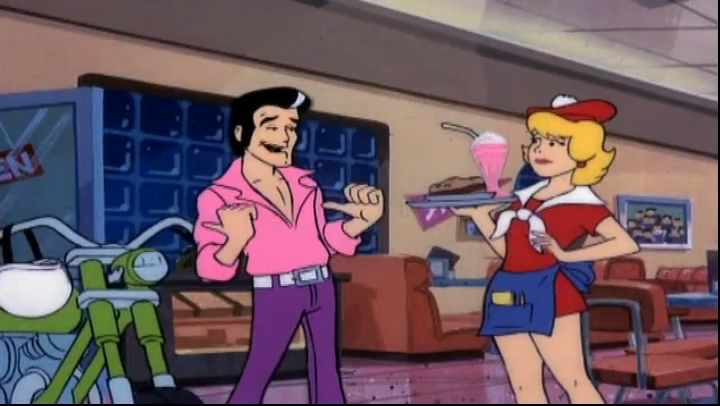
• For some reason their parody of The Fonz from Happy Days has him wearing a pink jacket and purple pants.


Is that an attempt at comedy or simply bad character design?

Lame attempts at parody aside the film also give us four musical numbers that range from sad to painfully bad. There’s a Sonny and Cher number that goes on for seemingly ever and without even a slight attempt at being funny. Sadly, humour across the board is pretty much absent throughout Scooby-Doo Goes Hollywood but worse is the fact that this movie was never clear if the Scooby-Doo cartoons were supposed to be fictional or if they were based on the real adventures of the Scooby gang, then add to that the complete waste of Fred, Daphne and Velma and you have one of the worst entries in the Scooby-Doo franchise.

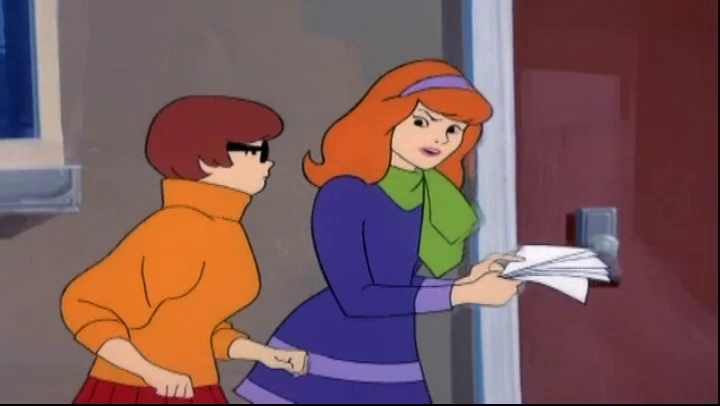
Note: The only joke I found even remotely funny was one exchange between Daphne and Velma.

Daphne: “I'm not sure I understand my motivation in this next scene, Velma.”
Velma: “Come on, Daphne. How much motivation do you need to run from the Crabby Creature from Creepy Crag?”
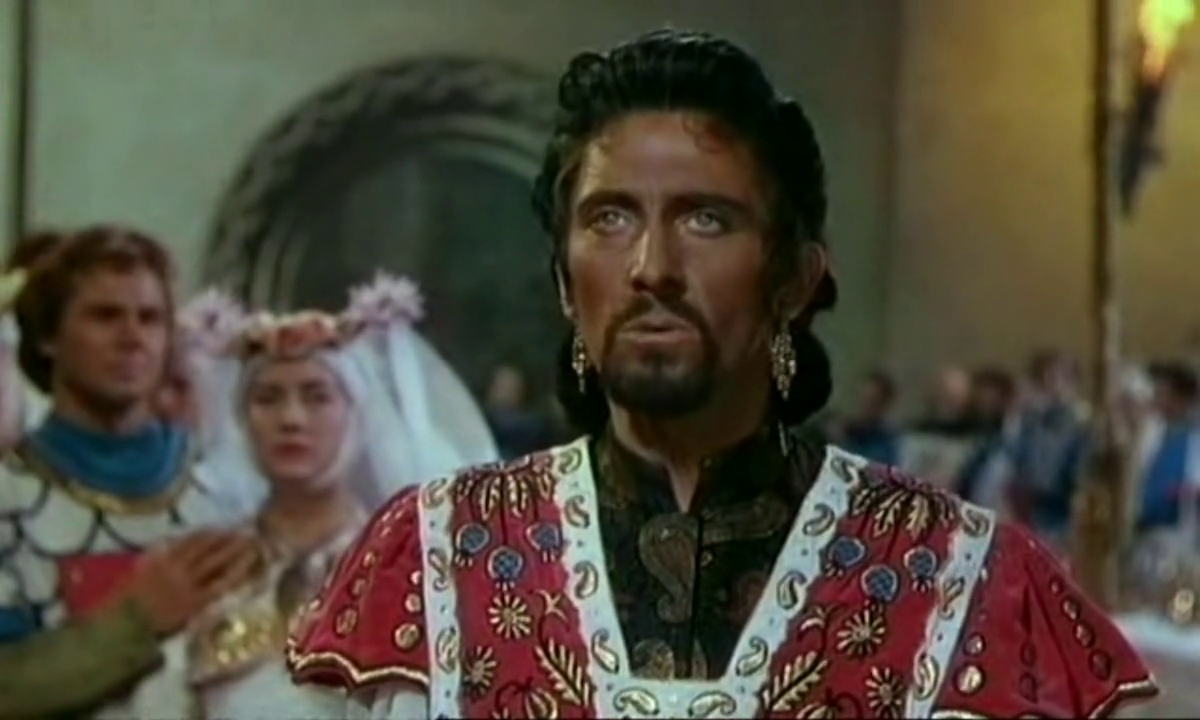
Thursday, April 16, 2020

Knights of the Round Table (1953) – Review

Though credited as being based on Sir Thomas Malory's Le Morte d'Arthur Richard Thorpe’s Knights of the Round Table bares but a passing resemblance to Malory’s collection of Arthurian tales, instead of covering the numerous exploits of Arthur and his knights this movie focuses almost solely on the forbidden love affair between Lancelot and Guinevere.
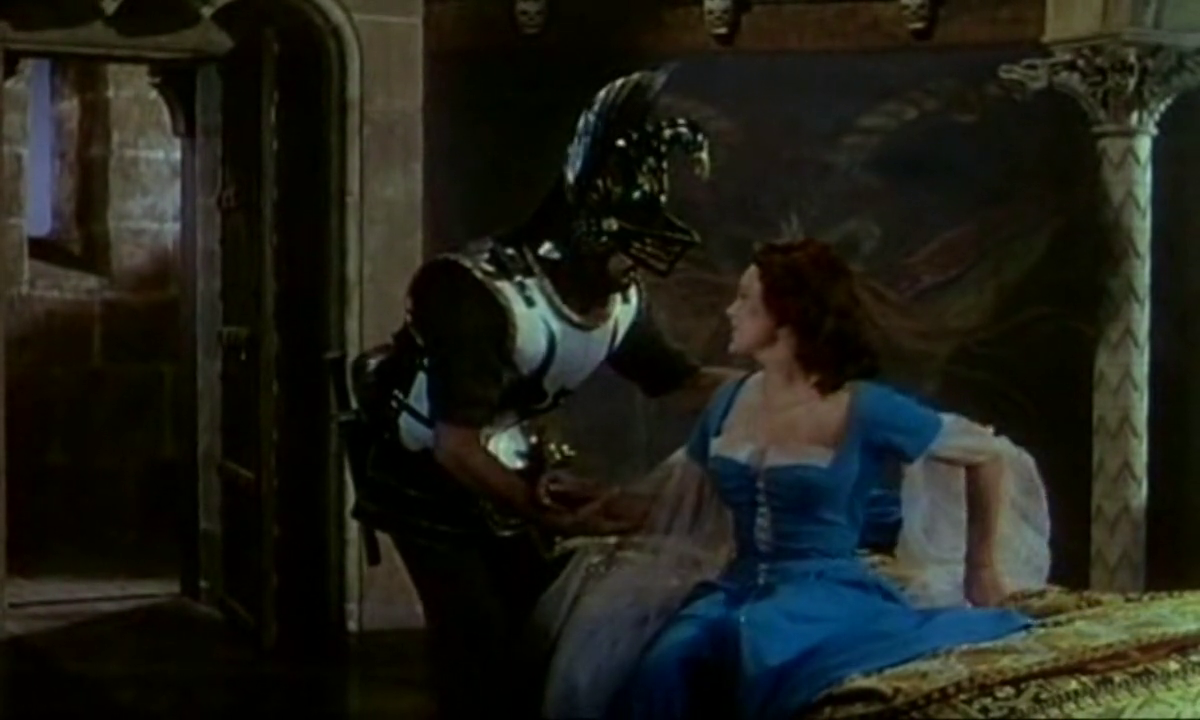

Knights of the Round Table begins at the Chapel of the Sword where two parties claim right to rule all of England, on one side we have Arthur Pendragon (Mel Ferrer), son of the late King Uther, and on the other is his half-sister Morgan le Fay (Anne Crawford) and her knight champion Modred (Stanley Baker), who is neither Arthur’s incestuous son or even his nephew as he’s been depicted in different versions of the Arthurian tale.   Morgan maintains that as she is the only legitimate offspring of the late king that the throne belongs to Modred, and I’m not exactly sure how that argument works.  If this version of Modred is just Morgan Le Fay’s champion and boy toy then how in the hell is he the rightful king?
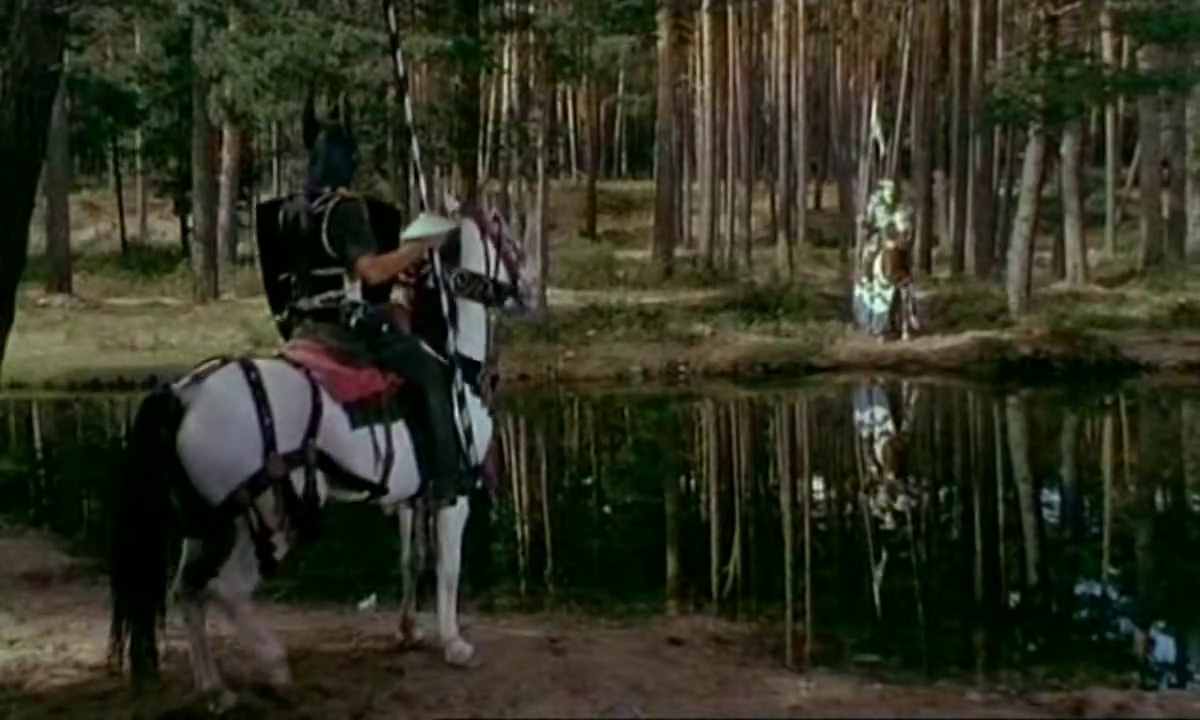
 

“My boyfriend should be king, he’s so dreamy.”

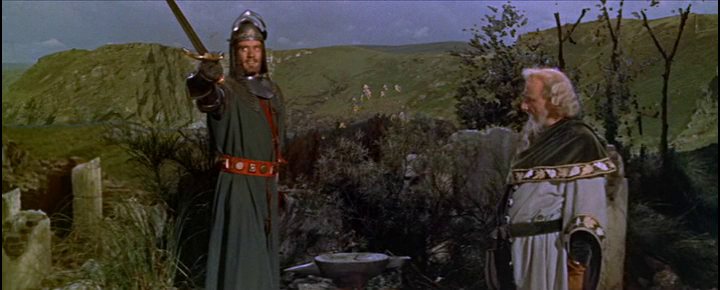
Setting aside the issue of bloodlines and rightful succession to the throne Merlin (Felix Aylmer) moves on to the classic “Sword in the Stone” test to determine England's rightful ruler. Modred fails to pull Excalibur free and when Arthur easily rests the blade from the stone Modred accuses Merlin of witchcraft and demands a meeting at the Council of the Ring of Stones, where all the other tribal kings will decide if “One man shall rule them all.” Then in a bizarre twist Merlin orders Arthur to return Excalibur to the stone, telling him that he must prove himself worthy of the throne by his deeds.

So what was the bloody point of the whole Sword in the Stone test? Like many movies based on the Arthurian myth, magic is pretty much absent here and Merlin mostly fills the role of royal advisor, Morgan Le Fay is not an evil enchantress and the magical sword Excalibur is mostly forgotten.


“Put that silly thing away.”

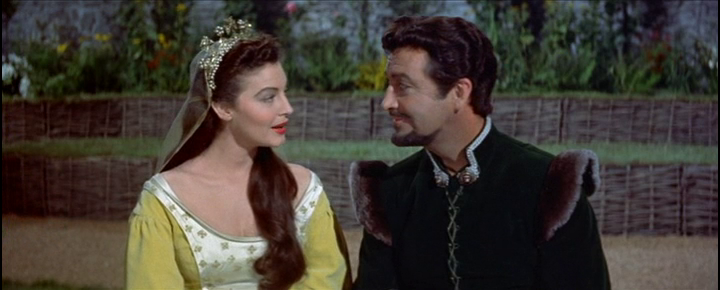
As Arthurian movies go Knights of the Round Table works mostly as an episodic soap opera, one that is occasionally punctuated with sword fighting. We get introduced to those who will be become Arthur’s faithful knights; the French Knight Lancelot (Robert Taylor) – minus any semblance of a French accent – Gawain (Robert Urquhart) and Percival (Gabriel Woolf) who support Arthur against Modred, and an assembly of rival kings and general asshats to help fill out the cast. Once all of Modred’s forces are defeated Arthur calls for a truce and accepts all "enemy" knights to join the court of Camelot, which pisses off Lancelot who wants to gut the vile Modred where he stands. Lancelot storms off telling Arthur, “While that man lives I will not pay you homage,” but this tiff among friends is rather brief and only servers to separate them long enough for Lancelot to run into Guinevere (Ava Gardner) on his own, this so that he can become her champion.


“Let’s hook up and bring down a kingdom.”

It’s at this point that melodrama aspects of the film kicks into high gear with Morgan and Modred figuring out that Guinevere and Lancelot are in love, a perfect tool to divide Arthur’s knights, but when Merlin learns of this he advises Guinevere to break it off and convince Lancelot to marry the fair lady Elaine (Maureen Swanson) and ride off to guard the northern border from the murderous Picts. While there Lancelot mostly broods over his lost love but then Elaine eventually dies in childbirth thus Lancelot freeing him up for more evil manipulations by Morgan le Fay and company, who have murdered poor Merlin to stop his pesky meddling.


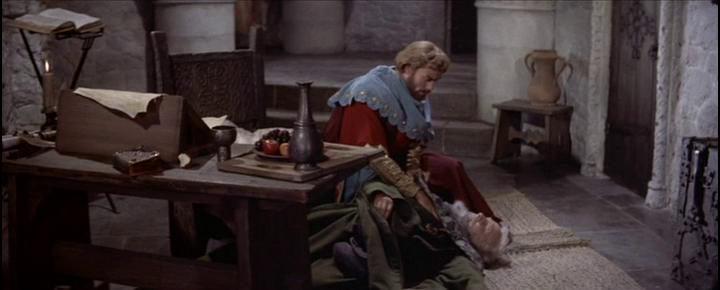
This is how the great wizard Merlin goes out, seriously?

What follows hits a few of the Arthurian highpoints; the affair is discovered, Lancelot and Guinevere are condemned to death but their sentence being commuted by Arthur, and Lancelot being banished from England while Guinevere is sent off to a nunnery.  This all gives Modred grounds to lead a civil war against Arthur and his faithful knights.

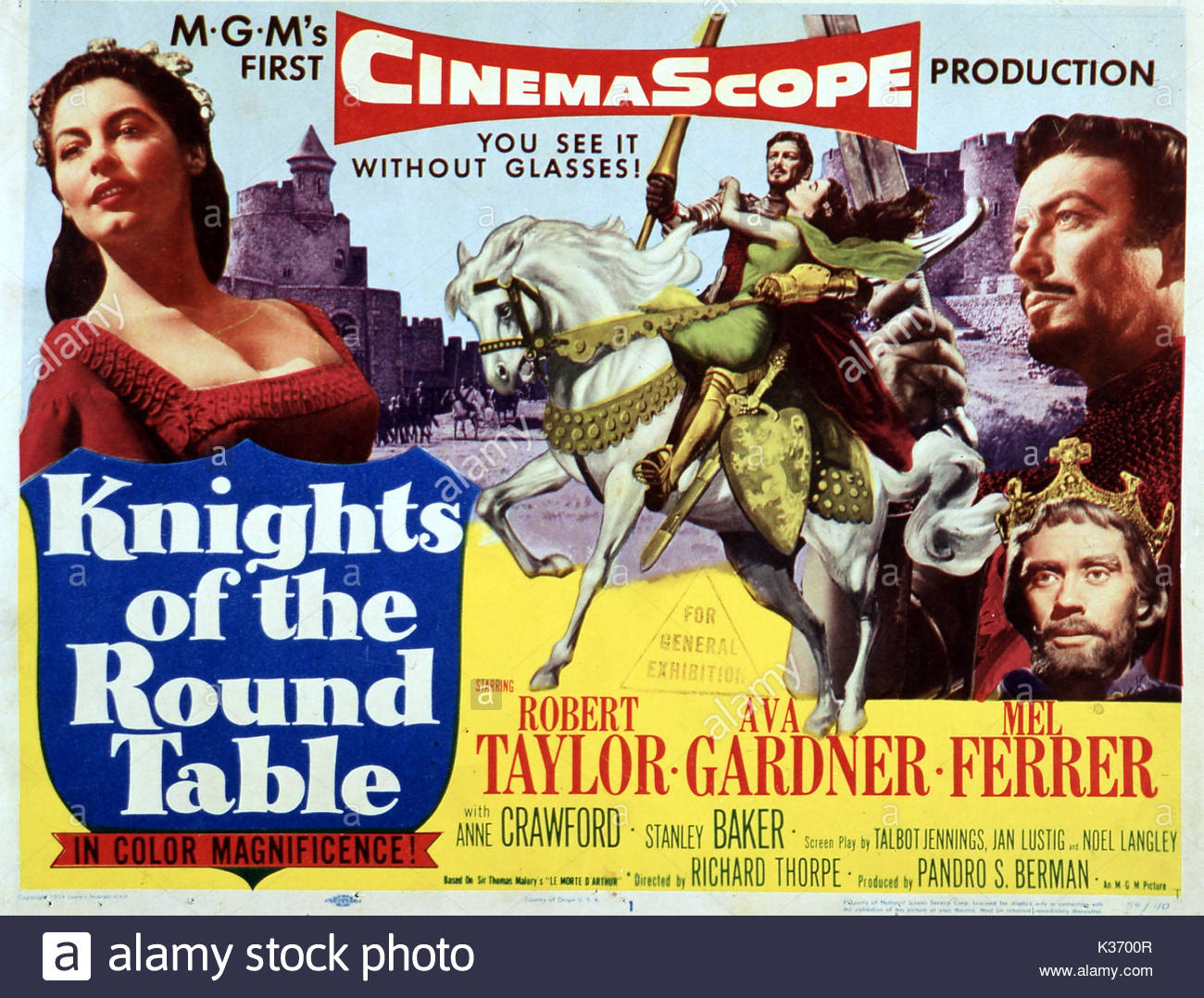
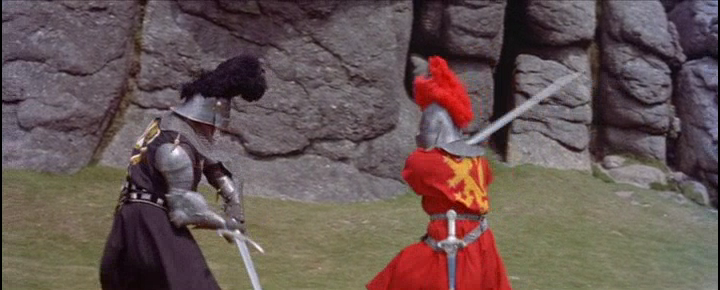
Knights of the Round Table does have a good sense of pageantry, not to mention being the first MGM film to be shot in CinemaScope, but most of the acting in this film comes across as either quite pompous and stilted or laughably overdramatic. We do get a fair amount of medieval action in this film but the battles are rather clumsy affairs and most examples of swordplay found here look about as convincing as eight-year-olds hacking at each other with sticks.


“Get on home, your mother’s calling you!”

Stray Thoughts:

• Both Merlin and Morgan le Fay are barely characters in this film, neither one shows any magical abilities and once Merlin is poisoned out of the picture Morgan le Fay is basically window dressing for Modred’s villainy.
• Elaine in Arthurian mythology tricks Lancelot into believing that she is Guinevere, and he sleeps with her. The ensuing pregnancy results in the birth of his son, Galahad. This movie’s version of Elaine is closer to that of Elayne of Ascolat, who dies of her unrequited love for Sir Lancelot.
• Though we do get the birth of Galahad in this movie he’s never seen beyond being a baby and it’s Percival who is the chosen finder of the Holy Grail rather than Galahad as in the Arthurian mythology.
• The hero of this film is clearly Lancelot’s horse Berrick, who is constantly saving his master’s life by either bringing him a much-needed weapon or pulling his sorry ass out of some predicament or other.


He’d be better off working for the Lone Ranger.

The only real standout performance in this film is that of Stanley Baker as Mordred, he seems to really relish the part of the villain but everyone else in the cast seems rather disconnected and when you’re dealing with one of the most famous love triangles in history having three lead actors looking about as engaged as if they were in a queue at the DMV that’s bit of a problem. Richard Thorpe’s Knights of the Round Table is far from the worst adaptations of the Arthurian myth but with all its splendour and pageantry it still couldn’t make this entry more than a mildly interesting affair.