Blog Archive

Wednesday, March 13, 2019

The Nun (2018) – Review

Creating a cinematic universe is not easy — just ask the people over at Warner Bros with their DC Extended Universe — but producer James Wan seems to have struck gold with the ever-growing collection of horror movies that have spun off of the success of his 2013 horror film The Conjuring. Though to be fair, not all of the movies in The Conjuring Universe have been received well: the 2014 spinoff Annabelle being a particularly dreadful entry, but as horror films don’t usually have budgets running into the hundreds of millions, a clunker or two is easier to brush off. Thus, films like 2018’s The Nun, making almost $400 million worldwide on a $22 million dollar budget, ensures that this particular franchise is not going anywhere anytime soon.


 Director Corin Hardy’s The Nun is the seventh installment in The Conjuring Universe, and its existence stems solely from the popularity of the “demonic nun” who had popped up to harass poor Vera Farminga’s plucky demonologist in The Conjuring 2 — which later popped up again in the prequel spin-off Annabelle: Creation, where it terrorized a bunch of little girls — but now, with The Nun, writers James Wan and Gary Dauberman give us the “full” backstory to the demon known as Valak. This movie takes us back to 1952, where we see a couple of Roman Catholic nuns cautiously heading down a spooky corridor of their crumbling abbey, one that seems to include its own fog machine, and not to put it too lightly, but things don’t go well for these nuns, as dark forces drag one of them away while the second is forced to commit suicide to prevent the demonic spirit from possessing her.

Theological Question: Exactly how powerful does a demon have to be to casually murder or possess a passel of Catholic nuns? You’d think being a “Bride of Christ” would at least give you some kind of protection from evil.

The Vatican goes into full on damage control mode, sending Father Burke (Demián Bichir) and Sister Irene (Taissa Farmiga) to investigate the incident, but the strange thing here is that though Father Burke is the Vatican’s go-to guy for verifying miracles, and he even has has a history of performing such exorcisms before, poor Sister Irene is only a novitiate, not even having taken her vows yet. So why in the world would the Vatican send such an odd couple on such a nasty mystery?  Now, we do later learn that Sister Irene entered the order because of visions, ones that have plagued her over the years, but how the Vatican knew that these particular visions were crucial to solving the mystery of a nun’s suicide is never made clear.  Then, when shit hits the proverbial demonic fan (for which Father Burke doesn’t even think to call for reinforcements), I really started to doubt the Vatican’s assessment of the whole situation. At one point, Father Burke is lured out to the abbey’s graveyard by the vision of a young boy, who in flashbacks we learned died during a failed exorcism, and the priest soon finds himself buried alive in one of the graves. Yet the characters in this film blow off these horrific encounters as if they are standard expected job-related problems.


At this point I’d be rethinking my career choices.

There really isn’t much of a plot to The Nun, with endless shots of people wandering down dark corridors taking up the bulk of the film’s ninety-three minute run-time, and the mystery itself is fairly generic. We find out that the Abbey was once used by a duke who was obsessed with the occult, and for some reason tried to summon forth a demon, but before accomplishing this he was killed by a group of Christian knights, who sealed the rift with an artifact containing the blood of Jesus Christ.
Will this holy reliquary come into play to save the day? Can Sister Irene’s visions uncover its location? Is Father Burke the most useless character to ever appear in a horror movie? All these questions and more are answered as The Nun attempts to tie everything neatly into The Conjuring Universe, as if it were some supernatural ouroboros, while actually giving us no real new information at all.


We already knew nuns were scary.

This is not to say that there aren’t sufficiently scary moments in this film — though director Corin Hardy does lose points for being a little excessive with his jump scares — as the moody atmosphere of the haunted abbey never seems to let up, and as a viewer the feeling of dread and hopelessness is quite pervasive, but you will also at times find yourself shouting at the screen, “What the hell are you people still doing there?” as Father Burke and Sister Irene (who are at times aided by a Canadian expatriate named Frenchie [Jonas Bloquet]) are constantly separated to wander off on their own, for no fucking reason! Our three leads continually act in ways no sane person would ever imagine. A locked door mysteriously opens, and their response is basically, “I guess I should investigate and follow that shadowy figure.” Father Burke seems unconcerned with sending a young novitiate off on her own, when every fiber of your being should be screaming “Let's get the hell out of here,” and it’s this kind of attitude that permeates the entire film.

Who could guess that following a nun, one who is dragging the rope she hung herself by, could end badly?

Of course, characters acting against their own best interests is certainly nothing new to the horror genre; the Amityville Horror franchise practically runs on this sentiment, but people doing dumb things is not The Nun’s major failing, it’s the fact that there really isn’t much originality to be found during its short run-time. There are character moments lifted straight from The Exorcist movies, we get visual cues that hearken back to Tod Brownings Dracula, and even the eventual “defeat” of the demon is a blatant rip-off from the climax of Tales of the Crypt: Demon Knight. For younger viewers this will obviously not be an issue, but horror fans could find themselves ticking off a checklist of references instead of being pulled into the movie.


"On second thought, let's not go to the abbey. 'Tis a silly place."

It’s clear that director Corin Hardy is more than capable of assembling all the right ingredients to make a good horror movie — even if some of those ingredients are borrowed from someone else’s kitchen — and The Nun is overall an okay installment in this ever-growing horror franchise, but it will also sit on the shelf as a lesser chapter when compared to some of its predecessors.

Friday, March 8, 2019

Captain Marvel (2019) – Review

With twenty-one films currently making up the Marvel Cinematic Universe, one has to be chagrined that it took this long for the studio to give us a superhero movie with a female lead — it took the DC Extended Universe only four films to break out Wonder Woman, yet we're still waiting for a Black Widow movie — but now the studio has given us Captain Marvel, a character who is not only a female superhero, but also arguably the most powerful hero in the Marvel Universe.


For those of you in the dark, this particular movie is a prequel, which is to set-up the big final showdown with Thanos in the upcoming Avengers: Endgame — we had that nice credit cookie in Avengers: Infinity War where Nick Fury paged for help just before being dusted by the snap — so with this film, we learn why Captain Marvel would be a good person to call when facing such a cosmic threat.

Captain Marvel takes place in year 1995 — brace yourself for the 90s soundtrack — but the movie doesn’t open on the familiar confines of Earth, but instead on the Kree Empire's capital planet of Hala, where we are introduced to a Starforce warrior named Vers (Brie Larson) and her mentor/commander Yon-Rogg (Jude Law), as they prepare to go on a dangerous mission to rescue an undercover Kree agent. Sadly, things do not go as planned. Now I’ve got to hand it to the people over at Marvel Studios for once again having the balls to throw the viewer into a completely alien environment without feeling the need to bog us down with narration and overbearing exposition. We quickly learn that the Kree Empire has been fighting a centuries-long war with a race of shapeshifting aliens called the Skrull — who can imitate anyone right down to their DNA — but when Vers is captured by Skrull soldiers during an ambush, and is forcibly subjected to a memory probe by a Skrull named Talos (Ben Mendelsohn), we discover that this brave Kree warrior has buried memories of growing up on Earth as an Airforce pilot by the name of Carol Danvers, and it’s this revelation that propels the story forward.


Captain Marvel is not only saddled with all the inherent problems of being an origin story — having to get a lot of information out before actually getting to the meat of the plot — but it also has to deal with being a prequel and all that baggage that comes with that. Unfortunately, this is where the film stumbles a bit. The events in this film are presented as the reason for Nick Fury (Samuel L. Jackson) pushing S.H.I.E.L.D. into creating the Avengers Initiative (to deal with stuff like alien invasions and forces the Earth's military can't handle), but it had already been established that it was the coming of Thor and Loki which had prompted Fury and Agent Coulson (Clark Gregg) to see about assembling super powered back-up. This kind of sloppy retconning isn’t something I expected from the people over at Marvel — after two decades of world building you’d think somebody would have been taking notes. Despite such intrinsic flaws in the timeline, this movie still works rather well, especially when it sets aside the cosmic battles for awhile and turns into a buddy cop film, with Fury and Danvers driving around trying to figure out just who she is and what exactly the Skrulls are after.


Captain Marvel is jam-packed with action, humour, and a plethora of visual thrills that will enthrall even the most jaded viewer — except maybe those certain individuals who seem to have a personal vendetta against Brie Larson — and the entire cast all put in excellent work to give this epic story enough weight, yet also with enough moments of levity so that the film doesn't become too self-important or tedious. Do you want glorious space battles? This film certainly has those. How about that trademark Marvel humour that doesn’t always work? *Check* and *Double Check*. Are there cool fights that will keep you on the edge of your seat? This movie has that in spades, which is certainly reason enough to see this film on the big screen.

Stray Thoughts:

• It was nice to see Ronan the Accuser from Guardians of the Galaxy making an appearance, as this really helps make the films all seem more connected.
• The de-aging CGI for Agent Coulson was not always at its best, and was somewhat jarring at times.
• How Nick Fury lost his eye is finally answered. So that's nice, I guess.
• Ben Mendelsohn has seriously become the go-to guy for scary opponents.
• Hey look, we get more of that Tesseract MacGuffin stuff again. *sigh*
• I’m still fuzzy as to why Nick Fury didn’t call Captain Marvel during the events of the first Avengers movie.


This movie is also for all you cat lovers out there.

As part of the Marvel Cinematic Universe Captain Marvel is a solid enough entry, not on par with the likes of Captain America: Winter Soldier or Civil War, but easily landing itself somewhere towards the top tier, and with her opening up the possibilities of more cosmic adventures, such as teaming up with the likes of the Guardians of the Galaxy, I’m even more excited to see what they will do with her character after Avengers: Endgame. Overall, Captain Marvel is an entertaining romp that beautifully expands the larger MCU narrative.

Wednesday, March 6, 2019

Mortal Engines (2018) – Review

The science fiction subgenre of steampunk has been around for quite some time, giving readers a Victorian speculative fictional world where anachronistic technologies, or retrofuturistic inventions, all exist in a historical setting. Possibly the counter-genre of this is dystopian fiction, which imagines a world in which oppressive societal control (and the illusion of a perfect society), are maintained through corporate, bureaucratic, technological, moral, or totalitarian control, and this brings us to Mortal Engines, which is both a steampunk movie but also a dystopian young adult adventure story.
With young adult dystopian fiction becoming all the rage in the last decade — Hunger Games, Divergent and, The Maze Runner being prime examples — it’s not surprising that author Philip Reeve wouldn't want a little piece of the YA money for himself, while also mixing it up a bit with a steampunk flavor to give it some spice, and thus his Mortal Engines Quartet was born.


Mortal Engines (2018)

A big fantasy series, one with cool visuals, a dastardly villain, and spunky heroes, must have looked to producer Peter Jackson to be perfect elements for a new blockbuster series, and after the less than well received Hobbit trilogy, he must have thought that maybe Middle Earth was in need of a rest, so why not give steampunk/dystopia a shot? The film opens with your standard narration — where we learn a thousand years ago the world was practically destroyed during the conflict known as the Sixty Minute War — and now monstrous mobile "predator" cities roam the wastelands, hunting and absorbing smaller settlements, to feed their massive furnaces.


 One of the key leaders of one of these predator cities is Thaddeus Valentine (Hugo Weaving), a famous archeologist who has been hunting down old tech in the hopes of finding a better way to sustain the cities. Because Thaddeus is being played by Hugo Weaving, most audiences will suspect he has some ulterior motive for his actions, and when he barely survives an assassination attempt by Hester Shaw (Hera Hilmar), a young woman seeking revenge for the murder of her mother, these suspicions are quickly confirmed.


Her assassination attempt is thwarted by salvager/historian Tom Natsworthy (Robert Sheehan), who’s loyal to London but by just hearing the accusation of murder gets kicked off the Traction City by Thaddeus, and so Tom must team up with Hester if he hopes to survive the merciless terrain of the outlands. The story clearly wants us to believe these two antagonistic individuals will eventually fall in love, but there is absolutely no screen chemistry between Hilmer and Sheehan to make this at all believable, nor are there characters even remotely compatible — her being a badass fighter and him a historian/salvager — and even if one were to site the “opposite attracts” cliché, the film spends little to no time laying even the basis for a budding relationship. When Hester finally realizes she loves Tom, the moment is about as organic as if she’d just turned to the page in the script which said, “Hester recognizes her love for Tom” and just accepts it. What makes this lukewarm romance even worse is that as the two flee across the outlands, dodging roving cities of nasty cannibals, they must also stay ahead of a creature called Shrike (Stephen Lang), a reanimated cyborg known as a "Stalker" who wants Hester dead for failing to uphold a promise.


Shrike is easily the most interesting element in this movie, aside from the predator cities which are pretty cool, and when we learn of his and Hester’s complicated history, it’s clear that a movie about these two would have been much more interesting, certainly more than anything we ever get with Tom Natsworthy, King of the Bland. Our heroes also encounter anti-traction rebel, Anna Fang (Jihae), who belongs to a resistance group banding together against the moving cities that are devouring the Earth's resources. She is a fierce fighter and an amazing pilot of one of the many cool airships that populate this movie — she’s kind of this film’s Han Solo — and once again, we are introduced to a character who is easily more charismatic than good ol' Tom, and if the movie had ended with Hester Shaw and Anna Fang flying off into the sunset together, we would have had a much better movie.


Now I don’t want to completely single out the character of Tom as being useless, bland and uninteresting — which sadly he is — because this story also saddles us with two even more useless characters in the form of Katherine Valentine (Leila George), the daughter of Thaddeus Valentine, who learns of her father’s evil plans, and Bevis Pod (Ronan Raftery), an apprentice engineer whom Katherine befriends and enlists in the fight to thwart her father's said evil plans. I’m sure in the book these two characters served some purpose, other than to suck dry my will to live during every moment of screen time they shared, but any time the film cuts back to them, it’s a jarring moment of, “Oh yeah, these guys are in this movie too, I'd briefly and blissfully forgot they existed.” I can’t think of a pair of characters as instantly forgettable as these two, certainly not in what was to be a major motion picture franchise.


On the plus side, this film does have astonishing visuals, as the designs of the predator cities are simply incredible to behold, and certainly more deserving of a better film. The film does its best to impart some of the world building of the books — as much as a movie's two hour time constraint would allow — but as the movie races from one location to another, introducing a variety of secondary characters, we slowly find ourselves quickly divested of any attachment to the events unfolding. This is not at all helped by the film’s final act becoming a Death Star run, where the rebel ships must take out a series of gun turrets before the heroes can confront the villain. This all happens in what seemed like a sequence created so that it could be used as a level in the movie's tie-in video game. Then there's the moment where, I shit you not, the villain basically blurts out, “No, I am your father.”


 The basic premise of Mortal Engines is not bad, and as mentioned, the work that went into creating the various cities and landscapes is stellar, but with such bland leads and lazy plotting, this film was never going to succeed, at least not enough to give Peter Jackson another bloated franchise to milk.  Yet if one were to go into a viewing of this film with a forgiving eye, focusing on the actual interesting characters and not the supposed leads, there is some entertainment to be found in Mortal Engines, a film that is guilty of hinting at something better while delivering us another flavourless young adult action film.

The Predator Cities would have conquered the world if not for their belief about the shape of the world being "disastrously wrong."

Monday, March 4, 2019

The Void (2016) – Review

Basing your movie on Lovecraftian horror is not an easy feat, making a successful one is even trickier, but two Canadian filmmakers found themselves inspired by Guillermo del Toro's repeatedly failed attempts to get his own Lovecraftian film, At the Mountains of Madness, into theaters, so with a little money — i.e. crowdfunded — writer/directors Steven Kostanski and Jeremy Gillespie brought forth a film called The Void, one that nicely follows in the footsteps of Roger Corman’s The Dunwich Horror and John Carpenter’s In the Mouth of Madness.


 On a dark country road Patrolman Dan Carter (Aaron Poole) encounters a young man named James (Evan Stern) staggering out of the woods. James is obviously hurt, so Carter brings him to the nearest available hospital, but this turns out to be a bad idea on multiple levels. The hospital has recently suffered a major fire and is running on a skeleton crew — basically one doctor and three nurses — and one of those nurses turns out to be Dan’s estranged wife Allison (Kathleen Munroe). It is made apparent that their marriage is tense because of the recent loss of their unborn child — the dangers of childbirth will become a major recurring event in this film — and then to make matters worse the hospital is soon besieged by a group of hooded cultists.


These guys could find themselves sued by The Klan.

Rounding out our cast of besieged characters is the kindly Doc Powell (Kenneth Welsh), who recently lost a child of his own, Nurse Beverly (Stephanie Belding) as our early horror canon fodder, Kim (Ellen Wong), a jaded and inept intern, State Trooper Mitchell (Art Hindle), a pregnant teenager (Grace Munro) and her grandfather (James Millington), and finally there is Vincent (Daniel Fathers) and Simon (Mik Byskov), a father/son team that arrive hunting James. Now those familiar with John Carpenter’s Prince of Darkness will find familiar ground with The Void, as one by one our cast of characters are picked off and die horribly. The use of practical effects and gore is also very reminiscent of John Carpenter’s Thing, as nasty tentacles menace our heroes as one after another we see bodies transformed into horrifying monstrosities.


It’s the kind of film you know will most likely not have a happy ending.

The film has some fantastic set pieces with the key one being the subbasement of the hospital — which didn’t actually exist before that night — as our small group of heroes prowl down flare-lit hallways and face off against nightmarish creatures that are right out of Dante’s IInferno.We also get glimpses of the dark, foreboding landscape that looks to be the home of The Old Gods themselves. In the area of cinematography, The Void utilizes red lighting and shadows to both create an unearthly atmosphere of dread, but also to help hide some of the film’s budgetary shortcomings, and it is all handled relatively well. The directors (also Steven Kostanski and Jeremy Gillespie) carefully dole out information and plot twists at a steady rate, keeping the viewer always a little off guard as to who is on whose side, and as is very typical of the genre, many questions are raised but much is left unanswered.


Could the Void just be a time share for evil?

If you are either a fan of cult films such as Stuart Gordon’s From Beyond or the "body horror" films of David Cronenberg, then there is a lot on offer here for you, and it's certainly a good enough lovecraftian entry to hold us over until we eventually — very hopefully — get Guillermo del Toro's At the Mountains of Madness. Kostanski and Gillespie have assembled a fine group of actors to populate their tale of dark horror, and the amount of violence and splattered viscera should keep any gore hounds quite happy, but most of all, this is a nicely twisted little film that will keep you on the edge of your seat, and one I can highly recommend.


I wonder what HMO covers this hospital.

Wednesday, February 27, 2019

Hell Fest (2018) – Review

Two studios releasing movies with very similar subject matter is nothing new — Volcano and Dante’s Peak were dueling eruptions in '97, then in 1998, both Deep Impact and Armageddon had the Earth being threatened by asteroids — but in 2018, we got Blood Fest, a film about a horror theme park designed to kill its patrons, and we also got Hell Fest, a movie about a horror theme park that a serial killer used as his hunting ground, but in this case both of them were pretty damn awful. Now, a killer using a carnival as a front for his murders was nothing new to the horror genre, Tobe Hooper’s Funhouse in 1981 being an early example of this, yet that film managed to generate actual frights, something director Gregory Plotkin failed to provide with his movie Hell Fest.


 We are first introduced to the horror theme park Hell Fest during a quick prologue (because what’s a good slasher film without an obligatory prologue?), where a young woman is stalked and confronted by a masked figure known simply as "The Other" (Stephen Conroy). The girl is stabbed and hung up alongside the other prop victims in one of the park’s many mazes, where she is mistaken for one of the props and left hanging for some time. We then jump ahead a couple of years so that we can meet our proper cast of victims; first off there is Natalie (Amy Forsyth), a studious girl arriving at the apartment of her best friend Brooke (Reign Edwards), who has organized a visit to Hell Fest, and along for the ride is Brooke’s current roommate Taylor (Bex Taylor-Klaus), who fills the role of the “bad girl” in this particular slasher film. Then we have her boyfriend Asher (Matt Mercurio) and Brooke’s boyfriend Quinn (Christian James), who are around simply to provide more bodies to add to the film's kill count, as they have next to no actual character traits other than being attractive and male, and finally there is Gavin (Roby Attal), who is attracted to Natalie and is the one responsible for setting up this night’s entertainment.


Could Gavin be the masked killer?

Hell Fest is not a mystery — Gavin is not the killer, nor do we ever find out who “The Other” actually is — Hell Fest is simply a collection of jump scares set amongst some amazing set pieces. Seriously, the art direction in this film is pretty badass, and production designer Michael Perry and art director Mark Dillon deserve all the kudos here. What the film doesn’t have is any characters for us to give a damn about, and that is a key ingredient for a film of this genre if it hopes to succeed, and though Natalie is set up as the “Final Girl” — being the focused target of the killer — we are given little to no information about her. It’s clear that the true star of this movie is the aforementioned sets, and we do get a lot of interesting locations for the film’s killer to stalk his victims through, but as we don’t give two shits for this particular collection of cardboard targets, any chance of the director building proper suspense is severely undermined.


Park lighting brought to you by Mario Bava and Dario Argento.

Let’s talk a little more about the mechanics of this park. We are told that this is a traveling theme park, like some kind of horror carnival, but the sheer size and scope of the grounds, and the attractions within, clearly flies in the face of that claim. Our cast of characters wander in and out of multiple horror mazes, some simply staggering in their sheer size, and there is no way that at the end of the weekend a group of Teamsters are loading it all up onto a bunch of trucks at the end of the day. And exactly how much money would this park cost to operate? The mazes and park grounds are populated with hundreds of costumed “actors” and even at minimum wage the salary budget alone would have to be astronomical. Then you have all the animatronic monsters, mechanical devices, and rides that would need constant upkeep and maintenance, so you’re looking at the operational expense of a Disney Theme Park.


I haven’t seen a less viable business model since Pinocchio’s Pleasure Island.

Stray Thoughts:

• Is the killer humming “Pop Goes the Weasel” supposed to be creepy?
• The killer seems to target people who claim not to be scared, which is an interesting idea but the film can’t be bothered to develop it.
• Security personnel refuse to believe that there is a killer loose in the park, even though two years ago there was a killer loose in their park.
• There is a cool bit with a prop guillotine not actually being sharp, thus thwarting the killer’s attempt at beheading one of the girls, but then that scene concludes with the girl dying anyway, making it all pointless.
• The killer has almost supernatural abilities when it comes to tracking Natalie throughout this massive park. I kept waiting for the reveal that he’d somehow put a GPS tracker on her.
• An area of the park is called the “Dead Lands” where guests must sign liability waivers because the “monsters” are allowed to touch and grab you, but there is no waiver in the world that could ever save this park from being sued into the ground.


It was nice to see Tony Todd make an appearance.

Owen Egerton’s Blood Fest was an over-the-top horror movie, with a ridiculous premise that only gets bonus points for just how balls to the wall moronic it was, while Gregory Plotkin’s Hell Fest doesn’t really have anything going for it other than the cool location. When Hell Fest staggers to its unstartling conclusion, which of course hints at further installments, we as a viewer are left with the simple desire to have our ninety minutes back.

Sunday, February 24, 2019

Kim Possible (2019) – Review

With Disney Studios making billions of dollars off their live-action remakes, it’s not surprising that the Disney Channel would attempt the same thing with their animated shows. Thus the world has now been subjected to a live-action version of the popular television cartoon Kim Possible, but whereas Disney's theatrical releases have sported budgets in the hundreds of millions, this made-for-television feature looks to be made from the loose change found under Walt Disney’s couch cushions.


 I know I’m not the target demographic for a Kim Possible movie — not being a small child — but I must admit to finding the original four seasons of the television show to be immensely entertaining, and it holds up so well after all this time all due to the incredible team of writers and animators that brought it to life. Kim Possible not only burst at the seams with excellent character designs and bizarre adventures — not to mention having the world's most lovable naked mole rat — but what made that series so good was the different levels of humour that worked for audiences of all ages. This aspect is completely missing in 2019’s Kim Possible movie, for not only is the classic humour of the original series nowhere to be found, they somehow managed to turn Kim Possible into an escapee from an After School Special.


I’m surprised the show didn’t have a warning against children trying out jetpacks.

The movie opens with what looks to be a standard Kim Possible adventure, a world renowned scientist having been captured by the evil Professor Dementor (Patton Oswalt), and Kim Possible (Sadie Stanley) jet-packing in with her ever loyal sidekick Ron Stoppable (Sean Giambrone) to save the day, and if we were to let slide how incredibly poor the visual effects looked, or young Sadie’s complete inability to pull off an action sequence, then this wouldn't be a terrible opening, but then the movie jumps to the crux of what this movie is apparently about, which is the complete and utter humiliation of Kim Possible.


"Say it's not so Rufus!"

This movie seems to be a bizarre reboot of the show, with its timeline taking place during her freshman days of high school — the series having took place during her junior and senior years at Middleton High School — yet we are told that she is already a well-established global superhero, with countless villains locked up behind bars to her credit. The reason for this change is so that the writers can now run out all the “new kid in school” clichés that they can think of, ones that were already getting old and tired back in the 80s. What is truly surprising here is that some of the writers for this movie actually worked on the original series, so the undercutting of Kim’s character development is rather odd; she has no friends other than Ron and Wade (Issac Ryan Brown), her ten year-old tech support genius, there is no sign of Monique or any of her cheerleading friends, and she’s constantly late for class in what is easily the lamest running joke ever written for television, and is harassed constantly by her teacher Mr. Barkin (Michael P. Northey), who doesn’t seem to know who she is.


Is this Kim Possible or Saved by the Bell?

The original series was an action/comedy, with Kim combatting a variety of goofy villains, while this movie clearly didn’t have the budget for the action, nor the ability to write the comedy, and so much of the movie's ninety minute run-time is spent on teen drama, because that stuff is cheap and easy. Now, of course the cartoon did have some teen drama, with Kim crushing on Josh Mankey, but she was always top of the social food chain at her school, not the social pariah she is depicted as here. Not only does this movie take away the fact that Kim was head cheerleader, but she’s relegated to equipment manager of the school’s soccer team, by mean-girl Bonnie Rockwaller (Erika Tham).  In the cartoon, Bonnie was a somewhat "nemesis" to Kim in school, vying to take the top spot, but there was always an element of respect between them, yet in this outing Bonnie is just another weak television stereotype.

Note: Kim’s trademark Kimmunicator has been replaced by a holographic projecting pendant.

The basic plot of this movie surrounds new girl Athena (Ciara Riley Wilson), who Kim and Ron find crying outside of school, and they learn that not only is this girl an even bigger social leper than Kim — which once again is so very wrong — but she’s been idolizing Kim and her adventures for years. Athena is quickly embraced by our heroic duo, and soon they are spending time eating tacos at Bueno Nacho, training together, and eventually Kim gives Athena the complete makeover, which is the staple ingredient of a dozen teen comdies. It’s at this point that Kim starts to suddenly become a little jealous of Athena, as the young girl starts to mimic and takeover many of Kim Possible’s traits, right up to the point where she goes completely “Single White Female” and even saves Kim and Ron by taking on the villainous Shego (Taylor Ortega) in a fight. We even get Shego commenting, “Kimmie, you’ve got some competition here, this one's good, maybe even better than you.” Things get even worse when Kim’s grades start sliding, she face-plants during fights, all while Athena climbs to the top of the high school social ladder.


And just how could a school wallflower...


...turn into this superhero badass?

For those who want to view the Kim Possible movie unspoiled, stop reading now for I will be revealing the dastardly plan launched by Dr. Drakken (Todd Stashwick). Earlier in the movie, we saw Shego breaking Drakken out of prison — after one of the numerous times that he had been apprehended by Kim Possible — but now he has finally figured out why she always wins: it’s because she has a certain “spark,” and if he can steal that motivational essence for himself, he will be unstoppable. So the reason Kim has been off her game is because her vitality was being slowly drained by a cybertronic humanoid, one designed to appear to be a Kim Possible super-fan.


Athena was a robot? What a twist!

I’m not sure why the screenwriters thought fans of Kim Possible would enjoy seeing their heroine turn into an angsty brat, one who whines about not being special, and complains to her mother (Alyson Hannigan) that if she’s not the best, what’s the point? That some of this is later revealed to be caused by her “spark” being drained does not offset the pain of watching a beloved character being destroyed and humiliated. Once again, I must point out that the original show was an action/comedy, and if I had wanted to watch a teen girl bitch and complain about not being special, I’d watch Party of Five. Thank God at least Todd Stashwick as Drakken and Taylor Ortego as Shego seemed to be having fun in this movie, and though they may not have been perfectly accurate representations of the cartoon alter egos, their verbal banter was pretty much bang on.


You’ve got to love villains who enjoy their work.

So if your idea of a good Kim Possible movie is one where Kim’s mother and her nana (Connie Ray) join our heroes in storming the villain’s lair — her nana is some Morpheus like martial arts figurehead in this vesion — or if learning that Rufus the naked mole rat was some sort of science experiment seems like a good idea, than you may get some enjoyment out of this movie. I myself found it almost too painful to watch at times.
 

If they make a sequel to this don’t call me or beep me.

Monday, February 18, 2019

Winchester (2018) – Review

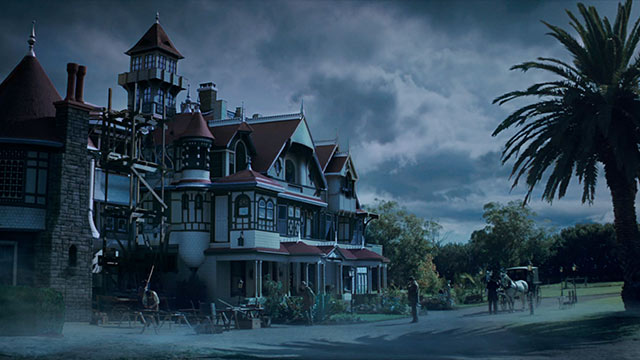
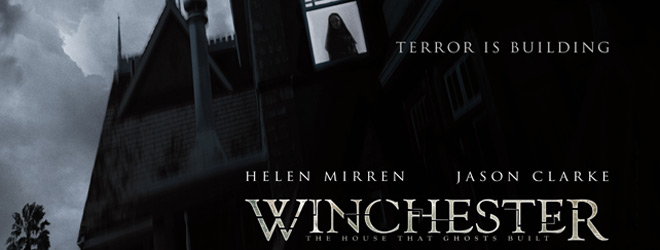
The 2018 horror film Winchester, written and directed by the Spierig Brothers, was not about the Supernatural adventures of Sam and Dean Winchester — much as we wish it was — but was in fact based on the history of the Winchester mansion, also known as The Mystery House or The House That Ghosts Built, a place that is said to be one of the most haunted houses in America. Sounds like a perfect location for a horror movie, doesn’t it? Unfortunately, the filmmakers managed to drop the ball in every way shape and form, and we are stuck with a film that should have been called Jump Scare: The Movie.
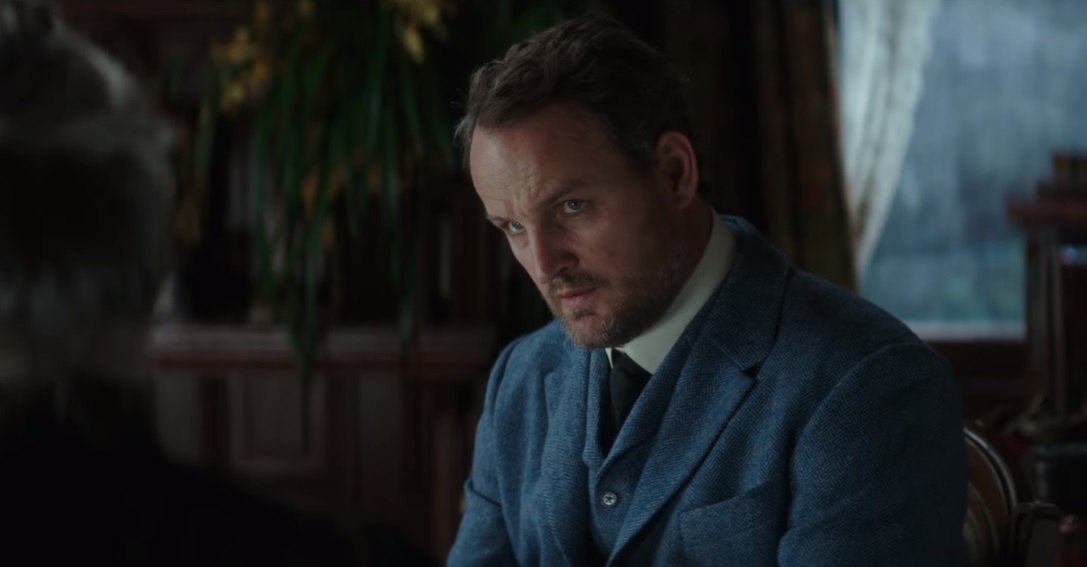

The movie follows Doctor Eric Price (Jason Clarke), a womanizing drug addict with a tragic past, as he is hired by the Board of Directors for Winchester Repeating Rifle Company to assess the mental facilities of Sarah Winchester (Helen Mirren). Sarah Winchester owns 50% of the company’s stocks, so Price is to determine if she is fit enough to remain in control of the family business. It’s clear that the Board would really like it if Price would find Mrs. Winchester unfit, as they blatantly offer him more money if they get that desired result, and so Doctor Price enters this job on very dubious footing, but I guess when you are a laudanum addict you take whatever jobs come your way.


“I may be in an unethical situation, but I’m also a bit of a jerk.”

Sarah Winchester is the widow of famed gun manufacturer William Wirt Winchester, and heir to the vast fortune the sales of these weapons of death have accrued over the years. Because of this, Sarah is under the belief that she must continually add rooms to this sprawling mansion, with construction running day and night, so that it can house all the spectral victims of the Winchester Rifle. She tells Price that this helps spirits find peace — why being stuck in a small room in a weird mansion would bring peace to a ghost is never fully explained — but for those spirits too angry to move to the other side, well she locks them in their rooms, using a board and “thirteen nails” to keep them caged.


If only the Ghostbusters new it was this easy.

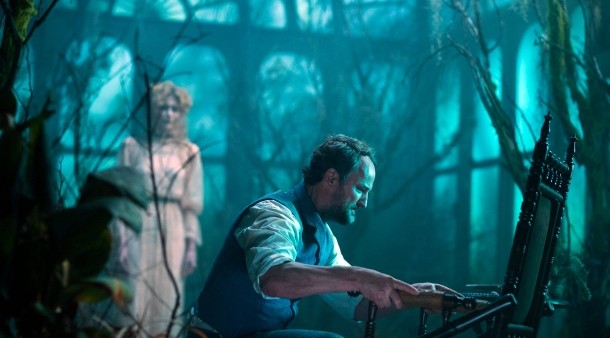
Clearly Sarah Winchester is nuts, or at least certifiably eccentric, so giving the Board of Directors their desired result should be no problem, but then Price himself starts seeing ghosts. At first, he takes the fleeting images of creepy apparitions to be hallucinations brought on by his drug use, but then later, when his laudanum is confiscated, he  chalks them up as symptoms of withdrawal. What follows is series of scenes where Price stumbles down dark hallways — ones often inhabited by Helen Mirren doing her "Woman in Black" impressions — with the occasionally ghostie arriving to pop out and say BOO! At no point in the film’s 90 plus minute run-time does anything even remotely scary occur (I do not count cheap jump scares as true scares), and as this movie is set in one of the creepiest houses in the world, that’s a considerable achievement.


How can you fail to make this place scary?

The film is not helped by legendary actress Helen Mirren, as the infamous Sarah Winchester, who is clearly in Boat Payment Theater Mode, and I’m assuming Jason Clarke did this film just to have a worse entry on his IMDB page than Terminator Genisys, but the fault really must be laid at the feet of Michael Spierig and Peter Spierig, who both wrote and directed this thing. Making a horror movie about “The House That Ghosts Built” should have been a cakewalk, but somehow they failed, and making it a historical period piece may have been the key problem, as they veer wildly from historical fact to their own nonsensical backstory.

Now, I’m not one who demands that historical films stay completely true to the actual events they depict, and certainly not when said film is a horror picture, but major plot points the Spierig Brothers come up with fly right in the face of facts. A key example of this comes in the form of the “angry spirit” harassing Sarah and her family. He is a Civil War soldier, whose brothers were killed in the war by a Remington rifle, even though the first Winchester lever-action model did not appear until after the war. We then learn that the surviving brother later walked into the Winchester Showroom and massacred dozens of people, which is another completely fabricated event — and all of this I could have forgiven if at any point something even vaguely scary would have happened.


  "Hello, I'm today's stock vengeful spirit."

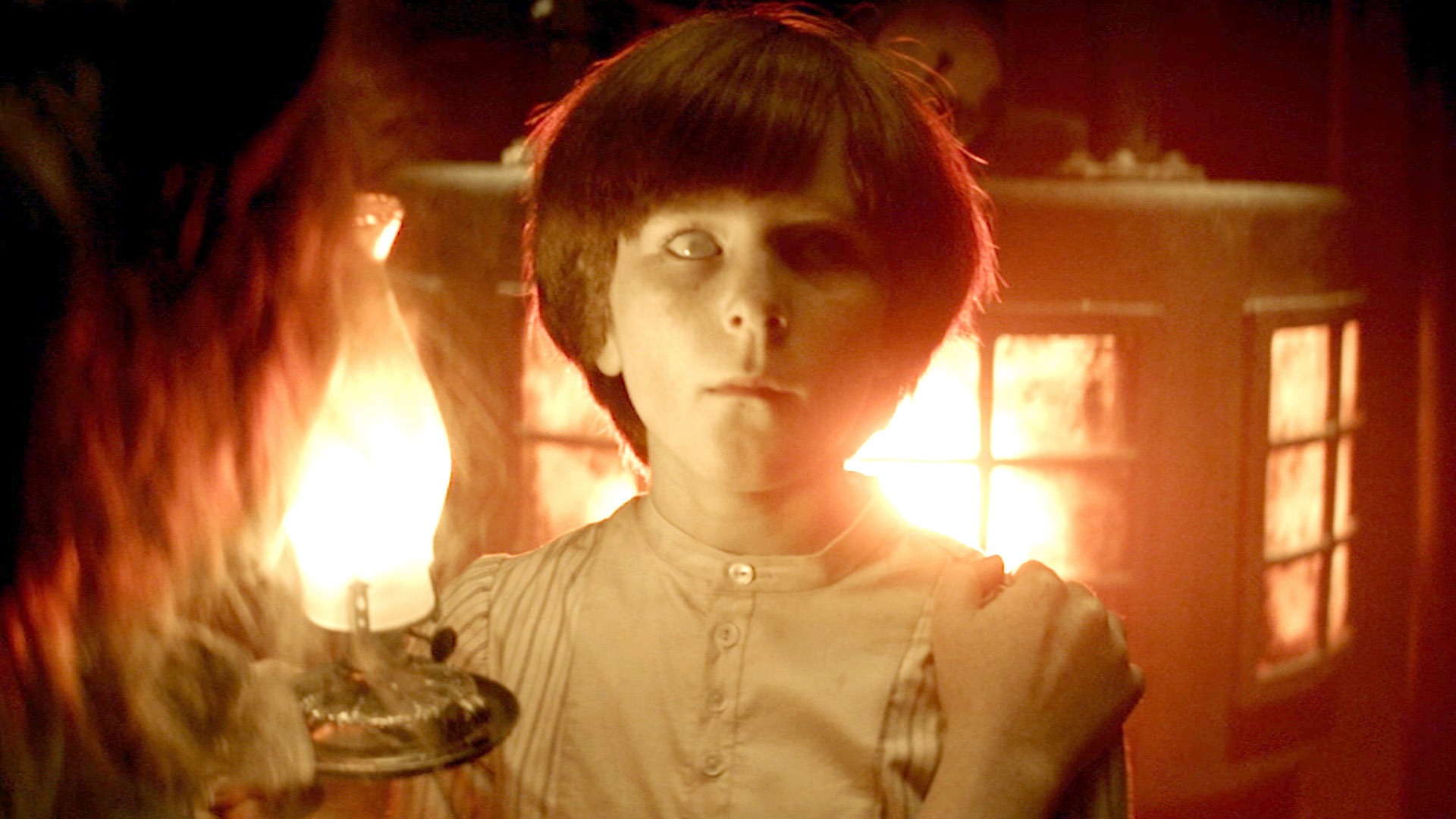
Sarah and Doctor Price are not alone in this big spooky house, the place is constantly being labored on by construction workers, and though this mansion must also have a staff consisting of dozens of maids and butlers, none of them ever see anything, and their very existence removes the solitary nature of terror that a haunted house movie needs to build proper suspense. Also in the house is Sarah’s niece Marion Marriott (Sarah Snook), who has brought her boy Henry (Finn Scicluna-O'Prey) along to stay at her aunt’s spooky-ass mansion, after her own family tragedy. We are subjected to repeated scenes of young Henry being possessed by an angry spirit, and the only thing I can say about these moments is that somebody should have told the Spierig Brothers that putting a canvas mailbag over a kid's head isn’t creepy, it’s actually kind of goofy. And the film constantly forgets these two “guests” are in the house, but as they are both quite forgettable, and unnecessary, this is not surprising.


“I see cliché people.”

Winchester fails at almost every aspect of the horror movie genre. We have no compelling protagonists, the mystery behind the ghost is contrived and lame, the film relies almost solely on jump scares, and worst of all, it doesn’t even follow its own rules. We were told that ghosts are trapped in rooms by the placing of a board — nailed 13 times — across it, but during the big ghostly showdown, we see the nails seemingly coming out of the doors on their own. Were Sarah’s theories of spiritual confinement wrong? Was the angry Civil War ghost the one freeing his spectral buddies? If the last one is the case, that is one dumb ghost, as the ones it freed end up helping Price defeat the angry ghost, and if you’ve guessed that Price’s own tragic past will come back to “haunt” him, well give yourself a cookie.
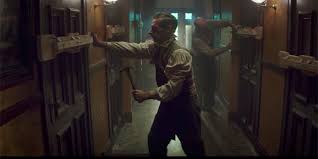
 

“Damn it, I’m being haunted by a contrived backstory.”

If the Spierig Brothers wanted to make a horror set in the Winchester mansion, they’d have probably been better off setting it in modern times — maybe go with a documentary crew staying the night — and then they could have gone all balls-to-the-walls with the frights, but the film we ended up with seemed both constrained by the historical setting as well as showing a good deal of contempt for it.  I’m not saying you can’t make a good horror movie set in the 1860s — the history of the place is just rife with possibilities — but the decision made by the filmmakers here fails to not only scare the viewer, which once again is an achievement in this setting, but they annoy them instead. Winchester is guilty of the greatest crime that can be leveled at a horror movie, that of being annoying and boring. Give this movie a pass and watch Sam and Dean Winchester fight ghosts and monsters instead.
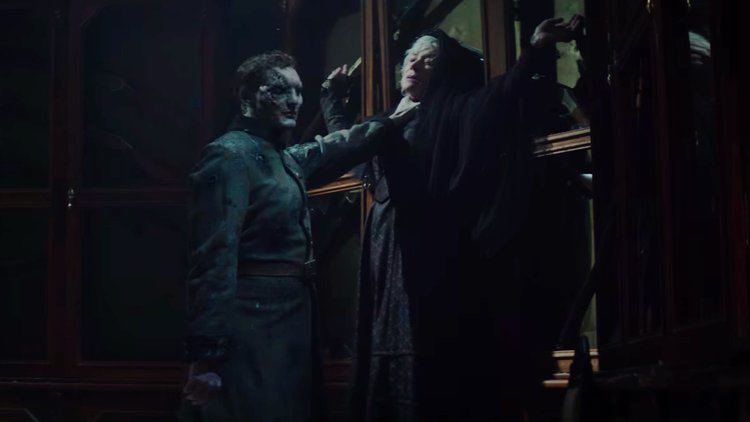
 

“Has my cheque cleared yet?”