Blog Archive

Thursday, December 6, 2018

Mandy (2018) – Review

If your response to a religious cult burning your wife alive is to forge a badass axe, hunt them down, and violently murder them all, you should take a look in the mirror because you might be Nicholas Cage. When one settles in to watch a Nicholas Cage movie, it's a good idea to know ahead of time where the film falls on the “Cage Insane-Fuck-O-Meter” spectrum, which includes such fun performances ranging from the gleefully psychotic Castor Troy in Face Off, to his more completely off-the-rails role in the remake of The Wicker Man. In writer/director Panos Cosmatos’s horror movie Mandy, we definitely find ourselves closer to The Wicker Man end of the spectrum, which is not a bad thing, but more importantly is it an entertaining journey and worth watching?


The film follows the adventures of Red Miller (Nicolas Cage), a lumberjack who lives in an isolated cabin with his lovely wife Mandy (Andrea Riseborough), but unfortunately, Mandy has caught the attention of the leader of a particulay nasty band of cultists, run by a bastard of a man who goes by the name of Jeremiah Sand (Linus Roache), and to make matters worse, Jeremiah has friends in very low places (in this case, in the form of a demonic biker gang that can be summoned forth by blowing the Horn of Abraxas). It’s at this point viewers will come to the conclusion that they are not watching your typical revenge flick, and that the fever-dream-fueled journey of blood and death that follows is a bit more off-centered than films like The Last House on the Left and I Spit on Your Grave.

 

The Wild Ones meets Hellraiser.

Panos Cosmatos sets his film in the mid-80s — the golden age of the slasher genre — but Mandy is far from your typical slasher film as Cosmatos goes for a heavy stylized look for his little revenge story, with a heavy color palette and flashing imagery that practically assaults the viewer, and the “hero” is almost as much a cypher as the mysterious villains he hunts down. Cage’s Red Miller has very little dialogue; aside from such bizarre quips as “You vicious snowflake!” he doesn’t say much at all, letting his actions speak for themselves. Fans of Mr. Cage will certainly revel in the scenes of him screaming madly at the camera, but sadly, there isn’t much beyond that to his character.
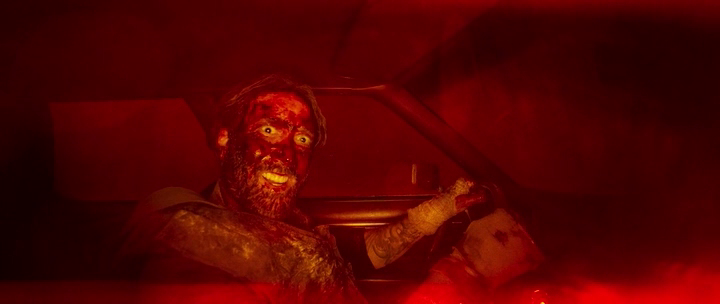
 

“I’m a lumberjack, and I’m okay.”

Mandy is a blood-soaked revenge flick — and gore is liberally used throughout — but when Red Miller starts hunting down the members of Children of the New Dawn, I found myself becoming less and less engaged with the hero's actions, as we never really get a sense of the threat level this cult actually presents. Jeremiah Sands is clearly capable of calling forth a gang of demons to do his bidding, but later he himself is on his knees offering to suck dick if Red will just spare his life, and most of his fellow members are about as threatening as a middle-aged telemarketer. The path to revenge in Mandy also seems rather backasswards, as Red starts off his killing spree by taking on the demon biker horde, whose supernatural abilities are quickly called into question as they are swiftly picked off by fifty-four year-old Nicholas Cage. He then moves on to hunt and kill the cult members, which is kind of anti-climactic when you consider the hero just took out a bunch of demons, so how much of a threat can the very human members of Children of the New Dawn be?
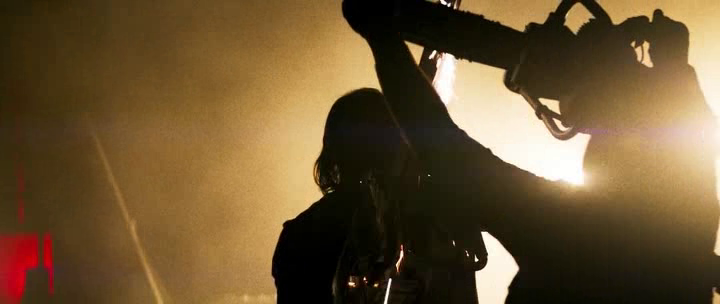
 

I will give the film credit for providing us with a nice chainsaw fight.

I went into Mandy with very high hopes — who doesn’t enjoy a film that is guaranteed to supply a large quantity of “Cage Freak-Out” moments — but at a two-hour run-time, those few moments of actual "over-the-top Cage" were not enough to support its length, and it made me long for the adrenaline-fueled film of Drive Angry, which also had Nicholas Cage facing off against cultists and demonic forces, but where Drive Angry was balls to the wall fun — with William Fichtner stealing any scene he was in — Mandy drowns us in an over-stylized look with nary a plot point in sight. What is the motivation behind the Children of the New Dawn? Is Jeremiah Sands just a sex-crazed nut who is bitter over the fact that the music industry didn’t understand his supposed genius, or is there more going on that I completely missed? Are those cenobite looking bikers actually from Hell, or are they just PCP-fueled crazies who have a thing for pain?

 

And what is with these Heavy Metal inspired animation sequences?

If all you want out of this film is to see Nicholas Cage gleefully chew every bit of scenery within reach, then Mandy will most certainly fill that bill, but if character and plot are things you find more important to your movie-going experience, you may want to pass on Panos Cosmatos' latest film; it's not a terrible movie, but I found it to be more full of lost potential than fun.

Stray Thoughts:

• Mandy’s reading material and facial scar all hint at an interesting character that I wish we'd learned more about.
• The cult leaves Red Miller alive for no discernible reason.
• Bill Duke pops into the film to provide Nicholas Cage with a crossbow; that’s nice, but it’s another clue to a history that is most likely more interesting than the story we are watching.
• Red Miller is a lumberjack who can forge an axe straight out of a Frank Frazetta painting.
• There is a chemist employed by the cult who owns a tiger, so that’s … interesting?
• Red Miller develops the ability to crush a human skull with his bare hands.
• If you watch this film, I really hope you like the colour red.
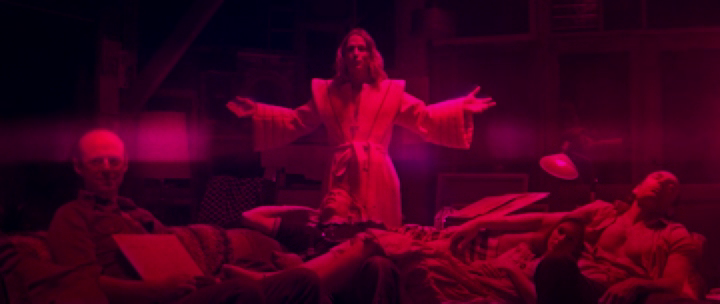
 

“Can we get a halleluiah, brother?”

Sunday, December 2, 2018

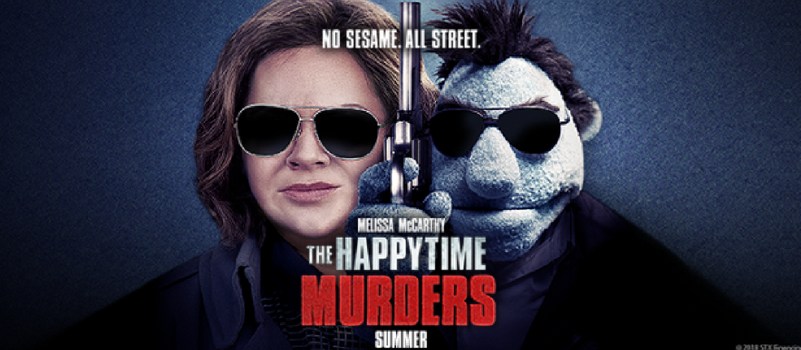
The Happytime Murders (2018) – Review

In 1988, Walt Disney Productions released the classic film Who Framed Roger Rabbit, a movie about a world where humans and cartoons coexist. A year later, Peter Jackson gave us an R rated puppet movie called Meet the Feebles, a film full of puppet sex and violence. Now, thirty years later, Brian Henson, son of legendary Muppet creator Jim Henson, has directed and produced an R rated movie about a world where humans and puppets coexist, but he brought absolutely nothing new to the table. Not one ounce of originality, nor even a gram of fun.


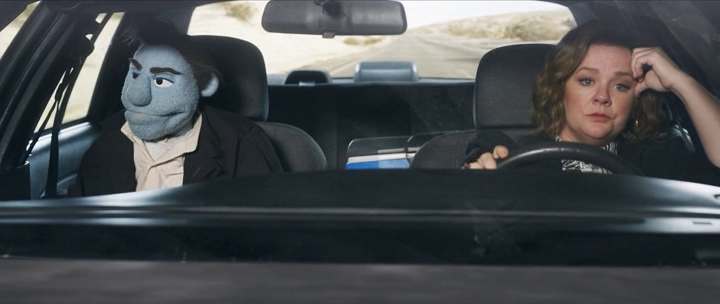
 At no point in this film does a character state “Puppet Lives Matter,” and that seems to be the only element of restraint director Brian Henson offered in this crass and tepid adult puppet tale about a world where puppets are considered second class citizens, hassled by the cops and ignored by cab drivers. If Henson had wanted to make some kind of social commentary, switching out African Americans for puppets, he and screenwriter Todd Berger should have worked a little harder on the script, instead of basically ripping off Who Framed Roger Rabbit. Now, in this movie, the Eddie Valiant character is a puppet by the name of Phil Phillips (Bill Barretta), an ex-cop turned private investigator, who teams up with his old partner Detective Connie Edwards (Melissa McCarthy) to find out who is murdering the cast of the puppet sitcom “The Happytime Gang.” The movie even goes so far as to have Phil framed for the murders just in case the obvious comparison to Who Framed Roger Rabbit wasn’t blatant enough.


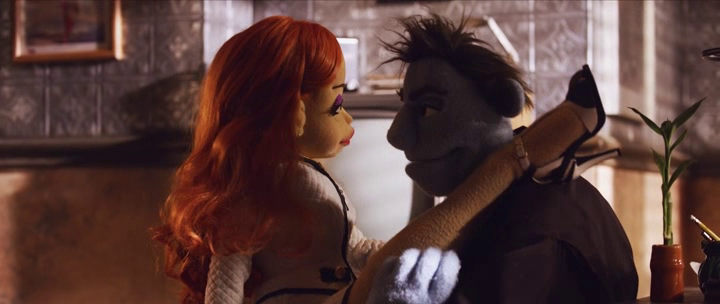
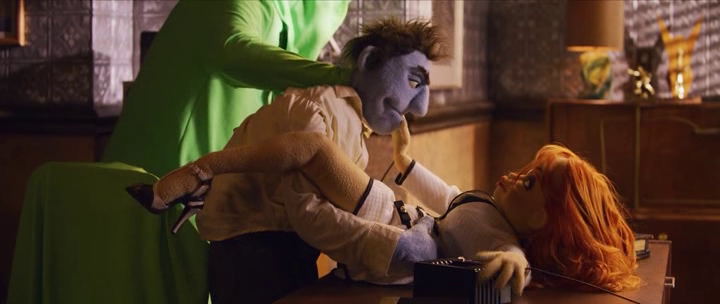
We even get a red headed femme fatale that is totally not Jessica Rabbit.

The biggest problem with The Happytime Murders isn’t in its complete lack of originality, which on its own could be forgiven if the writer had tried to at least take a different spin on the premise, but for the fact that the whole production is just so unpleasant — and I don’t mean unpleasant because of there being puppets ejaculating silly string all over the place, or the gratuitous dropping of the “F” bomb at every opportunity; the film is unpleasant to watch because Melissa McCarthy is so insanely unfunny in this film. What the screenwriter may call “verbal banter” is just McCarthy endlessly spewing out insults that would be more fitting to a public school playground than something you’d expect to see in a professionally written script, and almost every moment on screen with her character is a chore to get through.

Note: The blame for this may not all fall solely on the head of writer Todd Berger, as this is a particular shtick of McCarthy’s, which has gotten very old and needs to be retired.
 

Singing “One Hundred Bottles of Beer on the Wall” would be more entertaining than this.

If this adult puppet movie was intended to help Brian Henson step out from behind his father’s shadow — his previous film being the very entertaining Muppet Treasure Island — he has made a very tactical mistake here; nothing in The Happytime Murders stands out as being particular clever or ingenious, and as mentioned above, the plot and premise bare too many similarities to other movies for it to stand out on its own. Now, making an R-rated puppet is not an intrinsically bad idea, Peter Jackson’s Meet the Feebles is bloody brilliant, but since then we’ve had television shows like Puppets Who Kill and Greg the Bunny, so you have to do more than just have a fluffy character swear and flip somebody the finger if you want to stand out.

Stray Observations:

• Phil lost his badge because he failed to shoot a fellow puppet — him being a fellow puppet being the apparent reason — but when we get a flashback of the events, it’s quite clear that it was a tricky shot, and he did shoot; he just missed.
• When the FBI wants to question Phil about his whereabouts during the killings, he immediately goes on the run despite there not being any evidence they could hold against him.
• Special Agent Campbell (Joel McHale) suspends Detective Edwards for aiding the fugitive puppets, but Agent Campbell is with the FBI and would have no authority to suspend a Los Angeles detective.
• Edwards repeatedly uses the joke “An asshole says what” against Campbell as if this bit of sophomoric humour is the Holy Grail of insults. Watching these traded barbs makes me sad.
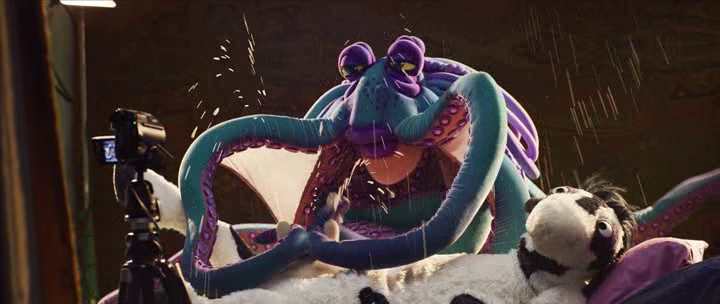
• The puppet porn, one dealing with a bound fireman and dominatrix Dalmatian, offered the only rare moments of actual comedy.
 

Who wouldn’t want to watch something called “Cows Gone Sour Two: Even Milkier”

There is literally nothing in The Happytime Murders ninety minute run-time that would make this film worth recommending: the puppeteering, though executed wonderfully, is in the service of a lame and tired script, and Melissa McCarthy is simply trotting out her old bag of comedy shticks that are as lazy as they are unfunny. Even out of sheer morbid curiosity, this film is not worth checking out; you’re better off tracking down the Peter Jackson puppet movie instead.

Note: During the end credits we get a glimpse on how the puppeteering was performed, and those few minutes were more entertaining than the entire preceding ninety.

Wednesday, November 28, 2018

Blood Fest (2018) – Review

When making a meta-commentary on a genre, is there a line that shouldn’t be crossed? When Wes Craven gave us Scream, with its rule-spouting characters, the self-awareness of genre clichés was somewhat fresh, but now, post-Cabin in the Woods, the subversion of the genre has almost become a cliché in and of itself, and herein lies the danger. In the case of Blood Fest, writer/director Owen Egerton seems to be overcompensating by throwing in more and more nods and winks to classic genre tropes, what he's basically saying is that, “If you can’t be original at least be big!” The result of course is something less than desirable.


The film opens with the standard prologue, where we see a mother and son watching a classic horror film on Halloween night – cliché number one for this film – and she imparts to him the wise words, “You are stronger than anything you are afraid of.” This is a nice sentiment, but it doesn’t do her much good as she is then brutally murdered by a masked psychopath. So the sentiment should have been more accurately stated as, “You are stronger than anything you are afraid of, unless what you are afraid of is armed with a big fucking knife." The film then jumps to the present day where we are introduced to our hero Dax (Robbie Kay), who was the young boy who witnessed his mother’s murder, and as anyone whose life has been severely traumatized by violence, he has become obsessed with horror movies – cliché number two – and despite his dad forbidding him to attend Blood Fest, a horror convention taking up 700 acres that houses tributes to all the great horror genres, we know Dax is going to attend, come Hell or high water. Dax also works at a video rental store, which is, if not quite a cliché, almost anachronistic at this point.

If only Jay and Silent Bob were here to save the day.

Dax’s father (Tate Donovan) is a psychiatrist, who has turned his wife's murder into a rallying cry for his crusade to rid the world of such despicable entertainment: “Blood Fest is a gathering of freaks and degenerates celebrating mindless violence and gore,” and even his sister Jayme (Rebecca Lynne Wagner) tells him Blood Fest is going to suck. But where would we be if our heroes ever listened to such sage advice? So Dax manages to sneak into Blood Fest, along with his best friends Sam (Seychelle Gabriel) and Krill (Jacob Batalon), and they meet up with Ashely (Barbara Dunkelman) who is “starring” in an upcoming horror flick, and along with her is douchebag director Lenjamin Caine (Nicholas Rutherford); their night of true horror is about to begin.

Wanna take bets on either of these two surviving?

The evening gets off to a rough start when Dax meets the star of one of his favourite horror franchise The Arborist, Roger Hinckley (Chris Doubek), who is a jerk to Dax so that we can check off the “Never meet your heroes, it will always be a letdown” cliché box, but things take a turn for the worst when Anthony Walsh (Owen Egerton), the festival's maniacal organizer and horror film producer, claims he “wants to make movies scary again,” and unleashes blood and carnage as real chainsaw-wielding maniacs and knife-brandishing psychos tear into the crowd with relish.

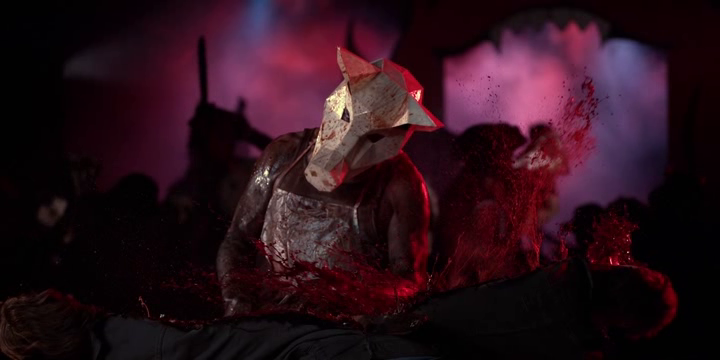
One thing that can be said of this film is it does not stint on gore.

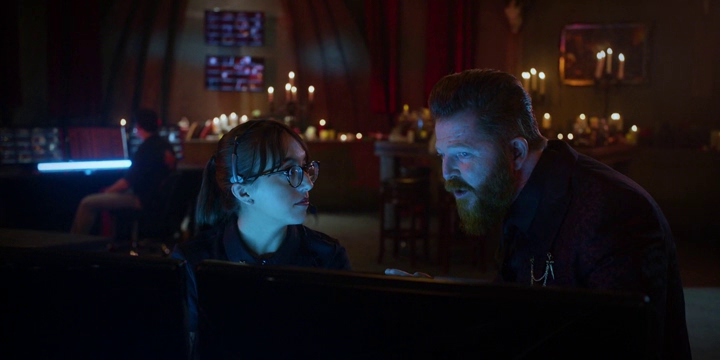
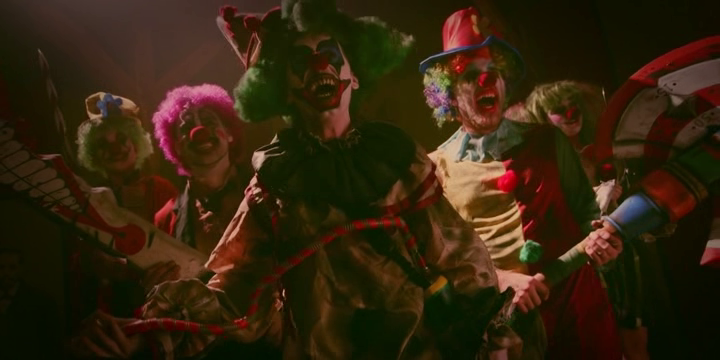
Turns out that Walsh has a secret agenda, one that somehow revolves around brutally murdering all the attendees of Blood Fest, and filming it for some arcane purpose. The premise is simply ludicrous, how exactly is this supposed to work? However he cuts this “movie” together, it will end with him either in jail or a nuthouse, but logic and reality kind of take a backseat as the proceedings follow our intrepid group of heroes as they try to fight their way to freedom. Due to Dax being an expert on “The rules to survive a horror movie,” he becomes the de facto leader, and so we are treated to hazardous trips through the various park areas; a zombie infested forest, a cabin in the woods with something nasty in the basement, a group of sexy vampires, a tortureland that is only missing its maniacal puppet, killer clowns — who are not from space — and the location of Dax's favourite film The Arborist. Some of this is a lot of fun, and the actors do their best with the material given, but much of it stretches our suspension of disbelief a tad too far, especially when we learn more and more on how the park functions, because there isn’t anything actually supernatural going on, it’s all manufactured by Walsh and his mysterious silent partner. Give any of this a moment's thought, and the whole picture starts to unravel.

Note: We get several scenes of Walsh and a bunch of his subordinates operating out of some sort of control room, as they control the monsters in the park, and the similarities between this and the office workers in Cabin in the Woods is well beyond homage and is basically outright theft.

And exactly how did Walsh create this army of monsters?

• He took local mental patients and had them watch the same horror film on repeat.
• Walsh has video gamers unknowingly controlling real corpses to kill the guests, which may not be supernatural but is batshit mad science that is beyond far-fetched.
• The vampires are hot Eastern European women who have been promised visas, have had their teeth filed, and are infected with Porphyria.
• The killer clowns he found on craigslist.

Okay, that last one seems plausible.

As Dax and his friends flee from one encounter to the next, with members being picked off along the way, fans of horror films will most likely enjoy ticking off the references to films such as The Texas Chainsaw Massacre, Evil Dead, The Ring and the Saw franchise, just to name a few, but genre aficionados might find that the film's complete lack of originality a bit wearing at times. Now there is a lot of fun to be had with this film, the gore and monster designs are quite good, and the Zachary Levi cameo was simply brilliant, but by the time the end credits rolled, I’d pretty much lost interest in who does or does not survive this killer park, and by the halfway mark, if you hadn’t guessed the identity of the knife-wielding psycho or who Walsh's “Silent Partner” is, then you probably aren’t this film’s target audience in the first place. It’s clear that Owen Egerton truly loves this genre, but Blood Fest is basically ninety minutes of him going “Remember this bit from Evil Dead?” or “Wasn’t Killer Clowns From Outer Space a lot of fun?” all while spending no time on actual motivations or logic. Thanks, by the time the big climax arrives, we just don’t care.

“Ignore the man in front of the curtain!”

As a meta-horror-comedy, Blood Fest offers some decent gore, a few laughs, and a bunch of nods to the classics of the genre, but not much else. The acting is pretty over-the-top, though I’m sure that is intentional, but this often results in the undercutting of any true elements of horror, so what we are left with is a rather shallow entry into the genre. This film is Owen Egerton’s love letter to horror films, and I’m sure many horror fans will most likely get a real kick out of this little flick as it’s really not that bad, I just wish Egerton had put a little more of himself into the project and less of everybody else's stuff.

“Hello, I will now vomit black goo for unknown biological reasons.”

Sunday, November 25, 2018

The Christmas Chronicles (2018)

With the Christmas season upon us this means our television viewing will most likely consist of some Christmas classics, but between the multiple showings of It’s a Wonderful Life, or the twenty-four-hour marathons of A Christmas Story, we will also be bombarded with a boatload of “fresh” Christmas content, ones that will be vying to become new holiday mainstays. So far this year the most interesting entry in the seasonal assault would be Netflix’s The Christmas Chronicles, a movie that stars the roguishly charming Kurt Russell as Santa Claus.


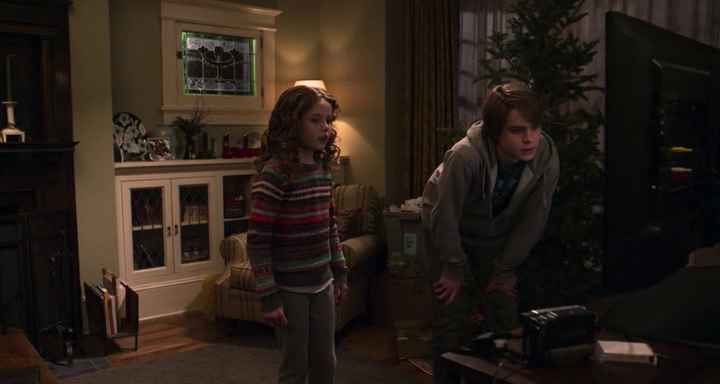
 We are first introduced to the Pierce family through a montage of home video clips, where loving mom (Kimberly Williams-Paisley) and dad (Oliver Hudson) chronicle the Christmas holidays each year, but the movie proper starts after the dad has died — standard off-screen death of father figure — with this being the first Christmas without him. The dad’s death has fractured the family as Mom now has to spend more time at work while eldest son Teddy (Judah Lewis) lashes out by becoming a wannabe gangsta who boosts cars with his juvenile delinquent friends. But then there is his younger sister Kate (Darby Camp), a sweet little girl who keeps re-watching those old home movies in an attempt to keep the Christmas spirit alive. It’s while viewing one of these old Christmas videos that Kate catches a glimpse of a red sleeve in one of the shots, which she is sure must be Santa, and this leads to her blackmailing her brother — threatening to show video evidence of his car thievery to their mother — into helping her capture Santa on film.


 "Then she got an idea. An awful idea. Kate had a wonderful, awful idea."

Teddy comments that this idea is ridiculous, “You don’t think anyone has tried that before, catching Santa in the act?” which is a good argument and the film’s only defense is Kate’s response of “But have you ever heard of anyone pulling it off? No, they probably think it’s impossible.” This is pretty goddamn thin logic, yet she of course turns out to be right, which somehow leads to Kate and Teddy sneaking aboard Santa’s sleigh, where a startled Santa (Kurt Russell) discovers them — almost flying into a 747 — resulting in the reindeer breaking free and the sleigh crashing somewhere in the south side of Chicago. We then learn that if Santa is not able to deliver the toys to all the children of the world by morning, the “Christmas Spirit” could drop to dangerously low levels — he has a watch that measures this kind of thing — and the last time that happened it caused the Dark Ages. So the two kids team up with Santa to track down the reindeer, recover the missing toy sack which fell out during the crash, and fix the sleigh and save Christmas.

“We’re in Chicago, we’ve got a full tank of gas, a half a pack of cigarettes, 186 minutes to save Christmas, it’s dark and we’re wearing sunglasses. Hit it!”

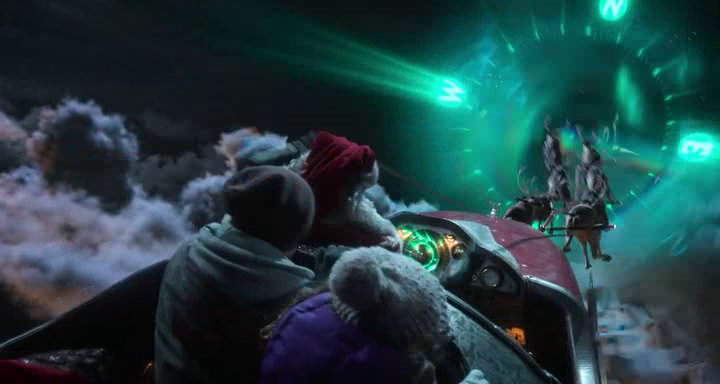
The Christmas Chronicles is a fun little holiday movie, with Kurt Russell as Santa being the key selling point here, and he is delightfully wonderful in the part, but we also have to endure the holiday cliché of a character learning “The true meaning of Christmas” — in this case unbeliever Teddy. This brings us to one of the trickier elements in making a Santa movie, and that is laying out the rules and mythos that the filmmakers plan to incorporate into their version of Santa Claus, such as how exactly one man can deliver toys to every child on Earth in one night.  In this movie, we see that Santa’s sleigh can travel through some type of wormhole — this gets him from one side of the globe to the other in seconds — and his house-to-house visits are expedited by his magic Santa hat, which turns him into a sparkly streak of light that allows him to zip in and out of homes. But even with all that explained, it’s still clear that a one-night delivery would be impossible.


As cool as this looks, some things are best left unexplained.

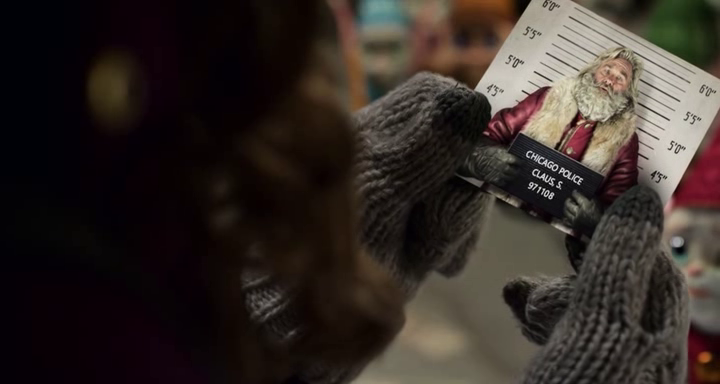
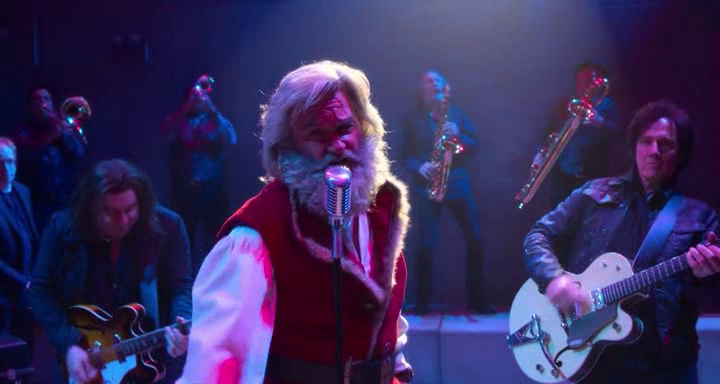
Next, we have the issue of “If Santa doesn’t exist, where do the parents think those extra presents came from?” In most Christmas films of this type — those dealing with the existence of Santa — a key component is that only children believe in Santa, and any adult claiming to be Kris Kringle is crazy and most likely needs to see a good psychiatrist. This particular trope dates back as far as 1947’s A Miracle on 34th Street — which is still my favourite incarnation of Santa — but in the case of The Christmas Chronicles, it is taken to a whole new level. There are some great scenes in this film of Kurt Russell’s Santa engaging with various people for help — him knowing the name of every single person they meet, as well as every Christmas desire they've had, is particularly charming — but at one point, Santa is arrested for car theft, child endangerment and kidnapping, and while in jail he holds an impromptu rock concert that magically appears in his jail cell, which makes one wonder how anyone can disbelieve of his existence after all this. The film ends with Kate discovering that Santa had stolen the video cassette out of her camera — as she’d been chronicling their night’s adventures — but that is far from the only piece of evidence left behind that night.


Did he magically erase all the police footage of his exploits?

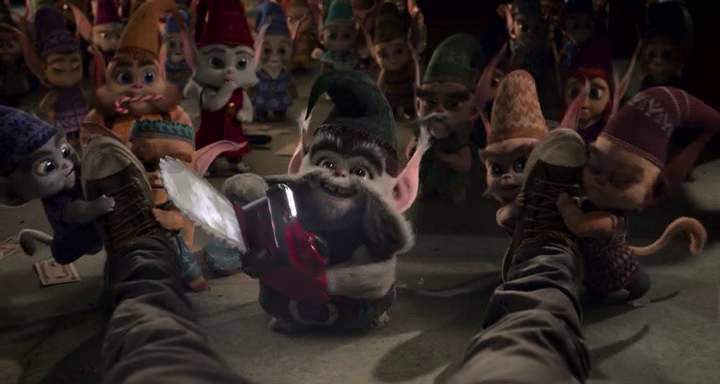
Sure, we’re not supposed to think about these kind of things when watching a movie about Santa Claus, and this film does its best to race along fast enough in the hope we don't notice the implausibilities of the situation, but it certainly brings the whole question of the “existence of Santa” to a whole new level, and it's never properly addressed. Now this doesn’t detract too much from the fun, as there are some great laugh out loud moments in this Christmas movie; we get cool CGI reindeer, a nice tricked-out sleigh, and it even manages to land a few poignant moments as well — which is pretty much required in this type of film — but the fantasy elements could have been dealt with a little better. The most negative thing I can say about The Christmas Chronicles is that this film’s depiction of elves was simply terrifying — think the cute trolls from 2016 animated film but with chainsaws — and any moment of them on screen is a little creepy.


These guys are pure nightmare fuel.

Stray Observations:

• While zipping from house to house, Santa leaves his sleigh hovering in the middle of the street. It’s not cloaked by any sort of invisibility shield, so how is it not spotted by random drivers?
• If the Christmas Spirit is what keeps the world from plunging into war, was the lack of it what caused the Jewish Holocaust?
• Santa’s sack isn’t just a magical bag of holding, it actually contains a wormhole that leads to the North Pole workshop. That’s pretty neat.
• Teddy is grabbed by a bunch of criminals and taken back to their evil lair because he wouldn’t hand over Santa’s toy sack, but realistically they would have just shot Teddy in the face.
• Mrs. Clause is portrayed by Goldie Hawn in a nice bit of stunt casting.
• The running gag of Santa hating advertisements that depict him as fat could have been trimmed a tad.
• The Santa “Jailhouse Rock” sequence is a nice nod to the fact that Kurt Russell has played both Elvis and an Elvis impersonator in previous films.
• After this musical number, which involved Santa conjuring up musical instruments and costumes, the police all just smile and walk off to go back to their jobs, as if this kind of thing happens all the time.


“Nothing to see here, move along.”

Overall, The Christmas Chronicles is a light-hearted whimsical Christmas adventure where someone will not only learn to believe in Christmas, but to also believe in himself — we’re looking at you Teddy. Kurt Russell was clearly having fun with this role, and his easy-going charm does a lot to sell this movie. This film may not be the best, nor most original Christmas movie out there, and it won’t be replacing any holiday classics anytime soon, but it's certainly worth checking out.

Wednesday, November 21, 2018

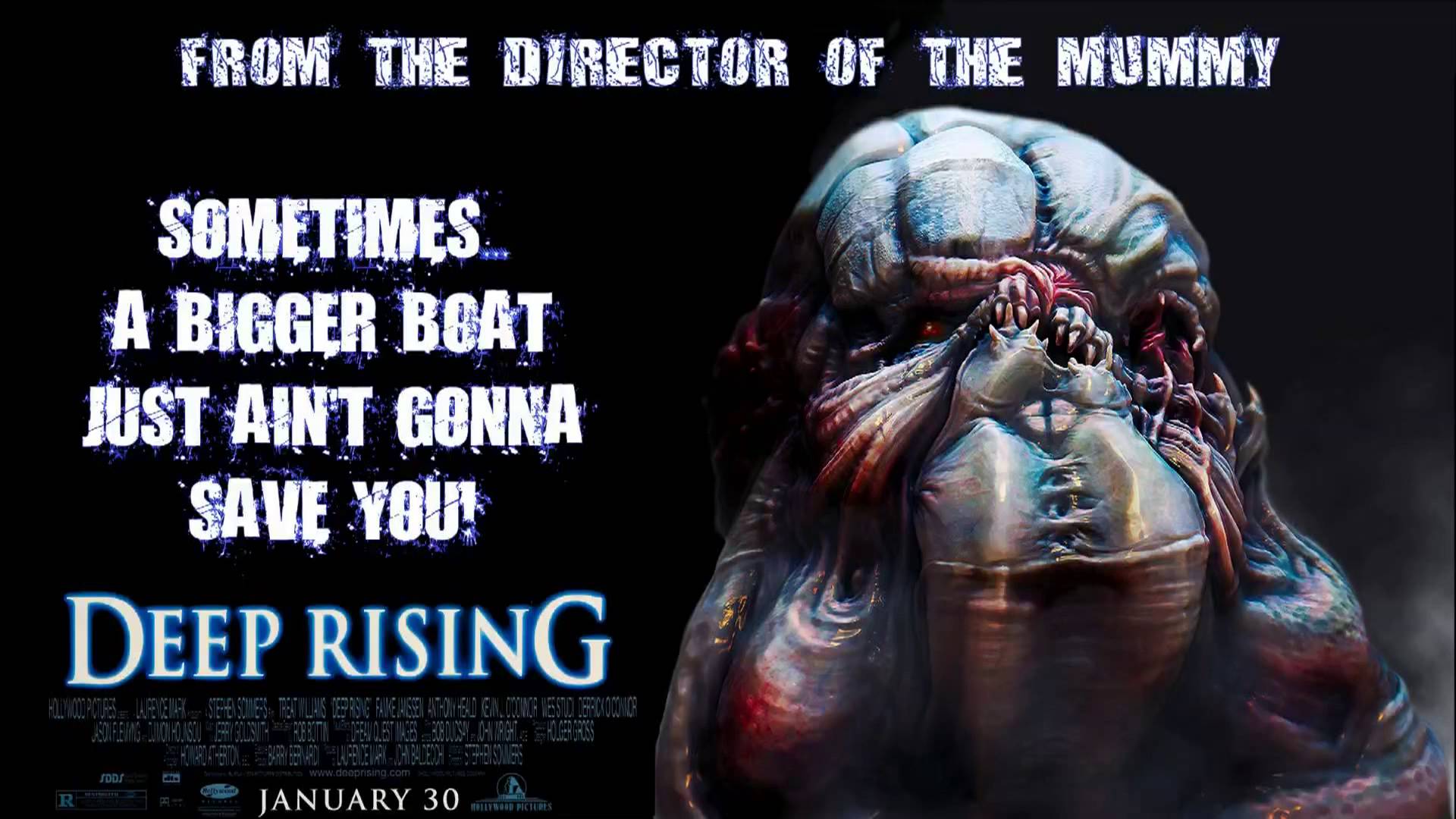
Deep Rising (1998) – Review

Blending horror and comedy has always been a tricky thing – too often the comedy can undercut the horror – but in 1998, writer/director Stephen Sommers released Deep Rising, which was not only a horror/comedy, but an action movie as well. Added to the mix was a monster that would be 95% CGI – at a time when computer generated characters/monsters was in its infancy – so this movie turning out as good as it did is a testament to all those involved.


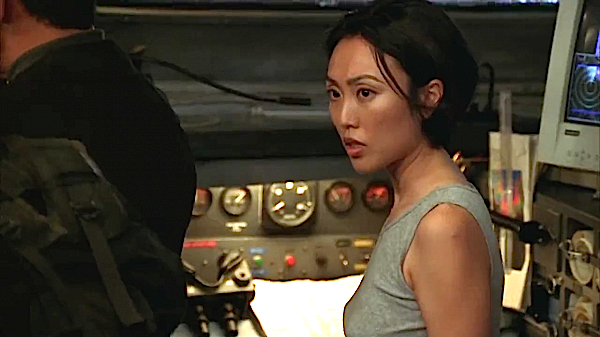
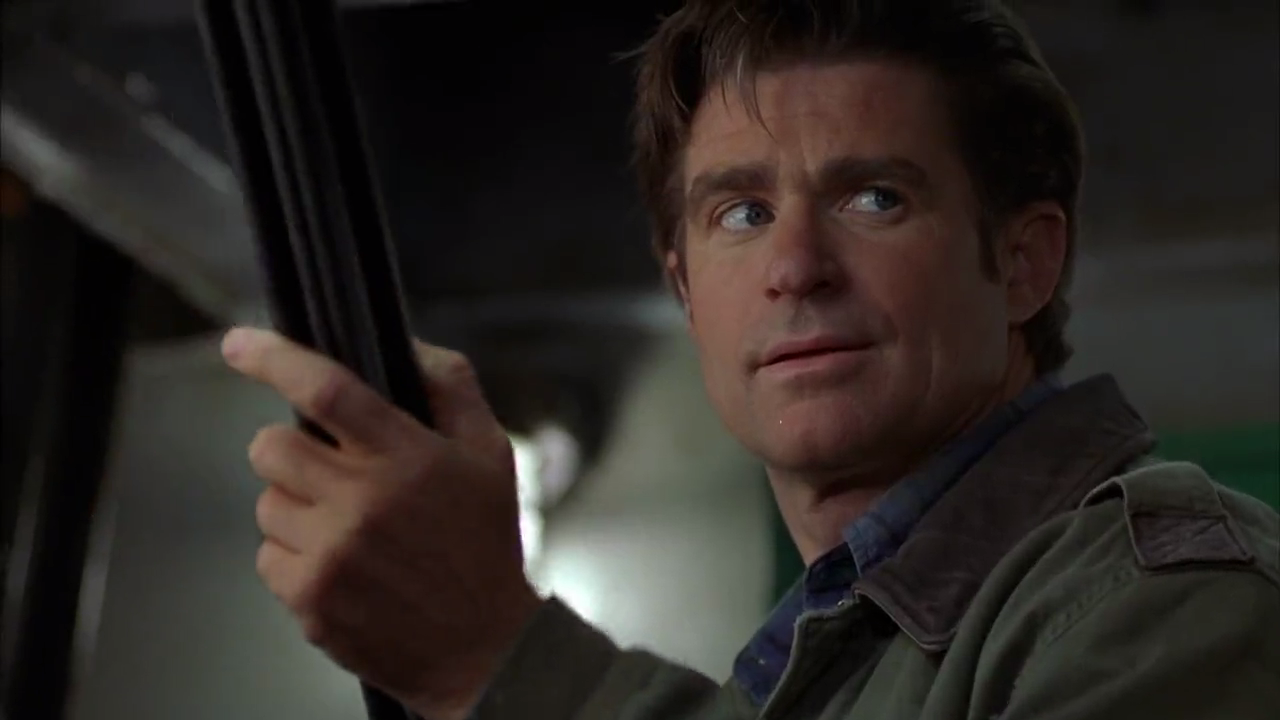
Deep Rising is quite the genre mash-up, with equal doses of the action heist movie, buddy comedy flicks, and your classic B-monster movie, all centering on a cast of villains – that’s right, this movie has no straight up heroes just degrees of morally flexible crooks – who must work together if they are to survive (and not that many of them do). The basic plot of Deep Rising is that a group of mercenaries have hired PT boat captain John Finnegan (Treat Williams) to pilot them out to the middle of the South China Sea, where they are to pull off some mysterious job. Among Finnegan’s own small crew is his wise-cracking mechanic Joey Pantucci (Kevin J. O'Connor), and Leila (Una Damon), who gets stuck doing much of the grunt work as well as having the unenviable position of being Joey’s girlfriend. Neither of these two crew-members are all that happy with Finnegan’s business motto of “If the cash is there, we do not care,” especially when Joey discovers the mercs have brought black market Russian torpedoes onboard.


Horror Tip: Avoid being the sidekick’s girlfriend.

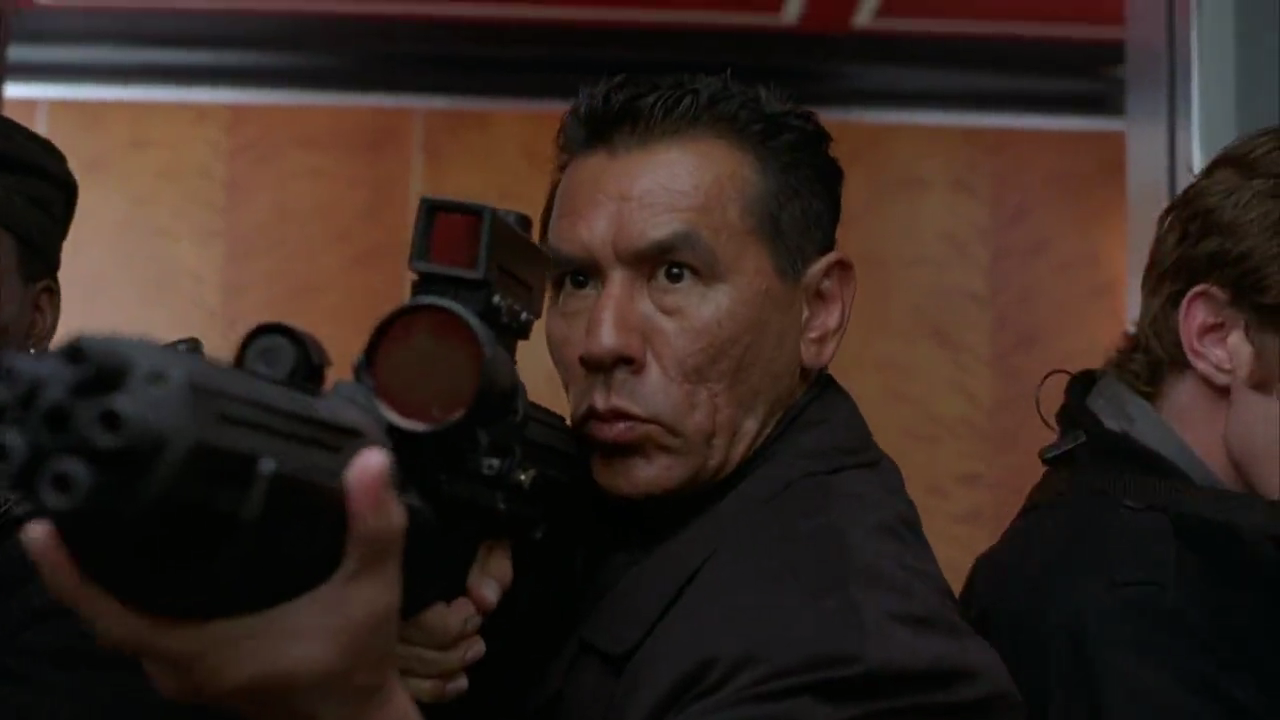
The group of mercenaries are led by a badass named Hanover (Wes Studi), a take-no-crap kind of guy, and their target is the Argonautica, a luxury cruise ship owned by Simon Canton (Anthony Heald), but a wrinkle in the plan quickly develops when the cruise ship is attacked by a massive sea monster prior to our plucky band of mercs arriving on the scene. Armed to the teeth, the men storm the ship only to find it completely devoid of passengers or crew, only blood and carnage, and before anyone can even utter the words “Mary Celeste,” they all find themselves fighting for their lives against a tentacle monster, one that apparently likes to swallow and “drink” its victims alive. Our “heroes” eventually do come across a few survivors; Captain Atherton (Derrick O'Connor) and the aforementioned Simon Canton, who is shortly to be revealed as the inside man on this heist, and we also encounter sexy thief Trillian St. James (Famke Janssen), who got locked up in the ship’s larder prior to the attack.


Can’t have a horror movie without your Final Girl.

The only reason this film works at all is because of the great chemistry among this bizarre collection of characters; Finnegan is your standard roguish hero – so much in the vein of Han Solo that they first offered the part to Harrison Ford – who has a very flexible moral compass when money is involved, and the banter between Treat Williams and Kevin J. O’Connor certainly elevated the material beyond what we are use to getting in films of this genre. Famke Jansen is great as the femme fatale, quickly realizing what kind of movie she was in and thus sticking close to Finnegan, and then we have the amazing Wes Studi, whose instant screen presence sells his character as an efficient, cold and calculating villain who doesn’t intend to let some slimy tentacled creature get in the way of his payday.


“I hope I’m not horribly killed as a comeuppance for my evil actions.”

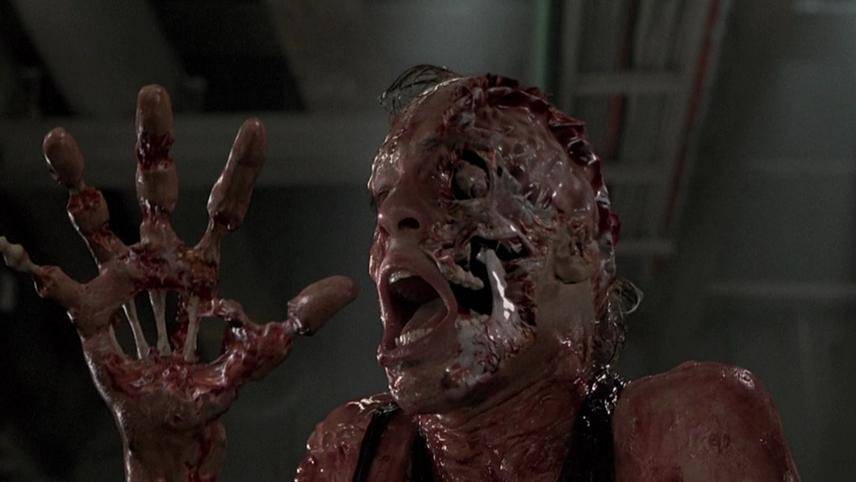
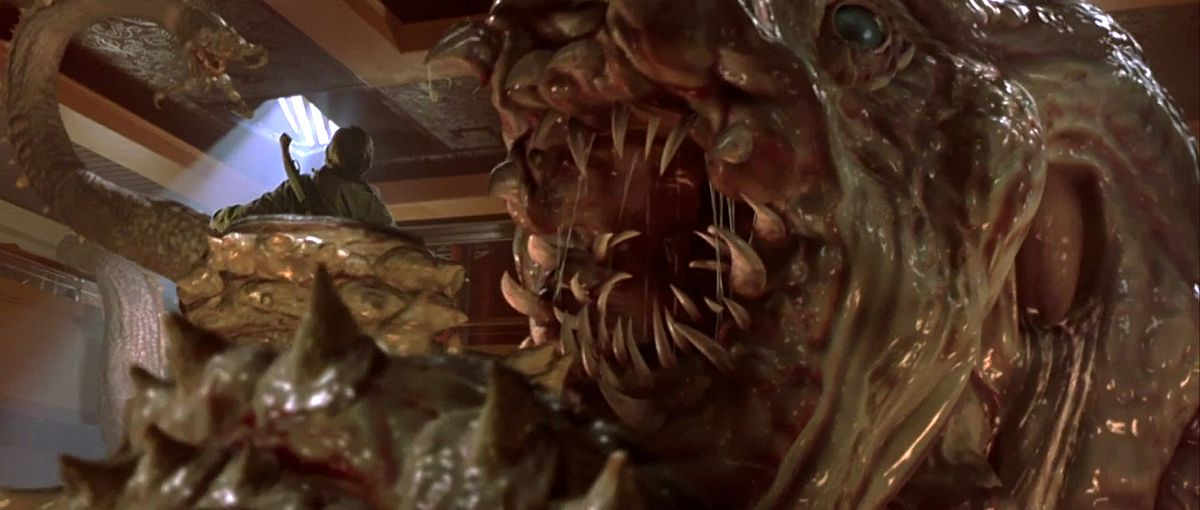
What is truly delightful about Deep Rising is the fact that Stephen Sommers gave us a hard “R” rated monster movie – if made today, I’m sure the studio would have forced a PG 13 rating like they did to Jason Statham’s Meg – and this film does not hold back at all on the gore, as bloody body parts and viscera practically spray throughout the film’s entire running time. The blend of practical make-up effects with CGI enhancements lead to some truly startling results, as well. Not only do we get to see people being engulfed by the monster, but we also are treated to some great moments with them after they have been partially digested.


If there are worse ways to die, I don’t want to know about them.

Deep Rising is an immensely fun flick full of laughs and screams, but it does have a few problems, starting with the basic premise behind the heist itself. We learn from Canton that he hired the mercs to rob and then sink the ship for the insurance money, because after spending $487 million dollars building his dream ship, he came to the startling conclusion that this ship will never be able to operate at a profit, thus sinking it for the insurance is the only way to prevent the bankers from getting their grubby hands on it. Joey makes the comment, “You mean we're all gonna die 'cause you screwed up on the math?” and then the movie rushes forward with more monster action, not giving us time to question, "Just how did he screw up the math?" Now, this is the maiden voyage, and a bemused Captain Atherton points out that the ship is running at full capacity, so how could it be in financial trouble already? Canton informs him that, “The problem is that the cost of keeping it operating is a hell of lot more than we’re ever gonna take in.” So apparently Simon Canton constructed a floating casino that from day one was doomed to lose money, but exactly how is that possible? I thought Donald Trump was the only person on Earth cable of opening a casino and losing money. Did Canton construct the ship’s hull out of platinum? Does he pay the entire crew one hundred thousand dollars a year? It’s a little throwaway plot element that just doesn’t quite pass the smell test.


When greed and stupidity meet.

Deep Rising also has a couple nice nods to some classic films; when the ship is first struck by the creature we are treated to some fantastic stunts, as passengers are sent flying ass over teakettle, and it all looks like it could have been lifted directly from Irwin Allen’s classic disaster film The Poseidon Adventure, but the similarities to that film don’t end there: there is a moment in Deep Rising where our heroes have to travel through a submerged corridor that is a homage/rip-off of the Shelly Winters swimming sequence from The Poseidon Adventure. Then we have the film’s exciting climax where Finnegan sticks the Russian torpedoes through holes in the hull of his PT boat, where he then sets it to auto-pilot to ram the monster-infested cruise ship with his makeshift weapon. This is a pretty clever plan, but almost the exact same plan that Humphrey Bogart and Catherine Hepburn came up with in The African Queen to use against a German gunboat.


Bogie and Hepburn didn’t have to contend with monsters like this.

A modern audience looking back at Deep Rising may find the early computer generated monster to be a little quaint, with some rendered shots looking a little cartoony at times, but the creature designs by legendary effect man Rob Bottin are really quite impressive. However, the sequence where the monster chases Finnegan and Joey, popping up floorboards as it travels below the deck, seems to be a complete lift from John Carpenter’s The Thing, a film which Bottin also worked on. But wherever the film lacks in originality, it certainly makes up for in pure unadulterated fun. Deep Rising may not be the best sea monster movie ever made, but it’s got to be in the top five, and one heartily recommend.


"I also made the Kessel Run in twelve parsecs."

Final Thoughts:

• Canton had disabled the cruise ship’s communication systems so the crew wouldn’t be able to call for help when the mercenaries arrived, and because of this our heroes can’t call for help either, but wouldn’t Finnegan’s boat have had a radio on board?
• The triple-pulse assault rifles used by the mercenaries’ fire so many rounds that each of them would have had to be towing a wagon full of ammunition behind them for this to be even remotely possible.
• During the waverunner chase sequence, Finnegan opens and closes elevator doors by shooting the control panels. This is a trope that I really, really hate. Electronic locks do not work this way.
• The cast of mercenaries is quite impressive, along with Wes Studi we have the likes of Jason Flemyng, Clint Curtis, Trevor Goddard and Djimon Hounsou.
• Our survivors make it to a nearby island only to find it inhabited by a giant monster.


Apparently this nod to Skull Island was to be a lead into a reboot of King Kong by Sommers.

Sunday, November 18, 2018

Tarantula (1955) – Review

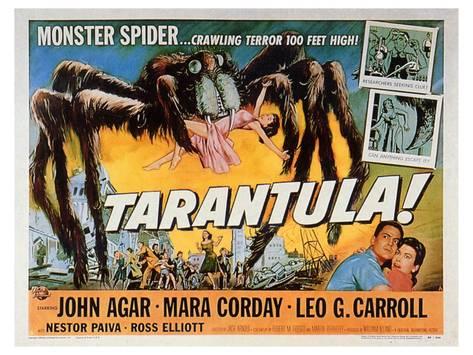
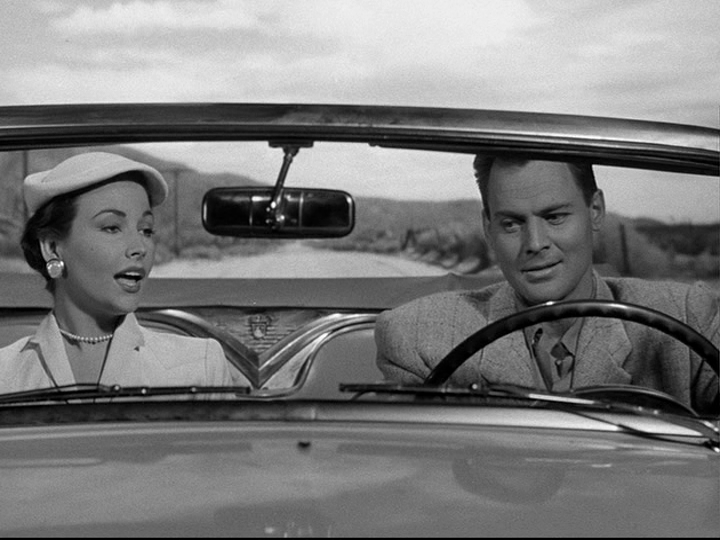
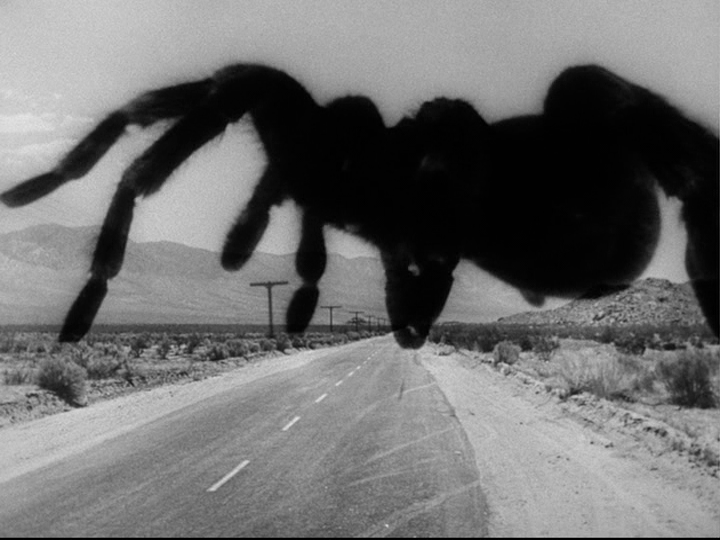
When it wasn’t atomic bombs creating giant monsters in the 1950s, it was your garden variety mad scientist, tinkering away in his beaker-filled lab, spilling behemoth creatures all over the landscape, and one of the most memorable examples of this is the 1955 creature feature Tarantula. Produced and directed by the legendary filmmaker Jack Arnold, Tarantula tells the classic story of a scientist trying to make the world a better place, but instead unleashing a monster of unbridled power.  You know, shit happens.


The movie opens with a deformed man staggering through the desert – the man will later be revealed to have been biological research scientist Eric Jacobs – who shortly perishes from what looks to be a genetic ailment called acromegaly, a rare disorder that is caused by an excess in growth hormone, but the real mystery here is that apparently four days ago, Jacobs looked completely normal, and the level of deformity he has at death would have taken years to reach the point at which the film finds him. That is all kinds of messed up.

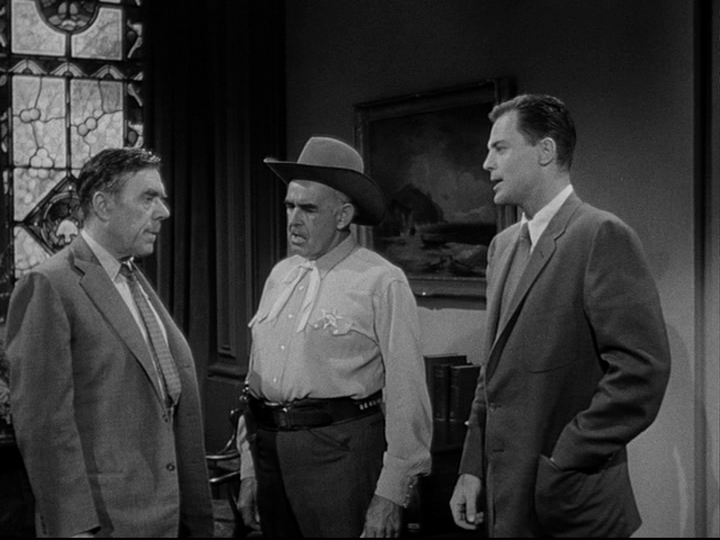
What makes Tarantula stand out from other giant monster movies is that this film is primarily a mystery, with the hero trying to put together the pieces of a bizarre puzzle — it just so happens that this mystery ends with fighter jets attacking a giant spider. So not quite Agatha Christie, but still a cracking good way to wrap up a mystery. The man to solve this particular mystery is Dr. Matt Hastings (John Agar), a local country doctor who doesn’t buy “acromegaly” as the true culprit in the death of Jacobs, and he wants to investigate further. In opposition to this is Professor Gerald Deemer (Leo G. Carroll), who is not only a well reputed scientist, but was also Jacob’s scientific partner, and he puts the kibosh on the idea of having an autopsy performed, saying, “I don’t think that will be necessary. I was in attendance, and I signed the death certificate.” Worse is that Deemer’s entire explanation seems to hinge on the fact that, “Things happen when you get older.”  Yeah, that sounds scientific.


“Or are you just covering up for medical malpractice?”

Hastings gets quite a bit of resistance from Sheriff Jack Andrews (Nestor Paiva), who takes the side of Professor Deemer, stating that, “A young fellow like you can’t stack what he knows against the Professor. The trouble is, Doc, you hate to admit you’re wrong.” As this story takes place in the 50s, and located in a small Arizona town, this attitude is actually quite realistic — "age trumps youth" was the motto of the 50s — as was the attitude towards women, when Stephanie “Steve” Clayton (Mara Corday) arrives in town – hired by the late Jacobs to work in their lab as a graduate student – one of the first things out of Dr. Hastings's mouth was this little gem: “I knew it would happen. Give women the vote and what do you get? Lady scientists.” The casual sexism was pretty much standard in films of that era, especially in the science fiction genre, but at least here Hastings is just kind of “kidding” around.


“Doctor, you’re kind of cute, so I will let that boorish remark slide.”

What follows is your standard monster movie mystery, with a variety of horrifying moments to keep our interest peeked. Professor Deemer is attacked by another person – who seems to also be suffering from acromegaly – and who (during his trashing of the lab) injects the Professor with something, and we're betting it’s not kindness. The destruction of the lab does result in our title creature escaping into the night, though at this point the tarantula is no bigger than a large dog, but eventually it will grow big enough to feed on neighboring cattle, as well as the neighboring ranchers themselves. When Hastings discovers large pools of spider venom at the crime scenes – more venom than even hundreds of spiders could create – he becomes very suspicious, and when he learns of Deemer’s experiments in creating a super-nutrient, one that causes test animals to grow rapidly, he starts to put two and two together, that there be mad science at work.


Two and two equals an eight legged nightmare.

The special effects for Tarantula as a whole are quite good – exempting the odd times when one of the tarantula’s legs would step outside the matte lines – but what is the real standout is the make-up effects that Bud Westmore developed for this film’s version of acromegaly, as they are purely terrifying. Poor Professor Deemer was injected with his “super nutrient,” and we get to watch in horror as over time his face and hands morph into grotesqueness. John Agar and Mara Corday have great screen chemistry, and their scenes together helps keep our interest between monster attacks, and Agar’s country doctor doesn’t even let a giant spider cockblock him, brushing off a monster induced rockslide as if it was nothing more than an annoyance. Mara “Call me Steve” is a spunky scientist who isn’t just around to be menaced and saved – though this does happen – for even though she’s only a graduate student, the film doesn’t treat her intelligence as anything less than that of our male hero.

Question: Why do giant monsters insist on peeking through windows to check out women?

Then we have Leo G. Carroll who, though playing the standard movie scientist “Who should not meddle in God’s domain,” provides his character with a bit more pathos than what you’d expect to find in a movie about a giant arachnid tossing cars around and eating people. Overall, Tarantula is one of the best example of the 50s sci-fi monster movies, with good characters to root for and a monster that is universally feared. 'Cause seriously, who wouldn’t be afraid of a hundred-foot high spider? So if you haven’t seen this classic monster movie, I do recommend you hunting it down, before it hunts you.

Final Thoughts:

• The film of course ignores Galileo's square-cube principle, as a creature exponentially grown to giant size would be crushed under its own weight.
• How Deemer plans to save mankind from starvation, by creating a super nutrient, is never made clear. All we see is his test animals that either become fully mature in a matter of hours, or grow gigantic. Not sure how injecting that into humans is all that helpful.
• The desert is a big place, but it’s still surprising how a hundred-foot tall spider manages to keep things on the down-low for so long.
• People would not be the prey of a creature the size we see here – a hundred-foot high spider tearing apart a house, looking for the human prey inside, would be like me busting up a dollhouse to find a couple of peanuts. Way too much effort for the end result.
• Nice uncredited cameo of Clint Eastwood as the lead fighter pilot who napalms the giant tarantula.


I bet the town smelt like burnt spider for days.

Wednesday, November 14, 2018

Overlord (2018) – Review

Genre mash-ups can be a lot fun, and when it's horror with another genre, the results can be quite surprising – horror-comedy being one of the more prevalent of these – but one horror combo that doesn’t get a lot of love is the horror/war movie mash-up, which is why Overlord is such a treat. The best way to describe this movie is by picturing Easy Company from Band of Brothers encountering a Nazi version of the Umbrella Corporation from Resident Evil, and if that doesn’t sound like fun to you, then we have nothing further to discuss.


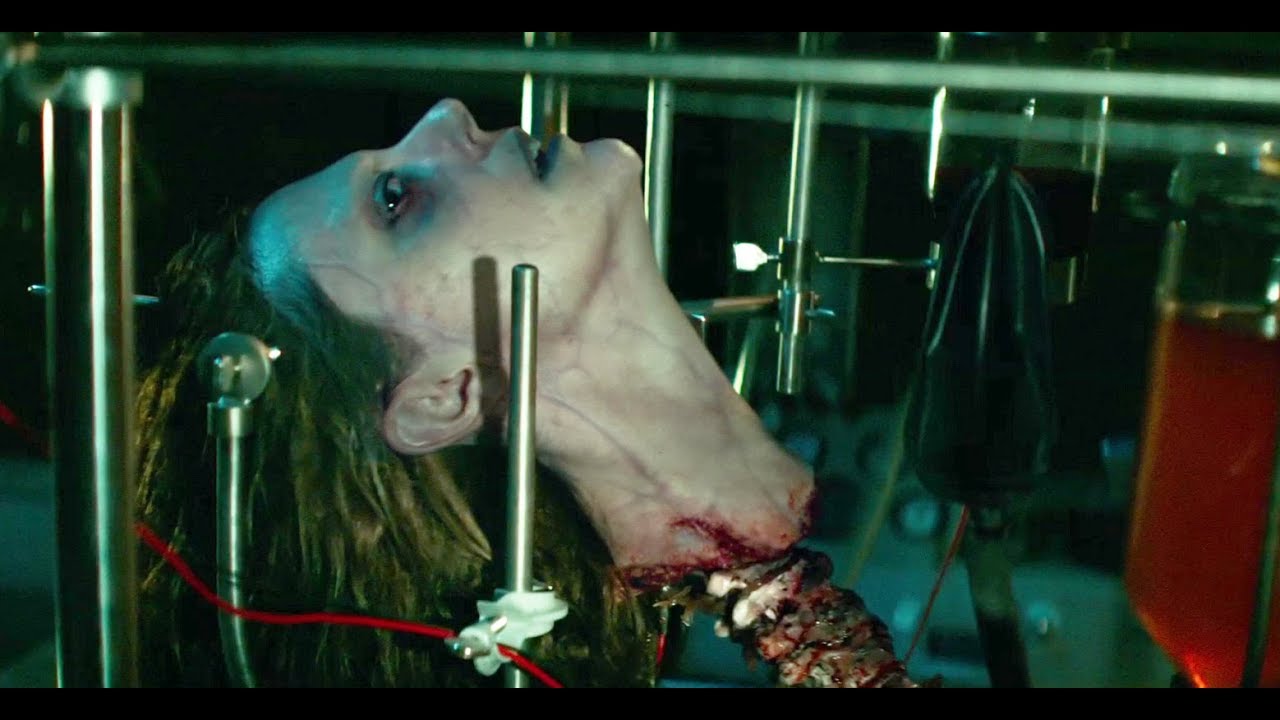
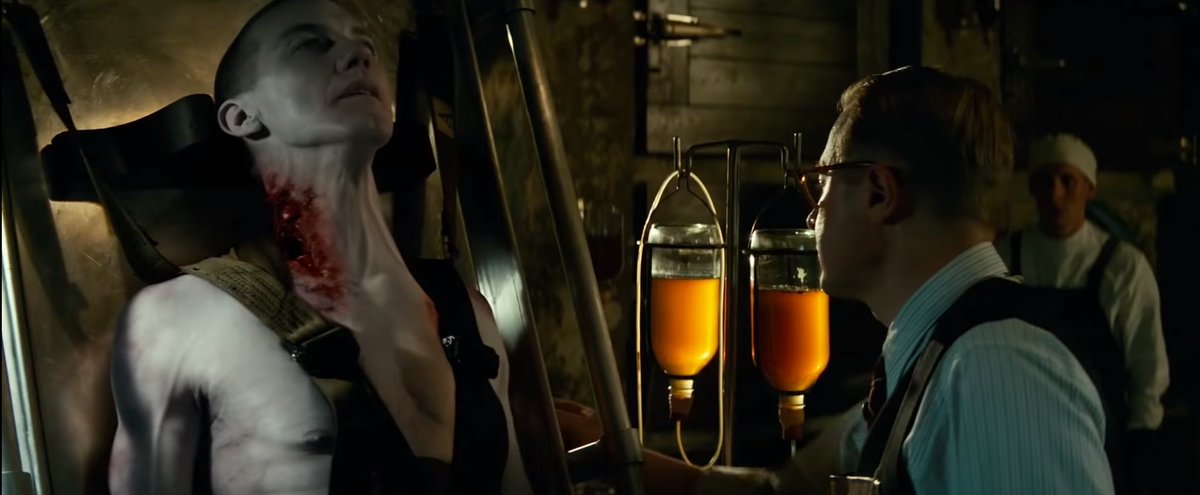
The plot of Overlord is fairly basic; a squad of paratroopers is air-dropped into France in advance of the D-Day invasion, their mission? To take out a Nazi radio installation located in the tower of an old church. But when they reach the quaint French village where the church is located, things don’t go quite as expected. Turns out an evil Nazi scientist – one who clearly went to the Josef Mengele School of Medicine – is experimenting with a strange and mysterious liquid compound that had been discovered beneath the church, and the result of these experiments could lead to the end of the Free World and the birthing of a Thousand Year Reich.


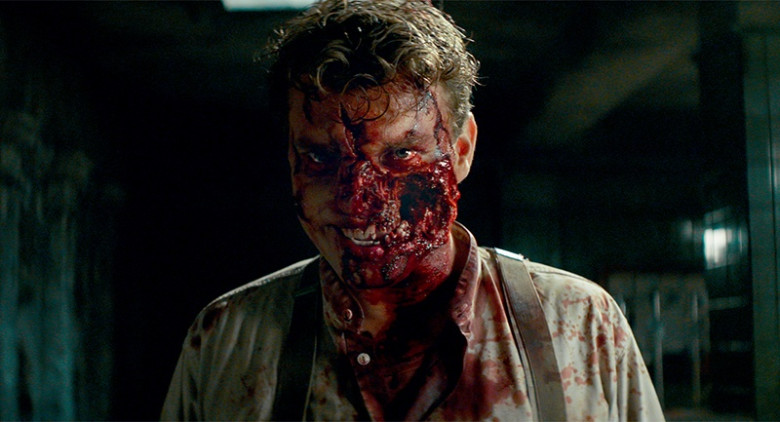
Can you say unstoppable undead Nazi soldiers?  I knew you could.

Directed by Julius Avery, from a story and screenplay by Billy Ray, Overlord is an incredibly solid war movie, from the thrilling perilous night drop – which results in about 90% of the squad being lost or killed – right up until our surviving heroes hook-up with a French woman named Chloe (Mathilde Ollivier), who is able to take them to her town where the German radio installation is located, and where they hunker down to figure out how four men are going to fight through a hundred German soldiers and destroy that tower. Up to this point, we'd been experiencing a taught and action filled war movie – with enemy troops and landmines threatening our heroes at every turn – but when our intrepid soldiers encounter the sadistic and part-time rapist SS Hauptsturmführer Wafner (Pilou Asbæk), things go from grim to downright terrifying.


You know it’s a bad day when a stroll through enemy territory is the easiest thing you’ll do.

Overlord doesn’t worry about having big stars to bring in an audience, but the ones they have on hand do fantastic work here, especially Jovan Adepo as Pvt. Ed Boyce, the green recruit who may not have the killing instinct needed to survive this mmission.The character of Boyce is beautifully counterpointed by Cpl. Ford (Wyatt Russell) as the “been there done that” seasoned soldier, and Ford is damn well going to accomplish this mission no matter the cost, a point of view that doesn’t always sit well with Boyce. It’s this kind of conflict that brings a little spice to the proceedings, and stops the film from just being a two-hour version of Wolfenstein. Now, our little band of heroes may come off as a little cliché – the required Brooklyn guy is found front and center – but this kind of works in the film’s favour, as it puts the audience at ease with the feel of war films of the past, and that allows the filmmakers to easily pull the rug out from under us when we come face to face with undead Nazis.


And it’s a very gory and bloody rug at that.

Simply put, this film is tons of fun – when our plucky heroes aren’t mowing down German soldiers like stalks of wheat, they're running down dark corridors with a series of nasty monsters hard on their heels – and the CGI blood and gore is kept to a minimum as practical effects are allowed free reign in this film. We get characters rushing off to complete separate missions, whether it be to rescue a small French boy, or plant demolition charges to complete their mission, and then there are taught character moments that lets us get to know our heroes between moments of humor and outright horror, and it's director Julius Avery who manages to keep all these balls perfectly juggled while constantly upping the ante. If any movie could be described as “edge of your seat entertainment,” it would be Overlord, from the opening terrifying airdrop sequence to the film’s final moments of nail biting horror, it grabs hold of you and never lets go. If you are a fan of the 2008 Ray Stevenson film Outpost, or the Nazi zombie movie Dead Snow, you would be doing yourself a big disservice if you missed Overlord.


There is a lot to love in this film.