Blog Archive

Thursday, April 6, 2017

In Search of the Castaways (1962) – Review

With the success of Walt Disney’s adaptation of the Jules Verne classic 20,000 Leagues Under the Sea it’s no surprise that Disney would try and adapt more works by the world renowned author, and so almost ten years since James Mason and Kirk Douglas wrestled with a giant squid aboard the Nautilus we got Haley Mills and Maurice Chevalier traipsing across the glove in Disney’s adaption of the Jules Verne book Captain Grant’s Children. This was not one of the better known works of Verne thus Walt had no compunction about changing the title into something a little more catching.


The basic premise of both the book and the movie is that the children of missing Captain Grant (Jack Gwillim) had received a bottle with a note from their father, who was presumed lost at sea many years ago when his ship the Britannia went down. In the book after the bottle containing the note was discovered in the belly of a shark Lord and Lady Glenarvan of Scotland contacted the grant children to let them know that their father may still be alive, but when the government refused to launch an expedition to find Captain Grant the Glenarvans decide to do it themselves. Disney had this opening condensed a bit and has the movie open with teenage Mary Grant (Hayley Mills), accompanied by her younger brother Robert (Keith Hamshere) and professor of geology Jacques Paganel (Maurice Chevalier), who in the movie is the man who found the bottle in the shark, sneaking aboard the Duncan, a steam powered yacht owned by Lord Glenarvan (Wilfrid Hyde-White), who was the owner of the Britannia and Captain Grant’s employer.
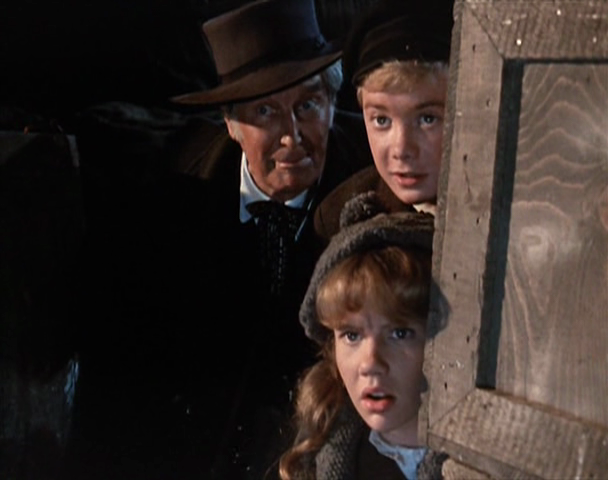
 

The adorable stowaways.

Lord Glenarvan thinks the story of the bottle and the shark to be complete poppycock and that Professor Paganel is a fraud, believing that the man is just using the children’s plight to scam some of the reward money which Glenarvan had put up for information pertaining to the lost ship and her crew. Lucky for our young heroes Glenarvan’s teenage son John (Michael Anderson Jr.) becomes immediately infatuated with young Mary and he is able to convince his father that they can’t risk the chance that the note is genuine and so they must help in the search for Captain Grant. Most of this is played for laughs with Wilfrid Hyde-White playing the slightly buffoonish lord who can be swayed by a little flattery, along with some antics of Maurice Chevalier trying to steal food and wine, and Haley Mills and her budding love with the young lordling.
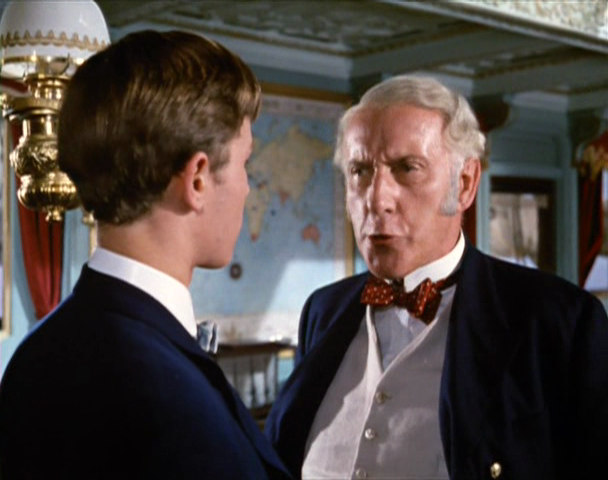
 

“I am the very model of a modern major general.”

The first problem to arise is that the note is in bad shape and thus for a location they only know the latitude (37 degrees) but as the note mentioned being captured by Indians Professor Paganel states that the only place where there could be Indians on the 37th Latitude is South America. This is but the first time Paganel will state something to be certain only to shortly be proven completely wrong a short time later. These wrong assertions do lead to some fun adventures though; on their trip through South America they will be menaced by threats of varying natures.


A calamitous earthquake.
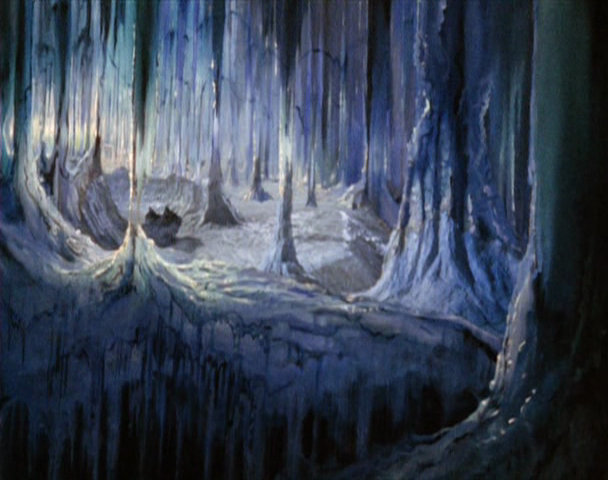
 

A wild ride through icy caverns.
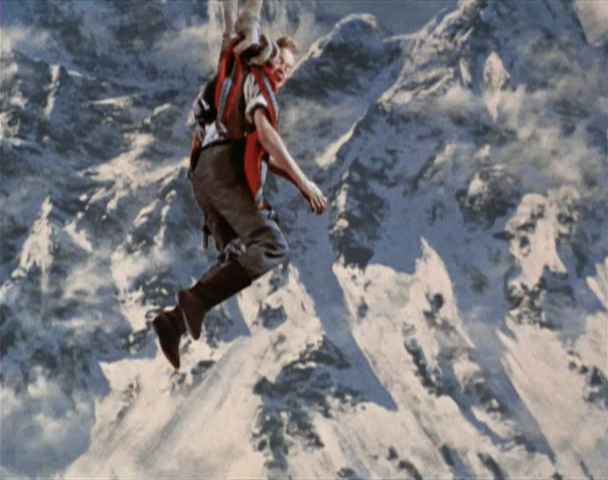
 

Robert is carried off by a Giant Condor.
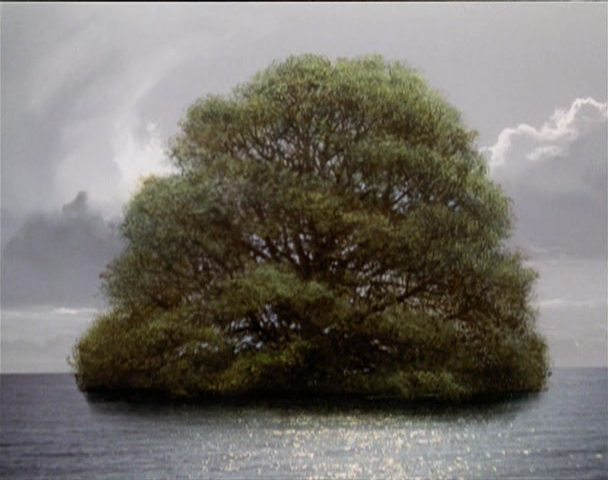
 

A flash flood maroons them in a massive Ombu tree.
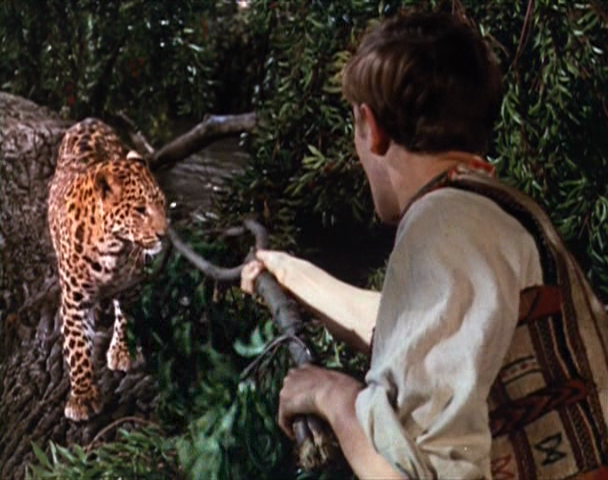
 

A jaguar invades their new home.


Lightning sets the tree on fire.


Then a waterspout puts the fire out and rips the tree loose sending them adrift.

As this is light family fare none of the dangers comes across as all that life threatening, even while being carried away by the Giant Condor young Robert never loses his smile, and when our group finally reach their destination, only to find out that the three white men they'd heard were being held by the natives were not from the Britannia, you can almost hear the “Waa-waaaaah” on the soundtrack. It’s by this time that Paganel realizes that the shark that he pulled the bottle from was a mako shark and as they are not to be found in the waters around South America the Indians in the note must have referred to the aborigines of Australia, which funny enough was where Lord Glenarvan originally wanted to start the search.
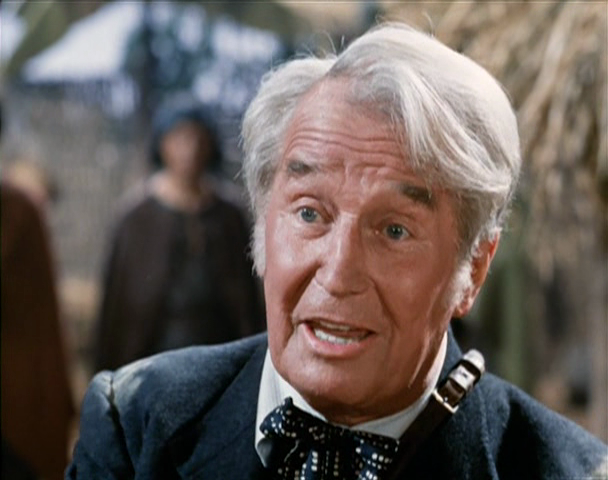
 

At what point would one just toss Paganel to the sharks?

When they eventually reach Australia they encounter a smooth talking Englishman by the name of Thomas Ayerton (George Sanders) who claims to have been mate aboard the Britannia, stating he was the sole survivor. He also informs them that the ship sank off New Zealand and if Grant is alive that is where he would be. Paganel insists that it would be impossible for the bottle to have originated from those waters but because he has been such a colossal idiot for most the movie Lord Glenarvan ignores him and of course this is the one time he turns out to be right. Seems Ayerton was member of Grant’s crew but he is a traitorous bastard and a gunrunner to boot. He plans to maroon our heroes on the same shores he marooned their father, where they could quickly find themselves on a Maori menu.
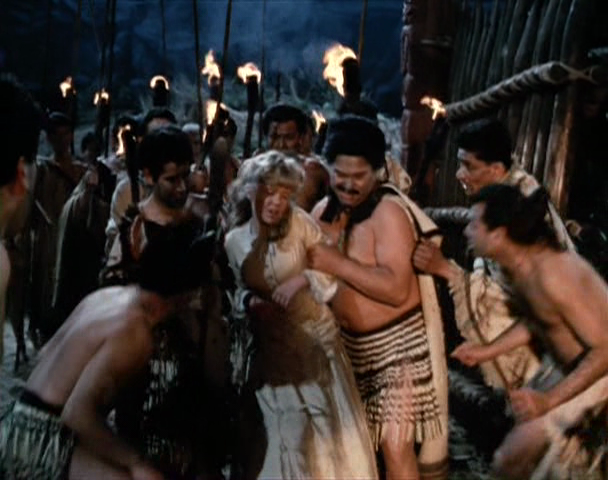
 

Out of the fire and into the stew pot.

Lucky for our intrepid group they are first locked in a room with Bill Gaye (Wilfrid Brambell), one of Grant’s surviving mates, and who has kind of gone full on Ben Gunn from Treasure Island with his eccentric madness. Though a bit crazy he’s also quite crafty and over the years had fashioned a long rope to aid in their escape, and his plan only needs someone of Robert’s diminutive size to fit through a tiny back window. With the angry Maori hot on their heels they escape across taboo territory under the raging fires of a volcano that geologist Paganel is able to set off.


Out of the stew pot and back in the fire.

After escaping the Maori they are able to sneak aboard Glenarvan's yacht, free the crew locked below, and capture Ayerton and his confederates. They also find Captain Grant as he was helping to broker a gun deal between Ayerton and Maoris. The ending of this movie is a mess, how Grant escaped and ended up being a go-between with Ayerton and the locals doesn’t make much sense but the movie wraps up so damn fast one isn’t give much time to question it. The movie then ends with the reunited family heading back to Scotland with young love in full bloom.
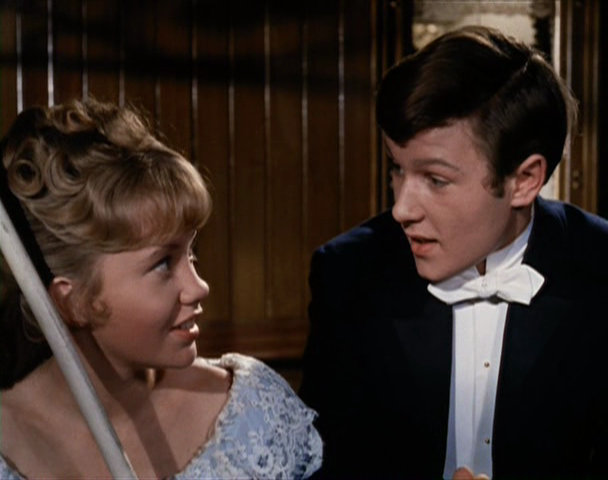
I give it a week.

Director Robert Stevenson took the gruff thrilling adventures of the Jules Verne novel and then replaced them with wacky capers and songs by the Sherman Brothers, it’s not a bad movie, and it did quite well at the box office during its original release, but it’s not one of the Disney films that stood the test of time such as their adaptations of 20,000 Leagues Under the Sea, Treasure Island, or Swiss Family Robinson. Haley Mills is of course quite delightful as the brave Mary Grant but I’d sooner be eaten by a shark then spend any length of time with the rest of this cast of characters,which is why In Search of the Castaways isn’t a film many people bother to search for.
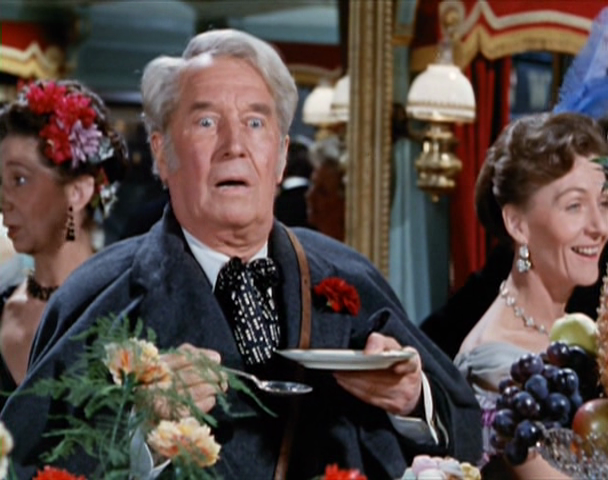
Note:  The character of Professor Jacques Paganel in the book was an unexpected passenger aboard Lord Glenarvan's yacht, he'd missed his steamer to India by accidentally boarding on the Duncan, his purpose was to provide color commentary on the flora, fauna, and geography of numerous places the adventures visit, an element typical of a Verne story.

Monday, April 3, 2017

Godzilla Raids Again (1955) – Review

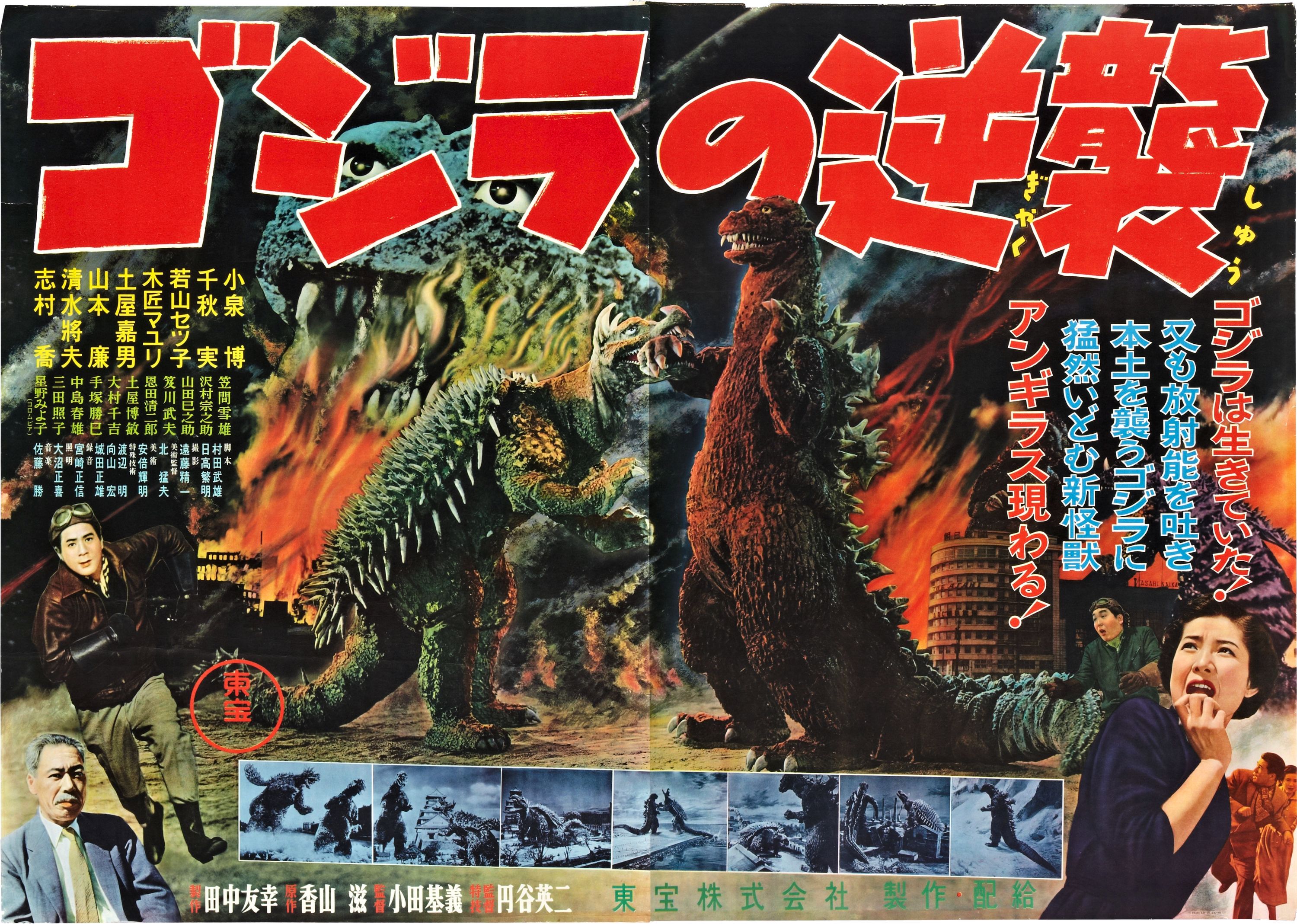
What do you do when you’ve made an extremely successful movie but killed off the title character? This was the problem facing producer Tomoyuki Tanaka and director Motoyoshi Oda when they were tasked with making the follow up to the 1955 monster hit Gojira. This was certainly not the first time filmmakers had run into this particular dilemma, 1933’s King Kong concluded with giant ape dead at the end of that picture but that didn’t stop the studio from releasing Son of Kong that very same year. Yet in the case of Godzilla Raids Again instead of going with Son of Godzilla, though that title would later pop up in 1967, they would just have another Godzilla show up, and because that might not have been enough for fans they threw in a second giant monster as a sort of bonus.


In classic quickie sequel fashion Godzilla Raids Again was rushed into production mere months after Gojira was released into theatres, and with a considerably lesser budget. This would of course result in there being less location filming, less monster destruction and lesser emotional impact than the original film offered.  This probably explains why they thought if they tossed in a secondary monster people may not have noticed that they were being a bit cheated, and instead of the dramatic love triangle that made up one of the key elements of Gojira this sequel would have a "friend triangle" that consisted of a couple in love and their comic relief sidekick friend. Godzilla Raids Again even tried to give this third member of the triangle a tragic death as if the noble self-sacrifice of Professor Serizawa in Gojira could somehow be equated to a second banana getting killed by Godzilla this time out.


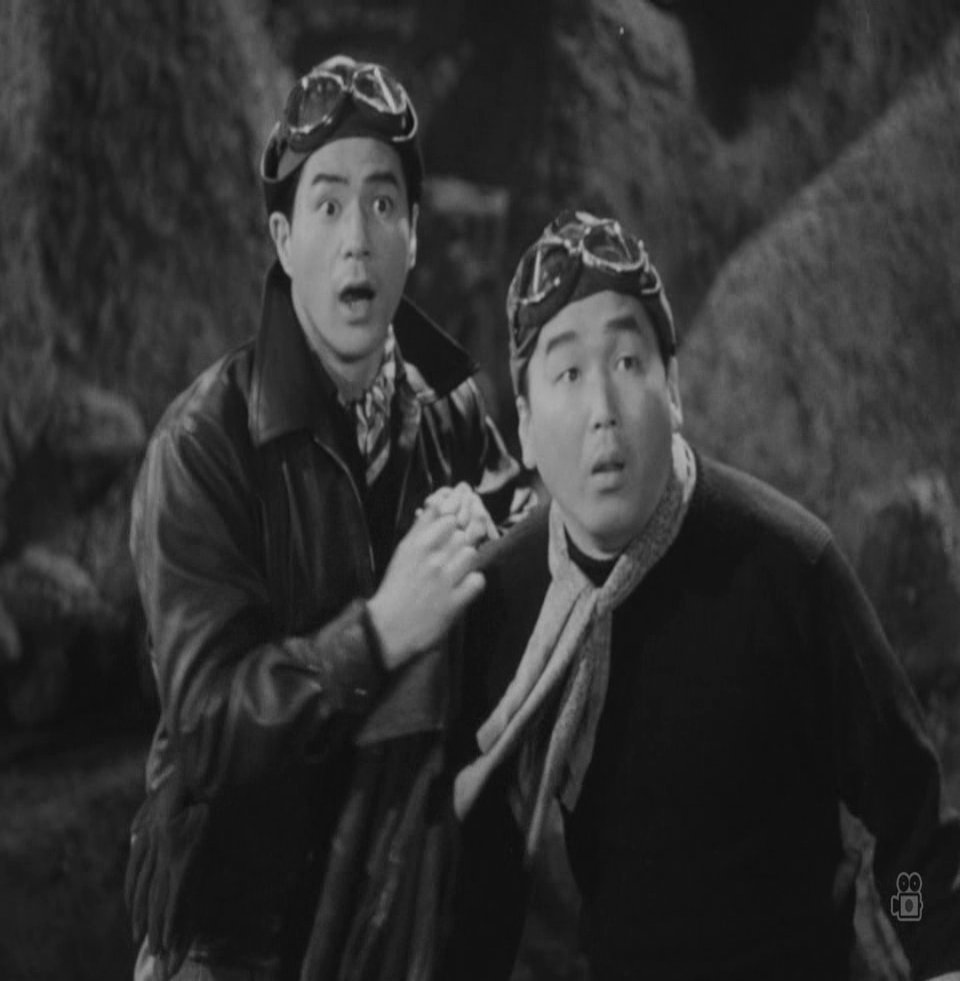
These are our heroes?

The movie opens with two pilots named Shoichi Tsukioka (Hiroshi Koizumi) and Kôji Kobayashi (Minoru Chiaki), who work for a tuna cannery company in Osaka as spotters for the fishing fleet, and when Kobayashi’s plane develops engine trouble he is forced to land near Iwato Island, an uninhabited strip of rocks formed by volcanic eruptions. When Tsukioka learns of his partner and friend’s situation he immediately races towards Iwato Island.  Now he’d learned of his friend’s trouble from the company’s radio operator who also happens to be his love interest Hidemi Yamaji (Setsuko Wakayama) who is also the daughter the fishing company’s owner, and she's the third component of this film "Friend Triangle." The time spent with the soap opera issues of the burgeoning love affair between Shoichi and Hidemi, and what the damage done by Godzilla would do to the cannery business, is the film’s weakest element. We just don’t care.


We want monster fights!

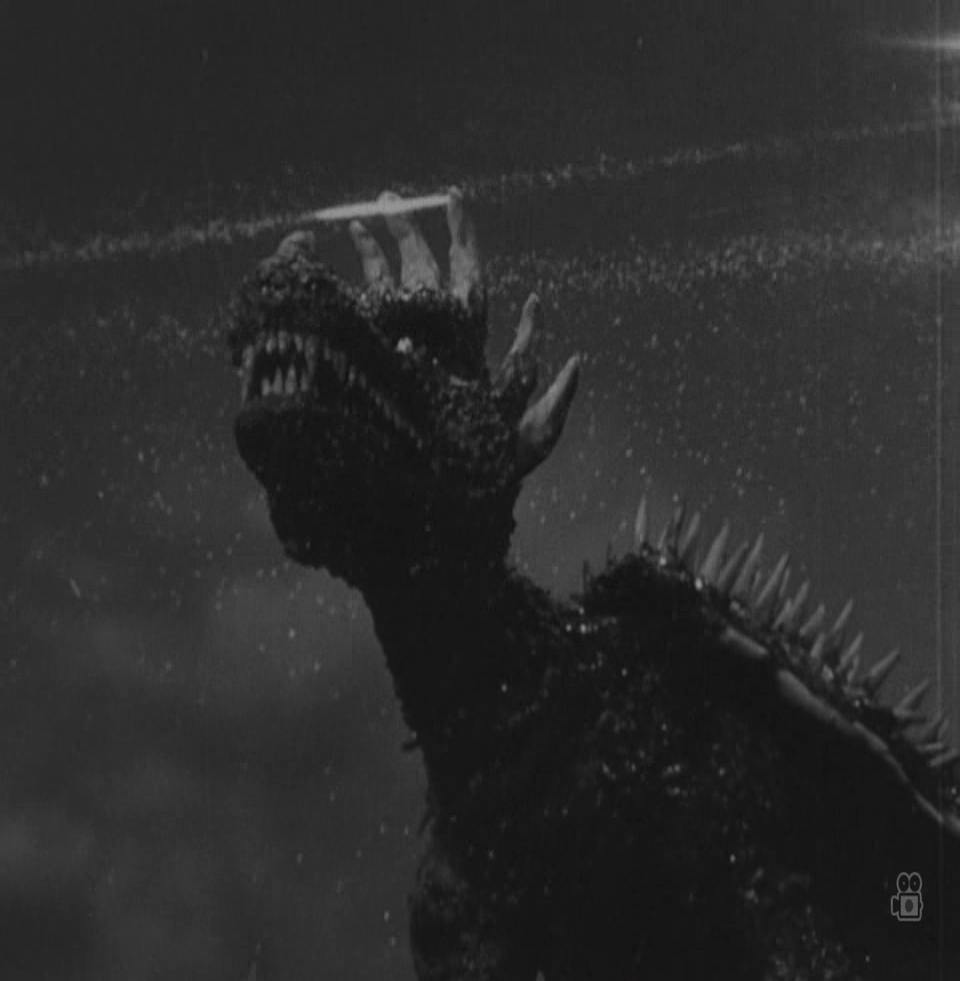
Godzilla Raids Again is not only the first sequel in the Godzilla franchise but it's also the film that introduced kaiju (giant monster) fights. When Tsukioka lands his seaplane to assist Kobayashi the two men are shocked to find that they currently share this desolate piece of rock with two prehistoric behemoths that seem hell-bent on destroying each other. Our courageous duo madly scramble to evade the rocks knocked loose during this titanic battle and are only spared when the two beasts plunge off the side of the island and into the ocean. Tsukioka recognizes one of the monsters as Godzilla and once back on the mainland he and Kobayashi report their discovery to the authorities. A group of scientist are able to confirm that the second monster is Anguirus (or Angilas as its spelled in the film) an angilosaurus that is described in a provided dinosaur text book to be "one of the few creatures that had a thorough hatred for war-like predators" which seems like a strange character trait for animal but at least it explains why he wants to fight Godzilla.


The mighty Anguirus.

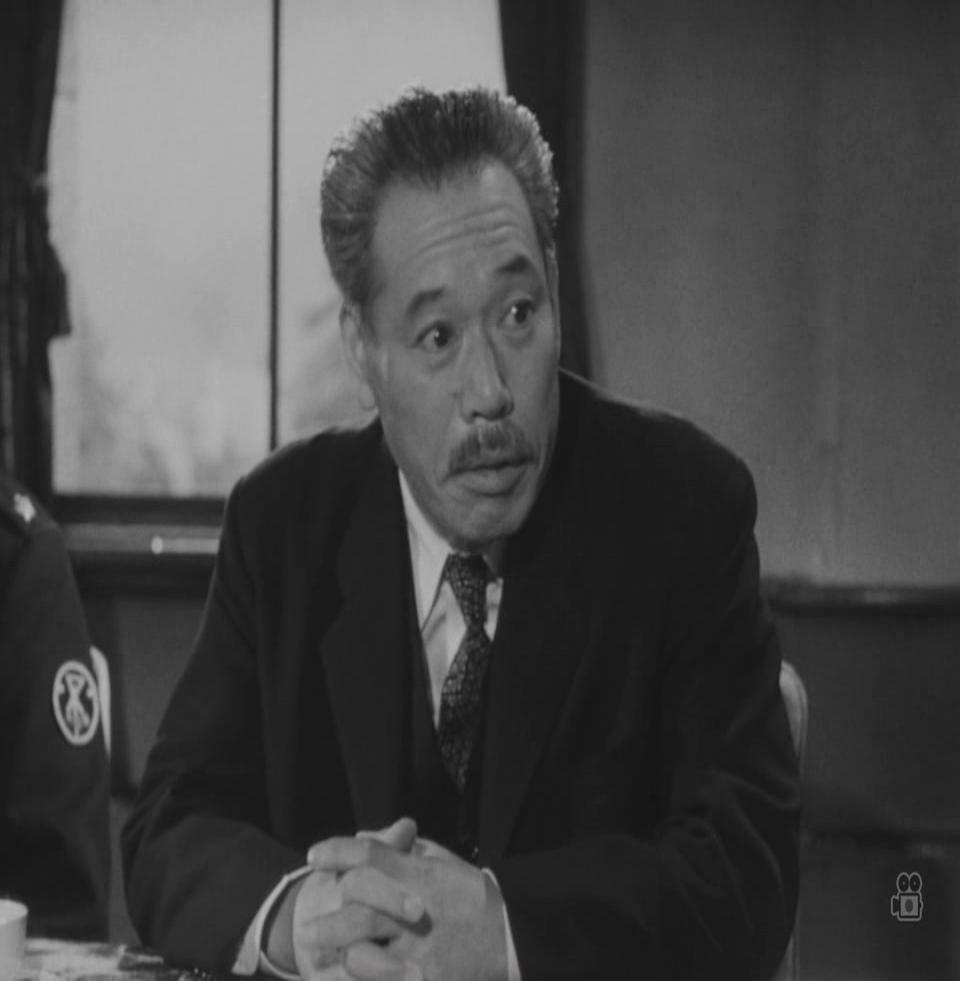
There is only other returning character from the original film, aside from Godzilla that is, and that would be Proffesor Yamane (Takashi Shimura) who experienced Godzilla's attack the previous year and he confirms that this Godzilla is a second member of the same species, and that it and Anguirus were probably brought back to life by the same hydrogen bomb tests that awoke the original Godzilla. Yamane is then asked to outline any Godzilla countermeasures that he may have come up with but instead he responds, “Well, I would tell you about Godzilla countermeasures, but I regret we have no effective strategy for it. There are no policies that will stop Godzilla. I have no methods to tell you at this time.” Well thanks for coming out Professor, you’ve been a big help. He then shows them footage of the original Godzilla attacks in the hopes that viewing this would somehow help them come up with a viable plan. This is of course absurd as watching Godzilla set fire to Tokyo is certainly not going to cause some epiphany to the people in this room, all who had probably witnessed the destruction themselves as it was only just last year that it happened. After this little "Show & Tell" Yamane brings up what would happen if Godzilla were to come ashore again.


To paraphrase Yamane, “We’re fucked.”

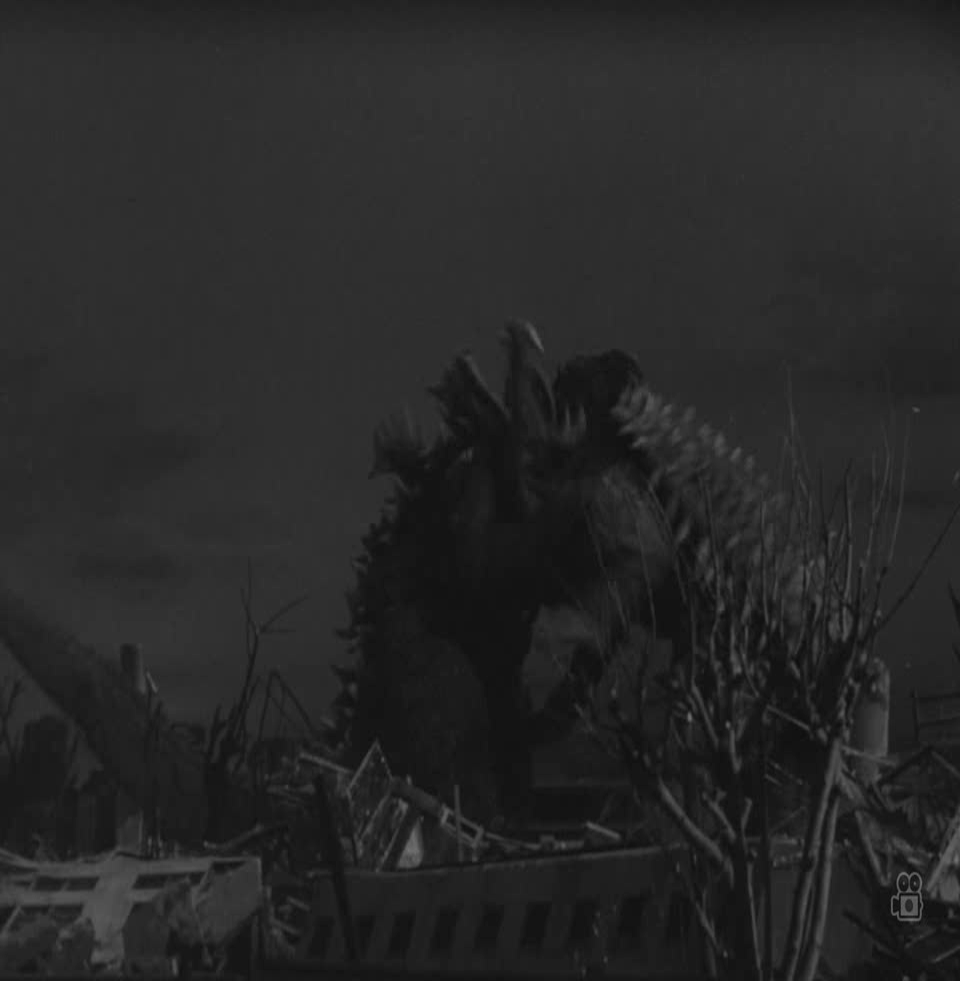
As Oxygen Destroyer, the weapon designed by Professor Serizawa that basically dissolved Godzilla in the first movie, was a one of kind device and the secrets of its making died with the inventor, so things do look bad, but the group actually come up with a decent plan, not one to kill Godzilla but to at least save their cities. Yamane comes up with the rather clever idea of having the populace institute a blackout when Godzilla appears and then the Airforce would launch bright flares to attract Godzilla back out to sea and away from the shore. It was a great plan and almost worked, the flares did distract Godzilla and they did lure him back out to sea but then a case of “Oh what the fuck?” a group of convicts just so happen to escape a prison transfer, steal an oil truck, and during the police chase they drive the truck into an oil refinery which of course explodes. Seeing this massive conflagration Godzilla ignores the middling flares and makes his way back to shore. And if that’s not bad enough Anguirus shows up as well and the two get in a knock down drag out fight that levels much of the city, including the tuna cannery our "heroes" work for.
 

Giant monsters can be so inconsiderate.

Note: To make men in monster suits look as if they are massive creatures these scenes are filmed in slow motion, but a camera technician accidentally undercranked the camera instead of overcranking it, resulting in the action appearing faster than reality. Effects director Tsuburaya liked the herky-jerky effect and left it in.

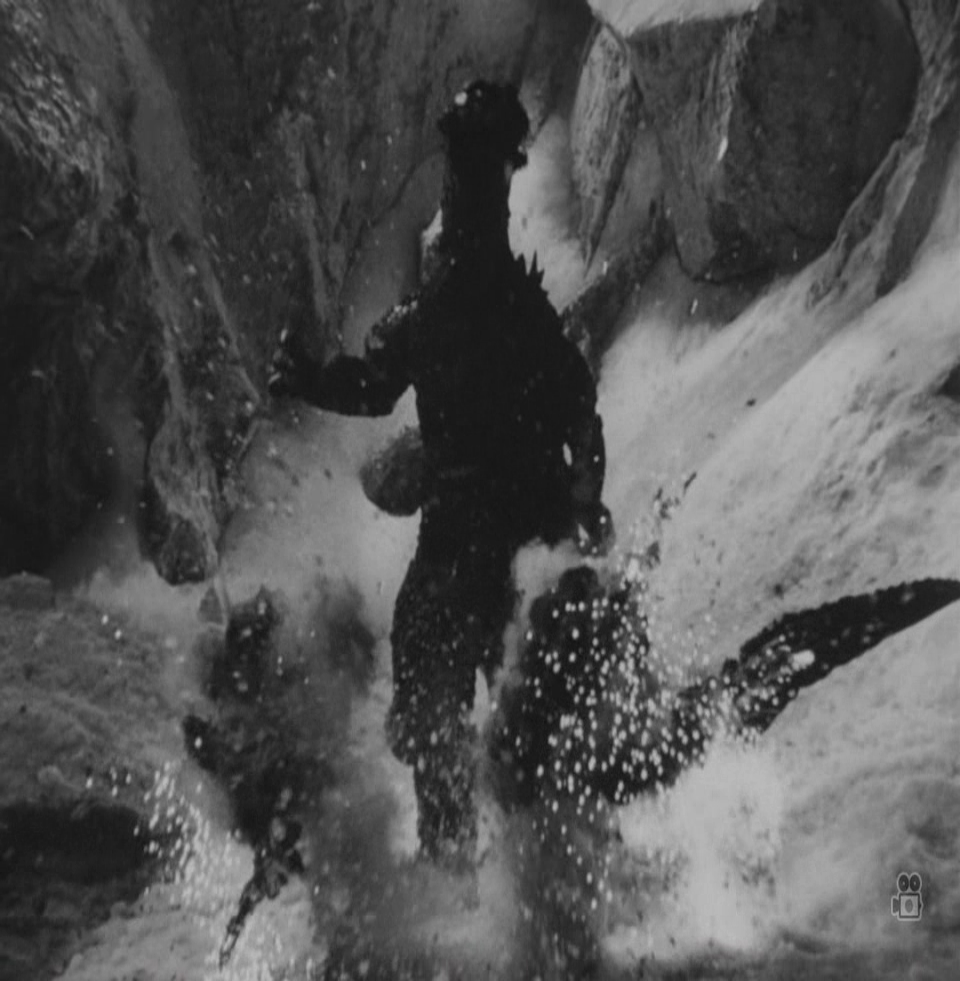
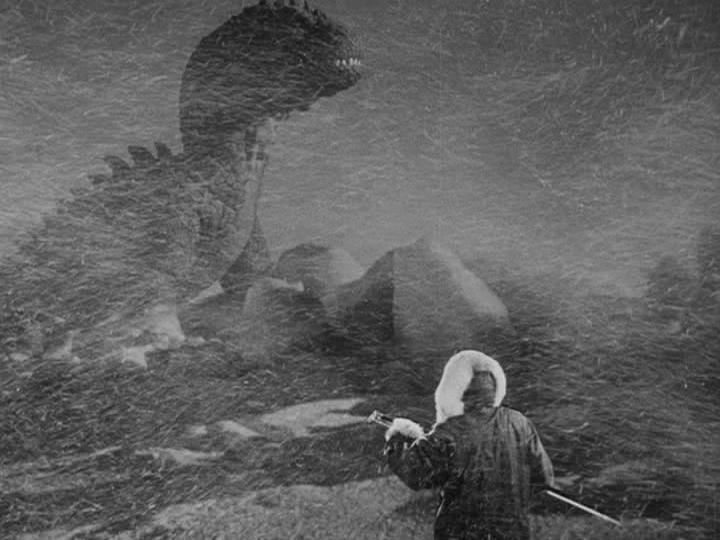
What is really strange is that at the 45 minute mark Godzilla sinks his teeth in Anguirus’s throat and rips it out, blood gushes from the wound as Godzilla rolls the dying monster over the edge of a retaining wall, and then Godzilla uses his atomic breath to incinerate Anguirus. How his atomic fire achieved this is a bit of a mystery as earlier it seemed to have no effect on the angilosaurus. Maybe being dead weakens your defenses. Regardless of the inconsistency of monster attacks the movie is just barely half over and Godzilla’s primary antagonist is dead. Who is going to stop Godzilla now? Sadly it’s left to our rather bland heroes who manage to track Godzilla to an isolated snow packed island, don’t ask me why an atomic fueled dinosaur decided to seek out arctic climes to hang out at, and they call in the Japanese Defense Force to engage the monster.


And all it does is piss off Godzilla.

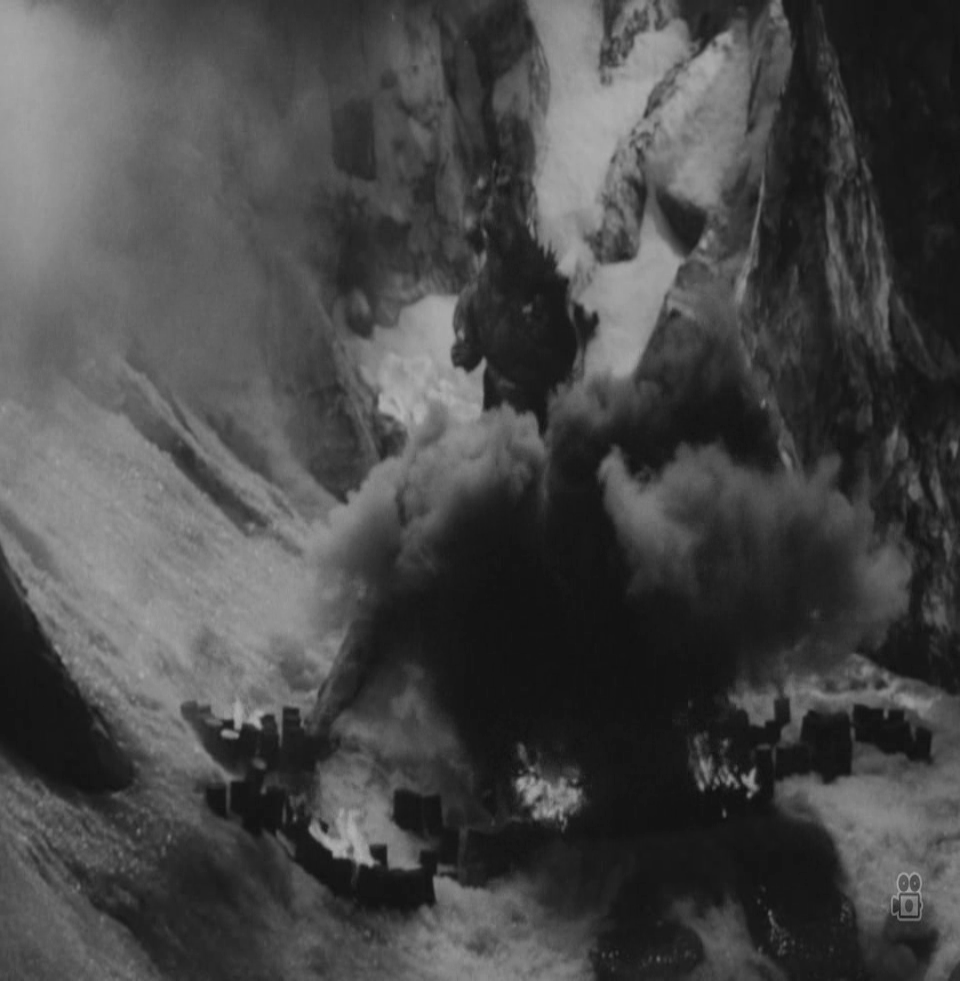
It’s when Kobayashi makes another pass at Godzilla, in his totally unarmed seaplane, and is blasted out of the sky by the monster (he apparently didn’t get the memo on the whole atomic breath thing), but it is this brave if rather stupid act that is the clue to how Godzilla could be defeated, for when Kobayashi’s plane crashed it sent an avalanche of snow and ice down upon monster. This gives Tsukioka the idea of having the Defense Force planes retreat and rearm with rockets and then return to bury Godzilla in an icy tomb. It’s a good plan, and it does work, but the breaking up of the attack, the going back to get the rockets and the time spent working out the new plan completely destroys the pacing of what should have been a rocking finale.

Note: There is an especially strange tactic where the Defense Force sends in ships to place barrels of oil to great a flame barrier to prevent Godzilla from escaping back into the sea. How burning oil is to deter a creature that was awoken by an H-Bomb, seems immune to all manner of artillery fire and wades through cities he himself sets aflame, is simply beyond me.

Regardless of the plausibility of a creature that can breathe atomic fire being buried and trapped in snow and ice that is exactly what happens, and the day is saved. Godzilla Raids Again isn’t a bad movie it’s just quite tonally different from the original, no allegory for nuclear holocaust here just your run of the mill monster fight, the love story doesn’t have that tragic element found in Gojira and the cast is overall bland and rather uninteresting. It did introduce to the franchise the idea of Godzilla encountering and fighting other giant monsters but in this outing it really didn’t add much to the proceedings. It’s not a bad movie but it’s not a very good sequel.
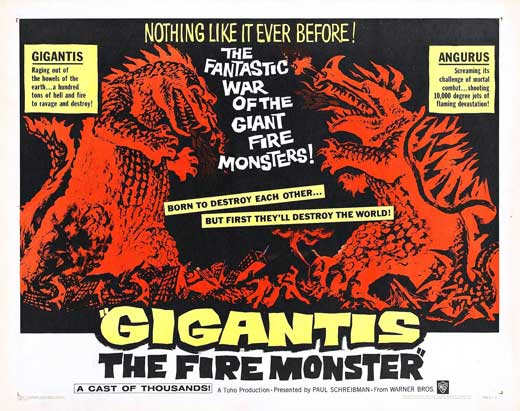
Note: Like the original Gojira this film was adapted for American audiences but for some stranger reason producers Paul Schreibman and Edmund Goldman decided to hide the fact that this was a Godzilla sequel and called the film Gigantis the Fire Monster. There reasoning was they didn’t want to confuse American audiences but who of course were very confused when characters in the movie kept calling Godzilla by the stupid name Gigantis.

Thursday, March 30, 2017

The Amazing Spider-Man (1977-1979) – Review

Due to his amazing powers Spider-Man was mostly relegated to the pages of the comics or with the occasional foray into animation, web-swinging and wall-crawling was not something easily pulled off in live action, and so aside from his silent appearances on The Electric Company he seemed destined to remain in two dimensions. Then in 2002 Sami Raimi gave us a live action Spider-Man, which one could argue is the film that truly started the current superhero boom, yet there was another live action version of Spider-Man that predated the Raimi trilogy by over two decades. Enter CBS and The Amazing Spider-Man.


Long before Marvel Studios teamed up with Disney to create the Marvel Cinematic Universe Stan Lee and Marvel Comics were selling the rights to a host of their intellectual properties to anybody with a cheque book. This resulted in a couple of ludicrous Captain America television movies, a Fantastic Four film by Roger Corman, a Dolph Lundgren Punisher movie and Captain America theatrical release that managed to be even worse than the Reb Brown TV version. The only real success out of this was The Incredible Hulk series with Bill Bixby and Lou Ferrigno for CBS.  Now there was the Wonder Woman series with Lynda Carter, which was very successful, but it was from DC comic property.  So with this track record it’s no surprise that they’d want to take a crack at Marvel’s flagship character.

The one problem was that CBS wasn’t too keen on the whole “superhero” aspect of it, and if you’ve ever seen an episode of the 70s The Incredible Hulk you'd know what I’m talking about as that show was basically The Fugitive with Bill Bixby turning into the Hulk twice an episode, and that was just to throw some gangsters around or stop an abusive parent. There was not a lot of “incredible” going on in a show called The Incredible Hulk, and when it came to produce a Spider-Man series it should have shocked no one that though it was called The Amazing Spider-Man it wasn’t all that amazing.


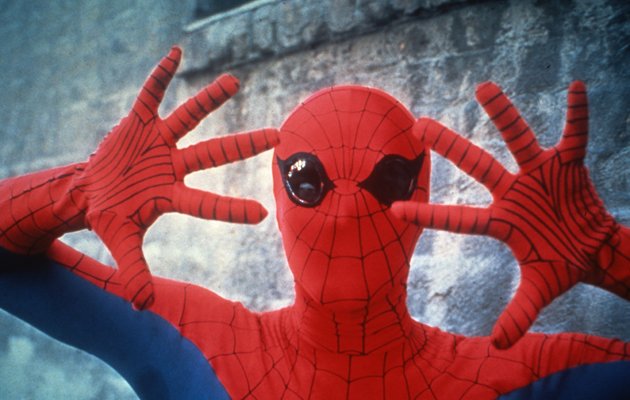
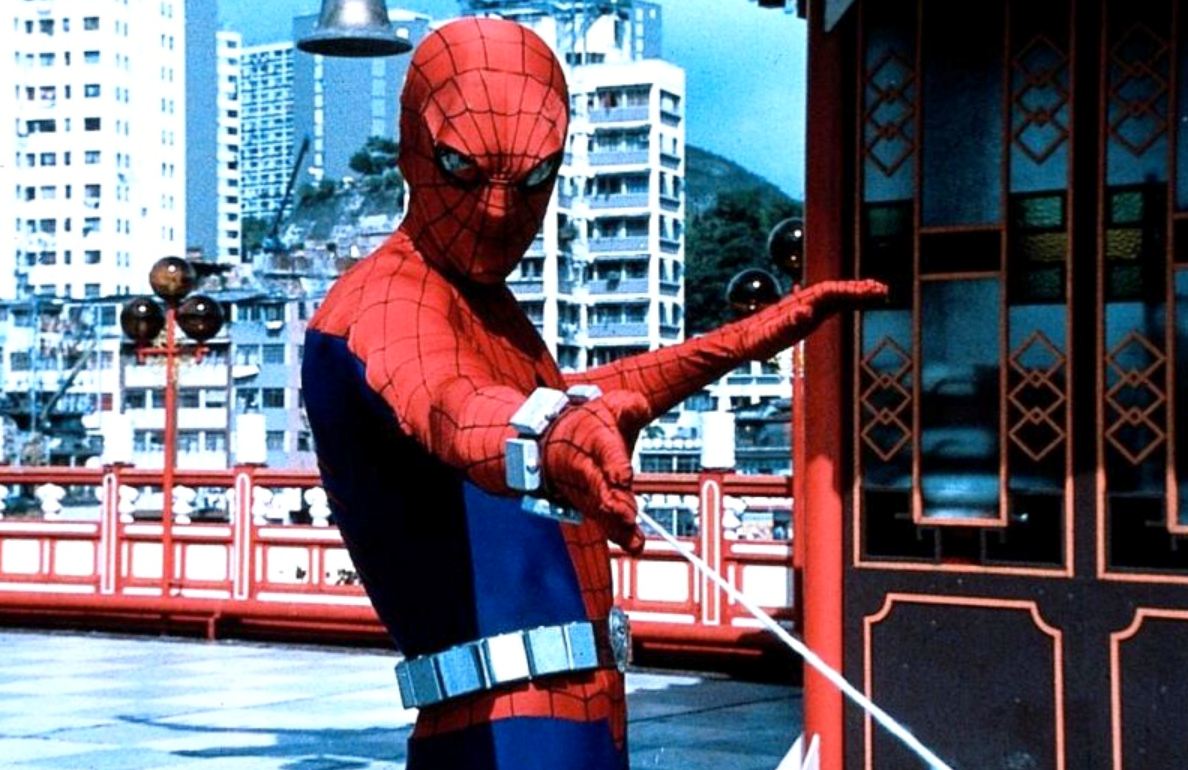
For starters the costume kind of sucked.

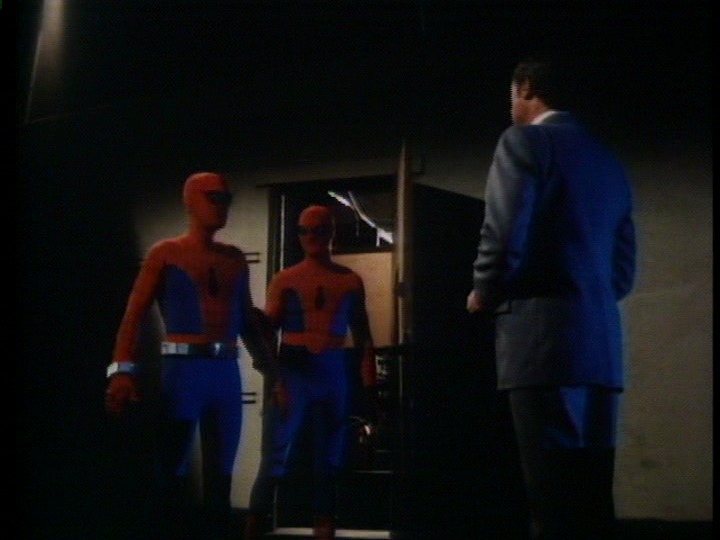
Once again we have a show being produced by people who have no love for the character, who one must doubt had even read a single issue of the comic, and sure they have Peter Parker (Nicholas Hammond) being bitten by a radioactive spider to gain his powers but then they completely jettison the character of Uncle Ben so there is no “With great power comes great responsibility” epiphany when his uncle is killed. Instead Peter Parker uses his powers get a job at the Daily Bugle and then thwart the occasional mad scientist because I guess that seemed like the logical thing to do with spider powers.  To prevent the show from being “too kiddie” Spider-Man doesn’t encounter a single villain from his infamous rogues gallery, in fact the only “super villain” Spider-Man encounters is an evil clone of himself that was created by an evil clone of disgruntled scientist.


Neither one of these guys ends up becoming Ben Reilly.

Now this version of Spider-Man does have super-strength, the ability to climb walls, and is outfitted with web-shooters, and to be completely fair this is still the only live action Spider-Man to use his little spider-tracers for tracking down enemies, but they completely screw up his Spider-Sense. In the comics his Spidey-Sense is what warns him of oncoming dangers and along with his amazing spider-reflexes this allows him to dodge most attacks, but in this show his Spidey-Sense works more like a psychic vision. In the episode “Night of the Clones” a bomb is placed on an elevator cable that when detonated critically injures the two occupants, later when photographer Peter Parker arrives at the scene, after hearing about on his police scanner, he uses his Spidey-Sense to see back in time and witnesses the bomb being detonated. Goddammit, that is not how this power works!


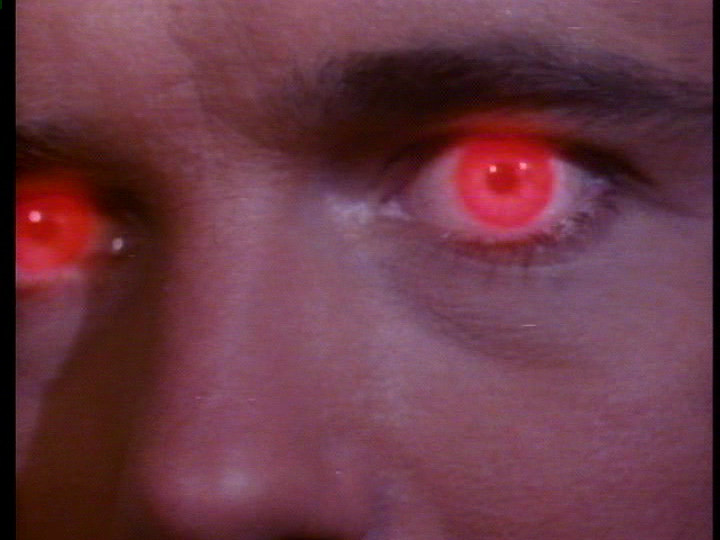
Is he Spider-Man or an escapee from The Village of the Damned?

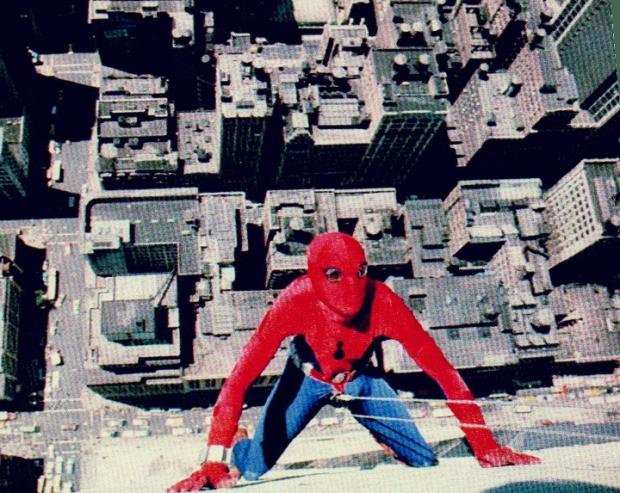
As to the shows ability to depict his other powers, well every shot of Spider-Man climbing a building looks like a dude being pulled up by cable while the stuntman waves his arms and legs up and down as if he’s climbing, and the reason it looks that way is because that's exactly how it was done. I’ll admit that stuntman/stunt coordinator Fred Waugh did some pretty harrowing work for this show, but unfortunately no matter how tricky and dangerous it was to be dangled down the face of a building, or be swung between two structures, it still looked like crap.


“Can he swing from a thread? Take a look overhead...or better yet don't.”

Digital effects were decades away so Spider-Man’s webbing looked like thick white rope and the method they used to show him catching crooks was to have someone from off camera throwing said rope as a net over the bad guys. They`d have been better off using Silly String.  For this reason alone it was in the show's best interest to limit the amount of screen time with Spider-Man in costume. That and the fact that in said costume he looked like a dude on his way to kids birthday party.


What is most surprising is that the show was not cancelled due to poor ratings but because CBS thought they were in danger of becoming known as the “Superhero Network” and so they pulled the plug after two seasons and only thirteen episodes. Aside from the stigma of being known for superhero fare the show was also not hitting the key demographic of 18-45 years that the sponsors were targeting, so despite good ratings I can understand why the cancelled it, but what makes no sense is that it could have hit those demographics if they'd bother to put in some good writing and stayed true the character from the comic. Instead we got Saturday morning style writing but without the fun stuff kids would associate with their hero, and then there was the lack good drama which would have kept adult audiences interested.


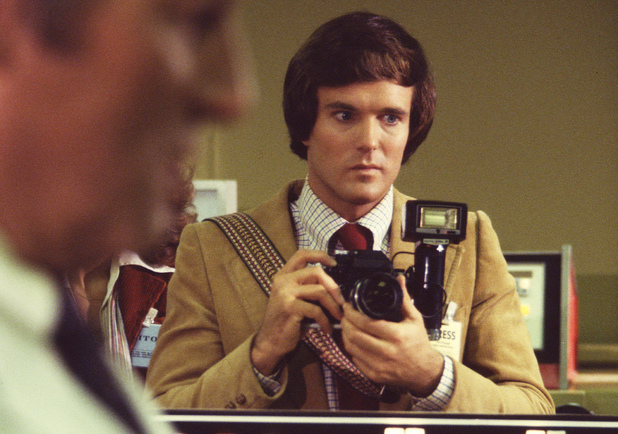
"Did I put film in my camera?"

Nicholas Hammond is a fine actor but he wasn’t given much to do as either Peter Parker or Spider-Man, while this version J. Jonah Jameson (Robert F. Simon) would bitch out Parker one minute than be an avuncular type uncle the next for no apparent reason, but most bizarrely is that this version of Jameson praised Spider-Man instead of going on a one made crusade to expose the webbed menace. So not only did they ruin one of the great characters from the comic but it also took away one of Spider-Man’s chief antagonists. Sometimes you really wonder what went on in those Network boardrooms as it seems they changed stuff just for the sake of changing things, and not for the better.

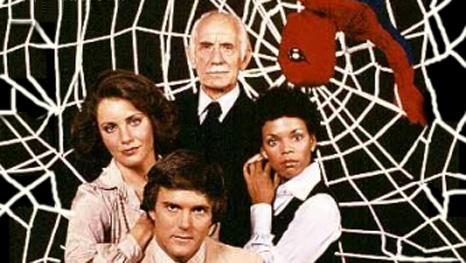
Not only did they ditch Spidey’s rogue’s gallery but they also jettisoned Peter’s love life as well; there is no Gwen Stacey, Mary Jane Watson or even Betty Brandt. In fact they create a totally new character in the form of Julie Masters (Ellen Bry) as a love interest for Peter, and they also introduce Rita Conway (Chip Fields) as secretary to Jameson with no earthly reason to not just call her Betty Brandt as she was in the comic.  Sure Rita here is African-American but if they show wanted to go with a little racial diversity I doubt many fans would have complained if Betty Brandt was black.


What a fun looking group.

There have been many versions of Spider-Man, and the road to live action was never going to be an easy one but in this CBS offering it was a case of a Network having a project they had no real interest in making and thus the result was less than memorable. I do enjoy the first two Sam Raimi movies but to date the best version of the character outside of the pages of the comic book can be found in the 2008 animated series The Spectacular Spider-Man, but after his excellent cameo in Captain America: Civil War maybe we can look forward to more fun live action adventures with everyone’s favorite web swinger in this future.

Monday, March 27, 2017

Gojira (1954) – Review

In 1953 Ray Harryhausen introduced the world to the first atomic created monster with The Beast from 20,000 Fathoms, spawning such follow up nuclear created beasts as the giant ants from Them and the towering menace of The Amazing Colossal Man, but the Beast’s most famous descendant was Gojira (Godzilla to those in the English speaking part of the world). Released by Toho productions just one year after Harryhausen’s creation stomped through the streets of New York City Ishirô Honda’s Gojira would go on to become one of the most famous franchises in cinema history.


The sight of a man in a monster suit stomping across miniature buildings has become the iconic standard for Godzilla films or any kaiju (giant monster) film for that matter, but that was not how special effects master Eiji Tsuburaya intended his monster to be, originally Godzilla would have been created with the same stop-motion animation techniques used for such films as the original King Kong and The Beasts from 20,000 Fathoms, but there was only one small problem, Tsuburaya informed the film’s producer that it would take him about seven years to produce all the effects shots required for the movie, thus “Suitmation” (opposed to Dynamation which was title Harryhausen coined for his stop-motion technique) was born. This of course would not be the first time an actor wore a monster suit but this would be the first time an actor would be portraying a beast that towered over buildings.


If your first viewing of director Ishirô Honda’s original Gojira is after seeing many of the rather goofy sequels that were made during the following years (1955-1975), known to fans as the Shōwa period, movies where Godzilla engaged in fights with various other monsters in a much more kid friendly and lighthearted way, you may be pleasantly surprised at how serious and dark the original film was. At no point does Godzilla dance a jig or fly across the terrain on his tail for super-dropkick, but instead you will see the embodiment of terror that the age of nuclear holocaust held over the people of Japan. The memories of the nuclear bombings of Hiroshima and Nagasaki were still very fresh in the minds of the Japanese people, and just eight months before the release of Gojira a fishing boat called Lucky Dragon Number Five found itself bathed in fallout from American nuclear testing off the Marshal Islands. In fact this true event is the basis for Godzilla’s first attack.


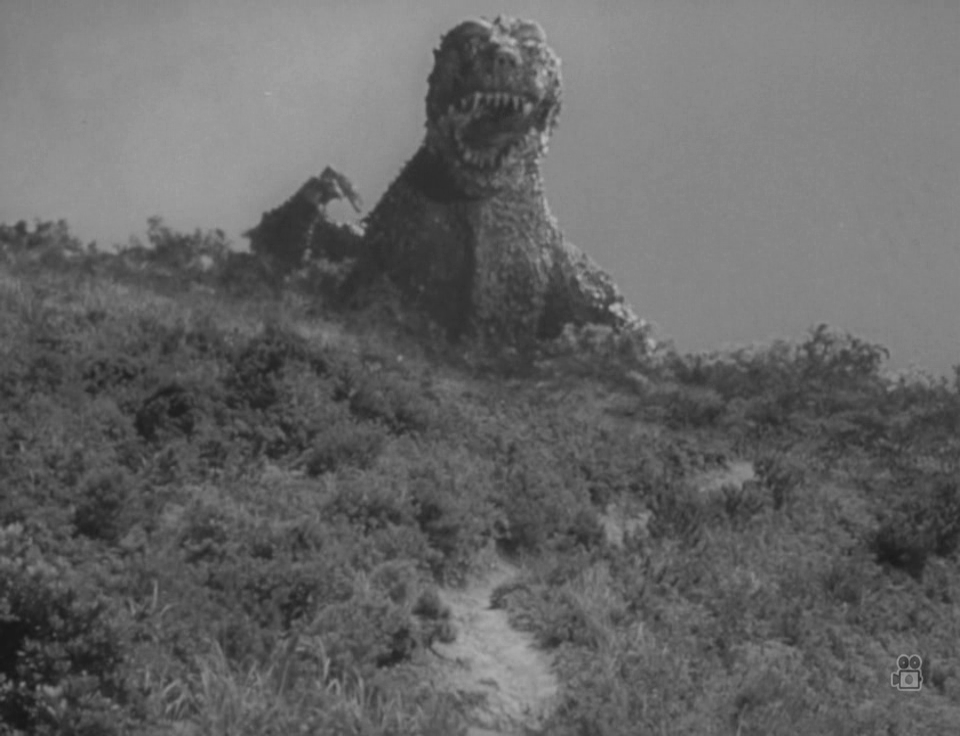
The movie opens with the Japanese freighter Eiko-maru being destroyed near Odo Island by a mysterious blast, and when a second ship meets the same fate, with few survivors this time, the authorities become very concerned. When local fishing drops to zero an old man claims that it is “Godzilla” an ancient sea monster who the islanders use to sacrifice girls to when the fishing was poor. Lucky for the virgin girls of Odo Island that is no longer the case but unlucky for the rest of the world this monster from the sea doesn’t seem to be appeased by anything, with wanton destruction its only goal. After a village is half destroyed during a storm, where some of the wreckage was clearly caused by being crushed from above and not from high winds, and with the addition of latent radioactivity, massive footprints and the finding of a previously presumed extinct trilobite in said footprint, things start to lend credence to the idea of an ancient monster. The question of this being possible is quickly answered when the village alarm bell rings and the head of a titanic dinosaur like creature crests a nearby hill.

While ship after ship is sunk being by the rampaging monster we are introduced to film’s four key main characters the first being Professor Yamane-hakase (Takashi Shimura) who presents his findings to the governmental officials stating his beliefs that Godzilla evolved from an ancient sea creature but has been disturbed from its deep underwater natural habitat by underwater hydrogen bomb testing. Yamane is of the breed of movie scientists who believes this new discovery must be preserved and studied and not destroyed but this philosophy becomes harder to defend when the beast wreaks unimaginable destruction on the city and its denizens. What’s unique here is that Yamane is treated sympathetically, unlike the somewhat similar minded scientist in the Howard Hawk's film The Thing From Another World, he isn’t ridiculed nor does he get an ironic death but instead we witness a man tortured by his beliefs and the horror of the current situation. This is a complex character not often found in this particular genre.

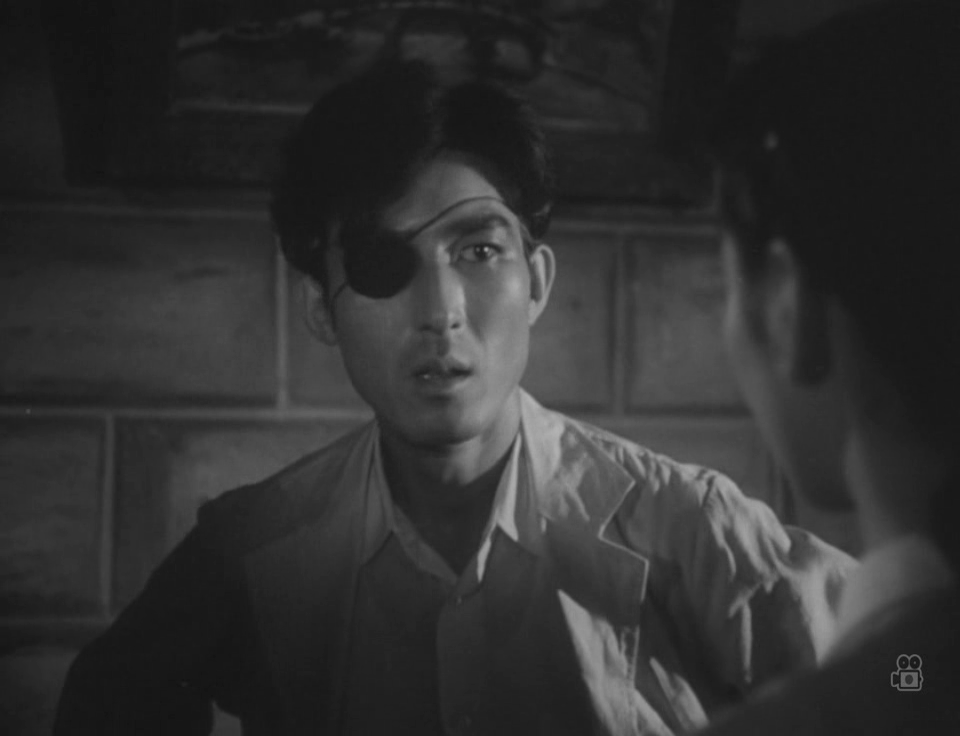
The remaining three that round out the cast consist of his daughter Emiko (Momoko Kôchi) who is in love with local sailor Hideto Ogata (Akira Takarada) but has been long betrothed to Daisuke Serizawa (Akihiko Hirata) a colleague of Yamane’s. This love triangle is an interesting thread that weaves throughout the movie; its Serizawa’s scientific knowledge that will be key in destroying Godzilla and its Emiko’s tortured guilt over her affair with the handsome Ogato over the eyepatch wearing and emotionally scarred Serizawa.


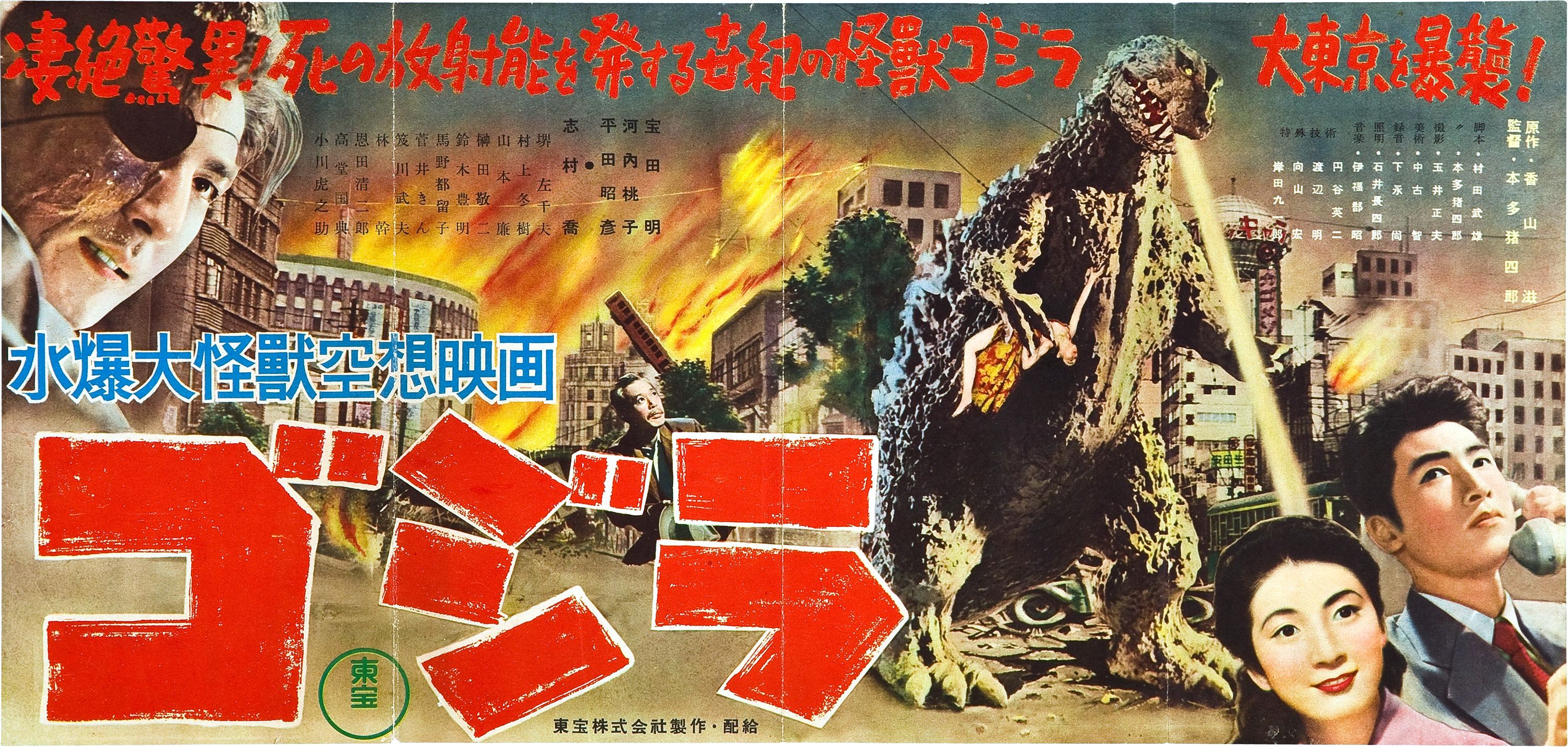
He does rock that eyepatch.

It’s when Emiko visits Serizawa, with the intention of informing him of her love for Ogato, that Serizawa shows her his latest invention the Oxygen Destroyer, a device which disintegrates oxygen atoms causing the organisms die of a rotting asphyxiation.  Emiko is so horrified by what she sees that she recoils in terror. Serizawa tells her that he wishes he’d never discovered the thing and forces Emiko to promise to never reveal what she has seen to anyone. This is a promise that becomes harder and harder to keep as the devastation and death toll caused by Godzilla mounts.

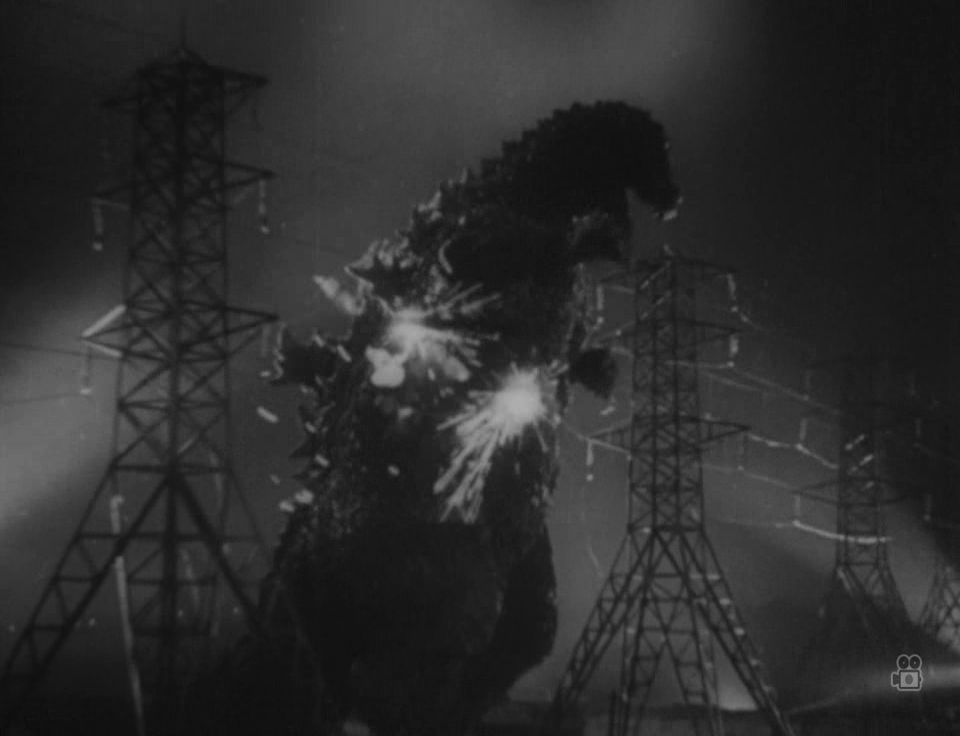
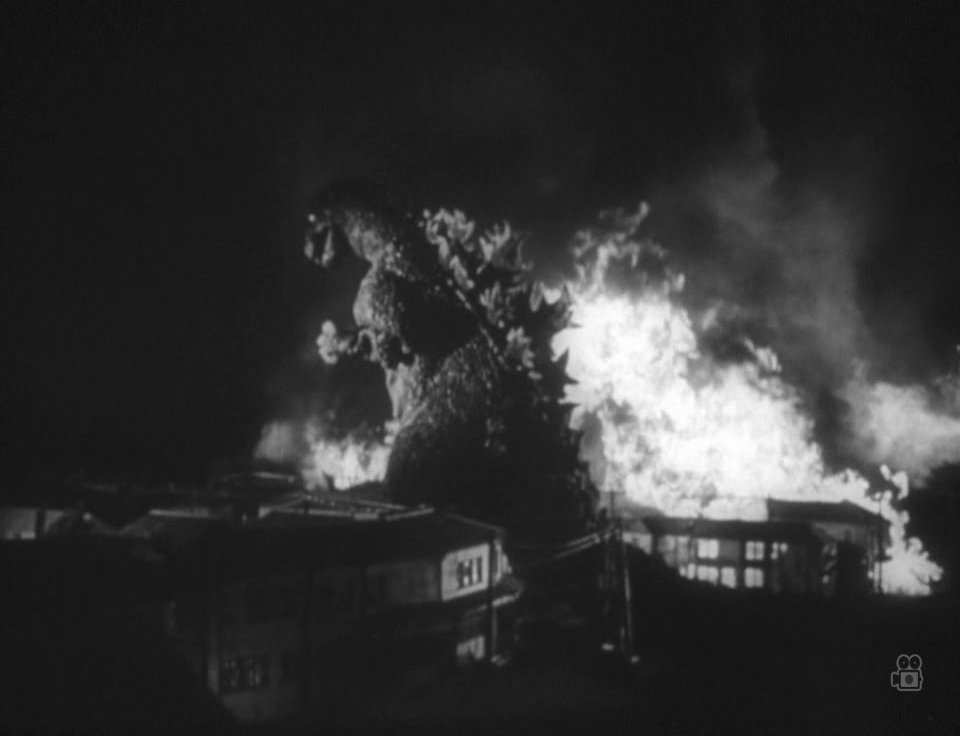
The desolation caused by Godzilla reaches new heights when it’s revealed he breathes atomic fire, and to make matters worse those that survive the fires and collapsed buildings during the beast’s rampage find themselves suffering from radiation sickness. It’s at this point the idea of Godzilla being an allegory for the nuclear holocaust goes from being subtext to being just plain text. These scenes of carnage are both exhilarating to the viewer but also bleak and terrifying, this juxtaposition of what a typical monster movie consists of to the more serious message picture found is what makes Gojira such an endearing classic. Ray Harryhausen’s The Beast from 20,000 Fathoms is an incredibly fun monster romp, an adventure tale in the same vein of King Kong and 1925s The Lost World, while Gojira offers so much more than thrilling scenes of monsters destroying landmarks.


Though the film does provide plenty of that.

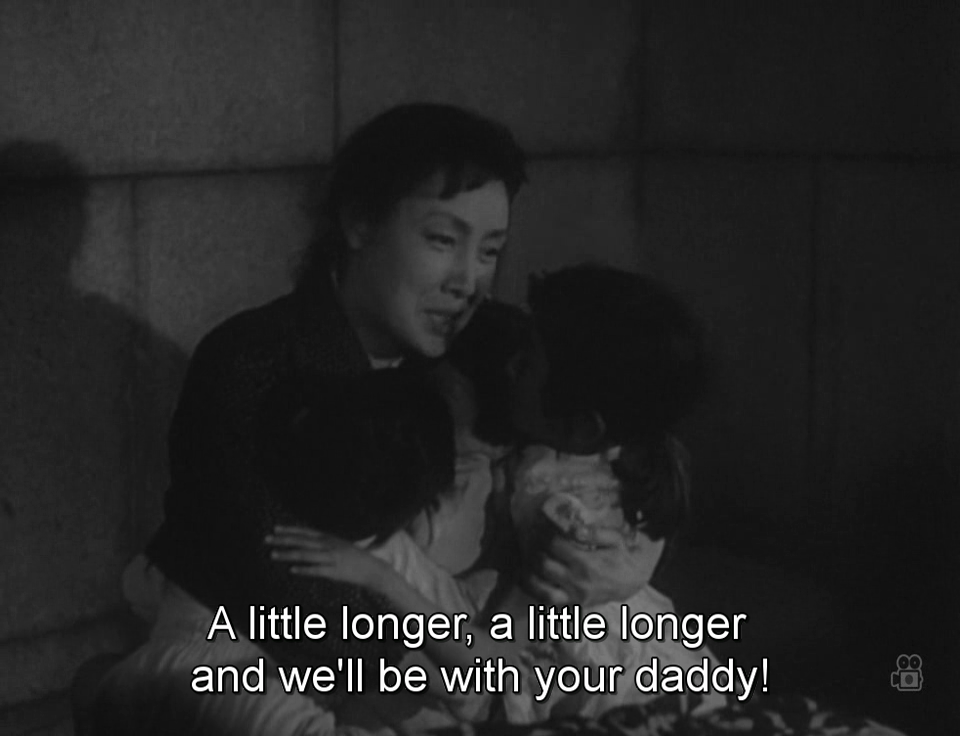
One of the more emotional devastating moments in the film takes place during Godzilla’s major rampage through the city, flames reach for the clouds as building crumble into dust, but then the movie cuts to a shot of a woman and her three young children as they cower in fear, the mother attempts to comfort her children in a most heart wrenching way telling them, “We’ll be joining your father in a moment. A little longer, a little longer and we will be with your daddy.” This is clearly implying that though they will most likely die here the bright side is that they will be with father soon, who one assumes died during the war. This kind of emotional heft will never again be achieved in the films to come, even when the franchise moves away from the goofier aspects of the Shōwa period it will never reach the levels of authenticity on display here.


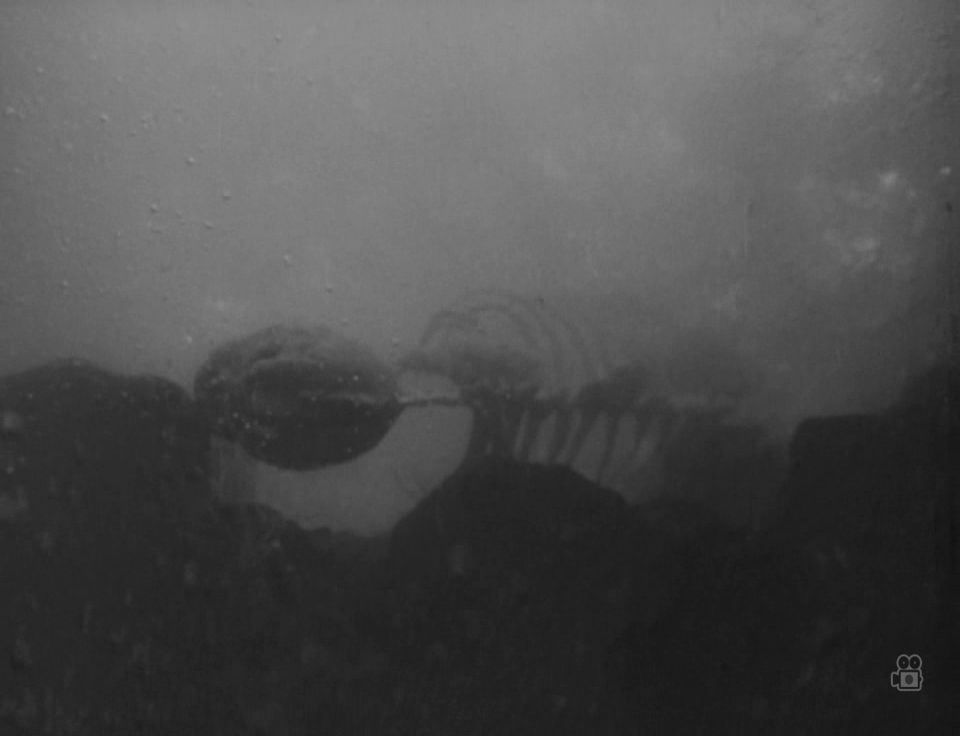
While most monster movies of this genre would end with the hero/scientist figuring out a way to kill the giant menace this film takes that idea in a slightly different direction. After seeing the horrific aftermath of Godzilla’s rampage Emiko breaks the promise she made to Serizawa and she tells Ogata about the Oxygen Destroyer, believing this could be Japan’s only hope in defeating the creature. Serizawa is reluctant to allow his invention to be used as it could lead to a new devastating arms race, noting that even if he was to destroy the formula its secret would still lie within his head with the danger of him being “convinced” to use it again ever present. Of course Serizawa eventually agrees to use his invention, seeing the effects of the monster on the people of his country finally turning his heart, but when he and Ogata are lowered from a Navy ship to deploy it in Godzilla’s underwater lair Serizawa unloads the device and cuts off his own air support, taking the secrets of the Oxygen Destroyer with him to the grave. A heroic suicide isn’t something one expects in a monster movie and Serizawa’s tragic sacrifice is just another element that makes Gojira standout from amongst its brethren.


Godzilla dead at the hands of the Oxygen Destroyer.

Modern eyes may find the monster suit a bit quaint, and the puppet used for some shots to be rather goofy, but if you look beyond those elements you will find a powerful story that rightfully launched a decade’s long franchise and over thirty sequels. Toho has even licensed that property to Hollywood which has since resulted in the incredibly bad 1998 Godzilla but also in the quite decent 2014 Godzilla that is the beginning of a Hollywood franchise the Legendary Pictures is calling the MonsterVerse, which will eventually pit Godzilla against all his classic foes including a remake of King Kong vs Godzilla.

One element I would be remiss if I didn't mention is the iconic score by legendary film composer Akira Ifukube whose main theme for Godzilla is still one of the most recognized pieces of cinematic music to date.


Note: Toho licensed Gojira to be released in North America under the title Godzilla King of the Monsters and though many deride this version I considered it to be just another interesting take on Godzilla. The film noir technique of telling the story through flashbacks, highlighted by the melodious smooth voice of Raymond narrating the disaster, added much to the success of this version. The original Gojira is still my preferred version but the Raymond Burr edit should not be dismissed out of hand.

Thursday, March 23, 2017

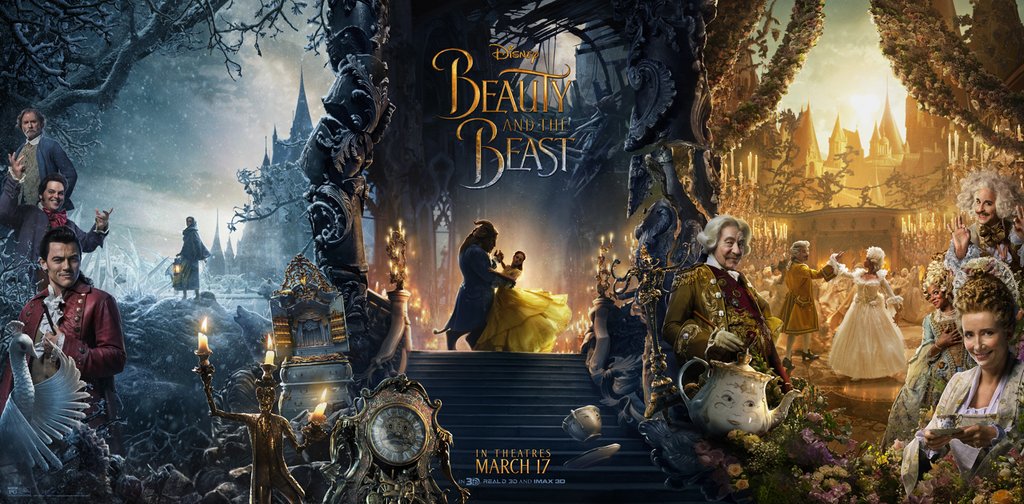
Beauty and the Beast (2017) – Review

As Disney continues with their trend of churning out live action remakes of their animated films it’s no surprise that they’d tackle one of their biggest hits, but with Beauty and the Beast this is the first time they’ve adapted one from the Disney Renaissance period. The 2015 live action Cinderella and the 2016 Jungle Book were based on animated classics from the 50s and 60s but the animated Beauty and the Beast only came out in 1991, and now with live action adaptations of Mulan, Aladdin and The Little Mermaid all in the works it seems the House of Mouse plans on adapting every single one of their animated hits to the live action format. The big question is, “Is this a good idea?”


To date these adaptations have been much very hit and miss with me, with the numbers favoring the misses over the hits, but I really enjoyed Kenneth Branagh’s adaptation of Cinderella so I went to see director Bill Condon’s take on Beauty and the Beast with a decent amount of optimism, but what I was not prepared for was how much I would enjoy it. Much of this comes from Condon’s insistence that the movie remain a full musical like the animated version, all previous live action adaptation having at most given nods to the music of the originals, and also from his obvious love of the original story. Now this is far from the first live action adaption of Jeanne-Marie Leprince de Beaumont's eighteenth-century fairy tale; most notably is Jean Cocteau’s beautifully surreal film La Belle Et La Bete (1946) and then there was the less than successful 2014 adaptation of La Belle Et La Bete by Christoph Gans, but with this new version we get a very organic blend of both the original fairy tale and the Disneyfied version.

Though we still get Belle doing her Maria Von Trapp impression for some reason.

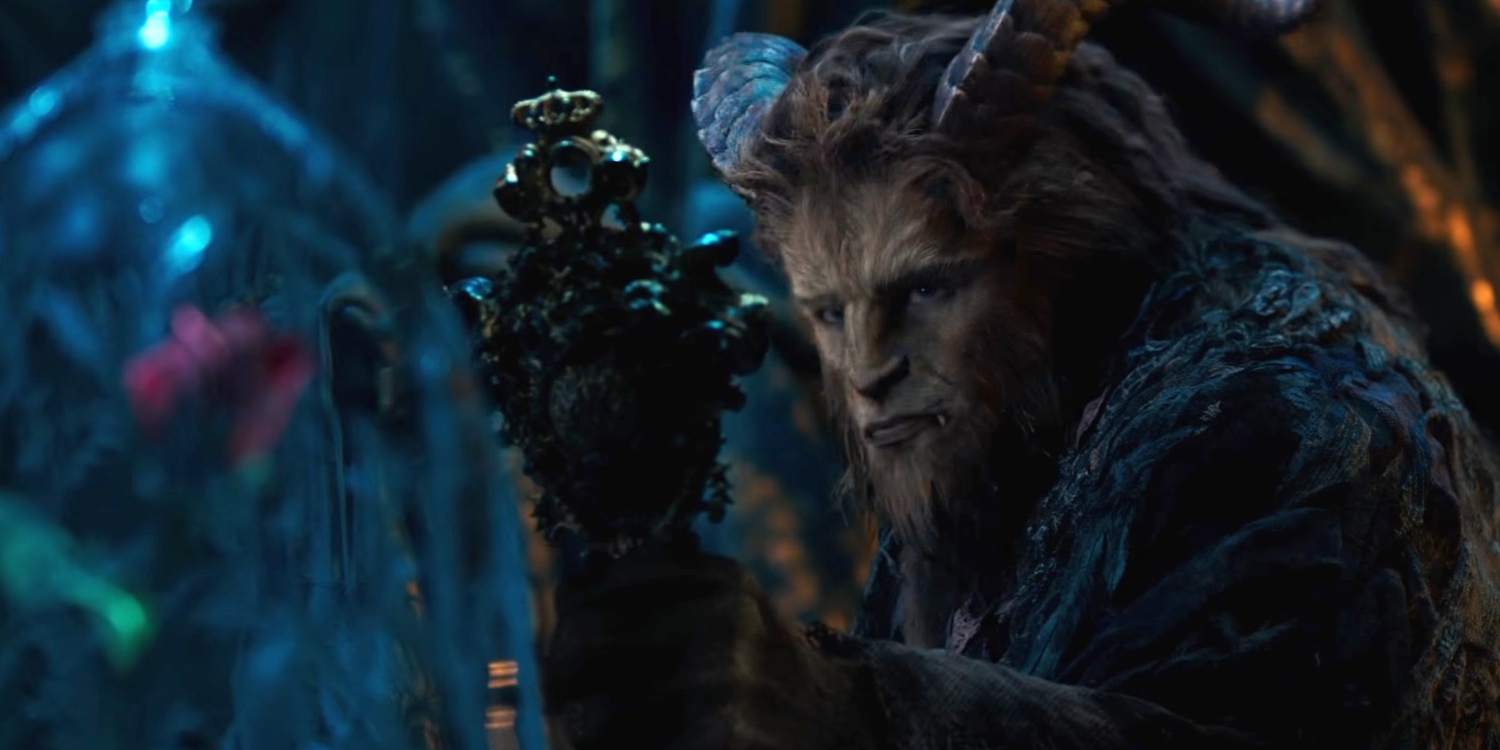
In the original tale Belle requested that her father bring her back a rose, when he found himself lost and inside the Beast’s castle he spotted a rose bush and took one, this of course was a big mistake.  The theft of the rose enraged the Beast who then imprisoned the man, and then later Belle offered to take her father’s place as the Beast’s prisoner. In the Disney animated version the “Enchanted Rose” worked solely as a ticking clock device while in this latest version it's still enchanted, with its petals dropping off to let us know when the curse will become permanent, but they also included her father Maurice (Kevin Kline) entering the castle unmolested until he dared pluck a rose as it was in the original fairy tale. This return to the source material makes the structure of the story hold together a little better, with less arbitrary plot points and rules popping up like there were in the 1991 film.


This new version also does its best to clean up the continuity messes that the animated film was littered with; the seasons no longer flit from spring to autumn to winter and back again within days of each other where now the Beasts castle is an area locked in perpetual winter, in the animated film the curse had been going on for ten years but as the curse deadline was the Beast’s 21st birthday this would have made him eleven years old when the Enchantress cursed him for being a dick. And how many eleven year old 18th century French princes weren’t dicks? Not many is my guess. In this adaptation there is no longer a hard timeline on the curse, the Prince (Dan Stevens), while hosting a massive debutante ball, snubs a poor beggar woman who offered him a rose for a night’s shelter, who of course turns out to be an all powerful Enchantress, and he is then cursed to remain a Beast until the last petal falls from the rose. Her curse also erases the castle's existence from the minds of the villagers, which nicely covers that problem the original had of “How could a village forget about a castle that is apparently one mob march away?”


I wonder where their tax dollars went during this time period.

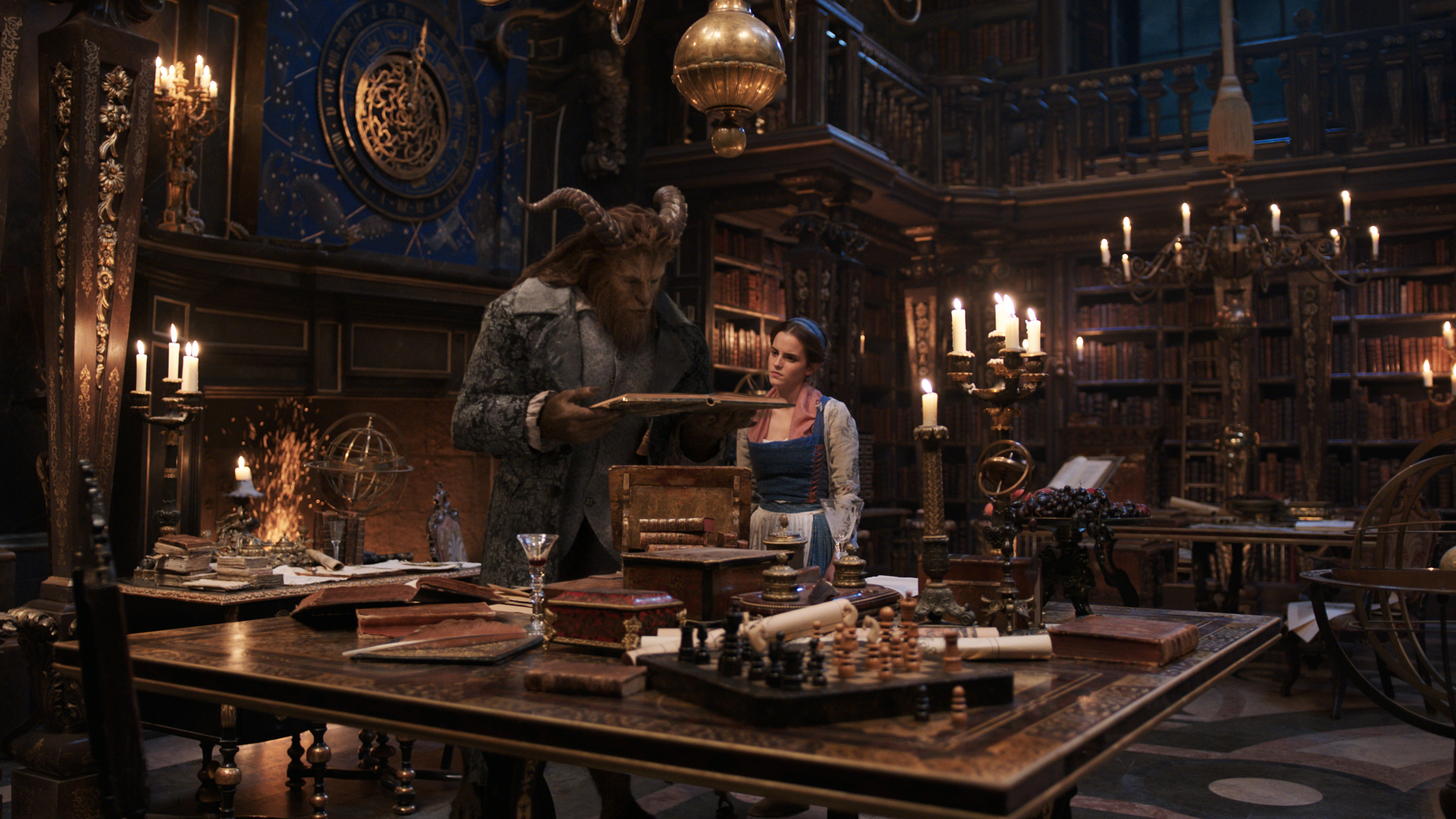
In the original animated film Belle was a strong and smart character now in this version Belle (Emma Watson) is all those things also much more; she wants to teach the local children to read, she’s the inventor in the family not her father (he makes clocks), and she doesn’t dodge Gaston’s (Luke Evans) proposals so much as tell him to “Screw off!” We also have less of that Stockholm syndrome romance that plagued the animated version, with a running time of 129 minute we have a lot more time spent with Belle and the Beast getting to know each other while the original had enough time for one song and then they were in love.  A key element in making the love story work in this version is that the Beast is more educated now, he likes to read as much as Belle does, and he's also funny and charming when not in a bestial rage.


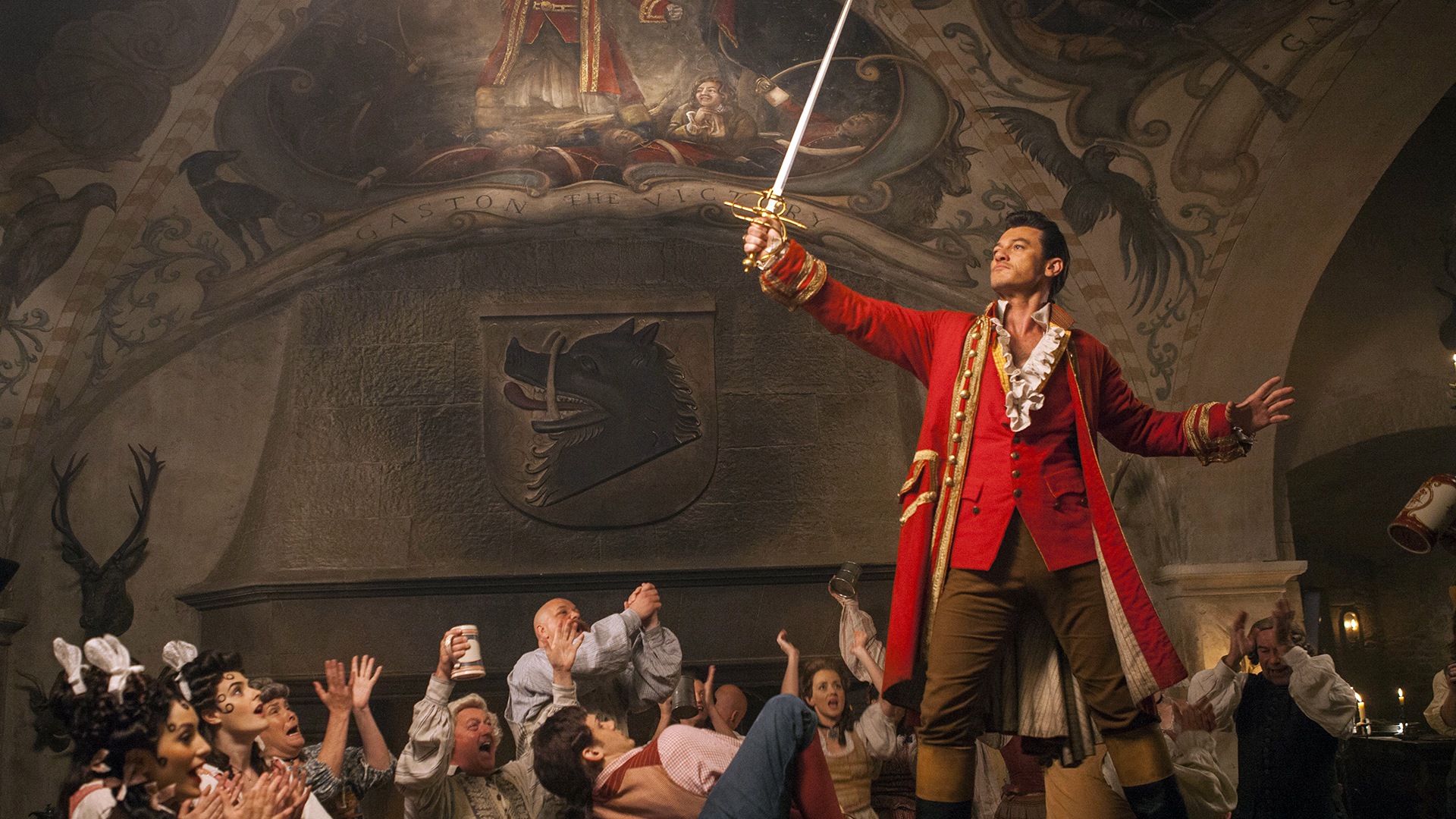
The relationship between Belle and the Beast are not the only thing tweaked as other key characters are also fleshed out more; we get a bit of backstory about Belle’s mother and the Beast’s family, we learn that Gaston and LeFou (Josh Gad) fought together in the war (Note: Lefou is given a role beyond just comic relief and Josh Gad was a delight), and even the Enchantress (Mattie Morahan) has a more realized character this time out. With talented actors like Emma Watson and Dan Stevens I was sure we were going to get characters with more width and breadth but I was floored by how much I adored Luke Evans and his Gaston. He’s still arrogant, egotistical, narcissistic, and a bully, he wouldn’t be Gaston if he wasn’t, but he’s also not as dim as his animated version was. He’s also quite a bit more dangerous.  In the 1991 animated version he didn’t really become a threat until the third act, but in this film a psychotic rage is clearly brewing below his facade of awesomeness for most of the film. Luke Evans is also incredibly funny in this role yet never letting the comedy lessening the threat he truly is.  That he goes from admiring himself in the mirror to thoughts of cold blooded murder without coming off as “cartoonish” shows just how good an actor he is.


As for the music we do get all the songs from the animated version, plus a few more added for good measure, and what is surprising is that the new ones, though maybe not as catchy and memorable as the original songs, do work towards getting us inside the characters a bit more, and I’ll admit to tearing up during some of these.

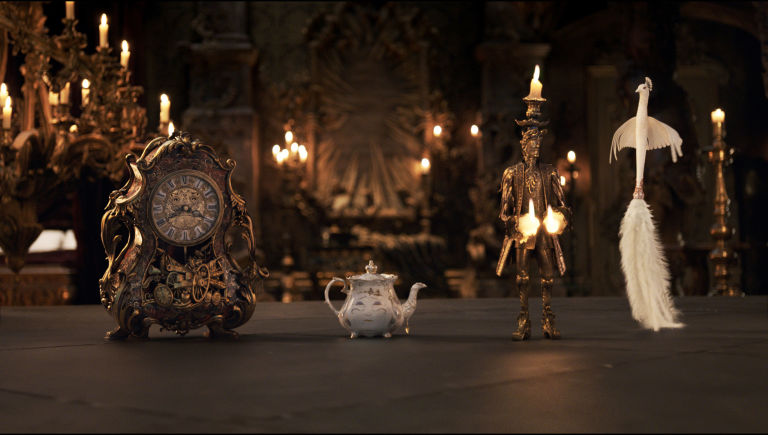
Visually the film is simply stunning from Belle’s quaint provincial town to the ruins of the Beast’s castle, a visual tapestry of delight, but my one small complaint is that a couple of the characters transformed by the curse are a tad over designed. Lumiere (Ewan McGregor) and Cogsworth (Ian McKellen) do great work here in their roles but the designs for the candelabra and clock I felt to be too cluttered, while on the other hand the changes to Mrs. Potts (Emma Thompson) and Chip (Nathan Mack) were minor and quite good. The standout design I found was for Lumiere's sweetheart Plumette (Gugu Mbatha-Raw), a feather duster with a dove motif.


I won’t get into anymore spoilers about the changes but I will say what changes they did make went towards creating a more compelling story and believable characters, and before you start saying “Oh my god the original was perfect, they’ve gone and ruined a classic!” this movie still has all the key sequences from the Disney animated version that we’ve all grown to love; the Beast fights some wolves, he and Belle will have a great ballroom dance, and the villages will storm the castle right on cue, and I can't think of any fans of the animated version not liking this take.  This is how one tackles a remake; you expand on the characters, keep what really worked in the previous version while ditching things that didn't, and harvest more stuff from the source material. That isn't as easy as it sounds but Bill Condon really pulled it off, and one should remember that the 1991 Disney classic will always be there for Disney purists I’m just glad we have this new, and a slightly more adult version, as a great companion piece.

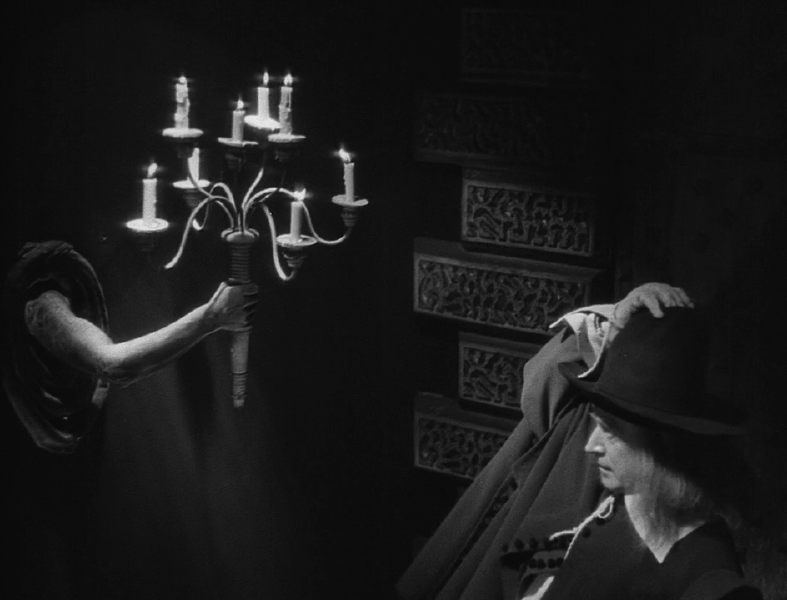
Note: Bill Condon clearly loved the Jean Cocteau version as he often borrowed visuals from the 1946 film such as disembodied arms holding torches.

Monday, March 20, 2017

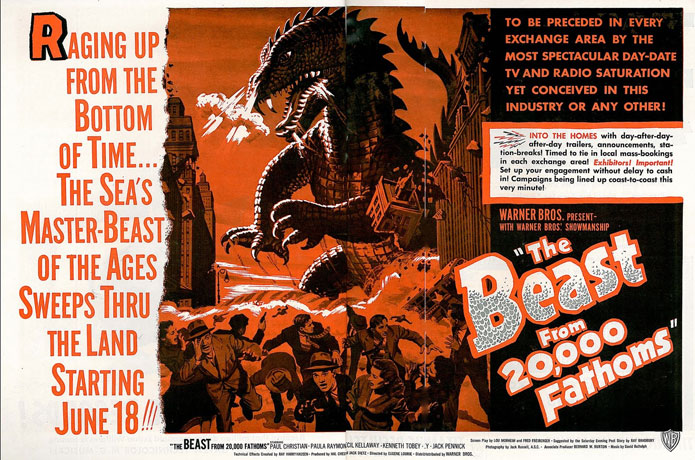
The Beast from 20,000 Fathoms (1953) – Review

There is something about seeing a giant monster rampaging through city streets that stirs the imagination, from as far back as the 1925 The Lost World where dinosaurs were let loose in the streets of London to Warner Brothers take on Japan’s biggest export Godzilla in 2014 we as a culture have loved watching such wanton destruction. Though The Lost World may have been the first movie to tackle that particular premise it was the 1953 film The Beast from 20,000 Fathoms that truly gave birth to the genre.


 Science Note: One fathom equals six feet so that puts this Beast coming from about twenty-three miles down, but the deepest the ocean gets is about seven miles.

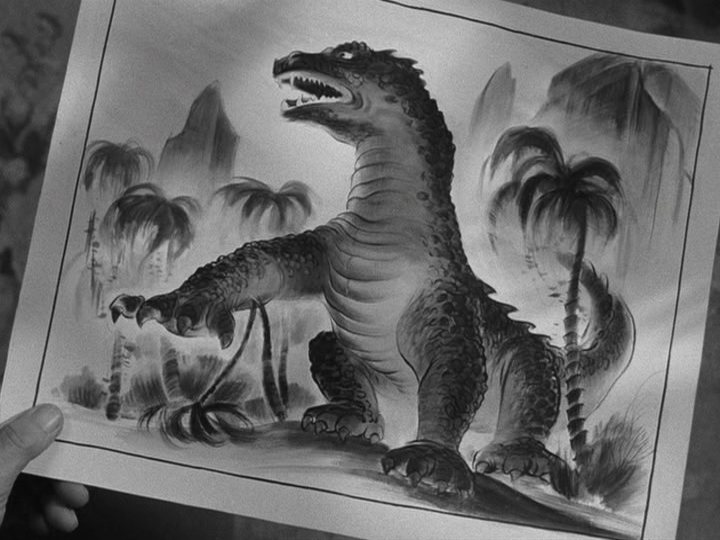
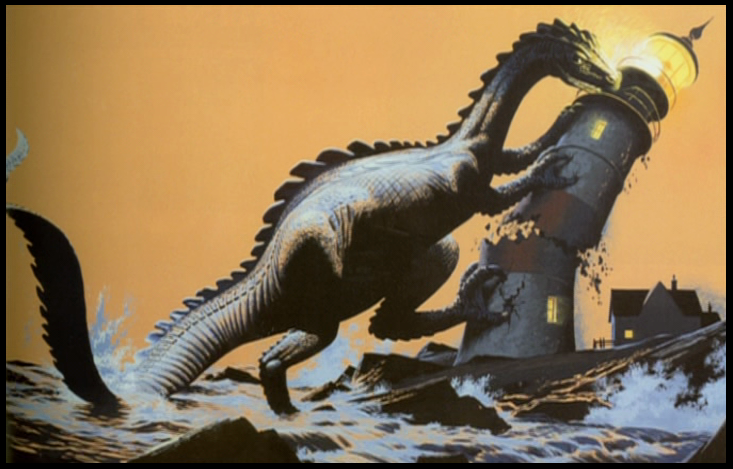
The Beast from 20,000 Fathoms itself was inspired by the success of 1931’s King Kong and it was producers Jack Dietz and Hal E. Chester who approached stop-motion artist Ray Harryhausen to provide the titular creature as Harryhausen had previously worked with his mentor Willis O’Brien, the man who had created the effects for the original Kong, on the excellent giant ape movie Mighty Joe Young. The movie was based on the original short story by Ray Bradbury (originally titled "The Beast from 20,000 Fathoms" it was later changed to “The Fog Horn”) which told the tale of a sea monster mistaking the sound of a fog horn for another of its species.


The original artwork from “The Fog Horn” published in the Saturday Evening Post.

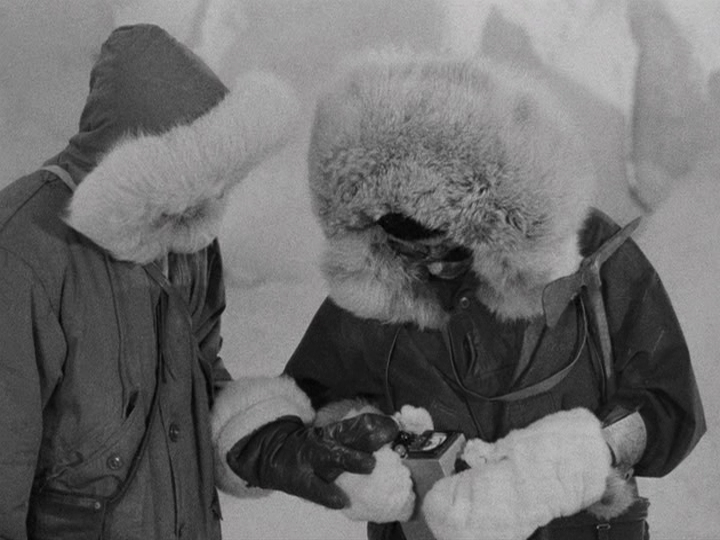
The movie opens with military doing atomic testing up in the Arctic, making The Beast from 20,000 Fathoms the first of many atomic fueled monster movies, as the narrator counts down to the detonation of an atomic bomb for something called “Operation: Experiment” (I’m assuming that the man in charge of coming up with decent code names was on vacation) we are introduced to our hero physicist Professor Thomas Nesbitt (Paul Hubschmid) who ponders such thoughts as, "What the cumulative effects of all these atomic explosions and tests will be, only time will tell.” I doubt a giant rampaging dinosaur was an effect he or any other scientist had foreseen but that is exactly what they got. The power of the atom was a very new topic, something the general public knew almost nothing about, so movies were able to capitalize on this by having atomic radiation do about anything the script required. There is a particular hilarious moment when Col. Jack Evans (Kenneth Tobey) tells Nesbit and fellow scientist George Ritchie (Ross Elliot), who are about to venture out to where the bomb was detonated to take readings, “The moment your Geiger counter indicates heavy radiation, turn back.”


“I’m sure our parkas will keep us safe.”

Of course it’s not radiation poisoning that is the real danger out there as the blast melted tons of ice and awoken a dinosaur from its icy slumber. Nesbit and Richie separate to go and take their readings, which unfortunately for Ritchie leads him to the first encounter with the newly awoken dinosaur. Now I’m not at my best in the morning so I can’t imagine how I’d function if I’d been asleep for over 100 million years only to be jerked awake by an atomic bomb, thus when the dinosaur accidentally kills Richie by causing an avalanche I don’t blame the Beast at all.


He was probably just looking for some coffee.

Nesbit himself barely survives the encounter, staggeringly half blind out of a blizzard with the raving tale of a dinosaur killing his friend, and things don’t get much better for him as he’s subjected to ridicule and psychiatric assessments that inform him that the trauma of losing his pal caused him to hallucinate the creature. Later when he reads in the paper of a ship going down, and the sole survivor claiming it was caused by a giant sea monster, he rushes to the local museum to question paleontological expert Professor Thurgood Elson (Cecil Kellaway) and to get his advice. Elson isn’t too sympathetic stating, “If all the items of seamen reporting monsters were placed end on end they’d reach to the moon," but when a second ship is sunk, with another survivor making similar claims, Elson’s assistant Lee Hunter (Paula Raymond) visits Nesbit at his office to encourage him to investigate further. The nice thing here is that Lee is clearly more interested in being with Nesbit on a more romantic aspect than she is for pursuing the whole extinct monster thing. The things a girl will do to get her man.  When they track down one of the witnesses to the monster attacks, and his description of the beast matches that of Nesbit’s, they are finally able to convince Professor Elson that they are onto something.

Note: The dinosaur that Nesbit and the seamen pick out is of the fictional Rhedosaurus, and that a world renowned paleontologist would take the testimony of just two witnesses as proof of a living dinosaur is bigger stretch than the actual existence of said creature.

Colonel Evans, along with the head of the Coast Guard, are able to plot the sightings of the Beast's appearances on a map which leads Professor Elson to propose that the Beast is returning to the Hudson River area where fossils of Rhedosaurus were first found. The evidence of the creature is basically the world of Nesbit, two seaman survivors, one of which had since fled the ridicule his claims garnished and is hiding up north, some coastal debris and one wrecked lighthouse, but I guess in the 1950s paleontologists had a lot of pull because soon enough Elson has a ship equipped with a diving bell and they begin to search.


Sadly Elson and another poor seamen find the Beast and are quickly swallowed.

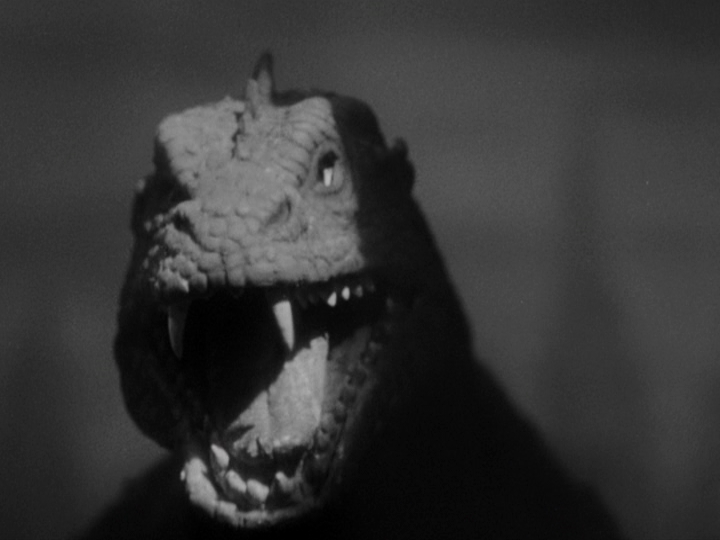
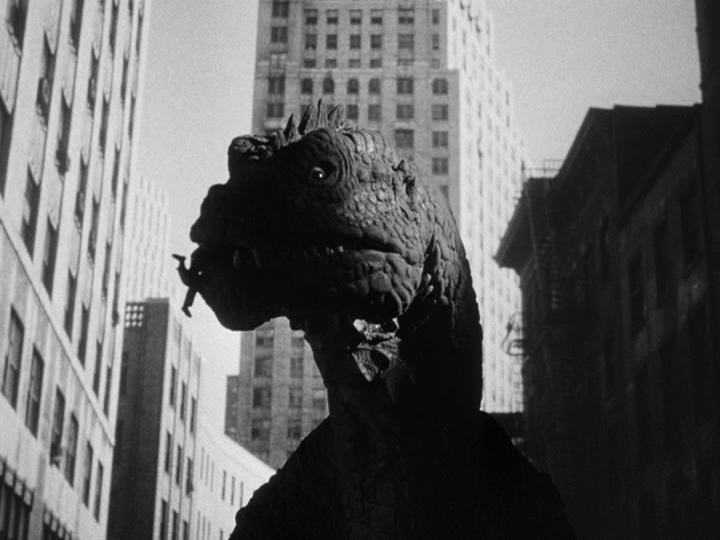
At an hour and twenty minutes The Beast from 20,000 Fathoms does not mess around, the last twenty minutes giving us some of the best “monster on the rampage” stuff ever put to film, but what makes this film standout from many of its imitators is that the Beast feels like an actual animal and not some evil monster hell-bent on destroying cities. When he eventually comes ashore and enters New York City we are clearly seeing an animal that has no idea what happened to the world he last saw, and his first victim is a police officer that opened fire on him. A police officer who was either the bravest or dumbest man alive.  I vote for the dumbest as tries shooting at that thing with a .38 revolver.


That cop wasn’t even bite sized.

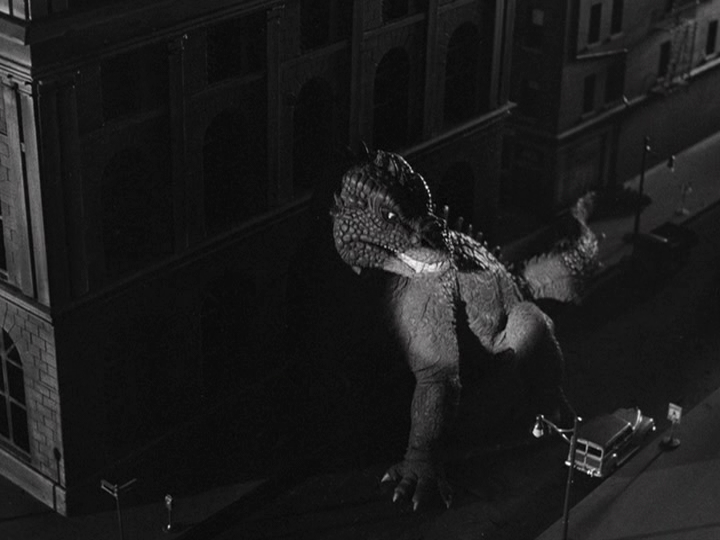
Another interesting thing about the Rhedosaurus is that unlike Godzilla he is not invulnerable to small weapons fire, when a group of police officers armed with shotguns open fires on the Beast it roars in pain and escapes by crashing through an adjacent building. The writers then came up with the brilliant idea that prevents the authorities from just bringing in big artillery to blow the Beast away, turns out the Rhedosaurus is carrying a "horrible, virulent" prehistoric contagion, and that contact with the creature's blood can be fatal, and that shelling the Beast would just spread the disease faster. That is damn clever but then we do get a silly moment when Col. Evan states they should have used flamethrowers and Nesbit admonishes him saying, “Flamethrowers? The smoke would have carried the blood particles just as far.” I’m no scientist but I’m not aware of any bacteria that can survive being burnt and turned into smoke. But that isn’t even the silliest moment for during the action packed climax, after being chased off by shotguns the Rhedosaurus somehow managed to elude the authorities for a good portion of the night.


“Someone call 911, a dinosaur just knocked over my trashcans.”

That a giant monster can somehow “vanish” amongst the buildings of New York City is pretty ridiculous, even a trench coat and a hat wouldn’t help such a creature stay under the radar for long, but what’s truly sad is that this has almost become a trope as its turn up again and again in other movies such as the 1976 remake of King Kong and the 1998 remake of Godzilla.

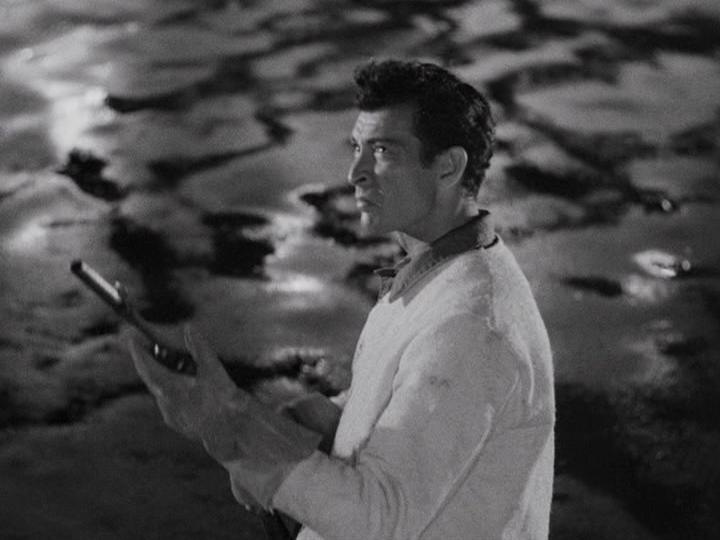
Eventually our heroes track the Beast to Coney Island for the film’s brilliant finale, Nesbit having figured out that shooting a radioactive isotope into one of the Beast’s open wounds should completely destroy all the diseased tissue, and in a nice change of pace the film’s hero does not get to strike the death blow as the filmmakers of this movie clearly understand if you need to shoot something maybe don’t hand the gun to a physicist. This doesn’t prevent Nesbit from going along for the ride but the actually shooting is done by army sniper Corporal Stone, played by a young Lee Van Cleef, and just how cool is he? Well when asked, “Ever use a grenade rifle?” he responds, “Pick my teeth with it.” And when Nesbit asks him, “You know what a radioactive isotope is?” he answers “No, but if it can be loaded, I can fire it.”  Lee Van Cleef is simply badass.


“This thing will never Escape From New York City.”

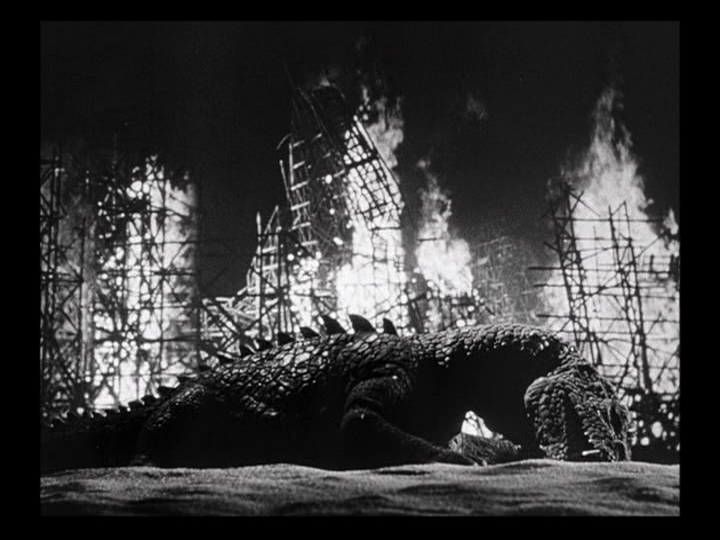
The visuals of the Rhedosaurus thrashing around the ruins of the Coney Island rollercoaster is some of the best and most poignant moments in the movie, as I mentioned earlier this creature has no animosity to us and like King Kong his death is tragic and not something to celebrate. We see Nesbit and Lee smile and embrace but that’s just the relief that this whole mess is finally over, later they will all probably head to a bar and drink a solemn toast to the fallen Beast.


The movie even ends on a shot of the dying monster and not the heroes.

Costing only $210,000 The Beast from 20,000 Fathoms went on to make $2.5 million dollars during its first year of release, ending up grossing $5 million overall, and not only did it spawn the era of the atomic monster movie but it also led to the direct inspiration for Ishirō Honda's Gojira which was released just 16 months later. Even the film’s director Eugène Lourié went on to remake this film but a few years later only with a rampaging Palaeosaurus in The Giant Behemoth, but nothing since has captured the pure blend of fun adventure and tragic beauty found in Ray Harryhausen’s The Beast from 20,000 Fathoms.

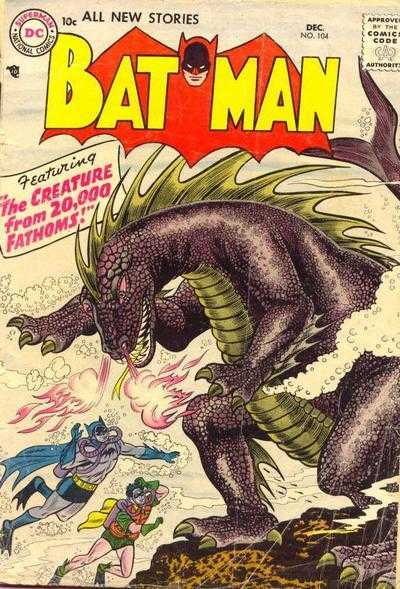
Note: This movie's influence extended beyond the cinema as this 1956 issue of Batman proves.